
If you’re looking to invest in Gurgaon real estate, you have two choices: residential or commercial property. Your investment goals will help you make the right decision. Residential property, like an apartment, gives you wealth over a long time as its value appreciates. With commercial property, like office spaces, you get high cash flow from rental yields.
Each option has its own benefits and risks. Knowing these differences helps you pick the best investment opportunity. Here, we will clearly break down residential and commercial real estate in Gurgaon. This will help you figure out the right fit for your investment strategy. Let’s dive in.
What is Residential Real Estate?
Residential real estate properties are for individuals or families. It’s the most common and safest asset class. It‘s seen as the fundamental need for shelter. Gurgaon has the corporate sectors, and their workforce contributes to the demand for housing.
Types of Residential Real Estate in Gurgaon
The investment options here cater to diverse budgets and lifestyle needs:
Apartments/Flats: These are the most prevalent assets in Gurgaon. Ranging from affordable compact units to ultra-luxury penthouses in high-rise condominiums. Sectors along the Dwarka Expressway and New Gurgaon offer strong potential for future capital appreciation.
Villas/Independent Floors: Catering primarily to the luxury and HNI segment, these properties offer privacy and expansive living spaces. Locations like Golf Course Road and parts of Sohna Road command a significant premium.
Plotted Developments: This involves investing in land that offers the flexibility for custom construction later. This option often delivers high long-term capital growth but involves a longer waiting period.
What is Commercial Real Estate?
Commercial real estate in Gurgaon includes any property used exclusively for business purposes to generate profit. Investing here means you are buying a stake in the city’s economic engine. Since the city is a magnet for Fortune 500 companies and startups, its commercial sector is globally competitive.
Types of Commercial Real Estate in Gurgaon
The commercial market offers specialised investment avenues, each with a distinct risk-reward profile:
Grade A Office Spaces: These are the backbone of Gurgaon’s economy. Investment here means owning space in modern, professionally managed corporate towers in established hubs like Cyber City, Udyog Vihar, and the Golf Course Extension Road.
Retail Spaces: This includes shops within premium malls (like those on MG Road) or high-street retail formats. Success here is highly dependent on footfall, visibility, and the surrounding residential catchment area.
SCO (Shop-cum-Office) Plots: An emerging and highly popular hybrid model. These low-rise structures offer ground-floor retail and upper-floor office/service space, providing flexibility and dual revenue potential, especially along major expressways.
Serviced Apartments/Hotel Assets: Properties catering to the city’s significant corporate travel and extended business stay requirements, offering strong, hospitality-linked rental income.
Residential vs. Commercial Real Estate: Comparative Investment Analysis
It’s important to understand the performance dynamics of each asset class. Residential property and commercial property are different in how they deliver returns and manage risk. So, here is a direct comparison of the key parameters that impact your investment decision in the Gurgaon market.
Parameter
Residential Real Estate
Commercial Real Estate
Primary Return Focus
Capital Appreciation (Long-term wealth)
Rental Yield(Immediate Cash Flow)
Typical Rental Yield
2% to 4% (Modest)
6% to 10%+ (Superior)
Lease Tenure
Short (11-month agreements)
Long (3 to 9+ years with escalation)
Property Management
Higher effort, frequent tenant turnover
Lower effort, professional corporate tenants
Operational Costs
Owner typically pays maintenance/taxes
Tenant often pays most costs (Triple Net Lease)
Initial Capital
Lower Entry Barrier, Easier Financing
Significantly Higher Capital Required
Liquidity/Exit Strategy
High (Easier/Faster Sale)
Lower (Slower Sale, relies on specific buyers)
The Core Differences
Returns Profile
For residential, the market value of your property will increase substantially over the years. The rental income is often too low to generate strong savings or cover your entire EMI. Your biggest profit comes when you eventually sell. This is why you need to buy residential property in Gurgaon in high-growth, infrastructure-led areas.
For commercial, you are betting on the lease income. The high rental yield ensures a substantial, immediate, and consistent cash flow. You profit monthly from the lease, not just from the final sale.
Lease Structure & Stability
Residential leases are short. You constantly face the costs and hassles associated with finding new tenants, painting, and minor repairs.
Commercial tenants are businesses with professional agreements and long-term commitments, providing stability and peace of mind. The lease often includes automatic rent escalation every 3 years.
Capital & Risk
Commercial real estate in Gurgaon demands deep pockets. The per-square-foot cost and the overall investment size are much larger than residential. Also, the risk is different: residential risk is tied to the local housing supply, while commercial risk is tied to the corporate economic cycle. A downturn in the IT sector, for instance, can impact office space demand.
Which One Should You Choose for Your Portfolio?
To answer which is the best real estate investment in Gurgaon, I would say that it’s the investment that aligns perfectly with your financial goals.
Choose Residential If:
You have a long-term goal (7+ years): You are primarily seeking wealth creation through capital compounding.
You need high liquidity: You want an asset that you can sell relatively quickly if the need arises.
You require tax efficiency: You want to benefit from personal tax deductions available on home loan interest and principal repayment.
Your capital is limited: The lower entry barrier makes it the smart way to start your Gurgaon investment journey.
Choose Commercial If:
You prioritise strong cash flow: You prioritise a high, stable, and consistent monthly income stream from the investment.
You have substantial capital: You can meet the high initial investment and manage the slightly more complex financing structure.
You prefer professional tenants: You value the stability and reduced management burden that comes with corporate leases. You will want to specifically focus on finding the right Grade A asset to buy commercial property in Gurgaon.
To Sum Up
Ultimately, the wisest strategy often involves diversification. Holding a residential property secures your long-term capital growth and offers liquidity, while a commercial asset provides immediate, high-yield cash flow.
You’ll have to understand these two powerful asset classes. When you truly get the idea of the immense potential Gurgaon’s real estate holds, only then can you make an informed decision.
One of the most well-known and influential people of her generation was a British – Iraqi architect late Dame Mohamed Zaha Hadid. She is most well-known for her enduring and significant architectural works. With her avant-garde designs that pushed the boundaries of modern architecture, she left behind a lasting legacy that still has an effect on the world of architecture today.
Born in Baghdad, Iraq, on October 31, 1950, Zaha Hadid grew up in a culturally diverse environment. The first contemporary hotel in Baghdad was founded by her affluent industrialist father, Mohammed Hadid, who also supported his daughter’s interest in the fine arts and architecture. Wajiha Sabounji, her mother, was also an artist. Hadid grew and raised in a cosmopolitan upbringing and frequently visited the United States of America and the Europe.
In a subsequent conversation, Hadid described how visits to the ancient Sumerian sites in southern Iraq as a young child first ignited her interest in architecture and design.
Hadid attended boarding institutions in England and Switzerland in the 1960s. Before relocating in 1972, to London, Hadid studied mathematics at the American University of Beirut in Lebanon. Her studies at the Architectural Association School of Architecture in London continued under the supervision of Rem Koolhaas, Elia Zenghelis, and Bernard Tschumi who were her professors. Upon her graduation, her former professor Koolhaas called her “a planet in her own orbit.” She was the most exceptional student Zenghelis had ever had. “We called her the inventor of the 89 degrees. Nothing was ever at 90 degrees. She had spectacular vision. All the buildings were exploding into tiny little pieces.”
She briefly worked at the Office for Metropolitan Architecture, Rotterdam under her former professors, Rem Koolhaas and Zenghelis, after getting her graduation in architecture in 1977.
The fluidity and curved curves of Hadid’s style are its defining features. Her assertiveness and dynamic manner are frequently reflected in her works. She frequently uses organic shapes that resemble natural forms, flowing curves, sweeping lines, and other elements in her designs. Her constructions frequently have organic shapes that meander and zigzag through space, appearing to defy gravity. The conventional rectilinear forms of contemporary architecture are contested by these organic forms. Her abstract forms are also influenced by the materials she uses and the way she manipulates the structure. Because it reduces conventional architectural conceptions to sculptural forms, this architectural style has been referred to as “deconstructive” or “post-structuralist.”
The core of Hadid’s design philosophy was to push the limits of what was possible in building. She believed that by coming up with novel and thought-provoking concepts, she could challenge the status quo and inspire others to reevaluate how they view the built environment. She believed that architecture might be a tool for social and cultural transformation. Hadid viewed herself as a visionary who could imagine and make real novel possibilities for the future in her capacity as an architect.
She established her own architectural practise, Zaha Hadid Architects (ZHA), in London in 1980 in addition to her solo projects. The company immediately established a reputation for its cutting-edge designs and won numerous global contests. Hadid’s work didn’t, however, become well known until the 1994 opening of the Vitra Fire Station in Weil am Rhein, Germany. The Vitra Fire Station was the first of several well-known contracts that would solidify Hadid’s standing as a top architect in the globe. In the present, ZHA is a multinational firm with 12 regional offices, specialises in producing high-quality designs through collaborating with clients and employees to produce projects that are well-rounded.
Several prominent structures were created by Zaha Hadid Architects throughout the world. Many of Hadid’s well-known pieces of art include: Hadid’s first significant contract was the Vitra Fire Station in Weil am Rhein, Germany, which was finished in 1994. Cincinnati, Ohio’s Rosenthal Center for Contemporary Art: The Rosenthal Center for Contemporary Art is a striking structure with a number of overlapping and crossing planes that was finished in 2003. The building’s fluid shape gives off a sense of motion and dynamism that mirrors the vitality of the contemporary art on display inside.
Photographer Unknown
Other notable works include the Cardiff Bay Opera House, the Guangzhou Financial District, the Bridge Pavilion Seville, the London Aquatics Centre, which was built for the 2012 Olympics, the Guangzhou Opera House, which was finished in 2010, the Salerno Maritime Terminal, the Pierresvives Government Building, the Grace on Coronation Apartments, the London Aquatics Centre, and the Hong Kong Peak Leisure Club, among others.
In the field of architecture, Zaha Hadid is renowned beyond measure. She received the coveted Pritzker Architecture Award for the first time in 2004 becoming the first women to receive the award. She was the first woman to receive The Stirling Prize, consecutively in the years 2010 and 2011. She was also the first woman to Royal Institute of British Architecture’s (RIBA) Gold Medal in year 2015. She has also received six Honorary Doctorates from universities including Harvard University, The University of Oxford, The University of Cambridge, and The University of Edinburgh, others. She has also been nominated for the American Institute of Architects Gold Medal Award.
In conclusion Zaha’s talent as described by her professor, Rem Koolhaas, “A Planet in Her Own Orbit” upon graduation, demonstrating Zaha’s talent from an early age. She is one of the most influential architects in history thanks to her sense of style and design philosophy. Her impressive successes are a result of her original designs, which have altered the face of modern architecture all around the world.
The word hotel is derived from the French hotel, which refers to a French version of the townhouse. The term hotel was used for the first time by the fifth Duke of Devonshire to name a lodging property in London in AD 1760. The precursor to the modern hotel was the inn of medieval Europe. For a period of about 200 years from the mid-17th century, coaching inns served as a place for lodging for coach travellers. Inns catered to rich clients in the mid-18th century.
Many of us may argue that traveling is more about experiencing a city than it is about enjoying the hotel, but some would beg to differ. After all, a hotel, whether it’s a boutique architectural relic with only 20 guest rooms, or a sprawling space boasting over one resident restaurant, has much more to offer than simply a place to spend the night. There’s something refreshing and even grounding about living within walls that has been standing for centuries. Luckily, there’s no shortage of historic hotels across the world.
Examples of Historic Hotels
Hamilton Hotel, D.C, USA
Source
Brief
Hamilton Hotel Washington, D.C., an iconic landmark in the heart of downtown D.C. with a modern approach to hospitality. Famed 14th Street, the Hamilton Hotel, a classic European structure with a distinctly American presence, has stood the test of time. Stood in 1851, the stately brick building served as a private school, but only a few years later, Admiral Horatio Bridge purchased the property and transformed it into a hotel dubbed Hamilton as a tribute to Mrs. Hamilton Holly, a family friend and the daughter of founding father Alexander Hamilton.
Design Process/Style
In 1921, the 70-year-old building was purchased by the Hamilton Hotel Corporation, a group of business people and bankers from Washington and New York. The group planned to demolish and build an 11-story, 300-room hotel, which was to be designed by celebrated architect Jules Henri de Sibour. Completed in 1922, the new Hamilton Hotel blended elements of the Beaux Arts and Art Deco styles, and featuring bas relief ornamentation of terracotta and stone.
With its triumphal arch and vaulted entry, grand lobby, marble floors, ornately designed interiors, and natural light in every room, the hotel offered a luxurious experience at a reasonable price, and it quickly became a hub of social life and commerce. Over the ensuing decades—as Hamilton Hotel underwent several major renovations, in keeping with the demands of a modern hotel—it has hosted everyone from musicians and entertainers to labour leaders and presidents.
The one of the oldest historic hotels in the world, Nishiyama Onsen Keiunkan opened in 705 AD and has been passed down through the same family for an astounding 52 generations. But its historic pedigree isn’t the only reason to visit, with a mountaintop location in the town of Hayakawa and hot springs that pump out thousands of litres of hot mineral water a day into the hotel’s private hot spring baths (onsen), it’s a super relaxing setting. And you’ll be walking in the footsteps of all the legendary samurai and shogun that once stayed here, seeking the healing waters to soothe their weary, post-battle muscles.
Design Process/Style
The hotel has 37 rooms, a kaiseki restaurant, and a moon-viewing platform. The hotel underwent a major renovation in 1997 but preserved the traditional architectural style of the original onsen. During the stay at the hot springs at the base of Kyoto’s mountains, you can enjoy the same caliber of legendary hospitality experienced by noble samurai, famed shogun, and tourists for more than a thousand years. The hotel restaurant offers unique Miyama Kaiseki meals, seafood from Sanga, and some of the best Koshu beef in the entire world.
Kennebunkport Inn, USA
Source
Brief
Built in the late 1890s, the Inn was once a tea merchant’s mansion. Design updates have respected the historic architecture while adding contemporary flair to its timeless appeal. Whether staying in the main house or in the River house, guests will delight in the understated luxury of their hotel room in every season. From a 35-room former mansion in Kennebunkport, Maine, to the iconic 19th-century Ritz Paris, the storied lodgings on offer are palpable.
Design Process/Style
There’s a completely different escape for spending a few days in some of the world’s longest-established hotels. The inn, which sits on four acres along 400 feet of frontage on the Kennebunk River, still boasts quite a few of the former Federal-style home’s original elements, including four open fireplaces, a parlour, a library, a butler’s pantry, and a servants’ dining room. And by 1961, Kennebunkport Inn had 10 guest rooms in the main building and 26 in the annex, which was constructed in the mid-20th century for locals and travellers alike.
Tucked away in the heart of historic St James’s, and just minutes from London’s iconic landmarks and vibrant West End, The Stafford London is one of the finest luxury hotels in the Capital. Constructed solely as private residences on St. James’s Place in the 17th century, the several structures that make up what is now The Stafford London have changed hands quite a few times. It was formerly Richmond Club Chambers, Green’s Private Hotel, and St. James’s Palace Hotel.
Design Process/Style
The Stafford opened its doors to guests who can book a room or suite in any of the hotel’s three charming buildings: the main house, the mews house, and carriage houses, where the English nobility’s thoroughbreds lived. Though the hotel has been around for quite a lot—two world wars, the Titanic’s demise, and the longest-reigning monarch’s coronation.
The Stafford London’s guest rooms and suites are a masterclass in charismatic contemporary design with jewel-toned tufted quilts, geometric-inspired wallpaper, and unique patterns at play in nearly every nook and cranny. During World War II, The Stafford London served as a club for American and Canadian officers stationed overseas who sought refuge in the Wine Cellars. Originally built as stables to house the thoroughbreds of the nobility, The Carriage House was transformed to luxury accommodation in the late 1990s.
Rambagh Palace, Rajasthan, India
Source
Brief
The Rambagh Palace in Jaipur, Rajasthan, is the former residence of the Maharaja of Jaipur located 5 miles outside the walls of the city of Jaipur on Bhawani Singh Road. Now a hotel, this 47-acre complex in the centre of Jaipur keeps all the regal grandeur of its previous incarnation. Staying in suites that have hosted the likes of Prince Charles and Jackie Kennedy, guests can take afternoon tea with Champagne on the veranda, play croquet amid peacocks and sip sundowner cocktails in the stately gardens.
Design Process/Style
Today, this jewel in the Taj’s crown offers 78 stunningly restored grand luxury rooms and suites in Jaipur, which were the chambers of the former Maharaja. The palace keeps its elaborate splendour, extravagantly decorated with hand-carved marble ‘jalis’ or latticework, sandstone balustrades, cupolas and ‘chattris’ or cenotaphs, and elaborate Mughal Gardens.
Within this most glorious of palaces showcasing the best of Rajasthan’s royal heritage, you also experience the best fine-dining restaurants in Jaipur. With the exquisite palace offering a scenic backdrop, our enormous selection of indoor and outdoor venues, along with the Sawai Man Mahal ideal for royal destination weddings and business events in Jaipur.
Copacabana Palace, Brazil
Source
Brief
This Art Deco palace is a Rio de Janeiro landmark and was erected right on the edge of Copacabana Beach in 1923. Designed by French architect, Joseph Gire, the facade fuses Latin and European styles, partially resembling the extravagant mansions of the Cote d’Azur. It was immortalised in the 1933 film Flying Down to Rio, starring Fred Astaire and Ginger Rogers, and has attracted guests over the years including Albert Einstein, Nelson Mandela, Marilyn Monroe and Princess Diana. More recently, the Rolling Stones gave an impromptu, free concert on the beach while staying at the hotel in 2006.
Design Process/Style
The hotel was only inaugurated on August 13, 1923, almost a year after the Centennial Exposition. This was because of the difficulties in the importation of marbles and crystals and in the execution of its foundations to the lack of technology and experience in the country for such manufacturing. But for over 40 years, they have followed the pioneering spirit and passion for authenticity to create and uncover some of the world’s greatest travel adventures. On today’s date, their collection includes one-of-a-kind hotels, trains, river cruises and safari lodges in stunning destinations across the globe.
The Waldorf Astoria, New York is a luxury hotel in Midtown Manhattan in New York City. The structure is a 47-story- 625 ft Art Deco landmark designed by architects Schultze and Weaver, which was completed in 1931. The building was the world’s tallest hotel from 1931 until 1963. The Waldorf Astoria and Towers has 1,413 hotel rooms as of 2014. In 2009, when it had 1,416 rooms, the main hotel had 1,235 single and double rooms and 208 mini suites, while the Waldorf Towers, from the 28th floor up to the 42nd, had 181 rooms, of which 115 were suites, with one to four bedrooms.
Design Process/Style
Such is the architectural and cultural heritage of the hotel those tours are conducted of the hotel for guests in the main foyer is a chandelier measuring 10 feet by 10 feet. The elevator is furnished with panelled pollard oak and Carpathian elm. The grand clock, a 4000-lb bronze, was built by the Goldsmith’s Company of London originally for the 1893 World Columbia Exposition in Chicago, but was purchased by the Waldorf owners. The original Peacock Alley had been a 300-ft-long corridor lined with amber marble between the original two hotel buildings. Gilded, women of the times would enjoy walking along with it and admiring themselves in the mirrors.
Lygon Arms, London, UK
Source
Brief
Set in the heart of the Cotswolds, a UNESCO World Heritage Site, the structure that makes up The Lygon Arms is so antiquated that its exact history is more or less unknown. However, documentary evidence from 1377 shows that a coaching inn stood on this site long before the current Tudor building. Further evidence of a medieval past is suggested by its then name: ‘The White Hart’, since the hart–a stag – was the personal symbol of King Richard II (1367-1400).
Design Process/Style
And in 1620, a man named John Trevis, perhaps the building’s then owner, stonemason, or maybe a local benefactor who sought to preserve his legacy long beyond his death, carved his name into the wall in the structure’s entry. Today, however, its deed rests in the capable hands of Iconic Luxury Hotels, who’ve honoured the former inn’s 650-year history in more ways than one. With charming guest rooms and suites spread across the main house, annex, courtyard, and cottage, there’s hardly a shortage of places to spend the night.
Jared Coffin House, Massachusetts, USA
Source
Brief
Built in 1845 as his family’s residence by Jared Coffin, one of Nantucket’s wealthiest shipowners during the heyday of the whaling industry, the classic New England mansion now serves as a boutique hotel on the island’s powdery sand shores. Though much of the original structure has been expertly maintained, it’s had a bit of work done over the years: in 1857, the new owner, Eben W. Allen, constructed 3-story addition housing 16 bedrooms, and in 1961, the Nantucket Historical Trust completely renovated the estate and reopened it as the Jared Coffin House.
Design Process/Style
With 48 rooms spread across two buildings, including the original residence and a neighbouring one, the Daniel Webster house, there is definitely plenty of space to spread out. As one of the oldest hotels in Nantucket, Jared Coffin House embodies the essence of this former whaling town, offering charming accommodations combined with a host of modern-day comforts.
Riggs, Washington D.C, USA
Source
Brief
Riggs Washington, DC, was built in 1891 as the new Riggs Bank building completed in the Richardsonian Romanesque style. The bank described itself as “the most important bank in the most important city in the world”. Following a complete refurbishment, led by Lore Group Creative Director Jacu Strauss – Riggs has been reinvented as a luxury destination for modern travellers. Strauss was inspired by the building’s history and by the golden age of banking during his refurbishment.
Design Process/Style
Though the heart of many hotels is typically the guest rooms, that of the Riggs Washington D.C., within the former Riggs National Bank building, is the resident restaurant, Café Riggs. The ground-floor restaurant offers a masterclass in interior design by citrus-hued velvet swivel chairs, ornately carved coffered ceilings, and dramatic green marble floors so dark that, upon first glance, they almost look black. Of course, the private safe deposit box–inspired stay rooms, which follow the hotel’s Richardsonian Romanesque lead, hardly offer guests a reason to leave their rooms.
The Historic Anchorage Hotel, Alaska, USA
Design
Historic Hotels Brief
In the heart of downtown Anchorage, The Historic Anchorage Hotel is listed on the National Register of Historic Places and is the only historic hotel in the city. Anchorage was in its infancy when the original Anchorage Hotel structure, on the corner of 3rd Avenue and E Street, was built. By 1936, the city of Anchorage was growing so rapidly that expansion was required.
Design Process/Style
The current building, the Anchorage Hotel Annex, was built across the alleyway and a sky bridge was constructed, connecting the two buildings. For many years, The Anchorage Hotel served as the city’s primary meeting and gathering place, and at one time, it was the only place in the new city where you could enjoy a meal served on fine China with linen and silver. Curtains rumbling, shower curtains swaying, pictures flying—it’s all par for the course at The Historic Anchorage Hotel. Stories of ghostly happenings have been circulating at the hotel for many years, and are considered being related to the death of Anchorage’s first Chief of Police.
Palmer House, Chicago, USA
Source
Brief
The story of downtown Chicago’s Palmer House Hilton is one of romance and undeniable charm. The country’s oldest continuously operating hotel got off to a rocky start. Thirteen days after its initial opening, it fell prey to the Great Chicago Fire. The resilient property rebounded and became a popular performance venue for the likes of Ella Fitzgerald, Louis Armstrong, and Liberace. Oh yeah, the brownie was invented here, too.
Design Process/Style
On November 8, 1873, the new Palmer House welcomed its first guests, marking the opening of what would become the nation’s longest continually operating hotel. Bertha Palmer began decorating the Palmer House with paintings and other pieces inspired by her French heritage. She eventually accumulated the largest collection of impressionist art outside of France. The Palmer House was bedecked with garnet-draped chandeliers, Louis Comfort Tiffany masterpieces, and a breath-taking ceiling fresco by French painter Louis Pierre Rigal.
In recent years at the historic Chicago hotel, Palmer House has undergone a $170 million renovation to ensure that it includes all the conveniences and comforts 21st-century guests expect while also preserving our significant history.
The English landscape garden emerged in England around the 18th century. This style replaced the symmetrical and formal garden style all across Europe too. The key concept was taken from the paintings to form a picturesque view of the garden. Vertical gardens were not in trend.

Characteristics
The garden style has a lake or a pond which is artificial but gives a natural looks and mirrors the neatness of the landscape.
The garden is sweeps of lawn spread across, with mounds and clumps of trees in nooks and corners.
Sculptures are large and detailed and can be spotted from a distance.
Ruins, natural stone, bridges and temples are an essential part which distinguishes them from other garden styles.
Grottos, a romantic cave, is built to resemble a cave.
Ha ha wall- to separate the garden from grazing land.
The French Garden style is a formal type with the concept of order over nature. The garden follows a cool and calm, symmetrical style, with every element arranged in an orderly fashion.
The epitome of this mathematical approach is the gardens at the Palace of Versailles. The gardens were planned but nowadays there are a variety of other types like terrace garden design or vertical garden.
Characteristics
A neat garden space considering the perspective and optics principle.
A terrace overlooking the garden
Vegetation is organised and is directed in a pattern. The trees and flower beds are at a particular height and trimmed.
The flower beds are in a geometric shape like oval or rectangular to make it look neat from the interior or terraces
Stone garden elements like sculptures, columns or pathways or along the pathways to create a lavish look. Stone elements around the pool or water body to enclose the pool.
This landscape style is inspired by the Persian Garden style and follows a harmony between nature and other elements, forming a mesmerizing landscape. In India, this is the most famous and historic type of garden style inhabiting major important buildings like the Taj Mahal and Rashtrapati Bhavan. The distinguishing feature is of symmetrical rectilinear layout with the axis.
Characteristics
The layout is rectilinear with a central axis following a systematic approach. The approach is rigidly formal with the concept of Char bagh.
The vegetation in the central is low will high planters at the periphery, so the focus is clear.
Water body is usually running and a dividing element. Another element which is stone chadar , a stone or marble chute.
Chabutara is for resting, and baradari is an element with 12 doors for effective air flow.
Types of Mughal garden are:
Tomb garden design
Terrace garden design
Palace garden design
Plain garden design
Example
Mughal Garden Style- Rashtrapati Bhavan
Pinjore Garden, Panchkula
Japanese Garden Style
Japanese garden style is based on traditional practices which avoid ornamentation and believe in the natural process. Japanese gardens are highly influenced by the Chinese garden style and Buddhist culture. These can be classified in basic three types:
Dry garden-karesansui
Tea garden-chaniwa
Hill garden-tsukiyama
Characteristics
This landscape style always has a water body, like a pond or fountain or a representation of water by white sand. In Buddhist symbolism, it represents ying and tang , water and stone which compliments and complete each other.
In its original form, a dai doro, a stone lantern, which represents the five elements of Buddhist cosmology, is another feature.
They are asymmetrical and don’t follow any axis, but are balanced properly and form harmonious complementing features.
Stones are integrated into Japanese gardens in a natural form.
Rock, sand and gravel are an essential feature, which represents Mount Horai or Mount Sumeru
Chinese Garden Style
The key concept is to form a harmony and relationship between nature and man. The Chinese garden style landscape is connected with zig zag pathways and creates a sense of curiosity with new scenes slowly unfolding like a series of paintings.
Characteristics
Bridges made of timber, wood or stone slab are an essential feature which are zig zag and also called nine-turn bridges.
The central element is the pond with lotus flowers and a viewing pavilion .
Moon gate, which is at the entrance or in between the pedestrian pathways, is a semicircular gate and has a different spiritual meaning for every tile on the gate.
Borrowed scenery that incorporates background landscape in the composition of a garden.
Vegetable garden style has a lot of benefits apart from being aesthetic. It can be grown in a small space and as per the needs of the kitchen. They can be grown with a lot of fun and enjoy the fruits of labor. This can also be an initiative to help save the environment. The vegetables can be grown in containers and one by one.
Indoor Gardens
There are different plants which are suited for indoor house garden design. Some may require direct light or indirect light and should be placed accordingly. Some indoor plants are spider plant, money plant or snake plant and many more. They can be placed near the window or used as decor pieces.
Therapeutic Gardens
Gardening, in general, is a very relaxing activity. Each plant has a magic of its own. Some plants like lavender or mint or lemon have the tendency to make the person in the garden relax and these plants are used as anti-depression or anxiety and can be used for house garden design. These fragrances of lavender are used for aroma oil can make a person refresh.
Succulent gardens are of varied types- outdoor, indoor, potted or even terrariums or even in terrace garden design. These are ideal for warm and hot climates. The key aspect to consider is the type of soil and moisture level in the area. Plants like cacti, jade plant or aloe vera are succulent plants and need about 6-7 hours of sunlight. They are of different sizes, textures and colours.
Fairy gardens are designed in miniature form with diminutive plants and small accessories. These can be designed as indoor or outdoor or terrace garden design plants and can be used as a fun activity for kids.
Roof garden or terrace garden can be started by planting in small containers – big or small, or planters or beds and using all kinds of different plants. Elements like patio and seating can be added to make the place better.
Gardening is not just limited to these styles, a home garden design can be a personal space with an individual’s desire and budget. There are multiple types of plants- flowering, seasonal, succulent or indoor, each with their own personality. So, try to mix and match and make your own customised garden and embrace it.
In its essence, architecture is all about designing spaces, creating desired environments, and facilitating the activity that is anticipated to take place in that particular space. The articulated space and the ambiance created so has all the ability to engage all five human senses and evoke various emotions. Now coming to cinemas, cinemas are all about storytelling, isn’t it?
What role does architecture play in storytelling? While it is true that architecture has the ability to tell stories all by itself, it is also helpful in creating the desired mood facilitating the story. Yes, it is the environment, the architecture, and the set that sets the tone and mood for the story to progress. Architects become set designers, while architecture becomes cinematic architecture or film architecture.
Film architecture has evolved over the years from theatrical set design to present-day CGI sets that appeared in movies like Life of Pi, Avatar, etc. Cinematic architecture is employed to amplify the emotional response of the audience. The environment of the film must be able to sustain the emotion that the narrative carries. The architecture in films is like the imagery in poems, exaggerating emotions like terror, anguish, suspense, boredom, alienation, melancholy, happiness, or ecstasy, depending on the director’s intention.
Film Locations, Physical Set and Computer-Generated Set
Film locations, Physical sets, and computer-generated sets, all indicate the setting where the story unfolds, to be specific the environment captured in the movie. Film location and set design are two distinct aspects of cinematic architecture that are often interchangeably used and misinterpreted to be the same. Film locations, colloquially known as Shooting spots indicate real-life places where the film is shot. Film locations can be of any scale and function and anywhere in the world including historical places like forts, palaces, urbanscapes like streets, and cities, and even natural landscapes like hills and waterfalls. Shooting in real-life film locations or shooting spots enhances the authenticity of the film.
Film sets are exclusively planned and built by set designers for shooting a certain film. These sets are built in coordination with the director’s imagination of a certain place that doesn’t exist in reality or is not reachable due to various reasons. Set designs, unlike film locations, provide complete control over the environment, ambiance, lighting, and minute details of the set to the director.
Computer-generated set designs involve adding the environments generated with the help of advanced software to shots filmed in a studio with a green screen backdrop. Further, a new typology of set is used nowadays, that is a fusion of the above-mentioned set designs. The films are shot in film locations or designed sets and are enhanced with computer graphics during post-production to attain the desired effect.
There is no lack of monuments and other historic structures like forts in India. These structures stood the test of time, multiple invasions, and foreign attacks. These structures are preserved and protected by the Archaeological Survey of India (ASI). Apart from being popular tourist spots, these structures also serve as shooting spots.
Nahargarh Fort and Jaigarh Fort of Jaipur, Udaivilas Palace and Chomu Palace of Rajasthan, Aguada and Chapora Forts of Goa, Ahilya Fort and Gwalior Fort of Madhya Pradesh are among the only few of the architectural marvels that the big screens have captured. From historical fiction to drama, action movies, irrespective of the genre Bollywood to Hollywood movies have been filmed in these locations.
Epic period drama films like Jodha Akbar and Padmavat have been filmed in famous Indian forts like Amer Fort, and Chittorgarh Fort respectively. Another historical fiction film series, Ponniyin Selvan I and II has been filmed in several historical architectural structures and coasts across India and the globe. Ponniyin Selvan has been filmed around and in the Ahilya fort in Madhya Pradesh and the neighboring banks of the river of Narmada which is referred to as Pazhayarai, residence of princess Kundavai in the narrative.
This film was also shot in Golconda Fort in Telangana, Orchha Fort, and Gwalior Fort of Madhya Pradesh and referred to as Prince Adithya Karikalan’s Fort, Kadamboor Fort and Tanjore Fort in the movie respectively. However, it is worthy noting that the scenes of Ponniyin Selvan have been enhanced with CGI effects. These forts have not just appeared in historical period dramas but also in movies set in contemporary times like Udaivilas Palace in ‘Yeh Jawaani Hai Deewani’ movie, Castle Mandawa in movies like ‘Jab We Met’ and ‘PK’, Nahargarh Fort in ‘Rang De Basanti’ movie, etc.
Unexplored Caliber of other Historic Architecture in India
India boasts rich architectural marvels belonging to various periods and architectural styles which have been captured on the big screen as discussed above. However, from Bollywood to Hollywood only a few famous historical places which are also tourist places appear repeatedly in movies. There are other locations spread across India with an equal potential to serve as a filming backdrop. For example, Raisen Fort and Mandu Fort in Madhya Pradesh, Korigad Fort in Maharashtra, Taragarh Fort in Rajasthan, and Kalinjar Fort in Uttar Pradesh are some of the unexplored forts that are scenic enough to appear in movies. Other potential locations are discussed below.
The Gingee Fort, locally known as Senji Fort is located in the Viluppuram district of Tamil Nadu. The ruins of palaces and temples, secret tunnels and passageways, and watchtowers standing with pride speak of the grandeur of the architecture of this fort. The fort was known to be impregnable, the British praised the fortification and called it the ‘Troy of the East’.
The Kondapalli Fort, also known as Kondapalli Quilla is located in the Krishna District in Andhra Pradesh. Prolaya Vema Reddy of Kondavidu constructed this fort during the 14th century. The fort is suitable for filming as it is situated on a hill and is surrounded by greenery. Also, the ruins of some parts of the fort are still present, making it a unique shooting spot.
The Manjarabad Fort is located in Sakleshpur of Hassan district, Karnataka. Tipu Sultan constructed this fort in 1792. It is a massive unique star-shaped fort built using granite, lime mortar, and fired bricks. This fort will be an ideal film location because of its unique form and its lush green backdrop of dense forests. Moreover, due to its height, if the sky is not cloudy, the Arabian ocean is also visible from the fort.
Conclusion
Shooting in real-life locations or manually created shooting spots may be decided depending upon the narrative and the director’s imagination as both have their own advantages and drawbacks. However, filming in real-life locations that are under the control of the Archaeological Survey of India following the guidelines may financially aid the ASI. Moreover, shooting in these spots might create awareness about these shooting spots that were once important landmarks and witnesses of significant historical political events.
Shooting in real-life filming locations definitely adds to the authenticity of the narrative but fails to provide control over certain aspects like weather, lighting, and noise which may lead to inconsistencies. It is cost-effective and less time-consuming to work on filming locations rather than sets. Also, certain effects required in period dramas or rural narratives can only be obtained in actual locations. However, care has to be taken to abide by the laws of ASI or the concerned authority inorder to ensure the sustenance of the historical marvels to narrate their personal stories!
FAQs (Frequently Asked Questions)
What kind of architectural marvels can I find in India?
India boasts a diverse range of historical architecture, from Mughal forts and palaces to intricately carved temples and colonial-era buildings.
What kind of shoots can be done at these locations?
These locations are perfect for fashion shooting spots, historical documentaries, music videos, pre-wedding shoots, and films.
Are there any permissions required to shoot at historical sites?
Yes, permission is usually required to shoot at historical monuments of india. The process can vary depending on the specific monument and the local authorities. It’s recommended to contact the Archaeological Survey of India (ASI) or the monument’s caretakers well in advance to inquire about photography permits and any associated fees.
Where can I find some of the most alluring historical sites in India?
The “golden triangle” of Delhi, Agra Taj Mahal, and Jaipur is a great starting point. Other must-sees include Hampi, Khajuraho, Mysore Palace, and the Ajanta and Ellora Caves.
How can I choose the perfect spot within a historical site?
Consider the architectural elements that resonate with your shoot’s theme. Look for symmetrical facades, grand courtyards, intricate carvings, or unique lighting conditions.
Are there any resources to help me scout locations?
Several websites and travel blogs showcase stunning photos of historical sites in India. These can be a great source of inspiration, though permission to shoot may still be required.
How far in advance should I apply for filming permits?
It’s best to apply at least 2-3 months beforehand, especially during peak tourist season.
Be mindful of visitor restrictions and designated photography areas. Be prepared for limited crew sizes and restrictions on equipment usage to protect the monuments.
Are there any professional photography service providers who can help with permits and logistics?
Local production companies specializing in historical site shoots can be invaluable for navigating permissions, logistics, and even scouting the perfect locations.
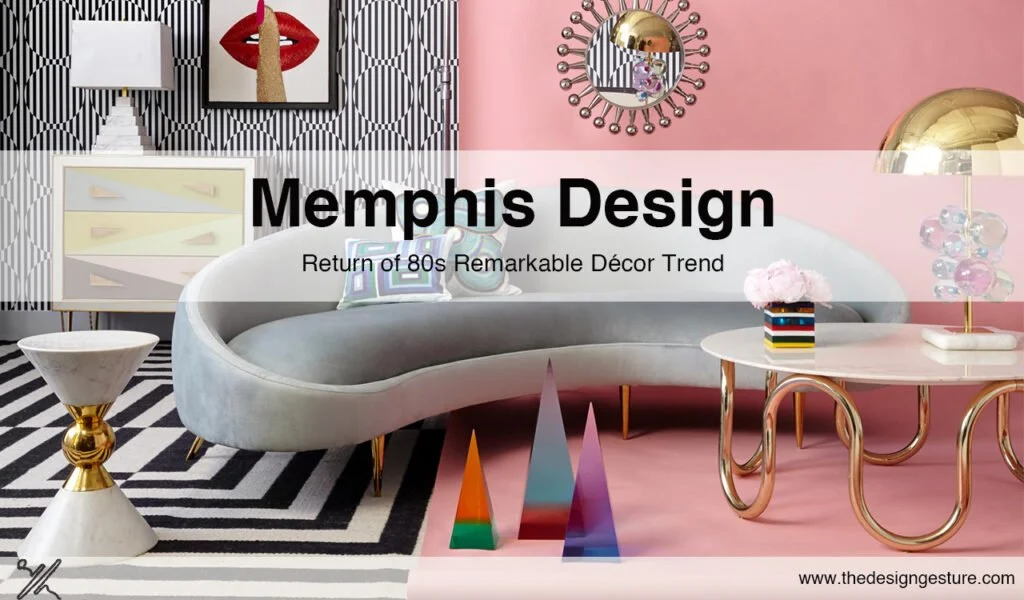
Memphis Design is making a comeback in a big way. The loud 80s look is back and it’s aesthetic is in vogue again, thanks in part to Gen Z and Millennial nostalgia and the 40th anniversary of its debut. It’s ubiquitous now, from fashion and graphic design to commercial packaging and branding.
One of the most identifiable design trends is the Memphis Style! Bright neon, primary and pastel colours, geometric designs, and bold, repetitious patterns are all hallmarks of the style. You can’t dispute the Memphis Group’s influence on contemporary interior design, whether you love it or despise it.
Memphis design is one of those trends that would have sounded ludicrous in the early 2000s, but is now back in vogue among tastemakers and influencers.
One of the most unlikely success stories in design history is the Memphis Design Movement. It began as a strategy for its authors to rail against and confuse elite perceptions, as so many artistic replies do. The outcome was an innovative aesthetic that continues to inspire today.
What is Memphis Design?
In the early 1980s, the famed Memphis Design collective of Milan-based designers created an important postmodern style known as Memphis Design. It was founded by the great Italian designer Ettore Sottsass (1917-2007), and it had a huge influence on 80s design, pushing for change with its bold mix of styles.
With its vibrant colours, clashing patterns, and radical attitude to design, Memphis Design was a contentious style that was not for the faint of heart. Today, Memphis Design is the subject of museum exhibitions and continues to inspire interior designers, fashion houses, graphics and typography designers, set and costume designers, and others.
Memphis Design is known today as the defining aesthetic of the 1980s, and understanding it completely requires a knowledge of the era in which it was born. Let’s take a look at Memphis Design’s history, as well as the people and influences who shaped it.
History
Ettore Sottsass, an Austrian-born Italian architect and designer, founded the Memphis Design Group in his Milan living room in 1980, bringing together a group of adventurous individuals from all over the world who shared a desire to disrupt the design world. With 55 pieces that premiered at Milan’s Salone del Mobile (now called the Milan Furniture Fair) in 1981, they unveiled their eye-catching, provocative, rule-breaking style, generating a buzzy love-it-or-hate-it kind of style that became instantly famous around the world.
Memphis Design was a reaction against the clean, linear midcentury modern design of the 1950s and 1960s, as well as the minimalism of the 1970s, with its decorative style filled with pop culture and historical references. Starting with the 1960s, Sottsass was involved in the Radical Design and Anti-Design movements in Italy.
His early work includes sculptural furniture he dubbed “totems,” which are now on display at prestigious worldwide museums such as the Metropolitan Museum of Art in New York City. Memphis Design was influenced by a resurgence of interest in the Art Deco movement of the 1920s, as well as mid-century Pop Art, both of which were popular trends in the 1980s, with a dash of 1950s kitsch tossed in for good measure.
Memphis Design was a hit with some people. Others thought it was obnoxious. “A shotgun wedding between Bauhaus and Fisher-Price,” as one critic phrased it.
Sottsass and his collaborators created unusual, whimsical, rule-breaking designs for decorative glass and metal objects, home accessories, ceramics, lighting, textiles, upholstery, structures, interiors, and brand identities. Sottsass famously quipped, “All we ever heard about when I was young was functionalism, functionalism, functionalism, it isn’t sufficient, sensual and engaging design is also important.”
Rendered Image of Karl Lagerfeld Bedroom
Legendary fashion designer Karl Lagerfeld and David Bowie were both huge supporters of the design style in the 1980s. But Memphis Design wasn’t for everyone, and by the end of the decade, the collective had disbanded, with Sottsass quitting in 1985 and several of the group’s other major designers pursuing solo careers after the band disbanded for good in 1988. Alberto Bianchi Albrici bought the Memphis-Milano brand in the 1990s and continues to produce the collective’s original 1980s designs.
Memphis Design has become a fountain of influence for multi-disciplinary designers, encompassing fashion giants such as Christian Dior and Missoni, as well as new generations of interior designers, type designers, filmmakers, and more, since the early 21st century, as nostalgia for 1980s style has returned.
So, what was the significance of the name Memphis Design for this Italian-born design movement? Its name is a pun on the Bob Dylan song “Stuck Inside of Mobile with the Memphis Blues Again” from his 1966 Blonde on Blonde album, which was playing on repeat in Sottsass’ living room the night the Memphis Design group had its first official meeting.
Memphis Design’s Defining Characteristics
Shattered preconceived notions of what constitutes excellent taste.
Defamed the Bauhaus design idea of form following function.
Unafraid to be loud, outspoken, passionate, playful, and unconstrained.
Created to elicit a strong emotional reaction
Uninhibited, loud, bold, passionate, playful
Colors in unusual combinations are used.
Bold, contrasting designs are used on purpose.
Simple geometric shapes are employed.
Black-and-white graphics are used in this project.
Edges and curves that have been rounded
Squiggles are something I’m fond of.
Terrazzo and plastic laminate are examples of materials used in varied finishes.
Unconventional shapes, like as round table legs, are used to defy expectations.
In What Way Is Memphis Style Returning?
In Los Angeles, Memphis design resurfaced in 2005. A year before his death, the LACMA displayed a survey of Sottsass’ creations.
Following Sottsass’ death, there was a surge in interest in the Memphis sound. It impacted high-fashion brands Missoni, Karl Lagerfeld, and Christian Dior, with the latter’s 2011 collection serving as a catalyst for the style.
Nathalie Du Pasquier, a founding member of the group, designed a range of patterns for American Apparel several years later in 2014.
Alessandro Mendini, who debuted in the first Memphis exhibition, designed a range of skate decks and clothes for Supreme in 2016.
West Elm debuted a line from contemporary Du Pasquier-inspired business Dusen Dusen in 2017, bringing the trend to a big box shop.
As minimalism took root in the 1990s, Memphis design fell out of favour. Despite this, some 40 years after its revolutionary debut, the “Less is Bore” design philosophy is back in style.
How To Apply Memphis Design In Today’s World
For better or worse, Memphis Design is deliberately dramatic, which can make it difficult to work with. It’s also one of those fashions that’s inextricably linked to its epoch, making the distinction between fashionably retro and antiquated a fine one to walk. Despite these challenges, designers all across the world are demonstrating that the style is more adaptable than you may think. Let’s take a look at some of the more recent Memphis Design variations.
Memphis Design As A Background
One of the most common methods to incorporate a Memphis Design pattern into the background is to use it as a background. Memphis was designed to call attention to itself, but the bright colours and chaotic patterns can also help foreground things stand out via sheer contrast.
A typical strategy is to create a kind of framing for the composition’s subject within the Memphis Design images. Alternatively, a background explosion of abstract colour can be created by scattering shapes directly behind the subject.
Memphis Miniature Artwork
Making a solid first impression has always been a priority for Memphis Design. It’s so potent that, like spicy sauce, a small amount is sometimes all you need to give your project a boost.
This is why, rather than relying only on showy visuals, many designers these days prefer to use small, scattered forms and lines to evoke Memphis Design. As a result, they are able to replicate some of Memphis’ joyous energy without all of the obnoxious show.
Memphis Design With Texture
Although traditional Memphis Design features flat colours and simple black-and-white graphic patterns, several modern designers have added additional variegated textures to the aesthetic.
Watercolour and acrylic paints, layered sketch illustrations, rough paper cut-out edges, and gradient are some examples. The technique not only lends a sense of 3D reality to a design that was already springing off the page, but it also creates shading that reduces the severity of Memphis Design.
Typography Using Memphis Design
Letterforms are good, predictable shapes for containing Memphis Design’s craziness. Consistent lettering, like a star, can serve as a focal point for the surrounding graphic elements, drawing them in and centring them.
Memphis design is frequently layered over the letters themselves. This is especially beneficial when working with 3D writing, as it provides the artist far more surface areas to work with when applying Memphis patterns. This style is best suited to artistic word-marks or hand-lettering projects that can afford to be colourful and inventive at the sacrifice of intelligibility.
Memphis Design With Organic Touch
Although Memphis Design was originally known for its harsh geometry, a common reassessment has attempted to incorporate flowing, oblong organic patterns back into contention. These are a logical extension of the wavy lines and spherical shapes that were popularised with the classic Memphis, instead of a significant departure.
While some may consider this to be a departure from typical Memphis design, that was never the objective. Memphis was known for violating the rules, so it’s only natural that it would break a few of its own.
Inside the Paradiso Ibiza Art Hotel, Miami modernism and the Memphis Group collide, creating a new hangout that puts art front and centre. The 60-room hideaway, located in San Antonio Bay on the island, is part of the Concept Hotel Group and features brilliantly coloured decor by Ilmio Design.
The curving Art Deco-style façade of the hotel has a pair of vertical pink fantails that appear as they belong in South Beach. Inside the flamingo pink foyer, guests will encounter an undulating, sunken seating area with curved forms and sweet colours. Above the aqua-blue-tiled reception counter, neon tube lighting hangs from the ceiling, with a wavy Memphis-style design that recurs throughout the hotel’s interiors. Pop art is displayed throughout the Paradiso Ibiza Art Hotel.
The Paradiso Ibiza Art Hotel has an art gallery that is open to both guests and the general public, as well as a residency programme called “Zero Suite.” In exchange for putting their expertise on display and taking over the hotel’s social media channels, creatives are housed in a transparent micro workstation cube in the lobby where they may work and live for free.
A library with modern art publications, an outdoor theatre, and a tattoo studio are available to guests who want to depart with a permanent souvenir of their stay at the Ibiza hotel.
The private guest rooms of the Paradiso Ibiza Art Hotel are just as vibrant as the lobby, with bursts of yellow, pink, and green that reflect the 1970s theme. They were designed as an extension of the gallery space and are decorated with a changing display of artworks, while the furniture pays homage to Ettore Sottsass’ Memphis designs with bold curves and whimsical nature.
The hotel’s rosy-hued swimming pool and lavender tropical vegetation, on the other hand, are on point for the Instagram age.
Game Over Pizza
Photo by M-Rad
At this Los Angeles eatery, diners are transported to a Memphis fever dream, where they may order pizza slices with a heavy dose of nostalgia.
Everything from the huge arcade games to the squiggly patterned walls bears homage to a bygone era, with neon-lit Hollywood strip malls serving as inspiration.
The interiors were designed by M-RAD, who used pink and blue neon lights, a tubular couch, and terrazzo-patterned tables straight from the Saved By the Bell canteen. The aesthetic is completed by a glass brick counter lined with stainless steel and leather stools.
Diners can devote themselves to Game Over’s collection of ancient arcade machines or whatever 80s cult blockbuster is playing on its big-screen TVs that night after indulging in a 20″ pie.
Saved By The Bell
With its Saved By The Bell-themed décor and old VHS collection, this time capsule apartment in Texas transports you back to the 1990s.
Guests are watched over by New Kids On The Block posters while they sleep under Memphis-patterned bed covers before tucking into a bowl of Lucky Charms for breakfast.
The owner of the two-bedroom US vacation rental – which starts at £197 per night – has filled the flat with vintage mementos such as an N64 system and a Talk-boy cassette player, as well as 90s music magazines.
An accurate reproduction of The Max cafe from the cult TV show Saved By The Bell serves as the main point. The postmodern features, such as the zig-zag door handle and the colourful vinyl-covered benches, will appeal to fans of the show.
Don’t worry if all of this makes you nostalgic for the past. A collection of Saved By The Bell videos is also available in the flat.
The Ultrafragola Mirror
The ultimate selfie mirror that was showcased at Raquel Cayre’s Dream House exhibit in 2018 and has since been owned by celebrities like Katherine Bernahardt, Bella Hadid, Lena Dunham, Kim Jisoo of Blackpink and many more and is also the mirror that inspired this article.
Mobili Grigi, a far-out bedroom series designed by architect Ettore Sottsass, was unveiled by Florentine manufacturer Poltronova at the Eurodomus 3 trade show in Milan in 1970. It was part of the brand’s ambition to bring revolutionary industrial materials, which had previously changed nautical and automobile design, into the house, and it was made of smooth, vacuum molded plastic and cast fibreglass. With one exception: the neon-lit pink mirror known as Ultrafragola, or “the ultimate strawberry,” the radical collection was made in a very limited quantity.
The thermoformed plastic reflector (which appeared a decade before Sottsass founded the Memphis Group) was designed to highlight femininity—the contours of a woman’s figure, the waves of her hair, and a few other key features of her anatomy. That’s what we’d call objectification nowadays. However, women all over the world have flocked to the mirror ($10,500; now available in LED), which is still handcrafted using the original 1970 mould.
The Memphis Uprising Continues To Gain Momentum
Memphis Design was more than just a wild guess or a prank by bored designers. It was a defining moment for a decade and an inspiration for a generation. Its energy, freedom, and bright colours are still relevant today, which is why so many people find it so appealing. However, because of its boldness, it can be divisive. Make sure you’re dealing with a professional designer who understands your audience’s “bad taste” if you want to use Memphis Design to excite them in the correct way.
Architecture is undeniably a growing industry in India with a brilliant scope for the future. From the country that gave birth to path-breaking Architects such as Raj Rewal, BV Doshi, Brinda Somaya, Rahul Mehrotra, Chitra Vishwanath, and countless others, it continues to raise thousands more with the potential to skyrocket. With new and interesting designs being built every day, the standards are rising and so are the expectations. Although the design is completely subjective, there are some projects that everybody agrees on. On such rare occasions, I would say that the profession has won.
In the list below we have compiled the top 10 up and emerging architects in India that are revolutionizing the profession daily. Irrespective of a mention, we completely respect the work done by the Architects that are not enlisted and do not, in any way, disregard their valuable work and contribution to the field.
This list is tentative and subjective.
Emerging Architects in India
Indigo Architects:
The folks at Indigo Architects believe in the quest for a contemporary rootedness in the ever-changing pluralistic environment. They strive to re-integrate traditional wisdom in construction with respect for the natural resources as that of our forefathers.
They also believe in the architecture design process should be appropriate for their period and place, which is anchored in these sensitivities. The firm deals with various types of projects such as residential, industrial, housing, healthcare, hospitality, cultural and educational institutions, interiors, and landscaping solutions. They have extensive work experience in conservation projects as well.
Origin/ Birth: 1998
Location(s): Shilaj, Ahmedabad (HQ)
Chief Architects: Mausami and Uday Andhare
Style of Architecture: Contemporary
What Services Provided: Architecture, Interior Design, Landscape
Projects:
Natarani Amphitheatre
Affected by the Sabarmati riverfront development project in Ahmedabad, the theatre lost a major chunk of the staging area to the riverfront edge, rendering it inoperable for several years. In the setting of an existing modern building, the architecture office renovated the site making it an attractive marvel in the Natarani amphitheater. The theatre’s architecture reconstructs the space with historic materials and a fresh design concept. The structure is true to its philosophy of thermal drainage by using the exposed lime bricks and detritus.
Completed in 2008, the 450 square yard building for Usha and Balwant Brahmbhatt in the village of Koba, Gujarat, is a masterpiece, to say the least. Situated on the banks of river Sabarmati, the site had undulating landscapes of silt mounds stretching along the riverside which turned out to be a challenge. The design uses a mix of defense and advancement from the heat and towards the view respectively, aptly accentuating the application of architecture design.
ZZ Architecture office is famous for its unique approach to architecture and interior design, the method of uncovering the personal style of each client. In the past few years, ZZ Architects has become a leading full-service company based in Mumbai, with offices in the fields of Luxury Architecture, Interior Design, and Decor, and has been involved in business, finance, and industrial leaders, society, movies, and politics across major cities in the country.
The firm excels in commercial, residential, health clubs, spas and salons, hospitality, pharmaceutical, exhibition, institutional, mixed-use, and high-end residential interior projects.
Origin/ Birth: 2002
Location(s): Mumbai, Maharashtra
Chief Architects: Ar. Krupa and Ar. Zainuddin Zubin
Style of Architecture: Modernist Architecture, Contemporary
What Services Provided: Architecture, Interior Design, Decor
Projects:
Mandhana Penthouse, Mumbai
Located in one of the most spectacular places in Mumbai, this luxury penthouse offers a wonderful view of Mumbai’s city centers, highlighting the application of architectural design. With a splendid bottom-level pool decorated with mosaic, which gives the pool a transparent feeling, this 12000 sq. ft duplex property has all kinds of utilities.
This renovated house is an example of the grandeur and sophistication of architecture in India. A family home in Thrissur, the bungalow boasts a fiber optical illuminated pool which is accessible from the official living room and is built-in multi-level areas taking into account the function of the rooms.
The concept of the firm is to design approaches that go beyond the production of the obvious and the familiar, to make our environment more enjoyable and sensory experiences.
Since its founding, the studio has won many accolades for different projects, both domestically and internationally, and has published widely in national and international publications like Dezeen, Wallpaper, Archdaily, etc. The studio works have been exhibited as part of the Indian Pavilion in major international fora, including the London Biennale 2021, highlighting architects in India.
Origin/ Birth: 2005
Location(s): Bengaluru, Karnataka
Chief Architects: Smaran Mallesh, Vikram Rajshekar and Narendra Pirgal
Style of Architecture: Modernist Architecture
What Services Provided: Architecture, Interior Design
Projects:
Cloaked Residence
‘Cloaked’ is an architectural design process intervention, with a pitched monolithically into a narrow urban environment. A dominant town fabric is encircled on all sides. The design was merged on two edges into a complex three-sided profile with acute angles. At varying horizontal levels the building seems to levitate and adds to the façade surfaces a certain deepness.
Badari Residence is a house built on a standard 2400sft, narrow urban site. The façade and interior of the building have been designed as an assembly of a succession of episodes that seeks superior application of architectural design.
MayaPRAXIS is an architecture and landscape design studio. Design at mayaPRAXIS is an innovative and cooperative architecture office. They want to investigate the soul of the project – something often concealed under the ‘functional’ needs and finances of the project. They follow a path of many dimensions, types, and environments – architecture, urban design, interior design, furniture, exhibition, and art.
Origin/ Birth: 2001
Location(s): Bengaluru, Karnataka
Chief Architects: Dimple Mittal and Vijay Narnapatti
Style of Architecture: Contemporary
What Services Provided: Design, Building Consultants & Contractors
Projects:
Hotel in Bahrain
The Persian Gulf is located in Bahrain, inspired by the scenery and curved shape in its architecture. The form is based on the analysis of the existing sun path and wind patterns during warm and moist weather. The unnecessary decoration is addressed for its external shape; however, interiors are designed with a joint which consists of separate areas with diverse storylines, a major step for architects in India.
In Bangalore, Kachra Mane; India is a structure built to an existing former dwelling. The Kachra Mane or scrap house is named because of the limited use of resources and reused pinewood for packages used to build the new house. The outer walls of Pinewood with the glass keep a light ventilated inner space, the surface is lightweight and the structural components are mainly restored. A perfect example of the application of architectural design to enhance a space.
Biome Environmental Solutions is an ecology, architectural, and water design enterprise situated in Bangalore. Designers, architects, civil engineers, engineers, and urban planners from different regions of the world are part of the offices’ diversified workforce. The designs are carried out through group discussions and exchanges and regular meetings by diverse members of this team in constant cooperation with each other, revolutionizing architecture in India.
What Services Provided: Architectural and rainwater harvesting design, Environmental planning consultancy, and Comprehensive water strategizing.
Projects:
Yellow Train, Coimbatore
The brief given to the architecture office was the Waldorf education system set by the Tamil Nadu education board’s bye-laws, which greatly emphasize child-centered education in which mental, spiritual, physical, and psychological momentum are given greater thrust than only academics.
There is therefore adequate space and detail offered in typical classrooms too, to accommodate and stimulate group-based activities in the kindergarten and the main wing, which is the current first phase. A classroom consists of three places, the teacher leads to blackboards and seats, ringed sections with groups with walls and facilities for hanging children’s works, and nooks that provide individual consideration.
The location is situated at the foot of the Sahyadris, where a resort for ISKCON’s devotees, Mumbai has been developed. The brief includes seminar, prayer, wellness, catering, and a Gaushala for 100 cows, other than accommodation. A holistic development method meant that material from ponds excavation was subsequently used for the production of compressed, stabilized earth (CSEB) bricks for the walls and CSEB tiles, from which preconceived roofing parts were produced. Use of the Sill-Lintel CSEB “U-Blocks” minimized centering and finishing works necessary. Quintessential of architecture in India.
Morphogenesis is one of the premier architecture and city design practices, awarded for its architecture design process and has offices in Mumbai, Bengaluru, and New Delhi. The company understands regional architectural traditions and implements passive design solutions in a unique contextual language regularly. Morphogenesis is the only company with more than 50 percent women on all levels in the WA100 List, the world’s largest architecture company that is gender-neutral. It is the first Indian company granted the Getz Prize to the Singapore Institute of Architects with projects in 8 countries, 110+ International and National Awards, and 850+ publications worldwide.
What Services Provided: Masterplanning, Residential, Commercial, Workplace,. Institutional, Hospitality, etc.
Projects:
IILM Campus
The project is an accommodation facility for students within the current educational campus of the Integrated Learning in Management Institute in Greater Noida. The architecture design process is inspired by the urban structure of Shahjahanabad, the old town of Delhi, a courtyard, cluster, and street living. The idea was to design an architecture that would promote an ideological cross-pollination of young minds in a socio-cultural environment.
Gurugram’s Trump Skyscrapers will become North India’s highest twin towers reaching an altitude of 200 m. This pioneering proposal seeks to revolutionize the typology of luxury houses in India by incorporating the essence of the vertical bungalow. The place, which was the key contributing factor to the construction, overlooks the golf course on the western side. The morphological design is achieved by breaking down the straight shape into two tower blocks, which are articulated to form a six-tower shape.
In an ever-changing world, Architecture BRIO actively contributes to the production of contextually suitable, sustainable design solutions for architecture in India.
The studio’s work deals with new approaches to perceive the frequently paradoxical interrelationships between the city, architecture, scenery, and the interior world. There is an increasing demand for a healthy relationship with the natural world in our built environment. Similarly, the unprecedented increase in urban or rural areas in India and worldwide needs to be addressed urgently.
Origin/ Birth: 2006
Location(s): Rotterdam, The Netherlands, Mumbai, Maharashtra.
Chief Architects: Shefali Balwani
Style of Architecture: Contemporary
What Services Provided: Architecture, Sustainable, Interior Design
Projects:
Riparian House
A rugged countryside, dubbed the Western Ghats, rises a few minute’s drives from Mumbai. The sunset can be enjoyed inside the house overlooking the northern slope of Irshalgad Hill and westwards while the river crosses the land. The kitchen and the open sky courtyard are centrally located. Two bedrooms at the two distant ends are bordered on either side. The architecture office placed those areas in the earth with windows brimming from above and on the side of the river with enough light. On the front of the house, there is a master bedroom, a bathroom, dining, and living room.
The Treehouse Villa is on the cliff surrounded by the meandering river panorama of a 160-acre tree sort hilltop property. A stone’s throw from the Kuda groves at Tala, on the west coast of India. The Treehouse Villa is designed to celebrate this forested tropical environment with a main expansive glass room under a dominant stalked ceiling, accentuating architecture in India.
Architecture is a living, dynamic and smart force that encompasses both the past, the present, and the future.
The architecture office builds information and builds procedures. Their architecture answers a variety of challenges through integrated design thinking and is capable of creating health, happiness, and well-being through molding a built environment and leading the way for a changing human society.
Origin/ Birth: 1990
Location(s): New Delhi, India
Chief Architects: Anupama Kundoo
Style of Architecture: Traditional craft traditions and construction techniques
What Services Provided: Design, Interiors, and Urban Solutions
Projects:
Hut in Petite Ferme, Auroville, India
These dwellings are the most essential simple housing made up of a stalk roof (woven cocoa leaves), supported by untreated casuarina members, connected, with cocoa cords.
The building is built atop rough granite stelts, preventing the termites from reaching the timber. The top floor consists of split supari or pakamaram stems, which are likewise attached to a rope. Furthermore, granite pillars are employed to create graduated transitions from within to exterior, including courtyards in the bathrooms in the living room.
This is an architecture design process with a low environmental effect, pleasant interaction with nature, and is completely dependent on the sun for its power.
The Line of Goodwill designed by the architecture office is an urban cohousing project as the first compact high-density building for Auroville which will take a bold urban stride towards the compact pedestrian city planned by its chief architect, Roger Anger, fifty years after its founding. The aim was to establish a new typology for the “urban ecological communities,” which is neither a tower nor a homogeneous low-rise development but considers collective housing as a “hillscape of coexistence” and its social infrastructure. The purpose was to propose a lively and comprehensive response to different urban difficulties by conceptually and practically integrally reflecting on architecture and urban design.
Directed by Sunitha Kondur and Bijoy Ramachandran, the architecture office, Hundred Hands is a multidisciplinary studio with an urban vibe. The architects have re-oriented their concepts to the urban setting by reflecting on concerns of scale, character, spatial and visual effect as well as re-enacting the public domain, which is so important to Indian city urbanism, frequently meticulously crafted analytical drawings.
Origin/ Birth: 2003
Location(s): Bengaluru, Karnataka
Chief Architects: Sunitha Kondur and Bijoy Ramachandran
Style of Architecture: Contemporary
What Services Provided: Architecture, Interior Design
Projects:
Center of Hope- Trichy
Addressing the problem of establishing a 30 000 sqft orphanage and a community at 500 rs./sft. and still producing something aesthetically appealing, the generous accommodation addresses the hard environment in Trichy through its architectural design process. With the decision to employ them, the vaults had a clear aesthetic effect, the bric was able to minimize greatly the volume of steel needed, and the heat gains in the structure.
A 200-seat auditorium, workshops, a bibliothèque, guest accommodation, and a café are located in this public multi-use complex. The components of the program are grouped around spacious internal public spaces, which are meant both for major occasions and for congregations, smaller concerts, art exhibitions, and others.
The architecture design process includes compartments that are displayed to the outside and organized beneath the transparent façade framed by a three-deck concrete entryway.
MuseLAB is a complete design studio that provides a tailor-made and cutting-edge application of architectural design approaches. An emphasis on single surroundings, decor, and furniture that are extremely individualized. Huzefa Rangwala and Jasem Pirani established this studio in 2012 with a common love of design. Each area and product encompasses integrity and is made carefully, skilfully, and carefully.
Origin/ Birth: 2012
Location(s): Mumbai, Maharashtra
Chief Architects: Huzefa Rangwala, Jasem Pirani
Style of Architecture: Contemporary, Modernist
What Services Provided: Architecture, Interior Design
Projects:
Hide ‘N Seek
This property is an amalgamation of two 2 BHK homes in Bombay in the peaceful and guarded neighborhood of Vikhroli. Both apartments differ in planning and can only be connected to one location where an existing bedroom shares a wall with the other apartment’s living room. The units extend the width of the building when linked. The customer’s brief was simple: they wanted a large 3 BHK apartment with a study and a colorful and livestock-friendly flat. Definitely, a benchmark set by Architects in India.
Hide ‘N Seek
The Confederate Rose
In a magnificent high-rise, this 7000 sq. ft Pune property with a private swimming pool. This house is quite large, has three bedrooms (including a guestroom) and a living/dining area of 1,200 square feet, an outdoor double-high terrace with swimming pool, a large 800 square feet den, a home office, a cupboard, a dry kitchen and a WC and a separate personnel quarters and a service area. The living room also has a private bathroom.
The customer wanted the house “a lively and joyful place.” He was also clear that the design aesthetics had to be expressed in the project – a visual festival of colors, patterns, textures, and materials, all covered by classical details, expertly achieved by the architecture office.
Architect Riken Yamamoto was awarded the Prestigious Pritzker Prize this year, for his five-decade-long contributions to the built environment and his concern for the community that habited it. What it takes for an established architect who has won many prizes to rather confess “I am not very good at design”? Interestingly Yamamoto did confess so in 2012, in the foreword to his monograph. Quoting Yamamoto

“I am not very good at design … I am well aware of that. However, I do pay careful attention to what is around me. By what is around me, I mean the surrounding environment, the existing local community, circumstances in contemporary society …”
Humility, at its peak, isn’t it? Especially with star architects in the background. He is another humble pioneer from the Land of the Rising Sun, awarded the “Nobel of Architecture”. True Humility is from within, but the Jury highlighted the humility not only in Yamamoto but also in his works. The intrinsic humility in his life, design philosophy, and works is explored below.
Personal Life Influencing his Design Philosophy
Beijing-born Japanese Architect Riken Yamamoto shifted to Japan post World War 2, where he was introduced to the Japanese Machiyas and its distinct private-public space interaction while still fulfiling the needs of the family, which later became a signature in all his designs. He graduated with a Bachelor’s degree from Nihon University in 1968 and received a Master of Arts in Architecture from Tokyo University of the Arts in 1971.
Architect Hiroshi Hara, his Mentor who was against Modernism and Metabolism had significantly influenced Yamamoto’s design direction. Moreover, in general, most Japanese architects who were born in the 1940s including Tadao Ando, and Toyo Ito were in their twenties when the Metabolist period was developing in Japan, and within a decade, there were questions against post-war Metabolist ideas and student protests. Influenced by these, this generation of architects deviated away from Modernism and Corbusian ways of the mass production machine image and shifted their design strategy to light and floating images since the 1970s, and Yamomoto born in 1945 was no exception to this.
After graduating, among architects who travel to visit explicit architectural structures, Yamamoto traveled with his mentor Hiroshi Hari across countries and continents by road, visiting villages, absorbing the essence of vernacular architecture, and understanding communities and cultures. After exploring Europe to South America, followed by Iraq, India, and Nepal, he concluded that the connection between private and public space in the Japanese Machiya, the public/private threshold was universal though the appearances (form and materials) were different.
A Design Philosophy, Rooted in Community
In 1973, Riken Yamamoto established his own practice, namely Riken Yamamoto & Field Shop. He realized the potential in such thresholds to build and strengthen local communities, and based his philosophy on transparency; ‘transparency, in form, material and philosophy’. Yamamoto is on a mission to erase words like trespassing, private property, privacy, boundary wall, etc, from the dictionary.
Irrespective of the building’s categorization as private or public, Yamamoto always inserted a public space that increases the chance for encounters and awakens the community spirit. According to him privacy only pushes the communities away from each other. He believes it is still possible to maintain privacy and respect the freedom of each individual, even when communal spaces are created.
His Notions about Housing
Though Yamamoto has worked on projects of various scales and functions, his residential projects were groundbreaking, fundamentally questioning the privacy often associated with homes. He has openly expressed his dissatisfaction over standardized housing, which was intended to create standardized families and thus a standardized working force. He sees this approach of ‘one house = one family’ as a failure of the Japanese system of governance.
His criticisms of standardized housing would be relatable if the notions of traditional Japanese housing were recollected and understood. His contemporary notion of housing was born by fusing the past and considering the need for socializing in the present is explored through analyzing some of his projects.
Yamakawa Villa was one of his first projects for one of his first clients, Mr Yamakawa. The client wanted a villa with a spacious terrace as big as a living room where he could spend time only in the summers. Yamamoto designed the whole Villa as a terrace dotted by clusters of built cubic volumes covered with a gabled roof. In this project, the terrace was made the foreground and the built elements that housed the room, bathroom, toilet, and kitchen were made the background. Transparency was at the core of the project and with background-foreground reversal this project seems like a public project rather than a private holiday home. His subsequent housing projects followed a similar approach.
The Ishii House was designed by Yamamoto to accommodate two artists in Kawasaki. One of its unique features was a pavilion-style room that extended outward and served as a performance stage, with stepped seating arrangements. The rest of the living spaces were located underground. His ideas were accentuated in his first social housing project, built in Kumamoto in 1991.
In this project, he used a central square that can be accessed only by passing through one of the 110 homes to accentuate the communal heart while respecting the privacy of individual families. He envisioned social housing as more than just a space where families live and raise children. He thought it was necessary to open up housing to the local community by inserting communal spaces and activities in order to ensure that even people who inhabit houses alone won’t remain isolated.
He has extended the idea of transparency and communal spaces in his other projects too. For instance, in his campus for Saitama Prefectural University in Koshigaya, built in 1999, Yamamoto fused the nine buildings into a series of terraces that serve as both walkways and communal spaces, leading to glass volumes that allow views from one classroom to another, and from one building to the next, encouraging visual interaction and interdisciplinary learning.
Further, his fire station in Hiroshima, built in 2000, is a seven-story box, clad with glass louvers on all sides, allowing a direct view of the action taking place inside from the street. He believed that heroic civil servants should be celebrated in full view and that inspired him to design so. He applied similar social principles irrespective of designing elementary schools, university campuses, or art museums.
Yet again another solo male practitioner awarded the Prestigious Pritzker Prize is stirring controversy. The awarding committee is being bombarded with questions on gender neutrality and whether it has actually evolved to the extent that the profession itself has. Amidst controversies and concerns, what really fetched Architect Riken Yamamoto the award is worthy of attention, especially in the hour.
Quoting the Jury Chair Alejandro Aravena who was also a 2016 Pritzker Prize Laureate “One of the things we need most in the future of cities is to create conditions through architecture that multiply the opportunities for people to come together and interact. By carefully blurring the boundary between public and private, Yamamoto contributes positively beyond the brief to enable community…He is a reassuring architect who brings dignity to everyday life. Normality becomes extraordinary. Calmness leads to splendor.”
Can architecture do justice to a commoner’s daily life? What role does architecture play in community building? Questions that Architect Riken Yamamoto has answered and left the rest of the community to ponder upon!
FAQs (Frequently Asked Questions)
Q. Who won the Pritzker Prize winner 2023? David Chipperfield won the Pritzker Prize winner 2021.
Q. Who won the Pritzker Prize winner 2022? Diébédo Francis Kéré won the Pritzker Prize winner 2021.
Q. Who won the Pritzker Prize winner 2021? Anne Lacaton and Jean-Philippe Vassal won the Pritzker Prize winner 2021.
The fundamental parts that are involved in making a structure are called building components. They are the basic elements of every construction because they are in charge of a building’s overall strength, durability, safety, usability, and aesthetic appeal. Each sort of building component employed in different structures has a certain function. We’ll talk about different types of building components and how they’re used to construct structures in this article.
Different Type of Building Components
The different types of building components include the following:
The lowest most component of a building structure that is in contact with the earth directly is the foundation. As it supports and carries the weight of the entire building to the ground, it is the most important structural component. It should be sturdy enough to handle the weight of the building, the load of the residents, and any outside factors like wind, earthquakes, and floods. Typically, it is composed of concrete, stone, or brick.
The support of constructions can be provided by a variety of foundation types. The three most common types are pile foundations, shallow foundations, and deep foundations. Smaller buildings frequently have shallow foundations, but larger structures or those constructed on unstable soils frequently have deep or pile foundations. The type of foundation used depends on the height of the building, the soil conditions, and the construction codes. A solid foundation ensures the stability and security of a building over the long run.
Walls
Walls are vertical construction components that divide and confine a building’s interior space from its outer space. They serve to protect the roof and floor constructions from weather conditions including wind, rain, and temperature in addition to sustaining the roof and floor constructions. Walls provide structural stability as well as protection from the elements, noise, and fire. They could be made of brick, concrete, metal, wood, or another material.
The sort of wall used in the structure depends on its use as well as the local climate. For instance, reinforced concrete is used in the walls of buildings in earthquake-prone areas so that they can withstand the lateral forces that an earthquake causes. The location and kind of structure also have an impact on the wall thickness. For instance, to maintain the warmth of the structure in cold areas, thicker walls with insulation are needed.
Columns
The weight of the building is supported by columns, which then carry that weight to the foundation. They can be cylindrical, square, or rectangular in shape, and are typically built of wood, concrete, or steel. They are strategically positioned within the building structure. To support the floor and roof constructions, columns are positioned at regular intervals along the building’s structure.
How the columns are built depends on the type of foundation being used, the height of the building, the load carrying capability, and the design of the columns. To support the weight of the structure as well as any external influences like wind, earthquakes, and floods, the columns must be strong enough. Also, these building components are used in the creation of distinctive architectural concepts and styles.
Beams
The weight of the floor and roof constructions is supported by beams, which are horizontal structures, and is then transferred to the columns. They can be rectangular, square, or T-shaped in design and are typically composed of steel or reinforced concrete.
Beam designs are determined by the weight they support and the distance between the columns. The floor and ceiling structures’ weight as well as any outside forces like wind, earthquakes, and floods must be supported by beams that are strong enough to do so.
Roofs
The roof is a building’s highest structural component that covers and shields the interior space from outside elements like rain, wind, and temperature. The roofing material used for a structure will depend on its location, price, and aesthetic choices. Roofs can be flat or sloped. Several types of materials, including concrete, clay tiles, metal sheets, shingles, and asphalt, are used to construct roofs.
The local temperature, the kind of building, and the materials used all influence the roof’s design. For instance, buildings are built with steeply pitched roofs in regions with heavy snowfall to prevent snow accumulation. The ventilation, lighting, and energy-efficiency of the building are also impacted by the roof’s design.
Floors
Floors are horizontal structures with a surface for people to walk, work, and live on. They could be made of wood, concrete, or tile and supported by beams or columns. The purpose of the building also has an impact on the selection of type of floor. The dimensions of floors are determined by the weight they sustain and the spacing between the columns or beams. Residential constructions require comfortable, appealing flooring, but commercial or public structures require sturdy floors that can withstand high traffic. The thickness of the floors is determined by the weight that they must bear.
Doors and Windows
A building’s entrance and evacuation are made possible by its doors and windows, which also let natural light inside. They are crucial for controlling temperature and ventilation as well. Depending on the building’s design, location, and security requirements, a particular door or window may be used. By permitting solar heat to enter the building during the colder months, windows also play a significant part in a building’s energy efficiency.
Staircase and Elevators
Connectivity to the various floors of a building is provided vertically by stairs and/or elevators. They are especially important in multi-story structures like office buildings and high-rise residences. The purpose of the building and the anticipated number of users will determine the design of the stairwell or elevator. When constructing stairs and elevators, it’s crucial to take accessibility and safety into account.
In conclusion, the fundamental parts of any building structure are its building components. They fulfil certain functions and are crucial in establishing the building’s strength, durability, and utility, ensuring that a structure is both practical and aesthetically pleasing. Buildings are constructed using a variety of building components, such as a foundation, walls, roof, floors, doors and windows, columns and beams, stairs, and elevators.
The design and type of a building components are dependent on its function, the materials available, the local environment, and the placement of the building. Each type of building component is utilised in a building structure has a certain function. So, selecting the appropriate building components is crucial for a building’s durability and functionality.
When we think of color in terms of home design, we frequently focus on how the colors appear rather than how they make us feel.
The study of colors as a factor in influencing behavior is known as color psychology. For his investigations into the characteristics and significance of colors in our life, Carl Jung has been recognized as one of the pioneers in this field. According to a remark from Jung, “colors are the subconscious’ native tongue.”
In addition to these advantages, color therapy can raise consciousness and assist people in realizing the importance of incorporating particular colors into their daily lives. Additionally, it can support a body’s natural healing process, promoting general health. People’s emotions can be affected by the characteristics of colors.
The majority of people today view color therapy as a supplemental or alternative medicine treatment.
Chromotherapy, commonly referred to as color therapy, is a type of therapy that makes use of light and color to address particular mental and physical health issues. This type of therapy dates back to the time of the ancient Egyptians. They used colored glasses and sunlit rooms for therapeutic purposes.
Chromotherapy is a form of medicine that uses wavelengths in the visible spectrum (colors we can see) to treat various illnesses. It was developed from traditional color-based therapies.
Unobvious sensations, like the flavor of food, are influenced by color. People’s emotions can be affected by the characteristics of colors.
Chromotherapy is employed in spas and wellness facilities in today’s much more advanced period. Light therapy and Aromatherapy, a brand-new and developing wellness discipline, are both used as therapies. Different colors target various body regions and provide various effects. If they wish to unwind or feel tranquil, sauna users can select blue light. If they wish to detox, they can select pink light.
Three fundamental qualities can be used to distinguish and categorize colors:
A color’s name is hue.
Value/Tone refers to the hue’s degree of lightness or darkness (how much white or black is present). High values are brighter and are referred to as tints, whilst low values are darker and are referred to as shades.
Color vividness (from light to intense) is measured by chroma/saturation. High chroma is more vivid than low chroma, which seems washed out. In other words, this is how saturation changes when it approaches or moves away from grayscale values.
According to color therapists, color can enter our bodies through either our skin or eyes. Each visible hue has a certain wavelength and frequency. Every distinct frequency affects people differently and serves various functions. Typically, warm hues are employed for energizing effects while cold hues are used for soothing ones.
You may either do it visually, by gazing at a given color and hoping that your body will react as you want it to, or you can do it physically by reflecting certain colors onto certain regions of your body in an effort to treat a specific condition.
Despite significant growth in popularity over the years, color therapy is still not a widely used therapy in Western medicine. It is viewed as being quite experimental by many medical professionals.
You can make your living place happier and more contented by applying color therapy to home décor. Since colors are proven to affect our mood, using them effectively in the house is crucial. Each color has a unique frequency and vibration that can help your home feel good and set the proper atmosphere.
Colors and Vaastu go hand in hand. If you want to paint the walls purple, stick to light shades like lavender or light violet and only use this hue in the east, west, and southeast corners of the room. For a calming and comfortable night’s sleep, choose purple or violet colors in your bedroom. Pink is another fire color used in feng shui.
A Synopsis of Color Therapy’s History
It is no secret that the sun and its light source, or lack thereof, may have a significant impact on us. Some nations started experimenting with color and its therapeutic properties thousands of years ago.
Color therapy and healing are well recognized in Egypt, Greece, and China. Several instances include:
Changing the hue of space with the hopes of curing a given ailment.
using natural colors in their environment (blue from skies, green with grass, etc.)
Crystals were used in the healing rooms to diffuse the sunlight.
As far back as 2000 years ago, there is evidence of attempts to use color therapy for healing. Johann Wolfgang Goethe, who researched the physiological effects of color, wrote several books about it as it grew in popularity over the years. However, as we just discussed, a lot of people are wary of the use of color and light in treatment or healing.
What is Art Therapy?
A distinct but connected area of applied psychology is art therapy. It derives from psychoanalytic views from the 1970s, which contended that some of our feelings and experiences can only be communicated through pictures and colors.
Color therapy types
Different colors are said to be able to treat various illnesses in color therapy. According to color therapists, your physical state may be caused by a lack of a particular color. The most popular hues used in color therapy are listed here, along with suggestions for how to use each one.
Red can excite or revitalize someone who may be feeling down or worn out. Red is used cautiously in color therapy, since it can potentially agitate those who are already agitated. The fire element is symbolized by the color red in Feng Shui. Red may be overpowering when used excessively in home decor.
Red can be combined with paler hues of other colors to create a harmonious effect.
Blue is a chromatherapy color used to relieve pain and sadness. Darker blue hues are thought to have sedative effects as well, making them beneficial for those who struggle with insomnia or other sleeping disorders. When trying to create a relaxing atmosphere, blues are a fantastic choice. Most rooms look best in blue, notably the kids’ room and the study. Bathrooms can also benefit from the usage of blue tones.
Furthermore, reliable research indicates that blue light during the day can enhance:
alertness
attentiveness,
Response,
and general attitude
Blue light, however, can injure humans at night because it interferes with our circadian cycles or biological clocks. This is due to the hormone melatonin, which promotes sleep in our bodies, being suppressed by it.
Aromatherapists claim that because green is the color of nature, it may calm and soothe a person. The color green can lift your spirits. Shades of green can be used in your home’s décor in a variety of ways, from walls to furnishings. Including green in your home’s decor can give it an earthy, grounded sense.
Yellow can uplift your spirits and make you feel joyful and hopeful. Yellow is the greatest color to use in your home if you want to make it more cheerful. You can use this color for the exterior of your property. Traditional-style homes look best with this incredibly versatile color.
Use softer yellow hues in bathrooms and bedrooms to create a cozier atmosphere. If you have children at home, you can combine various yellow and white tones on pillows and wallpaper.
Like yellow, orange may be utilized to make people feel joyful. It is also believed that the vibrant, pleasant color might increase hunger and mental activity. Orange fosters friendliness and extroversion while also inspiring creativity. Children’s play spaces, art studios, and gyms are the greatest places to use this color. Orange is a common color option for kids’ rooms since it boosts productivity and keeps kids happy and upbeat.
The Crown Chakra, which is situated at the top of the head, is connected to it. Clarity, dreams, spirituality, sleep patterns, dreams, the pineal gland, and light sensitivity are all connected to it.
The warmth of the surroundings may also affect color preference. People who are overheated choose cool colors like blue and green, whereas those who are chilly frequently choose warm hues like red or yellow. Additionally, it has been discovered that introverts are more drawn to cool colors whereas extroverts choose warmer hues.
Here are some ideas to help you better see and plan your space:
Space might appear larger or smaller depending on the color used.
Using too much red in your home decor might lead to stress and behavioral problems.
Blue can cause cough, colds, and other comparable illnesses when used excessively.
Need healing and color therapy? Use various green hues.
People with behavioral concerns should wear yellow.
Violet is fantastic for enhancing your decision-making and creativity.
Usage Of Blue Light In Japan’s Railways to lessen suicide rates:
A scientific study that would later inspire millions of viral news stories and social media posts was published in 2013. The idea was incredible—blue lamps at train stations would deter suicides there. And researchers could even demonstrate an 84 percent decrease in suicides.
A growing number of railroad companies are installing blue-light emitting equipment at stations to deter people from attempting suicide by jumping in front of trains since it is believed that blue streetlights can help prevent suicides and street crime.
Nudge strategies are methods of behavior modification that, despite appearing minor, can have surprisingly significant effects. The hypothesis was that blue light could influence people’s moods. This idea was supported by a 2017 study that found that lying in a room filled with blue light helped persons who had undergone psychological stress return to a state of relaxation more quickly.
There are at least two examples of blue light installations from Britain throughout the world. One is at a train crossing in Scotland, and the other is at the Gatwick airport train station.
In an effort to enhance the city’s ambiance, Glasgow, Scotland, installed blue streetlights in 2000. Following that, there were considerably fewer crimes in the blue-lit zones.
In 2005, the Nara, Japan, prefectural police installed blue lamps throughout the prefecture and discovered that the frequency of crimes fell by roughly 9% in those areas.
Who Benefits from Color Therapy?
It has reportedly been shown to aid in a variety of areas, including “positively affect academic performance” and “aggressive/hostile behavior.” Additionally, it might lessen the signs of learning difficulties including dyslexia and attention deficit hyperactivity disorder (ADHD). It mentions that it might even benefit medical conditions like epilepsy, sleeplessness, migraines, and eyesight problems.
The Advantages of Color Therapy
Color therapy has been shown to provide a number of advantages over the years, from mental to physical. The following are a few advantages of color therapy:
Stress reduction: People who are tense or anxious may find that certain hues, such as blue and green, are calming.
Increase your appetite: When you struggle to feel the want to eat, warm and energizing colors may increase your appetite.
Reduce the symptoms of seasonal affective disorder: The shorter days and lack of sunlight during the colder months make people more susceptible to seasonal affective disorder. Warm hues like yellow and orange could lessen the symptoms of this disease.
It has been demonstrated that colors like red and yellow can increase your energy and motivation.
Conclusion
This therapy has been studied to treat various physical and mental health issues, including seasonal affective disorder (S.A.D.), age-related cognitive decline, depression, and hypertension, among others.
However, chromotherapy has been referred to as pseudoscience by many in the medical community who think it has a solid scientific foundation. While some colors have been proven to be healthy for people, some sources contend that the precise description of which wavelengths are healthy and how these advantages manifest themselves is not clear enough to be applied in a medical environment.