
Author: Arryan Singh

  • Sustainable Design in Architecture: Success or Failure?

    Sustainable Design in Architecture: Success or Failure?

    What is meant by Sustainability?

    A basic that one might relate to sustainability is the idea of using renewable resources. Though this is just one of how sustainability can be achieved, similar to recycling material in different, innovative, and environmentally friendly ways. It is more about the judicial use of existing resources while utilizing renewable ones more. Sustainable design is the idea that human societies must live up to their needs without compromising the ability of future generations to meet their own needs. With the limits changing every decade, what is and isn’t considered sustainable has changed over time as well.

    How Sustainability Affects Architecture

    A Symbiotic Relation

    Using design processes, materials, energy, and development spaces that aren’t harmful to the surrounding ecosystem or communities, sustainability in architecture addresses the negative environmental and social repercussions of buildings. The philosophy is to ensure that today’s actions have no negative implications for future generations and that they adhere to the principles of social, economic, and environmental sustainability. From the moment a site is chosen to find materials or produce new ones to building the structure itself, architecture is an energy-intense field of work. Any intervention adds to a large carbon footprint and the tips the scale of sustainability in the opposite direction. Thus, it is important to have energy efficient buildings and sustainable design methods.
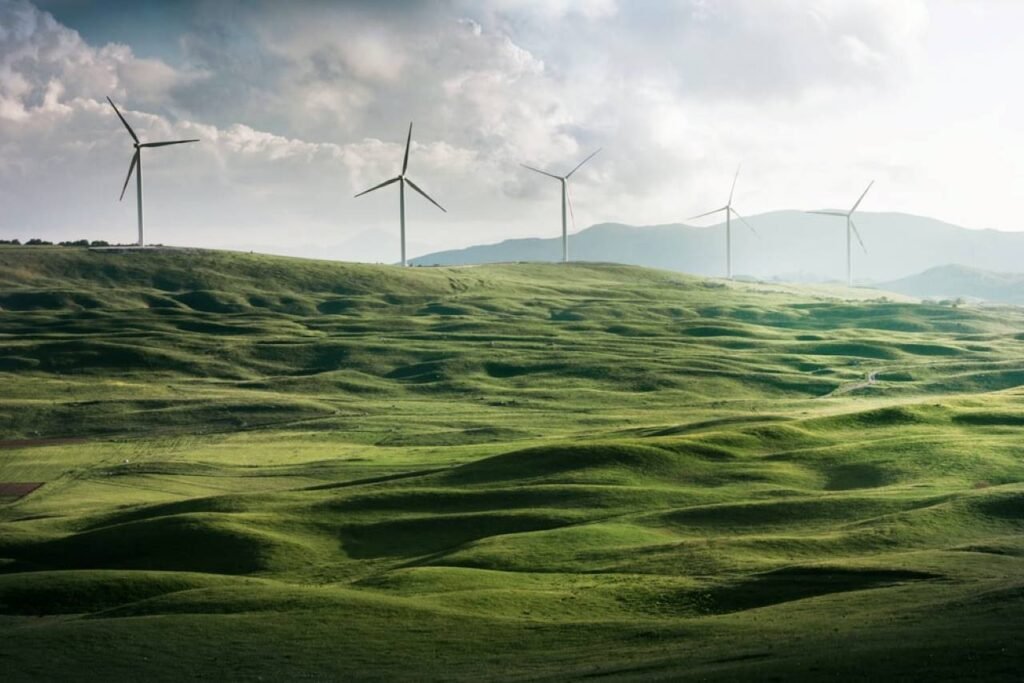
    sustainable design
    Image by Appolinary Kalashnikova

    And thus architecture and design has constantly challenged and questioned itself as a field thus resulting in newer methods and materials that reduce its impact on the environment and, in some cases, benefit the environment altogether. Architecture is also one of those fields that directly affects its nearby community. Thus, using local materials and resources is another way to support this goal of sustainability indirectly empowering the local community, directly pushing forward social sustainability. Architecture and design thus has led to various innovative uses and creations of materials. Be it discovering new natural resources or judicial use of manmade resources.

    Tapping Into Nature

    Mycelium And Its Ever-growing Popularity

    The root-like fibers of a fungus when dried become incredibly durable to force and resistant to water or mold. This is Mycelium. When compacted into bricks, these can be used as a construction material that not only is lightweight but offers great strength and resistance to everyday natural phenomena. A Cleveland architecture firm is developing a method to demolish abandoned houses by combining fungus with demolition waste. Demolition trash is broken down and blended with mycelium in a process known as “bio-cycling.” To make new sustainable materials, the combined elements are crushed.
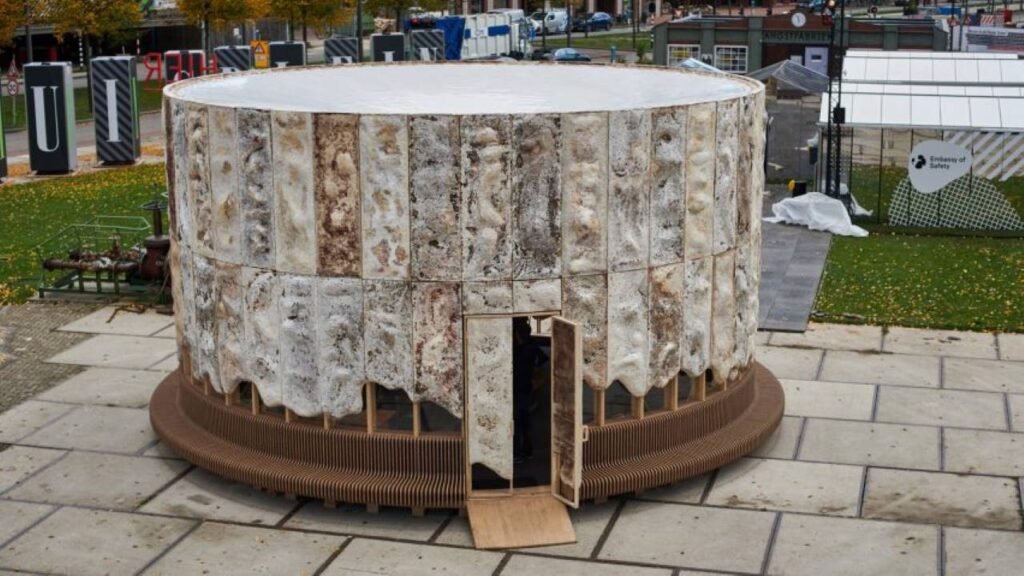
    Mycelium
    Image by Oscar Vinck

    The Growing Pavilion for the Dutch Design Week is a prime example of the potential this material has to offer. Inspired by the Incan practices of materiality and construction, the mycelium and timber, the coating reassembled into a sturdier form and grows on its own to form the panels. Once it reaches the final stage the panels can then be removed to be used elsewhere or buried back into the ground breaking down again into its natural components. The carbon footprint thus created is significantly reduced in turn becoming an economical and sustainable building material.

    From Chips To Boards

    Potato waste be it the skin or the roots is being turned into a sturdy wood substitute that can be used in a variety of furniture and architecture and design applications. A binding compound derived from raw potato peel is used to treat potato skins, bamboo, recycled wood, and beer hops. To make a lasting wood substitute, the finished material is heated and pressed into shape. Chip[s] Board is working with McCain Foods’, a British frozen food company, to source its potato waste. These are being looked at as alternatives to current wall paneling and soundproofing materials. Once utilized for its purpose it can be buried in the ground for decomposition and in turn, be used as manure or fertilizer.  
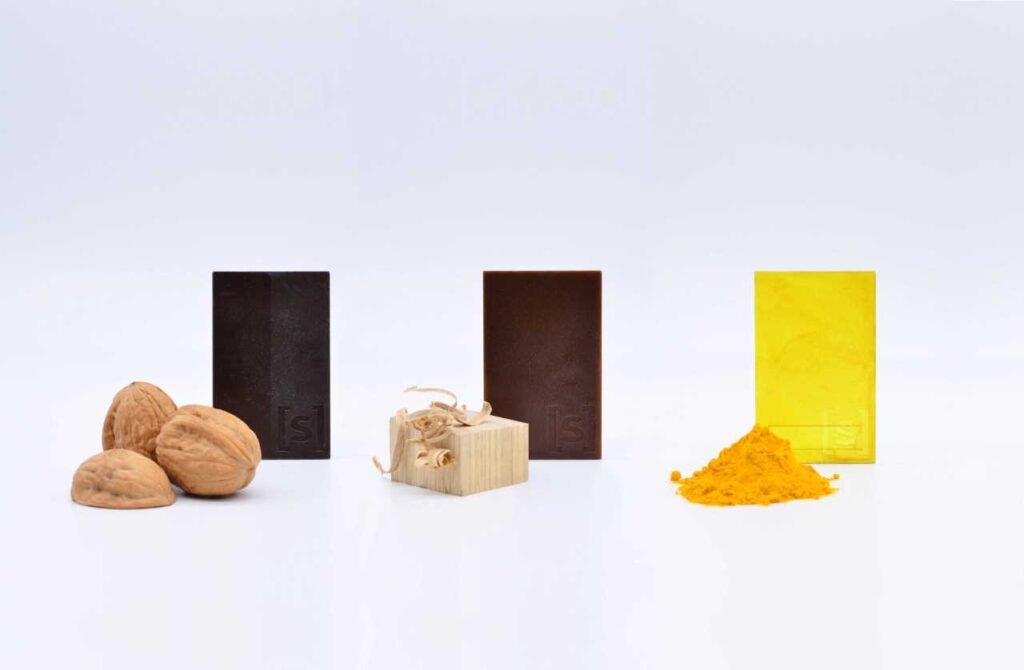
    potato waste
    Image from Chip[s] Board

    Materials That Have Stood The Test Of Time

    Hempcrete

    Hempcrete is a substance made from the hemp plant’s woody inner fibers combined with concrete. It is fire-resistant and strong, with good thermal and acoustic insulation. The lightweight nature of hemp concrete blocks reduces the amount of energy required to transport the blocks. Furthermore, it is CO2 negative, which means it absorbs more CO2 than it emits. Since hemp is easy to grow this allows for a healthy system of growing and replenishing thus maintaining a balance. Similar to straw bale in construction the walls are slightly thicker than the standard ones yet provide a comfortable environment for the users to be in.
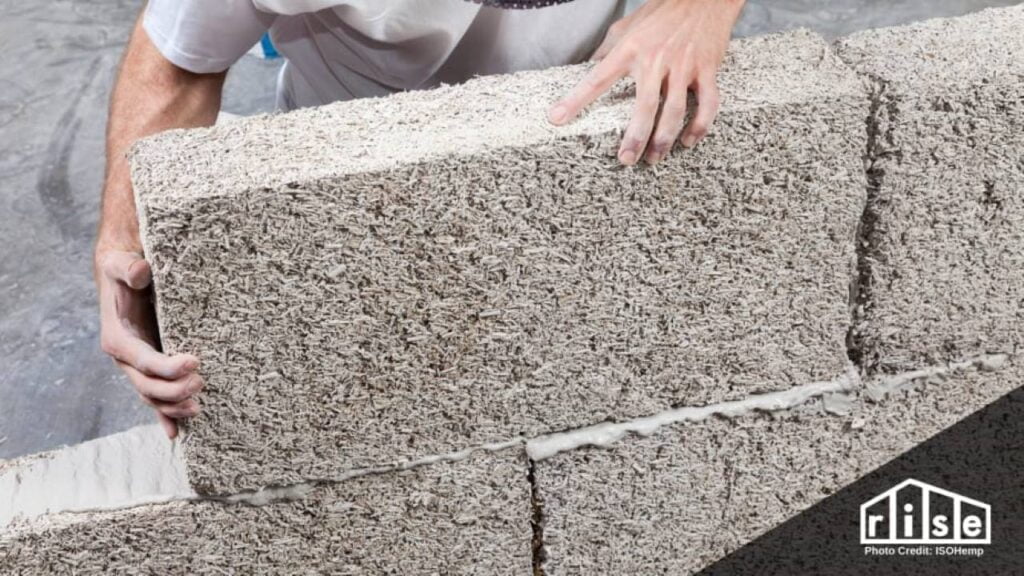
    hempcrete

    Cork

    Cork is employed in high-tech applications like automobile motors, dam systems, and airport runways due to its exceptional properties. Due to its flexibility and near-impermeability, cork is ideal for creating floor tiles, insulating sheets, bulletin boards, and other similar items. Cork is an endless natural resource since it may be collected safely up to 20 times during its life cycle. Cork is collected in a sustainable manner, and the removal of the bark has no negative impact on the tree. Thus making it a highly sustainable material. After each harvest, the bark grows back entirely and takes on a nicer texture.

    cork
    Image via Frank Lowe’s

    Sustainability Begins With Sustainable Designing

    Sustainable Design Elements To Keep In Mind

    It is crucial to get the most out of what the site has to offer. Much of the energy spent for an average building is for temperature moderation and ventilation. Providing essential functions away from direct heat and light for warm countries and towards the same for colder countries is an important way to regulate the temperature. The provision of foliage plays a vital role in not only regulating the temperature but also in giving back to the environment. Indoor plants also help improve the quality of air inside the building while psychologically improving the users’ experience. All these steps indirectly make up an energy efficient building

    Sustainable Reality

    Successes Of Sustainable Structures

    Torre Reforma in Mexico City has managed to become a structure that literally breathes. While providing indoor gardens at regular intervals, it also includes ventilators that open and shut every day to release indoor heat generate while also allowing a gush of fresh air to enter within thus recycling the air without having to constantly utilize the air conditioning systems. Or be it using reused plastic to form bricks that attach like Lego pieces thus reusing a material that has greatly challenged the idea of sustainability, becoming popular in Kerala. Thus ever since industrialization sustainability has been a need of the hour and architecture and design can help tip the balance on the positive side.

    Successes Of Sustainable Structures

    Image of ventilators in Torre Reforma

  • Amazing Interior Design Trends Of 2022

    Amazing Interior Design Trends Of 2022

    Why Homes Require Make-overs

    Having been through a global pandemic, there have been certain effects on how we perceive our homes and the things they live in them. It has become inevitable that homes need to feel youthful and jocund. Working from home and staying inside for long periods has made it obvious that spaces and elements of one’s home can make or break one’s jovial nature. Some of the latest interior design trends coming up or will eventually come up can help one make the right decisions to bring balance and youthfulness to their living rooms.

    Textures

    It’s the exquisite skill of blending the rough and jagged with the soft and smooth and figuring out how to create non-physical visual texture. An interior without interesting textural play is one that falls well short of the target, hence texture is an important part of any designer’s vocabulary. Accents may also be created with texture. The texture is used by interior designers to impart visual weight to a space. Matte versus glazed ornaments or even wall treatments and artwork have the ability to make simple walls feel multi-dimensional.

    Interior Design Trends
    Image via Home Designing

    Browns

    The Power Of Neutrals

    Warm tones like beige, crème and warm-greys can be seen growing in popularity. Not only does this contrast the cold, muted greys, blues and blacks we’ve been using as a symbol of modernity, the cosiness contrasts the distance we’ve had to maintain and the lack of human touch and interaction.

    Chocolate browns are back in trend now, grounding one’s furniture pieces. Plants are a great way to add natural texture, a pop of green and earthy browns all at the same time. Leather- either textured or smooth can also be another way to introduce browns in one’s house.

    furniture
    Image via Wallpaper Tip

    Sculptural Furniture

    Combining Art And Usability

    Combining curved forms with the usability of furniture can make even lamps stand out as abstract pieces of art. Amorphous forms can complement sharp sleek lines of other furniture pieces, thus making the space more dynamic and pleasing to the eye. This is also a great way to include pops of bright colours or patterns. Thus, the space becomes more active. Using materials such as stoneware, marble, terracotta and wood can add elements of nature as these organic materials’ raw, porous, imperfect form adds depth, personality, and aesthetic fascination while also emulating the peaceful, healing ambience of nature.

    sculptural furniture
    Image via Elle Decor

    Mixed Use Spaces

    A Challenge In Today’s World

    As society progresses, one can notice the concept of home also developing. It isn’t just a house but a space for an individual to holistically feel a sense of comfort and develop physically, spiritually, mentally and creatively. Especially during the lockdown and the current work from home environment, users look forward to designing spaces such that they can serve multiple purposes. From being able to create an office in one’s bedroom or study to converting the storeroom as a temporary gym or yoga room, using convertible furniture or collapsible shutters or jallis to create separations.

    mixed use spaces
    Image via Home Designing

    Up and Coming Or Popular Artworks

    At times, all a room requires giving it that sense of calmness or relaxation is an artwork that represents the same. Not only has artwork become a way for users to add vibrancy and dynamicity to rooms, but it has also become a means for the users to express themselves. As a way of entertainment, users would work on their own art pieces and hang them. Some also prefer to look for artists unheard of or artists coming from different cultural and social backgrounds. Artworks can also compliment the current interior setups and thus help in setting the tone of the room.

    Amazing Interior Design Trends Of 2022 Having been through a global pandemic, there have been certain effects on how we perceive our homes and the things they live in them. It has become inevitable that homes need to feel youthful and jocund. Working from home and staying inside for long periods has made it obvious that spaces and elements of one’s home can make or break one’s jovial nature. Some of the latest interior design trends coming up or will eventually come up can help one make the right decisions to bring balance and youthfulness to their living rooms. Interior Design Trends,Interior Design,design,architecture
    Image via Virtosu Art Gallery

    Zen Spaces

    Space To Shut It Off

    Though it started with enlightened Buddhists, the concept of developing and discovering your zen is no longer limited to them. Many people nowadays try to incorporate zen into their homes in the hopes of encouraging calm and relaxation. Stress may be reduced by incorporating houseplants and other natural components into a location, and specific colours can be employed to improve your mood. Other zen suggestions include utilising cool paint hues like blue, green, and purple to induce feelings of tranquillity and welcoming flora into your house to boost your sense of calm.

    zen spaces
    Image via Home Designing

    Sustainable Stories

    How Vintage Is Becoming The New Normal

    In recent years, sustainability and the usage of organic materials have grown increasingly popular. With the public’s heightened awareness of climate change, the interior design industry and individual residences have embraced the concept of sustainability. This desire to make more informed purchases is especially strong among millennial and Gen Z customers, with second-hand furniture and homeware expected to become a popular option. Vintage is the protagonist of any space in terms of design—it has the capacity to alter the tale and direction.

    sustainability
    Image via Anne Roselt

    Upcycling

    DIY Heaven For All

    Upcycling and low-waste living are at the heart of constructing a conscious home, and we’ve witnessed a growth in upcycling that’s only going to continue–from individuals sewing and making over old clothing to crafting garden furniture out of wooden pallets. Taking an existing piece of furniture and customising it is a terrific method to decrease waste while also ensuring that no one else has the same item as you. We are getting increasingly confident in our own talents, whether it’s installing a wooden blind, painting a wall, or creating a new desk, and the good effect it has on our happiness emphasises the necessity of doing things independently.

    Amazing Interior Design Trends Of 2022 Having been through a global pandemic, there have been certain effects on how we perceive our homes and the things they live in them. It has become inevitable that homes need to feel youthful and jocund. Working from home and staying inside for long periods has made it obvious that spaces and elements of one’s home can make or break one’s jovial nature. Some of the latest interior design trends coming up or will eventually come up can help one make the right decisions to bring balance and youthfulness to their living rooms. Interior Design Trends,Interior Design,design,architecture
    Image via Inhabitat

    Cottagecore

    The Cottagecore trend is the pinnacle of The Good Life, with its wide meadows and wildflowers deriving influence from the countryside. It captures the beauty and appeal of a dreamy country home by incorporating recognisable flower designs and patterns, chalk painted surfaces, organic textures, and woods, all of which contribute to a healthy, pastoral, and contemplative rural atmosphere. Cottagecore brings the outside in at all times, allowing one to reconnect with nature once more.

    cottagecore
    Image via Dodd Home Furnishings
  • Bunkers Around the World: Incredible Revival of the Refuge

    Bunkers Around the World: Incredible Revival of the Refuge

    Bunkers And Their Origin

    From the sand-filled hazards on golf courses to German dugouts becoming prevalent during World War, bunkers have taken several forms, eventually keeping their cold, rigid nature. It was only until the second World War that bunkers would be recognized as the cemented dugout created to hold arsenal or house humans for protection. Architecture thus took a form to restrict not only shear impact from heavy weaponry but also interaction with humans. Buried in grounds or standing, behemoth forces of concrete-like watchtowers waiting to be inhabited, bunkers could not safeguard humans, but also a tumultuous history.

    bunkers
    Image via ScottishGolfHistory

    Time Capsules

    Through forms themselves, one can view these structures as frozen in time awaiting a new catastrophe. For many years, World War Two bunkers around the world were regarded as an ugly remnant of a bygone era, with little thought given to their historical and architectural significance. As the French architect and philosopher, Paul Virilio rightly says in his famous book Bunker Archaeology- “The bunker is less a warning about the opponent from the past than about the war of today and tomorrow: about total war, the risk which is present everywhere, the immediacy of the danger, the amalgamation of what is military and what is civilian, the homogenization of conflict.

    bunker archaeology
    Image via Disphotic

    These military seeds were sewn across cities and continents grow and an unsettling fear of what is lying ahead. Of what society retained from pure chaos, thus psychologically affecting its surrounding. To the veterans, these structures are like fossils reminding of a tumultuous era. For the residents, it’s a physical reminder of the history, their connection to their lineage, in certain cases, the generational trauma. An almost poetic outlook on these forms of resistance, death, and destruction has been the creation and sustenance of art. Many of these bunkers have been housing arts, becoming art themselves.

    Arthouse Of Cultures

    Holding onto the beauteous aspect of world history one panel at a time. While some house art pieces several have changed to become art itself. To some, this seems as near demolition of such historic time capsules others indirectly question the very purpose they were created for. Having been sliced open, they’re susceptible to the forces- nature, and mankind. Uprooting the very fabric of its existence in a way, this is the artists’ way to take over these cold forms- ripping them apart from their spines and making their delicate cores- the living spaces, vulnerable. Bunker 599 is an example of this wonder.

    Bunker 599

    The New Dutch Waterline (NDW) was a military line of defense in operation from 1815 until 1940 that used artificial flooding to protect the cities of Muiden, Utrecht, Vreeswijk, and Gorinchem. An impregnable bunker with historic significance is ripped open. Because of the design, the tiny inside of one of NDW’s 700 bunkers, which is ordinarily hidden from view, is now visible. The white staircase merges to form a thin white line, slicing right through the New Dutch Waterline bunker trailing onto the quiet lake has converted it from a remorseful mound into a place of meditation. Aligning oneself to the white line and making oneself steady the same way. Eventually gaining its recognition as a national monument.

    Dutch
    Image via ArchDaily

    Albanian Shelters

    Wherein Albania the beautification process extended to communist structures and residential buildings, the bunker style entrance is surrounded by swatches of paint everywhere. Instead of wrecking it all down, the artists collaborated to use these historic places as canvases while surrounding areas saw city workers plant over 55,000 trees hoping to rejuvenate a solemn area. And so it did. With local police noticing a lowered crime rate, people noticed an increase in a combined sense of joy and pleasure. The squares that held riots to the bunkers that kept an eye for caution and warning both have now become places of jocund interaction and communion.  

    Albanian
    Image via The Atlantic

    Seafield House

    Seafield House, an austere example of contemporary architecture just a quick jog from the Finchley Golf Club in the North London district of Barnet, has a sad past that belies its beauty. The British government employed 5 foot or 1.5 meters, thick walls to construct the tower in the early 1950s to safeguard military chiefs in the event the Cold War turned nuclear. The strong concrete walls of the bunkers made modifications difficult. To carve out windows and outside entrances, diamond-tipped chainsaws and drills were employed in the end. Because it was all about nuclear apocalypse and a Dr. Strangelove scenario, the whole concept was to construct an architecture of life from the architecture of death.

    Seafield house
    Image via The New York Times

    Data Storages

    The bunkers have continually stood the test of time, even when it comes to their operation. With the booming growth taking place in data creation, networking and storage, it calls for a physical realm where mega units of this data can be stored or the machines measuring and churning this data out can be kept safely. And thus we see bunkers becoming core data storage units. And thus, for someone trying to access this data digitally, they’ll witness what some assume is a virtual bunker because of the difficulty and resistance to outside invasion.

    revival
    Image via Data Center Knowledge

    The Revival of The Refuge

    In some way, what continues to ooze a lingering sense of dread- be it of what the past had or the potential that a future might hold, the world hopes to not use these bunkers for what they were sued for. Instead, they are being used as a resource to the citizens. For art, history, and for data. Bunkers have become a silent iconography to war. They create a solemn feeling among citizens affected by war, not entirely mournful but an odd sense of martyrdom. As they remain silent waiting while artists rethink them as canvases for their art.

  • Space Design: Innovative Architectural Development in Outer Space

    Space Design: Innovative Architectural Development in Outer Space

    Space Design And Its Untapped Potential

    Unconventional and otherworldly locations call for unconventional and otherworldly forms of architecture. The idea and practice of creating and developing inhabited places in space are known as space architecture. Space stations, vehicles, shuttles, habitats, lunar, planetary bases, and infrastructures; and earth-based control, experiment, launch, logistics, payload, simulation, and test facilities are only a few examples.

    As technologies develop and newer tougher materials are created, humankind’s need to traverse the vast expanses of space has led several curious minds to think about the architecture of outer space and space design.

    The Inevitability Of Space Architecture

    An Alternative Or A Dire Need?

    With the current climatic conditions escalating to even worse ones, many think it is only a matter of time until we have exhausted resources to the point the global conditions would reach dangerous situations. With temperatures rising and polar ice caps and glaciers melting, much of today’s landmass would be underwater. The toxicity in the air is on a steady rise. Rains are irregular or at times absent as well.

    Thus many think it’s easier to look for alternate exo- planets than try rejuvenating the one we’ve lived on. Within our solar system- Mars and Europa, one of Jupiter’s moons seem to have the potential to terraform them into habitability. Exoplanets such as Kepler-452b and Gliese 1061d are also strong contenders.

    hubble
    Image via Hubble Archive

    The concept of terraforming might sound familiar. For planets that have the potential for human existence but currently do not support life, their environments can be tweaked to create earth-like climatic conditions. Though the technology is yet to be invented and tested, scientists and architects are looking at an architecture that can withstand these extra-terrestrial conditions.

    From forms that can handle large gravitational force to materials that can be made using the planet’s natural resources using 3D printing technology. Though few tend to consider an already existing liveable structure revolving around the planet that has housed several astronauts and continues to do so. The International Space Station.

    The International Space Station

    A Pre-Cursor To Space Design And Space Habitation

    The International Space Station (ISS) is perhaps most intriguing not for its research, but for the technical marvel, it represents. After different degrees of success with previous space stations, a group of countries collaborated to create the International Orbit Station (ISS) using new technology that allowed it to be erected and updated in space.

    The space station is made up of two primary sections: liveable modules and solar and radiator arrays, both of which took a tremendous amount of planning and engineering. The most critical thing is that the liveable modules work properly. The modules had to be launched into space and docked with the station, but they also had to offer an airtight barrier to keep the astronauts safe.

    international space station
    Image via Unsplash

    Creative Solutions To Potential Challenges

    Competitions for creatives have become an active method to collect ideas, potential possibilities into a larger pool of thought.  For example, the 3D Printed Habitat Challenge, hosted by NASA, wherein participants had to come up with habitation systems designed to withstand Martian climate while simultaneously using Martian material for construction. Some architects have been studying the many approaches that may permit human colonization beyond the planet Earth using 3D printers, automated systems, and cutting-edge building technologies.

    Mars Colonization By ZA Architects

    ICE HOUSE promotes a life above the ground and celebrates human presence on the planetary surface by utilizing water-capacity ice to screen the sun’s rays and protect against radiation. The semi-translucent external shell reintroduces the terrestrial idea of interior-to-exterior gradients, debating whether interplanetary settlements and stations require visually impenetrable walls that separate the inside from the surrounding environment.

    The living quarters, the structure’s heart, are completely enclosed and protected by redundant pressure envelopes. The shift from integrated plant life and perspectives onto the Martian landscape as one advances outward towards the radiation-barrier ice boundary integrates the outdoors with the spatial world.

    Space Design: Innovative Architectural Development in Outer Space As technologies develop and newer tougher materials are created, humankind’s need to traverse the vast expanses of space has led several curious minds to think about the architecture of outer space and space design. Interior Design Trends,Interior Design,design,architecture
    ice house

    MARSHA BY AI SPACE FACTORY

    Eventually becoming an icon for the competition, following a series of spatial and efficiency analyses, MARSHA has chosen to use a vertically oriented cylinder, straying away from the usual space design structures. The dwellings’ design allows them to be extremely effective vessels that are tailored for the atmospheric pressure and structural stresses on Mars.

    During building, MARSHA uses only materials collected from the Martian surface. The strategy removes the requirement for material shipping from Earth by combining basalt fiber (produced from the planet’s surface) with renewable bioplastic (generated from plants cultivated on Mars). The cylindrical shape of the habitat aids the fabrication process by providing the most printable pressure vessel with the least amount of movement.

    marsha
    Image via AI Space Factory

    From Lunar Rovers To Lunar Villages

    The Moon Village is built on the principles of self-sufficiency and resilience. According to the plan, the space station city will be erected on the rim of the Shackleton Crater at the Moon’s the South Pole, which benefits from near-constant sunlight throughout the lunar year. If the Village possessed certain vital infrastructure components and living structures, it would be able to capture sunlight for electricity, conduct research, and create food from the Moon’s natural resources. To provide breathing oxygen and rocket propellant for transportation, water would be gathered from depressions in the South Pole. Additionally, each cluster of modules would be networked to allow for seamless transportation across the city. 

    space architecture
    Image by SOM

    Human-Centric Space Design

    Making Space Habitation Comforting

    The circulation spaces in space architecture or space stations need to be sheltered or lay in the interior to allow easy and comfortable access to other sectors or pods. The linear form gives a sense of directionality thus making the user experience comfortable. Much of the public or common area would be in the central zone. It’ll become important to keep spaces for recreational public activities. This will help maintain a sense of collectiveness and familiarity. These spaces could thus mimic environments similar to earth, a lush green area would help maintain users’ sense of home while also acting as a source of oxygen

    telescope
    Image of James Webb Telescope
  • Crime Scene and Virtual Reality: Role of Architecture and Technology

    Crime Scene and Virtual Reality: Role of Architecture and Technology

    How Crucial Is A Crime Scene

    A crime scene is a space itself that inhabits the occurrence of a crime. Thus making it a crucial part of the entire investigation or investigative research. Though it might become cumbersome for one to visit these crime scenes several times during the investigation, which might even be hazardous as it might lead to contamination of the place or displacement of a potentially important piece of evidence. Thus, virtual reality combined with architectural design can tackle this issue. The resultant of which can make investigation clean, accessible, and an easier process.

    Crime scene investigations can take several days. There have also been several instances where, because of human error or natural reasons like rain or pet dander, crimes have been reported as unsolved. Such instances have called for newer and improved technologies. Robotics and artificial intelligence have been one such field trying to tackle this issue. Combining the space forming ad space making abilities of architects, people are looking up to virtual reality or augmented reality to virtually inhabit spaces to solve crimes on the go.

    Photography: An Important Aspect

    Capturing The Aftermath Of A Crime

    John Doe is a middle-aged man who was murdered in his own house. The crime scene has pieces of evidence laid all around. Re-visiting this crime spot repeatedly can cause contamination of the pieces of evidence or even displacements from their position that can cause false results. Photography is an important aspect and the primary step taken while observing such a scene.This follows a macro to micro subject photography wherein an overview is taken followed by an individual focus on objects. The inspectors only have a certain degree of movement; thus, a new system is devised.

    crime scene
    Stock photo by Ian Anderson

    Laser Technology For Recording Visual Data

    Using Point Cloud For Mapping

    The crime scene inspector places a low-range laser scanner to take a 3D cloud mapping of the crime scene. For medium and long-range laser scanners, the actual scanning is done by emitting a laser beam towards the surrounding while quickly rotating it up to 360 degrees horizontally and vertically, minus the area of the ground where the scanner is placed. Millions of 3D coordinates of the surface points are computed into a point cloud. With this and the various photographs taken, the software can finally recreate an immersive virtual reality rendering of the crime scene.

    3D cloud mapping
    Photo from BlueStar E&E

    UI And Data Storage Abilities

    The DurTva VRGUI Technology

    One doesn’t need to visit the crime scene repeatedly. We witness the user interacting with the evidence without physically coming into contact with them. The DurTva VRGUI helps in differentiating the goods or confiscated shreds of evidence with blood and other human traces. It is necessary to interact with objects to get a complete idea of how the crime was committed. Thus, by utilizing several cases as research and simulation. These are fed into the software to help render scenes that could be potential outcomes. And since this is an iterative process, the software learns through each simulation.

    virtual reality
    Image via Oxygen

    Sequencing Scenes And Potential Causes

    Creating A Narrative By Sifting Through Data

    For example, the ability to recreate blood splatter results. Sequences retracing paths help achieve this. Another example would be if the investigator comes across various traces. Because of the data being pre-recorded, one can choose to focus on only one trace and all the potential places the identical trace has been found. Thus, the software sifts through data, making it easier for the user to focus on what one chooses. This helps manage over-information and reduces the chance of over-stimulating the user. The system interface thus helps create various links to support a narrative that might’ve been the potential cause of this crime.

    mock crime scene
    Image of mock crime scene sequence by Stephen Se

    Virtual Reality And What It offers

    A Spatial Approach To Crime Scenes

    A significant advantage of combining virtual reality and architecture in this case is the ability to live in these virtual spaces in the user’s comfort. Since all it requires is to wear a headset, one can “revisit” the crime scene whenever one feels like it. Another advantage is its ability to shift points of view. Virtual reality in this case helps the inspector witness the crime through the point of view of both the victim and the perpetrator. Not only does this open one up to large amounts of missing or unknown information, it also helps provide justice to those who are victims of lack of information.

    virtual reality
    From article by Calum Smith

    This can help in singling out the perpetrator from the group of multiple suspects, while also providing with new possibilities or variables that might’ve been missed out had it been just the physical inspection. Thus, the software not offers the ability to filter out visual information to the user’s requirements, it also acts as a container holding all the data- present and recreated. This also has a large potential to create a new division in architectural studies where spaces can thus be studied based on their potential to become crime zones or even study crime in urban spaces and ways in which one can design cities that provide safety.

    A visualization tool for crime scenes and their documentation could be relevant to both prosecutors and CSIs. Regarding prosecutors, their needs, wishes, and challenges regarding the physical crime scene and the visualization of it are quite similar to that of the CIs; they need to visit the crime scene to get a feeling of what has happened, what potential evidence has been found and where. By visualizing a crime scene and its documentation in a holistic and realistic manner, VR can act as a complement to traditional photos and video recordings. By adding features that enable communication and collaboration, VR can add coherency to digital investigational material.

  • Colour And Architecture: Why is Colour Psychology Important in Architecture?

    Colour And Architecture: Why is Colour Psychology Important in Architecture?

    How Humans Perceive Architecture

    Since the Miocene epoch, the sense of sight was an important one to have for the apelike man to hunt and gather. This evolution, in the sense, eventually has become such that humans will subconsciously experience things with sight. Hence, it is no surprise that architecture has always been a visually dominant field. Where even spaces are primarily experienced through sight. Thus, colour has always been an important part of experiencing architecture while simultaneously acts a decisive factor for how humans experience it.

    History And Colour

    Painting, sculpting, and building were all included in the artist’s profession in the past, although not solely. Because of the desire to honor gods or monarchs, or to celebrate the wonder of the structure itself, color was used liberally in architecture. Ancient Greek stone temples and statues that were once assumed to be stark and neutral have lately been discovered to be beautifully decorated with colors extracted from plants and minerals to even jewel stones.

    The Egyptian temples, tombs, and chambers that now seem bare were once vibrant with colorful hieroglyphics and pharaoh imagery. The cathedrals of medieval Europe, as well as the palaces and temples of China, were all painted, with color symbolism abounding.

    colour
    Image via CNN

    How Colour Might Affect Individuals Differently

    Personal Factors Affecting Colour Perception

    If one notices, they will realize that children or the youth use brighter, more saturated colors. One reason behind this could be that children in the world are still learning about the world around them. Visually as well as culturally, hence the brighter shades attract them more, whereas as a person ages, they learn to appreciate subtle nuances around their world and visuals, thus people appreciate deeper shades or neutrals more.

    Introverts go for darker cooler shades of color compared to their extroverted peers, while people with higher socioeconomic backgrounds go for more complex deeper shades of color than those with lower socio-economic backgrounds. And this can directly be seen in their choice of colors for their interiors or material usage.

    color shades
    Image via The Muse at Dreyfoos

    Colour Psychology

    The study of how different colors influence human behavior is known as color psychology. Varied colors have different meanings, implications, and psychological effects depending on the culture. Color psychology is heavily influenced by choice, besides cultural variances. Color psychology is the study of color perception and the effects of color combinations using color theory (the practical application of mixing and matching diverse colors). Carl Jung, a Swiss psychiatrist, examined the psychological effects of color in the early twentieth century. Jung finally devised a color therapy technique that allowed his patients to express themselves via colors and imagery.

    colour psychology
    Image via A Designer At Heart

    Colours And Its Use In Architecture

    We can see that architecture acts as a giant canvas through which an architect, like an artist, expresses his/her idea and thought process. Thus, from the walls to the railings of a staircase can be a statement piece. It becomes crucial to be aware of how a color would affect the user since architectural elements take u a significant amount of space in one’s cone of vision. Colour may visually simulate certain features of space or convey a specific volume or architectural detail. It may also generate a variety of emotions and visual effects.

    Green

    A rather receding color in large cities, Green has an instantaneous relieving effect on its viewers. Since the human brain has been conditioned around nature, witnessing Green thus brings a sense of relaxation and familiarity. Unlike red, it causes the eye to focus precisely on the retina, making it the most relaxing color for the eyes. Green is a color that may represent both nature and illness. One might often notice when standing under translucent roofing material with a tinge of green in it that the skin looks sicker. While using a lighter shade of green on walls can create a secure sense.

    green colour
    Image via Agritecture

    Blue

    A color that is almost constantly perceived by humans when outside or near a window or even close to a water body, blue has always resulted in tranquillity and makes the space feel breathable. Some observe that blue reduces a person’s blood pressure almost instantaneously. It can create a sense of free movement and flight when used as a lighter shade. A deeper or darker shade of blue does quite the opposite. It not only feels stronger in the eye when viewed by a person, but it can also create a sense of space deepening.

    blue colour
    Image via Archdaily

    Yellow

    The first color that comes to a person’s mind when considering a representative color that recreates a cheerful feeling is yellow. This can again be backtracked to human evolution where elements such as the morning sun or fire meant safety from animals and food hunting or cooking. Thus it creates a jocund feeling. A dull or murky yellow might give a sickening feeling. Because of its ability to stand out, it is often used as a directional element or highlight on the floor or walls. While yellow ceilings make the space feel more luminous and energetic.

    yellow colour
    Image via nationalsolutions

    Red

    A color that comes only second to black, when considering its sensitive usage, red is a color that designers tread on carefully. Because of its highly stimulating nature, Red is often used when in need of diverting someone’s attention, thus prevalently known for its dynamics. Because of the natural focal point of red being behind the retina, the eye must alter its focus. As a result, red looks to be closer than it is. Injudicious use of Red on the walls might make them seem to advance or even aggressive. While earthy tones of red might make it feel grounded.

    red colour
    Image via Archdaily

    Orange

    People either love orange or dislike it. Since it walks the thin line between jovial and energetic to dull or intrusive, it is often used only as an accent color to make a part of something pop out. Though it is more effective at grabbing attention when used as a brighter shade instead of a darker one. Because of its energetic appeal, it suits best when used with a neutral color or simply white.

    orange colour
    Image via Dezeen

    Brown

    Similar in line with green, certain shades of brown bring a sense of reconnection with earth to certain people. There is a significant contrast between brown paint and wood. Brown should be avoided in some organizations since it conjures up bad connotations. Wood and stone look to be quite welcoming and warm. When considering a natural environment, wood brown does an excellent job of blending in with the environment.

    brown colour
    Image via Harvard