
Author: Marcelle Genas

  • Shipping Container Architecture: Transform Metal Boxes to Modern Structures

    Shipping Container Architecture: Transform Metal Boxes to Modern Structures

    Introduction

    Every year, thousands of shipping containers meet their end, destined for abandonment or landfills. Of late, an extraordinary metamorphosis has occurred within the realm of architecture. These discarded metal giants, originally designed for the relentless journey of goods across the globe, have been given a new purpose—a second chance as the building blocks of innovative architectural creations. Welcome to the world of shipping container architecture, where sustainability meets creativity to shape a greener and more design-forward future. Let us examine the transformation, potential, sustainability, and challenges of shipping container architecture.

    Progression of Container Design

    Malcom McLean_imcbrokers.com.jpg
    Malcom McLean©imcbrokers.com

    Shipping containers as architectural components may seem like a recent trend, but their history dates back to the mid-20th century. Malcolm McLean revolutionized the shipping industry in the 1950s by introducing standardized containers. This innovation greatly streamlined global trade, making it more efficient and cost-effective. Not until the late 20th century did architects and designers begin to understand the building potential of steel containers. The appeal of using shipping containers in architecture lies in their modularity, structural strength, and sustainability.
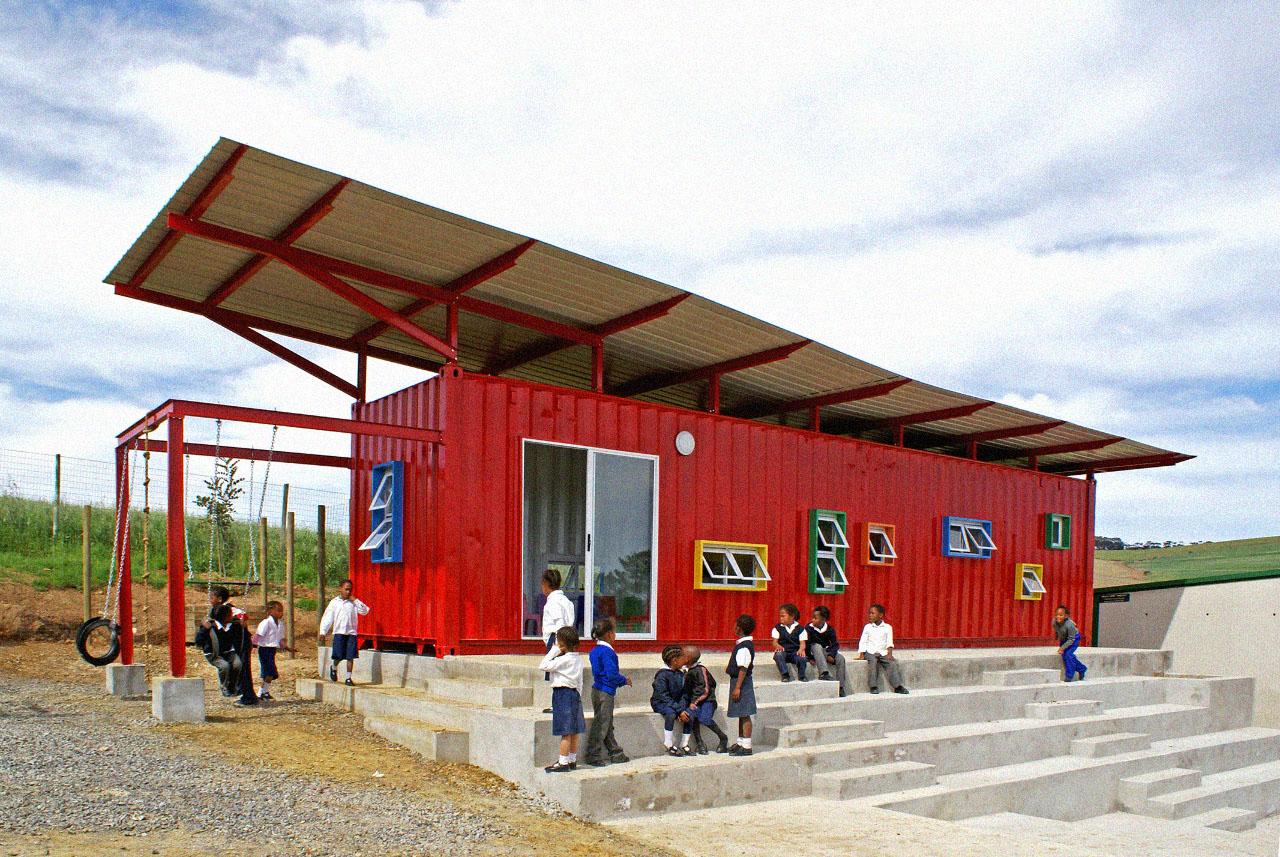
    Vissershok Container Classroom, Cape Town_archdaily.com.jpg
    Vissershok Container Classroom, Cape Town©archdaily.com 

    During the Vietnam War, containers were used for shipping supplies and served as emergency shelters, marking their early use in construction. In Europe and Asia, shipping containers are already integrated into commercial and residential structures, providing affordable housing solutions. Today, shipping containers are used for various purposes worldwide, from mobile schoolhouses in South Africa to quick-to-high-end shops in New York. Overall, shipping container architecture has evolved from necessity to modernization, addressing architectural and urban development challenges.

    Benefits of Shipping Container Architecture
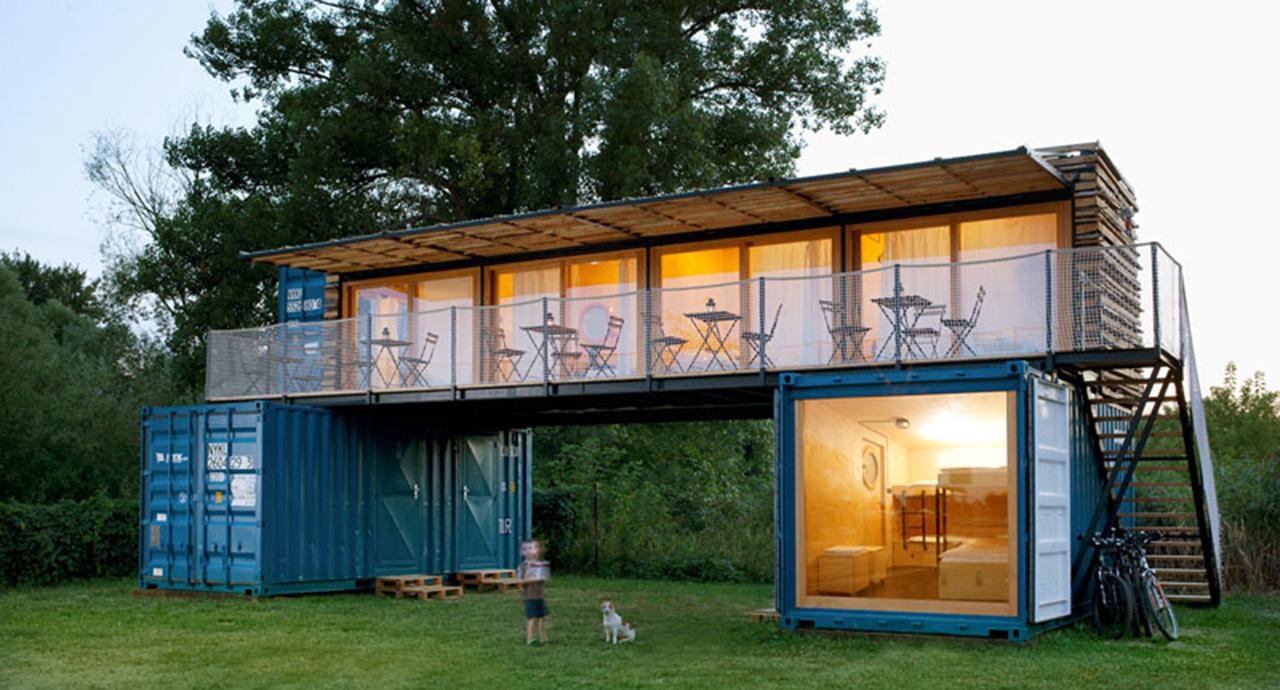
    ContainHotel, Czech Republic_contemporist.com.jpg
Shipping Container design
    ContainHotel, Czech Republic©contemporist.com

    Shipping container architecture offers a compelling and cost-effective approach to modern construction. These containers, originally designed for global transport, provide an affordable building material that is both robust and weather-resistant. Their affordability is enhanced by the use of recycled containers, which reduce waste and conserve resources. Beyond cost savings, shipping container homes are environmentally sustainable. Environmental stewardship greatly benefits from repurposing decommissioned containers, which reduces waste disposal reliance on landfills while minimizing requirements for fresh resources. This approach aligns with contemporary sustainability goals, making shipping container architecture an attractive and eco-friendly choice for designers.

    These structures are highly customizable, allowing architects to design layouts, select sustainable materials, and integrate energy-efficient features, thereby reducing their ecological footprint. Moreover, the inherent durability of shipping containers ensures a long-lasting and resilient living environment, while the flexibility to adapt and expand container configurations caters to evolving spatial needs. Finally, the mobility of container homes adds extra versatility, making them an attractive choice for those seeking building solutions that can easily be relocated. In summary, shipping container architecture offers a multifaceted approach, combining cost-effectiveness, environmental consciousness, durability, customization, and mobility, making it a compelling option in the contemporary architectural landscape.

    Evaluating Sustainability Amid Shipping Container Challenges
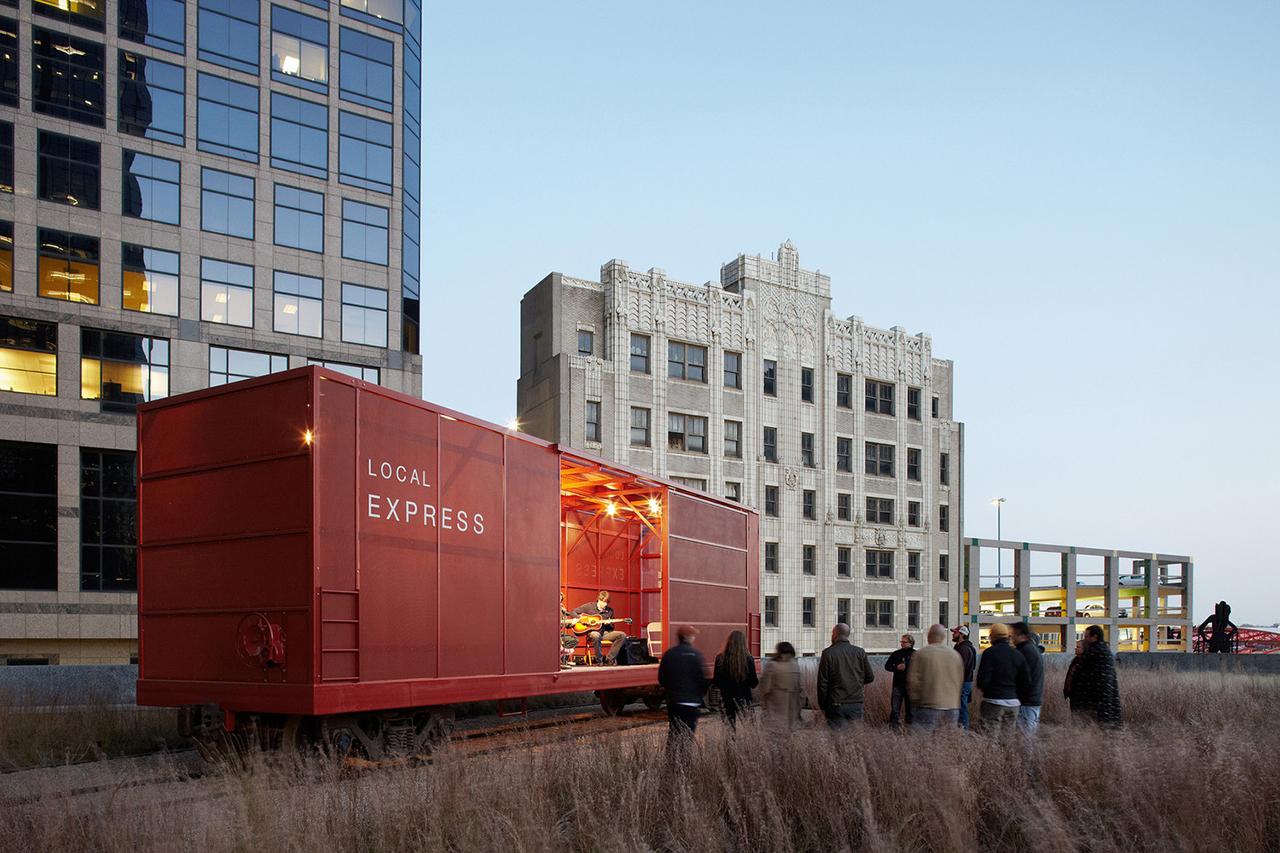
    Prairie Logic, Kansas City_archdaily.com.jpg
    Prairie Logic, Kansas City©archdaily.com

    Shipping container architecture offers a unique construction approach but comes with its own set of challenges. Addressing these challenges is essential for evaluating its sustainability claims. Shipping containers, in their raw state, are ill-suited for human habitation due to issues like poor insulation, ventilation, and limited natural lighting. Converting them into habitable spaces requires extensive modifications, which may counteract their sustainability benefits. Achieving energy efficiency can be challenging, and the use of new materials during these modifications contributes to resource consumption and emissions. There is also the environmental issue of site preparation and the longevity of containers.

     Another challenge is the environmental impact of container choices. Some buyers opt for new containers, which may not be as eco-friendly as repurposed ones. Used containers might have transported potentially harmful substances or incurred damage during transportation, making them less appealing from an environmental perspective. Moreover, addressing structural concerns can be a complex task, often requiring skilled professionals and contractors. Navigating building permits, especially in regions where container housing is less common, can be intricate, involving adherence to specific building codes and requirements. To fully harness the potential of shipping container structures as a sustainable architectural choice, careful planning and examination of these factors are essential.

    Urban Rigger, Copenhagen
    Urban Rigger, Copenhagen_prefabcontainerhomes.org.jpg
    Urban Rigger, Copenhagen©prefabcontainerhomes.org 

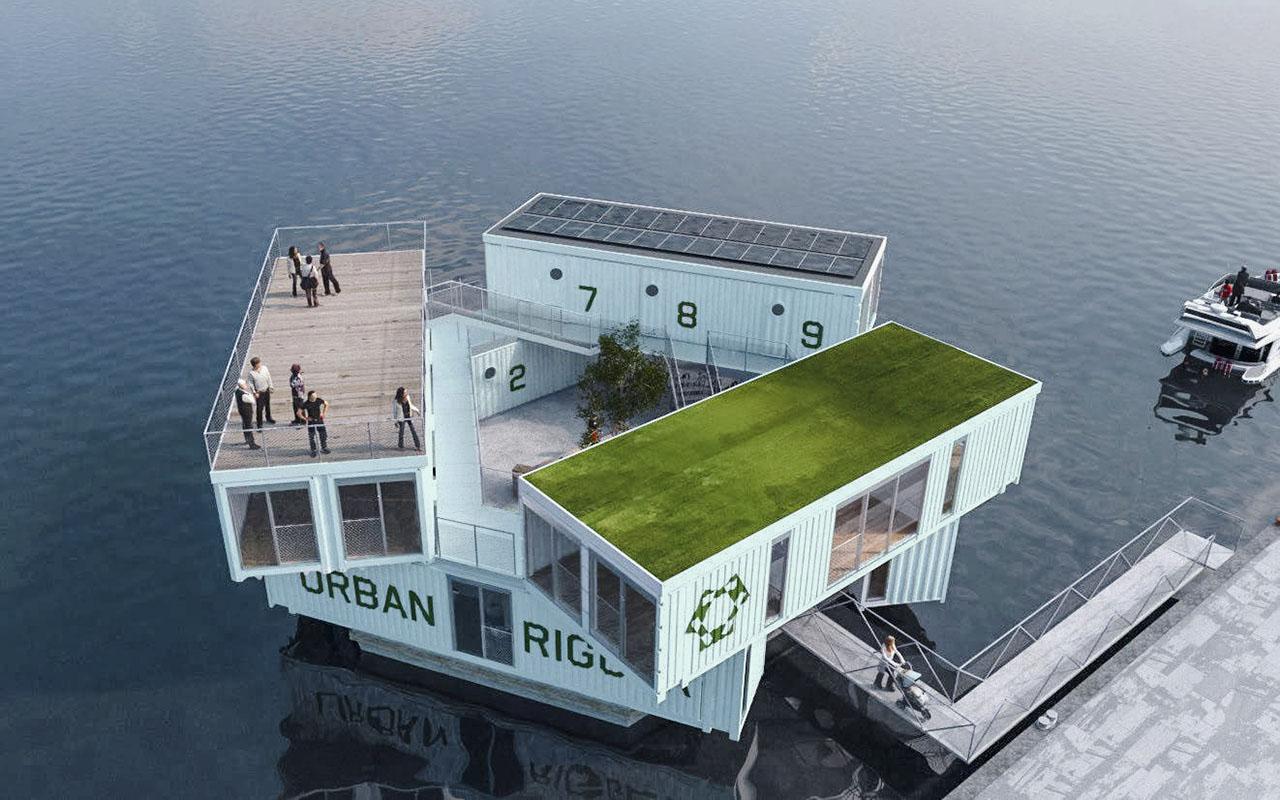
    In Copenhagen, Denmark, the Urban Rigger project by Bjarke Ingels Group (BIG) presents a sustainable and innovative response to the increasing demand for student housing. Situated in the underdeveloped area of Copenhagen’s harbor, the project repurposes 974 recycled shipping containers to create 12 studio residences surrounding a central winter garden, fostering a sense of community among students. The buoyant design allows for potential replication in other harbor cities where affordable housing is needed. This creative use of standardized containers not only addresses housing needs but also makes use of a flexible and eco-friendly building typology optimized for harbor cities.

    The Puma City, Boston
    Puma City, Boston_archdaily.com.jpg
    Puma City, Boston©archdaily.com

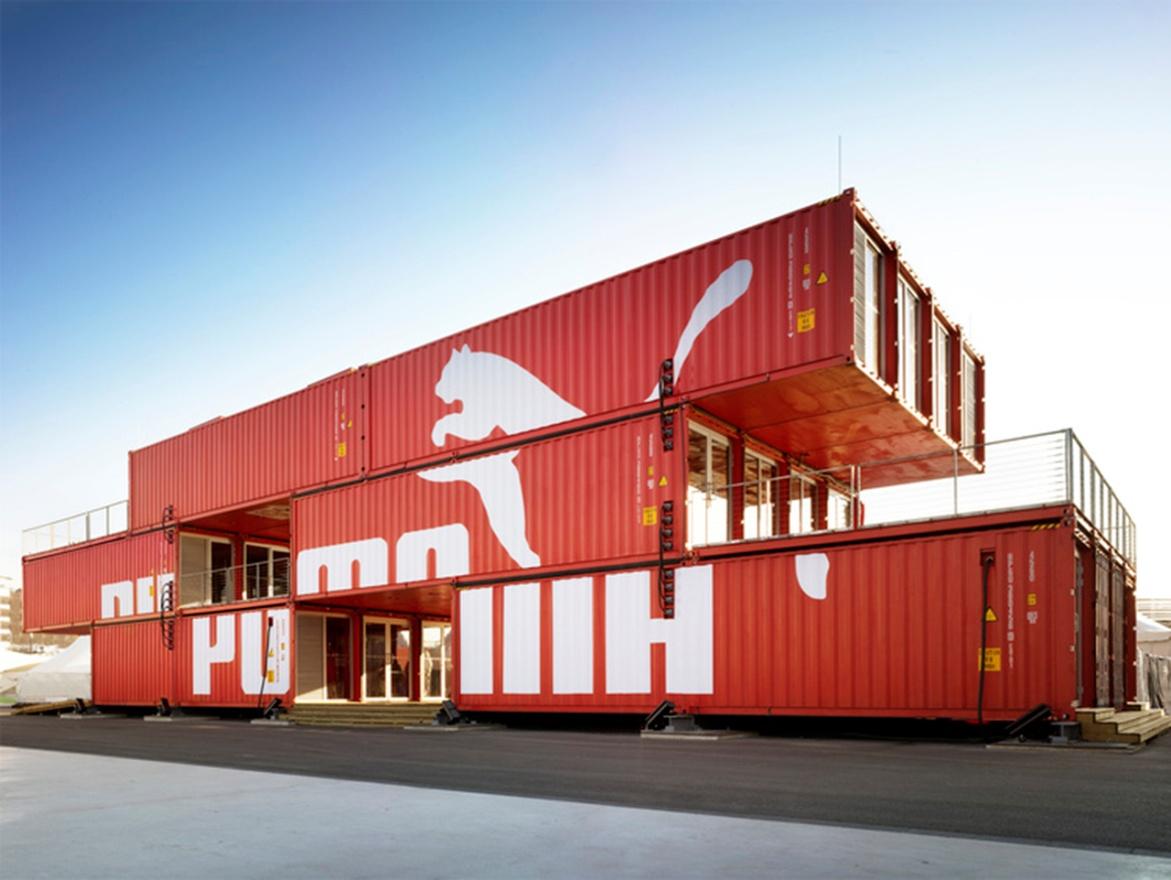
    PUMA City is a mobile architectural marvel that creatively repurposes 24 shipping containers into a versatile and transportable retail and event building. PUMA City is a three-level stack of containers with a clever design that incorporates internal outdoor spaces, generous overhangs, and inviting terraces. The lower levels house expansive retail spaces with double-height ceilings, offering a refreshing contrast to the container’s modular interior. On the second level, you’ll find offices, a press area, and storage, while the top level features a stylish bar, lounge, event space, and a spacious open terrace.

    What truly sets PUMA City apart is its ability to be assembled and disassembled multiple times at various international ports. The structure utilizes 12-meter-long shipping containers and existing container connectors to create a secure and dynamic architectural composition, both horizontally and vertically. Each module is designed for efficient shipping as conventional cargo, with structural covering panels that seal the large openings. This approach makes PUMA City the first container building of its size to be genuinely mobile, demonstrating the incredible potential of shipping containers in architectural design and sustainability.

    Pallotta TeamWorks, Los Angeles
    Pallotta TeamWorks, Los Angeles_bigboxcontainers.co.za.jpg
    Pallotta TeamWorks, Los Angeles©bigboxcontainers.co.za

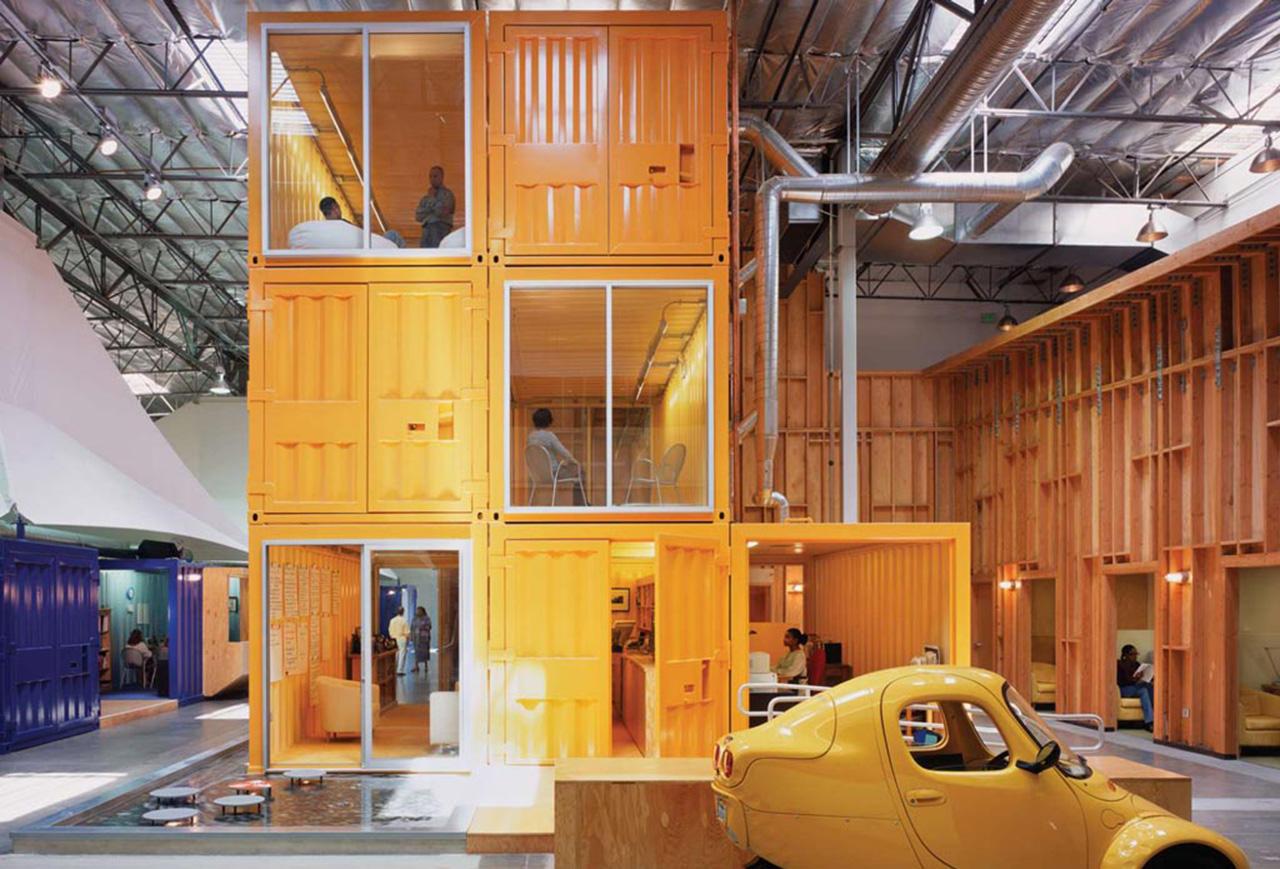
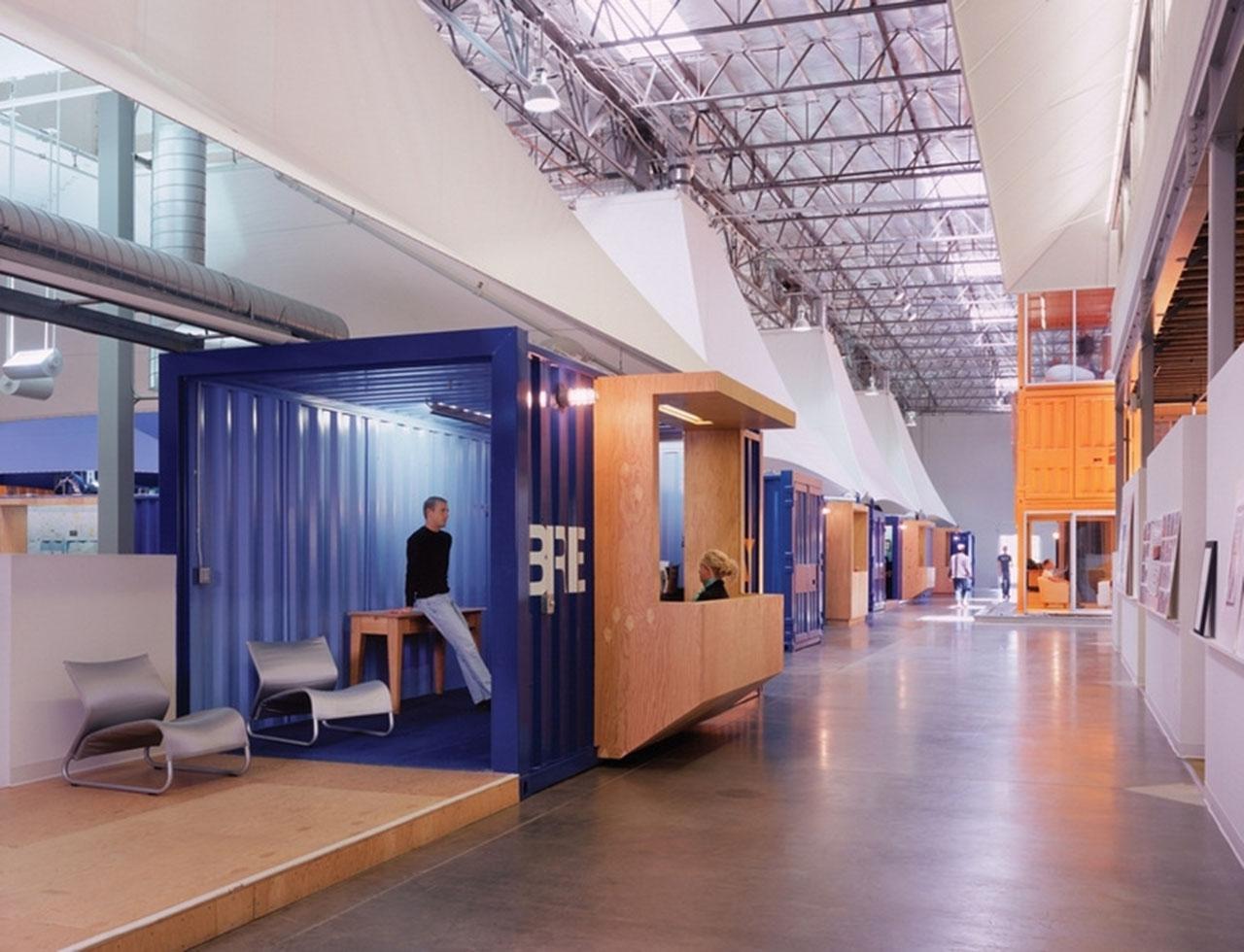
    Pallotta TeamWorks aimed to revolutionize charity fundraising by merging business strategies with humanitarian efforts. They needed an inspiring yet cost-effective headquarters in a warehouse space. Despite budget constraints, innovative solutions were sought, focusing on efficient MEP systems. Collaborating with a sustainability-focused client, the project explored a partially conditioned environment, taking advantage of Southern California’s climate. The concept of “Breathing Islands” emerged, acting as air diffusers and creating distinct workspaces while reducing the need for conditioned air. These white tents were hung from the existing roof structure, with shipping containers anchoring their corners. Efficient infrastructure descends from the ceiling.
    Pallotta TeamWorks, Tent Islands_officesnapshots.com.jpg
    Pallotta TeamWorks, Tent Islands©officesnapshots.com

    The building featured a unique island desk design and an executive tower constructed from stacked shipping containers. The project achieved its objectives while embracing resource efficiency. Color plays a vital role in defining spaces. Dark blue shipping containers framed transitions, and varying blues elevated visual depth. Public areas were boldly orange against a white and blue backdrop, while the tent neighborhoods featured a muted earthy palette, akin to the charity’s mobile tent cities.

    The Keetwonen Student Village, Amsterdam
    Keetwonen Student Village in Amsterdam_livinspaces.net.jpg
    Keetwonen Student Village, Amsterdam©livinspaces.net

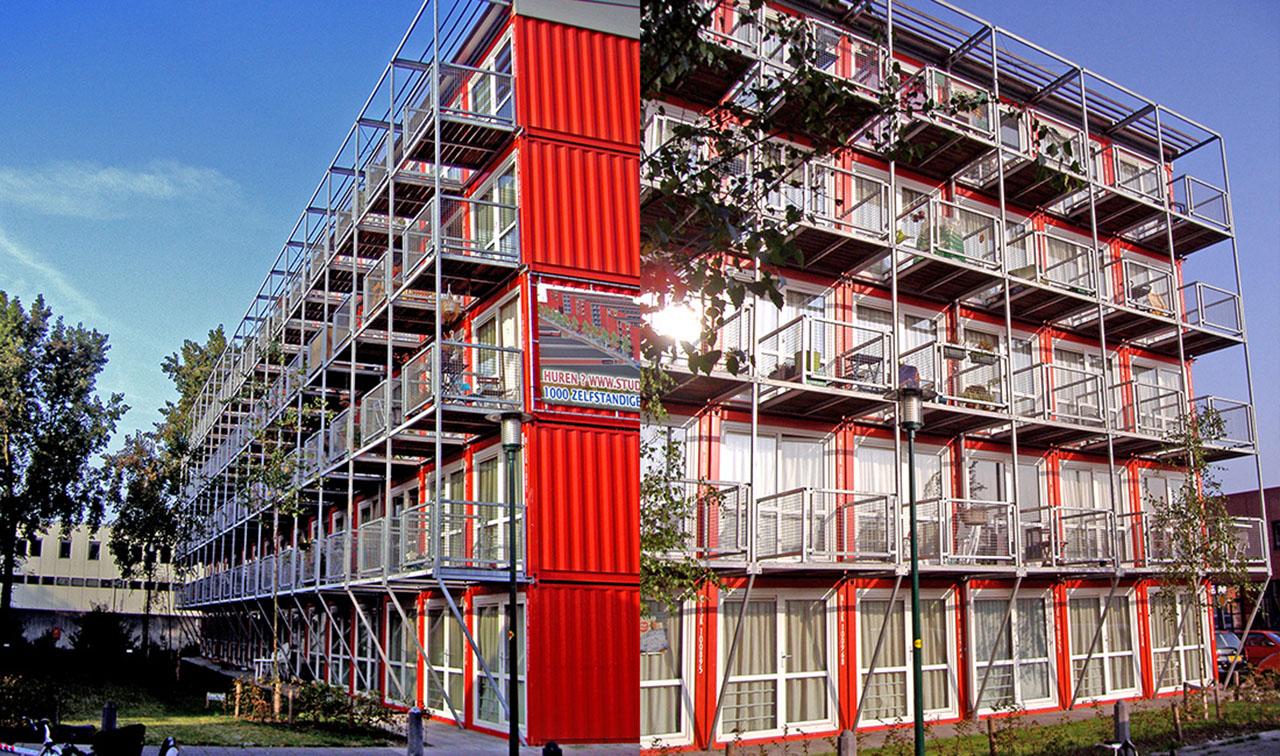
    As we explore creative housing solutions, we turn our attention to Keetwonen, the largest container city in the world. It comprises 1,000 upcycled container studio flats, offering students private living spaces with bathrooms, kitchens, balconies, and separate study and sleeping areas. Each unit includes hot water and high-speed internet. The project creatively stacks containers in blocks up to five levels high, with courtyards for safe bicycle parking and social gatherings. Insulation and rainwater drainage are facilitated by integrated rooftops. Nine months after completion, it has become one of the most popular student dormitories in Amsterdam, showcasing the versatility of container-based design.

    Shoreditch Boxpark, London
    Shoreditch Boxpark, London_viator.com.jpg
    Shoreditch Boxpark, London©viator.com

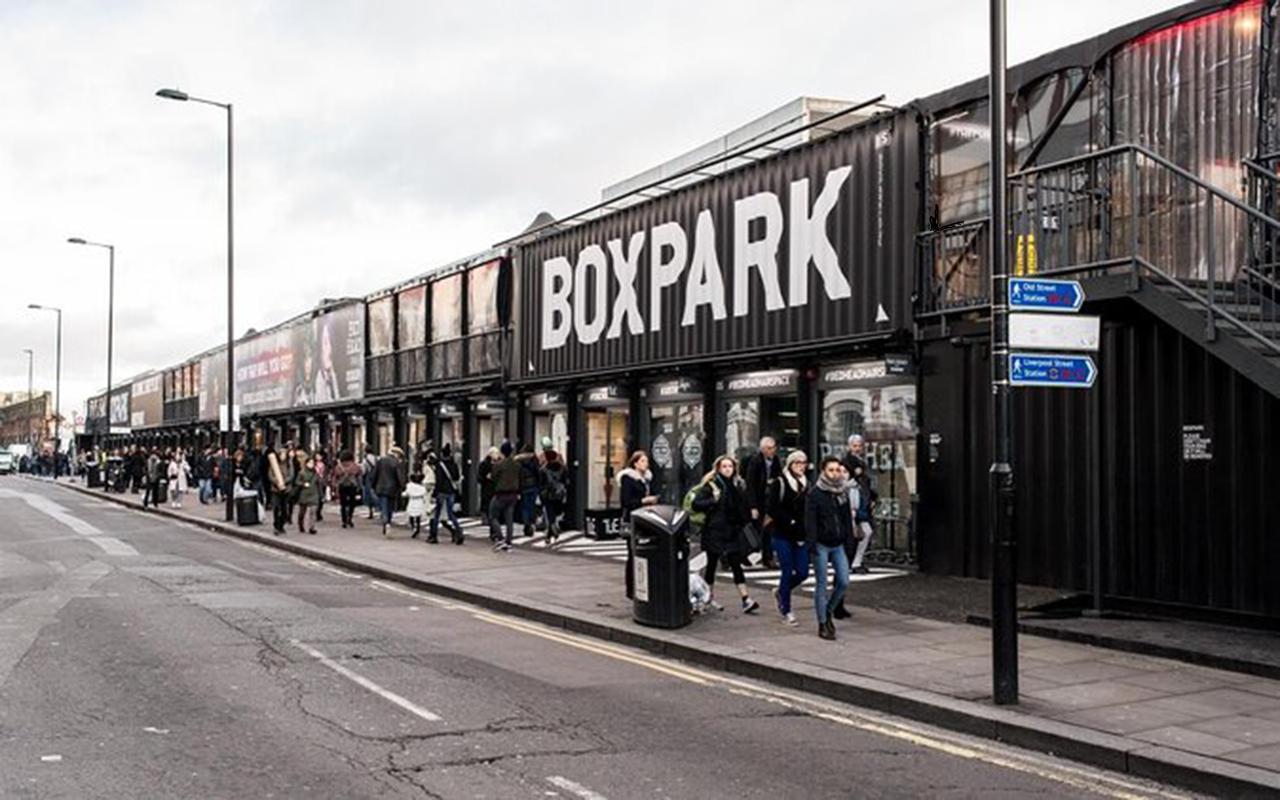
    Boxpark, a distinctive shopping district in London’s Shoreditch, serves as a prime example of shipping containers’ unconventional architectural utilization. Conceptualized by Roger Wade and brought to life by the British firm Waugh Thistleton Architects, this temporary shopping center stands as a testament to adaptability and versatility. Comprising forty containers on the first floor and twenty on the second, totaling sixty distinct units, Boxpark showcases its unique architectural concept within a former railway goodsyard.
    Shoreditch Boxpark Store_absolutemagazine.co.uk.jpg
    Shoreditch Boxpark Store©absolutemagazine.co.uk

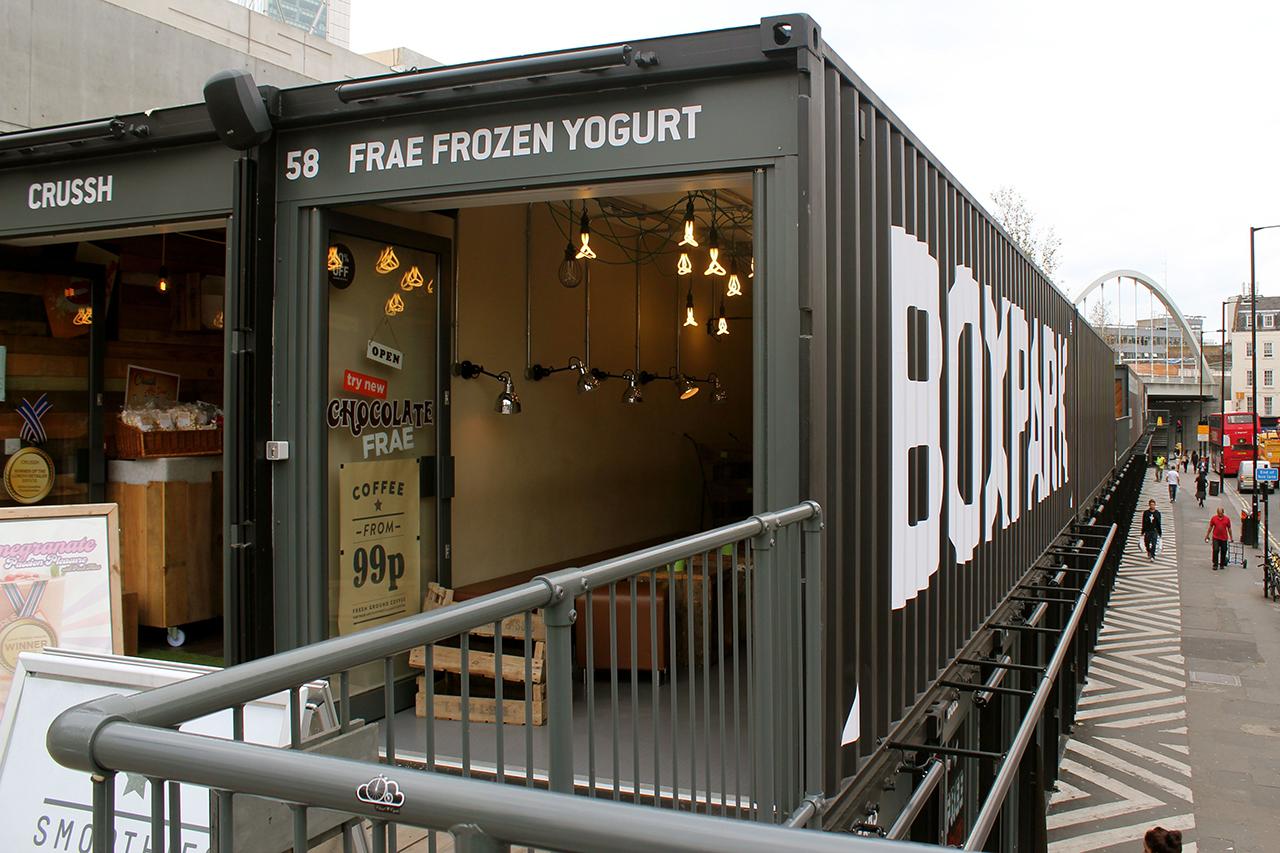
    What sets Boxpark apart is its inventive approach to interior retrofitting. The containers are transformed into cafes and stores offsite, a process that takes approximately three months. Once completed, these modules can be seamlessly integrated into the retail center in just one to three weeks. This flexibility is invaluable, empowering emerging retailers to establish themselves and relocate with ease, fostering a dynamic and diverse retail environment. Moreover, Boxpark functions as a transient hub for shopping and socializing, infusing fresh vitality into the urban fabric. This ingenious use of shipping containers not only revitalizes underutilized spaces but also presents a blueprint for adaptable urban development.

    The Sugoroku Office, Gifu
    The Sugoroku Office, Gifu_thecoolist.com.jpg
    The Sugoroku Office, Gifu©thecoolist.com

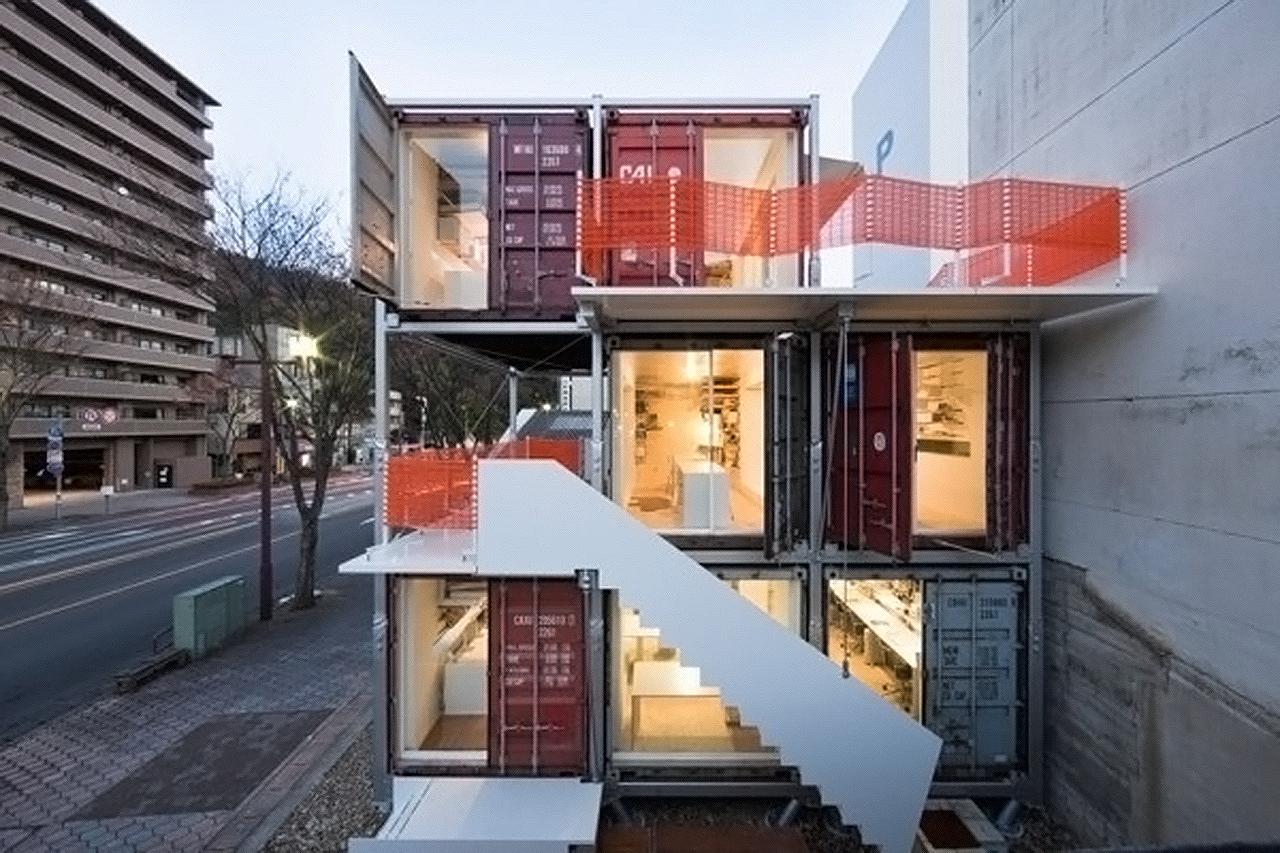
    The Sugoroku Office in Gifu, Japan, designed by Daiken-Met Architects, serves as a pioneering demonstration of flexible architecture. This three-story mobile framework incorporates stacked shipping containers, creating a unique workspace with the potential for future residential use on the penthouse floor. Its design resembles a construction zone, making it appear as if it’s both a functional workplace and an ongoing construction project, creating an intriguing blend of aesthetics. What makes this office particularly remarkable is its ability to be easily assembled and disassembled, making it a practical solution for temporary structures in urban areas.
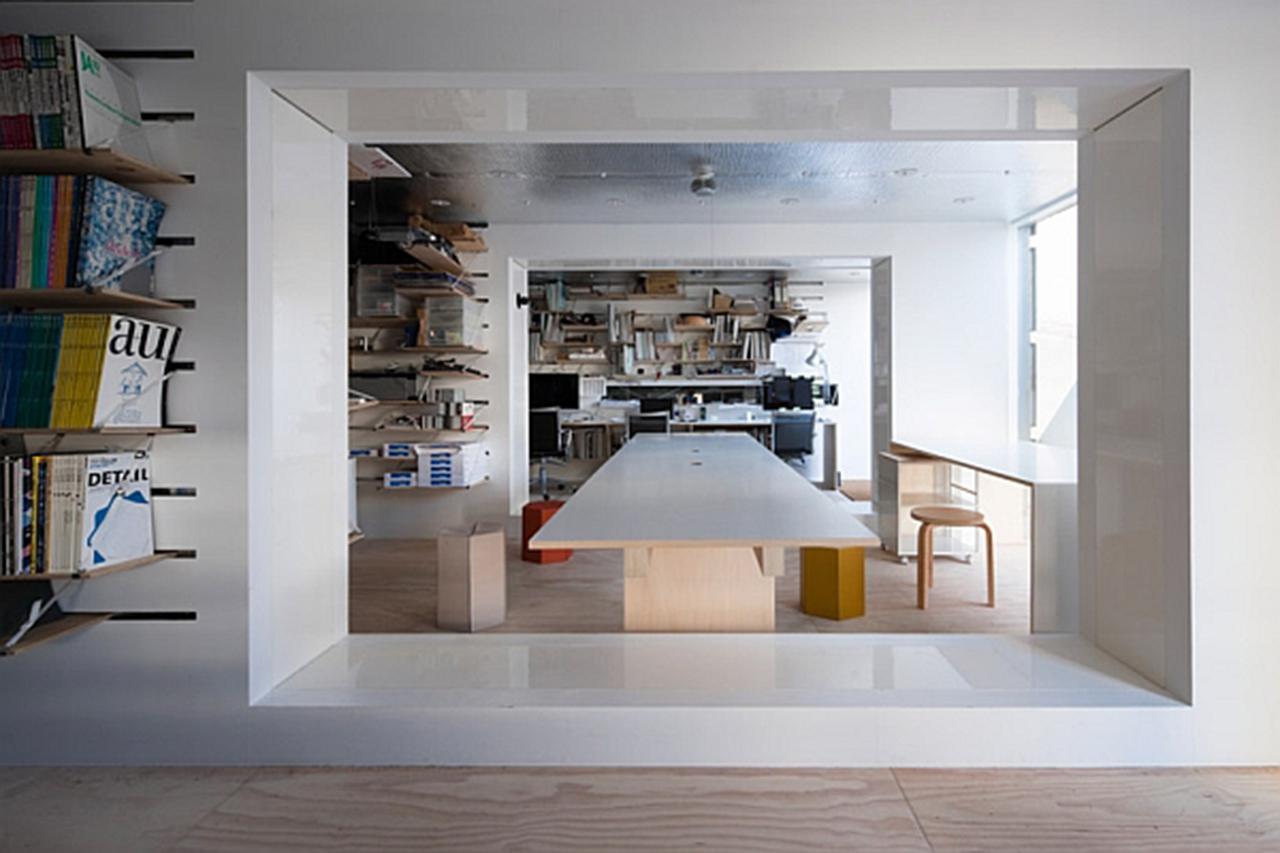
    Sugoroku Office Ground Floor Studio_decoist.com.jpg
    Sugoroku Office Ground Floor Studio©decoist.com

    The architects tackled the challenge of making rental contracts for small-scale structures in a city with a decreasing population and increasing vacant land. They devised a steel structural grid that not only simplifies the assembly process but also reduces the load on the containers, accommodating the weight of the building’s shell, furnishings, and occupants. Importantly, this modular structure can be disassembled and relocated elsewhere. The office’s storage systems creatively incorporate used plywood and packing bands from construction sites, demonstrating an eco-conscious approach to design and resource utilization.

    GAD, Tjuvholmen
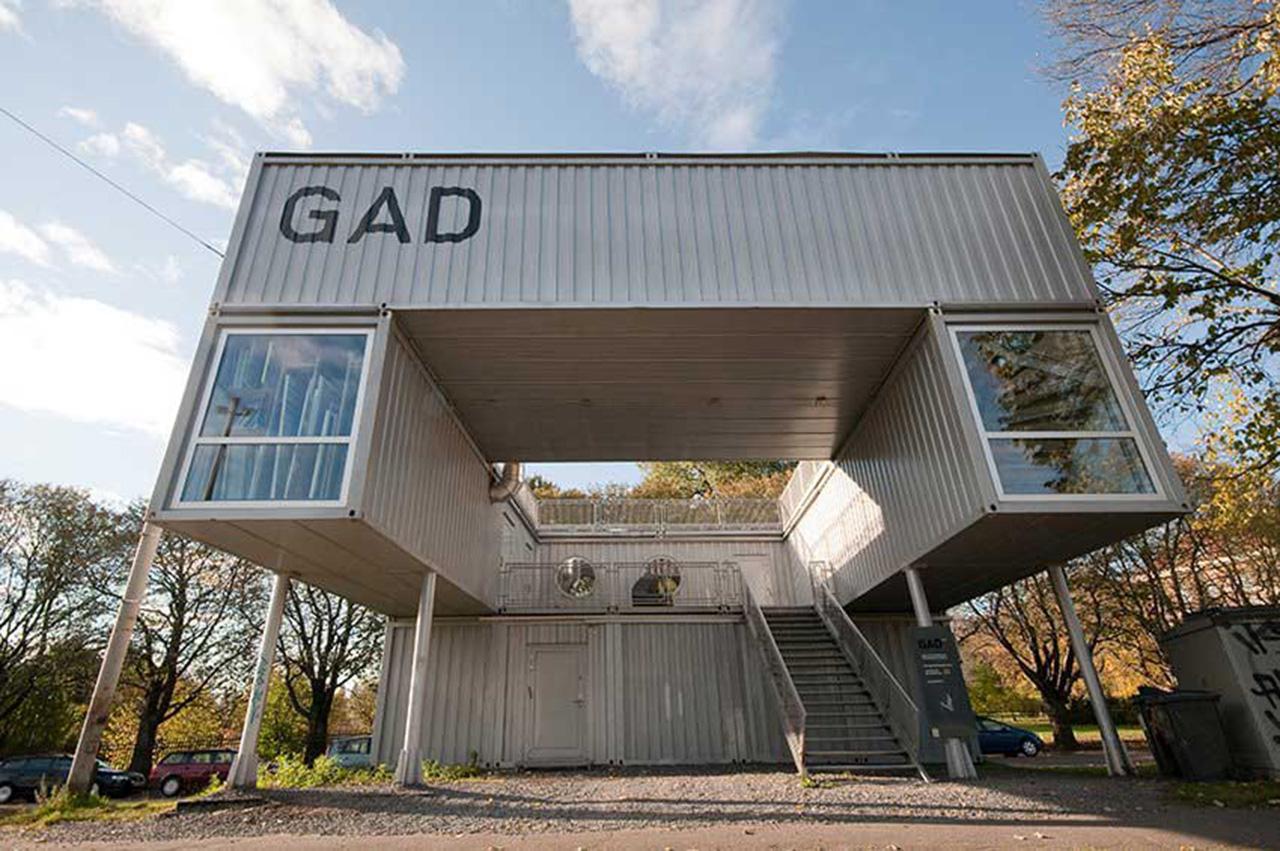
    GAD, Tjuvholmen_bigboxcontainers.co.za.jpg
    GAD, Tjuvholmen©bigboxcontainers.co.za

    GAD is an ingenious semi-temporary gallery designed by MMW Architects, located in Tjuvholmen, Norway. This flexible gallery is built around ten standard steel containers, creating a unique and adaptable space for art exhibitions. The ground floor consists of five containers, while three containers surround a central first-floor courtyard, and the final two complete the square-shaped building, offering access to the top-floor balcony. The containers are thoughtfully insulated and feature circular windows and roof lights to maximize natural light, creating an ideal environment for showcasing art.

     The revolutionary design of GAD enables simple disassembly, relocation, and reassembly, making it an adaptable and accessible place for art exhibitions in many locales. This project exemplifies how shipping containers can be creatively repurposed for artistic and cultural endeavors.

    The Container House, Udaipur
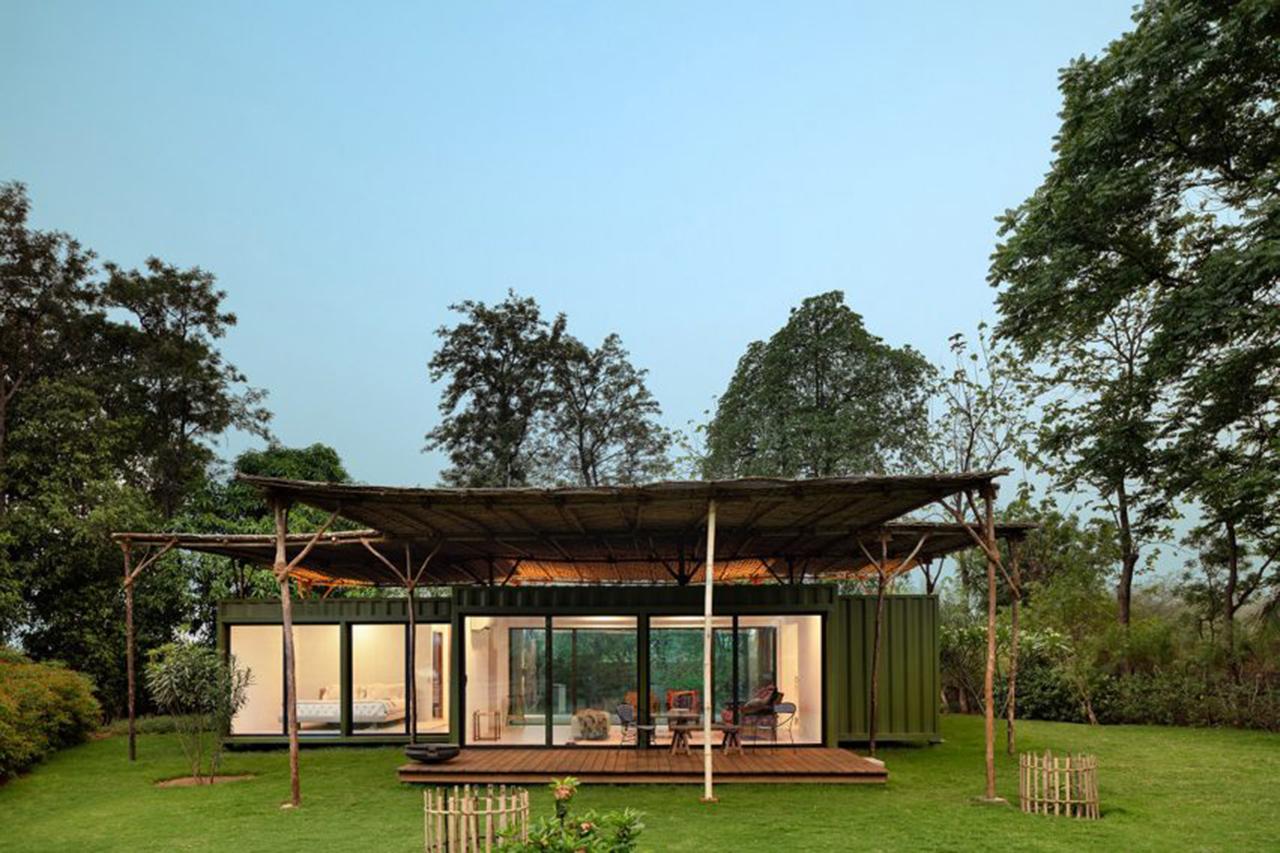
    The Container House, Udaipur_dezeen.com.jpg
    The Container House, Udaipur©dezeen.com

    In the serene Aravalli hills near Udaipur, India, you will find The Container House, an exceptional countryside escape by Rakhee Shobhit Design Associates (RSDA). Crafted in response to the client’s pandemic-era desire for a nature-centric retreat, this unconventional residence redefines home design. There are two units named Champa and Chameli. Created from repurposed shipping containers, the house offers seclusion and harmony with nature. Both units are elevated above the ground to minimize flood risks, structurally reinforced and insulated, and adorned with green exteriors to blend seamlessly with the natural landscape.
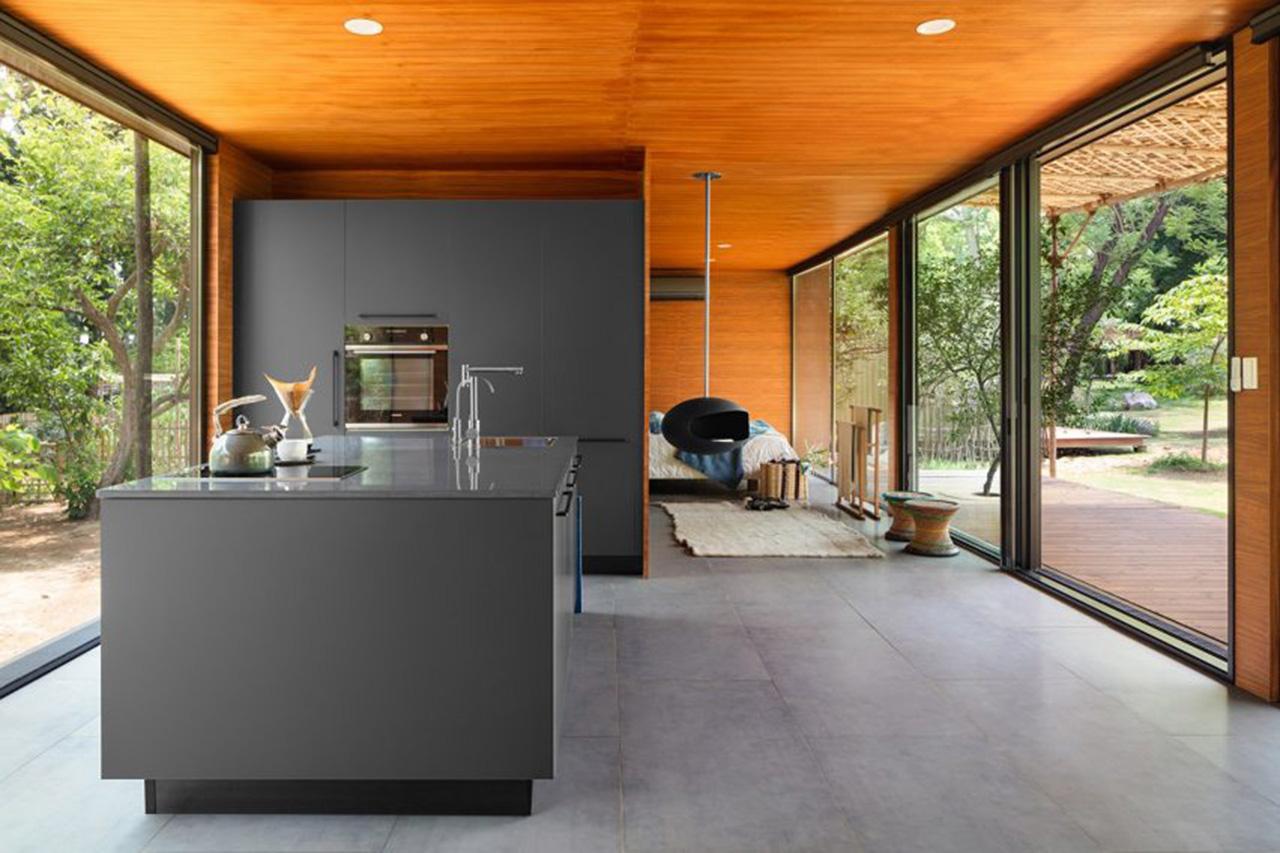
    Chameli Unit_dezeen.com.jpg
    Chameli Unit©dezeen.com

    Chameli boasts an open layout with a living area on one side and a bedroom, bathroom, and kitchen with a suspended fireplace on the other. In contrast, Champa adopts a more traditional configuration, featuring a bedroom, living room, kitchen, and small gym, with wooden partition walls defining these spaces. Both units include full-height windows and sliding doors that open onto hardwood terraces, perfectly linking indoor and outdoor rooms and providing panoramic views of the surrounding scenery.

     Market 707, Toronto

    Market 707, Toronto_stenoodie.com.jpg
    Market 707, Toronto©stenoodie.com

    Located in an urban neighborhood in Toronto, Market 707 is a dynamic market created from salvaged shipping containers, revitalizing an underused area near a sidewalk. LGA Architectural Partners collaborated with a Scadding Court staffer to bring this project to life in 2010, which was inspired by similar container-based stalls in Ghana.

    Initially conceived as a seasonal market, Market 707 has since evolved into a year-round hub featuring diverse vendors, from Japanese street food to local artisans. These modified containers boast roll-up doors and are sheltered by canopies, and vendors have transformed the adjacent paved area into a lively sidewalk café. With daily rent at $10, this district offers an inexpensive platform for up-and-coming business owners. Thanks to the innovative market concept, some vendors have transitioned from containers to permanent storefronts.

    Starbucks, Taiwan
    Starbucks, Taiwan_archdaily.com.jpg
    Starbucks, Taiwan©archdaily.com

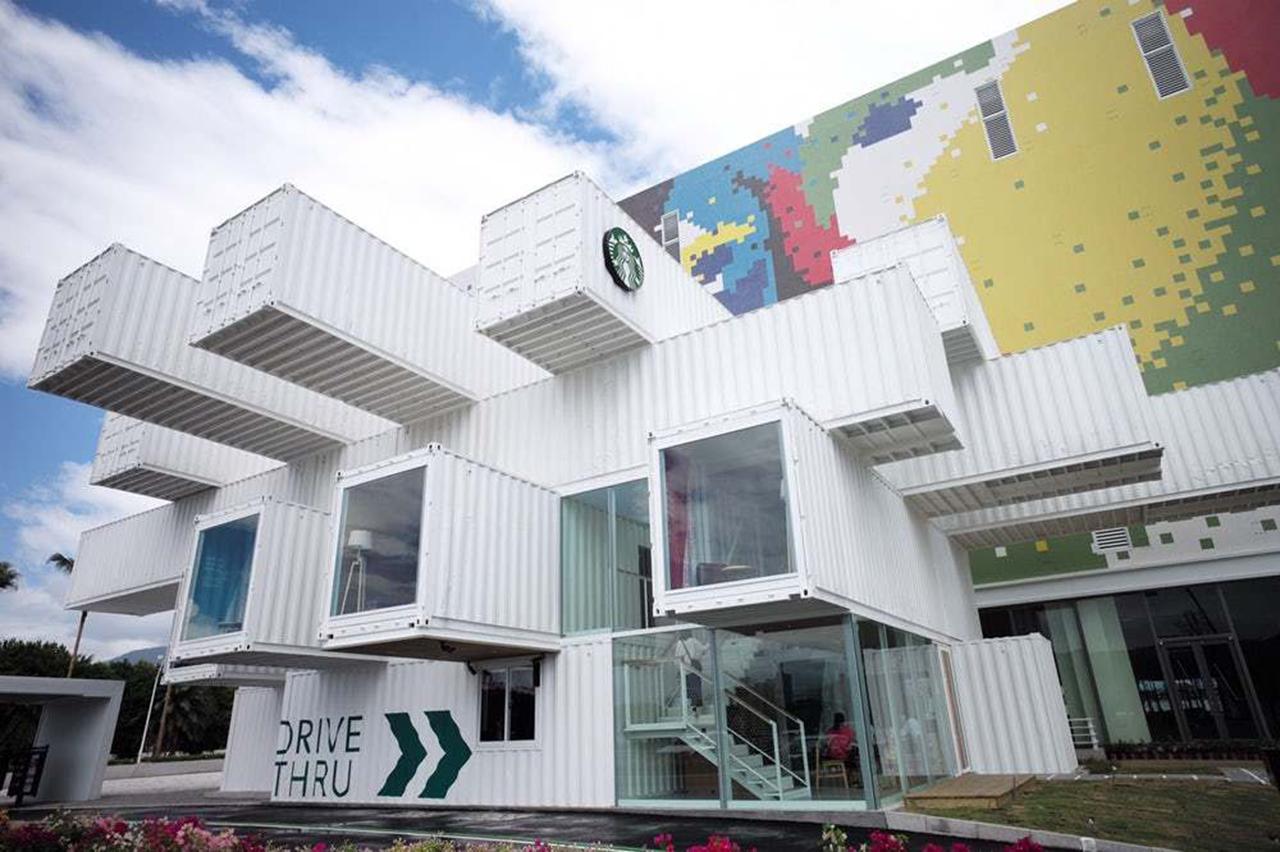
    Renowned architect Kengo Kuma has ventured into shipping container-based architecture for the first time to design Starbucks’ inaugural store in Taiwan. Situated in a shopping mall, this two-story structure is constructed from 29 repurposed shipping containers and operates as a drive-thru. Kuma’s design draws inspiration from the asymmetrical foliage of coffee trees and traditional Chinese bucket arches, resulting in a tall space filled with natural sunlight through skylights. The 29 containers come together to shape a geometric space. Within this space, there are comfortable seating areas. Starbucks’ commitment to sustainable stores is highlighted, with 45 pre-fabricated modular stores already opened in the US, reducing the environmental footprint of new construction.

    Stadium 974, Doha
    Stadium 974, Doha_dezeen.com.jpg
    Stadium 974, Doha©dezeen.com

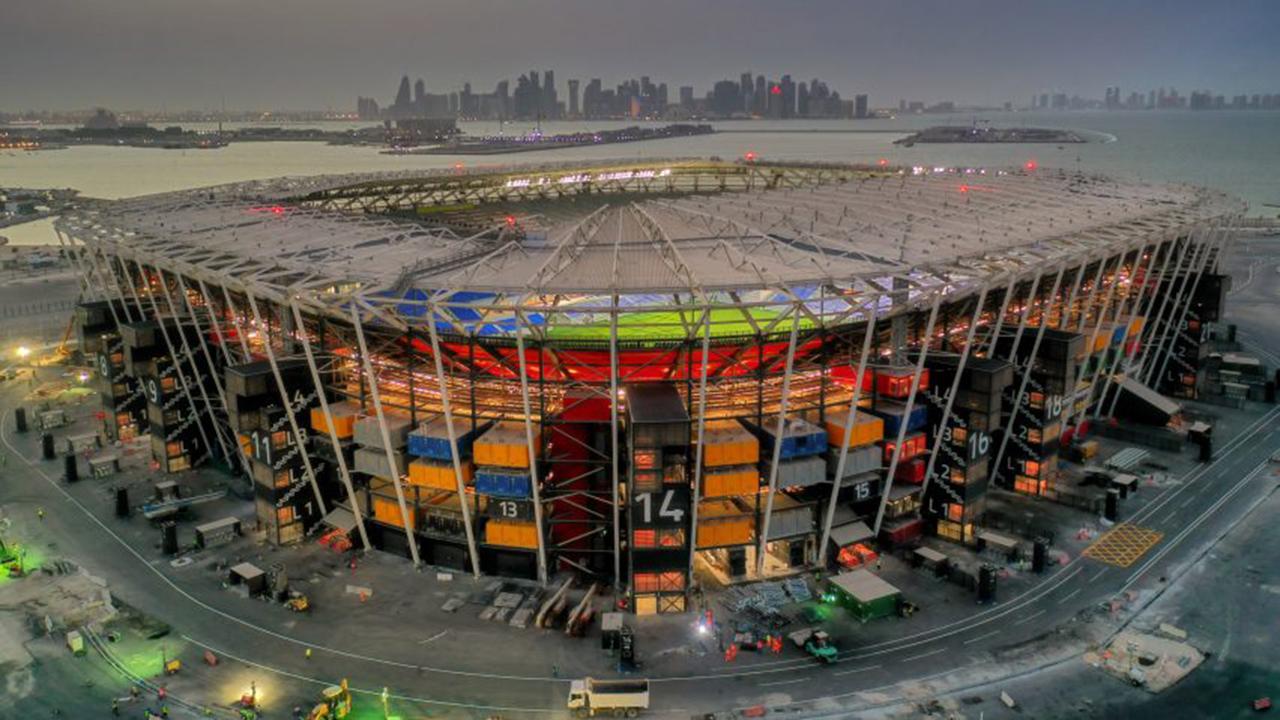
    Stadium 974 in Doha, designed by Fenwick Iribarren Architect for the Qatar 2022 World Cup, stands out as a piece of iconic architecture. Constructed using 974 recycled shipping containers, the stadium embraces natural ventilation, reducing the need for climate control systems. Therefore, it only hosted evening matches. The containers’ bright colors are associated with various stadium functions, adding a vibrant touch.

     A meticulous standardization process has been applied to each element, simplifying transportation, storage, and assembly. The stadium functions like a giant meccano, featuring prefabricated slabs and metal supports, promoting reversibility and sustainability with recycled steel. This “plug and play” strategy reduces construction time and costs. After the FIFA World Cup, the stadium was dismantled and reused for future events, which demonstrates its versatility and eco-friendliness.

    Conclusion

    The evolution of container architecture, transitioning from standardized cargo carriers to sustainable urban landscapes, has been remarkable. Shipping containers serve as versatile building materials, allowing architects to craft remarkable and environmentally conscious designs. Their modularity, cost-effectiveness, and eco-friendly attributes have made them a popular choice for a wide range of projects, from temporary structures to permanent residential complexes. While shipping container architecture offers numerous advantages in repurposing steel containers and reducing waste, it also presents challenges like insulation, ventilation, and navigating building permits.

    As architects continue to push the boundaries of creativity and sustainability, the role of shipping containers in architecture is likely to expand further, contributing to a more eco-friendly and diverse built environment. 

  • Printed Wonders: The Impact of 3D Printing on Architecture

    Printed Wonders: The Impact of 3D Printing on Architecture

    Introduction

    The extraordinary gift of 3D printing technology has been bestowed on the world of architecture by the quick rate of technical growth. In recent years, 3D printing has made significant strides across various industries. The integration of 3D printing in architecture has shifted how architects approach building design, construction procedures, and even sustainability. 3D printing’s ability to expedite manufacturing processes enables architects to create elaborate structures faster and more precisely than ever before.

    The Basics of 3D Printing

    3D Printing
    Layers of 3D Printing©specifyconcrete.org

    In the sphere of contemporary architecture, we have witnessed the fusion of two transformative concepts: sustainability and digital technologies. This dynamic duo is reshaping architectural practices beyond mere representation and into the very core of design and manufacturing processes. Architects are now familiar with terms like parametric design, adaptive design, Building Information Modeling (BIM), nanomaterials, and, notably, 3D printing. This multifaceted technology is also known as additive manufacturing and has altered the world of design. It operates by meticulously crafting 3D objects layer by layer, following precise digital models. While it initially gained prominence for rapid prototyping, 3D printing has matured to the point where it can produce fully functional end-products.

    Types of 3D Printing in Architecture

    Sand 3D Printing_sculpteo.com.jpg
    Sand 3D Printing©sculpteo.com

    In construction and architecture, three main 3D printing technologies have emerged. Firstly, robotic arm extruders, also known as contour crafting, function similarly to desktop Fused Deposition Modeling (FDM) 3D printers. They use rails to guide a robotic arm that extrudes concrete material to build structures layer by layer, particularly for large-scale projects. Another method akin to industrial 3D printing processes is Sand 3D Printing, pioneered by architect Enrico Dini’s D-shaped 3D printer. This technique applies layers of sand powder and solidifies them using a binder, offering a unique departure from traditional construction.

    For structures requiring robustness, Wire Arc Additive Manufacturing (WAAM) technology combines an industrial robot with a welding machine, effectively turning it into a 3D printer for creating durable metal architectural components. These 3d printing construction methods coexist with established techniques like Fused Deposition Modeling (FDM), Stereolithography (SLA), and Selective Laser Sintering (SLS). FDM uses heated thermoplastics for precise structures; SLA cures liquid photopolymer with a UV laser for intricate designs; and SLS fuses powdered material particles with a laser for sturdy parts suitable for prototyping and production. Together, these diverse 3D printing technologies redefine architecture and construction, offering precision, efficiency, and durability as their hallmarks.

    The Benefits of 3D Printing

    TERA Habitat by AI Spacefactory_architizer.com.jpg
    TERA Habitat by AI Spacefactory©architizer.com

    3D printing is rapidly revolutionizing construction with its numerous advantages. It significantly accelerates production, constructing homes in a day. These automated printers reduce human errors and efficiently use materials, minimizing waste and saving costs. Moreover, they enable innovative, intricate, and geometric designs that were once challenging with traditional methods. Architects can present physical 3D visuals to clients, ensuring personalized structures and addressing concerns. Large-scale 3D printers are even constructing entire buildings, reducing costs and timelines. Sustainability is a priority in modern architecture, and 3D printing aligns perfectly by using eco-friendly and recycled materials, reducing environmental impact, and optimizing resource use.

    Furthermore, 3D printing aids in disaster relief and affordable housing, swiftly providing shelter where needed. It also plays a vital role in architectural restoration and preservation by creating precise digital replicas. Material advancements introduce creative options like self-healing bio-concrete, reducing maintenance costs and increasing building lifespan. Lastly, the digital nature of 3D printing fosters global collaborative design, enabling teams worldwide to work together seamlessly and produce diverse and inclusive architectural designs.

    Boundaries of 3D Printing

    While 3D printing presents numerous opportunities, it also comes with challenges. Regulatory bodies and governments are working to establish standards and safety guidelines for 3D-printed structures. Ethical considerations, such as intellectual property rights and the responsible use of 3D printing technology, are also being discussed within the architectural community.

    3D Printing in Action

    3D Printing machine
    3D Printed Earth Wall Staircase©parametric-architecture.com

    Architects wield a versatile toolkit through 3D printing. Its applications span historical preservation, cost-effective housing solutions, parametric designs for energy efficiency, and rapid responses to emergencies. Beyond functionality, architects embrace 3D printing as a medium for artistic expression, seamlessly merging art and architecture. From art installations to furniture design, these diverse applications underscore the technology’s transformative potential within the field. Now, let us delve into the projects reshaping construction and design through 3D printing technology.

    Apis Cor House

    Apis Cor House_archdaily.com.jpg
    Apis Cor House©archdaily.com

    A pioneering achievement by 3D printing construction company Apis Cor saw the completion of Russia’s first on-site 3D printed house in just 24 hours. The house, designed in a unique circular shape, was constructed using Apis Cor’s mobile 3D printer, known for its precision and transportability. The house, with a floor area of 38 square meters, features an unconventional circular design with right-angle protrusions. Despite being built during the coldest time of the year, it necessitated the creation of a protective tent to maintain suitable temperatures for the concrete mixture used as “ink.”

    3d printing software
    3D Printing Process©archdaily.com

    The house’s roofing system, made with LOGICROOF polymer membranes and LOGICPIR hard polystyrene, can withstand heavy snow loads while remaining highly insulated. Additionally, innovative insulation materials and techniques contribute to a comfortable microclimate within the residence. Impressively, the entire project cost only $10,134, highlighting the cost-effectiveness of 3D printing construction. The Apis Cor House marks a significant advancement in 3D printing construction technology, demonstrating its potential for efficient and affordable home construction.

    Tecla House

    Tecla House_dezeen.com.jpg
    Tecla House©dezeen.com

    In Massa Lombarda, Italy, Mario Cucinella Architects and 3D printing specialists WASP have joined forces to create Tecla, a groundbreaking eco-friendly housing prototype. Named after a fusion of “technology” and “clay,” this home stands out for its use of 3D-printed clay sourced from a nearby riverbed. This transformative home features two interconnected dome-shaped structures, whose exteriors are formed by stacking an impressive 350 layers of 3D-printed clay. These undulating layers serve as an efficient thermal insulator and offer adequate structural stability. The compact interior maximizes functionality and comfort. Additionally, Tecla’s roof has strategically placed circular skylights for ample natural light, creating an inviting and organic ambiance.

    Tecla House Skylight_dezeen.com.jpg
    Tecla House Skylight©dezeen.com

    Tecla stands out through its utilization of a sophisticated multilevel modular 3D printer equipped with twin synchronized arms, each with the capacity to print within a 50-square-meter zone. This high-tech marvel empowers the swift assembly of housing modules in a mere 200 hours, all the while significantly curbing energy consumption and waste generation. The project seamlessly combines well-established building methods with modern engineering, producing homes designed for climate health and environmental sustainability, as well as being capable of adjusting to the shifts of changing weather conditions. This approach acts as a proactive response to global climate emergencies and satisfies the growing need for green, flexible housing solutions.

    MX3D Bridge

    MX3D Bridge_parametric-architecture.com.jpg
    MX3D Bridge©parametric-architecture.com

    A stunning stainless steel 3D-printed bridge stretches gracefully across Amsterdam’s Oudezijds Achterburgwal canal in the Red Light District. A Dutch studio, Joris Laarman Lab, collaborated with MX3D, an Arup engineering firm, to create a 12-meter-long pedestrian bridge. The bridge features an elegant, curved S-shaped design with intricate lattice-style perforations on its balustrades, all meticulously crafted using advanced parametric modeling software.

    MX3D Bridge Form_parametric-architecture.com.jpg
    MX3D Bridge Form©parametric-architecture.com

    The bridge took shape through the gradual addition of molten metal, with robotic arms fitted with welding equipment meticulously printing layer upon layer of the structure. The bridge was constructed with 4,500 kilograms of stainless steel, a material that was 3D-printed by robots at a factory over six months. Later, it was lifted into place over the canal. Additionally, the bridge is equipped with sensors that allow it to collect data for performance and maintenance, advancing data-centric design approaches for future projects.

    Traditional House of the Future

    Nanlong Village_dezeen.com.jpg
    Nanlong Village©dezeen.com

    In China’s Nanlong Village, professors John Lin and Lidia Ratoi from the University of Hong Kong embarked on the Traditional House of the Future project. They combined 3D printing with an old wooden house, reinvigorating it with inventive design. After scanning and deconstructing the original structure, 3D-printed walls extended the living space, creating new rooms. Once the 3D-printed elements were in place, the original wooden structure and tiled roof were reintegrated into the house, preserving its heritage.

    New 3D Printed Spaces_dezeen.com.jpg
    New 3D Printed Spaces©dezeen.com

    The Traditional House of the Future project combines 3D printing with ancient architecture, demonstrating its potential for flexible renovations. Beyond that, it champions the fusion of technology with local building practices and sustainability, reimagining old structures to suit modern lifestyles. This project redefines cultural preservation by drawing inspiration from rural China’s innovative vernacular house renovations. It’s a remarkable blend of tradition and technology, offering exciting possibilities for adaptive architecture that transcends time.

    Airlements Project

    Airlements_dbt.arch.ethz.ch.jpg
    Airlements©dbt.arch.ethz.ch

    Researchers at ETH Zürich and FenX AG are using cement-free mineral foam made from recycled waste in large-scale robotic 3D printing to create monolithic, lightweight, and instantly insulated wall systems. The project is named Airlements and features technology that optimizes thermal performance reduces energy consumption, and allows for future material recycling.

    3D Printed Segments_dbt.arch.ethz.ch.jpg
    3D Printed Segments©dbt.arch.ethz.ch

    The project features a 2-meter-tall wall prototype composed of four 3D-printed segments, each weighing 25kg and printed in under an hour. The corrugated texture of each piece contributes to the overall strength and structural integrity of the final structure. These segments can be filled with mineral foam and sealed with cementless plaster to serve as non-structural exterior walls, with potential applications expanding as research progresses. As the research advances, emphasis will be placed on improving the load-bearing capacity of these elements and refining the precision of the 3D printing system.

    Systems Reef 2

    3d printing software
    Systems Reef 2©dezeen.com

    Systems Reef 2 is a revolutionary 3D-printed air conditioning system engineered by Australian architectural firm BVN in partnership with the University of Technology Sydney. The system reduces carbon emissions by an astounding 90% when compared to its traditional air conditioning counterparts, thanks to its unique incorporation of recycled plastic.

    Fluid Ventilation System_dezeen.com.jpg
    Fluid Ventilation System©dezeen.com

    In pursuit of enhanced comfort for occupants beneath the system, the design team drew inspiration from frogs, known for breathing through their skin. Diverging from traditional designs, Systems Reef 2 boasts a unique structure with branch-like tubing, eradicating the presence of obstructive, sharp corners that typically impede airflow and escalate energy consumption. Systems Reef 2 also incorporates small pores that efficiently disperse cool air, creating a mist-like effect in the area below. Offering flexibility, efficiency, and sustainability, it presents a compelling showcase of 3D printing’s potential in the construction sector.

    The Future of 3D Printing in Architecture

    The future of 3D printing in architecture holds immense promise. In architecture, 3D printing empowers architects with unprecedented design freedom, cost-effective prototyping, and sustainable construction solutions, influencing the way buildings are conceived, constructed, and experienced.

    Researchers are exploring the integration of robotics and artificial intelligence to enhance precision and efficiency. Advancements in 3D-printed construction materials may lead to more sustainable, energy-efficient, and adaptable structures. These advantages extend beyond construction and are applicable across various industries. Businesses can incorporate different 3D printing technologies, including plastic, resin, and metal printing, to stay competitive. However, challenges like regulatory approvals, quality control, and integration into existing construction processes must be addressed. Architects and researchers are actively working to overcome these obstacles, ensuring an eco-conscious future for architecture.

    Conclusion

    3D printing technology stands as a profound force reshaping the landscape of architecture. Its impact spans from expediting rapid prototyping to facilitating sustainable building practices and even contributing to humanitarian endeavors. We have already seen the enormous benefits of 3D printing in countless areas, but its potential is not yet realized. This game-changing technology will continue to give architects, engineers, and designers the power to create structures that are not only visually stunning but also exceptionally sustainable, cost-effective, and universally accessible. Embracing 3D printing in architecture transcends being a mere trend; it represents a fundamental paradigm shift that will undeniably define the industry’s future.

  • Cinematic Wonders: The Extraordinary Influence of Architecture in Film

    Cinematic Wonders: The Extraordinary Influence of Architecture in Film

    Introduction

    The separate domains of Architecture and the Cinematic world intertwine in numerous ways, forging connections that extend beyond physical structures and delve into metaphorical realms. Cinema is an art form, with its tapestry of images, sound, and storytelling. Architecture exhibits the tangible as it expresses identity through physical construction with an everlasting presence. Filmmakers have utilised the power of architecture as a crucial element in their narratives, using built environments to establish atmosphere, enhance plotlines, and immerse viewers in captivating visual worlds.

    To comprehend the interplay of architecture and the film industry, it is essential to explore the constituent elements that define these two art forms and explore how their interconnectedness mutually enriches their respective worlds. 

    Unveiling Architecture’s Essence

    principles of design
    Principles of Design©www.archi-monarch.com

    The discipline of Architecture contains a set of fundamental elements and principles that guide design, composition, and creation of visually aesthetic and harmonious built environments. The book “Form, Space, and Order” by Francis D.K. Ching outlines these principles of design, presenting essential concepts used in architectural practice. Elements such as space, form, line, light, and texture provide the foundation for architectural expression.

    Space defines the boundaries and volumes, while form refers to the three-dimensional shape and structure. Lines create visual hierarchy and guide movement, while light shapes the atmosphere and highlights features. Texture adds depth and tactile qualities. Principles like rhythm, balance, proportion, emphasis, unity, and contrast ensure harmony, coherence, and visual interest. Architects skillfully employ these elements and principles to create functional, aesthetically pleasing, and meaningful spaces that enrich the human experience

    Cinematic Composition Revealed

    The Shining Composition
    The Shining Composition©www.mymodernmet.com

    Cinematic composition principles and elements merge to generate compelling visual storytelling. Principles include framing, rule of thirds, balance, movement, and rhythm. Elements encompass line, shape, colour, light, and texture. Framing guides the viewer’s focus, while the rule of thirds creates balance. Movement and rhythm add dynamism. Lines and shapes define visual structure. Colours evoke mood and emotion. Lighting sets the tone. Texture enhances realism. These components combine to craft captivating cinematic compositions that engage audiences in the narrative world.

    Architecture as Cinematic Settings

    Pscho
    Pscho©www.sensesofcinema.com

    Architecture in cinema goes beyond being a backdrop; it becomes a character itself, influencing the narrative. For example, in “Psycho,” the Bates Motel reflects Norman Bates’ disturbed psychology. Architectural symbolism and metaphor are powerful tools used to convey ideas visually. In “Shutter Island,” the disorienting and eerie interiors represent the complexity of the human mind. Settings in films mirror characters’ psychology and relationships. In “The Notebook,” the plantation house showcases faded love while the restored mansion represents youthful romance.

    Architecture as a narrative device adds depth and vibrancy to films. It creates extraordinary worlds that surround the audience in wonder and enhances the storytelling. Through careful selection of settings and the use of symbolism, architecture becomes a vital element in conveying emotions and messages on screen. 

    Set Designer and Architects: Collaborative Creativity

    The Birds
    The Birds©www.sfgate.com

    Set designers in cinema and architecture share a common passion for creating visually captivating environments. While architects primarily focus on designing functional and permanent structures, set designers to specialise in constructing temporary and adaptable sets for film and theater productions. Such as Alfred Hitchcock’s “The Birds” with its elaborate set design. Both disciplines require a keen eye for spatial composition, attention to detail, and an understanding of how space can shape the story and evoke emotions. 

    Set designers often draw inspiration from architectural principles and collaborate with architects to bring their vision to life on the screen. In some cases, architects transition into set design roles, leveraging their skills in crafting realistically stunning sets. Their work involves considering the practical aspects of construction, the aesthetics of the set, and the requirements of the script and the director’s vision. Whether in cinema or architecture, these professionals play a vital role in transforming spaces into immersive and compelling worlds.

    Architectural Aesthetics in Cinema

    The Great Gatsby
    The Great Gatsby©www.architecturaldigest.com

    Architecture in cinema serves as a visual feast for the audience, showcasing the aesthetics of different architectural styles and periods. Filmmakers meticulously recreate historical or contemporary architectural designs to transport viewers into specific time periods. From the Art Deco elegance of “The Great Gatsby” to the futuristic cityscapes of “Star Wars,” architectural styles contribute to the overall visual allure of a film. Furthermore, iconic landmarks like the Eiffel Tower in “Midnight in Paris” add authenticity and display cultural contexts. 

    Architectural composition and framework techniques are employed to enhance visual storytelling. The use of symmetry, leading lines, and framing elements within the cinematic setting can produce a sense of harmony, balance, or even tension. Through grand panoramic shots or intimate close-ups, filmmakers use architectural composition to guide the viewer’s eye and elicit certain emotions. 

    Architecture and Spatial Design in Film

    Architecture and spatial design are crucial in enhancing storytelling in cinema. Filmmakers strategically utilise architectural spaces to create specific moods, convey character traits, and advance the plot. The choice of locations and the arrangement of spaces can invoke a response and immerse viewers in the narrative. 

    Additionally, architectural manipulation is often employed for dramatic effect, whether it’s through the distortion of proportions, unconventional layouts, or the creation of fantastical environments. These techniques heighten tension, amplify emotions, and add visual impact to the storytelling. Moreover, spatial transitions and continuity are carefully orchestrated to maintain a coherent narrative flow. Smooth transitions between spaces, clever use of doorways, and seamless movement within architectural settings contribute to the seamless progression of the story and keep the audience engaged.

    Architectural Elements and Atmosphere on Screen

    Architectural elements, like lighting, shape the cinematic atmosphere by creating ambiance. Whether it’s the warm glow of a cozy living room or the stark lighting in a dimly lit alley, lighting accentuates the architectural details and enhances the emotional impact of a scene. Similarly, the choice of textures and materials within architecture can manufacture specific atmospheres, such as the gleaming facades of a futuristic city. These elements contribute to the visual richness of a film.

    Furthermore, the role of sound design and architectural acoustics play a notable role in immersing the audience. The reverberation of the sound within built spaces such as echoes in a cathedral, or the muffled sounds in a room all contribute to the sensory experience. This enhances the realism and emotional impact of a film.  These elements create a multi-sensory experience that adds depth and resonance to the cinematic storytelling. 

    Architecture across Film Genres

    Architecture plays a distinct role in shaping the visual aesthetics and narrative atmosphere of different film genres. In historical dramas and period pieces, meticulous attention is given to recreating architectural styles and settings that transport viewers to specific eras. Whether it’s the grandeur of ancient palaces or the opulence of Victorian mansions, the architecture serves as a visual representation of the time period and enhances the authenticity of the story. Let’s delve into iconic films to explore the role of architecture across different genres.

    Architecture in Horror and Thrillers

    the shining
    The Shining©www.movieweb.com

    In the realm of horror and psychological thrillers, architecture becomes a tool for conjuring a sense of dread and fear. Haunted houses, eerie mansions, and abandoned structures set the stage for terrifying encounters and psychological torment.”The Shining,” directed by Stanley Kubrick, masterfully uses architecture in its set design and location to create an unsettling experience. 

    The distinctive architecture of the Overlook Hotel becomes a character itself, with its grand interiors and labyrinthine layout amplifying the psychological tension. The hotel’s long hallways, symmetric patterns, and maze-like design reflect the characters’ descent into madness, while the vast, empty spaces and recurring motifs add to the sense of dread. By employing architecture as a visual device, “The Shining” creates an eerie atmosphere that heightens the emotional impact.

    Architecture in Fantasy Cinemas

    In fantasy films, architecture becomes a canvas for imaginative and otherworldly creations. Mystical realms are brought to life through innovative architectural designs. These imaginative structures and environments not only contribute to the visual spectacle but also help establish the unique world-building and fantastical elements of the genre.” Pans Labyrinth,” directed by Guillermo del Toro, masterfully utilises architecture in its set design and locations to depict two contrasting realms.

     The real world is portrayed through decaying structures like the old mill and maze-like mansion, reflecting the harshness of war. In contrast, the mythical labyrinth presents intricate and enchanting architectural landscapes, symbolizing the complexity of the story and adding to its mystical atmosphere. The architectural elements become integral to the narrative, highlighting themes of escapism and blurring the line between reality and fantasy. Overall, “Pan’s Labyrinth” exhibits visually stunning architecture that creates a thematically rich cinematic experience.

    Architecture in Science Fiction

    In science fiction, architecture represents futuristic cityscapes, or alien civilizations, that are brought to life through innovative architectural designs. Architecture in “The Hunger Games” films illustrates social inequality and oppressive regimes. The grandiose structures of the Capitol highlight the decadence of the ruling elite, while the utilitarian and discoloured architecture in the districts reflects the harsh living conditions of the oppressed. 

    District 12-www.wired.com.jpg
    The Hunger Game’s District 12

    Additionally, the architectural landscapes of the Hunger Games arena create visually captivating and treacherous settings that contribute to the intensity of the narrative. Overall, the built environment in the Hunger Games films plays a crucial role in shaping the world and enhancing the storytelling, conveying themes of power, hierarchy, and survival.

    Architecture in Romantic Comedies and Dramas

    The Grand Budapest Hotel
    The Grand Budapest Hotel©www.nytimes.com

    Romantic comedies and dramas use architecture to summon emotions and enhance the romantic ambiance. Charming city streets, picturesque landscapes, and iconic landmarks serve as scenery for heartfelt moments and passionate encounters.”The Grand Budapest Hotel,” directed by Wes Anderson, introduces viewers to a whimsical world through meticulous attention to architectural details. The hotel itself, with its ornate façade and colourful interiors, becomes a character in the film. Anderson’s symmetrical framing and precise camera movements showcase the grandeur of the hotel’s spaces.

    The Art Deco, adds layers of visual appeal and historical context.  Through its meticulous set designs and artifice, the film creates a unique visual aesthetic. “The Grand Budapest Hotel” demonstrates the power of architecture in a film by seamlessly integrating it into the narrative. Furthermore, the hotel’s grandeur juxtaposed with its slightly dilapidated state represents fading glory of a bygone era, mirroring the bittersweet nature of romantic films. The architecture becomes a visual reflection of longing for love and connection.

    Architecture in Psychological Thrillers

    inception
    Inception©www.wired.com

    In psychological thrillers, architecture takes reflects the mind, serving as a silent accomplice in the twisted games of the mind, blurring the boundaries of reality and illusion. In the film “Inception” by Christopher Nolan, architecture plays a pivotal role in the exploration of dreams and the manipulation of reality. The concept of shared dreaming is brought to life through meticulously designed dreamscapes that bend and fold with architectural precision.

     The cityscapes are surreal and gravity-defying, with buildings that curve and intersect, creating a sense of disorientation and the potential for mind-bending experiences. Architecture becomes a tool for the characters to navigate and manipulate the dream world, where they can construct and deconstruct environments to their advantage. From labyrinthine mazes to towering structures that crumble, the architecture in “Inception” becomes a visual representation of the subconscious mind, inviting the audience on a captivating journey through the realms of dreams.

    The Future of Architecture in Film

    Immersive cinema
    Immersive Cinema©www.insidehook.com

      The future of architecture in cinema holds exciting possibilities driven by advancements in technology and CGI. With the increase in the use of sophisticated tools and techniques, filmmakers can seamlessly blend real-world landscapes with computer-generated components. This allows architects and cinematographers to explore new avenues of experimentation and imagination, creating alluring virtual worlds that defy the limits of physical reality. 

    These virtual environments allow for unprecedented architectural creativity, showcasing futuristic designs, fantastical structures, and unconventional spatial experiences. As architecture continues to evolve, its impact on shaping future cinematic experiences will be profound. The seamless integration of architecture into narratives will enhance the visual spectacle, emotional resonance, and immersive qualities of films, creating cinematic experiences that transport audiences into extraordinary architectural realms.

    Cinema’s Influence on Architecture 

    Unlike the whimsical settings of cinema, architecture is confined by reality. Yet, cinema inspires architectural design to push boundaries and create revolutionary experiences for viewers. The journal article titled “The Existential Image: Lived Space in Cinema and Architecture” by Juhani Pallasmaa explores the interconnectedness of cinema and architecture through the lens of lived space and existential experience. Pallasmaa delves into the shared aspects of these two art forms, emphasizing the importance of human experience and perception in both disciplines.

    Guggenheim Museum Bibao-www,parametric-architecture.com.jpg
    Guggenheim Museum Bibaowww.parametric-architecture.com

    The arrangement of spaces, play of light and shadow, and sequencing of architectural elements can parallel the dynamic storytelling of cinema. Consider the iconic Guggenheim Museum in Bilbao, Spain, designed by Frank Gehry. The museum’s sinuous forms, dramatic curves, and dynamic volumes generate movement and rhythm, reminiscent of fluid camera movements in a film. Visitors experience a series of carefully choreographed spatial sequences that mimic the progression of a cinematic narrative, generating a sense of anticipation, discovery, and awe.

    Conclusion

    Cinema becomes a concept without the backdrop and influence of architectural design. Architecture’s role in cinema goes beyond aesthetics, becoming an integral part of storytelling and visual communication. Filmmakers use architectural environments to transport audiences, elicit feelings, and convey narrative subtext. The use of architectural styles, symbolism, and landmarks in cinema showcases the profound influence of the built environment. Pallasmaa discusses the symbolic significance of architecture in cinema, with architectural elements conveying deeper meaning and contributing to the overall narrative.

     The use of architectural landmarks as characters in films is also explored; highlighting how these structures can become iconic symbols within cinematic storytelling. As architects and filmmakers collaborate, architecture will continue to shape and enhance cinema. The intricate relationship between architecture and cinema enriches our viewing experiences, blurring boundaries and leaving a lasting cultural impact. Architecture in cinema transcends the realm of abstraction, teleporting viewers into tangible worlds of immersive storytelling and transformative experiences.

  • Post-Apocalyptic Architecture: Designing for a Reborn World

    Post-Apocalyptic Architecture: Designing for a Reborn World

    Introduction

    An unspeakable disaster has devastated the world, leaving in its wake crumbling cities as nature reclaims its territory, and survivors face daunting challenges. As the apocalypse unfolds, a crucial question arises: Where does architecture find its place amidst the chaos and destruction?

    In such a harsh landscape, traditional architecture falters, necessitating a new approach. In the post-apocalyptic world, Architecture takes center stage as humanity must rebuild and adapt to the aftermath of a catastrophic event. Architecture becomes a symbol of perseverance, a tool for survival, and a means to foster hope amidst ruin.  Post-apocalyptic architecture embodies the integration of practicality, creativity, and sustainability, addressing the challenges posed by a ravaged environment.

    Utopia vs. Dystopia: Architectural Paradigm

    Post-apocalyptic architecture exhibits two contrasting visions: utopia and dystopia. These approaches reflect different scenes when shaping the future after desolation. Design choices can inspire hope or perpetuate despair in the post-apocalyptic climate. Let us briefly delve into the concepts of utopia and dystopia.

    Post-Apocalyptic Architecture
    Utopia©medium.com

    Utopia

    The utopian concept offers reliance, unity, and sustainability. This architectural design prioritizes renewable energy sources, efficient water management systems, and self-sufficient food production. In utopian societies, community collaboration is nurtured, promoting social equality and inclusive decision-making. A utopia aims to create comfortable living spaces that facilitate both physical and mental well-being, while also providing education and a rich cultural life. 

    Dystopian City_www.freepik.com.jpg
    Dystopian City©www.freepik.com

    Dystopia

    In contrast, dystopian designs paint a bleak picture of the future, characterized by control, scarcity, and desolation. The dystopian future embodies authoritarian surveillance systems, restricted personal freedom, and concentrated power. This concept further exacerbates social disparities, worsening the gap between privileged and marginalized groups due to limited resources. Dystopian designs reflect despair through imagery depicting infrastructure and ravaged landscapes, underscoring the harsh realities.

    Architects have the power to shape the narrative by creating environments.  While Utopian designs inspire hope and emphasize the potential for positive change, dystopian designs serve as cautionary tales, reminding us of the consequences of unchecked power and environmental degradation. 

    Meeting Human Needs in Post-Apocalyptic Architecture

    Maslow's Basic Needs Hierarchy_www.pmg.engineering.jpg
    Maslow’s Basic Needs Hierarchy©www.pmg.engineering

    How can architecture provide for essential human needs amidst the chaos? Maslow’s Hierarchy of Needs provides a valuable framework for understanding the essential requirements for human well-being. Architectural design must address psychological needs, safety, a sense of belonging, and provide opportunities for self-actualization. Post-apocalyptic architecture can create environments that promote not only survival but also flourishing communities in the face of extreme challenges. By considering these essential needs, architects have the power to shape a future that transcends the limitations of an apocalyptic world, providing hope, and a new beginning.

    Designers can provide for psychological needs by creating spaces that provide safe water filtration, clean air, adequate shelter, and recuperation spaces to ensure a safe haven for inhabitants. Safety and security are addressed through fortified structures, secure entrances, and surveillance systems to provide protection. Creating shared spaces, communal areas, and support networks fosters a sense of belonging and social connection. Architectural design can facilitate personal growth by including spaces for education, skill development, and reflection. Encouraging innovation and knowledge pursuit enables self-actualization even in challenging circumstances. By considering these needs, the apocalyptic architecture supports resilience, community, and individual well-being.

    Strategic Site Selection in Post-Apocalyptic Architecture

    Location selection in post-apocalyptic architecture is pivotal for humanity’s survival. Factors such as topography, climate, resource availability, accessibility, security, and community dynamics play a vital role in optimizing survival in extreme circumstances. Let’s explore the key factors further:  

    • Topography: Geological stability must be considered to avoid vulnerability to natural disasters and aim for stable areas with lower risks. 
    • Climate and Environment: Locations with moderate climates, access to sunlight, and suitability for agricultural needs to prevent communities from famine. Adaptability to changing conditions is crucial. 
    • Availability of Resources: Areas with access to vital resources like water, food, and energy sources. This allows communities to prioritize self-sufficiency and renewable systems.
    • Accessibility and Connectivity: Locations that are close to transportation networks ensure resource acquisition and potential aid efforts while ensuring security.
    • Security: Environments with terrains that offer natural advantages, visibility, and potential for fortification against threats allow protection. 
    • Community and Social Dynamics: Areas with existing social networks, community cohesion, and favorable demographics encourage better collaboration and support.

    Adaptive Reuse and Retrofitting

    Repurpose Strcutures_www.pxfuel.com.jpg
    Overgrown City©www.pxfuel.com

    Resources are scarce and traditional construction materials are limited in the realm of post-apocalyptic architecture.  Architects and designers must turn to adaptive reuse and retrofitting strategies for resource conservation and the creation of functional spaces. Rather than starting from scratch, repurposing buildings, infrastructure, and materials helps maximize resource efficiency. Abandoned warehouses find new life as communal shelters, while vacant factories are transformed into hydroponic farms, utilizing space and material effectively. Additionally, damaged bridges can be repurposed as platforms for vertical gardens, merging functionality with aesthetics. This approach embraces the unique character of the post-apocalyptic world.

    The Factory by Ricardo Bofill_www.archdaily.com.jpg
    The Factory by Ricardo Bofill©www.archdaily.com

    A real-world example of architectural reuse is The Factory located on the outskirts of Barcelona. Ricardo Bofill transformed an abandoned cement factory into a stunning cultural and artistic space, making it a hub of creativity and culture that coexists with the industrial aesthetic of the factory. The operation of adaptive reuse and retrofitting showcases ingenuity and persistence in the face of adversity. These practices represent sustainability principles and contribute to a more resilient and environmentally conscious future.  

    Sustainable and Self-Sufficient Design

    Vertical Garden_www.outlookindia.jpg
    Vertical Garden©www.outlookindia

    In the context of post-apocalyptic architecture, sustainable and self-sufficient systems are paramount to ensure the long-term viability of built environments. Due to limited access to resources and a need to minimize the environmental impact of construction, architects must implement innovative and resource-efficient design techniques. One key aspect of sustainable apocalyptic architecture is the integration of renewable energy systems.  Structures should incorporate renewable systems such as solar panels, wind turbines, and geothermal heating, to generate their own power.  Not only is this sustainable but encourages self-sufficiency, allowing communities to thrive even in the absence of external power grids. 

    Furthermore, sustainable post-apocalyptic design also emphasizes food production and water management operations. Roof-top farms and vertical gardens provide opportunities for urban agriculture, within limited spaces. Additionally, rainwater harvesting systems capture and store rainwater, ensuring a reliable water supply for various needs. These strategies reduce dependence on external food and water sources, enhancing community resilience and self-sufficiency. Recycling and up-cycling materials from existing structures or salvaged materials contribute to a circular economy approach, where resources are repurposed rather than discarded. This not only reduces waste but also promotes a more sustainable and regenerative approach to building. 

    Resilient Structures

    Geodesic Dome Shelter_www.cityam.com.jpg
    Geodesic Dome Shelter©www.cityam.com

    Architectural design must prioritize robustness to withstand the unique challenges posed by the aftermath of a catastrophe. Extreme weather, radiation, or contaminated landscapes create hostile conditions. Therefore, structures should be engineered to endure and protect their inhabitants. Durable materials such as reinforced concrete, steel, or composite materials, can survive high winds, seismic activity, and other hazards. In addition to materials, buildings must be able to adapt to shifting circumstances. For example, dome-shaped structures offer excellent structural stability and aerodynamics, reducing the risk of collapse during strong winds and pressure.

    Underground House Plan B_www.dezeen.com.jpg
    Geodesic Dome Shelter©www.cityam.com

    If radiation is the issue, an underground shelter may be the answer as the earth itself acts as a natural insulator, providing protection against harmful emissions. Underground structures can be strategically designed to include ventilation systems, and air filtration to ensure the safety and well-being of those who seek refuge. Modular construction techniques are also important in post-apocalyptic design for nomadic communities or in response to changing circumstances. Modular units provide quick assembly, disassembly, and reconfiguration. This flexibility allows for resource efficiency and the ability to repurpose structures as desired, optimizing functionality and adaptability in an unpredictable world.

    Embracing Nature and Biophilic Design

    Biophilic Architecture_illustarch.com.jpg
    Biophilic Architecture©illustarch.com

    In a post-apocalyptic environment, nature may have taken over abandoned urban landscapes. Architects can harness the power of biophilic design to reconnect humans with the natural world. Vertical gardens, green spaces, and rooftop landscapes can be integrated into design, allowing opportunities for fresh food production, improving air quality, and fostering psychological well-being. Structures can be designed with ample natural light, views of the surrounding landscape, and incorporation of natural materials, creating a harmonious blend of human-made and natural elements. Biophilic design not only promotes environmental sustainability but also enhances the overall livability of post-apocalyptic communities.

    Information and Communication Infrastructure

    Traditional means of communication may have been disrupted in the disastrous event. Architects must consider the development of information and communication systems. Structures can be equipped with advanced technologies, such as satellite connectivity, decentralized networks, and renewable-powered data centers. Establishing reliable communication channels is crucial for coordinating efforts, sharing knowledge, and providing essential services in post-apocalyptic societies. Architects and designers play a pivotal role in integrating these technological advancements seamlessly into the built environment. 

    Community-Centric Spaces and Education for Resilience

    Urban Rooftop Community_dfaawards.viewingrooms.com.jpg
    Urban Rooftop Community©dfaawards.viewingrooms.com

    The creation of community-centric spaces and prioritizing education and skill sharing in post-apocalyptic architecture becomes an integral part of cultivating resilience and empowering survivors. Architecture must enable social cohesion and collaboration by designing public spaces that serve as gathering points of trade, and allow for cultural overlap, and emotional support. Market squares, community centers, parks, or rooftop gardens become vital hubs for interaction and a sense of belonging. These social nodes should be flexible, allowing for easy adaptation to accommodate various activities that encourage intercommunication. 

    Moreover, post-apocalyptic public spaces extend beyond the need for social belonging but also facilitate the exchange of ideas and knowledge, enabling survivors with the essential skills needed for self-sufficiency. Establishing educational programs, vocational training centers, and maker spaces allows for the development of construction skills, sustainable farming techniques, water purification methods, and renewable energy systems. By providing access to education and fostering skill sharing, post-apocalyptic architecture becomes a catalyst for long-term resilience, enabling communities to rebuild and thrive in a desolate landscape.

    Inspirational Aesthetics in Post-Apocalyptic Architecture

    Post-apocalyptic architecture is an opportunity to create beauty amidst destruction. Architects should strive to incorporate inspirational aesthetics that uplift the human spirit and inspire hope for a better future. Artistic expressions, murals, and sculptures can breathe life into the bleak landscapes, serving as reminders of humanity’s enduring creativity and resilience. The use of vibrant colors, natural light, and open spaces can counterbalance the gloom and instill a sense of optimism and rebirth.

    Preserving Cultural Heritage in a Post-Apocalyptic World

    Surviving Monument_www.peakpx.com.jpg
    Surviving Monument©www.peakpx.com

    In the aftermath of an apocalypse, the remnants of the past become precious fragments of cultural heritage. Architects should strive to preserve and restore significant landmarks and historical sites that survived the catastrophe. The surviving structures in the post-apocalyptic world represent cultural and historical value. The monuments become a reminder of humanity’s resilience and the endurance of our collective memory. The elements of post-apocalyptic architecture are incorporated to help maintain a sense of identity and continuity in the face of overwhelming change.

    Ethical Considerations

    In the pursuit of post-apocalyptic architecture, ethical considerations should guide design decisions. Architects must prioritize equity, inclusivity, and social justice to ensure that the rebuilt world is fair and just for all. Designs should accommodate the needs of diverse populations, including differently-abled individuals, the elderly, and marginalized communities. The creation of safe and accessible spaces, the provision of essential services, and the establishment of democratic decision-making processes all contribute to a more equitable post-apocalyptic society. 

    Human Preparedness in Post-Apocalyptic Architecture

    The concept of the apocalypse has always captivated humanity, whether it is a zombie outbreak, contagion, or climate change. While these scenarios may seem far-fetched, they reflect our mutual fears influenced by historical events. Humans have encountered both natural and man-made catastrophes, highlighting our capacity for rebuilding. Historical events demonstrate the profound impact of disasters on society, the economy, and the environment. Learning from the past, we can develop resilient post-apocalyptic architecture. In today’s world marked by contagion, nuclear fears, climate change, and economic instability, exploring examples of human preparedness and past architectural responses to disasters is vital.

    Svalbard Global Seed Vault_www.newscientist.com.jpg
    Surviving Monument©www.peakpx.com

    Svalbard Global Seed Vault, Norway

    Located on a remote Arctic island, the Global Seed Vault serves as a prime example of human preparedness in the context of post-apocalyptic architecture. It preserves and protects a vast collection of plant seeds from around the world, safeguarding biodiversity and ensuring food security in the case of a potential disaster. The architecture of the vault is designed to withstand natural disasters and maintain a stable temperature for long-term preservation. 

    Underground City of Cappadocia_www.dailysabah.com.jpg
    The Underground City of Cappadocia©www.dailysabah.com

    Underground City of Cappadocia, Turkey

    The region of Cappadocia in Turkey is known for its underground cities, which were carved out of soft volcanic rock by ancient civilizations. These expansive underground complexes provided shelter and protection from invaders. They include numerous chambers, tunnels, and ventilation systems, showcasing the historical preparedness for post-apocalyptic scenarios.

    FukushimaNuclear Power Plant_www.bbc.com.jpg
    Fukushima Nuclear Power Plant©www.bbc.com

    Fukushima Daiichi Nuclear Power Plant, Japan

    Harmful radiation contaminated the Fukushima nuclear plant site in 2011, when a massive earthquake and tsunami disabled the cooling systems for the reactors. Therefore, the site underwent significant architectural changes. The damaged reactors were covered with a large steel and concrete structure known as the “sarcophagus” to contain radioactive material. This architectural intervention demonstrates the commitment to ensuring safety and minimizing the impact of the disaster.

    Hiroshima After the Atomic Bomb__www.express.co.uk.jpg
    Hiroshima Rebuilt_www.express.co.uk.jpg
    Hiroshima Before and After©www.express.co.uk

    Hiroshima and Nagasaki, Japan

    Towards the conclusion of World War II, the cities of Hiroshima and Nagasaki endured profound devastation as a result of an atomic bomb. The reconstruction of Hiroshima and Nagasaki focused on rebuilding infrastructure, creating memorials to honor victims and promoting peace. The Hiroshima Peace Memorial Park and Nagasaki Peace Park are powerful symbols of remembrance and reconciliation.  

    The term “apocalyptic” can have a multitude of meanings. Although the above examples may not represent a complete global collapse of human civilization, they undeniably caused mass destruction, loss of life, and enduring effects on society, the economy, and the environment. 

    Conclusion

     The multi-dimensional discipline of post-apocalyptic architecture demands innovation, adaptability, and a profound understanding of the human condition. When designers embrace nomadic architecture promoting education and skill sharing, incorporating ethical considerations, and creating inclusive communities, architects can lay the foundations for a sustainable and just post-apocalyptic world. Post-apocalyptic architects have an opportunity to redefine societal norms, re-imagine urban environments, and create a future that embodies the triumph of the human spirit. Post-apocalyptic architecture is not just about survival; it is about envisioning a world where humanity flourishes, transcending the boundaries of its tumultuous past.

  • Architecture and Food Experiences: An Astounding Culinary Journey through Design

    Architecture and Food Experiences: An Astounding Culinary Journey through Design

    Introduction

    Embark on a captivating journey where architecture and food intertwine to create an immersive culinary adventure. The art of architecture becomes a crucial ingredient that elevates our gastronomic experiences. From the intricately designed restaurants and thoughtfully planned kitchens to the seamless integration of food within architectural spaces, the collaboration between these two fields gives rise to wonderful food expeditions. The layout, lighting, textures, and ambiance of dining spaces work in harmony to stimulate our senses and enhance the pleasure of each bite. These architectural enclaves merge traditions, customs, and rituals with culinary delights, adding depth to the dining experience.

    Moreover, the future of sustainable dining experiences lies within the realm of architectural design, where innovative approaches foster a deeper connection to the environment and encourage responsible consumption. In addition, architecture plays a significant role in forging social connections, creating spaces that embrace communal dining and facilitate shared moments of enjoyment. Let us explore the intricate relationship between architecture and food, where design transcends aesthetics and transforms every meal into an extraordinary encounter. 

    Architectural Ambiance: Crafting Sensory Spaces

    The 50% Cloud Artists Lounge in Mile City, China_www.hospitalitydesign.com.jpg
    The 50% Cloud Artists Lounge in Mile City, China

    As we step into a restaurant, carefully crafted design elements work their magic, creating sensory-rich experiences in the culinary realm. Architecture serves as the conduit, strategically considering lighting, materials, spatial arrangement, and acoustics to set the perfect stage for an edible performance.  Meticulously curating the atmosphere and ambiance, architects masterfully utilize the interplay of natural and artificial light to create a warm and inviting ambiance or evoke a vibrant and energetic mood.  The spatial layout is thoughtfully planned, offering flexibility for diverse dining experiences, from intimate gatherings to bustling social affairs.

    The interior décor, from furniture to artwork, reflects the character of the establishment. Even the exterior façade, creates a visual impression that entices passersby to step inside and indulge. Furthermore, architects meticulously attend to sensory elements, particularly acoustics, which are calibrated to minimize noise and create a comfortable dining environment where conversations flow effortlessly. The choice of materials, such as warm woods, sleek metals, or plush fabrics, add tactile elements that engage our sense of touch and create a sense of luxury or comfort. Every design detail harmoniously amplifies the culinary experience, complementing flavors, aromas, and textures with meticulous consideration.

    The Intersection of Architecture and Culinary Showmanship

    Ogata, Paris_Open Kitchen
    Ogata, Paris_Open Kitchen

    Innovative architectural design integrates theatricality and showmanship to create remarkable food experiences. Open kitchen layouts, chef’s tables, and interactive dining concepts bring the culinary process to the forefront, allowing diners to witness food preparation firsthand. Architects collaborate with chefs to design spaces that accommodate interactive elements and enhance the theatrical aspect of food preparation. The space’s layout and flow optimize visibility, while strategic lighting highlights culinary action and creates a sense of drama. Acoustic considerations ensure that the sounds of the kitchen, from the sizzle of pans to the chopping of ingredients, contribute to the sensory event without overwhelming conversation.

    Open kitchen layouts offer an engaging spectacle as chefs demonstrate their skills and craft in full view of the diners. This immersive experience adds excitement and anticipation to the dining affair. Chef’s tables provide an intimate dining experience near the kitchen, enabling a close interaction between diners and chefs. It allows diners to gain insights into culinary techniques, ingredients, and inspirations. Interactive dining concepts blur the boundaries between chef and diner, involving interactive food stations, where diners actively participate in the cooking process or engaging presentations. These concepts showcase creativity and create a sense of engagement. 

    Culinary Spaces in Architectural Marvels

    Culinary Spaces in Architectural Marvels
    Restaurant near the Pantheon, Rome

    Culinary spaces capitalize on iconic buildings or scenic locations, crafting unforgettable dining encounters that surpass mere functionality. These restaurants, nestled near historic landmarks or contemporary masterpieces, seamlessly integrate architectural beauty with gastronomic delights. Enhanced by breathtaking views, be it a panoramic cityscape, serene natural setting, or historic landmark, diners can relish their meals while being engrossed in the captivating allure of their surroundings. The architecture itself often becomes an integral part of the aesthetic experience, with the restaurant seamlessly blending with its environment. The interior design may harmonize with the architectural style, reflecting its character and enhancing the overall atmosphere.

    These culinary spaces within architectural marvels attract a diverse range of guests. These establishments attract both tourists in search of a memorable dining experience and locals who appreciate the captivating fusion of architecture and gastronomy. These restaurants become cultural and social hubs, for people to gather and celebrate special occasions, indulge in culinary delights, and immerse themselves in the beauty of their surroundings. Culinary spaces in architectural marvels offer a harmonious fusion of art, design, and gastronomy. Situated within iconic buildings or scenic locations, these restaurants provide an atmosphere that lingers in the memories of diners long after the meal is finished.

    Fusion of Culinary and Architectural Cultures

    The fusion of culinary and architectural cultures brings forth captivating and enriching food experiences. Architectural design, when influenced by the cultural heritage of a specific cuisine, gives rise to spaces that beautifully embody the traditions and aesthetics of that region. These spaces serve as a reflection of the culinary journey one is about to embark upon, immersing diners in a setting that authentically represents the cultural context of the food they are about to enjoy.

    Kan Japanese Restaurant_www.archdaily.com.jpg
    Kan Japanese Restaurant

    The convergence of culinary traditions within an architectural setting allows for cross-cultural exploration. Diners can savor a harmonious blend of flavors, techniques, and ingredients while experiencing and appreciating diverse architectural styles. For example, Kan Japanese Restaurant by ODD seamlessly blends culinary and architectural cultures. With a menu showcasing modern interpretations of classic Japanese dishes and a serene setting that reflects Japanese traditions, Kan offers a captivating and immersive dining experience. This fusion of culinary and architectural cultures celebrates the richness and diversity of our global gastronomic heritage.

    Pop-up Restaurants and Food Installations 

    Chasing Kitsune by Hassell + Schiavello_www.architecturenow.co.nz.jpg
    Chasing Kitsune by Hassell + Schiavello

    Pop-up restaurants and temporary food installations redefine dining by breaking free from traditional settings, taking place in unexpected locations like warehouses, rooftops, and outdoor landscapes. Architects work closely with chefs to understand their vision, menu, and desired atmosphere, translating these elements into a spatial design that complements and enhances the culinary experience. By experimenting with layouts, materials, and spatial arrangements, these temporary experiences encourage culinary exploration and invite diners to embrace new environments and unexpected adventures. 

    Unique seating arrangements, innovative lighting, interactive displays, and immersive sensory elements add to the extraordinary dining atmosphere. These temporary food experiences celebrate the ephemeral nature of dining, offering exclusivity, anticipation, and the opportunity for chefs and architects to showcase their creativity. By merging creativity, innovation, and culinary artistry, pop-up restaurants and food installations provide a dynamic fusion of architecture and gastronomy, engaging diners in fresh and exciting ways.

    Enhancing Culinary Connections in Social Spaces

    Manifesto Market,Prague-www.archipreneur.com.jpg
    Manifesto Market, Prague

    Architecture plays a vital role in designing spaces that foster social interaction and communal dining experiences. Architects intentionally design spaces through strategic seating arrangements, layout, and circulation. Tables and seating areas are arranged to facilitate conversation and create intimacy, while the flow of the space encourages movement and exploration. Shared dining tables in restaurants create opportunities for connections among strangers, promoting community and camaraderie.  Interactive elements like communal food preparation areas or cooking stations allow diners to participate in the culinary process together, enhancing the overall dining experience and nurturing social engagement.

    Outdoor seating areas provide a relaxed and inviting setting for diners to gather and socialize. Whether it’s a sidewalk cafe, patio, or rooftop terrace, these spaces offer a refreshing change from indoor dining. The open-air ambiance, combined with proximity to nature or vibrant city life, creates a welcoming atmosphere for social interaction. Open-air markets bring people together around a shared love for food, offering a variety of culinary delights and opportunities for mingling, interacting with vendors, and discovering new flavors. The lively and interactive nature of these markets nurtures excitement and encourages social engagement.

    Architecture Reviving Culinary Heritage

    Cultural preservation and revitalization highlight the potential of architecture and food experiences to restore and conserve cultural heritage. Repurposing traditional or historic buildings into restaurants offers a unique opportunity to showcase local cuisine while simultaneously preserving architectural treasures. By honoring the past and integrating authentic culinary experiences, these establishments become catalysts for cultural exchange, fostering a deeper appreciation for traditions, history, and heritage. This harmonious blend of architecture and gastronomy not only breathes new life into cultural spaces but also creates meaningful connections between people and their shared cultural identity.

    The Jane,Antwerp,Belgium_www.theworlds50best.com.jpg
    The Jane, Belgium

    A prime example of cultural preservation and revitalization is “The Jane” in Antwerp, Belgium. Housed in a former chapel dating back to the 19th century, The Jane beautifully blends historic architecture with contemporary design. The space retains its original features, such as stained glass windows and high ceilings, while incorporating modern elements like sleek furniture and artistic lighting fixtures. This restoration project has transformed the chapel into a stunning dining space, providing a unique ambiance for guests to enjoy innovative and Michelin-starred cuisine.

    Designing for Sustainable Food Systems

    Haoma, Bangkok_Urban Farm-To-Table Restaraurant_www.designpataki.com.jpg
    Haoma, Bangkok_Urban Farm-To-Table Restaurant

    Designing sustainable food systems is a key responsibility of architecture in today’s world. Sustainable restaurant design encompasses various strategies to minimize environmental impact and promote eco-conscious practices. For example, architects can incorporate rainwater harvesting systems to reduce water consumption and utilize rooftop gardens for growing fresh produce, reducing the carbon footprint associated with transportation and packaging. The integration of farm-to-table concepts not only promotes sustainability but also creates a closer connection between diners and the food they consume. It fosters transparency, authenticity, and a deeper appreciation for the origin of ingredients. 

    Energy-efficient systems and renewable energy sources can be integrated to minimize energy usage and promote a greener operation. Moreover, sustainable restaurant design involves prioritizing local sourcing and organic ingredients, supporting local farmers, and reducing the environmental impact of long-distance transportation. By aligning with sustainable architectural principles, restaurants not only contribute to environmental conservation but also educate and inspire diners about the importance of sustainable food choices. The design itself can serve as a platform for engaging conversations and raising awareness about environmental stewardship, creating a more conscious and responsible dining experience.

    Experiential Dining Spaces

    Experiential dining spaces redefine the traditional concept of dining by incorporating elements of architecture, art, and storytelling. These spaces aim to transport diners into immersive and extraordinary realms where they can engage with their surroundings on multiple sensory levels. From futuristic pop-up installations that offer a glimpse into the culinary possibilities of the future, to themed restaurants with imaginative interiors that create a whimsical and fantastical atmosphere, architects are pushing the boundaries of design and innovation. Experiential dining spaces use unconventional materials, captivating lighting effects, and carefully designed spatial arrangements to create unique and unforgettable dining experiences.

    The Rock_www.furtherafrica.com.jpg
    The Rock

    Diners are not only treated to exceptional cuisine but also immersed in an artistic and theatrical journey that stimulates their senses and sparks their imagination. An example of an experiential dining space is “The Rock” located in Zanzibar, Tanzania. Guests have to take a short boat ride to reach this unique restaurant, perched on a small rock.  The restaurant offers breathtaking ocean views and an immersive dining experience. The rustic interior design and panoramic setting create a truly unforgettable atmosphere that combines architecture, nature, and gastronomy.

    Architectural Storytelling through Food

    Food experiences can be designed to tell stories and evoke emotions. Architects and chefs collaborate to create conceptual dining experiences that go beyond just serving delicious meals. The design elements of the space, the presentation of the dishes, and the culinary techniques employed all contribute to a cohesive narrative. By integrating architecture and storytelling with food, diners are taken on a journey that stimulates their imagination and creates a lasting memory.

    Sublimotion, Ibiza,Spain_www.islands.com.jpg
    Sublimotion, Ibiza, Spain

    One real-life example of architectural storytelling through food is the “Sublimotion” dining experience in Ibiza, Spain. This avant-garde restaurant combines innovative culinary creations with immersive technology and theatrical elements to create a multi-sensory narrative. The space is meticulously designed to transport diners into different settings and scenarios, complementing the culinary journey with captivating visuals, music, and interactive elements. Each dish served is carefully crafted to not only tantalize the taste buds but also contribute to the overall narrative, creating a truly unforgettable and transformative dining experience.

    Functional Design in Culinary Architecture

    Commerical Kitchen_www.commercialkitchens.co.uk.jpg
    Commercial Kitchen

    Functional design is crucial for creating efficient food and drink establishments. Architects collaborate with food service professionals to tailor the space to the specific needs of culinary operations. They optimize the spatial layout, kitchen design, and workflow, addressing bottlenecks and implementing ergonomic principles. Proper ventilation, lighting, and technological solutions enhance productivity, ensuring efficient operations and a seamless dining experience.

    The spatial layout is optimized to maximize space utilization and ensure a smooth flow for staff and customers. The placement of different areas, such as the dining area, bar, and kitchen, is strategically planned for functionality. Kitchen design is prioritized to support efficient food preparation and service. Architects collaborate with chefs and staff to understand workflow and operational needs. Equipment, workstations, and storage areas are strategically positioned for streamlined processes. Functional design enables smooth operations and a seamless dining experience.

    Architectural Branding in Food

    Rotterdam McDonald's_www.dezeen.com.jpg
    Rotterdam McDonald’s

    Architecture is a powerful tool in the marketing and branding of food and drink establishments. The design of the physical space communicates the brand’s identity, values, and positioning to customers, shaping their perceptions and attracting the desired target markets. For fast-food establishments, architecture plays a particularly important role in creating a distinctive and recognizable brand image. Iconic architectural elements, such as unique building designs or eye-catching signage, become visual symbols that customers associate with the brand. Think of the instantly recognizable golden arches of McDonald’s or the distinct architectural style of Starbucks.

    Through architectural design, food outlets can convey their brand’s personality and values. The choice of materials, colors, and overall aesthetic reflects the brand’s identity and positioning. For example, a restaurant focused on health and sustainability may opt for a modern and eco-friendly architectural design, utilizing natural materials and incorporating green features. A well-designed interior creates a memorable dining experience and reinforces the brand’s image. Details like seating arrangements, lighting, and decor contribute to the overall ambiance. By using architecture as a marketing tool, establishments attract target markets, differentiate from competitors, and foster brand loyalty.

    Architectural Influence on Chefs: A Creative Connection

    Chefs can draw inspiration from architecture. They incorporate visual elements such as shapes, forms, and textures into their dish presentations. The spatial layout and flow of architectural spaces influence the structure and progression of a meal. Chefs may also draw inspiration from architectural landmarks and cultural heritage sites, incorporating regional ingredients and design elements into their dishes. Architecture and culinary arts are both forms of creative expression that aim to evoke emotions and create memorable experiences. Chefs find inspiration in the visual aesthetics, spatial design, and cultural context of architecture to bring innovation and artistry to their culinary creations.

    Architectural Cake Designs by Dinara Kasko_www.dezeen.com.jpg
    Architectural Inspired Cake Designs by Dinara Kasko

    Ukrainian pastry chef Dinara Kasko is renowned for her architecturally inspired desserts. Drawing on her background in architecture, Kasko combines intricate geometric shapes and precise compositions to create visually stunning pastry creations. Through her innovative approach, she bridges the worlds of food and design, showcasing the creative connection between architecture and culinary arts. Kasko’s desserts exemplify how architecture influences chefs, resulting in unique and visually captivating culinary experiences. By incorporating visual elements, shapes, and forms from architecture, chefs bring innovation and artistry to their dishes, creating memorable dining experiences.

    Conclusion

    In conclusion, the relationship between architecture and food experiences is a captivating fusion that goes beyond aesthetics. Architects design sensory-rich spaces that elevate dining experiences, while chefs draw inspiration from architecture to create visually stunning dishes. From iconic architectural marvels that house extraordinary dining experiences to sustainable restaurant design that promotes responsible consumption, architecture shapes our encounters with food in diverse and meaningful ways. It fosters social connections, preserves cultural heritage, and creates experiential dining spaces that engage multiple senses. By considering spatial flow, sustainability, cultural integration, and functional design, architects enhance the pleasure and significance of the dining experience.

    So, next time you set out on a culinary adventure, take a moment to appreciate the architectural canvas that enriches your gastronomic journey, transforming it into an extraordinary and unforgettable experience.

  • Symphonic Spaces: The Intricate Connection of Music and Architectural Spaces

    Symphonic Spaces: The Intricate Connection of Music and Architectural Spaces

    Introduction 

    In the grandeur of an auditorium, where notes gracefully bounce off the walls, one is enveloped in the sensation of symphonies. The captivating blend of music and architecture surpasses mere aesthetics, embracing emotion, space, and human perception. Acoustics, music, and design are weaved together to craft spaces like concert halls that echo with symphonic brilliance and recording studios that capture every note’s essence. From the resonance of sound within architectural spaces to the inspiration drawn from musical compositions, the interplay of music and architecture harmonizes sound, space, and creativity.

    Acoustics: Bridging the Gap

    Symphonic
    Reflector Panels in Sydney Opera House©dezeen.com

    At the heart of the music and architecture convergence lies acoustics. Architects that embrace acoustics can choreograph sound within designs, influencing reverberation, clarity, and diffusion. Thus, unlocking architecture’s potential to become a resonating vessel for melodies, controlling sound across surfaces, materials, and volumes. This intentional sound manipulation transforms architectural spaces into auditory canvases that harmonize with hosted musical performances. Concert halls, cathedrals, theaters, and studios meticulously manipulate sound waves, optimizing the auditory experience for both performers and audiences. Walls’ angles, ceilings’ curvature, material choices, and spatial volumes all impact sound propagation.

    Musical environments are shaped by acoustic elements to provide audiences with quality auditory experiences. Architectural designs incorporate diffusers to scatter sound waves, reflectors to redirect sound toward the audience, and absorbers to control reverberation. Isolation materials like floating floors isolate recording studios from external noise. Curved surfaces diffuse sound, and balconies or seating layouts ensure even sound projection. Suspended reflectors aid in uniform sound distribution. Sound locks and acoustic insulation prevent sound leakage. Ceiling clouds manage reflections. All these elements work together to balance acoustics and enrich musical encounters.

    The Symphonic Space of Concert Halls

    Vineyard Layout in Berlin Philharmonie_metropolismag.com.jpg
    Vineyard Layout in Berlin Philharmonie©metropolismag.com

    Captivating auditory experiences are elevated when architectural finesse meets acoustic precision in concert hall design. The varied textures and reflective properties of materials such as ornamental wooden panels effectively interact with sound waves and regulate their diffusion. Suspended reflectors boost sound distribution, assisting musicians and audience positioning. Optimal acoustics guide designs, encompassing shoebox, fan-shaped, and vineyard layouts. While the shoebox design risks flutter echoes, fan-shaped layouts with non-parallel walls prevent them, providing spacious sound. Vineyard layouts combine aesthetics and acoustics. Parameters like reverberation time, sound strength, clarity, and definition fine-tune the sonic journey, enveloping concert-goers and musicians in an exceptional experience.

    Tokyo City Opera Concert Hall_operacity.jp.jpg
    Tokyo City Opera Concert Hall©operacity.jp

    The Tokyo Opera City Concert Hall, located within the Tokyo Opera City Tower, redefines architectural ingenuity. Its narrow rectangular design, following the dynamic shoebox style, ascends around 27 meters with wooden grooving, creating a unique pyramidal structure. Pioneering as the world’s first, the hall features a pyramidal vaulted ceiling entirely clad in wood, ensuring even sound distribution. Five years of meticulous modeling and simulations fine-tuned this auditory masterpiece. Two extended balconies amplify seating, preserving an intimate ambiance for swift, resonant auditory experiences.

    Studio to Stage: Music Production’s Journey

    Meilan Music Studio_ dezeen.com.jpg
    Meilan Music Studio©dezeen.com

    Recording studios are architectural marvels where sonic perfection is meticulously woven into the design. Architects orchestrate a symphony of elements to ensure precise sound capture and reproduction. Architectural choices, from diffusers to reflective surfaces, play crucial roles in managing sound reflections. Isolation is paramount, achieved through double walls, floated floors, and advanced ventilation, shielding artists from external noise. Architectural precision in monitor placement, diffuser arrangement, and acoustic treatment ensures a controlled environment for faithful sound reproduction.

    Domani Architectural Concepts has transformed the Meilan Music Studio inside the Guangzhou Opera House, infusing it with a unique and “chaotic” interior design inspired by the spontaneity of music composition. With disordered wooden panels on walls and ceilings, the interior optimizes acoustics by diffusing sound waves to prevent interference and distortion while also absorbing sound to reduce echoes and enhance clarity. The mixed-use studio complex serves as a rehearsal and recording space for various musical ensembles. The design aims to visually represent the creative process of music composition through its dynamic and seemingly random configuration of acoustic panels.

    Urban Soundscapes

    Berkeley Greek Theatre_vividseats.com.jpg
    Berkeley Greek Theatre©vividseats.com

    Among the urban chaos, architecture and music merge to create mesmerizing sounds and spaces. Dynamic venues and spontaneous street performances breathe life into the cityscape. Amphitheaters, with their tiered seating and calculated acoustics, seamlessly integrate music into the cityscape. The Greek Theatre in Berkeley, nestled amidst nature, harmonizes architectural prowess with natural beauty.

    The Rady Shell_coronadotimes.com.jpg
    The Rady Shell©coronadotimes.com

    Open-air stages transform public spaces into musical celebrations, as exemplified by the Rady Shell in San Diego. Public plazas, such as Italy’s Piazza del Campo, serve as sonic hubs, hosting impromptu performances amid historical landmarks. This synthesis elevates urban soundscapes, where melodies resonate through open spaces, celebrating diversity and shaping cities as living symphonies of architecture and music.

    Architectural Storytelling in Music Videos

    Up and Up Music Video_twistedsifter.com.jpg
    Up and Up Music Video©twistedsifter.com

    Music videos have progressed beyond just complementing songs, morphing into artistic platforms where visual narratives and music intersect. Through captivating settings and backdrops, architecture enhances the narrative and atmosphere of this fusion. In cityscapes grand and intimate alike, architectural elements infuse music videos with vibrant life.

    In Coldplay’s music video for “Up&Up,” directed by Vania Heymann and Gal Muggia, architecture becomes a canvas for surrealistic storytelling. Recognizable landmarks such as the Chrysler Building are juxtaposed in unexpected ways, highlighting beauty, scale, and context. Using architecture as a means of subverting reality, the video visually echoes the themes of aspiration and escape. Here, physical structures transform into conduits for the imagination to roam free. Music’s visual narrative is further emphasized by architecture’s active participation.

    Composing for Spaces: Music Inspired by Architecture

    Architecture often challenges composers to write melodies that capture the spirit of certain structures or settings. This musical phenomenon transforms the forms, textures, and environments of architectural wonders into mesmerizing soundscapes, capturing their emotional impact. Composers weave tunes that tell stories written on walls and windows to capture the spirit of famous locations, resulting in a charming fusion of the two artistic mediums.

    The German composer, Johann Sebastian Bach embodies the fusion of music and architecture. He tailored music that complemented the resonant properties and layouts of churches and cathedrals. Bach’s compositions synchronized with the spatial layout, generating a symphony of sounds that augmented the architectural design. The resonant frequencies of the structures were used by him to heighten the emotional depth of his music. The arrangement of performers within these spaces further optimized sound projection. Bach’s compositions became sonic extensions of the spaces themselves, elevating both art forms.

    Architecture as Musical Instruments

    The Sea Organ _artistsandclimatechange.com.jpg
    The Sea Organ © artistsandclimatechange.com

    In the realm where art and engineering meet, architecture transforms into an instrument itself, resonating with melodies and rhythms. Sonic architecture uses acoustical and design methods to produce sound, from matching the urban noise in courtyards to echoing footsteps in tunnels. Interactive architecture embraces technology that responds to movements and triggers musical notes for a theatrical experience. As architecture changes into a harmonious symphony blending sound and structure, inviting us to explore and experience our environment anew.

    The Sea Organ is an ingenious blend of architecture and music that is situated in Zadar, Croatia. Crafted by architect Nikola Basic, it appears as a set of steps along the promenade, but upon closer inspection, it reveals itself to be a unique musical instrument. Comprising 35 pipes spread across seven steps, the Sea Organ harnesses the power of the waves to produce harmonious chords that resonate along its 70-meter stretch. A dynamic symphony is created by the sea’s ebb and flow, captivating the senses on both a visual and auditory level.

    Harmony in Design and Sound 

    Erik Satie House Plan_architectural-review.com.jpg
    Erik Satie House Plan©architectural-review.com

    Architecture and music, seemingly distinct in their mediums, share an intricate kinship as powerful forms of creative expression. Both disciplines harmonize through the conscious interplay of rhythm, balance, harmony, and emotion. Architects, like composers, sculpt spaces with deliberate cadence and orchestrate materials to evoke emotional responses.

    Erik Satie House Interior_architectural-review.com.jpg
    Erik Satie House Interior©architectural-review.com

    A fascinating exploration of how architecture can be inspired by music can be found in Wang Yun’s Erik Satie House in Beijing. Drawing from the musical notations of composer Erik Satie, Wang Yun transcribed abstract forms into architectural elements, creating a unique connection between music and spatial design. Just as musical notes convey emotions and narratives, the architectural forms in this house capture the spirit of Satie’s compositions. This exemplifies how music can be expressed in architecture to enhance the sensory experience.

    Conclusion

    In the harmonious interplay of music and architecture, a narrative of boundless creativity unfolds. Majestic concert halls resonate with symphonies while recording studios meticulously capture musical essence. Urban landscapes host beautiful melodies, crafting dynamic venues that pulse with life. Storytelling in music videos is amplified using architectural backdrops. While composers find inspiration from atmospheres and forms to create music that mirrors spaces, Limitless creativity is amplified as architects and musicians unite, creating immersive experiences where design becomes artful instrumentation. Enrichment of space through art and art being inspired by space echoes a harmonious symphony of life throughout this journey.

  • Fashion’s Architectural Marvels: The Unique Link between Fashion and Design

    Fashion’s Architectural Marvels: The Unique Link between Fashion and Design

    Introduction

    Strut into a realm where fashion surpasses the boundaries of fabrics and designs, merging seamlessly with architecture. Here, creativity, imagination, and craft unite to shape captivating spaces. Architecture’s commanding presence and meticulous craftsmanship find artistic synergy in the fashion realm, where fabrics, forms, and styles unite; giving rise to captivating architectural marvels. From flagship stores that stand as iconic architectural symbols, epitomizing the vision and ethos of fashion brands, to runway venues transformed into architectural stages, where the artistry of fashion takes center stage, as we witness the seamless fusion of couture and architectural brilliance. 

    Prepare to be enthralled as we explore the captivating harmony where the art of fashion finds its home within the extraordinary world of architecture.

    Fashion as Architectural Artistry

    Fashion, much like architecture, requires attention to detail, an understanding of proportion and scale, and a keen eye for aesthetics. Both architecture and fashion share a focus on craftsmanship and innovation to create visually captivating experiences. Fashion designers often draw inspiration from architectural concepts, materials, and structures. They incorporate architectural influences into their clothing designs, creating garments that transcend traditional fashion and become wearable art.

    Fashion designer Iris van Herpen incorporates architectural influences into her designs. The collaboration between Iris van Herpen and Benthem Crouwel Architects seamlessly merged architecture and fashion, resulting in innovative designs that transformed the human body into living sculptures. This partnership unleashed limitless possibilities by merging artistic disciplines. By incorporating the cutting-edge 3D printing techniques of the architecture studio, Iris van Herpen’s designs mesmerized with their fusion of technology, architecture, and fashion. Experimenting with structured silhouettes and including architectural motifs in their concepts, designers create visually striking and conceptually thought-provoking pieces.

    Flagship Stores: Architectural Marvels of Fashion

    Flagship stores serve as architectural showcases, representing the vision and ethos of fashion brands. Architects collaborate closely with fashion designers to create unique and immersive store designs that go beyond mere retail spaces. These flagship stores become architectural symbols, captivating customers and reflecting the brand’s identity. 

    Dior Flagship Store, Seoul

    Dior Flagship Store, Seoul_mrkcoolhunting.com.jpg
    Dior Flagship Store, Seoul©mrkcoolhunting.com

    Nestled in the vibrant streets of Seoul, the Dior flagship store stands as a testament to the seamless fusion of fashion and architecture. Designed by renowned architect Christian de Portzamparc, this architectural masterpiece captures the timeless elegance and modern sophistication synonymous with the Dior brand. Its undulating white mesh façade exudes a sense of fluidity and grace, evoking Dior’s iconic fabric designs and the brand’s signature drapery and pleating techniques. The meticulous craftsmanship of the fiberglass shells creates a captivating interplay of light and shadow, showcasing Dior’s dedication to detail and artistry.

    Upon entering the store, natural light fills the spacious interior, accentuating sleek lines and opulent materials. Every element, from the striking spiral staircase to the meticulously crafted details, reflects Dior’s unwavering commitment to fashion and architectural excellence. The staircase, with its elegant and sculptural form, adds a touch of drama and sophistication to the store’s ambiance, inviting visitors to ascend or descend with elegance and grace. It becomes a visual representation of Dior’s detailed craftsmanship. The store offers a captivating and immersive journey into the world of Dior, where style, beauty, and architectural brilliance converge.

    Louis Vuitton Ginza Namiki, Tokyo

    Louis Vuitton Ginza Namiki, Tokyo_lacuisineinternational.com.jpg
    Louis Vuitton Ginza Namiki, Tokyo©lacuisineinternational.com

    The Louis Vuitton Ginza Namiki store in Tokyo stands tall, resembling a rippling water tower in the bustling up-market shopping district. This architectural marvel resulted in the collaboration between AS Co. and Peter Marino Architect. The store’s exterior façade, designed by Jun Aoki, captivates with a mesmerizing lattice pattern inspired by traditional Japanese motifs. The interplay of transparent and opaque glass panels creates a shimmering and rhythmic effect, reminiscent of water’s reflective qualities and exhibits the dynamic energy of Ginza.

    Louis Vuitton Ginza Namiki, Staircase_archdaily.com.jpg
    Louis Vuitton Ginza Namiki, Staircase©archdaily.com

    Inside, the theme of water continues, as smooth and undulating surfaces flow gracefully, exemplified by the feature staircase and fixtures. The central staircase, crafted from sculpted oak and bordered by glass, adds a touch of fluidity and serves as a focal point. Curving counters, ceiling panels, and rounded furniture in light nuances of wood and glass enhance the sense of flow and refinement. Every detail, from the four-story feature wall inspired by Kimiko Fujimura’s painting to the elevator’s rippled metal surface, contributes to the alluring experience.  

    Hermès store, Crystal House, Amsterdam

    Hermes Crystal House Store_Amsterdam_metalocus.es.jpg
    Hermes Crystal House Store_Amsterdam©archdaily.com

    The Hermès store, Crystal House, located in Amsterdam, is a remarkable architectural masterpiece that redefines luxury retail. Designed by MVRDV, this innovative store pushes the boundaries of glass craftsmanship, creating a transparent facade that seamlessly integrates with the historical architecture of the surrounding buildings. The glass bricks used in the construction mimic the traditional brick pattern, paying homage to the heritage of the location while introducing a modern twist. 

    The transparent exterior allows natural light to flood the interior, creating an enchanting and ethereal atmosphere. The interior space blurs the lines between indoor and outdoor, featuring striking staircases and floating platforms that enhance the sense of openness. The Crystal House offers a truly immersive and awe-inspiring shopping experience, where every detail is meticulously crafted to evoke a sense of wonder and elegance. 

    Prada Epicenter, Tokyo

    Prada Epicenter, Tokyo_vanityfair.com.jpg
    Prada Epicenter, Tokyo©vanityfair.com

    The Prada Epicenter in Aoyama, Tokyo blends fashion, technology, and art. Designed by Herzog & de Meuron, this iconic structure showcases Prada’s commitment to innovation. The exterior of the Prada Epicenter Tokyo features a striking glass façade with curved geometries, reflecting the surrounding cityscape and capturing the attention of passersby. Inside, the multi-level space showcases Prada’s fashion collections, accessories, and lifestyle products, with each floor offering a distinct atmosphere and curated selections. The store’s interior design embraces a minimalist aesthetic with sleek lines, muted colors, and premium materials, creating a sophisticated backdrop for Prada’s creations.

    Prada Epicenter, Interior_retaildesignblog.net.jpeg
    Prada Epicenter, Interior©trendhunter.com 

    What sets the Prada Epicenter Tokyo apart is its integration of advanced technology and interactive elements. The store features cutting-edge digital displays, immersive installations, and virtual reality experiences that engage and captivate visitors. Customers can uniquely explore Prada’s collections, surrounding themselves in the brand’s world and experiencing the intersection of fashion and technology. The Prada Epicenter is not just a retail space, but a cultural hub hosting exhibitions and events that celebrate contemporary culture. It fosters a community and artistic expression, embodying Prada’s forward-thinking vision.

    Runway Venues as Architectural Stages

    The runway transforms into an architectural stage, where fashion designers join forces with architects, set designers, and production teams to create visually striking environments that elevate the presentation of their collections. Architects and set designers work closely with fashion designers to create custom runway sets that embody the concept and theme of the collection. These sets range from minimalistic and clean designs to elaborate and captivating installations. Lighting designers strategically use lighting techniques to highlight models and garments, while architectural elements and spatial arrangements optimize the visibility of the runway. 

    Louis Vuitton, Rio de Janeiro, 2017

    Louis Vuitton_Niterai Contemporary Art Museum_interiordesign.net.jpg
    Louis Vuitton_Niterai Contemporary Art Museum©interiordesign.net

    Set designer Es Devlin created a stunning runway for Louis Vuitton’s resort-wear show at the Niterói Contemporary Art Museum in Rio de Janeiro, designed by Oscar Niemeyer. The venue’s iconic architecture served as a dramatic backdrop for the collection, while Devlin’s inventive design enhanced the overall visual experience. The runway was transformed with artistic elements and lighting effects, creating a captivating atmosphere that perfectly complemented the resort-wear designs showcased by Louis Vuitton.

    Prada, Milan, 2018

    Prada, Milan Runway_frameweb.com.jpg
    Prada, Milan Runway©frameweb.com

    Prada often collaborates with architects and artists to create unique runway environments. In 2018, for their Fall/Winter menswear show, Prada transformed its Milan headquarters into a dystopian, industrial-inspired setting. The venue featured metal scaffolding, dim lighting, and a conveyor belt runway, creating a gritty and immersive atmosphere.

    Loro Piana, Milan, 2023

    Loro Piana, Milan Runway_dezeen.com.jpg
    Loro Piana, Milan Runway©dezeen.com

    The runway at Loro Piana’s Autumn Winter 2023 presentation at Milan Fashion Week featured billowing bales of cashmere, creating a textured and luxurious backdrop. The venue’s terracotta interior and arched openings added an elegant touch, reminiscent of historic Italian Palazzos. The models walked on curving and asymmetrical wooden sheets stained in various tones, providing a dynamic and visually intriguing runway. This unique setup showcased the brand’s exquisite collection with simplicity and grace.

    Showrooms and Event Spaces: Transformative Environments

    Fashion houses invest in the design of showrooms and event spaces to showcase their collections during fashion weeks and other industry events. These spaces are adaptable and visually appealing, providing a backdrop that complements and amplifies the fashion pieces on display. Architects and designers collaborate to create flexible spaces to suit the brand’s specific needs for each event. Showrooms and event spaces become transformative environments, where fashion presentations are elevated through thoughtful spatial arrangements, lighting design, and innovative architectural elements. They create immersive and personalized experiences for customers, allowing them to engage with the fashion brand on a deeper level.

    Milano Unica Showroom, Milan

    Milano Unica Showroom_fashionnetwork.com.jpg
    Milano Unica_.milanounica.it.jpg
    Milano Unica Showroom©fashionnetwork.com   Milano Unica©fashionnetwork.com 

    The Milano Unica Showroom in Milan, Italy is an architectural marvel designed to enhance the presentation of fashion collections during the Milano Unica fair. This temporary showroom showcases textile and accessory companies’ latest offerings to buyers and industry professionals. With its modern design elements, including clean lines, minimalist aesthetics, and open layouts, the space exudes elegance. Large windows and skylights flood the showroom with natural light, creating a bright and inviting atmosphere. The showroom’s well-planned layout optimizes visitor flow, with designated areas for different brands and collections. The Milano Unica Showroom elevates fashion presentation within the annual fair context.

    Exhibition Spaces: Fashion and Art Converge

    Exhibition spaces provide a platform for the convergence of fashion and architecture, showcasing creative collaborations between designers and architects. Museums and galleries host immersive fashion exhibitions, highlighting the symbiotic relationship between fashion, art, and architectural design. These curated displays invite visitors to explore the intricate connections between these artistic disciplines. Unlike showrooms, which primarily focus on presenting and selling fashion collections, exhibition spaces offer a broader artistic context, allowing for deeper exploration and interpretation of the intersection between fashion and architecture.

    The Louis Vuitton Foundation, Paris

    Louis Vuitton Foundation,Paris_archdaily.com.jpeg
    Louis Vuitton Foundation, Paris©archdaily.com      
    Louis Vuitton Foundation, Olafur Eliasson, Inside the Horizon Exhibiton_raregallery.com.jpeg
                                                      Olafur Eliasson, Inside the Horizon Exhibiton©lamp.es 

    The Louis Vuitton Foundation in Paris is an exceptional exhibition space that showcases the brand’s collections. Designed by renowned architect Frank Gehry, this architectural masterpiece serves as both an art museum and a platform for Louis Vuitton’s creative expression. With its unique curved glass panels and innovative structural design, the foundation offers a captivating setting for rotating exhibitions, showcasing mesmerizing displays, collaborative projects, and captivating art installations. This engaging space seamlessly merges fashion and culture, offering visitors a unique and artistic encounter at the intersection of luxury and art.

    The Musée Yves Saint Laurent, Marrakech 

    The Musée Yves Saint Laurent, Marrakech_archdail.com.jpg
    The Musée Yves Saint Laurent, Marrakech©archdaily.com

    The Musée Yves Saint Laurent Marrakech in Morocco combines the use of face brick and light to create an enthralling architectural space. The warm and textured face brick pays tribute to local craftsmanship, while the strategic use of natural and artificial lighting enhances the fashion exhibits, creating a dynamic and immersive ambiance. This harmonious blend of face brick and light showcases the interdependent relationship between architecture and fashion, resulting in a truly mesmerizing experience at the museum.

    The Gucci Garden Archetypes, Florence

    Gucci Garden Archetypes_collater.al.jpg
    Gucci Garden Archetypes Exhibition_collater.al.jpg
    Gucci Garden Archetypes©collater.al

    Located in Florence, Italy, the Gucci Garden Archetypes is a unique showroom that exhibits Gucci’s Collections and artistic vision. Designed by creative director Alessandro Michele, the showroom features a blend of contemporary and traditional elements, creating a visually stunning environment. With its eclectic mix of colors, textures, and patterns, the Gucci Garden Archetypes showroom offers an immersive experience that showcases the brand’s creative direction and allows visitors to explore Gucci’s iconic designs in a curated and inspiring setting.

    Digital Fashion: Blurring Boundaries, Expanding Experiences

    GCDS Virtual Fashion Show_wonderlandmagazine.com.jpg
    GCDS Virtual Fashion Show©wonderlandmagazine.com

    Fashion brands are embracing the convergence of technology, architecture, and fashion by utilizing digital platforms to offer immersive shopping encounters. Through augmented reality and virtual reality technologies, customers can virtually try on clothes, explore virtual showrooms, and visualize how garments fit and move. Personalized styling apps leverage data and algorithms to curate customized recommendations based on individual preferences. Digital architecture enhances accessibility, convenience, and creative expression in fashion, transforming the way it is experienced and consumed. By blurring the boundaries between physical and digital spaces, it opens up new avenues for brand engagement and revolutionizes the fashion industry.

    Conclusion

    Fashion and architecture intertwine, unveiling a captivating landscape that transcends boundaries. Iconic flagship stores and immersive runway venues bear witness to the remarkable collaboration between fashion designers and visionary architects, redefining luxury and elevating fashion into an art form. This convergence embraces augmented reality, virtual showrooms, and personalized styling apps, revolutionizing the fashion experience. Boundaries blur as the physical and digital intertwine, creating an extraordinary realm where creativity knows no limits.

    In these remarkable spaces where fashion and architecture converge, art forms unite to create captivating environments that invite us to embrace their beauty and find inspiration in their unique expressions.

  • Timber Renaissance: Forging Sustainable Modern Architecture

    Timber Renaissance: Forging Sustainable Modern Architecture

    Introduction

    Climate change is being fueled by our growing built environment. Although concrete is cost-effective and durable, it causes high carbon emissions, resource depletion, and urban heat islands. Due to this, architects are constantly seeking sustainable materials and approaches to construction that can slow down this global issue. Thus, the timber renaissance emerges in the architectural world. Architects may now have a more sustainable and versatile approach to construction and design as timber takes center stage.

    Resurgence of Timber Renaissance

    timber renaissance: Pagoda of Fogong Temple, China_govt.chinadaily.com.cn.jpg
    Wooden Pagoda of Fogong Temple, China

    Throughout civilization, timber has served as the cornerstone of brilliance. Its usage in construction can be traced back to Rome, where it was ingeniously incorporated into roof structures. From the longhouses built by European farmers to the majestic pagodas of East Asia, timber’s influence transcended geographical and cultural boundaries. The evolution of architecture has been heavily influenced by these ancient techniques, which have stood the test of time. With a lineage that spans generations, timber has not physically shaped our world but also metaphorically transformed it.

    While timber played a role in evolution, its prominence diminished over time. However, various factors have sparked a renewed interest in its use in design. The growing focus on eco-construction practices and the increasing appreciation for biophilic design principles have breathed new life into Timber’s story. Beyond its capabilities, timber is now celebrated for its virtues as well. As a renewable resource, it goes beyond aesthetics and stands as a powerful symbol of responsible construction practices.

    Timber’s Architectural Advantages

    Longfu Life Experience Center, China_arquitecturaviva.com.jpg
    Longfu Life Experience Center, China

    Timber is remarkably versatile, as it spans many roles, from cladding to structural support and elegant finishes. Eco-friendliness is exhibited in the sustainable and versatile qualities of timber. Also, timber prides itself on being lightweight, biodegradable, economical, and excellent at noise reduction, matching modern design requirements impeccably. The additional benefit of timber’s aesthetic appeal is that it creates a sense of warmth and connects the built environment with nature.

    As a natural carbon sink, timber deftly absorbs and stores carbon dioxide throughout its life cycle, actively countering the ominous specter of greenhouse gas emissions. At the heart of timber’s eco-friendliness lies its low embodied energy, a measure encompassing the energy consumed throughout its lifecycle. Another attractive benefit of wood is its inherent insulating qualities, which help reduce energy consumption in buildings. Timber’s manufacturing process, compared to other conventional materials, shows a considerably lower environmental footprint.

    Challenges and Considerations

    Although timber grows in popularity due to its environmental appeal, we must not ignore the challenges that come with it. Issues of fire safety, durability, and building regulations cast a black shadow on the appeal of wood. However, architects have met these concerns head-on. Innovative flame retardant treatments like intumescent coatings have heightened the focus on wood safety by creating a protective barrier that reacts to heat, forming an insulating char layer, and slowing combustion. Durability is increased with proactive maintenance and protection against moisture and pests, as well as other strategies. 

    With the rebirth of timber, it becomes a necessity to reevaluate construction rules to reflect the transition of the industry. Although there are obstacles, architects have the opportunity to ensure timber’s long-term role as a sustainable option.

    Innovative Timber Applications

    The Smile Made from CLT Wall Panels, London_aldworthjamesandbond.co.uk.jpg
    The Smile Made from CLT Wall Panels, UK

    The revolutionary transformation of timber into architecture pushes boundaries and redefines standards. Cross-Laminated timber (CLT) is a prime example of this, offering incredible durability, fire resistance, and prefabrication. Glulam (glued laminated timber) adds another layer of versatility, offering both structural flexibility and charming aesthetics in various architectural wonders. 

    Parametric Timber Architecture takes innovation a step further, using advanced digital tools to craft intricate timber structures that were once thought impossible. A future in which timber’s adaptability and innovation reshape our world is revealed by this fusion of artistic creativity and technological precision. Another level of innovation is Hybrid design. This combines timber with materials like steel and glass to create a harmonious blend that captivates visually and structurally. Let us look at some iconic timber structures to truly understand the incredible ingenuity of timber. 

    The Tamedia Office Building, Switzerland

    Tamedia Office Building Timer Structure_architetturaecosostenibile.it.jpg
    Tamedia Office Building, Switzerland_architetturaecosostenibile.it.jpg

    The Tamedia Office Building, Switzerland

    Designed by Shigeru Ban, the Tamedia Office Building in Zurich is a pioneering example of timber architecture. Completed in 2013, this seven-story structure challenged local fire codes and was Switzerland’s first significant mass-timber building. Innovative engineering is exhibited in the building’s exposed timber skeleton, made from 2,000 cubic meters of glued-laminated timber. Ban’s and Swiss engineer Hermann Blumer’s collaboration resulted in novel structural systems that avoided the use of metal fixings to emphasize the natural beauty of timber. Thanks to the Tamedia Office Building, fire codes were changed to allow for taller timber structures.

    The Maggie’s Leeds Centre, UK 

    Maggie's Leeds Centre_architectsjournal.co.uk.jpg
    Maggie's Leeds Centre Interior_architectsjournal.co.uk.jpg
    Maggie’s Leeds Centre,UK

    Nestled within St. James’s University Hospital in Leeds, UK, Heatherwick Studio’s Maggie’s Leeds Centre showcases the transformative power of timber architecture. Crafted with the needs of cancer patients in mind, this healthcare space is wrapped in timber-clad planters that lovingly encase counseling rooms. The sustainable spruce timber structure not only brings a serene and natural atmosphere but fosters a sense of well-being with its inviting tactile and visual design. Timber’s versatility and therapeutic potential are seen in Maggie’s Leeds Center. Timber has proven to be a powerful tool for shaping not only physical space but also emotional and healing journeys.

    The Metropol Parasol, Spain

    Metropol Parasol Street View, Spain_parametric-architecture.com.jpg
    The Metropol, Spain

    Seville’s Metropol Parasol is a wonderful example of modern timber architecture. People can seek shelter from the sun while engaging in a vibrant urban communal space transformed by the mushroom-like canopy. The Parasol’s design and functionality work together to demonstrate timber’s versatility in both buildings and urban environments. As one walks under the inviting tree canopy, they are immersed in warm textures, creating a bridge between nature and urban design. Metropol Parasol is a living example of how wood perfectly combines aesthetics with utility, offering a fresh perspective on interacting with architectural spaces.

    The Brock Commons Tallwood House, Canada

    The Brock Commons Tallwood House, Canada_phoenixglassinc.com.jpg
    The Brock Commons Tallwood House, Canada

    At 18 stories and 53 meters tall, the Brock Commons Tallwood House at the University of British Columbia is a pioneering marvel. It is one of the tallest mass timber structures in the world. This structure beautifully highlights the limitless possibilities of sustainable construction. 

    Erected in just 66 days using glue-laminated timber and cross-laminated timber, its speed and efficiency are impressive. This timber giant stores 1,753 metric tons of carbon dioxide and reduces 679 metric tons of greenhouse gas emissions. With well-lit areas and breathtaking views, it also transcends its environmental significance. Our perception of timber architecture has changed as a result of this incredible accomplishment, and sustainable architecture will experience unprecedented growth in the future.

    The Swatch Headquarters, Switzerland

    The Swatch Headquarters, Switzerland_architonic.com.jpg
    The Swatch Headquarters, Switzerland Details_architonic.com.jpg
    The Swatch Headquarters, Switzerland

    Shigeru Ban’s architectural prowess comes to life in the form of the Swatch Headquarters in Biel, Switzerland. This remarkable structure showcases an impressive double-curved timber shell comprising an astonishing 7,700 individual timber pieces. It stands as one of Europe’s largest wooden structures.

    At its core, a 240-meter-long timber vault anchors the campus, radiating architectural brilliance that artfully intertwines innovation and sustainability. The Swatch and Omega Campus features a captivating timber grid shell, curving across the street to connect to a five-story building. Inside, a triple-height atrium leads to office spaces within the wooden shell, where exposed timber beams and columns harmonize with glass walls, offering views of the town below. The Swatch Headquarters stands as a remarkable example of Shigeru Ban’s visionary approach, showcasing the infinite potential of using timber to create stunning architectural marvels that embody precision, sustainability, and beauty.

    Conclusion

    In the reality of modern architectural discourse, timber remains relevant and appealing due to its enduring charm and sustainable attributes. Architects and designers continuously push boundaries in search of innovation, and timber stands out as a prominent choice for its harmonious blend of environmental responsibility, aesthetic appeal, and structural durability. As technology advances and sustainable design principles take center stage, timber continues to establish itself as a significant presence in contemporary architecture. Its timeless beauty and ecological benefits contribute to enriching our built environment for generations to come.

  • Architectural Magic of Hostels: Finding Your Tribe

    Architectural Magic of Hostels: Finding Your Tribe

    Introduction

    Imagine checking into an accommodation that’s more than just a place to sleep—it’s a hub of adventure, culture, and a gateway to unforgettable memories. That’s the magic of hostel architecture. Hostels have come a long way from their humble beginnings as budget accommodation options for backpackers and budget travelers. Today, they are an exciting canvas for architectural design. Hostels have become landmarks in themselves, embodying modern design concepts, sustainability, and a strong sense of community. Contemporary hostels are reshaping the way we think about travel and communal living.

    The Rise of Hostels

    The concept of hostels traces its origins to early 20th-century Europe when the need arose for affordable and practical lodging options for young travelers and backpackers exploring the continent. These early hostels were utilitarian in design, emphasizing budget-friendliness over luxury. They typically featured dormitory-style accommodations with shared facilities, catering primarily to the needs of travelers on a tight budget. However, as travel trends have evolved, so too have hostels. Today, hostels are transformed into fashionable and comfortable accommodations for tourists of any age, with their offers including single rooms, separate bedrooms with bathroom units, and different common space varieties. 

    Essentially, the emergence of hostels cannot be regarded merely as an opportunity for economic accommodation; instead, this phenomenon points to changes in our understanding of travel and lodgings. The modern hostel has changed the meaning of communal living. This evolution in both services and architecture has elevated hostels from humble beginnings to become sought-after destinations in themselves, embodying the changing desires of travelers.

    Design Elements that Matter

    The soul of a hostel lies in its design elements, going beyond mere functionality to create a sense of place and belonging for travelers worldwide. Hostel architecture today is a dynamic reflection of local culture and aesthetics, immersing travelers in the essence of their surroundings. From murals by local artists to the incorporation of traditional architectural features, hostels have embraced the role of cultural ambassadors. They provide guests with a more immersive experience, allowing them to connect with the destination’s unique identity.

    At the heart of hostel design is the emphasis on community. Hostels are designed to foster a vibrant sense of community among travelers, and architects create spaces that encourage social interaction and cultural exchange. These community-centric spaces include well-equipped communal kitchens where guests can prepare meals together, cozy lounges with diverse seating options for relaxation and storytelling, and event spaces hosting cultural events, workshops, and activities, enabling travelers from various backgrounds to interact and learn from one another. These spaces not only redefine hostel architecture but also enrich the overall travel experience.

    Innovative Design Trends in Hostel Architecture

    hostels
    Galaxy Pod Hostel, Iceland©telegraph.co.uk

    Today, hostels are architecturally innovative, as designers recognize their potential to blend unique design concepts with functionality and aesthetics. Key trends in hostel architecture exhibit this evolution. Many hostels find their homes in historic buildings, such as old factories or warehouses, where architects adeptly repurpose these spaces into inviting hostels while preserving their historical charm. The new models of modern hostels are sustainable, and they incorporate eco-design elements such as energy-efficient lights and rainwater harvesting systems, among others, to reduce the environmental footprint.

    Furthermore, pod-style sleeping arrangements optimize space and provide a comfortable, private sleeping experience. This integrated approach redefines hostel architecture, transforming hostels into culturally immersive and sustainable destinations. Additionally, hostels embrace the latest technology trends with features like smart locks, mobile check-ins, and digital kiosks for a seamless and secure guest experience. High-speed Wi-Fi and charging stations are now standard amenities, enhancing the overall travel experience.

    De-Hostel, Taiwan

    De-Hostel, Taiwan_archdaily.com.jpg
    De-Hostel, Taiwan©archdaily.com
    De-Hostel Facade_archdaily.com.jpg
    De-Hostel Facade©archdaily.com

    De-Hostel, nestled in the picturesque countryside of Zhutian in southern Taiwan, stands as a remarkable fusion of history and contemporary architecture. Originally built in 1942 as the Dexing Rice Factory, this structure embodies the region’s heritage. Studio APL embarked on a transformational journey to regenerate this historical grain bureau into a mixed-use space, creating a harmonious blend of tradition and modernity. The architectural team preserved the old structures, paying homage to the disappearing traditional Hakka building typology. They achieved this by employing local materials and construction techniques, ultimately giving birth to a new neighborhood relationship deeply rooted in the local culture.

    De-Hostel Accommadation_archdaily.com.jpg
    De-Hostel Accommadation©archdaily.com

    The hostel features 51 voids, creatively integrated into the old wooden beams, which now serve various functions like windows, wind openings, and memory spaces. The exterior showcases meticulous craftsmanship with a unique texture resembling rice grains. It is comprised of six-bed backpacking dorms, private rooms, and common areas, including a semi-public courtyard, where visitors can mingle and interact while staying there. De-Hostel stands as a testament to the transformation of historical structures into modern communal spaces while preserving the memories of the past and fostering new neighborhood relationships.

    Micro-Hutong Hostel, China

    Micro-Hutong Hostel, Beijing_dezeen.com.jpg
    Micro-Hutong Hostel, Beijing©dezeen.com
    Integration of New and Old_divisare.com.jpg
    Integration of New and Old©divisare.com

    Located within the historic and vanishing hutong neighborhoods of Beijing, the Micro-Hutong Hostel is an architectural marvel designed by architect Zhang Ke and his studio, ZAO/standardarchitecture. A hutong is a narrow, historic alley or lane found in Chinese cities like Beijing, characterized by its interconnected courtyard residences and serving as a window into traditional Chinese urban life. The hostel is a testament to the rich cultural heritage of the hutong while showcasing creative architectural design. The hostel’s compact 30-square-meter rooms project at angles into a central courtyard, creating a dynamic interplay of light and space.

    Communal Spaces_dezeen.com.jpg
    Communal Spaces©dezeen.com

    The rooms’ rough, irregular concrete finish complements the hutong’s aged character, achieved using Chinese ink-infused concrete. On-site pouring and wooden formwork ensured control over appearance and texture. The Micro-Hutong hostel showcases small-scale social housing within Beijing’s traditional hutong, making it an attractive destination for backpackers and travelers seeking an authentic experience in this ancient city. The Micro-Hutong hostel ingeniously utilizes space, with the ground floor housing the kitchen, dining areas, bathrooms, and connecting corridors. Upstairs, a bedroom, study, teahouse, and terrace are strategically positioned to maximize light and ventilation while preventing a sense of confinement.

    The COO Boutique Hostel, Singapore

    COO Bistro_dezeen.com.jpg
    COO Hostel©thesmartlocal.com

    The COO hostel and bistro in the vibrant Tiong Bahru neighborhood of Singapore presents an innovative concept targeting design-savvy, budget-conscious millennial travelers. Designed by Singaporean architect Colin Seah and his studio, Ministry of Design, COO stands out as a fusion of affordability and high design aesthetics. This hostel and bistro complex encapsulates the essence of its locale, drawing inspiration from the history and architecture of Tiong Bahru.

    COO Bistro_dezeen.com.jpg
    COO Bistro©dezeen.com

    The interior design creatively incorporates elements reminiscent of the area’s 1930s to 1950s window grilles and features graphic images and text celebrating local food, culture, and architecture. COO not only offers 68 beds across its 11 rooms but also boasts a reception, a bistro, and a charming al fresco terrace. In addition to interior design, the Ministry of Design handled the entire branding strategy, including the logo, name cards, and the bistro’s menu, and even introduced a web application, COO Connect, to facilitate digital interaction among guests.

    The Dock Inn Hostel, Germany

    Dock Inn, Germany_hospitalitysnapshots.com.jpg
    Dock Inn, Germany©hospitalitysnapshots.com
    Dock Inn Room_hospitalitysnapshots.com.jpg
    Dock Inn Room©hospitalitysnapshots.com

    The Dock Inn Hostel in Rostock, Germany, creatively repurposes 63 overseas containers, creating a unique lodging space. Located near the harbor, the hostel draws inspiration from the maritime surroundings and shipyard heritage. It consists of a four-story structure made from colorful containers stacked on a two-story base of steel, concrete, and glass. The ground floor includes an inviting entrance hall, restaurant, bar, guest kitchen, workspaces, and a boulder hall, all flooded with natural light through a street-facing glass front. The upper levels showcase containers in lively colors integrated into a steel and concrete framework, creating captivating industrial-style architecture.

    Activity Room_archdaily.com.jpg
    Activity Room©archdaily.com
    Dock Inn Kitchen_hospitalitysnapshots.com.jpg
    Dock Inn Kitchen©hospitalitysnapshots.com

    Inside the 12 x 2.5-meter containers are functional sections with separate bathrooms and cozy upholstery in muted colors that provide various room types, from double rooms to eight-bed dorms, all with harbor views. The hostel’s communal areas offer adventure, highlighted by a central raft made of euro pallets in the open restaurant. Guests can even experiment with recipes in a lab-like galley and unwind in the harbor-view spa on the top floor. The Dock Inn invites interaction, both from pedestrians passing by and those arriving by boat, making it a lively addition to the harbor area.

    PA PRANK Hostel, Thailand

    PA PRANK, Thailand_idin-architects.com.jpg
    PA PRANK, Thailand©idin-architects.com
    Communal Spaces_dezeen.com.jpg
    PA PRANK Communal Space©archdaily.com

    The PA PRANK project in Bangkok, Thailand, involved the transformation of two shophouses into a hostel and a café in the historically rich district of Phraeng Saphasat. The architects aimed to address the common issue of insufficient light in shophouses by removing a two-meter-wide strip along the building’s side, allowing more natural light and ventilation. This area was also designed as a courtyard, creating an open and airy atmosphere. Private guestrooms were strategically placed to benefit from ample light and ventilation, and their tops were used as balconies for upper rooms.

    De-Hostel Accommadation_archdaily.com.jpg
    PA PRANK Accommadation©archdaily.com

    The design seeks to contrast modern elements with the historical surroundings. A large curtain wall encloses the functional areas along the building’s depth, reflecting the well-preserved wall and offering guests views of the old walls. The front facade draws inspiration from traditional Thai shophouse windows but incorporates steel and a black color palette, giving the building a modern and distinctive appearance. In contrast, interior spaces feature traditional window characteristics and a white color scheme for a cozy ambiance. Overall, PA PRANK successfully blends modernity with historical context, providing a unique and comfortable space for travelers in Bangkok’s historic district.

    ARTINN, China

    ARTINN, China_dezeen.com.jpg
    ARTINN, China©dezeen.com

    In Shenzhen, China, Aether Architects, under the guidance of Zelin Huang, has transformed an ancient village house into ARTINN, a versatile hostel featuring a café, art gallery, book bar, and eight guest rooms. In this innovative conversion, Aether Architects utilized the existing cracked and deformed structural walls of the village house to create a distinctive lattice-wrapped design. The client, a native villager, had a specific vision for this space, aiming to create a co-sharing environment for both locals and visitors.

    Art Gallery_divisare.com.jpg
    Art Gallery©divisare.com

    The “Structural Reinforcement Concept” was employed throughout the project, combining mechanical requirements with architectural creativity to enhance the building’s integrity while reshaping its appearance. Aether Architects used truss structures to create small units that enveloped the original building, resulting in a new architectural form that seamlessly integrated with the urban space. This transparent connector between the two structures formed a communal space for public interaction. The design focuses on blending architecture with the landscape, offering guests a nature-inspired experience.

    Conclusion

    Hostels have transformed from modest-budget lodgings into architectural wonders that celebrate innovation, sustainability, and community engagement. In the present day, they not only offer economical accommodations but also serve as captivating architectural landmarks that capture the essence of their locales. In an ever-evolving travel landscape, hostels are poised to remain at the forefront of design innovation, continuously pushing boundaries to craft spaces that ignite inspiration, preserve culture, and foster connections among individuals from every corner of the world.

  • Inflatable Architecture: Pioneering Design Innovation

    Inflatable Architecture: Pioneering Design Innovation

    Introduction

    From above to below, balloons and bubbles redefine design. Inflatable architecture is a revolutionary design concept with a storied past. This creative approach to building structures employs the use of air-filled membranes and fabrics to create awe-inspiring, versatile, and sustainable buildings. From temporary installations to permanent structures, inflatable architecture has evolved from a novelty to a serious contender in the world of design and construction.

    Rise of Inflatable Architecture

    Biosphere by Buckminster Fuller, Montreal_archipanic.com.jpg
    Biosphere by Buckminster Fuller, Montreal©archipanic.com

    The history of inflatable architecture, though captivating, spans a century, with origins in post-war military applications. It centers on a simple yet ingenious principle—an anchored membrane supported by continuous ventilation-supplied air. Unlike traditional buildings, these structures tend to rise due to internal and external air pressure differences, redefining their foundation. Post-war, these air-supported storage structures met military needs and later diversified into various applications. Inflatable architecture’s evolution brought double membranes and energy-efficient heating systems. Frederick William Lanchester’s 1917 patent laid the foundation for pneumatic construction, although it was initially met with skepticism. World War II intensified pneumatic structure research, culminating in durable materials for civilian use.

    Visionaries like Buckminster Fuller and Frei Otto were among the early pioneers who experimented with inflatable structures. Buckminster Fuller’s geodesic domes and Frei Otto’s pneumatic structures laid the foundation for modern inflatable architecture. The 1960s saw a surge in the popularity of inflatable structures, driven by their association with the counterculture movement and the desire for portable, easily deployable structures. Inflatable structures were used for events like Woodstock and have since become synonymous with music festivals and temporary installations. Today, inflatable architecture offers an array of applications, from temporary event spaces to emergency shelters and sustainable, energy-efficient structures.

    Eco-Advantages of Inflatable Architecture

    Inflatable structures offer a suite of compelling environmental advantages. Firstly, their construction and maintenance demand significantly less energy when compared to traditional buildings. Thanks to lightweight materials and their inflatable nature, the need for heavy construction machinery and resource-intensive materials is greatly reduced. This results in more energy-efficient processes, leaving behind a smaller carbon footprint. Additionally, inflatable structures possess the unique capability of being easily deflated, transported, and repurposed in different locations. This inherent flexibility minimizes the necessity for new construction projects, ultimately reducing waste and the environmental strain associated with the creation of entirely new structures.

    Furthermore, inflatable structures demonstrate minimal site impact. Often, they do not require a foundation and preserve natural landscapes by reducing site disruption. This characteristic not only showcases a commitment to environmentally responsible construction but also allows for a harmonious integration of these structures with their surroundings. Thus, it gives birth to iconic structures that exemplify the boundless potential of pneumatic design. Moreover, many inflatable structures are constructed using recyclable and eco-friendly materials, thus adding an extra layer of sustainability to their design. These materials not only reduce their ecological footprint but also align them with modern environmental standards.

    Applications of Inflatable Architecture

    Inflatable Show Space for Alexander McQueen by Smiljan Radic_dezeen.com.jpg
    Inflatable Show Space for Alexander McQueen by Smiljan Radic©dezeen.com

    Inflatable architecture has found its place in a diverse range of applications. From temporary structures that grace music festivals and trade shows with their easy setup and eye-catching designs to invaluable emergency shelters deployed swiftly in disaster relief efforts, these structures have proven their adaptability. They have also become fixtures in the sports industry, offering quick setup solutions for various sports facilities.

    Moreover, artists and designers have embraced inflatable architecture as a medium for creating immersive art installations, pushing the boundaries of creativity. Interestingly, inflatable architecture is not limited to temporary use; it has also made its mark on permanent structures, offering innovative roofing solutions that provide shelter while allowing natural light to filter through, thus combining function with aesthetic appeal.

    Ark Nova

    The Portable Inflatable Concert Hall, Japan_phaidon.com.jpg
    Ark Nova©phaidon.com

    In the wake of the devastating Fukushima earthquake and tsunami in 2011, architect Arata Isozaki and artist Anish Kapoor embarked on a remarkable journey to bring music and hope to the afflicted regions of Japan. Their brainchild, the Ark Nova, emerged as an inflatable mobile concert hall designed to uplift spirits and promote the healing power of music. This extraordinary structure, reminiscent of Anish Kapoor’s earlier Leviathan sculptures, can be swiftly inflated, transforming into a 500-seat performance venue. It serves as a versatile space for a wide range of artistic expressions, from orchestral performances to theater, dance, and visual arts.

    Inflatable Concert Hall Interior_happymag.tv.jpg
    Inflatable Concert Hall Interior©happymag.tv

    Named the New Ark or Ark Nova, it embodies the vision of becoming an emblem of renewal in the aftermath of natural disasters. While it may not carry people and animals to safety, it carries the gift of music and art, contributing to the long-term revival of culture and spirit. The ingenious use of a stretchy plastic membrane allows for quick assembly and disassembly, making it easily transportable to different locations. Once the performance is over, Ark Nova deflates and is loaded onto a truck, ready to travel to the next city and continue spreading the joy of music and the arts.

    Drift Pavilion 

    Drift Pavilion, Miami_dezeen.com.jpg
    Drift Pavilion, Miami©dezeen.com

    In 2012, Design Miami commissioned Snarkitecture to create Drift, an inflatable masterpiece that defied convention, transforming the entrance into an enchanting floating landscape. This immersive installation, designed as an entrance pavilion, challenged the traditional concept of the white vinyl tent. Drift consisted of massive inflatable tubes, carefully arranged to create a suspended topography. Above, it formed an ascending mountain, while below, it sculpted an excavated cavern. These vertical cylinders not only defined the entrance courtyard’s space but also served as areas for visitors to circulate and find moments of repose.

    Under the Pavillion_archilovers.com.jpg
    Under the Pavillion©archilovers.com

    The buoyancy of these floating tubes emphasized the grandeur of the installation, making it visible from several blocks away. The play of filtered light between the inverted landscape’s tubes created an engaging atmosphere that was contemplative. Glimpses of the Miami sky were seen through the openings in the canopy, infusing the interior with natural light and fresh air. Drift not only marked the entrance as a hub of activity and design but also beckoned visitors from afar, enticing them with its rising landscape and inviting them to explore before entering the fair. This inflatable marvel truly redefined the boundaries of design and space.

     SelgasCano’s Serpentine Pavilion 

    SelgasCano's Serpentine Pavilion,London_ dezeen.com.jpg
    SelgasCano’s Serpentine Pavilion, London©dezeen.com

    In 2015, London’s Serpentine Gallery Pavilion celebrated its 15th anniversary with a remarkable creation by SelgasCano. This striking design wrapped in multi-colored ETFE sheets and webbing, captivated the public with its vibrant and unconventional appearance. The design incorporated a minimal steel frame enveloped by colorful ETFE sheets, evoking a sense of dynamism and lightness. “Secret corridors” within the pavilion led to the main internal space, drawing inspiration from the intricate network of the London underground.

    Serpentine Pavilion Interior_serpentinegalleries.org.jpg
    Serpentine Pavilion Interior©serpentinegalleries.org

    SelgasCano, renowned for their inventive use of synthetic materials, employed ETFE in 19 different colors to achieve the pavilion’s kaleidoscopic effect. This choice of material allowed for dynamic interactions within the rigid steel frame, challenging traditional notions of enclosure and fragility. Architects José Selgas and Lucía Cano paid tribute to the program’s past designs while crafting this exceptional pavilion, honoring all the architects who had contributed to the Serpentine Pavilion’s rich legacy.

    SheltAir

    SheltAir_dezeen.com.jpg
    SheltAir©dezeen.com

    SheltAir, designed by Architectural engineer Gregory Quinn, utilizes inflatable cushions to create domed bio-containment pods. These inflatable pods serve as isolation units for coronavirus patients. The structure of SheltAir is constructed using a grid shell made from plastic rods, which are first assembled flat and then transformed into their final domed shape through the inflation of cushions. These inflatable cushions, crafted from PVC-coated polyester, have a dual role – they serve as the architectural envelope and are heat-welded to an outer skin, ensuring an airtight environment that is crucial for quarantining virus patients.

    This design addresses the need for sealed, negative-pressure environments to prevent infections. SheltAir provides an innovative solution that offers a quick and efficient way to create isolation spaces during pandemics.

    The EXXOPOLIS Luminarium

    The EXXOPOLIS Luminarium_weekendnotes.com.jpg
    The EXXOPOLIS Luminarium©weekendnotes.com

    EXXOPOLIS represents a wondrous celebration of inflatable architectural innovation by Architects of Air. This luminarium showcases an array of massive inflatable structures bathed entirely in natural light. While it continues to captivate audiences worldwide with its vibrant and awe-inspiring domes, EXXOPOLIS pays homage to its origins, stemming from the original EGGOPOLIS, created in Nottingham with the help of volunteers and community service workers. Over two million visitors have marveled at these inflatable wonders, which feature the evolution of founder Alan Parkinson’s personal formal language and architectural expertise.

    Main Cupola_indesignlive.com.jpg
    Main Cupola©indesignlive.com

    This inflatable wonder features nylon skins adorned with intricate stained glass window patterns, inspired by the innovative tiling designs of mathematician and physicist Sir Roger Penrose. Stretching across half a football field and towering to the height of a three-story house, this colossal structure is a testament to its architectural ambition. It’s constructed using 3000 square meters of plastic, comprising 9000 individual pieces joined together by six kilometers of seams. EXXOPOLIS transforms natural light into a mesmerizing spectrum of colors, blending light, sound, and architecture for an immersive experience like no other.

    The Horticultural Spa and Apothecary Experience

    The Horticultural Spa, London_loop.ph.jpg
    The Horticultural Spa, London©loop.ph

    Along the banks of the River Thames is an enchanting inflatable dome called The Horticultural Spa & Apothecary Experience by London-based studio Loop. pH. This installation serves as a communal gathering space. An inflatable PVC membrane, anchored by two tons of steel scaffolding, features a lattice birch plywood arch adorned with potted plants, serving as the entrance to the dome. Visitors can enter the misty interior through a slit in the plastic skin, where scented vapors, infused with essential oils and plant extracts, create an engaging sensory experience reminiscent of a communal bathhouse.

    Spar Experience_dezeen.com.jpg
    Spar Experience©dezeen.com

    Loop. pH envisioned a future marked by water shortages, offering an alternative to full immersion by using scented water mist. The installation’s aromatic mists are designed in collaboration with medicinal herbalists and tailored to specific times of the day. The project is inspired by traditional teahouses and bathhouses as well as Buckminster Fuller’s ideas about addressing future water scarcity through mist-based showers. The Horticultural Spa & Apothecary Experience showcases the potential of inflatable architecture to create unique and sensorial environments that bring people together.

    Shinseon Play

    Shinseon Play, Seoul_architecturalrecord.com.jpg
    Shinseon Play, Seoul©architecturalrecord.com

    Korean architects Choi Jangwon, Park Cheonkang, and Kwon Kyungmin, collectively known as Moon Ji Bang, created an imaginative installation named “Shinseon Play” outside the National Museum of Modern and Contemporary Art in Seoul. This inflatable installation was part of MoMA’s Young Architects Program (YAP) and draws inspiration from an ancient Asian myth of Shinseons, mystical creatures that are believed to reside atop high mountains or above the clouds. Shinseon Play is designed to represent the heavenly landscape of this myth, offering visitors an opportunity to interact with over 50 large, mushroom-shaped inflatable structures that resemble trees, mushrooms, or clouds.

    Inflatable Clouds_dezeen.com.jpg
    Inflatable Clouds©dezeen.com

    Visitors can traverse the installation via a wooden bridge, and trampolines placed on opposite sides provide an exciting experience of moving between the realms of heaven and earth. A hollow steel pipe supports each inflatable, allowing gentle air pressure to sway them with the wind or human touch. This installation aims to evoke a sense of transcendence from the everyday rush of the urban world, offering a beautiful experience that combines art and architecture. Shinseon Play demonstrates how inflatable architecture can be used to create captivating and interactive public spaces, adding an element of wonder and enchantment to urban environments.

    Birdie Cup Coffee

    Birdie Cup Coffee_archdaily.com.jpg
    Birdie Cup Coffee©archdaily.com

    F.O.G. Architecture has created a visually striking coffee shop called Birdie Cup Coffee in Shanghai’s Fengshengli neighborhood. This compact café, covering a 25-square-meter area, stands out amidst the historic and trendy surroundings with its inflatable roof and gleaming glass volume. The design concept embraces a philosophy of de-architecture, integrating expansive glass surfaces encased in a subdued matte-finish metal framework. This results in an open, outward-facing environment. The café’s design harmoniously combines solidity with softness, featuring a predominantly white and gray color palette. This palette strikingly contrasts with the supple, cushion-like forms of the inflatable roof, accentuated by warm lighting.

    Inflatable Architecture:  Roof Structure_archdaily.com.jpg
    Inflatable Roof Structure©archdaily.com

    The inflatable roof serves as more than just a decorative element; it defines the brand’s overall vision and creates a shelter of floating puffs that enhance the metal framework, providing a serene space for visitors. A thin oblique pillar serves as a dynamic design element, striking a balance between structural order and creative softness. Furthermore, the limited color palette emphasizes the open design of the windows and facades, blurring the boundary between customers and baristas. This unique cafe offers a retreat from the bustling streets, inviting patrons to relax while enjoying their coffee.

    Conclusion

    The development of inflatable architecture has progressed significantly since its inception. Today, it stands as a viable and sustainable solution for a wide range of applications, from temporary event structures to permanent sports facilities and emergency shelters. Its ability to combine innovation, functionality, and environmental consciousness makes it a compelling choice for architects, designers, and event organizers. As technology continues to advance, the future of inflatable architecture holds immense promise.

    We can anticipate groundbreaking developments that will further expand its horizons, continuing to push the boundaries of what is possible in the realms of construction and design. With its pioneering spirit, inflatable architecture is poised to leave a mark on the way we envision and create spaces, inspiring architects and designers to reach for new heights while treading lightly on our planet.