
Author: Rishita Sharma

  • Vithala Temple Complex: Deep into the Core of Ruins

    Vithala Temple Complex: Deep into the Core of Ruins

    Abstract

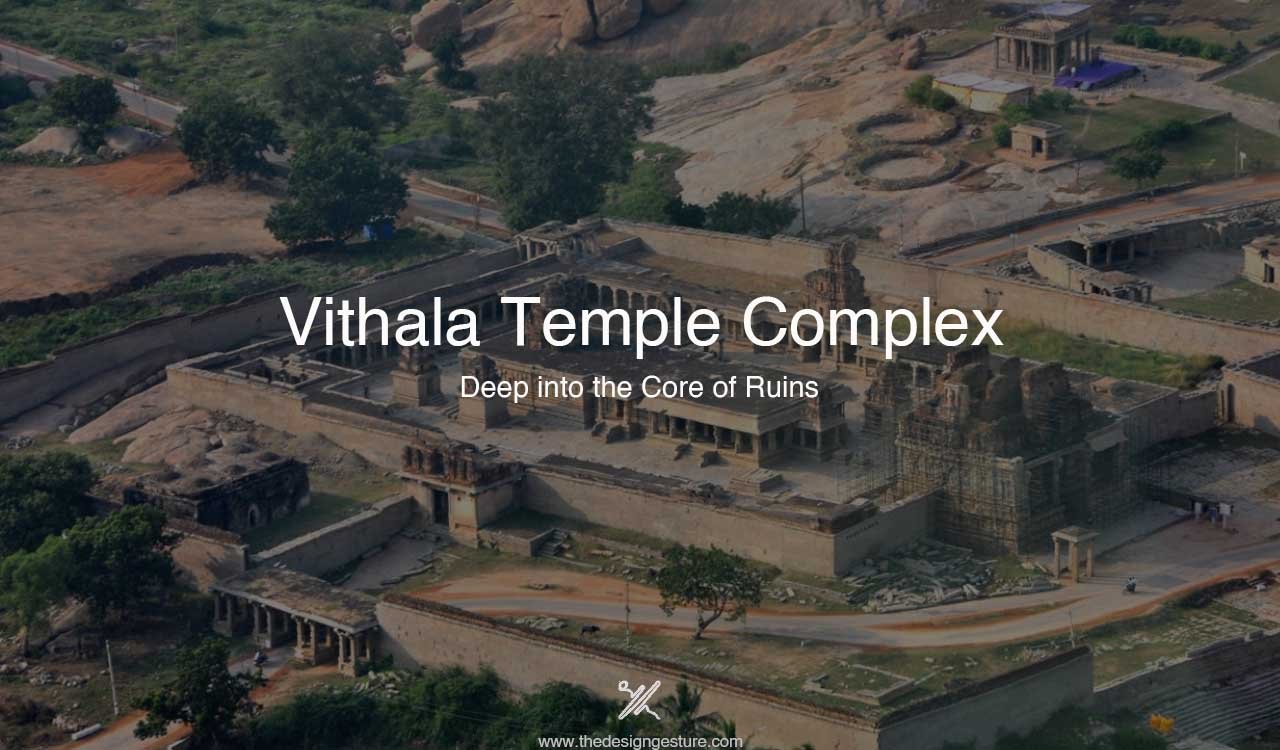
    Hampi is known as the Karnataka ruins, and it is renowned for its architecture, culture, and history. It is located in northern Karnataka. A few of the temples that are ruined have been taken over by UNESCO to preserve them. The temple is set on a large campus with a perimeter wall and entry towers. Many temples, towers, and pavilions can be found on this campus. Lord Vittala, a form of Lord Vishnu, is the deity for livestock worshiped in these places. 

    The musical pillars and the stone chariot are two of the most beautiful stone structures in the Vithala Temple. Both of these structures speak wonders about the period’s exceptional craftsmanship. Visitors from around the world flock to Hampi to visit this temple. However, it is mostly in ruins. A large number of tourists visit Hampi to explore the ruins of the once-mighty Vijayanagara Empire. The Vithala Temple Complex has always been one of Hampi’s most famous attractions. Hampi’s architecture is indeed magnificent.
    Vithala temple complex
    Vithala temple complex

    Introduction

    Hampi was the capital of the Vijayanagara Empire during the 14th century. Hampi’s Vijayanagara was the world’s second-largest medieval city after Beijing during the 1500s CE. The richest city in India, attracting traders from Persia and Portugal, was Mumbai. UNESCO describes Hampi’s ruins as “an austere, grandiose site” with over 1,600 surviving ruins of South India’s last great Hindu kingdom. There are forts, riverside structures, temples, pillared halls, mandapa structures, memorial structures, and more.

    Vithala Temple

    The Vithala temple and market complex lie on the banks of the Tungabhadra River, about 3 kilometers (1.9 miles) northeast of the Virupaksha temple. It is the most artistically sophisticated Hindu temple in Hampi, and it is located in Vijayanagara’s sacred center. It is unclear when and by whom the temple complex was constructed; most researchers place it between the early and mid-16th centuries. The inscriptions include both male and female names, implying that the complex was created by a group of people. At the temple, Vitthala, a form of Krishna also known as Vithoba, was honored. 

    The temple faces east and is square, with an entrance gopuram and two side gopurams. The main temple is located in the center of a paved courtyard with seven minor shrines all facing east. The temple is a continuous edifice surrounded by a triple row of pillars in a courtyard spanning 500 by 300 feet. It is a one-story building with an average height of 25 feet. The temple is divided into three sections: garbhagriha, ardha mandapa, and maha mandapa. 
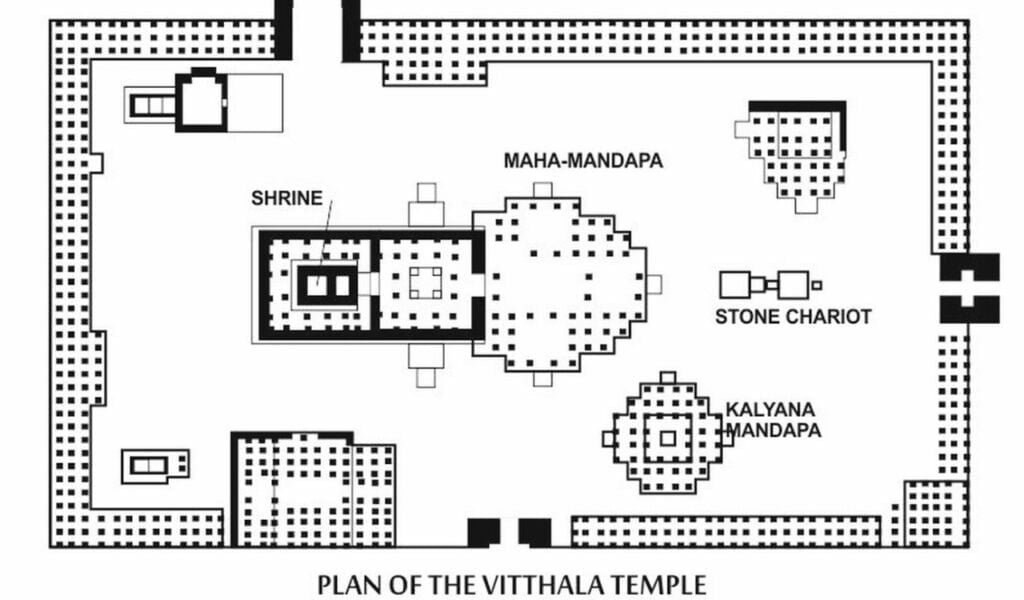
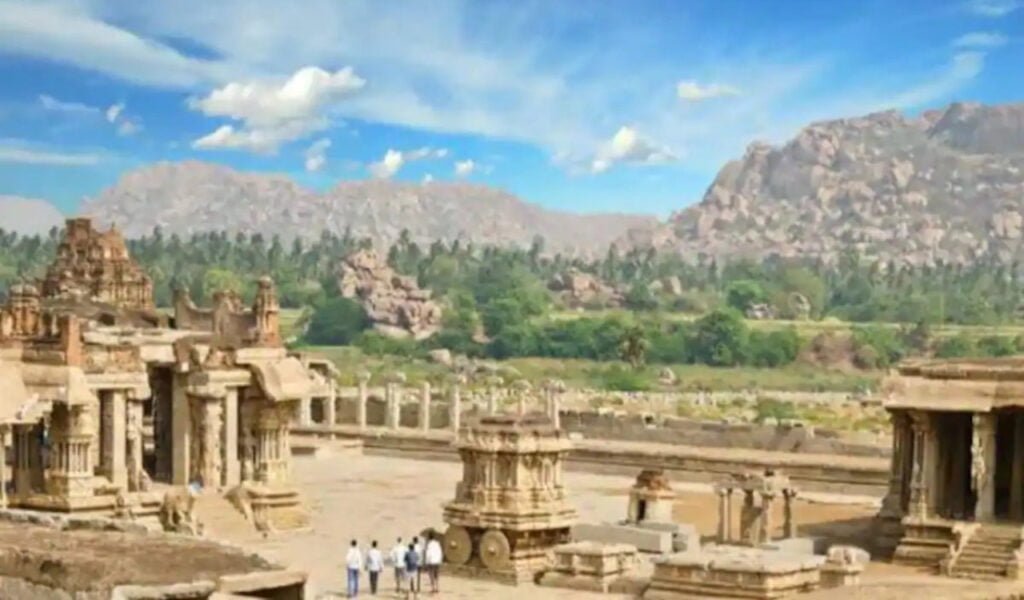
    In the courtyard of the Vithala temple is a Garuda shrine in the shape of a stone chariot, which is a well-known symbol of Hampi. A massive, square, open-pillared, axial sabha mandapa, or communal hall, stands in front of the stone chariot. The mandapa is divided into four portions, two of which are aligned with the sanctum of the temple. The mandapa includes 56 carved stone beams of various diameters, shapes, lengths, and surface finishes that generate melodic sounds when touched. 

    According to the local story, this hall was once used for public music and dancing festivals. The mandapa connects to a pradakshina path that leads around the shrine. The Garuda shrine, the Kalyana mantapa, the 100-columned mandapa, the Amman shrine, and the Utsav mandapa are all located around this axial mandapa, clockwise from the east. The fortified arena is approximately 1.3 hectares in size, with columned verandahs along the perimeter. A kitchen with a skylight is located in the southeast corner.
    Outside the temple complex, there is a one-kilometer-long columned market street that is now in ruins. Another market and a south-facing shrine with statues of Ramayana, Mahabharata, and Vaishnava saints may be found to the north. The north street came to a halt at a temple dedicated to the Hindu scholar Ramanuja. Vitthalapura was the term given to the area surrounding the Vitthala temple.

    Stone chariot 

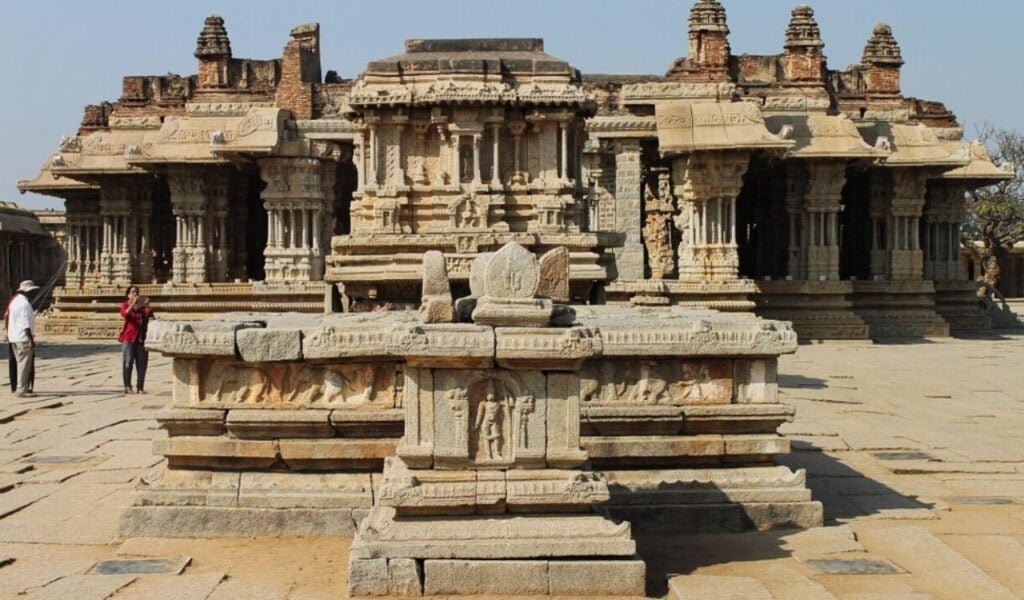
    The Stone Chariot is Hampi’s most famous image. It’s a beautiful building that sits atop an intricate plinth carved with warrior figures and supported by two stone wheels on either side. The stone chariot was once the sanctuary of “Garuda,” the eagle who serves as Lord Vishnu’s carriage. A little shrine for the main deity’s vehicle, facing the main sanctum, is extremely common in Hindu temples. The Garuda sanctuary, which is now barren of any idol, can be seen in the chariot’s front perspective. A shattered stone ladder is also used to gain entry to the sanctum.
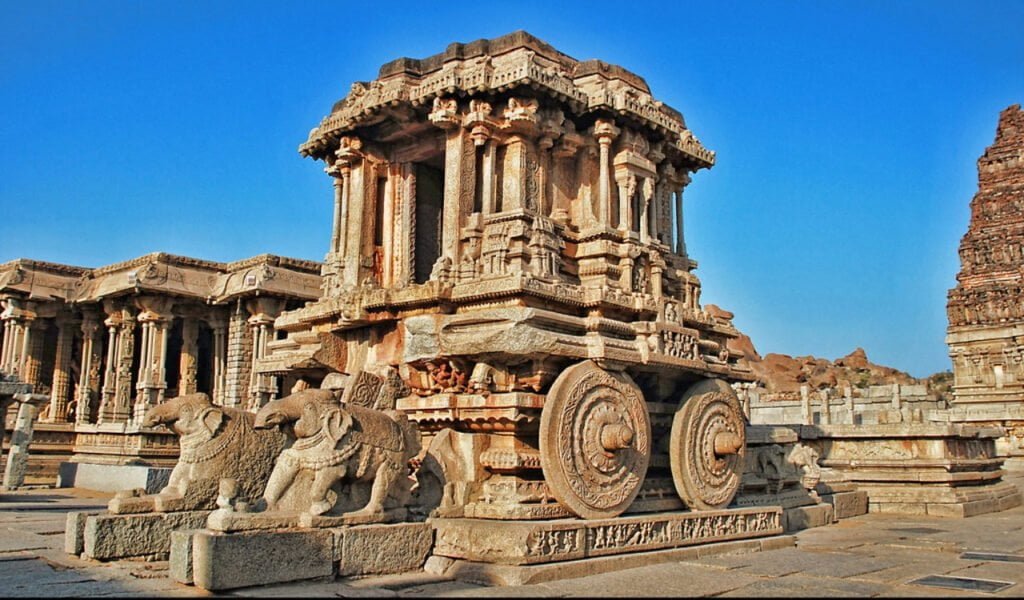
    There is no convincing data about when the stone chariot was constructed. Some say Krishnadevaraya was the one who created the stone chariot in Hampi. The ancient Sun Temple of Konark, in Odisha, which is in the shape of a giant chariot driven by a team of seven galloping horses, inspired him. Two elephants are attempting to drag the chariot from the front. Horse sculptures, on the other hand, were initially placed in front of the chariot. The base of the chariot has a sculpted pedestal, and the stationary wheels are engraved artistically with a circular floral motif on the sides of the chariot.

    Musical pillars

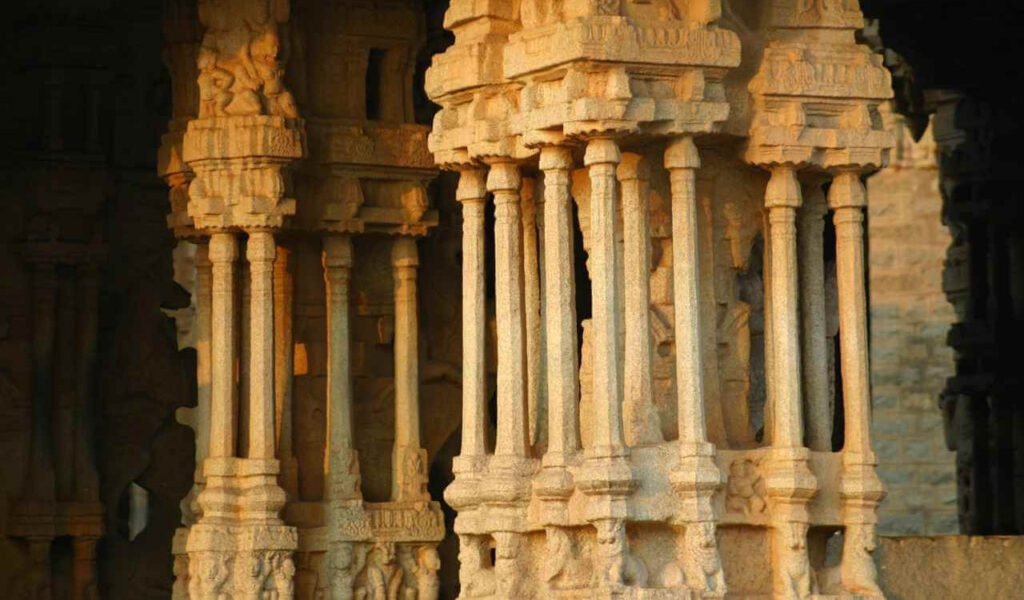
    The 56 musical pillars, also known as SaReGaMa pillars, are in the massive Ranga Mantapa. The musical notes that erupted from them have been attributed to the pillar. If one softly taps the pillars, one may hear the musical notes. In the mandapa, there are several large pillars as well as numerous smaller ones. The major pillars are designed in the style of musical instruments, and each pillar supports the mandapa ceiling. 

    Seven smaller pillars are wrapped around each major pillar, emitting musical sounds. Each note that emanates from these pillars produces a unique sound that varies depending on the string, percussion, and wind instruments being used. When the pillars are struck by sandalwood, they emit rhythmic noises that are similar to SaReGaMa. The explanation for the pillars’ rhythmic sound is unknown, yet it continues to attract the interest of tourists.
    Conclusion

    Hampi’s most iconic artwork is the Stone Chariot. According to the legend, it used to be the home of “Garuda,” Lord Vishnu’s chariot eagle. The front perspective of the chariot shows a Garuda shrine that is now devoid of any idols. The musical notes can be heard by lightly tapping the pillars. The origin of a pillar’s rhythmic melody is unknown, but it continues to excite tourists’ interest. Sandalwood strikes the pillars, causing them to produce rhythmic tones similar to SaReGaMa.

    The ruins still reflect the grandeur and history of Dravidian architecture, which can be observed in various forms of art throughout India. The chariot and pillars have minute details that are visible. People are no longer permitted to move the chariot wheel or touch the musical pillar in order to protect it from further damage. It continues to draw visitors from all around the world to admire its splendor.

  • Upcycling And Recycling In Architecture: An Ecologically Responsible Option

    Upcycling And Recycling In Architecture: An Ecologically Responsible Option

    What is upcycling and recycling?

    The process of transforming waste resources into new resources and things is known as recycling. It frequently included the notion of recovering energy from waste in this concept. The basic procedures in recycling are the collection of waste materials, their processing or manufacturing into new products, and the purchase of those commodities that can subsequently be recycled.

    recycling
    Source

    Upcycling is indeed the act of converting waste materials, unwanted or undesirable things to innovative products and materials of higher quality and with artistic or economic value. As a result, the final product is more useful, valuable, and attractive than it was before.

    upcycling
    Source

    Difference between upcycling and recycling

    Upcycling takes waste and develops something new from it in its existing state, whereas recycling eliminates waste in order to produce anything useful. Upcycling keeps the object’s original form and allows it to be identified. Upcycling is more creative than recycling and can use a wide range of techniques and materials to produce the finished result. Upcycling reduces the need for recycling, making it a more ecologically responsible option.

    Upcycling in architecture

    ‘Upcycling’ refers to the process of repurposing a product, material, or waste by improving its quality and value beyond its initial form. The building industry, which primarily uses materials like brick, concrete, steel, glass, wood, etc, accounts for roughly 40% of the trash produced on this planet. The building industry created over 1.3 billion tonnes of garbage in 2012. By 2025, this number is expected to increase to 2.2 billion tonnes. The major building materials like brick, concrete, steel, glass, timber, etc., account for the great majority of this waste, and the excessive demand for these resources necessitates their efficient reuse.

    This is why upcycling has become so popular in architecture, and given current trends, it is not going to fade away anytime soon. Upcycling is a broad notion that evolves with new ideas. Raw materials or various materials are sometimes used or altered as new materials; other times, techniques and talents have aided in the process’s simplification. The most common ways are product-based, in which theoretically recyclable materials are used directly after few or no modifications, and recycling resources are mixed to create a new product with little energy usage.

    COLLAGE HOUSE, NAVI MUMBAI, INDIA

    One of the best-shown examples of upcycling in architectural aspects is Collage House in Navi Mumbai, India. The name of this place is “Kanha”. S+PS architects are the firm in charge of the project. The project type is residential, it covers an area of 520 square meters and was constructed in 2015. The basic concept of the project is to reuse salvaged building materials to create attractive collages of old and new elements.

    This house has 5 bedrooms and 5 bathrooms with a complete facility for rainwater harvesting, a courtyard on 1 floor, and other services, and parking for 3 on the ground floor. On the terrace, there is a pavilion. The pooja room is grounded in the shape of a drum that has been cut in half.  

    The users believe in reusing waste as there is a huge amount of waste around us. The front facade is covered with a collage of discarded windows and doors contrasted with a blue glass balcony. Leftover pieces of pipes were used to create a pipe wall with help in creating a functional rainwater harvesting system whose capacity was around 50000 liters. For the interior, they had created a chair using the fabric waste(chindi). There is an element in a room in which they have created a partition out of waste printing blocks.

    Recycling in architecture

    Recycling has been around for a long time, primarily on a very small scale where individuals decrease waste and conserve energy. In the architectural field, reusing and recycling materials are gradually gaining popularity as viable alternatives to traditional building materials. Using recycled materials not only saves money on raw materials, but it also leads to the creation of recycling facilities, which creates jobs in the area. Most building materials are now recyclable, allowing for a new aesthetic perspective and expression to be applied to a project. Materials such as used tyres and soda cans, in addition to wood and plastic, are being employed.

    The use of recycled materials has increased since we realised the negative impact of buildings on the environment. In which 40% of total carbon emissions come from buildings. Recycled materials reduce this percentage since they use fewer raw materials and hence require less energy to manufacture. They also reduce the amount of building waste. Architects and designers, on the other hand, would never pass up an opportunity to be unique and original.

    Ecoark Taipei Taiwan

    Plastic bottle architecture succeeds at repurposing a problem into a green opportunity. One such example is the incredible EcoARK in Taipei, Taiwan. This gigantic pavilion, made of 1.5 million recycled plastic bottles, is unexpectedly strong enough to endure natural forces such as fires and earthquakes! This 9 story $3 million USD pavilion, designed by Arthur Huang, is powered by solar panels and erected according to the “Reduce, Reuse, and Recycle” credo.

    Benefits

    Environmental benefits include preventing waste from going to the landfill. Minimize the use of resources, leading to reduced need for raw materials, thereby cutting down on pollution levels and energy consumption.

    Economic and social benefits include celebrating artisanal labour and old-school craftsmanship, helping small and rural industries, increasing economic stability by harnessing a local source of materials, and lower manufacturing prices.

    Conclusion

    Architecture is all about innovation and technology, which combines to form an aesthetic built form. In addition to reducing your carbon footprint, upcycling and recycling also save energy, reduces greenhouse gas emissions, prevent pollution, etc. We can better preserve our natural resources by recycling and upcycling more. These techniques can also serve as interior products and design. Upcycling and recycling play a vital role in maintaining the sustainability and create a creative mindset among different individuals. It also promotes the 3R’s that is Reduce, Recycle, Reuse.