

India has been a hub for culture and heritage forever. Every part tells a different story, which inevitably binds you in a circle of astonishment. As architects, we have an eye for details, perspective, harmony, and all the other design principles.
Indian cities have their own share of mesmerizing beauty to explore. So, as Architects, we are bound to know more about these cities and gain a new perspective.
Indian Cities for Architects To Visit
Indian Cities: Ahmedabad
The heritage of Ahmedabad is a mix of many cultures, each leaving a mark in terms of architecture in the form of bridges, temples, mosques, and others, each belonging to a different period. The architecture of Ahmedabad has evolved over centuries from Mughal architecture to British and Modern structures by famous Architects.
The pols of Ahmedabad are close-knit community houses with shared spaces like courtyards and narrow lanes. These pols are a must-watch for any architect, they are the essence of Ahmedabad. Sarkhej Roza, Jami Masjid, and Rani ki vav are places that are all built differently but give a sense of calmness intangible aspects.
Ahmedabad is not just rich in historic monuments but also is famous for modern architecture by Louis-I-Khan, Charles Correa, Balakrishna Doshi, and many more. IIM Ahmedabad, Amdavad ni Gufa, Sabarmati riverfront, Gandhi Ashram, NID, CEPT, and newly constructed Narendra Modi Stadium are other places that will give a lot to learn from.
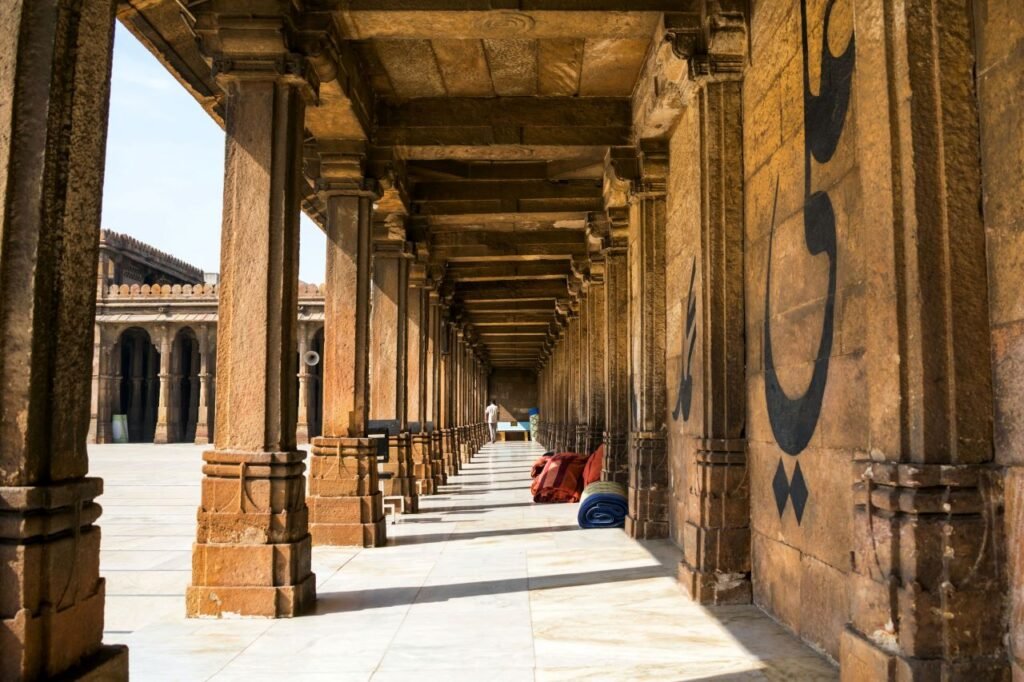
Mandu
Mandu, a city in Madhya Pradesh, is most famous for its forts and temples which illustrate a story of their own. Jahaz mahal is the most popular fort there which is situated near a lake and has large terraces overlooking the lake.
Mandu is also famous for Rani Roopmati’s pavilion with the unparalleled vision of River Narmada. Other places to visit to gain a knowledge of stone as a material and building large corridors, terraces and heighted space to gain a perspective of scale and proportion are Dilawar Khan’s Mosque:,Baz Bahadur’s Palace,Hindola Mahal,Bagh Caves and Jami Masjid.

Jaipur
Jaipur ‘ Pink city of India ‘ got this name because of the hospitality and the terracotta stone used for construction. Jaipur at large represents how tangible and intangible aspects go hand in hand while designing.
Also, the concept of Vastu shastra and a well-planned city is popularized from here. While in Jaipur one gets to picture the royalty and luxuries life of the Rajas, the large rooms and intricate carvings are what make the mahal and forts centerpiece of attention.
Jaipur not only is detailed and extravagant, but also every element is well thought. For instance, the window, lintels or even the space between buildings is conceptualized according to climate.
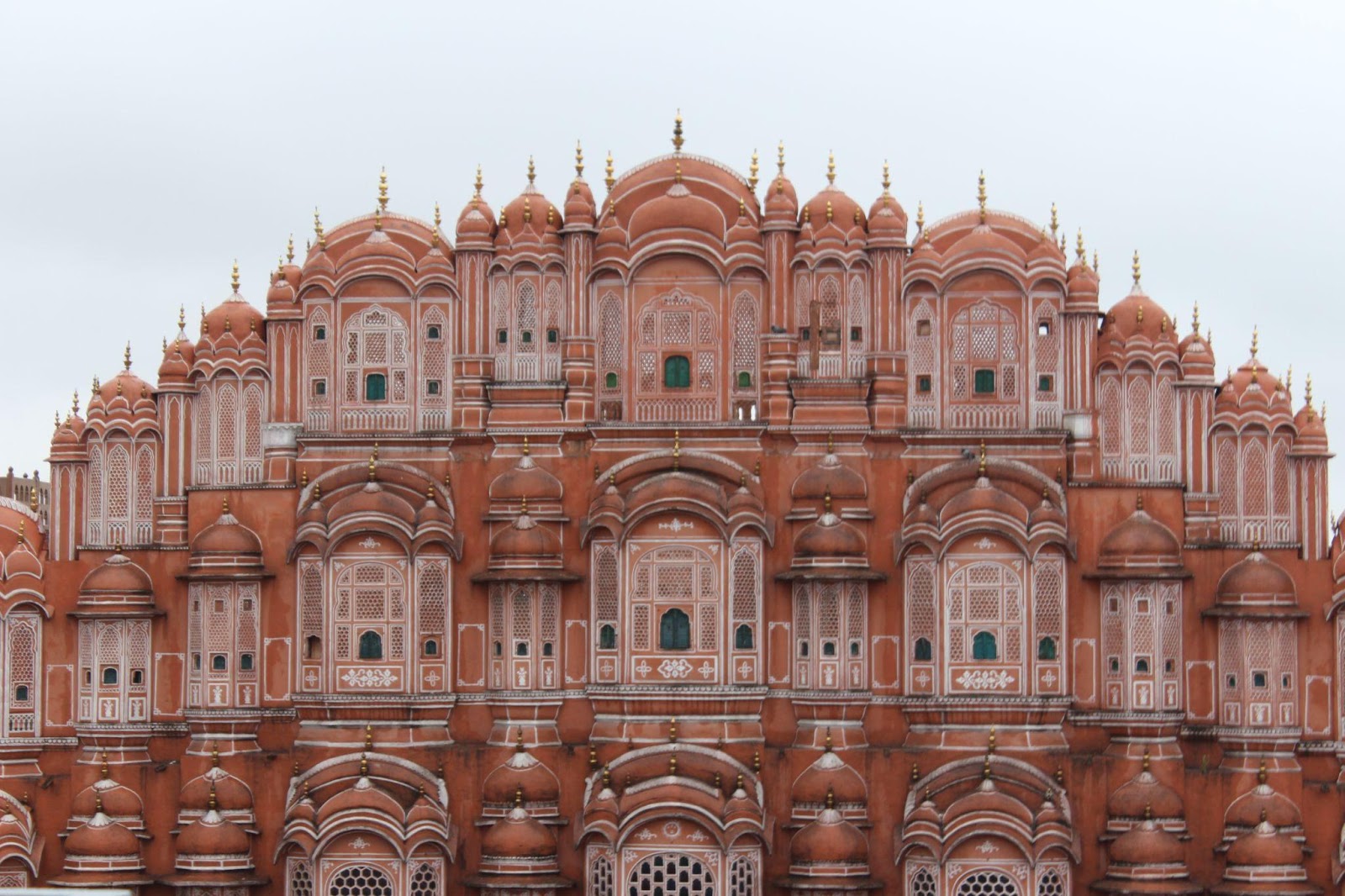
The most famous place to visit is Hawa mahal, which gives a peek into the life of kings and queens. The Jawahar Kala Kendra by Charles Correa can be considered as the heritage inspired modern day architecture.
Hampi
Hampi has been described by UNESCO as an “austere, grandiose site” in Karnataka. It is rich in historic structures which include forts, riverside features, royal and sacred complexes, temples, shrines, pillared halls, mandapas, memorial structures, water structures and others.
Group of monuments in Hampi is Vijayanagar style and is made with granite primarily. Vijaya Vittala Temple is the most iconic and is in the form of chariot, and has gained the maximum popularity amongst the other monuments.
Achyutaraya Temple, Hanuman Temple, Badava Linga Temple and many others are made from stone, but the space in the temple which attracts the most is the mandapas. The mandapas have many columns and give a pleasant background for photos. The carvings and textures are what will attract an architect at first glance.

Udaipur
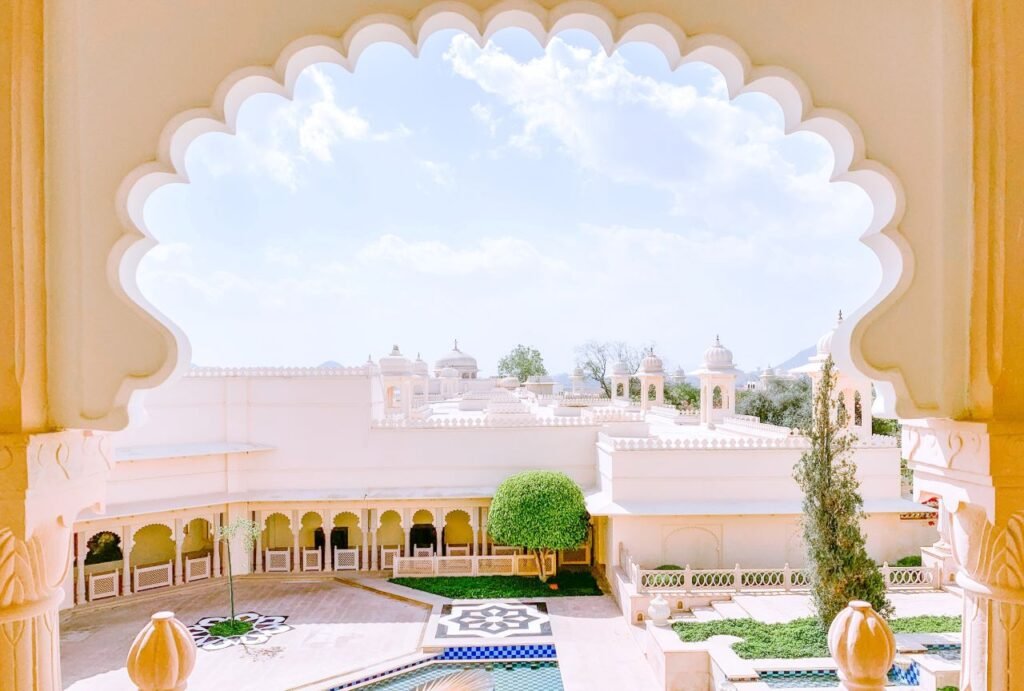
Udaipur-City of Lakes , is a blend of nature and built form and is for those who love to work in harmony with nature. The presence of the lake not only provides an aesthetic picture but also keeps the climate in check, providing an automatic coolness to the neighboring areas.
The town is filled with palaces near the lake which are now turned into resorts favorable for destination weddings or outings on weekends from nearby areas. The most famous palaces are near Lake Pichola. Udaipur also has some temples and Havelis with a courtyard, giving a poetic sense to Udaipur.
Lavasa
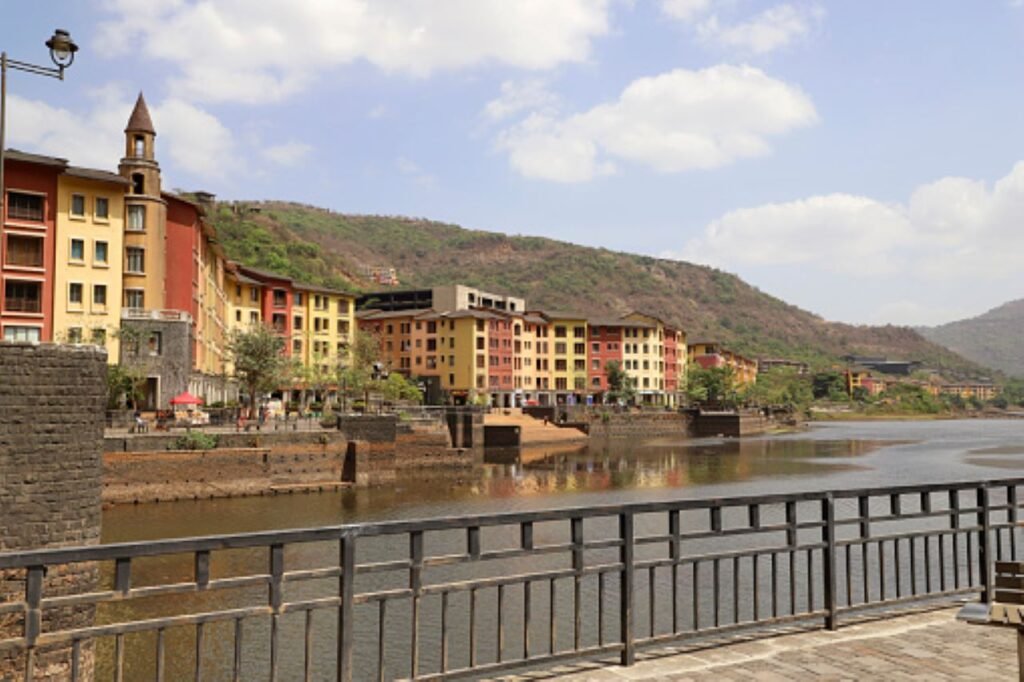
Lavasa is a hill station near Mumbai and not a very famous one. Architects interested in sustainability will find Lavasa a live case study for the same. The principle to design is new urbanism i.e “Walk to Work”, “Walk to School” and “Walk to Park” become reality with non- polluting industries and ecological tourism.
The concept of design is formed by working with biologists with biomimicry. The city’s rooftops are inspired by the morphology of the native banyan fig leaf.
The Western Ghats region is prone to seasonal flooding from monsoons and a strategy based on ant nests has been adopted to channel water through the city. This efficient plan is inspired by the local harvester ants that divert water away from their nests through multi-path, low-grade channels. Further, water has been stored in networked building foundations, much like tree roots.
Auroville
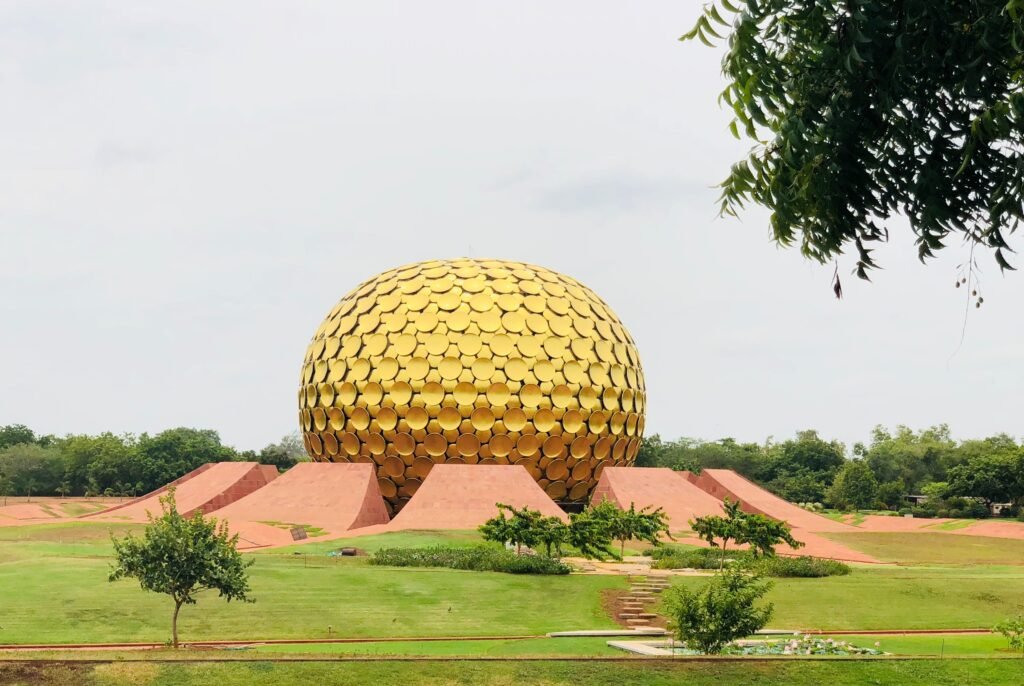
Auroville situated near Pondicherry is an experiential town where once a desert is now a habitable town. The town is filled with people looking to explore in their life and so it is reflected in the city’s architecture and culture.
The Matrimandir Temple, designed by Roger Anger, is the soul of the city. From form till the planning and garden surrounding the golden sphere, every thing is considered from deep within. The name ‘Matrimandir’ means literally ‘Temple of the Mother’.
The construction practice in Auroville is completely different from other cities. The work, whether small or big, is done in vernacular architecture and the aim is to follow ecological practices like rainwater harvesting and using solar panels. Every structure feels as if it is protruding from the earth.
Some other places which can be visited are Chandigarh, Leh Ladakh, and Delhi. It is rightly said by Arundhati Roy,” India lives in several centuries at the same time.”