
Tag: a career in architecture

  • Architectural Photography: 10 Essential Tips to Follow

    Architectural Photography: 10 Essential Tips to Follow

    Architectural photography is the subgenre of the photography discipline where the primary emphasis is made on capturing photographs of buildings and similar architectural structures that are both aesthetically pleasing and accurate in terms of representations of their subjects.

    Therefore, architectural photography is beyond capturing photographs of buildings. It is an art in itself about seizing not only the design and accurate representation of a building but having the photographs be aesthetically pleasing to the spectator’s eye. Architectural photographers should be skilled with the use of specialized techniques and cameras to capture the essence of an architectural structure, from the use of perspective control to capture void or non-void spaces and to know where and when to find such specialized shots. Because architectural photographers are meant to create a photograph, not to only capture one. Architectural photography is indeed the art of capturing the details and moods that make the space and the materials come together.

    Architectural photography types

    Interior Architectural Photography

    This refers to photographs of a building’s or structure’s interior. Interiors are often more challenging to capture due to the ambient light available through windows or skylights is often limited, and sometimes filtered through the colorful stained glass windows. Supplemental lighting like a flash helps to capture interiors accurately.

    Architectural Photography
    INTERIOR ARCHITECTURAL PHOTOGRAPHY_©digital-photography-school.com 

    Exterior Architectural Photography

    This refers to capturing the outside of a structure. The wealth of natural light advantages exterior photographs to be captured easily. Depending on the whims of nature, exteriors may also yield wildly different and dramatic results.

    EXTERIOR
    EXTERIOR ARCHITECTURAL PHOTOGRAPHY

    One should follow up on some prime factors not only to improve the visual potential of their photography skill but also to carry the stories along with the photographs in order to communicate the relationship of context, space, and time with the architectural structures.

    1. Getting friendly with the weather: Architectural photography is very much dependent upon weather and different times of the day. Because a beautiful sunrise, sunset, or even rain, snow, cloud, or fog, all can bring architecture and nature together making the space feel magical.

    Capturing a series of photographs during different times of the day, or in various weather conditions, helps to create a fuller story of the building’s relationship with its environment.

    TIME OF DAY
    USING DIFFERENT TIME OF A DAY AS THE BACKGROUND

    1. Arrangement of good lighting: Good lighting should always be prioritized, mostly in the case of interior architectural photography. Appropriate lighting helps to emphasize a specific space, or structure. It plays a big role in shaping the understanding of what is important in that specific architectural project.
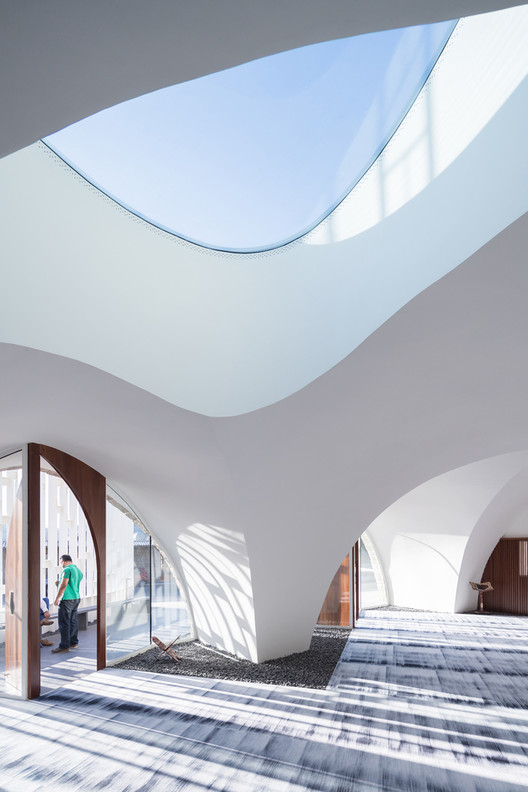
    NATURAL LIGHT
    USING NATURAL LIGHT
    1. Looking out for a unique angle: Perspective, in architectural photography, plays a very rewarding role. Taking time to find a distinct angle through which a photograph can expose an abstraction of a building’s detail to give rise to another level of beauty and appreciation for its form.

    UNIQUE ANGLE
    USING UNIQUE ANGLE
    1. Include or exclude people: Architecture does not exist without people. The presence of life in architectural photography has always been debated. However, the interconnection between people and buildings is an essential attribute of the artistic side of architectural photography.
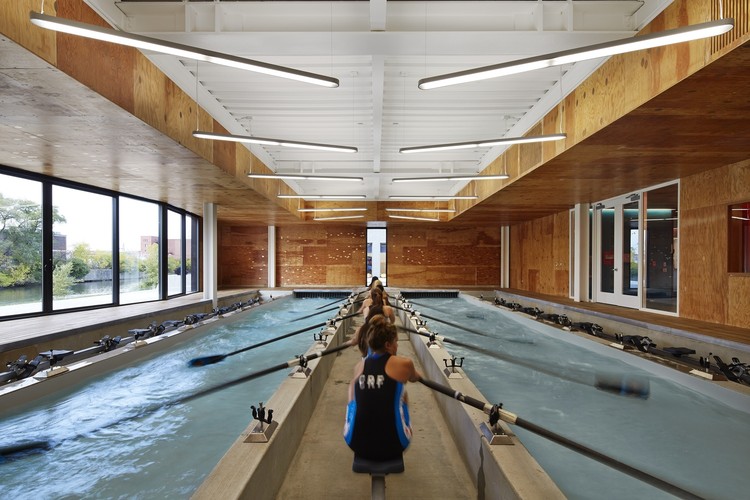
    PHOTOGRAPH
    PHOTOGRAPH HAVING PEOPLE IN IT
    1. Attention to detail: Shooting with a wide-angle lens is the smartest thing to do in architectural photography. But as the buildings contain hundreds of intricate details that are lost when an entire facade or room is shot in one frame, exploring details closely, in that case, could disclose something new and interesting about the building’s history or construction.
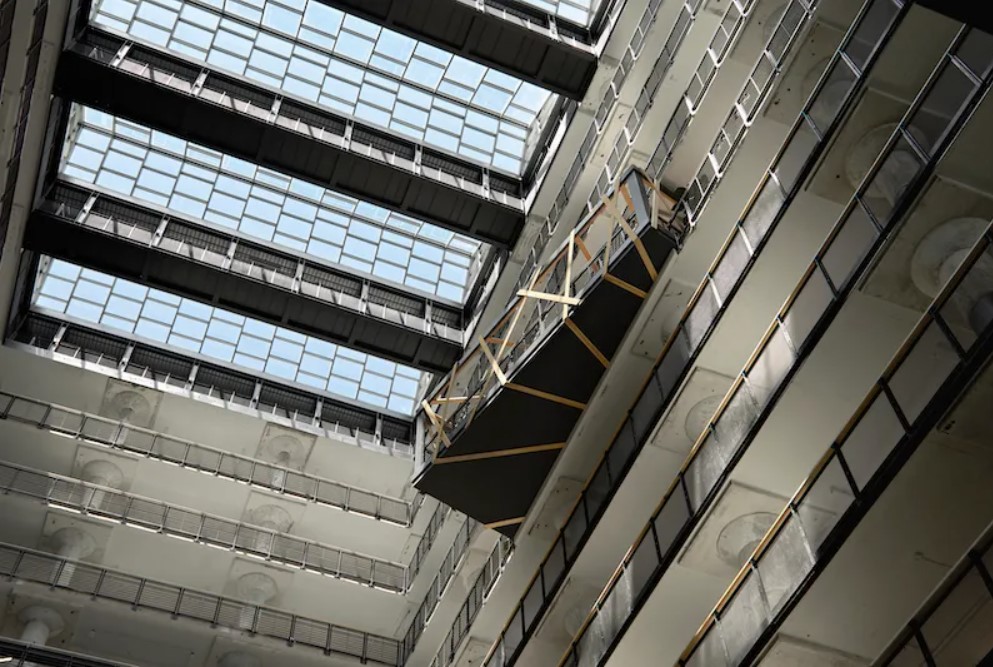
    DETAIL
    FOCUSING IN DETAIL_©adorama.com
    1. Use of post-processing: Post-processing a photograph, having a certain goal in mind, could convey the story of an architectural structure with a more reliable and convincing stand. It is a standard part of architectural photography. Software like Photoshop and Lightroom are quite easy to use with their wide variety of advanced functions.

    POST PROCESSED
    POST-PROCESSED PHOTOGRAPH_©mymove.com
    1. Use of appropriate photography equipment: One should invest in proper equipment in order to get started with high-quality architectural photography. The use of a tripod or polarizing filter could be an exciting way to achieve a perfect frame.

    EQUIPMENTS
    PHOTOGRAPHY EQUIPMENTS_©expertphotography.com
    1. Understanding camera mechanism: It is imperative to choose the right camera settings to capture all the details of a space. Understanding the shutter speed and aperture can help to hold control of the motion blur or focus point of a photograph.
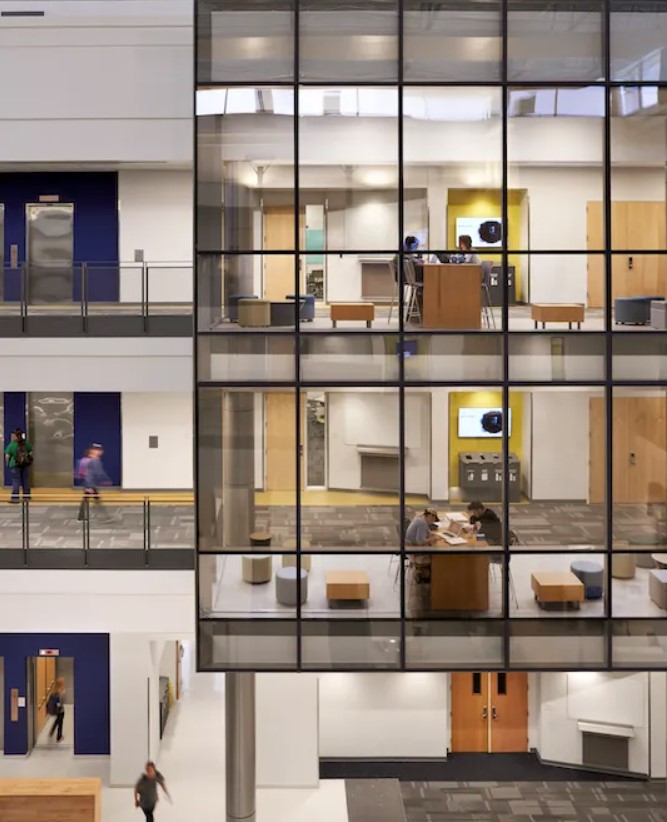
    SHUTTER
    USE OF SHUTTER SPPED AND APERTURE_©adorama.com
    1. Creating compositing: Composition is all about arranging the visual elements within their frame. In architectural photography, it is very important to record the complete spatial context of the building by leaving no clutter within it. Composition encompasses the ways to frame a building in a standalone image to make it more captivating and interesting.

    COMPOSITION
    CREATING COMPOSITION_©pixpa.com
    1. Research about the particular project: Researching and knowing about the history and context of an architectural site before visiting is an indispensable resource that, without a doubt, can help to focus on a relevant story or idea to capture the essence of a building. Sometimes architecture can be so inspiring that one can get caught up in the moment and immediately want to capture the space instead of taking it all in. Themes and design intent are major elements in architectural photography.

    Architectural photography allows people to obtain a visual understanding of buildings by creating a valuable resource that allows them to expand their architectural vocabulary. However, one must stay critical of the disadvantages of photography when it comes to architecture. Jeremy Till, the author of ‘Architecture Depends’, stated, ‘The photograph allows us to forget what has come before (the pain of extended labor to achieve the delivery of the fully formed building) and what is to come after (the affront of time as dirt, users, change, and weather move in).’

  • Architecture School: 10 Interesting Things You Must Know Before Joining

    Architecture School: 10 Interesting Things You Must Know Before Joining

    The difference in Work Pre and Post Architecture School 

    A lot of your school work will include design as a major aspect of everyday work. It requires you to research, or work on designs for a couple of weeks. Office work requires more of a management aspect. Talking to clients, contractors, and consultants, and coordinating with the other members of your team, will be a big part of your job description. 

    Professional work might require you to work on construction documents, detailing of a wall, entrance gate, schematic designs, and concept level sketches for a longer period than you expected. You might not get to experience a creative boost of work in your daily work as an architect the way you did back in architecture school, where you had a different design aspect and different changes in every studio. In school, everything is compressed together in one semester, which is why in professional life, everything might seem like I really stretched it out and time-consuming. 

    Projects in Architecture School

    The scale and complexity of the building designs vary tremendously while working in an office. Since there are always new construction materials and technologies coming up, one has to be updated about the upgrades in the construction industry. Along with that, architects have to coordinate with consultants to ensure that the building is sound in terms of all technical aspects including but not limited to water supply, drainage, electricity, fire safety, mechanical, etc. 

    Real-life projects are much more pragmatic and have more constraints. The project brief is prepared by the developer or client and not the architect. Spaces designed are more functional and pragmatic. The return on investment is also considered while designing spaces. For example, open public spaces might not generate any income. In such cases, the focus is on designing a structure that serves people and is functionally sound. Along with that, the design is subjected to changes to fit into the budget for the project. 

    Projects in Architecture School
    Photo by Architecture Lab

    Architecture Mindset

    Architecture schools train you to view things from a different perspective. Once that happens, you cannot go back. Irrespective of their simplicity or complexity, the way you look at things after becoming an architect is very different from what you did earlier. An architecture course affects your personality in the long term. It becomes a part of who you are. You start noticing the surrounding things much more than before. You develop an eye for details and become more observational to the things related to architecture and design.

    leewardists
    Photo by Pinterest

    Pay Scale

    If you’re in it for the money, think twice about it. If your inspiration for architecture comes from some movie architects who are living in a high-end villa and designing skyscrapers before they could even turn 30, the reality check is tremendously going to bum you out. As opposed to the misconception, it is unlikely for an architecture job to make you rich. 

    A lot of students realize later that the architecture salaries go way below a decent pay scale. One assumes that since the course lasts for 5 years, it’ll all be worth it at the other end of this incredibly long, difficult endeavor. More often than not, there is no big reward waiting at the end of it all. Anyone who is remotely associated with the field of architecture or knows at least one architect is aware of the fact that the work doesn’t pay well enough. 

    Most architecture colleges do not have the facility of campus placements, which results in a lot of students struggling to find a good job after graduating. While there are some countries like the US, Dubai, etc. that have a decent pay scale to sustain a living, they certainly won’t make you ‘wealthy’. Even if one does make it, it is after years and years of struggle and establishing yourself as a brand. 

    It’s not ‘All Drawings’. Be Prepared to Slog.

    Anybody who even remotely knows architecture will tell you that the course is excruciating. There are a lot of people who went into the field thinking that it was something completely different. An ample amount of people are quick to misinterpret an ‘architect’ for an ‘artist’. A larger number of parents assume their kids should be an architect solely because they have a flair for drawing, painting, or sketching. Architecture is much more technical than someone who doesn’t belong to an architecture community would think. It requires multiple levels of understanding, starting from ‘analysis of site context’, construction materials, and technologies used for construction. 

    human behaviour
    Photo by AIA

    Human behavior, psychology, history, surveying of land, humanities, codes, and regulations for the execution of building processes, etc. are all an integral part of architecture education. There is usual debate about how important math skills are for an architect. While architects may not be using a higher level of math for their work, it is always advisable to have a good math score since some universities will require you to have remarkable math scores for admission to architecture school. Being weak in math might hinder your performance in certain courses throughout your architectural education. 

    Throughout architectural education or after graduating from architecture school, if you find yourself having the desire to yell ‘Why’d I do this?’ or ‘What was I even thinking?’, just know that you aren’t alone. This is a common situation for countless architects or students. Every architecture student is well aware of the concept of ‘RE-DOs’ as a standard practice for the improvement of a particular design. There is a possibility of you not being able to bury your work under the carpet, thinking it’s done and dusted. One design might take longer to get finalized than expected.

    D:\SHREEYA\Shreeya\10 things\images\shutterstock_246019015 (1).jpg
    Photo by SAPP Design Architects

    Brain Draining Working Hours

    As an outsider, the bigger picture of an architect’s work might be fun to look at, but more often than not, an architect’s job can get pretty tedious. A lot of architects’ work lies in the details which can get time-consuming. Making sure each and every line and measurement is correct is the basic foundation of architectural drawings. 

    Whereas, detailing them in terms of furniture, flooring, electricity, HVAC, plumbing, fire safety, etc. is an integral part of the execution process. It takes a tremendous amount of determination and willingness to voluntarily opt for a job that starts before 9 am and ends way after 5 pm. 

    The Devastating Five-Year Course Might Not Be Enough to Make It 

    The educational aspect pleads to be repeated. Surviving as an architect requires a lifelong commitment to work and learning. It requires the willingness to educate and adapt you to the ever-changing face of the AEC industry. Getting an architecture degree alone might not be enough to sustain a career as an architect. 

    Skills Required as an Architect

    Architecture is a profession where science meets Art. Creativity is one major skill that architecture demands. This does not mean a person has to be good at paintings or sketches. As an architect, you might have the responsibility of putting out fires at all times on site. Creative problem solving is one skill that will help you go a long way. Designing projects requires architects to identify the problematic areas and come up with creative solutions for them while keeping the aesthetics in mind. 

    One should be willing to put in long hours and perpetual efforts. Since design is a matter of subjective opinions, it might lead you to people having different viewpoints than yours. All the tiring hours being put in often result in criticism which one should be open to. Juries can be soul-crushing at times. 

     You Might Have To Fling Your Health Aside

    There are ample amount of reasons for the deterioration of health during architectural education. The long working hours are responsible for the majority of the issues faced by people. A lot of people complain about back pain, strained neck, and posture at a very young age due to having to draft sheets for hours at a time. 

    The long screen time can cause health issues, including but not limited to strain on the eyes and migraines. Most students get used to a screwed-up sleep schedule and unhealthy or imbalanced diet patterns because of the overwhelming amount of work. The less food and sleep are worn as a badge of honor among students since they treat it as a matter of pride which is just a peek at the toxic work culture of architects. 

    You Might Lack Entrepreneurial Knowledge

    An architecture course differs from other courses to a great extent. Architecture is one of the professions that are more focused on human needs and comfort in their daily life. Some professions are service-oriented and some professions are businesses. Architecture falls in the former category.

    Architecture is more of a community. The curriculum of architecture schools often focuses on artistic architectural designs, construction techniques, building services, humanities, history, etc. This might often lead to architects graduating without appropriately understanding the concept of money and how it moves around, the terminologies used, or how the rest of the world functions concerning finance, economics, law, etc. The architecture curriculum is in dire need of introducing subjects that help students develop entrepreneurial capacity. 

  • A Career in Architecture: 9 Important Things to Know Before Starting

    A Career in Architecture: 9 Important Things to Know Before Starting

    As a kid, the structures and spaces around me always fascinated me. Everything in my surrounding intrigued me, be it a fancy restaurant or a friend’s garden. It was amusing to see how people interpreted spaces in their own unique manner.

    I was only 13 years old when I came across architecture as a profession. And that was it. I have wanted to become an architect ever since.

    But was it enough?

    Here are a few things I wish I was aware of before signing up for a career in architecture.

    Architecture is Not Just Designing

    Yes.

    Design is, most definitely, the most visible part of architecture. But Architecture is more than just designing.

    As much as it is about aesthetics, it is also about creating habitable spaces which are in rhythm with the surrounding. Environmental conditions, construction techniques, client requirements, functionalities of the structure, and human psychology play an integral part in developing spaces.

    With that said, not everyone wants to design after they have graduated. To find your calling, you have to be open to the ideas of working and exploring all the opportunities for having a career in architecture.

    Be Passionate

    If you are just choosing a career in architecture just because you are good at sketching and painting, you are in it for the wrong reasons, my friend.

    Architects can make their client’s dreams become a reality.

    Look at the Time Management Benefits

    There are a lot of time management benefits that we, as students, neglect. When a project begins, most of the students get involved so much in the designing, concepts, and ideas that it leaves them with a less amount of time to execute their thoughts into drawings and models.

    Because of this, pulling an all-nighter seems like the only option to complete the submission on time. This is not at all healthy for our system, however, cool it might sound.

    Don’t keep everything for the last minute

    a career in architecture and time management benefits
    Image by silviarita from Pixabay

    A simple way to prevent those last-minute mishaps is by not procrastinating. Having a perfectly timed schedule always helps to keep work, studies, and health intact.

    Strategic time distribution and planning is the key to keep all the tasks on track. This will also help in reducing this stress and meeting all the deadlines with no sleepless nights.

    Be Healthy to be Productive

    A Career in Architecture: 9 Important Things to Know Before Starting Here are a few things I wish I was aware of before signing up for a career in architecture.
    Photo by Total Shape

    Prioritizing your mental and physical health over the deadlines is necessary. You don’t have to get overly invested in any concept at the cost of your health. Overdoing anything is risky.

    Try to maintain the balance between your studies and your health. Keep a healthy diet. Having a schedule and planning is important so that you can take breaks from time to time to keep your mind focus on your ideas.

    Communication is the Key

    Keep on discussing your project

    Creative blocks are very common for every architecture student. It’s okay. Just ask for some guidance from your faculty. Discussing designing principles and ideas with your colleagues and getting their feedback is a very helpful process.

     By asking someone for their opinion, they simply introduced you to alternative approaches for the same situation.

    Architecture is a very collaborative process. (I cannot emphasize this enough). The more you discuss, the more are your chances of improving your design.

    Apart from my friends, my trick was to discuss my project ideas with my mom. She has been my best critique throughout. There were two reasons for this. One, I would get an idea of how a non-architectural background person would see my design. And two, no filter whatsoever.

    Thanks, Mom!

    Be Open to Criticism

    A little heads-up! There are going to be countless presentations with a lot of criticizing.

    While we welcome constructive criticism, understand that it differs from just criticism.

    Architecture is very subjective. Everyone might have very conflicting opinions. So, accept the criticism and take it into consideration while keeping your designing principles the same.

    A Career in Architecture: 9 Important Things to Know Before Starting Here are a few things I wish I was aware of before signing up for a career in architecture.
    Photo by Antenna on Unsplash

    Defend Your Work

    Everyone will criticize your work from time to time, stand up and defend what you firmly believe in. If you want to grow and become a better designer, you’ll have to learn where to draw a line.

    For the longest time, I would listen to the criticism and just accept what the jurors had to say (even if I didn’t agree with them). And when I realized and started defending my work, they found something else to criticize.

    You just have to make peace with the fact that not everyone is going to be happy with your designing principles and your design approach.

    Self-learning

    To have a career in architecture, one must realize that classroom knowledge should be a supplemental learning experience. The more you learn about architecture on your own, the more knowledgeable you will be.

    Make it a point to learn all the important software beforehand. Even if you join a tutor for these softwares, YouTube and Google will be your best teachers.

    Reading books will give up inspiration for great design ideas and for having your own designing principles which you can workaround.

    Research more

    Research is one of the most vital parts of a project. Before initializing the work, keep in mind to have clarity of the program, site, and client specifications mentioned.

    Keep on Learning

    As an architect, you get to learn something new every day. To keep up with the latest trends and techniques, you must be updated with your knowledge.

    A Career in Architecture: 9 Important Things to Know Before Starting Here are a few things I wish I was aware of before signing up for a career in architecture.
    Even after your education is over.
    KEEP ON LEARNING!

    Observation is your Guide

    As an architect, you have to be a good listener and observer.

    A Career in Architecture: 9 Important Things to Know Before Starting Here are a few things I wish I was aware of before signing up for a career in architecture.

    Spend Wisely on Stationery

    planning is
    Photo by Camille San Vicente on Unsplash

    Architecture in India is an expensive course. And, on top of that, you get to use all those fancy architecture supplies.

    Most of the items listed on a page, given to me at my orientation, weren’t essential at all. I had to be very mindful while spending on stationery. Spending on these supplies is what we are all guilty of. With that said, they might come across as very useful while purchasing, but mind you, they are costly and most of the time, unnecessary.

    Document and Backup Everything

    Keep a photographic record of EVERYTHING. The process models, the process sheets, every trial sketch, and every other drawing that seems useless at that point in time. This helps in knowing how far you have come in your project. And in the long run, the documentation will help in your portfolio building.

    The software we use for 3D modeling crashes if the files become very heavy. And as fate might have it, more often than not, the file is most like to crash the night before your jury.

    These last-minute experiences are traumatic and make you miserable. The best solution is to keep on backing up all the data from time to time.

    Goodbye Social Life

    I don’t remember attending a single event in the 5 years of my course.

    With the amount of workload, having a social life or meeting friends was not possible. This might get overwhelming sometimes.

    But if I look back, I didn’t mind the struggle.

    Music is your soulmate

    The connection between music and architecture is very ancient. Music will always help through those designing phases when you don’t want any distractions. It also used to make me focus more on my details while I was drafting.

    Internships are The Best Guides

    Even if your curriculum suggests only 6–12 months of internships, try to have more on-site experience. This is the best way to understand the reality of construction. Your fundamentals are very clear if you have worked and experienced the on-site working process.

    The internships will help you understand the functioning of different architecture firms. This will give you a rational idea of what you would like to pursue after your schooling.

    No Easy Rewards for a career in architecture

    If you are choosing a career in architecture for money, again a wrong reason.

    A Career in Architecture: 9 Important Things to Know Before Starting Here are a few things I wish I was aware of before signing up for a career in architecture.

    Architecture in India is a very undervalued profession.

    Many people just assume that Architects make loads of money. (How I wish that was true!) You have to be patient and trust the process with your hard work.

    As in any other profession, even in architecture, you have to struggle to become a brand name. There is no shortcut to success.

    That said I’ve learned a lot in these 5 years of my architecture journey. However, time-consuming and painstaking the process was, I wouldn’t have had it any other way.

    Being a successful Architect in India is a very tedious affair, but now, I am ready for the journey.