Tag: artist

  • Art in Architecture: A Strong Influence

    Art in Architecture: A Strong Influence

    Art in Architecture is a juxtaposition of Art and Science that evolves around space, event, movement, and time. Architecture serves as one of the mainstreams in our daily lives and art creates an emotional exposure to it, offering a sense of community beyond functions and techniques. N.I.A (2009), defines architecture as “the art and science in theory and practice of design, maintenance and management and coordination of all allied professional inputs thereto buildings, or part thereof and the layout and master plan of such building or group of buildings forming a comprehensive institution, establishment or neighborhood as well as any other organized space, enclosed or opened, required for human and other activities”

    Introduction

    Architecture is described as ‘art’ in the above definition because, like art, it is also a process of creative expertise and visual forms. Thoughtful creativity and proficiency of an architect create a visually pleasing form and establish the required function of any building. Therefore, designing, in architecture, requires a set of skills and creative talent to envisage the outcome and how would it be interpreted by the spectator who would see it or the people who would use it. 

    For ages, buildings, and spaces have been transformed by how art was used within them, resulting in a fusion that has created such wonderful, inspiring, or spiritually uplifting designs of spaces, depending on the intentions and requisition of the client and the architect.

    If we go back to the origin, we would find Art and Architecture, both as informal curricula for studies until the need for specialization appeared. However, with time, art has directed its way towards the modernism of architecture. 

    In early Roman times, structures were embellished with floral patterns and scrolled columns through Art Nouveau architectural style with highly ornamented and organic features. In the period of Art Nouveau(late 19th century into the 20th century), a group of painters started bringing more bright colors to the life of the canvas which was replicated in Architecture through dazzling irons or glassworks to get a romantic and adventurous flare to a world previously filled with dull, brick facades.

    Picasso and Braque’s artistic revolution (early 20th century) has had the largest impact on modern architecture. Through the abstract and multiple perspectives of the cubism method of art, the traditional four walls and single roof architecture broke through into modernism where instead of thinking of the structure as a single form, buildings became multiple pieces in the eyes of the architects.

    Linear and geometrical art from the Bauhaus movement (throughout the 1920s and 1930s) influenced Architecture in a way to abstain ornamentation and focus on simple, rational, functional design. By the 1960s, when Tony Smith created a piece of art aptly named ‘Die’ (a six-foot cube of quarter-inch hot-rolled steel with diagonal internal bracing), minimalism quickly became one of the most popular architectural styles of all time across the globe.

    Art in Architecture: Other art movements that influenced modern Architecture

    • JUGENDSTIL: It was an art-nouveau style of the late 19th and early 20th centuries, launched by swiss artist Hermann Obrist in Munich. It was inspired by the intricate observations of organic forms and movements of nature. Some historians explain that this was a group of visual artists who had initiated Jugend in 1986 as a means of rebelling against the neo-classicism of art and architecture institutions, where floral motifs, organically shaped lines, flora and fauna, landscapes, and most importantly, the harmonious relationship between human and nature were found as major characteristics.

    These elements, later on, were translated into architecture in the Art nouveau movement that highlighted organic lines, nature-inspired motifs, movement, and the use of engineered and natural materials. Some of the initial Art nouveau houses were built in Brussels by Paul Hankar and Victor Horta and featured elaborate motifs and complicated craftsmanship, fading the lines between architecture and nature.
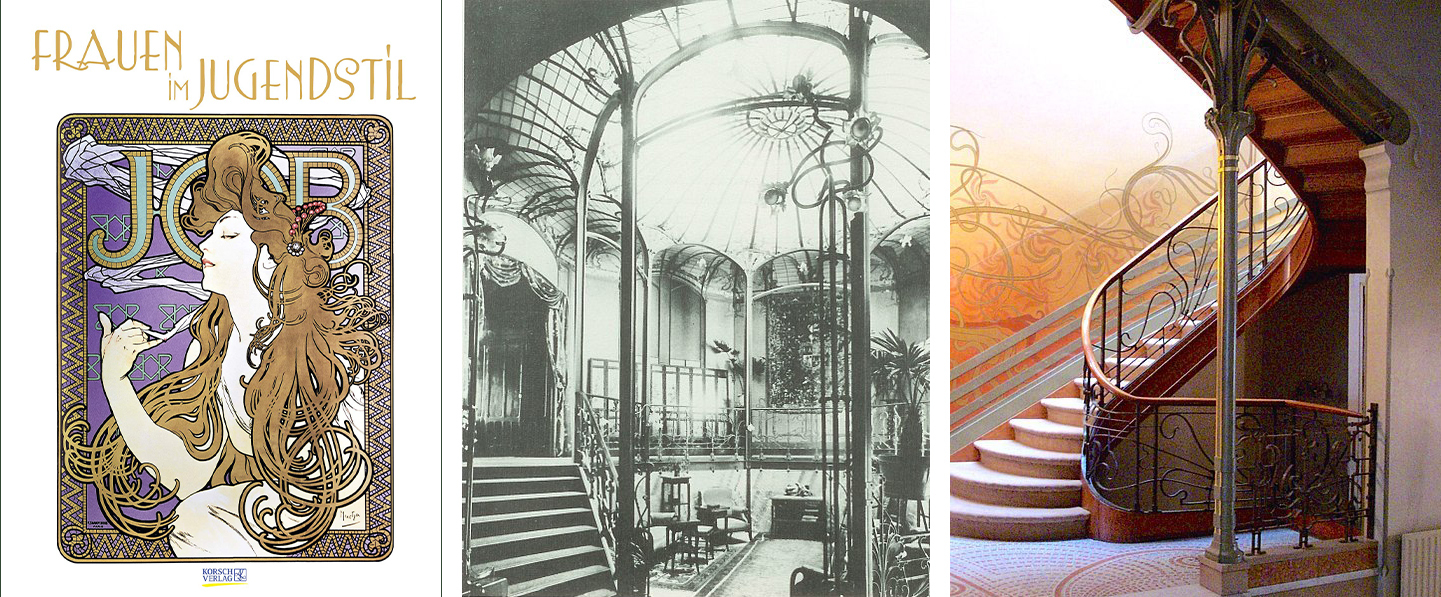
    art in architecture
    JUGENDSTIL INFLUENCE ON ARCHITECTURE
    • DADAISM: An experimental style of art, a ‘rebellious and revolutionary’ art movement established by Hugo Ball in the early 20th century, named Dada art is said to have been first created at an artistic nightclub ‘Cabaret Voltaire’  in Zurich, Switzerland after many war-opposing creatives sought refuge in the country. The movement gained momentum from 1916-1924 mainly in Switzerland, Paris, and New York, and featured works by notable artists like Hugo Ball, Marcel Duchamp, Hans Arp, and Sophie Taeuber-Arp. They wanted to ridicule war and capitalist culture, so they resorted to irrational concepts of art that showcased humor, and the questioning of authority and reality through an ‘anti-art’ approach.

    Dadaism opened the way for the architects to rethink traditional architecture, ornamentation, form, and materials, and to start creating buildings that were completely different from the style of that era. It also was one of the first that inspired architects to look beyond architecture and see buildings as sculptures, launching movements like deconstructivism (one of the most controversial architecture styles of the 21st century) that features projects by Daniel Libeskind, Frank Gehry, and Peter Cook, amongst many other famous names in the field.
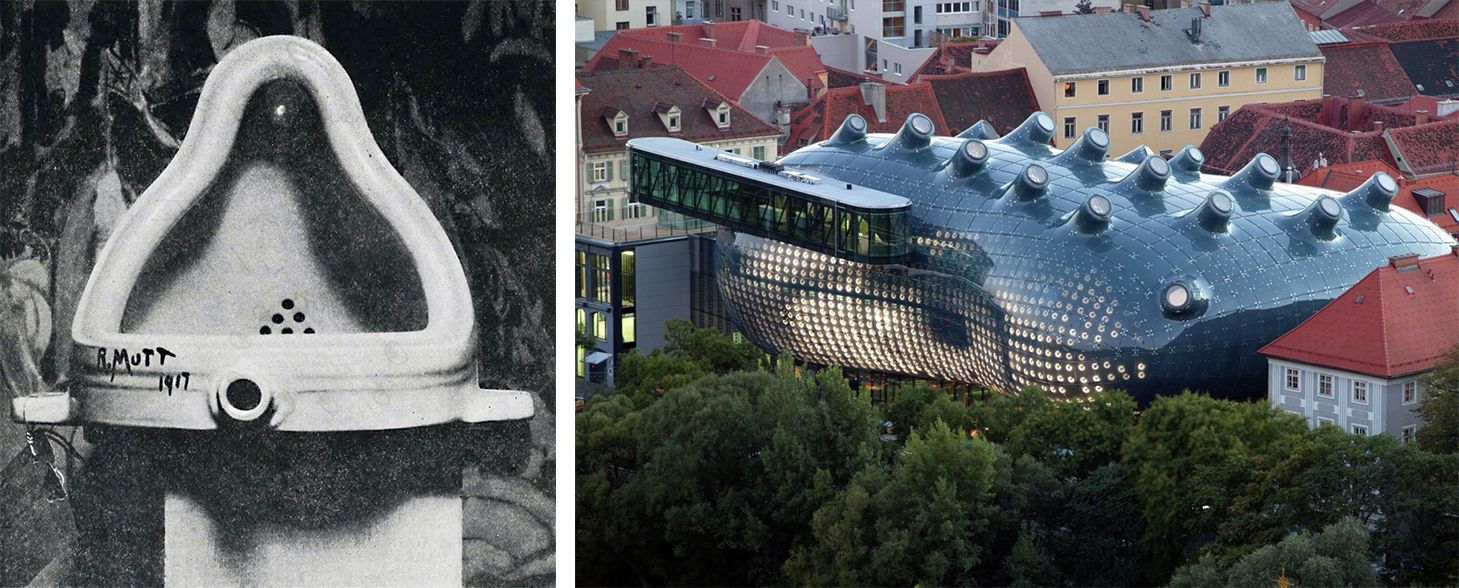
    dadaism
    INFLUENCE OF DADAISM IN ARCHITECTURE
    • DE STIJL: De Stijl, Dutch for “The Style”, also known as Neoplasticism, was a Dutch art movement founded in 1917 in Leiden led by the painters Theo van Doesburg and Piet Mondrian, who wanted to highlight the ideal fusion of form and function. This movement, just like Dadaism, was also a response to the mayhem of World War I. They created a visual language consisting of refined geometric forms like rectangles, squares, straight lines, and primary colors which eventually influenced architecture by inspiring the launch of the International Style of the 1920s and 1930s, mentioned as Modernism. 

    This style introduced flexibility and transformation of space in design, where there were no hierarchical arrangements of rooms in floor plans, only independent surfaces that create a space based on the user’s functions and requirements. 
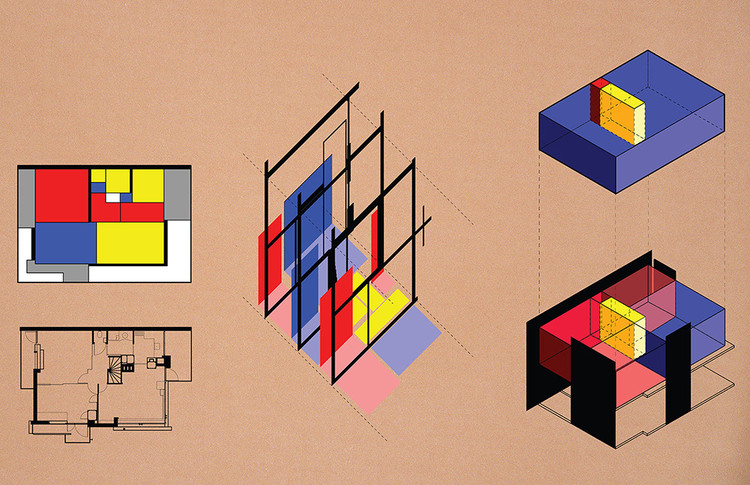
    de stijl
    De Stijl INFLUENCE ON ARCHITECTURE
    • POP ART: In the 1950s, the pop art movement appeared in the United Kingdom post World War II, when the economic and social structures led artists to commemorate mundane, daily activities and transform them into art. This movement introduced an entirely new approach to design by replacing historic art with vibrant mass production and media-centered visual realms. The movement inspired the architects to set themselves free from the linearity of modernism by pushing forward the use of technology, and mass consumption. Facades, interior spaces, and public domains became building canvases to experiment with light, color, irregular forms, and unconventional scale.
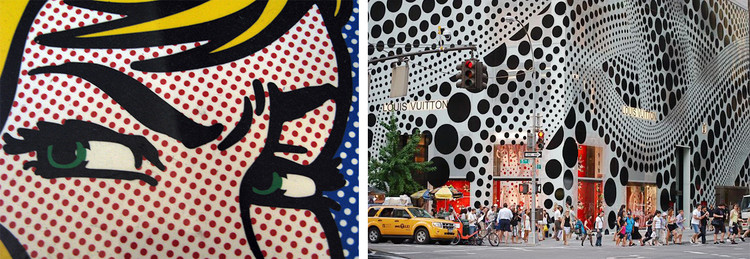
    pop art
    INFLUENCE OF POP ART IN ARCHITECTURE
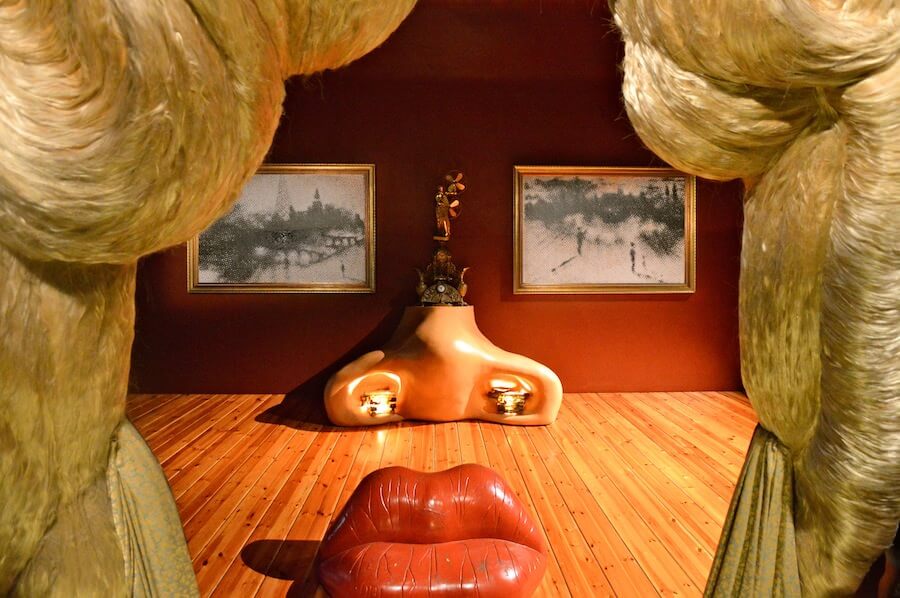
    surrealism
    SURREALISM IN ARCHITECTURE

    The co-existence of art and architecture is evident in the works of some of the greatest modern architects such as Le Corbusier, Antoni Gaudi, and Oscar Niemeyer, to name a few. It is pretty understandable that Art and architecture are deeply connected and evolve through the trend that oscillates in the world of art. In today’s context, technology-influenced themes are emerging in Art, which may translate into architecture.

  • Significant Influence of Impressionism on Design

    Significant Influence of Impressionism on Design

    “Impressionism; It is the birth of light in painting. “ 

                       – Robert Delaunay

    Impressionism

    An art movement admired by artists, appreciated by the public, showcased in the world’s top museums, and defined being the king of-the-art world, “The Impressionism”. Despite the rejections faced by impressionists, this art movement was pioneering with a groundbreaking genre of painting and acted as a catalyst for modern art.  

    During the 1860s, France was blessed with art when a style and movement in painting was characterized by visual impressions of shifting light effects and shadows called impressionism, accepted by the whole world with open arms. 

    Impressionism is defined as a practice of painting depicting the natural appearance of objects using dabs or strokes of primary unmixed colours to stimulate the picture with changing effects of light. These paintings of unblended color lead to the most dramatic era of-the-art movement.

    Impressionism
    Impressionism ©: mymodernnmet

    History of the origin of Impressionism

    “Rejection is merely a redirection: a course correction to the destiny.”

    Being an artist means accepting the rejection and creating it as an opportunity, enlarging it to make a revolutionary change in society. 

    The year ongoing was 1859, the creator of the so-called rejected painting was Edouard Manet who painted “The Absinthe Drinker” (1859) which was rejected by the Paris salon (Government sanctioned painting exhibitions) on the grounds of degenerative matter, plainly visible brush strokes and seemingly incomplete style.

    Impressionism
    History of Impressionism  ©: Thoughtco.com

    The origin of impressionism was an act to stand up and rebel against classical subject matter while embracing modernity, reflecting the natural world in which the Parisian painters lived. The term “impressionism” was the embracement of the rejection of Manet’s painting called an impression sunrise. This satirical review of the painting was indeed an action-reaction formula to enlarge the movement which was nurturing within the artists like Camille Pissarro, Edouard Manet and Claude Monet adjoining many such impressionists in a row to live an impression of their artwork behind. 

    Characteristics and Themes of Impressionism 

    “For an impressionist to paint from nature is not to paint the subject but to realize the sensation.” 

    – Paul Cezzane

    Impressionism paintings were uniquely characterised by their focus on light change in a moment and defining the edges with shades of colour. The main thought driven behind this movement was to justify their vision, how the object, landscape, human, etc. appeared to them creating the exact of their viewing vision in the form of clear brush strokes, with effects of changing light dimension and diffused reflection. 

    Impressionism has 3 main elements that distinguish it from other art forms: its depiction of light, loose brushstrokes, and open composition indistinctively identified.

    Impressionist painting created a revolutionary art movement because of its unique, unnatural, and exclusive characteristics summed up below. 

    Quick, loose brushstrokes 

    As impressionists are more into capturing a moment, they need to move their hands with a quick movement which often highlights the loose brushstrokes in the impressionist piece. This characteristic makes this kind of painting standalone among all of its kinds. 

    loose brushstrokes
                                 Loose Brushstrokes ©: youtube.com

    Bright paintings 

    Unlike the previous art movement like Realism or Braque art, Impressionism focused on being light and grounded and using complementary colours nearby to make it look more vibrant and alive. 

    BRIGHT COLOR
                                            Bright colour in painting of Impressionism  ©: skillshare

    Realism, an art movement just before impressionism, used more earthy tones like black, greys and browns and shifting from those to light hues of red, yellow, oranges, violet, and indigo, made impressionism paintings look brighter.

    In the same manner, baroque art was full of darker tones artisans painted the background of canvases in black, and the real painting emerged in different hues highlighted by a black background.

    Impressionism, being a reversal of both realism and baroque art, stood bright and was soothing to vision.

    “En Plein Air” ( Outdoor painting )

    Impressionists’ paintings are the moment of timepieces, they are the impressions of the moment captured by vision and studio being restricted to object, views and apprentices cannot create variation in illusion, perhaps being outdoor let the impressionists capture the varied moment and the real scenic beauty giving them open options to illustrate the vision of interest. 

    Relative colour  

    The Impressionists always believe and work on the principle of what they saw hence as we have a setup of colours like the grass is green, the sky is blue, and mountains being brown is said to be a painting in local colour. But in impressionism they pour the colour of the moment say water being purple, grass being yellow in dawn and mountain being orange in the dusk it all depends on the moment captured by impressionists.

    RELATIVE COLOR
                                Relative colour ©: Adobestick

    Clearer picture from further away

    The unique feature which makes this kind of painting splendid in its way is the more you move further from the canvas, it gets more clear to your vision. This kind of painting is not be viewed by standing very close to the canvas as you may disrupt the vision by its chaotic look of brush strokes and dabs coming together. These kinds of paintings should be viewed in the same way a person views his or her own life, i.e. an overview, rather than jumping into the intricate mess and chaos of life.

    CANVAS
                   The closer view appears as a disruptive canvas ©: National Gallery of Canada

    Small Painting 

    As painting does not have much detail within and is limited for a moment captured, hence can be portrayed on small canvases which are easy to carry and hold by the impressionists when they paint outdoors.

    Japanese print influence 

    The influence of Japanese art print is evident in asymmetrical composition and off-guard events in impressionist pieces.

    
Japanese art
    Japanese art influence ©: itravelwithart

    Masterpieces of Impressionism and Their Impressionists

    “Everyone discusses my art and pretends to understand as if it were necessary to understand when it’s simply necessary to love.” 

    – Claude Monet

    An art movement is always incomplete without the appraisal of the artists who made the art stand indistinctively different, creative and vibrant and is the shrines of the culture for a decade. 

    Eduard manet  

    The impressionist artist is famous because of his controversial contribution to impressionism, mostly the female nude painting was the talk of the town in those days. Being criticised for their unique style of painting and genre of painting, he never attended exhibitions in Paris. He also portrayed everyday life in cafes and bars in Paris, the city and its urban life, the street and its beggar, women, singers, and workers were seen very repeatedly in Manet’s painting. 

    Some of Manet’s famous paintings include Luncheon in the Studio, Concert in the Tuileries Gardens, A Bar at the Folies-Bergere, Portrait of Berthe Morisot, Concert in the Tuileries Gardens and Roadmenders in the Rue de Berne.

    music
    Music in Tuileries by Eduoard Monet ( 1862 ) ©: parblo.com

    Claude Monet 

    The father of impressionism was fascinated with the real beauty of nature and inspired by the landscape artist and gave birth to the art movement of that century, impressionism. Being in the open captures the beauty of the moment, which couldn’t be seen again if not preserved in the form of painting. 

    sunrise
    Impressionism, sunrise by Claude Manet  (1872) ©: parblo.com

    Vibrant hues, complementary colours, unusual composition, and smaller brush strokes make the painting identifiable that Manet’s work. Water lilies, Impression, Rouen Cathedral series, The Haystacks, and Woman in the green dress are some of his notable works.

    Edgar Degas

    The artist is famous for his contribution to impressionism in defining human portraits, particularly female bodies because of his academic training interests in creating human figures evoked. Dancers, singers and prostitutes were highlights of his work, as he has a way to present it distinctively. He also did not like to be called an impressionist artist, but wanted to be known as an independent artist.

    His subject of portraying painting was not a classical one or celebrated events rather a modern life description in his painting was more of his interest. Have faced a lot of criticism for not being an impressionist artist but rather portraying the life of lower caste subjects. Some of the important works of Edgar Degas are The Bellelli Family, Monsieur and Madame Édouard Manet, Foyer de la Danse, Le Foyer de la danse, and Prima Ballerina.

    edgar degas
         At the Races by Edgar Degas (1880) ©: parblo.com

    Pierre- Auguste Renoir

    Characteristics distinctive painting which is more vibrant, colourful and giving the essence of the moment captured. The focus of Renoir was also to portray Parisian life and its figures. Modernity, brighter tones and the varied human figure are the identifying characteristics of Renoir’s work. The great masterpieces of Pierre-Auguste Renoir are Woman in Black, Diana the Huntress, La Loge, La Grenouillère, Madame Georges Charpentier and Her Children.

    urban city
    Urban city painting by Auguste Pierre Renoir (1872) ©: parblo.com

    Camille Pissarro

    The only impressionist artist who exhibited his work in all eight exhibitions. His indulgence in politics is reflected in his paintings when he highlights the life of peasants and rural areas. 

    rural area
    Rural area painting by Camille Pissarro  (1872 ) ©: parblo.com

    Being an impressionist artist, the major focus was on the changing effect of light. Two Women Chatting by the Sea, St. Thomas, The Banks of the Oise near Pontoise, Jalais Hill, Pointoise, The Boulevard Montmartre on a Winter Morning, and Road to Versailles at Louveciennes are the most notable works of Camille Pissarro.

    Above were the pioneers who led the impressionism turn from being criticised to a revolutionary art movement which is still in its existence because of those loose brush strokes which went through the canvas to portray the moment captured. Impressionism is special in its way as it cannot be replicated because the dawn, dusk and landscape are ever-changing with time, hence once a moment captured in impressionism will last on canvases for years.

    Influence of Impressionism on Design 

    “Impressionism is the newspaper of soul, and design is the letters were written justifying the story behind.”

    Design is ultimately the impression of one’s vision, how the design is read is the manner of its definition being the regular one or leaving an impression. Impressionism, being the movement of its time, has not led behind in influencing design. Every impressionist has his way of portraying the impression of the moment captured, unlike the fact that designer’s design has its way of perceiving, planning and executing the design. Hence, impressionism influences the design. 

    Examples justifying its influence on the design

    Impressionism of the 19th century blew art history into a new direction and design was the field which was not left behind with the loose brush stroke effect which led their impression on the glass to give a new finish creating an illusive vision as if an airy atmosphere is there beneath the glass surface. Design is the majority influenced by impressionism in terms of changing effects of light and colour. 

    When talking about an interior design project, one question may arise, where does this impressionism lie? I too wonder that is this impressionism restricted to just hanging a wall canvas portraying impressionism or having much more of its impressions in today’s interiors.

    The design depends on factors of switching materials, implementing decor elements, and going well planning-wise. Considering all three and taking the effect of impressionism on material, whether it is a glass top of a centre table or a coffee table or going with a wall full of loose brushstrokes and dabs of complementary colours, enhances the interior by creating a visual texture. 

    Impressionism  influence in interiors
    Impressionism  influence in interiors  ©: site2read.com

    Existence of Impressionism in Today’s Designing World

    When talking about an interior design project, one question may arise, where does this impressionism lie? I too wonder that is this impressionism restricted to just hanging a wall canvas portraying impressionism or having much more of its impressions in today’s interiors.

    Impressionism paintings and masterpieces, when looked at closely, appeared to be disruptive in vision to some and as we move further away, the picture becomes clear to the vision, the same goes with design. 

    Reflecting surface
    Reflecting surface of the glass as dabs of Impressionism  ©: studiobservein

    Any intricate or parametric design closely viewed will be a matter of discussion or maybe criticised, but as you will move further away from it, your vision identifies the line of clarity in the designed masterpiece. 

    Hence, it’s high time to identify the art history which led a movement because of its not-so-regular art form and give it recognition in today’s designing field, which in turn is the honour of that moment captured. And yes, impressionism not only influences the design but also is the real sense of design.