

Tag: Construction Technology

  • Financial Growth In Architecture

    Financial Growth In Architecture

    Introduction

    Architecture is evolving with the rapidly changing world around us which requires a constant reflection and assessment of the past to prepare for future challenges. It has always been a mirror of a community’s creative, engineering, and technological facilities over time. However, in the premise of the 21st century, Architecture is more than just a convention of aesthetic monument-buildings, as nowadays the value of land is touching the sky due to the immense pressure of population growth worldwide.

    Any kind of development related to a valuable piece of land holds an added responsibility for maximizing the economic potential of that land. Therefore,  architecture can be an essential tool for economic growth in a region. 

    Financial Growth and Architecture Industry

    The Architecture industry is one of the few industries that is continuing to grow despite the current economic conditions. In fact, the Architecture industry is predicted to grow by 3.2% in the next year. There are many reasons for the growth of the Architecture industry. One reason is that the industry is becoming more globalized. With more countries interacting with each other, there is a greater need for architects to design buildings that meet the needs of a global market. Another reason for the growth of the Architecture industry is that there is an increasing demand for sustainable and green buildings.

    As the world becomes more aware of the need to protect the environment, architects are being called upon to design buildings that are eco-friendly. Finally, the Architecture industry is benefiting from the current trend in the construction industry towards renovating and retrofitting existing buildings. This is especially true in the commercial sector, where businesses are looking to reduce their carbon footprints by renovating their office space. 
    financial growth

    As the Architectural industry has seen a tremendous amount of growth in recent years, this can be attributed to a number of factors, including the increasing popularity of “green” architecture, the need for more energy-efficient buildings, and the continued growth of the construction industry. As the world becomes increasingly focused on sustainability, architects are being called upon to design buildings that are not only aesthetically pleasing but also environmentally friendly. Green architecture is a rapidly growing field, and many architects are now specializing in sustainable design.

    The construction industry is also booming, which is good news for architects. More construction means more demand for architectural services. In addition, the current economic conditions have led to a resurgence in the popularity of home renovation and remodeling. This has created a need for architects who specialize in residential design. The future looks bright for the architectural profession. The combination of increased demand for sustainable design and the continued growth of the construction industry is sure to lead to continued financial success for architects.

    There are a number of factors driving the growth of the architecture industry. The first is the increasing population. As the world population continues to grow, there is an increasing demand for housing and commercial buildings. This has led to a boom in the construction industry, and a corresponding increase in the demand for architects. Another factor driving the growth of the architecture industry is the increasing wealth of many nations.

    As countries become wealthier, they tend to invest more in construction and development projects. This has led to an increase in the number of high-end, luxury projects that require the services of experienced architects. The architecture industry is also benefiting from the rise of the green movement.

    More and more people are becoming aware of the need to conserve energy and resources, and this is leading to an increase in the demand for sustainable, green buildings. Architects who specialize in green design are in high demand as a result. Finally, the rise of technology is also playing a role in the growth of the architecture industry. With the increasing use of computer-aided design (CAD) and other technologies, architects are able to work on more complex projects than ever before.

    This has made the profession more attractive to a new generation of designers. The architecture industry is booming and is expected to continue to grow in the coming years. This is good news for architects, who are seeing an increase in demand for their services.

    beitou public library
    Beitou Public Library, Taiwan: A notable example of green and sustainable Architecture

    The increasing demand for new and innovative buildings has been a part of the growth. As the world becomes more populated, there is a need for more space. This has led to an increase in the construction of new buildings. The Architecture industry is forecast to grow by 3.2% in the next year. This is a significant increase from the previous year. The industry is expected to continue growing at a similar rate over the next few years.

    There are a number of factors that have contributed to the growth of the Architecture industry. The first is the increasing population. As the world becomes more populated, there is a need for more space. This has led to an increase in the construction of new buildings. Another factor is the increasing wealth of people. As people become richer, they want to live in nicer and more expensive homes. This has led to an increase in the construction of luxury homes. The other factor is the improving economy.

    When the economy is doing well, there is more money available for investment in the construction of new buildings. Also the increasing demand for office space. As businesses expand, they need more space for their employees. This has led to an increase in the construction of office buildings. One more is the increasing demand for retail space. As the population grows, there is a need for more space for stores and businesses.

    This has led to an increase in the construction of shopping malls and other retail spaces. The Architecture industry is expected to continue growing at a healthy rate in the next few years. This growth will be driven by the increasing population and the increasing wealth of people.

    The increase in construction and development projects across the globe has also provided a significant amount of growth in the industry in recent years. The construction industry is one of the largest and most important industries in the world. It is also one of the most important industries in the United States, employing more than 7 million people. The construction industry is responsible for the construction of buildings, bridges, highways, and other infrastructure. The construction industry is also a major contributor to the economy, accounting for more than $1 trillion in GDP. The construction industry is projected to grow in the coming years. The US construction industry is expected to grow by 3.6% in 2019 and by 4.0% in 2020.

    This growth is driven by a number of factors, including population growth, the increasing number of households, and the growing demand for infrastructure. The population of the United States is expected to grow by 0.7% in 2019 and by 0.8% in 2020. This population growth will drive demand for new housing, as well as for new commercial and industrial buildings. The number of households is expected to grow by 1.5% in 2019 and by 1.6% in 2020. This growth is driven by the increasing number of millennials who are reaching adulthood and forming their own households.

    The demand for infrastructure is also expected to grow in the coming years. The US Department of Transportation has estimated that the country will need to invest $1.5 trillion in infrastructure by 2025. This demand is driven by the need to repair and replace aging infrastructure and build new infrastructure to accommodate population growth. The construction industry is expected to benefit from this growth in demand.

    The number of construction jobs is expected to grow by 1.1 million between 2018 and 2028. This growth is driven by the increasing demand for housing, commercial buildings, and infrastructure. The construction industry is an important part of the economy. The industry is expected to grow in the coming years, driven by population growth, the increasing number of households, and the growing demand for infrastructure.

    construction
    Architecture puts the place up on the map of the world

    The financial growth in architecture has led to an increase in the number of architecture firms, as well as the number of architects employed by these firms. This growth has also led to an increase in the salaries of architects, as well as the fees charged by architecture firms.

    The financial growth in architecture has also led to an increase in the number of scholarships and grant opportunities available to aspiring architects. This has made it easier for people from all backgrounds to pursue a career in architecture. The financial growth in architecture has been a positive development for the profession and has resulted in increased opportunities for architects and architecture firms.

    Architects are in high demand all over the world, and their skills are needed in many areas. The field of architecture is growing at a rapid pace. In 2018, the average salary for an architect was $76,000. This is a significant increase from the average salary of $60,000 in 2010. The demand for architects is expected to continue to grow as the world population increases and more people are moving into cities.

    Architects who can design buildings that are connected to the internet and are energy-efficient are in high demand. Cities are looking to become more efficient and sustainable, and architects are key to making this happen. The financial growth in architecture is good news for those in the field. It is expected to continue to grow in the years to come, and there are many opportunities for those who are qualified. 

  • Maximize Cost Savings and Time Efficiency with Prefabricated Building Materials

    Maximize Cost Savings and Time Efficiency with Prefabricated Building Materials

    Introduction

    Construction has always been a boon in the development of the socio-economic growth of the country. Since the genesis of construction, new building materials have evolved and have added value to the design and construction. From the use of mud, clay thatch, brick to usage of steel, concrete, and glass in the construction of high-rise structures, building materials have been a convenient source in the evolution of construction.

    Just like building materials, there is another insightful technique that has become a vital part of construction and has made the work of the architects and designers much easier. Prefabricated building materials are nowadays becoming very common in the construction industry as it is saving a lot of time and labor. There are many residences, construction warehouses etc, row houses, offices, etc. being built by the prefabricated technique.

    What is Prefabricated Building Material?

    Prefabricated building materials are a technique in which the building is manufactured off-site and then later on transported back to the location.The commonly used building materials are wood, steel, concrete, fiberglass etc.

    The type of steel used in this type of construction is galvanized steel as it will safeguard the structure from rust and fire. Additionally, it gives the prefabricated construction a strong and protective coating. Steel is used to construct almost all of the building’s elements, including beams, frames, columns, walls, and roofing. Steel or aluminum frames are commonly used in prefabricated military structures.

    Steel, wood, and fiberglass are prefabricated building materials used for small prefabricated buildings. Aluminum or plastic materials. These materials are less expensive than conventional brick and concrete structures. For sporting facilities, materials like steel, fiberglass, wood, and aluminum are employed as prefabricated building materials. These materials offer versatility and are favored for building stadium and gym structures and accessories like stands and seats.

    Uses Of Prefabricated Building Materials

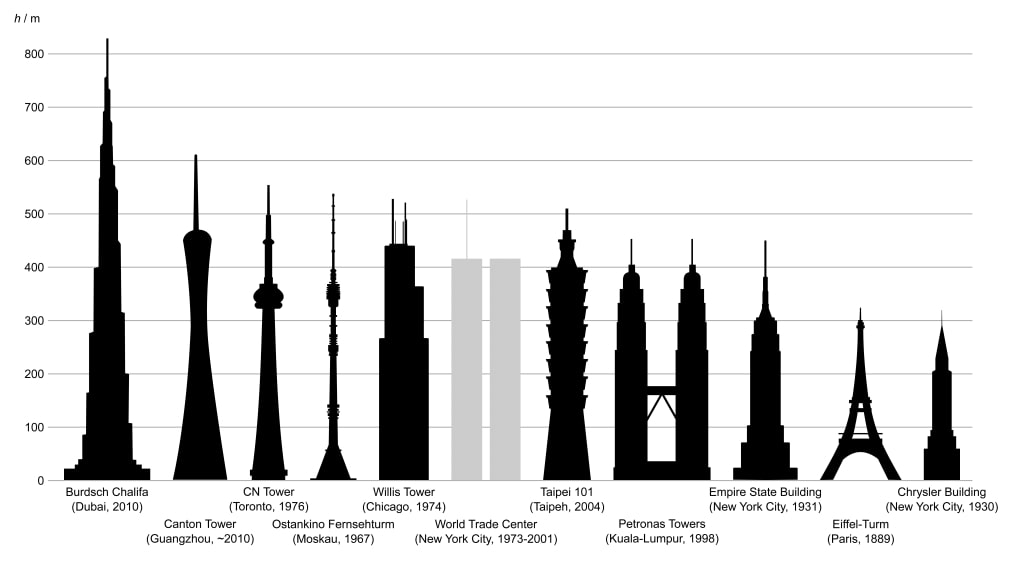
    The prefabricated structures are used in evacuation houses, schools, row housing, detachable houses, high rise structures etc. Prefabricated structures have been refined over the period of 400 years of history. The Eiffel Tower, one of the 7 wonders of the world, is made with prefabricated tall iron which was assembled in 22 months.

    The Caterpillar Apartment -Detroit (case study)

    PREFABRICATED BUILDING MATERIALS

    The Caterpillar is situated in Core City, a developing neighborhood a few kilometers outside of the city’s core. The Caterpillar was created by executive architect Firm Detroit and local studio Undecorated. It is situated in a “urban woods” with over 150 newly planted trees.

    The eight apartments in the 9,000 square foot (836 square meter) building are all situated within an extended Quonset hut, a prefabricated, arched aluminium housing type that gained popularity in the US during World War II. The cottages are renowned for being simple and quick to construct.

    Prince Concepts, a local real estate developer working with the city to develop over 100 abandoned properties in the neighborhood, is involved in a number of projects, including this one.

    Maximize Cost Savings and Time Efficiency with Prefabricated Building Materials Just like building materials, there is another insightful technique that has become a vital part of construction and has made the work of the architects and designers much easier. Prefabricated building materials are nowadays becoming very common in the construction industry as it is saving a lot of time and labor. There are many residences, construction warehouses etc, row houses, offices, etc. being built by the prefabricated technique.

    The US company SteelMaster created the Caterpillar’s cage, which is constructed partially of recycled steel. The crew installed glass doors, skylights, and several rectangular dormer windows to let in natural light. The loft-style residences, which are next to one another and measure 750 to 1,300 square feet (70 to 121 square meters).

    Maximize Cost Savings and Time Efficiency with Prefabricated Building Materials Just like building materials, there is another insightful technique that has become a vital part of construction and has made the work of the architects and designers much easier. Prefabricated building materials are nowadays becoming very common in the construction industry as it is saving a lot of time and labor. There are many residences, construction warehouses etc, row houses, offices, etc. being built by the prefabricated technique.
    Maximize Cost Savings and Time Efficiency with Prefabricated Building Materials Just like building materials, there is another insightful technique that has become a vital part of construction and has made the work of the architects and designers much easier. Prefabricated building materials are nowadays becoming very common in the construction industry as it is saving a lot of time and labor. There are many residences, construction warehouses etc, row houses, offices, etc. being built by the prefabricated technique.

    The height of the space is 7m tall with approximately 18 windows each for each house. The placement of the house is planned is placed in such a way that it gives a sense of completeness and balance to the habitant who gets to see the sunrise from the bedroom and sunset in front of the living space. The interior of the house is kept minimal with white walls and concrete flooring. The center of the space has a service core that divides up the amenities. There is a kitchen, closet and bathroom apart from the living room and bedrooms.

    Maximize Cost Savings and Time Efficiency with Prefabricated Building Materials Just like building materials, there is another insightful technique that has become a vital part of construction and has made the work of the architects and designers much easier. Prefabricated building materials are nowadays becoming very common in the construction industry as it is saving a lot of time and labor. There are many residences, construction warehouses etc, row houses, offices, etc. being built by the prefabricated technique.

    The exterior has a staggered pattern of tress and native plants designed by sheet music. The walkway arranged in a row is made up of terrazzo tiles and a wooden deck as the platform creating it an earthy space and atmosphere.

    Design and Construction Eiffel Tower

    Maximize Cost Savings and Time Efficiency with Prefabricated Building Materials Just like building materials, there is another insightful technique that has become a vital part of construction and has made the work of the architects and designers much easier. Prefabricated building materials are nowadays becoming very common in the construction industry as it is saving a lot of time and labor. There are many residences, construction warehouses etc, row houses, offices, etc. being built by the prefabricated technique.

    The structure was planned to build for the world fair of 1889w with a height of 300m.Initially the possibility of erecting cast iron was studied with a Qs base ,125 meters across and 300 meters tall. The plan was to designed like a small plyon with four column of lattice work girders with separate base at the bottom and coming together at the top. The tower was a bold projection of that era.

    In order to make the tower more appealing and acceptable to the people,Nougier and Koechlin hired and architect Stephen Sauvester to work on the facade of the structure.

    THE FIRST PROPOSAL BY SAUVESTER 

    Maximize Cost Savings and Time Efficiency with Prefabricated Building Materials Just like building materials, there is another insightful technique that has become a vital part of construction and has made the work of the architects and designers much easier. Prefabricated building materials are nowadays becoming very common in the construction industry as it is saving a lot of time and labor. There are many residences, construction warehouses etc, row houses, offices, etc. being built by the prefabricated technique.

    Sauvester proposed the idea of having stone work on the pedestal, glass ball wall and bulb shape design for ornamentation. The explanation given by Eiffel for the structure was as follows: –

    “All the cutting force of the wind passes into the interior of the leading-edge uprights. Lines drawn tangential to each upright with the point of each tangent at the same height, will always intersect at a second point, which is exactly the point through which passes the flow resultant from the action of the wind on that part of the tower support situated above the two points in question. Before coming together at the high pinnacle, the uprights appear to burst out of the ground, and in a way to be shaped by the action of the wind”.

    The Construction

    After numerous discussions and probabilities, the construction of the structure was started in July 1887 and was completed within 2 months.

    All the elements were manufactured in the Eiffel’s factory. The workers were hired by a team of constructors who had past experience for working in metal construction projects.

    Record construction time 

    The theme duration taken to build the foundation was 5 months and 21 months to finish the assembly of the metal. The Eiffel reaches its marvel of honor especially considering the speed with which it was built.

    Criticism

    Maximize Cost Savings and Time Efficiency with Prefabricated Building Materials Just like building materials, there is another insightful technique that has become a vital part of construction and has made the work of the architects and designers much easier. Prefabricated building materials are nowadays becoming very common in the construction industry as it is saving a lot of time and labor. There are many residences, construction warehouses etc, row houses, offices, etc. being built by the prefabricated technique.

    During its construction phase, the tower received a lot of criticism. There was an article published in the newspaper with the name “The protest against the tower of monsieur Eiffel and it was initiated by a lot of influential names in the world of literature and art.

    But once the tower was finished, the criticism turned into a complete masterpiece!

    Hence in 1889 around 2 million people came to witness the beauty during the world fair.

    Conclusion

    Every structure had its own importance irrespective of the material. Prefabricated material has proved its significance over the decades. Like every other material, prefabricated material has its advantages and disadvantages.

    It gives thermal insulation, improves quality, saves time, it helps in the safety of the Ages workers, environmental impact, constructability.

    With advantages comes disadvantages as well; If the prefabricated components are not handled properly at the site, it can cause breakage and ultimately leading to the reconstruction of the entire component again.

    Lack of skilled labor makes it difficult to connect the precast unit as it cannot be done by layman workers, requires erection equipment.

    But considering the architectural wonders it has created, prefabricated structures are the future of the construction industry in the coming times!!

  • Waste Management in India: Use of Architectural Waste in Construction Technology

    Waste Management in India: Use of Architectural Waste in Construction Technology

    Waste Management in India and around the globe

    Waste management in India

    Waste generation, improper waste collection, transportation, treatment, and disposal are serious environmental challenges in India. India’s current system cannot cope with the large amount of waste generated by the growing urban population, which has an impact on the environment and public health. Challenges and obstacles are important, but opportunities are also important.

    A priority is to move from relying on waste dumps that do not provide environmental protection to a waste management system in India that preserves useful resources in the economy. Waste segregation at the source and the use of well-defined waste treatment facilities to separate recyclable materials is important. The disposal of residual waste after the extraction of material resources requires the design of landfills and investment in power generation facilities. The waste material projects should be promoted in the industry of construction technology.

    Statistics of waste management in India

    Estimating the number and characteristics of MSW (Municipal Solid Waste) in India and predicting future waste generation is critical to successful waste management planning. The amount of MSW produced depends on the standard of living, the scope, and type of business activities, eating habits, and seasons.

    About 133,760 tons of municipal solid waste is generated every day, out of which about 91,152 tons are collected and about 25,884 tons are processed. The per capita production of municipal solid waste in India ranges from about 0.17 kg per person per day in small towns to about 0.62 kg per person per day in cities.

    Waste management in World

    The complexity of wastes associated with the modern economy is constantly increasing, threatening the ecosystem and human health as a serious threat. Among all waste streams, electronic waste containing complex hazardous substances is the fastest growing challenge in developed and developing countries. Unhealthy, open-air landfills can contaminate drinking water and lead to infection and disease transmission. The proliferation of garbage pollutes the ecosystem, and hazardous substances in electronic or industrial waste put pressure on the health of urban residents and the environment.

    Statistics of waste management in World

    The world collects approximately 11.2 billion tons of solid waste each year, of which the decomposition of solid waste organic matter accounts for about 5% of global greenhouse gas emissions. Every year, approximately 11.2 billion tons of solid waste is collected worldwide. About 8.1 million tons of plastic waste are dumped into oceans globally this year.

    Architecture and waste

    Construction waste is any substance that is generated and disposed of as a result of work in construction technology. These wastes can be a mix of materials leftover from site cleaning, construction, excavation, renovation, and demolition. Construction technology waste includes a variety of materials. Few of them can be recycled and few cannot be recycled. Additionally, there are some inherently hazardous wastes.

    Types of Architectural waste

    Plastic and Glass waste

    Demolition of houses and temporary buildings will produce waste of wood, glass, and plastic. These non-inert materials can be recycled or reused, and as a last resort, they can be disposed of in a landfill. Waste materials, mainly new construction wood, include plywood, shredded wood, lumber, wood shavings, and sawdust. Plastic waste includes PVC cladding, PVC pipes, plastic panels, and polystyrene foam insulation materials. Glass materials include debris from glass windows or door panels and glass from skylights or glass shelves. Most untreated or uncontaminated materials are harmless, but can sometimes contain harmful substances. 

    Concrete, Bricks, and Tiles as waste

    Concrete and bricks make up the majority of construction and garbage, which are dumped in landfills. But these can be recovered by crushing them into rubble.

    Concrete – Harmless 

    Brick – Harmless 

    Tiles and ceramics – Harmless 

    Concrete, bricks, tiles, and ceramic materials (simple or mixed) containing dangerous substances – Harmful 

    Concrete, bricks, tiles, and ceramic mixtures, without dangerous substances – Harmless

    Metallic Waste

    Construction scrap metal includes copper, bronze, brass, aluminum, lead, steel, tin, and mixed metals. All of these are harmless and can be easily recycled. However, metals containing hazardous substances, cables containing oil, and coal tar are very hazardous substances and must be handled with care. 

    Drywall

    Construction sites contain large amounts of masonry and drywall debris. Typically, drywall is constructed from gypsum and most of the excess paneling is left behind after the new building is constructed. 

    Recycled waste products

    Recycled Glass

    Glass is one of the most common waste resources, so it can be recycled. From straight bottles for walls to the production of glass blocks and mosaics.

    Cork

    A lot of cork is left behind from wine bottles. Wine cork can be recycled into cork board and used as a building material instead of getting wasted.

    Plasphalt

    Plasphalt is obtained when plastic is used to produce asphalt instead of sand and gravel. It is a good alternative to traditional asphalt and is also more durable.

    Ferrock

    Waste Management in India: Use of Architectural Waste in Construction Technology Waste generation, improper waste collection, transportation, treatment, and disposal are serious environmental challenges in India. India’s current system cannot cope with the large amount of waste generated by the growing urban population, which has an impact on the environment and public health. Challenges and obstacles are important, but opportunities are also important.
    Ferrock

    It is a more ecological and durable version of concrete. Ferrock is mainly made from steel scrap powder, which is more environmentally friendly. It absorbs carbon dioxide during the extraction process (as it dries), making it more environmentally friendly.

    Timbercrete

    Waste Management in India: Use of Architectural Waste in Construction Technology Waste generation, improper waste collection, transportation, treatment, and disposal are serious environmental challenges in India. India’s current system cannot cope with the large amount of waste generated by the growing urban population, which has an impact on the environment and public health. Challenges and obstacles are important, but opportunities are also important.
    Timbercrete

    Cement production represents 8% of global greenhouse gas emissions. The lighter and more energy-efficient version of concrete use sawdust as an ingredient. It is as strong as traditional concrete but requires less cement.

    Recycled Plastic Wood

    Plastic wood substitutes are made from 100% recycled plastic, using plastic waste that cannot be used in traditional recycling processes. These materials must be protected from landfills, given value, and recycled into long-lasting products, providing a harmonious solution for a sustainable life.

    Zero Waste Design

    Zero waste is a concept focused on preventing waste. It encourages the redesign of the resource life cycle so that all products can be reused. The goal is that no waste is sent to landfills, incinerators, or the ocean.

    Construction technology has a major impact on the planet. A large number of resources, materials, water, and energy are developed, processed, and consumed to perform a job, and are limited to the useful life of the building. Inefficiency in the production process and excessive waste in various other construction phases worsen this impact. Indeed, human beings can no longer use environmental resources indefinitely, and most importantly, they must stop generating so much waste.

    More efficient use of waste material and resources is one way to achieve sustainable economic growth. This means that the demand for resources and energy is reduced, and the generation of waste is also reduced. When talking about our planet, it is always wise to think that there is nothing to “throw away”.

    Circular economy and its benefits

    The concept of circular economy attempts to change this paradigm. It is inspired by natural mechanisms that play a role in the continuous process of production, reabsorption and recycling, self-management, and natural regulation, where waste is the input for the development of new products. In the linear economy, products are created, used, and then turned into waste, in the circular economy, it will return to the production process. This is the process of breaking the relationship between economic growth and the consumption of more natural resources through a more efficient, smarter, and more sustainable process.

    Adaptive Reuse

    Heritage buildings are essential for transmitting cultural identity to future generations. When cultural relics can no longer perform their original functions, to protect the meaning of cultural relics, it is inevitable to propose new functions. One of the popular methods is adaptive reuse or reuse of existing buildings as part of the concept of sustainable architecture. The adaptive reuse of historical buildings is to propose a function in it that is relevant today. This helps to revive the historical building without affecting its historical importance.

    Examples of Adaptive reuse

    Kandadu, Pondicherry

    Kandadu was a mansion in the countryside near Pondicherry and Chennai which was abandoned. It caught the attention of Jean Francois Lesage, a French couture embroiderer, who transformed it into his workspace and residence. According to Lesage, during the reconstruction process, various parts of the building were structurally reinforced, missing blinds were replaced, and broken tiles were replaced. However, in some places, damp patches and peeling plaster are exposed to increase the aesthetics of the building.

    Lesage also mentioned hiring traditional and local craftsmen to restore the interior space of the mansion. In addition, Kandadu is also home to various livestock, vast gardens, swimming pools, and cabins.

    Jai Vilas Palace, Gwalior

    Jai Vilas Palace is a 19th-century palace built in Gwalior by the Scindia dynasty, with a European architectural style. Today, although part of the palace is the residence of the descendants of the royal family, the main part of the palace has been converted into the “Jivajirao Scindia Museum”. As well as displaying the cultural relics of Gwalior under Scindias, the museum also includes lavish and beautifully furnished living rooms, bedrooms, banquet halls, and dining rooms. Some of the interior spaces are also dedicated to members of the royal family and represent their lifestyles.

    The Port House, Belgium

    The new Antwerp port building reuses, restores, and expands the abandoned fire station at the new port headquarters, bringing together 500 port employees who previously worked in different buildings in the city.

    The central courtyard of the old fire station is covered with a glass roof and is used as the main reception area of ​​the new port building. From this atrium, visitors can enter the historic public reading room and library in the abandoned fire engine room, which has been carefully restored and preserved. The panoramic elevator leads directly to the new extension, and there is an external bridge between the existing building and the new extension, offering panoramic views of the city and the harbor.

    Examples of buildings constructed from waste

    Waste material project is prominent in the construction technology industry nowadays. The use of waste material in the facades, construction, and furniture is highly being encouraged. Below are some examples of waste material projects throughout the world.

    Scrap House, San Francisco

    Rethinking the standard floor plan of a single-family home, SCRAP: House is a stylish residential solution pipeline, built entirely from recycled materials and directed directly to city hall. Everything from the foundation to the front door is recycled and reused. Finding the right innovative materials is part of the challenge. Like other city-built homes, Scrap House complies with all applicable building codes.

    Waste Management in India: Use of Architectural Waste in Construction Technology Waste generation, improper waste collection, transportation, treatment, and disposal are serious environmental challenges in India. India’s current system cannot cope with the large amount of waste generated by the growing urban population, which has an impact on the environment and public health. Challenges and obstacles are important, but opportunities are also important.
    Scrap House

    The exterior of the house was plastered with street signs, painted glass shower doors, and fragments of metal plates. The ceiling is made of old billboards, while the interior walls are lined with discarded fire hoses, phone books, and computer keyboards. The floor is made of old doors and the countertops are trash tile. The impressive chandelier is made up of old traffic lights. The other light fixture consists of discarded desk lamps placed on a suspended platform. Every piece of furniture and every little accessory (chairs, beds, cups, and faucets) are pulled directly from the trash can to draw the public’s attention to how a person’s house is built.

    Manav Sadhna Activity Centre, Ahmedabad

    The Manavsadhna Activity Center is indeed the embodiment of the integrated architectural design, which attempts to solve various long-standing problems in developing countries. The activity center is constructed entirely from recycling waste material from the family center. First of all, recycling waste material solves the problem of environmental pollution; otherwise, it is simply disposed of in a landfill. Second, by recycling waste material into products used in construction technology, creates jobs for the urban poor, thereby enhancing economic power. Third, locally developed products are cheaper and better than traditional alternatives, making buildings more affordable.

    As a hub of activities, it truly serves the poorest communities in the city. Construction technology components developed by recycling waste material have been tested for performance and found to be superior to traditional practices. These also apply as a whole, making construction technology, functional requirements and aesthetics complement each other. Fly ash, landfill waste, plastic bottles, glass bottles, boxes, wood, steel bars, packaging materials, oil tanks and other waste have been recycled for use in construction technology. The building has proven to be extremely cost-effective and has become an open catalog of the different wall, ceiling, floor, and panel options.

    Collage house – Mumbai, India

    Waste Management in India: Use of Architectural Waste in Construction Technology Waste generation, improper waste collection, transportation, treatment, and disposal are serious environmental challenges in India. India’s current system cannot cope with the large amount of waste generated by the growing urban population, which has an impact on the environment and public health. Challenges and obstacles are important, but opportunities are also important.
    Collage house facade

    This waste material project analyzes the idea of ​​recycling and collage in a variety of ways, from physics such as matter and energy to intangibles such as history, space, and memory. There is a window corner for recycling old doors and windows of demolished houses in the city. This became an important backdrop for the living room, with a multi-faceted exposed concrete ceiling that contrasted sharply with the polished white marble, and the floor was inlaid with intricate brass.

    Waste Management in India: Use of Architectural Waste in Construction Technology Waste generation, improper waste collection, transportation, treatment, and disposal are serious environmental challenges in India. India’s current system cannot cope with the large amount of waste generated by the growing urban population, which has an impact on the environment and public health. Challenges and obstacles are important, but opportunities are also important.
    Central Courtyard

     The remains of metal pipes are assembled like bamboo to form a “pipe wall”, which integrates structural columns, rainwater drainage pipes, and pipe sculptures, which is pleasing to the eye in the monsoon. These stone chips on the sidewall are the cutting debris rising from behind the stone-cutting yard and the debris generated on-site.

    A centuries-old pillar of a demolished house brings back memories, while the light steel and glass pavilion (with solar panels on it) on the terrace level offers wonderful hillside views, creating nostalgia. This method is once again strengthened in materials and internal elements. It reproduces this contrast between old and new, tradition and modernity, roughness and finished product.

    Rotterdam House

    Waste Management in India: Use of Architectural Waste in Construction Technology Waste generation, improper waste collection, transportation, treatment, and disposal are serious environmental challenges in India. India’s current system cannot cope with the large amount of waste generated by the growing urban population, which has an impact on the environment and public health. Challenges and obstacles are important, but opportunities are also important.
    Rotterdam House

    This abandoned house was built in one of Rotterdam’s many open spaces, the result of the city’s post-war landscape, and is sandwiched between two existing brick buildings. The duo partnered with Tom van Soest of Stone Cycling to create the first project ever made with the company’s Waste Based Bricks. The facade was built entirely by Waste Based Bricks, through the use of waste material from the ceramic, glass, and insulation industries, as well as scrap clay. All materials come from a radius of 100 kilometers.

  • Lightweight Architecture: Innovative Materials and Construction Techniques

    Lightweight Architecture: Innovative Materials and Construction Techniques

    Introduction

    The main objective of a building is to support live loads. In the majority of cases, the dead load of a particular building can be hefty enough. The ratio of a structure’s dead load to its live load determines how lightweight the building is. The smaller this ratio gets, the lighter the building is. The structures in lightweight architecture are relatively simpler. Since the availability of materials depends on the region, the rules and principles of lightweight architecture also change from place to place. 

    A suspension bridge with tensioned cables is way lighter than a truss, and a truss is lighter than a box girder bridge that is constructed out of concrete. Lightweight structures can be hampered because of differences in temperature, high wind loads, and snow, but they can handle earthquakes. Lightweight structures often induce high labor costs and impulsive use of natural resources. Along with the construction of lightweight architecture, one also has to consider the different types of ways for lightweight architecture elements to be reused, repaired, or even recycling of some or all parts of a particular structure. 

    Lightweight Architecture
    Photo by ArchDaily

    Lightweight structures are beneficial to our society in terms of ecological, social, and cultural perspectives. The lightweight architecture ensures less wastage of materials. It is possible to dismantle these structures and recycle them. These structures require detailed manufacturing and assembly, thus increasing employment. Lightweight architectural structures contribute to setting up the architectural context of a particular place. As compared to heavy, bulky structures, lightweight structures have less visual weight, giving more pleasing perceptions. 

    Components of Lightweight Architecture 

    Cable, membranes, shells, and folded structures and space grids, braced vaults and domes, arches, and trussed systems are some components of the lightweight architecture. The materials used for the membranes can either be PTFE-coated glass or PVC-coated polyester fabrics. These structures can be used for long-span roofs for stadiums and exhibition structures, entrance structures, environmental protection canopies, as well as shopping malls with a covered roof. Lightweight structures successfully carry the loads irrespective of the shape and size of the structures. 

    Usually, the self-weight of lightweight structures is pretty less. These structures are a result of a combination of advanced construction technologies and lightweight and high-strength construction materials. For doubly curved or other innovative shapes, the surfaces are pre-stressed. These require cutting patterns that are exclusive and intense care during the assembly of the structure. They have a quite visually appealing look and modern charisma. 

    Lightweight Architecture: Innovative Materials and Construction Techniques The main objective of a building is to support live loads. In the majority of cases, the dead load of a particular building can be hefty enough. The ratio of a structure’s dead load to its live load determines how lightweight the building is. The smaller this ratio gets, the lighter the building is. The structures in lightweight architecture are relatively simpler. Since the availability of materials depends on the region, the rules and principles of lightweight architecture also change from place to place. 
    Photo by UrDesignMag

    Lightweight Materials

    Graphene is said to be one of the strongest materials in the world. Researchers found that 3D graphene is stronger than 2D. They also found a way to turn the 2D graphene into 3D graphene by designing a new material that had sponge-like characteristics. It is 10 times as strong and contains a 5% density of steel. With a density of 0.9 grams per cubic centimeter, metallic microlattice is the planet’s lightest of all structural materials. It is produced with nickel phosphorous tubes and is used mainly for automotive and aeronautical purposes. 

    Lightweight Architecture: Innovative Materials and Construction Techniques The main objective of a building is to support live loads. In the majority of cases, the dead load of a particular building can be hefty enough. The ratio of a structure’s dead load to its live load determines how lightweight the building is. The smaller this ratio gets, the lighter the building is. The structures in lightweight architecture are relatively simpler. Since the availability of materials depends on the region, the rules and principles of lightweight architecture also change from place to place. 
    Photo by Inhabitat
    Lightweight Architecture: Innovative Materials and Construction Techniques The main objective of a building is to support live loads. In the majority of cases, the dead load of a particular building can be hefty enough. The ratio of a structure’s dead load to its live load determines how lightweight the building is. The smaller this ratio gets, the lighter the building is. The structures in lightweight architecture are relatively simpler. Since the availability of materials depends on the region, the rules and principles of lightweight architecture also change from place to place. 
    Photo by Inhabitat

    Carbyne is an exotic form of carbon that was synthesized in 2016. This material is said to be stronger than graphene. This is considered the strongest of all the materials and is twice as strong as carbon nanotubes. Aerographite is said to be the lightest material. It is lighter than Styrofoam, has a density of 180 grams per cubic meter, and can be made into diverse shapes and sizes. 

    Lightweight Architecture: Innovative Materials and Construction Techniques The main objective of a building is to support live loads. In the majority of cases, the dead load of a particular building can be hefty enough. The ratio of a structure’s dead load to its live load determines how lightweight the building is. The smaller this ratio gets, the lighter the building is. The structures in lightweight architecture are relatively simpler. Since the availability of materials depends on the region, the rules and principles of lightweight architecture also change from place to place. 
    Photo by Inhabitat

    Lightweight House Construction

    Lightweight house construction uses different construction methods as compared to traditional building methods. The quality of the house is ensured and the house is made to fit in as per the regulations of the building code. Lightweight architecture is an unusual approach to building construction. The materials are self-designable and are a combination of different substances, such as fibers, metals, polymers, woodchips, and clay particles. Avoiding molds and frames allows the building to adapt to different environments on its own. Principles of physics concerning the lightness of a particular structure help in the determination of certain design decisions.

    The site context here includes climatic conditions of the site and gravitational forces. Material composition is the very first step in defining the structure. Along with living loads, wind load, and gravitational forces to consider, acoustics, climatic conditions, fire hazards, vibrations, etc. are also taken into consideration to constructing a house with lightweight architecture. Minimization of energy consumption is ensured while construction of these houses. These principles may give rise to innovative design solutions. Proofing against vibration depends on how rigid the materials are and the fixing between them.

    As opposed to the common belief that acoustic insulation and visual mass go hand in hand, considering its capacity to prevent the passage of sound. This technique does work, but disabling the structures that transfer sounds is a more effective technique. Thermal comfort in such houses involves ventilation and insulation of the spaces. The energy consumption, heat transfer, humidity, etc. are considered while material selection. Materials like glass or plastic are used to direct the sunlight in the directions desired by the designer as well as the user. 

    Certain parts of the building may be mass-produced. The entire construction process for lightweight architecture requires fewer efforts as compared to traditional bulky architecture. The use of molds for certain shapes might be avoided to let the materials take shape naturally as per the natural site context and circumstances. At all points, integration of materials is encouraged wherever possible. For example, the frames used for the construction of walls can be integrated to avoid double frames for wall construction. 

    Advantage of Lightweight Architecture

    Lightweight architecture helps in reducing the cost of transportation required for materials. This gives rise to an increase in the construction of speed. Structures constructed as a result of lightweight architecture are more convenient and flexible to use. The rooms in such kind of architecture are lightweight simple products that can easily be bought ready-made in a store instead of bulky construction. 

    The adaptability of the structure in terms of functionality is a major benefit of lightweight architecture. It takes minimum effort to change the places and rooms with no obligation of using a particular space for a particular chore. It is easier for people to make adjustments on their own by opening up roofs and facades. Services such as water supply, drainage, electricity, etc. are easily changed.

  • Innovative Construction Materials: Trending Building Materials in Architecture Industry

    Innovative Construction Materials: Trending Building Materials in Architecture Industry

    Concrete, steel, wood, and masonry are among the various building materials used in the construction business. Every material has different attributes such as weight, strength, durability, and cost, making it suited for different purposes. The construction materials are chosen based on their cost and ability to withstand the loads and strains operating on the structure. Architects and builders collaborate closely with their clients to choose the sort of construction and materials that will be used in each project.

    construction materials
    Photo from Civil RnD

    In India, the construction sector now incorporates a wide range of locally derived materials. This is greatly dependent on the type of construction, which can range from mud huts known as ‘Kuccha’ to sophisticated town infrastructures constructed with high-quality materials. The industry’s most significant issue, however, is how to source materials are sourced. 

    Over the last few decades, sand mining, open fly ash plants, and a disregard for environmental norms have had a significant influence on the ecosystem. While the civil engineering and construction industry has grown rapidly in recent years, the country continues to face significant issues because of the costly and polluting nature of building materials. River systems have been harmed by issues such as unlawful sand mining. Climate disasters such as Hurricane Sandy have been caused by densely concentrated city development.

    Concrete

    Concrete is a critical component and is used in a variety of residential and commercial structures. Because of a chemical process known as hydration, it solidifies and hardens after being mixed with water and placed. Other building materials are held together by it. Aggregate, cement, small stones, sand, gravel, and water are mixed to make this material, which is widely used in the building industry. All the components combine to form a stone-like substance.

    Hydraulic cement-based concrete was devised by the Romans. It was enhanced and popularized in the modern world by the British. The Pantheon in Rome, which boasts a 42-meter-diameter poured concrete dome, is one of the best specimens of Roman architecture that has remained to this day.

    Translucent Concrete

    More than its amazing illumination, the concrete construction is recognized for its stability. That is, until translucent concrete became available on the market. This is the best construction material innovation for decoration reasons.

    Glass fibre optical strands are used to make translucent concrete, which results in a substantial yet sheer block. LitraCon, sometimes known as translucent concrete, is a type of concrete that can be used for flooring and pavement. The optical fibres make up only 4% of the transparent concrete mixture, according to research and testing. As a result, it demonstrates that concrete blocks constructed from this material can nevertheless sustain load-bearing walls.

    Bendable Concrete

    Because of the microscopic fibres that make up 2% of its composition, the new fiber–reinforced flexible concrete is 500 times more resistant to breaking than normal concrete. In civil engineering, there are novel construction materials.

    When the concrete bends, the fibres within it glide within the concrete, giving it enough to prevent breakage. Furthermore, because this concrete has a substantially longer life expectancy, it will cost less in the long term.

    Concrete Canvas

    It’s a cement-impregnated fabric that hardens with water to form a thin, waterproof, and fireproof concrete coating. It is just necessary to add water on a roll in this form of concrete. For situations with limited access or where heavy plant equipment is not available, CC is supplied in man-portable rolls. CC is useable for 2 hours after being moistened and hardens to 80 percent strength in 24 hours.

    SensiTile

    Consider how your kitchen floor twinkles with a bright trail that takes you through the darkness as you walk over it to fetch something from the refrigerator. If you have SensiTile, this is now available. Concrete acrylic fiber-optic channels that transfer light from one point to another are inserted in this sort of tile. The light channels flash with a randomized, glittering effect as a person walks across Terrazzo’s surface. Tiles may be used for flooring, baths, and even ceilings, allowing you to have glittering lights follow you throughout the house.

    Electrified Wood

    wood
    Photo from Wikipedia

    You might never have to deal with the tangle of cables that come with lights for home décor purposes again. The Wood European manufacturing company has material that can be used to build tables and chairs with an integrated power source.

    They put two metal layers between the wood of the furniture in that arrangement, allowing an electrical current to run through the entire item. 12-volt electricity is delivered to the metal layers through one connector, while lighting and other devices can be connected through the other. However, there is some uncertainty whether this furniture will work with all electrical outlets, but we’re happy with any piece of furniture that means we won’t have to.

    Liquid Granite

    Liquid granite, according to its inventor, has the power to totally replace cement in concrete. Liquid Granite is a lightweight, load–bearing substance constructed of recycled materials that has the same load–bearing capability as cement. Cement and concrete have negative environmental effects, while this substance does not. Liquid Granite comprises 30 to 70% recycled material and consumes around a third of the cement used in precast concrete. 

    As a result, liquid granite has a low carbon impact and is also fire resistant. It can withstand temperatures of up to 1,100 degrees Celsius without losing structural integrity. It does not, like concrete, explode at high temperatures.

    3D-printed bioplastics

    In the building sector, waste is a huge issue. According to several studies, the amount of building materials that end up in a skip range from 20% to 30%, signifying a huge environmental and economic burden.

    Aectual, a Dutch company, believes their bioplastic constructions can make a significant difference in this area. Large 3D printers are used by the company to create intricate and sophisticated designs, ranging from floors to façades, stairs, and even complete structures. Apart from employing 3D printers to construct the structures, the usage of bioplastics is novel in terms of sustainability and waste reduction.

    The bioplastics used by the company’s 3D printers are manufactured from 100 percent renewable plant-based polymers, and the printers can also use recycled plastics, according to the company. If the printer makes a mistake, the plastic may simply be shredded and returned to the mix, resulting in zero waste construction projects — at least in theory.

    Homeostatic facades

    We’ve all worked in an environment where the conditions, whether it’s excessive heat or excessive light, may become suffocating over time. The idea behind homeostatic facades is that the material used to construct them responds to the outside conditions in order to help generate the best possible interior conditions. 

    Both sides of the silver-coated ribbon formed of dielectric material (a polymer that reacts to electric impulses) wrapped in a double glass façade reflect light and transport electricity throughout the material’s surface, allowing it to adapt to the building’s most critical circumstances.

    Structures Built From Unusual Materials

    The Great Wall of China

    Scientists at Zhejiang University in China were studying the composition of the mortar used to construct the Great Wall when they discovered that something odd had been added to the typical mixture of lime (limestone cooked to a high temperature) and water: sticky rice. It was the world’s first composite mortar, as it included both organic and inorganic materials. 

    The scientists evaluated the quality of mortar prepared with and without sticky rice in their testing and discovered that “sticky rice-lime mortar has more stable physical qualities, has more mechanical storage, and is more compatible, which makes it a viable repair mortar for old brickwork.” One of the Ming dynasty’s greatest innovations was the use of sticky rice as a construction component, which aided their structures.

    Sticky rice is more than just a staple of China’s traditional cuisine. It can also be turned into a sort of mortar that can construct super-strong city walls, pagodas, temples, and even the Great Wall of China. Sticky rice mortar has been dubbed “the ideal material for rebuilding old buildings” because of its effectiveness.

    Because sticky rice mortar is extremely sturdy, it was used to construct many ancient structures that are still standing today. These structures have withstood earthquakes and a variety of other natural disasters that would normally have eroded the structures.

    The Palacio de Sal in Bolivia

    The Palacio de Sal Resort is a totally salt-built hotel on the border of the Salar de Uyuni Plain. This incredible building was built with almost 1 million 14-inch compacted salt grain blocks. There are 16 rooms in this hotel, and the walls, tables, and mattresses are all made of salt. As a result, it has been listed on a number of “World’s Most Unusual Hotels” lists.

    Wat Pa Maha Chedi Kaew in Thailand

    In Thailand, there is a 20-building temple complex that’s composed of over 1.5 million Heineken and Chang beer bottles giving quite a unique look to this place of worship. This building well exceeds the stereotype of 99 bottles of beer on the wall.

    Tourner autour de Ried, Muttersholtz France

    Why shouldn’t we use corn to build buildings, because we use it for almost everything else? With the “Tourner autour de Ried,” France appears to be one step ahead. This corn on the cob house was built in a circular shape to allow sunshine to seep through the day.

    Lego House in Dorking, England

    For years, Legos has been one of the most popular toys among youngsters, and we’ve extended our obsession into adulthood. James May, a British television broadcaster, had the two-story residence built out of almost 3.3 million Lego bricks, but it had to be demolished after it became too expensive to transport from the English winery it was built on to a nearby theme park.

    We’ve seen a sequence of building material advances throughout history in the construction business. These materials affected the way we construct today and influenced some of the greatest architectural accomplishments, from the use of durable concrete in ancient structures to the manufacturing of steel for bridges and skyscrapers. While some materials, such as concrete and marble, have simply changed over time, there are fresh cutting-edge materials on the horizon.

    So, what’s the driving force behind these breakthroughs? Despite its expansion, the building industry is confronted with a variety of issues. The sector struggles to keep up with demand while sustaining output due to calamities such as fire and high expenses, as well as environmental problems and inefficiencies. Building projects utilize 50% of our natural resources, resulting in increased costs, longer building delays, and squandered materials.

  • Types of Structural Systems: Why are Structural Systems Important in Buildings?

    Types of Structural Systems: Why are Structural Systems Important in Buildings?

    Introduction and Importance of structural systems

    Structural systems are the ones factors of creation which can shape a part of a building’s shape both to assist the complete constructing or different constructed assets, including a bridge or tunnel or simply part of it. Any shape is made from structural factors (Beams, Columns, slabs) and Non-structural factors (Doors, Partition Walls, stairs). 

    The characteristic of structural factors is to face up to the hundreds performing in that shape and to transmit the ones to the ground. For simplified analysis, structural factors are labeled into One-Dimensional (Beams, Columns, trusses) and Two-Dimensional (Slabs, plates) factors. These structural factors, positioned together, represent structural System. The maximum not unusual place production is building (Residential, Commercial or Institutional). The Structural device and its load switch mechanism for construction is cited right here.

    Lateral Load Transfer

    Lateral loads, like wind load, seismic load predominate in high-rise buildings and hence govern the structural system.

    Lateral Load Resisting system comprises:

    Rigid Frame System

    rigid frame system
    Photo from NorSteel Buildings

    A mixture of columns and beams. Beams and columns are solid, monolithically. This is a maximum not unusual place for many of the diverse structural systems. The beam-Column connection is made inflexible and moment-resisting, which facilitates resisting the lateral loads. Hence, they may be additionally referred to as the Moment-Resisting Frames. The lateral stiffness of an inflexible body relies upon the stiffness of the columns, beams, and connections, if any. The lateral deflection is excessive, whilst in comparison with every other lateral load resisting structural system. As the peak of the construction increases, deflection receives increases. It is powerful for homes of 15 to twenty stories.

    Shear Wall System

    It is one of the simplest and only lateral load resisting systems. Shear wall is a Solid Continuous Vertical Wall that extends over the entire peak of the building. Shear partitions are very stiff and they face up to hundreds via way of means of bending like a vertical cantilever. They have excessive in-aircraft stiffness and strength. Shear partitions are normally Reinforced Concrete Structures. But the latest improvements in Structural Engineering made it workable to have steel, masonry, and additionally Wooden Shear Walls. It is powerful for homes, 35 stories.

    shear wall system
    Shear Wall

    Wall–Frame System

    It is a combination of a shear wall and a rigid frame, also called a dual system. This interaction is beneficial because the walls contain the deformation of the frame in the lower floors and the frame contains the deformation of the walls in the upper floor. Deflection is much less than rigid frames and shear walls. It is suitable for 40-50 floors.

    Braced Frame System

    braced frame system
    Photo from Seismic Resilience

    This structural device includes second frames with unique bays supplied with diagonal members (normally steel) referred to as the bracings, which in the major face up to the lateral hundreds at the structure. In this type of device, the beams and columns are typically designed to take the vertical hundreds and the bracings are taken into consideration to face up to all the lateral hundreds.

    The lateral hundreds are transferred as axial tensile and compressive forces withinside the brace members. Bracings are typically supplied as Vertical bracing (Elevation bracing) throughout the peak of the construction, which in the main resists the lateral hundreds and transfers them to the ground. But bracings will also be supplied withinside the horizontal aircraft additionally called the Plan bracing, which acts because the diaphragm to keep the structure.

    bracing
    Structural System: Photo from InterNACHI

    There are various types of bracing used, such as

    • Diagonal bracing
    • Cross (X bracing)
    • V – bracing
    • K–bracing
    • Inverted V – bracing.

    Cores

    This structural gadget includes a crucial shear middle that’s a community of partitions interconnected with every difference in shape, an inflexible box-like shape. Such RCC cores offer more balance to the shape, resisting the lateral masses performing as a vertical cantilever.

    Tubes

    For tall and high-upward thrust buildings, using a braced body and structural partitions on my won’t be enough to govern the general lateral displacement besides the forces. In such cases, extra inflexible structural structures are required. Tube systems are one such machine wherein columns are intently spaced alongside the fringe, growing the number of columns withinside the perimeter forming a tube. It seems like a hole cantilevered structure. The indoors columns may be decreased and may take simplest the gravity masses because the outer tube is exceptionally stiff and resists all the lateral masses.

    Tubes
    Photo from SpringerLink

    Different tube structural systems are used, such as:

    • Framed tube
    • Tube in a tube (hull and core)
    • Bundled tube

    Different types of structural systems

    Continuous structures

    These contain non-stop helping partitions via which the mixed hundreds and forces in a construction are transferred, particularly with the aid of using direct compression, into the subsoil via the foundations. The wood flooring of a conventional brick-constructed house, for example, offers lateral bracing and saves your capability deflection of the partitions. Laying the bricks in a bond sample, i.e., with staggered vertical joints, lets in compression forces to be calmly dispensed during the wall volume.

    Framed structures

    Timber, bolstered concrete, and metal can all be used to create normal frameworks comprising beams and columns. The beams switch masses from the roof, floors, and partitions to the columns. The columns switch the beam masses to the sub-soil thru the foundations. The useless and imposed masses from roofs or ground slabs can be transferred to the ground beams, after which to the structural body. Compared to a non-stop support-kind shape of comparable weight, a framed shape commonly transfers extra focused masses into the subsoil. 

    Framed structures
    Photo from Pillow Space Frame

    External partitions in framed homes act as infill panels among columns and beams. Because they’re non-load bearing (although they bring their very own weight and need to face up to wind forces), they may be of any long-lasting fabric that fulfils thermal, acoustic, fire, and environmental criteria. When placed at the outdoor of the body they shape part of the constructing envelope and are called cladding. When they’re placed on a secondary metal framework connected to the outdoor of the primary shape in order that an air flow hole is created at the back of them, they’re called a rain screen. 

     The function of the structural body relative to its cladding will decide the outside appearance: cladding panels may be placed at the back of, in the front of, or flush with the body.

    Shell structures

    Shell structures are made from structural `skins` where the shell material is thin in section relative to the other dimensions of the roof and undergoes relatively little deformation under load. They are commonly used where a building interior needs to be free from intermediate walls or columns that might support a more conventional flat or pitched roof, such as libraries, theatres, leisure centres, airport and railway terminals, and so on. 

    Sheel structures
    Photo from Wikipedia

    Shell roofs structures are `flat` but are typically curved, assuming a cylindrical, domed, paraboloid, or ellipsoid shape. The curvature of shell structures benefits from the same structural efficiency as arches, which are pure compression forms with no tensile stresses. Because of their structural efficiency, less material is needed compared to more traditional roofs. However, containment structures such as edge beams are required to prevent “spreading” of the shell.

    Tensile structures

    tensile structures
    Photo from The Constructor

    Conventional systems have a tendency to be stabilized through the movement of gravity to their mass, conserving them in compression. A tensile shape is a shape this is stabilized through anxiety instead of compression. Systems hold each anxiety and compression, and its miles the diploma to which a shape is deliberately tensioned to stabilize it that determines whether its miles taken into consideration a tensile shape. A suspension bridge is an instance of a tensile shape.

    Membrane structures

    Membrane

    Membrane structures (or fabric structures) create spaces surrounded by stretched membranes. At its simplest, a tent can be thought of as a membrane structure, as steel or fiberglass posts support a canvas or plastic membrane covering. As a structure, the membrane can be divided into pneumatic structure, tensile membrane structure, and cable network membrane structure. In all these cases, the membrane is tensioned by a tensile force (or internal air pressure) applied by the steel cable, which transmits a force to the structural frame and then to the ground. Membrane takes shape through the action of cables and structural elements. In inflatable structures, steel cables and columns are replaced by air supporting a reinforced membrane.

    Examples of Structural Systems

    Clemson University College of Architecture–South Carolina, USA

    Tree / Branching Structure gadget capabilities the usage of tree-like columns for support. The column rises from the floor with its complete diameter, just like the trunk of a tree, after which begins off developed, branching close to the pinnacle to increase over a larger span. These columns are used for big spans or double-top spaces.

    Clemson university
    Photo from Clemson University

    Habitat 67 – Québec, Canada

    Stacked-Box Structure resembles the concept of stacked bins. If you stack bins on the pinnacle of every other, with stability in mind, they’ll shape a status shape. In actual buildings, however, the stacked bins want greater help for assured stability. After all, in case you exert a horizontal load at the shape of cardboard bins or if a sturdy wind blows, it’ll fall. The greater structural assist may be furnished by a concrete or metallic structural center and skeletal metallic frames or cantilevers.

    Habitat 67
    Photo from ArchDaily

    Kresge Auditorium – Massachusetts, USA

    A shell is a large curved surface with a tiny thickness relative to its length and width. The shell can be used as a roof for a lightweight structure or enclose the entire structure. The shell touches the ground at one or more points and transfers the load from the surface to the ground through these points.

    Kresge
    Photo from Structurae

    Technologies Used in the Construction of the Structural Systems

    Over the centuries, engineers and designers have devised ever-new methods to construct taller, stronger, and greater stunning creations for the usage of game-converting substances like metallic girders, earthquake-evidence foundations, and glass curtain walls.

    3-D Printed Houses

    The technique of constructing a three-D-revealed structure isn’t always simply distinct, however loads faster than traditional creation. It is constructed with a focal point on decreased build-time, zero-waste creation, and optimized production. To begin with, the shape turned into revealed the use of a unique concrete blend thru which large-scale three-D systems had been made. The concrete blend is a base of normal cement which has a decreased water-cement ratio. While concrete is the number one cloth for regular creation initiatives as well, the power fed on to combine and shipping its miles manner extra than in three-D printing.

    3d printed
    Photo from Popular Mechanics

    Robot Swarm Construction

    One of nature`s most ingenious builders is the humble termite. With a brain the size of a grain of sand, it works alongside hundreds of thousands of mound mates to build colossal and complex mud structures. Termites captured the attention of Harvard robotics researchers because the insects don’t take orders from some central termite architect. Each termite works alone according to genetically programmed rules of behaviour. 

    Robot swarm
    Photo from O’Reilly Media

    Together, like a swarm of single-minded individuals, they create monumental works of mud. Inspired by the termite, researchers at the Harvard Self-Organizing Systems Research Group have created a miniature construction robot that is programmed to work together like a swarm. A 4 wheeled robot can build brick walls by lifting each brick, climbing walls and placing bricks in open spaces. They have sensors that detect other robots and rules not to interfere with each other. They, like termites, are not “controlled” by anyone, but are programmed to collectively build certain structures.

    Temperature-Reactive Tiles

    temperature reactive tiles
    Photo from Reddit

    Temperature-responsive tiles can display rainbow colors, but differ from mother-of-pearl. Instead, heat-sensitive tiles are like mood rings for showers, counters, or backsplashes. These tiles reflect the heat map of everything they touch. When it’s cold, it’s black or dark blue. As the tiles heat, they change from blue to bright green, yellow, orange, and finally red. This unique glass tile. Thermochromic glass works this way thanks to the different liquid crystal molecular layers in the glass.

    Permeable Concrete

    During a heavy storm, sheets of rainwater pour down on roadways, sidewalks, and parking lots, scouring up floor particles and pollution and washing doubtlessly poisonous chemical compounds like gas at once into sewers and streams. Nature has its personal manner of filtering out pollutants from rainwater. Soil is a fantastic clear out for metals and different inorganic materials. As rainwater passes down via soil levels, microorganisms and plant roots take in extra chemical compounds. Knowing this, engineers have created a brand-new sort of permeable concrete that lets in rainwater to by skip properly via the pavement and allow nature do its work. 

    permeable concrete
    Photo from Roohome

    Permeable or pervious concrete is made with large grains of rock and sand, leaving among 15 and 35 percentage of open area withinside the pavement. Slabs of permeable concrete are laid atop gravel or any other porous base fabric that shall we rainwater settle to the soil substrate beneath. Permeable concrete is an amazing alternative for asphalt in parking lots. Not most effective does it extensively lower runoff, however, the lighter shadeation of concrete displays daylight and remains cooler withinside the summer.

    Carbon Nanotubes

    A nanometer is one billionth of a meter. That`s impossibly small. An unmarried sheet of paper is 100,000 nanometers. Your fingernail grows about 1 nanometer each second. Even a strand of your DNA is five nanometers wide. To assemble substances at the “nano” scale could appear impossible, however the usage of modern-day strategies like electron-beam lithography, scientists and engineers have correctly created tubes of carbon with partitions which are simplest 1 nanometer thick. 

    carbon nanotubes
    Photo from Encyclopaedia Britannica

    When a bigger particle is split into smaller parts, the percentage of its floor location to its mass increases. These carbon nano tubes have the very best strength-to-weight ratio of any fabric on Earth and may be stretched one million instances longer than their thickness [source: NBS]. Carbon nano tubes are so mild and robust that they may be embedded into different constructing substances like metals, concrete, wood, and glass to feature density and tensile strength. Engineers are even experimenting with nanoscale sensors that could reveal stresses interior constructing substances and perceive capability fractures or cracks earlier than they occur.

    Self-healing Concrete

    Concrete is the unmarried maximum broadly used creation fabric withinside the world. In fact, it’s far from the second-maximum ate up substance on Earth, after water. Think of all the concrete homes, workplace buildings, churches, and bridges constructed every year. Concrete is reasonably priced and broadly adaptable, however it`s additionally at risk of cracking and deterioration below stresses like severe warmth and cold. In the past, the simplest manner to restore cracked concrete become to patch it, improve it, or knock it down and begin from scratch. But now no longer anymore. 

    self healing concrete
    Photo from Good News Network

    In 2010, a graduate pupil and chemical engineering professor at the University of Rhode Island created a brand-new kind of “smart” concrete that “heals” its personal cracks. The concrete blend is embedded with tiny drugs of sodium silicate. When a crack forms, the drugs rupture and launch a gel-like recovery agent that hardens to fill the void. 

    This isn’t always the simplest approach to self-recovery concrete. Other researchers have used microorganism or embedded glass capillaries or polymer microcapsules to gain comparable results. However, the Rhode Island researchers accept as true with their approach is the maximum cost-effective. Prolonging the existence of concrete may want to have big environmental benefits. Worldwide concrete manufacturing presently bills for a five percentage of worldwide carbon dioxide emissions. Smart concrete might now no longer simply make our systems more secure, however additionally reduce returned on greenhouse gasses.