
Tag: designers

  • Important Role of Colors in Interior Design 

    Important Role of Colors in Interior Design 

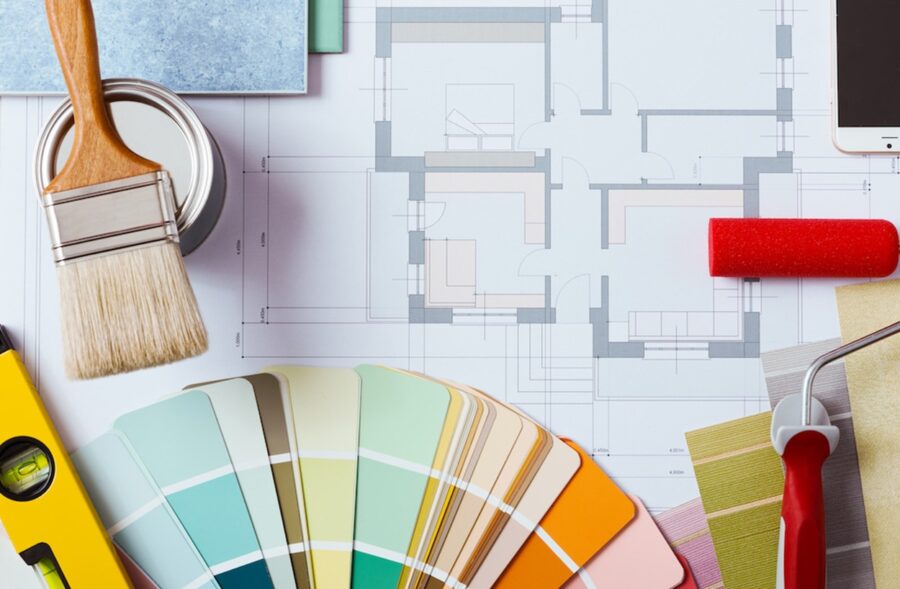
    Interior design is a creative field of designing and completing a space reflecting individuality. It amalgamates all minor elements to make it a whole from the parts. Color is known to be one of the most important elements that require special attention and time from the designers. The selection of the right colors in interior design is of utmost importance as per the need and to create a mood for the designed scheme.

    Color can make a person feel warm and calm while on the contrary, it can make them feel deprived and depressed, it all depends on the selection of color based on personality, need, and function of the space. 
    Colors in Interior Design

    Importance of Color

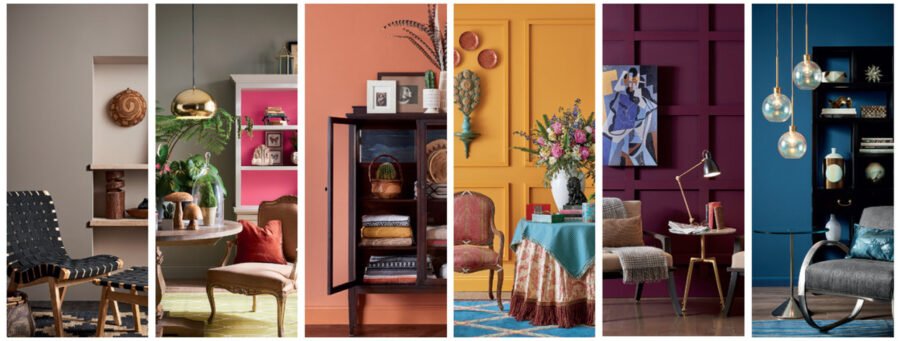
    Colors not only make a space look captivating but also affects our mood. Every color has its role to play in each varying functional space. All colors and their meaning vary as the nature and function of the space varies. Colors also tend to change the size of the space, making it look smaller or bigger based on the selection. It can make volume look bigger or smaller.  

    Color can change the perception of space. The height, breadth, and length could be perceived differently than usual. Colors are indeed inseparable elements of human life. Since ancient times, colors have had their significant importance from the culture to the mental well-being of humans. 

    Natural light also plays a role in the perception of space with colors. For instance, as in tropical regions of the world, the morning and evening light is soft and gentle, while the midday light is bright and slightly harsh. While south-facing rooms get light all day and are constantly changing, they do not receive natural light from the sun until the middle of the day when it becomes unpleasant. The warm light of the rising and setting sun is present in both East and West. Ideally, south-facing rooms should have light, cold colors, whereas north-facing rooms should have warmer hues.

    Role of Different Colors in Interior Design

    The more the color is brighter it adds energy to the space while the more color is subtle and light it will make a space feel calmer. So, it is obvious for a healing environment has subtle and light colors as it creates a relaxing environment. 

    Here, with some of the most used colors and the way that colors affect humans, 

    Red

    Red is the most vibrant color associated with human emotions like joy, love, passion, energy, courage, danger, and hunger at last. Red, represents anger and revenge, however; it balances with its tints and shades, with tints being calming while shades with productivity.

    Although, the red color has also significant cultural importance.  In Indian culture, color is associated with purity, representing power, vitality, and creativity. While in Chinese culture, red is the luckiest color and purest color. It is regarded as auspicious color. 

    colors

    Blue

    Blue is one of the most calming colors on the palette. With psychological considerations, blue relaxes the mind and tends to slow the heart rate, metabolism, and blood pressure too. The human emotions associated with the color are calmness, intelligence, prosperity, and health. 

    In Eastern cultures, blue is associated with paradise, immortality, and spirituality. And in Hinduism, the hue is connected to Krishna, who personifies pure love and joy. Latin American cultures, which have a sizable Catholic population, also connect the color blue to religion because it is the hue of the Virgin Mary’s cloak.

    Yellow

    Yellow is indeed regarded as the most energetic color on the palette. Yellow is a color that represents joy, optimism, and inventiveness. It may increase mental activity and support a cheerful disposition. Yellow is frequently used to draw attention or convey warmth. On the other hand, too much yellow can be overwhelming and induce anxiety. 

    Yellow color is associated with purity for Hindus. While for Egypt and Latin America, it is linked to death and mourning. 

    Green
    green

    Green is frequently linked to harmony, balance, and nature. It is regarded as calming and revitalizing. Green can also represent rebirth, fertility, and expansion. It is frequently utilized in environments or to promote relaxation. Green, though, can occasionally be connected to resentment or inexperience.

    The color is of rebirth and prosperity in many cultures. Green is scared color in many cultures. 

    White

    White is thought to represent innocence, simplicity, and purity. It could give off an air of sterility and cleanliness. White is frequently used to imply neutrality or space. However, it can also be interpreted in some situations as being icy or sterile. White is universal neutralizer color. Currently, different shades of white are trending, also it can be paired with any color creating an impactful space and environment which is both calm and energetic. 

    Black

    Black is one of the most powerful colors and is often associated with power, elegance, and sophistication. It can evoke a sense of mystery and authority. Also, it indicates simplicity and functionality. In particular, the kitchen, living room, dining room, and bathroom benefit greatly from the use of the color black in interior design. With this color scheme, the form accommodates function and follows current trends in a simple design.

    However, in some cultures, black can also be associated with sadness or mourning, so its interpretation can vary.

    Colors in Interior Design 
    Image Source 

    Impact of Color on Space

    The use of color in the space makes it feel large or small depending on the use of warm or cool colors, tints, and shades. A variety of useful effects can be produced through the thoughtful application of warm and cool hues as well as light and dark tones.  Large areas can be made to feel less vast by using warm, advancing colors and high color contrasts, whereas small spaces can be made to feel more spacious by using cool, receding colors with low contrast between them. 

    A high ceiling can be made to appear lower by using advancing colors, while a high ceiling can be made to appear higher by using receding colors on the uppermost portion of the wall.  Using progressing colors on the small walls of long, narrow areas can help them feel less like a corridor.

  • 10 Most Anticipated Architecture Projects of 2022 That Are Worth Waiting For

    10 Most Anticipated Architecture Projects of 2022 That Are Worth Waiting For

    Introduction 

    As the new year begins, with some trepidation but also a fresh supply of hope as, architects, designers, and the public are expecting exciting new projects and have become a means of looking forward to 2022. These projects are situated across various continents with a blend of cultural and commercial programs, with many of these projects have been under construction for multiple years. 

    These upcoming architecture projects promise to provide a new concept for overcoming the carve of how we can all gain life together, enjoy the exhilarating public spaces, and have human interactions in a way so that people can gather freely again. Designed throughout an array of scales, they correspond to an amalgamation of interconnected landscapes, museums, and new skyscrapers.  

    Several projects opening this year have had construction timelines shaped by resource availability and labor issues related to the global pandemic. Numerous projects have shifted forward swiftly, and their construction showcases the range of building conditions around the world. They have been drawn from different climates and material advances, reflect design, and construction across a global lens. 

    10 Most Anticipated Architecture Projects of 2022

    Abrahamic Family House by Adjaye Associates 

    The Abrahamic Family House is a collection of three religious’ spaces: a mosque, a synagogue, and a church, every one of which will rest upon a secular visitor pavilion. The building will serve as a society for inter-religious interaction and exchange to nurture the beliefs of peaceful co-existence and acquiescence amongst diverse cultures, beliefs, and nationalities. 

    In the Abrahamic Family House houses of worship, visitors would have a unique opportunity to observe religious services, listen to holy scripture, and experience the essence of sacred rituals. The fourth space is not associated with any specific religion, but will serve as a center for all people of faith to come together in unity. The community will also help extend education and events associated with training.

    Sao Paulo Rosewood Tower by Jean Novel 

    Jean Nouvel and his team designed a new 90-meter-high hotel tower next to the ancient complex, which will showcase a latticed Corten-steel facade. The facade and terraces running around the Rosewood Tower building will have plants and trees planted around the staggered path connecting the previous hospital building to the tower.

    Rosewood Tower will operate in varied uses ranging from cultural and tourist complex, including 275 guest rooms between Nouvel’s new building and the former hospital, apartments, two restaurants, a bar, a caviar lounge, three swimming pools, and a spa, designed to be a vertical continuation of the local landscape.

    Valley by MRDV

    Valley
    Source

    MVRDV has broken ground on “Valley” also known as P15 Ravel Plaza, a 75,000-square-meter multiple-use building located inside the Zuidas business district of Amsterdam. The structure will infuse a sense of soul and excitement into the neighborhood, renovating the district into a further varied and accommodating urban quarter, highlighting residential units, offices, parking, a sky bar, and retail and cultural space.

    Valley is due to open in 2022, one year later than expected, because of the ongoing pandemic. Valley is accommodated with 200 apartments and spaces for workplaces, shops, restaurants, and bars. The building additionally integrates a “green layer”, along with 13,000 plants, trees, and shrubs have been planted by landscape designer Piet Oudolf. This aspect of planting and maintaining will be preserved by automatic irrigation systems and a team of gardeners.

    Istanbul Modern by RPBW

    The Istanbul Modern Museum in the historic Beyoğlu district of Istanbul is located on the riverside of the western bank of the Bosphorus Strait, in front of the Sultanahmet quarter. The Istanbul Modern Museum is designed by Renzo Piano Building Workshop, architects in collaboration with Arup Istanbul.

    Istanbul Modern will replace the existing structure which is currently between the old city streets of the Galata quarter and the present port cruise terminal. The new museum will become an urban pivotal point between the old town to the west with the Bosphorus to the south, the Tophane Park to the north, and the latest Galataport waterside progress to the east, which will substitute the old pier pursuit. The Istanbul Modern project enriches the connectivity among these distinct areas and becomes a social and cultural destination.

    3D Printed Homes by BIG 

    The well-known home developing company Lennar and construction technologies company ICON have collaborated with BIG (Bjarke Ingels Group) to build the biggest community of 3D-printed homes to date. The 100-home neighborhood in Austin is anticipated to break ground in 2022 and will combine ICON’s pioneering robotics, software, and sophisticated materials with BIG’s designs. 

    The 3D Printed Homes project comes from labor and material shortages, which have made homeownership hard to achieve for many American families, with approximately 5.5 million deficiencies of single-family homes across the country.

    Taipei Performing Arts Canter by OMA

    OMA’s Taipei Performing Arts Center (TPAC) is an almost completed project in Taiwan. OMA’s Taipei Performing Arts Center comprises three theaters, every one functioning autonomously from the other, the OMA scheme pursues to deviate from the traditional consensus of performing arts centers as merely including a large auditorium, medium-sized theater, and small-size black box. The OMA’s Taipei Performing Arts Center compacts a unique form that allows for numerous facades defined by the specific theater protruding from the central cube.

    Bezalel Academy by SANAA

    SANAA’s new campus for the Bezalel Academy of Arts and Design in Jerusalem is currently ready for a grand opening in 2022. Bezalel Academy was primarily planned in 2013 as a new project for Israel’s national school of art that broke ground back in 2015. The Bezalel Academy campus is in the process of construction in the Russian Compound in Jerusalem’s City Center. The design will bring about 2,500 students and 500 faculty members as the school shifts from the current Mount Scopus Campus.

    Studio City by ZHA

    Studio City resort is in the Cotai district of Macau next to the Lotus Bridge crossing with mainland China. The Hollywood-inspired Studio City resort has greeted guests and visitors to the city since 2015. Zaha Hadid Architects designed Studio City Phase 2 with new leisure, entertainment, and hospitality facilities in 2017 to expand the resort. Studio City Phase 2 includes one of Asia’s largest indoor & outdoor water parks and a six-screen Cineplex together with a massive conference and exhibition space.

    Studio City by ZHA has a graduating glass facade, its vertical form evokes natural columns of basalt rock. Studio City is climate-responsive with vertically insulated glazing units and shielding fins that asset to reduce solar heat gain and glare while sustaining thermal comfort for hotel guests. The high-performance building envelope, together with highly efficient services and systems, would help decrease energy demand and make the structure more sustainable.

    Xi’an International Football Centre by Zaha Hadid Architects

    The new Xi’an International Football Centre for the Asian Football Confederation (AFC) Asian Cup Zaha Hadid Architects. The facility includes a stadium with a 60,000-seat capacity, along with civic sports and recreational spaces. Providing optimum conditions for football, the Xi’an International Football Center was also designed in a way to maximize its use by future generations after the 2023 tournament, including a sequence of shaded south-facing garden terraces that provide a view over the city to Qing Mountain.

    Xi’an International Football Centre is integrated within an orthogonal urban grid of the city’s Guangdong new district. Zaha Hadid Architects created open facades to create a welcoming feeling for the city. The sweeping lines of the facades themselves further shield the building from northerly winds, with vast planting on all the floors. Xi’an International Football Centre is designed in such a way that visitors can appreciate its public spaces, creation, and dining amenities throughout the day and during matches and other events.

    Hekla Tower by Ateliers Jean Nouvel

    Jean Nouvel designed the 220-meter-tall tower, Hekla Tower in Paris’ major business district, La Défense. Jean Nouvel d the owner of the French practice have a thirty-year-long relationship with the area of La Défense, that dates to 1982. Hekla would comprise 47 floors and comprise office space, private residential units, and student accommodation.

    The site will become an entirely new space like no other upon completion as the 80,000m² towers are going to vividly change the skyline of La Défense. Hekla Tower will also present the largest green space in the area, connecting the business region to the adjacent town of Puteaux. The ambitious skyscraper’s exterior is constructed using a complex system of triangular panels laid at different angles that make up the facade and external skin of it. 

    This facade system gives the tower the look of a mineral that grew right out of the earth’s core. The top-end of the tower is left open, giving capacity to a roof garden partially shaded by the triangular panels that also provide space for natural tree growth.

    Conclusion

    Despite starting with another pandemic wave, 2022 is shaping up to be a tremendous year in the architecture realm, with a slew of major projects coming to fruition. There are also new designs by other Pritzker-Prize winners, amongst them SANAA, Rem Koolhaas, and Thom Mayne as well as pioneering structures by scorching talents like Bjarke Ingels, Jeanne Gang, and David Adjaye. 

    The upcoming projects have one thing in common that is they deliver the much-needed shot of inspiration. These structures have thoughtfully incorporated sustainable and economical ways to save energy as climate-responsive HVAC systems, microclimate-stimulated facades, etc. These projects also propose innovative ways to treat nature more responsibly and expand the need for the buildings in the future.

  • Colors in Architecture: 7 Architects Famous For The Use of Colors

    Colors in Architecture: 7 Architects Famous For The Use of Colors

    Introduction 

    Colors have been a vital element in our world, both in nature and in man-made architectural structures. Color always played an important role in human evolution, to help in developing feelings and emotions. Color in architecture helps create a perception of the general environment of the space. Our brain has a way to process and judge the emotional purpose of the type of space that is being portrayed.

    There are many renowned Architects and astonishing architectural structures all over the world known for their vivid and bold use of color, attracting people and triggering various emotions in them, and helping them experience and feel them.

    Importance of Colors in Architecture

    Colors
    Source

    Color is a sensory experience; hence, its influences are very emblematic, associatory, synesthetic, and emotional. The body and mind are a whole due to which neuropsychological aspects, psychosomatic effects, visual aspects, and color psychological effects are the factors of color in terms of design comfort.

    Color is incorporated into the designed considerations that demand adherence to take care of human psychological and physiological well-being within their artificial environment or structures created by humans. Differing from the use of colors, a building environment also can become under-stimulated or over-stimulated. Using color is an important factor only for humans psychologically, but is a way to create a statement all over the world.

    7 Architects who love using color in their designs 

    Antoni Gaudi 

    Casa Vicens

    The Casa Vicens, on 24 Carolines Street, was the first house designed by Spanish architect Antoni Gaudí. In 1883, Manel Vicens commissioned Antoni Gaudí to build as his summer home. Then known as Gràcia, now a cosmopolitan neighborhood, was a separate town. Colors were mostly drawn from nature, mythology, religion, and the culture of Barcelona. Antoni Gaudí’s remarkable use of colors like blue, red, white, green, yellow, etc. is clear in the polychromatic tile, brick, and stonework in projects.

    Casa Batlló

    Casa Batlló is a structure in the center of Barcelona. It was designed by Antoni Gaudí and is believed to be one of his masterpieces. Antoni Gaudí explored fluid shapes, patterns, and colors in the Casa Batlló, designed for the wealthy cotton tycoon Josep Batlló as a jolting contradiction to the rigid forms around it. Gaudi redesigned a remodel of a formerly built house in 1904 by Gaudí and had been refurbished numerous times after that. Domènec Sugrañes, Josep Canaleta and Joan Rubió, Gaudí’s assistants who also helped with the renovation of Casa Batlló.

    The concept was drawn from Antoni Gaudí’s blend of animal shapes, curves of the vines, traces of bone and skeleton, and his use of lustrous colored bits of glazed ceramic of warmer colors like white, yellow, orange, and red and glass to produce a masterpiece. 

    Theo van Doesburg

    Café l’Aubette

    Theo van Doesburg was a self-educated artist and architect who was one of the major proponents of De Stijl. Theo van Doesburg used his concepts about bold colors with dynamism in the spaces that were designed in collaboration. The De Stijl movement commenced by an association of painters, sculptors, artists, and architects in the Netherlands in 1917. The Beaux art school dominated Western design in the 19th century, rejecting the decorative and spatial belief, participants of the movement instead advocated for the relative purity of abstraction. 

    Using several surfaces and planes in the space helped Theo van Doesburg to work with distinct tones, contrasting faces, horizontal and vertical components, and geometry. Especially the use of bold primary colors that became a statement in terms of abstraction and purity.

    Luis Barragán 

    Casa Gilardi 

    casa gilardi
    Source

    This Casa Gilardi was designed just like a house, enhancing the facades, and adding natural elements like light and water. The dark, bold Mexican hues of red, blue, and yellow convey the cultural respect Luis Barragán has for his works. Casa Gilardi was constructed around an existing tree and was strongly influenced by painters; this was one of their most colorful works of his.

    Luis Barragán has worked along a lot of contemporary concepts and kept in mind the environmental considerations. The colors, textures, compositional components are a result of Mexican culture. The inspiration of painters such as Diego Rivera and Frida Kahlo, but particularly in this house.

    Peter Cook

    Departments Of Law and Central Administration

    Peter Cook of Robotham Architectural Bureau has won the inauguration Colour Prize at World Architecture Festival 2014 for its Departments of Law and Central Administration, Vienna University of Economics and Business project in Austria. The award then was first of its kind, the only criterion for the use of color as an essential part of the exterior of the design.

    The Departments of Law and Central Administration has given a boost in the trend of using color, helping to add push for the recently launched Human Cities initiative, where color plays as one of its main design elements. Colour Futures emphasizes AkzoNobel’s wealth of color proficiency and profound understanding of the evolutionary power of color.

    Ricardo Bofill

    La Muralla Roja

    La Muralla Roja, Spanish for ‘The Red Wall,’ is a housing project in La Manzanera in Spain’s Calpe. The project makes strong references to the famous architecture of the Arab Mediterranean Area because the architects inspire the Mediterranean tradition of the casbah. The striking red color that completely washes the outer and inner facades was selected to appreciate contrast with nature and balance its purity.

    colors
    Source

    Kafka Castle

    El Castillo de Kafka is an iconic complex of 90 apartments in Sant Pere de Ribes, near Sitges in Catalonia, Spain. It was designed by Ricardo Bofill Taller de Arquitectura and was completed in 1968. Ricardo Bofill, a Spanish Postmodern architect, was known for apartment buildings as memorable as well as thought-provoking. El Castillo de Kafka is a swelling mass of purple cubes and mind-baffling angles, boldness, and a refreshing break from any standard or global tradition. 

    Michael Graves 

    coletta
    Source

    St. Coletta was founded in 1959 by a couple with a child diagnosed with Down Syndrome. The couple had to deal with the struggle to find a proper educational system that worked for their child. Hence, they opted to establish the school as a special education environment that helped to service and educate children with severe or multiple disabilities. The use of bright colors and simple forms by Michael Graves makes it very comfortable and fitting for the children that are going to use the building, as it is exciting, lively, and appealing.

    Few examples of a few colorful structures 

    Kuggen Building by Wingårdh Arkitektkontor

    Kuggen building is owned by a real estate company, Chalmersfastigheter, for the Chalmers University of Technology in Gothenburg, Sweden, designed by Wingårdh Arkitekt Kontor. Kuggen, in Swedish, means cogwheel similarly the building is cylindrical, a distinctive structure with rotating exteriors, in the middle of the town square is an urban planning pattern with roots in the Italian Renaissance.

    A rotating screen shades the top floors are brocade of glazed terracotta panels of vivid colors, takes on different appearances differing for different viewing angles which also change according to daylight conditions. The red colors refer to the industrial paint that was strongly associated with the wharves and the harbor. There is also a contrasting green patch influenced by an autumn leaf. These details change the building’s aura from one side to another, and over the day.

    BioMuseo by Frank Gehry

    Biomuseo is a museum concentrating on the natural history of Panama, whose bridge was formed currently in geologic time, with the major influence being on the ecology of the Western Hemisphere. Biomuseo is on the Amador Causeway in Panama City, Panama, it was designed by renowned architect Frank Gehry.

    The Biomuseo aimed to offer an impressive and informative experience regarding the biodiversity and emergence of the isthmus in Panama to encourage all Panamanians to learn and value this natural component of their identity. Hence, the vivid use of colors was incorporated into the design to attract international attention.

    Santa Monica Civic Parking Garage by Moore Ruble Yudell Architects & Planners

    civic gateway
    Source 

    A Civic Gateway completed a Master Plan for the Civic Center in Santa Monica, where California defined a new civic gateway at Fourth Street and the new Olympic Drive to the latest district that comprises the renovated historic City Hall and Courthouse and the new Public Safety Building.

    The Santa Monica Civic Parking structure is the first LEED® certified building in the United States. Monica Civic Parking has photovoltaic panels on the roof, east and west facades help provide for most of the building’s energy requirements. The design uses components such as canopies and photovoltaic panels to assist with self-shading panels to reduce heat spots.

    Netherlands Institute for Sound and Vision by Willem Jan Neutelings and Michiel Riedijk

    The Netherlands Institute for Sound and Vision was devised as an ideal cube, where half of it seems to be buried underground. Netherlands Institute for Sound and Vision residences broadcasting documents, offices, and a museum, creating it a cultural attraction for the city of Hilversum. The Netherlands Institute for Sound and Vision is a structure wrapped in a skin of colorful cast-glass panels with a mixture of bold and vibrant colors.

    Conclusion 

    Color has always played an important role or is said to be one of the key elements of designing. Applying colors in design not only helps to make a statement but has various other benefits as it helps to define depths and meaning in structure. Use of color to mold a dynamic surrounding, especially in terms of urban planning and designing. 

    Using colors in architecture also displays its cultural significance in the geographical location. Colors, textures, materials help make architectural features more prominent and beautiful. Color used also helps to experiment with new materials as well as elements to create various textures, illusions, and emphasis in a structure. Architects and designers are now breaking the traditional norms and use of colors, making bolder choices to make an impact.