
Tag: inclusive design

  • Innovative designs for the Blind

    Innovative designs for the Blind

    Introduction 

    Architecture typically connects with beautiful images and attractive aesthetics. Although many people have this broad belief, architecture should engage all the senses and produce experiences that anyone can enjoy.

    After reading “Architecture for the Blind,” what comes to mind? spaces with elements that heighten one’s tactile and audio senses Yes, essentially. Materials, acoustics, and buildings that have been specifically created for people with visual impairments are all given top priority. Since people with vision impairment may still perceive some colors and light, creating barrier-free settings and increasing natural illumination seem instinctive. To enhance the impact of smell throughout the building, some architects have even included fragrance in their designs.

    Techniques and Strategies

    1. Audio Navigation: Audio navigation is a popular technique for blind design. This technique uses audio cues to guide individuals with visual impairments through a building or structure. Audio navigation can be integrated into elevators, doorways, and hallways to help individuals navigate more efficiently and safely.

    2. Braille Signage: Braille signage is a crucial element in the design of blinds. It provides essential information about the environment, such as room numbers, directions, and existence. Braille signage should be placed at a convenient height and in an easily accessible location for individuals with visual impairments.

    3. Tactile Pathways: Tactile pathways are a series of raised elements or textures that individuals with visual impairments can feel with their feet to navigate through a building or structure. These pathways are usually placed near exits or important areas to help individuals with visual impairments find their way around. 

    4. High Contrast Colors: High contrast is used to make essential information and objects more visible to individuals with visual impairments. For example, doorways and handrails can be painted in a bright, contrasting color to make them easier to see and use. 

    5. Natural Lighting: Natural lighting is important in the design of blinds because it helps individuals with visual impairments better understand the environment around them. Large windows, skylights, and other sources of natural light can be used to improve visibility and create a more welcoming and accessible environment. 

    Architects play a crucial role in creating accessible and inclusive spaces for individuals with visual impairments. By incorporating these design for blinds techniques and strategies, architects can help ensure that all individuals can move safely and easily through a building or structure, regardless of their level of vision.

    Examples

    House for a Blind Inhabitant(MAC House) by So and So Studio

    To guide the user utilizing a system of an integrated map, the project used glyphic language on the ground. The rooms were arranged around a central hallway to provide effective traffic flow and reduce the labyrinth effect. We immediately collaborated with the client to plan out her daily routine and normal journey throughout her home. This made sure that the house was organized logically and made it easier for her to switch between her two homes, the old and the new, for everyday tasks. The house map created by So & So Studio included a node for each regular use or activity.
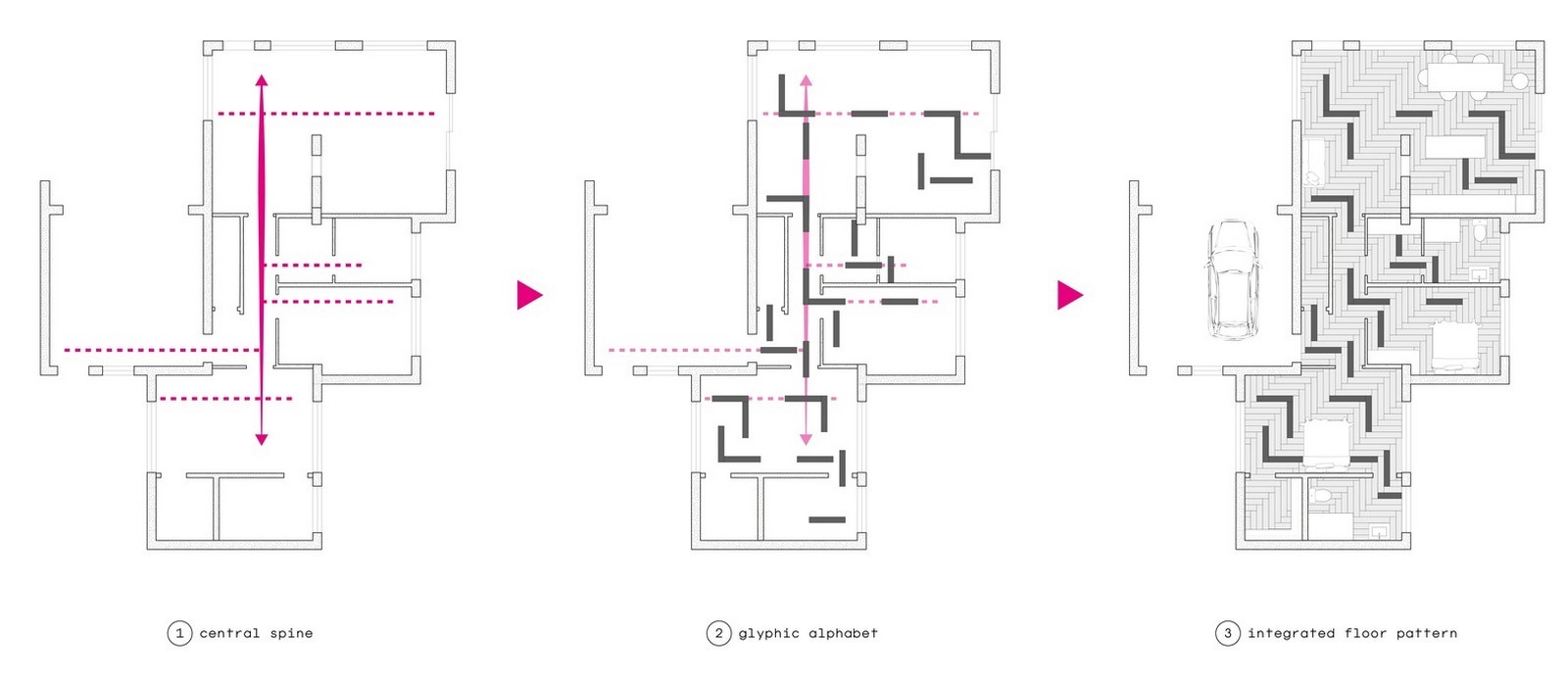
    Photo of concept and design development
    Photo of concept and design development from Archdaily  

    The lighthouse for the blind and visually impaired, San Francisco

    The LightHouse for the Blind and Visually Impaired, a 114-year-old social services organisation in the forefront of educating people with limited vision, contacted Mark Cavagnero Associates for their new endeavour in San Francisco. The rooms contain a Braille training room, a storefront, a multipurpose area, and offices. Three key factors were taken into consideration when creating this facility for the blind: materials, acoustics, and lighting! 

    Actually, 90% of persons who are blind or partially sighted do have some vision, which can be affected by bright lighting and glare. In light of this, neutral colours are preferred over bright ones, as well as gentle light with the least amount of brightness. Polished concrete makes up the public spaces, and metal transition strips are employed to demarcate the spaces and make them easier to interpret. Acoustical treatments like lowering the mechanical sounds and boosting the positive sounds, such the sounds of walking, are suggested because sound is the most active sensory element.
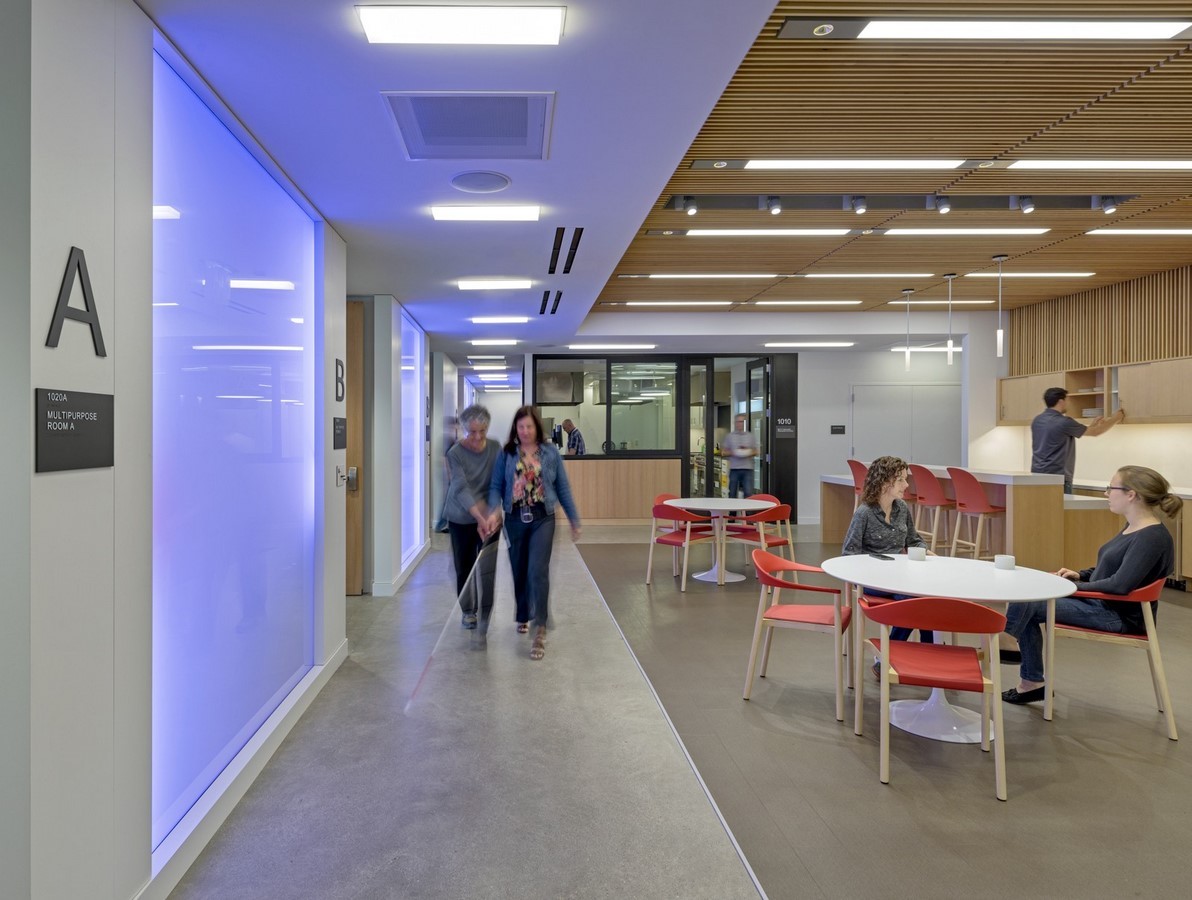
    The  blend of materials and acoustical features to help the visually impaired from re-thinkingthefuture
    The  blend of materials and acoustical features to help the visually impaired from re-thinkingthefuture 

    Anchor center for blind children, Denver, USA

    The Anchor centre for blind children, built by Davis Partnership in Denver, has a design that incorporates all five senses to produce a “touch-friendly” structure. It is a 15,000 square foot instructional facility. This one-story centre was built for visually challenged babies and preschoolers and features classroom pods with Braille-inspired stonework that creates an excellent play of light and shadow. The classrooms are arranged along a central spine, with heavenly windows beneath the sloped roofs providing northern light penetrations. The interiors are designed using colour theory, and wall sconces, skylights, and door lights all play with rose, blue, and yellow finishes.

    Friendship Park/Marcelo Roux+ Gaston Cuna

    Children and youth of all physical and mental capacities are welcome to join in recreational activities in Friendship Park, a public area designed for their growth. It was the first park in the nation to have facilities that were completely accessible, and it is situated in Montevideo’s Villa Dolores Park right near to the Municipal Planetarium.The commission was created with the goal of creating a public space where anyone can play, learn, and collaborate without boundaries in a free area measuring 70 by 50 metres.

    It denotes the culmination of the city of Montevideo’s “Commitment to Accessibility” program’s process of transforming public places.The building regulations’ criteria for complete accessibility in the park’s design were developed from their positive contingencies, avoiding the assumption that accessibility is resolved with a restrictive design.
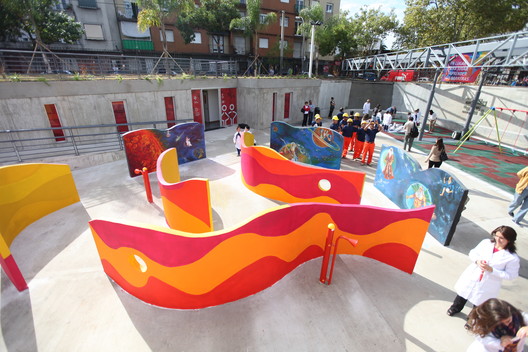
    Commitment to Accessibility
    Commitment to Accessibility  from Archdaily

    An inclined plane, a hemisphere (the municipal planetarium that architect Juan A. Scasso envisioned for the area in the middle of the 20th century), a cylinder (the observatory), and a background of green dots outline the conditions of the intervention area (vegetation to preserve).The site’s particular characteristics and the demands for a universal access area influenced the project’s formal, geometrical, spatial, and lyrical design.

    A broad horizontal platform that is determined by the project strategy is created by reshaping the already tilted plane.

    The park is an enclosed space, the result of a geometric pattern of curves and reverse curves that avoid abrupt corners and go around existing plant species. In accordance with the needed programme, it creates a surface that can support various pools and includes a covered space with universal restrooms and a workshop for the creation of virtual reality activities.
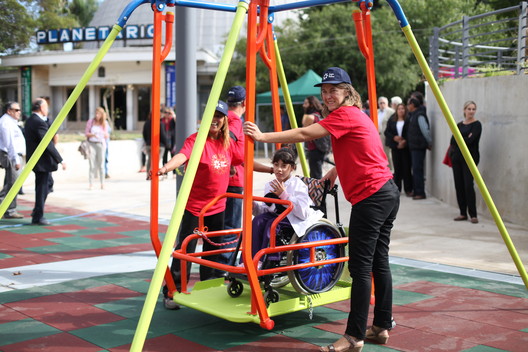
    universal design
    Universal Design  from Archdaily

    The park is shielded from traffic noise and the urban perimeter’s dynamic by the difference in elevation between the park and the street and side avenue. A variety of plants were chosen to fill the space between the park and the streets like a garden, adding colour and fragrance to the act of play. The need for a welcoming setting compelled us to design the park using the senses and their potential. To do this, we chose tools that improve the sensory experiences of touch, sound, and smell. We chose concrete, metal, and rubber as the three main components.

    The park is divided into six distinct parts, each of which is filled with amusing equipment, furnishings, and amenities-

    1. Games for children ages 0 to 3 are available in the children’s corner.
    2.  Roll and turn: different hammocks and a carousel for the development of psychomotor skills.
    3. Water: designed for reflection, with pre-programmed noises and games.
    4. Labyrinth: is a game that combines touch and communication components.
    5. Amphitheater: a venue for gatherings and the planning of group activities.
    6. Technology: a location having amenities and resources for the growth of the digital and virtual worlds.
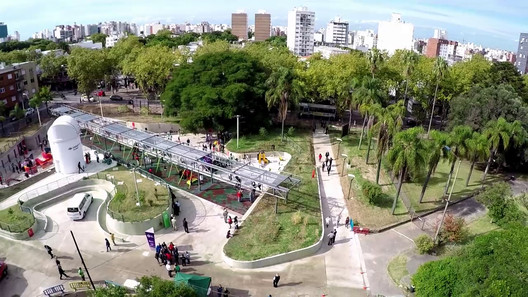
    Aerial View
    Aerial View from Archdaily

    Conclusion

    Architects have a significant responsibility to create buildings and spaces that are inclusive and accessible to all people, including those with visual impairments. These are several key considerations that architects must take into account when designing for the blind.

    The designers must ensure that building spaces are accessible and safe. This means creating clear paths of travel that are free of obstructions and using contrasting colors and textures to highlight changes in level or to distinguish between different surfaces. This will help people with visual impairments to navigate the space more easily and reduce the risks of falls or other accidents. 

    The sensory experience of individuals with visual impairments. For example, the use of texture, patterns, and other sensory elements can help to create a rich and engaging environment that can be enjoyed even by those who cannot see.

    In conclusion, designing for the blind requires a holistic approach that considers the physical, sensory, and social needs of individuals with visual impairments. By taking these factors into account, architects can create buildings and spaces that are inclusive, safe, and functional for everyone, regardless of their ability to see. The ultimate goal is to create environments that support and enhance the lives of individuals with visual impairments, and also to promote greater accessibility and inclusiveness for all.

  • Universal Design: An Important Need Of the Hour

    Universal Design: An Important Need Of the Hour

    Overview

    Disability is not a phenomenon, but a phase. At some point in life, a person comes across this phase. It may be temporary or permanent. It can be in any form; for example, the elderly, ill, pregnant, obese, children, persons with fractures, or luggage. Universal Design is one such single solution to several problems regarding different designs for a differently abled person. It refers to a design that is accessible to people of all genders, sizes, ages, and disabilities. 

    The goal of universal design is design equality. Nowadays, accessibility for all is recognized as a basic necessity. Throughout the world, it is being realized that there need not be an exclusive design effort to suit the need of people with differences. It appears that creating an inclusive and sustainable environment is the order of the day. 

    From color choices to room arrangement and allocation, inclusive design takes into account all of these elements and more to create a space that is accessible to everyone. 

    Principles of Universal Design

    Equitable use: All users should have equal access to the same resources, and there should be no stigmatization.

    Flexibility in use: Allowing users to choose from a variety of techniques of use and adapt to their change in requirements.

    Simple and intuitive use: Conformance to the user’s expectations and intuition, as well as the removal of needless complications.

    Perceptible information: Regardless of the user’s sensory capacities or the environmental conditions, the design should communicate the relevant information.

    Tolerance for error: Minimizing the chance of errors by properly designing spaces.

    Low physical effort: Space must be designed such that users can access the space with minimum fatigue.

    Size and space for approach and use: Regardless of the user’s body size, posture, or mobility, adequate size, and space are provided.

    Design Standards

    Universal design
    Universal Design: Creating Spaces and Places for All

    Design standards for various building uses have been defined by design authorities around the world. Global Universal Design Commission – GUDC and the Centre for Excellence in Universal Design (CEUD) are some such institutions. These authorities provide standards for designing various facilities that enable specially-abled people to access those facilities easily.

    Human Abilities and Design

    The primary aim of universal design is to create a physical environment that benefits the user and improves his physical and psychological state. The physical, sensory, and mental capacities differ from person to person and as they age. It is natural for people to be different. Designers must be aware of differences in human capacities and the design issues that go along with them.

    Universal Design: An Important Need Of the Hour Disability is not a phenomenon, but a phase. At some point in life, a person comes across this phase. It may be temporary or permanent. It can be in any form; for example, the elderly, ill, pregnant, obese, children, persons with fractures, or luggage. Universal Design is one such single solution to several problems regarding different designs for a differently abled person. It refers to a design that is accessible to people of all genders, sizes, ages, and disabilities. 
    Senses and Universal design

    Sensory

    The primary purpose of our senses is to allow us to perceive the world around us. Our eyes see it, ears hear it, noses smell it, and mouths taste it. These senses, together with a few others, give us the vast majority of our knowledge of the world. This happens when we first walk into a new environment and begin to notice, acknowledge, and analyze it.

    Physical

    This includes walking, balance, pulling, and pushing. Physical strength and stamina may also affect the abilities of people to perform these actions.

    Cognitive

    Cognition, intellect, interpretation, learning, and memory are all mental capacities. People differ in their knowledge, as well as their ability to comprehend, reason, and analyze the environment. Designing for variances in these capacities helps in the formation of a usable environment for the general public, ranging from the very young to the elderly, as well as a differently-abled person.

    Age and size

    Individual components should be as safe and age-appropriate as possible. From children to adults, the population has a wide range of sizes and heights. The heights of construction elements such as steps, as well as the placement of components, should take into account the diversity of heights.

    Building Use

    Universal Design: An Important Need Of the Hour Disability is not a phenomenon, but a phase. At some point in life, a person comes across this phase. It may be temporary or permanent. It can be in any form; for example, the elderly, ill, pregnant, obese, children, persons with fractures, or luggage. Universal Design is one such single solution to several problems regarding different designs for a differently abled person. It refers to a design that is accessible to people of all genders, sizes, ages, and disabilities. 

    Each building has a specific function or range of functions, and its design must ensure that people working in or visiting the building can access and use its facilities. Some buildings or parts of buildings, such as shops and offices, have only one specific function and generally must meet the criteria related to these types of buildings. However, other buildings, especially larger, multipurpose buildings such as community rooms, require designers and developers to think more creatively so that the use of the buildings can be easily adjusted. Multipurpose buildings may require a careful interpretation and the application of extensive design guidelines to ensure they are flexible in use, yet still convenient and accessible to all.

    Residential

    The goal should be to build homes that are easily adaptable to accommodate the changing demands of residents over time in all new housing. It provides everyone more options in terms of where they live and allows them to stay in their own houses as their requirements change.

    Apartments

    The design of apartments should facilitate the movement for everyone, and allow people using wheelchairs, walkers, and strollers to easily pass through doors and make 360-degree turns in each room, corridor, and lobby or corridor area. One or more passenger elevators, or preferably evacuation elevators, should be installed in public areas of apartment buildings with three or more floors so that each resident and visitor can easily enter each floor.

    The elevator must serve all floors, including the underground parking lot and the floor that contains public facilities such as laundry rooms. In a multi-story apartment building, it is best to provide over one elevator so that can be easily accessed when the elevator is out of service because of a malfunction or routine maintenance.

    Individual Houses

    Universal design in individual houses is building a house with functions that all users can use equally. For example, the entrance to a residence has a sloping concrete walkway that leads to a front door with barrier-free thresholds and a door large enough to accommodate a wheelchair. In the home, there are wide hallways and doors accessible to wheelchair users.

    The kitchen can have countertops of different heights, folding cabinet shelves, and roll under sinks. The bathroom is large enough to spin a wheelchair, is equipped with a zero-entry or barrier-free roller shower, a roller washbasin, and an adjustable tilt mirror to accommodate seated and standing users.

    Commercial

    Offices

    All offices, whether they serve a public purpose or are only for private use, should be based on universal design so that individuals of all ages, sizes and disabilities can visit or work there.

    Hotels

    This section includes hotels, motels, hostels, guest houses, bed and breakfast establishments, and self-catering holiday properties. All of these buildings should be based on universal design and provide guests with a variety of options and flexibility. The availability of multiple bedrooms in many of these building types, particularly hotels, motels, hostels, and guest houses, allows them to cater to visitor demands and preferences. Interconnected rooms provide flexibility and are especially advantageous to people who want to stay together while maintaining some privacy, such as families, individuals with helpers, etc. Swimming pools, gyms, restaurants, bars, lounges, crèches, meeting and function spaces, and outdoor facilities such as gardens and terraces should all be accessible and available to guests.

    Retail

    This section includes a wide range of retail outlets, including small shops, supermarkets, shopping malls, and retail parks. All retail establishments and associated exterior areas should be universally designed to provide equal access to customers and full employment opportunities.

    Restaurants/Bars/Cafes

    This section includes customer areas at cafés and restaurants, snack bars, canteens, public bars, and lounges. All buildings should have a clear and logical layout with unobstructed access routes to allow for easy and independent access throughout. It is preferable in new structures for all spaces within a story to be at the same level. If a raised or sunken seating space is offered, the change in level should be served by a ramp and steps, and everyone should be able to reach it.

    Healthcare

    Low or no threshold entrances, low-height reception desk sections, and barrier-free emergency exits help create a comfortable and safe environment. Wide doors and corridors provide convenience for all users, improve air circulation and reduce the fatigue of medical staff. Ensuring physical accessibility in the health center helps avoid and reduces the stress and anxiety of visitors.

    Customers, visitors, and medical staff must be able to clearly understand where they are, how to reach specific units and offices, or where to find exits. To facilitate navigation, it is best to use color codes for different functional installations, and use colored arrows to mark the routes. The contrasting colors of walls, floors, doors, and furniture help people with vision problems. In addition, it attracts attention and prevents customers from falling and being injured. 

    Educational

    Universal design is about access and also about creating a more inclusive design and learning-friendly environment in study centers.

    Schools/Colleges

    Schools/Colleges built on the principles of universal design will be more effective because they allow children to learn, develop and participate, rather than create barriers to the development and participation of children, making them “disabled.” Space, light, types of materials, and even color will affect the way of experiencing education. Schools can make good use of these elements to create buildings and places that reflect the needs and desires of students and staff.

    Libraries

    The extent of the study area will depend on the nature of the facility, the number of people expected at any one time, and the type of files or artifacts being viewed. The table should have enough space on each side so that people can comfortably circulate and sit without disturbing others. In some cases, providing a height-adjustable, electric desk or workbench can be beneficial to the visitors and help facilitate the widest range of people.

    Public Realm

    Universal design makes public spaces attractive to everyone. Shared spaces are designed to attract users, whether it’s their local city hall, favorite park, or popular urban space. The universal design process can enhance any shared space design, focusing on key shared space design measures in high-traffic areas of your community. This includes considerations such as sidewalks, comfort zones, intersections, curbs, trails, etc.

    Museums/Galleries

    In many museums and visitor centers, interactive exhibits can effectively attract children and others. No matter where they are used, the buttons, switches, and handles should be easy to use for people of all ages and abilities.

    Many museums and art galleries, especially those located in historical buildings, involve long-distance travel between exhibits. In this case, information about the size and layout should be provided near the entrance so that visitors can plan the visit and have time to rest as and when needed. Providing a wheelchair on rent will help the specially-abled to access the venue comfortably. Regular seating should be provided in the corridor, including some seats with armrests.

    Parks

    Some parks focus on historical backgrounds, ecological habitats, or sports, while other parks provide more comprehensive recreational facilities. Providing a signage system or information on a common layout can help users to move comfortably in and around the parks. It is advisable to introduce visual and tactile elements, to warn the visually impaired, young children, differently-abled persons, or people with cognitive or learning difficulties.

    Historic Buildings and Sites

    The best and most appropriate way to make historic locations more accessible is through management solutions that may only require minor physical intervention or alteration of the historic fabric in some cases. Access strategies that are well-thought-out from the start can help to avoid unnecessary intervention and costs. When intervention is essential, thoughtful, compassionate, and well-designed solutions should be created and implemented by individuals with the requisite expertise and experience. One should consult people with disabilities, people of all abilities, local government access, and architectural conservation officers to develop appropriate solutions.

    Parking

    Parking lots must be barrier-free and easy to use, and they must provide sufficient parking spaces in a well-designed environment to meet the needs of all those who are expected to use them. Regardless of where parking facilities are provided, the needs of the following users must be considered: the car users, including parents and caregivers with young children, people who need to load and unload goods and purchases; people unable to travel far or transport goods over long distances, visually impaired people, people having a hearing impairment; and people using larger vehicles.

    Religious Buildings

    Everyone attending service or prayer; all religious officials, leaders, employees, and volunteers; and anyone visiting the site for secular activities or architectural interest should have complete access to and within all religious buildings. Providing space for wheelchairs and those using strollers and walkers throughout the seating area, or the flexibility of modifying the seating arrangement for each occasion will help the visitors access the space easily.

    Many historic churches and cathedrals include physical barriers, such as internal changes in level and raised altars, which are difficult to change due to the building’s historical significance. In many cases, though, taking a flexible approach in the arrangement of services will result in a better inclusive design. In buildings such as mosques and temples, people are used to standing, sitting, or kneeling on the ground to worship and pray.

    Consideration should also be given to people who are not able to do so. Seats must be in proper positions so that persons with physical or mobility impairments can fully participate. One possible arrangement for the new building is to provide a ramp for access to the sinking area in the prayer room. This makes the person sitting in the chair or using the wheelchair at the same height as the others when praying. All religious buildings, clubs, crematoriums, and cemetery churches shall have sanitary facilities that are based on universal design. Example: the provision of washing facilities in mosques.

    Future of Universal Design

    Universal Design offers an exciting and practical application to architectural research. Furthermore, it represents an intersection between accessibility, technology, and aesthetic appearance. It is ergonomic, efficient, inclusive, and multigenerational.