
Tag: indian cities

  • 7 Incredible Indian Cities that Architects Must Definitely Visit

    7 Incredible Indian Cities that Architects Must Definitely Visit

    India has been a hub for culture and heritage forever. Every part tells a different story, which inevitably binds you in a circle of astonishment. As architects, we have an eye for details, perspective, harmony, and all the other design principles. 

    Indian cities have their own share of mesmerizing beauty to explore. So, as Architects, we are bound to know more about these cities and gain a new perspective.

    Indian Cities for Architects To Visit

    Indian Cities: Ahmedabad

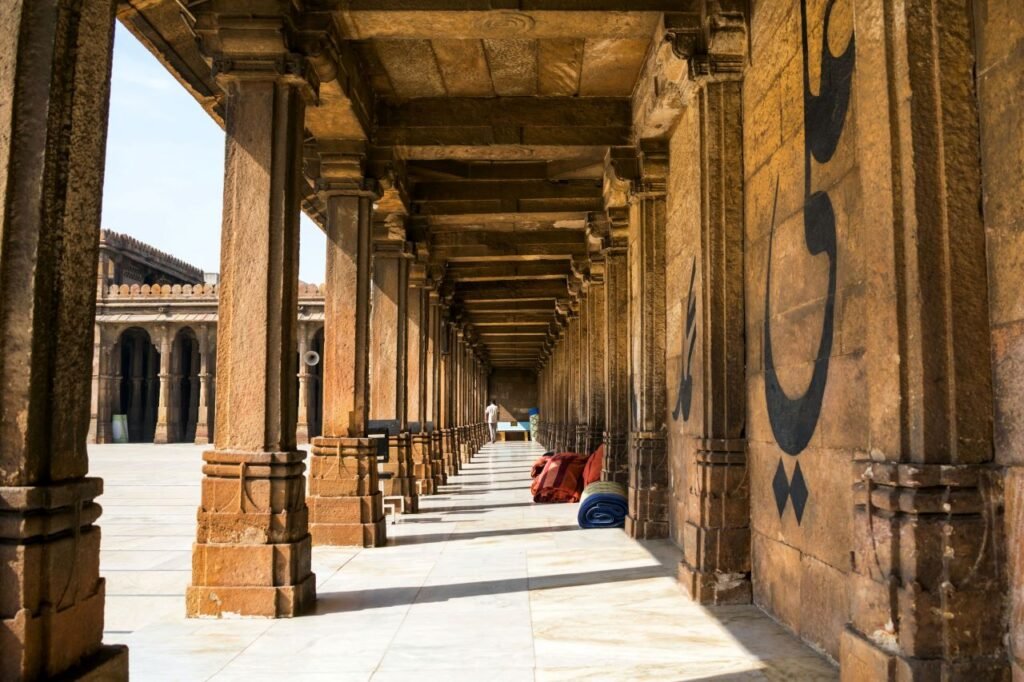
    The heritage of Ahmedabad is a mix of many cultures, each leaving a mark in terms of architecture in the form of bridges, temples, mosques, and others, each belonging to a different period. The architecture of Ahmedabad has evolved over centuries from Mughal architecture to British and Modern structures by famous Architects.

    The pols of Ahmedabad are close-knit community houses with shared spaces like courtyards and narrow lanes. These pols are a must-watch for any architect, they are the essence of Ahmedabad. Sarkhej Roza, Jami Masjid, and Rani ki vav are places that are all built differently but give a sense of calmness intangible aspects. 

    Ahmedabad is not just rich in historic monuments but also is famous for modern architecture by Louis-I-Khan, Charles Correa, Balakrishna Doshi, and many more. IIM Ahmedabad, Amdavad ni Gufa, Sabarmati riverfront, Gandhi Ashram, NID, CEPT, and newly constructed Narendra Modi Stadium are other places that will give a lot to learn from.
    Mandu

    Mandu, a city in Madhya Pradesh, is most famous for its forts and temples which illustrate a story of their own. Jahaz mahal is the most popular fort there which is situated near a lake and has large terraces overlooking the lake. 

    Mandu is also famous for Rani Roopmati’s pavilion with the unparalleled vision of River Narmada. Other places to visit to gain a knowledge of stone as a material and building large corridors, terraces and heighted space to gain a perspective of scale and proportion are Dilawar Khan’s Mosque:,Baz Bahadur’s Palace,Hindola Mahal,Bagh Caves and Jami Masjid.

    Jaipur

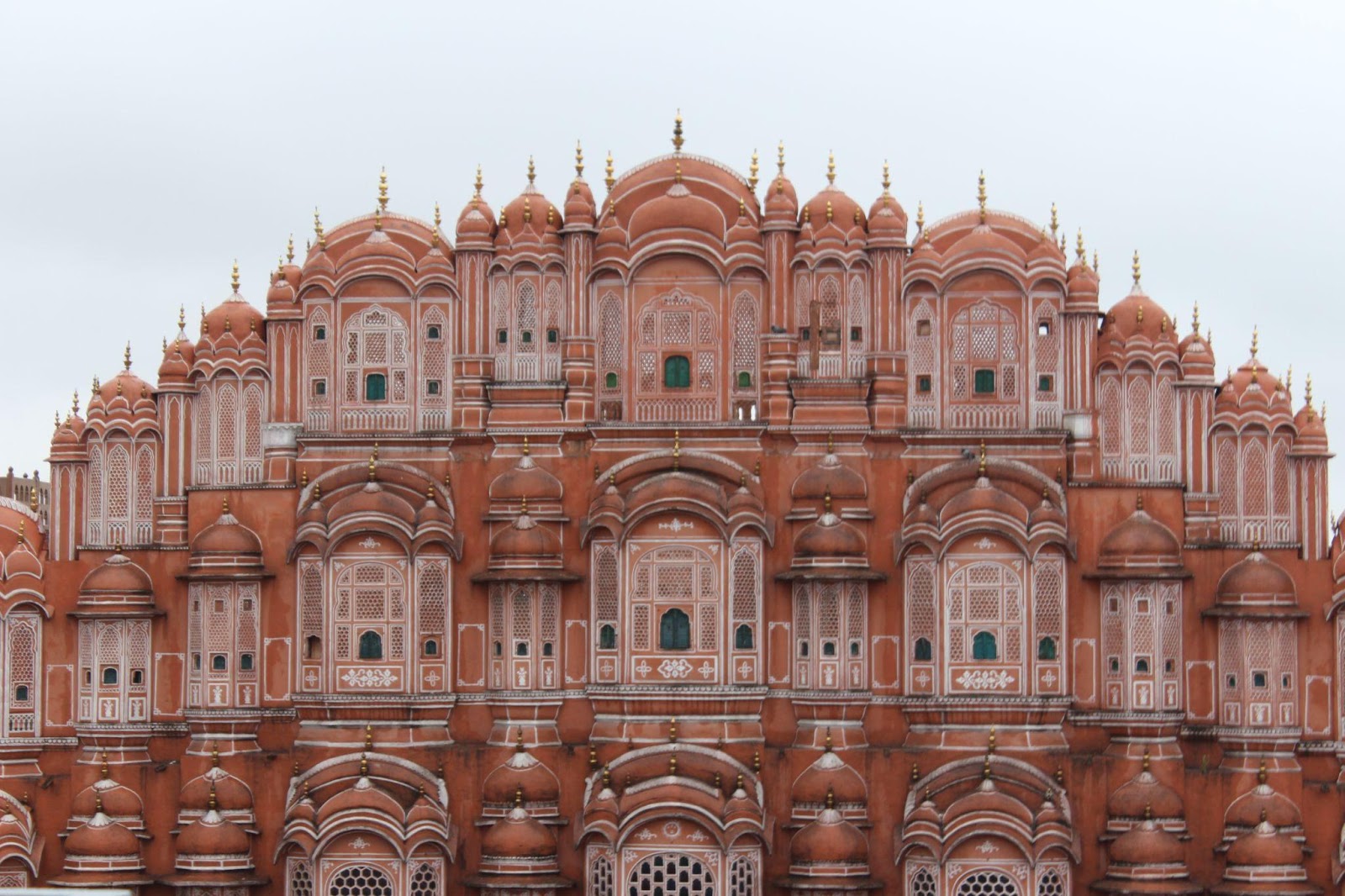
    Jaipur ‘ Pink city of India ‘ got this name because of the hospitality and the terracotta stone used for construction. Jaipur at large represents how tangible and intangible aspects go hand in hand while designing.

    Also, the concept of Vastu shastra and a well-planned city is popularized from here. While in Jaipur one gets to picture the royalty and luxuries life of the Rajas, the large rooms and intricate carvings are what make the mahal and forts centerpiece of attention.

     Jaipur not only is detailed and extravagant, but also every element is well thought. For instance, the window, lintels or even the space between buildings is conceptualized according to climate. 

    The most famous place to visit is Hawa mahal, which gives a peek into the life of kings and queens. The Jawahar Kala Kendra by Charles Correa can be considered as the heritage inspired modern day architecture.
    Hampi

    Hampi has been described by UNESCO as an “austere, grandiose site” in Karnataka. It is rich in historic structures which include forts, riverside features, royal and sacred complexes, temples, shrines, pillared halls, mandapas, memorial structures, water structures and others. 

    Group of monuments in Hampi is Vijayanagar style and is made with granite primarily. Vijaya Vittala Temple is the most iconic and is in the form of chariot, and has gained the maximum popularity amongst the other monuments.

    Achyutaraya Temple, Hanuman Temple, Badava Linga Temple and many others are made from stone, but the space in the temple which attracts the most is the mandapas. The mandapas have many columns and give a pleasant background for photos. The carvings and textures are what will attract an architect at first glance.

    Udaipur

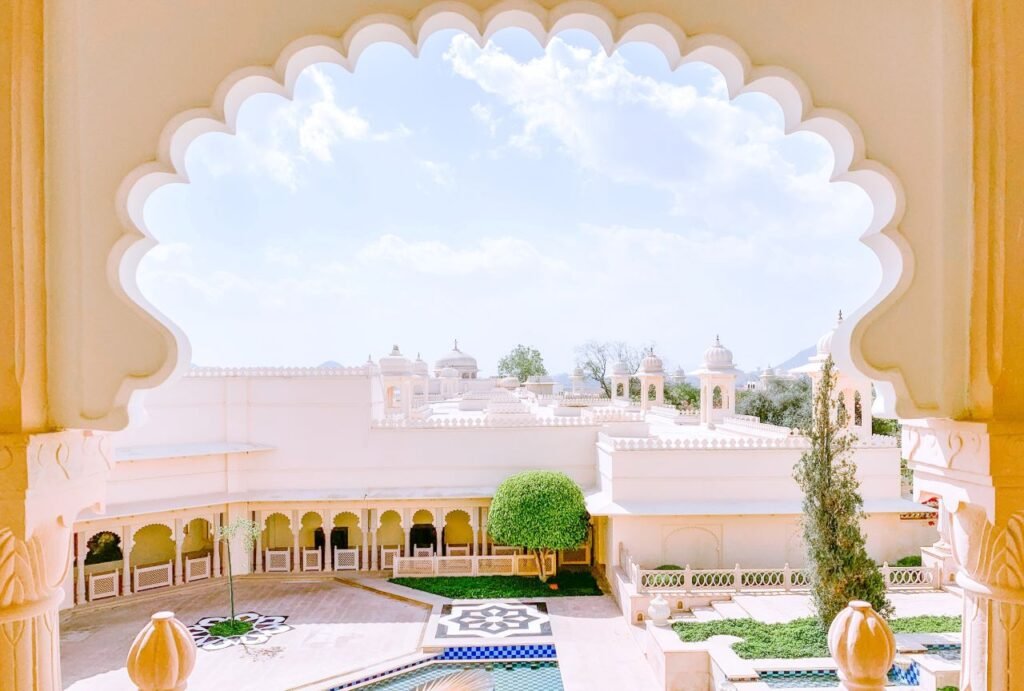
    Udaipur-City of Lakes , is a blend of nature and built form and is for those who love to work in harmony with nature. The presence of the lake not only provides an aesthetic picture but also keeps the climate in check, providing an automatic coolness to the neighboring areas.

    The town is filled with palaces near the lake which are now turned into resorts favorable for destination weddings or outings on weekends from nearby areas. The most famous palaces are near Lake Pichola. Udaipur also has some temples and Havelis with a courtyard, giving a poetic sense to Udaipur.
    Lavasa

    Lavasa is a hill station near Mumbai and not a very famous one. Architects interested in sustainability will find Lavasa a live case study for the same. The principle to design is new urbanism i.e  “Walk to Work”, “Walk to School” and “Walk to Park” become reality with non- polluting industries and ecological tourism.

    The concept of design is formed by working with biologists with biomimicry. The city’s rooftops are inspired by the morphology of the native banyan fig leaf.

    The Western Ghats region is prone to seasonal flooding from monsoons and a strategy based on ant nests has been adopted to channel water through the city. This efficient plan is inspired by the local harvester ants that divert water away from their nests through multi-path, low-grade channels. Further, water has been stored in networked building foundations, much like tree roots.
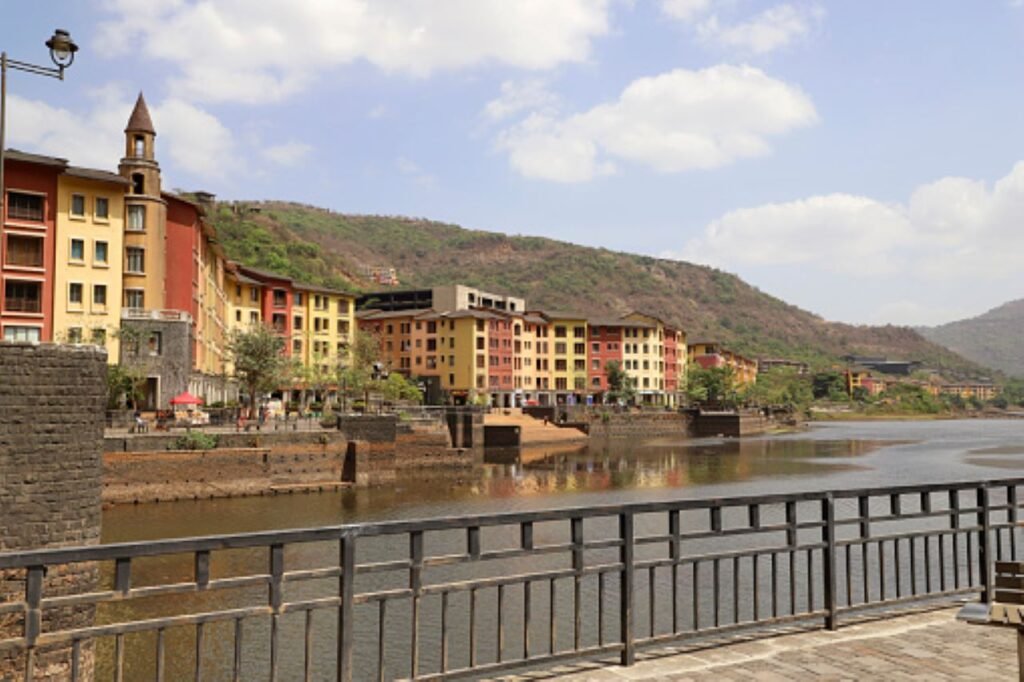
    Lavasa

    Auroville

    Auroville situated near Pondicherry is an experiential town where once a desert is now a habitable town. The town is filled with people looking to explore in their life and so it is reflected in the city’s architecture and culture.

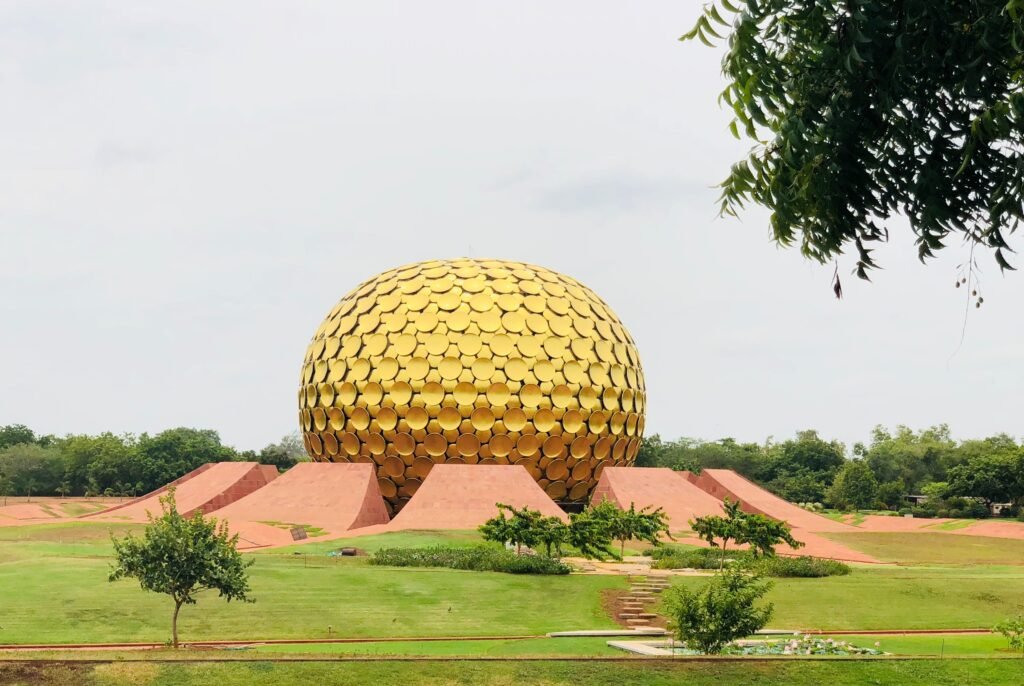
    The Matrimandir Temple, designed by Roger Anger, is the soul of the city. From form till the planning and garden surrounding the golden sphere, every thing is considered from deep within. The name ‘Matrimandir’ means literally ‘Temple of the Mother’.

    The construction practice in Auroville is completely different from other cities. The work, whether small or big, is done in vernacular architecture and the aim is to follow ecological practices like rainwater harvesting and using solar panels. Every structure feels as if it is protruding from the earth. 
    Some other places which can be visited are Chandigarh, Leh Ladakh, and Delhi. It is rightly said by Arundhati Roy,” India lives in several centuries at the same time.”

  • Top 10 Tallest Buildings: Amazing Skyscrapers in India

    Top 10 Tallest Buildings: Amazing Skyscrapers in India

    Introduction

    The skyline in Indian cities has shifted significantly over the previous 20 years, because of the construction and expansion in metro cities. Cities like Mumbai, that were dominated by low-rise residential compounds, are now scattered by the poshest skyscrapers with some of the plushest people in the country living. According to a rough estimate, Mumbai alone accounts for over 50 skyscrapers, followed by 12 in Kolkata.

    While several skyscrapers are currently under construction, here is a list of the tallest buildings in India, which are already operational and habitable. There are a variety of skyscraper typologies in India, ranging from residential to commercial.

    High-rise buildings or skyscrapers are tall enough that they require a system of mechanical vertical transportation, such as elevators. The skyscraper is a very tall high-rise building built with a specific intention in mind. High-rise builds have largely helped with reducing housing costs, leveling inequality, and allowing more people to live in city centers are three of the founding reasons skyscrapers were built.

    History

    The earliest high-rise structures were constructed in the United States in the 1880s. They mostly arose in urban areas because of severe increases in land prices and great population densities, hence creating a necessity for buildings that rose vertically rather than spread horizontally, saving the limited and expensive asset: land.

    Tallest building
    Source

    The world’s first skyscraper was the Home Insurance Building in Chicago, constructed in 1884-1885. The Home Insurance Building in Chicago is also known as the “Father of the Skyscraper” surpassed all of 10 stories with its peak at 138 feet, which is a miniature considering today’s standards but was believed massive at that time.

    The architect, Major William LeBaron Jenney, integrated a steel frame that supported the walls and the immense weight of the entire building, and the exterior was made of brick. The Home Insurance Building construction technique was spawned as a new type of construction described as the “Chicago Skeleton.”

    10 Tallest buildings in India

    Tallest Building: World One

    World one
    Skyscrapers in Mumbai

    World One, developed by Lodha Group, is the tallest building in Mumbai and in India. World One is built on the 7.1-hectare site of the obsolete Shrinivas Mill. The site also lives two additional lower towers. The initial idea was to build this tower at 442 meters tall, but because of a lack of permission from the Airports Authority of India (AAI), the tower was revamped to its existing height, making it the tallest skyscraper in India.

    World View

    World view
    Source

    World View is in the same building complex as World One. World View comprises 73 floors, this is the second-tallest tower in India with a height of 277.5 meters. The construction started in 2015 and took five years to complete and is in the Lower Parel area. World View complex is a very notable landmark in the area. The World View also forms the center of the World Towers trinity. World View is skirted by World Crest and World One on either side, making World View the focus of the elevated podium landscape.

    Lodha The Park 1

    The Park
    Source

    The Park is a luxury residential project, built over an area of 17.5 acres, developed by the Lodha Group with an astonishing height of 268 meters. The project became an enormous triumph as several celebrities purchased properties there, including superstar Aishwarya Rai Bachchan, who bought a 4BHK home here. This tallest tower in India has 78 floors and offers uber-luxury apartments only to selected people.

    Nathani Heights- Skyscrapers in Mumbai

    Nathani heights
    Source

    Nathani Heights is a 3BHK & 4BHK luxurious apartment, geared up with all the modern amenities spread over approximately 75000 sq. ft carpet area. Nathani Heights provides of endless view of Arabian Sea, Mahalaxmi Racecourse & Queen’s Necklace. Nathani Heights is centrally located that enables effortless and swift commutation in and around South Mumbai. Nathani Heights construction began in 2012. It took around eight years to complete this tower. There are 72 floors in this highest floor building in India with a total height of 262 meters, which is in one of the busiest and crowded areas of Mumbai.

    The Imperial I Mumbai

    Imperial I- Skyscrpaers in Mumbai
    Source

    The Imperial II Mumbai

    Skyscrapers in Mumbai
    Source

    Imperial 1 and 2 is a modernist inspired twin-tower with ultra-luxurious amenities and the residential skyscraper complex is in the billionaires’ row of Mumbai, India. Imperial 1 and 2 have been home to several high-net-worth individuals. Imperial 1 and 2 were the tallest skyscraper in India from 2010 to 2019, with a height of 262 meters, when it was overtaken by Lodha. The Park’s height was surpassed by World One within a year.

    The 42, Kolkata

    skyscrapers in india
    Source

    The 42 is East India’s tallest tower, in Kolkata. The 42 is a residential skyscraper, standing in Chowringhee, the fundamental business district of the city. Construction of the 42 with 65-floor building in India was finished in 2019 is standing tall at 249 meters.

    Ahuja Tower- Skyscrapers in Mumbai

    tallest buildings- skyscrapers in Mumbai
    Source

    Ahuja Towers is another residential project in Mumbai’s Prabhadevi, known for housing several celebrities, including Rohit Sharma’s home, the star of the Indian cricket team. Ahuja Towers tower was completed in 2019 and has 55 floors, with a great height of 248 meters and is built by Ahuja Constructions. This is one of the premium projects in the vicinity.

    One Avighna Park

    One Avighna Park
    Source

    The One Avighna Park project is in the Lower Parel and has 61 floors with a height of 247 meters. This is also a twin-tower structure established by Avighna India Ltd. The project was completed in 2019 and has 3, 4, and 5BHK apartments that are only offered to only a few selected individuals. One Avighna Park also has a pre-certified Platinum Rating awarded by the Indian Green Building Council (IGBC).

    Crescent Bay Tower 6

    Crescent bay
    Source

    Crescent Bay is an uber-premium project developed by L&T Realty in partnership with Omkar. This gated complex in Parel comprises six different residential towers. Tower Six is the tallest with 62 floors and great height of 239 meters.

    Imperial 3- Skyscrapers in Mumbai (2025)

    imperial 3- skyscrapers in Mumbai
    Skyscrapers in India

    The Imperial 3 has been expected to be one of the first skyscrapers in the country to have an eco-friendly architectural design which shall lead to the accomplishment of the LEED Platinum grade by the Green Building Council for environmental sustainability. The Imperial 3 is assumed to be architecturally attractive; this building is capable of preventing excess heat penetration and a system of automatic daylight dimming. In addition, the Imperial 3 shall say to have sky gardens to endure the wind.

    The Imperial 3 is said to have several distinctive characteristics that will help in reducing environmental harm for the specific purpose the Imperial 3 would have insulated glazing installed from top to bottom. The construction of the ginormous Imperial 3 is in process since the year 2016 and is expected to reach completion in 2025. Imperial 3 is going to be one of the highest “green” buildings in India.

    India Tower

    india tower
    Skyscrapers

    India Tower, previously known as the Park Hyatt Tower or the Dynamix Balwas Tower, or DB Tower is a rescinded 126-story, 707.5 meters mega tall skyscraper that began construction in 2010 in the metropolitan city, Mumbai, India.

    Mumbai lies within the equatorial belt, south of the Tropic of Cancer, as a result, has a hot, humid climate nearly all year round. The India Tower is anticipated to integrate the prosperity of sustainable features, such as water management systems, climate-responsive cladding, and onsite renewable energy generation systems. The India tower is said to have a target to achieve the LEED Platinum.

    The tower was originally planned to be entirely completed in 2016, but assembly work was put on hold in 2011 because of a disagreement between the tower’s developers and Mumbai’s civic authorities.

    Future of Skyscrapers in India

    India is on a spree of constantly developing and has become a home to a plethora of other supertall skyscrapers other than the buildings that have been mentioned in the list of tallest buildings in India. India is developing at an immense rate and at one point or the other all the above mentioned have been topped out structurally by other, more ambitious projects that are at present are standing tall or are work in progress.

    high rise buildings
    High rise buildings

    Skyscrapers will be new coming due for many reasons. First, because of scarcity of land and the limited amount it is present in and with a growing population, it will only make it difficult to spread more on the ground.

    Second, it becomes very easy to accommodate many things in the same vicinity and helps in saving a lot with such a busy lifestyle, especially in metropolitan cities like Mumbai. Third, these buildings look magnificent and attract a lot of grace.

    Conclusion

    Numerous developed countries during the period of initial urbanization were hit with an unprecedented boom in tall buildings along with the world’s first steel skyscraper. In 2004, Manhattan, also known as the queen of the concrete jungle during the time, lived up to 28 skyscrapers scaling 215 meters or taller. In the 14 years since an additional 13 superstructures have been built and a further 15 are under construction.

    Throughout industrial history, the most unforgettable structures have been constructed of powerful construction steel, defying gravity, with its highest point seeming to reach the clouds. As trends in architecture translate, “grandeur” won’t be the only aim that the designers wish to achieve. The trend of tall buildings all over the world might soon size to exist as innovators will be vying for the most efficient and sustainable structures.

    In contrast, an in-depth study that was commissioned by Samsung in 2016 demonstrated a vivid picture of the earth’s cities 100 years from now with “hyper-tall skyscrapers, underwater bubble cities, personal home medical pods, and civilian colonies on the Moon.”

  • Jaipur’s Pink City: The Captivating Architecture of India’s Royal Capital

    Jaipur’s Pink City: The Captivating Architecture of India’s Royal Capital

    Introduction

    The city of Jaipur, located in the northwestern state of Rajasthan in India, is known as the “Pink City” due to its distinctive pink-colored buildings. Jaipur is a city with a rich cultural heritage, magnificent architecture, and unique urban planning that makes it a must-visit destination for travelers and architecture enthusiasts alike. 

    Jaipur – The Pink City

    Jaipur was founded in 1727 by Maharaja Sawai Jai Singh II, the ruler of Amber, who was known for his interest in astronomy, mathematics, and architecture. He envisioned Jaipur as a well-planned city that would reflect the principles of Vastu Shastra, an ancient Indian architectural science that lays down guidelines for the design and construction of buildings. The city was designed by the renowned architect Vidyadhar Bhattacharya, who incorporated the principles of Vastu Shastra and Shilpa Shastra, another ancient Indian architectural treatise, in the layout of Jaipur.

    Vidyadhar Bhattacharya, a famous architect from Bengal,  was called by the Royal Highness of Jaipur, Maharaja Sawai Jai Singh II in the year 1727. Maharaja Jai Singh II requested him for the construction of Jaipur, one of the earliest cities in India and also the first planned city of India. Although he was working as a Junior Auditor when he was first approached by the Maharaja of Jaipur. 

    CITY PLAN OF JAIPUR BY AR. VIDYADHAR BHATTACHARYA
    CITY PLAN OF JAIPUR BY AR. VIDYADHAR BHATTACHARYA

    As Maharaja Jai Singh was concerned about the safety aspect of the city, he tried to focus mainly on the scientific and cultural interests to make a fabulous city. Therefore Vidyadhar Bhattacharya used holistic principles such as Shilpa Shastra and Vastu Shastra to create the whole grid-based structure of Jaipur city. He laid out a well-thought plan by researching the ancient Indian Literature on astronomy, and the journals of Ptolemy and Euclid. And to endure the safety of the city, huge fortification walls were constructed along with seven gates with really strong architecture.

    Thus, with an amazing plan, the construction of the city began in the year 1727. The construction alone took around 4 years to complete with all the major palaces, roads, and the square. Jaipur City consisted of a total of nine blocks, out of which two consisted of the State buildings and the Palace while the remaining seven blocks were given to the public.

    According to the old era, the architecture of the town was very advanced and well-built. The architecture was considered the best in the Indian Subcontinent. Also, there was an onset of great development, which included the construction of the Girls’ schools and the enhancement of the population of the city, which was around 160,000 in the year 1900.

    One of the most distinctive features of Jaipur’s architecture is the use of pink sandstone in the construction of buildings. The use of pink sandstone was not just an aesthetic choice, but it also had a practical purpose. Maharaja Jai Singh II wanted to impress his guests, including foreign dignitaries, and pink was considered a color of hospitality in Rajput culture.

    To ensure a uniform appearance of the city, he ordered that all buildings in the city be painted pink, which is still maintained to this day, giving Jaipur its famous nickname – the Pink City. Following that, In 1876, when the Prince of Wales was invited to Jaipur, the whole city was painted in pink, as the pink color resonated with the feeling of hospitality. The whole city submerged in this beautiful color pink looked really charming and eccentric with its beautiful architecture and designs.

    USE OF PINK SANDSTONE IN JAIPUR
    Use of pink sandstone in Jaipur

    Jaipur’s architecture is a perfect blend of Rajput, Mughal, and European styles, which reflects the diverse cultural influences that have shaped the city’s history. The city is known for its magnificent forts, palaces, havelis (traditional Rajasthani mansions), temples, and gardens, which are a testament to the architectural excellence of the past.

    As the city of Jaipur is divided into nine rectangular sectors, each sector represents a specific trade or profession. The city is surrounded by a fortified wall with seven gates that serve as entry points into the city. The main streets of Jaipur are wide and straight, intersecting at right angles, which is a typical feature of Indian cities planned according to Vastu Shastra. The city’s planning is based on the principles of Vastu Purusha Mandala, a cosmic diagram that represents the layout of the universe, with the city being a microcosm of the universe.

    BAPU BAZAAR MARKET
    BAPU BAZAAR MARKET

    One of the most iconic structures in Jaipur is the Hawa Mahal, or the Palace of Winds, which is a five-story palace with a unique facade consisting of 953 small windows, known as jharokhas, adorned with intricate latticework. The Hawa Mahal was built in 1799 by Maharaja Sawai Pratap Singh and its unique design was intended to allow the royal ladies to observe the activities on the street below without being seen themselves, as they observed the strict purdah system of seclusion.

    Hawa Mahal

    Another notable architectural landmark in Jaipur is the City Palace, which is a complex of palaces, courtyards, and gardens that serves as the residence of the royal family of Jaipur. The City Palace was built by Maharaja Sawai Jai Singh II and later additions were made by subsequent rulers. Along with being the city planner of Jaipur, Vidyadhar Bhattacharya has also been accredited with the honor of constructing the great City Palace, along with Sir Samuel Swinton Jacob. The architecture of the City Palace is a blend of Rajput, Mughal, and European styles, and it is known for its exquisite detailing, including intricate frescoes, mirror work, and marble inlay.

    Hawa mahal

    The City Palace

    Another architectural marvel of Jaipur is the Amber Fort, also known as the Amer Fort. Located on a hilltop overlooking Maota Lake, the Amber Fort is a stunning blend of Rajput and Mughal architectural styles. Built-in the 16th century by Raja Man Singh I, the fort is known for its impressive gateways, courtyards, palaces, and temples. The Sheesh Mahal, or the Palace of Mirrors, inside the Amber Fort is a must-visit attraction, with its walls and ceilings adorned with intricate mirror work that reflects light in a mesmerizing way.

    The Amber Fort

    The city’s architecture is not just about aesthetics but also serves practical purposes, such as providing passive cooling and ventilation techniques to combat the harsh desert climate of Rajasthan. The use of local materials, intricate carvings, and exquisite detailing in Jaipur’s buildings exemplifies the craftsmanship and ingenuity of the skilled artisans who have contributed to the city’s architectural legacy.

    Furthermore, the planned layout of Jaipur with its wide roads, geometrically aligned streets, and organized marketplaces is a testament to the vision and foresight of its founder, Maharaja Sawai Jai Singh II. The use of ancient principles of Vastu Shastra emphasizes the harmony between humans, nature, and the built environment.

    Jaipur’s architecture not only encapsulates the city’s glorious past but also serves as a living heritage, with many of its buildings still in use today. The city’s architecture continues to evolve with modern influences while retaining its distinctive character and charm. Jaipur’s Pink City is not only a visual treat but also a symbol of India’s rich architectural legacy, a testimony to its glorious past, and an inspiration for future generations to appreciate and preserve its unique heritage. Overall, the architecture of Jaipur is a fascinating fusion of history, culture, and innovation, making it an enduring legacy that continues to captivate and inspire visitors from around the world.