
Tag: lighting for home decor

  • Ultimate Lighting Guide You Need for Your Home Interior

    Ultimate Lighting Guide You Need for Your Home Interior

    Lighting has a deeper impact on our moods and emotions. Lighting can create visual stimulation and put emphasis on a specific feature of your home, you want to highlight.

    Lighting for home decor is a very underrated feature of any interior design project. Whereas lighting, if done correctly, can amplify the interior of your home even more.

    Choosing the right light fixture types for your room décors can be confusing. So, we have here an ultimate lighting guide that will help you in deciding while finalizing your lighting décor.

    Types of Lighting

    There are 3 major categories of lighting.

    Ambient/General Lighting

    As the name suggests, general/ ambient light illuminates the space to make everything visible. Typically, this type of light provides suitable illumination with a broader overhead light cast in lighting for home decor.

    Ambient Light Fixture Types

    1. Ceiling lamp
    2. Wall-mounted lamp
    3. Recessed or downlight fixture
    4. Track light
    5. Floor lamp
    6. Table lamp
    7. Chandelier

    Task Lighting

    Task lighting helps in carrying out specific tasks like reading, sewing, cooking, studying, and working. This type of lighting gives you an option to adjust the lighting of your space as per your needs.

    Task lights should be bright enough to avoid eye-straining and they should be positioned in a way that it doesn’t cast distracting shadows.

    While selecting a perfect task light, keep in mind the activity you need it for and also the age of the person it is for. The glare and harshness affect our eyes as we grow older.

    Task Light Fixture Types

    1. Recessed or downlight fixture
    2. Pendant lighting
    3. Portable lamp
    4. Tape and track lights
    5. Slim line bar and under cabinet

    Accent Lighting

    Accent lights are used to highlight specific features or elements in a space. It adds a dramatic effect to the room. This lighting can change the mood of the space completely. The best example is the spotlights used over a painting.

    Accent lights should direct at least three times as much light on the focal point as compared to the rest of the space. If done right, this accentuates the focal point subtly.

    Types of Accent Light Fixture Types

    1. Track light
    2. Wall-mounted fixtures
    3. Slim line bar and under cabinet
    4. Recessed or downlight fixture

    Choose the Right Light Bulb

    There are three types of light bulbs you can choose from; LEDs, CFLs, and Halogen.

    LED (Light Emitting Diode) uses 90% less energy than incandescent lights. The last 25 times longer than halogen and three times longer than CFLs and are pocket-friendly. LEDs are 100% recyclable and cooler to the touch.

    CFL (Compact Fluorescent Light) is more energy-efficient and less hot than incandescent light. But it has a shorter lifespan than LEDs. They fade over time and reduce their illuminance. CFL contains mercury, so one has to be very careful while disposing of it.

    Halogen is more energy-efficient than incandescent light but less than both LED and CFL. Its cost of running and lifetime cost, both are very high.

    LED bulbs will be the ideal choice of light today. Along with being an energy-efficient and economical option, LED has a vast variety of lighting effects, perfect and different for every room. With the entry of smart led bulbs, the lighting solutions have changed drastically.

    Colour Temperature

    The Colour Temperature of light can extensively effect in setting the mood of the room.

    CCT (Correlated Colour Temperature) is the measure of the light’s colour appearance. Light is differentiated into three distinct categories (measured in Kelvin)

    Warm

    Neutral

    Cool

    Lighting Guide

    Warm Light

    It fills the space with a cozy, relaxed atmosphere, perfect for bedrooms and living areas.

    Neutral Light

    Neutral light is used in spaces where more concentration on the work is required, like the kitchen.

    Cool Light

    This light works best in spaces that need some additional focus like reading or working area or a bathroom.

    Lighting Guide

    Lighting should be planned and incorporated in the initial design stage. The type of light used will depend on the experience you want to create.

    These factors need to be considered while lighting for home decor:

    1. Size and utility of the room
    2. Ceiling height
    3. Colour of the furniture and the walls
    4. Age and preferences of the occupant

    More often than not, a good lighting design is a combination of all three types of lighting. (General, task, and accent)

    Entrance

    Entrance
    Photo by Allyson SALNESS from Pexels

    The entrance should give a warm, welcoming feeling and a good first impression.

    1. A pendant light or a chandelier at the doorway can create a dramatic impact.
    2. If you have a console table, add a table lamp.
    3. Adding a mirror above the console will create an illusion of a larger entrance hallway.
    4. Even if you have a smaller hallway, a mirror and a downlight always help in elevating the space.
    5. If you are placing are artworks, use suitable accent light fixture types for them.
    6. Make sure that it does not create high contrast shadows.

    Kitchen

    The kitchen is a very active space where all the food preparation takes place. It is also a gathering spot. As you handle several utensils, some of them sharp, shadow-free, sharp lighting is exactly what you need. The lighting decor for kitchen requires a perfect consideration of task and ambient lighting.

    1. Install LED strips on the wall units.
    2. Illuminate the countertop using undercabinet.
    3. Provide pendant light for the kitchen island or breakfast bar.

    Dining Area
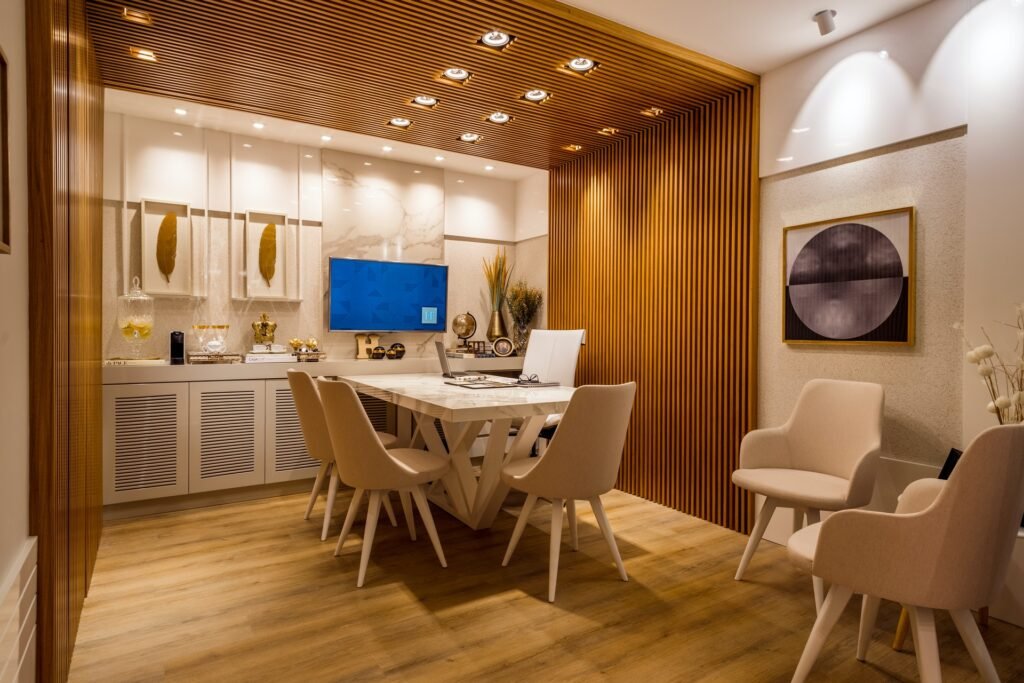
    Dining Area
    Photo by Jonathan Borba from Pexels

    The dining area is more than just a place to eat. It is also a place for entertaining and socializing. It has the potential to be the most aesthetic part of your home, so invest in good fixtures.

    1. Most people make the mistake of placing a chandelier above the table and keeping it as the only source of light.
    2. Adding layers with wall scones, pendant light, etc can enhance the ambience of the space.
    3. Install dimmers to control the illuminance level.
    4. Mount undercabinet light to highlight your China cabinet.

    Living Room

    Living Room
    Photo by Curtis Adams from Pexels

    The living room is an all-purpose area where you will watch TV, read books and chat with friends and family. The lighting decor for living room needs to be more diverse, to reflect the tasks that are carried out in the room. As we spent most of our time in living rooms, the lighting in this room has to be suitable for your scheme of work.

    1. The lighting needs to a perfect combination of all lighting and light fixture types.
    2. Use multiple lighting layers with dimmable light.
    3. Use portable lighting for more flexibility and control.
    4. Use wall washing for bookshelves and artwork to make the space seem more spacious and luxurious.
    5. For the sofa/TV area, uniform indirect light is recommended, so as not to affect the vision or cause annoying reflections on the TV screen.

    Bathroom

    Bathroom
    Photo by Max Vakhtbovych from Pexels

    Bathroom lighting should emphasize more on safety and aesthetics. It requires careful consideration of lighting placement.

    1. Light both sides of the mirror. Vanity lighting is perfect to light up the mirror.
    2. Make sure neutral or cool light is directed towards your face.
    3. If you have a small bathroom, go for wall mounted light fixture types.
    4. Ambient lighting, wall scones and recessed lighting work well in a bathroom.
    5. If you have a tub, add dimmable lights over the head area.

    Bedroom

    Bedroom
    Photo by mark champs on Unsplash

    The light in the bedroom cannot be the same as in a kitchen or a home office. As a general rule, the lighting scheme should be definitely warmer and cozier. On both sides of the bed, there should be no more than a 1-Watt adjustable light source, allowing you to read or get up at night without disturbing your partner.

    1. Consider the scale and height of the room.
    2. Use direct lighting for desks, vanities, etc.
    3. Consider coloured bulbs to change the mood.
    4. Install dimmers and other lighting controls.
    5. Create ambient light with downlights and pendant fixtures.
    6. Control glare for tasks like reading.
    7. Consider lights that can be changed from up light to downlight.
    8. Try to use light bulbs of lower wattage.
    9. Don’t install lights directly over the bed.
    10. Use softer, shaded fixtures for sitting areas.
    11. Use flexible lamps for your reading light.

    Kid’s Room

    While choosing the light scheme for your kid’s room, keep in mind the age and gender of your child.

    If your child is a toddler, ensure that the light fixtures cannot be touched.

  • 7 Absolutely Impactful Natural Lighting Sources for Your Homes

    7 Absolutely Impactful Natural Lighting Sources for Your Homes

    We always prefer natural lighting over artificial lighting. Any home which is flooded with natural lighting sources seems pleasant, positive, and warm. The interior spaces look larger and more aesthetic with natural lighting.

    Benefits of Natural Lighting

    Good Eyesight

    Artificial lighting can cause eye-straining, as you have to keep on adjusting to the illumination at all times. Dopamine is produced when we expose our eyes to the sunlight. This helps in reducing vision problems like eye-straining and also makes reading easy.

    Regulates Sleep Cycle

    Artificial lighting confuses the body with the amount of illumination at any time of the day. Less exposure to any natural lighting sources can make the body lethargic. By regulating the sleep cycle, sunlight can make you more productive, active, happy, and motivated.

    Keeps Body Healthy

    Vitamin D is primarily obtained from all the natural lighting sources. Vitamin D helps maintain body weight, asthma symptom control, and build a good immune system.

    Increases Concentration

    Sunbathing can increase your attention span and make you more alert. This focus helps while completing tedious assignments.

    Improves Mental Health

    Exposure to daylight increases endorphin (happy hormones) production. This also helps in increasing the memory functioning of the brain. Natural light plays a crucial part in coping with stress and anxiety.

    Good For the Environment

    The bonus of using natural lighting for home decor is that it helps in saving energy and money at the same time. But apart from this, using more natural lighting sources means producing less carbon which is good for the environment.

    This is the reason why many times people are more comfortable in natural light rather than artificial light.

    Tips on Natural Lighting for Home Decor

    Now that we know the benefits of natural lighting, here are some tips and tricks that can help you amplify illumination in your homes with the help of natural lighting.

    Add Mirrors

    Rooms look bigger by adding mirrors on the walls. Adding a full-length mirror on walls opposite to the opening will make the room look bigger and it will reflect and double the amount of light entering the room.

    If you do not have a wall side for a full-length mirror, try putting a mirror on the surface of the wardrobe door. Choosing the correct angle for these mirrors is very crucial if you want the light to travel even to the darkest corner of your room.

    Spaces like the hallway function well with mirror placement. It is unnecessary that there has to be a direct sunlight reflection on the mirror. The light is partially distributed throughout even if only a medium amount of natural lighting sources are available.

    Reflective Surfaces

    Apart from mirrors, there are many new reflective surface ideas for lighting up space. Installing glossy tiles in the kitchen and bathroom can help in increasing the illumination of light in these spaces. Metallic decors or finishes on the furniture or ceiling also help in elevating the light entering the room.

    Glass blocks are another effective solution as a reflective surface to enhance natural lighting for room decor. These blocks can work efficiently even as partition walls as they are opaque.

    Natural Lighting for Room Decor

    No room is complete without placing furniture in it. The Interior of space can increase or decrease the propagation of light.

    When it comes to choosing home décor, always go for compact minimalist furniture. The more furniture you place, the more clustered the room looks. If the décor is compact, there is more room for light to enter.

    Try having low-height furniture as much as possible. If you have to have some tall furniture, make sure it is not blocking the direct light entering from any of the openings. If the number of shadows created is less, then the circulation of light will be more.

    Partition walls are another reason for the obstruction of light via openings. Avoid having solid wall partitions, instead of that, having glass partitions will help the light to flow.

    Having a higher ceiling can help in bringing in more natural light as there is more space for sunlight to circulate.

    Colour Palette

    natural lighting sources
    Photo by Sidekix Media on Unsplash

    Dark colours absorb light whereas lighter colours reflect it. Choosing light pastel or neutral colours for your wall can help to make the room look brighter. It also helps to have light coloured furniture and flooring to disperse the lighting.

    Having the same colour on all the surfaces might look monotonous. So, while choosing the right colour for the furniture you can have lighter colours for the heavy decors like cabinets and a shade or two darker for small accent pieces or artworks. This will add some contrast to the interiors. Metallic accessories and translucent furniture can also help in reflecting light.

    Make sure the ceiling is either matte white or two shades lighter than the wall colour. Matte finish suites well for the ceiling because it reduces glare.

    Large Openings

    Large openings
    Photo by Alberto Castillo Q. on Unsplash

    This is a very effective but expensive solution for natural lighting. This is only for the people who are planning an overall (internal and external) renovation. A larger opening or even increase in the number of openings can bring in more natural light into the home.

    Installing glass openings can also increase the light flow in a space. But if you do not want any transparent material for the openings, you can also opt for frosted glass.

    You can try having high window openings in spaces where regular window openings are not possible like a bathroom.

    A skylight can also bring in natural light in a room without openings. They are very useful in walk-in closets and hallways. If you are planning to install a skylight, make sure that it is properly sealed to avoid any leakage.

    Select the right Blinds

    Right Blinds/curtains
    Photo by Max Vakhtbovych from Pexels

    It is not always possible to keep our window or balcony door open. Natural lighting is important but so is maintaining our privacy. Blinds help in keeping our privacy, but dark curtains will again absorb the light and make the room darker.

    Sheer curtains can resolve this problem. They are light and allow daylight to penetrate through them while maintaining sufficient privacy.

    Home Office

    With the Covid-19 pandemic, home offices have made their way into house planning. We have already established that having a good amount of natural lighting helps in productivity and concentration. With that said, here are some tips to improve natural lighting in your home office.

    1. Place your desk near an opening with less interior obstructions for more daylight.
    2. To avoid creating glare on the screen, try placing the desk perpendicular to an opening. This will create a perfect balance between the natural lighting sources and the shadows.

    Bonus Tips

    Cleanliness

    Keep your home openings clean to ensure that maximum natural light is entering your home at all times.

    Natural Lighting Sources and Greenery

    Check if the landscape in your surrounding is obstructing the light entering your space. Trimming these trees, plants, and shrubs from time to time can help in having unobstructed natural light.

    Surface maintenance

    Be careful that the daylight doesn’t fade or damage any surfaces of the home décor.