

Tag: Modern art

  • Art in Architecture: A Strong Influence

    Art in Architecture: A Strong Influence

    Art in Architecture is a juxtaposition of Art and Science that evolves around space, event, movement, and time. Architecture serves as one of the mainstreams in our daily lives and art creates an emotional exposure to it, offering a sense of community beyond functions and techniques. N.I.A (2009), defines architecture as “the art and science in theory and practice of design, maintenance and management and coordination of all allied professional inputs thereto buildings, or part thereof and the layout and master plan of such building or group of buildings forming a comprehensive institution, establishment or neighborhood as well as any other organized space, enclosed or opened, required for human and other activities”

    Introduction

    Architecture is described as ‘art’ in the above definition because, like art, it is also a process of creative expertise and visual forms. Thoughtful creativity and proficiency of an architect create a visually pleasing form and establish the required function of any building. Therefore, designing, in architecture, requires a set of skills and creative talent to envisage the outcome and how would it be interpreted by the spectator who would see it or the people who would use it. 

    For ages, buildings, and spaces have been transformed by how art was used within them, resulting in a fusion that has created such wonderful, inspiring, or spiritually uplifting designs of spaces, depending on the intentions and requisition of the client and the architect.

    If we go back to the origin, we would find Art and Architecture, both as informal curricula for studies until the need for specialization appeared. However, with time, art has directed its way towards the modernism of architecture. 

    In early Roman times, structures were embellished with floral patterns and scrolled columns through Art Nouveau architectural style with highly ornamented and organic features. In the period of Art Nouveau(late 19th century into the 20th century), a group of painters started bringing more bright colors to the life of the canvas which was replicated in Architecture through dazzling irons or glassworks to get a romantic and adventurous flare to a world previously filled with dull, brick facades.

    Picasso and Braque’s artistic revolution (early 20th century) has had the largest impact on modern architecture. Through the abstract and multiple perspectives of the cubism method of art, the traditional four walls and single roof architecture broke through into modernism where instead of thinking of the structure as a single form, buildings became multiple pieces in the eyes of the architects.

    Linear and geometrical art from the Bauhaus movement (throughout the 1920s and 1930s) influenced Architecture in a way to abstain ornamentation and focus on simple, rational, functional design. By the 1960s, when Tony Smith created a piece of art aptly named ‘Die’ (a six-foot cube of quarter-inch hot-rolled steel with diagonal internal bracing), minimalism quickly became one of the most popular architectural styles of all time across the globe.

    Art in Architecture: Other art movements that influenced modern Architecture

    • JUGENDSTIL: It was an art-nouveau style of the late 19th and early 20th centuries, launched by swiss artist Hermann Obrist in Munich. It was inspired by the intricate observations of organic forms and movements of nature. Some historians explain that this was a group of visual artists who had initiated Jugend in 1986 as a means of rebelling against the neo-classicism of art and architecture institutions, where floral motifs, organically shaped lines, flora and fauna, landscapes, and most importantly, the harmonious relationship between human and nature were found as major characteristics.

    These elements, later on, were translated into architecture in the Art nouveau movement that highlighted organic lines, nature-inspired motifs, movement, and the use of engineered and natural materials. Some of the initial Art nouveau houses were built in Brussels by Paul Hankar and Victor Horta and featured elaborate motifs and complicated craftsmanship, fading the lines between architecture and nature.
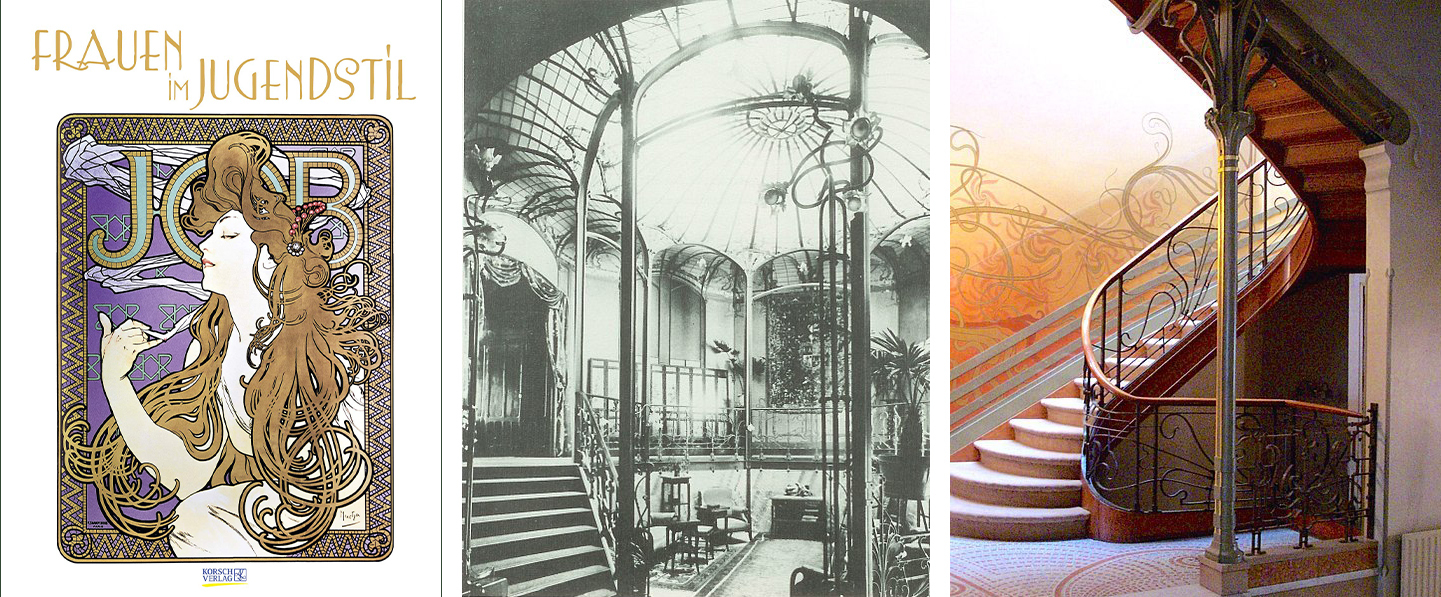
    art in architecture
    JUGENDSTIL INFLUENCE ON ARCHITECTURE
    • DADAISM: An experimental style of art, a ‘rebellious and revolutionary’ art movement established by Hugo Ball in the early 20th century, named Dada art is said to have been first created at an artistic nightclub ‘Cabaret Voltaire’  in Zurich, Switzerland after many war-opposing creatives sought refuge in the country. The movement gained momentum from 1916-1924 mainly in Switzerland, Paris, and New York, and featured works by notable artists like Hugo Ball, Marcel Duchamp, Hans Arp, and Sophie Taeuber-Arp. They wanted to ridicule war and capitalist culture, so they resorted to irrational concepts of art that showcased humor, and the questioning of authority and reality through an ‘anti-art’ approach.

    Dadaism opened the way for the architects to rethink traditional architecture, ornamentation, form, and materials, and to start creating buildings that were completely different from the style of that era. It also was one of the first that inspired architects to look beyond architecture and see buildings as sculptures, launching movements like deconstructivism (one of the most controversial architecture styles of the 21st century) that features projects by Daniel Libeskind, Frank Gehry, and Peter Cook, amongst many other famous names in the field.
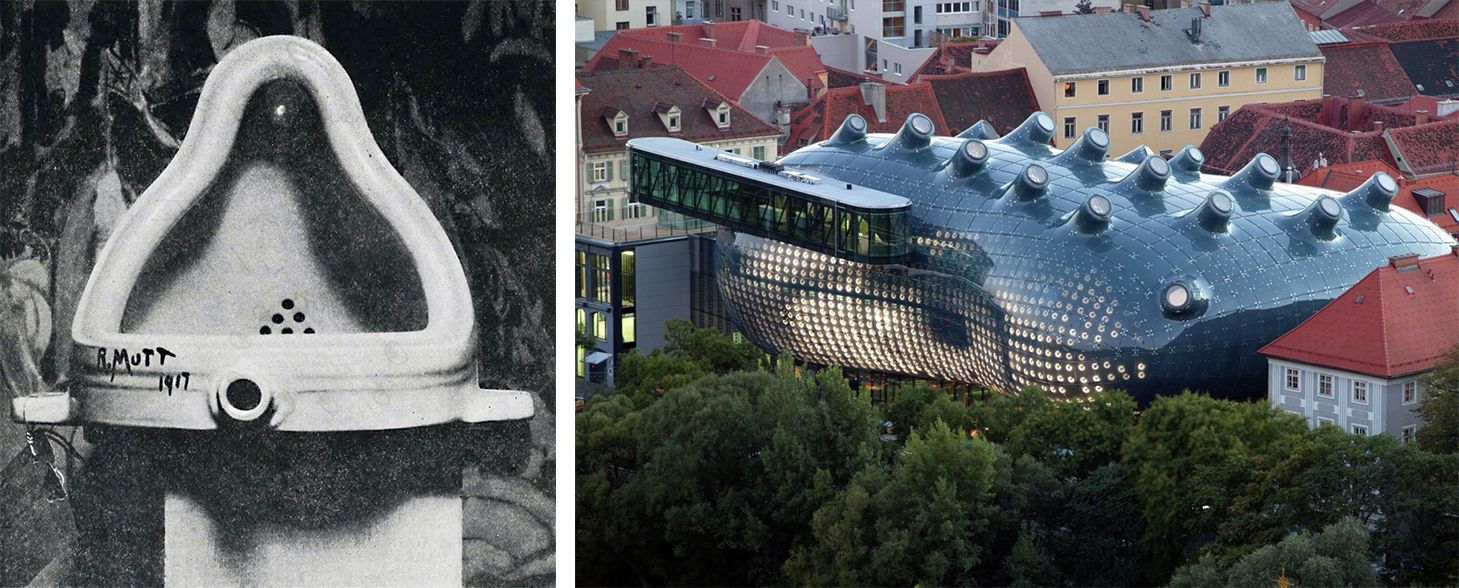
    dadaism
    INFLUENCE OF DADAISM IN ARCHITECTURE
    • DE STIJL: De Stijl, Dutch for “The Style”, also known as Neoplasticism, was a Dutch art movement founded in 1917 in Leiden led by the painters Theo van Doesburg and Piet Mondrian, who wanted to highlight the ideal fusion of form and function. This movement, just like Dadaism, was also a response to the mayhem of World War I. They created a visual language consisting of refined geometric forms like rectangles, squares, straight lines, and primary colors which eventually influenced architecture by inspiring the launch of the International Style of the 1920s and 1930s, mentioned as Modernism. 

    This style introduced flexibility and transformation of space in design, where there were no hierarchical arrangements of rooms in floor plans, only independent surfaces that create a space based on the user’s functions and requirements. 
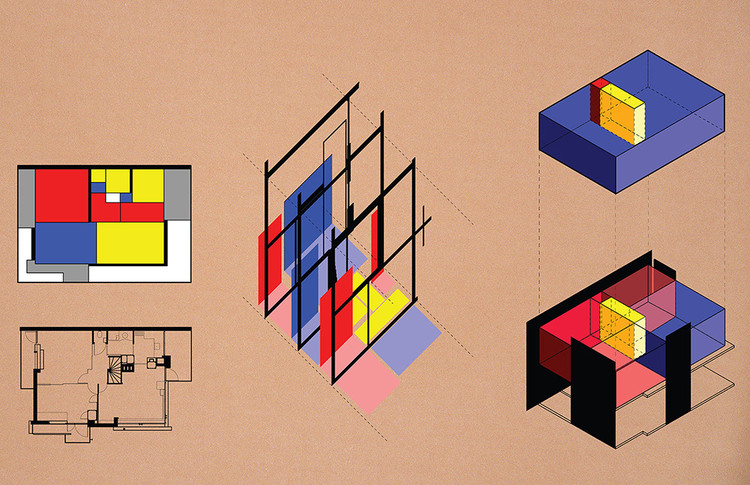
    de stijl
    De Stijl INFLUENCE ON ARCHITECTURE
    • POP ART: In the 1950s, the pop art movement appeared in the United Kingdom post World War II, when the economic and social structures led artists to commemorate mundane, daily activities and transform them into art. This movement introduced an entirely new approach to design by replacing historic art with vibrant mass production and media-centered visual realms. The movement inspired the architects to set themselves free from the linearity of modernism by pushing forward the use of technology, and mass consumption. Facades, interior spaces, and public domains became building canvases to experiment with light, color, irregular forms, and unconventional scale.

    pop art
    INFLUENCE OF POP ART IN ARCHITECTURE
    surrealism
    SURREALISM IN ARCHITECTURE

    The co-existence of art and architecture is evident in the works of some of the greatest modern architects such as Le Corbusier, Antoni Gaudi, and Oscar Niemeyer, to name a few. It is pretty understandable that Art and architecture are deeply connected and evolve through the trend that oscillates in the world of art. In today’s context, technology-influenced themes are emerging in Art, which may translate into architecture.

  • Shipping Container Architecture: Transform Metal Boxes to Modern Structures

    Shipping Container Architecture: Transform Metal Boxes to Modern Structures

    Introduction

    Every year, thousands of shipping containers meet their end, destined for abandonment or landfills. Of late, an extraordinary metamorphosis has occurred within the realm of architecture. These discarded metal giants, originally designed for the relentless journey of goods across the globe, have been given a new purpose—a second chance as the building blocks of innovative architectural creations. Welcome to the world of shipping container architecture, where sustainability meets creativity to shape a greener and more design-forward future. Let us examine the transformation, potential, sustainability, and challenges of shipping container architecture.

    Progression of Container Design

    Malcom McLean_imcbrokers.com.jpg
    Malcom McLean©imcbrokers.com

    Shipping containers as architectural components may seem like a recent trend, but their history dates back to the mid-20th century. Malcolm McLean revolutionized the shipping industry in the 1950s by introducing standardized containers. This innovation greatly streamlined global trade, making it more efficient and cost-effective. Not until the late 20th century did architects and designers begin to understand the building potential of steel containers. The appeal of using shipping containers in architecture lies in their modularity, structural strength, and sustainability.

    Vissershok Container Classroom, Cape Town_archdaily.com.jpg
    Vissershok Container Classroom, Cape Town©archdaily.com 

    During the Vietnam War, containers were used for shipping supplies and served as emergency shelters, marking their early use in construction. In Europe and Asia, shipping containers are already integrated into commercial and residential structures, providing affordable housing solutions. Today, shipping containers are used for various purposes worldwide, from mobile schoolhouses in South Africa to quick-to-high-end shops in New York. Overall, shipping container architecture has evolved from necessity to modernization, addressing architectural and urban development challenges.

    Benefits of Shipping Container Architecture

    ContainHotel, Czech Republic_contemporist.com.jpg
Shipping Container design
    ContainHotel, Czech Republic©contemporist.com

    Shipping container architecture offers a compelling and cost-effective approach to modern construction. These containers, originally designed for global transport, provide an affordable building material that is both robust and weather-resistant. Their affordability is enhanced by the use of recycled containers, which reduce waste and conserve resources. Beyond cost savings, shipping container homes are environmentally sustainable. Environmental stewardship greatly benefits from repurposing decommissioned containers, which reduces waste disposal reliance on landfills while minimizing requirements for fresh resources. This approach aligns with contemporary sustainability goals, making shipping container architecture an attractive and eco-friendly choice for designers.

    These structures are highly customizable, allowing architects to design layouts, select sustainable materials, and integrate energy-efficient features, thereby reducing their ecological footprint. Moreover, the inherent durability of shipping containers ensures a long-lasting and resilient living environment, while the flexibility to adapt and expand container configurations caters to evolving spatial needs. Finally, the mobility of container homes adds extra versatility, making them an attractive choice for those seeking building solutions that can easily be relocated. In summary, shipping container architecture offers a multifaceted approach, combining cost-effectiveness, environmental consciousness, durability, customization, and mobility, making it a compelling option in the contemporary architectural landscape.

    Evaluating Sustainability Amid Shipping Container Challenges

    Prairie Logic, Kansas City_archdaily.com.jpg
    Prairie Logic, Kansas City©archdaily.com

    Shipping container architecture offers a unique construction approach but comes with its own set of challenges. Addressing these challenges is essential for evaluating its sustainability claims. Shipping containers, in their raw state, are ill-suited for human habitation due to issues like poor insulation, ventilation, and limited natural lighting. Converting them into habitable spaces requires extensive modifications, which may counteract their sustainability benefits. Achieving energy efficiency can be challenging, and the use of new materials during these modifications contributes to resource consumption and emissions. There is also the environmental issue of site preparation and the longevity of containers.

     Another challenge is the environmental impact of container choices. Some buyers opt for new containers, which may not be as eco-friendly as repurposed ones. Used containers might have transported potentially harmful substances or incurred damage during transportation, making them less appealing from an environmental perspective. Moreover, addressing structural concerns can be a complex task, often requiring skilled professionals and contractors. Navigating building permits, especially in regions where container housing is less common, can be intricate, involving adherence to specific building codes and requirements. To fully harness the potential of shipping container structures as a sustainable architectural choice, careful planning and examination of these factors are essential.

    Urban Rigger, Copenhagen

    Urban Rigger, Copenhagen_prefabcontainerhomes.org.jpg
    Urban Rigger, Copenhagen©prefabcontainerhomes.org 

    In Copenhagen, Denmark, the Urban Rigger project by Bjarke Ingels Group (BIG) presents a sustainable and innovative response to the increasing demand for student housing. Situated in the underdeveloped area of Copenhagen’s harbor, the project repurposes 974 recycled shipping containers to create 12 studio residences surrounding a central winter garden, fostering a sense of community among students. The buoyant design allows for potential replication in other harbor cities where affordable housing is needed. This creative use of standardized containers not only addresses housing needs but also makes use of a flexible and eco-friendly building typology optimized for harbor cities.

    The Puma City, Boston

    Puma City, Boston_archdaily.com.jpg
    Puma City, Boston©archdaily.com

    PUMA City is a mobile architectural marvel that creatively repurposes 24 shipping containers into a versatile and transportable retail and event building. PUMA City is a three-level stack of containers with a clever design that incorporates internal outdoor spaces, generous overhangs, and inviting terraces. The lower levels house expansive retail spaces with double-height ceilings, offering a refreshing contrast to the container’s modular interior. On the second level, you’ll find offices, a press area, and storage, while the top level features a stylish bar, lounge, event space, and a spacious open terrace.

    What truly sets PUMA City apart is its ability to be assembled and disassembled multiple times at various international ports. The structure utilizes 12-meter-long shipping containers and existing container connectors to create a secure and dynamic architectural composition, both horizontally and vertically. Each module is designed for efficient shipping as conventional cargo, with structural covering panels that seal the large openings. This approach makes PUMA City the first container building of its size to be genuinely mobile, demonstrating the incredible potential of shipping containers in architectural design and sustainability.

    Pallotta TeamWorks, Los Angeles

    Pallotta TeamWorks, Los Angeles_bigboxcontainers.co.za.jpg
    Pallotta TeamWorks, Los Angeles©bigboxcontainers.co.za

    Pallotta TeamWorks aimed to revolutionize charity fundraising by merging business strategies with humanitarian efforts. They needed an inspiring yet cost-effective headquarters in a warehouse space. Despite budget constraints, innovative solutions were sought, focusing on efficient MEP systems. Collaborating with a sustainability-focused client, the project explored a partially conditioned environment, taking advantage of Southern California’s climate. The concept of “Breathing Islands” emerged, acting as air diffusers and creating distinct workspaces while reducing the need for conditioned air. These white tents were hung from the existing roof structure, with shipping containers anchoring their corners. Efficient infrastructure descends from the ceiling.

    Pallotta TeamWorks, Tent Islands_officesnapshots.com.jpg
    Pallotta TeamWorks, Tent Islands©officesnapshots.com

    The building featured a unique island desk design and an executive tower constructed from stacked shipping containers. The project achieved its objectives while embracing resource efficiency. Color plays a vital role in defining spaces. Dark blue shipping containers framed transitions, and varying blues elevated visual depth. Public areas were boldly orange against a white and blue backdrop, while the tent neighborhoods featured a muted earthy palette, akin to the charity’s mobile tent cities.

    The Keetwonen Student Village, Amsterdam

    Keetwonen Student Village in Amsterdam_livinspaces.net.jpg
    Keetwonen Student Village, Amsterdam©livinspaces.net

    As we explore creative housing solutions, we turn our attention to Keetwonen, the largest container city in the world. It comprises 1,000 upcycled container studio flats, offering students private living spaces with bathrooms, kitchens, balconies, and separate study and sleeping areas. Each unit includes hot water and high-speed internet. The project creatively stacks containers in blocks up to five levels high, with courtyards for safe bicycle parking and social gatherings. Insulation and rainwater drainage are facilitated by integrated rooftops. Nine months after completion, it has become one of the most popular student dormitories in Amsterdam, showcasing the versatility of container-based design.

    Shoreditch Boxpark, London

    Shoreditch Boxpark, London_viator.com.jpg
    Shoreditch Boxpark, London©viator.com

    Boxpark, a distinctive shopping district in London’s Shoreditch, serves as a prime example of shipping containers’ unconventional architectural utilization. Conceptualized by Roger Wade and brought to life by the British firm Waugh Thistleton Architects, this temporary shopping center stands as a testament to adaptability and versatility. Comprising forty containers on the first floor and twenty on the second, totaling sixty distinct units, Boxpark showcases its unique architectural concept within a former railway goodsyard.

    Shoreditch Boxpark Store_absolutemagazine.co.uk.jpg
    Shoreditch Boxpark Store©absolutemagazine.co.uk

    What sets Boxpark apart is its inventive approach to interior retrofitting. The containers are transformed into cafes and stores offsite, a process that takes approximately three months. Once completed, these modules can be seamlessly integrated into the retail center in just one to three weeks. This flexibility is invaluable, empowering emerging retailers to establish themselves and relocate with ease, fostering a dynamic and diverse retail environment. Moreover, Boxpark functions as a transient hub for shopping and socializing, infusing fresh vitality into the urban fabric. This ingenious use of shipping containers not only revitalizes underutilized spaces but also presents a blueprint for adaptable urban development.

    The Sugoroku Office, Gifu

    The Sugoroku Office, Gifu_thecoolist.com.jpg
    The Sugoroku Office, Gifu©thecoolist.com

    The Sugoroku Office in Gifu, Japan, designed by Daiken-Met Architects, serves as a pioneering demonstration of flexible architecture. This three-story mobile framework incorporates stacked shipping containers, creating a unique workspace with the potential for future residential use on the penthouse floor. Its design resembles a construction zone, making it appear as if it’s both a functional workplace and an ongoing construction project, creating an intriguing blend of aesthetics. What makes this office particularly remarkable is its ability to be easily assembled and disassembled, making it a practical solution for temporary structures in urban areas.

    Sugoroku Office Ground Floor Studio_decoist.com.jpg
    Sugoroku Office Ground Floor Studio©decoist.com

    The architects tackled the challenge of making rental contracts for small-scale structures in a city with a decreasing population and increasing vacant land. They devised a steel structural grid that not only simplifies the assembly process but also reduces the load on the containers, accommodating the weight of the building’s shell, furnishings, and occupants. Importantly, this modular structure can be disassembled and relocated elsewhere. The office’s storage systems creatively incorporate used plywood and packing bands from construction sites, demonstrating an eco-conscious approach to design and resource utilization.

    GAD, Tjuvholmen

    GAD, Tjuvholmen_bigboxcontainers.co.za.jpg
    GAD, Tjuvholmen©bigboxcontainers.co.za

    GAD is an ingenious semi-temporary gallery designed by MMW Architects, located in Tjuvholmen, Norway. This flexible gallery is built around ten standard steel containers, creating a unique and adaptable space for art exhibitions. The ground floor consists of five containers, while three containers surround a central first-floor courtyard, and the final two complete the square-shaped building, offering access to the top-floor balcony. The containers are thoughtfully insulated and feature circular windows and roof lights to maximize natural light, creating an ideal environment for showcasing art.

     The revolutionary design of GAD enables simple disassembly, relocation, and reassembly, making it an adaptable and accessible place for art exhibitions in many locales. This project exemplifies how shipping containers can be creatively repurposed for artistic and cultural endeavors.

    The Container House, Udaipur

    The Container House, Udaipur_dezeen.com.jpg
    The Container House, Udaipur©dezeen.com

    In the serene Aravalli hills near Udaipur, India, you will find The Container House, an exceptional countryside escape by Rakhee Shobhit Design Associates (RSDA). Crafted in response to the client’s pandemic-era desire for a nature-centric retreat, this unconventional residence redefines home design. There are two units named Champa and Chameli. Created from repurposed shipping containers, the house offers seclusion and harmony with nature. Both units are elevated above the ground to minimize flood risks, structurally reinforced and insulated, and adorned with green exteriors to blend seamlessly with the natural landscape.

    Chameli Unit_dezeen.com.jpg
    Chameli Unit©dezeen.com

    Chameli boasts an open layout with a living area on one side and a bedroom, bathroom, and kitchen with a suspended fireplace on the other. In contrast, Champa adopts a more traditional configuration, featuring a bedroom, living room, kitchen, and small gym, with wooden partition walls defining these spaces. Both units include full-height windows and sliding doors that open onto hardwood terraces, perfectly linking indoor and outdoor rooms and providing panoramic views of the surrounding scenery.

     Market 707, Toronto

    Market 707, Toronto_stenoodie.com.jpg
    Market 707, Toronto©stenoodie.com

    Located in an urban neighborhood in Toronto, Market 707 is a dynamic market created from salvaged shipping containers, revitalizing an underused area near a sidewalk. LGA Architectural Partners collaborated with a Scadding Court staffer to bring this project to life in 2010, which was inspired by similar container-based stalls in Ghana.

    Initially conceived as a seasonal market, Market 707 has since evolved into a year-round hub featuring diverse vendors, from Japanese street food to local artisans. These modified containers boast roll-up doors and are sheltered by canopies, and vendors have transformed the adjacent paved area into a lively sidewalk café. With daily rent at $10, this district offers an inexpensive platform for up-and-coming business owners. Thanks to the innovative market concept, some vendors have transitioned from containers to permanent storefronts.

    Starbucks, Taiwan

    Starbucks, Taiwan_archdaily.com.jpg
    Starbucks, Taiwan©archdaily.com

    Renowned architect Kengo Kuma has ventured into shipping container-based architecture for the first time to design Starbucks’ inaugural store in Taiwan. Situated in a shopping mall, this two-story structure is constructed from 29 repurposed shipping containers and operates as a drive-thru. Kuma’s design draws inspiration from the asymmetrical foliage of coffee trees and traditional Chinese bucket arches, resulting in a tall space filled with natural sunlight through skylights. The 29 containers come together to shape a geometric space. Within this space, there are comfortable seating areas. Starbucks’ commitment to sustainable stores is highlighted, with 45 pre-fabricated modular stores already opened in the US, reducing the environmental footprint of new construction.

    Stadium 974, Doha

    Stadium 974, Doha_dezeen.com.jpg
    Stadium 974, Doha©dezeen.com

    Stadium 974 in Doha, designed by Fenwick Iribarren Architect for the Qatar 2022 World Cup, stands out as a piece of iconic architecture. Constructed using 974 recycled shipping containers, the stadium embraces natural ventilation, reducing the need for climate control systems. Therefore, it only hosted evening matches. The containers’ bright colors are associated with various stadium functions, adding a vibrant touch.

     A meticulous standardization process has been applied to each element, simplifying transportation, storage, and assembly. The stadium functions like a giant meccano, featuring prefabricated slabs and metal supports, promoting reversibility and sustainability with recycled steel. This “plug and play” strategy reduces construction time and costs. After the FIFA World Cup, the stadium was dismantled and reused for future events, which demonstrates its versatility and eco-friendliness.

    Conclusion

    The evolution of container architecture, transitioning from standardized cargo carriers to sustainable urban landscapes, has been remarkable. Shipping containers serve as versatile building materials, allowing architects to craft remarkable and environmentally conscious designs. Their modularity, cost-effectiveness, and eco-friendly attributes have made them a popular choice for a wide range of projects, from temporary structures to permanent residential complexes. While shipping container architecture offers numerous advantages in repurposing steel containers and reducing waste, it also presents challenges like insulation, ventilation, and navigating building permits.

    As architects continue to push the boundaries of creativity and sustainability, the role of shipping containers in architecture is likely to expand further, contributing to a more eco-friendly and diverse built environment. 

  • 10 Best Examples of Museum Architecture and Design

    10 Best Examples of Museum Architecture and Design

    Museum and Museum Architecture

    A museum is a non-profit, permanent institution in the service of society and its development, open to the public, which acquires, conserves, researches communicates and exhibits the tangible and intangible heritage of humanity and its environment for the purposes of education, study, and enjoyment.

    The largest museums are located in major cities throughout the world, while thousands of local museums exist in smaller cities and towns. Museums have varying aims, ranging from the conservation and documentation of their collection, serving researchers and specialists to catering to the general public.

    Purpose

    The main purpose of modern art and museums is to collect, preserve, interpret, and display objects of artistic, cultural, or scientific significance for the study and education of the public. From a visitor or community perspective, this purpose can also depend on one’s point of view. Natural history museums in the 19th century identified the scientific desire for classification and for interpretations of the world.

    Collecting various examples for each field of knowledge for research and display was the purpose. As American colleges grew, they developed their own natural history collections for the use of their students. By the last quarter of the 19th century, scientific research in universities was shifting toward biological research on a cellular level, and cutting-edge research moved from museums to university laboratories.

    Types

    Museums can vary based on size, from large institutions covering many of the categories below, to very small institutions focusing on a specific subject, such as a location, a notable person, or a given period of time. Museums can also be categorized into major groups by the type of collections they display, including:

    1. General
    2. Art and History
    3. Science and Technology
    4. Natural History
    5. Natural Science

    Further, it can be classified into subtypes such as fine arts, applied arts, craft, archaeology, anthropology and ethnology, biography, history, cultural history, science, technology, children’s museums, natural history, botanical and zoological gardens. Within these categories, many museums specialize further, e.g., museums of modern art, folk art, local history, military history, aviation history, philately, agriculture, or geology.

    Examples of Top Museum Architecture

    Museum of Modern Art (MoMA), NYC, USA

    Museum Architecture
    Museum architecture: Source

    Architects- Yoshio Taniguchi, Cesar Pelli and Associates, Philip Johnson, Philip Goodwin, Edward Durell Stone

    Area- 630000 sq. Ft

    MoMA is an art museum located in Midtown Manhattan, New York City. It plays a major role in developing and collecting modern art and is often identified as one of the largest and most influential museums of modern art in the world. The collection offers an overview of modern and contemporary art, including architecture and design, painting, sculpture, drawing, photography and prints, illustration, and artists’ books and films.

    The entrance to the museum is tucked beneath a demure facade of granite and glass. Its clean, regular planes mark Yoshio Taniguchi’s 2004 addition to the MoMA’s sequence of facades, which he preserved as a record of its form. His elegant, minimal solution presents a contemporary face for the MoMA while adhering to its Modernist roots.

    Design Process and Style

    The original museum had a linear reading of the history of modern art, with each gallery limited to a single entrance.  The new galleries can be accessed at any level via a spine of escalators and ancillary stairs. A large, sky-lit space for temporary exhibitions is provided on the top floor. The 21 ft. high contemporary galleries span 200 ft. to accommodate contemporary art of unanticipated format. The space is free of columns, accomplished by constructing an armature above the eighth story which supports the lower levels.

     Taniguchi achieved the refined, minimal aesthetic by exacting precision in each detail. The panels on the exterior facades were installed with the least possible tolerance, diminishing the seams to create an apparently continuous surface. Vast panes of glass hang beneath the deep porticoes bounding the Sculpture Garden. As visitors move through the lobby toward the Sculpture Garden, they pass beneath the 110 ft. high atrium.

    The strategically placed windows lend the atrium a subtle gravity as occupants move through the galleries around it. The space is crossed at each level by bridges leading to the escalator spine and orients visitors within the gallery complex. Steel mullions were chosen over the standard aluminum to allow a thinner profile of sufficient strength.

    Museum of Modern Literature, Germany

    Museum of Modern Literature, Germany
    Art and Architecture: Museum of Modern Literature, Germany

    Architects- David Chipperfield Architects

    Area- 3800 sq.m

    The Museum of Modern Literature is located in Marbach, on a rock plateau overlooking the Neckar River valley. Being the birthplace of Friedrich Schiller, the town’s park already held the Schiller National Museum, built-in 1903, and the Archive for German Literature, built in the 1970s. Displaying artifacts from the extensive Twentieth Century collection from the Archive for German Literature, the new museum also provides panoramic views across the landscape.

    Design Process and Style

    Embedded in the topography, this museum architecture reveals different elevations, reacting to its immediate context. The steep slope of the site creates an intimate, shaded entrance on the brow of the hill. On the highest terrace, the building appears as a pavilion, providing the entrance to the museum. Slender concrete supports articulate the façade and encloses the entrance. The route through the entrance pavilion gradually adjusts from daylight to artificial light, necessary for the fragile exhibits displayed.  

    The walls and ceilings are made of in-situ cast concrete. Limestone is used internally for the doors and is also used as an aggregate in the pre-cast, sandblasted concrete elements of the façade. The use of enduring, solid materials gives the architecture a strong, physical presence and supports the notion of preserving the collection for future generations. The timber-paneled exhibition spaces are connected to naturally lit, glazed loggias, contrasting the internalized world of texts and manuscripts with the valley beyond.

    The Broad, LA, USA

    10 Best Examples of Museum Architecture and Design Embedded in the topography, this museum architecture reveals different elevations, reacting to its immediate context. The steep slope of the site creates an intimate, shaded entrance on the brow of the hill. On the highest terrace, the building appears as a pavilion, providing the entrance to the museum. Slender concrete supports articulate the façade and encloses the entrance. The route through the entrance pavilion gradually adjusts from daylight to artificial light, necessary for the fragile exhibits displayed.  
    Museum architecture: Source

    Architects- Diller Scofidio + Renfro

    Area- 120000 sq. ft

    The Broad is a new contemporary art museum built by philanthropists Eli and Edythe Broad on Grand Avenue in downtown Los Angeles. This is a home to the nearly 2,000 works of art in The Broad Art Foundation and the Broads’ personal collections, which are among the most prominent holdings of post-war and contemporary art worldwide. With its innovative “veil-and-vault” concept, the $140-million building features two floors of gallery space to showcase, The Broad’s comprehensive collections and will be the headquarters of The Broad Art Foundation’s worldwide lending library.  

    Design Process and Style

    The Broad targets LEED Silver certification. With its electric car charging stations, bike parking spaces, rooftop drains routed to street level gardens that filter runoff, high-efficiency plumbing fixtures that help reduce water use by 40 percent. The Broad aims to be in the top tier of eco-conscious and efficient museums.

    Dubbed the veil and the vault, the museum’s design concept merges both public exhibition space and the storage that will support The Broad Art Foundation’s extensive lending activities. The museum’s heavy opaque mass is always in view, hovering midway in the building. Its carved underside shapes the lobby below and public circulation routes. Its top surface is the floor of the third-floor galleries. The vault is enveloped by the “veil,” a porous, honeycomb-like, exterior structure that spans across the block-long building and provides filtered natural daylight. The museum’s veil lifts at the corners, welcoming visitors into an active lobby.  

    The gallery has 23- foot-high ceilings, and the roof is supported by 7-foot-deep steel girders. Departure from the third-floor gallery space is a return trip through the vault via a winding central stair that offers glimpses into the vast holdings of the collection. The plaza’s bosque of 100-year-old olive trees and grass creates public space for picnics, outdoor films, performances, and educational events.  

    Guggenheim Museum, NYC, USA

    10 Best Examples of Museum Architecture and Design Embedded in the topography, this museum architecture reveals different elevations, reacting to its immediate context. The steep slope of the site creates an intimate, shaded entrance on the brow of the hill. On the highest terrace, the building appears as a pavilion, providing the entrance to the museum. Slender concrete supports articulate the façade and encloses the entrance. The route through the entrance pavilion gradually adjusts from daylight to artificial light, necessary for the fragile exhibits displayed.  
    Museum architecture: Source

    Architect- Frank Lloyd Wright

    Area- 50000 sq. Ft (approx.)

    The Solomon R. Guggenheim Museum often referred to as The Guggenheim, is an art museum, the permanent home of a continuously expanding collection of Impressionist, Post-Impressionist, early Modern art, and contemporary art and also features special exhibitions throughout the year. Completely contrasting the strict Manhattan city grid, the organic curves of the museum are a familiar landmark for both art and architecture which in turn attracts art lovers, visitors, and pedestrians.

    Design Process and Style

    The exterior of the Museum is stacked with a white cylinder of reinforced concrete swirling towards the sky. The museum’s dramatic exterior curves had an even more breath-taking effect on the interior. The huge atrium (92′ in height) to an expansive glass dome is the first sight of a visitor. Along the sides is a continuous ramp uncoiling upwards six stories for more than one-quarter of a mile, allowing for one floor to flow into another. The ramp also creates a procession in which a visitor experiences the art displayed along the walls as they climb upwards towards the sky.

    Between 2005-2008 the Museum went under exterior renovation where eleven coats of paint were removed from the original surface and revealed many cracks due to climatic reasons. This revelation led to extensive research in the testing of potential repair materials. After 700 sketches and six sets of working drawings, Wrigth turned his vision into an extraordinary sculpture of a building overlooking Central Park, that in the very least should be acknowledged as one of the most spatially beautiful International-style works of architecture.

    Louvre, Paris, Paris, France

    Louvre, Paris, Paris, France
    Museum architecture: Source

    Architect- I.M Pei

    Area- 60600 sq. M

    The Louvre or the Louvre Museum is the world’s most-visited museum and a historic monument in Paris, France. It is the home of many of the most known works of art, including the Mona Lisa. A central landmark of the city, it is located on the Right Bank of the Seine in the city’s 1st district. It is located inside the Louvre Palace, in the centre of Paris, adjacent to the Tuileries Gardens. In 1983 after touring Europe and the United States, President Mitterrand commissioned the Chinese American architect, I.M. Pei.  It was the first time that a foreign architect was enlisted to work on the Louvre Museum.

    Design Process and Style

    Pei’s design of the Louvre implemented a large glass and steel pyramid that is surrounded by three smaller triangles that provide light to the space below Cour Napoleon.  For Pei, the glass pyramid provided a symbolic entry that had historical and figural importance that reinforced the main entry. His design also featured a new underground system of galleries, storage, and preservation laboratories, as well as a connection between the wings of the museum. 

    The monumental appearance of the glass and steel pyramid fixed in the middle of the court provides a central focal point that compliments the grand scale and museum design concept of the Louvre.  The scale of the large pyramid, which was designed to the same proportions as the famous Pyramid of Giza, does not detract from the historical nature of the museum rather the juxtaposition of the modern art structure and the French Renaissance architectural style of the museum creates a complementary effect that enhances each of the design’s details and beauty.  

    The Louvre has been deeply rooted in the history and culture of the Parisian people with its contemporary art and design. With the history of the Louvre dating back to the 12th Century, one might imagine that the modern art design implemented by Pei would not be fully accepted by the historically enamored Parisians.  

    Van Gogh Museum, Amsterdam, Netherlands

    Van Gogh Museum, Amsterdam, Netherlands
    Museum architecture: Source

    Architect- Hans van Heeswijk Architects

    Area- 15175 sq. M

    The Van Gogh Museum in Amsterdam, a Dutch museum dedicated to the works of Van Gogh, is one of the Netherlands’ most popular museums. The ever-growing stream of visitors required intelligent solutions for these buildings, which were designed by Rietveld and Kurokawa.  The museum houses the largest Van Gogh collection in the world with 200 paintings, 400 drawings, and 700 letters by the artist.

    Design Process and Style

    The main structure is the Rietveld building and houses the permanent collection. It has a rectangular floor plan that is 4 stories high. On the ground floor are a shop, a café, and an introductory exhibition. The 1st floor shows the works of Van Gogh grouped chronologically. The second floor gives information about the restoration of paintings and has a space for minor temporary exhibitions. The third floor shows paintings of Van Gogh’s contemporaries in relationship to the work of Van Gogh himself.

    The glass was used as the construction material (State of the art glass constructions) The new entrance building is the largest glass structure in the Netherlands in which glass fins (beams and mullions) and double glass units are elements of the building ́s main structure. Glass facade, roof, and staircase is composed of cold-bent double laminated insulated glass units. Hence, the rectangular glass panels have been shaped on-site during installation. The total area is approximately 650 sq. M. The facade has 20 glass fins which are all unique. The longest facade fin is 9.4 meters.

    National Art Centre, Tokyo, Japan

    National Art Centre, Tokyo, Japan
    Museum architecture: Source

    Architect- Kisho Kurokawa

    Area- 45000 sq. m

    The National Art Centre, Tokyo is located in the Roppongi district at the centre of Tokyo. The building is made up of 7 enormous column-less display rooms, each 2000 m², a library, an auditorium, a restaurant, a café, and a museum shop. The floor area of the National Art Centre, Tokyo totals 45,000 m², making it Japan’s largest museum. The National Art Centre will not be a space for archiving works of Modern art but is a space for exhibiting public open exhibits and traveling exhibits.

    Design Process and Style

    The largest exhibit in Japan, the Nitten Exhibition, displays a collection of over 12,000 works annually, taking up an area of 10,000 m², or more than 5 display ‘blocks.’ The process for these types of exhibitions begins in the basement, where works will be brought in one by one at the loading area and only the pieces selected will be brought by service elevator to the display blocks.

    Small-sized public exhibits most often are held in one block and are judged, separated, held, and displayed as they are unloaded from trucks in the basement in a functional rhythm. A display block can moreover be divided by partitions creating smaller spaces. This being the first super functional facility of its kind, it would be fair to call it a gigantic display machine. Designed to rival the mechanical display space is the atrium facade, an enormous transparent undulation.

    The Tapestry of Scotland Gallery, UK

    reat Tapestry of Scotland Galler
    Museum architecture: Source

    Architect- Page\Park Architects

    Area- 1300 sq. M

    The Great Tapestry of Scotland Gallery is in Galashiels at the heart of the Scottish Borders. The building was designed to house the Great Tapestry of Scotland; a unique visual history of the nation crafted by the hands of a thousand stitches.  This was designed by Andrew Crummy to a narration written by Alistair Moffat, with the grand vision imagined by Alexander McCall Smith.

    Design Process and Style

    The tapestry, at almost 143 metres in length. Their architectural vision was to create a distinctive building rooted in its physical and historical context, with a special room for the tapestry at its heart. The dramatic geometric roof design is inspired by the unique roofscape of towers, dormers, gables, and pitched roofs that define the architectural character of Galashiels. The new gallery inserts into this roofscape as contemporary art and playful re-imagining of the traditional Victorian pitched roof.

    The ground floor consists of a temporary gallery space, reception, shop, cafe, and education space. The tapestry gallery is on the first floor- a dramatic room formed from folding walls and ceiling.  The 4 corners of the gallery are tall windows, each looking to one of the four hills that surround Galashiels. The palette of colour and texture in the interior design reflects the nuance and detail of the tapestry, as well as the rich landscape of the Borders.  

    Jiashan Musuem and Library, China

    Jiashan Musuem and Library, China
    Museum architecture: Source

    Architect- UAD

    Area- 47800 sq. M

    Jiashan is an eco-friendly and green development demonstration area in the Yangtze River Delta, China. Jiashan Museum & Library is a cultural complex, which offers local citizens a public cultural activity venue and greatly enhances the cultural vitality of the county. With a limited plot area, the project lacks space to accommodate a large-capacity outdoor public activity venue.  The architects took the open void at the middle as the core, and combined three architectural volumes around it to enclose a square for the crowd, which is also an outdoor extension of the foyers of the library and museum.

    Design Process and Style

    The square provides resting space for citizens and also connects the museum and library. It also serves diversified public activities such as outdoor exhibitions, pop-up book markets, etc. The 3 building volumes are arranged at appropriate positions according to their respective functions. The museum is placed at the southeast corner and near an intersection. It has a closed facade, which shows a clean, neat, and iconic image.

    The library is on the north side and faces the river. An ample amount of daylight on the north is received, and the museum isolates it from the noisy urban road. The building volume at the southwest corner and close to the open urban landscape area accommodates shared ancillary facilities for the museum and library, including a lecture hall, casual dining area.

    US Olympic and Paralympic Museum, USA

    US Olympic and Paralympic Museum, USA
    Museum architecture: Source

    Architects- Diller Scofidio + Renfro

    Area- 60000 sq. M

    The US Olympic and Paralympic Museum is a tribute to the Olympic and Paralympic movements with Team USA athletes at the centre of the experience. It features 20,000 sq. ft of galleries, a state-of-the-art theatre, event space, and cafe. Inspired by the energy and grace of the Team USA athletes and the organization’s values, the building’s dynamic spiraling form allows visitors to descend the galleries in one continuous path.  

    Design Process and Style

    The Plaza is a terraced hardscape at the heart of the museum complex, cradled by the museum building to the south and the cafe to the north. It frames a postcard view of Pikes Peak and the Rocky Mountains beyond. With an integrated amphitheatre for 230 people, the plaza is able to host outdoor events throughout the seasons.

    The level 1 Lobby Atrium is a skylight that illuminates the 40-foot-tall atrium, while perforated GFRG (Glass Fiber Reinforced Gypsum) screens provide views from the lobby. 4 balconies at varying heights overlooking the atrium re-orient visitors to this central space as they move through the galleries.

    Ramps guide visitors down a gentle-grade downhill circulation path that enables easier movement, they have also been widened to 6 feet to accommodate the side-by-side movement of two visitors including a wheelchair.

  • Essential Role of History in Shaping Modern Architecture: The Timeless Connection

    Essential Role of History in Shaping Modern Architecture: The Timeless Connection

    Architecture has been a kind of art since the dawn of civilization. It is a discipline that develops habitational buildings and spaces, and it has had a big impact on how societies and cultures have evolved. History has a significant impact on architecture, a field that focuses on the growth of the built environment. Modern Architecture has been used by many different groups and civilizations throughout history to express their beliefs, values, and aspirations. In this article post, we’ll look at the importance of history in architecture.

    Role of History in Architecture

    Because it helps them better understand the cultural, social, and technological contexts that shape the built environment, architects must study history. This is why history is important to architecture.  First of all, because every architectural style has historical precursors, history provides a broad perspective for architectural design. Second, because it gives architects a chance to challenge conventions and find new methods to express themselves, history is a fantastic source of creative inspiration for architects. Thirdly, history serves as a reminder of the responsibility that architecture has to society.

    modern architecture
    Photographer Unknown

    The principal benefits of studying architectural history are as follows:

    Cultural Understanding

    Buildings have a role in a community’s identity, memories, and well-being in addition to serving as practical constructions. Since culture and architecture are closely related, studying the history of architecture can help architects gain a better knowledge of the cultural circumstances in which different types of structures are made. This knowledge can assist architects in designing structures that are sensitive to cultural differences and responsive to the requirements and values of the communities they serve.

    The traditional architecture of many cultures, for instance, can give architects insight on how to create structures that are responsive to the local climate, materials, and cultural practises. Using this knowledge, it is possible to design new structures that are both appropriate to the local environment and representative of the neighborhood’s values. As an illustration, restoring the Parthenon in Athens involves not only conserving a monument to Greek civilisation but also involving the neighbourhood and fostering a sense of cultural continuity.

    Understanding the Evolution of Architecture

    Architecture has undergone numerous changes over the course of its long, illustrious history. By examining the development of architectural styles, materials, and construction techniques, architects can better understand how these factors have changed over time. Modern design techniques and the production of fresh ideas can both benefit from this knowledge.

    One can better understand how pointed arches, ribbed vaults, and gargoyles were used to create rooms with soaring height and lightness by studying Gothic architecture from the Middle Ages, for instance. These components weren’t chosen at random; rather, they were tailored to meet the needs of the religion and technology of the day. Wider, more open areas were made possible by the pointed arches, and the gargoyles gave the religious environment an air of surprise and intrigue. By using this information, architects can design modern buildings that arouse the same emotions of majesty and lightness.

    evolution of architecture
    Photographer Unknown

    Inspiration for Contemporary Design

    As a source of inspiration for modern architectural design, history can also be used. Innovating, contemporary designs that are based in tradition but also futuristic and modern can be produced by architects by taking influence from the past. In order to design new structures that represent contemporary requirements and values, architects can learn from the past by researching historical architectural styles and methods.

    For instance, the postmodernist movement of the late 20th century accepted historical themes and imaginatively reimagined them. Michael Graves, Robert Venturi, and Charles Moore were among the architects who questioned the functionalism and monotony of modernist architecture using classical forms, ornamental details, and brilliant hues. They expanded the vocabulary of architecture and opened up new design possibilities by doing this.

    Towards addition, towards the middle of the 20th century, Brutalist architecture was inspired by the massive structures of ancient civilizations like the Mayan pyramids and Egyptian temples. In order to create structures that were both functional and aesthetically attractive, the Brutalist style concentrated on using unpolished concrete and jagged geometric designs. This aesthetic is still used by architects today to create innovative, risk-taking, and useful designs.

    Preservation of Historical Buildings

    Historical buildings serve as important cultural objects that offer a direct link to the past. By researching the past of architecture, architects can have a deeper understanding of the historical and cultural contexts in which these buildings were created. By using this knowledge, architects may maintain historic buildings, restore them to their former glory, and make sure they are modernised to meet contemporary needs.

    preservation
    Photographer Unknown

    Historical structures should be preserved not only for its cultural and historical significance, but also for their aesthetic value and practicality. Many historic buildings have been conserved and are now used as landmarks and tourist attractions because of their exquisite architecture. Architects can support the cultural and economic life of a city or region by preserving historic buildings.

    Technological Advancements

    Technology development and architectural history are interwoven. Architects may create new building procedures and materials that are more productive, efficient, and economical using the knowledge they have gathered from the past. In order to design structures that are resistant to environmental change, architects can learn more through researching the development of building materials and construction methods.

    The traditional building methods of vernacular architecture, for instance, can give architects insight into how local resources and materials might be utilized to produce sustainable buildings that are tailored to the local environment. This information can be utilized to design new structures that are not just sustainable from an environmental standpoint but also from a cultural and economic one.

    Conclusions

    In conclusion, architects must study history because it gives them context, inspiration, and a sense of civic responsibility. The design process can be influenced by knowledge of the development of architectural styles and how they reflect the social, cultural, and economic settings of the time. Having an understanding of the historical value of a location or a structure can assist architects in creating environments that honour the past while enhancing the present. Architects that disregard history run the risk of creating uninspired, disjointed, and superficial designs. We must thus accept the lessons of the past and use them as a basis for the future if we are to develop meaningful and sustainable architecture.