Tag: Product designing in India

  • Product Designing: A Great Career Option After Architecture

    Product Designing: A Great Career Option After Architecture

    After doing 5 years of architecture, you need a break from designing, sit back and relax. During the course of 5 long years, all-nighters, lots of redos, and coffee breaks you have developed a unique skill set of softwares, creativity, visual understanding, and psychology.

    Providing architectural services trains you for a user interface experience, analyzing the needs of clients, and creating their dream into reality is your forte. This is a similar kind of problem-solving and designing innovation required for the product designing process.

    What is Industrial Designing?

    Industrial designing is professionally designing the products, objects, appliances with the prime focus of appearance, functionality, and manufacturing. The products that one encounters daily are a part of this and have undergone an extended process of research, design making,  manufacturing, and finishing to finally reach the consumer to make their life easy with this well-designed product.

    Difference Between Product Designing and Industrial Designing

    Product Design and Development – it is considered as a subpart of Industrial designing. The production process is personalized and is done for a small quantity and does not require any CAD software. It is about creating artistic and aesthetic products. This is about creating solutions.

    Industrial Designing- it is a mass production process and requires a knowledge of softwares with experience in manufacturing business models. This takes into consideration from start till end manufacturing account. Some examples are Dyson cyclone vacuum, KitchenAid stand mixer

    Another sub-category under Industrial designing is Furniture designing

    Furniture Designing

    Architecture and Furniture designing have a lot in common, the main link is understanding the client’s behavior and requirements. In architecture, the scale of projects is large while in furniture designing the scale is small but at the end of the day what matters is that it is comfortable to the users. While designing a house or a table, research, anatomy, designing, specifications, and execution the process is the same, it’s just a matter of scale and proportion.
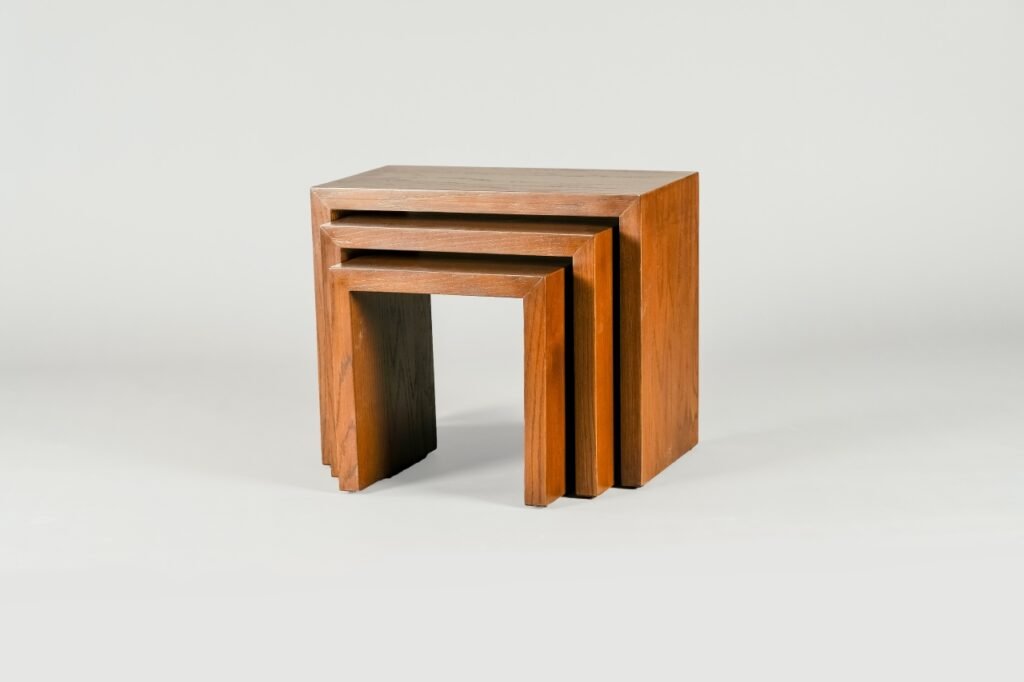
    The architecture or product designing process is both a constituent of designing according to functionality and trend. Both have to imagine interiors or exteriors keeping in mind the client requirement, materials, anatomy, and sustainability.  Designers have an eye for grids and patterns, an understanding of layout, plot drawings and plans, good communication and listening skills, and spatial design skills as they relate to dimension and structure.

    Skills Required for Product Design and Development

    There are some transferable skills from architecture to product designing.

    User Understanding

    Having empathy, i.e to understand and adapt to other person feelings and experiences, and bring that into designing the products. The habit of observing our surroundings as an Architect helps to perceive the thought process of the user.

    Architects have not only trained themselves to understand the psychology of other people but also to grasp the surroundings, vegetation, site analysis, and climate and accordingly derive concepts, so this knowledge makes an Architect the jack of all trades.

    Redo has taught a lot

    After getting a lot of redos, Architects develop a shield from which in turn helps them to give up on an idea or concept and move on to another fresh one real fast.

    This is really helpful in the product designing process, fast learning through repetitive trying is an essential requirement

    That'd be great!

    Research! Research! Research!

    A skill mastered by all architects is the art of research. The initial level is researching typology, then site, climate, sustainable techniques, or user anatomy. The various methods of researching are also explored through surveys, interviews, the internet, or books.

    This is a great advantage for product designing as it generates a sense of initiation and develops a proper, systematic procedure before beginning product design and development.

    Visual treat

    The habit of romanticizing a concept, or picturing a piece of barren land to a multistoried building is a commendable factor and this increases the visualization horizon and takes it to a higher level.

    Similarly, in product designing the key role is to visualize a problem and find a solution to it at the same time making it look aesthetically pleasing and treat to the eyes. The solution should also be presented or communicated to the client at the beginning stage. So, at the same time presentation and communication of visual ideas which are in the designers head should be explained to the end-user which brings us to the next – technical skills

    Technical skills

    Architects are comfortable with digital drawing and animation softwares for 3D views or walkthroughs, also are well versed with systematic thinking, and can simultaneously think about both smaller or bigger pictures i.e work on both intricate details and planning processes.

    This is effective for the product designing process. For designing the products the softwares which is used works on the same principle. Apart from this sketching also helps in the transformation.

    Some of the softwares are

    • Adobe illustrator
    • Adobe photoshop
    • Autocad
    • Blender
    • 3ds max
    • Grasshopper

    Architects that Work in Product Designing in India.

    Gomaads

    The firm started in 2013 that works on lifestyle product design and development made out of concrete and is started by Gopendra Singh and  Malavika Singh Gupta coming from architecture backgrounds.

    Their ideology is that concrete is a versatile material that can take many forms and can blend with the surroundings. Their firm is Noida-based.

    Studio Wood

    They are a collaborative design studio, who aims for product designing in India. The firm has three co-founders- architect (Sahej Bhatia), interior designer (Navya Aggarwal), and product designer (Vrinda Mathur) and together they create amazing furniture designs. The services are for residential as well as commercial.

    Saif Faisal Design Workshop (SFDW)

    This is a Bangalore-based interdisciplinary industrial design studio started in 2014. The studio not only works in furniture but also in Lighting, crafts, Urban Farming (Aquaponics), Architecture & Interiors, Brand Identity, Design Development, Creative Direction, Motorcycle design, Automotive racing & Jewelry Design. The founder Saif Faisal did architecture and works on the ideology of ‘essentialism.’

    UI/UX Design

    What is a UI/UX Designing?

    An UXer will work to ease the work of the user and improve the accessibility of the product.

    The product designers work on the requirements of the business compared to the UX designers who care about users’ needs.

    There are a few overlapping similarities between a UX designer and a product designer. To begin with, both designers will go through the design thinking process and maintain a human-centered approach when it comes to design. Both have a market-driven approach to their job. Also, both use the same type of software. Nowadays, both can be used interchangeably.

    Conclusion

    Architecture teaches us many design skills which can be transferred to many other design disciplines. It might seem difficult to give it all up but it is better to discover your true potential and take the leap. The core purpose of product designing is to solve problems and this is a quality mastered in 5 years of academic practice.

  • Effective insights on being a Product Designer as an architect

    Effective insights on being a Product Designer as an architect

    Introduction

    As an architect, you have a unique set of skills and expertise that can be applied to a variety of fields beyond traditional architecture. One such field that may be of interest to you is product design. Product design involves creating and developing physical products that are both functional and aesthetically pleasing. It is a field that requires a combination of creative thinking, technical expertise, and problem-solving skills, making it a natural fit for architects.

    In this article, we will explore the world of product design and discuss how architects can make the transition into this field. We will cover topics such as the role of a product designer, the skills required, and the opportunities available. We will also provide tips and resources for those interested in pursuing a career in product design as an architect.

    What is a product designer?

    product designer
    Product design

    A product designer is a professional who is responsible for creating and developing physical products. This can include everything from household items and furniture to consumer electronics and appliances. Product designers work with a variety of materials, including metal, plastic, wood, and textiles, to create functional and aesthetically pleasing products.

    The role of a product designer involves a combination of creative thinking and technical expertise. Product designers must be able to conceptualize and visualize new ideas, as well as understand the technical aspects of how a product will be manufactured and assembled. They must also be able to work with a team of engineers and other professionals to bring their ideas to fruition.

    Product designers often work in a variety of settings, including in-house design teams at large companies, small startups, and as freelancers. They may work in a variety of industries, including furniture design, consumer electronics, and industrial design.

    Skills required for product design

    Product design requires a unique set of skills that are different from those needed for traditional architecture. While architects are skilled at designing buildings and spaces, product designers must be able to create functional and aesthetically pleasing products. This requires a different set of skills and expertise.

    Skills for product designer

    ·        Creative thinking: Product designers must be able to come up with new ideas and concepts for products. This requires a strong sense of creativity and an ability to think outside the box.

    ·        Visualization: Product designers must be able to visualize and communicate their ideas through drawings, sketches, and prototypes. This requires a good eye for detail and an understanding of how to translate ideas into physical form.

    ·        Technical expertise: Product designers must be familiar with the technical aspects of product design, including materials, manufacturing processes, and assembly. This requires a good understanding of engineering principles and an ability to work with engineers and other professionals.

    ·        Problem-solving: Product designers must be able to identify and solve problems that arise during the design process. This requires strong problem-solving skills and an ability to think critically.

    ·        Collaboration: Product designers often work in teams and must be able to collaborate effectively with others. This requires good communication skills and an ability to work well with others.

    How architects can transition into product design

    As an architect, you have many of the skills and expertise that are needed for product design. Here are some steps you can take to transition into this field:

    Gain experience: To become a product designer, you will need to gain some experience in the field. This can include internships, part-time jobs, or freelance work. You may also consider taking coursework in product design or joining a product design club or organization. This will give you a chance to learn more about the field and develop your skills.

    2.     Build a portfolio: As with any design field, it is important to have a strong portfolio that showcases your work. This should include examples of your product design work, as well as any relevant architecture projects. Your portfolio should demonstrate your creative thinking, technical expertise, and problem-solving skills.

    3.     Network: Building relationships and networking with professionals in the product design industry can be crucial for finding job opportunities. Attend industry events and conferences, join professional organizations, and connect with others on LinkedIn to expand your network.

    4.     Consider additional education: Depending on your career goals and current level of expertise, you may want to consider earning a degree in product design or a related field. This can help you gain more in-depth knowledge and skills, as well as make you a more competitive candidate for job opportunities.

    5.     Find job opportunities: There are many job opportunities available for product designers, including in-house design teams at large companies, small startups, and as freelancers. You can search for job openings on job boards and career websites, or reach out to potential employers directly to inquire about openings.

    Opportunities

    Product design is a field that offers a wide range of opportunities for architects.

    Here are some examples of the types of positions that may be available:

    ·        Industrial designer: Industrial designers focus on creating products for commercial and industrial use. They may work on a wide range of products, including machinery, vehicles, medical equipment, and consumer products. Industrial designers must consider the overall design and functionality of the product, as well as safety and usability.

    ·        Furniture designer: Furniture designers create furniture for residential and commercial spaces. They may work on everything from sofas and chairs to tables and desks. Furniture designers must consider the overall design and functionality of the product, as well as materials, comfort, and durability.

    ·        Consumer electronics designer: Consumer electronics designers create products such as phones, laptops, and tablets. They may work on the overall design and functionality of the product, as well as the user interface and user experience. Consumer electronics designers must consider the latest trends and technologies, as well as usability and ergonomics.

    ·        Appliance designer: Appliance designers create products such as refrigerators, washing machines, and ovens. They must consider the overall design and functionality of the product, as well as safety and energy efficiency. Appliance designers may work on a wide range of products, including large appliances, small appliances, and commercial appliances.

    ·        Toy designer: Toy designers create products for children and adults. They must consider the overall design and functionality of the product, as well as safety and playability. Toy designers may work on a wide range of products, including traditional toys, educational toys, and electronic toys.

    These are just a few examples of the types of opportunities available in product design for architects. Other potential roles in product design include sports equipment designer, automotive designer, and home goods designer, to name a few. The specific job opportunities available to you will depend on your skills, experience, and interests.

    Tips for success in product design

    Here are some tips to help you succeed in the product design field as an architect:

    1.     Keep up with industry trends: Stay current on the latest trends and developments in the product design industry. This can help you come up with new ideas and keep your skills and expertise relevant.

    2.     Stay organized: Product design can involve a lot of different projects and tasks. It is important to stay organized and manage your time effectively to ensure that you are meeting deadlines and delivering high-quality work.

    3.     Continuously learn and grow: The product design field is constantly evolving, with new materials, technologies, and design approaches being developed all the time. It is important to continuously learn and grow, both through formal education and on-the-job learning.

    4.     Network and build relationships: Building relationships and networking with others in the industry can help you find job opportunities, get advice, and stay connected.

    Here are some courses and software that may be helpful for an architect looking to transition into product design:

    Courses

    ·        Product Design Fundamentals: This course, offered by the University of California, Berkeley Extension, provides an introduction to the product design process, including prototyping, testing, and manufacturing.

    Industrial Design
    Industrial Design

    ·        Industrial Design: This course, offered by the Massachusetts Institute of Technology (MIT), covers the principles of industrial design, including material selection, prototyping, and user-centered design.

    ·        Product Design and Development: This course, offered by the University of Illinois at Urbana-Champaign, covers the principles of product design and development, including design thinking, prototyping, and manufacturing.

    Software

    Fusion 360
    Fusion 360

    ·        Sketch: Sketch is a popular design software for creating wireframes, mockups, and prototypes. It is often used in product design to visualize and test ideas.

    ·        AutoCAD: AutoCAD is a popular computer-aided design (CAD) software that is commonly used in product design to create detailed technical drawings.

    ·        SolidWorks: SolidWorks is a 3D CAD software that is commonly used in product design to create detailed 3D models and simulations.

    ·        Fusion 360: Fusion 360 is a 3D CAD software that is commonly used in product design to create detailed 3D models, simulations, and prototypes.

    It’s worth noting that these are just a few examples, and there are many other courses and software available that may be helpful for an architect looking to transition into product design. It’s important to do your research and determine which resources will be most helpful for you based on your goals and needs.

    In conclusion, product design is a field that offers a wide range of opportunities for architects. Architects bring a unique skill set to product design, including creative thinking, technical expertise, and problem-solving skills. To succeed in product design, it is important to stay current on industry trends, continuously learn and grow, and build relationships with others in the industry.

    There are many courses and software available that can help architects develop the skills and knowledge needed to transition into product design, including Sketch, AutoCAD, SolidWorks, and Fusion 360. Some common job opportunities in product design for architects include industrial design, furniture designer, consumer electronics designer, appliance designer, and toy designer. With the right skills and experience, architects can make the transition into product design and use their unique expertise to create functional and aesthetically pleasing products.