
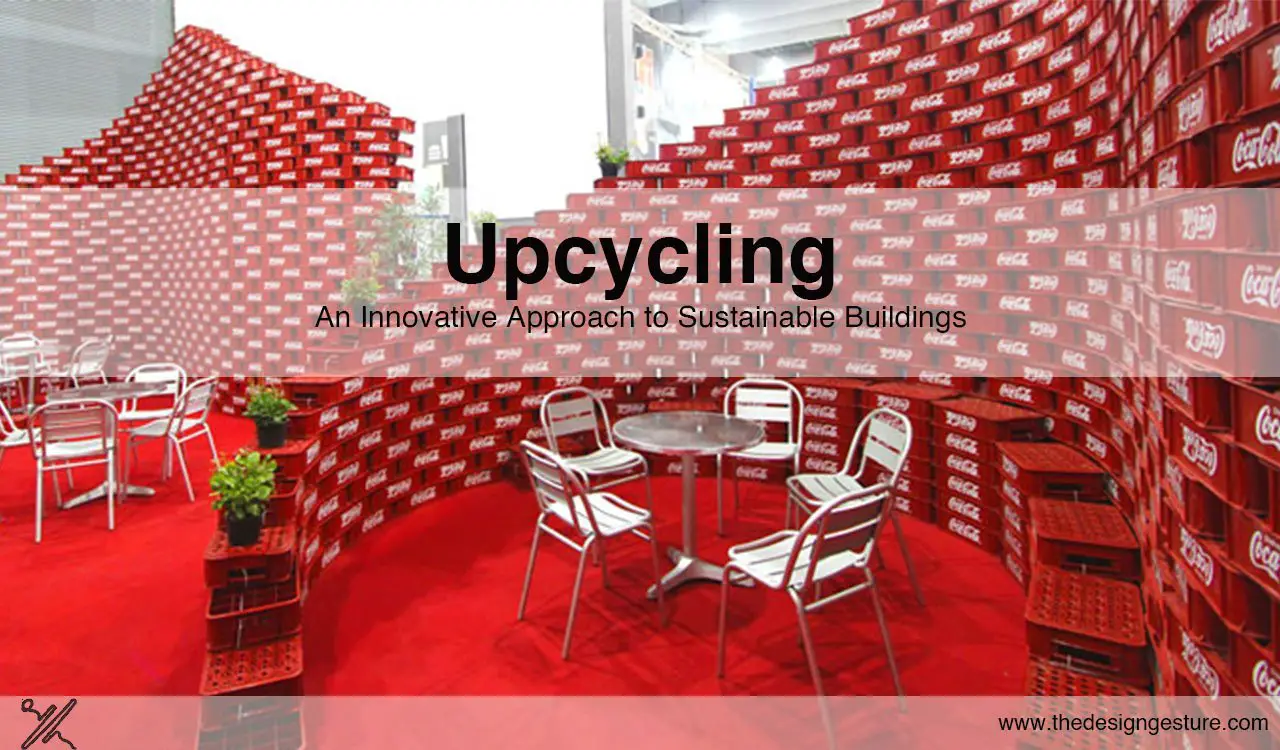
Architecture is an art form that expresses its identity-driven by a plethora of social-cultural aspects. It has a multitudinous window of opportunity to solve the fundamental challenge of humankind to inculcate the intrinsic understanding of creating and adopting a non-destructive establishment to lead us to a sustainable future. Upcycling is a practice that can help reduce the amount of waste and make it reusable for its lifetime.
Problems in Architecture
There have been several notable discoveries regarding enhancing the usability of the space and construction execution. Despite all of it, the understanding of present-day architectural context drives us the fact that there are several challenges and concerns regarding the adoption of architectural hypotheses. Concerns that associate us with unsustainability and cause sustainable buildings.
Thus, the following will be a few revelations of issues unresolved or partially resolved by the architectural fraternity.
Unsustainable and Sustainable structure
The conventional idea of constructing a building of any sort in the modern world brings to the very idea of utilizing steel and concrete. As construction is the largest industry to be using steel at present, around 50% or more of steel is consumed annually for building any sort of architectural project. In 2020, on average, every tonne of steel produced led to the emission of 1.851 tonnes of CO2 into the atmosphere. Whereas its counterpart, concrete is no good either, cement makes for about 2.4% of global carbon emissions.
Material Wastage
Construction methods and techniques of the highest efficiency still led us to wastage of material. Overabundance, harmed, or scrap building materials frequently end up as waste after construction is finished. Many development projects include wrecking a current design. In that case, the construction waste puts its number even before the construction starts at the site.
Considering the sort of material, construction waste can be classified into the following kinds:
- Insulation And Asbestos Materials
- Concrete, Bricks, Tiles, And Ceramics
- Wood, Glass, And Plastic
- Paints, Varnishes, Adhesives & Sealants
- Cement
Inefficiency of materials
Materialistic inefficiency in the construction industry implies the fact that the true potential of the material is not put to use. The construction sector is a little inefficient, would be an understatement. The inefficient factor goes hand in the hand with the material and entire construction process. The measure of time, cash, and work squandered put a gigantic adverse consequence on the business. Green building materials may be a way to go to combat the inefficiency of materials.
Cost Inflation
The added factor of materialistic inefficiency to materialistic wastage raises the cost of building a house exponentially. All of it makes it even harder for an individual to own a good house of his own. In a study, the analysts decided affordability by individuals’ capacity to pay 30% of their pay or less on the expense of lodging, which might incorporate their home loan, insurance, and tax.
Construction Industry & The Environment
There are many cultural effects of construction. Techniques, materials, and tasks all add to the environmental effect. The ecological effect of construction adds to global warming. Construction projects produce a lot of carbon dioxide and methane. Representing 25 to 40 percent of the world’s total carbon emissions. Because the construction business is expanding, so will its harmful impacts that create the requirement of sustainable construction materials.
Green buildings are referred to buildings that reduces or counters the negative impact a building makes to the environment. A building may be associated with a green building depending upon the characteristic of the construction, operation and material used.
People and Architecture
While buildings satisfy the most fundamental human necessities as safety and security, architecture affects the enthusiastic condition of any individual who collaborates with them. Whether or not intended, a structure can incite a scope of feels like having a place, amazement, dread, or trust. However, architectural advancements to change several communities’ lives come not simply through sincere goals, but through powerful exploration and investigation.
The Architectural Solution
In the light of architectural problems faced by individuals and communities around the world, there has to solve it. Given the fact how human emotions can be triggered through unique architecture. It would be of no surprise in the future to wake up one day to see no homeless population. People will be sure in an anticipation of that day, but for now, let’s discuss what roadmaps can we take to implement green architecture widely?
Upcycling Definition
Upcycling, otherwise called innovative reuse, is the most common way of changing results, squander materials, futile, or undesirable items into new materials or items seem to be of more prominent quality, like artistic worth or environmental worth. It is a type of reusing where, rather than transforming waste into new materials, you can take an item that you would throw and give it another utilization throughout everyday life. As opposed to reusing by utilizing a recycling bin, making it a sustainable building material.
Benefits
The environmental advantages of upcycling are mammoth, besides limiting the volume of disposed of materials and waste being shipped off landfills every year, it likewise decreases the requirement for creation involving new or unrefined components which implies a decrease in air pollution, water pollution, and ozone depletion. Thus, helping create a better future.
Considerable architectural benefits of upcycling can be:
- Creativity
- Architectural Expression
- Cultural Identity
- Efficiency of Materials
- Sustainable
- Cost Reduction
Architectural Examples of Upcycling
Café Infinity by Rahul Jain Design Lab

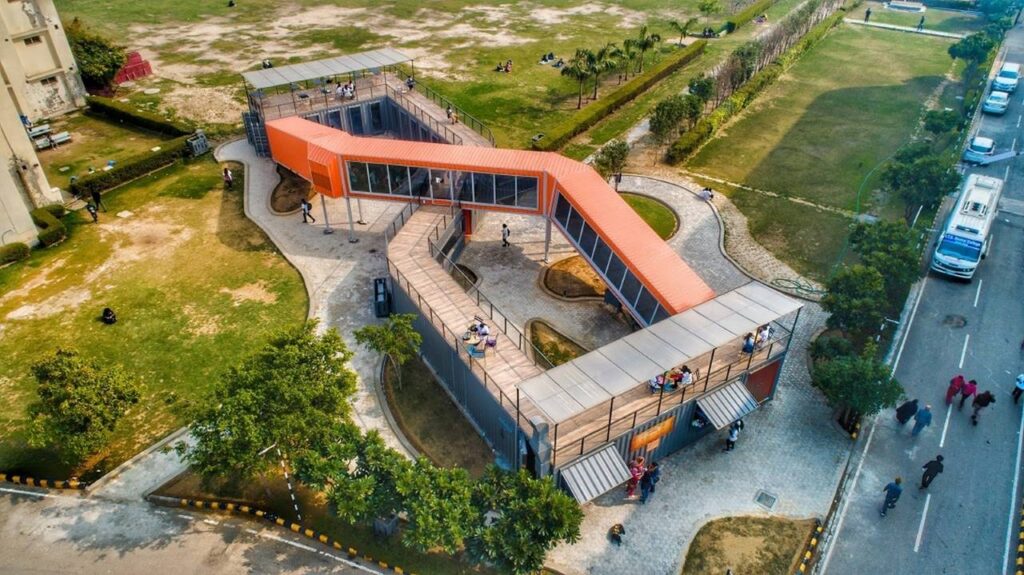
Café Infinity’s name derives from its resemblance to the infinity symbol. The structure is made purely based on 40 shipping containers. Structural and useful components are organized with the possibility of maintenance and with an idea of sustainability. Arranged with two side patios with boundlessness circle around for users of medical college hospital making accessible their own space.
The Canaan (House), Kerala, India


The Canaan is a sustainable house made of sustainable green building materials based in Kerala designed and executed under Ashams Ravi in 2019. The two-storeyed house is built primarily of recycled waste. Bricks, bamboo, Mangalore tiles were all recycled from the site to build this house, constituting 90 percent of recycled material. The focus was to derive a sustainable solution; therefore, the new house was curated with time as the material was collected from the demolition of the previous building.
Eco ARK, Taipei, Taiwan

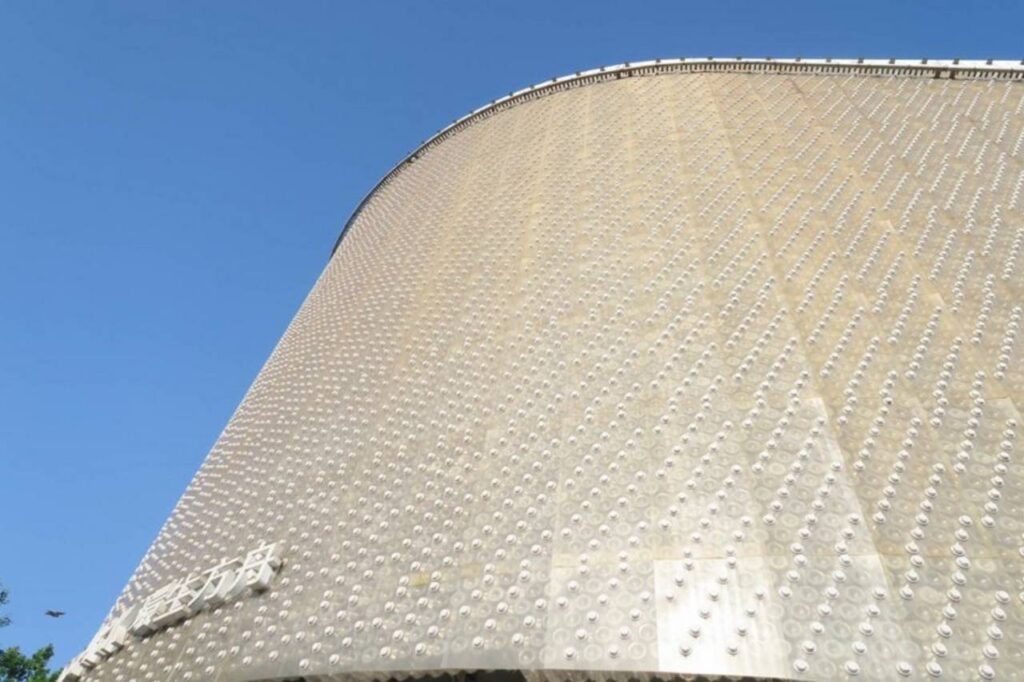
‘Polli-block’ is produced using 100 percent reused polyethylene terephthalate polymer, making it a sustainable building. It is clear, protected, tough, and solid because of the interlocking construction with lightweight shade divider frameworks. A drape divider framework is shaped using interlocking of jugs staggered and locked using a plastic layer with covers. Developed to bring issues to light regarding the significance of reusing plastic. Aside from a low carbon impression and emanation, it is an added aesthetic 9-story structure.
Upcycled Office, Austin, US

Upcycling doesn’t allude just to materials. Regardless of whether buildings can’t be saved, their symbolism can be. The versatile reuse of an old distribution center was reused by making a more modest multi-occupant office by reusing 100 percent of the old design.
The point was to go past involving reusing materials for extra and interior components too. Old structure components, like exhaust fans, were likewise reused as decorative elements. The old and interior space was changed with imaginative spray painting and stylistic theme components inviting and empowering more individuals for cooperation and association under one rooftop. Even though sustainable construction materials have not been put to use, pre-existing materials are used efficiently.
Zero Waste Bistro Restaurant, New York, USA
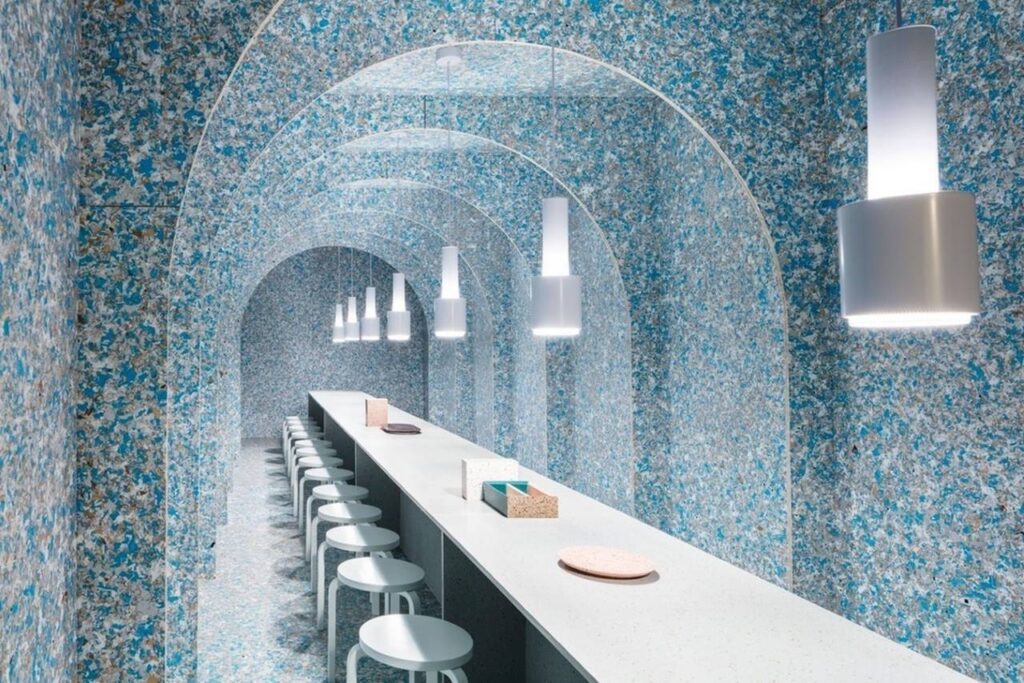
Planned with the way of thinking of ‘refuse, reduce, reuse and recycle’ zero waste bistro was a genesis of WantedDesign during NYCxDesign and exhibited that great plan can likewise be a major piece of the roundabout economy and use of green building materials. The material used is recycled food and refreshment containers transformed into environmentally well-disposed structure materials by ‘The ReWall Company’.
Conclusion
Upcycling implies not simply tracking down esteem in old materials, building parts, or pictures, yet in addition to changing worth itself. Tracking down stylish and monetary legitimacy in the blends, deformities, and recombination of upcycling is pretty much as significant as the real reuse itself.
They advance standards of utilization and hypothesis in two bearings: that of the high speed of life and that of the preservation of a supposed unique condition… Architecture as a venture, then again, accepts the systems of craftsmanship: the religion of creation, fetishist fixation on the first goal of the artist, and overprotection of the finished structure from change.
Thus, upcycling might be the solution not just for environmental beliefs, but also in terms of architectural conservation.