
Tag: vastu for home

  • Vastu Shastra Tips To Keep In Mind To Promote Positivity

    Vastu Shastra Tips To Keep In Mind To Promote Positivity

    Vastu Shastra establishes the principles of design, measurement, land preparation, layout, spatial arrangement, and spatial geometry of houses or any building structure; sometimes combined with traditional Hindu (or even Buddhist) religious beliefs. Vastu theory provides the harmony between living space and nature. The concept of Vastu Shastra is the organization of spaces and forms in a room or a group of rooms or structures, based on their functions connected with each other, and their purpose and use.

    History

    Origin of Vastu Shastra

    The origin of Vastu Shastra in India. Vastu Shastra originated from Sthapatya Veda, which is part of Atharva Veda. This science was limited to architects in ancient times, called Sthapathis, and was transmitted orally or in handwritten monographs. Vastu Shastra is also mentioned in our ancient scriptures, such as Mahabharata and Ramayana. The Setu Bridge built by Lord Ram is based on the Vastu principle. The Harappa and Mohenjodaro excavations also showed that Vastu Shastra had an impact on the Indus Valley civilization.

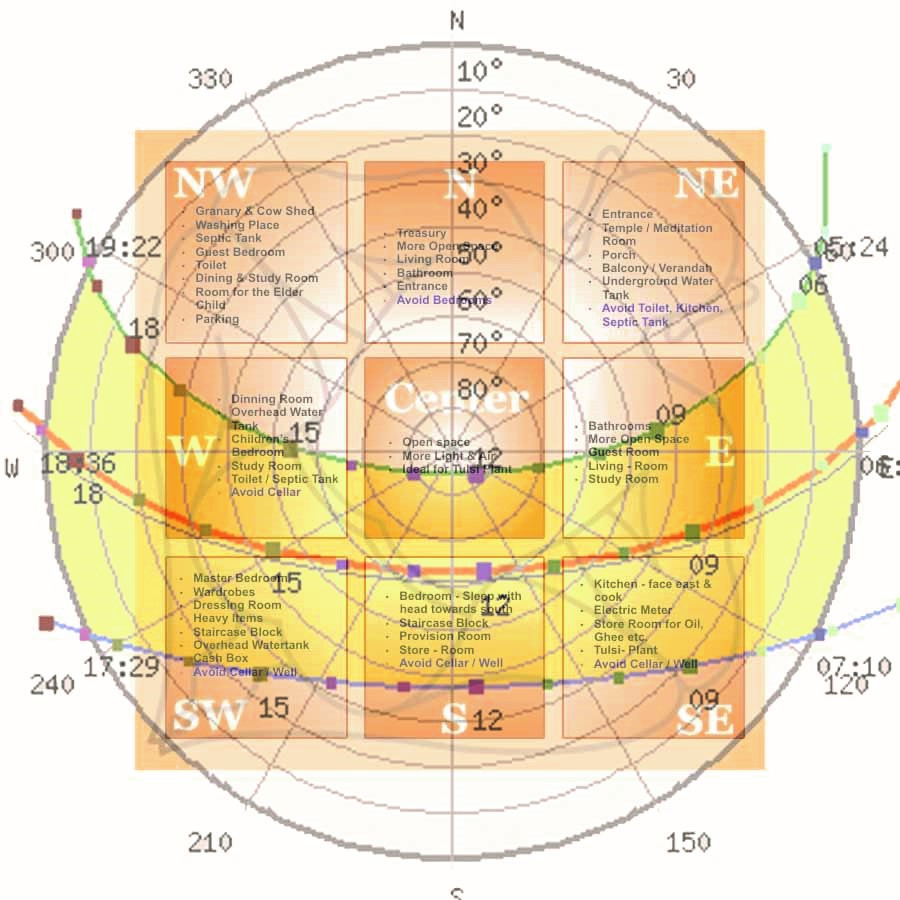
    Importance of Sun path

    The first principles were written according to the rays of the sun and their different positions in different periods. Vastu Shastra considered the change of sunlight intensity in different places, from sunrise to sunset, and between seasons in the architectural design.
    Relation with Human body
    Vastu Shastra Tips To Keep In Mind To Promote Positivity Vastu Shastra establishes the principles of design, measurement, land preparation, layout, spatial arrangement, and spatial geometry of houses or any building structure; sometimes combined with traditional Hindu (or even Buddhist) religious beliefs. Vastu theory provides the harmony between living space and nature. The concept of Vastu Shastra is the organization of spaces and forms in a room or a group of rooms or structures, based on their functions connected with each other, and their purpose and use.
    Vastu Purusha Mandala
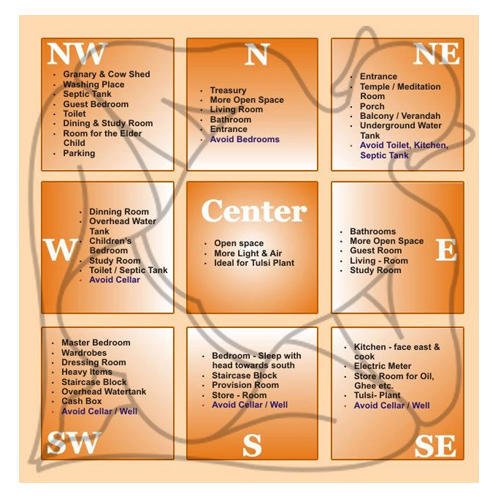
    1. The Vastu Purusha Mandala, reflects how Vastu Purusha was fixed down by Brahma and 44 gods. The head faces northeast and feet face southwest.
    2. The graph is divided into 9×9 = 81 parts. It shows the positions of the 45 gods (32 in the outer circle and 13 in the inner circle) holding Vastu Purusha. These symbolic gods control all aspects of life and have certain internal qualities.
    3. The functions of the rooms located in each area of ​​the house are determined by the nature of the god who manages that particular area.

    Panchbhutas(Five elements)

    The Earth

    Earth is the first element of Vastu Shastra. Because Earth has gravity and magnetic quality, it affects human life.

    Water

    Water or Jal is considered the second most important factor in Vastu after Earth. However, water is one of the most important elements of our body and two-third of the earth’s surface is composed of water.

    Fire

    After Earth and Water, Fire or Agni is Vastu’s most important factor. Fire is connected to the sun, which is known for its vitality and strength. The sun is a source of natural light and an important source of energy.

    Air

    Air or Vayu is an important factor of nature without which all life reaches at the end. The air element is related to our touch and solid sense. This element has an appropriate direction in Vastu in the direction of the northwest. Air contains several gases on Earth, which are essential for human lives, such as oxygen, nitrogen, hydrogen, and carbon dioxide.

    Space

    There is no limit to spaces or Akash. This element is related to our auditory sense. Space is full of galaxies, stars, sun, moon, constellation, and all nine planets. The space affects human life and Vastu, providing adequate guidelines for space, which is that the construction of the house is to bring the light to the center of the house.

    Nava-Dikpala(Cardinal Directions)

    East (Purva): This direction is governed by Lord Indra, who is called the King of the Gods. It grants wealth and joy of living.

    SouthEast (Angneya): This direction is ruled by Agni, Lord of Fire. He gave us a good personality and all the good things in life. Fire is a source of health because it is related to fire, cooking, and food.

    South (Dakshin): This direction is the death god Yama. He is the embodiment of Dharma, eliminating evil and blessing. It is a source of wealth and happiness.

    SouthWest (Nairutyaa): This direction is led by the god Niruti who protects us from evil enemies. It is the source of cases of character, behavior, longevity, and death.

    West (Paschima): This address is commanded by Lord Varun, Lord of Rain. He bestows his blessings in the form of natural rain, which brings prosperity and joy to life.

    NorthWest (Wayavya): This place is commanded by Lord Vayu, who brings us health, strength, and longevity. It is the source of change in the course of business, friendship, and hostility.

    North (Uttara): This direction is controlled by the God of Kuber.

    NorthEast (lshaanya): This place is overseen by Lord Eeshaan and is the source of wealth, health, and success. It brings us wisdom and knowledge, freeing us from all suffering and misfortune.

    Maharishi Vastu Architecture

    Maharishi Vastu architecture uses Vedic principles to ensure that the building has a positive impact on its occupants. They are as follows:

    1. Correct direction
    2. Correct room arrangement:
    3. Right Proportion
    4. Non-toxic natural materials and solar energy
    5. Maharishi Vastu also considered other important influencing factors, such as:
    6. The slope of the earth
    7. The shape of the earth
    8. The unobstructed sun
    9. The impact on the environment, including bodies of water
    10. auspicious hours

    Materials

    When building a new house, only new bricks, wood, and materials should be used. Artificial materials like plastics and asbestos are unacceptable building materials. The reason is that inorganic materials are not considered adequate conductors of cosmic energy. Old building materials should not be used to construct new buildings. Otherwise, those old materials can repeat the negative events that happened in the old house. Using old things in new buildings can lead to loss of wealth.

    • High-quality soil and cement should be used.
    • To live in a healthy home, you need to build your home with natural, non-toxic materials.
    • Wood from thorn trees should not be used because it will have a negative effect.
    • You should also not use materials that have been stored for a long time.
    • The iron frame should only be used when necessary.
    • Wood is more magnetic under the action of the energy of the earth, which makes the building more dynamic.

    Top of Form

    Bottom of Form

    Feng Shui

    The philosophy of Feng Shui is to organize the living space to create a balance with the natural world. The goal is to use energy power and establish harmony between the individual and his environment.

    Origin

    Feng Shui is composed of two Chinese words, Feng and Shui which mean wind and water respectively. This idea is taken from an ancient poem, which defines that human life is connected with the surrounding environment.

    The Feng Shui Bagua Map

    Bagua is a Chinese word that means eight areas. Each of these eight areas is related to a different living environment, such as family, wealth, or career. Each of these areas has corresponding shapes, colors, seasons, numbers, and earth elements.

    The Five Elements
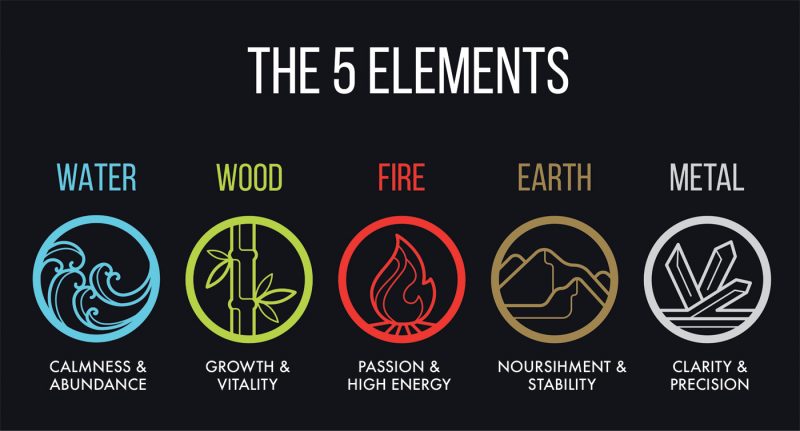
    The five elements, earth, metal, water, wood, and fire, come from the Taoist traditions. These elements are five interrelated stages of life and work together to create a complete system. Under normal circumstances, feng shui practice can balance these five aspects of your home and each of your life areas or Bagua.

    Difference between Vastu shastra and Feng Shui

    Vastu Shastra and Feng Shui are ancient sciences and have a common purpose that is to harmonize energy with the environment. Vastu Shastra originated in India; Feng Shui is an ancient Chinese philosophy that balances the forces of the universe in architectural space.

    In Feng Shui, the main elements that must be coordinated in the architectural space are water, wood, fire, gold, and earth. In Vastu Shastra, “wood” and “metal” are replaced by air and space respectively. The process of balancing the above-mentioned main elements and using treatment/remedial measures in a specific area of ​​a building or living space is different for both sciences.

    Vastu in Homes

    Buying a plot/house

    The external environment and surrounding environment of the house may have a significant impact on the proprietor’s providence. Therefore, it is important to lay a solid foundation by choosing the right location with open space in a pleasant green environment, as this will promote peace, good health, good luck, and positivity when you enter your new home. 

    • The bungalow or villa is directly connected to the surface of the land, so the land should be chosen wisely. 
    • Compared with apartment owners, independent owners are more likely to build houses that meet Vastu standards. 
    • According to Vastu Shastra, the shape of your house should never have an irregular design, because irregular shapes will attract negative emotions. Therefore, when building a new house, always choose the asymmetric design because it will bring prosperity, peace, and health. 
    • In Vastu Shastra, it is believed that the spiral staircase attracts negative energy, therefore the staircase must always be straight to attract positive energy.

    Main Entrance

    The front door is like an opening through which any energy can enter your home; therefore, the entrance to the house must always be in a favorable direction. 

    • The front door should open in a clockwise direction. 
    • Your front door exit should face east, north, or northeast to bring positivity, good luck, and prosperity. 
    • Avoid blocking obstacles in fronts, such as shoe racks, trash cans, or water-based decorations, as this will restrict positive energy from entering your home. 
    • Use high-quality wood to construct the front door
    • The size of the front door should be large because it is considered a victory door to success, health, and good luck. 
    • Always make sure that the front door has bright lights because it will generate positive energy.
    • Avoid painting the front door black, because black will attract negative energy, and use bright paint on the front door because it attracts positive energy.
    • Avoid hanging antiques or animal faces on the front door, because it will bring boredom and doom.

    Living Room

    The living room is the center point of most family and social gatherings. Therefore, always keep it clean and make the living room look more spacious.
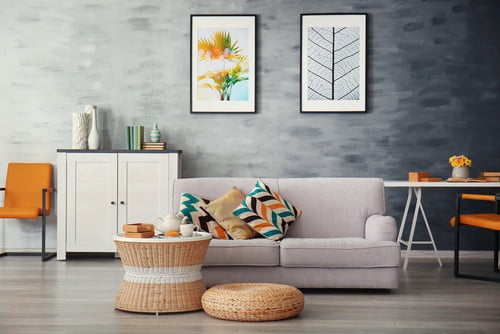
    • According to Vastu, the living room should face north, northeast, east, or northwest. 
    • According to Vastu Shastra, heavy furniture should be placed on the southwest or west side, while electronic equipment should be placed on the southeast of the living room. 
    • The living room is considered the face of your home, so it is important to decorate it vigorously and ensure that all corners of the living room are well lit, because the corners are a powerful source of energy. 
    • Apply a mix of vibrant colors and earth in the living room to create a balanced atmosphere in the room. 
    • According to Vastu Shastra, the mirror in the living room should be placed in the north.
    • Decorate the living room with a beautiful crystal chandelier, as it generates a large amount of light by attracting.

    Drawing Room

    • Never place rafters or beams on the ceiling in the living room, because sitting under it can cause confusion and stress. 
    • Paint the walls white or light green, to promote a sense of unity and affection between guests and residents. 
    • Window and door light curtains are used on the northeast wall of the living room, and thick curtains are used on the southwest wall of the living room. 
    • The northeast corner of the living room should be clean and tidy.
    • Leave some space in the northeast corner of the room.
    • To generate positive energy and enhance emotions, display paintings representing the beauty of nature or landscapes to add tranquility to the room. 
    • Hang a heavy chandelier on the south or west side of the room. Avoid hanging it in the exact center of the room(Brahmasthan).
    • The guests must sit in the northwest of the room. 

    Bathroom

    • Ideally, the bathroom can be placed in the east of the house. 
    • Drain pipes must be installed in the northeast area. 
    • Restrooms must be constructed on the west or northwest side of the building. 
    • The shower and bathroom faucet can be installed on the north wall which also fits the mirror.
    • If the bathroom has an attached toilet, the toilet should be on the west or northwest side, a few inches off the ground. 
    • Geyser is best located in the southeast corner. 
    • The bathtub must be in the west and the sink can be in the northeast. 
    • There must be windows or ventilation equipment in the east or north. 
    • The bath must take the west side. 
    • Choose bright, soothing colors for your bathroom walls. 
    • The mirror should be placed on the east wall. 
    • If there is a closet, it should always be on the southwest side of the bathroom. 
    • The slope of the bathroom floor must be north and east for the water to flow to the northeast side of the bathroom. 

    Bedroom

    A bedroom is a place where you want to spend exclusive quality time. Vastu Shastra has been used for many years to design a balanced and organized equation in the environment to absorb positive and progressive energy, which will have a significant impact on your health, wealth, and interpersonal relationships.

    • According to Vastu Shastra, to achieve good health, prosperity, and strong bonds in your relationship, please make sure that the direction of the bedroom is southwest instead of northeast or southeast.
    • Children’s rooms must not be located in the southwest, since it affects their health and education. Make sure that the room is not under the kitchen or bathroom, as it can cause illness. 
    • Always use neutral or earth colors to promote the tranquility and pleasure of the bedroom, and do not paint the bedroom walls dark or black.
    • Make sure your bed faces southwest and your head faces west, but avoid sleeping under the rafters of the house. 
    • Avoid placing mirrors or any reflective objects in front of the bed as it will affect your sleep and negatively affect your relationships. 
    • The balcony should be built in the east or north of the house. The ideal location for the balcony is north and east, where there is constant sunlight from morning to night.
    • The west and south sides are too hot to sit on, so they should be avoided.

    Kitchen

    The kitchen has a great impact on our health and interpersonal relationships because it contains the main energy resources of life’s food. Therefore, your kitchen should always radiate positivity through its decoration. 

    • According to Vastu Shastra’s advice, the kitchen windows should face north, northeast, or east. 
    • Apply bright colors to exude more positivity in the kitchen environment. 
    • A kitchen is a place made up of all the “Panchbhootas” earth, fire, water, air, and spirit. 
    • According to the advice of Vastu Shastra, Agni is the main source of energy for the kitchen, and Agni is prevalent in the southeast of any house; therefore, the kitchen should be located in the southeast of the house. 
    • If the kitchen is located in the north, northeast, or southwest, it will damage interpersonal relationships and can cause strong differences of opinion between family members. 
    • According to Vastu Shastra, facing to the east while cooking will transfer positive energy to the food, reflecting your health, happiness, and peace of mind. 
    • According to Vastu Shastra, all electrical kitchen appliances are strongly recommended to be placed in the southeast area of ​​the kitchen. 
    • According to Vastu Shastra, do not place sinks or sinks parallel to or adjacent to kitchen appliances such as gas or microwave ovens. Because the nature of fire and water are different. 

    Pooja Room

    Pooja rooms should always be located on the north, east, or northeast side of the house. 

    • When worshiping, look east/north.
    • The height of the idol should not be greater than 9 and less than 2. 
    • Pooja rooms should not be built on the bedroom or wall adjacent to the bathroom wall.

    Study Room

    A study is a place where a person sits quietly and concentrates on studying. This room must be located in the correct location and direction, following the principles of Vastu. 

    • The study room should be located on the northeast/east or west side of the home. 
    • Students should face east/north when studying. 
    • When studying, the beam should not go over your head. 
    • The study room should be well lit, and you should not look up at the blank wall or window while studying. 
    • It is better not to have a toilet in the study room.

    Guest Room

    • The guest room should be built in the northwest of the house. It is a clear and suitable place for guests to stay at home. You can also plan to build south-facing guest rooms. 
    • The northeast door faces east; the northeast door faces north; the southeast door faces south and the northwest door faces west are the best options.
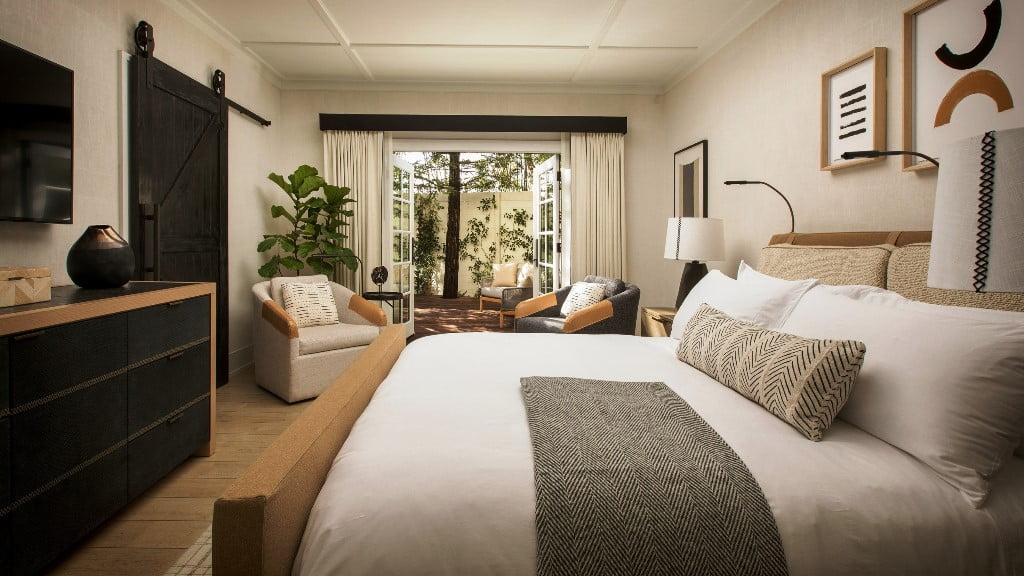
    Vastu Shastra Tips To Keep In Mind To Promote Positivity Vastu Shastra establishes the principles of design, measurement, land preparation, layout, spatial arrangement, and spatial geometry of houses or any building structure; sometimes combined with traditional Hindu (or even Buddhist) religious beliefs. Vastu theory provides the harmony between living space and nature. The concept of Vastu Shastra is the organization of spaces and forms in a room or a group of rooms or structures, based on their functions connected with each other, and their purpose and use.
    Vastu shastra for Home-Guest room

    Storeroom

    The storage room is a place to store garbage items, but the room should not increase garbage items. If it is put in the wrong place, the amount of garbage will increase or it may be permanent. 

    • The storage room should be located in the north western part of the home because it helps to provide good storage space and minimizes the possibility of grain shortage. 
    • The door to this room can be built in any direction except the southwest and should have two shutters. 
    • The window in this room should be to the east or west. 
    • The color selected in the warehouse must be white, yellow, or blue.

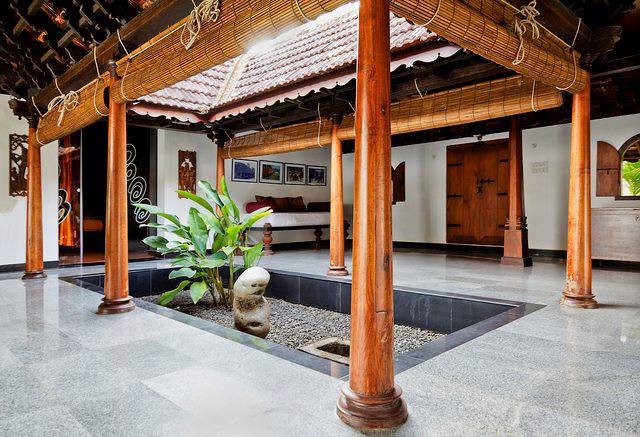
    Courtyard

    The courtyard is a good place to create a space for rest and relaxation.

    • Depending on the house, the center of vastu shastra is the best location for the courtyard.
    • The courtyard floor can be concrete, cobblestone or stone.
    • Wood or cane furniture in a courtyard is advisable.
    Modern Application of Vastu

    Modern Indian architecture is based on our ancient architectural forms and practices, combining traditional techniques with modern technology. The application of Vastu Shastra is a Vedic science and construction technique, which has nothing to do with time, but eternal.  The structural engineering and building techniques that were used by ancient architects are still used today, so the obsolescence or redundant problems of Vastu Shastra do not arise. It can be said that the Vedic classics of modern architecture are similar to ancient science, but the difference lies in the treatment of the concepts.

  • Vastu for East Facing House: A Planning Solution for 21st Century

    Vastu for East Facing House: A Planning Solution for 21st Century

    When it comes to designing houses, it is always advised to build east facing houses. The orientation of a plot is a big factor in its practicality and appeal for year-round use. Rather than just dealing with the layout and direction of a house it also deals with shades of colors, patterns, and design elements.

    East facing House Vastu Plan
    East facing House Vastu Plan

    East direction– The east is a very powerful direction and is ruled by the Hindu deity, Lord Indra responsible for rain, prosperity, and power. The representative planet is the sun which itself is a bigger and higher power. Sun gives growth to live, vegetation; so the east direction is utilized for growth. The east direction should always be kept open and clean. Constructing heavy walls, poor ventilation in this direction will provide a stagnant lifestyle. Strictly avoid placing staircase, bathrooms, or storage room in the east direction.

    Extension in the east direction

    Extension of plot or space towards east direction can be auspicious. The owner can buy an adjacent plot/site and merge it with the existing house or plot, keeping in mind certain Vastu tips such as measurements of the extension plot, existing door facing

    Brahmasthan in Vastu

    According to the ancient architectural system, Vastu Shastra, the central zone of the property is the most powerful area, the holiest zone known as Brahmasthan. All the directions meet at the center; therefore the Brahmasthan scatters or distributes the energy to the entire property. Not just houses, Brahmasthan also has importance in offices, factories, and other commercial buildings.

    Identifying Brahmasthan

    It is always advised to keep the Brahmasthan space vacant to see its significance. As it is believed to be the central area, all roots of the energy, nothing should be constructed there.

    You need to follow a set of rules to keep the area free from obstacles:

    1. Easily divide the plot in 8 directions. Starting from east to west and again from north to south.
    2. Now divide the 8 parts into 64 equal parts, the 4 equal squares will get at the centre of the plot will be the Brahmasthan.

    Important tips for Brahmasthan in Vastu

    1. It is crucial to keep the area non-obstructive so you can plan the main hall there.
    2. In the Brahmasthan, you can have sky open areas like the courtyard but never use it as a bathroom or for the placement of septic tank.
    3. For the good health of occupants, avoid kitchen in the central area.
    4. Avoid pillars or columns or beams in this area.
    5. Do not design a staircase in the centre.
    6. If in confined space, make sure not to have any furniture there.
    7. Avoid sleeping in that zone.

    Myths about east facing house Vastu

    There are certain misbelieves and myths due to a lack of understanding and misinterpretation of the ancient text of Vastu Shastra. The following are some of the common myths regarding east facing houses or east facing building plan:

    1. Causes Anxiety and Depression.
    2. Leads to Financial loss.
    3. Leads to illness and chronic diseases.
    4. Recurring of accidents.
    5. Obstacles in success and prosperity.

    Vastu points to keep in mind while buying a plot

    1. History- the history of the plot is essential to determine the future of it as well. It is important to know what kind of structure existed earlier on the plot and its significance. For example if it had a chemical plant then the soil would be full of chemical waste, if there was a graveyard earlier, then it’s not suitable for construction.
    • Shape- it is advisable to buy square or rectangular shaped plots as it balances the energy flow. Irregular shaped plots such a triangular or hexagonal mustn’t be purchased at all as some corners would be cut and extended beyond normal standards.
    • Astrological Calculations- Vastu without astrology is basically a house without foundation. So it is important to check all Vastu calculations and numerology. Firstly, to establish compatibility between the land and buyer it is advised to check the astrological chart.
    • Soil quality and its contents- ages ago, different colours of soil were considered for different sections. But due to increasing pollution and industrialisation, the quality of soil is not the same anymore. One must test the soil before construction or buying.

    What is an east facing house?

    The main entrance of a house which is towards the east direction is known as an east facing house. According to many people, the house is east facing if there is a road on the east side of it, which is incorrect. It is important to remember that the direction of a house is determined by the position of its main door; therefore terming it as east entrance Vastu.

    Are east facing house good or bad?

    It is believed that houses that are more spacious and open in the east are blessed with good fortune and luck. Houses that are broad in space and are at a lower level toward the east direction than any other direction are considered to be the luckiest.

    Advantages and disadvantages of east facing house

    While the south and north facing homes have the best maximizing energy efficiency in a typical climate, many people opt east facing house for aesthetic purposes and lifestyle changes/habits. The orientation, depending on the type of person and their individual preferences impacts the occupants well being.

    Advantages

    1. The house radiates with light and positive energy, as the home behind to fill with sunlight at the crack of dawn.
    2. Provides shade in the backyard during summer mornings, while providing a gentle warm light in the evening.
    3. The second best placement for capturing solar heat and sunlight during winter months.

    Disadvantages

    1. Front yard, porch is likely to be hot throughout the first half of the day.
    2. Subpar energy efficiency compared to north and south facing houses.
    3. Sunlight glare through the front windows or openings can be undesirable or uncomfortable.
    35’-9”x 28’-9” east facing house Vastu plan
    35’-9”x 28’-9” east facing house Vastu plan

    Vastu tips for east facing house

    According to east facing house Vastu, the properties are considered to be benefitted for buildings and multi-story apartments. Residences and bungalows in this direction are not counted amongst the best choices.

    Vastu tips for east facing building plan

    1. For the construction of east facing building plan, it is important to follow Vastu-complaint house plan, to ensure the flow of positive energy inside.
    2. You can consult an architect or a civil engineer to come up with your own customized plan based on Vastu guidelines.

    Vastu tips for garden

    To have a healthier environment it is advised to plant the following plants for east facing homes:

    1. Lucky bamboo plant
    2. Holy basil plant
    3. Neem plant
    4. Money plant
    5. Plum Blossoms
    6. Lotus
    7. Aloe Vera
    8. Banana plant
    Vastu tips for garden
    Image by Denise Husted from Pixabay 

    Vastu tips for the main door

    1.  As per east entrance Vastu, ensure that the entrance is exactly in the middle and not in the south-east or north-east.
    2. If the house entrance is in the north-east corner, make sure that the main door doesn’t touch the north-east corner or leave a gap of 6 inches between the wall and the main door.
    3. Place the main door in the 5th pada as attracts respect, fame and recognition.
    4. You can also use 3rd, 4th, 6th or 7th padas for the main door.
    5. Avoid 1st, 2nd, 8th and 9th padas for planning the main door.
    Vastu tips for the main door
    Image by Free-Photos from Pixabay 

    Vastu tips for interior wall colours

    1. For decorating an east facing room which will receive a ton of sunlight in the morning, paint it in a subtle colour by visualizing both natural and artificial lights.
    2. Blue and green as more popular choices for painting east facing rooms.
    3. Blue mixed with a tiny of grey can make the room look cool.
    4. Aqua shade can add a feeling of freshness and tranquillity to the room.
    5. If looking for neutral tones, go for white and light pink shade.
    Vastu tips for interior wall colours
    Image by Arek Socha from Pixabay 

    Vastu tips for Living room

    1. As per Vastu, the living room of a south facing house should be placed in the north-east side.
    2. Make sure that the walls on north and east side are thinner than the walls on the south and west side; this attracts success in both personal and professional life.
    Vastu tips for Living room
    Image by Rudy and Peter Skitterians from Pixabay 

    Vastu tips for Kitchen

    1. For an east facing house, the kitchen should be placed in the south-east direction.
    2. The second option for placing the kitchen would be in the north-west direction.
    3. Avoid placing it in north, north-east and west directions.
    4. The person cooking should face towards east in a south-east direction kitchen.
    5. The person cooking should face towards west in a north-west direction kitchen.
    6. For positive energy, place the stove, oven and/or toasters in the south-east area of the kitchen.
    7. Refrigerator and storage should be placed in south-west direction.
    Vastu tips for Kitchen
    Image by justinedgecreative from Pixabay 

    Vastu tips for Dining room

    1. For an east facing house, the dining area should be in continuation with the kitchen on the east, west or south side.
    2. If there’s a door for the dining room, it mustn’t face the entrance door.
    3. For the sitting arrangement, it is advisable to be seated in the direction facing the north, east and west side.
    4. The head of the family should take the east side.
    Vastu tips for Dining room
    Image by THAM YUAN YUAN from Pixabay 

    Vastu tips for Master Bedroom

    1. Master bedroom should be placed in the south-west direction.
    2. According to Vastu, the perfect place to position a bed is in the south or west wall of the room, so that the head lies in the south or west direction and legs are in the east or north direction.
    3. Closet or changing room in the master bedroom should be in north or west side of the room.
    4. Bathroom shouldn’t face the bed directly.
    Vastu tips for Master Bedroom
    Image by Stuart Bailey from Pixabay 

    Vastu tips for staircase

    1. In east facing house, the external staircase must be located in the south, south-west or west direction.
    2. The staircase should be in the clockwise direction.
    3. Internal staircase should be from east to west direction.
    4. Avoid spiral staircase as brings in negative energy.
    5. If there’s a broken step repair it immediately to prevent from affecting the financial stability of the family.
    6. Have equal number of steps/threads for every floor.

    Vastu tips for balcony

    1. Often any Vastu specialist will recommend an open space in the east direction to bring in the sunlight in form of a positive energy.
    2. Balcony, terrace or any other opening should be designed in the east facing direction.

    Vastu tips for Meditation room

    1. According to Vastu, the meditation room for an east facing house should be in the north-east direction.
    2. The ceiling of meditation room should be lower than the other rooms.
    3. It shouldn’t be adjacent to the bathroom.
    Vastu for East Facing House: A Planning Solution for 21st Century When it comes to designing houses, it is always advised to build east facing houses. The orientation of a plot is a big factor in its practicality and appeal for year-round use. Rather than just dealing with the layout and direction of a house it also deals with shades of colors, patterns, and design elements.
    Author

    Vastu tips for Study room

    1. The study room should face the east or west direction of the house.
    2. The second best option for placing the study room is north.
    3. For circulation of positive energy, leave a slight gap between study table and the adjoining wall.
    Vastu tips for Study room
    Image by Paolo Lopez from Pixabay 

    Vastu tips for water tank

    1. The ideal location for an underground water tank would be north or north-east direction.
    2. It can also be placed in the east or north-east direction.
    3. As per Vastu, avoid keeping the water tank in the centre.
    4. For the overhead tank, the best direction is south-west or west.

    Who can buy an east facing house?

    As per Vastu, each home has got its unique features and individuality. Not every home suits everyone. An east facing house is dominated by the sun and relates to jobs that have authority, elegance and power. The east direction also represents creativity, focus, protection and agility.

    The following people can be benefitted more by buying east facing properties:

    1. People working for government services.
    2. Creative professionals such as musicians, artists and dancers.
    3. Business owners
    4. Travellers
    5. Photographers
    6. Writers

    Apart from the profession of the inhabitant, the zodiac sign plays a vital role as well. The following zodiac signs can also benefit from an east facing house:

    1. Aries
    2. Sagittarius
    3. Leo

    In Conclusion

    What to Do

    1. Place the main entrance only in the 2 recommended padas- Indra or Jayanta.
    2. Make the north and east side walls are shorter in comparison to south and west side.
    3. Kitchen should be placed in the south east or north-west corner.
    4. Place the puja room in the north-east corner for auspicious purposes.
    5. If there’s a slope, make sure it’s sloped from south to north direction.
    6. Keep some free space in the east side for a small balcony.
    7. Make sure there’s no object such as electric pole, tree in front of the entrance.
    8. Living room should be placed in the north-east corner.

    What not to do

    1. Avoid all padas for the entrance except for the recommended ones.
    2. Do not place bathrooms or septic tanks in the north-east corner.
    3. Make sure to avoid north-east corner for placement of bedrooms.
    4. Avoid planting any big trees in north or east side of the house.
    5. Strictly avoid placing a staircase in north-east corner.
    6. Use dustbin or garbage cans outside the main entrance or towards the north side.
    7. Avoid sharp edges or cuts for the facade design in north-east corner.

    FAQ

    Q: What are the disadvantages of east facing house according to Vastu?
    A: While east facing houses are considered auspicious in Vastu, there are some disadvantages to consider. These include:

    1. The front yard or porch may become hot during the first half of the day.
    2. Subpar energy efficiency compared to north and south facing houses.
    3. Sunlight glare through the front windows or openings can be undesirable or uncomfortable.

    Q: Is an east facing house good or bad according to Vastu?
    A: In Vastu, east facing houses are generally considered good, as they are believed to be blessed with good fortune and luck. Houses that are broad in space and are at a lower level toward the east direction than any other direction are considered to be the luckiest.

    Q: What are some key considerations for an east facing building plan according to Vastu?
    A: When planning an east facing house according to Vastu, consider the following tips:

    1. Ensure that the main entrance is exactly in the middle and not in the south-east or north-east.
    2. If the house entrance is in the north-east corner, make sure that the main door doesn’t touch the north-east corner or leave a gap of 6 inches between the wall and the main door.
    3. Place the main door in the 5th pada as it attracts respect, fame, and recognition.
  • Vastu Shastra in Architecture: An Ancient and Effective Science for Designing Spaces 

    Vastu Shastra in Architecture: An Ancient and Effective Science for Designing Spaces 

    Ancient Science, sometimes referred to as the “science of architecture,” is a traditional Indian method of architecture that has been employed for many years to build towns and cities that are in tune with the natural world. The foundation of Vastu Shastra is the idea that the cosmos is composed of five elements: earth, water, air, fire, and space. These factors are said to affect a building’s energy and flow, and when they are balanced, it is thought that both the building and its occupants would enjoy wealth, good health, and happiness.

    History of Vastu Shastra

    The Indus Valley Civilization used design and architectural concepts to build cities, dwellings, and other structures, which is where the origins of Vastu Shastra may be found. The Vastu Shastra principles were improved upon and used in the construction of temples and other sacred sites during the Vedic era.

    The intention behind the development of the Vastu Shastra principles was to create structures that were in harmony with their environment and natural forces. During time, the principles of Vastu Shastra were used in the construction of homes, palaces, and other structures, becoming an essential part of Indian architecture. Palaces, temples, and other important historical structures were built using Vastu Shastra principles.

    Concepts of Vastu Shastra

    The Vastu Shastra design principles call for the utilisation of particular geometrical patterns and shapes to produce structures that are harmonious with their surroundings. For instance, it’s important to consider door and window layout to make sure that energy can move easily throughout the building. To ensure that the construction is in harmony with the natural elements, specific colours and materials must be used.

    Concepts of Vastu Shastra in Different Parts of a House

    Vastu Shastra
    Photographer Unknown

    According to Vastu Shastra, the five elements that make up the universe are earth, water, fire, air, and space. Since it is believed that they have a significant influence on how buildings and spaces are created, these variables are taken into consideration while developing various components of a home.

    Entrance

    The entrance to a house is one of the most important parts of a house because it serves as the point of entry for good energy, or “Vastu Purusha.” The entrance should face east or north, as these directions are regarded to bring success and wealth. The door should be sized appropriately to the size of the house and the entranceway should be well lit.

    Living Room

    Another important space in the home is the living room, which ought to face either east or north. The living area should have appropriate lighting in addition to windows that let in natural light and air. The living room’s furnishings should be positioned to encourage discussion and family engagement.

    Bed Room

    Because it is considered to be the most private and intimate space in a home, the bedroom should be positioned southwest. The bed should be placed in the southwest corner of the room, with the head of the bed facing east or south. The bedroom should have sufficient illumination and be free of any unnecessary clutter.

    Kitchen

    The kitchen should be situated in the southeast of the home because it is said to be the source of energy there. The kitchen should be well-ventilated and the stove and sink should be positioned so that they do not face one another. Also, the kitchen needs to be kept clutter-free and spotless.

    Importance of Vastu Shastra

    Vastu is important to architecture because it may be used to create structures that go beyond being purely functional. According to Vastu Shastra, a structure should be designed so that it is in tune with its surroundings and can encourage the growth of positive energy and wellness. Vastu Shastra principles are believed to have a significant impact on people’s mental, emotional, and spiritual welfare.

    Vastu Shastra is based on the idea that structures should be arranged and constructed in a way that is in accordance with the inherent laws of the universe. The elements of earth, water, fire, air, and space are supposed to have a considerable impact on buildings; as a result, these elements should be considered while designing interior spaces. Vastu Shastra has been found to have a considerable influence on both the social and economic sides of society. The principles of Vastu Shastra are believed to promote positive energy and wealth, which can greatly enhance society’s overall well-being.

    However, there are those who argue against the principles of Vastu Shastra. Some architects and designers believe that the concepts of Vastu Shastra are outdated and do not take into account modern building practices and materials. They argue that modern science and technology can create buildings that are more efficient and functional than those built according to Vastu principles

    Conclusion

    In conclusion, Vastu Shastra is a centuries-old system of architecture that has been employed to produce structures that are in tune with nature. In order to produce buildings that are thought to promote health, prosperity, and pleasure, its architectural principles call for the use of specific geometrical patterns, colours, and materials. Although there are people who disagree with the Vastu Shastra’s tenets, its significance in architecture cannot be overstated. Modern building techniques and materials can be used in conjunction with Vastu Shastra principles to design structures that are both useful and environmentally friendly.

  • Vastu for West Facing House: A Planning Solution for 21st Century

    Vastu for West Facing House: A Planning Solution for 21st Century

    Right knowledge of direction is very important to build a structure. During older days people used to check the directions by the shadow of the sun. With modern-day technology, a magnetic compass is used to check the directions. There are 10 directions in total but 8 out of these 10 are known to us and can be identified using a compass. Each direction has its own significance and can be studied in detail.

    West Direction– West face house plans per Vastu is known for stability in life. The owner of the west direction is Lord Varun, a Hindu deity for fame, rain, and fate. The corresponding planet is Saturn for the west direction. Large openings are not advisable in this direction as solar energy is not stored in the west if big openings are present. The flow of energy goes from east to west similar to the sun. So, west facing house is good to construct a house.

    Myths about west facing house Vastu

    There are certain misbeliefs and myths due to a lack of understanding and misinterpretation of the ancient text of Vastu Shastra. The following are some of the common myths regarding west-facing house design:

    1. Causes Anxiety and Depression.
    2. Leads to Financial loss.
    3. Leads to illness and chronic diseases.
    4. Recurring of accidents.
    5. Obstacles in success and prosperity.

    Vastu points to keep in mind while buying a plot

    1. History- the history of the plot is essential to determine the future of it as well. It is important to know what kind of structure existed earlier on the plot and its significance. For example, if it had a chemical plant then the soil would be full of chemical waste, if there was a graveyard earlier, then it’s not suitable for construction.
    • Shape- it is advisable to buy square or rectangular shaped plots as it balances the energy flow. Irregular shaped plots such a triangular or hexagonal mustn’t be purchased at all as some corners would be cut and extended beyond normal standards.
    • Astrological Calculations- Vastu without astrology is basically a house without foundation. So, it is important to check all Vastu calculations and numerology. Firstly, to establish compatibility between the land and buyer it is advised to check the astrological chart.
    • Soil quality and its contents- ages ago, different colours of soil were considered for different sections. But due to increasing pollution and industrialisation, the quality of soil is not the same anymore. One must test the soil before construction or buying.

    What is a west facing house design?

    The main entrance of a house which is towards the west direction is known as a west facing house design. According to many people, the house is west facing if there is a road on the west side of it, which is incorrect. It is important to remember that the direction of a house is determined by the position of its main door; therefore, terming it as the west entrance Vastu.

    Advantages and Disadvantages of a west facing house design

    When you open the door to stare or look out for the sun in the face, the evening sunlight is generally warmer and less harsh. For the people spending evenings with family and friends in the front yard watching the sunset, the west facing houses provide the best of illumination during later hours in the day. Whether a west facing house is good or bad depends upon it’s planning.

    Advantages

    1. Ideal for the ones who sleep in and don’t have to wake up early in the morning; keeps the house dark.
    2. Provides best natural light later in the day.
    3. Helpful for clothes drying purpose during the morning hours.

    Disadvantages

    1. Lacks in energy efficiency during any season or climate making it one of the chief problems longitudinal houses.
    2. House is generally deprived of natural light during some hours.
    45’-3”x35’-3” west facing house plan
    45’-3”x35’-3” west facing house plan

    Vastu tips for west facing home design

    In general, the west side is suitable for the bedroom, entrance, living room, dining, study room, meditation room, foyer, and staircase. However, it is believed that the west direction is not suitable for a water body, bathroom, or guestrooms.

    Vastu tips for Main door

    west facing house
    1. As per the principles of Vastu, 9 out of 32 gates are considered auspicious. And out of these 9 gates, 2 are located in the west.
    2. The main entrance of the house should be located in these padas- W3 or Surgriva (one of the best possible entrances especially for businessmen. This brings growth and evitable prosperity) and W4 or Pushpdanta (refers to the power of blessing. Assistant to Varun, controller of the universe and vehicle of lord Kuber-the giver of wealth. This entrance gives good financial growth).
    3. Avoid these following padas- Pitra (this brings instability in life), Duawarik (brings instability in relationships and career), Asur (brings daily fatigue and poor physical strength), Shosha (causes delay in daily aspects of life).
    4. For a west facing house, ensure that the main door entrance is placed in the mid-west or northern part of your home.
    5. Metal work design for or on the door is considered a good option, example metal name board or metallic bell.
    6. Avoid any clutter in front of the main entrance.
    7. Remove broken furniture or dustbin near the main door.

    Vastu tips for Wall colours

    Vastu tips for Wall colours
    Image by Kelly Alpert from Pixabay
    1. Ideal colours for west facing home design are white, yellow, silver and beige.
    2. Neutral shades are perfect for west facing house as they enhance positive energy.
    3. Try avoiding bright colours to prevent from being overwhelmed.

    Vastu tips for Garden

    Vastu tips for Garden
    Image by Engin Akyurt from Pixabay
    1. West facing gardens will receive very less sunlight in the morning and very much in the afternoon.
    2. So, it is important to have plants that will withstand afternoon heat and summer heat i.e., tulips, roses and daffodils.

    Vastu tips for Living room

    Vastu tips for Living room
    Image by Barry D from Pixabay
    1. Try facing the living room toward east, north or north-east.
    2. North-west facing house plan keeping living in north west side is also considered to be good.
    3. Place heavy furniture in the west or south-west direction of the room.

    Vastu tips for Kitchen

    Vastu tips for Kitchen
    Image by u jup1hbno from Pixabay
    1. Avoid placing the kitchen in the south-west corner of the house.
    2. Kitchen should be placed in the south-east or north-west direction.
    3. Make sure to face toward the east direction while cooking.

    Vastu tips for Master bedroom

    Vastu tips for Master bedroom
    Image by 5460160 from Pixabay
    1. For a west house vastu plan, the master bedroom should be placed in the south-west side of the house.
    2. If the house is multi-storeyed, always have the master bedroom on the higher floors.

    Vastu tips for Children’s bedroom

    Vastu tips for Children’s bedroom
    Image by Victoria Boronidova from Pixabay
    1. Ideally the kids’ room should be in the south, west or north-west directions.
    2. Place their wardrobes in south or west direction.
    3. Try placing the door in the east or north direction.

    Vastu tips for Guest bedroom

    1. It is advisable to keep the guest bedroom in the north-west or south direction.
    2. Do not place it in the south-west direction.

    Vastu tips for staircase

    Vastu tips for staircase
    1. As per Vastu guidelines, never design a staircase in the north-east corner of a west house vastu plan.
    2. Staircase in the north direction is also prohibited as it creates financial troubles.
    3. South, south-west and west directions are best to place a staircase in a west house vastu plan.
    4. If the staircase in placed in the south-west, south or west direction of a house then it should be in anti-clockwise.

    Vastu tips for Meditation room

    1. One of the best places to place a meditation room is in the west direction.
    2. The second option would be placing it in either north-east or east direction.

    Vastu tips for septic tanks and bathrooms

    1. Usually the septic tank is placed in front of the house but in case of a west facing house it can be placed in the front side in the west of north zone.
    2. Avoid placing the tant on north-west or south-west direction.
    3. The toilets or bathrooms can be placed in the east of south-east direction for west facing homes.
    4. The ideal place for designing bathrooms or toilets would be in the south of south west (SSW) or west of north-west (WNW).

    Who can buy a west facing house?

    West facing house may or may not suit everybody. Based on the purpose of your buying, it is good to choose. As per Vastu, west direction relates to the planet Saturn so it is advisable for certain professions to live in a west facing house such as-

    1. IT Professionals
    2. Stock Market Traders
    3. Media Professionals
    4. Restaurant and Cafe Owners.
    5. Real estate Brokers
    6. Research Professionals
    7. People in the fields of oil and gas, iron and steel, mining and agriculture.

    Apart from the profession of the inhabitant, the zodiac sign also plays an important role. The following zodiac signs can benefit from a west facing house:

    1. Gemini
    2. Libra
    3. Aquarius

    In Conclusion

    What to do

    1. Place the main entrance in 3rd and 4th pada.
    2. The 5th pada can also act good for the entrance.
    3. Never place a borewell in exact north-east direction.
    4. Underground water resources can be placed in north, east or west directions.
    5. While preparing the plan of a west facing house, place the main building structure toward the south-west side and leave open spaces in north and east sides.
    6. The boundry walls in the east and north directions should be smaller than south and west directions.
    7. The slope of west facing plot should always be toward east or north-east direction.
    8. The meditation can be placed in east or west zones of the house.
    9. It is ideal to place the kitchen in the south-east or north-west direction of the house.
    10. As per Vastu, place a money plant in the north direction which can be auspicious.
    11. The staircase should be located in south or west directions.
    12. The master bedroom shall be in the east, south or west directions.
    13. The placement of mirrors is ideal in north and west zones.

    What not to do

    1. Do not open an entrance in the south-west corner of a plot as it causes health and financial problems.
    2. Avoid using green or brown shades for painting the facade in a west facing house.
    3. Strictly avoid staircase in north or north-east direction.
    4. Avoid gardens in the west or north-west direction.
    5. Never place a kitchen in the north-east or north direction according to Vastu.
    6. The slope of a west facing house should never be toward south or west direction.
    7. Avoid placing underground water tanks or bore well in north-west direction.
    8. If the bedroom is in north, never sleep with your head toward the north direction.
    9. Make sure there are no trees or electrical posts blocking the front of the house.
    10. The flow of waste water should never be from north to south direction.
    11. Avoid designing toilets in the west, north, north-east or east of the house.
    12. Do not paint the main door in shades of maroon or red.
    13. Avoid mirrors in the south or south-east direction.
    14. Avoid using green colour slabs for the kitchen counter.

    FAQ

    Q: Is west facing house is good or bad according to Vastu?
    A: Yes, according to Vastu, all directions are considered equally good or bad. A House design west facing can be prosperous if certain rules and regulations are followed before constructing the house.

    Q: What are the advantages of a west face house plans?
    A: West face house plans provide warmer and less harsh sunlight in the evenings, ideal for spending time with family and friends. They also offer the best natural light later in the day and are helpful for clothes drying during the morning hours.

    Q: What are the disadvantages as per vastu for a west facing house?
    A: As per vastu for a west facing house, lack energy efficiency during any season, makes them less ideal for maintaining comfortable temperatures. Additionally, they may be deprived of natural light during some hours.

    Q: What are some Vastu tips for a west face plan?
    A: For a west face plan house, it is advisable to place the main entrance in the mid-west or northern part of the home. Avoid clutter in front of the main entrance and remove broken furniture or dustbins near the door. Ideal colors for west facing homes include white, yellow, silver, and beige. In the garden, choose plants that can withstand afternoon heat, such as tulips, roses, and daffodils.

    Q: Who can benefit from living in a west facing house according to Vastu?
    A: According to Vastu, certain professions and zodiac signs can benefit from living in a west facing house. Professions such as IT professionals, stock market traders, and media professionals may find it beneficial. Zodiac signs like Gemini, Libra, and Aquarius are also said to benefit from a west facing house.

    Q: What are some important Vastu tips for various rooms in a west facing house?

    • For the living room, face it toward east, north, or north-east.
    • For the kitchen, avoid placing it in the south-west corner and ensure it faces east while cooking.
    • For the master bedroom, place it in the south-west side of the house.
    • For children’s bedrooms, place them in the south, west, or north-west directions.
    • For guest bedrooms, keep them in the north-west facing or south direction.
    • For the staircase, avoid designing it in the north-east corner and place it in the south, south-west, or west directions.