Category: Architectural Projects

  • OfficeR by Plan Loci: An Essential Sustainable Approach

    OfficeR by Plan Loci: An Essential Sustainable Approach

    Project Information

    Name of the project
    OfficeR
    Design Firm
    Plan loci
    Completion Year
    2022
    Gross Built Area
    2500 sq.m
    Project Location
    Okhla, New Delhi
    Building Program
    Office
    Design Firm Contact
    Email/Social Media
    Lead Architects
    Ar. Vikas Gandhi, Ar. Gauri Sehgal Gandhi
    Photography Credits
    Saptarshi Sanyal

    Project Description- OfficeR

    OfficeR by Plan Loci: An Essential Sustainable Approach Name of the project OfficeRDesign FirmPlan lociCompletion Year2022Gross Built Area 2500 sq.mProject LocationOkhla, New DelhiBuilding ProgramOffice Design Firm ContactEmail/Social MediaLead ArchitectsAr. Vikas Gandhi, Ar. Gauri Sehgal GandhiPhotography CreditsSaptarshi Sanyal
    Site plan of officeR

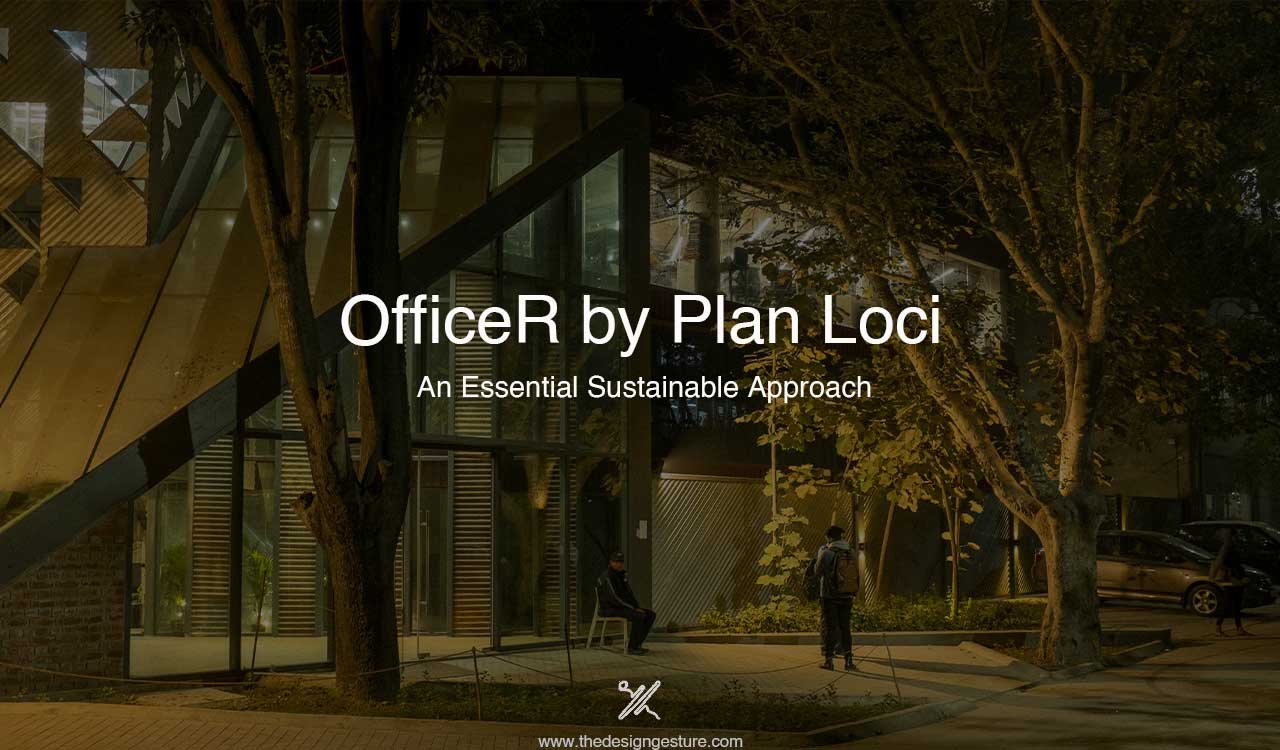
    The architecture is generated by layering two distinct orientations—that of the site and its surrounding Roads and the existing suburban Railway line that adjoins the site. The layering is multi-scalar, operating, firstly, in how the overall spaces and form of the building are articulated, including its external landscaped areas. It is most powerfully expressed in the pyramidal form of the entrance area, which is a meeting point for the two orientations the building responds to.
    officeR

    Yet, the same layering is also articulated through the textural Rhythms of the perforated screen that envelopes the main lobby stack as well as the structural system that undergirds the glazing. Finally, the idea of layering is carried through to even details such as the flooring and lighting systems, which are not laid orthogonal to the wall but rather at the same angle the site makes with the railway.

    OfficeR by Plan Loci: An Essential Sustainable Approach Name of the project OfficeRDesign FirmPlan lociCompletion Year2022Gross Built Area 2500 sq.mProject LocationOkhla, New DelhiBuilding ProgramOffice Design Firm ContactEmail/Social MediaLead ArchitectsAr. Vikas Gandhi, Ar. Gauri Sehgal GandhiPhotography CreditsSaptarshi Sanyal
    Basement plan of officeR

    A Sustainable Approach through Materials and Landscaping

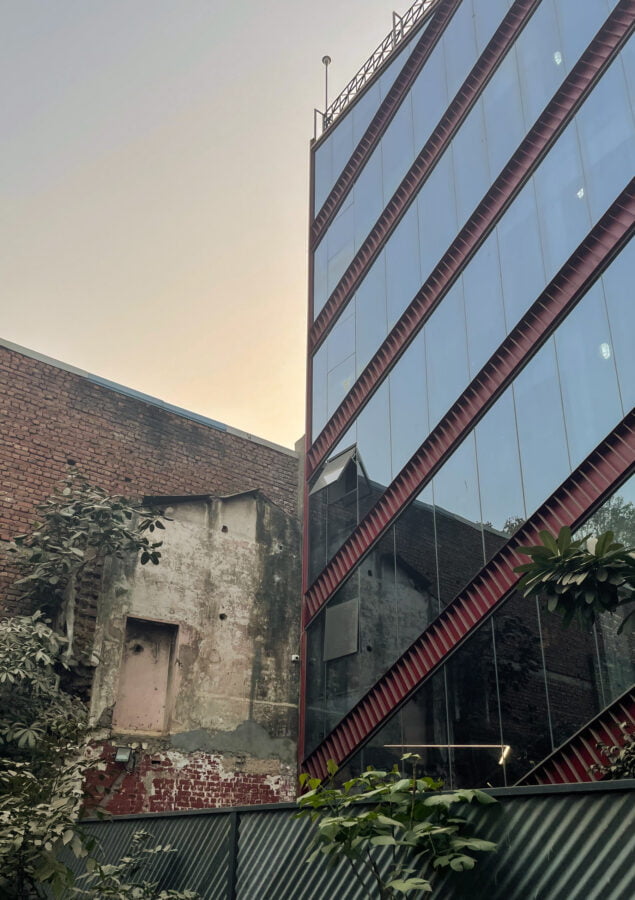
    The project approaches sustainability through both active and passive means. In its active sense, the architecture’s material realization employs the mode of salvage from and Reclamation of the existing shed that stood at the site. One wall of the shed Remains as a fragment that testifies to the memory of its existence. Yet, the design does not end there. Each piece of material in this older structure has not left the site.

    OfficeR by Plan Loci: An Essential Sustainable Approach Name of the project OfficeRDesign FirmPlan lociCompletion Year2022Gross Built Area 2500 sq.mProject LocationOkhla, New DelhiBuilding ProgramOffice Design Firm ContactEmail/Social MediaLead ArchitectsAr. Vikas Gandhi, Ar. Gauri Sehgal GandhiPhotography CreditsSaptarshi Sanyal
    floor plan
    Typical Floor Plan of officeR

    Its bricks, broken into bats, now comprise the base of the foundation; the structural girders have been incorporated into the new building; and the corrugated Roof finds new life both within the interiors of the entrance and the screen wall around the building’s north-east corner. In this sense, rather than consuming energy and generating emissions, what would otherwise be deemed waste is strategically deployed to create a distinctive architectural expression.

    OfficeR by Plan Loci: An Essential Sustainable Approach Name of the project OfficeRDesign FirmPlan lociCompletion Year2022Gross Built Area 2500 sq.mProject LocationOkhla, New DelhiBuilding ProgramOffice Design Firm ContactEmail/Social MediaLead ArchitectsAr. Vikas Gandhi, Ar. Gauri Sehgal GandhiPhotography CreditsSaptarshi Sanyal
    Elevation of officeR

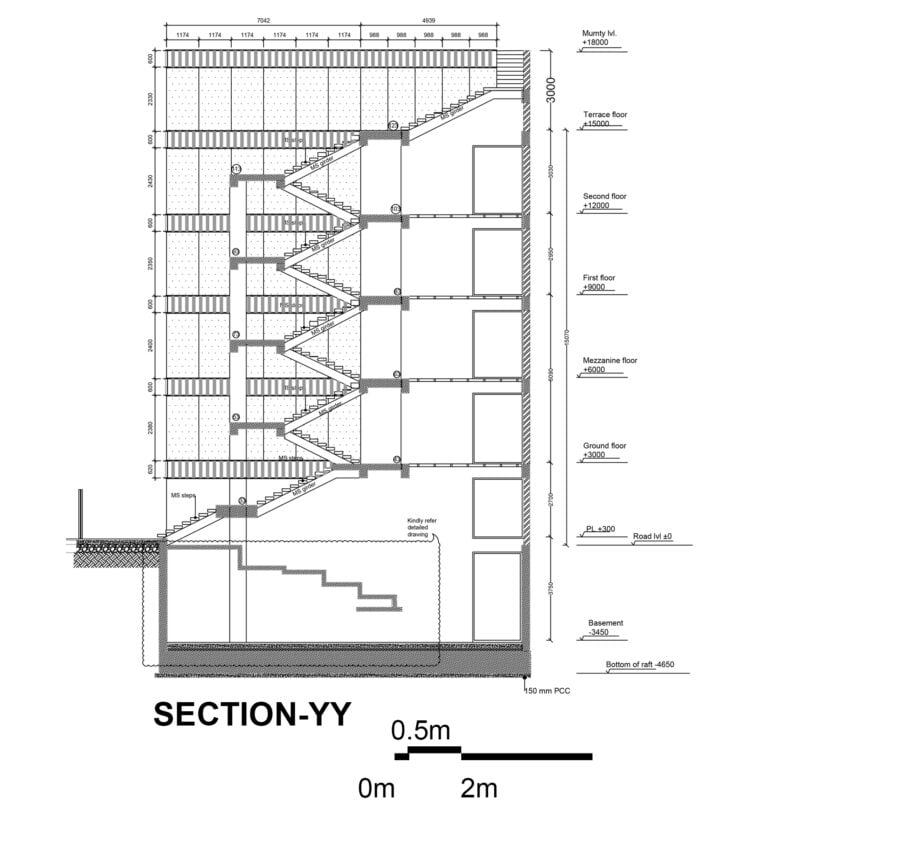
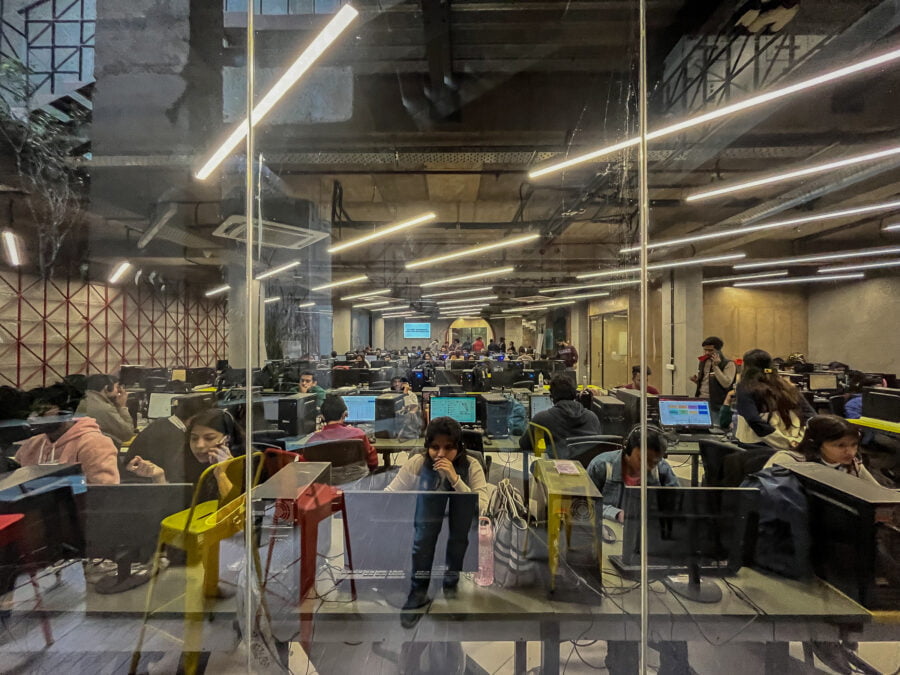
    The glass surface employed provides the inhabitants with a seamless experience between the interiors and the outside. While the interiors are well lit, the light is glare-free; to the north and east, the structure is shaded abundantly by large trees, while to the west, the glass surface is fully shaded by the fire escape and the edge of the neighboring building. The use of glass also ensures transparency between various interior spaces, including how the basement is lit by its adjacent landscaped courts. The vertical core is designed to perform as a community space, wherein the main staircase is interspersed with various kinds of seating areas.
    OfficeR by Plan Loci: An Essential Sustainable Approach Name of the project OfficeRDesign FirmPlan lociCompletion Year2022Gross Built Area 2500 sq.mProject LocationOkhla, New DelhiBuilding ProgramOffice Design Firm ContactEmail/Social MediaLead ArchitectsAr. Vikas Gandhi, Ar. Gauri Sehgal GandhiPhotography CreditsSaptarshi Sanyal
    Staircase section of officeR

    The Reclamation-based approach of the project is also done in a manner that it nearly eliminates all redundant cladding. This not only minimizes the introduction of additional processes and materials but also makes the building speak profoundly to the spirit of the industrial estate and the neighborhood it stands in. Through many such conscious design decisions, this architecture generates not just an aesthetic for its own sake but also responds positively to its urban context while also celebrating the very ideas of Reducing waste, energy consumption, and Recycling existing Resources through both its process and expression.

  • Shukan Lifestyle: Modern Interior Design

    Shukan Lifestyle: Modern Interior Design

    Project Name: Shukan Lifestyle 
    Design team: Ar. Bhumi, Ar.Jaimin and Id.Avisha
    Drafting team: Id. Vishal
    Execution team: Id. Vishal
    Photographer: @samarpanpictures

    The overarching theme of this 3BHK home interior revolves around modernism. Clean lines, minimalist aesthetics, and a careful selection of furnishings create an ambiance that is both timeless and on-trend. The choice of a colour palette comprising grey, brown, and white serves as the foundation, providing a neutral canvas that allows for versatile decor and a sense of spaciousness.

    modern

    Upon entering the home, the living room immediately captivates with its understated elegance. Shades of grey dominate the walls, while brown and white accents introduce warmth and balance. A sleek, contemporary sofa in a muted tone becomes the focal point.

    In the dining area, a modern dining set takes center stage, adorned with subtle accessories that enhance the overall aesthetic. Pendant lighting in warm tones casts a soft glow, creating an intimate and inviting space for shared meals.

    Modern interior

    Shukan Lifestyle: Modern Interior Design The overarching theme of this 3BHK home interior revolves around modernism. Clean lines, minimalist aesthetics, and a careful selection of furnishings create an ambiance that is both timeless and on-trend. The choice of a colour palette comprising grey, brown, and white serves as the foundation, providing a neutral canvas that allows for versatile decor and a sense of spaciousness.

    Our kitchen exudes sophistication with custom cabinets in a chic palette of beige and brown, ensuring ample storage in a clutter-free space. Modern appliances seamlessly integrate, while an overhead unit with profile lighting adds a touch of elegance, creating a warm and inviting culinary haven.

    Each bedroom in this 3BHK home is a retreat, incorporating the colour scheme to evoke a sense of calm and relaxation. The master bedroom, adorned in shades of grey and white, features a plush bed with tasteful bedding and artwork that ties the room together. The secondary bedrooms follow suit, with individualized touches to reflect the unique personalities of their occupants.

  • Spirituality and Architecture: Interesting Connection of Spaces and Soul

    Spirituality and Architecture: Interesting Connection of Spaces and Soul

    “Some things are sacred, others are not, whether they are religious or not.” 
    Le Corbusier

    Spirituality and sacredness are the most significant experiences communicated via architecture. These experiences and the places they are expressed are essential to our survival. They are encountered in numerous nations and cultures, as well as with multiple beliefs and customs.

    Architecture offers a place of worship where worshipers can flee daily life’s stress, pain, and commotion while transforming it into calm, harmony, strength, and happiness. How might a worship space architecture support a religious experience? The organization, procession, volume, proportions, the manifestation of the sacred, light, materials, linkages to context, and symbolism are all architectural factors that can be used to design a house of worship.

    Architect and university professor Thomas Barrie describes sacred architecture as “An intermediate zone believed to have the ability to connect religious aspirants to what they seek..sacred spaces are conceptualized and created as a physical and symbolic mediator.”

    According to tradition, sacred architecture uses material objects to convey immaterial ideas that are impossible to quantify using empirical sciences. Religious art’s non-linear and multidimensional aspects serve as a basis for numerous levels of perception and a global language that links people to the more excellent knowledge they seek. Therefore, one might utilize the physical manifestation of architecture as a tool to discover something uniquely divine within the phenomenal world and, in the end, support one’s transcendence of the material world to the location where one’s faith is experienced. As a result, one can use the qualities of this physical reality to transcend it. Architecture can aid in this by integrating or utilizing space into a spiritual experience.

    Some prominent examples

    The relationship between the self and the divine is now treated in a way that is more approachable to the individual. Modern religious architecture places a greater emphasis on the architect’s vision as the source of meaning.

    Chapel of light, Japan

    Tadao Ando’s primary goal at the Church of the Light is characterized by elegance and minimalist aesthetics. The Chapel comprises a three-cube rectangular space perforated at a fifteen-degree angle by a wall that never actually contacts the Chapel’s other walls or ceiling. Six walls and a roof make up the entire geometry, a simple design that demands careful consideration and the ability to omit anything that is not necessary. The phrase “less is more” describes this cathedral of the light, a straightforward structure that makes the most of what it has to offer.

    Because the outside world is ignored and the spiritual is perceived inside this place, its introverted design acts as a physical link between the devotee and the divine. A cruciform is carved into the concrete behind the altar in one of the gaps in the facade. The concrete contributes to the church’s gloom by transforming it into a more somber, contemplative place of worship. The inside concrete walls of the building were rendered inert by the light from the cross and the strategically placed slits, which turned the gloomy volume into an illuminated box. This bizarre effect constantly transforms solid objects into intangible ones, turning darkness into light and space into light.

    Spirituality
    Image source: Archute
    japan
    Image source: Archute

    Matrimandir, Auroville, India

    Translated, “Matrimandir” means “Temple of the Mother.” The supramental consciousness is the next step in humanity’s evolutionary journey, and according to Sri Aurobindo’s teaching, the notion of “Mother” refers to this supramental consciousness. The Universal Mother is Life’s grand evolving, conscious, and intelligent principle. White marble walls and a thick, white carpet line the expansive Inner Chamber in the Matrimandir’s top hemisphere. A pure crystal-glass globe in the center is illuminated by an electrically guided sunlight ray that enters through an aperture at the apex of the sphere.

    Images, structured meditations, flowers, incense, religion, or other kinds of faith are absent from the Inner Chamber. The Matrimandir is there for “those who want to learn to concentrate..” “No fixed meditations, none of all that, but they should stay there in silence, in silence and concentration. A place for trying to find one’s consciousness.”

    auroville
    Image source: Peacock Plume

    Notre-Dame-du-Haut, France

    The Chapel at Ronchamp’s symbolic expression is shaped by Le Corbusier using his unique perspective. Its sculptural characteristics use lyricism and poetry in the church’s service despite the building’s unusual shape and stark differences on all sides. Christian typologies are characterized by modest holes in the thick walls and traditional color accents displayed through the modern form. The altar, the seating areas, the railings, and the structure all exhibit simplicity and austerity as a way of expressing the sacred. The lack of decoration makes it possible to have uninterrupted moments of stillness, thought, and prayer.

    france
    Image source: Archdaily
    notre dame
    Image source: Archdaily

    Spirituality and Shiv Temple, India 

    Following the traditional temple planning logic, the temple design considers the typical shikhara temple silhouette. Only ornaments essential to creating temples as we remember them emerge in the finished structure. The dense tree cover along the site’s perimeter creates an outdoor space, or “mandapa” (pillared hall), with trees for walls and the sky for a roof. White oak trees line the approach to the temple until two free-standing basalt stone walls set into the ground provide a resting place and point visitors toward the East-West axis, where the garbhagriha or inner sanctuary is located.

    A large threshold space that serves as the sanctum’s entrance also frames the interior’s outdoor landscape. A metaphorical sky-roofed mandapa is the natural environment for religious iconography in the shape of statues of the holy cow, Nandi, and Lord Vishnu’s turtle avatar. These statues become installations in the terrain. A frame that supports a skylight and holds the Ashtadhatu (8 metal composite) temple Kalash (finial) allows light to enter the inner sanctum/garbhagriha.

    spirituality
    Image source: Archdaily
    shiv temple
    Image source: Archdaily

    Water Temple, Japan

    The Temple Water differs significantly from the timber construction of traditional Buddhist temples in terms of materials and spatial organization. Still, due to the mysticism of the area, it appears to them. The hardening seems like a lake of lotus flowers, surrounded by a thin oval of concrete construction and shielded by smooth cement walls, among the bamboo forests, mountains, and rice fields.

    Strong Symbolism can be seen in many forms; some are hidden, but some also stand out and are associated with Buddhist teaching and the earliest Japanese philosophical tradition. The appearance of Amida Buddha is symbolized by the same lotus, a representation of Heaven, which, per widespread belief, conveys a message of heavenly bliss. Respecting each ideology and its symbols, Ando establishes a new work that is syncretic: the contribution made by the West is in the form of materials and technical expertise, while the eastern entrance to the oil-for-seems-natural factors. The visitor actually “experiences” the wind, light, and water in this construction rather than just having them “said” to them.

    After descending steep stairs and passing through the usual cement walls of Ando’s designs, one arrives at the final sacred area, surrounded by a circle of 18.4-meter-diameter concrete walls with a statue of the Buddha housed behind them and the only source of natural light.

    water temple
    Image source: architectuul
    Spirituality and Architecture: Interesting Connection of Spaces and Soul Spirituality and sacredness are the most significant experiences communicated via architecture. These experiences and the places they are expressed are essential to our survival. They are encountered in numerous nations and cultures, as well as with multiple beliefs and customs.

    Image source: japan experience

    Lotus Temple, India

    As shown in literature and art and depicted in the oldest monuments and architecture, the lotus has always had unparalleled popularity among Indians throughout India from the beginning to the present. The purity and holiness that this blossom represents are conceptually inspired.

    One of the more recent faiths around the globe is the Baha’i faith. The lotus temple has a very rigidly monolithic stance toward this religion. The nine water bodies positioned around the structure’s physical architectural features produce highly attractive aesthetics that appeal to the viewer’s mind. Natural elements like trees, bushes, and several plantings in front of the temple contribute to the sense of entrance and create the ideal environment for the structure to stand out. The atmosphere, calm, and tranquility inside the temple enlighten and free us from the outside world and our thoughts. The degree of physical and mental equilibrium varies depending on the inside-out relationship.

    lotus temple
    Image source: Wikipedia
    delhi
    Image source: Wikipedia

    A successful architectural expression can provide both an unforgettable image and a fulfilling experience. Providing for an experience of both the form and the formless, one visible by the senses and the other beyond, purposes becomes more crucial when conveying spirituality in the material. The travel and arrival at the sacred spot are valued because they are distinct from common locations in a defined precinct. The route and the path both contribute to the bizarre experience. The pursuit of or the creation of spiritual spaces is an aspiration shared by all people.

  • Hampton Park: Interior Design Project by Onespace Interiors

    Hampton Park: Interior Design Project by Onespace Interiors

    Design Firm
    Onespace Interiors
    Project Name
    Hampton Park
    Project Location
    Surat, Gujarat
    Building Function
    Interior Design
    Lead Architects
    Ar. Bhumi, Id. Saloni, Ar. Jaimin
    Photography Credits
    Samarpan pictures

    Project Description

    This 3BHK residence is a canvas for an interplay of materials and features 3 bedrooms, three bathrooms, a dining area, and a living area. The decision was made to keep the interiors as subtle as possible with monotones.

    Hampton Park

    Hampton Park Interior Details

    Modern kitchens are spacious in design, practical, clean, and simple with understated sleek lines, minimal details, and every bit of space is utilized. A sleek dining table sits on the Lasa white Italian marble flooring, that is seen throughout the house.

    Hampton Park

    The forty grey bedrooms show the stretch of grey across a range of themes and color solutions. The soft-toned bed linen and curtains are complementing the bed back wall where we have used MDF Patti in linear form. A full-length bed back in 3 partitions has been given. Adding a touch of glamour to the muted space we have given a wardrobe with an open niche. Glossy laminate in a niche is enhancing the beauty of the space.

    Hampton Park

    A neutral palette dominates the primary bedroom. Italian Wallpaper and stucco texture of bad back wall has been partitioned by profile light. Black makes an appearance in a set of curved the bed back in the partition of 4 has been given. The side unit has been decorated with a diamond-cut wooden handle and an open pocket. Love the grungy look of a grey, wardrobe with glossy laminate open niche has been given. Curved shape Mdf framing has been used to decorate the tv unit wall.

    Hampton Park

    The kid’s bedroom was designed by allowing the hues of the sea and the sky to add the color required. Horizontal wooden Patti with grooving complementing best with dual combination of fabric. The side unit has been designed with a wooden round handle and pocket niche. 

  • House of Canopies: A Unique Residential Oasis by Studio Motley

    House of Canopies: A Unique Residential Oasis by Studio Motley

    Project Brief

    • Project Name: House of Canopies
    • Practice: Studio Motley
    • Completion year: 2022
    • Gross Built-up Area: 8350 sq. ft.
    • Project Location: Bangalore
    • Country: India
    • Lead Architect/Designer: Kajal Gupta
    • Team: Anand Kurudi Rao, Kajal Gupta, Adhiti S. Gautama, Lakshmi Nair, and Dikshith T. George; Interns: Kumar Rohan, Pranal, Charu, Mahika, and Neha
    • Clients: Deepak and Heena Vinchhi
    • Structural Consultants: B. L. Manjunath
    • The House of Canopies by Studio Motley, situated in Bangalore, India, is a distinctive architectural narrative that gracefully mixes modern architecture with an intuitive relationship to the environment.
    House of Canopies
    Image 1_The House of Canopies by Studio Motley (Photo Credit: Neelanjana Chitrabanu)

    Bringing Architecture and Nature Together

    Studio Motley, recognized for its innovative and environmentally conscious designs, has developed another architectural marvel that blends seamlessly with its surroundings. The House of Canopies ingeniously includes outdoor living space as an integral component of the dwelling, resulting in a symbiotic connection between the structure and its environment.

    Outdoor Space
    Image 2_Outdoor Space (Photo Credit: Neelanjana Chitrabanu)

    The specification from the client was odd. While they intended to organize celebrations and extensive family reunions, they also intended to use it as a holiday weekend escape for the four of them to enjoy the outdoors, garden, and socialize. 

    House of Canopies: A Unique Residential Oasis by Studio Motley Studio Motley, recognized for its innovative and environmentally conscious designs, has developed another architectural marvel that blends seamlessly with its surroundings. The House of Canopies ingeniously includes outdoor living space as an integral component of the dwelling, resulting in a symbiotic connection between the structure and its environment.
    Image 3_ Vegetable garden space in the backyard (Photo Credit: Neelanjana Chitrabanu)

    As a result, there were to be no bedrooms at all, simply select recreational areas that opened up to one another and spilt out to the outside. On the first level, there is just one area with sliding folding doors, which might theoretically provide some solitude when needed.

    House of Canopies: A Unique Residential Oasis by Studio Motley Studio Motley, recognized for its innovative and environmentally conscious designs, has developed another architectural marvel that blends seamlessly with its surroundings. The House of Canopies ingeniously includes outdoor living space as an integral component of the dwelling, resulting in a symbiotic connection between the structure and its environment.
    Image 4_ Exterior Flooring of the house (Photo Credit: Neelanjana Chitrabanu)

    Design ideologies

    The House of Canopies features an unusual residence plan, with the main building located at the back of the property and a front courtyard substituting the standard entrance lawn. 

    House of Canopies: A Unique Residential Oasis by Studio Motley Studio Motley, recognized for its innovative and environmentally conscious designs, has developed another architectural marvel that blends seamlessly with its surroundings. The House of Canopies ingeniously includes outdoor living space as an integral component of the dwelling, resulting in a symbiotic connection between the structure and its environment.
    Image 5_ Open Areas Separated by Canopies (Photo Credit: Neelanjana Chitrabanu)

    The open areas are separated by a series of canopies, thus the suitable name. These canopies serve as linking elements, providing shade and creating one-of-a-kind exterior social areas that capture the spirit of ambient life.

    Sliding Doors Creates flexible spaces
    Image 6_ Sliding Doors Creates flexible spaces (Photo Credit: Neelanjana Chitrabanu)

    The program is divided into two rectangular volumes, one holding the principal living rooms and the other the utility sections, which are divided by verandahs, entrances, and courts.

    House of Canopies
    Image 7_ Optimum use of staircase space for storage or displays (Photo Credit: Neelanjana Chitrabanu)

    Drawing cues from conventional architecture processes, the structure strives to be reasonable while engaging all emotions by reacting to concerns of material, pricing, skilled labour, and, most crucially, climate.

    Northern side steep Land catches rainwater
     Image 8_ Northern side steep Land catches rainwater (Photo Credit: Neelanjana Chitrabanu)

    The following approaches were used: The house was placed at the northern and lower extremities of the steep rolling land. Between the farms and the home is an open tank that catches rainwater runoff from the whole property and will be utilized for continuous intensive vegetation and landscaping.

    Intensive vegetation and landscape
    Image 9_ Intensive vegetation and landscape (Photo Credit: Neelanjana Chitrabanu)

    The site’s natural slopes and drainage patterns were preserved, and any surplus rainfall is channelled from the open tank into a neighbouring bore well.

     Landscaping
    Image 10_ Landscaping (Photo Credit: Neelanjana Chitrabanu)

    “The 1.5-acre property will be utilized for gardening, family activities, and as a personal weekend escape. The home has been proportioned appropriately, with the main living spaces having a small footprint but spacious verandahs that wrap around the house, allowing for bigger events. “The higher barrier zone encourages participation in and awareness of the environment,” Anand adds.

    Open spaces for family gatherings
    Image 11_ Open spaces for family gatherings (Photo Credit: Neelanjana Chitrabanu)

    A Nod to Sustainability

    The house is built with sustainability in mind. It makes use of locally produced materials, energy-efficient designs, and natural light optimization, demonstrating the architects’ commitment to environmentally conscious design principles. Besides being visually appealing, the canopies also serve a functional purpose by shielding the residence from the tropical heat.

    Bedrooms Spaces
    Image 12_ Bedrooms Spaces (Photo Credit: Neelanjana Chitrabanu)

    The house’s longer extremities are oriented north and south to keep harmful direct sunlight out of the dwelling. Furthermore, all of the apertures are shaded to create a softer quality of light within the interiors.

    Openings and ventilations
    Image 13_ Openings and ventilations (Photo Credit: Neelanjana Chitrabanu)

    A Seamless Transition

    The House of Canopies is distinguished by the smooth transition between the inside and outside.

    Natural gardening and water ponds
    Image 14_ Natural gardening and water ponds (Photo Credit: Neelanjana Chitrabanu)

    However, this characteristic is highlighted further by the use of large glass windows and doors that allow unobstructed views of the lush vegetation, creating a tranquil haven in the heart of the city.

    The roof is an insulator in House of Canopies

    The red cedar timber roof has three levels of sheeting. The ceiling is built of cement fibre sheets, with a centre layer of corrugated cement sheets and an outside layer of handcrafted regional tiles. It provides excellent insulation and decreases heat intrusion through the roof. 

    The red cedar timber roof has three levels of sheeting
    Image 15_ The red cedar timber roof has three levels of sheeting (Photo Credit: Neelanjana Chitrabanu)

    A continuous strip of ventilators supports the whole roof assembly, producing a precise link between the roof and the rest of the structure. A number of the panels within the continuous strip windows feature only an insect screen (no glass), allowing hot air to naturally ascend and exit the structure.

    Natural and indigenous materials

    The business used a naturalistic and indigenous material selection for the inside, including grey oxide flooring, locally quarried stone slabs for the verandah spaces, and brass for the fixtures and staircase railing.

    Natural and local Material used in interior or exterior
    Image 16_ Natural and local Material used in interior or exterior (Photo Credit: Neelanjana Chitrabanu)

    The design stresses a simple and apparent structure while also allowing for flexibility and adaptation to usage. The structure, constructed by local craftspeople, aspires to a material and gesture economy.

    Conclusion

    The House of Canopies by Studio Motley is a monument to inventive design in a society where space is a luxury. It shows how architecture can transform a typical urban plot into a one-of-a-kind home hideaway, flawlessly merging the comfort of inner living with the quiet of outside regions. This incredible building shows the limitless possibilities that arise when builders work in harmony with nature.

  • The Splendid Abode: Interior Design Project by NuVibe Architecture

    The Splendid Abode: Interior Design Project by NuVibe Architecture

    Project Information

    Design Firm
    NuVibe Architecture & Interior Design Studio
    Completion Year
    June 2022
    Gross Built Area
    1150 sqft
    Project Location
    Mumbai, Maharashtra
    Building Function
    Interior Design
    Lead Architects
    Ar. Anmol Revankar
    Photography Credits
    Studio Varad Anvekar

    Introduction

    “The Splendid Abode” – Private Residence

    The client’s brief is what marks the beginning of the project conceptualisation. We were asked to create a design that emotes opulence and a sense of luxury inside the house. An air of sophistication and grandeur permeates the décor of this three-bedroom property.

    Entrance to The Splendid Abode

    The Splendid Abode: Interior Design Project by NuVibe Architecture “The Splendid Abode” – Private Residence

    The entrance of the house has been designed to evoke an expectation of what lies ahead. The grill anodised in antique gold finish beautifully accents the safety door, while the geometrical abstract pattern on the door invites one to explore the house. 

    As the door is in deeper tones of walnut & turquoise green, the adjacent wall is made in a lighter tone to create a striking contrast. The textured finish on the wall adds to the overall persona of the entrance lobby area, elevating its visual appeal.

    The white acrylic name signage stands out against the wooden band which runs horizontally along the wall, emphasizing its texture by the indirect light falling on it from the top & bottom of the band. 

    Living Room

    The Splendid Abode

    This home is influenced by class and luxury with the warmth the space offers with its neutral colour palette, as you step into the living area. The grey velvet chesterfield sofa is set against a textured wall in an antique rose gold colour, which adds to the richness of the room.

    A huge floor-mounted arc lamp shade in the corner between the sofas has a perceptible characteristic. The simplistic altar is designed in polished pinewood planks, giving it a minimal touch that blends well with the theme of the room. A sleek grey drawer unit and a textured white TV panel look very subtle together, along with the pine rafter detail on the side.

    The Splendid Abode: Interior Design Project by NuVibe Architecture “The Splendid Abode” – Private Residence

    The client was very particular about the bar design and wanted it to be the highlight of the room. Use of mirror visually enlarges the space and enhances its look instantly. Hence we decided to put a tinted mirror panelling on the wall in a customised pattern right behind the 6 seater bespoke marble dining table. This completely transforms the feel of the space with a bench seating & chairs in lovable pink shade that is a treat to the eye.

    A duct window hides behind a hand painted graceful fluid art canvas with a mix of pink, blue and gold tones that remodels this bar wall. The profile lights inside the vertical storage of the bar artfully reflects on the perforated gold detail at the back to create a glowing effect that forms an exorbitant feature of the corner. The bar console is made handle less with a marble top to match the dining table. Tinge of antique gold details running across, adds to the luxury of the room.

    Kitchen

    The Splendid Abode: Interior Design Project by NuVibe Architecture “The Splendid Abode” – Private Residence

    This modular kitchen interior in beige and white gloss cabinets seamlessly mingles well with the existing dado tile and brown granite. The selection of cabinet colours makes this small kitchen look aesthetically pleasing and gives the impression that it is larger than it actually is.

    Kid’s Bedroom

    The children’s bedroom is full of delightful pinks along with other pastel shades that go well together. Anyone stepping into this room would bring out the inner child in them.

    The wall behind the bed is adorned with dark pink stencilled butterflies, creating a kaleidoscope effect against a light pink backdrop. The ceiling features a stunning design of small and large butterfly cut-outs in POP, painted in a vibrant shade of pink on the inside, which emits a dreamy glow. In addition, the side table knobs are also customised to have a cute butterfly design. A curved mirror with a pastel yellow frame stages between the bed and the wardrobe, while the headboard and side tables are also seen with their curved attributes to balance the straight lines of the closet and study table design.

    The Splendid Abode: Interior Design Project by NuVibe Architecture “The Splendid Abode” – Private Residence

    The closet is excellently made with ample storage for all of the kids’ clothes and necessities, and it also incorporates a separate, extremely appealing toy display area.

    It is quite fascinating that the study table wall is made entirely of magnetic, back-painted white glass that allows for easy pinups and even writing. The study table boasts a unique design with a slanting wooden leg on one side and a storage unit on the other. It makes an unusual storage wall with a combination of an open and closed shutter unit and a shelf, all in different colours.

    Master Bedroom

    The wall behind the bed stands out as the focal point of the room, with an intriguing pattern of mdf stripes on the wall, which has been painted in a muted royal blue. This bold colour choice infuses energy throughout the entire room, while the remaining colours are kept subtle to maintain a cohesive aesthetic. 

    The subtle sage green side tables complement the wall colour they sit against and are made of two drawers with handles and legs in an antique rose-gold finish. The grey leatherette headboard brings in a play of texture and very well combines with the colour palette of the room.

    The Splendid Abode: Interior Design Project by NuVibe Architecture “The Splendid Abode” – Private Residence

    Though the muted royal blue colour is dark enough, it still makes the room appear large as the entire opposite wall is a window that floods the room with natural light and a refreshing atmosphere. This window extends at a 90-degree angle, forming a bright nook that serves as a peaceful dressing corner. 

    The sliding wardrobe shutters going up to the ceiling height give the illusion of a taller room, avoiding divisions on them and giving a cleaner appearance. A magnificent artefact display is made using different-sized shelves layered one below the other in a sequential order such that they form a circle on the wall. These shelves are painted in tints of blue between them for gradation.

    Guest Bedroom

    The Splendid Abode: Interior Design Project by NuVibe Architecture “The Splendid Abode” – Private Residence

    This small yet versatile room is designed for multifunctional use. It forms a ‘TV room’, featuring a backrest bed seating opposite it, a ‘bedroom’, with a wardrobe and a bed that converts into a mini queen size to accommodate two guests, and a ‘study room’, for those in need of a private space to work from home.

    With a warm colour scheme across the room, the bed wall is a geometric wall painted in beige, cream and grey. A combination of wooden and white gloss laminate on the wardrobe has a groove detail engraved on it.

  • House in Okolitsa, Russia 

    House in Okolitsa, Russia 

    The house with a total area of 1500 sq. m is located in the villa community “Okolitsa”, Moscow region. The rhythmic architecture is defined by the complex topography of the site, which is practically a forest. In order to integrate the house into the environment, we have separated each volume with atriums, which ensures the privacy of individual zones and forms interconnected relations between the exterior and the interior, landscape, and architecture.

    We used only natural materials for the project: bricks and tiles, thermal decking, stone, metal, which will eventually be covered by patina and natural age. The use of the most natural materials, in our opinion, is important for the house to change over time and stay relevant, correlating with the changeable natural context.

    The central entrance leads to the dominant and the pivot of the house is a big living room joint with a kitchen. Close to it, there is a guest bedroom and workshop. 

    The atriums separate the private zone on the first floors, which functional program consists of the master bedroom, three children’s rooms, classroom, playroom, and a library functioning as a stair hall, bathroom, changing room, and yoga class. The second floor has a cabinet, second master bedroom, and SPA.

    On the site there is a facility for the staff, technical facilities and a garage for 3 cars.

  • Beyond Aesthetics: The Intriguing Influence of Architectural Design on Human Emotions

    Beyond Aesthetics: The Intriguing Influence of Architectural Design on Human Emotions

    Introduction

    To someone who is not familiar with architecture, a designed structure or architectural design marvel may appear either too simplistic or excessively extravagant. It is true that sometimes designers create structures that are needlessly elaborate and lack functional purpose. Architecture is much more than just visual appeal though. It has a profound impact on our daily lives, from creating functional spaces that serve the needs of the people who use them, to promoting sustainable and livable cities. 

    Source 

    Good architecture prioritizes functionality, ensuring that buildings meet the needs of their users and are efficient and accessible. It also considers sustainability, with architects incorporating environmentally conscious design practices to reduce the impact of buildings on the environment. Ultimately, architecture goes beyond aesthetics to create spaces that enhance our quality of life, support human well-being, and contribute to the vitality of our communities.

    This article will cover the fundamentals of architectural design, explore the significance of perception in architecture, examine how architectural design affects human emotions, delve into the psychology of space, and analyze the impact of architecture on health and well-being.

    The Basics of Architectural Design

    Architectural design is the process of creating functional, aesthetic, and sustainable buildings and spaces. Some of the basics of architectural design:

    Architectural Design
    Source
    1. Conceptualization: The initial stage of architectural design entails conceptualizing and ideating a plan for the building or space. This involves determining the purpose, functionality, and form of the structure, while also taking into account variables such as the location, the surrounding surroundings, and the requirements of its users.
    2. Planning: Once the concept is established, the architect begins to plan the layout and organization of the space. This includes determining the size and shape of the building, the placement of rooms and other functional areas, and the circulation patterns for people and traffic.
    3. Design: With the planning complete, the architect moves on to the design phase, where they create detailed drawings, models, and other visual representations of the building. This includes selecting materials, colors, textures, and other design elements that will contribute to the overall aesthetic and functionality of the structure.
    4. Documentation: Once the design is finalized, the architect creates detailed construction documents that include specifications for the building materials and methods of construction. These documents are used by contractors and builders to construct the building.
    5. Construction: The final stage of architectural design is construction. The architect oversees the construction process to ensure that the building is built according to the plans and specifications and that it meets all safety and building code requirements.

    Throughout the design process, the architect must consider factors such as accessibility, energy efficiency, sustainability, and durability, to create buildings and spaces that are functional, aesthetically pleasing, and sustainable for the long term.

    The Role of Perception in Architecture

    Perception plays an important role in shaping our experience of architecture. The way we perceive elements such as space, light, texture, color, and form can influence our emotional response, spatial awareness, cultural context, and functional understanding of a building or space. For example, the way we perceive the arrangement of walls, ceilings, and floors can affect our understanding of how a space functions and how we move through it. Similarly, the way we perceive the colors, textures, and lighting in a space can affect our emotional response to it. Therefore, architects must be mindful of how people perceive and respond to architecture, designing spaces that are both functional and emotionally engaging for a diverse range of users.

    Visual Perception
    Source

    Architects can use perception to create spaces that impact human experience in several ways. Here are a few examples:

    1. Manipulating Light: Architects can manipulate light to shape our perception of a space. The amount, quality, and direction of light can create different moods and emotional responses. Soft, diffused light can produce a calming effect, whereas strong, directional light can evoke drama and excitement.
    1. Playing with Scale: Scale manipulation is another technique architects can use to affect human experience. By altering the size of architectural elements such as ceilings, walls, and floors, architects can create a sense of grandeur or intimacy. A high ceiling can provide a feeling of spaciousness, while a low ceiling can create a sense of coziness.
    1. Using Materials: Architects can also use materials to influence human experience. Various materials can create different emotions and associations, such as wood conveying warmth and comfort, while metal creates a sense of coldness and hardness. 
    1. Creating Movement: The spatial arrangement of elements can also impact human experience. Architects can create movement and flow by designing spaces that encourage people to move through them in a particular way. A winding staircase can create a sense of flow, while a straight staircase can convey stability.

    The Psychology of Space

    The psychology of space is the study of how the built environment affects our emotions, behaviors, and cognitive processes. It involves examining the impact of various architectural and spatial features, such as lighting, color, texture, and form. This knowledge can be used by architects, designers, and urban planners to create spaces that are both visually appealing and practical for their intended users, ultimately improving the quality of life for those who occupy them.

    psychology
    Source 

    1. Productivity: Architects know that to get stuff done, you need the right space. They make sure the place is bright, has fresh air, and not too much going on to distract you. Check out Google’s office in California. It’s got these big open areas for people to work together, and they use fun colors and cool things like slides and swings to get people’s creative juices flowing and encourage teamwork.
    2. Relaxation: Sometimes architects want to create spaces that help us relax, like spas, meditation rooms, or yoga studios. They might use soft lighting, soothing colors, and natural materials like wood and stone. The Aman Tokyo hotel in Japan is a great example of this. The place has a simple design that uses natural materials, which makes you feel peaceful and calm. It’s the perfect spot to unwind and let go of all your stress.
    3. Social Interaction: Architects can also create spaces that help people come together, like parks, community centers, or public squares. They might add things like seating areas, public art, or community gardens to encourage people to connect and hang out. Check out the High Line park in New York City. It’s a park that was built on an old railway line and it’s a great place for people to chill, chat, and have a good time together. It’s like a little oasis in the middle of the city!
    4. Learning: Architects can also make spaces that are perfect for learning, like schools, museums, and libraries. They might use natural lighting, comfy seating, and interactive exhibits to get people excited about exploring new ideas. The Seattle Central Library is a great example of this. It’s got a really cool design with multiple levels and unique architectural features that make it a really fun place to learn. Plus, it’s got a huge collection of books and digital media to help you explore whatever interests you.

    The Impact of Architecture on Health and Well-Being

    Believe it or not, the buildings we live and work in can actually affect our health and well-being! The way a building is designed can impact air quality, lighting, and access to green spaces, which can have a big impact on how we feel physically and mentally. That’s why architects and designers have a responsibility to create spaces that promote health and well-being. They can use sustainable materials, good ventilation systems, natural light, and green spaces to make buildings that help us feel our best. It’s all about creating spaces that contribute to a happy, healthy life!

    Impact of Architecture

    Source

    When it comes to healthcare facilities, architects and designers have a special job to do. They’ve got to create spaces that help people feel calm and promote healing. One way they do this is by adding natural elements, like gardens, green spaces, and water features, which can help reduce stress and promote healing. They might also use natural materials and soft lighting to create a soothing atmosphere. Some healthcare facilities even have artwork and music, which have been shown to help people feel better and less anxious. It’s all about creating an environment that supports healing and well-being.

    Architects have also designed spaces to promote well-being in other settings. For example, some workplaces incorporate features such as natural lighting, ergonomic furniture, and access to green spaces, which can improve employee well-being and productivity. Schools and universities have also been designed with student well-being in mind, incorporating features such as natural lighting, comfortable furnishings, and spaces for social interaction.

    Conclusion

    In conclusion, the impact of architecture on health and well-being is no joke! The spaces we live, work, and play in can have a big impact on both our physical and mental health. That’s why architects and designers have a huge responsibility to create spaces that promote well-being and contribute to a high quality of life. From sustainable materials to proper ventilation systems, access to natural light and green spaces, architects have the power to create environments that support our health and happiness. By designing spaces that promote well-being, architects can make a big difference in the lives of individuals and communities, contributing to a healthier and happier society overall.

  • The Lalit Suri Hospitality School: A Harmonious Dialogue Between the Built and the Landscape

    The Lalit Suri Hospitality School: A Harmonious Dialogue Between the Built and the Landscape

    Project NameThe Lalit Suri Hospitality Institute
    Typology:Institutional
    Location:Faridabad, Haryana, India
    Completion Year:2020
    Client:Bharat Hotels Limited
    Built-up Area:2,50,000 Sq.Ft
    Site area5.00 Acres
    Climate:Composite
    Credentials:Consultants :
    Structure: RSM Consultants
    HVAC, Plumbing, Electrical, Fire Fighting: Apostle Studio
    Landscape Design: SJA Consultants
    Hospitality: Hotel Consultants India
    Green Consultant: Transven
    Acoustic: IN Basu and Associates
    Sustainability, Façade & Lighting Consultant: Morphogenesis
    Interior Designer: Morphogenesis*  
    Contractors:
    Civil and Structural: M/s. Rajasthan Décor
    Interiors: Kernal Building Solution (only hostel block)
    Electrical: Apex Power
    HVAC:  Apco AirconI
    Curtain Wall: Dhandhari Sah               
    Team of Architects: Manit Rastogi, Sonali Rastogi, John Alok De Cruz

    The Lalit Suri Hospitality School | Faridabad, Haryana 

    Informed by local building traditions, The Lalit Suri Hospitality School sustains a harmonious dialogue between the built and the landscape.

    Located in Faridabad, in the suburbs of the National Capital Region (NCR) of New Delhi, The Lalit Suri Hospitality School imparts education in the service of luxury hospitality. The brief stipulated a design for a sustainable campus that would be set within a modest institutional framework and prepare students for a future in the Indian hospitality trade. 

    The Lalit Suri Hospitality School: A Harmonious Dialogue Between the Built and the Landscape Informed by local building traditions, The Lalit Suri Hospitality School sustains a harmonious dialogue between the built and the landscape.

    Programme and planning

    The planning strategy focused on sensitively preserving and integrating an existing cluster of neem trees abutting the site’s northern edge. Therefore, the building actively engages and intertwines with the tree clusters by moving back and forth as required, resulting in multiple landscaped courtyards and shaded areas. The building height is kept low to give it a pedestrian-friendly human scale and allows for the seamless integration of the ‘green’ and the ‘built’.

    The design approach addresses the institute’s vision of hospitality skills development, operational exposure, managerial competence, and a strategic outlook by ensuring that each space has a duality of purpose—one in its educational avatar, and one as a setting conducive to the experience of luxury hospitality. This flexibility in space-function is reflected across the entire project. Stepwells that are integrated within the design scheme are used as open-air theatres when empty.

    Cafeterias double up as F&B outlets, where the students eat and learn service. The kitchens are designed to enable students to cook as well as practice their service skills. The entire hostel accommodation is built in a hotel format, where even public gathering spaces are designed to be serviced like congregational spaces within hotels.

    All dormitories are multiples of a single optimized bay module. The hostel rooms are planned in a manner that allows the students to experience ‘hospitality’ in a hotel-room format. This modular approach to planning enhances the flexibility and diversity of spaces and operations. Open areas work as spill-over spaces to encourage interaction among the occupants.  

    Material palette

    The Lalit Suri Hospitality School: A Harmonious Dialogue Between the Built and the Landscape Informed by local building traditions, The Lalit Suri Hospitality School sustains a harmonious dialogue between the built and the landscape.

    The primary material of choice was brick, which is synonymous with institutional buildings in India, and also being locally produced. Undulations and perforations in the facade enable ventilation and shading in the corridors, while the overhangs prevent the ingress of direct sunlight into the space, working concurrently to reduce heat gain. The design plays with different forms and levels of fenestrations, revealing interesting gaps, thus reinventing the tradition of the jaali and jharokha (a type of overhanging enclosed balcony).

    The simple exposed brick facade with low wall-window ratios is used as a physical barrier that filters in 30% of outdoor light. The singular material for the entire project has various significant functions–being economical and low on maintenance while also lending a sense of timelessness and aiding psychological comfort.

    Sustainability interventions

    The Lalit Suri Hospitality School: A Harmonious Dialogue Between the Built and the Landscape Informed by local building traditions, The Lalit Suri Hospitality School sustains a harmonious dialogue between the built and the landscape.

    One of the critical aspects of the project was the zero tree-cutting goal, which has been successfully achieved through an optimized plan of permissible built volume with a 100% naturally ventilated central spine. The presence of lush foliage helps bring down summer temperatures through transpiration cooling. Moreover, the design of the school incorporates a series of passive cooling measures that reduce ambient temperatures within the building by up to 15 degrees.

    The north-south orientation for minimal solar exposure acts as an effective self-shading component allowing the auditorium to buffer from solar gains. Summer winds traveling along the northwest-southeast direction are harnessed and redirected over the step-wells to improve thermal comfort during highly humid months. Landscaped courtyards enhance the cross-movement of fresh air within the building and reduce temperatures through the stack effect. Brick cavity walls, terrace gardens, and cantilever projections further reduce heat gain. The building is partially sunken, offering thermal banking and serving as an acoustic buffer from the adjacent main road.

    The courtyard planning, incorporation of lightwells and thermal buffering, and the integration of greenery collectively reduce mechanical energy dependencies and optimize resource consumption, resulting in 100% of the academic area being Net Zero on energy  (5,750 sq.m. roof area is provided for solar farming) with an EPI of ≤58kWh/sq.m./yr compared to the ECBC benchmark of 90 kWh/sq.m./yr.

    Landscape interventions in The Lalit Suri Hospitality School

    Landscape interventions in The Lalit Suri Hospitality School

    The landscape and the building levels respect the natural slope of the site. The building is also Net Zero on water during the monsoon since the need for large amounts of freshwater–about 3500 cubic meters, is addressed by collection wells and bioswales that harvest the rainwater, with up to 4900 cubic meters of water collected during the monsoon period.

    The percolation of nature into the built form, dual functioning spaces, a muted material palette, and the combination of passive and active design strategies help create an educational campus that expresses the practice’s key pillars of sustainability, optimisation, uniqueness and liveability.

    Morphogenesis

    Morphogenesis is India’s leading Architecture and Urban Design practice with offices in Mumbai, Pune, Bangalore, and New Delhi. The firm was set up by Sonali and Manit Rastogi in 1996 with a vision of defining sustainable architecture for contemporary India.

    Morphogenesis has been consistently ranked among the Top 100 Architectural Design Firms worldwide by Building Design Magazine, UK in WA100. The practice is the recipient of over 120 awards and has been featured in over 850 publications, both International and National. Sonali and Manit Rastogi have also been awarded Laureates of the Singapore Institute of Architects Getz Award for Emergent Architecture in Asia, Singapore, which seeks to bring recognition to Asian architects, who through their vision and commitment have made a significant contribution to shaping the changing landscape of Asia. The firm’s work has also been published in a Monograph by Images Publishing, Australia under their world-renowned Master Architect Series—a first for an Indian firm.

    Our design approach has often been inspired by the vast repository of historical wealth of building knowledge and the strong arts and crafts traditions of the region. We understand that we are often working in an environment with limited resources and therefore, we deploy passive strategies by responding to the local climate and ecology while addressing comfort, safety, and liveability parameters. This has conservatively resulted in:

    Over 9 million sq.m. of built environment benefitting over 5,60,000 inhabitants
    Freshwater saved: 22 billion litres
    Energy saved: 4.1 million kW/hr
    Reduction in CO2 emissions: 4.2 billion kg
    Gross area of sustainable buildings completed: 50,000,000 sq.ft.


    Further, we believe each project must establish itself as a benchmark for innovative design by thinking systemically about sustainability. Architecturally, we celebrate identity and diversity versus visual homogeneity. Our belief in environmental design has resulted in the formulation of Morphogenesis’ copyrighted design process S.O.U.L.©2019, an acronym for:

    Sustainable: Net zero energy, water, and waste to landfill
    Optimized: Carbon neutral and use of local resources
    Unique: Tradition, heritage, and culture
    Liveable: Resilient communities

    These parameters define the inquiry process that shapes our architecture. We measure the success of our projects by using design metrics before, during, and after a project’s completion. We believe it is this inclusive nature of design, focusing on passive and low-energy architecture, that will define emergent architecture in India.

  • Khetan House, Pune: An Intelligent Mix of Elegance, Minimalism, and Traditional Elements

    Khetan House, Pune: An Intelligent Mix of Elegance, Minimalism, and Traditional Elements

    Project Location: Pune
    Area: 2000 Sq.Ft.
    Year of Completion: January 2023
    Architect: Semblance Design Studio – Shreya Khetan
    Photography: Shreya Khetan

    Khetan House 301 is nestled in the heart of Pune city. The 4BHK living space is designed for a family of 6 individuals, Shreya (the co-designer/architect of the project), her parents, elder sister and grandparents. The family wanted a house that was spacious, airy and well lit. They envisioned their living space to feel warm, minimal and humble with contemporary Indian features.

    Khetan house

    The designer picked a basic traditional Indian material and colour palette for the house; Green Kota stone for flooring and bathroom dado, Black Kadappa stone for terrace flooring, bronze wood for furniture, cement sheet for panels and cream white plastered walls. These materials give the house a traditional yet contemporary look and bound it into one cohesive unit.

    The subdued colour palettes featuring neutral tones such as whites, greys, and beiges set the stage for understated sophistication. The use of natural materials like wood and stone add warmth to the spaces, creating a serene and inviting atmosphere.

    Khetan House, Pune: An Intelligent Mix of Elegance, Minimalism, and Traditional Elements Khetan House 301 is nestled in the heart of Pune city. The 4BHK living space is designed for a family of 6 individuals, Shreya (the co-designer/architect of the project), her parents, elder sister and grandparents. The family wanted a house that was spacious, airy and well lit. They envisioned their living space to feel warm, minimal and humble with contemporary Indian features.
    Khetan House, Pune: An Intelligent Mix of Elegance, Minimalism, and Traditional Elements Khetan House 301 is nestled in the heart of Pune city. The 4BHK living space is designed for a family of 6 individuals, Shreya (the co-designer/architect of the project), her parents, elder sister and grandparents. The family wanted a house that was spacious, airy and well lit. They envisioned their living space to feel warm, minimal and humble with contemporary Indian features.

    Simplicity and functionality, finds a harmonious expression in this contemporary Indian home. Clutter-free spaces, unadorned walls, and sleek furniture with clean lines characterize the minimalistic approach.

    The Khetan house emphasizes spatial efficiency, optimizing every inch of available space. Multi-functional furniture and hidden storage solutions contribute to a clean and uncluttered environment. Traditional seating arrangements like low-height wooden deck are reimagined with a modern twist, offering comfort and functionality in compact living spaces.

    Some changes in the standard layout that the designer made to customise the house as per the client’s requirements while also making the spaces more functionally efficient are as follows:

    Khetan House, Pune: An Intelligent Mix of Elegance, Minimalism, and Traditional Elements Khetan House 301 is nestled in the heart of Pune city. The 4BHK living space is designed for a family of 6 individuals, Shreya (the co-designer/architect of the project), her parents, elder sister and grandparents. The family wanted a house that was spacious, airy and well lit. They envisioned their living space to feel warm, minimal and humble with contemporary Indian features.
    Standard Apartment Layout
    Khetan House, Pune: An Intelligent Mix of Elegance, Minimalism, and Traditional Elements Khetan House 301 is nestled in the heart of Pune city. The 4BHK living space is designed for a family of 6 individuals, Shreya (the co-designer/architect of the project), her parents, elder sister and grandparents. The family wanted a house that was spacious, airy and well lit. They envisioned their living space to feel warm, minimal and humble with contemporary Indian features.
    Khetan House Layout (Changes in the layout are indicated by red walls)

    Changes in the living and dining layout

    A space for the temple (indicated in blue) is scooped out by borrowing space from the kitchen and bedroom 2. Proportions of the living room are changed to make it more square-like than rectangular. This prevents the unnecessarily large space from getting wasted while also making it more intimate.

    The terrace area of Khetan House is increased to add greenery and view to the space. This also enables the clients to expand the living room area during parties and social gatherings.

    Khetan House, Pune: An Intelligent Mix of Elegance, Minimalism, and Traditional Elements Khetan House 301 is nestled in the heart of Pune city. The 4BHK living space is designed for a family of 6 individuals, Shreya (the co-designer/architect of the project), her parents, elder sister and grandparents. The family wanted a house that was spacious, airy and well lit. They envisioned their living space to feel warm, minimal and humble with contemporary Indian features.
    Standard Apartment- Living and Dining
    Khetan House, Pune: An Intelligent Mix of Elegance, Minimalism, and Traditional Elements Khetan House 301 is nestled in the heart of Pune city. The 4BHK living space is designed for a family of 6 individuals, Shreya (the co-designer/architect of the project), her parents, elder sister and grandparents. The family wanted a house that was spacious, airy and well lit. They envisioned their living space to feel warm, minimal and humble with contemporary Indian features.
    Khetan House- Living and Dining
    Khetan House, Pune: An Intelligent Mix of Elegance, Minimalism, and Traditional Elements Khetan House 301 is nestled in the heart of Pune city. The 4BHK living space is designed for a family of 6 individuals, Shreya (the co-designer/architect of the project), her parents, elder sister and grandparents. The family wanted a house that was spacious, airy and well lit. They envisioned their living space to feel warm, minimal and humble with contemporary Indian features.

    Khetan House, Pune: An Intelligent Mix of Elegance, Minimalism, and Traditional Elements Khetan House 301 is nestled in the heart of Pune city. The 4BHK living space is designed for a family of 6 individuals, Shreya (the co-designer/architect of the project), her parents, elder sister and grandparents. The family wanted a house that was spacious, airy and well lit. They envisioned their living space to feel warm, minimal and humble with contemporary Indian features.

    Khetan House, Pune: An Intelligent Mix of Elegance, Minimalism, and Traditional Elements Khetan House 301 is nestled in the heart of Pune city. The 4BHK living space is designed for a family of 6 individuals, Shreya (the co-designer/architect of the project), her parents, elder sister and grandparents. The family wanted a house that was spacious, airy and well lit. They envisioned their living space to feel warm, minimal and humble with contemporary Indian features.

    Changes in Bedroom 1 (Master Bedroom) layout of Khetan House

    The entrance lobby area is increased to make it more welcoming and grand. A walk-in-wardrobe is introduced as a separate dressing area with attached bathroom for easy access. The new bathroom entrance position would also help prevent foul odor from entering the room thereby keeping the room fresh at all times.

    While designing this part of the house, the designer planned it in a way that it could be detached from the rest of the house and be let out as a separate studio apartment in future if required. This would be achieved by simply changing the location of the entrance door, placing it in between the living room and entrance lobby. The entrance would then function as a common lobby in between the two separate apartments.

    Khetan House, Pune: An Intelligent Mix of Elegance, Minimalism, and Traditional Elements Khetan House 301 is nestled in the heart of Pune city. The 4BHK living space is designed for a family of 6 individuals, Shreya (the co-designer/architect of the project), her parents, elder sister and grandparents. The family wanted a house that was spacious, airy and well lit. They envisioned their living space to feel warm, minimal and humble with contemporary Indian features.
    Standard Apartment- Master Bedroom and Entrance
    Khetan House, Pune: An Intelligent Mix of Elegance, Minimalism, and Traditional Elements Khetan House 301 is nestled in the heart of Pune city. The 4BHK living space is designed for a family of 6 individuals, Shreya (the co-designer/architect of the project), her parents, elder sister and grandparents. The family wanted a house that was spacious, airy and well lit. They envisioned their living space to feel warm, minimal and humble with contemporary Indian features.
    Khetan House- Master Bedroom and Entrance
    Khetan House, Pune: An Intelligent Mix of Elegance, Minimalism, and Traditional Elements Khetan House 301 is nestled in the heart of Pune city. The 4BHK living space is designed for a family of 6 individuals, Shreya (the co-designer/architect of the project), her parents, elder sister and grandparents. The family wanted a house that was spacious, airy and well lit. They envisioned their living space to feel warm, minimal and humble with contemporary Indian features.

    Khetan House, Pune: An Intelligent Mix of Elegance, Minimalism, and Traditional Elements Khetan House 301 is nestled in the heart of Pune city. The 4BHK living space is designed for a family of 6 individuals, Shreya (the co-designer/architect of the project), her parents, elder sister and grandparents. The family wanted a house that was spacious, airy and well lit. They envisioned their living space to feel warm, minimal and humble with contemporary Indian features.

    Changes in Bedroom 3 (The Architect’s Room)

    The room is designed to serve as a space to hold small musical gatherings around piano performances, a hobby of the architect’s, while also being her sleeping, work and yoga space.

    The wall in between the balcony and the room is replaced with a sleek sliding glass door to allow the interior and exterior spaces to merge making the room bigger to accommodate a bigger group.

    The designer introduced a deck bed that functions as a traditional Indian seating during the musical performances. It also allows more space to accommodate an upright piano, a wardrobe and a spacious work station.

    Khetan House, Pune: An Intelligent Mix of Elegance, Minimalism, and Traditional Elements Khetan House 301 is nestled in the heart of Pune city. The 4BHK living space is designed for a family of 6 individuals, Shreya (the co-designer/architect of the project), her parents, elder sister and grandparents. The family wanted a house that was spacious, airy and well lit. They envisioned their living space to feel warm, minimal and humble with contemporary Indian features.
    Standard Apartment- Bedroom 3
    Khetan House, Pune: An Intelligent Mix of Elegance, Minimalism, and Traditional Elements Khetan House 301 is nestled in the heart of Pune city. The 4BHK living space is designed for a family of 6 individuals, Shreya (the co-designer/architect of the project), her parents, elder sister and grandparents. The family wanted a house that was spacious, airy and well lit. They envisioned their living space to feel warm, minimal and humble with contemporary Indian features.
    Khetan House- Bedroom 3
    Khetan House, Pune: An Intelligent Mix of Elegance, Minimalism, and Traditional Elements Khetan House 301 is nestled in the heart of Pune city. The 4BHK living space is designed for a family of 6 individuals, Shreya (the co-designer/architect of the project), her parents, elder sister and grandparents. The family wanted a house that was spacious, airy and well lit. They envisioned their living space to feel warm, minimal and humble with contemporary Indian features.

    Khetan House, Pune: An Intelligent Mix of Elegance, Minimalism, and Traditional Elements Khetan House 301 is nestled in the heart of Pune city. The 4BHK living space is designed for a family of 6 individuals, Shreya (the co-designer/architect of the project), her parents, elder sister and grandparents. The family wanted a house that was spacious, airy and well lit. They envisioned their living space to feel warm, minimal and humble with contemporary Indian features.

    Khetan House, Pune: An Intelligent Mix of Elegance, Minimalism, and Traditional Elements Khetan House 301 is nestled in the heart of Pune city. The 4BHK living space is designed for a family of 6 individuals, Shreya (the co-designer/architect of the project), her parents, elder sister and grandparents. The family wanted a house that was spacious, airy and well lit. They envisioned their living space to feel warm, minimal and humble with contemporary Indian features.

    Changes in Bedroom 4 (Grandparents’ Bedroom)

    The passage area is taken into the room to allow an indirect entrance to the bathroom preventing foul smell from entering the room. This also freed up the wall space inside the room to accommodate the bed.

    As this bedroom has no balcony, the wall in between the living room terrace and the bedroom is opened up by providing a traditional Indian louvered window.

    Khetan House, Pune: An Intelligent Mix of Elegance, Minimalism, and Traditional Elements Khetan House 301 is nestled in the heart of Pune city. The 4BHK living space is designed for a family of 6 individuals, Shreya (the co-designer/architect of the project), her parents, elder sister and grandparents. The family wanted a house that was spacious, airy and well lit. They envisioned their living space to feel warm, minimal and humble with contemporary Indian features.
    Standard Apartment- Bedroom 4
    Khetan House, Pune: An Intelligent Mix of Elegance, Minimalism, and Traditional Elements Khetan House 301 is nestled in the heart of Pune city. The 4BHK living space is designed for a family of 6 individuals, Shreya (the co-designer/architect of the project), her parents, elder sister and grandparents. The family wanted a house that was spacious, airy and well lit. They envisioned their living space to feel warm, minimal and humble with contemporary Indian features.
    Khetan House, Pune: An Intelligent Mix of Elegance, Minimalism, and Traditional Elements Khetan House 301 is nestled in the heart of Pune city. The 4BHK living space is designed for a family of 6 individuals, Shreya (the co-designer/architect of the project), her parents, elder sister and grandparents. The family wanted a house that was spacious, airy and well lit. They envisioned their living space to feel warm, minimal and humble with contemporary Indian features.

    The marriage of subtle elegance, minimalism, and a careful infusion of traditional elements within a contemporary framework of this house resulted in a captivating and harmonious design aesthetic. This approach respects the past, embraces the present, and paves the way for a timeless and sophisticated living environment. It reflects the evolution of design sensibilities, where tradition and modernity not only coexist but complement each other in a delicate dance of form and function.

    Khetan House, Pune: An Intelligent Mix of Elegance, Minimalism, and Traditional Elements Khetan House 301 is nestled in the heart of Pune city. The 4BHK living space is designed for a family of 6 individuals, Shreya (the co-designer/architect of the project), her parents, elder sister and grandparents. The family wanted a house that was spacious, airy and well lit. They envisioned their living space to feel warm, minimal and humble with contemporary Indian features.