Author: Aksa Joy

  • GB Road and its intriguing architecture in Delhi

    GB Road and its intriguing architecture in Delhi

    Introduction 

    The architecture of old Delhi has always been a topic of my interest. When we talk about Old Delhi the places that strike us are Chandi Chowk, Chawri Bazaar, Lahori gate, Ajmeri gate, Nai Sadak, etc. But we neglect or deliberately ignore the most visited yet not an appropriate topic of discussion…. YES, it’s the GB ROAD.

    History
    GB Road
    GB Road
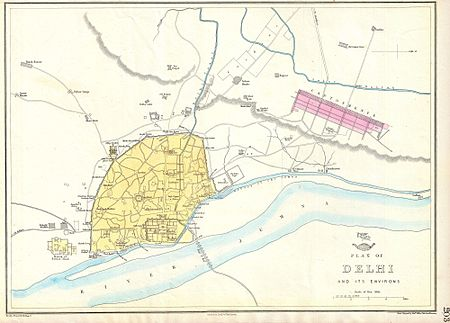
    1863 map of Delhi. Garstin Bastion was located on the northern part of the city walls
    GB Road
    GB Road

    One of the oldest brothels in New Delhi. During British colonial rule, when New Delhi came up there were 3 brothels, two in the north of Delhi, one in Kashmere gate, and the square opposite the red fort. The third one is the chawri bazaar which lord Hardinge, the viceroy, didn’t close as he thought would be enough as it closed the new cantonment.

    But as per Wikipedia, the history of the GB road dated back to the Mughal era and had five red light areas. The red light areas were consolidated into one area which is known as GB road now renamed swami shradhanand Marg. There are more than 100 brothels now. It is the home of more than 4000 sex workers.GB Road is one of the largest brothels in India after songachi, Kolkata, and kamathipura, Mumbai.

    Commercial hub
    GB Road

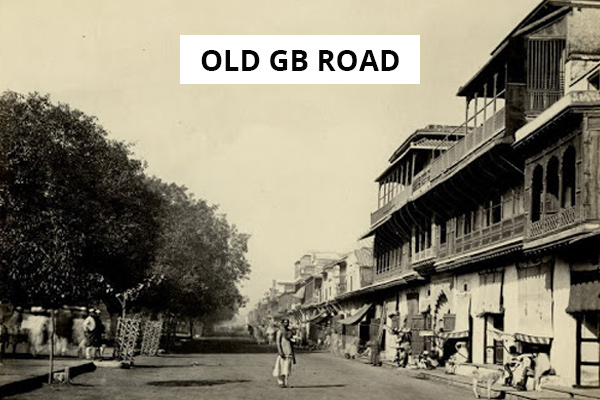
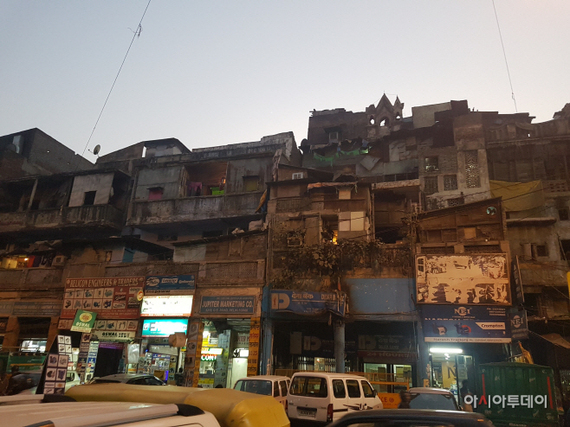
    The road starts from Ajmeri gate up to Farash Khana . The planning of the building structure along the road is done in such a way that the ground floor has a commercial market which is famous for hardware, machinery, automobile parts, and tools. It is one of the largest markets in the capital. Businessmen from all over India travel here to do business. The first and the second floor have brothels which are active during the night. The streets at the back of the houses in the back are residential areas.

      Planning & Architecture

    The brothels along the road in GB Road are low-rise structures constructed in a row. The building is an 80-100 years old structure with very poor maintenance. The building has an open sewage pipe running along the building. There is a narrow staircase that starts from the ground floor and goes to the terrace. The width of the staircase is less than 750mm with no provision for light and ventilation making accessibility difficult.
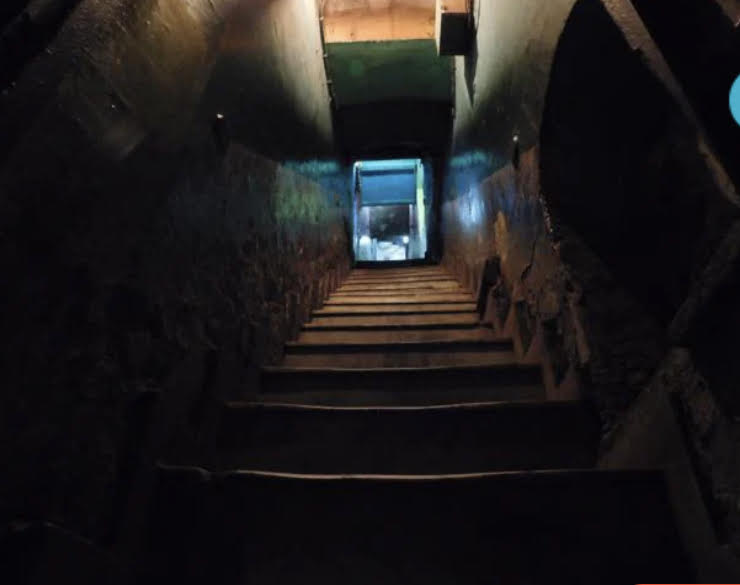
    GB Road
    Dark and Dingy staircase of GB Road.

    The slope of the staircase is also not as per the standards. The material used on the staircase is concrete which is in a dilapidated state now. There are no building standards followed in the construction of these structures. The first and the second floor have room on either side of the staircase with approximately 10-12 women and girls living in the brothel.

    Interior 

    The interior of the brothel is planned without any basic understanding of the space and its usage. The interior is an open plan. The entrance door is alongside the staircase landing. There is an open kitchen towards the left with an open drain running alongside it.

    Exterior

    Talking about the street plan is very haphazard. There is no street story, and a lack of dynamism and hygiene in the area. My dissertation topic was ‘’Understanding Indian streets as social public spaces’’.One of the streets that I can choose was GB road, Delhi.Based on the street activities the functions of the street have five principal functions:

     Place

    The place of work is basically what recognizes a road from a street. The feeling of the place is key to a more extravagant and additionally satisfying condition. It comes generally from making a solid connection between the road and the structures and spaces that cause it.

    Movement

    Arrangement for development along a road is indispensable, yet it ought not to be viewed as autonomously of the road’s different capacities. The need to provide food for engine vehicles is surely known by transport organizers, yet the section of individuals by walking and cycle has regularly been neglected.

    Walking and cycling are critical methods of movement,offering a more manageable option in contrast to the auto, making a positive commitment to the general character of a place, general well being and to handling environmental change through decreases in carbon outflows.

    Parking

    Stopping is a key capacity of numerous roads, in spite of the fact that it isn’t generally a prerequisite. An all-around structured course of action of on-road stopping gives advantageous access to frontages and can add to the imperativeness of a road. On the other hand, ineffectively structured stopping can make wellbeing issues and diminish the visual nature of a road

    Drainage, utilities and street lighting

    Roads are the fundamental conductors for seepage and utilities. Covered administration scan majorly affect the plan and upkeep prerequisites of avenues. Economical seepage frameworks can bring ecological advantages, for example, surge control, making untamed life living spaces and proficient wastewater reusing.

    Pedestrian Street

    A person on foot is characterized as one that basically disallows engine vehicles movement, besides developing access and time-constrained basic exercises, for example,waste get and benefits conveyances, this is not quite the same as shared road or space which permits engines vehicles to go at low speed.

    Types of Pedestrian Street
    • Full-time Pedestrian Street: –

    Full-time pedestrian streets are those that have very less vehicular movement, just crisis vehicles are permitted, and conveyances are allowed during off-crest hours.

    • Part-time Pedestrian Street: –

    Part-time pedestrians are those that permit some engine vehicle activity at low speed and a few times vehicles are permitted just in a particular period with no parking spot aside from stacking sound.

    •Traffic Calm Street: –

    Traffic calm roads are those that have no confinement to vehicle however pathways are broadened with few stopping spaces. This kind of road can be found principally in institutional zone and place where there is workplaces.

    GB Road
    GB Road

    The street activity of the place determined the function of the building and the people using it. It is very important to understand the street space before designing it. Unplanned street space leads to chaos and disruption in routine activities.

     
    Conclusion

    The buildings and streets of GB Road just like any other place requires redevelopment of the building with adequate street planning. The lack of these two requirements is one of the major reasons for rising criminal activities on GB road. Government should be sensitive to the needs and demands of the people of their work, culture, caste, status, etc., and not isolate them from the rest of the population.

    Trapped in claustrophobic cubbyholes opening into ‘pan’-stained corridors, many sex workers, robbed of chances to exercise choice in their lives, expressed disillusionment, saying they have little or no hope from any of the parties that knock at their doors every five years.

    The quint

  • Why Architecture: A Creative Expression of Art and Science

    Why Architecture: A Creative Expression of Art and Science

    As per Google’s definition, architecture is the art and technique of designing and building as distinguished from the skills associated with construction. This practice fulfills both practical and expressive requirements.

    As a kid, I always used to gaze with amusement at the surrounding structures. Be it a skyscraper or a gazebo. The detailing of the structure and the space usage used to make me wonder about the design behind it. At the age of 19, I realized that the structures need not be aesthetically appealing overall instead a particular element can also bring a drastic change in the aesthetic of the structure.

    The best example is Hyatt Delhi. The hotel is just among many other hotels, but the drop-off and the patio around it add richness to the place making it aesthetically beautiful for the viewers. There are many more similar structures that can be included in the example. I was always fascinated with the detailing rather the element used in the building that made it functional.

    Architecture makes the IMPOSSIBLE, POSSIBLE. It makes a structure a breathable space. Every structure has a unique theme behind its shape, size, and color. A lot of pioneering architects like Zaha Hadid, Le Corbusier, Raj Rewal, B.V Doshi, etc have proved the same by delivering good designs.

    Through architecture, we create an expression of human civilization at a fixed point of time with endures a moment of study for the future generation. Architecture lets people understand their spaces and the overall environment in a different and unique manner.

    It is a creative expression that never dies, it remains and evolves with time. Architecture helps to divide the spaces as per human function and necessity which makes it easier to distinguish between space and its uses.

    architecture

    Need of Architecture and Creativity in Today’s Society

    A well-known proverb states that “the way we construct is a reflection of the way we live.” The terms “architecture” and “engineering” are frequently used interchangeably since they both refer to the use of machinery, engines, and structures. Although the idea seems simple, if you look a little closer, you can see the difficulties that architects face virtually every day as they try to meet the escalating expectations of modern society. The field of architecture is not just restricted to the natural or physical world. What is frequently forgotten is how significantly architecture influences the modern culture we live in. It satisfies several requirements related to human life, and those requirements are becoming more and more complex as time passes.

    The most stunning architectural projects, like the 21st Century Museum of Contemporary Art, Seattle Public Library, Java Rain, and Orchard House, are some of the best examples of how high architecture has risen in the twenty-first century. Let’s examine in greater detail how architecture contributes significantly to the development of the society in which we currently live.

    Why Architecture: A Creative Expression of Art and Science As per Google’s definition, architecture is the art and technique of designing and building as distinguished from the skills associated with construction. This practice fulfills both practical and expressive requirements. Architecture,design

    It is a well-known fact that engineering and architecture are present in all aspects of daily life. From the vehicles we use to the flyovers we cross to the homes we live into the hospitals we rush to in an emergency, everything was designed by an architect.

    Architecture, Art and Science?

    Why Architecture: A Creative Expression of Art and Science As per Google’s definition, architecture is the art and technique of designing and building as distinguished from the skills associated with construction. This practice fulfills both practical and expressive requirements. Architecture,design
    Why Architecture: A Creative Expression of Art and Science As per Google’s definition, architecture is the art and technique of designing and building as distinguished from the skills associated with construction. This practice fulfills both practical and expressive requirements. Architecture,design

    Maybe it is both things and much more than that. It is better to think of it as a multifaceted diamond that enhances both personal and professional life. In general, architecture has always benefited humanity and continues to do so today. If you look around, you will also see how it is responsible for our current societal survival strategies. It makes significant contributions to the public sphere. People have been able to lead considerably smarter, healthier, and higher quality lives because of its outstanding technologies. Today’s world puts most essentials at our disposal. Nearly everything, including comforts, modern transportation methods, machines, and opulent utilities, is provided through architecture and thus enhancing our lifestyle.

    There are numerous architectural wonders, out of which I would like to discussion of my favorite:

    Parthenon – Athens, Greece

    Today we will be discussing and comparing one of the most inspired and visited structures of the world i.e., Athens, Greece & Pantheon, Rome. The construction of the Parthenon was initiated around 447 B.C. and finished around 427 B.C.E. The structure is planned in rectangular shape. Doric columns and styles made the entire structure very prominent during that time.

    Why Architecture: A Creative Expression of Art and Science As per Google’s definition, architecture is the art and technique of designing and building as distinguished from the skills associated with construction. This practice fulfills both practical and expressive requirements. Architecture,design

    Greece Pantheon, Rome

    The Pantheon was constructed way after the Parthenon, in Rome. It was initially a private and holy space later coming under the church. Unlike Parthenon, this structure is circular in shape. The column used in this structure is a Corinthian column.

    Why Architecture: A Creative Expression of Art and Science As per Google’s definition, architecture is the art and technique of designing and building as distinguished from the skills associated with construction. This practice fulfills both practical and expressive requirements. Architecture,design

    Comparison

    When we look at both the structures and their function, it is learned that both of them have contrasting physical characteristics. Starting from its physical characteristics Parthenon has a rectangular shape with a doric column and style. The structure was made for the goddess Athena which was the provider for the people of Greece.

    Due to years of ignorance, most of the parts of the structure were gone due to soils erosion. The structure till date signifies power and politics. On the other hand pantheon has a circular shape with a Corinthian column and style. As above stated it was the personal space of Marcus Agrippa and later on was taken over by the church. The place is now a religious and a scared spot for people.

    It is clear that though they have differences than similarities, the evolution in terms of design and development has been very unique and fascinating in both places. The fact cannot be denied that to date architecture of Greece and Rome have never stopped to fascinate and inspiring the world.

    Conclusion

    The dynamic demands, aspirations, and ever-evolving lives of people are what drive the architectural sector to continually delve deeper. The current story of the contemporary architectural industry is somewhat similar, regardless of the number of obstacles or objectives. It’s interesting to note that the study of architecture is thought to encompass topics from sociology, psychology, economics, and even politics. The market is constantly evolving, and it is seeking modern experts who value the critical power of knowledge beyond ideas and plans.

    Architecture has always been a platform symbolizing strength, power, politics and control from the ancient era till date. There is a brief evolution and derivation of every structure or building in today’s world. So in the end the question should not be WHY ARCHITECTURE, it should rather WHY NOT ARCHITECTURE?

  • Maximize Cost Savings and Time Efficiency with Prefabricated Building Materials

    Maximize Cost Savings and Time Efficiency with Prefabricated Building Materials

    Introduction

    Construction has always been a boon in the development of the socio-economic growth of the country. Since the genesis of construction, new building materials have evolved and have added value to the design and construction. From the use of mud, clay thatch, brick to usage of steel, concrete, and glass in the construction of high-rise structures, building materials have been a convenient source in the evolution of construction.

    Just like building materials, there is another insightful technique that has become a vital part of construction and has made the work of the architects and designers much easier. Prefabricated building materials are nowadays becoming very common in the construction industry as it is saving a lot of time and labor. There are many residences, construction warehouses etc, row houses, offices, etc. being built by the prefabricated technique.

    What is Prefabricated Building Material?

    Prefabricated building materials are a technique in which the building is manufactured off-site and then later on transported back to the location.The commonly used building materials are wood, steel, concrete, fiberglass etc.

    The type of steel used in this type of construction is galvanized steel as it will safeguard the structure from rust and fire. Additionally, it gives the prefabricated construction a strong and protective coating. Steel is used to construct almost all of the building’s elements, including beams, frames, columns, walls, and roofing. Steel or aluminum frames are commonly used in prefabricated military structures.

    Steel, wood, and fiberglass are prefabricated building materials used for small prefabricated buildings. Aluminum or plastic materials. These materials are less expensive than conventional brick and concrete structures. For sporting facilities, materials like steel, fiberglass, wood, and aluminum are employed as prefabricated building materials. These materials offer versatility and are favored for building stadium and gym structures and accessories like stands and seats.

    Uses Of Prefabricated Building Materials

    The prefabricated structures are used in evacuation houses, schools, row housing, detachable houses, high rise structures etc. Prefabricated structures have been refined over the period of 400 years of history. The Eiffel Tower, one of the 7 wonders of the world, is made with prefabricated tall iron which was assembled in 22 months.

    The Caterpillar Apartment -Detroit (case study)

    PREFABRICATED BUILDING MATERIALS

    The Caterpillar is situated in Core City, a developing neighborhood a few kilometers outside of the city’s core. The Caterpillar was created by executive architect Firm Detroit and local studio Undecorated. It is situated in a “urban woods” with over 150 newly planted trees.

    The eight apartments in the 9,000 square foot (836 square meter) building are all situated within an extended Quonset hut, a prefabricated, arched aluminium housing type that gained popularity in the US during World War II. The cottages are renowned for being simple and quick to construct.

    Prince Concepts, a local real estate developer working with the city to develop over 100 abandoned properties in the neighborhood, is involved in a number of projects, including this one.

    Maximize Cost Savings and Time Efficiency with Prefabricated Building Materials Just like building materials, there is another insightful technique that has become a vital part of construction and has made the work of the architects and designers much easier. Prefabricated building materials are nowadays becoming very common in the construction industry as it is saving a lot of time and labor. There are many residences, construction warehouses etc, row houses, offices, etc. being built by the prefabricated technique. Architecture,design

    The US company SteelMaster created the Caterpillar’s cage, which is constructed partially of recycled steel. The crew installed glass doors, skylights, and several rectangular dormer windows to let in natural light. The loft-style residences, which are next to one another and measure 750 to 1,300 square feet (70 to 121 square meters).

    Maximize Cost Savings and Time Efficiency with Prefabricated Building Materials Just like building materials, there is another insightful technique that has become a vital part of construction and has made the work of the architects and designers much easier. Prefabricated building materials are nowadays becoming very common in the construction industry as it is saving a lot of time and labor. There are many residences, construction warehouses etc, row houses, offices, etc. being built by the prefabricated technique. Architecture,design
    Maximize Cost Savings and Time Efficiency with Prefabricated Building Materials Just like building materials, there is another insightful technique that has become a vital part of construction and has made the work of the architects and designers much easier. Prefabricated building materials are nowadays becoming very common in the construction industry as it is saving a lot of time and labor. There are many residences, construction warehouses etc, row houses, offices, etc. being built by the prefabricated technique. Architecture,design

    The height of the space is 7m tall with approximately 18 windows each for each house. The placement of the house is planned is placed in such a way that it gives a sense of completeness and balance to the habitant who gets to see the sunrise from the bedroom and sunset in front of the living space. The interior of the house is kept minimal with white walls and concrete flooring. The center of the space has a service core that divides up the amenities. There is a kitchen, closet and bathroom apart from the living room and bedrooms.

    Maximize Cost Savings and Time Efficiency with Prefabricated Building Materials Just like building materials, there is another insightful technique that has become a vital part of construction and has made the work of the architects and designers much easier. Prefabricated building materials are nowadays becoming very common in the construction industry as it is saving a lot of time and labor. There are many residences, construction warehouses etc, row houses, offices, etc. being built by the prefabricated technique. Architecture,design

    The exterior has a staggered pattern of tress and native plants designed by sheet music. The walkway arranged in a row is made up of terrazzo tiles and a wooden deck as the platform creating it an earthy space and atmosphere.

    Design and Construction Eiffel Tower

    Maximize Cost Savings and Time Efficiency with Prefabricated Building Materials Just like building materials, there is another insightful technique that has become a vital part of construction and has made the work of the architects and designers much easier. Prefabricated building materials are nowadays becoming very common in the construction industry as it is saving a lot of time and labor. There are many residences, construction warehouses etc, row houses, offices, etc. being built by the prefabricated technique. Architecture,design

    The structure was planned to build for the world fair of 1889w with a height of 300m.Initially the possibility of erecting cast iron was studied with a Qs base ,125 meters across and 300 meters tall. The plan was to designed like a small plyon with four column of lattice work girders with separate base at the bottom and coming together at the top. The tower was a bold projection of that era.

    In order to make the tower more appealing and acceptable to the people,Nougier and Koechlin hired and architect Stephen Sauvester to work on the facade of the structure.

    THE FIRST PROPOSAL BY SAUVESTER 

    Maximize Cost Savings and Time Efficiency with Prefabricated Building Materials Just like building materials, there is another insightful technique that has become a vital part of construction and has made the work of the architects and designers much easier. Prefabricated building materials are nowadays becoming very common in the construction industry as it is saving a lot of time and labor. There are many residences, construction warehouses etc, row houses, offices, etc. being built by the prefabricated technique. Architecture,design

    Sauvester proposed the idea of having stone work on the pedestal, glass ball wall and bulb shape design for ornamentation. The explanation given by Eiffel for the structure was as follows: –

    “All the cutting force of the wind passes into the interior of the leading-edge uprights. Lines drawn tangential to each upright with the point of each tangent at the same height, will always intersect at a second point, which is exactly the point through which passes the flow resultant from the action of the wind on that part of the tower support situated above the two points in question. Before coming together at the high pinnacle, the uprights appear to burst out of the ground, and in a way to be shaped by the action of the wind”.

    The Construction

    After numerous discussions and probabilities, the construction of the structure was started in July 1887 and was completed within 2 months.

    All the elements were manufactured in the Eiffel’s factory. The workers were hired by a team of constructors who had past experience for working in metal construction projects.

    Record construction time 

    The theme duration taken to build the foundation was 5 months and 21 months to finish the assembly of the metal. The Eiffel reaches its marvel of honor especially considering the speed with which it was built.

    Criticism

    Maximize Cost Savings and Time Efficiency with Prefabricated Building Materials Just like building materials, there is another insightful technique that has become a vital part of construction and has made the work of the architects and designers much easier. Prefabricated building materials are nowadays becoming very common in the construction industry as it is saving a lot of time and labor. There are many residences, construction warehouses etc, row houses, offices, etc. being built by the prefabricated technique. Architecture,design

    During its construction phase, the tower received a lot of criticism. There was an article published in the newspaper with the name “The protest against the tower of monsieur Eiffel and it was initiated by a lot of influential names in the world of literature and art.

    But once the tower was finished, the criticism turned into a complete masterpiece!

    Hence in 1889 around 2 million people came to witness the beauty during the world fair.

    Conclusion

    Every structure had its own importance irrespective of the material. Prefabricated material has proved its significance over the decades. Like every other material, prefabricated material has its advantages and disadvantages.

    It gives thermal insulation, improves quality, saves time, it helps in the safety of the Ages workers, environmental impact, constructability.

    With advantages comes disadvantages as well; If the prefabricated components are not handled properly at the site, it can cause breakage and ultimately leading to the reconstruction of the entire component again.

    Lack of skilled labor makes it difficult to connect the precast unit as it cannot be done by layman workers, requires erection equipment.

    But considering the architectural wonders it has created, prefabricated structures are the future of the construction industry in the coming times!!

  • The Essential Role of Lawns in Combating Global Warming: Tips for Sustainable Yard Maintenance

    The Essential Role of Lawns in Combating Global Warming: Tips for Sustainable Yard Maintenance

    Global Warming

    It’s a long history that the earth has warmed and cooled over a period of time. But now the climate has changed drastically because of human activities. There has been a significant change in the sunlight due to the shift in the orbit. Global warming as we know is the significant rise in the earth’s surface temperature due to the rise in the greenhouse gas released by people burning fossil fuels.

    The current global warming is not natural because of the irrational activities of the human population.

    Lawns in our day today life

    Nowadays lawns are used along with all the built structures mainly for landscaping and aesthetic purposes. There are different types of laws depending upon the design. Lawns help us to create an open green space around us, hence enhancing the overall look of the space.

    Homes, apartments, business buildings, and offices all have lawns surrounding them. There are substantial lawn sections in many city parks. Depending on the continent and the sport, the specialized terms turf, pitch, field, or green may be used in informal settings.

    LAWNS & GLOBAL WARMING

    A managed grassy area is referred to as a “lawn,” a phrase that has been around since at least the 16th century. In various parts of the world, the lawn has become culturally embedded as an element of the ideal domestic aesthetic as a result of suburbanization. However, people are becoming more aware of this ideal’s detrimental effects on the environment. In some areas where there are water shortages, local government officials are promoting grass clones as a way to save water. 

    Lawns Contribution to Global Warming

    The Essential Role of Lawns in Combating Global Warming: Tips for Sustainable Yard Maintenance Nowadays lawns are used along with all the built structures mainly for landscaping and aesthetic purposes. There are different types of laws depending upon the design. Lawns help us to create an open green space around us, hence enhancing the overall look of the space. Architecture,design
    Natural lawns

    Grass is a plant that absorbs carbon dioxide from the atmosphere through photosynthesis. We can sequester carbon dioxide, a greenhouse gas, to help keep it out of the atmosphere. But maintaining turfgrass requires a lot of energy; just consider how much fossil fuel is used when you mow, water, and fertilize. In fact, the net balance between emissions and absorption may show that lawns emit more greenhouse gases than they sequester.

    We determined the source/sink potential of a 4-hectare (9.88 acres) site in three Florida towns using actual data from measurements of trees located on various land use types in Florida (such as parks, residential yards, and natural urban remains) (Gainesville, Orlando, Miami). Only the values of the above-ground vegetation

    The lesson here is that well-kept lawns and trees are preferable to more natural places that require little upkeep. If there are more lawns than trees, the balance may tip toward carbon dioxide emissions (e.g., older residential areas in Miami-Dade). It’s important to remember that we only considered vegetative surfaces when calculating the impact. We simplified the calculations by leaving out the carbon costs associated with producing and maintaining the power equipment as well as the carbon costs associated with sod production and transportation. In particular, we did not account for the nitrous oxide emissions from fertilizer applications.

    After fertiliser and/or irrigation, urban turfgrass often emits nitrous oxide. Since nitrous oxide has a 300-fold greater capacity to absorb heat than carbon dioxide, it has a substantially higher global warming potential (GWP). City parks with high maintenance requirements may have far greater consequences than those mentioned here due to these unmeasured factors. As a result, cities with plenty of groomed, fertilised, and irrigated lawns as well as trimmed shrubs and trees may actually be sources of carbon dioxide rather than sinks.

    These carbon dioxide emissions are not insignificant; for instance, a Miami-Dade greenspace measuring 4 hectares and having 85% of its surface covered in grass would produce more than 11 tonnes of carbon dioxide annually.

    These above-ground figures should be viewed as a preliminary look at the potential carbon worth of urban greenspace because below-ground soil carbon sequestration could not be computed, preventing complete carbon credit from being assessed. Natural greenspaces in and around cities that require little to no upkeep now appear to be the greatest option for sequestering carbon dioxide.

    Natural urban greenspaces also preserve biodiversity and reduce stormwater runoff and fertiliser use, among other advantages. Overall, preserving urban open space might help Florida’s carbon footprint be smaller, although well-kept urban greenspace might be seen as a source of greenhouse emissions. These findings suggest that if towns want to reduce their carbon impact, developers will need to provide a justification for building such high-maintenance parks if they want to use greenspaces as carbon dioxide sinks and may even need to consider mitigating their effects.

    Effective Measures

    We started importing European turf grasses in the previous century, and ever since then, they have been a significant part of American yards. But because these grasses are not native to our environment and climate, we must use mowers, blowers, more water, fertilisers, herbicides, and pesticides to maintain their health. These procedures are not only costly and time-consuming, but they also harm our soil, the groundwater, and our animals. They also add noise and contaminants to our air. Change is needed now.

    Some of the sustainable measures that can followed are as follows: –

    The Essential Role of Lawns in Combating Global Warming: Tips for Sustainable Yard Maintenance Nowadays lawns are used along with all the built structures mainly for landscaping and aesthetic purposes. There are different types of laws depending upon the design. Lawns help us to create an open green space around us, hence enhancing the overall look of the space. Architecture,design
    Sustainable measures for lawns

    ·        Keep the lawn natural, allow flowers and weeds to grow instead of removing them away.

    ·        Reduce the size of the lawn, use a considerable amount required for your day-to-day activities.

    ·        Use sustainable grass species like drought resistant grass and no mow grass.

    ·        Replace the spaces with more plantings.

    The Essential Role of Lawns in Combating Global Warming: Tips for Sustainable Yard Maintenance Nowadays lawns are used along with all the built structures mainly for landscaping and aesthetic purposes. There are different types of laws depending upon the design. Lawns help us to create an open green space around us, hence enhancing the overall look of the space. Architecture,design

    ·        Replace with ground covers, meadows, xeriscape and rain garden.

    Conclusion

    The Essential Role of Lawns in Combating Global Warming: Tips for Sustainable Yard Maintenance Nowadays lawns are used along with all the built structures mainly for landscaping and aesthetic purposes. There are different types of laws depending upon the design. Lawns help us to create an open green space around us, hence enhancing the overall look of the space. Architecture,design

    It’s high time that we start conserving our earth and its resources. Over the past years, there have been significant changes that cannot be reversed coz of human activities. Global warming can be reversed if adequate measures are taken to reduce the coz if it. Lawns are a good recreational space when it comes to residential, commercial, and institutional buildings.

    Overuse of anything in an unnatural manner can lead to the release of hazardous gases like carbon dioxide, nitrogen, etc which can lead to global warming. If adequate measures are taken to ensure that the lawns are taken care of in the right way with adequate replacements, then we can reduce the amount of greenhouse gas in the atmosphere leading to global warming. Hence making the world a better place to live!!

  • Discover the Best Furniture Market: Kirti Nagar, Delhi

    Discover the Best Furniture Market: Kirti Nagar, Delhi

    Introduction

    Kirti Nagar, started as a timber market, is now Asia’s biggest furniture market. Kirti Nagar is a one-stop solution for all designers and architects as it is the central hub for all furniture, interior, exterior material solutions with the best price available in the market. It is the oldest furniture market in Delhi housing famous interior showroom, boutique, kitchen accessories, skilled carpentry furniture, stones, tile showroom, kitchen and war drove fitouts etc.

    Major Attraction

    Furniture market
    KIRTI NAGAR
    QUALITY
    STYLE

    As we enter the market, the variety in itself is seen through different design themes on each building facade along the main road. One can easily demarcate between the old, new and the renovated structures. The architectural design of the building varies from French design to industrial design.

    One can also notice that some showrooms have not made the effort to make a design statement through their facade. They believe that being one of the oldest markets in the area with trusted clientele over the years can itself serve the purpose.

    There are a few eatery joints and restaurants along the main road for the customers who are visiting the market to buy furniture.

    Unplanned Street Activities

    STREET

    With pros comes cons about the place. Being the first furniture market in India, there is no spatial planning visible in the main road of the furniture market. There is no consideration for green space either in the exterior nor in the interior. The focus was on creating a space for drawing the customers attention to an aesthetically curated interior space.

    The street activity of the area is chaotic. There is not sufficient parking space considering the footfall. People traveling by their own vehicle, park along the road, thus creating congestion. The structures built along the main road of the furniture market is an example of unthoughtful planning and design.

    The façade of the building does not attract buyers except for the few newly renovated structures. There are lanes that lead to the inner roads/galis from the main road. Along the lanes there are residential builder flats, furniture warehouses, fabric showrooms, local food stalls, puncture shops, local traders, small retail spaces, slums, all located along these lanes/galis. The street activity is chaos!

    Initiatives

    LIVING ROOM
    DINING

    On June 18th,2022 there was a article published by The Press trust of India wherein the deputy chief Minister of Delhi, Mr. Manish Sisodia stated that the Delhi government will develop the iconic Kirti Nagar furniture hub here into a world class market.

    Below written is the article published by the Press trust of India,

    Sisodia interacted with traders of the market and took their feedback on its redevelopment that would be undertaken by the Delhi government. As announced in the annual budget 2022-23, the Delhi government will redevelop five iconic markets here — Kirti Nagar, Kamla Nagar, Khari Baoli, Lajpat Nagar and Sarojini Nagar.

    Sisodia said under the redevelopment project, the entire Kirti Nagar furniture market will be given a face lift with underground electricity wires, modern infrastructure and a business-friendly ambience. “The Kirti Nagar market is an iconic market and after redevelopment, it will be counted among the most luxurious furniture markets of the world,” Sisodia said.

     A design competition will be launched for each market that will help in getting the best ‘out of box idea’ for redevelopment. Within 12 weeks, top notch architectural teams will be appointed to work on redeveloping these five iconic markets, said an official statement.

    Delhi has several popular and iconic markets. Presently there are more than 3.5 lakh shops in all the retail markets of Delhi, which employ about 7.5 lakh people. Comprehensive redevelopment of the physical infrastructure, including roads, sewage, lighting, parking among others will be part of the project.

    Sisodia said the Kirti Nagar market will be given a new modern look after redevelopment to provide better experience to both buyers and traders.

    “All the traders of Kirti Nagar furniture market are very excited. The whole process of redevelopment is being carried through mutual cooperation of the government and the traders,” he said.

    The redevelopment work in Kirti Nagar will be visible soon and it will be followed by branding of the market as per international standards, he added.

    Conclusion

    In spite of the number of the cons, Kirti Nagar furniture market has left no stones unturned when it comes to providing the best quality furniture in the market with a lot of flexibility in terms of price and customization.

    The footfall keeps increasing everyday with people coming from all over India. Few measures if taken in terms of development can change the overall productivity of the market.

    Street activity can be more organized and planned, more green areas can be encouraged, making it an eco-friendly street, Facades should be designed in such a way that it attracts the customer towards the showroom. The parking spaces can be planned such that it accommodates more vehicles hence preventing people from parking on the street and creating traffic congestion on the road.

  • Breaking Down Barriers with Modern Building Materials and Technology

    Breaking Down Barriers with Modern Building Materials and Technology

    Introduction

    Construction has flourished over the past few decades with modern building materials and technologies. With the conscious of materials with adequate technologies, architecture and construction have bloomed and touched unthinkable heights. Construction material and technology cover: cement, brick, concrete reinforcement, ceramics, timber, glass polymers, steel, bamboo, non -conventional material, etc.

    Burj Khalifa, one of the prominent architectural wonders of the world has been constructed mainly with steel, concrete, and glass. Deck sheets are used for flooring in order to reduce the load of the building and add strength to the building technologies and manpower used to construct the structure showing the fascinating growth of the industry.

    Many famous buildings have come into being using modern technologies and materials. Modern technologies have worked more efficiently and are time-saving. The role of manpower has also significantly reduced with modern construction technologies coming into action.

    Building Materials and Technologies in Construction

    Mud and Clay

    Mud and Clay

    Building materials have certain type of properties like strength, and durability that make them in the right application. It is selected on the basis of the function of the structure, physical form, and weight that determines the type of material to be used in the structure. 

    The combination of soil, loam, silt, or clay with water is referred to as mud. Near rivers or other water sources, it typically spontaneously forms after rain. The mud eventually hardens and transforms into mudstone.

     Mud is also known the names such as slurry, mortar, plaster, stucco, and concrete, mud is known by many distinct names. To construct walls, floors, and even roofs, subsoil and water are typically mixed with stone, gravel, straw, lime, and bitumen. In the past, mud was typically used to manufacture mud bricks, plaster building walls, and construct building walls.

    Clay Brick And Block Types of Building Material

    Breaking Down Barriers with Modern Building Materials and Technology Construction has flourished over the past few decades with modern building materials and technologies. With the conscious of materials with adequate technologies, architecture and construction have bloomed and touched unthinkable heights. Construction material and technology cover: cement, brick, concrete reinforcement, ceramics, timber, glass polymers, steel, bamboo, non -conventional material, etc. Architecture,design

    Mud bricks are also known as clay bricks or adobe.The binder straw is used during the preparation of the clay bricks.It helps to bind the block and redistribute the load throughout the brick and hence increasing its strength and reduce the chances of breakage.clay bricks are commonly used in construction of the houses.

    Aggregate

    Breaking Down Barriers with Modern Building Materials and Technology Construction has flourished over the past few decades with modern building materials and technologies. With the conscious of materials with adequate technologies, architecture and construction have bloomed and touched unthinkable heights. Construction material and technology cover: cement, brick, concrete reinforcement, ceramics, timber, glass polymers, steel, bamboo, non -conventional material, etc. Architecture,design

    It is the most commonly used material in construction. It is used in concrete and asphalt concrete by enhancing the strength of the material. Due to its hydraulic conductivity, it is used in retaining drain walls. It is used in the construction of water tight application and repair works.

    Rock

    Rock is one of the natural materials available in abundance. It is used in construction as it is strong, durable, hard and free from all the cracks and damage. Rock/stone is used in the making of marble, granite, limestone, ballast etc. These types of stones are used in building kitchen, dams, used in ornamental interior/exterior work, flooring etc.

    Thatch

    Thatch

    Thatching is one of the oldest method used in roofing.It has water resistant and insulation properties.This type of roofing is still used in developing countries in areas with low budget housing and in developed countries it is used to give earthy look and the feel to the viewers.The material is sustainable in both winter and summers.

    Wood and Timber

    wood and timber

    Wood is commonly and sought after material in construction and carpentry work. It is durable, good isolation properties. Wood is a natural material available in different shape and size with good, durability and strength.

    Some of the applications of wood are that it is used in door and window frame ,table, flooring, cabinets, furniture, walls etc.

    Fire Bricks

    Fire Bricks

    Fire bricks are just like normal bricks but during the heating process,it is burnt under high temperature.Fire bricks have good chemical properties unlike conventional bricks.

    It is used in inside of the lining surfaces,chimney,fire resistant structures etc.

    Cement

    cement

    In the construction industry, cement is one of the most often utilised building materials to build practically any sort of structure. Sand and coarse aggregates are combined using it as a binder.

    Cement is used in construction for a variety of purposes, including creating concrete (cement + sand + aggregates), which is used to build slabs, columns, and footings, as well as mortar (cement + sand), which is used in plastering and brickwork structure.

     Fabric

    fabriic

    Fabric structures are made of artificial fibres and provide customers with a wide range of aesthetically pleasing free-form building designs. Tensile structures are strong, resilient, lightweight systems that give architects more formal flexibility than other types of construction elements can.

    The capacity to span wide spaces uninterruptedly, sound dampening, and light diffusion are some of fabric’s properties. To satisfy global structural, flame retardant, weather-resistant, and natural force criteria, custom fabric structures are created and constructed. A subset of tensile structures is known as fabric structures.

    Fabrics are earthquake, resistant,tensile,durable.It also acts as a tensile structure.Fabrics are used in different applications considering its strong properties,It is used to make tents,walkways,low tension frame structure etc.

    Foam

    Breaking Down Barriers with Modern Building Materials and Technology Construction has flourished over the past few decades with modern building materials and technologies. With the conscious of materials with adequate technologies, architecture and construction have bloomed and touched unthinkable heights. Construction material and technology cover: cement, brick, concrete reinforcement, ceramics, timber, glass polymers, steel, bamboo, non -conventional material, etc. Architecture,design

    Polyeuthrene or polystyrene is used with concrete or wood during construction.It is light weight material,good insulator.There are two types of foam i.e; rigid foam and spray foam.

    Spray foams are used in packing materials as it has good expansion properties from 30 – 60 times its liquid volume once it sprayed on the surface.

    GLASS

    Glass

    Glass is an amalgamation of sand and silicate. It is used in all the contemporary structures along with steel which gives an strong evolving design.Glass is used in the facades of the building as curtain walls or as wide roof structure. It is even used in window and doors allowing exterior to be viewed in the interior itself.

    There are various types of glass, i.e; glass wool, laminated glass, tinted glass, frosted glass, tempered glass, float glass, etched glass, inlay glass, toughened glass, double glaze glass, glass wool etc.

    Float glass is used in railings, blocks, shop front etc. Double glazed glass is used for insulation purposes. Glass wool is used as an insulator in the building, laminated glasses are used in bridges, building facades, floor slabs, walkways etc.

    Gypcrete

    Gypcrete

    Gypcrete is used in concrete construction and wooden materials as it is fire rated, reduces sound and helps in the leveling off the floor. It is nowadays commonly used in flooring as it has many favorable properties. Gypcrete is affordable compared to other materials, it is easy to install and as mentioned above it has good properties. Apart from flooring it is used in ceiling as well.

    Steel

    steel

    Steel is a material that is frequently utilized in the construction industry. Steel serves as the principal structural component of a building or other structure, serving as the portion that holds everything up and together. Steel-like malleability, ductility, elasticity, hardness, brittleness, and conductivity have several benefits. It gives the component tensile strength. Steel reinforcement is employed because the tensile strength of concrete is inadequate.

    Construction of steel structures like skyscrapers, industrial buildings, cold storage, etc. typically uses structural steel.

    A bar made of HYSD steel is typically used to create structural elements like beams, columns, footings, etc.

    Steel is used in kitchens, columns, beams, floors, bridges, piloties, etc.

    Plastic

    Plastic

    Plastic is used a lot these days when compared to the usage of other building materials. It is easily available in the market with affordable prices, easy to maintain.

    Plastic has good properties, i.e; it is durable, ductile, has thermal properties, fire resistance, melting point, easy maintenance, good finishing, strong, etc.

    Conclusion

    Building materials over the years have evolved enormously and each evolution gave birth to a new design element through its building materials. Every material has its own pros and cons. Usage of the materials considering their physical and socio-economic impact on the people and its environment affects the overall space and its development.

    New building materials and technologies should be developed like pre-fabricated structures, precast slabs, etc., hence reducing the time and labor cost in construction. 

  • Beyond Skyscrapers: The Fascinating City Planning and Architecture of Dubai

    Beyond Skyscrapers: The Fascinating City Planning and Architecture of Dubai

    Introduction

    Dubai has never failed to amuse people when it comes to the drastic growth in city planning within a short span of time. The architecture of Dubai is one of the best works in the world. The Burj Khalifa is one of the most remarkable works in the history of Dubai with all the latest technologies in design and architecture.

    The early architecture of Dubai, which dates to the late 19th century, was influenced by Islamic, Iranian, and Indian styles. The hot and muggy weather, local social and religious norms, and the range of construction materials readily available all played a significant role in determining architectural designs. The primary characteristics were ease of use, usefulness, longevity, and climate adaptability. 

    Mud used as mortar in the early constructions, which were built of stone, palm leaves, and palm tree trunks. Most of Dubai’s original residents lived in barastis, which are huts built of palm fronds. Later, the four common structures of the emirate—watchtowers, mosques, souks, and homes—were built using the strongest materials available, coral stone from the sea and gypsum from the creek’s salt marshes. Islamic emphasis on discretion and modesty played a role in the creation of courtyards connected with the wind towers to keep the space cool during summers.

    Dubai has effortlessly blend within the modern design architecture and at the same time keeping up with traditional architecture. The architecture of dubai has changed significantly over the years. Architecture started with vernacular design style and then evolved towards modern style with exposed glass walls,steel,dynamic and spiral designs that resonates the native design features.

    Evolution of the City

    Beyond Skyscrapers: The Fascinating City Planning and Architecture of Dubai Dubai has never failed to amuse people when it comes to the drastic growth in city planning within a short span of time. The architecture of Dubai is one of the best works in the world. The Burj Khalifa is one of the most remarkable works in the history of Dubai with all the latest technologies in design and architecture. Architecture,design

    Dubai’s architecture and city planning changed after 1979 with the construction of the world trade centre. The WTC has a blend of traditional and modern architecture with both appealing and functional spaces. Islamic architecture over the years has evolved significantly with time. Initially, the architecture started with domes, arches, amphitheatres, low-rise structures. Buildings were designed for functionality and very less thought was given to the aesthetics of the space.

    DUBAI-CITY PLANNING AND ARCHITECTURE

    Nowadays architectural designs are delivered to make a statement which is quite obvious from all the recent structures in Dubai. Today’s architecture is more advanced with all the latest technologies and building materials like concrete, glass,steel,metal to create more than just a functional space.

    Skyscrapers in Dubai are constructed primarily of concrete and glass, using straightforward building materials. The majority of Dubai’s taller structures are homes, while some of them also have business uses.

    However, construction in Dubai has gradually shifted toward environmentally friendly projects. It is now required for builders to utilise non-toxic, emission-free materials generated from renewable resources as a result of the 2011 Green Building Regulations and Specifications released by the Dubai Municipality.

    As a result, Dubai’s already stellar collection of breathtaking technical marvels has gained a number of eco-friendly constructions. Al Barari, for instance, features villa buildings with solar panels and organic waste recycling built right into the design. Buildings in Dubai Silicon Oasis have green roofs to reduce the environmental impact of development.

    The 3D-printed building of structures is another relatively recent invention in Dubai’s architecture. The world’s first 3D-printed office and a two-story structure can be found in Dubai.

    Present Dubai

    The Burj Khalifa is one of Dubai’s most notable examples of contemporary architecture. With a total height of 2,722 feet since its completion in 2008, the Burj Khalifa has remained the world’s tallest structure.

    Beyond Skyscrapers: The Fascinating City Planning and Architecture of Dubai Dubai has never failed to amuse people when it comes to the drastic growth in city planning within a short span of time. The architecture of Dubai is one of the best works in the world. The Burj Khalifa is one of the most remarkable works in the history of Dubai with all the latest technologies in design and architecture. Architecture,design

    The structure was created to embody the epitome of Dubai: exceptional, forward-thinking, and reaching new heights. Its spiralling construction rises up from a flat desert foundation and is modelled after Islamic architecture. The tower’s cross sections are all lined up to reduce wind vibration.

    In addition to the magnificent Burj Khalifa, Dubai is home to several other architectural marvels :-

    · The Burj Al Arab, a well-known skyscraper in Dubai next to Jumeirah Beach, is distinguished by its distinctive sail-shaped façade.

    · Another mixed-use tower in Dubai Marina is Marina 101. This structure rises a little over 1,400 feet.

    · One of the tallest residential skyscrapers in the world is Princess Tower in Dubai Marina, which is slightly taller at 1,358 feet.

    · The 23 Marina, which is another upscale, residential high-rise, is little over 1,289 feet tall. This structure is situated in the Dubai Marina as well.

    · The stunning architecture of the Dusit Thani hotel is meant to resemble praying hands. This hotel was the first of its kind to be awarded the EarthCheck Gold Certification for sustainability, standing 501 feet tall.

    · Despite not being a massive high-rise, the Jumeirah Beach Hotel on the Dubai shoreline stands out among the city’s other architectural marvels thanks to its distinctive wave-shaped form.

    City Planning

    Beyond Skyscrapers: The Fascinating City Planning and Architecture of Dubai Dubai has never failed to amuse people when it comes to the drastic growth in city planning within a short span of time. The architecture of Dubai is one of the best works in the world. The Burj Khalifa is one of the most remarkable works in the history of Dubai with all the latest technologies in design and architecture. Architecture,design

     In the last decade, Dubai has grown to multiply unstoppably in terms of population and economic growth. One of the important elements behind the growth is the spatial planning infrastructure, services etc. City planning has been done over a period and ensured the sustainability of the city promoting globalisation.

    expansion was mostly supported by trade and business operations. As of 2005, 6% of the Dubai’s total income was derived from oil and gas operations(Bagaeen, 2007. Services related to finance and trade accounted for more than 40% of the total revenues. Construction and real estate investments brought up 22.6% of income, and aviation-related services contributed 25%. 

    Most city operations were altered by the 2008 economic slump. The Dubai Statistics Centre reports that the economic slump caused the economy to decline by -2.4 before growing by 2.3 in 2010. (Elessawy, 2017). The economic crisis forced the government to alter its reliance on a number of activities. There was less reliance on the building and real estate industries. Due to the shift in attention to various areas, economic activity in Dubai is currently accelerating. Trade and tourism are a couple of the expanding sectors. Tourists draw attention to the city, which boosts commerce and raises money.

    Dubai’s population consists of 90% of expatriates, labours, and tourists. Spatial planning is done in a way to ensure potential growth and promotes a rise in the employment of the city population.

    Conclusion

    Dubai has always been a major point of attraction in terms of socio, the economic growth of the city.The city has adapted itself according to the need of the hour. With increase in the population dubai has expanded its opportunities and services in order to accommodate all the residents.it also focuses on sustainable methods in order to reduce energy and preserve earth’s resources.