
Author: Athiya Junaid

  • How Architects Can Fight Homelessness: The Global Housing Crisis 

    How Architects Can Fight Homelessness: The Global Housing Crisis 

    “We travel because we need to. Because distance and difference are the secret tonics to creativity. When we get home, home is still the same, but something in our minds has changed, and that changes everything.”

    – Jonah Lehrer

    Introduction

    For most of us, a more agreeable statement couldn’t exist. As we travel for fulfillment and wander for distraction, scale new heights and make new memories, as we sail the seas of the known and journey the untrodden path, the beauty of the journey is unknown till one comes back home and rests his head on his own worn-out pillow. Ah, home sweet home. To me, home is the space where I can exist as I am- no inhibitions, no boundaries, no expectations. To me, home is akin to heaven. According to the popular English language encyclopedia, Britannica, homelessness is defined as the state of having no home or permanent place of residence.

    But what about those who have nowhere to go? Nowhere to belong and nowhere to go, innocent folk have been compelled to give up on the idea of heaven and embrace impiety. What of them? 
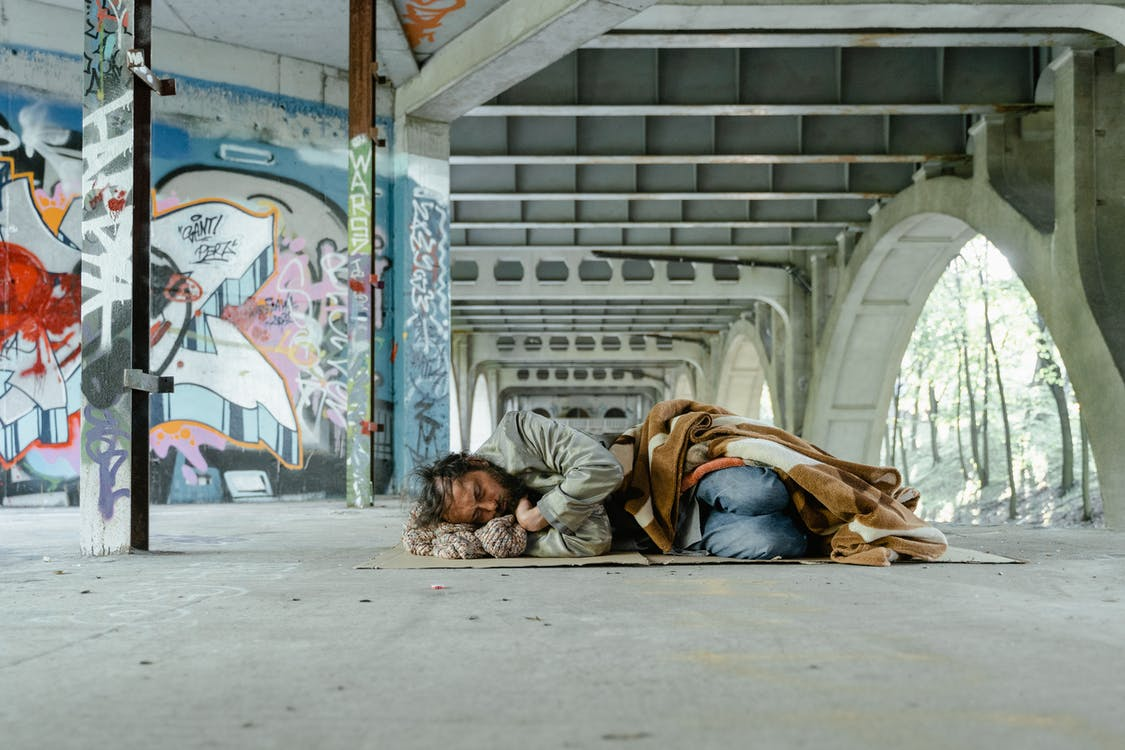
    Homelessness
    Photo by MART PRODUCTION from Pexels

    Homelessness: The Statistics 

    Homelessness is a social issue of growing concern, prevalent in almost all countries. Homelessness is a global challenge lying at the intersection of housing affordability, substance misuse, urbanization, racial and gender discrimination, infrastructure, and unemployment.

    The United Nations Human Settlements Program estimates that 1.6 billion people live in inadequate housing, and suggests that over 100 million people have no housing at all. In India alone, approximately 4 million people are homeless and 65 million people live in urban slums.

    The Global alone, Crisis

    Although the soaring gasoline prices are the current cause of concern, another facility has steadily been pushing numbers worldwide- housing rents. Driven by economic polarization, insufficient government policies, and the COVID-19 pandemic, the world has seen an increase in the number of unhoused, putting a larger group of the population at risk for the same. Moving in parallel with increased house prices, higher rents have priced a large population out of home buying and renting. 

    Additionally, growing urbanization has steered governments to demolish affordable social housing and has created a ruthless economy that favors profits and aesthetics over liveability. In India, government authorities demolished 53,700 homes, evicting 260,000 people for slum-free city beautification projects, despite the government’s ‘Housing for All-2022’ scheme. 
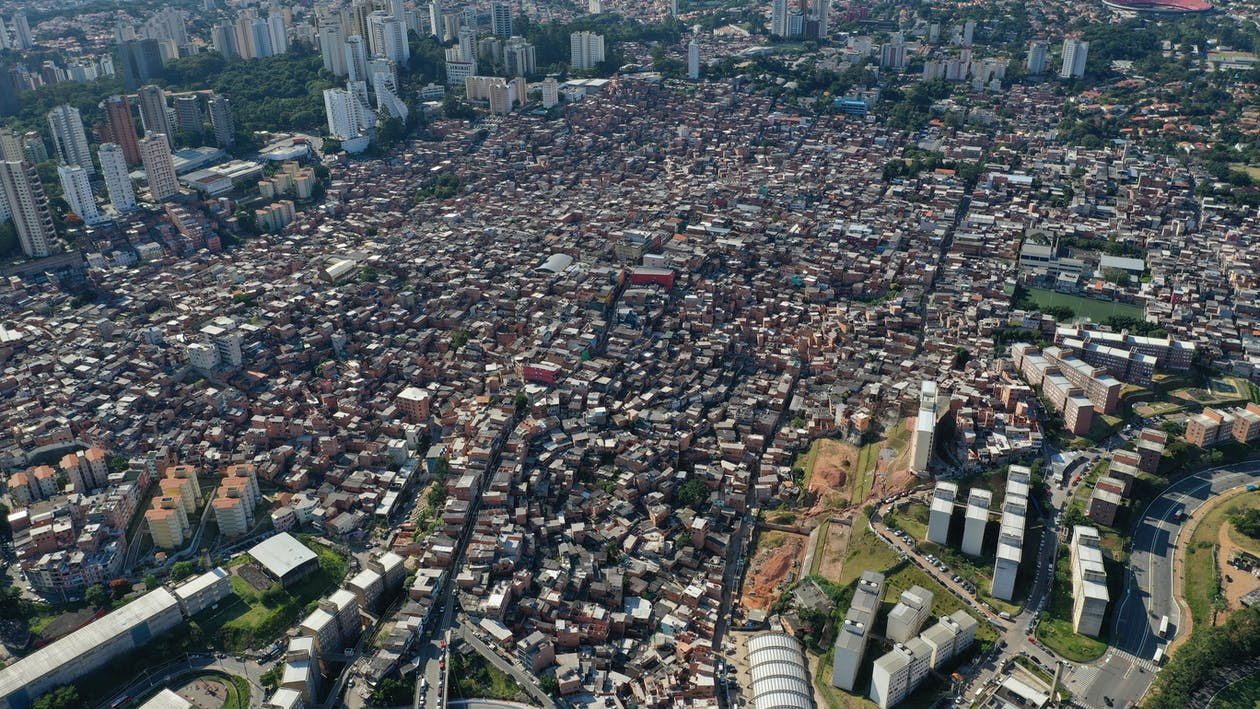
    slum free
    Photo by Sergio Souza from Pexels

    Urbanization in India 

    The rapid urbanization India has experienced in the last few decades has paved the way for an unbalanced economic development. As a growing number of people migrate from rural areas to urban centers in search of employment, cities are often unable to accommodate them. The clear obstruction between the supply and demand of housing tends to abandon citizens to fend for themselves. 

    In a desperate attempt to find a short-term solution for these issues, governments isolate the unhoused by building low-cost housing societies in areas lacking resources, and little to no access to water, transportation, or employment opportunities. This alienates the less fortunate and enables a classist system where the problem only continues to grow, further pushing them into poverty.

    Design- The Tool to Creating Dignity for All resources

    Design has the power to feel and make feel, to tell stories, and build the future. It’s quite fascinating to experience the way different people react to design in the world around them. I believe our interaction with design is like that all resources have a soundtrack playing at all times, something we’re not always aware of subconsciously sending cryptic messages on how to feel, how to behave, and what to expect. 
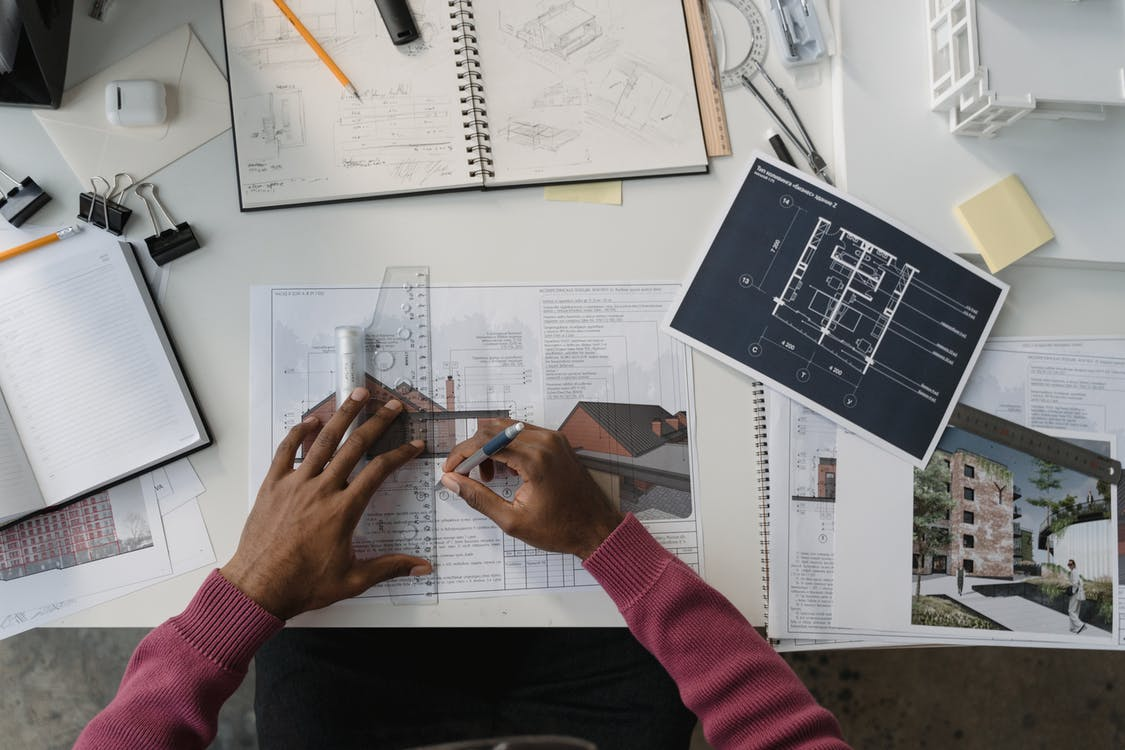
    design
    Photo by Tima Miroshnichenko from Pexels

    I believe architecture is the profession of creating better lives, building spaces for its inhabitants to have their values reflected. Design has the unique ability to make people feel dignified, seen, and respected. 

    Yet, present-day architecture is almost disconnected from the people who are most directly affected by its work. Rather than focusing on the societal impact and contribution of buildings and spaces, it is only concerned with the aesthetic quality and Instagram-ability of the space. 

    The homeless, one of society’s most vulnerable, have the least access to thoughtful design, perhaps the commodity they could benefit from the most. Dedicating projects to the public will not only dignify the people but also the novel profession of design, thus diversifying not only the client threshold but also the forms of design for the world to enjoy. 

    The way architecture is thought of and talked about can be entirely revolutionized if every design decision is thought of as an opportunity to invest in the dignity of the people you design for and the spaces you serve. Because once you experience dignity, nothing less will be acceptable. 

    Architecture has the agency to be the engine for change. 

    Existing Short-Term Solutions 

    For decades, architecture has been synonymous with social responsibility and the desire to improve society through a built environment. However, these short-term proposals aim to push the problem elsewhere and simply act as a band-aid in the grand scheme of this pressing issue. 

    Hostile Architecture 

    Hostile architecture, sometimes called “defensive architecture” is a trend in urban design that city planners and architecture purposefully set up infrastructure meant to deter homeless people from using public spaces. Anti-homeless architecture manifests as curved benches, benches with dividers between the seats, sprinklers hidden in foliage, spikes on window sills, walls, and under bridge spikes.

    This sort of design champions an ‘out of sight, out of mind’ narrative, further ostracizing and stigmatizing the homeless population, while failing to resolve the issue at hand. 

    If we fail to advocate for more inclusive spaces, the homeless epidemic will only get worse from here forth. 

    Parasitic Architecture 

    This idea, though a short-term solution, is a promising solution for the future and has been explored in many conceptual projects around New York City. The project is a series of hexagonal-shaped pods that have been designed to latch onto existing structures, filling in the gaps between buildings or on rooftops by capitalizing on the abundance of unused vertical spaces on the exteriors of buildings.

    In distinction to the combined spaces offered by many homeless shelters, each unit is devised to house one inhabitant to maintain their privacy and security.

    Revamping Existing Spaces 

    It is no secret that design has the power to dictate the future by learning from our past. Renovating abandoned, already existing spaces that are no longer in use to cater to housing requirements is not only the best sustainable solution but is incredibly cost-effective, requiring minimal funding. 
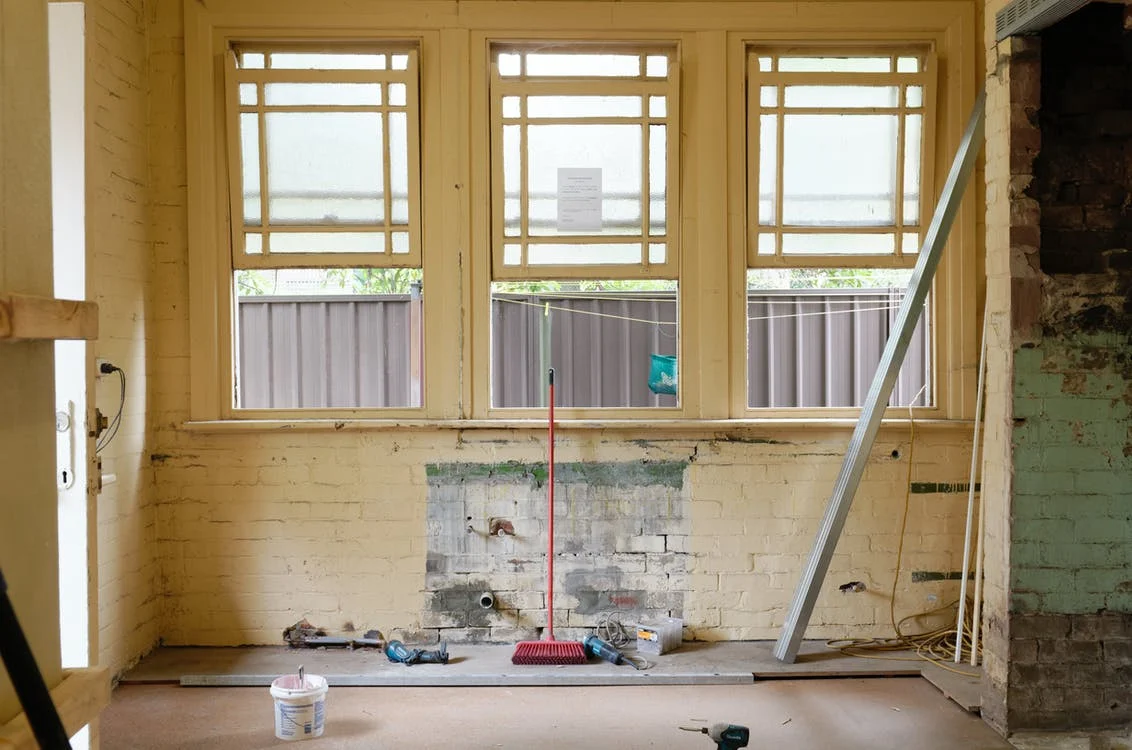
    spaces
    Photo by Laurie Shaw from Pexels 

    In LA, a collaboration between American firms, NAC Architecture and Bernards has made efficient use of shipping containers by transforming them into a housing complex for the homeless. The complex has a whopping 232 housing units, a commercial kitchen, landscaped area, and a parking lot. 

    In London, Holland Harvey Architects transformed a disused London Supermarket into an impressive homeless shelter. ‘Shelter from the Storm’ provides 42 beds, rehabilitative support, and fresh meals for the homeless. The space also doubles as a cafe to encourage interaction between the public and the vulnerable. 

    Both of these are two very simple, yet starkly innovative, cost-effective, and efficient solutions; but it can only get better than this! 

    Tiny Homes 

    The tiny-house or micro-home movement is an increasingly sought-after trend that doubles as a low-cost housing option. It is an architectural movement that essentially downsizes and simplifies living spaces. 

    In LA, Lehrer Architects built a community of colorful tiny houses or a tiny house village to house the city’s homeless residents. The lockable micro-homes are eight-by-eight-foot structures that can accommodate one or two people. The project took only 13 weeks to construct and complete. So far, the city has built 8 of these villages and intends to construct many more. 

    Additionally, tiny houses act as a preventative solution to homelessness, fostering the possibility of housing that people can build themselves. 

    tiny homes
    Photo by Mikael Blomkvist from Pexels 

    Winston Churchill once said, “We shape our buildings, and afterward, they shape us.” I can only hope this quote will dictate the future of and scope of architecture. Great architecture is a sign of hope. Thoughtful architecture has the power to heal. 

  • The 2022 Pritzker Architecture Prize Winner: Diébédo Francis Kéré

    The 2022 Pritzker Architecture Prize Winner: Diébédo Francis Kéré

    “I am hoping to change the paradigm, push people to dream and undergo risk. It is not because you are rich that you should waste material. It is not because you are poor that you should not try to create quality. Everyone deserves quality, everyone deserves luxury, and everyone deserves comfort. We are interlinked and concerns in climate, democracy, and scarcity are concerns for us all.”

    • Diébédo Francis Kéré
    Pritzker Architecture
    Photo from architecturaldigest.com by Erik Petersen 

    Introduction 

    For most architects, living or departed, there is, perhaps, no greater esteem, critique, or evaluation, than being bestowed with prestigious awards, each championing a fragment of his genius, celebrating their art and soul. In the architecture world, the Pritzker Architecture Prize is the highest honour an architect could acquire. 

    The 2022 Pritzker Architecture Prize laureate is 56-year-old Diébédo Francis Kéré, a Burkina Faso-born architect. His name will now be one among the stratum of absolute luminaries like Zaha Hadid, Norman Foster, I.M Pei, Rem Koolhaas, Frank Gehry, and Renzo Piano, to name a few. 

    The Pritzker Prize 

    The Pritzker Architecture Prize, otherwise commonly known as the ‘Nobel Prize in Architecture’ or the ‘profession’s greatest honor’, is an annual international award presented to honour an architect for their notable achievement in the art of architecture. 

    The award is a tribute to the ‘starchitect’ whose built work distinctly illustrates skill, vision, commitment, and resilience, contributing to humanity, the built environment, and the world around us. The award in itself constitutes a cash prize of 100,000 USD and a bronze medallion. The medallion awarded to each laureate is based on the designs of ‘The Father of Skyscrapers’, Louis Sullivan. On one side is the name of the prize and on the other are the words “firmness, commodity, and delight,” recalling Vitruvius’ fundamental principles of architecture.

    pritzker
    Photo from pritzkerprize.com

    History of the Prize

    The Pritzker Architecture Prize was established in 1979 by the Hyatt Foundation. The Pritzkers are an international business family whose name is synonymous with the Hyatt Hotels located worldwide. They are widely known for extending their immense support to scientific, social, medical, educational, and cultural activities. Jay and Cindy Pritzker, the founders of the award, believed that this initiative would not only stimulate public appreciation and awareness of the built environment, but also inspire a new generation of creatives to revolutionize the architectural profession. 

    The first jury, in 1979, consisted of J. Carter Brown, the late J. Irwin Miller, César Pelli, Arata Isozaki (2019 Pritzker Prize Laureate), and Kenneth Clark. 

    In 1979, soon after the establishment of the award, the Pritzker family commenced the tradition of hosting the ceremony in architecturally and culturally significant sites around the world. Since then, the ceremony has now been held in fifteen countries on four continents, truly befitting its glory.

    There is no denying that the recipients of this grand award are some of the greatest architects and pioneers to have ever lived. Some of the past laureates include I.M Pei, Aldo Rossi, Kenzo Tange, Tadao Ando, Zaha Hadid, Toyo Ito, Frei Otto, BV Doshi the only Indian recipient, and now Diébédo Francis Kéré.

    2022 Award Winner: Diébédo Francis Kéré

    On March 15, 2022, Diébédo Francis Kéré was declared the recipient of the 2022 annual Pritzker Architecture Prize, making him the first African to receive this honour. This election of Kéré is not only a historical triumph for a greatly diminished community but it also comes at a time where identities demand to be acknowledged and respected, and institutions are required to faithfully represent cultural and social realities, which goes to show the fresh perspective the Pritzker jury has been taking in recent years.

     In recent years, the jury has refocused their observance on lesser-known practices around the world, ethical and morally conscious firms endorsing design as a stimulus for the greater good. With the selection of Kéré, the Pritzker committee continues to adopt that vision, with a renewed focus on sustainability and community.

    Born in 1965 in Burkina Faso- one of the world’s poorest, least educated countries with limited access to clean drinking water, electricity, infrastructure, and quite obviously, modern architecture, Francis Kéré was the eldest son of his village chief and the first to attend school. Years later, he moved to Germany on a carpentry and furniture building scholarship, with big hopes of one day creating the classrooms that didn’t exist then. Spoiler alert, he accomplished not only that, but so much more! 

    He acquired another scholarship from the Technische Universität Berlin in Germany at the age of 30, which was when he began his study of architecture. He graduated in 2004 with an advanced degree in architecture. In 2005, shortly after graduating, he established Kere Architecture, a socially minded design firm in Berlin. He is now a dual citizen of Burkina Faso and Germany.

     Apart from the Pritzker Prize, Kere bears multiple prestigious titles and awards like the Thomas Jefferson Foundation Medal in Architecture (2021), Chevalier de L’Ordre National of Burkina Faso (2006), the Aga Khan Award for Architecture (2004), the Marcus Prize (2011), the Global Award for Sustainable Architecture (2009), Swiss Architectural Award (2010), the Global LafargeHolcim Gold (2012), the Schelling Architecture Foundation Award (2014), the Prince Claus Award (2017), and many more. 

     Diébédo Francis Kéré: What Sets Him Apart 

    In an era where architecture is almost disconnected from the people who are most directly impacted by its work. Rather than focusing on the societal impact and contribution of buildings and spaces, architects are exclusively concerned with the aesthetic quality and Instagram-ability of the space. The world seems to be flooded with needless skyscrapers and mediocre structures, it goes without saying; it is rare to find architectural work so exceptionally intricate, personal and thoughtful; steeped in traditional and cultural relevance, celebrating people and communities. 

    Kere’s work defies the norm of architecture and falls gently on the spectrum between cultural relic, social trigger, and contemporaneous art. Through his commitment to social justice, he empowers and recasts communities via the process of architecture through the brilliant use of local materials to relate and respond to the natural climate. Granted many of his projects are in West Africa, he relies on stores of native stone, clay, and wood to replicate the architectural styles used by local peoples, employing a large number of them so the local community can ultimately connect and immerse themselves with the project. 

    The architect is increasingly known for his ideology of “self-building”. Looking at his portfolio, it is evident that Diébédo focuses on and cherishes the influence of his childhood experiences in Burkina Faso. He claims his work is ‘neither westernised nor traditionally African’ but fits into the context of their surroundings, but understandably, his approach is based on the principles established in Gando, his hometown. 

    Diébédo Francis Kéré: His Flagship Works

    Gando Primary School (2001)

    gando primary school
    Photo from admiddleeast.com by Erik Jan Ouwerkerk

    Gando, back in Burkina Faso, is the village in which Francis Kéré grew up. He described his school to be extremely suffocating, with minimal ventilation and almost zero sunlight. With the dream of mitigating these limitations for future generations to overcome and rise above these challenges, the architect began designing this school while he was still studying architecture.  

    To accomplish this, he used local, inexpensive materials such as earth and added a double-raised tin roof, allowing air to circulate and cool the ceiling, as well as providing large canopies to shelter from rain or sun. Kéré asked local residents to join his teams and unite in the school’s construction, in an attempt to help them acquire the necessary skills, which would later become the source of his future international appreciation and regard for his work. 

    Kéré’s first project had been a great success helping him earn the Aga Khan Award for Architecture (2004) and the Global Award for Sustainable Architecture (2009).

    National Park of Mali (2010)

    national park of mali
    Photo from admiddleeast.com by Iwan Baan

    On the occasion of Mali’s 50th independence anniversary, Diébédo Francis Kéré built and redeveloped a cohesive public realm comprising the National Museum, the Botanical Garden and Zoo, the National Park, a sports centre, and a restaurant sitting atop a rock formation with a spectacular panoramic view. 

    All buildings are covered from the exterior with locally sourced natural stone, reinforcing the regional identity and saving installation costs. These walls provide natural acclimatization to the internal spaces. 

    Sarbalé Ke Pavilion (2019) 

    sarbale
    Photo from archdaily.com by Iwan Baan 

    The House of Celebration or ‘Sarbalé Ke’ in Moore, a language native to Burkina Faso, is a spirited series of structures created for the 2019 Coachella Valley Music and Arts Festival. Dotting the Coachella valley, these structures were inspired by the Burkinabe baobab tree. As the tree matures, its inside holes and skylights develop throughout the main trunk.

    The installation features 12 baobab towers, once again introspecting and reflecting on the naturally occurring material, texture, and spatial layout of the architecture in his birthplace, Gando, Burkina Faso. The tallest baobab reaches a height of 19 meters and stands tall at the centre of the formation, followed by one of 18 meters, then 17 meters. These three adjoin at the heart of the village, creating a space for visitors to find shade and rest in the sweltering heat. This gives way to a light-filled, naturally ventilated and shaded interior, perfectly complementing the energy of the youth and the excitement of the music festival.  

    Conclusion

    The Pritzker Architecture Prize Jury rightly said, “Since the world began to pay attention to the remarkable work and life story of Francis Kéré, he has served as a singular beacon in architecture. He has shown us how architecture today can reflect and serve the needs, including the aesthetic needs, of people worldwide. He has shown us how locality becomes a universal possibility.

    In a world in crisis, amidst changing values and generations, he reminds us of what has been, and will undoubtedly continue to be a cornerstone of architectural practice: a sense of community and narrative quality, which he himself is so able to recount with compassion and pride. In this, he provides a narrative in which architecture can become a source of continued and lasting happiness and joy.”