
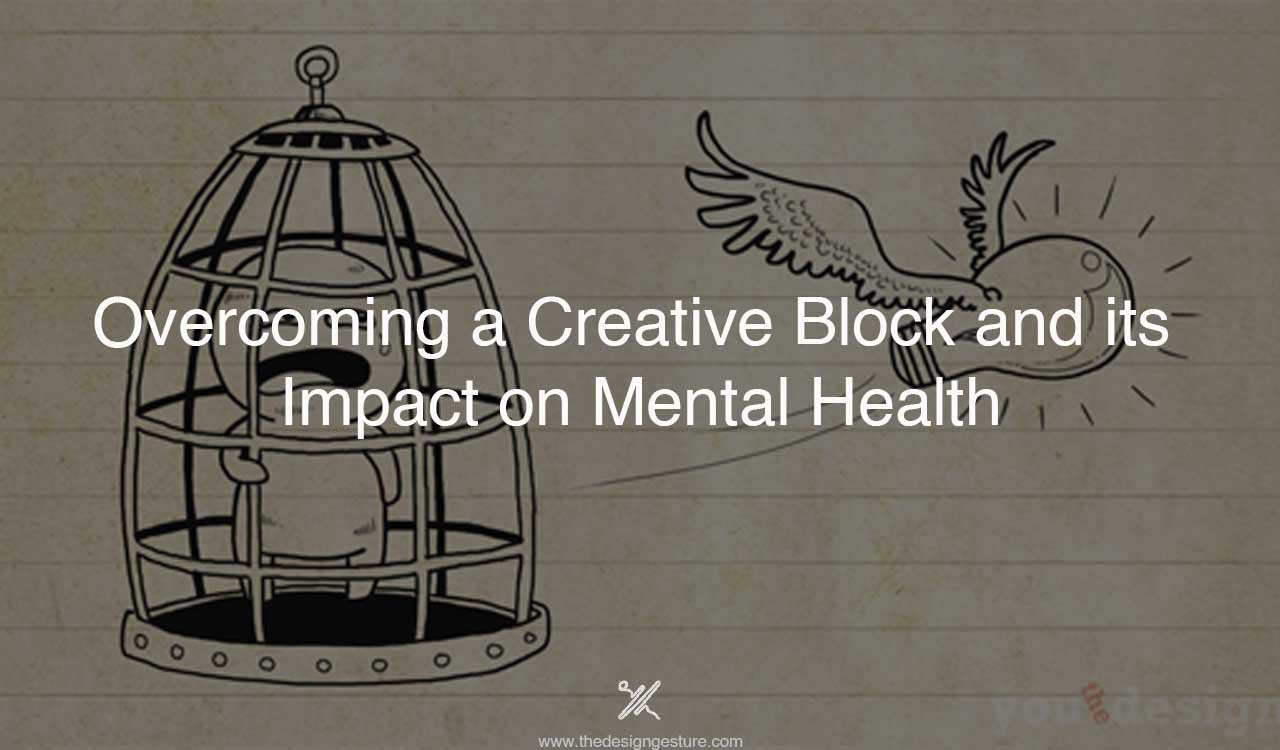
How frequently do you feel unsure of what to do? Do you have prolonged periods of inaction and inspiration? Do you experience feelings of worthlessness when you don’t do anything while having all you need to succeed? Does the concept of new thoughts and ideas make you feel overwhelmed to the point where you begin to put off doing something?
We do suffer from obstacles, and this is normal. It’s possible to free yourself from this situation. You have, after all, read about it before. The internet has already been quite effective in reinforcing our conviction that the new age has resulted in a variety of mental health concerns in people that have never before existed in history. This post will concentrate on how a creative block affects mental health and vice versa.
What is a Creative Block?
The inability to reach one’s inner creativity might be referred to as creative obstacles or inspiration barriers. Artists, Architects, Writers, and inventors are frequently more susceptible to experiencing creative blocks, which can linger for days, weeks, months, or even years.

Although they can be challenging, creative blocks are not insurmountable. Coming up with a fresh idea and being able to carry it out exactly how you want to is not as simple as it may appear. Your inner creativity is impacted by a variety of internal and external variables. As an illustration, you might be browsing for inspiration on Pinterest when your mind wanders to a completely unrelated thought that is contrary to what you were seeking.
Why Do Individuals Think They Lack Creativity?
When was the last time you claimed not to be creative? Why do you believe that? What exactly was happening around you?
Some of us are hesitant to begin writing, and others are hesitant to produce new works of art. We start questioning our capabilities before moving forward with a fresh concept. You’re concerned that you lack talent. You worry that you’ll be disregarded or criticised. You worry that everyone else accomplished it more effectively.
I once held back from purchasing Procreate because I was worried that I wouldn’t use it enough and would never be able to create digital art. I was so intimidated by the writing abilities that I was even terrified to begin. It was outside of my comfort zone, and I was worried I would fail.
Nobody desires failure. We don’t feel good about it, and it makes us feel bad about ourselves. It is an endless loop that cannot be ended unless we make a sincere effort to do so. The joy you experience when an idea you’ve been trying to manifest for a while finally does is real. The difficulties you face putting your concept into practice are genuine, too. And because you’ve put your heart and soul into it, the outcome is crucial.
What Mental Benefits Does Creativity Offer Us?
Positive scientific evidence supporting the advantages of creativity for mental health is still emerging. Creative endeavours, from dancing to designing, help us see the world from new and fresh perspectives. We can solve issues, produce beautiful art, and rejuvenate our bodies and brains through creativity. Fun has a beneficial effect on our mental health, we didn’t give our actions a second thought when we were young.
Ideas just come to children spontaneously because they have such a clean mind. They can draw ideas from nature because they can study their environment with an open mind. The world shapes our minds in a certain way as we mature. It demonstrates to us what matters in life. It demonstrates the negativity in our environment. Our minds begin to become obstructed when we lose the initial pure form of imagination that we previously possessed.
Our inner potential is unleashed through creativity. Spending time on creative objectives during the day is connected with higher positive affect, according to the Journal of Positive Psychology. We can enter a flow state through creativity, where we are fully present and attentive to work or activity. It may feel euphoric while we are in the zone, and we become calmer and more aware of our surroundings. We can feel happier and more accomplished when we are in the flow state of creativity.
Is There Such a Thing as a Creative Block?
Some people think that the barrier is only in the mind, which is true because there is no physical evidence of it. But it doesn’t mean that the issue isn’t significant. It can become extremely real if you let it. However, it might also disappear in a moment of clarity. It is one of those things that keeps you from progressing and leaves you feeling stuck in one place. The inability to be creative can also be caused by problems like depression, anxiety, and past trauma.
Your inner demons and subconscious mind may start interfering when you are determined to take action to improve your situation. Different internal levels of stress and anxiety are linked to all mental health problems.
What Impact Might a Creative Block Have on your Mental Health?
Even the best writers occasionally experience writer’s block; similarly, gifted painters feel unable to pick up a brush; and unique musicians keep playing the same compositions. Even those who regard themselves to be naturally creative might experience burnout: It’s common for your creativity to fluctuate, especially when it depends on things like your stress level, how well you sleep, and other things going on in your life.
Sometimes we stop digging after accepting the block. This is harmful since we won’t address the source of our worry, which will make it impossible for us to overcome our phobia. We give our concerns a lot more power than they deserve because we genuinely believe them. We start behaving in a particular way, which makes us feel more trapped since these situations then negatively impact us and accumulate in our minds.

Every single person has access to this tool known as the “Mind,” which they can use to think. I believe that because people are competing with one another to advance through time, they have forgotten the fundamentals of how the mind functions. You can improve your life and make it the way you want it to be. It might give you the drive to go through a crisis and emerge stronger and more upbeat than before.
How to Get Past a Creative Block?
There is an effect for every cause. It is a universal rule. A person may be affected in various ways by various things, including their current life circumstances or just having a terrible day. There are various short-term solutions, such as changing your workspace right away, going for a stroll, drinking coffee for an adrenaline surge, searching the internet for ideas, or taking a nap. You will experience a brief rush using any of these techniques.
Finding a long-term solution to this is crucial, and you can only do so by looking deeply within yourself and realising your strengths and weaknesses. You can always use your strengths to try out new things and succeed. You need to know yourself better and your capabilities.
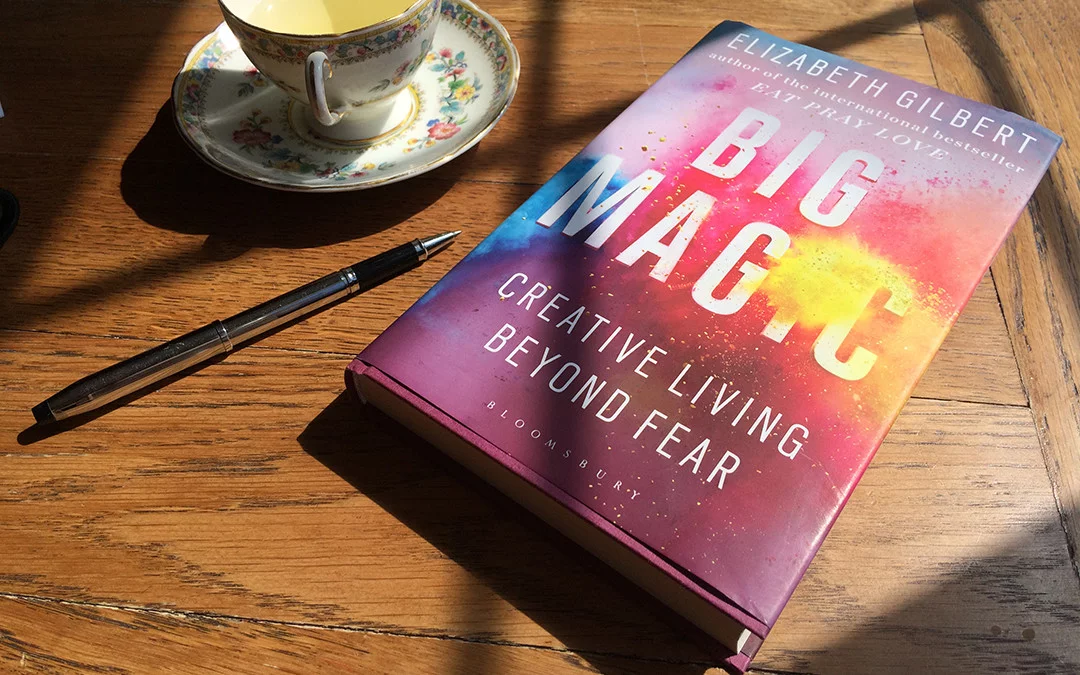
Most of us become unproductive after a while. Elizabeth Gilbert, author of “Big Magic: Creative Living Beyond Fear,” approaches creativity from a straightforward yet unique angle. In the book, she discusses her creative process. She accepts that her love of writing and her fear can coexist. Although most of Gilbert’s concepts are basic logic, the manner she presents them leaves you with a lasting impression. I strongly recommend you give it a read.
The average carbon footprint worldwide is closer to 4 tons. The world has a CO2 emission capacity of over 2.4 million pounds per second, with some of the highest emitters being European nations. Every day, each person in the UK uses 4,645 litres of water, which results in 3.68 million tonnes of CO2 annually from the supply and treatment of our water. The United States has the highest per capita carbon footprint, which is 16 tons on average.
What Impact Does It Have on the Built Environment?
Photo from Pexels
Immediate Effect
A single person or a small group of people may be impacted by the short-term effects. A small virus can quickly affect people and then the entire world, as was seen in the last three years of the deadly COVID-19 pandemic.
In similar ways, our carbon footprints as humans are being left all over the planet, which has a detrimental effect on the environment in numerous ways. Our ecosystem includes us, and everything in it is interconnected.
Additionally, every one of our actions triggers a series of events that have an impact on the planet and our continued habitation to it. Recent studies suggest that the harmful effects of gases with short lifetimes, like methane, may last longer than previously believed.
Food and water shortages are among these effects, which interfere with people’s daily lives everywhere but especially in low-income households.
Extended Effects
Melting of Polar Ice and Glaciers
Polar regions are under more threat as a result of the rising global temperature brought on by increased carbon emissions. Extreme wildfires and alarmingly high temperatures that released 56 megatonnes of carbon dioxide into the atmosphere happened in the Arctic last month. The ice sheet moreover lost a significant quantity of mass. For more details, see “The Carbon Story of a Melting Arctic.”
Photo from Pexels
Air Pollution in Cities
Many research projects have been launched in the United States and other countries, focusing on tracking variations in atmospheric carbon dioxide (CO2) and connecting them to carbon emissions from cities. Such urban carbon research efforts create opportunities for stakeholder engagement and guidance on other environmental issues, like air quality, because carbon emissions are closely linked to socioeconomic activity through the combustion of fossil fuels, and many cities are actively adopting emission reduction plans.
Hazardous Acid Rain
It becomes a major issue when SO2 and NOX interact with sulphate and nitrate particles in the atmosphere. Asthma, bronchitis, and even cancer are among the health problems it affects people with. Massive amounts of sulphur dioxide (SO2) and nitrogen oxides (NOX) are released into the atmosphere when fossil fuels are burned in power plants.
Catastrophic Weather Conditions
According to NASA, there may be an increase in tropical storms, droughts, and wildfires as a result of global warming. Human health issues are brought on by infrastructure destruction, including diseases that are spread when sewage and water systems aren’t functioning properly. A great deal of human life is frequently lost as a result of storms themselves and the harm they inflict on infrastructure.
The fact that elevated levels of CO2 in the climate cause it to warm up is now widely accepted. Sunlight heat that would oppositely shun into space is absorbed by CO2. Some of this energy is returned to Earth and contributes to further warming of the planet. Since the middle of the 20th century, there has been a significant rise in global temperatures, with an increase of about 0.7°C from the baseline. Temperatures were an additional 0.5°C colder when looking back in time. This results in a 1 °C increase in the average temperature overall.
Architectural Factors Influencing the Carbon Footprint
Major Contributors
Impact of Industrial Activities
Concerns about the viability of the environment have grown over the past few decades as a result of population growth that is outpacing the growth of the architectural industry, and these concerns have increased awareness of the factors that influence pollution from major industries. The relationship between environmental deterioration and industrial architecture activities has thus been examined by a variety of academics.
Photo from Pexels
Constructional Pollution
In both urban and rural areas, construction sites can be seen frequently not far from dwellings. Construction sites may pollute homes because of their proximity to them and the materials they use. Also contributing to air, water, and noise pollution are these activities’ use of toxic materials, the use of diesel engines, and the demolition, burning, and clearing of land.
Photo from Pexels
Unthoughtful Architecture
Some designers are occasionally ignorant of the realities of the context in which their work is performed. As a society, we should set standards for architectural designers to be sustainable—not just from an environmental and energy-saving standpoint but also from the standpoint of usability and realism.
Minor Contributors
The Daily Needs of Society
Food contributes between 10 and 30 percent of a household’s carbon footprint, with lower-income households typically contributing more. A vegetarian diet significantly lowers one’s carbon footprint, but switching to less carbon-intensive meats can also have a significant effect. Other concerns include household electricity, heating, cooling, and personal transportation systems.
Is the Direction of Education Incorrect?
The stated goal of the Belgrade Charter was to “develop a world population that is aware of and concerned about the environment and its associated problems, and that has the knowledge, skills, attitudes, motivations, and commitment to work both individually and collectively toward solutions to current problems and the prevention of new ones.”
The Carbon Footprint of an Individual
One could argue that each person has a responsibility to contribute to the reductions required for stabilization below risky levels. Reduced use of air conditioning and heating, LED lighting, recycling, washing clothes in cold water instead of hot water, and forgoing the dryer are all examples of ways to cut back on energy consumption in a home.
Another adjustment would be to rely less on motor vehicles that use gas combustion as their power source. By using direct flights when flying, one can also reduce their carbon footprint. While making these changes won’t immediately reduce one’s carbon footprint, they will have a significant impact in the long run.
Carbon Footprint Reduction Through Sustainable Architecture
What is Sustainability?
Environmental concerns and sustainable architecture are now on the corporate, national, and international communities’ agendas. Furthermore, it is in high demand. The terms “sustainable architecture” and “sustainability” are becoming more popular in the design and architectural communities for two reasons: functional and formal. Any product that wants to be regarded as sustainable needs to demonstrate ecological awareness, so its functionality needs to be connected to how it interacts with the environment through its aesthetics.
So, if you examine a building’s architecture carefully, you’ll see that there are various building types. For example, there are energy-efficient buildings, which emphasize how good they are on energy, and environmentally friendly buildings, which emphasize other factors besides energy.
Photo from Pexels
Why is it important?
As we have seen in the overall, more general definition of sustainability, it refers to preserving resources and maintaining the natural balance for present-day populations as well as for future generations. Reducing energy use and waste generation is just one aspect of sustainable architecture. It cannot be broken down into different subcategories because it represents an intrinsic and essential combination of factors related to our existence on this planet. It is crucial that we make sure the building’s design has the least detrimental environmental impact possible.
Sustainable Design Methods in Architecture
A few fundamental factors must be taken into account when designing sustainable architecture, including orientation, natural ventilation, the use of biomass, and shading and sunlight created by pre-existing elements. In order to create and incorporate all of these elements, materials that are intended to interact with the environment and its features are used.
It has become crucial for architects and builders to invest in natural climate solutions. Considering that Indian households’ carbon footprints can be reduced by up to 20% by using natural ventilation rather than air conditioners. Numerous methods exist to accomplish this.
In order to maximize surface exposure to prevailing winds, the building should first be oriented. To make the structure more wind-resistant, you could also try raising it on stilts. You can also try raising the building on stilts as it will catch more wind. A veranda open on three sides is preferred as it increases room air. motion in the room with respect to the outdoor wind, for most orientations of the building.
Another way to significantly reduce the carbon footprint value is to utilize the local vegetation to the fullest extent possible.
In cities today, the need to reconnect to nature through ecological architecture stems from the need to preserve the natural environment and mitigate the detrimental effects of human dominance over nature.
Photo from Pexels
Energy Efficiency in Residence Design
We must actually strive for water and energy efficiency. In recent years, water has become one of the most in-demand natural resources. As a result, we are witnessing various crises, such as the lack of water during the summer and other typical months, as well as decreased material efficiency. Of course, we can reduce costs by reducing bulk, manufacturing costs, and resource costs directly. Consequently, there are several benefits to actually utilizing these techniques and strategies: –
Site selection that is appropriate
In plantations, tall trees and ground-covering shrubs, trees, and vines should be planted to shade roofs and lower temperatures.
Use the slopes on a hilly site that faces north or south whenever possible.
Taking proper solar angles into account
enabling or disabling wind as necessary.
Sustainable Building Materials
So let’s examine the actual provisional selection criteria. We are looking for qualities like durability, ecological impact, embodied energy, performance, social impact, cost, non-toxic or less-toxic materials, renewable energy, and biodegradability, in addition to those that are obviously important in terms of aesthetics.
Natural materials made from bio-based materials have 20% better insulation qualities than artificial materials like fiberglass. Fly ash, red mud, slag, unfired clay bricks, manufactured sand, glass, and several other items on the list of materials that can be used are things that we are all familiar with and are being acquired in current times in the construction business as alternative materials.
Editing is a key trap that untrained decorators fall into. A skilled interior designer can quickly assess a space to determine what furnishings work there and when something is excessive, tasteful, or needs to be adorned. Design decisions for your room can be made or broken by a few pointers in this area.
Do you find the thought of redesigning or upgrading your house’s interior overwhelming? Do you worry that you’ll end up spending a lot of money on it? When creating an environment for yourself, there are a lot of choices to be made which can feel daunting. However, with a little help, we can put some of that design clutter to rest.
The Psychology of Interior Design
You are constantly being influenced by the subtle emotions in your environment. Designers have the power to evoke positive emotions in your house, like joy, comfort, safety, romance, and pride. You can rapidly change the way things look by changing the design, colors, and fabrics.
How to Upgrade to the Next Level?
In addition to home furnishings and wallpapers, interior design also involves recreating various rooms, conceptualising positive and negative spaces, and decluttering for a minimalist appearance. A “makeover” for your house might be something you’re interested in. Here are a few quick modifications you can make to give your house a completely new look.
Interior Design Trends in 2022
Maximalism
In the last few years, minimalism has become increasingly popular, but guess what? It’s fading away in 2022. Huge, vividly colored prints and alluring items are popular design trends that are decorating homes everywhere. Before working with the furniture fixtures, wallpapers, and paints, start with something like a variety of vases, cushions, pillows, and wall panelling in various tones.
Maximalism includes a variety of furniture styles, eclectic colour schemes, and varied textures. Utilizing color effectively is the simplest method of blending various decorating styles. The arrangement of colourful, sculptural furniture is trending and intriguing. For example, take a look at this Edinburgh apartment, which is a dreamy kaleidoscope of colours, gorgeous statement flooring, and graphic patterns all over.
The use of colourful and intricate carvings on buildings’ exteriors and interiors is another example of maximalism in medieval Indian architecture. Even now, the majority of homes in India are designed with maximalism in mind. Check out these Indian homes that are maximalism masterworks for more inspiration.
Smart technology
Imagine getting into your car after work to return home and asking Alexa to turn on the lights and the air conditioner in your bedroom.Using a motion sensor to have a hallway light strip gently turn on when someone walks to the restroom at night. Or use a brightness sensor to dim the lights if there’s enough daylight in a room. It’s a luxury, isn’t it?
People can now envision their home’s entire interior, down to the type of flooring and curtain color, thanks to augmented and virtual reality. With the aid of technology, it is possible to switch between completely different atmospheres in the same area. The ideal decorations for a night party are chandeliers with built-in Bluetooth speakers and colour-changing disco lights. Smart technology alone is to blame.
Many people use soundproofing blinds to reduce noise in their homes. Modern air cleaner and purifier come in amazing shapes and colours, purifying the air in your home or office and creating a pleasant, healthy environment.
Biophilic Architecture
In the past, nature was all around us. Technically, it still is, but the state of the surrounding environment has significantly changed since the technological period. According to the biophilia hypothesis, most people have a natural love of nature; we yearn for it, and our health may suffer if we don’t get in touch with it. This desire for nature is satisfied by biophilic design, which incorporates natural elements and processes into the built environment.
For those who are unfamiliar with the idea of a microclimate, the microclimate within a home or building may differ slightly from the dominant local or municipal climate. The thermal comfort of the inhabitants of the building is maintained with the help of plants. The biological thermal comfort of the occupants is referred to in the “bio” portion of the term, whilst the “climatic” half of the word refers to designing the building to be sensitive to the local climate.
Ways to include it in your house:
Pick the best indoor plants and take care of them.
A bamboo fountain that makes water sounds has a calming effect.
Get more fresh air and natural light inside your home.
In the end, it’s all about bringing the outside in.
Colored Concrete/ Concrete Accent
Concrete can take on any shape and has a modern feel. That concrete no longer has a distasteful appearance because of the new design and casting techniques. In wet areas like kitchens and bathrooms, concrete is now used in wet areas in addition to floors and walls.
Elderly house in France consisting of concreete colored with Cayferrox pigments
You must watch out that your space doesn’t turn too grey when using concrete as decor. In line with current interior design trends, concrete accents should be paired with concrete that is bright and warm, like reds or yellows. The effect it has on space is amazing.
Today’s bathroom trends come into play because they place a strong emphasis on adding personality while maintaining a monastic, spa-like calm. It is the ideal material for this space thanks to the vibrant colours it now offers and the texture and depth it offers.
Have you ever wondered what happens when a modern bohemian design meets a traditional Mediterranean style? The market for interior design is seeing a huge surge in interest in Mediterranean Boho decor. Young adults in particular enjoy and feel the vibe to some extent.
To bring out the soft and romantic Mediterranean vibes, this style typically incorporates a cosy colour scheme of browns along with gentle arches in the living room. The kitchen cabinets’ soft blue hues complement the soft blue of the Mediterranean. Use of organic edges, ocean blues, and greens to evoke the delicate nature of the theme.
On websites like Etsy, boho wall art, stickers, and canvases are painted and successfully sold. You need to check out these mood boards on Pinterest if you’re a boho person and want to customise your boho-themed room.
Monochrome Palettes
If you want your home to look simple, sleek, and modern, monochromatic interiors are fantastic. You can use a neutral colour scheme to create a unified and cohesive appearance by incorporating monochrome pieces into every room of your house. Choose a single colour and experiment with its shades and tints while incorporating other colours sparingly and bringing your main colour out more. That’s the key to a perfect monochrome theme.
Here are some essentials you should have in your home to make it look stylish:
Patterns, geometric prints and stripes can be incorporated to enhance the vibe.
Strong accents and the use of contrasting colours are crucial.
Long grey pots and vases with a touch of sage green and a few pieces of white flowers will help it look stunning and elegant.
Choose nickel or antique brass for a classic look, or copper and rose gold for a vibrant, modern feel.
Wood and marble textures make it look chic
Transformable Furniture
A good interior designer should be able to style smaller spaces on demand. If not done properly, fitting things into such spaces can be challenging and make everything appear unkempt. A rising trend in American housing markets is residing in compact spaces. Micro-home concepts, for example, provide a streamlined, minimalist design with the added advantage of having a significantly lower carbon footprint.
Murphy Beds that can be beds and a three-seat sofa blend in with the decor while also converting with slight effort. Desk beds give students the ideal space in the room. There are many different types, styles, and materials for coffee tables and chairs that can be transformed into tables. You can easily find them. in India on websites like Pepperfry and Home Lane. Today, convertible lofts are prevalent all over the world.
Future furniture will be compact. You can easily save space in your tiny home by installing pop-up kitchens and wall-mounted dining tables. Check out this interior design YouTube channel for more information.
Vernacular Arches
In recent months, structural style furniture with curved sofas, hanging egg chairs, elliptical tables, and even arched mirrors has seemed to gain popularity. Arches, upright or upside down, look elegant and enhance the aesthetics both ways.
Trendy interior designs can include windows, pantry entrances, bends, and built-in bookcases. Vertical lines are not inherently unpleasant just because arches are. The two of them can coexist in the same space. They break the monotony of straight lines.
They give bland areas, like lobbies and hallways, a fascinating dimension and an alluring visual mood. There are countless shapes and varieties of arches, so you can almost always find one that fits the aesthetic you’re going for. Furthermore, the assortment of materials available gives you even more possibilities.
Five Low-Cost Decorating Ideas for Your Home
Lighting Styles
Go big and bold with your table, island, entryway, or high ceiling instead of using small task lighting, recessed lighting, and other similar lighting options! Swap out a lamp, pendant, or chandelier for an easy update, and you’ll notice a dramatic difference! The interior design greatly benefits from good lighting.
The popularity of colourful, sculptural lamps is growing and will continue to do so through the year 2022. The great thing about having an aesthetic lamp is that it still makes a statement when it is not in use. You can find a wide variety of options, all for very little money and without sacrificing quality, including fairy lights, wall lights, night lights, glow-in-the-dark strips, and lampshades.
Fabric Fever
You can find a ton of resources online to help you find the fabric type you need for your home. Fabric selection is very important. Remember the atmosphere you want to create. Bed linen made of soft silk, for instance, would be appropriate if you and your partner share a bedroom. For a warm, passionate look, pair it with a cosy wool rug on the floor. Use less expensive fabric that is susceptible to stains or destruction if you have young children in your home. You can go through this mood board for the same.
When compared to other interior design options, a square wall niche with colour-changing LED lights fixed to the top end and a circular niche with soft seating and a bookshelf at the top both produce an extraordinary feeling. These wall recesses have made an entry hall come to life when given stone backdrops and ideal lighting.
A grid of plain rectangles and square niches arranged in alignment with one another on a wall serves several purposes. These niches look attractive when filled with books, planters, vases, showpieces, or even artistic paintings. Designers give handmade plaster irregular edges—rather than making perfect niches—to give them a more organic appearance. When painted in rusty tones with a touch of gold or copper added, and a blue accent wall, it creates a cave-like appearance.
Mirror Play
We are all aware of the value of using mirrors in homes. A small space appears larger as a result. The room is much brighter thanks to the mirror’s ability to cause light to reflect at various angles. The height at which the mirror is installed and what it reflects both have a significant impact on the room’s aesthetic appeal. The reflection of a sloping ceiling, for instance, is not the most attractive thing to see.
Therefore, you should use mirrors to draw attention away from any awkward or unattractive areas of the room. Think carefully about where to position it so that it emphasizes the room’s advantages more. They can serve as statement fillers in small but important spaces that are too small for a piece of furniture when strategically positioned.
Once again, there are plenty of options to choose the mirror style, shape, and frame from. Find your perfect mirror at Fair Glass, India.
The Little Things
Your home’s decor can be greatly improved with minor adjustments. The best items to spice up a room are simple, adaptable pieces that can be changed without incurring significant expense. Simply changing the paint colour on one wall or adding wallpaper can change the entire room’s aesthetic.
You can alter the entire appearance of the room by selecting a thin partition wall made of white laminated wood strips or even just the design of the rug under your coffee table. See it for yourself by adding pastel pebbles to the edges of your balcony or garden.
Change the paint colour, if possible. Avoid painting every room a completely different colour. To create a seamless transition between rooms, use one or two colours throughout the majority of your home. Select a color that is neutral that you love and let the accents take the lead. Sage green and Lilac are my favourites!
Do it Yourself!: 6 DIYs for Home Decor
Terracotta Clay Art
These days, trinket dishes with trendy jewellery pieces inside of them are extremely popular. You can create your own in a variety of shapes and styles using this DIY.
Get started by gathering some terracotta air drying clay, a bowl, acrylic paints, a roller, carving tools, and some leaves.
Lift the edges of the clay after rolling it out into the desired shape. Water can be used to soften the edges, and then the rolled paper can be detailed or printed with a leaf to leave an impression. Put it carefully in a bowl to let it set and prevent it from becoming flat. Once it has dried, paint it however you want, and you’re ready to go. Put your jewellery in, put it on your side table, and add some plants or a scented candle to set the mood!
String Art
String art is very satisfying. It is a great way to showcase your creativity. With a wide variety of colours, you can create a wide variety of shapes. It can be very hip and stylish as wall art in your living room. It will look lovely hanging there. You can also create string art as a gift for a loved one.
A base (made of cardboard or MDF board), some thumb-pins or nails, a hammer, and strings are all you need! The first step is to create a template on the board using pins, and then tie the string to begin arranging the colours in the desired pattern.
Another option is to construct the frame entirely out of wires. Begin the string’s knitting at one end, and then continue in the same way to complete your artwork. Learn to make your own dream catcher with string art here.
Tyre Chair/ Table
Do you have a garage full of discarded tyres? Put them to use and make art with them!
To complete this project, you’ll need a glue gun, a jute rope, and tyres. This will be the heftiest but also the simplest task of all. The tyre should first be cleaned and filled with something. Place a circle of cardboard on top so it can support the weight of objects, and stuff some old cushions inside a chair. The jute rope can now be wrapped and adhered to the top using glue-up at the same time. Voila! You’re done.
Glowing Clouds
How many of you are obsessed with neon lights? This DIY is exclusively for your room’s aesthetic.
If you want to hang the clouds from the ceiling, gather a lot of cotton, glue, and thread, as well as some old, clear plastic bottles of various sizes.
First, insert the fairy light into the bottle, then make the switch protrude from one end. To get more fun and actual clouds, repeat this procedure using bottles of various sizes. To hang them later, create a hole in which to place the tread. Start adhering cotton to the bottles now. When you’re finished, hang the lights and turn off any other lights in the room to witness the magic you’ve worked on. Your space will resemble a fantastical realm with this easy DIY.
Mason Jar Planters
Here’s one for the biophilia we were discussing earlier. Mason jars’ best features are that they make excellent planters and are transparent, allowing you to see when plant roots need watering.
If you want to hang the jars in your garden or balcony, you will need mason jars and jute rope. You can add personality to your jars by painting them with pretty flowers or patterns, or you can simply spray-paint half of the planter to give it a timeless look. You can either write the name of the plant you placed inside or just a few succinct nature-related captions. The choice is entirely yours!
How about making your own little canopy in one corner of your room! This is the best DIY for kids and teenagers who enjoy spending time alone, playing with toys or reading a good book while sipping tea. Adults can also use it in their living room or home theater if it is made for larger groups.
This is how you create one. There are numerous ways to build the canopy. All you need is some chiffon fabric, wall hooks, and some clamps to transform your room if you’re content with just the appearance of a canopy rather than bothering with all the structural details. Locate the fabric’s center, then clamp it to the wall above. Alternatively, create a wireframe for your canopy; it can be circular or triangular. Then, hang a nice net fabric over your white floor bedding along with some bright lights, add some pretty floral cushions to complete the look!
These were a few projects, so give them a shot if you want to spice up your home decor a bit!