
Author: Mansi Parsana

  • Public Squares: An Important Part of Urban Planning

    Public Squares: An Important Part of Urban Planning

    There have been public squares since the Greek Civilization.  The public square, also referred to as the “Agora,” was crucial in forming towns. It was a public area in the middle of the city where events including political assemblies, sporting and musical competitions, theatrical performances, and commercial activities took place. Similar to this, the Roman Forum, which held more activities during the Roman Empire, was an urban square that combined an agora and an acropolis.
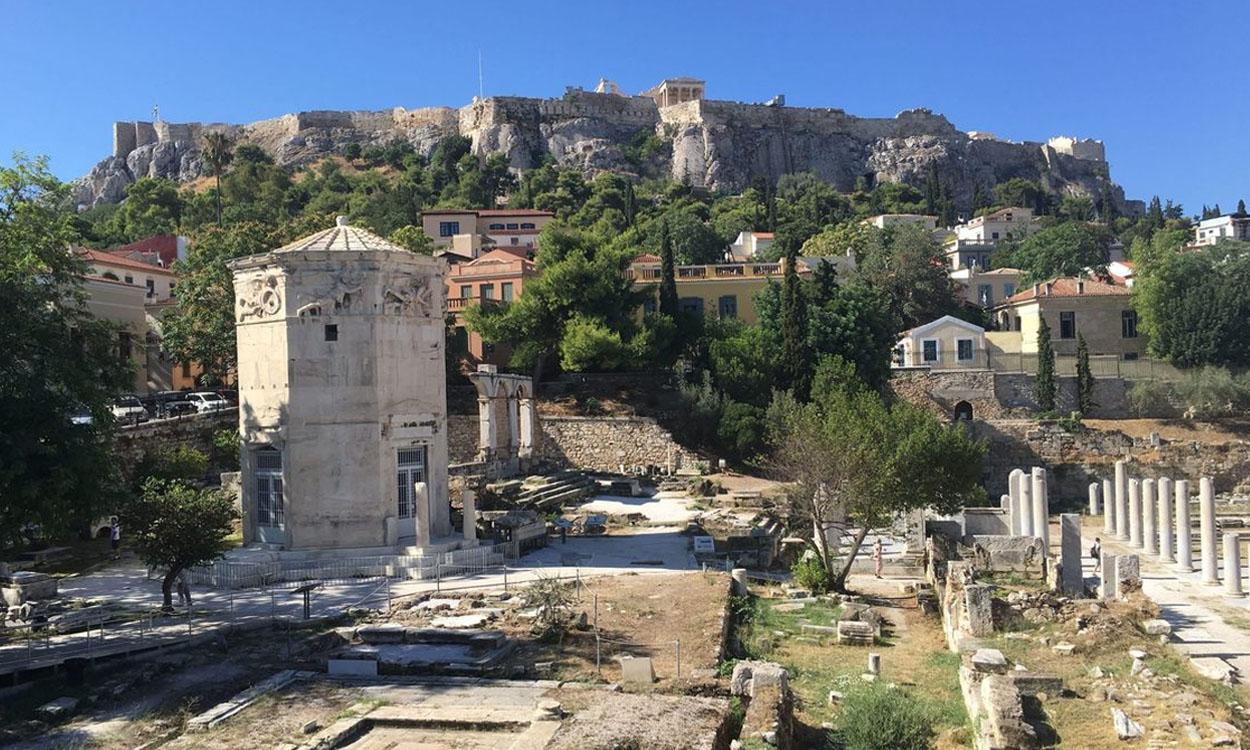
    public squares
    Image Source

    Moreover, a railway network was built throughout the Industrial Revolution. Additionally, industrial areas that were developing close to cities attracted a larger population. Because of the increased participation of women in the city, shopping malls, bazaars, and department stores started to appear. Open green spaces started to replace urban squares. Additionally, the growth of the motor industry led to the clearing of squares to build crossroads. Urban squares therefore began to lose importance until lately, when designers began to resurrect and repair the cities using traditional methods.
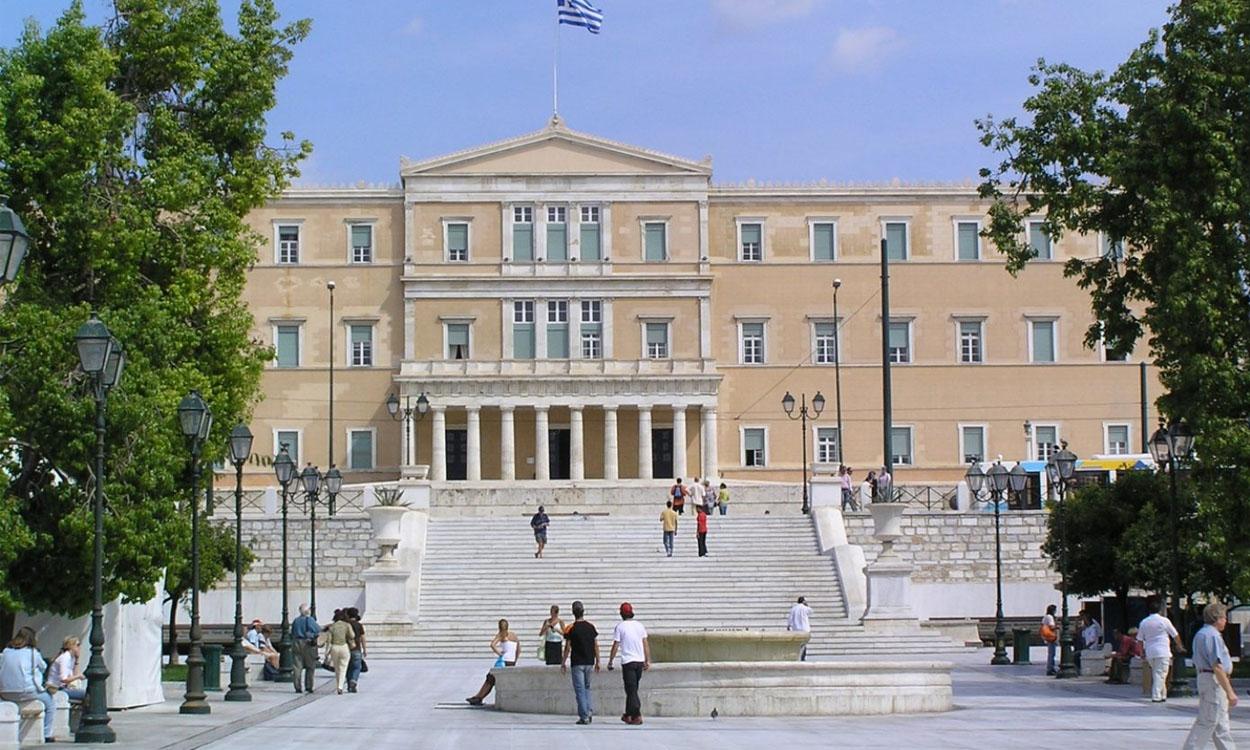
    Public Squares: An Important Part of Urban Planning There have been public squares since the Greek Civilization.  The public square, also referred to as the "Agora," was crucial in forming towns. It was a public area in the middle of the city where events including political assemblies, sporting and musical competitions, theatrical performances, and commercial activities took place. Similar to this, the Roman Forum, which held more activities during the Roman Empire, was an urban square that combined an agora and an acropolis. Public Squares
    Image Source 

    Importance of Public Squares

    Neighborhood community bonds are shaped by public spaces. They serve as gathering areas and can encourage action, political mobilization, and the reduction of crime. They provide spaces for conversation and idea sharing that influence the urban environment’s quality. Even while they are not “public spaces,” pubs, bookstores, and cafes have similar effects. Additionally, public places are good for people’s physical and mental health since they make them feel better and encourage them to be more active.

    The way public spaces are created, administered, and used reflects the culture, structure, and social order of the area. According to Ben Rogers, the more dynamic and diversified a society’s urban regions are, the more egalitarian, prosperous, and democratic it becomes. This argument is reinforced by the concept of public space, which is defined as an open, free, and democratic environment.
    Public Squares: An Important Part of Urban Planning There have been public squares since the Greek Civilization.  The public square, also referred to as the "Agora," was crucial in forming towns. It was a public area in the middle of the city where events including political assemblies, sporting and musical competitions, theatrical performances, and commercial activities took place. Similar to this, the Roman Forum, which held more activities during the Roman Empire, was an urban square that combined an agora and an acropolis. Public Squares
    Image Source 

    A good public place represents diversity and helps people to live together easily, creating the circumstances for permanence and inviting people to be out on the street. People are drawn to the vibrancy of spaces. The ability to appreciate urban areas in a variety of ways ensures this vibrancy. 
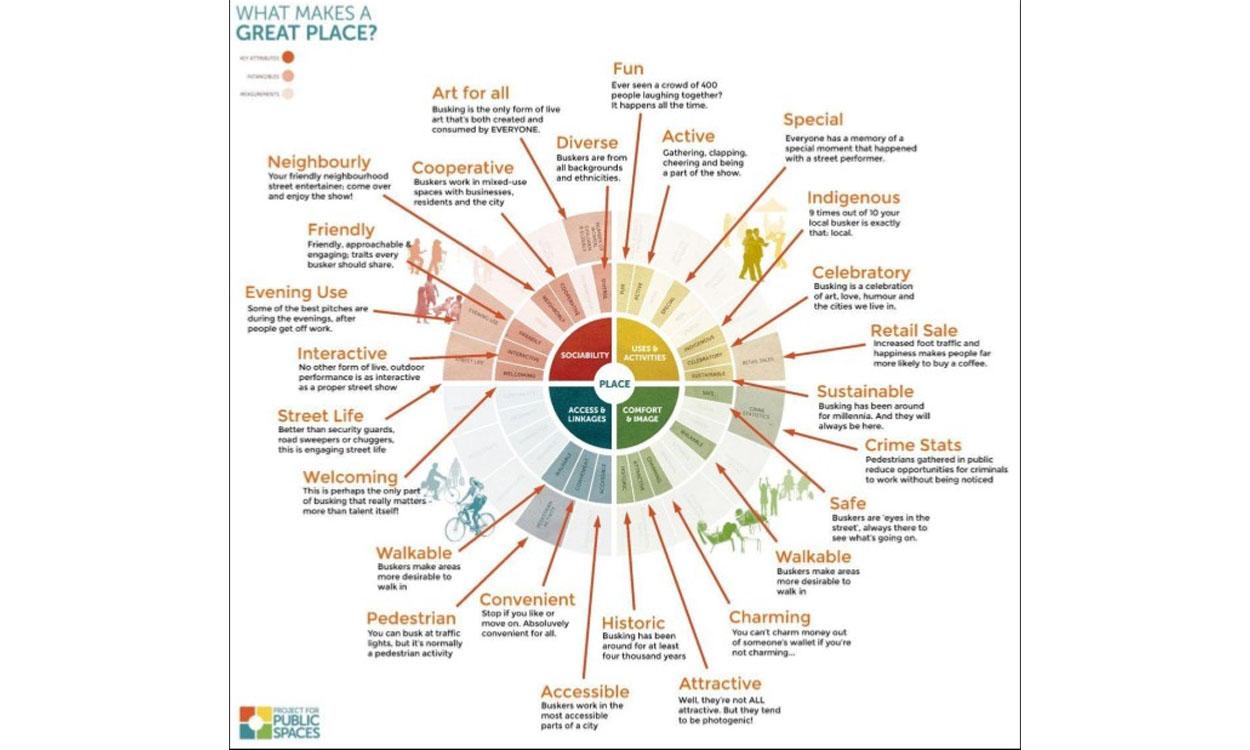
    Public Squares: An Important Part of Urban Planning There have been public squares since the Greek Civilization.  The public square, also referred to as the "Agora," was crucial in forming towns. It was a public area in the middle of the city where events including political assemblies, sporting and musical competitions, theatrical performances, and commercial activities took place. Similar to this, the Roman Forum, which held more activities during the Roman Empire, was an urban square that combined an agora and an acropolis. Public Squares
    Image Source

    Purpose of Public Squares 

    Public squares serve as the intersections, pick-up locations, and waiting areas for both foot and vehicle traffic as part of the transportation system. o Commercial activities: Public plazas serve as civic hubs where people conduct business. Markets have been a key element of public plazas throughout history. Games and sports have long been a significant aspect of public life, and there are numerous historical examples of games and sports events taking place in public spaces.

    Kostof also believed that the links between public squares within a city forms a “system”. He also stated that this approach was one of the primary issues in city planning and design during the Renaissance and Baroque periods.

    Open spaces surrounded by houses and other structures within a city are urban public squares. In the sense of the mass and void composition of a region, they thus play an important role. Cities consist of a mixture of masses and voids. A town’s structure is based on the volume and ratio of the masses to the vacancies. A city can become crowded, unintelligible, and chaotic if there are too many masses (such as streets, parks, and squares) and too few voids (such as buildings and structures). As a result, urban public squares constitute a stabilizing force, particularly in today’s crowded cities.

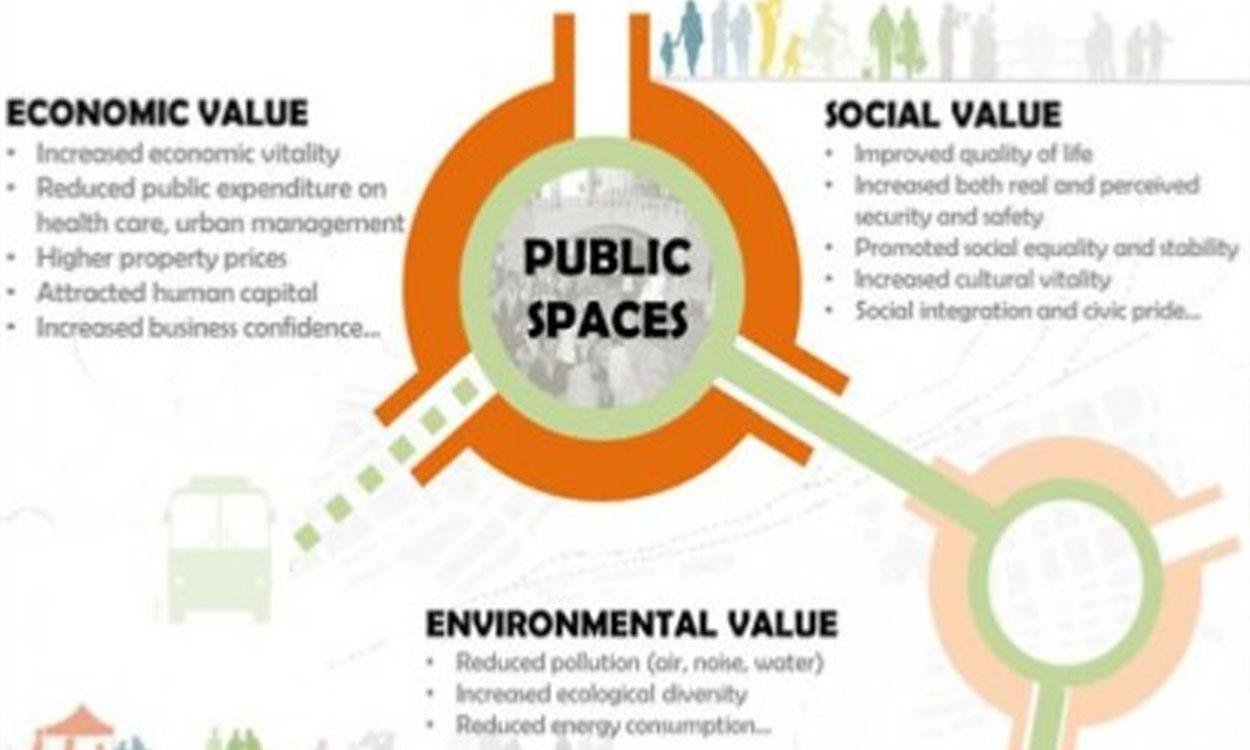
    Public squares have environmental benefits in cities. Green vegetation and water surfaces inside a square give sanctuary for live animals. The inclusion of green areas within a public square also helps to improve air quality, reduce surface water pollution, reduce noise levels, and show superfluous or unwanted views, as well as reduce the negative impact of urban heat islands.

    Well-planned public squares enhance the visual environment and contribute to the city’s aesthetics. Individually liked visual landscapes have favorable psychological impacts on the consumers of the location when they contribute to the overall city picture. Another psychological advantage of urban plazas is that they provide a place for individuals to rest and enjoy their free time throughout their hectic urban existence.

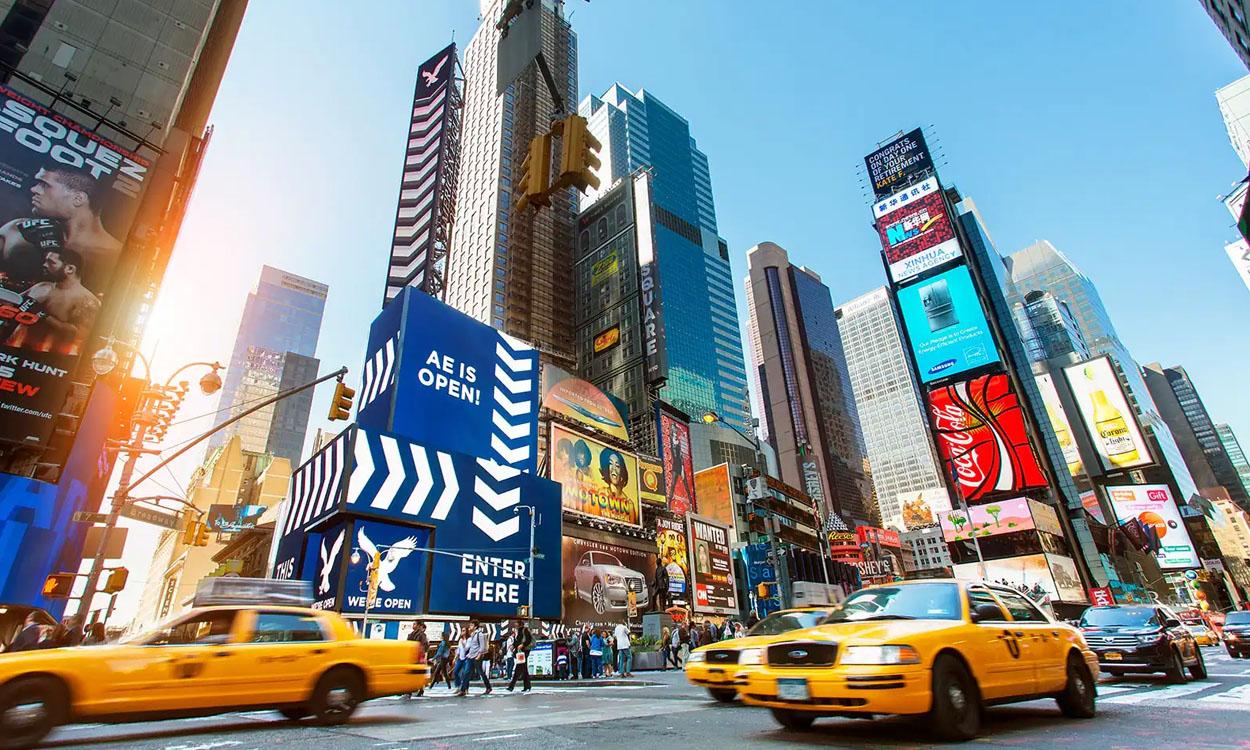
    Urban public squares may also give economic benefits to the city. It is a well-known fact that the presence of open and green spaces increases the value of neighboring property. Urban plazas can also be used as marketplaces or as part of commercial enterprises such as retail malls. There are many examples of squares where marketing is the dominant role. Times Square in New York City is one of the most well-known instances. It is also one of the most popular and frequented tourist destinations in the world.
    Public Squares: An Important Part of Urban Planning There have been public squares since the Greek Civilization.  The public square, also referred to as the "Agora," was crucial in forming towns. It was a public area in the middle of the city where events including political assemblies, sporting and musical competitions, theatrical performances, and commercial activities took place. Similar to this, the Roman Forum, which held more activities during the Roman Empire, was an urban square that combined an agora and an acropolis. Public Squares
    Image Source 

    Public plazas, in addition to their physical and ecological characteristics, contribute significantly to civic stability and local identity. The primary function of urban squares is to bring people together for various reasons and events.  People of all social, economic, and cultural origins, as well as all age groups, have equal access to public areas. Urban squares are one of these public venues where individuals and communities learn to cherish and accommodate others. As a result, urban squares are places of social contact and social concord. The form and significance of this social encounter reveal the local identity. Many public squares have historical relevance to the city’s character and often represent the community’s shared values.

    Public Squares in Community Integration 

    Urban Public Spaces leave a lasting influence on our thoughts, as these fleeting events linger with us as memories. People not only spend time at these locations, but they also create memories by meeting, communicating, celebrating goodness, and having fun. distinct places serve distinct functions and have varied characteristics/aural emotions, which cause our moods to shift and force us to behave accordingly. Urban Spaces are breathable areas within the urban fabric of a metropolis. These are commutable knowledge-sharing platforms for social interaction open to everybody, independent of caste, culture, age group, or gender bias. In comparison to current ones, which tend to encourage inclusive and fair environments by nature, the modern era comprises exclusionary planned places.

  • Fascinating Effect Human Behaviour in Urban Spaces

    Fascinating Effect Human Behaviour in Urban Spaces

    Accepting the influence of human behaviour and experience on the process’s end result has been a cornerstone of design evolution since the dawn of time. We are currently dealing with a concept of urban space that goes beyond a typical collection of characteristics. The atmosphere in urban areas and end users’ knowledge of it has only increased the possibilities for exploring the interdependence between architecture and psychology.

    Architectural psychology observes human behavior in a constructed environment in order to develop a link between the person and the place planned for their usage in order to determine the advantages and negatives of the same in terms of functionality and capacity to serve its intended function. This eventually becomes the communication channel between the designer and the ultimate user of the product.

    Human Behaviour
    Image Source

    “Architecture is about public spaces held by building.”, quoted Ar. Richard Rogers. The individuality of urban spaces is relative to the building architecture, directly or indirectly. The urban spaces have their own tangibles and tangibles in the building architecture. The tangibles and intangibles vary for every individual, based on how they react, how to connect, and how they reflect. All small detailed things are connected to human perception and then reflected in their behavior and actions. 

    Urban Physicality and Human Behaviour

    The Urban physicality and Human behavior research within built environment disciplines seeks to investigate and debate questions of urban form and its relationship to social life and human behavior in order to provide insights and frameworks to support sustainable, liveable, and flourishing cities. The objective is to resurrect behavior-based urban research, focusing on public space and human well-being, and advocating for the significance of understanding the value of places above items, as well as cross-disciplinary collaborations. The municipal structure and the possibilities for public life are inextricably linked. 

    Fascinating Effect Human Behaviour in Urban Spaces Accepting the influence of human behaviour and experience on the process's end result has been a cornerstone of design evolution since the dawn of time. We are currently dealing with a concept of urban space that goes beyond a typical collection of characteristics. The atmosphere in urban areas and end users' knowledge of it has only increased the possibilities for exploring the interdependence between architecture and psychology. Public Squares
    Image Source

    There is universal recognition in urban planning and design research and practice that the built environment has an impact on the lives and well-being of communities and individuals. Opinions on the function of such surroundings in affecting conduct, particularly as they may contribute to desirable social purposes, range significantly. While historian John Archer stated that architecture and urbanism shape human behavior, sociology professor Herbert Gans believed that architecture and urbanism cannot fix society’s issues through design.

    To achieve a balance between those competing viewpoints, one must delve into concerns of urban design and social life, i.e., people’s well-being, as well as climate change and energy issues, which are high on the agenda. Aside from the reality that human behavior and social life are molded by a complex web of other economic, political, cultural, ethnic, and other ties and conditions, it is difficult not to accept that the built environment also plays an essential role.

    Fascinating Effect Human Behaviour in Urban Spaces Accepting the influence of human behaviour and experience on the process's end result has been a cornerstone of design evolution since the dawn of time. We are currently dealing with a concept of urban space that goes beyond a typical collection of characteristics. The atmosphere in urban areas and end users' knowledge of it has only increased the possibilities for exploring the interdependence between architecture and psychology. Public Squares
    Image Source

    There is no question that physical design and social behavior are inextricably linked. Just as deep structures appeared to shape our cities’ social patterns, ‘deep structures’ appear to define the organization of their architectural surroundings. To make decisions about the shape and form of various environmental settings in urban planning, designers must understand the connection between environment and behavior–how diverse configurations of the built environment might influence preferences and behaviors. This is the emphasis and scope of environmental psychology.

    Environmental Psychology 

    Fascinating Effect Human Behaviour in Urban Spaces Accepting the influence of human behaviour and experience on the process's end result has been a cornerstone of design evolution since the dawn of time. We are currently dealing with a concept of urban space that goes beyond a typical collection of characteristics. The atmosphere in urban areas and end users' knowledge of it has only increased the possibilities for exploring the interdependence between architecture and psychology. Public Squares
    Image Source

    Environmental psychology is a multidisciplinary social science that investigates the interaction between humans and their surroundings. It considers how we shape our natural and manmade environments, as well as how those environments shape us.

    Fascinating Effect Human Behaviour in Urban Spaces Accepting the influence of human behaviour and experience on the process's end result has been a cornerstone of design evolution since the dawn of time. We are currently dealing with a concept of urban space that goes beyond a typical collection of characteristics. The atmosphere in urban areas and end users' knowledge of it has only increased the possibilities for exploring the interdependence between architecture and psychology. Public Squares
    Image Source 

    Through environmental psychology various aspects of design from the user perspective can be understood and reflected into the design. Environmental design is the approach that the study is reflected into. The process of addressing surrounding environmental elements when developing plans, programs, policies, buildings, or goods is known as environmental design. It aims to develop spaces that improve the ecological, social, cultural, and physical environments of specific areas.

    Fascinating Effect Human Behaviour in Urban Spaces Accepting the influence of human behaviour and experience on the process's end result has been a cornerstone of design evolution since the dawn of time. We are currently dealing with a concept of urban space that goes beyond a typical collection of characteristics. The atmosphere in urban areas and end users' knowledge of it has only increased the possibilities for exploring the interdependence between architecture and psychology. Public Squares
    Image Source 

    The urban environment must be constructed with the people who will utilize it for decades to come in mind. Social, cultural, and political variables all have an impact on psychological well-being. The layout, size, and scale of the room all have a profound impact on both the physical and psychological levels. The crowd is heavily influenced by constraints and poorly constructed locations.

    Instead, then being only practical, design should include more elements. Patterns, colors, curves, and green areas should be embraced, but barren facades, unsheltered spaces, and harsh edges should be avoided because architecture helps us feel how we evaluate and conceive environments, which can only be experienced. It is time to build cities holistically in order to make them more liveable than just urban clutter.

    Fascinating Effect Human Behaviour in Urban Spaces Accepting the influence of human behaviour and experience on the process's end result has been a cornerstone of design evolution since the dawn of time. We are currently dealing with a concept of urban space that goes beyond a typical collection of characteristics. The atmosphere in urban areas and end users' knowledge of it has only increased the possibilities for exploring the interdependence between architecture and psychology. Public Squares
    Image Souhttps://www.veolia.com/en/newsroom/press-day-2018/the-path-to-exhibition/street-urban-spacerce 

    A successful urban place is one that is not just usable but also lovable. Not only is it consistent with user behavior, but it also grants people the right to obtain public control. Participation and alteration, as well as giving meaning to the area, are all ways to make the space meaningful.

    There are new difficulties for urban design practice and theory.The need to rethink and adapt urban design techniques to an ever-changing public life is likely the most pressing. That is, the urban design must be far more sensitive to all sites and the advantageous spatial, sensory, and social qualities that people use and that might stimulate pleasant connections. Public life is created, negotiated, and contested in those places and with those elements.

    With the Increased concern for city planning’s “human behavioral dimension” reveals a distinct and strong need for greater “urban quality.” There are direct links between improvements for people in city spaces and visions for vibrant, safe, sustainable, and healthy cities.

  • Manhattan New York: Understanding Urban Morphology

    Manhattan New York: Understanding Urban Morphology

    Urban morphology is the study of urban spaces that are physically laid up and constructed, with an emphasis on how these spaces have changed over time. It entails examining building type, public areas, land use patterns, roadway patterns, and plot patterns. By solidly understanding urban morphology, urban planners, architects, and geographers can better comprehend how cities change over time and how their structures affect social, economic, and environmental processes. Urban shapes, street patterns, plot patterns, building typology, public areas, and patterns of land use are important ideas. In this article, we will be understanding the urban morphology of Manhattan.

    Urban Morphology Foundation 

    Urban morphology emerged as a scholarly discipline in the early 1900s, establishing itself within the broad domain of human geography. Urban landscapes were built by intricate patterns and systems that early practitioners of this emerging profession attempted to comprehend, much like an archaeologist sifting through layers of history to piece together the present. The popularity of urban morphology changed throughout time, peaking primarily in American and British academics in the 1950s and 1960s. When urban morphology was at its peak, it was hailed as a beacon of hope that unveiled previously undiscovered facets of the character of cities. Because of how closely it explored the historical and physical aspects of these places, it was dubbed the “DNA” of cities. 

    urban morphology
    Urban morphology

    However, as the academic environment changed, other movements that impacted the study of urban morphology included the “quantitative revolution” and the “cultural turn.” A wave of mathematical and statistical approaches to geography was brought about by the “quantitative revolution,” momentarily drawing attention away from the qualitative features of urban form. In the meantime, the “cultural turn” frequently neglected the study of physical form in favor of focusing on the cultural and sociological aspects of cities. The popularity of urban morphology fluctuated as a result of these academic headwinds.

    Urban morphology, however, endured despite the shifting tides, proving its adaptability and durability. It survived the storms of ideas and continued to be important in the field of urban geography. As cities developed and expanded, urban morphology became a leading aspect of understanding the physicality of urban areas based on the dynamics and nature. 

    Understanding Urban Morphology 

    As it deals with the urban environment, it requires a comprehensive study of the urban environment regarding landforms, built typology, and expansion. The following aspects unveil a better understanding of the morphology and city. 

    Classification of the Urban Space

    Classification is based on the physicality of the urban space; a method that categorizes cities based on the physical features being a street pattern, plot size, and architectural manifestation. 

    History and Historical Process 

    Examination and understanding of the city with time. Urban morphology is a historical detective, investigating the processes that shaped cities into their current forms. Historical documents, maps, and archives must be thoroughly examined to monitor cities’ growth over time. Urban morphologists can better understand the forces, events, and decisions that have shaped the urban landscape by connecting these historical threads. 

    Formation Understanding 

    The study of urban morphology goes beyond simple observation and categorization to understand the forces that shape urban environments. This includes investigating the aims, motivations, and actions of those who have shaped cities, ranging from planners and architects to everyday citizens. Urban morphologists get insights into the human narratives that are woven into the cityscape by identifying the driving forces behind it.

    Manhattan, New York 

    urban morphology
    Image Source

    Developed in the Commissioners’ Plan of 1811, Manhattan is well known for its gridiron street layout. With avenues running north-south and numbered streets running east-west, this layout split Manhattan into a grid of streets and avenues. This design makes navigating about the borough simple and has grown to be recognized as a municipal hallmark. Skyscrapers dominate Manhattan’s skyline, particularly in the financial sector in Lower Manhattan and Midtown Manhattan’s major business sector. A canyon-like impression is produced along prominent avenues like Park Avenue, Broadway, and Fifth Avenue due to the concentration of towering buildings. 

    The close coexistence of commercial, residential, cultural, and recreational activity indicates Manhattan’s mixed land use. While Greenwich Village and the Upper East Side include a mix of residential and business structures, Midtown Manhattan is renowned for its dense concentration of office buildings, hotels, and retail outlets.
    Additionally, with a high concentration of people living and working inside its comparatively small geographical area, Manhattan is one of the most densely inhabited urban districts in the United States. Due to the island’s limited acreage, the city has grown vertically and large structures have been built. 

    Manhattan skyline and Central Park.
    Image Source

    The vast green area known as Central Park is situated in the center of Manhattan. Central Park, created by Frederick Law Olmsted and Calvert Vaux, offers a getaway from the bustle of the city by presenting green spaces, walking routes, and recreational amenities. The Hudson River to the west and the East River to the east encircle Manhattan. Over time, the waterfront sections have experienced extensive rehabilitation, turning abandoned industrial sites into thriving mixed-use neighborhoods with parks, promenades, and residential buildings. 

    Manhattan has an extensive transportation network, which includes subway lines, buses, ferries, and bridges that connect it to the surrounding boroughs and beyond. The island’s transportation infrastructure is critical to allowing the flow of people and products across the metropolis. Manhattan’s urban morphology is defined by its unique gridiron pattern, skyscraper skyline, diverse land use, urban density, famous landmarks, and dynamic evolution over time. These qualities contribute to Manhattan’s reputation as a thriving and dynamic urban metropolis of worldwide significance.

    Manhattan grid
    Manhattan grid

    Challenges and Complexities in Urban Morphology 

    Urban morphology confronts several issues and controversies that require attention. In comparison to other geographical disciplines, this one lacks a firm theoretical base. The incorporation of more theoretical foundations is critical for urban morphology to remain relevant. Another challenge is using modern depictions of urban settings to recreate historical forms. It is a hard endeavor with restrictions, and multidisciplinary collaboration with archaeologists is becoming increasingly important. Furthermore, bridging the gap between urban morphology theory and actual urban planning and design can be difficult. Overcoming this separation and promoting meaningful collaboration between geographers and architects is critical. 

    The evolution of urban morphology is ongoing. The demand for a stronger theoretical base is rising. Getting involved with modern geography theory will advance the field. Additionally, encouraging collaboration between academia and industry will guarantee that the body of knowledge on urban morphology has an impact on significant urban growth.

  • 10 Best Airbnb Goa- Must finds for you next vacation

    10 Best Airbnb Goa- Must finds for you next vacation

    Goa has earned a reputation as India’s beach paradise and a party destination, thanks in part to its legal gaming at casinos and hotels as well as its meager alcohol excise rates when compared to the rest of the nation. Though the area is known now as a vacation hotspot and vice destination, its unusual past makes it even more of an anomaly. However, the Goa has become an international tourist destination. 

    In recent times, research from Oxford Economics said that Airbnb is the pillar of Goa’s tourism industry. In 2022 alone, Airbnb maintained over 11,500 local jobs and contributed over USD$108 million (INR 8.5 billion) to the GDP with Goa as one of the most favorite spots. By encouraging community-driven travel, Airbnb Goa hopes to inspire visitors to see Goa’s unique character from the perspective of the people who live there. By collaborating with Culture, a creative and cultural organization that aims to highlight the state’s legacy, Airbnb Goa intends to highlight how the arts and sciences continue to shape Goan culture.

    Best Airbnb in Goa(Luxury, Cozy, Home feeling)

    Summertime Villa, Calangute 

    airbnb goa
    Image Source

    Situated on a hilltop amidst a verdant natural scenery, this charming house is just a short distance from the popular areas of north Goa. The property is surrounded by gorgeous paddy fields and sits atop two acres of beautiful tropical gardens teeming with wildlife. The house has a waterfall, a koi pond, and a big infinity pool with views of the valley and gardens.

    The interior of the home combines contemporary conveniences with an air of bygone eras. Guests are greeted with a light-filled living-dining space that is double the height. The proprietors’ excursions to Bali and other parts of India have inspired the luxury furniture in the three enormous suites with dressing spaces and spacious baths. Summertime is the busiest season, with a chef, gardeners, and security, being an ideal holiday stay. 

    best airbnb in goa
    Airbnb Goa

    Casa Colvale, Colvale 

    Casa Colvale, Colvale 
    Image Source

    This stunning five-bedroom villa offers endless views of the peaceful backwaters as it stands peacefully by the river Chapora. Sinead McManus, the host, has a deep affection for Goa and wants visitors to experience what she believes to be the most authentically Goan activities. Instead of going out to parties in North Goa this time, relax at this tastefully decorated house that combines modern Goan art with décor from Southeast Asia.

    The Villa Goa 

    10 Best Airbnb Goa- Must finds for you next vacation In recent times, research from Oxford Economics said that Airbnb is the pillar of Goa’s tourism industry. In 2022 alone, Airbnb maintained over 11,500 local jobs and contributed over USD$108 million (INR 8.5 billion) to the GDP with Goa as one of the most favorite spots. By encouraging community-driven travel, Airbnb Goa hopes to inspire visitors to see Goa's unique character from the perspective of the people who live there. By collaborating with Culture, a creative and cultural organization that aims to highlight the state's legacy, Airbnb Goa intends to highlight how the arts and sciences continue to shape Goan culture. Public Squares
    Airbnb Goa Villa

    In Assagao, North Goa lies a magnificent 200-year-old Indo-Portuguese palace. The 1.5 acres of lush vegetation that make up the restored hideaway. There are two villas available for rental: Villa Jardim. Jardim has been rebuilt, and The Airbnb Goa Villa is a restored mansion. This beautiful apartment has six well-appointed bedrooms, an open courtyard, and a private garden with a swimming pool. The property also has a chef who prepares delicious meals using regional foods. The home in Goa is conveniently located close to the beaches of Anjuna and Vagator, giving visitors plenty of options for splitting their time between relaxing on the sand and savoring the seclusion of the luxurious home.

    Ikshaa, Airbnb South Goa India

    Constructed by a former curator of antiques, the villa is filled with amazing mementos and recollections of the host’s travels across the nation. This place is a fantastic explosion of culture and color, with furniture from Rajasthan, tiles from Kerala, pillars from Thanjavur, and the warmth of Goan hospitality.

    You can be sure that you’ll get your fill of Goan delights here because the host, Carmen, spends her time both personally preparing meals for visitors and searching Goa for the most mouthwatering restaurants. This three-bedroom property is surrounded by woodlands and has a swimming pool. A 20-minute drive gets you to some of South Goa’s most private beaches and the airport.

     Airbnb South Goa India
    Airbnb South Goa India
    10 Best Airbnb Goa- Must finds for you next vacation In recent times, research from Oxford Economics said that Airbnb is the pillar of Goa’s tourism industry. In 2022 alone, Airbnb maintained over 11,500 local jobs and contributed over USD$108 million (INR 8.5 billion) to the GDP with Goa as one of the most favorite spots. By encouraging community-driven travel, Airbnb Goa hopes to inspire visitors to see Goa's unique character from the perspective of the people who live there. By collaborating with Culture, a creative and cultural organization that aims to highlight the state's legacy, Airbnb Goa intends to highlight how the arts and sciences continue to shape Goan culture. Public Squares
    Airbnb goa

    Inner Temple, Airbnb Goa North

    The Inner Temple is a private, boutique property located in Moira hamlet, about 3 km from Mapusa. Its design prioritizes solitude and privacy. Savor nights by the pool with a glass of wine, or visit the spa for customized Swedish or Ayurvedic massages. You can embark on a riverboat trip on the Chapora or visit the Mapusa market to purchase the typical Goan snacks, meats, and masalas.

    The welcoming locals can also arrange for you to go fishing, birdwatching, or on excursions through the forest. Here you can have some delectable Goan home-cooked food. If you’re feeling very daring, you may even schedule a scuba diving lesson with Jurgen, the on-site dive instructor. The property has three bedrooms and can accommodate six people.

    Airbnb Goa North
    Airbnb Goa North

    Cozy Den, Airbnb Goa South

    It’s natural to believe that this magnificent earthen dwelling was hewn into a peaceful mountainside someplace in the wilderness. It’s not; rather, this Airbnb Goa, India is housed in a contemporary Canacona condominium structure. However, the sanctuary’s design is reminiscent of earth houses influenced by caves: it features natural materials all over the place, organic colors, arched openings, and soft lighting. 

    Airbnb Goa South
    Airbnb Goa South

    The flat has been tastefully furnished to produce a warm and inviting ambiance. The idea is to give you a sense of groundedness and a connection to the natural world so you may rest and de-stress while visiting Goa. 

    10 Best Airbnb Goa- Must finds for you next vacation In recent times, research from Oxford Economics said that Airbnb is the pillar of Goa’s tourism industry. In 2022 alone, Airbnb maintained over 11,500 local jobs and contributed over USD$108 million (INR 8.5 billion) to the GDP with Goa as one of the most favorite spots. By encouraging community-driven travel, Airbnb Goa hopes to inspire visitors to see Goa's unique character from the perspective of the people who live there. By collaborating with Culture, a creative and cultural organization that aims to highlight the state's legacy, Airbnb Goa intends to highlight how the arts and sciences continue to shape Goan culture. Public Squares
    Airbnb Goa

    The apartment is in a prime location close to beautiful beaches. Patnem Beach and Raj Bagh Beach are just ten minutes apart by foot, and Palolem Beach and Galjibagh are ten minutes away by bike.

    Scandinavian Adobe, Siolim

    This stylish three-bedroom home has a terrace deck, a private pool, a jacuzzi, and a gym. Beautiful Tuscan architecture and contemporary, Scandinavian-inspired interior design are on display. The house has an open floor design, opulent furnishings, and sweeping views of the surrounding landscape. There are pieces of décor on every floor of the house that showcase the allure of Europe combined with aspects of India in a modern context. There is a plunge pool, a jacuzzi, and an opulent lounge on the patio deck. Additionally, this vacation house has a separate bar room that is ideal for entertaining.

    10 Best Airbnb Goa- Must finds for you next vacation In recent times, research from Oxford Economics said that Airbnb is the pillar of Goa’s tourism industry. In 2022 alone, Airbnb maintained over 11,500 local jobs and contributed over USD$108 million (INR 8.5 billion) to the GDP with Goa as one of the most favorite spots. By encouraging community-driven travel, Airbnb Goa hopes to inspire visitors to see Goa's unique character from the perspective of the people who live there. By collaborating with Culture, a creative and cultural organization that aims to highlight the state's legacy, Airbnb Goa intends to highlight how the arts and sciences continue to shape Goan culture. Public Squares
    Image Source

    Figueiredo House, Loutolim, Goa 

    10 Best Airbnb Goa- Must finds for you next vacation In recent times, research from Oxford Economics said that Airbnb is the pillar of Goa’s tourism industry. In 2022 alone, Airbnb maintained over 11,500 local jobs and contributed over USD$108 million (INR 8.5 billion) to the GDP with Goa as one of the most favorite spots. By encouraging community-driven travel, Airbnb Goa hopes to inspire visitors to see Goa's unique character from the perspective of the people who live there. By collaborating with Culture, a creative and cultural organization that aims to highlight the state's legacy, Airbnb Goa intends to highlight how the arts and sciences continue to shape Goan culture. Public Squares
    Image Source

    The Figueiredo House is an ancient Indo-Portuguese home that dates back 430 years. Owned by Maria, a devoted Goan who is passionate about showing visitors to her stunning ancestral home the real Goa, the house was built in 1590. Additionally, her family launched Lisbon’s first Goan restaurant. The property is surrounded by coconut palms, charming paddy fields, and traditional Goan balcaos. Antique furniture is also included in the house.

    10 Best Airbnb Goa- Must finds for you next vacation In recent times, research from Oxford Economics said that Airbnb is the pillar of Goa’s tourism industry. In 2022 alone, Airbnb maintained over 11,500 local jobs and contributed over USD$108 million (INR 8.5 billion) to the GDP with Goa as one of the most favorite spots. By encouraging community-driven travel, Airbnb Goa hopes to inspire visitors to see Goa's unique character from the perspective of the people who live there. By collaborating with Culture, a creative and cultural organization that aims to highlight the state's legacy, Airbnb Goa intends to highlight how the arts and sciences continue to shape Goan culture. Public Squares
    Image Source

    Kanai, Airbnb Goa North

    With three air-conditioned bedrooms and associated bathrooms, Villa Kanai is the ideal place to spend a restful night. There are two king-sized bedrooms on the first level and a charming queen-sized bedroom and lounge area on the ground floor. There’s a dedicated sitting area upstairs with views of the pool and a sofa that doubles as a bed. The home offers a calm getaway from daily life by fusing indoor and outdoor living. Each room has been carefully designed, complete with contemporary bathrooms, wardrobes, cushions, and fresh linens. The living space is open to the fully furnished kitchen. The beautiful exteriors and private parking of Villa Kanai offer a tranquil haven.

    10 Best Airbnb Goa- Must finds for you next vacation In recent times, research from Oxford Economics said that Airbnb is the pillar of Goa’s tourism industry. In 2022 alone, Airbnb maintained over 11,500 local jobs and contributed over USD$108 million (INR 8.5 billion) to the GDP with Goa as one of the most favorite spots. By encouraging community-driven travel, Airbnb Goa hopes to inspire visitors to see Goa's unique character from the perspective of the people who live there. By collaborating with Culture, a creative and cultural organization that aims to highlight the state's legacy, Airbnb Goa intends to highlight how the arts and sciences continue to shape Goan culture. Public Squares
    Image Source 

    Celebration, Baga 

    Anyone looking for some peace without sacrificing accessibility to some of the best beaches, casinos, restaurants, and nightclubs in the country will find this to be the ideal location. It’s hard to find a better location in north Goa, within walking distance of Baga Beach, and still be able to enjoy the seclusion of one’s own house and garden.

    10 Best Airbnb Goa- Must finds for you next vacation In recent times, research from Oxford Economics said that Airbnb is the pillar of Goa’s tourism industry. In 2022 alone, Airbnb maintained over 11,500 local jobs and contributed over USD$108 million (INR 8.5 billion) to the GDP with Goa as one of the most favorite spots. By encouraging community-driven travel, Airbnb Goa hopes to inspire visitors to see Goa's unique character from the perspective of the people who live there. By collaborating with Culture, a creative and cultural organization that aims to highlight the state's legacy, Airbnb Goa intends to highlight how the arts and sciences continue to shape Goan culture. Public Squares
    Image Source 
    10 Best Airbnb Goa- Must finds for you next vacation In recent times, research from Oxford Economics said that Airbnb is the pillar of Goa’s tourism industry. In 2022 alone, Airbnb maintained over 11,500 local jobs and contributed over USD$108 million (INR 8.5 billion) to the GDP with Goa as one of the most favorite spots. By encouraging community-driven travel, Airbnb Goa hopes to inspire visitors to see Goa's unique character from the perspective of the people who live there. By collaborating with Culture, a creative and cultural organization that aims to highlight the state's legacy, Airbnb Goa intends to highlight how the arts and sciences continue to shape Goan culture. Public Squares
    Image Source 

    FAOs

    1. Which area in the Goa to cheaper to stay ?

    When it comes to lodging possibilities, North Goa and South Goa differ significantly. North Goa is known for its affordable tourism lodging. In addition to the most reasonably priced homestays, there are also a good number of opulent resorts.

    1. Which are the safest places in Goa to stay?

    Remaining in regions such as Calangute, Baga, or Candolim can prove to be an excellent option, given the abundance of hotels and resorts that offer security measures. South Goa Beaches: Take into consideration if you want a calmer environment.

    1. Which month is cheapest month to explore Goa?

    Goa’s rainy season, which runs from June to September, is the most affordable time to visit because lodging and transportation expenses are lower. But be ready for some beach closures and a lot of rain. Choose late September or early June if you want to strike a balance between cost and nice weather.

  • Blissful Queen of the Deccan: Pune Maharashtra

    Blissful Queen of the Deccan: Pune Maharashtra

    Pune is regarded as the cultural capital of Maharashtra, despite Mumbai being the state capital. Pune Deccan, which is roughly three hours southeast of Mumbai, is home to much of the state’s cultural legacy. Its long and varied history dates back approximately 2,000 years. Notably, the 300 years of Islamic control, the revolutionary Marathas’ reign, and the British era all had an impact on the city’s architecture and customs.

    Pune was the birthplace of famous Maratha warrior and monarch Chhatrapati Shivaji Maharaj. He created a distinct Maratha empire and battled valiantly against the Mughals. Pune saw great prosperity in the 18th century when it was made the capital of the Maratha Empire by the Peshwas and the political hub of the Indian subcontinent.  The city served as the capital during the Indian Independence Movement. 

    Lately, Pune has become the center for education and culture, however Indian Prime Minister, Jawaharlal Nehru said Pune to be the Oxford of India. Lately, the city has grown immensely, with industrial suburbs with a great road network connecting Mumbai, Ahmadanagr, Solapur, and Satara. However, the old city is the residential and commercial heart. 

    Pune: History 

    Pune derives from the word punya, which means holy. The first written records of the city that is now known as Pune date back to copper plates that date to about 768 and 758 A.D. The Rashtrakuta king Krishna I is credited with creating these copper plates. The area is known as “Punaka Vishaya” and “Puny Vishaya,” respectively. Around this period, the stunning and well-known Pataleshwar rock-cut temple was constructed.

    The Yadava Empire of Deogiri once governed Pune in the ninth century. After the Yadavas were overthrown in 1317 by the Khalji Dynasty of Delhi, Pune came under Islamic administration for the following three centuries. The Tughlaqs took the place of the Khalji. The majority of non-Muslim people resided outside the town halls during this period, except a small number of Muslims and non-Muslim military.

    Pune gained notoriety mostly as a Maratha stronghold. Although authority continued to alternate between the Bhosale dynasty, the Mughals, and the Adilshahi until the 1700s, the first Maratha rule started in the early 1600s. Maloji Bhosale’s grandson was Shivaji, who went on to build the Maratha kingdom. Shivaji and his mother Jijabai spent ten years living in the Lal Mahal, which was constructed by his father, Shahaji Bhosale. Shivaji also vanquished Shahistekhan, the enemy of Aurangzeb, here.

    deccan

    After Shivaji died in the late 1600s, Aurangzeb returned to power. Later, Peshwa Balaji Vishwanath, the newly appointed Maratha, was given charge of Pune. The region remained under his family’s rule until Bajirao II, the great-grandson of Balaji Vishwanath, was defeated by the British in the early 1800s.

    Pune rose to a prominent position under the rule of Bajirao II, or Nana Saheb. After the Battle of Panipat in 1761, the influence of the Maratha on the region was reduced to a great extent. Nana Saheb built many important landmarks in the city, such as the lake in Katraj and the underground aqueduct that brings water from the lake to Shaniwar Wada, an underground sewage system, and the temple on Parvati Hill.

    Along with Delhi, Pune developed into a significant political hub after the British took over. During the British administration, these two cities were the first to gain prominence. Pune made a stride towards becoming a center of learning in 1851 when Deccan College was established. The famous Khadakwasla Dam and the Pune-Mumbai railway link were constructed a few years later, in 1857. Deccan College, Fergusson College, and the College of Engineering—some of the most well-known universities in the city—were established. 

    Blissful Queen of the Deccan: Pune Maharashtra Pune is regarded as the cultural capital of Maharashtra, despite Mumbai being the state capital. Pune Deccan, which is roughly three hours southeast of Mumbai, is home to much of the state's cultural legacy. Its long and varied history dates back approximately 2,000 years. Notably, the 300 years of Islamic control, the revolutionary Marathas' reign, and the British era all had an impact on the city's architecture and customs. Public Squares

    Deccan College was the educational home of notable historical figures like Gopal Krishna Gokhale and Bal Gangadhar Tilak. In addition, Tilak founded the New English School in 1880 and Fergusson College in 1885.

    Blissful Queen of the Deccan: Pune Maharashtra Pune is regarded as the cultural capital of Maharashtra, despite Mumbai being the state capital. Pune Deccan, which is roughly three hours southeast of Mumbai, is home to much of the state's cultural legacy. Its long and varied history dates back approximately 2,000 years. Notably, the 300 years of Islamic control, the revolutionary Marathas' reign, and the British era all had an impact on the city's architecture and customs. Public Squares

    Pune, the second-biggest city in Maharashtra, is a major center for corporate jobs and education nowadays. Pune, which is surrounded by several stunning hill stations and has a relatively young population, has managed to maintain its traditional past while embracing modernity. Not only is it India’s ninth most populous city, but it’s also one of the most livable cities nowadays.

    Blissful Queen of the Deccan: Pune Maharashtra Pune is regarded as the cultural capital of Maharashtra, despite Mumbai being the state capital. Pune Deccan, which is roughly three hours southeast of Mumbai, is home to much of the state's cultural legacy. Its long and varied history dates back approximately 2,000 years. Notably, the 300 years of Islamic control, the revolutionary Marathas' reign, and the British era all had an impact on the city's architecture and customs. Public Squares

    Architecture: Historical Structures of the Deccan

    Architecturally, Queen of the Deccan is very rich with significant historical structures belonging to the Maratha and British periods. The Maratha period had wadas as their significant structures. The wadas, a traditional housing practice of the state with a typical approach as central as the courtyard surrounded by rooms for various purposes. 

    The walls of the wadas were constructed of brick and stone, and the roof was covered in thatch or clay tiles. The homes had ornate wooden balconies, columns, and beams that were painstakingly carved with a variety of patterns and styles. The purpose of the wadas’ construction was to endure the frequent high rains in Maharashtra, as well as earthquakes. Additionally, the houses were made to be warm in the winter and cool in the summer.

    Pune’s ancient wadas, or traditional homes, serve as a reminder of the city’s rich architectural and cultural legacy. The elaborate woodwork carvings, large courtyards, and exquisite architecture of these wadas are well-known. The ancient wadas in Pune remain towering and act as memories of a bygone period, even in the face of the city’s fast industrialization and surge in high-story construction. They serve as a reminder of the city’s history as well as the architectural and cultural legacies passed down from earlier generations.

    Pune’s rich history and cultural legacy are revealed by the several wadas that have been conserved and transformed into museums, art galleries, and cultural hubs. The Shaniwar Wada, the Peshwa Museum, and the Raja Dinkar Kelkar Museum are a few of Pune’s most well-known wadas.

    Shaniwar Wada

    Peshwa BajiRao I, the Maratha Empire’s prime minister from 1700 to 1740, constructed Shaniwar Wada. The name of the wada comes from the fact that it was founded on a Saturday, January 10, 1730; the word “Shaniwar” means Saturday, while the word “wada” refers to a residential complex. Before the Peshwas were vanquished by the British in the Third Anglo-Maratha War, they lived there for 86 years. 

    Blissful Queen of the Deccan: Pune Maharashtra Pune is regarded as the cultural capital of Maharashtra, despite Mumbai being the state capital. Pune Deccan, which is roughly three hours southeast of Mumbai, is home to much of the state's cultural legacy. Its long and varied history dates back approximately 2,000 years. Notably, the 300 years of Islamic control, the revolutionary Marathas' reign, and the British era all had an impact on the city's architecture and customs. Public Squares
    Image Source

    With five gates and nine bastioned walls, Shaniwar Wada occupied 6.25 acres. It had 22 structures, including the Gokak Diwankhana, Asmani Mahal, Arse Mahal, and Badami Mahal. These were constructed around 17 courtyards and embellished with 14 fountains and other water features. The wadas are huge complex with every possible thing. 

    Peshwa Museum 

    The Peshwa dynasty’s legacy and heritage are the focus of the Peshwa Museum. Situated atop Parvati Hill, the museum occupies a portion of the Peshwa Palace, which Nanasaheb Peshwa constructed in 1795. Today, the Peshwa Museum is housed in a portion of this palace.

    Blissful Queen of the Deccan: Pune Maharashtra Pune is regarded as the cultural capital of Maharashtra, despite Mumbai being the state capital. Pune Deccan, which is roughly three hours southeast of Mumbai, is home to much of the state's cultural legacy. Its long and varied history dates back approximately 2,000 years. Notably, the 300 years of Islamic control, the revolutionary Marathas' reign, and the British era all had an impact on the city's architecture and customs. Public Squares
    Image Source

    Vishrambaug Wada, Pune

    Peshwa Bajirao II lived at Vishrambaug Wada, which was constructed in 1807. The property was as magnificent as a palace at its prime. Superb woodwork covers the balcony and the wada entry, giving the residential complex a unique appearance and elegance. One of the most intriguing historical locations in Pune is the three-story building.

    There are extremely few wadas that are inhabited; the majority are conserved as museums or shrines. The wadas have had a significant influence on Maharashtra’s architectural landscape because its decorations and desires were not only established but also influenced by Chinese, Rajasthani, and Indo-Saracenic architectural styles. A few well-known wadas are Purandare Wada in Pune, Sarkar Wada in Nashik, Dhepe Wada, Nana Wada, Vishrambaug Wada, Kesari Wada, Raste Wada, Bhor Rajwada, Gaikwad Wada, and Juna Wada in Kolhapur. These wadas have withstood the test of time and are frequently featured in films to depict ideal scenes.

  • Important Role of Colors in Interior Design 

    Important Role of Colors in Interior Design 

    Interior design is a creative field of designing and completing a space reflecting individuality. It amalgamates all minor elements to make it a whole from the parts. Color is known to be one of the most important elements that require special attention and time from the designers. The selection of the right colors in interior design is of utmost importance as per the need and to create a mood for the designed scheme.

    Color can make a person feel warm and calm while on the contrary, it can make them feel deprived and depressed, it all depends on the selection of color based on personality, need, and function of the space. 

    Colors in Interior Design

    Importance of Color

    Colors not only make a space look captivating but also affects our mood. Every color has its role to play in each varying functional space. All colors and their meaning vary as the nature and function of the space varies. Colors also tend to change the size of the space, making it look smaller or bigger based on the selection. It can make volume look bigger or smaller.  

    Color can change the perception of space. The height, breadth, and length could be perceived differently than usual. Colors are indeed inseparable elements of human life. Since ancient times, colors have had their significant importance from the culture to the mental well-being of humans. 

    Natural light also plays a role in the perception of space with colors. For instance, as in tropical regions of the world, the morning and evening light is soft and gentle, while the midday light is bright and slightly harsh. While south-facing rooms get light all day and are constantly changing, they do not receive natural light from the sun until the middle of the day when it becomes unpleasant. The warm light of the rising and setting sun is present in both East and West. Ideally, south-facing rooms should have light, cold colors, whereas north-facing rooms should have warmer hues.

    Role of Different Colors in Interior Design

    The more the color is brighter it adds energy to the space while the more color is subtle and light it will make a space feel calmer. So, it is obvious for a healing environment has subtle and light colors as it creates a relaxing environment. 

    Here, with some of the most used colors and the way that colors affect humans, 

    Red

    Red is the most vibrant color associated with human emotions like joy, love, passion, energy, courage, danger, and hunger at last. Red, represents anger and revenge, however; it balances with its tints and shades, with tints being calming while shades with productivity.

    Although, the red color has also significant cultural importance.  In Indian culture, color is associated with purity, representing power, vitality, and creativity. While in Chinese culture, red is the luckiest color and purest color. It is regarded as auspicious color. 

    colors

    Blue

    Blue is one of the most calming colors on the palette. With psychological considerations, blue relaxes the mind and tends to slow the heart rate, metabolism, and blood pressure too. The human emotions associated with the color are calmness, intelligence, prosperity, and health. 

    In Eastern cultures, blue is associated with paradise, immortality, and spirituality. And in Hinduism, the hue is connected to Krishna, who personifies pure love and joy. Latin American cultures, which have a sizable Catholic population, also connect the color blue to religion because it is the hue of the Virgin Mary’s cloak.

    Yellow

    Yellow is indeed regarded as the most energetic color on the palette. Yellow is a color that represents joy, optimism, and inventiveness. It may increase mental activity and support a cheerful disposition. Yellow is frequently used to draw attention or convey warmth. On the other hand, too much yellow can be overwhelming and induce anxiety. 

    Yellow color is associated with purity for Hindus. While for Egypt and Latin America, it is linked to death and mourning. 

    Green

    green

    Green is frequently linked to harmony, balance, and nature. It is regarded as calming and revitalizing. Green can also represent rebirth, fertility, and expansion. It is frequently utilized in environments or to promote relaxation. Green, though, can occasionally be connected to resentment or inexperience.

    The color is of rebirth and prosperity in many cultures. Green is scared color in many cultures. 

    White

    White is thought to represent innocence, simplicity, and purity. It could give off an air of sterility and cleanliness. White is frequently used to imply neutrality or space. However, it can also be interpreted in some situations as being icy or sterile. White is universal neutralizer color. Currently, different shades of white are trending, also it can be paired with any color creating an impactful space and environment which is both calm and energetic. 

    Black

    Black is one of the most powerful colors and is often associated with power, elegance, and sophistication. It can evoke a sense of mystery and authority. Also, it indicates simplicity and functionality. In particular, the kitchen, living room, dining room, and bathroom benefit greatly from the use of the color black in interior design. With this color scheme, the form accommodates function and follows current trends in a simple design.

    However, in some cultures, black can also be associated with sadness or mourning, so its interpretation can vary.

    Colors in Interior Design 
    Image Source 

    Impact of Color on Space

    The use of color in the space makes it feel large or small depending on the use of warm or cool colors, tints, and shades. A variety of useful effects can be produced through the thoughtful application of warm and cool hues as well as light and dark tones.  Large areas can be made to feel less vast by using warm, advancing colors and high color contrasts, whereas small spaces can be made to feel more spacious by using cool, receding colors with low contrast between them. 

    A high ceiling can be made to appear lower by using advancing colors, while a high ceiling can be made to appear higher by using receding colors on the uppermost portion of the wall.  Using progressing colors on the small walls of long, narrow areas can help them feel less like a corridor.

  • 5 Awesome Airbnb Bangalore for a Perfect Getaway

    5 Awesome Airbnb Bangalore for a Perfect Getaway

    5 Awesome Airbnb Bangalore for a Perfect Getaway

    Introduction

    Bangalore is one of India’s most developed cities, with a pleasant climate, modern metro, vibrant dining, and great Airbnb Bangalore stays. Its creature comforts are a blessing to the weary traveler who has done the hard yards off the beaten route, and it’s an excellent place for mixing with locals at craft beer bars or eccentric small eateries. Though there are no world-class attractions, you will find magnificent parks and striking Victorian-era buildings.

     airbnb bangalore office airbnb bangalore electronic city

    Bangalore (Source Link)

    airbnb bangalore near airport

    Airbnb Bangalore

    Luxurious Villa by Calista Chateaux 

    Together with first-rate amenities and services this luxurious villa has tasteful furniture and décor. The home boasts an amazing outdoor patio lounge with a faux waterfall a landscaped garden area and a great roof deck with a bar and BBQ area. Calista’s residence is approximately 12 kilometers from Kempe Gowda International Airport.

    airbnb bangalore whitefield airbnb bangalore with pool

    Airbnb Bangalore with Pool

    Small Minimal Apartment 

    The apartment has its style with all amenities. This one-bedroom suite includes a Queen-size bed, high-TC sheets, and a soft orthopedic mattress. It contains a spacious bedroom and a workplace. The flat receives plenty of natural light and has been designed with a minimalist aesthetic. The flat also includes a small kitchenette, fridge, fresh coffee grounds, and tea.

    bangalore airbnb regulations

    Airbnb Bangalore HSR Layout

     Japanese Inspired Apartment

    The inspired flat combines Japanese simplicity and minimalism with Scandinavian comfort and coziness. During your stay, you will enjoy Japanese-style low seats and a balcony overlooking vegetation. Airbnb is conveniently located 10 minutes from Christ University, Lalbagh, and the Jayanagar Metro station. 

    A distinct refuge on a quiet dead-end street.

    Koramangala Apartment 

    This one-of-a-kind destination has its distinct style. It is conveniently located in the heart of Koramangala and has easy access to the entire city! It is also located above the city’s famous “The Hole in the Wall Cafe” – so a delicious supper is just a few steps away! Nathan and Lynn will warmly host you and make your stay as comfortable as possible.

    Jayanagar Apartment 

    Together with first-rate amenities and services this luxurious villa has tasteful furniture and décor. The home boasts an amazing outdoor patio lounge with a faux waterfall a landscaped garden area and a great roof deck with a bar and BBQ area. Unwind in the large living area which has a dedicated desk lightning-fast Wi-Fi and a Smart TV. Comes with a spotless bathroom furnished with necessities. The fully equipped kitchen provides essential ingredients, high-quality appliances, and dinnerware for your culinary excursions.

    The vibrant colors in the spaces add to the overall experience of the people. 

    Glass House 

    Surrounded by beautiful greenery and outfitted with all modern facilities, this glass house is ideal for you and your guests to relax during the weekend. The house features a wonderfully built terrace for hosting parties and formal gatherings.

    airbnb jayanagar bangalore

    Airbnb Bangalore with Private Pool

    The Courtyard House 

    The Courtyard House is your greatest choice if you’re hoping to get away from the bustle of the city for a short while. Small private parties are perfect at Bangalores Courtyard House which is situated on a peaceful alley off Sarjapur Road.

    best airbnb in bangalore for couples

    Best Airbnb in Bangalore for Couples

    Tamariand Tree Villa 

    Tamarind Tree Villa, nestled in a five-acre garden of gorgeous trees, combines old and new traditions to create a lovely tapestry. With a colonial bandstand, a natural pond, exquisite pavilions, and plenty of open space, the Tamarind Tree Villa is unlike any other.

    Jade 375 

    From a private pool to a jacuzzi, Jade 735 is the ultimate luxury. The villa has five distinctively built guest bedrooms, a living room, a kitchen and a kitchenette, three dining areas, a swimming pool, a waterfall, two gazebos, a gym/yoga hall, lushly planted grounds, and a vegetable garden inside the home.

    Lakeview Penthouse 

    The Lakeview Penthouse represents the pinnacle of boutique living. This period residence features dark wooden floors, exposed timber beams, and towering ceilings. The visitors will have the entire property to themselves, including private access to the roof for rest, relaxation, and entertainment!

    FAQs

    What is Bangalore famous for?

    Bangalore the nations largest exporter of information technology (IT) is referred to as the Silicon Valley of India or the IT capital of India.

    What are famous places in Bangalore for tourists?

    Cubbon Park Nandi Hills Bangalore Palace Tipu Sultans Palace Lal Bagh Botanical Garden ISKCON Temple and the National Gallery of Modern Art are a few of the citys well-liked tourist destinations.

    Which is the best time to visit Bangalore?

    Bangalore is most enjoyable in the winter from October to February when the weather is cool and comfortable. Bangalore which is in southern India benefits from a temperate climate with pleasant summer and wintertime temperatures.

  • 10 Best Architecture Firms in Delhi 

    10 Best Architecture Firms in Delhi 

    Delhi, India’s capital city, is a treasure of architectural marvels. The city has a wide spectrum of architectural styles, from historical landmarks to modern skyscrapers. Behind the development of these marvels and the cityscape are some of the best architecture firms in delhi, who have developed breathtaking designs that will withstand the test of time. Their original ideas, imaginative solutions, and attention to detail have completely reshaped the city’s skyline. The article represents the 10 firms that contributed to the development and evolution of the city.

    Morphogenesis Architects- Best Architecture Firms in Delhi

    Best architecture firms in delhi
    Image Source

    Morphogenesis maintains offices in Mumbai, Bangalore, and New Delhi. The business reinterprets Indian architectural traditions, often employing passive design techniques to produce a unique contextual language. Its projects span architecture, interior design, and landscape urbanism. With projects in eight countries, 95 international and national honors, and hundreds of publications globally, it is the first Indian firm to earn the Singapore Institute of Architects Getz Award for its contributions to shaping Asia’s changing landscape. Images Publishing created a monograph about the firm’s work as part of its Master Architect Series.

    Renesa Architecture Interiors Studio- Architecture Firms in Delhi

    Renesa Architecture Interiors Studio- Architecture Firms in Delhi
    Image Source

    Sanjay Arora leads the design studio Renesa, which is based in New Delhi. The studio has formed various agreements with manufacturing industry experts, resulting in projects like a brick manufacturer’s showroom in New Delhi, where Renesa used brick materials to complete the building’s floors, walls, ceilings, and facades. Renesa’s portfolio encompasses many projects, from major commercial to residential, restaurants, and pubs. 

    Architecture Discipline- Architecture Firms in Delhi

    Architecture Discipline- Architecture Firms in Delhi
    Image Source

    Akshat Bhatt launched Architecture Discipline in 2007 as a multidisciplinary studio with completed projects ranging from retail to hotels, residential, and public infrastructure. The studio explores regional forms of expression through full-scale prototypes and extensive material research. One of its projects, the Common Room, is an adaptive reuse project that converted a previously abandoned Delhi warehouse into an office complex filled with rich natural materials. 

    Studio Lotus- Architecture Firms in Delhi

    Studio Lotus- Architecture Firms in Delhi
    Image Source

    Studio Lotus was created in 2002 as an innovative multidisciplinary design practice. The work of the practice, led by Ambrish Arora, Ankur Choksi, Sidhartha Talwar, Pankhuri Goel, and Asha Sairam, is built on the ideas of ‘Conscious Design’, an approach that embraces local resources, cultural influences, an inclusive process, and attention to detail. Studio Lotus’ concept for a metal and stone dry construction project won the competition to build a new visitor center at Jodhpur’s 15th-century Mehrangarh Fort. 

    Anagram Architects- Best architecture firms in Delhi

    Anagram Architects- Best architecture firms in Delhi
    Image Source

    Anagram Architects is a consultancy founded in 2001 in New Delhi by Madhav Raman and Vaibhav Dimri. The portfolio includes offices, factories, infrastructure, and homes. The firm’s philosophy focuses on promoting and connecting with nature, ecology, and sustainable lifestyle with design articulation and innovation. 

    Studio Symbiosis 

    Studio Symbiosis 
    Image Source

    Studio Symbiosis is an architectural, master planning, and interior design firm based in Stuttgart and Delhi. The philosophy of the practice is to develop integrated design solutions that are efficient, robust, and sustainable, ultimately leading to performative architecture. The research and practice aim to develop sustainable, smart buildings by using performance as a design motivator. Amit Gupta and Britta Knobel Gupta launched the practice with the belief that computational tools may be used to develop elegant, performance-driven design solutions.

    Space Matters

    Space Matters
    Image Source

    Space Matters is a design firm created in 2005 by Amritha Ballal, Moulshri Joshi, and Suditya Sinha. The portfolio includes public Tragedy memorials, urban village planning initiatives in India, as well as commercial and residential spaces. The practice incorporates environmental, socioeconomic, technical, and cultural considerations, and has established research collaborations with Delhi’s School of Planning and Architecture Delhi, the Norwegian University of Science and Technology, the University of Gothenburg, and the University of Tokyo. 

    SPA Design

    SPA Design- best architecture firms in delhi
    Image Source

    Stephane Paumier, a French native, started S.P.A. Design in 2005 alongside Anupam Bansal and Krishnachandran Balakrishnan. The firm has designed and built prominent projects such as the Tarun Tahiliani headquarters, which was nominated for an AGA Khan Award in 2010, the Triburg headquarters, and the O.P. Jindal Global University. The practice’s design methodology includes extensive site context investigations, historical research, and technical development that employs local construction techniques, materials, and traditional spatial layout. S.P.A. emphasizes structural solutions as a technique of expressing and clarifying. 

    Anupama Kundoo- Architecture Firms in Delhi

    Anupama Kundoo- Architecture Firms in Delhi
    Image Source

    Anupama Kundoo’s work starts with the purpose of human need, sanctuary, and social connection. Her design communicates through nuances that encourage intimacy and variety, both sensory and spatial. Her portfolio includes her dwelling, the ‘Wall House,’ which was designed around a courtyard and built of vernacular compressed earth, handmade brick, and terracotta. A full-sized version of the Wall House was on display at the 2014 Venice Biennale.

    Vir Muller Architects

    Pankaj Vir Gupta and Christine Mueller founded Vir.Mueller Architects in 2003. The firm comes together on architectural research, education, and design practice. The approach responds to the character of its clients’ program, site, and budget, with a particular emphasis on material purity and workmanship to generate strong links between the physical environment and the art of architecture. Vir. Mueller Architects has designed office buildings as well as multifamily dwellings. 

  • Critical Regionalism in Architecture Explained

    Critical Regionalism in Architecture Explained

    Critical Regionalism in Architecture Explained Over the ages, there have been several architectural movements and styles. Architecture unique to a given region is referred to as regionalism. It is mostly derived as a reaction to the topography, context, and climate of the area. It is customary and frequently stems from years of speaking in the local dialect. The unique characteristics of that region, including its climate, available resources, skilled labor, culture, and way of life, influence regionalism-based design. However, regionalism and critical regionalism differ in a few significant ways. Public Squares
    Image Source

    Over the ages, there have been several architectural movements and styles. Architecture unique to a given region is referred to as regionalism. It is mostly derived as a reaction to the topography, context, and climate of the area. It is customary and frequently stems from years of speaking in the local dialect. The unique characteristics of that region, including its climate, available resources, skilled labor, culture, and way of life, influence regionalism-based design. However, regionalism and critical regionalism differ in a few significant ways.

    Charnel House
    Charnel House

    Architectural theorists Alexandra Tzonis and Liane Lefavire defined critical regionalism as a concept in the early 1980s. Critical regionalism can be simply looked at as the balance between the needs and growing modernization. Additionally, according to the theorist Kenneth Frampton, critical regionalism is a solution to the modernized approach of design in the regional context. The main idea for critical regionalism is the contextual response in the architecture. The architectural response should be on the history, place, climatic conditions, topology, ecology, culture, and traditions, of the particular region. 

    As a result of globalization, critical regionalism was a response to the mass-produced architecture that was rapidly irrespective of the context. The period showed that irrespective of context architecture with standardized material and module physicality can be designed to impact the overall society with the mental health of the residents.  The standardized architecture developed a sense that was of placelessness where you see similar buildings irrespective of function and location. The critical regionalism was the approach to balance these practices with the need. 

    Critical Regionalism as a Concept (Kenneth Frampton)

    Kenneth Frampton, an architectural theorist, published a lot about regionalism, especially critical regionalism. The necessity of critical regionalism is clearly explained in two of his essays, “Towards a Critical Regionalism: Six Points for an Architecture of Resistance” and “Ten Points on an Architecture of Regionalism: A Provisional Polemic.” 

    critical regionalism
    Image Source

    The primary topics he discusses in these writings, center on the difficulties architects have in striking a balance between regional and global specifications and conditions. These opposing behaviors are likened to oppositional twins by Frampton. One twin stands for the human and contextual elements of regionalism, including the local topography, natural features, cultural and environmental elements, and materials. The term “other” refers to general, universal elements including information, ventilation, ergonomics, artificial lighting, and visual communication in space design. He suggests that critical regionalism is the result of contrasting these two elements.

    Critical regionalism’s guiding principles emphasize designing for the local context rather than transferring existing elements and superimposing them onto any given setting. Nonetheless, it acknowledges the potential for total reuse of architectural objects. Rather, it suggests reconsidering how the same components are used in a regional setting. The idea of tactile sensitivity—which combines regional and global influences to improve a space’s experience—is supported by critical regionalism.

    Cultural Regionalism: Six Points in Architecture 

    Culture and Civilization 

    Culture and Civilization 

    Once modernism took hold, the attention to the outer spaces and the connections between them decreased and was concentrated on the inner areas. Kenneth Frampton tells us that we must create a landscape that links the interior to the exterior without ignoring the surrounding environment. These days, when developing a new building, we have to take the climate into account. The design has no meaning in isolation. Accepting the broad principles of modernism while keeping the building’s geographic setting in mind is essential. Understanding the geographical and historical context of the building sector should be crucial.

    The Rie and Fall of Avant Grade

    The movements were a reaction to the gothic aesthetic and the decidedly negative tone that art and craft concepts took. However, to interact with modern society, one must engage in both political and scientific logic. Critical regionalism implies a dialectic relationship with nature that is more direct than the formal, abstract traditions of modern avant-garde architecture allow. Frampton disagrees with the ideals of both postmodernism and modernism. While pointing out Modernism’s limitations, he also criticizes the neo-traditionalist branch of postmodernism for attempting to break free through avant-garde themes. However, Frampton believes that modernity must be preserved, but only through the lens of the Postmodernist critical thought tradition.

    Critical Regionalism and World Culture

    culture

    Critical regionalism meets universal needs by presenting the local vernacular, which has been lost due to avant-garde movements. Here Frampton advised Southern countries to reexamine their traditions and return to discover their historic values, beliefs, and identity, as well as to infuse a sense of ownership in architecture. He proposed employing contemporary architecture to reinforce regional identity. He wanted to focus on things that were relevant to the setting. Like John Utzon, modern architecture employs modest regional materials.

    The Resistance of Place – Form 

    While designing, the focus is on considering the place with its surrounding regions and the identity of the place. Additionally, concerns regarding the whereabouts of humans are inseparable. The physical space of the region and the location where communication between people is not the same thing. The spatial organization of a building should be solved in terms of its relationship to external qualifications of place, such as its entrance, exits, and circulation.

    Culture Versus Nature 

    culture vs nature

    Frampton explained that critical regionalism requires a closer engagement with nature than contemporary architectural traditions. While examining the significance of these two aspects in the construction of an architectural building that is linked to culture and the landscape. When developing an architectural structure for the environment, both of these aspects should be combined to develop a relationship between their conceptions, rather than creating a freestanding item. Geographical components and cultural history will have a significant impact on the ecosystem, climate, and symbolic qualities of place. This is what causes the “place-form” stability between the environment and culture.

    The Visual Versus Tactile 

    Frampton states that when designing, both the visual and the other five senses should be considered. The cooperation of all senses contributes to architecture’s depth and uniqueness. This approach encourages the use of all materials that target all senses and allow for a wide range of emotional responses.

    Critical Regionalism strives to design buildings that include culture, context, light, and cooperation with all senses, and are connected to local architecture using modern technologies.

  • Inspiring Minds: Role of School Architecture in Enhancing Child Development

    Inspiring Minds: Role of School Architecture in Enhancing Child Development

    “We shape our buildings, thereafter they shape us.”, quoted Winston Churchill. The architecture of any kind we build shapes us as an individual as well as society. Architecture is of its space and time, yet it reflects the future of us and society. Architecture is related to individuals as well as society. Architecture is an integral and indispensable part of human life.

    Children are one of the most integral parts of the society and future. Schools are apart from their homes, where children spend most of their time learning, growing, and exploring their surroundings. There are several research conducted on that how school architecture influences studies, academic performance, and the growth of children. One such research says that school planning influences about 25 percent of child development in one academic year positively or negatively, a study conducted by the school of design. 

    Since childhood, they tend to spend most of their time in school alongside their teachers and peers, focusing on studies, however; holistic development of children is also important. There are various aspects that how child development and school are connected. The physical environment classrooms, and workspaces all matter along with the safety and adaptability that the school environment offers its students. Physicality impacts child development, consciously as well as unconsciously.  

    Learning Environment

    The focus, concentration, and overall learning experience of children can be impacted by the physical environment of a school. The degree to which students can participate in the learning process can be impacted by elements including lighting, acoustics, temperature control, and air quality. A favorable learning environment can be created in well-designed classrooms with enough natural light, adequate ventilation, and low noise levels, which can improve cognitive and academic achievements.

    School Architecture
    Adaptable Learning Environments

    The physical environment of classrooms, libraries, and workspaces with various volumes, and colors impact the brains of children. The more use of bright and engaging in the learning environment. The use of bright colors makes children productive and reflects in their behaviors and performances. 

    Inspiring Minds: Role of School Architecture in Enhancing Child Development Children are one of the most integral parts of the society and future. Schools are apart from their homes, where children spend most of their time learning, growing, and exploring their surroundings. There are several research conducted on that how school architecture influences studies, academic performance, and the growth of children. One such research says that school planning influences about 25 percent of child development in one academic year positively or negatively, a study conducted by the school of design.  Public Squares
    Using Floor as a Study Element in the physical learning space
    Inspiring Minds: Role of School Architecture in Enhancing Child Development Children are one of the most integral parts of the society and future. Schools are apart from their homes, where children spend most of their time learning, growing, and exploring their surroundings. There are several research conducted on that how school architecture influences studies, academic performance, and the growth of children. One such research says that school planning influences about 25 percent of child development in one academic year positively or negatively, a study conducted by the school of design.  Public Squares
    Seating arrangement in the classroom

    Additionally, using the vertical and horizontal space engages children in activity and engagement. Alongside, sometimes using various patterns for seating arrangement could make a difference in the performance of the studies. Various types of research have been conducted which says that classroom and classroom seating arrangements influence academic performance as well as social behavior. 

    Safety and Security

    Safety and security measures should be given top priority in school buildings. A safe and well-kept physical environment can improve students’ feelings of well-being and provide a favourable learning environment. Controlled access points, suitable emergency exits, and well-planned traffic flow patterns all contribute to students’ safety, lowering tension and allowing them to concentrate on their academic growth. 

    The physical entity of the building also impacts the children and their behavior. Children should feel bound by the sense of safety that schools as an entity offers them. The idea of safety and security that schools indulge in in the mind of children allows them to freely explore themselves and the opportunities around them, allowing them to learn, fail and grow at the same time, with well-wishers beside them. 

    Social Interaction and Collaboration

    The design of schools can encourage student collaboration and social engagement. Common rooms, libraries, and outdoor areas built for group activities are good places to promote teamwork, social contact, and peer-to-peer connections. These places’ style and design ought to promote interaction, teamwork, and the building of wholesome relationships, which will aid in kids’ social and emotional growth.

    Inspiring Minds: Role of School Architecture in Enhancing Child Development Children are one of the most integral parts of the society and future. Schools are apart from their homes, where children spend most of their time learning, growing, and exploring their surroundings. There are several research conducted on that how school architecture influences studies, academic performance, and the growth of children. One such research says that school planning influences about 25 percent of child development in one academic year positively or negatively, a study conducted by the school of design.  Public Squares
    Courtyard being used for multiple activities

    Creating spaces that engage conservation and learning not only allows children to study but also their social skills will improve as a result of social interactions. The space can host various activities timely, allowing children to participate and expand their interaction vertically, not limited to their batches. 

    Flexibility and Adaptability

    Flexible and adaptive learning environments allow schools to accommodate various teaching philosophies and pupil demands. Active learning and student involvement are promoted by flexible classrooms that may be quickly changed for a variety of activities, such as group work, solo study, or hands-on projects. Flexible school design promotes intellectual development and creativity by allowing for tailored learning experiences and accommodating various learning styles.

    Connection with Nature

    Children’s growth may benefit from using natural features in school architecture. It has been demonstrated that applying biophilic design principles, such as including gardens, greenery, natural light, and vistas of the outdoors, can help people feel less stressed, concentrate better, and live healthier lives. Students’ exposure to nature in the classroom can also foster environmental awareness and foster a sense of stewardship. 

    Inspiring Minds: Role of School Architecture in Enhancing Child Development Children are one of the most integral parts of the society and future. Schools are apart from their homes, where children spend most of their time learning, growing, and exploring their surroundings. There are several research conducted on that how school architecture influences studies, academic performance, and the growth of children. One such research says that school planning influences about 25 percent of child development in one academic year positively or negatively, a study conducted by the school of design.  Public Squares
    Classroom and Open Green Space

    “Good Architecture lets nature in,” says Mario Pie. The studies says that access to open spaces and green spaces, influences children positively and the mind growth. The green spaces boost energy and allows them to breath fresh which ultimately elevates their body functions, helping them to study better and have their body energetic. The green spaces improve cognitive function reducing stress and anxiety in students, promoting creativity and imagination. Children who spend time outside are more likely to engage in physical activity, develop a connection to nature, and develop environmental responsibility.

    Inclusive Design for School Architecture

    School architecture should consider the needs of all students, including those with disabilities or special requirements. Facilities that are accessible and inclusive promote equal participation and foster a sense of belonging for all students. Design elements such as ramps, elevators, wide corridors, and appropriately equipped classrooms ensure that students with disabilities can navigate the school environment independently, encouraging their overall development and integration within the educational community.

    An inclusive approach in design, not only will allow easy access but children will develop a tenderness for specially-abled students and their helping nature will develop. However, the goal of inclusive design is to eliminate the obstacles that demand extra effort and cause division. It makes it possible for everyone to engage equitably, self-assuredly, and autonomously in daily activities. An inclusive design philosophy gives fresh perspectives on how we engage with the built environment. Some of the key aspects that could be included while approaching inclusive design such as equitable use, flexibility in use, simple and intuitive use, perceptible information, tolerance for error, low physical effort, and size and space for approach and use. 

    In conclusion, school architecture has a profound impact on child development. Thoughtfully designed educational spaces can create a positive and supportive environment that enhances learning, promotes social interaction, and fosters students’ overall well-being and growth.