
Author: Mansi Parsana

  • Top 10 Best Government Colleges for Architecture in India

    Top 10 Best Government Colleges for Architecture in India

    As opposed to the abilities involved in construction, architecture is the art and practice of planning and creating. It is the act of planning, creating, designing, and erecting buildings or other structures and the result. When architectural works take the physical form of buildings, they are frequently regarded as artistic and cultural icons. The architectural achievements that have survived over time are frequently used to identify historical civilizations.

    best government colleges for architecture in india
    Image Source

    In India, architecture is a lively and diverse discipline that offers a multitude of educational opportunities to potential students. Three-year diploma programs in architecture, five-year B.Arch programs, and two-year M.Arch programs are available. Let’s look around at some of the known best government colleges for architecture in India.

    Best Government Colleges for Architecture in India

    The following list of government colleges for architecture in India is based on the NIRF listing. 

    IIT, Roorkee

    The Indian Institute of Technology, the Technological University of Roorkee is situated in Uttarakhand, India. Established in 1847 as the College of Civil Engineering in North-Western Provinces by Lieutenant-Governor James Thomason, it is the oldest engineering institution in India. Proby Cautley, the canal’s designer and architect, renamed it the Thomason College of Civil Engineering in 1854, following the canal’s completion and Thomason’s passing. In 1949 and 2001, it had two name changes: University of Roorkee and IIT Roorkee. With a focus on scientific and technological education, the university offers programs in engineering, applied sciences, humanities and social sciences, and management through its 22 academic departments.

    Top 10 Best Government Colleges for Architecture in India In India, architecture is a lively and diverse discipline that offers a multitude of educational opportunities to potential students. Three-year diploma programs in architecture, five-year B.Arch programs, and two-year M.Arch programs are available. Let’s look around at some of the known best government colleges for architecture in India. colleges for architecture,colleges for architecture in india,best government colleges for architecture in india,Institute
    Image Source

    The Department of Architecture and Planning at IIT Roorkee offers Ph.D., Master’s, Bachelor’s, and Master of Urban and Rural Planning (MURP) programs in addition to providing top-notch instruction in the professional domains of architecture and planning. In 1956, the B. Arch. program began. The department holds the unique distinction of being the first in India to establish two master’s degree programs: MURP in 1973–74 and M. Arch. in 1969–70. The IIT Roorkee was ranked 1st at the NIRF ranking, making it the best college for architectural education. 

    National Institute of Technology, Calicut

    A public technical university, the National Institute of Technology Calicut was earlier known as Regional Engineering College Calicut. Established in 1961 as Regional Engineering College Calicut (CREC), the National Institute of Technology, Calicut was the first to be founded during the Third Five-Year Plan period. It was the ninth of its kind overall. The institute was connected to Kerala University until Calicut University was established in 1963.

    Top 10 Best Government Colleges for Architecture in India In India, architecture is a lively and diverse discipline that offers a multitude of educational opportunities to potential students. Three-year diploma programs in architecture, five-year B.Arch programs, and two-year M.Arch programs are available. Let’s look around at some of the known best government colleges for architecture in India. colleges for architecture,colleges for architecture in india,best government colleges for architecture in india,Institute
    Image Source

    The Department of Architecture and Planning seeks to provide a solid academic foundation for successful architecture and urban planning careers. They provide an undergraduate (5-year B.Arch.) degree program in architecture and a postgraduate (2-year M.Plan) program in urban planning. The program aims to produce generalist planning professionals who are of international quality, adaptable, and capable of using geo-informatics in urban, regional, and environmental planning. The department also offers a PhD program with more than 100 study areas. The department has routinely rated among India’s top ten schools, finishing fifth in 2017 and sixth in 2016 and 2015. Recently, it has been placed second in the NIRF ranking. 

    IIT, Kharagpur

    Indian Institute of Technology Kharagpur is a public institute of technology and research university that was founded by the Government of India in Kharagpur, West Bengal. created in 1951, the institute was the first of the IITs to be created and is recognized as an Institute of National Importance. The Government of India recognized it as an Institute of Eminence in 2019. IIT Kharagpur is one of the most famous academic institutions in India.

    The institute was founded to train engineers after India gained independence in 1947. However, over time, the institute’s academic offerings expanded to include business, law, architecture, humanities, and other disciplines.

    Top 10 Best Government Colleges for Architecture in India In India, architecture is a lively and diverse discipline that offers a multitude of educational opportunities to potential students. Three-year diploma programs in architecture, five-year B.Arch programs, and two-year M.Arch programs are available. Let’s look around at some of the known best government colleges for architecture in India. colleges for architecture,colleges for architecture in india,best government colleges for architecture in india,Institute
    Image Source 

    The Department of Architecture, founded in 1952, is known for its undergraduate and graduate programs, research projects, and professional activity. It combines modern architectural science and technology with Indian vernacular and traditional themes. The department actively participates in capacity building, architectural and planning consulting, and social employment generation projects. It is currently developing its interdisciplinary expertise through international collaborations, fellowships, internships, and seminars led by top professionals.

    National Institute of Technology, Tiruchirappalli

    Top 10 Best Government Colleges for Architecture in India In India, architecture is a lively and diverse discipline that offers a multitude of educational opportunities to potential students. Three-year diploma programs in architecture, five-year B.Arch programs, and two-year M.Arch programs are available. Let’s look around at some of the known best government colleges for architecture in India. colleges for architecture,colleges for architecture in india,best government colleges for architecture in india,Institute
    Image Source

    The National Institute of Technology Tiruchirappalli (is a national research university located in the city of Tiruchirappalli in Tamil Nadu, India. The governments of India and Tamil Nadu established Regional Engineering College Tiruchirappalli in 1964, with affiliation to the University of Madras. The Government of India recognizes NIT Trichy as an Institute of National Importance under the National Institutes of Technology, Science Education, and Research (NITSER) Act, 2007, and it is a member of the National Institutes of Technology (NITs) system, a group of centrally funded technical institutes (CFTIs) governed by the NITSER Council.

    From 2016 to 2022, the National Institutional Ranking Framework (NIRF) ranked NIT Trichy first among NITs for seven consecutive years. NIRF also ranked the institute fourth in architecture, ninth in engineering, 35th in management, 22nd in research, and 21st overall among Indian academic institutions in 2023.NIT Trichy was named the “Best Industry-Linked NIT in India” by the Confederation of Indian Industry in 2015 and the “University of the Year” by the Federation of Indian Chambers of Commerce and Industry in 2017.

    The Department of Architecture at the National Institute of Technology Tiruchirappalli was established in 1980-81. The Vision of the Department is to Create a world-class learning environment to meet the challenges of the built environment. The Department aims to develop competent architects with human values, enhance knowledge and skills via research, and provide meaningful relationships with society.

    School of Planning and Architecture New Delhi

    The School of Planning and Architecture Delhi (SPA Delhi) is a federal higher education institute in Delhi, India, that specializes in instruction and research while also serving as a national center of excellence in planning and architecture. The institute primarily provides undergraduate, postgraduate, doctoral, and executive education programs. 

    Top 10 Best Government Colleges for Architecture in India In India, architecture is a lively and diverse discipline that offers a multitude of educational opportunities to potential students. Three-year diploma programs in architecture, five-year B.Arch programs, and two-year M.Arch programs are available. Let’s look around at some of the known best government colleges for architecture in India. colleges for architecture,colleges for architecture in india,best government colleges for architecture in india,Institute
    Image Source

    Jamia Millia Islamia, New Delhi

    Mohammad Ali Jauhar, Hakim Ajmal Khan, Mukhtar Ahmed Ansari, Abdul Majeed Khwaja, and Zakir Hussain founded Jamia Millia Islamia on October 29, 1920, in Aligarh, under Mahmud Hasan Deobandi’s presidency. It was formed mostly in response to the demand of certain Aligarh Muslim University students for a new National Muslim University free of government influence, as they perceived Aligarh Muslim University’s administration to be pro-British.

    Top 10 Best Government Colleges for Architecture in India In India, architecture is a lively and diverse discipline that offers a multitude of educational opportunities to potential students. Three-year diploma programs in architecture, five-year B.Arch programs, and two-year M.Arch programs are available. Let’s look around at some of the known best government colleges for architecture in India. colleges for architecture,colleges for architecture in india,best government colleges for architecture in india,Institute
    Image Source

    Jamia Millia Islamia is the only Central University with a full-fledged Faculty of Architecture and Ekistics. Though the Jamia has a lengthy history, the Architecture program was begun in 2001-2002. In a very short period, Jamia has made history by establishing its ‘Faculty of Architecture & Ekistics’, which aims to establish a seat of excellence for the education of architecture and related disciplines, as well as to facilitate multidisciplinary research to deal with the complexities of human settlements in general. 

    The Faculty of Architecture and Ekistics has a vision of training students to build architecture with spirit, rather than architecture with cosmetic faces.

    Architects are more than just dream merchants, who are driven by a desire to create a better-built environment that supplements the natural environment for a better life. To produce architects who are sensitive to the pain, struggle, joy, happiness, comfort, leisure, aspirations, and expectations of people. Responsive to nature, society, and nation. Alive to Indianness and Human Values.

    Centre for Environmental Planning and Technology University

    The Ahmedabad Education Society (AES) founded the Centre for Environment Planning & Technology as the School of Architecture in 1962, followed by the Schools of Planning, Building Science and Technology, and Interior Design in 1972, 1982, and 1991, respectively, with funding from the Ministry of Human Resource Development, the Government of Gujarat, and the Ford Foundation.

    The Faculty of Architecture was founded in 1962 as the ‘School of Architecture’. It focuses on design in the private sector. It provides a Master’s in Landscape Architecture, a study developed by the Landscape Department in 1993.

    Top 10 Best Government Colleges for Architecture in India In India, architecture is a lively and diverse discipline that offers a multitude of educational opportunities to potential students. Three-year diploma programs in architecture, five-year B.Arch programs, and two-year M.Arch programs are available. Let’s look around at some of the known best government colleges for architecture in India. colleges for architecture,colleges for architecture in india,best government colleges for architecture in india,Institute
    Image Source

    The curriculum provides students with the skills needed to be effective professional architects while also exposing them to the aesthetic, technical, social, political, and ethical aspects of the built environment. Although a B. Arch degree is adequate for professional registration with the CoA, many architects pursue postgraduate and doctoral degrees. When doing so, one can continue to focus on architecture, specialize in subjects such as architectural conservation or urban design, or pursue linked careers such as urban planning or construction management.

    National Institute of Technology Rourkela

    National Institute of Technology Rourkela, previously Regional Engineering College. Rourkela is a publicly sponsored engineering, scientific, and technology institute located in the steel city of Rourkela, Odisha, India. It is one of India’s 31 National Institutes of Technology, designated as an Institute of National Importance under the National Institutes of Technology Act of 2007. It is placed 16th in the 2023 NIRF Rankings of Indian Engineering Universities.

    Top 10 Best Government Colleges for Architecture in India In India, architecture is a lively and diverse discipline that offers a multitude of educational opportunities to potential students. Three-year diploma programs in architecture, five-year B.Arch programs, and two-year M.Arch programs are available. Let’s look around at some of the known best government colleges for architecture in India. colleges for architecture,colleges for architecture in india,best government colleges for architecture in india,Institute
    Image Source

    Aligarh Muslim University

    Aligarh Muslim University’s history began with the Aligarh movement, which sought to establish a Western-style education for Muslims in British India. Sir Syed Ahmed Khan, who founded Aligarh’s Muhammadan Anglo-Oriental College, was a pioneer in the movement. Sir Syed retired to Aligarh and took on the responsibility of obtaining college finances and directing the campus building.

    Top 10 Best Government Colleges for Architecture in India In India, architecture is a lively and diverse discipline that offers a multitude of educational opportunities to potential students. Three-year diploma programs in architecture, five-year B.Arch programs, and two-year M.Arch programs are available. Let’s look around at some of the known best government colleges for architecture in India. colleges for architecture,colleges for architecture in india,best government colleges for architecture in india,Institute
    Image Source

    The Department of Architecture specializes in Islamic architecture, energy efficiency, urban design, and sustainable architecture and development. Its goal is to prepare young architects with intellectual qualities to address global issues. The department offers large-scale self-employment prospects to B.Arch. graduates, as well as chances for skilled and unskilled labor. Students can work for commercial companies, government/semi-government/PSUs, or start their consultancy. The department’s mission is to develop professionals who will benefit society via sustainability and social justice. The objective is to retain inclusion, creativity, critical inquiry, excellence, and leadership while also promoting collaborations and organizing outreach activities to raise awareness about sustainable design principles.

    Indian Institute of Engineering Science and Technology, Shibpur

    Top 10 Best Government Colleges for Architecture in India In India, architecture is a lively and diverse discipline that offers a multitude of educational opportunities to potential students. Three-year diploma programs in architecture, five-year B.Arch programs, and two-year M.Arch programs are available. Let’s look around at some of the known best government colleges for architecture in India. colleges for architecture,colleges for architecture in india,best government colleges for architecture in india,Institute
    Image Source

    The Indian Institute of Engineering Science and Technology, Shibpur, is a public technological university in Howrah, West Bengal, India. The Government of India recognizes it as an Institute of National Importance under the MHRD, having been established in 1856. The NITSER Council controls it. It is India’s fourth oldest engineering institute, behind the College of Engineering, Guindy, IIT Roorkee, and the College of Engineering, Pune.

    The Departments of Architecture, Town, and Regional Planning were eventually combined in 1952 to establish the Department of Architecture, Town, and Regional Planning, which was chaired by Joseph Allen Stein. The postgraduate program was expanded in 2019 to include Urban and Regional Planning. Since its foundation, the Department has produced more than 1,000 graduate architects and 300 postgraduate planners worldwide. The first PhD degree was conferred in 2010, and researchers have obtained approximately 20 PhD degrees during the last decade. The Department has a vision to become a center of excellence. 

  • Discover the Cultural Significance in Heritage Conservation

    Discover the Cultural Significance in Heritage Conservation

    Cultural variety is an important part of our lives, influencing our views, attitudes, and behaviors. It describes the coexistence of several cultures, languages, and customs within a civilization. Cultural diversity is what distinguishes our civilization and enhances our lives in innumerable ways. It helps us learn from others with diverse backgrounds and viewpoints and embrace new ideas and ways of life. In this section, we’ll talk about the importance of cultural diversity in our lives and the benefits it provides through heritage conservation.
    Cultural diversity promotes understanding and tolerance between people enriching the place. As with the cultural diversity people create bridging with their ideas, traditions, and customs, it sets a platform for exchanges of knowledge, ideas, and thoughts and there is learning. Additionally, cultural exploration enhances creativity and innovation. A culturally rich place is the amalgamation of all yet the conservation asks for all with the tangibles and intangibles. 

    Cultural Significance

    heritage conservation
    Cultural diversity

    Cultural significance is a notion used to estimate the value of places. Places likely to be significant are those that contribute to a better understanding of the past or enrich the present and will be valuable to future generations. The meaning of these terms in the context of cultural significance includes aesthetic value, which includes aspects of sensory perception for which criteria such as form, scale, color, texture, design, and fabric material are important.

    Discover the Cultural Significance in Heritage Conservation Cultural variety is an important part of our lives, influencing our views, attitudes, and behaviors. It describes the coexistence of several cultures, languages, and customs within a civilization. Cultural diversity is what distinguishes our civilization and enhances our lives in innumerable ways. It helps us learn from others with diverse backgrounds and viewpoints and embrace new ideas and ways of life. In this section, we'll talk about the importance of cultural diversity in our lives and the benefits it provides through heritage conservation. colleges for architecture,colleges for architecture in india,best government colleges for architecture in india,Institute
    Image Source

    The value encompasses the actions of historic figures, historic events, phases, or activities. Significance in this category will be stronger where evidence of the association or event remains in situ or where the setting is substantially intact, as opposed to situations where the setting has altered or evidence has not survived. Scientific value represents a location’s research potential or the extent to which it can contribute to a better understanding of that location.

    Heritage Significance

    The concept of heritage significance encompasses all the cultural values and meaning that people of the place have with their past of the place and themselves with customs and traditions to pass on to the future generations. The heritage significance involves all the tangible and intangible of the place. Tangible and intangibles are integrals of any place to add to experiences and life.  

    The heritage significance is the embodiment of the place in itself with its association with the fabric, meanings, records, places, and objects. The Burra Chapter: The Australia ICOMOS Charter for Places of Cultural Significances sums up heritage significance as the addition of heritage values that a physicality offers representing the aesthetic, historic, social, or spiritual value of the past, present, and future of the generations. 

    Heritage Conservation 

    Heritage Conservation 
    Heritage Conservation 

    Heritage conservation refers to acts or processes that try to protect the defining characteristics of a cultural resource to preserve its heritage value and extend its physical life. Heritage conservation does not imply freezing a structure in time, establishing a museum, or tying property owners’ hands so they can do nothing with their buildings. Instead, it aims to preserve and thereby raise the value of buildings by retaining their original built form and architectural characteristics, prioritizing restoration over replacement or demolition, and, when restoration is not possible, respecting reproducing scale, period, and character.

    Importance of Heritage Conservation 

    For both urban planners and people, the deliberate preservation of our historical and cultural riches is truly very vital. The city of Mississauga shares why it is important to conserve the heritage, following are the reasons,

    1. Heritage Conservation is the “Preservation of our Identity”

    The cultural sites or heritage places are the center of the city’s attraction and identity. In addition to providing unique stories about how the city came to be, the lived-in architecture, key locations, and many uses of these buildings also provide predictions about where the city may go in the future. These characteristics give the city personality and beauty, encouraging a feeling of belonging and community while reminding everyone that the city’s past is a shared history. It is a shared responsibility to conserve the heritage to pass it to the future generation. 

    1. Heritage is external wealth

    The heritage conservation attracts tourists generating economy for the local as well as national economy. 

    1. Source of Local Economy 

    Because restoring historic elements requires intricate work and specialized craftsmanship, maintaining older structures is frequently more expensive. Nonetheless, this unfavorable circumstance offers a chance to boost the local economy and generate new employment opportunities for contractors, architects, and craftspeople.

    Studies conducted globally have also shown beneficial economic relationships between real estate values and cultural designations, including designated heritage districts. When a property is officially recognized, its value almost always increases when it is sold as opposed to non-designated homes with comparable values.

    1. Centre for Green Master Plan of the Cities 

    The protection of cultural heritage prevents the complete replacement of old, energy-consuming materials like steel and plastic with new, energy-efficient alternatives. 

    1. It is a bid Game

    Preserving cultural heritage is a component of a larger global movement. The direct outcome of these efforts is UNESCO. The preservation of cultural heritage unites individuals with diverse backgrounds and professions to support a very admirable goal. 

    FAQ

    1. What is UNESCO?
      UNESCO stands for the United Nations Educational, Scientific and Cultural Organization. It is a specialized agency of the United Nations (UN) with the aim of promoting world peace and security through international cooperation in education, arts, sciences and culture. UNESCO was founded in 1945 after the devastation of World War II with the belief that education, science and culture could build peace between nations. There are 195 member states and 8 Associate Members. Its headquarters are in Paris, France.
    2. What is cultural diversity?
      Cultural diversity is the richness that comes from having a variety of cultures in a specific place or around the world. It’s like a vibrant tapestry woven from many different threads.
    3. What does heritage conservation mean?
      Heritage conservation refers to the practice of protecting and preserving places, objects, and traditions that hold cultural and historical significance. It’s about safeguarding these elements for future generations to learn from and appreciate.
  • The Alluring Red City: Bikaner in Rajasthan

    The Alluring Red City: Bikaner in Rajasthan

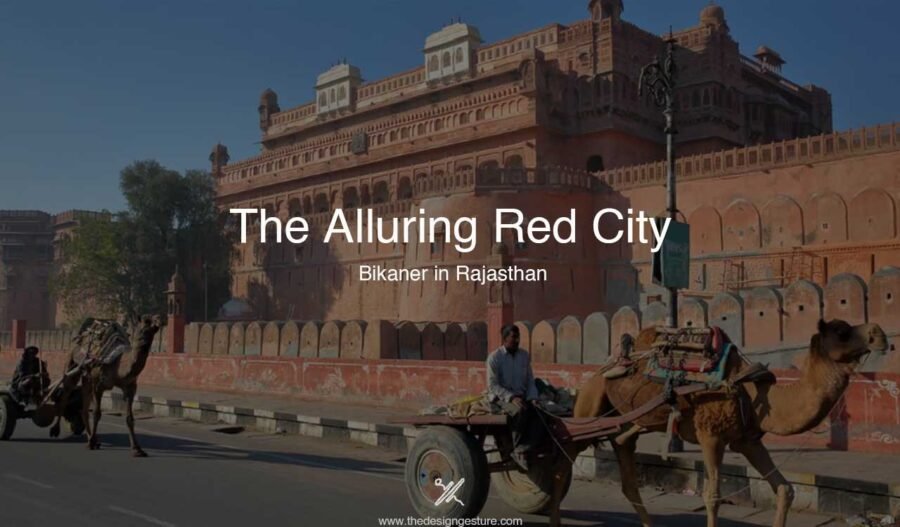
    The dynamic and bustling city of Bikaner in Rajasthan is surrounded by a wide expanse of golden undulating dunes, making it an off-the-beaten-path tourist attraction. This ancient city, tucked away in the Thar desert, is visited by thousands of visitors each year who are drawn by its enormous and magnificent forts and palaces. When Rao Bika, the ruler of the Rathore dynasty, governed the area in 1488, the old part of the city stood as a mute testament to the area’s rich history. Enclosed by towering stone walls, the city’s historic district is a kaleidoscope of customs and traditions. You enter a maze of pathways sprinkled with charming brilliant red and yellow sandstone through five enormous gates.

    History of Bikaner in Rajasthan

    Under the regiment of Rajput until the 15th Century, Bikaner was known as Jangladesh. The city was established in 1488 by Rao Bika, son of Maharaja Rao Jodha. As he wished to build his kingdom, Bikaner got its name. Bikaner was the oasis in the trade route between central Asia and the Gujarat coast. 

    Roughly a century after Rao Bika established Bikaner, the area experienced prosperity during the reign of Rai Singhji, the sixth Raja. Rai Singh recognized the Mughals’ suzerainty throughout their dominion over the nation and had a prominent position as an army general in the courts of Emperor Akbar and his son, Emperor Jahangir. His military prowess, which included capturing part of the Mewar kingdom for the empire, brought him praise and benefits from the Mughal rulers. His expertise in art and architecture, which he gained from his travels outside, is evident in the many monuments he constructed in the Bikaner Junagarh fort. 

    Architecture and Construction 

    The architecture of Bikaner in Rajasthan is indeed splendid and comprises Jain temples, majestic forts, and beautiful gardens which are constructed in the Rajput style of architecture. Understanding the fortified structures of the place, most were constructed with defensive features and massive gates and bastions. One of the known fortified structures is Junagarh Palace. The palace is known for its architectural detailing and ornamentation. The plan is a simple rectangular plan with all structures out of marble and sandstone. 

    Bikaner Junagarh Fort

    bikaner Junagarh fort
    Bikaner junagarh fort

    Bikaner Junagadh Fort is a magnificent example of Rajput building design. The fort’s perimeter is more than a kilometer long. There is a sizable courtyard at the entryway that leads to numerous other courtyards and entrances. This design element protects the homeowners’ privacy while also acting as a barrier against adversaries.

    The Junagadh Fort is a huge fort with a rectangular layout measuring 986 meters in perimeter length. The walls measure 4.4 meters broad and 12 meters high. Although the moat no longer exists, the fort is ringed by an approximately 7.6-meter-deep moat. The fort also contains seven gates, as well as various palaces, pavilions, Hindu and Jain temples.
    The main character is carved from red sandstone. The interior is decorated with traditional Rajasthani artwork. The fort is a combination of many architectural styles, including Rajput, Gujarati, and Mughal.

    Besides forts and palaces, havelis are also known as traditional Indian mansions. The havelis have a distinctive character with façade intricate, courtyards, and various culturally rich frescoes. Additionally, temples also have a very distinctive language with stone-carved language. 

    Karni Mata Temple

    bikaner in rajasthan
    Karni Mata Temple, Bikaner in Rajasthan

    The Karni Mata Mandir in Bikaner Rajasthan is well-known for housing over 25,000 rats that roam freely throughout the complex of temples, rather than for its geographical location or architectural style. These critters are visible arising from cracks in the walls and flooring, frequently crossing the feet of guests and worshippers. Eating food that these rats have nibbled on is considered a religious ritual here. In addition to traveling from all over India and the world to see this incredible show, visitors often bring milk, candies, and other offerings for these revered creatures. White rats are particularly revered above all other rats since it is thought that they are the avatars of Karni Mata and her sons.

    Karni Mata Mandir Rajasthan tourism
    Karni Mata Temple- Rajasthan Tourism

    Maharaja Ganga Singh of Bikaner Rajasthan built the Karni Mata temple during the 1800s. Its layout and construction are reminiscent of Mughal architecture. Historical marvels are the imposing silver doors and captivating marble front. Because of the Taj Mahal’s entryway, which is adorned with fascinating details carved out of marble, you will be reminded of its intricate design, carvings, and construction. 

    Bhandasar Jain Temple

    The three-story Bhandasar Jain Temple is well-known for its exquisite frescoes, mirrored work, and leaf paintings. Red sandstone with exquisite paintings and yellow stone carvings on the walls, sanctum pillars, and mandapa were used in the construction of this temple. There are pictures on the walls that show the lives of the 24 tirthankaras.The garbhagriha, antarala, mahamandapa, and ardhamandapa temples make up the complex. The pancharatha (five rathas) sanctuary is encircled by a shikhara with amalakas and karna-amalakas perched on top.

    Along with influences from the British colonial era, Bikaner’s architecture also shows elements of the British Raj, especially in the design of its public buildings and administrative buildings. Ultimately, spanning centuries of history and including a variety of architectural styles and traditions, Bikaner’s architecture is a rich tapestry of cultural influences.

    FAQ

    1. What are the different architectural styles found in Bikaner Rajasthan?
    Bikaneri architecture is a fascinating blend of Rajputana, Mughal, and Jain influences. The Rajput style is evident in the massive forts and palaces with red sandstone exteriors, intricate latticework (jalis), and grand courtyards. Mughal influences can be seen in the use of bulbous domes, geometric patterns, and delicate floral motifs. Jain temples showcase intricate marble carvings and pillared halls.

    2. What are some of the most famous forts and palaces in Bikaner?

    • Bikaner Junagarh Fort: A majestic fort showcasing Rajput military architecture with seven bastions, orients, and a moat.
    • Lalgarh Palace: A stunning red sandstone palace adorned with Mughal-inspired gardens, courtyards, and pavilions.
    • Karan Mahal: A beautiful palace known for its intricate latticework windows (jalis), mirror work, and a unique blend of Rajput and Mughal styles.

    3. Which is the heritage building of Bikaner?
    Bikaner House is a world-class cultural facility housed in a heritage structure near the renowned India Gate hexagon. It was built as a palace for the Maharaja of Bikaner and has been extensively restored.

    4. Why is Bikaner in Rajasthan known as red city?
    Bikaner, Rajasthan is known as the “Red City” due to its red sandstone havelis. It’s also known as the “City of Havelis” because of its palaces and forts built from red sandstone that have withstood the passage of time.

  • Discover Barcelona Spain: City of Counts (Comital City)

    Discover Barcelona Spain: City of Counts (Comital City)

    On Spain’s northeastern coast is the city of Barcelona. It is the second most populated municipality in Spain as well as the capital and largest city of the autonomous community of Catalonia. Approximately 4.8 million people live in its urban area, which spans multiple neighboring municipalities within the province of Barcelona and has a population of 1.6 million within its city limits.
    This places it as the fifth most populous urban area in the European Union, behind Paris, the Ruhr area, Madrid, and Milan. Barcelona Spain is situated on the coast between the mouths of the rivers, Llobregat and Besòs, and bordered to the west by the Serra de Collserseveraln range, it is one of the largest metropolises on the Mediterranean Sea. 

    With a rich cultural history, Barcelona is a popular tourist destination as well as a significant cultural hub today. UNESCO has classified the architectural masterpieces of Antoni Gaudí and Lluís Domènech i Montaner as World Heritage Sites, making them especially well-known. The University of Barcelona and Pompeu Fabra University, two of Spain’s most esteemed universities, are located in the city. 

    Barcelona is home to the Union for the Mediterranean’s headquarters. In addition to holding prestigious conferences and expositions, the city is well-known for hosting the Summer Olympics in 1992. Additionally, this location has hosted a number of international sporting events. Barcelona is the primary biotech hub of Spain and a significant hub for culture, commerce, and finance in southwest Europe. Due to its prominence in international socioeconomic concerns, Barcelona is eligible to be considered a global city. 

    History of Barcelona Spain

    Barcelona’s first human settlements date back to the Neolithic era. The city was established by the Romans, who at the end of the first century BC established a colony named Barcino. Several thousand people lived in the colony, enclosed by a defensive wall, some of which are still visible in the old town.

    Following the Christian reconquest, Barcelona Spain—which Muslims had ruled for more than 200 years—became a county of the Carolingian Empire and one of the principal homes of the Crown of Aragon’s court. Barcelona became the political and commercial hub of the Western Mediterranean throughout the prosperous Middle Ages. The Gothic Quarter in the city is evidence of the magnificence that the city has experienced.

    Barcelona Spain went through a period of decline from the fifteenth to the eighteenth centuries as it fought to keep its political and economic independence. The battle concluded in 1714 when the Bourbon army captured the city and repressed the rights and privileges of Catalonia and the Catalan people. 

    Barcelona Spain
    Image Source

    With the emergence of the textile industry in the middle of the 19th century, a period of cultural rehabilitation got underway. The Renaixença was the name given to this period when Catalan acquired popularity as a literary language again.

    Discover Barcelona Spain: City of Counts (Comital City) This places it as the fifth most populous urban area in the European Union, behind Paris, the Ruhr area, Madrid, and Milan. Barcelona Spain is situated on the coast between the mouths of the rivers, Llobregat and Besòs, and bordered to the west by the Serra de Collserseveraln range, it is one of the largest metropolises on the Mediterranean Sea.  colleges for architecture,colleges for architecture in india,best government colleges for architecture in india,Institute
    Barcelona Spain

    The widespread urban renovation was brought about in Barcelona Spain during the 20th century, and its most notable neighborhood, the Eixample, is home to some of the city’s most notable Catalan art-nouveau, or modernista, structures. One of the most famous architects of all time, the Catalan Antoni Gaudí, created structures that are today recognized across the world, including the Sagrada Família cathedral, the Casa Milà (also called La Pedrera, the Catalan word for stone quarry), and the Casa Batlló.

    The Civil War of 1936 and the following dictatorship drastically curtailed the liberties won during this time. The restoration of the Catalan language and Barcelona society’s economic might came about with the return of democracy in 1978. Barcelona’s potential was further stimulated and its standing as a major metropolis was underlined when the city hosted the 1992 Olympic Games. 

    The Forum of Cultures took back industrial areas in 2004 and turned them into residential neighborhoods. An illustration of Barcelona’s revitalized energy as it looks to the twenty-first century.

    Discover Barcelona Spain: City of Counts (Comital City) This places it as the fifth most populous urban area in the European Union, behind Paris, the Ruhr area, Madrid, and Milan. Barcelona Spain is situated on the coast between the mouths of the rivers, Llobregat and Besòs, and bordered to the west by the Serra de Collserseveraln range, it is one of the largest metropolises on the Mediterranean Sea.  colleges for architecture,colleges for architecture in india,best government colleges for architecture in india,Institute
    Image Source

    Architectural Marvels of Antoni Gaudi- Barcelona Spain

    The unique style of Catalan architect Antoni Gaudi was characterized by a richness of form freedom, rich color, and rich texture. He only worked in or close to Barcelona Spain, where he dedicated much of his career to building the Sagrada Familia, also known as the Expiatory Temple of the Holy Family. In addition to being incredibly exquisite and ethereal, Gaudi’s art is also organically cohesive; it has the sensation of natural elements integrating into their surroundings.

    La Sagrada Familia, Barcelona Spain

    Antoni Gaudí designed the Sagrada Familia, a prominent Roman Catholic church in Barcelona Spain. The construction of the Sagrada Familia began in 1882 and came to a standstill in 1926 when Antoni Gaudi died. 

    Antoni Gaudi followed del Villar’s Latin cross plan, which is typical of Gothic churches but diverged from it in numerous key ways. Most notably, Antoni Gaudi invented a system of angled columns and hyperboloidal vaults that eliminated the necessity for flying buttresses. Instead of relying on exterior features, horizontal loads are carried through inner columns.

    Discover Barcelona Spain: City of Counts (Comital City) This places it as the fifth most populous urban area in the European Union, behind Paris, the Ruhr area, Madrid, and Milan. Barcelona Spain is situated on the coast between the mouths of the rivers, Llobregat and Besòs, and bordered to the west by the Serra de Collserseveraln range, it is one of the largest metropolises on the Mediterranean Sea.  colleges for architecture,colleges for architecture in india,best government colleges for architecture in india,Institute
    Image Source

    La Sagrada Familia employs three-dimensional forms made of ruled surfaces, such as hyperboloids, parabolas, helicoids, and conoids. These intricate geometries allow for a thinner, finer structure, which is meant to improve the temple’s acoustics and lighting quality. 

    When completed, La Sagrada Familia will have eighteen towers designed to provide a unique view of the temple from any one vantage point. Each facade is crowned by four bell towers representing the Apostles, which reach a height of nearly 100 meters. A tower symbolizing the Virgin Mary will be built at the north end to overlook the apse. The central tower will stand 72 meters tall and symbolize Christ, surrounded by four towers portraying the Evangelists.

    Discover Barcelona Spain: City of Counts (Comital City) This places it as the fifth most populous urban area in the European Union, behind Paris, the Ruhr area, Madrid, and Milan. Barcelona Spain is situated on the coast between the mouths of the rivers, Llobregat and Besòs, and bordered to the west by the Serra de Collserseveraln range, it is one of the largest metropolises on the Mediterranean Sea.  colleges for architecture,colleges for architecture in india,best government colleges for architecture in india,Institute
    Image Source

    Colona Guell Chruch, Colonia Guell

    Discover Barcelona Spain: City of Counts (Comital City) This places it as the fifth most populous urban area in the European Union, behind Paris, the Ruhr area, Madrid, and Milan. Barcelona Spain is situated on the coast between the mouths of the rivers, Llobregat and Besòs, and bordered to the west by the Serra de Collserseveraln range, it is one of the largest metropolises on the Mediterranean Sea.  colleges for architecture,colleges for architecture in india,best government colleges for architecture in india,Institute
    Image Source

    Antoni Gaudí’s original structure in Santa Coloma de Cervelló, 23 km south-west of Barcelona, is the crypt of an incomplete church used by the Colònia Güell residents. Gaudí created the church using novel architectural techniques, including catenary arches, hyperbolic parabolas, and ornamental broken mosaic tiling. The Güell family stopped sponsoring the project in 1914, and the mill shuttered in 1973 due to the textile crisis. The Colònia Güell is now undergoing restoration.

     Casa Battlo, Barcelona

    Discover Barcelona Spain: City of Counts (Comital City) This places it as the fifth most populous urban area in the European Union, behind Paris, the Ruhr area, Madrid, and Milan. Barcelona Spain is situated on the coast between the mouths of the rivers, Llobregat and Besòs, and bordered to the west by the Serra de Collserseveraln range, it is one of the largest metropolises on the Mediterranean Sea.  colleges for architecture,colleges for architecture in india,best government colleges for architecture in india,Institute
    Image Source

    Casa Batlló represents joy and oceanic inspiration, as well as a dream world full of nature and fantasy. Gaudí designed the building’s façade, which features bone-shaped stone columns and modernist floral accents. The balcony railings are in the shape of masks, and the Noble Floor includes a gallery and enormous oval-shaped windows. The ceiling is made of enormous scales and a cross with four arms, resembling an animal’s back.

    The crown and four-armed cross have inspired many popular interpretations, including the tale of Saint George, Catalonia’s patron saint, and the watery landscape. Artists such as Monet and Salvador Dalí viewed the home as a reflection of the sea, depicting waves on a tranquil surface.

  • Unveiling the Secrets of Urban Planning: India’s Ancient Metropolis Marvels

    Unveiling the Secrets of Urban Planning: India’s Ancient Metropolis Marvels

    The process of creating and expanding urban areas to satisfy community demands is known as urban planning. Both the creation of new land and the redevelopment of existing urban areas fall under the umbrella of urban planning. On the other hand, urban planning has a long history around the world. Concerning this, the remains of ancient towns in South and Central America, Egypt, China, India, and the Mediterranean region provide early examples of urban design.
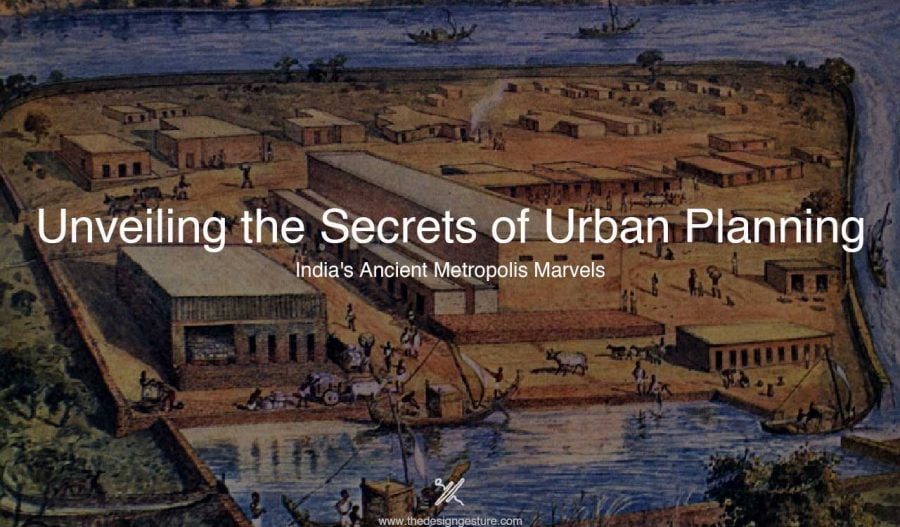
    The arranged street patterns in these areas are systematically circular and rectilinear; in addition, public places, including parks, palaces, temples, and government buildings, were taken into account during the design process. Additionally, these cities boasted highly developed drainage and water supply systems, which was quite an accomplishment at the time; Lothal is the most well-known example. The remnants of the evidence are visible in the little cities of that era, demonstrating the significance of planning at the time.

    Urban Planning
    urban planning

    The Indian practice of urban planning dates back thousands of years. The practice of urban planning practice focuses on systematic planning, architecture, quality of infrastructure, and social structure. The town/urban planning during the ancient period was dependent on various factors such as soil type, climatic considerations and conditions, typography, wind, and availability of water in the surroundings. 

    Vedic Civilization: Urban Planning of Ancient India

    The Vedic civilization can be dated back to 10000 to 3000 B.C. The Indus Valley Civilisation is dated back to 2500 B.C. which is the starting of urban planning in India. Mohenjo-Daro and Harappa are the planned cities of that era. Throughout India’s history, forts and centers of trade and commerce have also given rise to cities and towns. The city was divided in half. Built to protect the upper reaches of the city, it resembled a fort. Maybe the communities’ ruling elite resided in the protected area. Common men resided in the second part of town, which was lower in height than the first. The principal roads in the Indus Valley met at right angles and traveled from east to west and north to south.

    The width of the roads varied from 9 to 34 feet. They ran nonstop for a mile. They were appropriate for transporting on wheels. Streets were linked to lanes. In every lane was a public square. One distinctive aspect of the society was its intricate drainage system. Magnificent brick piers, warehouses, granaries, dockyards, and fortifications could be found in the cities. The city was protected from invaders and floods by enormous citadels. Most residents of cities were craftsmen and traders.

    The classification of the town was done based on the Vastu Shastra, mentioned in the sacred and ancient texts of Indian Literature. Classification can be observed as,

    Dandaka

    During the ancient period, various designs and shapes were used to symbolize different things, promoting various built environments, dandaka is referred to as rod shape planning. 

    Dandaka
    Image Source

    The towns were planned on straight lines and regularity, symbolizing stability and order. The towns are supposed to be rectangular and located in the eastern direction. Here, female deities are homed outside the town while male deity in the northern direction. The ultimate practice. 

    Sarvathobadra

    The circular form and radiating roadways in this town design give the built environment a sense of balance and harmony. The primary purpose of the Sarvathobadra designs is to create areas of religion and spirituality that encompass the entire town or hamlet. 

    Nanydyavarta

    This circular layout features streets extending outward from a center square. mostly due to the huge payment. The plan represents wholeness and coherence. The idea that the plan exudes positivity was a conviction. 

    Nanydyavarta
    Image Source

    Padmaka

    It is a Sanskrit word meaning town with a lotus shape. Lotus flowers have been said to represent purity, enlightenment, and beauty since ancient times. mostly for places of worship and spirituality where people went to find solace and tranquillity. This plan emits positive energy, just like other plans do. The petaled streets enhance the visual appeal. 

    Padmaka

    Image Source: https://archi-monarch.com/town-planning-principles-in-ancient-india/

    Swastika

    The Sanskrit term “swastika” means “good fortune” and “well-being.” Swastik is frequently utilized in Hindu houses and temples as a decorative element. Planning based on the Swastika symbolized the entrance in the past, signifying Hinduism’s belief in the cyclical nature of existence. 

    Unveiling the Secrets of Urban Planning: India's Ancient Metropolis Marvels The process of creating and expanding urban areas to satisfy community demands is known as urban planning. Both the creation of new land and the redevelopment of existing urban areas fall under the umbrella of urban planning. On the other hand, urban planning has a long history around the world. Concerning this, the remains of ancient towns in South and Central America, Egypt, China, India, and the Mediterranean region provide early examples of urban design. colleges for architecture,colleges for architecture in india,best government colleges for architecture in india,Institute
    Image Source

    The layout featured diagonal streets that split up into triangle-shaped areas. There is a rampart wall all around the town. The temple serves as the overall center.

    Prastara

    It is the term that refers to the arrangement of tile or stones used in the floor or pavement construction. In ancient times, the Prastara was an important decorative element that was used to create intricate and beautiful patterns on floors. 

    Prastara
    Image Source

    The plan is square or rectangular not triangle or circle. Site size increases based on the financial capabilities of the buyer or the owner. The town is not surrounded by a fort or wall. The town had wider streets. 

    Karmuka

    The strategy is like a bow. The plan is better suited for semi-circular or parabolic locations situated along riverbanks. In these locations, the major thoroughfares run directly from north to south or from east to west, intersecting at a right angle. 

    Unveiling the Secrets of Urban Planning: India's Ancient Metropolis Marvels The process of creating and expanding urban areas to satisfy community demands is known as urban planning. Both the creation of new land and the redevelopment of existing urban areas fall under the umbrella of urban planning. On the other hand, urban planning has a long history around the world. Concerning this, the remains of ancient towns in South and Central America, Egypt, China, India, and the Mediterranean region provide early examples of urban design. colleges for architecture,colleges for architecture in india,best government colleges for architecture in india,Institute
    Image Source

    Chatmurkha

    The structure with four faces and entrances is referred to by this word. These buildings fulfilled a variety of functions, including those of temples, gates, and secular or religious constructions. The four orientations are represented by the four façades. 

    Unveiling the Secrets of Urban Planning: India's Ancient Metropolis Marvels The process of creating and expanding urban areas to satisfy community demands is known as urban planning. Both the creation of new land and the redevelopment of existing urban areas fall under the umbrella of urban planning. On the other hand, urban planning has a long history around the world. Concerning this, the remains of ancient towns in South and Central America, Egypt, China, India, and the Mediterranean region provide early examples of urban design. colleges for architecture,colleges for architecture in india,best government colleges for architecture in india,Institute
    Image Source

    That is thought to be done to shield the buildings from all sides. Additionally facilitating the simple movement of people and products into and out of the building, these four facades and entrances enhanced accessibility and connectedness.

    The location should have four faces and be either square or rectangular. With four main streets, the town is laid out in an east-west pattern. There is always a temple at the center. 

    Medieval Period: Transition in Urban Planning Strategics in India

    In India, the medieval era was a time of transition, and systematic and planned urban growth was not feasible due to unstable political circumstances. In multiple towns, fortifications were constructed. Buddhism has a significant influence on architecture and development. The renowned urban planning treatise “Arthashastra.” It listed the following attributes: zoning laws based on the community. The excavation in the capital of Magadha (now Bihar), Patliputra, shows a high level of planning proficiency. Taksha-sila and the renowned learning center Nalanda were established during this period.

    Medieval towns were surrounded by a moat and were classified based on classes and the control was observed too. Additionally, the Mughals adopted the notions of Vaastu Shastra, the rectilinear forms and patterns of urban planning too. The Industrial Revolution after the British invasion of India also affected the planning. Railway was introduced which led to rapid urbanisation. Additionally, Underground water supply and sewage were also included in the planning. 

    However, after independence, India has seen great progress in planning to build a sustainable place. 

  • Le Corbusier’s Chandigarh City: India in the Search of Unique Identity

    Le Corbusier’s Chandigarh City: India in the Search of Unique Identity

    India, a culturally and traditionally rich nation today, has been prominent since ancient times. The Britishers invaded India with the greed of robbing the rich. They ruled for about 300 years, yet they couldn’t break the nation, though India (Hindustan) lost its identity. 

    “The identity lost, the hopes lost,

    Nonetheless, Chandigarh Vision provided an answer.”

    chandigarh city
    Chandigarh city

    Chandigarh: The Beginning

    After the independence, the country’s Muslim population was protected from the Hindu majority by leaving colonial masters, who reserved the eastern and northwest regions for their use. It took much longer than 73 days for many of the 100 million or so Muslims who were dispersed throughout India to relocate to these areas, which are now the countries of Pakistan and Bangladesh.

    Sir Cyril Radcliffe divided the state of Punjab between India and Pakistan when he drew the borders for the two nations; Pakistan kept control of Lahore, the state capital. Following this defeat, Punjab established a new state capital that would meet the state’s logistical needs and unmistakably declare to the world that a new, modern, wealthy, and independent India had come.

    chandigarh city
    Image 1: The Newspaper Archive about Chandigarh’s rise on Saturday, April 10, 1948. 

    The Punjabi government went to establish the new capital at Chandigarh, in the north of Delhi. The First Prime Minister of independent India, Jawaharlal Nehru explained, “From existing encumbrances of old towns and old traditions, let this be a new town, symbolic of the past…. an expression of the nation’s faith in the future.”. The Prime Minister, Jawaharlal Nehru of independent India wished to imagine the new capital as progress, and modernity.

    With the development of a new capital in Punjab, the American architects Albert Mayer and Matthew Nowicki were approached. Sadly, due to the sudden death of Nowicki, Matthew also dropped off the project. Once hope was in the air. The Project Directors searched Europe, and Le Corbusier was approached for the project, with Pierre Jeanneret as a site architect.

    Le Corbusier’s Chandigarh City: India in the Search of Unique Identity Eventually, as per the article published in the BBC, Chandigarh city is one the most successful planned cities with a combination of architecture, culture, and modernization. colleges for architecture,colleges for architecture in india,best government colleges for architecture in india,Institute
    Image 2: The photograph at Le Corbusier’s Office in Chandigarh city during the planning alongside to the left to right is Pierre Jeanneret 

    Le Corbusier’s approach to planning was similar to that of the previous plan by Matthew and Mayer. The change was the city’s shape, insisting on curved roads, it was all rectilinear with clean and crisp grids. The modernist approach to city planning is about functionality. As a result, the roads were reworked, and the hierarchy. The city planning observed arterials to pedestrian and bicycle lanes, as 7Vs. This became the sector with a green open space following the north-south direction, while the commercial in the east-west direction. These plans reflect the Garden City Movement and the architect’s concept from the Ville Radieuse. The Ville Radieuse is the solution to free ground pedestrian movement without traffic congestion. 

    Le Corbusier’s Chandigarh City: India in the Search of Unique Identity Eventually, as per the article published in the BBC, Chandigarh city is one the most successful planned cities with a combination of architecture, culture, and modernization. colleges for architecture,colleges for architecture in india,best government colleges for architecture in india,Institute
    Image 3: Le Corbusier’s Chandigarh Map in the year 1951

    The roads define the boundaries of the sectors. The sectors in conjunction with the roads indulged in various public functions. The sectors were further divided into four quadrants. The quadrants included housing. This resulted in a safe household with their schools, shopping centers, businesses, and public spaces. 

    The planned city incorporated residential housing into thirteen categories based on rank and income. yet, every category had a letter identifying the designer and a number indicating its position in the financial structure, but they were all the same in their contemporary, geometric simplicity. Along with perforated screens and, in a few cases, verandahs, the deep overhangs and recesses used for shading provided the main visual appeal in the otherwise monolithically rectangular buildings.

    Le Corbusier’s Chandigarh City: India in the Search of Unique Identity Eventually, as per the article published in the BBC, Chandigarh city is one the most successful planned cities with a combination of architecture, culture, and modernization. colleges for architecture,colleges for architecture in india,best government colleges for architecture in india,Institute
    Image 4: Various Photographs of Chandigarh between 1951 and 1965
    Le Corbusier’s Chandigarh City: India in the Search of Unique Identity Eventually, as per the article published in the BBC, Chandigarh city is one the most successful planned cities with a combination of architecture, culture, and modernization. colleges for architecture,colleges for architecture in india,best government colleges for architecture in india,Institute
    Image 5: Various Photographs of Chandigarh between 1951 and 1965

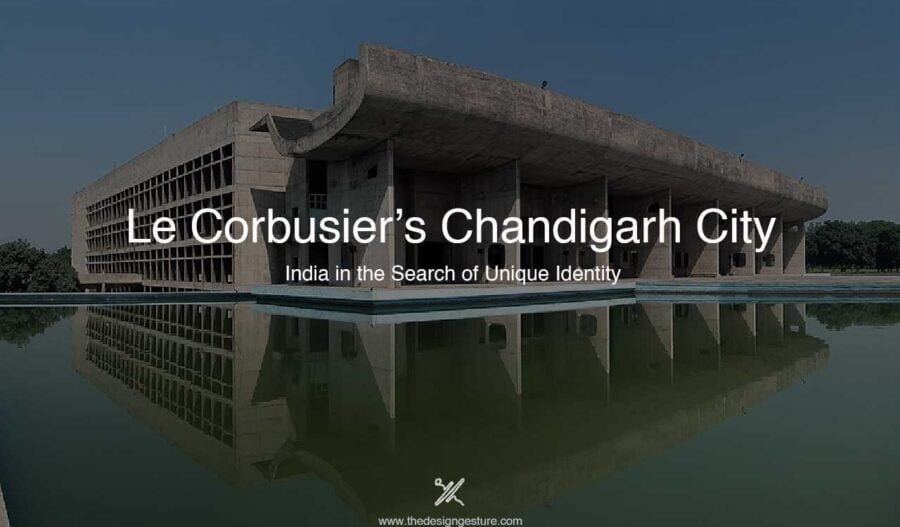
    The original approach had the capitol complex as the center of the city from the drawings in 1951. Then the change came when Le Corbusier planned the artificial hills between the Capitol Complex and the city, breaking the whole visuality. The urban isolation was there, the Capitol Complex has its own aesthetical and spatial appeal. Le Corbusier combined the traditional classical and Indian elements into the physicality to have a concrete identity for the city. 

    Eventually, as per the article published in the BBC, Chandigarh city is one the most successful planned cities with a combination of architecture, culture, and modernization.

    Chandigarh: A City of Identity  

    As the city had to accommodate about 150, 000 during the initial phase, the population is still on the rise. The approach should be able to meet the water and drainage needs based on the climatic conditions which was also a point of consideration. As the city was divided with an axial approach, the development was divided into phases. The initial phase focused on the development of the sectors with some major avenues towards the Capitol complex with a connecting railway, industrial area, and university. 

    Le Corbusier focused on the Capitol as the head, commercial center, industrial sector, and intellectual center of the city, bringing a biological element to the layout design. He oversaw the city’s architectural direction and created the structures of the Capitol. The senior architectural group’s other three members were responsible for social infrastructure, government housing, municipal buildings, commercial centers, and schools.

    To conceal the homogeneity of the sectors, a protected green belt and tree planting were employed. Chandigarh city was viewed as a low-rise, low-density city with a regular traffic pattern to cut expenses. Every significant architect created their style while adhering to a standard design of regular brick and stone box constructions featuring prisons and brise-soleil.

    Presently, one of the busiest hubs in the nation, Chandigarh city observes heavy traffic congestion that only gets worse as the city gets more and more urbanized. Over time, the initial stages of constructed bulls and spaces have become outmoded contemporary demands and scenarios. 

    Chandigarh City: The Contemporary 

    With the passing of time and the advent of technology, Chandigarh city got its new plan in the year 2015, to meet the need for expansion and growth. However, during these years unplanned development has seen resistance. As planning is indeed, to carry forward the past, Le Corbusier’s Planning will add up to the future planning approach. 

    The recent urbanization in Chandigarh city has changed the core. The outskirts development of recent times has been adversely affected by various factors such as high rates of land prices, housing shortage, the socio-economic aspect of the city, and growth as a city. 

    Hence, the smart city approach alters the original plan to suffice the upcoming challenges and needs of the rapidly increasing population. The city has taken steps towards this transformation with transit and people, improving the pedestrian walking experience and public spaces. 

    Given the complexity and high technological requirements of modern design, it could have been challenging to take on such a large project alone today. Le Corbusier, however, managed construction-related matters alone to keep others from influencing his theories through conversation. He was hardly a climate expert when it came to burning winds, the monsoon, and uninsulated concrete. Like this, at the municipal level, zoning regulations and the solitude of streets and avenues deter intensive urban activity. The city is a succession of images, its rigid, inurbane nature. 

    Le Corbusier’s Chandigarh City: India in the Search of Unique Identity Eventually, as per the article published in the BBC, Chandigarh city is one the most successful planned cities with a combination of architecture, culture, and modernization. colleges for architecture,colleges for architecture in india,best government colleges for architecture in india,Institute
    Image 6: Chandigarh Map- City Master Plan 2031

    However, Chandigarh city is significantly more for what it might have been than for what it is now, much like most of his innovative ideas that have inspired countless architects throughout the years.

  • Bundeswehr Military Museum- The Largest Museum in Germany

    Bundeswehr Military Museum- The Largest Museum in Germany

    New Design in Old Setting

    The extension; seems to be stabbing the heart at first glance. The deconstructivity is a nightmare in the scenic beauty of symmetry. Libeskind’s intervention The Bundeswehr Military Museum was compared by Mary M. Lane to “a piece of shrapnel freshly fallen from the sky” in a Wall Street Journal review. Another critic, Rowan Moore stated that “The weakness of the design is the belief that the sheer solid shape stands for itself.” 

    The renowned architect, Daniel Libeskind, known for his unconventional, angular, and unfragmented designs; broke out from the brief and proposed an unidentical change to the authorities’ vision of the museum. The Bundeswehr Military Museum, one of the historical museums in Germany, has a long history. The museum showcases Military technology focusing on the human aspects seeking to present a comprehensive understanding of military history by highlighting the effects of conflict on people and society as opposed to exalting the military prowess.

    Daniel Libeskind’s deconstructive vision

    “I wanted to create a bold interruption, a fundamental dislocation, to penetrate the historic arsenal. It was not my intention to preserve the museum’s facade and just add an invisible extension in the back. I wanted to create a bold interruption, a fundamental dislocation, to penetrate the historic arsenal and create a new experience. The architecture will engage the public in the deepest issue of how organized violence and how military history and the fate of the city are intertwined.”

    With Daniel Libeskind’s vision, today the museum symbolizes transparency and responsibility in addressing the German Military’s dark history. In contrast to the original building’s traditional architecture, the extension’s stark, angular shape symbolizes the upheaval and fragmentation brought about by conflict. This contrast acts as a metaphor for Germany’s attempts to reconcile with its history. Today, the museum participates in dialogues on military and history, leading the educational programs; though the form itself is an invisible terror. The idea of depicting the future with the past is a way to bridge; though it reminds us that we live in the time of Kaliyug(the age of darkness). As we are moving towards Kaliyug, the physicality is taking shape. 

    Bundeswehr Military Museum, Germany 
    Image 1: The extension is a terrific expression of the future; as the ancestors said that we are in the Kaliyug age, the exact depiction © Dezeen

    The new addition is the depressed expression of the democracy that is envisioned. The depressed approach, with the solidity of the form and materiality; solidifies the the impact of the dark part and envisions the future with transparency, which is in itself contradictory. Glass; is not about transparency it is the solidity of the industrialization of the time, with steel. This deconstructivist ideology; is the pathway leading to Kaliyug, the architectural phase of darkness with industrialized materiality losing its essence and originality. 

    Studio Libeskind
    Image 2: The deconstructive Ideology: Physical Disruption © Studio Libeskind

    “Lost Identity”

    Though compared to Kaliyug or not; there are contradictions related to the project right after it opened in 2011. One critique is of Daniel Libeskind’s aggressive architectural addition, and the exhibitions installed within, call into question the ability of any museum to mount an effective critique of war. The massive perforated steel wedge breaks through and splits open the host structure, upending the old neoclassical building’s typical symmetry and offering open, light areas. The clear new structure was meant to represent democratic openness and the changing role of the military in modern, unified Germany, in contrast to the opaque older structure, which is a throwback to Germany’s authoritarian past. 

    The conflict between the historical and new façade; refers to a juxtaposition of past and future pity the symmetry through the scale and volume of the stabbing knife. 

    Daniel Libeskind
    Studio Libeskind
    Image 3: Daniel Libeskind Collocation of the contemporary and classical symmetry © Studio Libeskind and Archdaily

    The problem started with the foundation itself; the concept of war; according to Jay Winter in Museums and Representations of War. The difficulties of the foundation are evident and so there is a risk that these things may be fetishized and made more beautiful, which might lessen their inherent strength. 

    However, because of their asymmetrical design, the dynamic and unconventional display rooms are confusing. The exhibitions are contradictory too. 

    Everything here is bold enough to be the antagonist. The museum is a powerful protest against the building’s former monumentality. Rather than promoting progress and emancipation, it symbolizes a politically and aesthetically significant architectural feat within the context of the contemporary neoliberal goal. However, such ruthless colossal deconstructivism also hinders the constructive contribution that feelings, passions, and group solidarity can make to the development of liberating social enterprises.

    The deconstructive approach of the museum is more empowering the power rather than the idea of discriminating the past and future of transparency. Daniel Libeskind’s idea of a bold approach to breaking the past dominance and violence to have a transparent and democratic future.  

    Angular museum extension by Daniel Libeskind
    Studio Libeskind
    Image 4: The past and future transition with the bold approach, empowering to look upon history that is to be a revolt for the future. 

    The museum settled itself as a powerhouse with the contemporary architectural approach. 

    Lost hope of the past; 

    Contemporary; 

    Empowering the temerity;

    With rigidity. 

  • Architecture Shapes Human Life: An Interesting Insight

    Architecture Shapes Human Life: An Interesting Insight

    Throughout history, architecture has been the essence of richness reflecting values, customs, traditions, region, topography, and civilizations’ rise and fall. From the architecture of ancient civilizations to modern society, the inhabitants had a physical and emotional connection to the space they dwelled in. Human needs evolved so did their need of dwelling. However, the space in which inhabitants dwell affects their psychology and behavior, say researchers in recent times.  

    Architecture, timely has been an essential part of human life and society. It is an inseparable part of human evolution and humankind. Architecture plays a vital role in shaping human life, whether it be ideas or notions, through perception or experience. Just like a human gets influenced by others similarly, they also get influenced by architecture and design. 

    Importance of Architecture

    Architecture is an integral part of society. Architecture is in roots. It creates physical spaces for people to dwell in their life experiences, memories, notions, ideas, and aspirations. Architecture is not just a physical entity but it is more than physicality. Ultimately, architecture is a reflection of culture and part of it. It reflects our culture, aspirations, and ourselves too. 

    The concept of the physical is built in terms of functionality it is pretty simple to create build where people could perform certain activities sufficing their needs. Architecture is this tool but it reflects more of people rather than only being solid. Timely, architecture evolved and now everyone has access to various built forms and learn about them. Every place people go connects them personally with the built. 

    Architects must expand their boundaries to enhance this experience, memories, and spaces. Architecture influences people at a personal level as well as influences society. Every detail of the space influences people, from layout and placement to furniture material and color. Ar. Zaha Hadid said,

    “Architecture is really about well-being. I think that people want to feel good in a space… On the one hand, it’s about shelter, but it is also about pleasure.”

    A space that is well-designed and well-functioning, the inhabitant of the same would be happy and enjoy the physicality around, but if the space is not well functioning or not well-designed based on ergonomics or any other factors, the effect could be observed in human behavior and response to the surrounding. Architecture can influence human responses strongly. 

    The solid concrete mass affects humans negatively, and to have a positive impact on the same, one must alter the approach, materiality, or volume depending upon the context, topography, and functionality. The well-designed space resonates with humans subconsciously. While designing it is important to look at the experience that idea would create as it is equally important, the connection between the physicality and user. 

    Built and Human Psychology 

    Human psychology along with architecture is vast and varied to dwell into the depth. The relationship between space and human psychology can be multifaceted and has various influences. People may feel anxiety, sadness, or helplessness as a result of the stress of an uncomfortable situation. Your immune system is subsequently suppressed as a result, which also raises your blood pressure, heart rate, and muscle tension. Positive surroundings change that. Here are two major aspects of this relationship:

    Impact of Space on Human Life

    The influence of architecture on human psychology is complex and affects numerous areas as it has on social, emotional, and cognitive health. The physical environment, including the spatial layout, aesthetics, and functionality of spaces, can significantly impact human psychology and well-being. 

    Impact of Space on Human Life
    Image Source

    Research suggests that well-designed and well-maintained spaces can have positive effects on mood, concentration, productivity, and overall mental health. Conversely, crowded or poorly designed spaces may lead to stress, anxiety, and decreased cognitive performance. To support and improve human psychological experiences, architects and designers work to create spaces that encourage comfort, productivity, and a sense of kinship with both the built environment and the surrounding natural environment.

    Impact of Nature

    Exposure to natural environments and elements, such as sunlight, greenery, and open spaces, has been found to have a positive impact on human psychological well-being. The spaces that are not accessible to natural green spaces could be less experiential and hard to connect with the built emotionally at a subconscious level. 

    Architecture Shapes Human Life: An Interesting Insight Architecture, timely has been an essential part of human life and society. It is an inseparable part of human evolution and humankind. Architecture plays a vital role in shaping human life, whether it be ideas or notions, through perception or experience. Just like a human gets influenced by others similarly, they also get influenced by architecture and design.  colleges for architecture,colleges for architecture in india,best government colleges for architecture in india,Institute
    Image Source

    Frank Llyod Wright said,” Study Nature, love nature, stay close to nature. It will never fail you.” Access to nature and outdoor spaces reduces depression and several health problems stayed by various research and survey conducted. Spending more time outside and less time on electronics can improve our ability to solve problems and be creative, according to research from the University of Kansas (Atchley, Strayer, & Atchley, 2012). 

    Built and Personal Space 

    Humans need personal space, which is the physical and psychological boundary surrounding an individual. Personal space requirements can vary across cultures and individuals, but feeling crowded or having inadequate personal space can lead to discomfort, anxiety, and irritability. Understanding and respecting personal space is crucial for promoting positive social interactions and psychological well-being.

    Every human has its own space boundaries that define the level of privacy in human life. It varies from human to human. But the physical boundary with the built environment. The layers of boundaries are intimate space, personal space, social space, and public space at last. All this has its own function and role in human life. Not any space can overlap one another if it does there would be an imbalance in the spaces which would be reflected in human behavior and response to people and surroundings.  

    Architecture Shapes Human Life: An Interesting Insight Architecture, timely has been an essential part of human life and society. It is an inseparable part of human evolution and humankind. Architecture plays a vital role in shaping human life, whether it be ideas or notions, through perception or experience. Just like a human gets influenced by others similarly, they also get influenced by architecture and design.  colleges for architecture,colleges for architecture in india,best government colleges for architecture in india,Institute

    The imbalance in the personal space through the architecture of humans would ultimately influence them. Architecture is such an entity that would influence people with their feelings, emotions, notions, and ideas. 

    Architecture shapes human behavior in order to create a healthy environment for society, form, function, environment, and human character should be indulged together. Expectations are directly addressed by architecture. In order to build a better environment for people architects, people, and other professionals should dwell on the idea and reality. 

  •  Temple Design for Home: Connect with Calm

     Temple Design for Home: Connect with Calm

    For generations, a temple design for home, sometimes acknowledged as a puja mandir, has been an essential component of Hindu culture. They represent the necessity of regular puja or devotion as well as the welcome of God into one’s house. It’s also an expression of thanksgiving for life, shelter, and other blessings. Some people think owning a temple can protect them from evil and bring positive energy into their homes.

    The images or idols of the gods the family worships are typically kept in home temples. As part of their daily practice, Hindus light an oil lamp called a diya in front of the idol, provide a small sacrifice of food or flowers, and recite prayer poems known as shlokas.  

    These temples range in size and shape from modest nooks made of stone or wood to intricate structures made of stone or wood. The temple needs to be located in the northeast corner of the home to attract good fortune and positive energy, according to the Vastu Shastra, or traditional Indian architecture method. If that isn’t feasible, it can be positioned in the house’s northern or eastern corners. During the day, it should also receive some sunshine. It is not permitted to set up the temple close to a restroom or toilet. Some people prefer to conceal their temples with doors or curtains if they are in a public space.

    However, the temple is an integral part of the house, its design aspect is also a point to be taken into consideration. Let us look at some ways to temple design for home interior.

    Corner Mandir: Temple Design for Home

    One of the temple design for home is designing a corner dedicated to a particular function, which seems to be appropriate, as it avoids the negligence of the space while designing the whole. Apart from that it will add to the space with its mass and volume, creating a pleasant atmosphere. Here, various design options can be looked upon from solid partitions to jaali partitions. 

    The mandir design in the above image incorporates intricate wooden work in a classic jaali pattern. The focal point for illuminating the entire temple is a wall-mounted shelf that also serves as a surface to suspend the temple bells. The door has a gleaming appearance that gives the pooja room a regal aura.

    Wood Carved Mandir

    Wood carved mandir is indeed the best approach and least concerned approach for temple design for home. 

    wooden temple design for home
    Wooden temple design for home

    To house the all-powerful idol, a sacrosanct piece of furniture is built out of wood in the above image. The interior atmosphere of the temple is made to seem seductively beautiful by the carved wall pattern in the backdrop. Similarly, as one enters God’s dwelling, the tiny Mor Pankh feathers on the pooja door provide a layer of kindness and immortality.

    Mandir in Living Room

    With the evolving designs and design approaches, the idea of mandir and pooja spaces is also evolving. Today, mandirs are also incorporated into living spaces rather than going for separate areas for the same. 

     Temple Design for Home: Connect with Calm For generations, a temple design for home, sometimes acknowledged as a puja mandir, has been an essential component of Hindu culture. They represent the necessity of regular puja or devotion as well as the welcome of God into one's house. It's also an expression of thanksgiving for life, shelter, and other blessings. Some people think owning a temple can protect them from evil and bring positive energy into their homes. colleges for architecture,colleges for architecture in india,best government colleges for architecture in india,Institute
    Image Source

    The incorporation of a mandir in the living room is one of the contemporary approaches to temple design for home. 

    Marble and Wooden Temple

    wooden temple design for home
    Wooden temple design for home

    Apart from design and space allocation, the material picked up for the making is also important for the overall experience and look. The other approach for temple design for home is an amalgamation of two materials, wood and marble.

    The outcome is an exquisitely sophisticated space because the two materials are a perfect match for one another. Wood is cozy and inviting, while marble is cool and sleek. When combined, they produce a serene atmosphere that is ideal for introspection and prayer. Thus, think about combining marble and wood in your home temple to add a little extra luxury.

    Mmarble Temple Sesign for Home

    Marble is the material of choice for home temples without a second thought. It is a material that is easy to maintain, long-lasting, and attractive. Marble temple design for home gives the worship area a distinctive and undeniably attractive appearance!

     Temple Design for Home: Connect with Calm For generations, a temple design for home, sometimes acknowledged as a puja mandir, has been an essential component of Hindu culture. They represent the necessity of regular puja or devotion as well as the welcome of God into one's house. It's also an expression of thanksgiving for life, shelter, and other blessings. Some people think owning a temple can protect them from evil and bring positive energy into their homes. colleges for architecture,colleges for architecture in india,best government colleges for architecture in india,Institute
    Marble temple design for home

    Modern Mandirs

    The pooja room bursting with joy and peace is a lively, energetic space to celebrate the home’s spiritual ambiance. The room’s centerpiece is a massive aum symbol, and the side panels feature shelves with focus lights that show off the many holy pictures that are scattered throughout.

    marble temple design for home
    Marble temple design for home

    An absence of a pooja room would render any Indian home incomplete. It is indisputable that having a separate pooja room in the house helps one stay in harmony and establish a connection with the divine. Therefore, the list of contemporary mandir ideas for your house above will help you in your quest for ideas when it comes to choosing a suitable design style that speaks to your unique personality.

    Traditional Mandirs

    wooden temple design for home
    Wooden temple design for home

    A living room corner can be used to create a home temple design. To adorn this space, purchase an ornate, traditionally carved wood pooja unit. Don’t forget to highlight this area with focus lights and beautiful bells suspended from the wall above the unit. This one will quickly garner you praise from friends and family.

    Wall Mandir

    If you’re looking temple design for home options that are elegant, simple, and reasonably priced, then the simple temple design for home is the best option. There are many different designs to choose from, so you’re sure to find one that matches your decor. Additionally, you can be certain that your Mandir will endure for many years to come because they are constructed of high-quality materials. Thus, a Simple Wall Mandir Design is the ideal option if you’re searching for a lovely and distinctive Mandir for your house.

    Jaali Mandir

    Intricate latticework, known as jaali, is utilized in both architecture and decoration. It has a lovely, ethereal charm. This exquisite architectural feature is combined with the purposes of a conventional shrine in the Jaali home temple. We can go there to find some peace, practice meditation, or even pray. An exquisite and distinctive way out of various temple design for home to introduce the sacred into our homes is through the Jaali home temple.

    hindu temple designs for home
    hindu temple designs for home

     Portable Mandir

    Selecting a portable wooden temple design for home is a wise decision for many reasons for temple design ideas for residence. First off, since wood is a renewable resource, it’s an environmentally friendly option. Second, because it is a flexible material, you can easily design a distinctive and fashionable temple that will look great in your house. Thirdly, your portable wooden temple will last for many years to come because wood is an extremely strong and durable material. And last, because wood is a natural material, it will bring calm and peace into your house. Wood as a material for temple design for home is a smart choice. 

  • Breaking the Mold: Unique House Elevation Design Ideas

    Breaking the Mold: Unique House Elevation Design Ideas

    In the current trends designing aesthetically appealing elevations has become more common and convenient. Today, most houses have some elevation designs which make them stand out from the rest, because of the material palette used, also with the form and volume, and also because the play with the windows creates aesthetics. Creating a unique elevation design for houses involves combining creativity, functionality, and architectural aesthetic.

    Elevation design is crucial for creating the exterior view or facade of a residential structure, determining its overall aesthetic appeal and architectural style. The chosen style influences the materials, colors, and details used in the elevation, affecting the overall appearance and functionality of the residence. There are several aesthetical elements to be incorporated to elevate the house and make it sound out of the rest such as using green walls, playing with cantilever architecture, experimenting with the materials, using artistic elements or sculptures, also using interactive lighting could also make a difference as it makes using sustainable elements.  

    Living Green Walls

    Undoubtedly, green walls in elevations are appealing in their aesthetics. Apart from aesthetics, green wall incorporation has its own importance and benefits. The benefits include noise reduction, thermal insulation, improvement of air quality, and at last it positively influences the psychological well-being of the occupants. 

    Elevation Design
    Image Source : House in Yatomigaoka by TCS Architects

    Cantilevered Architecture

    Design parts of the house to extend beyond the foundation, creating a visually striking and modern look. Cantilevered elements can provide shade, and shelter, or simply add an interesting twist to the traditional architectural approach. 

    Cantilevered Architecture
    Image Source

    Cantilevered elements add to the aesthetic appeal of the building apart from that space optimization is also a consideration, as it helps in the maximum usage of the space and additionally helps with natural light and ventilation, improving the indoor environment. However, using a cantilever also improves the chances of privacy for the residents. 

    Transparent Facade

    To create an open and transparent facade, make use of wide windows and glass components. The line between interior and outdoor rooms is blurred by this design, which allows for lots of natural light. It enhances the quality of the indoor environment by providing the spaces with natural light and ventilation. The choice of materials for the façade has an impact on the resident’s perception of the space’s quality. 

    The optical equilibrium that a solid mass needs to reflect in its surroundings when approaching from an elevation with a clear façade is present. In order to respond to and elevate the elevation design as well as its visual appeal, a solid transparent balance is a necessity.

    Rooftop Gardens and Terraces

    Designing the rooftop gardens and terraces in the residence is quite a functional approach being minor, sustainable and appropriate for its residents to have an environment with greens, improving the quality and environment to reside. This approach maximizes the use of space while providing excellent views and creating a more sustainable environment.

    Rooftop Gardens and Terraces
    Image Source 

    Mixed Materials

    Using various building materials together and  creatively, such as stone, wood, glass, metal, and concrete, adding texture and gives depth to the elevation design. Combining materials can provide a number of advantages, including cost effectiveness, structural soundness, aesthetic appeal, and energy efficiency. The juxtaposition of different materials can create a visually captivating facade.

    It’s crucial to achieve a balance and make sure the elements are complementary to one another when using mixed materials in the elevation design. A successful and eye-catching outcome requires careful consideration of elements like durability, maintenance needs, material compatibility, and the overall design concept. To ensure the proper use of mixed-material usage in elevation design, it is usually advised to speak with a qualified architect or designer.

    Adaptive Facades

    Adaptive facades, sometimes referred to as dynamic or responsive facades, are cutting-edge kinds of building envelope designs that can react to alterations in the surrounding environment. These facades are made to be as energy efficient, comfortable, and aesthetically pleasing as possible by adjusting their features to the surrounding area. Adaptive facades offer many advantages that can improve the overall efficiency and sustainability of the building when it comes to the elevation design of a home.

    Adaptive Facades
    Image Source

    However, the particular technology and materials selected can affect how difficult and expensive it is to integrate adaptive facades. To find the best adaptive facade solutions for the house, it is crucial to do a complete examination of the site, climate, budget, and user requirements. Working together with architects, engineers, and experts in façade design can help to successfully include adaptive facades into the house’s overall design.

    Artistic Murals or Sculptures for Elevation Designs

    The overall aesthetics of a home can be enhanced by including artistic murals or sculptures into the elevation design. Create distinctive murals or sculptures on the external walls by working with regional sculptors or artists. This not only gives the property a creative touch, but it also captures the local culture.

    Creative sculptures and murals can be effective ways to express yourself while also greatly improving the curb appeal of your home’s elevation. But it’s crucial to find a balance between originality and harmony with the home’s overall architectural design.

    Sustainable Design Elements

    Adding eco-friendly design elements such as solar panels, green roofs, rainwater harvesting systems, and recycled materials in elevation design improves aesthetics. Incorporating these environmentally friendly design components into the elevation design improves the building’s functionality and comfort overall while lowering long-term operating expenses.

    Interactive Lighting

    Install interactive lighting systems that change colors or patterns based on user input or time of day. This dynamic lighting can transform the appearance of the house at night and create an engaging visual experience.

    When creating with interactive lighting, using these sustainable design elements helps to find a balance between beauty and usefulness. It’s crucial to employ lighting and flashy effects sparingly in order to avoid overwhelming the home’s occupants and guests with too much light or flashy effects. Lighting elements into the elevation design not only help the environment but also improves the building’s functionality and occupant comfort while lowering long-term operating expenses.

    The most distinctive elevation designs are those that capture the character and tastes of the homeowners while fitting in seamlessly with the neighborhood. When establishing your original ideas, be careful to take into account pragmatism, neighborhood architectural style, and local laws.