
Author: Osama Nasir

  • The Revolutionary Architecture by Late Dame Mohammed Zaha Hadid: A Feminine Perspective

    The Revolutionary Architecture by Late Dame Mohammed Zaha Hadid: A Feminine Perspective

    Introduction

    One of the most well-known and influential people of her generation was a British – Iraqi architect late Dame Mohamed Zaha Hadid. She is most well-known for her enduring and significant architectural works. With her avant-garde designs that pushed the boundaries of modern architecture, she left behind a lasting legacy that still has an effect on the world of architecture today.

    Born in Baghdad, Iraq, on October 31, 1950, Zaha Hadid grew up in a culturally diverse environment. The first contemporary hotel in Baghdad was founded by her affluent industrialist father, Mohammed Hadid, who also supported his daughter’s interest in the fine arts and architecture. Wajiha Sabounji, her mother, was also an artist. Hadid grew and raised in a cosmopolitan upbringing and frequently visited the United States of America and the Europe.

    In a subsequent conversation, Hadid described how visits to the ancient Sumerian sites in southern Iraq as a young child first ignited her interest in architecture and design.

    Hadid attended boarding institutions in England and Switzerland in the 1960s. Before relocating in 1972, to London, Hadid studied mathematics at the American University of Beirut in Lebanon. Her studies at the Architectural Association School of Architecture in London continued under the supervision of Rem Koolhaas, Elia Zenghelis, and Bernard Tschumi who were her professors. Upon her graduation, her former professor Koolhaas called her “a planet in her own orbit.” She was the most exceptional student Zenghelis had ever had. “We called her the inventor of the 89 degrees. Nothing was ever at 90 degrees. She had spectacular vision. All the buildings were exploding into tiny little pieces.”

    She briefly worked at the Office for Metropolitan Architecture, Rotterdam under her former professors, Rem Koolhaas and Zenghelis, after getting her graduation in architecture in 1977.

    zaha hadid
    Photographer Unknown

    Zaha Hadid and her works

    The fluidity and curved curves of Hadid’s style are its defining features. Her assertiveness and dynamic manner are frequently reflected in her works. She frequently uses organic shapes that resemble natural forms, flowing curves, sweeping lines, and other elements in her designs. Her constructions frequently have organic shapes that meander and zigzag through space, appearing to defy gravity. The conventional rectilinear forms of contemporary architecture are contested by these organic forms. Her abstract forms are also influenced by the materials she uses and the way she manipulates the structure. Because it reduces conventional architectural conceptions to sculptural forms, this architectural style has been referred to as “deconstructive” or “post-structuralist.”

    The core of Hadid’s design philosophy was to push the limits of what was possible in building. She believed that by coming up with novel and thought-provoking concepts, she could challenge the status quo and inspire others to reevaluate how they view the built environment. She believed that architecture might be a tool for social and cultural transformation. Hadid viewed herself as a visionary who could imagine and make real novel possibilities for the future in her capacity as an architect.

    She established her own architectural practise, Zaha Hadid Architects (ZHA), in London in 1980 in addition to her solo projects. The company immediately established a reputation for its cutting-edge designs and won numerous global contests. Hadid’s work didn’t, however, become well known until the 1994 opening of the Vitra Fire Station in Weil am Rhein, Germany. The Vitra Fire Station was the first of several well-known contracts that would solidify Hadid’s standing as a top architect in the globe. In the present, ZHA is a multinational firm with 12 regional offices, specialises in producing high-quality designs through collaborating with clients and employees to produce projects that are well-rounded.

    design
    Photographer Unknown

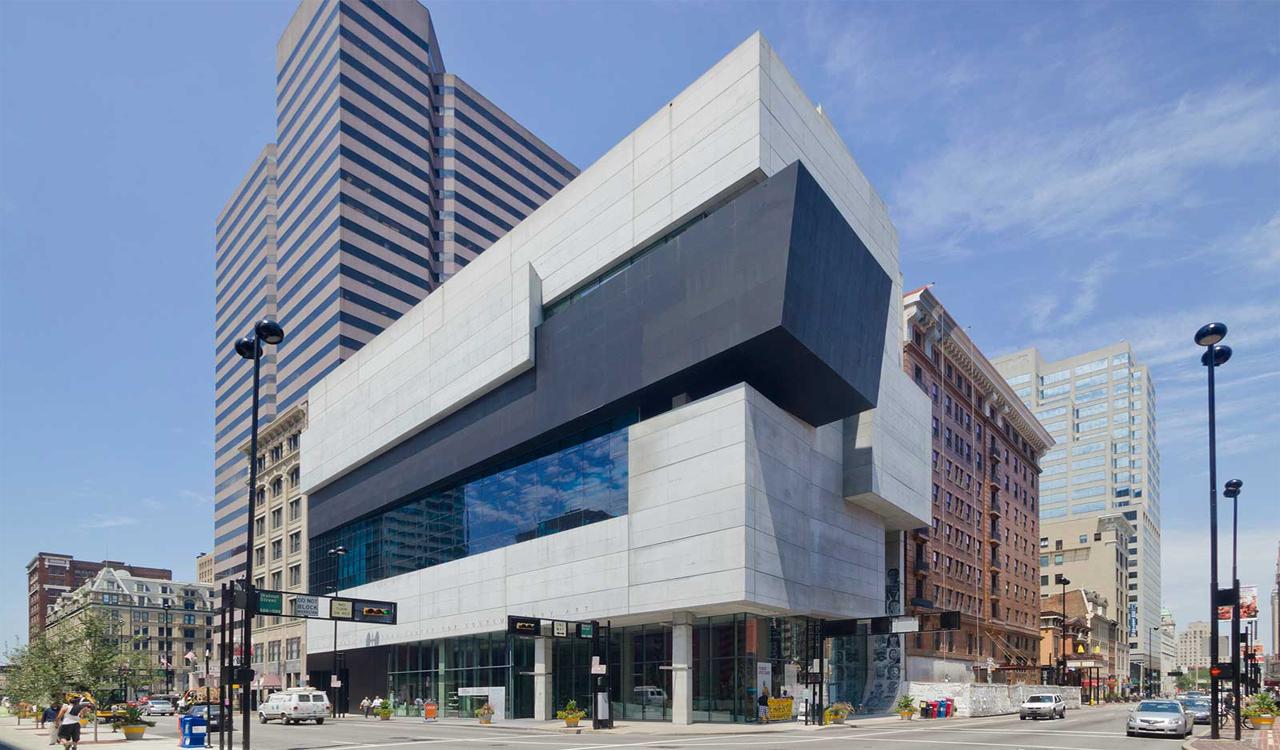
    Several prominent structures were created by Zaha Hadid Architects throughout the world. Many of Hadid’s well-known pieces of art include: Hadid’s first significant contract was the Vitra Fire Station in Weil am Rhein, Germany, which was finished in 1994. Cincinnati, Ohio’s Rosenthal Center for Contemporary Art: The Rosenthal Center for Contemporary Art is a striking structure with a number of overlapping and crossing planes that was finished in 2003. The building’s fluid shape gives off a sense of motion and dynamism that mirrors the vitality of the contemporary art on display inside.
    vitra fire station
    Photographer Unknown

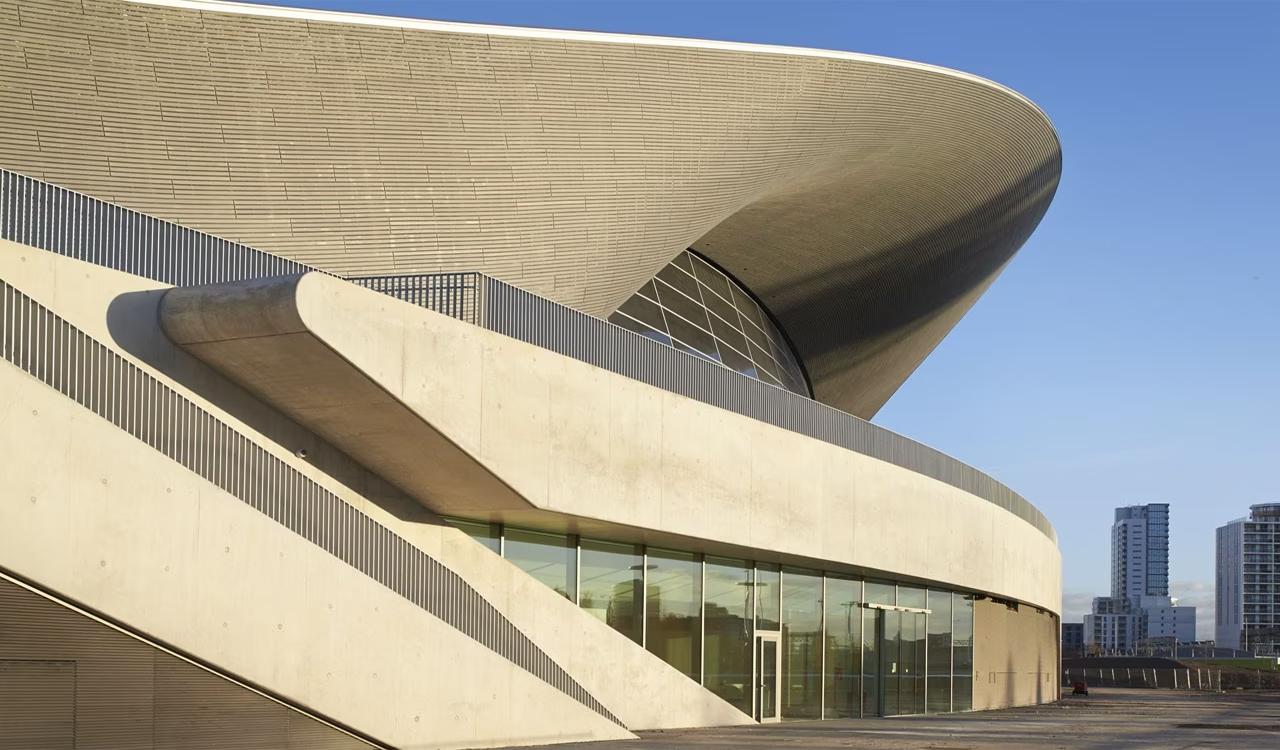
    Other notable works include the Cardiff Bay Opera House, the Guangzhou Financial District, the Bridge Pavilion Seville, the London Aquatics Centre, which was built for the 2012 Olympics, the Guangzhou Opera House, which was finished in 2010, the Salerno Maritime Terminal, the Pierresvives Government Building, the Grace on Coronation Apartments, the London Aquatics Centre, and the Hong Kong Peak Leisure Club, among others.
    Guangzhou
    Photographer Unknown

    In the field of architecture, Zaha Hadid is renowned beyond measure. She received the coveted Pritzker Architecture Award for the first time in 2004 becoming the first women to receive the award. She was the first woman to receive The Stirling Prize, consecutively in the years 2010 and 2011. She was also the first woman to Royal Institute of British Architecture’s (RIBA) Gold Medal in year 2015. She has also received six Honorary Doctorates from universities including Harvard University, The University of Oxford, The University of Cambridge, and The University of Edinburgh, others. She has also been nominated for the American Institute of Architects Gold Medal Award.

    In conclusion Zaha’s talent as described by her professor, Rem Koolhaas, “A Planet in Her Own Orbit” upon graduation, demonstrating Zaha’s talent from an early age. She is one of the most influential architects in history thanks to her sense of style and design philosophy. Her impressive successes are a result of her original designs, which have altered the face of modern architecture all around the world.

  • A Comprehensive Guide to Selecting an Architectural Internship: Tips for Students

    A Comprehensive Guide to Selecting an Architectural Internship: Tips for Students

    A vital first step in developing a successful career in architecture is taking on an architectural internship. It gives students the chance to develop necessary skills, receive practical, hands-on experience, be exposed to architectural practices, and have the opportunity to build a network of professional contacts. It could be difficult to select the internship that will best fit one’s aims and expectations given the wide range of possibilities accessible. This article offers suggestions to make the process of choosing an architecture internship fun and educational for students.

    Start Early

    It is best to begin your search for an architectural internship as soon as possible. It’s crucial to make appropriate preparations because most companies begin taking applications several months in advance. Make a list of the companies that appeal to you after researching the ones that intrigue you. To learn more about the companies’ internship programmes and how to apply, get in touch with them.

    Define your Goals

    Clarifying your expectations for the experience is crucial before beginning the selecting process. Decide what you want the internship experience to help you accomplish. What competencies do you wish to acquire? What kinds of projects are you looking to work on? Think about if you want to learn more about a particular architectural style, engage in sustainable design initiatives, or investigate other business areas. Your search will be more focused and you’ll be able to find an internship that meets your demands if you are aware of your objectives and expectations.

    Architectural internship
    Photographer Unknown

    Research Potential Firms

    Investigating the companies is a crucial step in the decision-making process. Conduct in-depth research on organisations or organisations in the architectural industry that align with your values and career objectives. Look for companies that have won awards for their innovative designs, dedication to sustainability, or expertise in your desired field.

    By studying their initiatives, portfolio, and company culture, you can learn about their work ethos and philosophy. Consider the firm’s size and organisational structure as well; smaller businesses may provide more hands-on experience, whilst larger businesses may expose you to a wider range of tasks. Find out about the internship plan offered by the business, the kinds of projects that are typically handed to interns, and the qualifications they hope you will have.

    Recommendations and Network

    Use your network to seek assistance from professors, peers, or specialists in the field of architecture. They could be able to share insights regarding trustworthy companies or talk about their internship experiences. To network and meet individuals in the business sector, go to industry conventions, job fairs, and networking events. You can gain access to internship possibilities and decision-making assistance by establishing relationships.

    Network
    Photographer Unknown

    Consider Location and Duration

    When choosing an architectural internship, location and length are crucial factors. If you’re a student, you should make sure the internship location is doable. Decide if you would prefer to remain in your current city or if you are open to moving. Take into account the local cost of living, housing possibilities, and transportation. Consider the internship’s duration as well as how well it fits into your school calendar. You can experience many architectural styles and civilizations by moving to a different place. Shorter internships may provide you the chance to explore other companies and industries, while longer internships can offer more in-depth learning opportunities.

    Review Internship Descriptions

    Pay close attention to the details of the internship descriptions provided by architecture firms. Pay particular attention to the specific responsibilities, project involvement, and educational opportunities listed. Look for internships that include a reasonable mix of design work, construction documentation, site visits, and collaboration with architects and other professionals. Verify that the internship programme gives room for improvement and development and that it aligns with your skill set.

    Evaluate Mentorship and Learning Opportunities

    The mentoring and educational opportunities that are provided during an internship are essential components. Look for companies that place a strong emphasis on mentoring programmes, where seasoned architects will mentor you and offer feedback on your work. Your learning is accelerated and your comprehension of architectural practises is improved via mentoring. To broaden your knowledge base, find out whether there are any training sessions, workshops, or seminars given during the internship.

    Mentorship
    Photographer Unknown

    Assess Compensation and Benefits

    Even if money shouldn’t be the main concern when selecting an internship, it’s important to take it into account. Examine the compensation package offered by the employer, including for any stipends, travel reimbursements, or housing assistance that may be offered. Despite the fact that some internships may not be paid, keep in mind the long-term benefits, exposure, and potential learning possibilities.

    Workload and Responsibilities

    The responsibilities and workload of an internship can vary greatly. Inquire with the business about your tasks, the types of projects you’ll work on, and your everyday duties. You should also ask about the workload and the necessary number of hours each week.

    Workload
    Photographer Unknown

    Prepare a Strong Application

    Finally, when applying for an architecture internship, take care to create a strong application. Make a compelling application that highlights your skills, experiences, and passion for architecture. In your résumé and portfolio, highlight any pertinent assignments, coursework, past internships, and any design competitions you may have participated in. To ensure that your sense of style and attention to detail are appropriately represented, pay great attention to the presentation and quality of your portfolio. This includes a polished cover letter and resume that highlight your skills, accomplishments in school, and any relevant experience. If you have a portfolio, include it as well.

    Seek Interviews and Ask Questions

    Take advantage of the opportunity to ask questions and learn more about the company and internship programme if you are selected for an interview. Ask about prospective projects, the working environment, team dynamics, and room for advancement. Inquire about the percentage of great interns that are offered permanent roles by the company.

    Conclusion

    To conclude, although picking an architectural internship might be challenging, with careful consideration and research, it can also be a rewarding experience. By clearly identifying your goals, conducting in-depth research, soliciting advice, and evaluating the available internship opportunities, you can make an informed decision that is in accordance with your ambitions and lays the groundwork for a successful career in architecture. Remember that an internship is not only a stepping stone to your future career but also a crucial learning experience that can affect your professional growth as you search for the appropriate internship position that suits your goals and objectives.

  • From Foundations to Roofs: Exploring the Basic Components of Building Structures

    From Foundations to Roofs: Exploring the Basic Components of Building Structures

    The fundamental parts that are involved in making a structure are called building components. They are the basic elements of every construction because they are in charge of a building’s overall strength, durability, safety, usability, and aesthetic appeal. Each sort of building component employed in different structures has a certain function. We’ll talk about different types of building components and how they’re used to construct structures in this article.

    Different Type of Building Components

    The different types of building components include the following:

    Foundation
    Photographer Unknown

    Foundation

    The lowest most component of a building structure that is in contact with the earth directly is the foundation. As it supports and carries the weight of the entire building to the ground, it is the most important structural component. It should be sturdy enough to handle the weight of the building, the load of the residents, and any outside factors like wind, earthquakes, and floods. Typically, it is composed of concrete, stone, or brick.

    The support of constructions can be provided by a variety of foundation types. The three most common types are pile foundations, shallow foundations, and deep foundations. Smaller buildings frequently have shallow foundations, but larger structures or those constructed on unstable soils frequently have deep or pile foundations. The type of foundation used depends on the height of the building, the soil conditions, and the construction codes. A solid foundation ensures the stability and security of a building over the long run.

    Walls

    Walls are vertical construction components that divide and confine a building’s interior space from its outer space. They serve to protect the roof and floor constructions from weather conditions including wind, rain, and temperature in addition to sustaining the roof and floor constructions. Walls provide structural stability as well as protection from the elements, noise, and fire. They could be made of brick, concrete, metal, wood, or another material.

    The sort of wall used in the structure depends on its use as well as the local climate. For instance, reinforced concrete is used in the walls of buildings in earthquake-prone areas so that they can withstand the lateral forces that an earthquake causes. The location and kind of structure also have an impact on the wall thickness. For instance, to maintain the warmth of the structure in cold areas, thicker walls with insulation are needed.

    Columns

    The weight of the building is supported by columns, which then carry that weight to the foundation. They can be cylindrical, square, or rectangular in shape, and are typically built of wood, concrete, or steel. They are strategically positioned within the building structure. To support the floor and roof constructions, columns are positioned at regular intervals along the building’s structure.

    How the columns are built depends on the type of foundation being used, the height of the building, the load carrying capability, and the design of the columns. To support the weight of the structure as well as any external influences like wind, earthquakes, and floods, the columns must be strong enough. Also, these building components are used in the creation of distinctive architectural concepts and styles.

    Beams

    The weight of the floor and roof constructions is supported by beams, which are horizontal structures, and is then transferred to the columns. They can be rectangular, square, or T-shaped in design and are typically composed of steel or reinforced concrete.

    Beam designs are determined by the weight they support and the distance between the columns. The floor and ceiling structures’ weight as well as any outside forces like wind, earthquakes, and floods must be supported by beams that are strong enough to do so.

    Roofs

    The roof is a building’s highest structural component that covers and shields the interior space from outside elements like rain, wind, and temperature. The roofing material used for a structure will depend on its location, price, and aesthetic choices. Roofs can be flat or sloped. Several types of materials, including concrete, clay tiles, metal sheets, shingles, and asphalt, are used to construct roofs.

    The local temperature, the kind of building, and the materials used all influence the roof’s design. For instance, buildings are built with steeply pitched roofs in regions with heavy snowfall to prevent snow accumulation. The ventilation, lighting, and energy-efficiency of the building are also impacted by the roof’s design.

    Floors

    Floors are horizontal structures with a surface for people to walk, work, and live on. They could be made of wood, concrete, or tile and supported by beams or columns. The purpose of the building also has an impact on the selection of type of floor. The dimensions of floors are determined by the weight they sustain and the spacing between the columns or beams. Residential constructions require comfortable, appealing flooring, but commercial or public structures require sturdy floors that can withstand high traffic. The thickness of the floors is determined by the weight that they must bear.

    Doors and Windows

    A building’s entrance and evacuation are made possible by its doors and windows, which also let natural light inside. They are crucial for controlling temperature and ventilation as well. Depending on the building’s design, location, and security requirements, a particular door or window may be used. By permitting solar heat to enter the building during the colder months, windows also play a significant part in a building’s energy efficiency.

    Staircase and Elevators

    Connectivity to the various floors of a building is provided vertically by stairs and/or elevators. They are especially important in multi-story structures like office buildings and high-rise residences. The purpose of the building and the anticipated number of users will determine the design of the stairwell or elevator. When constructing stairs and elevators, it’s crucial to take accessibility and safety into account.

    staircase and elevators
    Photographer Unknown

    Conclusion

    In conclusion, the fundamental parts of any building structure are its building components. They fulfil certain functions and are crucial in establishing the building’s strength, durability, and utility, ensuring that a structure is both practical and aesthetically pleasing. Buildings are constructed using a variety of building components, such as a foundation, walls, roof, floors, doors and windows, columns and beams, stairs, and elevators.

    The design and type of a building components are dependent on its function, the materials available, the local environment, and the placement of the building. Each type of building component is utilised in a building structure has a certain function. So, selecting the appropriate building components is crucial for a building’s durability and functionality.

  • 10 Inspiring Kitchen Design Ideas: Enhancing Functionality and Aesthetics

    10 Inspiring Kitchen Design Ideas: Enhancing Functionality and Aesthetics

    The kitchen, which has traditionally been seen as the heart of the house, is where delectable meals are cooked, savored, and precious memories are created. Kitchen design has seen significant change throughout time as a result of homeowners’ desire to incorporate not just functionality but also a style and aesthetic component that reflects their unique interests. Here are 10 innovative kitchen design ideas that, whether you’re redesigning your current kitchen or creating a new one, will certainly inspire you. They combine beauty and usefulness.

    Open Concept Layout

    A smart strategy to make the most of available space and promote easy movement between the kitchen and other areas is to design an open-concept kitchen. A kitchen island or removing walls and other barriers to create a seamless flow between the kitchen and other living spaces can help develop a sense of community when preparing meals and entertaining visitors. While allowing for plenty of natural light, this design encourages interaction. It also offers enough of space for social gatherings with family and friends while the cook is engaged in other activities or talks.

    Minimalistic Scandinavian Kitchen Design
    Photographer Unknown

    Minimalistic Scandinavian Kitchen Design

    Minimalistic Scandinavian Kitchen Design
    Photographer Unknown

    Modern minimalist kitchen designs have become extremely trendy in recent years. Simplicity, functionality, uncluttered counters, elegant cabinetry, and natural materials are prioritised in Scandinavian design. Choose simple designs with neutral hues and light wood finishes. While still keeping utility, minimalist kitchens provide a sense of serenity and simplicity. It is possible to improve the overall aesthetic appeal of these kitchens by using natural tones or monochromatic colour schemes. To create a clean and appealing kitchen, incorporate sleek cabinets with lots of storage, open shelving, and simple hardware.

    Farmhouse Charm

    The greatest alternative for folks who desire for a rustic, homely, and nostalgic ambiance is a kitchen constructed in the farmhouse style. The organic features used in this design, such as worn wood, salvaged barn doors, rustic finishes, and vintage accents, are highlighted. Consider adding an old kitchen island, a large farmhouse sink and exposed beams to your kitchen to give it character and warmth. Adding an open shelf with exposed dishes and tastefully positioned rustic dishware completes the idea.

    Farmhouse Charm
    Photographer Unknown

    Sleek Modern Elegance

    Sleek contemporary design has gained a lot of popularity due to its clean lines, functional furniture, use of natural materials, and emphasis on cutting-edge materials. Light hues, white walls, and accents made of natural wood are typically found in contemporary kitchens. Pick integrated appliances, handleless cabinets, and matte or glossy finishes. Use dramatic lighting and a monochromatic colour scheme for an air of elegance and wealth. Maintain a clutter-free environment, increase the size of the windows or skylights, and apply this simple yet elegant design.

    Sleek Modern Elegance
    Photographer Unknown

    Industrial Chic

    An increasing trend in architecture, particularly for urban housing, is industrial design. A modern and urban kitchen room is created by fusing exposed features with raw materials in industrial design. Key components of this design concept are exposed brick or concrete walls, industrial lighting fixtures, rough-hewn wooden furniture, stainless steel appliances, and open shelving with metal frames. Industrial chic kitchens offer a distinctive and fashionable area by fusing old-world charm with modern accents. For a beautiful yet industrial look, combine this look with vintage lighting and reclaimed wood accessories.

    Industrial Chic
    Photographer Unknown

    Coastal Retrea

    Coastal Retrea
    Photographer Unknown

    If you want to give your kitchen personality and brightness, bring the beach inside with a coastal design theme. Whether it’s through the use of vibrant tiles, a dynamic backsplash, or coloured kitchen cabinetry, these colourful accents may add life and vitality to your space. Choose a colour palette with shades of blue, white, and sandy beige that is light and airy. Include natural materials like light-coloured wood, wicker, and rattan. Install big windows to let in as much natural light as possible, and for a coastal hideaway atmosphere, add a beachy backsplash or decor with seashell accents.

    Timeless Traditional

    10 Inspiring Kitchen Design Ideas: Enhancing Functionality and Aesthetics The kitchen, which has traditionally been seen as the heart of the house, is where delectable meals are cooked, savored, and precious memories are created. Kitchen design has seen significant change throughout time as a result of homeowners' desire to incorporate not just functionality but also a style and aesthetic component that reflects their unique interests. Here are 10 innovative kitchen design ideas that, whether you're redesigning your current kitchen or creating a new one, will certainly inspire you. They combine beauty and usefulness. Kitchen Design,design
    Photographer Unknown

    A conventional design is probably your best bet if you want your kitchen to have a classic and traditional look. The rich mouldings, lavish cabinetry, ornate lighting fixtures, and outstanding craftsmanship make this design stand out. Warmer colour schemes like dark browns, creams, or white are typically employed in classic kitchens. Alternately, select a warm colour palette made up of neutrals in milky tones or rich wood tones.  The already charming nature of these kitchens will be enhanced with the addition of a farmhouse sink and vintage-style fixtures and furniture.

    Contemporary Eclectic

    For people who appreciate versatility and creativity, a contemporary eclectic kitchen design can be the best choice. This style approach creates a unique space by fusing elements from many design fads, such as modern and old. It allows for enjoyable explorations with colours, patterns, and materials. A striking kitchen that reflects your personality can be created by fusing old and new elements from several design eras. Include an open shelf to showcase the carefully selected things, such as the vibrant cookware.

    Contemporary Eclectic
    Photographer Unknown

    Smart Kitchen Technology

    Smart Kitchen Technology
    Photographer Unknown

    Including smart technologies in your kitchen design can improve and ease life in the modern world. Touchless faucets, voice-activated devices, automatic lighting, and clever appliances are a few examples of smart kitchen accessories. A docking or charging station for electronics might be installed, and you might think about using voice-activated help for some kitchen activities. These advances not only simplify ordinary tasks but also offer your kitchen a modern, futuristic appearance.

    Nature-inspired Organic

    Nature-inspired Organic
    Photographer Unknown

    By using an organic kitchen design, you may establish a connection with nature. Utilise organic materials such as bamboo flooring, stone countertops, and exposed wooden beams. Include lots of windows to let in as much natural light as possible and to give views of the nearby vegetation. For a clean, calming atmosphere, add splashes of green with indoor plants or herb gardens.

    Conclusion

    The kitchen is a multifaceted room that needs great consideration when it comes to design, not to mention all the other factors. These 10 cutting-edge kitchen design ideas can be used as a jumping-off point for remodelling or new construction, regardless of whether you desire a sleek modern style or a comfortable farmhouse vibe for your kitchen. They provide a variety of styles, materials, and images.

    To build a kitchen environment that not only satisfies your practical demands but also expresses your distinct taste and improves your daily life, experiment with various materials, colours, and styles. Keep in mind that your kitchen should combine form and function to provide you the freedom to prepare meals with ease, express your own tastes, and facilitate the development of lasting memories.

  • Chandigarh: Where Urban Planning Meets Imagination

    Chandigarh: Where Urban Planning Meets Imagination

    Chandigarh, a union territory and planned city located in northern India, serves as the joint capital of the states namely Punjab and Haryana. The city of Chandigarh was the dream city of India’s first Prime Minister, Jawahar Lal Nehru and it serves to blend the monumental architecture, cultural growth, and modernisation alongside.  

    Le Corbusier, a renowned Swiss-French architect and urban planner, was the main brain behind Chandigarh’s design, making it the first planned city after the country gained independence from the British Empire in 1947. Because Chandigarh skilfully combines history and modernity, it ranks among the most significant urban planning initiatives of the 20th century. The article will go through every significant detail including the historical background, design philosophies and principles, key features, legacy, and impacts of Chandigarh’s master planning.

    Historical Background

    With the creation of Pakistan as an independent state the same year, India became a republic. Punjab was separated into different parts as a result of the partition. With Lahore as its capital, one portion of Punjab entered Pakistani territory, and the other portion entered Indian Territory. As a result, it was determined that Punjab’s state capital needed to be relocated.

    Despite Chandigarh being selected as the new location for the country’s capital in 1948, no construction there began until 1950. It was given the name Goddess Chandi Temple in memory of the well-known temple of the Hindu goddess Chandi in the neighbouring Panchkula District. After three years of construction, the country’s President at the time, Late Sri Babu Rejendra Prasad, declared India’s capital open on October 7, 1953. The Union Territory is currently under the control of the Union Government.

    Architectural Vision and Design Principles

    Urban Planning: City of Chandigarh
    Photographer Unknown | Source

    The City Beautiful movement, which was a well-liked idea in North American urban planning throughout the 1890s and 1900s, is where the motif of “The City of Beauty” originated. Jane Drew, Maxwell Fry of England, P.N. Thaper, and P.L. Verma, the chief engineer of Punjab, all provided assistance to the renowned urban designer and architect Le Corbusier. We want to construct a lovely city, said American architect and original planner of Chandigarh Albert Mayer, who left the project for various reasons. In 1970s government publications utilised the word as a logo; today, it serves as the city’s self-description.

    Albert Mayer and Mathew Nowicki’s and Le Corbusier’s master plans were largely similar, with the exception of the fact that Le Corbusier changed the shape of the city plan from one with a curved road network to one with a rectangular shape with a grid iron pattern for the fast traffic roads and reduced its area for economic reasons.

    Albert Mayer
    Photographer Unknown

    The master plan for Chandigarh was compared by Le Corbusier to the human body, with each component serving a specific purpose. These are namely Head (The capitol complex), Heart (The city centre), Lungs (The leisure valley, innumerable open spaces and sector greens), Intellect (The cultural and educational institutions), Circulatory system (The network of roads, the 7Vs), Viscera (The industrial area).

    Salient Features

    The city of Chandigarh is designed very efficiently to cater the need of its residents, the salient features of the city are as follows:

    Sector-based Planning

    Superblock or sector planning theory was used to create the town. This is a completely new method of urban planning that aims to maximise the ease and comfort of the populace. There are 47 sectors in the town, each one housing between 10,000 and 15,000 people and measuring 1.25 kilometres in length and 0.81 km in breadth. Sector 13 doesn’t exist in this town. There are three to four neighbourhood units each sector.

    By supplying all of the necessities for daily life, such as retail malls, hospitals, gathering spaces, nurseries, and schools, each sector becomes essentially self-sufficient. It just takes about 30 minutes to walk around the entire area and you can get to all the schools on foot in under 15 minutes. Walking along the shaded footpaths is completely safe and comfortable thanks to a central continuous green strip of open space that runs through each zone.

    Open Spaces and Landscaping in Chandigarh

    With the Himalayas serving as a permanent backdrop, the town is enclosed on either side by two river beds that are about 5 km apart, and is bounded on the north by two rows of low, picturesque Siwalik Hills. It makes great use of its wealth of natural beauty. The landscape architect has chosen where and what kind of trees should be planted. Chandigarh currently has a distinct personality from an architectural standpoint. All open spaces along the road are grassed. In key sites, fountains and water basins are built.

    A large ring of open space extends from one sector to the next, passing between residential neighbourhoods and business districts. A big central park is provided, along with adequate open space in each district, to accommodate community and health centres, playgrounds, and swimming pools.

    Communication

    Le Corbusier may have been the first of his kind to use the seven varieties of roads (7 Vs) concept in Indian urban design. He developed it for various forms of traffic. Each suburb has a large number of stores within a 10- to 15-minute walking radius, and the margins of each area have fast-moving traffic lanes. The area contains roads that are good for slow-moving vehicles. There are bike lanes and shady pedestrian pathways. Effective segmentation nearly eliminates traffic issues while keeping homes completely protected from automobiles.

    Residential Units

    The housing is well-designed and located in a wonderful area. Gardens and parks located in convenient areas are used by every home. Even class IV government personnel are provided with tastefully equipped quarters that have all necessary amenities like power, sanitization, water supply, etc.

    These residential units have the peculiarity of having’sun-breakers’, which are fin-like projections of concrete and brick positioned at specific angles to the walls, on the simple external surfaces of the homes. These sun-breakers not only provide a beautiful, effective play of light and shade, but they also absorb the sun’s rays, keeping the homes warm in the winter and cool in the summer. In a democracy, this is the practical planning for the populace. As a result, Chandigarh has made history in town planning.

    Industries

    Even though Chandigarh is supposed to be the capital, it can nevertheless support industry. 600 acres of land have been set aside for manufacturers and industrial centres close to the railway station. The southern sector, which is also served by a railway siding, divides the residential sections from the industrial buildings with a vast green belt spanning 100 m by 150 m. Due to the industrial area’s location to the city’s leeward, the residential sections are shielded from wind. As a result, they are completely free of obnoxious sounds, smells, and dust, among other things.

    Capitol Complex

    Capitol Complex
    Photographer Unknown

    The four governmental buildings that Le Corbusier dubbed “Capitol” were his creations. The Assembly Hall, Secretariat, High Court, and Raj Bhavan are all located in the capital. The High Court is nine floors tall and has an intriguing parasol roof. These structures are monumental in nature, and in order to draw attention to the group’s excellent architectural design, he added a symbolic sculpture—the “Open Hand” monument, which stands in the Trench of Consideration and symbolises the principle of “open to give, open to receive”—to the ensemble.

    Open Hand
    Photographer Unknown

    The “background” structures, which consist of commercial buildings, hospitals, and office complexes, are in contrast to these “foreground” structures. The capital is accessible via a gorgeous parkway and a 90 m wide road.

    Legacy and Impact

    Master planning of city of Chandigarh has left a long lasting impacts on urban planning of the modern day cities and maintain their architectural characters. The design mainly focuses the landscaping, green open spaces, and efficient infrastructure supporting its population. The city has been inspiration for many cities to prioritize the well-being of its residents while embracing modernity.

    Conclusion

    One of the pioneers who popularised the idea of living in a city that has been painstakingly planned, imagined, and then constructed is Le Corbusier. He forced them to think about what it would be like to live in a predetermined environment. Finally, by genuinely establishing that kind of environment, he was able to depict Chandigarh. Without a doubt, Chandigarh stands for the heroic endeavour to mend the shattered social and cultural life of the Punjab. It genuinely represents the apex of urban design.

  • 3D Concrete Printing as a Paradigm: Fascinating Impact in India

    3D Concrete Printing as a Paradigm: Fascinating Impact in India

    3D printing with a concrete-like material is one of the technologies that has made personalization possible. Because of its ability to produce complicated shapes, 3D concrete printing can be a long-term solution. According to recent studies, new computational technologies and 3D printers have the ability to alter how we construct our surroundings. This technology enables the fabrication of and testing with numerous devices required to assess the structure in a timely and cost-effective manner.

    Even though this new technology offers numerous advantages and benefits, we still have some worries, because the technology still has several limitations. The technology has also showed promise in a variety of fields, but 3D printing in the construction business is still in its early stages. The impact of 3D printing on the construction sector should not be underestimated, as it has the potential to reduce a variety of determining elements such as the construction process, material costs, and the overall project timeline.

    3D Printing Technology: Additive Manufacturing

    This century has become prominent with two main concepts in architecture: the first is sustainability in architecture, which has been seeking a lower environmental footprint in the ecosystem, and the second is digital technologies, which drive a novel approach in all kinds of man-made products, including architecture. Computer-aided design (CAD) has evolved from a medium of representation to a medium of design and manufacturing in architecture.

    3D Concrete Printing
    Photographer Unknown

    3D printing is a technique for creating actual objects by layering materials based on a digital model. All 3D printing methods necessitate the collaboration of software, hardware, and materials. Charles W. created the first 3D printer in 1983, and 3D printing has become one of the fastest developing technologies in recent decades. It was an extremely sophisticated and expensive technology in its early days. Over time, 3D printing became more prevalent in everyday life, and printers were increasingly used in industrial settings.

    Many people will refer to 3D printing as ‘additive manufacturing,’ especially when it is used in a factory setting, and many others will use both terms interchangeably. 3D printing technology can be used to make everything from prototypes and simple parts to highly complex final items like aeroplane parts, life-saving medical implants, automobiles, and even artificial organs employing layers of human cells as the technology advances.

    As previously said, there are a variety of 3D printing processes that process various materials in different ways to produce the final thing. Industrial prototyping and production applications today commonly use functional plastics, metals, ceramics, and sand. The many types of 3D printers use different technologies to process various materials in different ways. Selective laser sintering (SLS) is a 3D printing technology in which a laser is used to fuse powder particles together to create an object. The materials utilised in SLS technique are typically strong and flexible. Nylon or polystyrene are the most common.

    3D Concrete Printing

    Cementitious 3D construction printing (3DCP), often known as 3D concrete printing, is a type of additive manufacturing that allows for the fabrication of wholly new geometries not previously feasible with standard concrete formwork. Three phases are involved in 3D printing a thing with concrete: data preparation, concrete mix preparation, and object printing.

    They developed the spatial model of the object to be printed in CAD format during the data preparation stage. Using one of the slicing software’s, the item is then split into layers. The software generates a layer-by-layer concrete-laying plan for the 3D printer. The next step is to prepare the concrete mix and regulate the concrete feeding to the 3D printer. The combination is mechanised and continually feeds into the printer.

    The concrete mixture is squeezed out of the printer through the nozzle and arranged in layers in the third stage. The concrete travels through the printer’s nozzle on a predetermined path to the 3D printer, as controlled by the user. This approach is planned in such a way that the printer lays down the concrete layer by layer, resulting in an actual three-dimensional object. In this step of the printing, the concrete’s workability is critical. Both the extrudability and buildability of concrete are determined by its effectiveness.

    Concrete 3D Printer

    Concrete 3D printing has numerous applications in the construction business. Printing elements in a factory and then transporting and assembling them on construction sites is one approach. Another alternative is to set up the printer on a building site and print the structure in pieces on the site before putting it together, or to print the structure directly on site.

    In the printing industry, there are two types of printers now in use. A framed printer is the first type. Because these printers are difficult to move and build, they would only be appropriate for factories. This printer’s disadvantage is that the printer’s frame must be larger than the structure itself. The printer’s wider chassis makes it more expensive to move and assemble.

    concrete 3d printer
    Photographer Unknown

    A non-framed concrete printer is the second type of printer. It’s a vehicle-mounted robotic printing arm. Unlike framed printers, this type of printer may be readily transportable and does not require flat ground. CyBe constructions in the Netherlands use this type of non-framed 3D printer.

    3D Printing Optimized Concrete Structure

    3D concrete printing can be utilised to lessen the industry’s environmental imprint in addition to its economic and architectural benefits. Because of the higher level of control provided by 3DCP, an advanced computational approach can be used to minimise the density of the structure by forming a lattice structure. These optimised structures not only lower total weight, but they also improve resource use. In addition, structural components such as rebar and pre-stressing cable can be incorporated to generate structural concrete. One recent example is a 3D printed pedestrian bridge, where the printed structure was post-tensioned after the individual 3D printed parts were assembled.

    It’s worth noting that traditional optimization software only considers isotropic material properties during analysis; however, in 3D printing projects, the part design must be finalised while taking into account the properties and limitations of a 3D concrete printer as well as the material properties.

    Limitations of 3D Concrete Printing

    Concrete printing and other AM technologies still face a slew of obstacles to overcome before becoming widely adopted. This comprises precise material distribution and positioning, as well as control and monitoring of the material’s phase transition from fresh to hardened state.

    In addition, concrete stacking may result in the production of “cold joints,” which refer to poor connection between layers, lowering structural strength. The use of steel or fibre reinforcement, as well as the product’s surface polish, are also important considerations. Furthermore, established regulations, benchmarks, and testing procedures to certify the safe and long-term use of concrete printing as a construction process have yet to be devised. In order to successfully 3D print concrete structures, the following key qualities of concrete must be improved:

    • Extrudability
    • Flowability.
    • Buildability
    • Open time and 
    • Layer to layer contact

    Future of 3D Printing in Construction

    Although 3D printing technology (Stereo Lithography, Fusion Deposition Modelling) has been around since the early 1980s, it has been reluctant to catch on. There are many perspectives on where the technology might go, but it will become more cost efficient in a variety of industries, making research and mass customisation in architecture more possible. Although 3D printing is still in its infancy across all industries, the technology’s prospective benefits appear to be propelling it forward. Some predict that 3D printers would mostly be used to manufacture building components and panels in factories or on-site, while others see 3D printing as a transformative technology that will alter the construction sector.

    Applying Three-Dimensional Concrete Wall Printing Technology in India

    There are various disadvantages to India’s conventional construction method. The long time frame, big number of utilised labour, high percentage of error, and long-distance transportation all demonstrate this. All of these difficulties have a negative influence on the environment and raise development costs. The emerging new technique of three-dimensional printing can effectively overcome such drawbacks.

    As a result, for the use of 3DP technology in India and its impact on the Indian market, a SWOT analysis will be utilised to identify the problems and obstacles of applying this technology to the Indian domestic market.

    Possibilities

    According to discussions, construction time efficiency may be a crucial role in the introduction of this technology in India, but the type and scale of the structure are also important factors to consider.

    As a result, it is possible to argue that 3DP technology will be successful in both mass manufacturing projects and massive buildings with restricted floors. Has the potential for speedy production and high quality, which could compensate for the current low quality of work among working people. Furthermore, the adoption of this technology will allow certified architects to reclaim control, resulting in improved internal environmental quality and energy performance in the construction industry across the country. Furthermore, modifying India’s current building standards may increase architectural identity and strengthen architects’ final responsibilities in the construction business.

    Challenges

    When comparing the cost of bricks (used for ordinary wall construction) to the cost of reinforced concrete (which should be utilised for 3DP), the projected hurdles to the use of this technology are linked with cost. More obstacles include a lack of practical knowledge, a lack of scientific information, and industry/society rejection of norm-changing approaches, as well as a lack of stakeholder interest, a skilled workforce, and the cost of importing. Another factor to consider is modification restrictions, as working with established models limits design flexibility.

    It’s also unable to receive change orders during construction, thus design changes are out of the question. Modifications are also not possible during operation. Other factors to consider include the high costs of durability and maintenance operations. Furthermore, the primary source of worry is that 3DP technology is imported rather than developed locally, resulting in significant cost increases.

    S.W.O.T Analysis

    StrengthTime reductionIncreased precisionLonger operational scheduleReduces construction wasteMinimizes transportation costBetter control of the constructionDesign freedom (complexity is free)Lower cost/higher productivityZero mistakesBetter safetyNo added cost for complexity
    WeaknessHigh capital costExpertise neededRisk factor elevatedLess awarenessLess incentivesDifficult to find skilled labour3D Printing Technology is ExpensiveBuilding CodesNot printing horizontal structuresLimited height and large size buildings
    OpportunitiesApplying BIM integrated technologiesWorkshops and seminars to prepare workers to cope with the changes in work routine and learn new skills.
    ThreatReducing job opportunitiesUse of this advanced technology might lead to small companies diminishing.I believe that clients would be reluctant to use this technology.Current workforce would oppose such paradigm shift in construction.

    As a result, a SWOT analysis is created to identify external and internal factors that influence the broad adoption of this technology in the context of the country. The former refers to the technology’s strengths and weaknesses, whereas the latter refers to external elements that could be viewed as opportunities or dangers for using this technology in the local construction market.

    As a result, 3D printing technology has given industry new opportunities, such as speedier product design, customization, cost reduction, tangible product testing, and more. 3D printing, on the other hand, has a downside and isn’t always the best option for product creation. 3D printers have the potential to be dangerous and wasteful. In addition, their economic, political, sociological, and environmental consequences have not been thoroughly investigated.

    Conclusion

    The rapid advancement of 3D printing technology has changed people’s minds about using concrete as a 3D printable material on its own. Construction is one of the most labour-intensive businesses, with low productivity and little technological use. 3DP, like robots and other automation technologies, is gaining traction in the construction industry. 

    According to the literature, 3DCP greatly reduces the number of labours in the construction process and might save 50–80% on labour expenditures. As a result, the 3DCP is projected to solve the labour shortage problem, particularly in nations where construction is primarily reliant on migrant workers. Jobs lost as a result of the usage of 3DCP, on the other side, may be negative to countries where construction is a key workforce. 

    This innovation have the potential to transform the construction industry’s future. The truth is that none of the 3D construction printing projects that have been completed so far have been competitive. There may have been some cost savings in labour and materials, but it was not competitive with standard construction methods. Many companies are clearly interested in 3D concrete printing technology, but there is still a lot to learn about it in the near future.

    Much more research is needed on still-unsolved issues such as structural and mechanical stability, material life, and toxic effects of materials, to name a few. The life cycle performance of printed buildings/building components is currently unknown, especially because 3D printing in the construction industry is still in its infancy. It is plausible to argue that by focusing on these issues, 3D printing will soon attain its full potential in the building business.

  • Small Space, Big Style: Transform 2BHK Home with Interior Brilliance

    Small Space, Big Style: Transform 2BHK Home with Interior Brilliance

    Interior design for a 2BHK home can be challenging, and it requires careful consideration of how to make the most of the space at hand while retaining functionality and aesthetic appeal. With the right inspiration and ideas, you can transform your modestly sized home into a stylish and warm living space. With the right interior design ideas, though, your 2bhk may be transformed into a charming and practical space. You can create a stunning and functional 2BHK home by using the incredible interior design ideas and suitable samples provided in this article.

    The top decoration ideas for a 2BHK house include the following:

    Open Plan Layout

    An open-plan living space is a popular choice for 2bhk apartments. By tearing down the partitions dividing the dining, living, and kitchen areas, a spacious and aesthetically pleasing living area can be produced. This type of design is perfect for entertaining visitors since it enhances connectivity across spaces.

    You could, for example, place a large sofa in the living room facing the dining table to give the impression that the area is larger than it actually is. The dining area and living space could be naturally divided by using a kitchen island as a wall. To put it another way, you may use furniture, like a sectional sofa or an area rug, to split a room into distinct functional zones without compromising the openness of the space.

    2bhk home
    Photographer Unknown

    Utilize Natural Light

    Increase the amount of natural light in your 2BHK home to give the impression that it is larger and brighter. Large windows, skylights, and glass doors can let in a lot of natural light in your living areas. Install sheer or light-coloured drapes to retain privacy while letting in natural light. For instance, to create a sunlit zone in the living room, put a comfortable reading nook close to a window.

    Neutral Color Palette

    To give your 2BHK home an elegant and timeless appearance, select a neutral colour scheme. The furniture, walls, and ceilings all have light beige, grey, or white hues that give the room a spacious feel and encourage relaxation. To infuse the spaces with personality and vitality, add splashes of colour with accessories like throw pillows, wall art, or indoor plants.

    neutral color palette
    Photographer Unknown

    Multipurpose Furniture

    multipurpose room
    Photographer Unknown

    Every square inch of a 2BHK home must be utilised, so it’s crucial to have furniture that serves many functions. You may, for instance, have a sofa bed that doubles as a bed at night and a sofa during the day. To accommodate guests or save extra items, you can also have a coffee table with built-in storage that is concealed. The ability to enlarge or contract the dining area as needed is another benefit of a foldable dining table.

    Wall-Mounted Solution

    A concern in 2BHK apartments or homes is always storage. Therefore, it is essential to utilise every square inch of space. By including wall-mounted storage cabinets that extend from floor to ceiling and offer enough capacity to store necessities, you can make optimum use of vertical space. Additionally, you can use under-bed storage in the bedroom or storage ottomans in the living room.

    wall mounted
    Photographer Unknown

    Your 2BHK home can be kept organised and clutter-free with the use of floating shelves, wall-mounted cabinets, or bookshelves. Take a cue from Scandinavian design, which frequently incorporates svelte, understated wall-mounted storage options that provide functionality without sacrificing aesthetic appeal.

    Creative Lighting

    The ambience of a place is greatly influenced by how it is illuminated. Make a huge impression with well-chosen lighting fixtures that enhance the decor of the 2BHK. In addition to providing enough illumination, stunning chandeliers in dining rooms and pendant lights over kitchen islands can become focal points. Try experimenting with different lighting options, such as wall sconces or floor lamps, to add layers of light that enhance the ambiance of each space.

    creative lighitng
    Photographer Unknown

    Mirrors for Illusion

    mirrors
    Photographer Unknown

    Mirrors are an excellent tool for giving the appearance of a larger area. Therefore, carefully positioned mirrors can give the appearance that your 2BHK home has more space. In order to reflect light and give the impression that the space is larger, hang a big mirror in the living room. A wardrobe with mirrors can seemingly enlarge the space while also serving as storage in the bedroom. This technique is particularly helpful in small, dark environments. Mirrors can be used to draw attention to decorative elements or architectural details.

    Compact Dining Solutions

    Consider small eating options like a bar counter with high stools or a wall-mounted drop-leaf table if space is at a premium in the 2BHK. These solutions provide for a dedicated dining area while taking up little room. Choose seats or stools that can be neatly stowed beneath the counter or table when not in use to further maximise space.

    dining
    Photographer Unknown

    Smart Storage Solutions

    Utilize creative storage solutions to make the most of every square inch of your 2BHK home. Utilize under-stair storage, ottomans with concealed storage, or storage boxes under beds. Storage solutions that work well help you maintain orderly possessions and a tidy, clutter-free environment.

    smart storage
    Photographer Unknown

    Personal Touches

    Last but not least, give your 2BHK home distinctive finishing touches that reflect your specific style and personality. Display favourite photos, pieces of art, or keepsakes that remind you of pleasant times. Curtains, couch covers, or rugs can all be decorated with patterns or colours that go with your decor. Your personal touches will transform your 2BHK into a pleasant and friendly home.

    Conclusion

    In conclusion, a 2BHK house’s interior design requires a lot of imagination and careful planning. It’s thrilling to work on a 2BHK interior design project since it calls for imagination, realism, and thorough attention to detail. Your two-bedroom flat can be transformed into a pleasant and fashionable living area by applying open concept designs, making use of natural light, choosing neutral colour schemes and adopting innovative storage solutions.

    To get the most out of your 2BHK property, don’t forget to incorporate new ideas and personal touches into your home. You may create a refuge of comfort, beauty, and functionality in your 2BHK home by using these ten interior design ideas as a starting point.

  • 10 Revolutionary Sustainable Building Materials: Building a Greener Future

    10 Revolutionary Sustainable Building Materials: Building a Greener Future

    Introduction

    The building industry is developing to adopt more sustainable practises as the pressing need for environmental conservation becomes more generally recognised. There’s a growing demand for sustainable building materials to minimise the construction’s adverse effect on the environment as well as for increasing energy efficiency and durability. This article will analyse the ten innovative sustainable building materials that are transforming the construction industry.

    Hempcrete- A Sustainable Building Material

    Hemp shives, the inner woody core of the hemp plant, lime as a binder, and water are combined to produce hempcrete, a sustainable biocomposite. Because of the superior thermal permeability and insulation it offers, living conditions use less energy. The eco-housing endeavour “Clay Field” in the UK is an excellent illustration of hempcrete’s advantages. Hempcrete has poor compressive strength, although it performs well in terms of thermal and acoustic insulation. Since it combines insulation and thermal mass for a more sustainable and environmentally friendly future, it is a lightweight insulating material or non-load-bearing wall that is suited for most climates.

    Sustainable Building Materials
    Photographer Unknown

    Bamboo

    Bamboo
    Photographer Unknown

    Sustainable building material, i.e. bamboo has been popular as a sustainable alternative to traditional building materials and can be used to construct scaffolding, houses, bridges, and other structures. Similar to wood in strength to weight, bamboo is a natural composite material that can be utilised in building for both structural integrity and aesthetically pleasing looks. An illustration of bamboo’s versatility and negligible environmental impact while developing sustainable building methods is the Green School in Bali, Indonesia.

    Recycled Steel

    An environmentally beneficial resource for sustainable construction is recycled steel. Utilising scrap steel during production lowers energy use and greenhouse gas emissions. This environmentally sustainable material reduces the need for further raw steel extraction while maintaining its strength and fire resistance. Tall buildings made of recycled steel could have substantially smaller negative environmental effects. Recycled steel structures can contribute to sustainable construction methods as they are very flexible and adaptable to changes which extend the life cycle of the buildings, as a result conserving resources.

    Recycled Steel
    Photographer Unknown

    Cork

    Another sustainable building material known as cork is made of the hydrophobic substance suberin. Cork can be used for a wide range of applications because of its elasticity and impermeability. Cork is fire-resistant, wear-resistant, lightweight, supple and long-lasting building material. Cork has a lower environmental effect and aids in the development of sustainable constructions thanks to its outstanding levels of thermal and acoustic insulation. For instance, Audemars Piguet Museum in Switzerland was constructed using Cork.

    Cork
    Photographer Unknown

    Rammed Earth

    Rammed Earth
    Photographer Unknown

    Rammed Earth, a sustainable and age-old building material, currently experiencing a new rebirth. Walls are constructed using a method that involves compacting layers of dirt inside of a formwork. Due to its high thermal mass, rammed earth is very sustainable. Additionally, it permits natural temperature management and necessitates fewer heating and cooling apparatus. The Nk’Mip Desert Cultural Centre in Canada is a stunning illustration of a robust and beautiful rammed earth structure. Rammed earth construction fosters green building practises and minimises the industry’s environmental effect because it employs locally sourced earth and requires less energy during manufacture.

    Recycled Plastic

    Recycled Plastic
    Photographer Unknown

    A sustainable building material that tackles the problem of global plastic waste is recycled plastic. Concrete constructions such as driveways and pavements can be strengthened with the help of recycled plastics. Additionally, plastic pollution can also be reduced as the garbage from going into landfills will also reduce. The Plastic Bottle Village in Panama, where recycled plastic was utilised to build inexpensive and environmentally beneficial housing options, is a prominent example of its application. Utilising recycled plastic in construction can lower costs while also encouraging a sustainable environment because it uses less heat and electricity.

    Mycelium Composites

    Mycelium Composites
    Photographer Unknown

    A web of mushrooms called mycelium is a developing sustainable building material. Mushrooms frequently produce mycelia. After drying, mycelium fibres, which resemble roots, are used as highly durable, fire-, water-, mould-, and mould-resistant building material. Mycelium can lessen its adverse effects on nature because substrates are biodegradable, leading to a more sustainable future. A great example of this technology is provided by Ecovative Design, a company that is pioneering the use of mycelium composites in sustainable products like MycoBoard.  

    Ferrock

    Modern sustainable building material ferrock has a significant potential to reduce carbon emissions. Some of the elements that Ferrock employs to make products that collect more carbon dioxide during manufacturing than they emit include silica, ash, rice husks, and recycled steel dust. The Golden Gate Bridge in San Francisco, California, is a crucial example for the extensive use of Ferrock. Since ferrock is mostly made from recycled materials, therefor it can be employed as a construction material that is favourable to the environment and as a result it promotes sustainability.

    Ferrock
    Photographer Unknown

    Straw Bales

    Straw Bales
    Photographer Unknown

    Because they have a very low impact on the environment, straw bales are referred to be sustainable building materials. In the straw-bale construction method, straw bales—typically made of wheat, rice, rye and oat straw—are used as structural support, building insulation, or both. The Canelo Project, a development of environmentally friendly homes in Arizona, is the best example of a straw bale building. Straw-bale construction is better than conventional building systems because it is renewable, affordable, naturally fire-resistant, has a high insulating value and resulting a transition to a more sustainable future.

    Transparent Solar Panels

    Transparent Solar Panels
    Photographer Unknown

    Transparent solar panels, a novel advancement in environmentally friendly buildings, combine energy generation and consumption. These panels promote more natural light in the structure through a glass façade enabling the capture of solar energy. The consumption of energy resources inside buildings is reduced thanks to transparent panels, making it a solution that is good for the environment. The finest examples in Germany include the Heliotrope, where panels are used to capture solar energy without compromising the building’s look. It encourages energy efficiency and helps create a sustainable future.

    Conclusion

    Sustainable building materials are ushering in a new era of construction that prioritises environmental responsibility without compromising functionality or aesthetic appeal.  The above-mentioned ten building materials serve as an example that later or sooner the construction industry will become environmentally friendly and will sustain the future. Hempcrete, transparent solar panels, bamboo, and recyclable plastic are some of these components. Technology improvements in the construction industry should make more environmentally friendly building materials more widely available in the near future.

  • Parametric Design: Architecture Beyond Imagination

    Parametric Design: Architecture Beyond Imagination

    Zaha Hadid once said, “There are 360 degrees, so why stick to one?” whatever the specific context was, from which this statement began, it is by all accounts valid for a bunch of reasons.

    Modern ground-breaking designs, however, defy convention. The most controversial design method used by architects in the twenty-first century is parametric design, an algorithm-based approach that combines the design objective with the design outcome. A staircase or a bench can be seamlessly integrated into a parametric design, which quickly adjusts to the conditions of the space in which it is located and gives them a magnificent beauty that is even reminiscent of natural materials and forms. By creating intricate geometries and structures through the interaction of elements, it attracts the attention of practically everyone.

    What, though, is parametric design? We will address the most frequently asked question—what is parametric design—in this article. The article examines the history of parametric design, including its applications and components, as well as some of its earliest historical examples, and significant contributory architects. Parametric design is a design method that attracts a lot of attention and leaves no one indifferent.

    Parametric Design: Definition

    parametric
    Photographer Unknown

    In contrast to being explicitly developed, features (such as architectural and engineering components) are sculpted via algorithmic procedures in parametric design. This approach establishes the connection between design response and design intent using parameters and rules. The algorithms’ input parameters are referred to as parametric.

    As the successor to current and postmodern architecture, parametric design is a form of modern avant-garde design. Patrik Schumacher, the late Dame Mohammad Zaha Hadid’s architectural collaborator, first used the word “Parametricism” in 2008. Although the phrase is currently used to describe the use of computer algorithms in design, architects have used it before. Using a mechanical model, Antoni Gaud created his buildings.

    Origin of Parametric Design

    Of course, parametric design was around before the advent of the digital revolution. Consider the work of Antoni Gaud, a great Spanish architect whose creations can be found all throughout Barcelona; he began utilising parametric methods at the close of the 19th century.

    origin
    Photographer KK Clark

    One of the oldest examples of parametric design can be seen in Antonio Gaudi’s upside-down models of churches, where he used weighted threads to build beautiful catenary arches. Gaudi constructed an upside-down copy of the Church of Colnia Güell and used birdshot to weigh down the strings to create the intricate vaulted ceilings and arches. Below the model, a mirror displayed the chapel’s reversed appearance. He could vary the shape of each arch and observe how this change affected the connected arches by adjusting the position of the weights or the length of the threads. The components of a parametric model are still present in this model.

    These are namely:

    1. A set of parameter including the string’s length, location of the anchor point and obviously the weight of birdshot.
    2. A collection of conclusions: the various vertex positions of the strings’ points.
    3. The results originate from math operations, like gravity! Or perhaps Newton’s Law of Motion.

    Gaudi was able to create various iterations of his model by changing specific values in these models while remaining certain that the resulting structure would hold in pure compression. He could automatically determine the shape of the catenary curves by using the force of gravity acting on the strings rather than having to manually calculate the answers to parametric equations.

    In fact, many architects contributed to the development of parametric architecture. Luigi Moretti, for instance, was the first architect to adopt the term “parametric architecture,” while the German Frei Otto’s “form-finding” activities in order to determine the best designs for tensegrity structures, such as the Munich Olympic Stadium with non-digital parametric techniques using soap films and routes perfectly encapsulated the exploratory aspect of parametric modelling.

    Types of Parametric Modelling

    Two categories of parametric modelling can be distinguished:

    Propagation-Based Systems

    Through a dataflow paradigm, propagation-based systems produce final shapes that are unknown from the original parametric inputs.

    Constraint Systems

    Constraint systems, in which essentials (such as structures, material utilisation, etc.) satisfy these requirements are defined using algorithms. Systems based on propagation are used to implement so-called “form-finding” processes. The ultimate shape of the intended thing is “discovered” based on these limitations when particular design goals are optimised against a set of design constraints.

    Elements of Parametric Design

    The adage “what’s old is new again” is applicable to both design and architecture. In particular, parametric design has defied long-standing rules. The foundational elements of earlier styles were straight lines, acute angles, and sharp corners. On the other hand, parametricism emphasises free-form architectural ideas. Each structure has a unique personality because of its sweeping lines, curves, and distinctive designs. Such patterns may appear futuristic or even extra-terrestrial. Parametric design governs by combining variation and complexity, rejecting homogeneous utilitarianism, the notion that each design element is flexible and interrelated, a tendency toward algorithmic, computer-aided design methods.

    The elements listed below make up parametric design:

    Inspiration from Nature

    For architects and designers, nature has frequently acted as an inspiration. Suburbia’s “sprawl” probably conjures up specific ideas, such endless rows of identical “little boxes.” It’s simple for critics to point out that modern architecture and design slavishly adhere to trends and could even encourage environments devoid of individualism. Designers and architects now have the tools to analyse and mimic the complexity seen in nature and apply it to structural building shapes and urban organising patterns thanks to computer technology. As a result, parametric design presents a viable answer.

    These parametric structures aren’t lawless amalgams despite the lack of symmetrical homogeneity. Designers of parametric systems look to nature for inspiration. The ecological systems of the planet are intricate, and regular patterns appear in some biomes. Those distinct ecosystems sustain a wide variety of creatures, much as forests have a diversified flora and coral reefs have distinctive structures (to provide two examples). There are connections between particular sea organisms and plants. These elements of nature do not exist in a vacuum.

    The same is true in our urban areas. According to this strategy, the huge urban jungles of the metropolis require a systemic strategy that adapts to the surroundings and emphasises form and function, which, according to its proponents, is essential to future urban planning.

    Play with Organic Forms and Geometries

    There should be a place for delight and astonishment, as well as the unusual, irrational, and unpredictable. For example, rectangular rooms are fantastic for arranging furniture, and flat walls are ideal for hanging paintings. Although they were aware that eventually defining those shapes to contractors and using those spaces for users would be required, designers still wanted to be creative when constructing organic forms. Designers are now demonstrating that when form and usefulness come together, the outcome need not be a sterile, uninspiring box.

    Use Algorithm to Define Form

    These forms can be mathematically or manually defined by architects and designers. Repeatedly defining them by hand might be time-consuming and inefficient. They wanted to harness the strength of a computer programme to work through limits and details for the shape because they knew they would be iterating through forms during design. The algorithm enables designers to play with the broader form gesturally. When designers use an algorithm to build a shape, the algorithm they write handles the repetitious computations so they don’t have to do it manually every time.

    Notable Architects and Their Contribution

    One of the famous architect’s many parametric structures is the “Fish” or Peix Olmpic in Barcelona, Spain. Frank’ O Gehry is renowned for pushing the boundaries of organic shapes; he even created a structure that resembles a crumpled paper bag.

    zaha hadid buildings
    Photographer Helena Binet

    One of the most well-known examples of an architecture firm that actualizes massive buildings that were parametrically conceived is Zaha Hadid Architects. There are essentially no visible corners or sharp edges in the Zaha Hadid buildings. The Heydar Aliyev Center’s architecture creates a continuous, flowing connection between the exterior plaza and the interior of the structure. Another office, retail, and entertainment complex known as the Galaxy SOHO Mall in Beijing, China, is another mind-bowing marvel in parametric designs. Its structure gives the impression of being one continuous space.

    One of the most noteworthy structures created by French architect Jean Nouvel, employing parametric design, is the Louvre Abu Dabi. Even though the structure is far more understated than its tower neighbours, its complex dome is nevertheless impressive.

    Santiago Calatrava’s extraterrestrial design for the World Trade Center Transportation Hub, popularly known as the Oculus, in New York City, is another illustration of parametric architecture. Its façade and interior both push the limits of what is possible in terms of architecture.

    Conclusion

    It’s challenging to sum up in a few words, and searching for “parametric design” or similar terms yields some dry explanations that may come out as overly theoretical. Such digital solutions expand the designers’ toolkit into a completely new field. Although truthful, this is not particularly clear-cut, and the majority of us find it confusing. In recent years, the scripting interfaces of software packages have allowed parametric modelling to enter projects. The majority of designers profit from diagram-based visual scripting interfaces. The principal graph-based visual scripting interfaces map the flow of relations from parameters to user-defined functions, typically producing geometry as a result.

    Modern architects have access to the greatest amount of flexibility and expression options because of digital tools utilised in building and design. We may explore a huge range of creative options with parametric design without depleting our resources.

  • Celebrating Jubilant Awards in Architecture: Honoring Architectural Excellence

    Celebrating Jubilant Awards in Architecture: Honoring Architectural Excellence

    Innovation, uniqueness, and excellence are crucial in the field of architecture. It is a type of art that has a significant impact on society and changes the actual setting in which we live. Throughout history, numerous prestigious awards have been created in the field of architecture to honour the brilliance and commitment of architects.

    These awards encourage inventiveness, support ecologically responsible practices, and develop international architectural discourse in addition to celebrating excellence and awards in architecture. In this post, we’ll discuss the many prize categories in the subject of architecture.

    History of Awards in Architecture

    Awards have been given in the field of architecture since the Roman Empire. Emperor Augustus paid architect Vitruvius to build an aqueduct in the first century AD, marking the earliest known payment for building. For their creative designs and accomplishments, architects have received praise and awards from kings, governments, and other institutions throughout history.

    Different Types of Awards in Architecture

    Different types of awards in architecture are listed below:

    The Pritzker Architecture Prize

    Award: The Pritzker Architecture Prize
    Photographer Unknown

    The Pritzker Architecture Prize, which was established in 1979, is often regarded as the highest honour in the field of architecture. It is usually referred to as the Nobel Prize of architecture and was founded by the Pritzker family of Chicago, Illinois, namely Jay A. Pritzker and his wife Cindy. The award is meant to honour architectural companies or individual architects that have greatly advanced humanity through their innovative designs and long-lasting effects on the built environment.

    The Pritzker Prize recognizes the importance of architecture in shaping our society and annually honours the remarkable achievements of a living architect or architectural practice. The laureates are chosen by a global jury of eminent specialists, commentators, and academics in the field.

    Along with rewarding exceptional talent in design, the prize emphasizes the importance of architects in tackling societal issues, fostering intercultural understanding, and enhancing sustainable practices. The best performers are renowned for taking chances, pushing boundaries, and creating environments that inspire and motivate others.

    A cash prize and a bronze medallion make up the Pritzker Prize. The laureates are recognized at a prestigious ceremony conducted at various architectural landmarks across the world, and their work is displayed in publications and exhibitions, further bringing attention to their architectural achievements and philosophies.

    The Pritzker Prize has honoured architects from numerous nations and architectural movements over the years. Frank Gehry, Zaha Hadid, Renzo Piano, Norman Foster, Tadao Ando, and countless more well-known individuals are among the honorees.

    Royal Gold Medal

    Royal Gold Medal
    Photographer Unknown

    The Royal Gold Medal is recognised as a career-defining honour and is the highest distinction in the field of architecture. The Royal Institute of British Architects (RIBA) bestows it on a yearly basis. The Royal Gold Medal first came into being in 1848, which is when it first began. Its original name was the Royal Gold Medal for Architecture, and it was established to honour people who had made noteworthy contributions to the industry. 

    Notable architects who have made contributions to architectural theory and history are among those who have received the Royal Gold Medal. The medal honours their contributions to knowledge, scientific discoveries, and influence on architecture in addition to their tangible works.

    A group of specialists, including famous architects and members of the RIBA Council, chooses the Royal Gold Medal winner. In reviewing nominations, the committee takes into account the nominees’ body of work, inventiveness, contribution to architectural theory, and influence on architectural practice and education. The chosen honoree is presented with a gold medal and feted at a ceremony and exhibition.

    The Royal Gold Medal is a representation of the highest honour in architecture, and those who get one enjoy great prominence and acclaim. The honour also serves as motivation for architects all around the world, inspiring them to pursue excellence and make significant contributions to the development of architecture.

    Influential architects like Frank Lloyd Wright, Le Corbusier, Louis Kahn, Norman Foster, Zaha Hadid, and Sir David Adjaye are among the notable recipients of the Royal Gold Medal.

    Stirling Prize

    Stirling prize
    Photographer Unknown

    The Royal Institute of British Architects (RIBA) honours the best building in the UK or the world each year with the renowned Stirling Prize. The Stirling Prize was established in 1996 and is named after renowned British architect Sir James Stirling. It emphasizes construction projects that are noteworthy for their inventive architectural design, uniqueness, practicality, sustainability, and advantages for the surrounding area and community.

    Each year, a distinguished panel of judges made up of architects, businessmen, and critics thoroughly evaluates the proposals that make the shortlist. The judges inspect the nominated buildings and assess their architectural value, aesthetic appeal, construction quality, and user satisfaction. The winning concept is chosen after taking into account all of its design elements as well as how well it will serve society and the environment.

    A significant celebration of architectural success, the Stirling Prize presentation brings together participants, industry titans, and architects. The shortlisted and winning concepts are displayed at exhibits, conferences, and media coverage after the winner is announced, expanding the dialogue about architecture and influencing future generations of architects.

    The Stirling Prize has been given to a large number of architectural endeavours, including residences, public spaces, educational facilities, and cultural institutions. Some of the prominent winners include the Scottish Parliament in Edinburgh, the MAXXI Museum in Rome, the Switch House at Tate Modern in London, and the Bloomberg European Headquarters in London.

    The Aga Khan Award for Architecture

    Aga khan award
    Photographer Unknown

    The Aga Khan Award for Architecture, a distinguished international award given annually since 1977, honours architectural achievements that have had a positive influence on Muslim communities and society at large. The His Highness the Aga Khan Award honours outstanding architectural achievement and the ability of design to enhance quality of life in a variety of cultural situations. Every three years, it is awarded. The Aga Khan is the title of the hereditary Imam of Shia Ismaili Muslims.

    The goal of the Aga Khan Award for Architecture is to recognize architectural endeavors that uphold the values of social inclusion, environmental sustainability, and cultural heritage preservation. 

    An expert jury made up of eminent architects, scholars, and professionals from various fields relating to architecture and urban planning participates in the award selection process. Based on their architectural merit, contextual significance, environmental sustainability, innovation, and positive social impact, the jury assesses the selected projects. 

    The Aga Khan Award for Architecture gives winners not only recognition and distinction, but also a forum for exchanging ideas and best practices in the fields of architecture and urban design. Exhibitions, publications, and seminars that include the winning concepts promote discussion and serve as inspiration for architects and designers all over the world.

    The Wadi Hanifa Wetlands in Riyadh, Saudi Arabia, the Petronas Towers in Kuala Lumpur, Malaysia, and the restoration of the historic city of Mostar in Bosnia and Herzegovina have all previously won the Aga Khan Award for Architecture. These programmes show how architecture can influence communities, foster cultural identity, and build environmentally friendly spaces.

    Conclusion

    Architecture awards are essential for discovering and advancing the innovation of the profession and motivating upcoming generations of architects. The honours bestowed in the field of architecture are numerous, and the ones described here are just a handful. These awards are presented to great design, creative design, and sustainable practices. They include national awards like the Pritzker Architecture Prize as well as regional recognitions like the RIBA Awards. These awards honour the architects while encouraging the following generation to enter the field and change the world as the architectural scene develops.