
Author: Prisha Shinde

  • Victorian Architecture: One of the Fascinating Architectures of the 18th Century

    Victorian Architecture: One of the Fascinating Architectures of the 18th Century

    Introduction

    Victorian architecture emerged in England and has largely defined the architecture of its cities and towns. Victorian-era architecture and its influence have also spread internationally to places like North America, Australia, and New Zealand, where numerous countries and regions modified it to fit local tastes, lifestyles, and building materials available locally. Victorian Architecture also has an influence across a few regions of India when the British ruled the country, it was a way to prove dominance and spread their culture.

    Victorian Architecture
    Source

    History 

    Victorian architecture states to styles that emerged in the period between 1830 and 1910, throughout the reign of Queen Victoria. Victorian architecture isn’t just limited to one specific style, it is a broad term that embodies many styles that emerged during Victoria’s 63 years of reign as queen. Victorian architecture doesn’t categorize as a standard style, architects and builders of that time created buildings that suited the client’s wishes or just used their creativity. 

    Victorian architecture
    Source 

    Victorian houses were built to accommodate large families from all walks of society and varying income levels. Hence, everything from close rows of terraced houses constructed for the worker class on crammed narrow streets didn’t include gardens or sanitation along with semi-detached and detached houses. However, the Industrial Revolution encouraged societal alterations that were inspired by Victorian buildings’ designs. The Victorian era hatched various well-known styles, consisting of Gothic revival, Italianate, Second Empire, Queen Anne, stick style, Romanesque style, and shingle style.

    Characteristics of Victorian Architecture 

    Bright exteriors 

    victorian buildings
    Bright Exteriors- victorian buildings

    Victorian architecture, especially the residential typology, was commonly painted in a variety of pastels, jewel tones, and earthy colors. Few structures inspired by Victorian architecture feature a monochromatic color scheme, whilst others highlight numerous contrasting colors. The traditional Victorian color palette was dark and consisted of dark, rich, and deep shades of maroon, red, burgundy, chestnut, dark green, brown, and blues. The various bright colors used in the exteriors in Victorian architecture were to customize and personalize their structures.

    Mansard roofs

    victorian buildings
    Mansard roofs- Architecture in victorian era

    Mansard roof is a type of roof having two slopes on every side, the lower slope is considerably steeper than the upper. It was a most functional element of the building was to increase the usefulness of the attic story with better light and headroom space; it was very useful in the Victorian era when people had larger families and the income was scarce for the middle class, trying to maintain their stature. Mansard roofs, other than creating extra space, had another advantage is that they were steep and hence were very useful in seasons of rainfall and snow, helping remains slide off easily.

    Stained glass windows

    victorian buildings
    Stained window glasses- Architecture in victorian era

    One of the most distinctive characteristics of Victorian architecture was the stained glass of all sorts, as it was a way to individualize and personalize a residence. A wide range of designs and features made this a stunning element of Victorian exterior style and Victorian interior style as part of doors, windows, and sometimes even the part of the furniture.

    Bay Windows in Victorian Architecture

    architecture in victorian era
    Architecture in victorian era

    Bay Windows are a very distinctive feature of the Victorian architecture period and are great for creating a little extra interior space and allowing more natural light to enter the building. Victorian Bay windows typically are three-sided, with either full-length windows or provided with an extra seating space. The ground floor bay window often had a slate roof, or it might continue into a first-floor bay, again topped with an individual roof.

    Decorative and Ornate gables

    victorian style architecture
    Victorian style architecture

    The sloped design of a gable roof allows for exceptional water drainage, as the angle of the pitch allowed the rain and snow to slide off the roof easily. Gable Decorations are a great way to accent roof pitches and were exceptionally popular in Craftsman-style homes and Victorian-style architecture.

    Wraparound porches

    architecture in victorian era
    Victorian buildings

    Victorian houses generally had wraparound porches that encircled the entire house and could have more than one entrance to the porch. This extra accessibility made the travel throughout the house much easier. In the Victorian Era, wraparound porches were usually used to entertain guests and enjoy the views of the gardens. 

    Small gardens

    victorian style architecture
    Architecture in victorian era

    The victorian landscape had a more formal garden style with garden beds and parterres filled with colorful and exotic species of plants. During the Victorian Era hedging, and landscaping was away to give privacy and demarcate the house’s boundaries from its neighbors, exotic landscaping was also laid to display wealth and sophistication.

    Examples of Victorian Architecture in India 

    Chhatrapati Shivaji Terminus in Mumbai, India

    victorian era architecture styles
    Architecture in victorian era

    Chhatrapati Shivaji Terminus in Mumbai is a renowned landmark that has become a mark of the city, was built as the headquarters of the Great Indian Peninsular Railway. The terminus was designed by a British-born architect and engineer, Frederick William Stevens, taken from the initial design by Axel Haig. Chhatrapati Shivaji Terminus construction commenced in 1878, in the south of the old Bori Bunder railway station, and was finished in 1887. Chhatrapati Shivaji Terminus was constructed to mark the 50 years of Queen Victoria’s power. The scale and design of the terminus building were aimed to commemorate, communicate, and stand as a legacy to demonstrate the power of the ruling.

    Municipal Corporation Building, Mumbai

    victorian era architecture styles
    Source

    The Bombay Municipal Corporation Building is situated opposite of Chhatrapati Shivaji Terminus and residences, one of the largest civic organizations in the country. Municipal Corporation Building was designed by F.W. Stevens with the influence of the Victorian Gothic style. The foundation stone for the Bombay Municipal Corporation Building was laid on 9th December 1884, and the construction of the building was finished in 1893. 

    The Rajabai Clock Tower

    victorian buildings
    Source

    The Rajabai Tower is located in South Mumbai, India, within the Fort campus of the University of Mumbai. The Rajbai Tower was designed by British architect Sir George Gilbert Scott. The construction work started in 1869 and was completed by 1878. The Rajabai Tower has arches that are one of the key elements drawn from Islamic architecture along with the strong influence of Victorian-Gothic architecture style and were embedded in the list of World Heritage Sites in 2018.

    Bombay High Court

    victorian buildings
    Victorian buildings

    The Bombay High Court was one of the three High Courts in India founded in the Presidency Towns by exclusive rights conferred by Queen Victoria, bearing the date June 26, 1862. Bombay High Court operated as a court of special and appellate jurisdiction during the British Rule for over 80 years, seizing the uppermost chime of the judicial hierarchy amongst the all-important Bombay Presidency. Bombay High Court although had the right to provide justice, but for reason had Victorian influence in construction, to show British dominance.

    Crawford Market

    victorian style architecture
    victorian style architecture

    Crawford Market is the old name for Jotiba Phule Market is in the soul of South Mumbai. Jotiba Phule Market is the main market in Mumbai, where everything is available. The marketplace was designed by British architect William Emerson and signified an initial push to merge Victorian Gothic architecture with local and indigenous components of the region. 

    Examples of Victorian Architecture all over the World 

    Palace Of Westminster, United Kingdom

    victorian era architecture styles
    victorian era architecture styles

    Palace Of Westminster is one of the greatest highly distinguished Victorian-era. The Palace of Westminster was designed by Augustus Pugin and Charles Barry, construction lasted from 1840 up until 1870. It is the adobe of the United Kingdom’s House of Parliament and is established in Westminster in London. Sir Charles Barry’s joint design and collaborative ideas for the Palace of Westminster utilize the Perpendicular Victorian Gothic style, which was generally common during the 15th century and rebirthed during the Gothic resurgence of the 19th century.

    The Painted Ladies, San Francisco, California

    architecture in victorian era
    Source

    San Francisco’s Resplendent Victorians, Elizabeth Pomada, and Michael Larsen are the nicknames of the famous the Painted Ladies of San Francisco. In 1963, San Francisco artist Butch Kardum worked with intense blues and greens on his Italianate – Victorian-style designed homes, and later the influences took over when the also neighbors started to renovate the houses into beautiful colorful houses now known as the Painted Ladies. The Painted Ladies represents California’s, Gold Rush. California’s Gold Rush led to a lot of money coming into the city, hence the San Francisco builders wanted to flaunt their newfound wealth with these magnificent residences. Hence, most of the dwellings were ornamented with many striking windows, decorated rooflines, and turrets.

    Balmoral Castle in Aberdeenshire, Scotland

    victorian architecture interior
    Source

    Balmoral Castle was inspired by the Scottish baronial and Victorian Gothic revival styles. The architects of Balmoral Castle were William Smith and John Smith. The construction material used to build Balmoral Castle was granite, which was a specialty of the architect William Smith. Balmoral Castle has been the Scottish dwelling of the Royal Family ever since it was bought for Queen Victoria by Prince Albert in 1852. The architectural style was mainly Scottish with a blend of Victorian style, and this implementation brought the highland culture in monarchy into the spotlight and combined many of the British lengths throughout the kingdom.

    Sydney Town Hall, Australia

    Victorian Architecture: One of the Fascinating Architectures of the 18th Century Victorian architecture emerged in England and has largely defined the architecture of its cities and towns. Victorian-era architecture and its influence have also spread internationally to places like North America, Australia, and New Zealand, where numerous countries and regions modified it to fit local tastes, lifestyles, and building materials available locally. Victorian Architecture also has an influence across a few regions of India when the British ruled the country, it was a way to prove dominance and spread their culture. Victorian Architecture,Victorian buildings,victorian era architecture styles,architecture in victorian era,victorian style architecture
    Source

    The Sydney Town Hall is a late 19th-century recorded in the heritage structures list. The Sydney Town Hall building is located in the city of Sydney, the capital city of New South Wales, Australia. The Town Hall was designed by architect JH Wilson in High Victorian style and built of Pyrmont sandstone. A unique element of Sydney Town Hall was the primary use of Australian ideas for ornate detail all over the structure like its colonial coatings of arms, an abundance of native flora, the metalwork railings, light fixtures, stained glass windows, mosaic floors, and carved cedar infused in the building.

    Victoria Law Courts 

    Victorian Architecture: One of the Fascinating Architectures of the 18th Century Victorian architecture emerged in England and has largely defined the architecture of its cities and towns. Victorian-era architecture and its influence have also spread internationally to places like North America, Australia, and New Zealand, where numerous countries and regions modified it to fit local tastes, lifestyles, and building materials available locally. Victorian Architecture also has an influence across a few regions of India when the British ruled the country, it was a way to prove dominance and spread their culture. Victorian Architecture,Victorian buildings,victorian era architecture styles,architecture in victorian era,victorian style architecture
    Source

    The Victoria Law Courts on Corporation Street, Birmingham, England. The Victoria Law Court was designed by architects Aston Webb & Ingress Bell and constructed between 1887 – 1891 with additional work carried out in 1894 & 1914, the foundation stone was set by Queen Victoria on March 23, 1887. The Victoria Law Court is a red brick and terracotta building with a strong effect of Victorian architecture style.

    Conclusion 

    Numerous diverse styles arose during the Victorian period few of them were particularly prominent styles that came to the limelight namely Queen Anne, Classical, Gothic Revival, Arts and Crafts, Italianate, and Romanesque Revival. However, Victorian buildings share several key characteristics. Generally, Victorian architecture could be defined as dollhouse shaped, along with curlicue adornments, bright colors, and asymmetrical design patterns. Victorian buildings mostly were brick, with large interior staircases and windows, balconies, porches, and fireplaces in every room.

    Victorian style doesn’t just celebrate one unique point though, everything in it has implications, they are not a result of mass production. Victorian homes celebrate opulence, which means every structure has a story behind it that initiates conversations and buzz. The Victorian period was big on discovering new things and styles, including art, literature, socializing, equal rights, design trends, and fresh horizons of status. But now Victorian architecture has just become a style of architecture signifying a particular period that still can be utilized in our interests.

  • Parametric Architecture: Remarkable Examples in India and around the world

    Parametric Architecture: Remarkable Examples in India and around the world

    Introduction

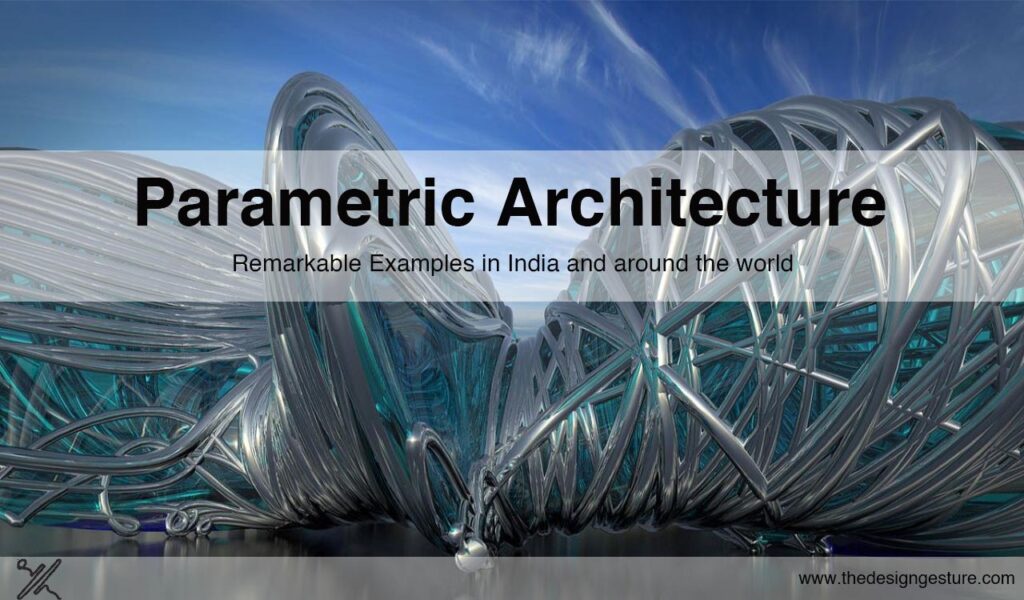
    Parametric design is the latest technological development in architecture. Parametric design can be defined as unification intricacy and diversity, hence rejecting homogenous and traditional building techniques. Parametric architecture is a way of designing, which involves urbanism, interior design, and even incorporated fashion to create an architectural wonder.
    The idea is that all design elements are interdependent, adaptable, and sometimes even the contrast to its surrounding. Parametric architecture is a skew towards computerized, algorithmic design processes which have helped to bring innovative designs to life. Parametric architecture has aided many architects and designers in delivering remarkable designs, which were possible earlier. Parametric architecture has not just become a new feature in this field, but has also become a way of expression.

    History of Parametric Architecture

    The parametric architecture was first known to be used in the upside-down model of churches by designed by Antonio Gaudi. The Church of Colònia Güell was created using a model of strings weighted along with birdshot to create dense vaulted ceilings and arches. The position of the weights or the length of the strings could be adjusted, which could help alter the shape of each arch and guide the arches connected to it. Antonio Gaudi used a mirror on the bottom of the model to see what the model would look like when upside-down.

    The term parametric originates in mathematics, but it is still a wonder as to when designers and architects started using the word. David Gerber, in his doctoral thesis “Parametric Practice”, honors Maurice Ruiter for originally using the term in a paper from 1988 entitled Parametric Design.

    5 Examples of Parametric Architecture around the world

    Galaxy SOHO by Zaha Hadid Architects.

    The Galaxy SOHO project in central Beijing for SOHO China is an office, retail, and entertainment complex which becomes an integral part of the city. The design was inspired by the grand scale of Beijing. The design of Galaxy SOHO is a symphony of five endless, flowing volumes that are set apart, fused, or even linked at a few locations using stretched bridges.

    These volumes perfectly fit each other in every way, spawning a parametric structure devoid of corners or abrupt alterations that would break the fluidity of the form. Parametric architecture has helped achieve shifting plateaus within the design, which has affected each element to generate a deep sense of submersion and envelopment. 

    Peix Olímpic by Frank Gehry

    Prix OlímpiC
    Photo by Zoonar/Vladyslav Danilin

    Prix Olímpic symbolizes a giant goldfish that has become the mark of post-Olympic Barcelona. It was designed in such a way that the giant goldfish seems to bob along on the streams of the Mediterranean. Using the interplay between the sunlight and the facade creates the sense of scales, which also depends upon the intensity of the light.

    This element of sunlight as one of the key features of the design accentuates the organic form of this vast sculpture. The aurora magnifies as the sunlight reflects from the scale-like frames of sculpture which ultimately reflects over Barcelona’s beaches and the harbor of the Olympic Marina.

    Louvre Abu Dhabi by Jean Nouvel.

    The Louvre Abu Dhabi is an art museum on Saadiyat Island in Abu Dhabi, United Arab Emirates. The museum and the sea “All climates like exceptions. Warmer when it is cold. Cooler in the tropics. People do not resist thermal shock well. Nor do works of art” which was the inspiration of Jean Nouvel. The museum is a concoction of both a calm and complex place. A contrast amongst a series of museums that enrich their discrepancies and their authenticities to create Modern architecture. Jean Nouvel incorporated an iconic feature of Arab architecture: the dome. Louvre Abu Dhabi is clear with a modern proposal the traditional element: the dome.

    Walt Disney Concert Hall

    The Walt Disney Concert Hall is in downtown Los Angeles, California, is the fourth hall of the Los Angeles Music Center, and was designed by Frank Gehry. Frank Gehry designed and imagined different variations of asymmetrical forms blending into a compact shape. It embodies musical movement and the dynamism of the City of Angels. The arched ceiling and overall curved construction combine to produce the finest possible acoustic response. Parametric design in this case was one of the great advantages as it helped to achieve the resultant acoustical clarity.

    Museo Soumaya by Fernando Romero

    Museo Soumaya
    Photo by James Florio

    The Museo Soumaya is a private museum in Mexico City and a non-profit cultural institution with two museum buildings in Mexico City. The Museo Soumaya is an amalgamation where on one side there are modern offices and residential towers, and on the other, there are old factories as well as warehouses. The monumental construction emerges from the middle of this provisional anarchy. The Museo Soumaya comprises six completely different levels. Parametric architecture has helped to make this magnificent museum stand tall through the marriage of complex systems and natural laws.

    5 Examples of Parametric Architecture in India

    Mumbai international airport

    mumbai airport
    Photo by Robert Polidori

    Chhatrapati Shivaji Maharaj International Airport is the principal international airport operating in Mumbai, Maharashtra, India, designed by Zaha Hadid Architects. The layout of the airport is to optimize terminal operations and reduce passenger walking distances by blending the main terminal international and domestic passenger services.

    The roof of the airport is inspired by the shape of traditional Indian pavilions. The mushroom columns and roof are in a curvilinear form, the size and shape of all these coffered panels differ from place to place and each panel has been custom made with computerized precision. The pattern on the motif column has been derived from the teardrop-shaped eye of the peacock, which is India’s national bird.

    AQUA VILLA in New Delhi, India by Studio Symbiosis

     Aqua Villa
    Photo by Studio Symbiosis

    The Aqua Villa is in the soul of Lutyens Delhi and has been designed as a responsive building, resting in harmony with its surroundings. The Parametric design is an outcome of cohesion and collaboration of the design parameters of movement patterns, solar studies, soft-subtle transition zones, the interaction of built and landscape, as well the mixture of traditional and modern architecture.

    The façade is designed in a manner that continues from the existing building and then responds to the plan of the new building. The façade of the building has a sense of elegance which has been absorbed in with the lines moving effortlessly over the structure’s façade and through integration of the grand glass doors.

    Sai Baba Temple by rat[LAB]

    Sai Baba Temple
    Photo by rat[LAB] Studio, Sreekanth Damodaran

    Sai Baba Temple designed by rat[LAB] is in Koppur, Chennai, Tamil Nadu, India. rat[LAB] are known for their expertise in Computational Design and Parametric architecture techniques and saw this as an untapped opportunity to explore computational design for religious space in a novel manner. The concept is to provide a form that is as pure and perfect as possible in color, texture, and philosophy. The proportions and sizing of all aspects of the design depend heavily on the understanding of the golden ratio and principles of mathematics.

    Sienna Apartment at Hyderabad by sP+a 

    Jubilee Hills
    Photo by Vivek Eadara

    The site of a small residential building in the Jubilee Hills near Hyderabad city offered vantage views of the city and an adjoining park. Many elements of the building were replanned and during the second point of intervention was the building skin comprising walls and horizontal sun protection. sP+a worked with expert brick masons from Pondicherry. In southern India, they devised a wall system of stone-faced lintels/chajja with a wavy-like illusion. The challenge, according to them, was to create something exotic from simple material like brick and create a Parametric design.

    ID Origins Headquarters in Mumbai’s City Center

    Studio Symbiosis
    Photo by Studio Symbiosis

    Studio Symbiosis’s renewal of the ID Origins Headquarters building of a road-facing low-rise retail block in Dudhwala Complex, in the heart of South Mumbai. Its refurbished façade was visualized as a tantalizing new landmark in a bustling urban environment. The building would be used for commercial and residential purposes and inflicted a demand to decrease the glare while providing optimum natural lighting within the commercial zones.

    Parametric architecture and designing techniques and figured, to reduce the unwanted glare they would have to use perforated screens on the facade’s columns and steadily fade them out. Studio Symbiosis’s an elegant, visually enthralling structure, creating a spectacle that marks the dawn of a new era in the Dudhwala group’s legacy. 

    Future development in Parametric Architecture

    Parametric architecture design has been an advantage that might continue for generations as it helps create variety, can help rectify the smallest of mistakes or even the most general modification can be incorporated into the designs with no problem. Parametric architecture has brought a great deal of change to the architecture profession. It has helped create a tangible space that could not just last years and the digital age, but has helped shape the way towards a more sustainable and expressive way of designing.

    Modern architecture has been molded by different software over the years and has suggestively facilitated to merge traditional with modern architecture style. Parametric architecture has not just helped to design and create what precisely our vision is but is slowly marrying the concept of sustainable architecture, which can be helpful for future development. Many such projects are on the verge of coming true just because of Parametric architecture.

    Thriving Sustainable City on the Shores of the Ganges by Studio Symbiosis

    The Trans Ganga Masterplan was envisioned as an emblematic city on the banks of Gang which would be a completely sustainable and logical solution for the increasing temperatures and inhabitants of modern life. Trans Ganga Masterplan is a parametric design that is designed to provide a comfortable and eco-friendly living without being entirely reliant on the grid.

    The surface pattern for these towers is designed using solar analysis software, which was created in a fashion that would reduce solar lash. Ground floors of each of the towers would have a retail establishment and be an amalgamation of residences, commercial and businesses. Parametric design, while visioning the Trans Ganga Masterplan has led to a futuristic development, it would help create a seamless skyline of diverse use rises along the river’s edge, providing the best views to the residences on the higher floors.

    Conclusion

    In Parametric architecture, nature has been a constant inspiration that has been augmented with the evolution of technology and helped architects and designers through the process. Parametric design is a method that can benefit both architects and designers to experiment with different ways of designing.

    Determining by recent trends, parametric design is still in the initial phase of expansion. Parametric design can be used as a compelling tool that delivers solutions for visual, material, as well structural issues. Several believe that Parametric design architecture relies a tad much on technology, possibly making human labor redundant. Parametric design is just a way of articulating artistic imagination and cultural uniqueness with great effectiveness. Parametric architecture is a combination of incredible human concepts turned into reality.

  • 10 Most Anticipated Architecture Projects of 2022 That Are Worth Waiting For

    10 Most Anticipated Architecture Projects of 2022 That Are Worth Waiting For

    Introduction 

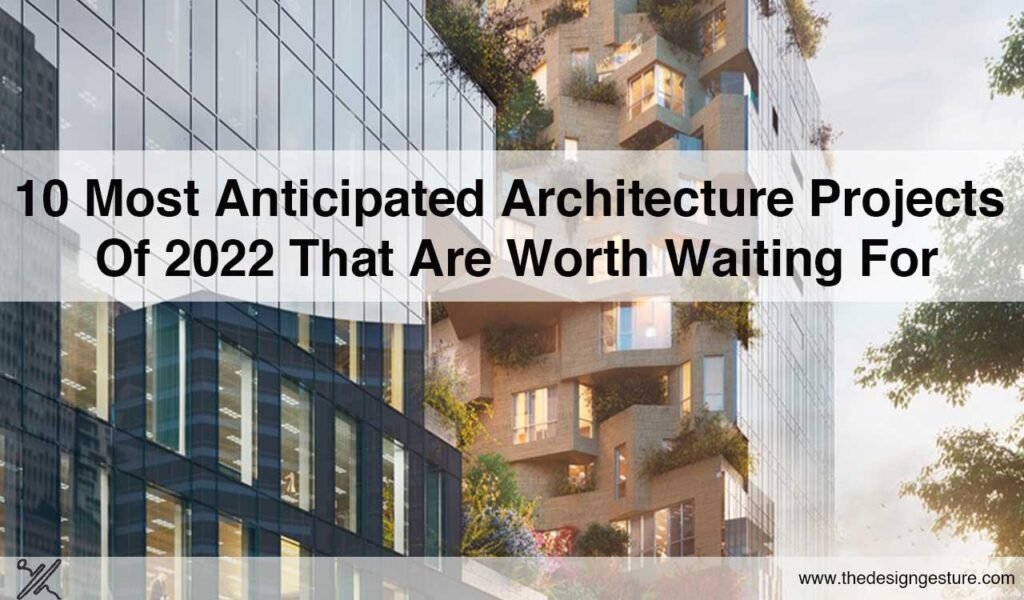
    As the new year begins, with some trepidation but also a fresh supply of hope as, architects, designers, and the public are expecting exciting new projects and have become a means of looking forward to 2022. These projects are situated across various continents with a blend of cultural and commercial programs, with many of these projects have been under construction for multiple years. 

    These upcoming architecture projects promise to provide a new concept for overcoming the carve of how we can all gain life together, enjoy the exhilarating public spaces, and have human interactions in a way so that people can gather freely again. Designed throughout an array of scales, they correspond to an amalgamation of interconnected landscapes, museums, and new skyscrapers.  

    Several projects opening this year have had construction timelines shaped by resource availability and labor issues related to the global pandemic. Numerous projects have shifted forward swiftly, and their construction showcases the range of building conditions around the world. They have been drawn from different climates and material advances, reflect design, and construction across a global lens. 

    10 Most Anticipated Architecture Projects of 2022

    Abrahamic Family House by Adjaye Associates 

    The Abrahamic Family House is a collection of three religious’ spaces: a mosque, a synagogue, and a church, every one of which will rest upon a secular visitor pavilion. The building will serve as a society for inter-religious interaction and exchange to nurture the beliefs of peaceful co-existence and acquiescence amongst diverse cultures, beliefs, and nationalities. 

    In the Abrahamic Family House houses of worship, visitors would have a unique opportunity to observe religious services, listen to holy scripture, and experience the essence of sacred rituals. The fourth space is not associated with any specific religion, but will serve as a center for all people of faith to come together in unity. The community will also help extend education and events associated with training.

    Sao Paulo Rosewood Tower by Jean Novel 

    Jean Nouvel and his team designed a new 90-meter-high hotel tower next to the ancient complex, which will showcase a latticed Corten-steel facade. The facade and terraces running around the Rosewood Tower building will have plants and trees planted around the staggered path connecting the previous hospital building to the tower.

    Rosewood Tower will operate in varied uses ranging from cultural and tourist complex, including 275 guest rooms between Nouvel’s new building and the former hospital, apartments, two restaurants, a bar, a caviar lounge, three swimming pools, and a spa, designed to be a vertical continuation of the local landscape.

    Valley by MRDV

    Valley
    Source

    MVRDV has broken ground on “Valley” also known as P15 Ravel Plaza, a 75,000-square-meter multiple-use building located inside the Zuidas business district of Amsterdam. The structure will infuse a sense of soul and excitement into the neighborhood, renovating the district into a further varied and accommodating urban quarter, highlighting residential units, offices, parking, a sky bar, and retail and cultural space.

    Valley is due to open in 2022, one year later than expected, because of the ongoing pandemic. Valley is accommodated with 200 apartments and spaces for workplaces, shops, restaurants, and bars. The building additionally integrates a “green layer”, along with 13,000 plants, trees, and shrubs have been planted by landscape designer Piet Oudolf. This aspect of planting and maintaining will be preserved by automatic irrigation systems and a team of gardeners.

    Istanbul Modern by RPBW

    The Istanbul Modern Museum in the historic Beyoğlu district of Istanbul is located on the riverside of the western bank of the Bosphorus Strait, in front of the Sultanahmet quarter. The Istanbul Modern Museum is designed by Renzo Piano Building Workshop, architects in collaboration with Arup Istanbul.

    Istanbul Modern will replace the existing structure which is currently between the old city streets of the Galata quarter and the present port cruise terminal. The new museum will become an urban pivotal point between the old town to the west with the Bosphorus to the south, the Tophane Park to the north, and the latest Galataport waterside progress to the east, which will substitute the old pier pursuit. The Istanbul Modern project enriches the connectivity among these distinct areas and becomes a social and cultural destination.

    3D Printed Homes by BIG 

    The well-known home developing company Lennar and construction technologies company ICON have collaborated with BIG (Bjarke Ingels Group) to build the biggest community of 3D-printed homes to date. The 100-home neighborhood in Austin is anticipated to break ground in 2022 and will combine ICON’s pioneering robotics, software, and sophisticated materials with BIG’s designs. 

    The 3D Printed Homes project comes from labor and material shortages, which have made homeownership hard to achieve for many American families, with approximately 5.5 million deficiencies of single-family homes across the country.

    Taipei Performing Arts Canter by OMA

    OMA’s Taipei Performing Arts Center (TPAC) is an almost completed project in Taiwan. OMA’s Taipei Performing Arts Center comprises three theaters, every one functioning autonomously from the other, the OMA scheme pursues to deviate from the traditional consensus of performing arts centers as merely including a large auditorium, medium-sized theater, and small-size black box. The OMA’s Taipei Performing Arts Center compacts a unique form that allows for numerous facades defined by the specific theater protruding from the central cube.

    Bezalel Academy by SANAA

    SANAA’s new campus for the Bezalel Academy of Arts and Design in Jerusalem is currently ready for a grand opening in 2022. Bezalel Academy was primarily planned in 2013 as a new project for Israel’s national school of art that broke ground back in 2015. The Bezalel Academy campus is in the process of construction in the Russian Compound in Jerusalem’s City Center. The design will bring about 2,500 students and 500 faculty members as the school shifts from the current Mount Scopus Campus.

    Studio City by ZHA

    Studio City resort is in the Cotai district of Macau next to the Lotus Bridge crossing with mainland China. The Hollywood-inspired Studio City resort has greeted guests and visitors to the city since 2015. Zaha Hadid Architects designed Studio City Phase 2 with new leisure, entertainment, and hospitality facilities in 2017 to expand the resort. Studio City Phase 2 includes one of Asia’s largest indoor & outdoor water parks and a six-screen Cineplex together with a massive conference and exhibition space.

    Studio City by ZHA has a graduating glass facade, its vertical form evokes natural columns of basalt rock. Studio City is climate-responsive with vertically insulated glazing units and shielding fins that asset to reduce solar heat gain and glare while sustaining thermal comfort for hotel guests. The high-performance building envelope, together with highly efficient services and systems, would help decrease energy demand and make the structure more sustainable.

    Xi’an International Football Centre by Zaha Hadid Architects

    The new Xi’an International Football Centre for the Asian Football Confederation (AFC) Asian Cup Zaha Hadid Architects. The facility includes a stadium with a 60,000-seat capacity, along with civic sports and recreational spaces. Providing optimum conditions for football, the Xi’an International Football Center was also designed in a way to maximize its use by future generations after the 2023 tournament, including a sequence of shaded south-facing garden terraces that provide a view over the city to Qing Mountain.

    Xi’an International Football Centre is integrated within an orthogonal urban grid of the city’s Guangdong new district. Zaha Hadid Architects created open facades to create a welcoming feeling for the city. The sweeping lines of the facades themselves further shield the building from northerly winds, with vast planting on all the floors. Xi’an International Football Centre is designed in such a way that visitors can appreciate its public spaces, creation, and dining amenities throughout the day and during matches and other events.

    Hekla Tower by Ateliers Jean Nouvel

    Jean Nouvel designed the 220-meter-tall tower, Hekla Tower in Paris’ major business district, La Défense. Jean Nouvel d the owner of the French practice have a thirty-year-long relationship with the area of La Défense, that dates to 1982. Hekla would comprise 47 floors and comprise office space, private residential units, and student accommodation.

    The site will become an entirely new space like no other upon completion as the 80,000m² towers are going to vividly change the skyline of La Défense. Hekla Tower will also present the largest green space in the area, connecting the business region to the adjacent town of Puteaux. The ambitious skyscraper’s exterior is constructed using a complex system of triangular panels laid at different angles that make up the facade and external skin of it. 

    This facade system gives the tower the look of a mineral that grew right out of the earth’s core. The top-end of the tower is left open, giving capacity to a roof garden partially shaded by the triangular panels that also provide space for natural tree growth.

    Conclusion

    Despite starting with another pandemic wave, 2022 is shaping up to be a tremendous year in the architecture realm, with a slew of major projects coming to fruition. There are also new designs by other Pritzker-Prize winners, amongst them SANAA, Rem Koolhaas, and Thom Mayne as well as pioneering structures by scorching talents like Bjarke Ingels, Jeanne Gang, and David Adjaye. 

    The upcoming projects have one thing in common that is they deliver the much-needed shot of inspiration. These structures have thoughtfully incorporated sustainable and economical ways to save energy as climate-responsive HVAC systems, microclimate-stimulated facades, etc. These projects also propose innovative ways to treat nature more responsibly and expand the need for the buildings in the future.

  • Value of Passive Solar Heating & Cooling Structures in the 21st Century

    Value of Passive Solar Heating & Cooling Structures in the 21st Century

    Introduction 

    The rate of expanding population growth with increasing inventions in the field of industries and technologies has all together resulted in the increasing energy consumption enormously. This high consumption of resources is a concern for sustainability. The constant use of limited fuels and resources hurts the environment and energy conservation. Passive solar heating and cooling structures are an innovation in the field of architecture and construction that would perform with the existing energy. 

    Passive Solar Architecture is a way of designing buildings that takes advantage of the benefits of the local environment while minimizing the adverse impacts of the climate. Passive Solar Architecture is an innovation in building construction without exploiting any additional mechanical or electrical sources called the passive solar building design concept.

    What are Passive Solar heating Structures? 

    Passive Solar Heating
    Passive Solar Buildings

    Passive solar buildings use solar energy for their energy needs in different seasons. The concept of passive solar structures, performance, and benefits. The primary concept of passive solar buildings is that the structural elements, i.e., the windows, walls, and the floors, are developed with the ability to collect solar energy, store them and utilize it later. This energy is then used in the winter for warmth and used to reject the heat during the summer or winter seasons. A “passive” building on account of its influence from natural energy resources to sustain a comfortable temperature.

    Different Aspects of Passive Solar Heating and Cooling Structures

    Passive Openings

    Passive cooling is generally used to avoid overeating and for that, ventilation and window placement play a crucial role. Passive Solar buildings often do not have an active cooling system, and several design measures are incorporated to reduce the summer heat load. Venetian blinds are manually adjustable by the users and were placed outside the glazing to reduce direct solar gains. Passive openings also are a way of orienting the openings towards the maximum sun intake side like the South side in regions like India or equator regions.

    A picture containing sky, outdoor, road, buildingDescription automatically generated
    Source: AIR house

    Passive Openings in proper shading techniques can be used to reduce unwanted heat absorption in summer, all openings could be shaded by an overhang, awnings, shutters, pergolas, jallies, and trellises. Passive openings should be placed in such a way that it manages the wind, and buoyancy affected by air temperature differences creates air pressure variations throughout inhabited spaces. Passive heating should be accompanied by suitable shading of windows to allow maximum winter solar gain and prevent excessive solar gain, causing overheating during summers.

    Direct Sunlight or Energy Storage

    Passive solar buildings are intended to let the stored heat into the building during the winter months and restrict the direct sun during warmer days. This could be attained by passive solar design elements, such as shading, incorporating large south-facing windows, and building materials that absorb and release the conserved solar energy.

    direct sunlight
    Source

    Direct passive solar system, the interior space acts as a solar collector, heat accumulator, and distribution system. South-facing glass admits solar energy into the house where it strikes masonry floors and walls, which absorb and store the solar heat, radiated back into the room at night.

    Passive storage processes or simply collecting heat from the sun during daylight hours and distributing the heat once their surroundings cool. Sensible heat storage materials undertake no change in phase over the temperature range contended within the storage process and store thermal energy by sensible heat in solid or liquid materials like water, concrete, and many other materials that are useful for storing heat.

    Indirect Sunlight or Trombe walls

    thermal mass
    Source

    Thermal mass absorption as Trombe walls is a way of indirect sunlight. When the sunlight strikes these walls and transfers them to the space by conduction. A Trombe wall accumulates heat in winter and can discharge the heat in summer and can act as a supplementary temperature monitor. 

    Trombe walls are installed in structures to passively heat the building. The installation of Trombe walls could also decrease the requirement to heat the buildings. A conventional Trombe wall comprises a thick masonry wall layered with dark, heat-absorbing material and faced with either a single or double layer of glass.

    Economical and Eco-friendly materials

    economic materials
    Source

    Many economical materials are used to absorb heat from the sunlight during the heating season and absorb heat from warm internal air during the cooling season. AAC blocks or Autoclave Aerated Concrete (AAC) blocks are widely used as an alternative to red bricks and made from locally available materials like cement, sand, lime, water, and additives. There are many other materials like volatile organic compounds or VOC Paints, Low emissivity glass, and wood waste products such as sawdust, wood chips, wooden shavings, etc.

    Few Examples of Passive Structures

    The Energon Office building, Ulm, Germany

    passive office building
    Source 

    The Energon passive office building usually conjures up images of artificially heated or air-conditioned rooms where the air is stale and the light harsh, an architectural innovation that’s changing the image of the sterile workplace. 

    The Energon passive office is a triangular, compact building with five stories, and has a physically curved facade enclosing a glass-covered atrium at the center. This provides ventilation and daylight. The building is a reinforced concrete skeleton construction with facades made of prefabricated wooden elements of largely equal dimensions.

    Green School South Africa 

    green school
    Source by ARCHIGRAPHY

    Green School was built in the Western Cape of South Africa, the Green School must deal with cold winters and hot summers. The school building attains this by inculcating passive heating and cooling principles that work hand in hand. The buildings are constructed from locally sourced shoved earthly use thermal mass to warm the classrooms during colder seasons. The school also makes full use of the solar heat absorbed, capturing this heat inside warms up the room.

    Sunlighthouse by Juri Troy Architects

    A house with solar panelsDescription automatically generated with medium confidence
    Source by Adam Mørk

    The Velux Sunlighthouse in Pressbaum near Vienna is a house in Austria and was completed in October 2010. Sunlighthouse utilizes the maximum solar potential as well as efficiency. The highly pitched roof maximizes solar exposure by hosting three technologies, a grid of skylights, rows of solar thermal panels, and a 48-square meter solar array for electricity that make full use of the sun.

    Cowboy Modern Desert Eco-Retreat, Jeremy Levine Design

    Jeremy design
    Source

    Cowboy Modern Desert Eco-Retreat is built in San Bernardino’s High Desert. Cowboy Eco-Retreat utilizes a passive solar design to keep warm during cold nights and a cooler environment during the day. The Eco-Retreat was designed with a zero-waste system; the light steel columns and beams were manufactured off-site and assembled on-site.

    The passive cooling and heating in the house are achieved by using thermal mass in the walls and concrete floor. Additionally, overhangs prevent direct sunlight from entering the home, keeping it cool during the day, this also prevents the house from overheating during the night as well as the day. The roof overhangs form a covered wrap-around deck equally big as the house for indoor and outdoor living spaces.

    The Solar XXI building in Lisbon, Portugal

    SOLAR XXI
    Source 

    The office space is on the south side of the building to take advantage of daylighting and solar heating. The spaces with occasional use like laboratories and conference rooms are on the further side of the building. The Solar XXI building’s main façade, South oriented, is covered by windows and PV modules of equivalent proportions. This large glazing area interacts directly with the office rooms permanently occupied, collecting direct solar energy.

    Passive Solar Heating Building, Leh 

    A building in the snowDescription automatically generated with medium confidence
    Source

    The Passive Solar heating buildings in Leh were created to create naturally heated houses and spaces. In less privileged areas like Leh, where the resources are so limited, passive solar houses have been very useful. These hoses have been made using eco-friendly materials like clay, and straw waste, which was made into lightweight blocks to create the basic building unit. The orientation of these houses also plays a role in keeping the house warm without the use of fire or electricity. With a Southside orientation, the houses can absorb the maximum heat during the winters. 

    Passive heating solar houses are economical, embedded with no-cost batteries, and made from plastic reused water bottles to store solar energy during the day. Passive Solar houses don’t only take advantage of the solar energy to preserve heat but various insulation materials to layer the walls as well as the flooring, like wood waste and wool which is available in a surplus amount in Leh.

    Conclusion 

    The rate of increasing population growth with increasing innovations in the field of industries and technologies has all together resulted in the increasing energy consumption and there is an urgent need to incorporate a new way to resolve the issue. Passive solar heating is an age-old concept that we can use in current structures and buildings, by implementing simple elements like passive windows, shading devices, and insulation, to make buildings even more energy-efficient. Studies on passive solar buildings with more architectural and aesthetic conceptual approaches must be implemented more. Commercial buildings like schools and malls have an ideal space for the passive solar building design concept. 

    The passive solar building system is an innovation that is still in its developing stage and still could cause damages like overheating or perception of the society towards concepts. The use of passive cooling and heating can help to decrease the carbon footprint and turn dwellings into an eco-structure. The only solution for this is public education and awareness.

  • 10 Brilliant Tips for Urban Planning for Newbies

    10 Brilliant Tips for Urban Planning for Newbies

    Introduction 

    Urban planning is the sculpting of the structure of cities and towns. It involves various developments like the arrangement and planning of buildings, transport systems and networking, public areas and open spaces, and great amenity spaces for recreational activities. Nowadays, Urban planning has become a necessary discipline because cities are getting overpopulated rapidly and resources are also present in limited quantity.

    urban planning
    Source

    As an urban planner, the primary aim is to guide the urban development of an existing or new community concerning public and environmental welfare. Urban planning needs to influence the aspects that help make the living and working space more convenient, healthy, efficient, and equitable. 

    A considerate urban planner will also take a sustainable, climate-oriented, and eco-friendly approach that manages the environment and promotes longevity as well as diminishes the risk of disasters. Urban development over the years has led to various trends, including big-box redevelopment, experiential retail, cohabitation, and co-working, which have been gaining a lot of attention and creative advances considering broader design aspects.

    Importance of Urban Planning 

    urban planning design
    Source

    Urban Planning began in ancient Rome, whilst the city only had a population of under 1 million. The government has recognized urban planning as the perfect measure to eradicate various problems like flood hazards in lowland areas, provision of basic services such as water sanitation, and inconsistency or wastage of land.

    Urban planning is readapting itself as a discipline whose need has been begun because of the escalating health issues caused because of overpopulation, poor sanitation, and pollution. As the population grew, the planning became vaguer and vaguer, hence it becomes tough for citizens to live, walk, or use public transport. Most of the world’s population has now lived in cities with a population of over 1 million population and, in megacities, it rockets to 10 million people. 

    urban planners
    Source

    In the coming years, overpopulation will mostly be seen in developing countries. Hence, the need for urban planning coming into the picture has become even more important. With this, let’s also understand why urban planning has become crucial in today’s world and what the newbies in urban planning need. Urban planners serve as a facade for the community, and it is important to keep their best interests in mind. 

    10 Tips for urban planning for Newbies

    Expression of Spatial Planning Through Sketches 

    architecture
    Source

    Urban planners need to constantly express what they are thing about and hence to do that learning how to represent thoughts through instant sketching can go a long way in urban planning. Sketching, architecture, and planning go hand in hand. These conceptual sketches do not always have to be of professional quality. Architectural sketches are not about making them look elegant, but more about communicating ideas. Urban planning sketches undoubtedly reveal an extremely important part of our creative process through various techniques like bubble diagrams, schematic drawings, etc.

    Putting your thoughts on paper untangles many issues and helps to understand the key parameters influencing while developing the master plan drawings and gives a perspective drawing from a human eye as a typical urban expression element. There are differences between hand-based and computer graphic processing, but both ways help to give a perspective on urban planning.

    To understand the History of the place and the Past developments 

    History and past development are very important while urban planning. The history of that area is interdependent with enacting climate resilience, which helps us to find out how that area was developed. It is very important to understand that planning fits seamlessly into the environment and the initial layout of the area. Urban planning should look more belonged to the landscape than imposed on it.

    urban design
    Source 

    Urban planners need to know how important it is to know the historical details of that place; the lifestyles, the mode of transport used, demography, the architectural evolution of that place, changes in the built form over time, etc. 

    Understanding the history of the place helps to have a definite base and for further conceptualization in the design process. Urban planners also get a splendid vision into interventions made in the past to evaluate the requirements and convenience of the people. It would help the planning to further understand what developments took place in the past, if they were effective or not, which developments can be reused, and which need to completely be abandoned. 

    Keep in mind the Topographical and Geographical considerations 

    Topographical and geographical considerations and study play a very important role in urban design. Contours help urban planners in understanding the levels of a particular site and help in placing structures and public open spaces and how they can be connected. It helps in the urban planning of the developed masses and the best usage of volumes.

    topographical
    Source

    Urban planners need to understand if the site needs to be treated differently depending on its levels and slopes. Knowledge about the topography helps guide the design of the circulation in the city, be it of pedestrians, vehicles, water, or sewage. A flat site could be relatively easier to deal with than a sloping one, as too many level differences may act as a barrier to making the design universally accessible and consequently need to be dispensed with a unique method.

    Insight about the levels will help in planning how the overhead water tanks and the piping work to reach all houses and complexes. It will also help in considering if rainwater can be stored to make the site self-sufficient with its water requirement.

    The geographical location of an urban site also plays a vital role in orienting the interferences. It gives a fairly clearer idea about natural factors like rainfall, wind direction, wind speed, humidity, slopes and terrain, landscape, etc. Hence, helping in urban planning by realizing the surroundings and their impact on the site.

    Thoughtful Planning of Open or Recreational Spaces

    recreational spaces
    Source

    Open spaces and recreational spaces play a very important role in urban planning, it not only helps to enhance the beauty and environmental quality of neighborhoods but also helps with the well-being of humanity as it provides a feeling of escape, helps with stress reduction, quicker healing, and mitigation of attention deficit disorder. While urban planning is very important in incorporating open and recreational spaces, especially in commercial office areas, as it can play a huge role in the human approach and helps to increase human productivity.

    Including green spaces can even reduce air-conditioning costs by reducing the UHIE in the immediate area, which can play as a sustainable solution considering the increasing global temperatures. Living and working near green spaces are also known to improve mental health and well-being and employee productivity. All these benefits equate to a happier and healthier lifestyle for everyone.

    green spaces
    Source

    There are many various economic benefits associated with green and open spaces in urban planning. The land comprises the same as the highest value, especially in a country like India where the population is at a steep rise, open green spaces help to increase property value, whether it be a privately owned house or a place of business. 

    While urban planning, it is essential to understand and study various vegetation types of different which will help show about what all parts of the site are shaded during what time of the day. It will help understand what kind of flora is available locally and how it can be used to its benefit on the site. Some rare floras can also be protected and used in open and recreational spaces.

    To understand public transportation from an Economical perspective

    economical
    Source

    Planning public transportation in urban development would act as an investment with significant effects on the economy and thus represent an important public policy. Urban planning now needs to consider that mobility within and around the cities will become completely public, simply because of the inevitable traffic congestion caused because of private transportation and the difficulties of storing individual vehicles. Public transportation can be very economical as it would help save the maintenance charge, fuel charge, and save time, reducing the traffic caused by individual vehicles.

    public transportation
    Source

    To achieve holistic urban plans incorporating transport infrastructure, public space, and whilst also considering the behavior of people in these spaces, to understand the relationship of fundamentals of transport, spaces, and humans, by promoting and incorporating sustainable urban design strategies. The positive interfaces between how the urban designers plan the private and public conveyance ways. 

    Future urban planners need to think about technological development to improve the appearance of public transport, the fundamental challenge of coordinating between individual travelers who might consider sharing vehicles. As natural resources in the future will become further limited and precious, public transportation would become a key to future city planning. The urban planning of public transportation properly can help recognize the longer-term benefits of sustainable ways of transportation as it reduces travel times, costs, and increases economic productivity. 

    Importance of pedestrian accessibility 

    pedestrian
    Source

    Pedestrian-priority spaces play a major role in sculpting a walkable, accessible, and pleasant city. They provide places for people of all ages and abilities to take advantage of the cities services without contending to other modes of transportation. Pedestrian accessibility in urban planning is a powerful approach to moving towards sustainable mobility paradigms. More attention also needs to be paid to determining which factors influence accessibility.

    Pedestrian-priority spaces should be equitably distributed throughout various communities of the city, offering opportunities for social interaction, active recreation, healthy living, and improved quality of life. Beginners in urban planning also need to keep in mind that shortly many fossil fuels operated by transport may become nearly extinct and hence people might consider a means to travel by foot as a more affordable and economical solution.

    Micro-mobility centered transportation planning

    transportation
    Source

    Urban planning needs to actively involve micro-mobility-centered add flexible new methods of transportation so that city dwellers can move within the city at their absolute convenience. Bicycles, electric scooters, and e-bikes are a few examples of micro-mobility vehicles that are commonly being used now. Micro-mobility ways of hauling are all highly customizable and sustainable solutions for inter-city travel. These are zero-emission or low-emission, for instance, e-bikes and electric scooters. Micro-mobility has progressively become common with city residents coming from various types of backgrounds, from delivery workers to office workers.

    micro mobility
    Source

    Urban planners need to consider E-scooters, e-bikes, and traditional bicycles as they are low-emission transportation solutions. As we move toward the goal of achieving a sustainable future, micro-mobility is one of the best tools we must cut harmful greenhouse gases and become less reliant on fossil fuels. Urban planning in India can benefit from micro-mobility programs, as it would be the best possible way to improve the city’s transportation system.

    Understanding the Services and Utilities

    The vital technical infrastructure to consider while urban planning of a city comprises energy, sanitation, and communication. The disparity in the distribution of these services makes it tough for poor people to access their difficulty to maintain the decorum and might also risk public health. This inequality can be tackled in urban planning to ensure the quality of life throughout the city.

    Understanding the ways that will help while making interventions on urban sanitation, services, and utilities. Urban planners need to understand that negligence at these levels can affect utilities enormously. Deep knowledge of the sewer lines, water supply lines, wastewater outlets, etc and is a must while proposing the same as well. Understanding how the services and utilities operate, underground or at grade, helps to make it simpler at the proposition stage and hence should be prepared.

    urban sanitation
    Source

    Further urban planners need to consider and plan optimal design & cost estimates for the Sewerage systems. Urban planning needs to be sustainable and should also include a proper storm water drainage system, rainwater harvesting system, solid waste management system, water treatment plant, and distribution system. 

    Sanitation is also a very important service that needs to be considered for the health and wellbeing of humans, by cooperating sewerage system includes a sewage collection network, sewage pumping posts, sewage treatment plants, and recycling of treated sewage to cater to flushing. Solid waste management should be planned with different stations, including collection stations, segregation stations, composting waste biological stations, and inorganic waste disposal stations.

    Public Diversity and Social Considerations

    public diversity

    Cities serve as a hub for people with different cultural backgrounds, religions, interests, and social statuses. As a result, cities are not only expanding in terms of population but are also developing to be progressively more diverse. The impact of immigration and ethnic diversity on the urban fabric is being discussed in countries worldwide. It is very important to keep in mind during Urban planning, Public Diversity, and Social Considerations as its outcomes affect nations, regions, cities, and neighborhoods.

    Public spaces should be planned with meeting spots to let people come together and interact on ostensibly neutral ground. Small interventions in public spaces can also make a big difference, such as improvements to bench seating, learning, health care, employment interaction spaces, housing. Thus, the role of urban planners in fostering social cohesion should not be undervalued. During urban planning, public spaces might solve the roots of social and economic problems. They can with well-connected urban patterns and functioning public spaces that facilitate interaction and social mixing, which can also start making a big difference socially.

    Sustainable and futuristic development ideas 

    planning
    Source

    In current times, the development of uncertainties demands sustainable environments. While urban planning planners need to understand three ambiguities that may need solutions. Firstly, the town needs to deal with unfortunate developments leading to major climate change. Secondly, urban environments are the place where deliberate worries to accommodate the generation of renewable energy and other sustainability modifications. The third form is the heightened exposure of urban populations that would affect a spectrum of uncertain developments and climate impact.

    There are many examples of such futuristic and sustainable cities, which can help inspire new urban planners, like-

    Garfield Green, Chicago’s Garfield Park

    The Garfield Green was selected in 2018 as a winner of the C40 Reinventing Cities competition, a global contest focused on transforming under used lots into models for sustainable urban planning.

    Mercado Habitado II, Madrid

    The project aims to produce renewable energy on-site through the configuration of photovoltaic panels on the facades and the roof.

    Urban Battery, Madrid

    URBAN BATTERY becomes a productive economic, social and environmental engine.

    Conclusion

    urban development
    Source

    In the present political climate, people have become less sensitive to the demands of citizens calling for a more just sustainable lifestyle, distribution of resources, a cleaner environment, or the defense of conventional goods. Proper urban planning has the potential to give city dwellers a feeling of agency, empowerment, and entitlement, by promising changes and developments that could be the first step toward forging a better future.

    Urban planners need to consider solutions because of the continuous threats of global warming and environmental catastrophe, it is important to take measures. Urban planning has become significant as it improves the use of the land and infrastructure in the best possible way. Urban planners can then help to translate these policies into local action and link them to the most suitable planning and design measures.

    The urban planner can help potential changes in the cities and regions to adopt a range of different strategies, composed of different policies, and significant variations in approaches that can be adopted to lead towards a sustainable and eco-friendly environment.

  • Subterranean Architecture: Interesting Approach To Design and Construction

    Subterranean Architecture: Interesting Approach To Design and Construction

    Introduction

    Subterranean architecture has always existed since the journey of humankind started. It is finding shelter in the underground. This concept was once used to create caves, refuges, and tunnels to answer the most primitive needs.
    Architects have long been involved in a contest to build the world’s highest structure, but few architects are using their knowledge to design and construct beneath the earth’s surface. These ingenious underground buildings often integrate natural light from above and this showcases the robust beauty of their subterranean situations with including rock formations and caves, could also help with creating an impact on the site’s design and experience.

    Subterranean Architecture
    Photo by Bjarne Mastenbroek

    Whilst the sky-scraping structures are certainly impressive, yet buildings that move down instead of going up make the structures more intriguing. Subterranean Architecture can help to save precious ground space, which is present in a very limited amount.

    History of Subterranean Architecture

    The earliest inhabitants of underground space were troglodytes or cave-dwellers. Human’s first few architectural endeavors were artificially created caves. Many historians have researched further to understand the evolution of the underground dwelling system.

    Humans and animals alike have used seeking shelter within the earth to take advantage of the protective and insulative characteristics of the soil long before recorded history. Subterranean dwellings were simple yet sophisticated, a means of dealing with harsh climates, and helped to create a hostile environment. Subterranean dwellings offered refuge from arid deserts to polar cold regions, from exposure to the sun, wind, storms, and severe changes in atmospheric temperatures, as well as providing thermal protection during seasonal temperature changes.

    A new approach to Design and Construction

    design
    Photo by Jeff Kamuda

    A broad variety of approaches exists within the concept of underground or subterranean construction. A building can either be raised on the original surface of the ground and then be covered by earth to shelter the building partially or entirely. While the building is constructed on an excavated site.

    Subterranean Architecture can be used on a larger scale to create small structures to fitting an entire underground city. It would be a sustainable way to save the land and use fewer construction materials to build something underground because most of the infrastructure is already available.

    Subterranean Cliff Houses

    Open Platform for Architecture’s Casa Brutale is a Striking Glass Home and a good example of subterranean architecture. Casa Brutale is not a typical cliff house as it’s built into the ground, and it boasts an all-glass facade that is entirely modern, making it a combination of old and new ways of construction.

    Created by the design network Open Platform for Architecture (OPA), Casa Brutale takes living on the edge to a whole other level by turning it from metaphorical to reality. Definitely, with such views of the Aegean Sea, it’s only natural architects who would be inspired to create something truly spectacular as Casa Brutale.

    Subterranean School Facilities

    BIG
    Source

    BIG Has Designed an Art Building Underneath the School Field. Located north of Copenhagen, the campus now includes the school’s art facilities underneath a football field that is also linked to the pre-existing underground gym that boasts a courtyard on its roof added by BIG in 2013. Bjarke Ingels and his ground-breaking team at BIG have achieved an impressive addition of many school facilities to the campus of a Danish high school.

    Bjarke Ingels, the interesting new school facilities and blend concepts of function that one would not expect to intersect. The unique flexible space is a pleasant and refreshing take on traditional school spaces and the constraints of those standards. This impressive reinterpretation of the connections amongst buildings across a single campus will spur new designs. The renovated school facilities are well-fitted and complement BIG’s initial installation of the buried sports amenities.

    Subterranean Theatres

    The Rotherhithe Shaft is being incorporated into an underground theater. The Rotherhithe Shaft was initially built by renowned engineer Isambard Kingdom Brunel to function as the beginning point for London’s Thames Tunnel. The shaft will be transformed into a spectacular underground theater.

    The redevelopment is being carried out by Tate Harmer architects. The new venue has smoke-blackened brick walls from steam trains and provides a raw but atmospheric backdrop. This underground theater with a smoke-blackened underground shaft is certain to provide a spectacular atmosphere for musical performances in bleakly pleasant contrast to the flashy, extravagant venues many musicians perform in these days.

    Sunlit Subterranean Parks

    New York’s Lowline Lab will be a prototype of the Real Lowline. The ambitious scheme to transform the deserted Williamsburg Bridge Trolley Terminal on the Lower East Side into the world’s very first underground park. The founders of the Lowline—Dan Barasch and James Ramsey, dreamed about the idea to create the underground park more than a decade ago and as of last year, the $83 million projects were under construction. Read more.

    The Lowline is a plan to use solar technology innovatively to brighten a historic trolley terminal on the Lower East Side of New York City. The vision is to create a magnificent underground park, offering a beautiful respite and an artistic attraction in one of the world’s extremely populated, exciting urban environments.

    The California Academy of Sciences

    California academy
    Source

    Designed by Renzo Piano in partnership with San Francisco-based Stantec Architecture and was completed in 2008. The California Academy of Sciences is one of the largest museums of natural history in the world. It also houses an aquarium, the planetarium, and the four-story rainforest, as well as being the headquarters for the academy itself.

    The California Academy of Sciences is one of the world’s most pioneering museum building programs and sets a record as the sustainable new home for the California Academy of Sciences.

    Peter Zumthor’s Therme Vals

    Peter Zumthor designed the spa/baths, which started in 1996 to predate the existing hotel complex. The concept was to build a form inspired by a cave or quarry-like structure. Peter Zumthor works with the natural surroundings the bathrooms lay beneath a grass-roof structure that is partially buried into the hillside. The Therme Vals is constructed from layer upon layer of locally excavated Valser Quarzite used to make slabs. This stone developed the major inspiration for the design and is used with great distinction.

    The Tennessee Governor’s Mansion

    An expansion in the form of subterranean architecture on the grounds of the governor’s mansion in Nashville, Tennessee. Designed by the firm archimania, they went for a more contemporary subterranean approach for the expansion. Archimania was particularly chosen for its expertise in sustainable design, the technique to save space on sprawling grounds while conserving the existing ancient architecture.

    Subterranean Conservation Hall is a glass-walled atrium under the Governor’s lawn is positioned 25 feet below the lawn, the oval-shaped courtyard is fully glazed. This permits natural light to infiltrate the interior with a lot of plants and trees planted in the interior. The Conservation Hall is slightly reminiscent of the Phipps Observatory in Pittsburgh as a sunken greenhouse.

    Pionen – White Mountain, Cascais, Portugal

    Lanord Architects
    Photo by Albert France-Lanord Architects

    Submerged below the granite bedrock of Stockholm, a former nuclear bunker built in 2008 has been completely transformed into a sleek data center by Albert France-Lanord Architects. The impenetrable complex possesses surging waterfalls and lush greenhouses, the latter of which is made possible by artificial daylight.

    Sancaklar Mosque, Turkey

    Religious architecture has been changing over time and has been merging with a modern approach to designing. One of such subterranean architecture is Turkey’s first underground mosque, Sancaklar. The mosque welcomed the worshippers a few years ago and continues to amaze visitors with its unique architecture.

    The mosque is partly above ground, yet it gives the sense of being built into the surrounding gradient when viewed from above. The uniqueness of the Sancaklar mosque is that it differs from standard monotonous mosque design to break down architectural taboos and urge worshippers to concentrate on the essence of the religious space.

    Post Office, Slovenia’s Postojna Cave

    Hidden inside Slovenia’s Postojna Cave rests the first-ever subterranean post office designed by Studio Stratum. It was miraculously constructed under a weighty constraint by consuming only materials that were small enough to be shipped down on Postojna’s cave train.

    The complete construction and fitting of construction elements deliberately focused on protecting nature and its requirements for the slightest impact on the value of nature possible. The concept of sustainability is also displayed in the heating system, ventilation system, and the first underground biological treatment plant in Slovenia.

    Städel Museum, Frankfurt, Germany

    The museum houses over 2,900 paintings, 600 sculptures, 500 photographs, and around 100,000 drawings and graphic reproductions dating from the Middle Ages to the present. SEFAR Architecture fabric diffuses natural light softly and gently through unique glass apertures inside a new exhibition area at the Städel Museum in Frankfurt, Germany. The general concept and technological specification make sure this museum building is sustainable in all respects.

    These “eyes for art” representing the skylights were specifically developed for the Städel extension and were walked on. Daylight entering the exhibition space Städel under can be modulated, which can either be augmented using the cohesive LED lighting system or mitigated by shading elements constructed into the roof light.

    Messner Mountain Museum Corones 

    Renowned mountaineer Reinhold Messner recently joined to help of Zaha Hadid to build a concrete museum that is embedded in a mountainside. The mountain climber is well known for climbing Mt. Everest devoid of the use of an oxygen tank and for his work educating the public about mountain culture. Messner Mountain Museum includes a concrete museum that is submerged in the summit of Mount Kronplatz.

    The ‘MMM Corones’ is situated 7,000 feet above sea level and extends out dramatically from the side of the mountain. The structure itself is created from glass-reinforced fiber concrete, which mimics the color and texture of the mountain. The museum is partially embedded in the mountain, it features a series of elevated concrete canopies that provide visitors with spectacular views of the surrounding peaks. The idea is that visitors can feel the internal workings of the mountain and the breath-taking panoramic views also offer guests a unique way to experience the mountain culture.

    Pros and Cons of Subterranean Architecture

    The advancements in subterranean building techniques and a revitalized focus on eco-friendly housing systems, the possibility of living partially underground, is being considered into the public consciousness. Though linked by a partially or entirely covered construction, there are countless types of subterranean architecture, from artificial cave structures to elevation houses, earth berm properties, and culvert structures.

    Pros of Subterranean Architecture

    • In regions susceptible to extreme weather, subterranean architecture is safer and more reliable than conventional, flat-surface architecture.
    • Subterranean architecture can be constructed in places that traditional architecture merely cannot, like on steep surfaces.
    • Subterranean properties merge easily into their natural surroundings, making them an excellent way for conservation areas.
    • Earth is a great natural insulator, maintaining the warm temperature during winter and cool during the summer, therefore diminishing the energy consumption of a subterranean dwelling. Use of subterranean architecture cost 80-95% less than a traditional house to heat and cool.
    • Subterranean architecture the use of earth helps with the natural soundproofing of the structure and helps to maintain privacy from the outside.
    • Subterranean architecture is more likely earthquake resistant.

    Cons of Subterranean Architecture

    • The unconventional nature of subterranean or underground architecture requires many planning experts and requires cautious consultation during the construction process.
    • Subterranean construction needs significant care taken during and after the construction of the structure, as to moisture and might increase costs.
    • The psychological shift required for moving to a subterranean residence can sometimes be uncomfortable.
    • Guaranteeing excellent ventilation and lighting can be a little difficult to achieve in subterranean architecture. Complex ventilation methods may require an expert’s involvement.
    • Interior designers require special consideration, as many walls will be rounded and meticulous flood resistance planning.

    Conclusion

    Subterranean architecture is more than producing a natural shelter, but the practice of underground architecture possesses a tremendous heritage that is unfortunately is poorly documented in architectural history manuscripts. Subterranean architecture is rich in spatial range, responding to environmental concerns factors in design solutions tackling with accessibility, ventilation, and light.

    An architectural adobe over the soil can be identified as a product addition that comprises various spatial enclosures with different volumes. The spaces beneath the earth result from positive negative spaces with a difference in the type of structural and construction rules.

    The increase in urban cities in the world is immense, urban land is expected to become a limited resource in the future, including the factor major phenomenon of climate change. Subterranean architecture can provide a better living environment by designing underground structures, thus boosting natural open spaces on the land above. If subterranean architecture becomes a new way to create societies as in the history, it would solve creating sustainable devolvement in the future urban cities.

  • The Mystery of Egyptian Architecture

    The Mystery of Egyptian Architecture

    Introduction

    Egyptian Architecture
    The Colossi of Memnon, Photo by Mountains Hunter/Shutterstock.com

    Ancient Egypt was a civilization of ancient Africa, concentrated along the lower reaches of the Nile River, situated in the place that is now the country Egypt. Ancient Egyptian civilization followed prehistoric Egypt and coalesced around 3100 BC with the political unification of Upper and Lower Egypt under Menes.
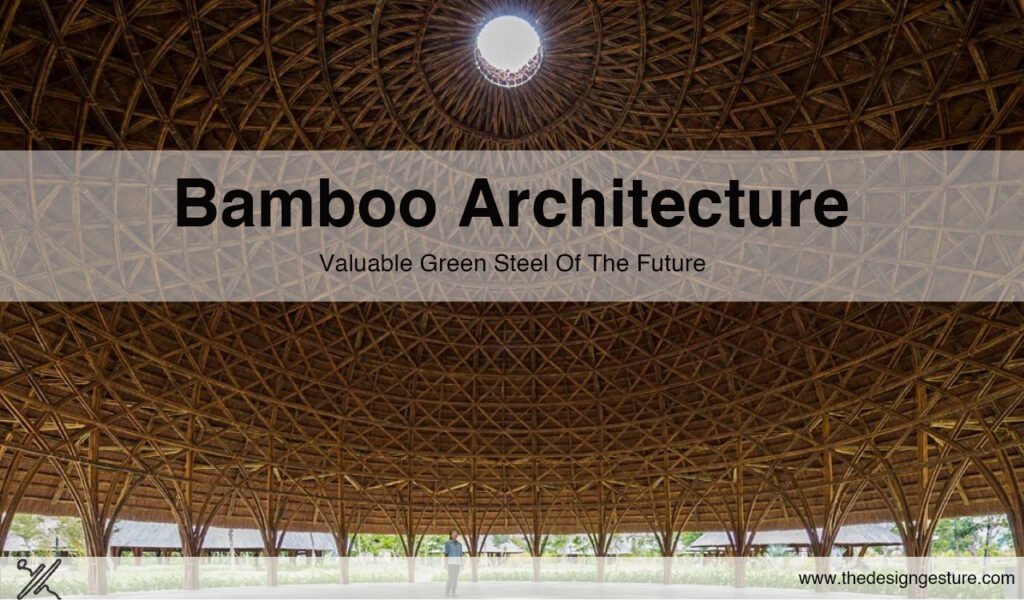
    Ancient Egypt was controlled by many dynasties and kingdoms. Historians have divided this into three kingdoms to define them efficiently while describing the period between each of them. This gives us a framework in which to understand the historical wealth of Egypt. Ancient Egypt has a long history, evidenced by the presence of many enduring pieces of architecture.

    Construction miracles of ancient Egypt

    The best-known example of ancient Egyptian architecture is the Egyptian pyramids while excavated temples, palaces, tombs, and fortresses have also been studied. Most buildings were built of locally available mud brick and limestone by levied workers. Monumental buildings were built via the post and lintel method of construction. Many buildings were aligned astronomically. Columns were typically adorned with capitals decorated to resemble plants important to Egyptian civilization, such as the papyrus plant.

    All pyramids aren’t created equal. Just as with many building types, there are distinct phases to pyramid construction. The earliest pyramids aren’t the pointed structures we most commonly think of but were flat.

    pyramids
    Photo by Graficam Ahmed Saeed/Shutterstock.com

    Many examples are found in the vast Saqqara burial ground located in what was Ancient Egypt’s capital, Memphis. The pyramids here are the earliest known and include the Pyramid of Djoser. Built during the third dynasty and designed by architect Imhotep, it was constructed between 2630 BCE and 2611 BCE. It’s considered one of the world’s oldest monuments made of cut masonry and is not pointed. A step pyramid where Imhotep had mastabas (Egyptian tombs) of diminishing size stacked on top of one another. This typology is found in many cultures from the Borobudur Temple in Indonesia to the El Castillo pyramid built by the Maya in Chichen Itza.

    The setting sun came to symbolize death and the sun “died” in the west each night. The souls of the pharaohs were meant to connect with the setting sun before rising again in the morning, a symbol of eternal life. By placing pyramids to the west of the Nile, they lived right in the area that metaphorically signified death

    Egypt’s Charm: The Great Pyramid of Giza

    the Great Pyramid of Giza is the largest of all the surviving pyramids in Egypt. Constructed from 2580 to 2560 BC (fourth dynasty), the pyramid has no documented evidence of its construction, but many theories could throw light on its history. Archaeologists believe that the pyramid was built over a tomb dedicated to a pharaoh of the fourth dynasty named Khufu and his family. The materials used for the construction of the pyramid were granite and limestone. Initially, it was 146.7 meters tall but with weather conditions and erosion, it has now been reduced to 138.8 meters and stretches 230 meters in length.

     The pyramid has three chambers, the King’s Room, the Queen’s Room, and a large passageway known as the Great Gallery. Around the pyramid, three smaller pyramids are believed to have been built for Khufu’s wife. The great pyramid has been built from heavy stone blocks that are stacked repetitively up to its head. It was built by the royal architect Hemiunu and skilled workers were used in its construction instead of slaves.

    The Great Sphinx of Giza

    sphinx
    Photo by worldtravelguide.net

    The Great Sphinx of Giza is a statue of the mythical creature known as the sphinx. In Egyptian mythology, the sphinx was a creature with the body of a lion and the head of a human. Archaeologists believe that it was created around 2500 BC and represents the pharaoh Khafre of the fourth dynasty’s the Old Kingdom.

    The Great Sphinx is a monolith that was modeled in the shape of a lion at the back from various layers extending to its tail and with a human face believed to be that of Pharaoh Khafre. It is a gigantic structure that is 240 feet (73 meters) long, 65 feet (20 meters) high, and six meters wide. The facial features of the structure alone are each three feet (1 meter) tall and are carved out of bedrock. The mythical sphinx has great prominence in the history of Egypt and is believed to be the source of the food cycle making it one of the most ancient and revered structures in Egyptian history.

    Valley of the Kings

    The Valley of the Kings or the Valley of the Gates of the Kings is a valley that is believed to be the burial place of the great pharaohs. At first, the pyramids were only used as tombs for the kings but around 1500 BC the practice was changed to the burial of prominent royal figures as well. Archaeologists have found 63 tombs and over 120 chambers ranging in size depending on the prominence of the person buried there.

    The walls of the underground tombs are decorated with graffiti in various languages and hieroglyphs that depict ancient Egyptian culture. The most remarkable mausoleum which was excavated here was that of King Tutankhamun. The tomb preserved the mummy of King Tut and other precious artifacts made up of gold and various other materials. The Valley of the Kings has a special place in the history of Egypt due to its great archaeological wealth.

    Uncovering the mysteries of the pyramids

    One of the biggest mysteries about the Egyptian pyramids is the construction techniques used to erect them. The incredible feat of the Egyptians is more impressive when taking into consideration that over 2 million limestone and granite blocks were used to build the Great Pyramid of Giza. Each piece of the masonry weighed about 2.5 tons (2.3 metric tons).

    The origins and composition of the Great Pyramid, our oldest wonder of the world (and its slightly fewer famous kin), have long confounded scholars. How did engineers manage to achieve the seemingly impossible feats that building these masterpieces would require? While some believe that construction workers may have used large ramps to transport the stones, this theory has been largely disproven, as there is little archaeological evidence to support the claim. 

    Slaves

    A wall painting dating back to 1900 BCE depicts a procession of men pulling a large statue on a sled as one person stands at the front pouring water over-sand. Though it was originally thought that the gesture was purely ceremonial, there is scientific evidence that this painting holds the key to unlocking the mystery of how they moved all that weight.

    Researchers experimented with pulling large amounts of weight on a sled across the sand and found that when they added the right amount of water, the job was significantly easier. The dampness of the sand greatly reduced friction by up to as much as 50%, making it much more feasible to haul large amounts of weight.

    Aliens

    The alien theory has persisted to the present day. In 2001, Russian scientist Dr. Viktor Ivanovich claimed that the KGB had found ancient alien remains inside the Great Pyramid. This idea has also appeared in many forms in pop culture, with shows like X-Files promoting the idea that architects and historians have been hiding evidence of alien activity for hundreds of years. Certainly, the Great Pyramid’s inner network of shafts, passageways, and chambers is so intricate that it’s not hard to understand why people believed that divinity or super-intelligence was involved.

    The Great Pyramid weighs 5,750,000 tons. Also, the stones indicate high precision that is only possible to be cut by laser cutting machines. This includes all the time needed to perfectly cut the rocks, have them transported miles across the desert, haul them up the ramp of the pyramid, and then lay them perfectly in place. It’s very hard to believe that primitive human beings did all of this. Therefore, it is more logical for some researchers to believe that they were built either by aliens that could handle such a gigantic structure.

    Ancient tools in Egyptian Architecture

    ancient tools
    Source

    The ancient Egyptians have provided us with some of the most important technologies humans have created. They developed modern writing technologies, including ink made of a brew of gum, soot, and beeswax; and they used the ink to write on the first paper on record, papyrus, which is crafted from the pith of the Cyperus papyrus plant. Putting their paper and ink to good use, they developed an intricate lettering system that used some 1,000 characters.

    The hieroglyphs survived and eventually evolved into the Phoenician alphabet, the oldest alphabetical lettering system on record. They also made strides in agriculture, inventing highly advanced cutting tools, and pioneering the first iterations of technologies like the ox-drawn plow and the sickle around 4,000 BCE.  the ancient Egyptians set the stage for the hyper-advanced civilization we live in now, where we measure the grandeur of civilizations by their tallest buildings and their rapid technological growth.

    Zigzagging Ramp

    The flat ramp theory is not here because such a ramp would have had to be bigger than the pyramid itself. Though a zigzagging ramp would require less material than a straight ramp, it is nearly as implausible because it would have required constant adjustment as the pyramid structure was built higher and higher. Read more

    Spiral Ramp

    3d image
    3D image by Jean-Pierre Houdin’s

    A spiralling ramp has until now been the most plausible theories and may have been used to prevent the problems associated with a single long ramp. This would have taken up less space and allowed workers to move up the face of the pyramid with ease. The remains of a small ram in Giza support this theory. According to the recent research, archaeologists took samples from various pyramids and found differences in the density which was very similar to wood that might have been left there during the construction. Read more.

    Water shaft theory

    This theory suggests that a water causeway was used to transport the stones and that the stones were cut and shaped in the water. the WST outlines that special canals were constructed all the way to the build sites, allowing the stones to float all the way there. Floats were supposedly made of cedarwood or inflated animal skins wrapped in papyrus, and when attached to the stones would allow them to be pulled from the shore. Know more.

    Is the mystery of Egyptian architecture solved?

    The Ancient Egyptians’ celebration of their culture and monarchs can easily be seen in these grand edifices. The number of structures dedicated to pharaohs and their mausoleums depicts their firm belief in the afterlife, and these ethereal and unconventional pieces of architecture embody the beauty and mystery of the Ancient Egyptian civilization.

    The truth is that nobody knows for sure. Egyptology is a highly active field, with researchers moving away from reading inscriptions, but continuing to excavate and use technology to answer the many mysteries still left to be revealed. It took an insane amount of intelligence and human resources and we’re so fortunate to have them still standing after all these years. 

    Despite our desire to understand the ancient Egyptian civilization, there is a mystery at the heart of their mastery of architecture and engineering–a mystery with an answer that lies buried along with the pharaohs. Their incredible technological acuity shows that the ancients knew something we have since forgotten.

    Today, Egyptian archaeologists are still making important discoveries, and the scientific study of royal mummies is shedding new light on the genealogy of the pharaohs. The ongoing deciphering of hieroglyphic writings and research on the life of the peasants are also answering many questions related to the evolution of Egyptian culture. The pharaonic religion gives the impression that the Egyptians were preoccupied with death; however, there are ample indications that they were a happy lot who knew how to enjoy life.

  • Bamboo Architecture: Valuable Green Steel Of The Future

    Bamboo Architecture: Valuable Green Steel Of The Future

    Introduction

    Bamboo is the oldest construction material although, during modernization, people were oblivious to the naturally available construction material. But Bamboo has regained its status as an attractive and Sustainable material over the past few years. Predominantly common in the Asian subcontinent, where Bamboo is most abundantly grown.

    Bamboo architecture has a long and silent history, especially in the Asian subcontinent. Bamboo is one of the fastest-growing plants in the world.  It was not until the twenty-tens that global audiences have started giving widespread consideration to the material’s vast structural potential, due to the revolutionary work of architects such as Vo Trong Nghia Architects, whose primary work is in Bamboo construction. Now, the use of Bamboo is being considered all over the world and has been given the name “Green Steel” because of its construction flexibility and high strength.

    Background

    Bamboo was used to create paper and books, around 200 BCE to 200 CE. In China between the third to fifth centuries made people understand the unique uses of bamboo. The more individuals learned about this plant, the more they wanted to utilize it. More than 5,000 years ago, China has been using bamboo to construct treehouses and auxiliary structures, which made them understand that bamboo was a sturdy and Sustainable material available in abundance. 

    It was said that a western explorer who observed that there were many ways bamboo was used, more than 100 years ago in China and recorded for posterity a glimpse of just how extremely versatile bamboo is, especially in terms of construction material. These same observations and now slowly being incorporated into construction by using bamboo as a Sustainable material and cost-efficient construction material to create Energy efficient buildings.

    How has Bamboo contributed to Architecture Today

    Industrial development has led to global warming and an urge to use Sustainable materials has emerged for that bamboo as a building material is now being widely considered. High-quality woods for construction are rarely found today because of large-scale deforestation. Hence, architects and builders nowadays tend to choose bamboo as an affordable building material.

    Bamboo can also be harvested in a spell, which is between 3-5 years. Bamboo is also called the green steel of the future. As it releases oxygen into the air, an ability that cannot be achieved by industrial materials like steel, plastic, and concrete, providing nearly as good a performance as the mentioned industrial materials. For these reasons, bamboo has been widely referred to as a Sustainable material and is being used in architectural and construction works to create sustainable design.

    Bamboo has effective adaptability in width and strength and can make several design modifications according to the architectural structure to comply with the requirement of different structural functioning. The technical necessities of bamboo buildings and joinery are comparatively modest and can easily be included in architectural structures.

    Unlike other Industrial materials, integration of bamboo with simple and organic materials soil, concrete, and glue, etc, can help boost the structural strength. The durability, strength, and stability of joints are based on the strength between structural units of the structure. The increasing improvement of connection structure has contributed to broadening Bamboo construction.

    10 examples of Bamboo in architecture

    Kontum Indochine Café by Vo Trong

    Located in Kon Tum Province, Vietnam, fifteen conical bamboo columns that support the roof waterside happen to be a restaurant cum café designed by Vo Trong Nghia Architects at a hotel in central Vietnam. Architects got inspired by the shapes of traditional Vietnamese fishing baskets, the top-heavy Bamboo construction forms a grid between the tables of the alfresco dining room, which serves as the restaurant and banqueting hall for the Kontum Indochine Hotel. Vo Trong Nghia Architects designed the restaurant without walls allowing an uninterrupted view of the beautiful surrounding water body, the neighbouring river, and distant mountains.

    The café is surrounded by a shallow reservoir and therefore the bamboo roof and boosting the cool airflow across the water surface of the lake, the open-air indoor space effectively operates without using any air conditioning even in the humid and tropical climate of Vietnam. The roof is wrapped by fiber-reinforced plastic panels and a thatched roof. The translucent synthetic panels are partially exposed to the ceiling to deliver maximum natural light in the cavernous center of the space under the roof. All the fixings for the columns are made from bamboo instead of steel and were assembled using traditional techniques for Bamboo construction, such as smoke-drying and utilizing bamboo nails.

    Bamboo Pavilion by Vo Trong

    Bamboo Pavilion by Vo Trong is in Nantou, China. Cities are generally China for them to be profit-driven and extremely fast-growing. Unfortunately, people are completely devoid of nature, and this has caused a lot of pollution. Hence, this pavilion to be made completely of bamboo which is an organic and Sustainable material. This pavilion fully harmonizes with the park and its visitors can appreciate the beauty of nature. The building consists of several linked bamboo frames which simplify its structural design.

     The structure of the building is made entirely of organic materials, as bamboo structures and thatch roofs. Bamboo is a rapidly growing, highly Sustainable material that helps us in achieving viable building methods. Bamboo also allows us to do quality control and to achieve high durability and longevity of the structure.

    Blooming Bamboo home by H&P Architecture

    The blooming Bamboo home was designed as a house that could also be used as an educational facility, medical facility, or community centre. H&P Architects has used closely packed rows of bamboo was used to build the walls, floors, and roof of the Blooming Bamboo Home, in conjunction with bamboo waffle, fibreboard, and coconut leaves. The walls fold towards the outside to ventilate the building, also sections of the roof can be propped open or closed entirely, depending on the weather. Suspended sections of bamboo, on the façade of the BB House, can be filled with plants to create a vertical garden. This type of construction method gives a new direction to form more Energy efficient buildings.

    The Diamond Island Community Centre project

    Located on a little island close to the Saigon River in Chi Minh City, the Community Centre project has a group of condos. The Diamond Community Centre has two enormous domes and six smaller pavilions. The two large pavilions have intricately intertwined bamboo structures with a height of 12.5 m and 24 m in diameter.

    The basic inspiration was taken from traditional Vietnamese bamboo baskets used to carry poultry, the double-layered domes were woven on-site and are topped by an outer layer of thatching, which protects from sun and rain. The smaller pavilions or the inner layer which is more metaphorically shaped like a typical basket of the kind used to shelter fowls. The two layers form a spacious gap in between them that works as a ventilation chamber and the structure requires no ventilation even in tropical climates making it a sustainable design.

    Wind and Water Bar by Vo Trong

    bamboo
    Bamboo architecture

    VTN Architects designed the ‘wind and water bar’ located in Vietnam. The Wind and Water bar was constructed in an area prone to flooding. Hence, a solution was found by creating an architectural model that addresses low-cost Sustainable materials, high-speed construction, and ease of transportation. To help residents live in areas with high flood tendency decided to build temporary houses, tents, school classrooms, businesses such as cafes, bars, and resorts, the model of wind and water bar was proposed by Vo Trang Nghia.

    natural ventilation
    Bamboo Architecture

    This bar was created by keeping in mind that it will become a cultural centre for the residents. The site is surrounded by an artificial lake, the natural wind energy together helps with the natural air ventilation. On the top of the roof, there is a hole with a diameter of 1.5m functioning to release hot air out, therefore sufficient with natural ventilation.

    Bamboo architecture in Green School, Bali

    The Green School is in Bali, Indonesia, on a sustainable campus as a link to both sides of the Ayung River in Sibang Kaja, Bali, within a sumptuous jungle. The Green School establishments started a Foundation, which develops plantations of bamboo plants through presenting bamboo seedlings to local farmers; and construction company encourages the use of bamboo as the main building material, to prevent further deforestation.

    This sturdy yet beautifully undulating bamboo version of a boat’s billowing sails in the wind. The roof is delicate yet feels organic and close to nature. The practice of merging traditional, ancient techniques for Bamboo construction, and new-found technologies.

    House in Philippines by Alelier Sacha

    The house is in the residential subdivision of Better Living in Paranaque City, Metro Manila. This is a residential area with of a feature a low-density neighbourhood of houses and low-rise buildings. The courtyard system was incorporated for its qualities of efficiency and privacy.  This typology has been extensively used during the Spanish social period in the Philippines.

    Bamboo is the chosen material for this design due to its low cost and sustainability and bamboo grows intensely locally. This sustainable material has been traditionally used in the country to create crafts, native architecture, and useful objects. The bamboo poles are naturally resistant to molds and pests. They are protected by ridges that also prevent the direct sunlight from probing into the house, while on the top floor the is double-layered bamboo.

    Vinata Bamboo Pavilion

    Vinata pavilion is a Bamboo construction in the city center of Hanoi. The structure was intended to serve as a common space in the garden of one serviced apartment. The bamboo structure was designed to include greeneries to give a peaceful atmosphere in contrast to the highly-dense urban area.

    These bamboo units progressively grow giving an excellent contrast with significant open space at the end. It was designed in such a way that it will be used as a social gathering place in the future. The structure is noticeable by pedestrians on the street because of its large opening faces to the street. The bamboo pavilion provides a relaxed atmosphere to the residents also be prominent as a landmark. Bamboo Pavilion also contributes to creating important awareness of the environment with nature to inhabitants in the city.

    Rix Centre for Ocean Discoveries

    The Rix Centre for Ocean Discoveries is a combined conference center and marine science laboratory facility. The Rix Centre is immediately recognizable air or by boat, which are only two essential means of access to the community, as it is a focal point of the campus. As a venue for the confluence of leading-edge marine scientific proposition and exploration with current business development and modern practice, the main meeting and event room of the Rix Centre is both the emphasis of the structure’s form and function.

    It blends well with nature with a lot of incredible features and modern facilities. The very attraction of the structure of the building is its scallop shell that is made from bamboo. The roof shell is designed completely in timber and bamboo using stressed-skin plywood and glulam bays. The beams that carry the shells and other key elements of the building’s roof also provide amazing views. The entire design of the innovative research center is built using local materials and labour.

    Bamboo Noodle Restaurant Indonesia

    This extraordinary Japanese noodle restaurant located in Jakarta; Indonesia is built entirely out of bamboo. The result is a luxuriously textured, full of light environment still cozy, is temporary structure yet robust. The designers reconsidered the function of shelter and developed a dining space that is light, renewable as well as protects guests from sun and rain.

    The architects were directly inspired by sustainable material for construction to take Bamboo as the main material for the restaurant. They planned to use Bamboo for the whole building structure and building skin and create a giant bamboo umbrella in different sizes for positioning the huge umbrella in such a way that each umbrella could overlap each other to become one giant roof.

    Future in Green Steel Architecture

    bamboo construction
    Source

    The recent wave of interest in Bamboo construction is a promising sign for sustainable design and the experiment with the growth of bamboo outside of its traditional allocation that could only enhance the future of Bamboo construction. The aim is not just to produce the vernacular, but to create sustainable architecture suited to the present as well as the future.

    Bamboo architecture forms an interesting natural and organic material that can be used for building beautifully designed houses. Bamboo is naturally earthquake and termite resistant; the substantial and strong bamboos can be used to replace concrete, steel, or wood for building modern homes. The codification of production and construction of bamboo construction is essential. The designers now have started creating a fusion of traditional folk art with Sustainable materials like bamboo and contemporary architecture with the application of new technology.

    Conclusion

    Bamboo architecture and bamboo has been traditionally used for thousands of years, and now in many developing countries, it is used as a housing material for the underprivileged. Now, it could also be used for creating luxury homes for living to increase its use because it is still being considered a material of the poor.

    Bamboo is not only a green solution for the advanced world but a low-cost, and sustainable material, a readily available resource in numerous regions of the emerging world where modern building materials are scarce and costly. As global wood supplies continue to decline, bamboo casing construction is one practical option to look towards, drawing on ancient structure traditions to produce a contemporary housing blend with aesthetically pleasing results.

    Source

    India is still copping up with the world in implementing the recently developed Bamboo construction technologies for mainstream buildings. Numerous research institutes are working on bamboo building systems, but the lab-to-land transmission is slightly difficult. Alternative technologies need to be considered eagerly due to the rise in global warming and rising inflation. The properties of the building material and the increased accessibility of bamboo in our country make it possible to use bamboo in the field of construction considerably. Its high valued consumption would not only promote economic development but also save forest resources to protect our ecological environment as a wood substitute.

    As an economic building material, bamboo’s rate of productivity and cycle of periodic harvest outstrips any other naturally growing resource. The climatic changes in the future push us to search for alternative construction materials, and Bamboo construction is the best solution. The larger availability, organic material, cheaper and nearly matches the strength of the industrial construction materials like steel. Bamboo is truly the green steel of the future.

  • Top 10 Tallest Buildings: Amazing Skyscrapers in India

    Top 10 Tallest Buildings: Amazing Skyscrapers in India

    Introduction

    The skyline in Indian cities has shifted significantly over the previous 20 years, because of the construction and expansion in metro cities. Cities like Mumbai, that were dominated by low-rise residential compounds, are now scattered by the poshest skyscrapers with some of the plushest people in the country living. According to a rough estimate, Mumbai alone accounts for over 50 skyscrapers, followed by 12 in Kolkata.

    While several skyscrapers are currently under construction, here is a list of the tallest buildings in India, which are already operational and habitable. There are a variety of skyscraper typologies in India, ranging from residential to commercial.

    High-rise buildings or skyscrapers are tall enough that they require a system of mechanical vertical transportation, such as elevators. The skyscraper is a very tall high-rise building built with a specific intention in mind. High-rise builds have largely helped with reducing housing costs, leveling inequality, and allowing more people to live in city centers are three of the founding reasons skyscrapers were built.

    History

    The earliest high-rise structures were constructed in the United States in the 1880s. They mostly arose in urban areas because of severe increases in land prices and great population densities, hence creating a necessity for buildings that rose vertically rather than spread horizontally, saving the limited and expensive asset: land.

    Tallest building
    Source

    The world’s first skyscraper was the Home Insurance Building in Chicago, constructed in 1884-1885. The Home Insurance Building in Chicago is also known as the “Father of the Skyscraper” surpassed all of 10 stories with its peak at 138 feet, which is a miniature considering today’s standards but was believed massive at that time.

    The architect, Major William LeBaron Jenney, integrated a steel frame that supported the walls and the immense weight of the entire building, and the exterior was made of brick. The Home Insurance Building construction technique was spawned as a new type of construction described as the “Chicago Skeleton.”

    10 Tallest buildings in India

    Tallest Building: World One

    World one
    Skyscrapers in Mumbai

    World One, developed by Lodha Group, is the tallest building in Mumbai and in India. World One is built on the 7.1-hectare site of the obsolete Shrinivas Mill. The site also lives two additional lower towers. The initial idea was to build this tower at 442 meters tall, but because of a lack of permission from the Airports Authority of India (AAI), the tower was revamped to its existing height, making it the tallest skyscraper in India.

    World View

    World view
    Source

    World View is in the same building complex as World One. World View comprises 73 floors, this is the second-tallest tower in India with a height of 277.5 meters. The construction started in 2015 and took five years to complete and is in the Lower Parel area. World View complex is a very notable landmark in the area. The World View also forms the center of the World Towers trinity. World View is skirted by World Crest and World One on either side, making World View the focus of the elevated podium landscape.

    Lodha The Park 1

    The Park
    Source

    The Park is a luxury residential project, built over an area of 17.5 acres, developed by the Lodha Group with an astonishing height of 268 meters. The project became an enormous triumph as several celebrities purchased properties there, including superstar Aishwarya Rai Bachchan, who bought a 4BHK home here. This tallest tower in India has 78 floors and offers uber-luxury apartments only to selected people.

    Nathani Heights- Skyscrapers in Mumbai

    Nathani heights
    Source

    Nathani Heights is a 3BHK & 4BHK luxurious apartment, geared up with all the modern amenities spread over approximately 75000 sq. ft carpet area. Nathani Heights provides of endless view of Arabian Sea, Mahalaxmi Racecourse & Queen’s Necklace. Nathani Heights is centrally located that enables effortless and swift commutation in and around South Mumbai. Nathani Heights construction began in 2012. It took around eight years to complete this tower. There are 72 floors in this highest floor building in India with a total height of 262 meters, which is in one of the busiest and crowded areas of Mumbai.

    The Imperial I Mumbai

    Imperial I- Skyscrpaers in Mumbai
    Source

    The Imperial II Mumbai

    Skyscrapers in Mumbai
    Source

    Imperial 1 and 2 is a modernist inspired twin-tower with ultra-luxurious amenities and the residential skyscraper complex is in the billionaires’ row of Mumbai, India. Imperial 1 and 2 have been home to several high-net-worth individuals. Imperial 1 and 2 were the tallest skyscraper in India from 2010 to 2019, with a height of 262 meters, when it was overtaken by Lodha. The Park’s height was surpassed by World One within a year.

    The 42, Kolkata

    skyscrapers in india
    Source

    The 42 is East India’s tallest tower, in Kolkata. The 42 is a residential skyscraper, standing in Chowringhee, the fundamental business district of the city. Construction of the 42 with 65-floor building in India was finished in 2019 is standing tall at 249 meters.

    Ahuja Tower- Skyscrapers in Mumbai

    tallest buildings- skyscrapers in Mumbai
    Source

    Ahuja Towers is another residential project in Mumbai’s Prabhadevi, known for housing several celebrities, including Rohit Sharma’s home, the star of the Indian cricket team. Ahuja Towers tower was completed in 2019 and has 55 floors, with a great height of 248 meters and is built by Ahuja Constructions. This is one of the premium projects in the vicinity.

    One Avighna Park

    One Avighna Park
    Source

    The One Avighna Park project is in the Lower Parel and has 61 floors with a height of 247 meters. This is also a twin-tower structure established by Avighna India Ltd. The project was completed in 2019 and has 3, 4, and 5BHK apartments that are only offered to only a few selected individuals. One Avighna Park also has a pre-certified Platinum Rating awarded by the Indian Green Building Council (IGBC).

    Crescent Bay Tower 6

    Crescent bay
    Source

    Crescent Bay is an uber-premium project developed by L&T Realty in partnership with Omkar. This gated complex in Parel comprises six different residential towers. Tower Six is the tallest with 62 floors and great height of 239 meters.

    Imperial 3- Skyscrapers in Mumbai (2025)

    imperial 3- skyscrapers in Mumbai
    Skyscrapers in India

    The Imperial 3 has been expected to be one of the first skyscrapers in the country to have an eco-friendly architectural design which shall lead to the accomplishment of the LEED Platinum grade by the Green Building Council for environmental sustainability. The Imperial 3 is assumed to be architecturally attractive; this building is capable of preventing excess heat penetration and a system of automatic daylight dimming. In addition, the Imperial 3 shall say to have sky gardens to endure the wind.

    The Imperial 3 is said to have several distinctive characteristics that will help in reducing environmental harm for the specific purpose the Imperial 3 would have insulated glazing installed from top to bottom. The construction of the ginormous Imperial 3 is in process since the year 2016 and is expected to reach completion in 2025. Imperial 3 is going to be one of the highest “green” buildings in India.

    India Tower

    india tower
    Skyscrapers

    India Tower, previously known as the Park Hyatt Tower or the Dynamix Balwas Tower, or DB Tower is a rescinded 126-story, 707.5 meters mega tall skyscraper that began construction in 2010 in the metropolitan city, Mumbai, India.

    Mumbai lies within the equatorial belt, south of the Tropic of Cancer, as a result, has a hot, humid climate nearly all year round. The India Tower is anticipated to integrate the prosperity of sustainable features, such as water management systems, climate-responsive cladding, and onsite renewable energy generation systems. The India tower is said to have a target to achieve the LEED Platinum.

    The tower was originally planned to be entirely completed in 2016, but assembly work was put on hold in 2011 because of a disagreement between the tower’s developers and Mumbai’s civic authorities.

    Future of Skyscrapers in India

    India is on a spree of constantly developing and has become a home to a plethora of other supertall skyscrapers other than the buildings that have been mentioned in the list of tallest buildings in India. India is developing at an immense rate and at one point or the other all the above mentioned have been topped out structurally by other, more ambitious projects that are at present are standing tall or are work in progress.

    high rise buildings
    High rise buildings

    Skyscrapers will be new coming due for many reasons. First, because of scarcity of land and the limited amount it is present in and with a growing population, it will only make it difficult to spread more on the ground.

    Second, it becomes very easy to accommodate many things in the same vicinity and helps in saving a lot with such a busy lifestyle, especially in metropolitan cities like Mumbai. Third, these buildings look magnificent and attract a lot of grace.

    Conclusion

    Numerous developed countries during the period of initial urbanization were hit with an unprecedented boom in tall buildings along with the world’s first steel skyscraper. In 2004, Manhattan, also known as the queen of the concrete jungle during the time, lived up to 28 skyscrapers scaling 215 meters or taller. In the 14 years since an additional 13 superstructures have been built and a further 15 are under construction.

    Throughout industrial history, the most unforgettable structures have been constructed of powerful construction steel, defying gravity, with its highest point seeming to reach the clouds. As trends in architecture translate, “grandeur” won’t be the only aim that the designers wish to achieve. The trend of tall buildings all over the world might soon size to exist as innovators will be vying for the most efficient and sustainable structures.

    In contrast, an in-depth study that was commissioned by Samsung in 2016 demonstrated a vivid picture of the earth’s cities 100 years from now with “hyper-tall skyscrapers, underwater bubble cities, personal home medical pods, and civilian colonies on the Moon.”

  • The Amazing Trend Of Mobile Architecture

    The Amazing Trend Of Mobile Architecture

    Introduction

    Architecture has constantly provided serviceable spaces throughout the years to the populace. Most of the construction industry has been engrossed in perpetual architecture, but now people have been exploring temporary architecture. The idea of ephemerality inbuilt forms is not the genesis of recent knowledge, but in fact, an inspiration from the earliest forms of architecture.

    Early humans were nomads who consequently shifted residences. Hence, the shelter needed to be easy to assemble and disassemble easy and had to be an unobtrusive element during their travel. The design of spaces and forms has evolved since to be more lasting. Mobile architecture had lost its ways since but is recently being appreciated, as it is a more affordable and sometimes also a sustainable alternative. Mobile architecture helps to create a substantial memorable experience, as it can be constructed or assembled in a short period.

    History Of Mobile Architecture

    mobile architecture
    Source

    Roughly for over 190,000 years of human existence, during the period called the Palaeolithic or Old Stone Age, all human societies were in a nomadic phase. Early humans depended on herds of animals, following the herds roaming with them and hunting for survival. Nomadic hunter-gatherers hence started carrying tents with them to constantly move. Mankind’s first venture into architecture thousands of years ago wasn’t tall buildings or incredibly elaborate structures, but simple moveable houses which helped them move from one location to another as the seasons changed.

    Sudden Rise of Mobile Architecture

    Mobile architecture is vital to support traveling retrospectives which usually need to be demountable, portable, and temporary structures that don’t have any restrictions that a permanent structure has. Architects and designers have been using this opportunity to architectural experiment to make a statement, grab attention, and have even created prototypes for regular use.  Constructing intricate or expansive structures in extreme conditions is very difficult, with profound limitations on supplies, access, and even stable foundations. Therefore, mobile architecture becomes progressively more important for those who work is to travel extreme locations.

    Now that cities experiencing excessive migration and density of infrastructure acknowledge that considering the land expenses it cannot only be allocated to a particular utility. They need to have flexible usage to have optimal quality of life. Some places have been subjected to crises and a few places which constable face disasters need swift construction. People who can’t afford stable shelters have shifted their inert towards mobile architecture as a healthy and cheap alternative to live a comfortable life.

    Mobile architecture has appealed to people because it signifies the possibility of defying against symbols of firmness and permanence, serving to explore the natural environment and providing the ability to adapt to the diversity of living conditions with ease. People have developed a desire to make temporary offices, homes, or even an entire community which has given rise to movable structures for the urban vagabonds.

    10 Examples of Mobile Architecture

    Mobile architecture is about turning built spaces into resourceful structures that may be used even when in, during, or after transit. Given is a list of exemplary examples of mobile architecture from all around the world:

    Sommer-Container, Finland

    During Finnish summers, many town dwellers retire to the countryside in search of unspoiled nature. An architect has developed a prototype summer container especially for Urban nomads which is a portable single room dwelling in the woods. The cabin is equipped with a cooker, a heating stove, water tanks, and a sink, with electricity supplied using solar panels or a wind generator. The container has been inspired by the principle of a matchbox. It consists of a wooden cube with an opening in one face, through which an extension volume could be removed.

    The unit can be stretched to its full size, a flap can be folded out to create a sitting space next to the kitchen block. The fully open-door flaps form a canopy over and a ramp-up to the entrance. The container has a timber-framed structure with an infill of polystyrene foam slabs. It is arrayed internally and externally with a plywood cover. The distinct colors of the plywood surfaces indicate the coloration of the forest.

    Micro Mobile Homes- Land Ark

    Land Ark RV was designed to fulfill the dreams of architect couple, Joni and Brian Buzarde’s to have their private home on wheels. The container is called ‘Drake’ that comes with three-meter-high ceilings with two lofts that can fit up to six people, a full-sized shower, and 14 windows to ensure natural lighting. The architects have said that this design was an inspiration from the experience of living in a small space and appreciating the humblest of objects in a house.

    Golden Gate 2, Jay Nelson, USA, 2014

    The Golden Gate 2 is the incarnation of the series ‘Golden Gate’ which consists of a sink, water tank, stove, and a cooler. The Golden Gate 2 is a car cum camper put together with salvaged wood and bike parts. It has a footprint of 90 x 42 inches. Jay Nelson is an artist and avid surfer which helped him with the process of developing this idea. The mobile dwellings are hand-built, built primarily of timber. Its rounded form includes meticulously located porthole windows, a gull-wing hatch, and large windscreens at the front and back. A pleasant and eye-catching vehicle, Golden Gate 2 provides enough space for a bed, surfboard, and the liberty to travel.

    Prefabricated Cabin

    Prefabricated Cabin

    Niven and MacLeod designed the Artist Bothy after the Scottish name for a shelter, for artists intending to build a studio in solitary locations. Artist Bothy is very compact with a footprint of just 5.5 by 3 meters. Its gabled cross-laminated timber construction is covered in sheets of tan Corten steel and Scottish larch tree. There is a small patio envelops the corner by the entrance.

    The Artist Bothy was designed distinctive from these solely commercial products as it is rooted in a cultural establishment, with all sales going to support the Bothy Project’s goal of encouraging artists to gain access to the Scottish landscape.

    Wohnmaschine/ Bauhaus Bus

    This portable bus looks like the Bauhaus school in Dessau. It was designed to travel between four global cities, to break the standard beliefs. The 15-square-meter mobile structure is created to reflect the enigmatic workshop wing of the school structure. It features the same meshed glass walls and signage as the workshop wings of the Bauhaus school. The name means ‘living house’, the bus was conceived to symbolize the school’s beliefs and values, its history and legacy.

    Eco-capsule

    The Eco capsule is designed by Nice Architects based in Slovakia. It is designed to accommodate two users. The interior space of the capsule is designed with a futuristic approach which also gives a feeling of warmth. Ecocapsule is a smart, self-sustainable, and self-sufficient micro-unit, which utilizes solar and wind energy. The battery present in the capsule can charge and hold energy up to four days of the electrical expense.

    The Collingwood Shepherd Hut

    Gute an Ontario-based firm designed the Collingwood Shepherd Hut. Collingwood Shepherd Hut is a portable hut that combines German technicality with the warmth and dowdiness of natural materials. Placed on cast iron wheels, this compact home can be used anywhere from a remote location in the woods or by the busy road. The structural design was inspired by the traditional mobile huts used in the 19th and 20th centuries by shepherds.

    Lumishell

    Lumishell is draped in an aluminum shell which happens to bend and shrink, following the curve of the bean-like structure. The modest accommodation house has all the necessities including a living room, bedroom, thin kitchen, and bathroom. Lumishell has two of these windows that can convert any enclosed room into a semi-outdoor space and also provides great ventilation and vistas. The installation of Lumishell can easily take as little as four days to dismantle. 

    Mobile Vaccination Point

    The recent COVID-19 pandemic has created a surge in the medical field to find a way to reach people living in remote areas. Waugh Thistleton Architects has proposed to make mobile vaccination centers within the shipping containers that would travel around the UK and immunize the whole population against coronavirus. This design reflects various considerations such as social distancing, privacy, and temporary space for treatments. It was designed in such a way that it can be manufactured, installed, and transported in a brief period.

    It was designed as a safe and effective design solution, which can be used in parking spaces and public spaces with NHS staff who can vaccinate the people by working on shifts.

    Conclusion

    In recent times and terms of the future, society is undergoing radical change due to a heavy rise in cost, maintenance, and living a comfortable life. The relationship between humans and built forms needs discoveries and the need to take responsibility to turn towards alternative techniques. Though portable structures have been a part of the architecture in general, their realization does not always derive from conventional circumstances. Designers and architects have now recognized that not all activities require a permanent structure to support them.

    Mobile architecture is a temporary structure and a provocative structure that can be installed and dismantled. Its slowly paving its way, as it can be a sustainable and cheaper inventive solution to the usual permanent structure in the future. Its time-limited existence, ephemeral architecture has less risk involved, especially in difficult terrains. If people start absorbing this lifestyle, it can become a useful precedent for implementing beneficial change. Although such projects now are small in scope and light in budget but can gradually have long-term effects in shaping the city.