
Author: Shreeya Patil

  • Ultimate Guide to Enhance Your Interior Design

    Ultimate Guide to Enhance Your Interior Design

    Principles of Interior Design

    One should know the Interior design principles while applying design elements in the project. They are the basic foundation of design and should be kept in mind during the entire process. Whether you voluntarily put in these principles or not, all good interior designs adhere to these principles. 

    Balance

    Balance is applied by all designers, whether or not they are interior designers. It majorly refers to the visual weight and symmetry of your designs. Some designers are of the belief that elements disintegrate in the absence of balance. In terms of interior design, it means creating a balance between all the elements you put into your designs. Creating symmetry with similar or matching objects, or keeping a particular object as a focus, might help restore balance in the space. 

    For a more relaxed and casual feel, a combination of tall and short, big and small, or light and dark elements of interior design can do the trick. The principle of balance is applied by all designers, whether they are interior designers or not. Balance majorly refers to the visual weight and symmetry of your designs. Some designers are of the belief that the rest of the elements disintegrate if balance isn’t created in the designs. In terms of interior design, it means balancing all the elements you put into your designs. 

    Unity 

    Making sure that each space is not disparate when you travel from one to another is the key component of unity. Unity is a necessary element in interior design for creating visual connectivity. Using similar elements helps in creating unity. Having a set of colors and following that theme creates a better sense of unity instead of introducing different colors into each room. 

    Contrast

    The principle of contrast makes a space interesting. It can be implemented in space, colors, patterns, forms, or even the lighting in interior design. To create a contrast, pieces of furniture or any other aspect of design can have opposite colors or completely different patterns or prints. Two completely different shapes, like a rectangle or a square combined with another circular object, can also help in creating contrast. Mixing and matching diverse materials or amalgamating different types of textures are ways to inculcate contrast in interior design. Inculcating contrast in interior design helps in grabbing the viewer’s attention to both the pieces equally.

    Rhythm

    Just like in music, rhythm is the thread that holds the entire design together in interior design as well. A majority of people believe that rhythm is the secret sauce for a great design. Rhythm helps people judge the aesthetic value of a particular space. A design with rhythm refers to how the viewer’s eyes move around the space and the way they perceive it. 

    Rhythm helps the continuous introduction of various elements that create a visual movement from one setting in the room to another. This can be achieved by introducing gradation of different colors, transitioning from one focal point to another, or adding elements to help visual navigation. Repeating a pattern, texture, lighting pattern, shapes, or any other architectural features helps achieve rhythm. 

    Scale and proportion

    Scale and proportion are one of the most important factors to consider in interior design. The scale signifies one entity’s size regarding another one. For example, the size of furniture pieces regarding the floor-to-floor height, or the height of a person regarding the furniture pieces. The connection between these two features is known as proportion. 

    Emphasis

    ‘Emphasis’ in interior design grabs the viewer’s attention. An art piece, furniture, or any other design element can be placed in such a way that it becomes the focal element of a person as soon as they walk into the room. All the other elements can be placed around it to complement the focus element. The focus element can be anything ranging from color, texture, patterns, or form. This element is the dominant character in the entire design.

    Interior Design Elements

    Space

    Interior design is entirely dependent on space, which is why space is the most important out of all the elements of interior design. There are two types of space, 2D space and 3D space. 2D space is thought about while introducing rugs, carpets. 3D space is thought about while introducing elements taking up height as the third dimension, such as shelves. Space filled with furniture or other décor pieces is known as positive space. Space that is unused or empty in the room is known as negative space. 

    Balancing the percentage of positive and negative spaces is very essential. Disproportion regarding this might lead to a too crowded or too scarce space. The representation of space depends on the user. Elements of interior design can be placed in such a way that it creates visual illusions of a bigger or smaller space or higher or lower ceilings. For example, vertical stripes added to a wall, or reducing the height of all furniture pieces might make the overall height look bigger. Cutting down certain walls, or coloring them in lighter shades according to the user’s choice can help the space look bigger. 

    Lines

    Lines in interior design help people perceive space. Designers can experiment with this area for people to recognize the space in the manner that they wish to. Horizontal lines make the space look simple and down-to-earth. They give a warm, sheltered, and stable feel to the space. Vertical lines draw people’s attention upwards. Angular, circular, or zigzag lines represent energy, stimulation, and movement. They encourage the viewer to move their gaze around. Overuse of any one type of line might make the room look monotonous. 

    Form or shape

    Assembling horizontal, vertical, and/or dynamic lines like curves, angular, or zigzag lines, gives birth to open or closed shapes called forms. These forms are used to represent a specific style depending on the user’s needs and interior design choices. There are two types of forms, organic forms (natural, curvy), and geometric forms (angular, sharp, man-made by lines and geometric shapes with lines and edges)

    Pattern

    Repetition of interior design elements as shapes, lines, and forms, gives rise to specific patterns. Patterns can be represented in the use of light, wall colors, wallpapers, use of fabrics, or any other design aspects. Patterns can be a focal point while designing a room. Patterns help in highlighting certain elements of the room, like staircases, ceilings, or even walls. Options for inculcating patterns into interior design have never-ending array options, from grains of wood uses, to the frames of pictures or paintings, blinds, pillow covers, fabrics used, etc. 

    Light

    Different types of light represent different moods. Lighting sets the entire mood of a particular room. This can make or mar other elements of interior design. Natural lighting and artificial lighting are two different types of lighting. In case customization is possible, where windows can be placed in such a way that it emphasizes elements according to the user’s needs. In the absence of customization, artificial lighting can be used. It can be used to either set the mood for the entire room, or for a specific purpose like desk or reading lights, or a part of art pieces for display. 

    Color

    The purpose of paint in interior design goes beyond just introducing color. It is also related to style, energy, and functionality. Just like lighting, color also represents different moods. Along with moods, color also sets the tone and the energy in the room. It affects human psychology and behavior. It has the capacity to create positive as well as negative feelings. 

    When it comes to painting shades in interior design, there is no one size fits all formula. Lighter shades make the room look larger, while darker shades have a tendency of the opposite. Knowing about color psychology in interior design plays a major role in deciding the color palette. Lavender is known for stress relief. Red encourages stimulation and raises energy levels. Yellow encourages optimistic feelings. The color blue is said to make the place feel calm and peaceful. 

    Texture

    Elements of texture to consider in interior design are look and feel. Textures give depth to the room. Textures can be incorporated into rugs, wall panels or papers, furniture surfaces, curtains, and other fabrics introduced in the room. This is an element that is usually ignored by people, but it has the capacity to add more dimension to the room. 

    Interior Design in Home

    Bedroom Design

    There are certain design tips you can follow to make your bedroom calming, comfortable, and breathable. When picking a chandelier, make sure that it is in synergy with the overall interior design. Make sure the size of the rug is proportionate enough for you to step on it when you get down from your bed. Enhance the walls with artwork. Make sure that you have an ample amount of storage to avoid a mess in your bedroom. The furniture sizes should not be too big or too small for the bedroom. The use of multiple light sources will play well in bedroom design. 

    Kitchen

    The kitchen layout matters the most out of all the other rooms in home interior design. A professional designer’s priority, while kitchen design is the layout of the kitchen. Maximum circulation space should be the first thing to consider in the layout. The most important elements are the stove, refrigerator, and sink. Enough space should be provided for more than one person to work alongside each other in the kitchen. To achieve this, designers create the ‘The Kitchen Work Triangle’. The area for food preparation, the area for cooking, and the area for dining and circulation should not interfere with each other. 

    Living Room

    When it comes to interior design for homes, the living room is undoubtedly the most important room. Living room design gives away the first impression of your house. Make sure you select the right type and size of furniture that caters to your own needs. You can have a focal point in the room and introduce elements to complement it. Pick a color palette according to your design choice and the mood and energy you want your living room to reflect. Play with lighting and introduce a variety of lights meant for specific tasks, or in specific spaces. 

    Washroom Design

    Even though the washroom is usually the smallest room for interior design, choosing design aspects from floor to ceiling to fixtures can be pretty overwhelming. For a bold and colorful design, make an accent wall in the washroom. Wallpapers are back in trend with a variety of colors and designs. Unless you are actually using the bathtub, removing it would be a great space saver. Allow the flow of natural light. Place mirrors and glass in such a way that light bounces off of them. In case of the absence of a window, introduce artificial light that mimics natural light. 

    Interior Design in Office

    Office cabin Design

    Considering the increase in people’s health consciousness, a wellness office, just like a wellness home, will be appreciated by people. Inculcating more nature inside the office will have positive effects on the physical and the mental health of the person. Other elements like larger windows or sheer curtains that allow the flow of sunlight into the house give a better chance of promoting a healthy work environment. Inculcating minimalism with the help of geometric shapes and rigid lines with a mixture of colors, give an elegant, simple, and clean look to office cabin interior design. 

    Conference Hall Design

    Whether you want the conference hall interior design to be giving out a proper corporate feel or a laid back and creative feel is a matter of design choice provided they do not compromise the functionality. The space should encourage interaction and communication. It should help people connect and collaborate with each other. 

    It should also meet the physical needs of the people using it. Consideration should be given to the technology and equipment that will be used. Make sure the acoustics in the room are appropriate. Adequate amount of space for people to fit should be a priority while designing the layout. The furnishing should be done in such a way that there is no scope for overcrowding the space. The color palette can be determined by the type of office.

    Co-working spaces Design

    The style in office interior design represents the culture the company adopts. Bright colors with an earthy feel and natural look give out a more play full feel to the space. Since more and more people are getting used to working from home, providing spaces that give a similar environment in the office might help people’s productivity. Colors that promote mental stimulation might help as well. Spaces that are designed in a way to promote interaction with people help in building better relationships in the office. 

    Pantry/ Cafeteria Design

    Make sure that the pantry is designed in such a way that even the food item at the back of the shelf is always accessible. Along with aesthetics, it is important that the storage system of the pantry should be organized and clutter-free with an ample amount of space for circulation.

    Interior Design Styles

    Transitional

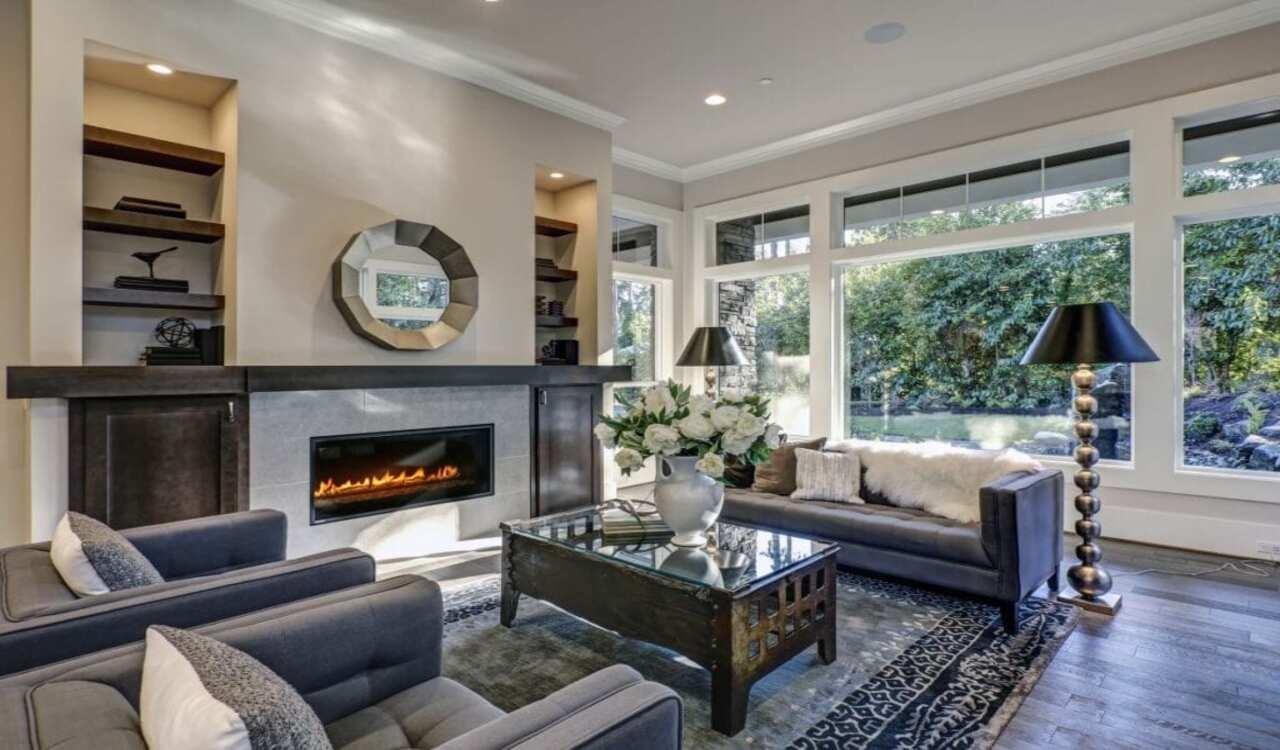
    Transitional interior design results from a blend of contemporary and classical styles. It merges together with the elements of traditional and contemporary design. It gives off a modern, elegant, and cozy look. The features include clean lines, bold colors, rich materials, bold decorations, and a variety of furniture pieces. It usually creates a flow from one space to another. It gives a certain character to the space depending on the user’s choice. How bold or subtle the room is a matter of choice. 
    Maximalist

    The fundamental rule of maximalist interior design is “go busy or go big”. The maximalist design uses bold colors, layering, bold styling elements, and patterns. Finishes like wood and marble are used. The maximalist design avoids having a naked spot in the room. Maximalist designs go big in terms of wallpapers, accessories, furniture pieces, paintings, carpets, art pieces, wall hangings, rugs, artifacts, showpieces, etc. A variety of colors, patterns, and textures are mixed, matched together to create an interesting look. Layering is the key to creating a maximalist look. 
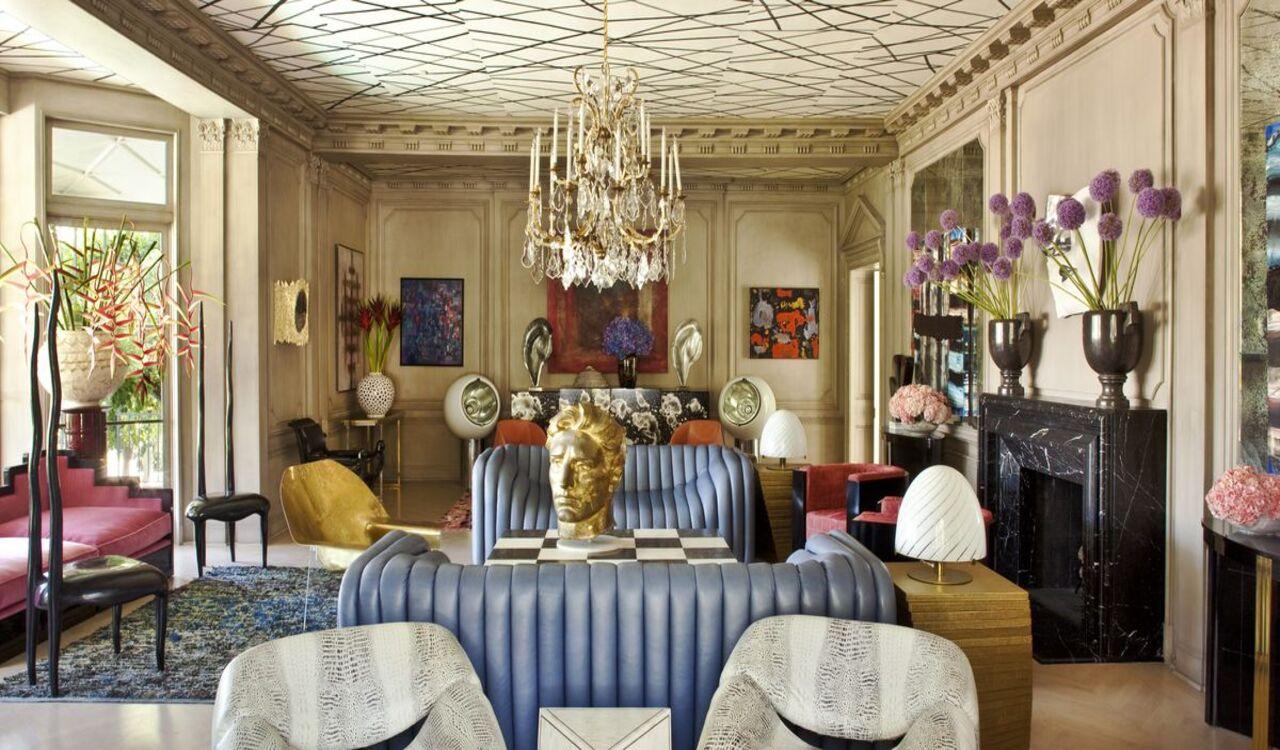
    maximalist
    Photo by Elle Decor

    Bohemian

    Bohemian interior design is also known as ‘boho-chic’. This style comprises a variety of bright colors and vintage styles. Usually, the walls and ceilings are plain, and each and every component in the room is treated with a different design element. The furniture pieces, accessories, and a variety of fabrics. Embroidered sofa or curtains, cane wall hangings and other wooden decorations, mirrors, indoor plants, textured pillows, and a variety of textured carpets or rugs, etc. are some of the elements of bohemian interior design. 
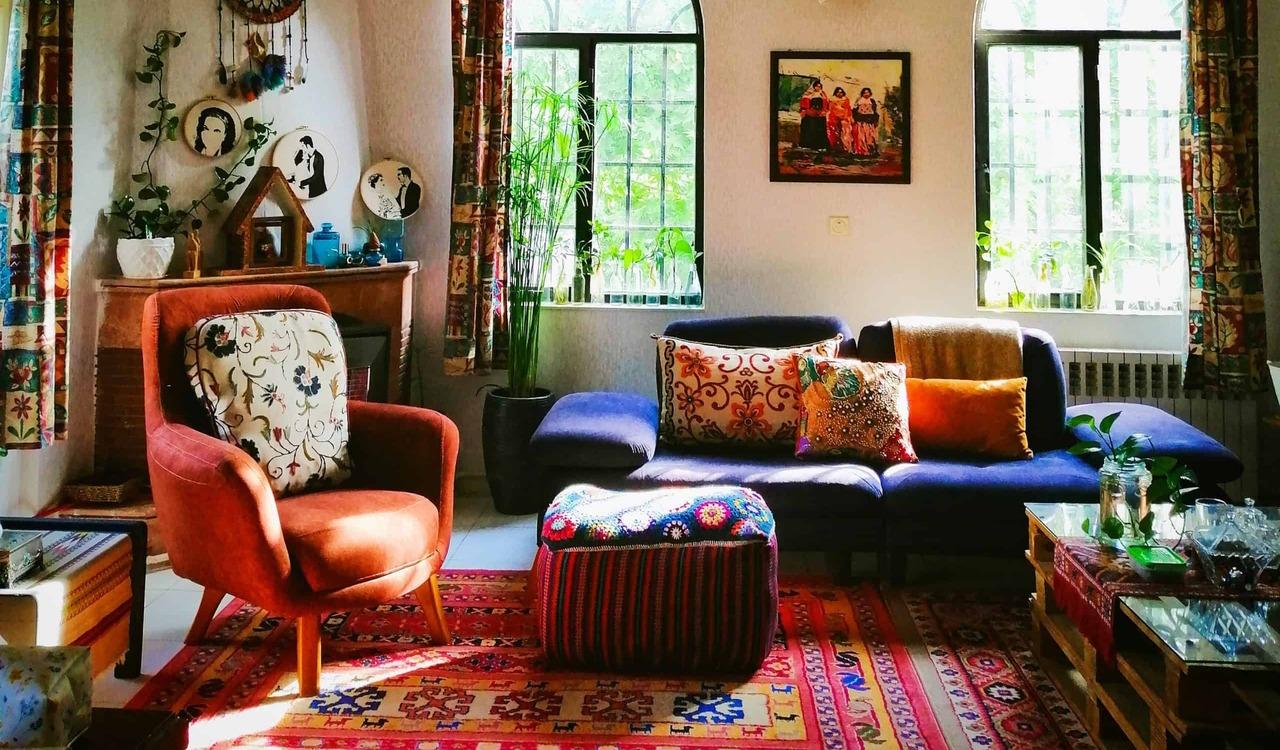
    bohemian
    Photo by Kraftivo

    Memphis

    Memphis design dates back to 1981 in Milan, Italy. Characteristics of Memphis’ interior design include dynamic neons combined with flat, pastel shades, contrasting palettes, black and white stripes, abstract squiggles, bold and repetitive graphic patterns, and simple geometric shapes. This style is a blend of 1950s kitsch, art déco, and Pop Art.  
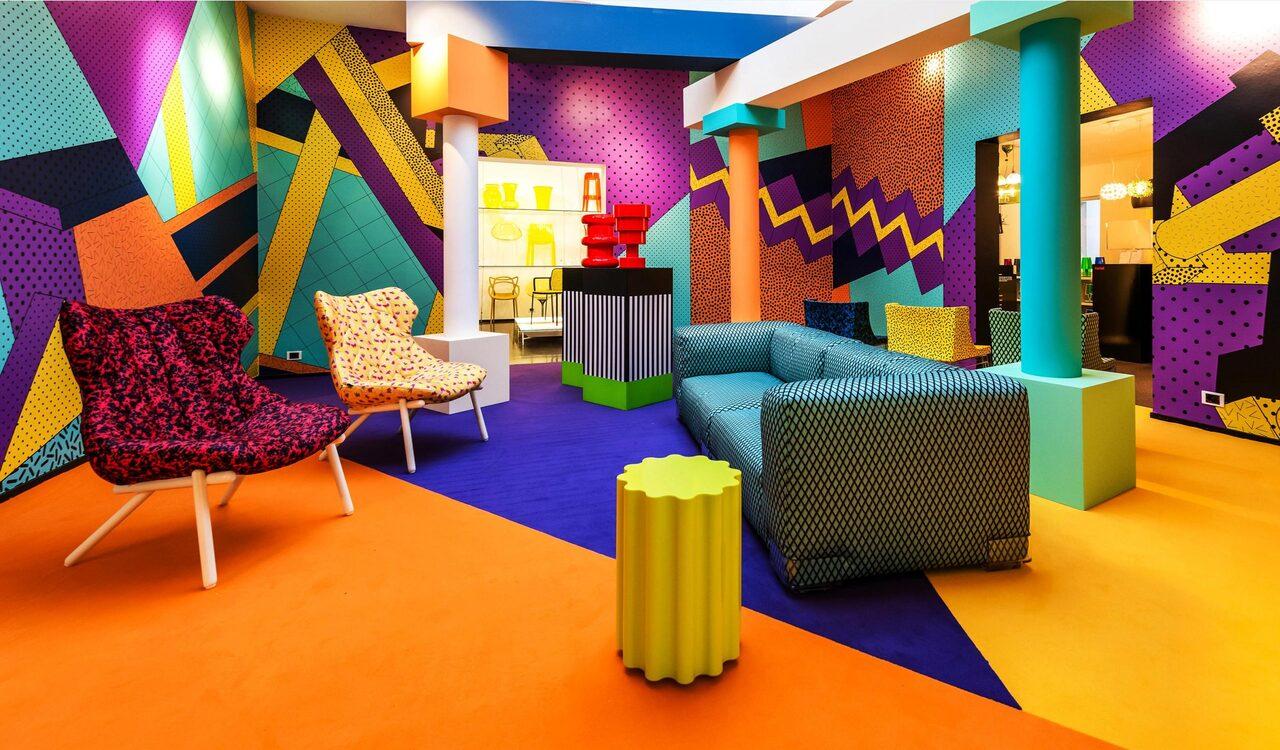
    memphis
    Photo by Homes Studio

    Scandinavian

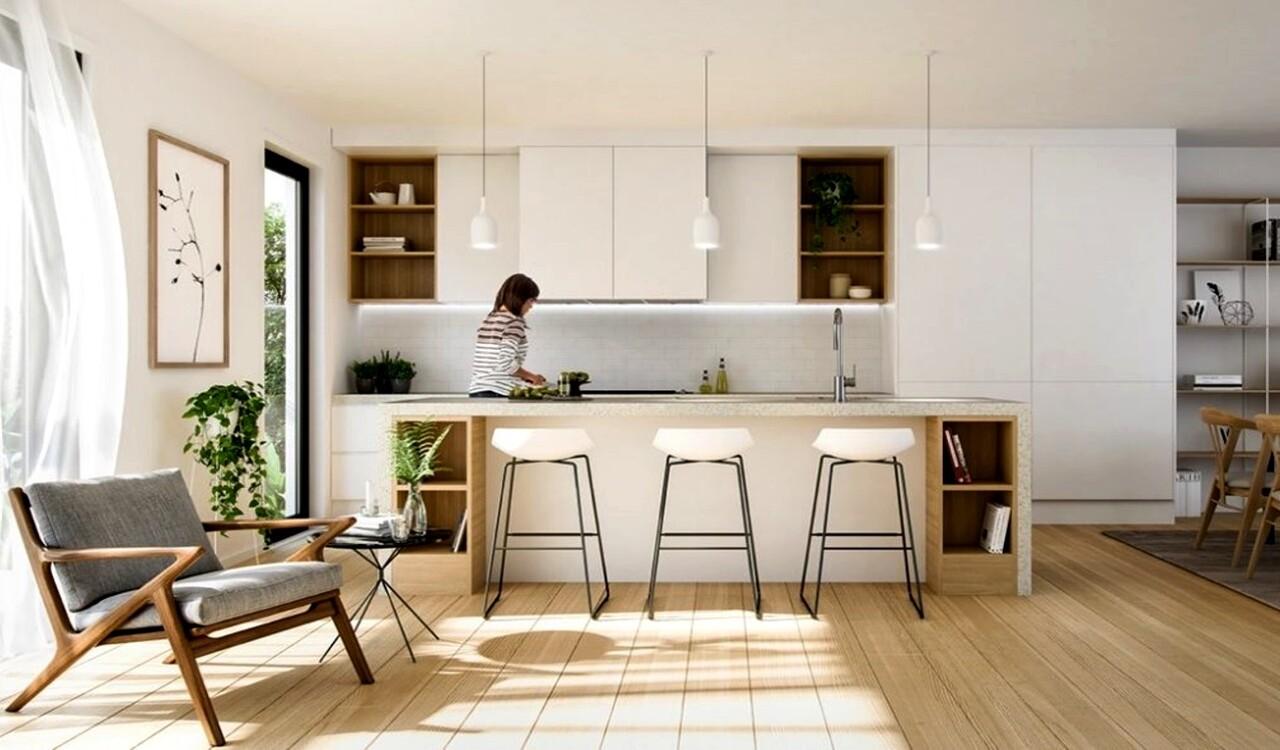
    Scandinavian interior design is derived from the climatic conditions of mid-century Europe. Since extreme cold was a common trait in that area, the housing typology comprises small houses that feel comfortable, airy, and follow a natural theme. Each element reflects sunlight. This style gives off a cozy feel that is simple, clean, elegant, and minimalistic. 

    The common features of Scandinavian interior design include the use of light colors, wood, stone, straight lines, white walls, subtle aesthetics, plain layouts promoting functionality, basic lines and shapes, modern furniture, clutter-free spaces, use of candles, plants, minimalistic fixtures, neutral color schemes, and use of natural fabrics like cotton, wool, and linen in order to imitate nature.
    Minimalist

    The fundamental rule of minimalist interior design is “less is more”. This makes a design look simple, minimalistic, uncluttered, clean, plain, monochromatic, unfussy, and unpretentious. In this style, the color acts as the accent. Aspects of décor like furniture pieces, paintings, art pieces, wall hangings, artifacts, showpieces, etc. follow a simple color scheme and sleek, clean patterns with minimum ornamentation, giving it a light, airy, weightless, soft, and subtle feel. 
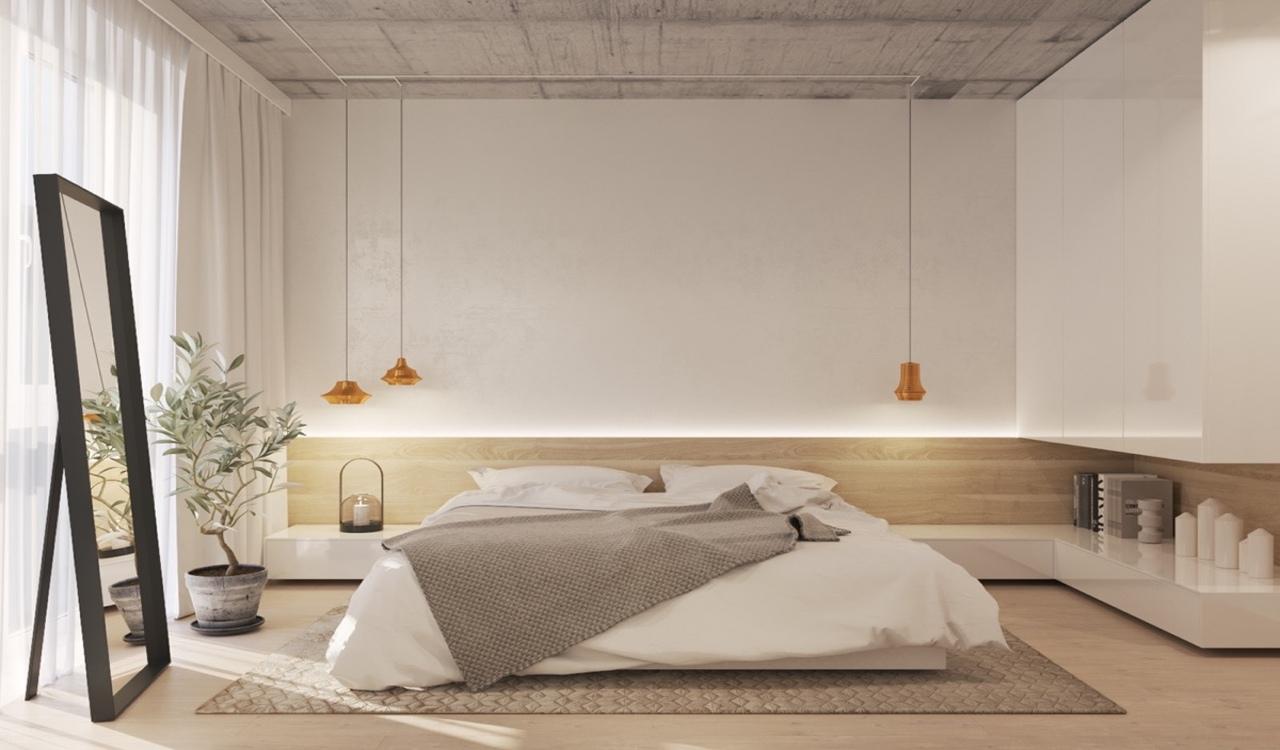
    minimalist
    Photo by Roo Homes

    Industrial

    The key features of industrial interior design are exposed ceiling pipes and mechanical components. These elements create a contrast with the white spaces, producing an interesting rustic style. The walls are colored or exposed to concrete, bricks, or wood. Polished concrete flooring is usually preferred for industrial style. Wood or stone adds contrast. Defects, spots, stains, scratches, or any other imperfections are not a problem in this style because they usually add character to the space. 
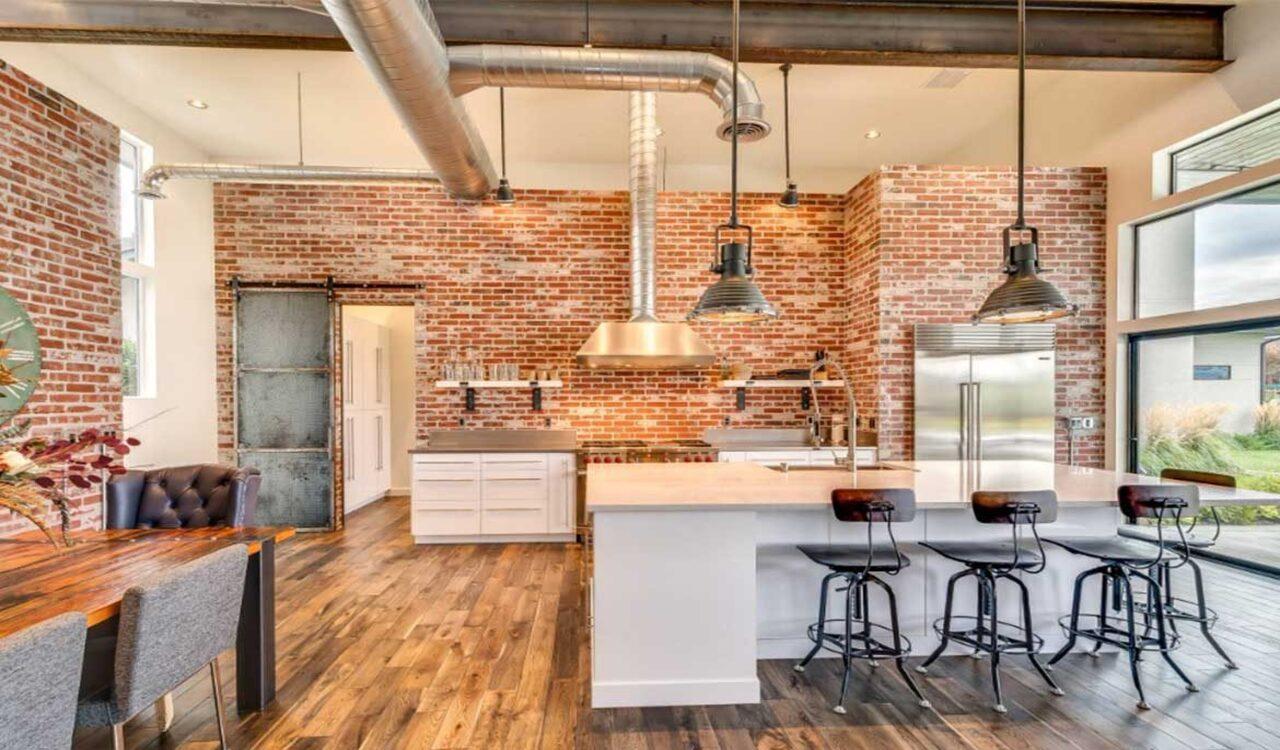
    industrial
    Photo by Lines mag

    Shabby Chic

    Shabby chic interior design focuses on furniture pieces that look old, dull, scraped, and a little deteriorated. It gives off a very rustic feel. It comprises vintage elements but also has a modern look. To get this look, furniture pieces are sanded or wiped after painting or the surface layer is removed. This can be done around the edges to expose the layer underneath. A variety of textures and patterns can be combined with distressed metal or wood to get this style. How bold or subtle the color palette is a matter of choice. 
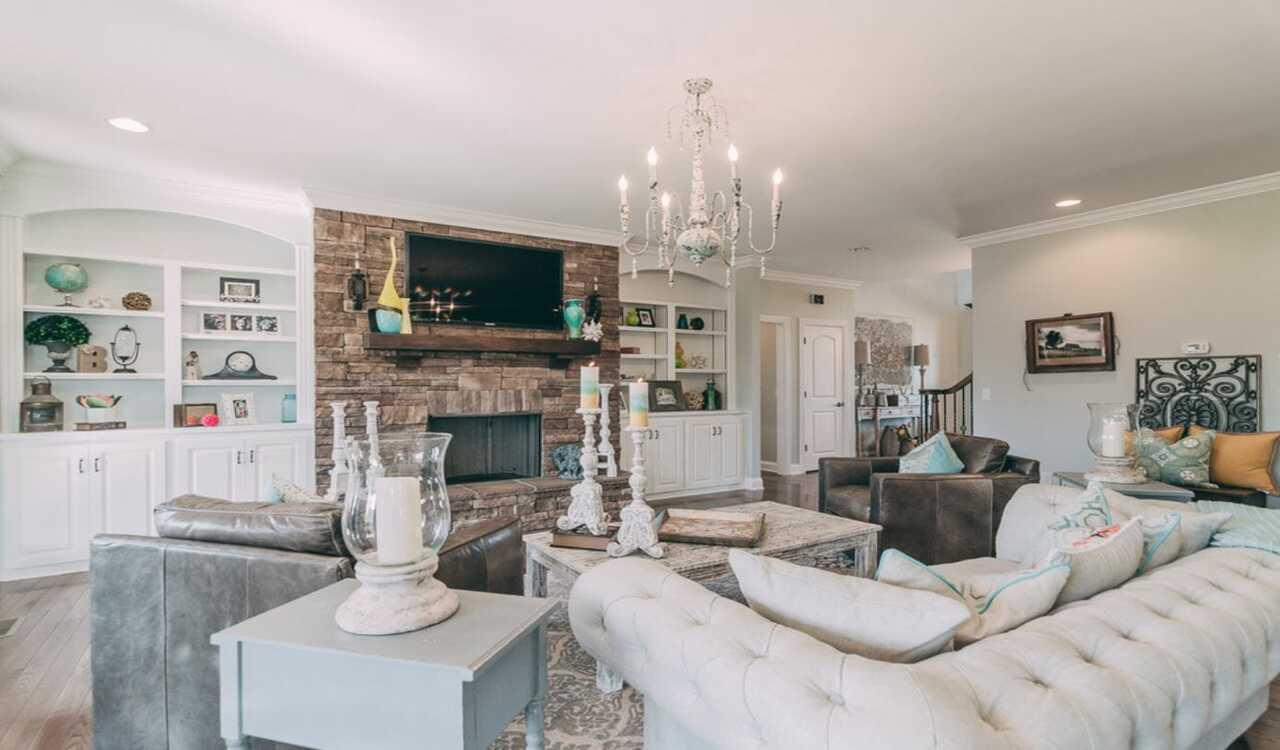
    shabby chic
    Photo by Decorilla

    Mid Century Modern

    Mid Century Modern interior design belongs to the mid-1930s to mid-1960s. The representation of this style is done by the use of shapes, textures, and patterns. Characteristics of this style are straight lines, gentle organic curves, a blend of different materials and shapes, sometimes contrasting ones. This style comprises minimum embellishment, simple decoration, with organic, curvaceous, and sleek forms, giving a minimalistic, classic, simple, uncluttered, and unpretentious look with exceptional quality. The materials used are wood, metal, glass, vinyl, and plywood. This style can be done in a variety of colors, from neutral palettes to metallic colors and black and white. 
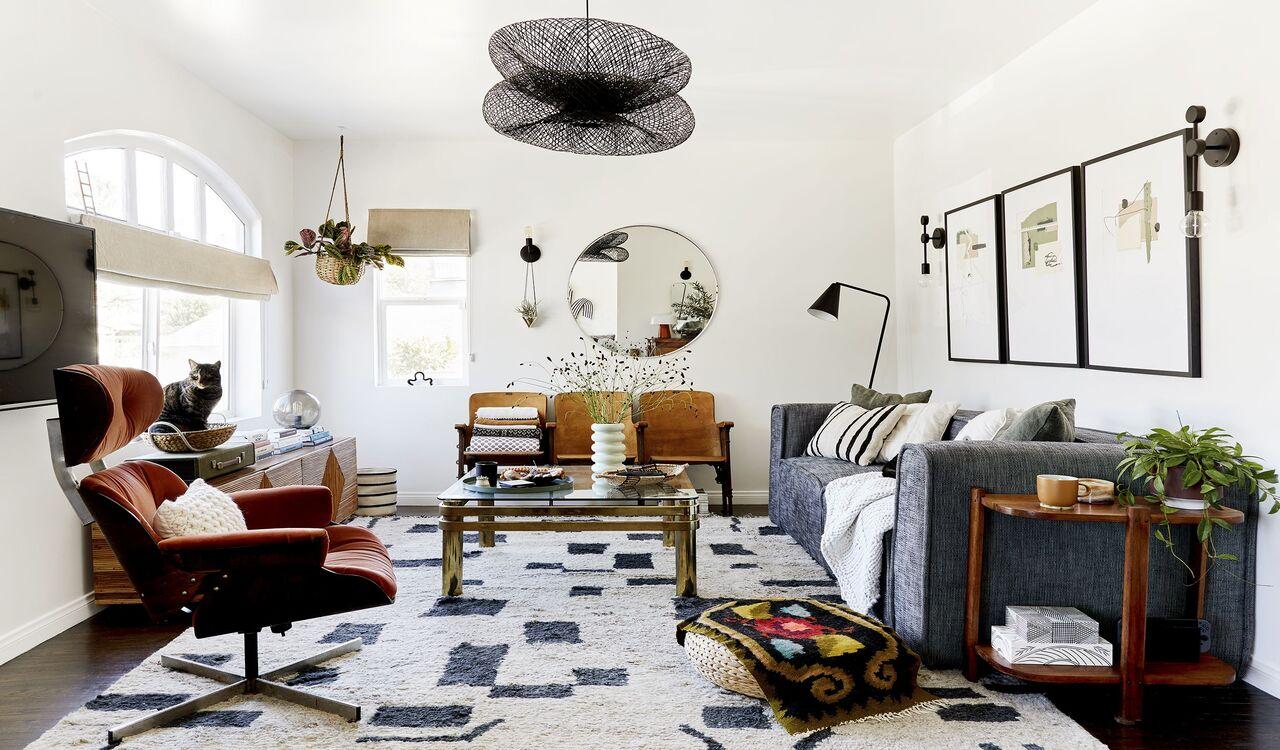
    mid century modern
    Photo by My Domaine

    Rustic

    The rustic interior design follows a natural theme that is the bold, simple, rough, vintage, and basic design. Natural wood can be used for most elements in this style. Elements of design in this style usually aren’t glossy or lustrous, giving it an unpolished look. Other components like sofa, blankets, pillows, floors, ceilings, curtains, rugs, carpets, etc. all imitate nature.
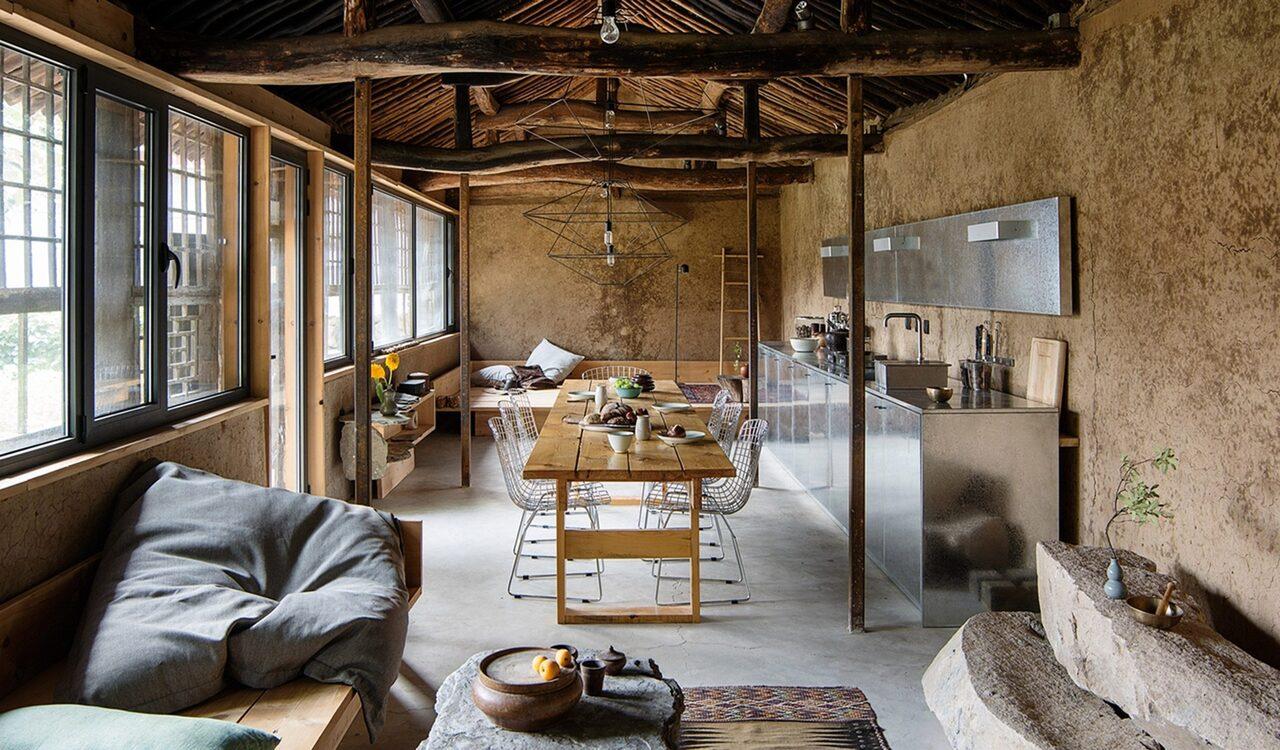
    rustic
    Photo by Dezeen

    Traditional

    The type of traditional interior design depends on region. That being said, there are certain characteristics that are common between them. Most of the traditional designs have the usage of wood. Darker wood gives a more rustic feel to the space. In luxury houses, marble is used for flooring. A variety of carpets and rugs are used. The use of moldings gives a sophisticated look. It comprises warm color palettes, mirrors, paintings, wall hangings, coffered ceilings, heavy curtains, ornamental pieces, use of iron or brass, chandeliers, candles, etc. This gives off a feeling of luxury, richness, and vibrancy. 
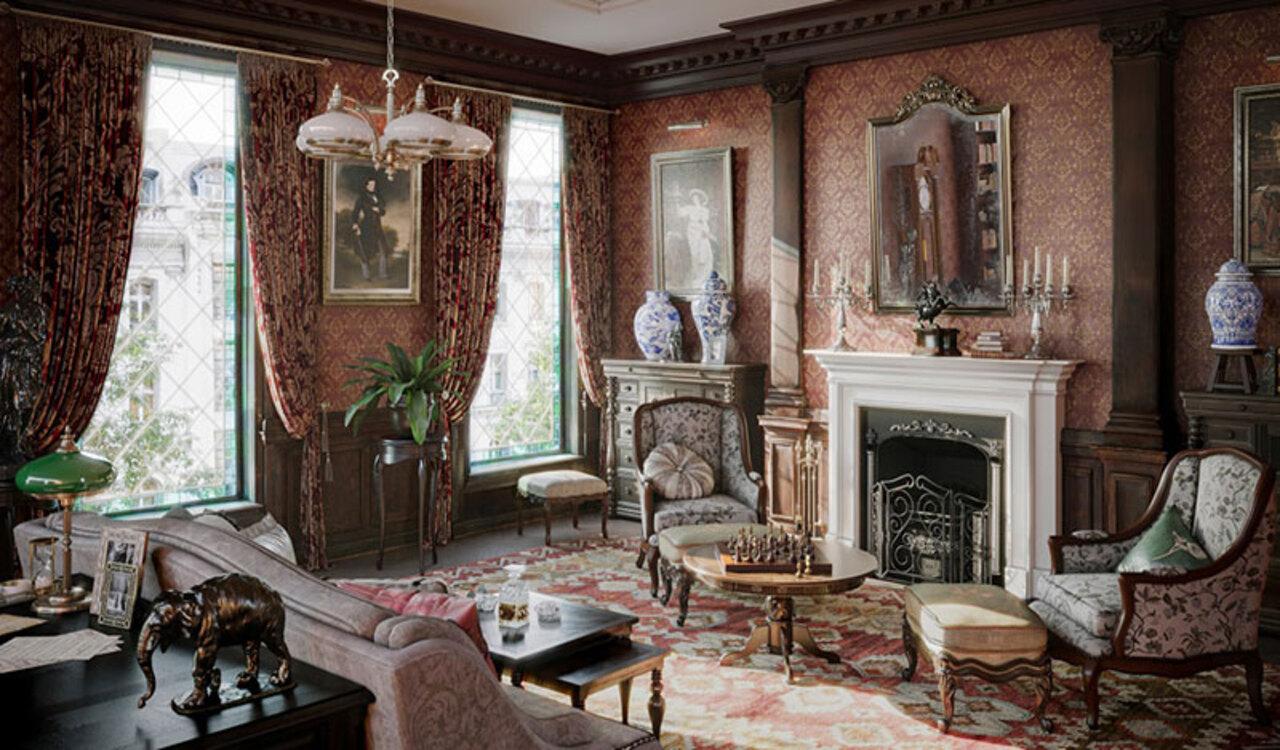
    traditional
    Photo by CGI Furniture
  • Housing In Extreme Heat: How Do People Adapt to Extremely Hot Climate?

    Housing In Extreme Heat: How Do People Adapt to Extremely Hot Climate?

    While constructing houses that beat the climatic restraints of a particular area, bioclimatic influenced architecture plays an important role irrespective of the environment surrounding the house. With the help of detailed research, it is possible to implement design strategies that will lead to the growth of comfort benchmarks. In such cases, the role of an architect goes beyond the architectural design of houses. The level of comfort and wellbeing of the occupants becomes a prime responsibility.

    Even in extreme heat or cold, architecture can influence the comfort level of the occupants of a space. Despite hostile climatic conditions, the climatic adversities can be controlled by incorporating vernacular architecture elements into the design and considering the geo-climatic conditions of and around the site. The architect’s and client’s choices may cause a difference in solutions. Bioclimatic architecture provides better living conditions and adaptability to climate.

    While studying the surroundings of the site, climatic conditions and restrictions play a very prominent part. The relative humidity, temperature equilibrium, ventilation, and sunlight are factors considered of utmost importance. Traditional architecture is a perfect example of architectural design concerning climatology. These houses express the social and cultural context of a place and the regional and local geo-climatic conditions.

    extreme heat
    Photo from Wikipedia

    Factors Considered

    The factors to take into deliberation while designing for places with meteorological restrictions are thermal comfort, interior design, treatment of exterior facades, and elements orientation of the edifice and site, to name a few. The orientation of a building also includes several other elements like topography, solar radiation, noise insulation if any, view, wind, privacy requirements if any, surrounding vegetation, and water, to name a few. Researching about the sun positions, and what angles the solar radiation hits the house in what season, has significant benefits.

    Since blinds or curtains do not ensure any heat absorption, shutters or louvers help trap heat on the outside. By so, no solar radiation enters the interiors. Horizontal cross ventilation and vertical airflow, also known as the stalk effect, help with thermal comfort. Having open plans enables ventilation. Roof vents and ceiling fans help. Having fans or vents in the washrooms helps in exhausting moisture.

    Effect Of Heat on Homes

    Paint and Wood

    Excess heat causes paint to bubble up. The exterior finish of houses gets chipped and becomes flaky. This causes moisture and mold in the house because of openings created. Elastomeric paint creates a barrier against heat and moisture. Trying to paint on surfaces at a higher temperature can be a little tricky. The heat causes the paint to become thinner, dries faster than it should, and leads to a wrinkly and bumpy finish. Too much heat causes wood to shrink or swell. It dries out, cracks, peels, and expands because of heat.

    Roofs in Extreme Heat

    Roofs face direct sunlight at the top. Proper ventilation in the attic area ensures that there is no excess humidity in the attic area, which prevents deterioration of shingles. Heat results in warping, expansion, cracks, leakage, and drying. Installation of vapor barriers, and coating the roof to seal against UV rays’ help.

    Climate Control in Hot Climate

    The hot, arid regions are found mostly in sub-tropical latitudes that are at a distance of 15 to 30 degrees north or south of the equator. These regions are semi-desert or desert-like. Almost one-fourth of the earth’s surface is covered by these places. Sand storms, solar radiation intensity, temperature, humidity, and a lack of water sources are among the other features. The hot climate is further segregated into two parts namely, semi-arid (semi-desert-like), and desert. The requirements of people living in arid regions differ from that of people living in moderate climates.

    The tolerance level of people towards heat and relative humidity is much higher. During the day, the comfort level depends on controlling solar radiation. This radiation can be received directly from the sun or reflected from the ground, surrounding buildings, and also the terrain. The openings are closed during the daytime. Openings at the top avoid heat and dust. The heat intake during the daytime is dissipated at night time. Regardless, adequate nightly airflow is accomplished by having all windows open.

    evaporation
    Photo by Archi Monarch

    Structures are expected to have high heat capacity. The walls absorb heat and keep the interior spaces cooler. The heat penetration through the walls takes hours. Materials with a large thermal mass, such as concrete, limit heat gain during high peak temperatures on roofs and walls. Light colors have a low thermal absorption rate. White paint has a high reflective index. The colors you choose for the building influence the climate change inside and control the amount of glare reflected by buildings and soil.

    Vernacular Architecture

    Protection against sand storms is of utmost importance when designing buildings in such a climate. Settlements are preferred to be as compact as possible and present spatial geometry. Orienting them in huge clusters enables the buildings to act as shading devices for the roads and other houses. This kind of planning reduces the surfaces area exposed to sun radiation.

    vernacular
    Photo from Quailsprings

    Roofs and the walls facing east and west direction are the design elements that face the most solar radiation. Houses are arranged in rows from east to west, eliminating radiation on those sides. Only the walls facing north and south directions receive solar radiation. The difference in temperature for best and worst plans will be up to 3 degrees Celsius. Cooling indoor air results in thermal comfort. Elements receiving the most solar radiation are roofs and walls facing east to west.

    thermal issues
    Photo SunjayJK from Pinterest

    Solutions for thermal issues are thick walls. Fewer openings to the outside, and compact shapes when planning the shape. Thickly clustered patio homes are the most common. This reduces the area exposed to solar radiation. Outdoor connection to courtyards at the center of the house acts as a focal point for household activities. Keeping openings to a minimum reduces heat inside. The passive cooling techniques used in vernacular architecture also apply to contemporary architecture.

    Contemporary Architecture

    contemporary
    Photo by Moira Jilani from Pinterest

    Streets and houses are arranged in a cluster. The neighboring buildings and lined are positioned compactly. This reduces the area exposed to sun intensity. Reducing solar radiation on surfaces of houses matters in such kinds of climates. In independent structures, where cluster planning is not possible, houses are constructed at the ground level or buried inside the ground. This is an effective approach for thermal insulation. Soil offers thermal insulation because of its thermal mass.

    Issues like radiation, both direct and reflected, and sandstorms, are resolved by creating exterior spaces that are shaded. This makes it possible to use exterior spaces even in extreme heat, enabling freedom of movement for people using the spaces and pedestrians outside. The primary aim of such a climate is heat dissipation. The building is usually oriented around a patio or an open space that is enclosed from the outside, along with vegetation and small waterbodies. This increases the chances of evaporative cooling. These provide relief against intense climatic conditions.

    The western façade faces most solar radiation. Thus, protection of these facades is essential. Solutions to protect fenestrations, and other elements of the building against glare, solar radiation, and solar reflectance includes incorporating elements such as projections for facades, extended projections for windows, placing trees surrounding the houses, and using walls or other houses to restrict solar radiation. The percentage of openings is a prime concern in housing typologies.

    Building Materials

    Materials with more thermal mass like stones, concrete, or earth are used in hot climates. Other materials like polystyrene, polyurethane foam, and phenolic foam have more R-Value. Mud houses are built in hot climates because mud is a poor conductor of heat and provides cooling in the interiors. Traditional adobe is used in the Southwest and other hot climates. Adobe blocks are used for thick walls. The usual thickness of these walls is 25 centimeters to 30 centimeters. Since the density of this Adobe blocks are made by mixing clay, sand, straw, and water. These were initially dried in the hot sun.

    The general dimensions of these blocks are 25x40x12.5cm. Since the density of this material is more, it provides thermal insulation and makes it difficult for heat or cold to transfer from exterior to interior. Although adobe has good thermal mass and greater density, it doesn’t entirely help keep the heat and cold out without other provisions. The labor required for making adobe bricks is more. Adobe bricks have less strength and structural integrity as compared with other materials.     

    adobe blocks
    Photo from Abundant Edge

    Apart from these traditional materials, green roofs or ivy walls help in removing heat from the surrounding. Green roofs are visually pleasing and help in decreasing the temperature of the roof, which reduces heat transfer to the interiors. Having a lot of vegetation around also has positive effects on the microclimate. Choosing the right materials for windows aids in passive cooling. Wood fiber has the highest thermal mass out of all insulation materials. It stabilizes the temperature inside, reducing the need for mechanical ventilation and carbon emission. 

    microclimate
    Photo by Festool
  • Interior Design Materials: Important Types of Materials and Finishes

    Interior Design Materials: Important Types of Materials and Finishes

    Paint

    Interior Design Materials like Paint are a thin coating of liquid applied on surfaces that dries into a solid form. It can be applied on walls, ceilings, furniture pieces, etc. They are used for different purposes, such as shielding against moisture, sunbeams, dust or dirt, etc. They make the surface more durable and easier to clean and maintain.

    The use of new materials for interior design is revolutionizing the way we approach decor, offering sustainable and innovative options for modern living spaces.

    The different paints are as follows.

    Oil Based Paint or Solvent Based Paint

    These paints, with higher levels of organic compounds, are robust and reliable and stay lively for ages. It contains pigments and resin and is ideal for frames and borders. They have different types, ranging from matt to high gloss. The downsides of this paint are the extended time taken for drying out and the powerful odor given out upon drying, leaving a toxic impact on the environment.

    Understanding the different materials used in interior design, from natural elements to cutting-edge synthetics, can help you create a space that is both beautiful and functional.

    Water-Based Paints

    Water-based paints have seen increasing popularity for residential and commercial interiors. They’re made of pigment and water binder used as its transporter. They’re environmentally friendly, dry fast, emit less smell. They’re available in a range of finishes and can be washed with soap and water. The color of water-based paints is preserved for a longer time. Types of water-based paints include acrylic and latex paints.

    Acrylic

    Acrylic paints are water-soluble, which is why water is used for thinning. The consistency of the paint depends on the surface texture to be painted. That has superior adherence, durability, and elasticity, acrylic paints are mainly used for kitchen cabinets or outdoor furniture. Major features include durability and elasticity. These paints have a standard matte finish.

    Latex

    These paints offer more coverage than acrylic paints and do not emit odor. They’re durable, less costly, and environment friendly but do not last long on outdoor furniture. This paint is easy to wash off. Because it has a very thin consistency, it dries quickly. These paints come in a variety of gloss finishes and colors. Since they’re sold in bulk, most of the time, they’re used for larger surfaces. They’re quite popular for home interiors.

    interior design materials
    Photo from PaintCity

    Emulsion Paint

    Emulsion paints are a popular choice in Interior design materials and finishes for walls and ceilings. They emit less odor, dry quickly, and are easy to apply. Modern emulsions are water-based with vinyl or acrylic. Resins are added to make them tougher than compared to the conventional emulsion. As a result, it offers a variety of finishes and shines. The probability of wearing is proportional to the shine of the color. Categories of paint include matte, eggshell, satin, and full gloss.

    emulsion paint
    Photo from NipponPaint

    Enamel Paint

    This paint is great when the surface is needed to be as durable as possible. It is commonly used for exteriors since it can handle the environmental impact. They’re also used for furniture pieces, concrete, stairs, basements, porches, patios, refrigerators, counters, and other industrial finishes. It’s simple to use and dries in a rough finish since it is hard to paint. It can be used without primer or sanding.

    enamel paint
    Photo from NanoPolycoat

    Distemper Paint

    This paint is used since ancient times for house decoration. It is popular, cheap, and gives valuable coverage in just a few coats. It is a common choice for interiors because it gives amazing luster to the walls. It dries easily and any errors can be rectified with a wet cloth. The composition of distemper paints includes water, color, and plaster. Negative aspects of this paint include not being waterproof or durable.

    distemper paint
    Photo from IndigoPaints

    Lime Wash

    Limewash is made with crushed and burnt limestone mingled with water into lime putty. Aged putty is mixed with water and natural pigments for color. It is a lighter and thinner alternative used on mottled and matte surfaces and gets ten times lighter as it dries. It contains a chalky texture, shows less dirt, and gives depth and brightness to plain walls. It is better on porous materials like concrete, stone, and brick. The disadvantage of limewash is its limited color range.

    lime wash
    Photo from LorriDennis

    Interior Design Materials: Category of Paints by Finishes

    Matte Finish

    These paints are glossier and more durable than flat paints. Since it has slightly better longevity, it is advisable for surfaces with high traffic. Although it might not be an optimal solution, it is still a little better than flat paints. It is preferable to be used on ceilings as it saves money.

    Eggshell

    Eggshell paints are paints that offer a low shine level. It is glossier than matte paints but has less sheen than satin paints. It is flat, but with a slight gloss to it. It is durable, affordable, and popular. It is easier to clean since it can be washed with a damp towel.

    interior design
    Photo from TheSpruce

    Satin

    Satin has a lustrous and velvety feel. These paints are not too shiny and not too flat. They have more glow than eggshell paints but less than semi-gloss paint. It is durable, washable, easy to handle, and also less expensive. It is used for painting hallways, doors, woodworks, bedrooms, dining rooms, and almost any other type of space. The appearance of satin paints depends on the lighting conditions of a particular room. Although easy to clean, it is advisable to not scrub it abrasively, as that may lead to a loss in sheen level.

    satin
    Photo from ElleDecor

    Semi-Gloss Paint

    These paints are mostly used for kitchens and bathrooms because of their high durability. The more reflective and can be fully scrubbed. Because of its high luster level, these paints make the flaws on surfaces very visible. Even though it is easy to clean, it is recommended to clean it carefully.

    semi gloss paint interior design materials
    Photo by Allison Crawford from ElleDecor

    Glossy

    High gloss paint is eye-catching and fits well in many designs because of the high sheen that gives it a mirror-like finish. It is easy to wash and can be scrubbed intensively without a second thought. It can be used in ceilings and furniture. It can also be used for walls, but one will just have to be prepared for the high level of reflectivity that makes the flaws apparent. As beautiful as it is, it is harder to apply. It is advised to use foam rollers for the minute spots.

    Chalkboard

    It is mandatory to apply primer on the walls before chalkboard paint is applied. This wall can later be used as a standard chalkboard after the painting is done. This paint is available in almost all colors. Upon application of this paint, the surface becomes hard and scratch-resistant. It can wood, metal, drywall, glass, concrete, and more.

    chalkboard interior design materials list
    Photo from House Beautiful

    Faux Finishes

    Faux finishes or faux painting has two different application methods. The first is where translucent paint mixture is applied and glaze is applied on top with roller, brush, or sponge. Even though it imitates textures, it is normally having a smooth effect. Another method involves the application of tinted plasters which are washed over with earth pigments. A trowel or spatula can be used for its application. The end product can either be smooth or textured. These techniques are used to restructure a room as it adds more light and depth, changing a wall’s appearance. Here are some examples of popular faux finish techniques.

    Marble Paint Finish

    For marble paint finish, a small amount of grey paint is used to create bands by blending in the glaze. The grey color is smudged on the walls and then smoothened out with a dry brush which creates chunky wobbly paint strips which create a more realistic effect. The softening of stripes can also be done with the help of a rag, blotting, or sponge.

    marble paint finish  interior design materials list
    Photo from LesCreations

    Slap Brush

    This technique creates a unique appearance on the walls. It is also known as ‘crows–foot, panda paw or stomp the brush’. The texture can be created on a bare wall, but a prior painted wall should be cleansed. It is prepared by basic drywall texture or mud. The texture has a sunburst effect created by the bristles of the texture brush. The depth of the creases is determined by the sturdiness of the bristles of the brush.

    slap brush interior design materials
    Photo from Joyce Painting

    Rag Rolling

    Rag rolling techniques are used for creating a major impact on the walls. In this technique, a distorted or huddled piece of cloth is used to paint the walls by dragging them off irregularly. This adds a sense of detail to a space. It also hikes up a place from being flat or bland to having a certain character and depth on a limited budget.

    rag rolling
    Photo from Wiki How

    Epoxy Flooring

    Epoxy floors are created by many coatings of epoxy. Since each of these layers is of a depth of 2 millimeters, the minimum depth of epoxy flooring is 2 millimeters as well. A layer thinner than that is called epoxy floor covering. Epoxy floors are durable and can sustain even industrial conditions. Resins and hardeners together form a thick, strong, rigid material that withstands any wear and tear. Here are some types of epoxy floors.

    epoxy flooring interior design
    Photo from Tough Floors

    Wood and Wood Finishes

    Hardwood

    Hardwood trees are angiosperm trees or trees that produce seeds covered in a shell for reproduction. Usually, they are deciduous trees that lose their leaves each year. Since their rate of growth is slower than softwood, their wood is dense and is used for the construction of desks, beams, panels, floors, and furnishing purposes. Hardwood joinery is expensive as compared to softwood. Density, grain, pore size, growth and fiber pattern, flexibility, and ability to be steam bent are some characteristics leading to a variety of hardwood. Examples of hardwood trees include oak, beech, walnut, ash, mahogany, maple, and cherry.

    Softwood

    Softwood trees are gymnosperm trees. These trees lose their leaves and keep them throughout the year and also grow faster than hardwood. It provides 80% of the timber and comes as huge planks or beams. It is used in the process of artificial components like MDF. As for the construction part, softwood is used for the construction of the roofs and inner structures like fitting, fixtures, etc. As the cells of softwood are open, it allows them to absorb materials like adhesives in a better manner. Examples of softwood trees include pine, cedar, spruce, larch, and fir.

    Wood Finishes

    Linseed oil and Tung oil are known as true oils and are popular choices for interior works. These are easily available and are less expensive. They get penetrated into the wood, making it tougher. The application process involves rubbing it on the wooden surface and cleaning the excess oil with a piece of cloth. Other finishes include natural oils like soyabean oil.

    Wax can also be used for a luxury feel. It is the most popular finish and has a sheen that protects the wood from scratches and water damage. Varnish is a more durable option than wax. Its composition comprises resins and drying oils. Varnish exceeds other finishes in terms of water resistance and fire resistance. Shellac is a finish preferably used for furniture pieces. It is natural and adds to the aesthetic value of the piece. Although it is easily affected by chemicals and isn’t heat resistant, making it an inappropriate choice for the kitchen.

    Wooden Flooring

    The hardness of wooden flooring depends on the type of wood used. Since softwood is prone to bending, hardwood is recommended for flooring. Wooden flooring is durable and can be renovated several times. Another option is engineered hardwood, which is prepared by sandwiching a layer of wood between two thin sheets of wood. It is more resistant to moisture but expands and contract according to changing levels of humidity having no negative impacts.

    Stone

    One of the major reasons for inculcating stone in interior designing is aesthetics. Stone brings a certain character to the room. The color, pattern, and texture of a particular stone depend on how it was extracted and processed. Stones provide natural thermal comfort to people, are low maintenance, sound absorbent, long-lasting, sustainable, and a great way to connect our homes or other interiors to nature.

    stone  interior design materials
    Photo from UrbanCompany

    There are numerous options in stones. Marble, granite, and slate are popular choices. Limestone and sandstone are used for a more laid-back look since they are available in lighter shades. Travertine has a textured feel and is mostly used in bathrooms. Terrazzo and mosaic have artistic patterns and are used mostly for bathrooms and kitchens. Although terrazzo was a common choice for house interiors a couple of decades ago, it has undergone a comeback into subtle interior designing. 

    A mixture of light, dark, small, and big pebbles can create interesting patterns and balance in a space. They can be used in washrooms under washbasins, or near the bathtub. They can even be used for potted plants or even as showpieces. Stones are available in a variety of ranges. They can also be used in gardens, pathways, and around water bodies.

    granite  interior design
    Photo from Medium

    Types of Tiles

    Ceramic tiles are the most popular choice for house interiors and are made of clay. The most vital uses of tiles are durability, scratch resistance, abrasion resistance, ease of use. Tiles come in different shapes, sizes, colors, textures, and patterns. These are mostly preferred by people because of their wide range of designs and ability to uplift and blend into any style of interior designing from traditional to modern. They’re mostly used for interiors because tiles don’t cope well with the sun and other environmental factors.

    Porcelain tiles are made out of thicker clay. They’re more durable and can be used outdoors. They’re available in polished and unpolished textures. Glass tile is majorly used for tabletops and fireplaces as they’re prone to chipping. These tiles are resistant to acidity. Another good option is terrazzo tiles. They’re prepared by marble, quartz, granite, and glass.

    Wallpapers

    Wallpapers are available in a range of designs and patterns. Wallpaper tiles are small pieces that can be stuck on surfaces directly. Mural wallpapers are big designs that set the mood of a room and take up a large area. Drop match wallpapers are pieces with the same pattern. They can be repeated horizontally or diagonally. Pre-pasted wallpapers are those which use water to make the back sticky.

    Plaster of Paris

    Plaster of Paris (POP) is used for decorative elements on walls, ceilings, and partitions. It is available in powder form, also called gypsum powder. This powder is mixed with water and emits heat because of crystallization, after which it hardens. POP doesn’t crack or shrink after drying. It can provide fire resistance to interior surfaces.

    FAQ

    Q. What are some new materials for interior design?
    A. New materials for interior design are revolutionizing the way we approach decor, offering sustainable and innovative options for modern living spaces.

    Q. What are the different materials used in interior design?
    A. The materials used in interior design range from natural elements to cutting-edge synthetics, helping you create a space that is both beautiful and functional.

    Q. Where can I find interior design jobs near me?
    A. To find interior design jobs near you, consider searching on job boards, company websites, or contacting local interior design firms.

    Q. What is Interiors by Design?
    A. Interiors by Design is a term used to describe the process of designing interior spaces to enhance their aesthetic appeal and functionality.

    Q. How can I improve my Minecraft interior design?
    A. To improve your Minecraft interior design, consider using a variety of materials, textures, and colors to create a unique and visually appealing space.

    Q. How do I find an interior designer near me?
    A. To find an interior designer near you, consider asking for recommendations from friends or family, searching online directories, or contacting local design firms.

    Q. What is Scandinavian interior design?
    A. Scandinavian interior design is a style characterized by simplicity, minimalism, and functionality, with an emphasis on natural materials and neutral colors.

    Q. What is maximalist interior design?
    A. Maximalist interior design is a style characterized by bold colors, patterns, and textures, with an emphasis on creating a visually rich and layered space.

    Q. Can I take an interior design style quiz?
    A. Yes, you can take an interior design style quiz online to help you discover your personal design style and preferences.

    Q. What are some popular living room interior design trends for 2023?
    A. Some popular living room interior design trends for 2023 include earthy tones, natural materials, and biophilic design elements.

    Q. How can I find interior design internships?
    A. To find interior design internships, consider contacting local design firms, searching on job boards, or networking with professionals in the field.

    Q. How do I create an interior design portfolio?
    A. To create an interior design portfolio, include examples of your best work, along with a brief description of each project and your design process.

  • Temple Architecture and Human Psychology: Is Modern Society Responsive towards it?

    Temple Architecture and Human Psychology: Is Modern Society Responsive towards it?

    Introduction

    The soul of a Hindu Temple is influenced by the philosophy that everything is linked with each other and in the end, it all comes together. According to Indian philosophy, the most vital and noteworthy values are the pursues of artha (wealth and prosperity); kama (sex and pleasure); dharma (moral life and virtues); and moksha (self-knowledge and realization). These four beliefs are said to be the purposes of humanity. Every aspect of a temple architecture, the artistic motifs, even the intricate decorations on the pillars, all of them come together to adhere to this very concept of omnipresence.

    Temple architecture in India developed in all parts of the country during ancient times. The design in these temples is influenced by geographical situations, culture, customs, climate, ethnicity, race, history, and language. The Garbha-Griha is also known as Womb-Chamber is the main part of the temple where the deities are kept. The Garbha-Griha is usually provided with a passage around it but in some temples, there are other secondary shrines present in the complex itself.

    In the earlier times, one could easily distinguish the difference between temples from South or North based on certain architectural features. For example, In the northern temples (The Nagara), the Shikhara was a distinguishable component whereas, in the Southern temples (Dravida), it was the Gopuram which is a huge gateway that leads to the sacred courtyard. The common features in their temple architecture include layout, decorative features at the interior as well as exterior and their positions.

    Layout

    The layout of a Hindu temple conforms to a geometrical design known as ‘Vastu-Purusha-Mandala’. This name is derived from three significant mechanisms, Vastu – meaning dwelling or place of habitation, Purusha – meaning the universal principle, and Mandala – meaning circle. This mystical diagram of Vastu-Purusha-Mandala is known as ‘Yantra’ in Sanskrit. The typical layout of a Hindu temple architecture is derived from this diagram is derived from fundamental beliefs, rituals, practices, customs, mythologies, and mathematical norms.

    As per Vastupurushamandala, the most sacred template is the 8 x 8 grid. This grid is known as Bhekapada or Ajira. Thus, the layout of temple architecture has a central axis with diagonals that represent Purusha. A square is created around the axis referring to the four main directions. The square, circumcised by the circle is considered sacred and the square is considered human which can be located in everyday life. Thus, kind of layout is seen in huge temples that can be considered superstructures. 

    temple architecture
    Photo by AppliedVastu

    Basic Components of a Temple

    1. Ardhamandapa – In Hindu temple architecture,Ardhamandapa, also known as Arth Mandapa or Ardh Mandapa is a four-pillared outermost part of the entrance of the temple. It is a veranda or an entrance porch. It is generally open to provide light and ventilation and also acts as a provisional space between the exterior and interior of the temple (The Mandapa). The number of Ardhamandapa is equal to the number of entrance doors in the temple.
    • Entrance – In Hindu temple architecture, the entrance is also known as Mandapa, is usually decorated with forms of river goddesses and stripes of floral, figural, and geometric embellishment. At times, an ambulatory is provided around it. Mandapa also known as Mantapa or Mandapam, is a pavilion or a hall surrounded by pillars, used as a gathering area or for public rituals.

    The design of Ardhamandapa and a Mandapa in temple architecture usually resembles each other in terms of design, carving, and decoration. Depending upon the presence or absence of walls, they can be enclosed or open. In the case of more than one mandapa, each one is given a specific function and named after it. For example, a Mandapa used for marriage will be known as Kalyana Mandapa.

    • Garbhagriha – Garbhagriha, also known as Sanctum, is the innermost part of the temple architecture. This is considered the most sacred part of the entire time as this is the place where the deity itself is situated. This is headed by one or more attached mandapas (porches or halls) with pillars, that are linked to the sanctum by an open or closed atrium (antarala).
    • Shikhara, Amalaka – The Shikhara at the top is usually curvilinear. Small rectilinear Shikharas can be found on top of the Mandapas as well. Amalaka is a round component with folds on the circumference and sits on top of the Shikhara. In Hindu temple architecture, the interpretation of it is that it indicates the sun and is considered to be access to heaven.
    • The Vahan – The Vahan is a very commonly seen element in the Hindu temple architecture.The mount of the main deity of that particular time is known as Vahan. It is placed axially in the sanctum. This can be an animal or a mythological character. This can be placed under or at the side of the deity and the deity may be sitting or standing on the ride or Vahan.
    • Kalasa – In the earlier days, a Kalasa was constructed by stone. As temple architecture and technology proceeded, they were made of copper followed by brass and gilt gold. It isn’t fixed on the Shikhara directly with adhesives or cement. Rather, it is held in place with the help of an overhanging pipe rooted inside the amalaka.
    components of temple
    Photo from Wikipedia

    Types of Hindu Temples

    The main types of Hindu Temples include Northern or Nagara style, Southern or Dravidian style, and Mixed or Vesara style.

    • Nagara or the Northern style

    The Nagara-style temple is found in various parts of the country with regional influences. There are two most common traits of Nagara-style temple architecture. The first one is its Shikhara that stretches and tapers above. The second one is the square temples with graduated projections outside. It is commonly built on a stone platform with steps leading up to it.

    nagara
    Photo from Swarajyamag
    • The Dravida or the Southern-style

    The Dravidian style of temple architecture or Southern-style architecture was established by the Pallavas who ruled portions of Karnataka, Andhra Pradesh, and northern Tamil Nadu until the ninth century. As opposed to the Northern style, it is enclosed inside a compound wall. In Southern-style, Kalasha is called the Shikhara and instead of the curvilinear Shikhara, it has a stepped pyramid-like structure. The sacred hall in this is the smallest as it is the oldest part of the temple.

    dravida
    Photo from Swadesi
    • The Vesara or Mixed style

    Vesara temple architecture are a blend of both Northern and Southern styles. The name Vesara has been derived from the Sanskrit word Vishra which means ‘taking a long walk’.  This style of temple architecture was developed in present-day Karnataka. This style was started by Chalukyas of Badami and has been in practice ever since 500 AD.

    vesara
    Photo by Viral Sethi from WordPress

    Effect on Human Psychology

    The construction of temples is believed to commence in the Kalyug, the last of the four Vedic eras. In the earlier eras, namely, Satya Yuga, Treta Yuga, and Dwapar Yug, people were able to connect with God on their own. After temples were created, they became a center of attempts at communication with God. Eventually, temple architecture became a specific genre. Generally, people went to temples for worship. The other reasons for temple visits include the organization of mass feedings, first haircut ceremony, marriages, astrological solutions, etc.

    The temples offer an environment that helps people surrender in front of God without any false sense of ego or pride, with humility, open-mindedness patience, minimalism, and self-contain. It is said that every single ritual right from bell-ringing to performing the pradakshina has a hidden meaning that affects human psychology. These rituals performed along with the aroma of incense sticks, the tinkling of handbells, and the reciting of prayers all together have a calming effect on the person’s emotional state, making them feel uplifted sane.

    Despite a thousand problems and negativities with which a person enters the temple, they always seem to leave feeling content, peaceful, re-energized, and blissful. Hinduism is said to be the oldest religion in the world. It isn’t just a bunch of customs but something that affects human psychology. Even in today’s day and age, people are seen to follow the old culture passed on to them by their ancestors. People still believe in the things their forefathers had faith in without questioning it once. It is also said that the rituals or customs in the Hindu religion are merely a way of life for people. Hence, the conviction towards it.

    Effect on Human Senses

    Our human body is known to have five senses. All these senses stimulate when the rituals are performed like a bell ringing, application of tilak on the forehead, offering flowers and other contributions, igniting the camphor, and performing the pradakshina. Once the senses open up, the human body is more capable of absorbing positive energies which in turn affect human psychology.

    A temple is a boost of positive energy. There is absolutely no discrimination in terms of caste, creed, or religion. Since every person comes with an untainted state of mind, it creates positive vibrations. These vibrations create a positivity wave in the temple space which is absorbed by people making them feel enlightened. A lot of people have confidence in temples affecting human psychology. It is also said that these rituals open up seven healing centers in the body. As a result, a lot of people claim that they have healed from a certain trauma or mental situation after visiting spaces of religious significance.

    Rituals and Their Effect on Human Psychology

    Wondered why you’re asked to leave your footwear behind every time you visit a temple? There are two major reasons for this. Firstly, this action is a metaphor for leaving your egos or pride behind and entering the temple with a clean state of mind.  Secondly, spaces that are a part of temple architecture have a higher level of vibrations of electric and magnetic fields.

    As per Hindu temple architecture, the flooring of a temple is a good conductor of absorbing energy. Walking barefoot inside the temple space helps the energy pass throughout a person’s entire body. The rituals performed aren’t superstitious or just something people have been blindly following for centuries. It is ancient help passed down from generation to generation for the betterment of humanity.

    Bell-Ringing

    This ritual activates a person’s hearing senses. The bell is made out of materials like copper, lead, zinc, cadmium, and nickel. The bell-ringing creates a vibration that is both striking and satisfying. These vibrations have a calming effect on human psychology and makes them feel content. This sound is also known to create synchronization between both halves of your brain.

    Ignition of Camphor

    This ritual activates a person’s sense of touch as well as a sense of sight. Camphor is usually ignited during an aarti. This improves the sense of sight. After the ritual is done, a person is expected to linger their hands above the lit camphor and place it on their eyes and head. This activates the sense of touch.

    Offering of Flowers

    This ritual is also meant to activate the sense of touch. Some deities have specific flowers to be offered such as lotus for the goddess Lakshmi and hibiscus for Lord Ganesha. The colorful flowers and their sweet aroma together create a soothing effect on human psychology. This activates the sense of smell as well.

    Drinking Theertham

    Theertham, also referred to as holy water is made out of different ingredients based on the region. At times, it is either a mixture of water, herbs, and flowers or just milk and sugar or a mixture of milk, curd, sugar, ghee (also known as clarified butter), and honey, also known as panchamrut. This activates a sense of taste in a person.

    These are stored in copper vessels due to which the liquid is charged with positive vibrations. This not only uplifts human psychology but also provides an ample number of health benefits for the body. It is also known to clear tridoshas, namely, Vata, pitta, and Kapha if the water is stored for more than eight hours. This also helps cure issues like cough, cold, and sore throat.

    Performing Pradakshina

    The word Pradakshina means ‘walking towards the right’. After worshipping and offering, the devotee must take rounds around the idols three times in a clockwise direction. Most people perceive pradakshina as a reflex after worshipping since it is deep-rooted in human psychology. This ritual helps a person soak up good vibrations emerging out of the idol and the entire temple space. It also helps in having good health and a calm state of mind.  Each and every ritual embodies a concept and has hardcore and valid scientific reason behind it.

    Pilgrimage Sites

    From the earlier days, people saw pilgrimage as a sacred journey. It was seen as a process that helped people connect with God. It is supposed to be a divine experience. The entire journey of traveling to the location, looking at places with historical, religious, and spiritual importance, meeting holy people, all together made the experience memorable.

    This also includes living in a place with divine energy, seeing locations where the divine entity has lived in their past life, listening to stories of their creations, etc. The whole process of bonding with divine spaces and the public does a great deal on human psychology. This entire phenomenon of mental peace through visiting temples has seemed to be forgotten by a lot of people as well as temple management.

    Author’s Note

    Shegaon is a small town in the district of Buldhana, famous for the Gajanan Maharaj Temple. A huge number of pilgrims are known to visit the temple every single day. Thousands of people coming here have a basic human psychology that visiting the temple and holy places in the vicinity of the temple will help them find solace and believe that they will find peace. Needless to say, the management takes extreme efforts to make that come true. Right from accommodations to temple management, they make the entire journey a divine experience.

    Upon visiting this place, itself, one would feel a sense of tranquility in the atmosphere. Even in today’s time, all the necessary actions are strictly followed adhering to Covid-19 standards including social distancing. The entire experience is silent, peaceful, calm, and makes you feel in touch with positive energy and divine vibrations.

    shegaon
    Photo from WorldOrgs

    Shirdi is a small town located near the city of Nashik visited by most people to see the Sai Baba temple there. Since the temple is the center of all major activities, most of the time, one would find it pretty crowded. Upon visiting the temple, one can find that all the cultural notions, the purposes of visiting temples and its effects on human psychology are pretty much lost. Right from the entrance with people enters in enormous volumes and security guards shrieking right in their faces to the sacred hall where the idol is placed.

    There is major misconduct of the management where people standing in the Garbhagruha are literally being pulled out and asked to vacate the premises, leaving the devotee with an experience that is displeasing, problematic, undesirable, and just plain bothersome. The sacred hall with pillars having intricate patterns and decorative motifs and the high ceiling creating a heavenly feel is barely noticed by the worshippers who were ramming into each other making their way to the position of the deity. Most of the times, the devotee is himself not in touch with their own human psychology.

    From removal of footwear to performing Pradakshinas, each and every action has a positive effect on human psychology that makes the entire experience enlightening. It is a series of activating senses and attempts at calming the mind, making it a peaceful experience. However, the current day scenario may or may not adhere to these spiritual standards of worship. People have come a long way from the original purpose and healing benefits of temple architecture to making businesses out of it.

  • Re-designing for Better Urban Mobility

    Re-designing for Better Urban Mobility

    Introduction

    Transport systems are a combination of railways, buses, bicycle pathways, as well as pedestrian walkways. Countries with a well-developed public transport system (sustainable urban mobility) are more likely to cope up with the downturn in oil production as compared to cities that heavily depend on cars for transportation. Along with being means of transportation, roads also improve accessibility, help in boosting the economy and sustainability, and create resilient and healthy communities. Installation of a circular junction helps in safer driving and lessens the risk of accidents. 

    Re-designing for Better Urban Mobility Transport systems are a combination of railways, buses, bicycle pathways, as well as pedestrian walkways. Countries with a well-developed public transport system (sustainable urban mobility) are more likely to cope up with the downturn in oil production as compared to cities that heavily depend on cars for transportation. Along with being means of transportation, roads also improve accessibility, help in boosting the economy and sustainability, and create resilient and healthy communities. Installation of a circular junction helps in safer driving and lessens the risk of accidents.  Urban Mobility,public transport system
    Photo by Arch Daily

    Issues Faced by Cities

    Every year, thousands of people move from rural areas to cities. This puts an additional strain on pollution, population, increasing traffic, carbon emissions, and climate change. Many cities are also experiencing an accessibility crisis. This makes it difficult for people to move in and around the city. The increasing population and vehicles in cities have led to an increase in the infrastructure demands of the cities, giving rise to more opportunities for accidents. 

    Keeping the focus on the people while designing can give rise to solutions that will help in increasing urban mobility and urban safety, make drivers and pedestrians more responsible and aware, as well as make the cities greener. Spaces for pedestrians are generally created in either parks or other green spaces, or places in the vicinity of nature like waterfronts. This helps the urban planners create more pedestrian-friendly cities. Since streets cover a huge area in the entire land parcel, they can also be put to use to create spaces for pedestrians. 

    Urban Safety

    The World Health Organisation has estimated about 1.3 million people die each year as a result of road accidents. Most of these people are pedestrians, motorcycle riders, or bicycle riders. Most of these fatalities are from developing regions with rapid urbanization. Instead of asking the users to follow instructions regarding the use of public space, city designers and planners must have urban safety in mind while proposing elements of city planning. 

    Enhancement of Urban Mobility

    Creating shorter blocks will give rise to more road intersections. This will give rise to more opportunities to cross the street. The long blocks that have already been established can have mid-sections and junctions added. The creation of shorter blocks will also lead to an increase in these junctions, will lead to an increase in the stopovers for cars. This will help in a reduction of vehicle speed as well as prevent the pedestrians from using un-marked locations for the sake of crossing streets.

    lanes
    Photo by Archive

    Constricted lanes reduce the distance while crossing the roads and make the drivers more responsible, and more aware of risks, and also lower the vehicle speeds. Raising the pedestrian crossings creates a speed hump on the roads and makes it easy for the drivers to spot the pedestrians in busy areas or areas that aren’t well lit. It also ensures a smooth transition from the sidewalk to the road crossing since they’re on the same level. This enables better access for people with different urban mobility needs, such as a wheelchair, stroller, etc. 

    urban planning
    Photo by Mercedes

    An overall urban planning approach will help in improving urban mobility with mixed-use neighborhoods, compact cities, properly planned spaces, and activities. The provision of facilities such as convenience shopping, public transport, schools, shopping, parks, medical shops, clinics, eateries, etc. enables people to get amenities in the vicinity of their home or workplace. This also enables less travel time, thus reducing the number of vehicles on the street and in turn making the environment cleaner and the city greener as a result of lower carbon emissions. Since the traveling distance is reduced, it encourages people to walk. 

    Sustainable Urban Mobility

    Sustainable urban mobility can be a solution for improving road safety as well as public health. It has become the need of the hour to create sustainable urban mobility solutions because around 70% of the world’s population is projected to be living in cities. Sustainable urban mobility will improve transportation and accessibility for people, thus creating a better life and atmosphere for people. 

    neighbourhoods
    Photo by ITDP

    All the neighborhoods should have a provision for trains, buses, metros, or any other means of public transport. Other means of transport like walking or bicycles should be considered while designing for mobility. Other commonly used modes of transport like cab-sharing, electric scooters or cars, bike-sharing, etc. should also be given a thought while designing for sustainable urban mobility. 

    modes of transport
    Photo by We Forum

    Provisions such as parking spaces, drop-off points, and charging stations should be made for such modes of transport. Easy access to facilities in and around the city for all genders and age groups should be enabled along with broader sidewalks improving pedestrian mobility. A balance of the built-up areas and green spaces is mandatory to restore stability in the city’s environment and on the outskirts. 

    Inclusive Green Mobility

    While the introduction of electric vehicles might help up to a certain extent, improved changes are required to make the urban mobility systems net zero. These changes refer to how people move in and out of the city. The green mobility systems need to be un-partial and not biased towards a specific community. It has the potential to reduce social inequalities by creating better accessibility for diverse communities in major economical centers. Green mobility systems should imbibe the idea of a universal design. This also involves considering the needs of people who are differently abled or belong to an older age group. 

    urban designer
    Photo by Archive

    According to Urban Designer Andrew Cameron, urban mobility should be perceived as ‘the glue between our buildings’ instead of merely a transport challenge. Connectivity is the fundamental issue while designing for mobility. The local economy of a place is improved by creating mixed-use neighborhoods with all the amenities like offices, schools, leisure activities, retail, etc. within a 10 minutes walking distance from each other. Focusing on the basics instead of jumping on transport systems would be beneficial. 

    Creating walkways that are lined with trees will be aesthetically pleasing, will provide shade to the pedestrians, and encourage walking. Pedestrians should be given priority over vehicles while designing spaces. Learning the patterns of movement and the context of a particular area helps in bringing out a design that creates a proper flow of circulation of people and vehicles. These movement patterns will create the conditions that will lead to a better mobility system. 

    The creation of aesthetically appealing green spaces for recreational activities that feel safe and quiet leads to increased walking. Intensive research of many communities and their culture might help gain a broader perspective on the movement and help in forming strategies for urban proposals for all-inclusive green mobility. 

  • Ancient Architecture: Essential Lessons to Learn for Modern Architects

    Ancient Architecture: Essential Lessons to Learn for Modern Architects

    Problems with Modern Buildings

    Cities with glass facades and skyscrapers have trouble dealing with climate change and increasing heat. Buildings provide enough shade from the sunlight and an adequate amount of ventilation. These buildings are more sustainable and environmentally–friendly. As a result of global warming and greenhouse gases, cities are threatened by extreme temperatures. The gulf countries are expected to experience temperatures above 50 degrees in the upcoming years. 

    Most people and buildings are dependent on mechanical ventilation. Also, materials used in ancient architecture like concrete asphalt and glass aren’t adaptive to high temperatures. Glass reflects heat in the atmosphere. While asphalt absorbs heat and raises the temperature of the environment, the carbon emissions during concrete production contribute to global warming. HVAC systems of buildings along with the emissions of cars and other vehicles create heat islands. 

    Architecture in the Earlier Days

    In the earlier days, people relied on natural forms of living harmoniously with nature. Most of the people at that time were dependent on primary activities for a living. Glass was rarely used as a material for construction.  The buildings were made with naturally available materials. These materials were sustainable. The structures were compliant with the way of life of people then. Houses were designed according to functions and environment. 

    Ancient Architecture
    Photo by Unesco

    In warm climates, houses were built with thick walls with the help of other natural and environmentally friendly materials like mud, limestone, and local plants. These houses provided the residents with natural thermal insulation. The color and texture of the walls allowed limited heat absorption and radiation. They absorbed humidity during the nighttime and, as a result, provided a cooling effect during the day. An example of this is the Red Palace in Al-Jahra, Kuwait. Nomads resided in tents, also known as ‘Houses of hair’ in Arabic, as they were made out of goat hair and sheep’s wool. 

    mud house
    Photo by Art Essere

    Mud huts made out of thatch and clay are sustainable and provide effective cooling. Instead of asphalt, the streets were paved with stones that do not store heat. In Petra, Jordan, the Nabatean people created an entirely planned city by carving out mountains. These dwellings provided regulated temperatures instead of the modern buildings with fluctuating ones. 

    Ancient Architecture Design

    Narrow lanes minimized the heat absorption since they received shadows from surrounding buildings, the exposed area to direct sunlight was reduced. Internal courtyards were a very common feature in the older houses. They were surrounded by rooms that provided shade, making the courtyard a center for household activities. 

    water body
    Photo by Kuna

    At times, the courtyard included an in-built water body and/or vegetation. This also provided a cooling effect during the daytime as the hot air dispersed away through this area. Skylight on the ceilings was also a very common element in the architectural design of such houses. This aided in ventilation and sunlight while maintaining the privacy of the space. Elements like the dome were used to create an effective method of air circulation irrespective of the wind speed. 

    roof
    Photo by Dwell from Pinterest

    Benefits of Traditional Architecture

    Incorporating traditional architecture might help combat climate issues in the modern world. Incorporating water bodies like fountains in the center of courtyards with trees around along with building structures is a great way of cooling. Any up gradation in the materials, design and planning will lead to low carbon emissions and fossil fuel use. Thermal comfort can be obtained by adding insulating materials to the walls. Planting more trees helps in regulating the environment. Mimicking urban planning from the old cities might make public transportation better. 

    There are a lot of lessons to be learned from ancient architecture from all around the world. This will help in better planning proposals and more efficient and sustainable development with the help of local materials. These techniques are extremely important to obtain eco-friendly, sustainable, and carbon zero cities. The ideas and principles used in ancient architecture should be studied, noted, examined, and translated into the design by modern architects to develop critical thinking skills. Knowing historical processes comes in handy with one’s architectural practice. 

    Importance of Historical Architecture

    Different periods denote different styles of architecture based on the people and culture. Every era had a different architectural language. The overlapping architectural language of all the buildings from these different styles can be taken in as architectural principles that give rise to a good design. Traces of old architectural monuments are often found in modern buildings in the form of design. 

    Benefit for Modern Architects

    A thorough study of the history of architecture will help architects for a more innovative approach to their architectural design. Architectural innovations are a result of improving technologies. A study of changing technologies might help in analyzing the direction of emerging technologies in the upcoming future. Evaluating the pros and cons of the designs of the ancient era will also help recognize the failures and not just the successful building designs. 

    This analysis will provide insights for architects to develop further in terms of architectural design, building materials, technologies, services, landscaping, etc. They might also help or evolve an architect’s approach to designing for a better future. And build on the experiences of their predecessors. As opposed to the common belief that sustainability is an upcoming modern concept, it has been implemented in vernacular architecture for the longest time. 

    Revisiting the historical trends might help understand the way sustainability had impacted architectural practices through the ages. Comparing them with aspects of architecture in the modern world might help attainment of sustainability in building design in a better way. The designs of the older times were a result of the trial-and-error method. Structures like forts and castles were planned to combat disasters. Disaster management concerning building designs evolved from time to time according to people, their culture, geographical locations, regional context, topography, land use, etc. 

    calamities
    Photo by The Economist

    People had their way of planning for disaster management ahead of time. The history of calamities was exposed to the building structures of those times. While the principles stay the same, the architectural design elements have changed from time to time to meet society’s demands. It is important to address the community’s needs and incorporate them into your designs. The financial aspect and changing market have a direct impact on architecture. Learning the history of architecture and analyzing the information help in acknowledging the risks. 

  • Architecture School: 10 Interesting Things You Must Know Before Joining

    Architecture School: 10 Interesting Things You Must Know Before Joining

    The difference in Work Pre and Post Architecture School 

    A lot of your school work will include design as a major aspect of everyday work. It requires you to research, or work on designs for a couple of weeks. Office work requires more of a management aspect. Talking to clients, contractors, and consultants, and coordinating with the other members of your team, will be a big part of your job description. 

    Professional work might require you to work on construction documents, detailing of a wall, entrance gate, schematic designs, and concept level sketches for a longer period than you expected. You might not get to experience a creative boost of work in your daily work as an architect the way you did back in architecture school, where you had a different design aspect and different changes in every studio. In school, everything is compressed together in one semester, which is why in professional life, everything might seem like I really stretched it out and time-consuming. 

    Projects in Architecture School

    The scale and complexity of the building designs vary tremendously while working in an office. Since there are always new construction materials and technologies coming up, one has to be updated about the upgrades in the construction industry. Along with that, architects have to coordinate with consultants to ensure that the building is sound in terms of all technical aspects including but not limited to water supply, drainage, electricity, fire safety, mechanical, etc. 

    Real-life projects are much more pragmatic and have more constraints. The project brief is prepared by the developer or client and not the architect. Spaces designed are more functional and pragmatic. The return on investment is also considered while designing spaces. For example, open public spaces might not generate any income. In such cases, the focus is on designing a structure that serves people and is functionally sound. Along with that, the design is subjected to changes to fit into the budget for the project. 

    Projects in Architecture School
    Photo by Architecture Lab

    Architecture Mindset

    Architecture schools train you to view things from a different perspective. Once that happens, you cannot go back. Irrespective of their simplicity or complexity, the way you look at things after becoming an architect is very different from what you did earlier. An architecture course affects your personality in the long term. It becomes a part of who you are. You start noticing the surrounding things much more than before. You develop an eye for details and become more observational to the things related to architecture and design.

    leewardists
    Photo by Pinterest

    Pay Scale

    If you’re in it for the money, think twice about it. If your inspiration for architecture comes from some movie architects who are living in a high-end villa and designing skyscrapers before they could even turn 30, the reality check is tremendously going to bum you out. As opposed to the misconception, it is unlikely for an architecture job to make you rich. 

    A lot of students realize later that the architecture salaries go way below a decent pay scale. One assumes that since the course lasts for 5 years, it’ll all be worth it at the other end of this incredibly long, difficult endeavor. More often than not, there is no big reward waiting at the end of it all. Anyone who is remotely associated with the field of architecture or knows at least one architect is aware of the fact that the work doesn’t pay well enough. 

    Most architecture colleges do not have the facility of campus placements, which results in a lot of students struggling to find a good job after graduating. While there are some countries like the US, Dubai, etc. that have a decent pay scale to sustain a living, they certainly won’t make you ‘wealthy’. Even if one does make it, it is after years and years of struggle and establishing yourself as a brand. 

    It’s not ‘All Drawings’. Be Prepared to Slog.

    Anybody who even remotely knows architecture will tell you that the course is excruciating. There are a lot of people who went into the field thinking that it was something completely different. An ample amount of people are quick to misinterpret an ‘architect’ for an ‘artist’. A larger number of parents assume their kids should be an architect solely because they have a flair for drawing, painting, or sketching. Architecture is much more technical than someone who doesn’t belong to an architecture community would think. It requires multiple levels of understanding, starting from ‘analysis of site context’, construction materials, and technologies used for construction. 

    human behaviour
    Photo by AIA

    Human behavior, psychology, history, surveying of land, humanities, codes, and regulations for the execution of building processes, etc. are all an integral part of architecture education. There is usual debate about how important math skills are for an architect. While architects may not be using a higher level of math for their work, it is always advisable to have a good math score since some universities will require you to have remarkable math scores for admission to architecture school. Being weak in math might hinder your performance in certain courses throughout your architectural education. 

    Throughout architectural education or after graduating from architecture school, if you find yourself having the desire to yell ‘Why’d I do this?’ or ‘What was I even thinking?’, just know that you aren’t alone. This is a common situation for countless architects or students. Every architecture student is well aware of the concept of ‘RE-DOs’ as a standard practice for the improvement of a particular design. There is a possibility of you not being able to bury your work under the carpet, thinking it’s done and dusted. One design might take longer to get finalized than expected.

    D:\SHREEYA\Shreeya\10 things\images\shutterstock_246019015 (1).jpg
    Photo by SAPP Design Architects

    Brain Draining Working Hours

    As an outsider, the bigger picture of an architect’s work might be fun to look at, but more often than not, an architect’s job can get pretty tedious. A lot of architects’ work lies in the details which can get time-consuming. Making sure each and every line and measurement is correct is the basic foundation of architectural drawings. 

    Whereas, detailing them in terms of furniture, flooring, electricity, HVAC, plumbing, fire safety, etc. is an integral part of the execution process. It takes a tremendous amount of determination and willingness to voluntarily opt for a job that starts before 9 am and ends way after 5 pm. 

    The Devastating Five-Year Course Might Not Be Enough to Make It 

    The educational aspect pleads to be repeated. Surviving as an architect requires a lifelong commitment to work and learning. It requires the willingness to educate and adapt you to the ever-changing face of the AEC industry. Getting an architecture degree alone might not be enough to sustain a career as an architect. 

    Skills Required as an Architect

    Architecture is a profession where science meets Art. Creativity is one major skill that architecture demands. This does not mean a person has to be good at paintings or sketches. As an architect, you might have the responsibility of putting out fires at all times on site. Creative problem solving is one skill that will help you go a long way. Designing projects requires architects to identify the problematic areas and come up with creative solutions for them while keeping the aesthetics in mind. 

    One should be willing to put in long hours and perpetual efforts. Since design is a matter of subjective opinions, it might lead you to people having different viewpoints than yours. All the tiring hours being put in often result in criticism which one should be open to. Juries can be soul-crushing at times. 

     You Might Have To Fling Your Health Aside

    There are ample amount of reasons for the deterioration of health during architectural education. The long working hours are responsible for the majority of the issues faced by people. A lot of people complain about back pain, strained neck, and posture at a very young age due to having to draft sheets for hours at a time. 

    The long screen time can cause health issues, including but not limited to strain on the eyes and migraines. Most students get used to a screwed-up sleep schedule and unhealthy or imbalanced diet patterns because of the overwhelming amount of work. The less food and sleep are worn as a badge of honor among students since they treat it as a matter of pride which is just a peek at the toxic work culture of architects. 

    You Might Lack Entrepreneurial Knowledge

    An architecture course differs from other courses to a great extent. Architecture is one of the professions that are more focused on human needs and comfort in their daily life. Some professions are service-oriented and some professions are businesses. Architecture falls in the former category.

    Architecture is more of a community. The curriculum of architecture schools often focuses on artistic architectural designs, construction techniques, building services, humanities, history, etc. This might often lead to architects graduating without appropriately understanding the concept of money and how it moves around, the terminologies used, or how the rest of the world functions concerning finance, economics, law, etc. The architecture curriculum is in dire need of introducing subjects that help students develop entrepreneurial capacity. 

  • Climate Control in Buildings: Desperate Need of the Hour in the 21st Century

    Climate Control in Buildings: Desperate Need of the Hour in the 21st Century

    Climate Change

    Urbanization is one of the many reasons for climate change. Climate change has become a global concern. It not only changes the temperature outside but also affects other aspects indoors that affect the lifestyle of the people living inside. A region with a naturally hot and humid climate suffers the most when it comes to climate change. It is mandatory to adopt climate control to control the climate. The passive environment of a building can be controlled by HVAC methods, namely heating, ventilation, and air conditioning. 

    climate control
    Photo by Deccan Herald

    HVAC systems can get pretty expensive. An affordable HVAC system that is efficient and more sustainable is still in development. The architectural design of facades, floor layout, insulating materials for heat absorption, and other naturally occurring climatic circumstances are supposed to be considered for passive environmental optimization of the buildings. 

    Climate Control in Buildings

    Climate control in buildings refers to the optimization of the indoor climate of a particular building according to the user’s needs and demands irrespective of the external climatic conditions, however harsh they may be. The main purpose of climate control is to improve the liveability of a particular place in all aspects.  

    climate control
    Photo by Build Review

    Significance of Climate Control 

    Since the entire world is facing global warming, it is necessary for climate control in buildings and homes. This process can get very complicated as well as expensive. Merely inculcating HVAC systems will not be creating a satisfactory effect. Climate control also prevents extreme weather such as heat, or rain. It helps in improving the air quality as well.  

    Temperature Reduction through Climate Control Strategies

    Climate control has gained more importance in recent times as a result of the environmental crisis. The decreased size of apartments gives rise to a less favorable environment indoors. Because of this, keeping the environment in check is of utmost importance. There are different ways to inculcate climate control. Different types of technologies are used for the same. 

    Artificial Intelligence for Climate Control 

    The reasons for the need for climate control go beyond the external climatic conditions. Internal factors such as carbon emission are also responsible for it. Appliances such as air conditioners, compressors, televisions, etc. emit carbon footprints. Another aspect that maximizes this effect is the intensity of the heat in the surroundings, both external and internal. Ai helps in the reduction of energy loss by 20%. This helps in creating a better indoor environment. Through the help of sensors, it is possible to track humidity, electricity use, temperature, water flow, and other building functions. The entire system can be tracked through Ai sensors. 

    Green Technology

    Environmental technology, also known as Green technology, affects both internal as well as the external environment. It helps in maintaining a healthy atmosphere and promotes power saving in buildings. HVAC systems, as well as BAS system, help in controlling the internal environment. Green technology not only lowers energy consumption but also is cost-effective. Green technology contributes to the overall development of generating power with the help of wind turbines and other air filtration systems producing renewable energy. Since more and more attention is given to environmental issues recently, sustainability in architecture has seen an increasing interest in the past few years. 

    significance
    Photo by VCAM

    Building Materials and Construction Technology

    Places are at risk of becoming more and more vulnerable as a result of climate change. Adopting new building materials and construction techniques might help control the passive environment. Materials and construction have an extreme effect on the internal climate. Advanced insulation techniques prevent the internal temperature from getting too hot or cold. Materials like concrete, bricks, and stone absorb a considerable amount of heat. 

    A reflective roof coating shields the sun’s rays and protects them from invisible rays like UV rays. A lot of materials that are used for coating and preventing the penetration of harmful rays also help in maintaining the indoor climate. Phase-changing materials (PCMs) reduce the carbon dioxide emission in the area. Other aspects, such as thermal mass, can often be ignored, but they are important to consider as a result of climate change. The use of heat pipes is a greenhouse technology used to provide hot and cold water directions at the same level. 

    Important Climatic Conditions to Consider that Affect the Building

    Buildings are subjected to extreme climatic elements such as wind, rain, snow, heat, humidity, etc. As a result, the architecture of buildings or houses changes from place to place as a result of the external climatic conditions. Temperature affects the building materials used for the buildings. The air temperature affects the materials of the building and the soil temperature affects the foundation of the building underground. Humidity is a very important aspect not only for the passive cooling and indoor climate but also for the structural integrity of the materials. Anti-corrosive and water-resistant materials are preferred in areas with higher levels of humidity. 

    In areas with heavy rainfall, sloping roofs are preferred as opposed to flat roofs, so that the integrity of the structure is not compromised. Sunlight is also an important consideration, as it directly affects the indoor climate. The wall to window ratio changes as per the climate. It increases or decreases according to how warmer or cooler the climate is. The buildings or houses are designed in such a way that it blocks or allow more sunlight indoors. Wind load is considered while designing, since it has destructive capabilities. The building is structurally made sound enough to endure the wind forces.

    Architecture and Design

    For any climate responsive architectural design, the indoor climate is a major focus. As a result, the architecture and design are important factors in controlling the passive climate. Cross-ventilation can be induced with the help of verandahs and ridge vents. Vernacular architecture can be combined with modern techniques to control the natural climate indoor leading to thermal comfort. Bioclimatic design is another solution, as it combines climate and biology. Positioning windows in such a manner that it allows more airflow is a great way of controlling the indoor climate. External shutters are preferable. 

    architecture
    Photo by Cornell

    Special paints help in reflecting solar radiation as well as the infrared spectrum. This reduces surface temperature by more than 10 degrees. Window gazing that is spectrally selective let daylight in but keep the heat outside. More thermal mass leads to building materials that absorb and slowly release the heat. This makes the indoor climate cooler in the daytime and warmer at night time. Water combined with natural ventilation can be an excellent cooling mechanism. It absorbs heat, which leads to cooler air being pushed downwards. 

    passive design
    Photo by BioEnergy Consult
  • Housing In Extreme Cold: How Do People Adapt to Extremely Cold Climate?

    Housing In Extreme Cold: How Do People Adapt to Extremely Cold Climate?

    Building a house in an extreme cold climate differs from that in a warm climate. The designs, construction details, materials used for construction differ greatly from that of houses in warm areas. How heat, air, and moisture travels through the exterior walls is something that is taken utmost care of along with the house’s capacity for sustained winds. Irresponsibility concerning these leads to cold and uncomfortable homes or slippery walkways.

    The energy consumption by these materials is also taken under consideration, so the energy bills aren’t too expensive. According to associate professor and CCHP coordinator at the University of Minnesota, Pat Huelman, The Cold Climate Housing Program (CCHP), “Promotes a ‘systems approach to building in cold climates.” Concerning issues during the construction of houses are sustainability, energy consumption, durability, buildability, cost, indoor comfort level, material resource responsibility, and resiliency. The US Department of Energy (DOE) Building America Program has set up a guide for the builders to understand and increase the energy performance of the building in cold climates.

    Extreme Cold
    Photo by Alain Audet from Pixabay

    Design

    Selecting a site and design that has living areas near towards south helps in receiving adequate sunlight inside. The site, materials, and climate can be taken advantage of to minimize energy use. All external staircases have railings for support. Covered entrances or paths make safer and better access. Floor plans with solar rooms will work great for such a climate. Moisture resistance of materials is an important factor considered while constructing houses in the cold.

    Roof and Windows for extreme cold weather

    Instead of a complicated shape and design of the roof, a simple gable roof is sufficient. It invites fewer problems and also prevents ice and snow from being stuck in the grooves and nooks. It is durable, tough, and will also help in the easy shedding of the snow. Care is taken when the cuts are made in the roof for features like chimneys and skylights, as it is a potential station for leaks and buildup of ice.

    Metal roofs perform better than wood or slate shingles because they’re cheaper, durable, and easier to maintain and shed snow. The safest point of the roof that is less likely to have a buildup of snow is the ridge, since it is the highest point of the roof. A chimney or vent pipe would be better placed in this spot. Walkways present near the house will be unsafe if they are directly below the roof. Enough space is given below the roof for the snow in case the roof sheds snow very quickly, it may create problems for the people.

    Houses in cold weather require strong windows. The glass used in windows should be thick to ensure safety. Double-paned or multi-paned windows are used. The natural vacuum along with insulating gasses between these windows offers insulation and reduces your energy consumption. Gases inside the window panes include krypton or argon. Low emissive glass panes with a coating of metal oxide on the inner side of the panes contain the heat inside and keep the house warm. Factors like percentage of air leakage, sunlight, and insulation value are along with the design of the windows.

    cold weather
    Photo from CDSPI

    Removal of Accumulated Snow

    Some people install snow-melting systems below the places that are used more like pathways or driveways. This might be a little heavy in their pockets and also the environment, but it reduces a great deal of effort and time. Paths that are used frequently are usually constructed by materials that are easier to shovel. They’re also wide enough to shovel.

    The use of materials like gravel is avoided or put in a space that isn’t used that much like in the backyard. Since the temperature is really low, the use of fireplaces is pretty normal in these houses. Installation of solar panels for places with more sunlight is energy efficient and cuts down the heating bills.

    materials
    Photo by Joseclaudioguima from Pixabay

    Building Materials

    Building construction in cold climates can be really tough. Materials that are used in the construction of houses in cold climates are expected to handle hard winds, moisture, and extremely low temperatures. Cost-effective and energy-efficient materials benefit the user in the long run. Thermal comfort in such homes is given utmost importance. Heavier materials are better, safer, and provide more insulation. Concrete can also be used, but concrete is more expensive.

    Roofing

    One of the best roofing materials for houses in extreme cold is a metal or asphalt roof, cedarwood shingles, composite and slate shingles, EPDM roofing membranes, etc. Asphalt roofing is the most popular choice as it keeps the interiors insulated. It is easy to use, doesn’t cost much, and is also used for waterproofing.

    Cedarwood shingles are a better and more durable option. It offers more insulation and is still cost-effective. Composite and slate shingles are heavier and keep homes comfortable and warm. EPDM roofing membranes are also called rubber roofing,as it resembles rubber. The material is durable in the most extreme and irregular climates.

    roofing
    Photo from Bill Pagan
    roofing in cold
    Photo from RCI

    Flooring

    Flooring is a really important factor for the comfort level of the people inside it. Having warm flooring is essential in a cold climate. A carpet is a perfect option for a house in a cold climate. It is thick, soft, warm, acts as a barrier between the floor, and is available in different styles, colors, and designs. Wooden flooring is aesthetically pleasing, but the major problem with wood is that it expands and contracts with temperature, unlike carpets. The disadvantage of carpet is the difficulty to maintain because it traps the dust and dirt in.

    Vinyl plank flooring is also a great option. It is appealing, provides thermal insulation, is strong, and is waterproof. It adapts to temperature very well without having gaps in between. The foam pads beneath the floors offer continuous insulation to the floors. Rubber flooring provides insulation against cold concrete flooring in the house. It is mostly used in garages and basements. The use of tiles is kept to a minimum because they do not retain heat, and are more suitable for warmer climates.

    Windows

    Wooden sliding windows are not given priority because they are prone to expansion and contraction. Along with that, they need to be maintained in case of cracks and other damage, making it an expensive option. Vinyl is a good option. It looks similar to that of wood windows, but it is easier to maintain and less expensive.

    Stone and brick windows add a good element to the room. They provide insulation against harsh climates and keep the warmth in. They’re used in the northern parts. They require proper cleaning in case moisture peeps in. Fiber Cement is made of sand, cement, and cellulose. Their look is like that of wood and the price range is like that of vinyl windows. It is more resistant to moisture as compared to wood. The bottom of the roof overhang is insulated, too.

    windows
    Photo from This Old House

    Construction Techniques and Thermal Comfort

    CCHP was started for the betterment of energy efficiency that had positive effects on airtightness and insulation but their effect on moisture and air quality wasn’t paid much attention. According to CCHP, thermal insulation should be provided to be entire building including the foundation. Basement and slabs should be provided with waterproofing and proper drainage in case of thawing of snow. Thermal insulation affects the moisture level as well as the air quality of a particular room. Energy efficiency, HVAC system with mechanical insulation, user-friendly appliances for ventilation, dehumidification, and thermostat settings are recommended.  

    The entire building envelope should be airtight, and free from penetration, condensation, and moisture. Exterior walls have high insulation values and low heat conduction. All the joints and openings are sealed and taped. The insulation quality is determined by the R-Value of that system. There are different insulation techniques used. The pipes used for water supply and drainage are insulated too, so the water in them doesn’t freeze.

    According to the US Department of Energy, a home that collects solar energy and keeps it by the use of heat-retaining materials like concrete blocks, bricks, wood, and stone is known as a passive solar home. These materials are also known as “thermal mass” products. Roofs of darker shades are used for the same purpose. The external elements of the building need to account for the snow loads and wind loads. The ridge of the house should have an ice shield membrane.

  • Bedroom Interior Design: 10 Design Ideas Every Interior Design Lover Should Know

    Bedroom Interior Design: 10 Design Ideas Every Interior Design Lover Should Know

    Design Tips for Bedroom Interior Design

    Comfort Comes First

    Whether you are full-fledged designing a house or gave your bedroom a little makeover, bedroom interior design is always challenging. This is because your bedroom is a space that is supposed to promote feelings of comfort. Inculcating coziness in the space while keeping functionality in mind is an important task while designing or decorating a bedroom.

    The lights and color scheme of a place affects a person’s mood. Using subtle color palettes helps in creating a cozy space, using shades like lavender, ice blue, blush pink, mint green, and combining them with black, white, or a beige is an interesting approach for home interior design.

    Make Your Walls less Boring 

    Instead of keeping the walls plain white, the walls of the bedroom can either be painted or wallpapered to create interesting patterns. Using textures is highly recommended. This gives a certain character to the space. Using colors like blush pink gives a feminine and chic look. Red or blue colors can create contrast. For a simple bedroom, interior design, color palettes with subtle, neutral, and warm shades look versatile, dependable, and cozy. 

    For luxury bedroom interior design, a mixture of shades like white, beige, cream, soft pink, and grey with metallic tones of silver or gold creates a balancing look. The walls can either be white, black, or grey and paired with contrasting furniture colors. Wall paneling can be done; wallpaper can be added with designs that are bold and glamorous, moldings or another wall treatment in contrasting colors or gold or brass will definitely add a hint of luxury.

    Bed room interior design
    Photo by BlogSpot

    Soften the Look with Fabrics

    The bed creates a feeling of softness in the bedroom. To balance the room, it is necessary to inculcate this softness in other elements in the bedroom interior design. Incorporating the same for drapes, carpets, rugs, and other elements prohibits the hardness in the rest of the room from overpowering the bed. 

    Furniture Sets the Tone

    Furniture with clean lines and soft curves inspired by Hollywood glam, art déco, and modern art can be used for luxury bedroom interior design. Using glossy and mirrored finishes will give an extra edge to the bedroom. A few ideas for making the bedroom look stylish, lavish, and elegant are the use of metallic accents for cabinets, cupboards, and tables; gold plated figurines; Shiny accessories; Flowers, ornaments, and vases; and use of sophisticated chandeliers. 

    Furniture pieces should be prepared on high-quality fabric pieces. Fabrics like satin, silk, fur, leather, velvet, can be used for curtains, or bed coverings for a feel of luxury in the bedroom interior design. Having variations in the textures of the furniture pieces gives an assorted look. Using glass holders, candles and having the bed on a big scale with clean lines will also give a dramatic look and make the bed a focal point. 

    Enhancing with Luxury Bedroom Interior Design

    Large windows starting from ceiling to floor give an illusion of a larger space. Using animal prints for carpets or rugs gives a dramatic look. The curtains can be black, white, or any metallic color like rose gold or gold. A play of light and dark curtains can be used where one is a translucent curtain that allows sunlight into the room. The overall look of the bedroom interior design should be extravagant, but elegant. Experiment with fabric, color, and texture. Fabrics like satin, silk, fur, leather, velvet, can be used for curtains, or bed coverings for a feeling of luxury.

    luxury bedroom interior design
    Photo by Decorilla

    Stimulate With Flooring

    Wooden flooring uplifts the mood of home interior design. Using tiles with simple textures and patterns will help balance the look of luxury bedroom interior design. Neutral and soft colors like white, gray, beige can be paired with dark-colored patterned carpets. Similarly, going heavy on the flooring with black marble tiles or patterned mosaic tiles can be done by softening the other elements to create a sense of balance. 

    Don’t Leave the Ceiling Out

    Instead of leaving the ceiling to be plain white, coloring them would be a better design choice. Using POP to create false ceilings is a popular choice. This method can create extravagant designs. Giving it a certain character and depth may help to achieve a sleek look. Having a majestic chandelier is another option that adds character to the luxury bedroom interior design. For modern bedroom interior design, we can make distinct patterns using paint. Coloring the ceiling in a solid color or in strips makes the room feel shorter or longer, respectively.

    ceiling
    Photo by Real Homes

    Experiment with Lighting

    Most of the time, people opt for one or two sources of lighting. This creates a flattened look. Experimenting with different layers of light will allow you to toggle on and off and create interesting patterns and different looks. Built-in natural light, overhead lights, floor lamps, bedside lamps, table lamps, reading lights, pendant lights, dimmers, and sconces are the types of lights that can be used. Having a combination of certain lights will help add a dramatic personality to the bedroom interior design. 

    Always Add a Personal Touch

    An aesthetically pleasing room means nothing if it doesn’t cater to your needs. Make sure you are set about what you do and don’t want in the room and make room for it. Instead of a pretentious home interior design with all the luxuries, the space has to reflect your personality. Decorate the bedroom with pictures of you or your close ones, or hang paintings, have things to display like artifacts, wall hangings, dream catchers, customized gifts, books of your choice, etc. and make the space unique. 

    You can also create a small corner for yourself with lights around it. Whether it is a table, a beanbag, a small bookshelf, if you’re a book reader, a chair, or a seat at the corner of a window for you to sit and sip hot chocolate, this can be your private nook. This can be an interesting approach and will make the bedroom interior design more suitable for you. 

    Synergy is Important

    A definite color pattern is extremely important to follow. Along with that, making sure that everything is blending well is a crucial factor in determining the aesthetic value of the bedroom interior design. Going too bold or too neutral can either make the bedroom look boring or gaudy. Coral or peach walls can be paired with neutral or light-colored wooden furniture, black and white wall frames, and different textures for the bedding or rugs. 

    luxury bedroom interior design
    Photo by Life Daily

    Earthy tones can be used for a subtle modern look. Undertones of brown, gray, green, or black are used together along with other natural elements like wooden furniture to get a sustainable look. A mixture of modern elements and traditional decorative materials can also work together. For modern bedroom interior design, the use of white is the most popular practice. A bright or dark color can be picked and paired with white and other colors to create an interesting palette. This allows the room to have a pop of color with the one you selected.

    The look of a simple bedroom interior design can be created by using white or light grey for the walls, minimalist light fixtures, big windows, and sheer curtains to minimize light, natural wood, white wood floor, plain small rug, and neutral-colored neat lines for furniture pieces. Using achromatic color shades and adding a pop of color add an effect on minimalism. Simple geometrical lighting fixtures, plain ceiling, natural wood, plain colored furniture made of natural materials with defined straight lines and minimum texture variety, all together create a very sleek, minimalist, and simple yet comfortable look.