
Category: Green Architecture

  • Architecture, Man and Nature: The Important Symbiotic Relationship

    Architecture, Man and Nature: The Important Symbiotic Relationship

    Introduction

    Among these intricate threads, one of the most compelling relationships we can unravel is the intricate bond shared by people, architectural marvels, and the environment. A Timeless Tale of Architecture and Nature

    Envision the connection between architecture and nature as an enduring narrative, much like an ageless love story. Just as two souls engage in a dance of affection, architecture, and nature partake in a profound union. Yet, it is often nature that lends its guiding hand.

    Our world is a magnificent mosaic of connections.

    Elements of nature, once cherished primarily for their aesthetics, have assumed new roles. ​ Nature has seamlessly integrated into our architectural designs, showcasing that when architecture and nature collaborate, they both thrive in harmony.
    Architecture, Man and Nature: The Important Symbiotic Relationship Among these intricate threads, one of the most compelling relationships we can unravel is the intricate bond shared by people, architectural marvels, and the environment. A Timeless Tale of Architecture and Nature
    01_Blue Sail Courtyard EYRC Architects_©Connect.eyrc.com

    The Ever-Changing Scene: Laws and Our Understanding

    The intricate dance between architecture and nature is transforming, influenced by changes in our laws and a growing awareness of the effects of our decisions. The unrestricted growth of our cities and its environmental impacts emphasize the need for sustainable development.

    New laws are gradually reshaping our landscape, pushing architects and urban planners to incorporate sustainable designs. This shift is driven by legal requirements and economic pressures.

    It’s no longer sufficient to merely erect buildings; the focus now is on crafting environments that nurture and elevate the human way of life

    The Transformation of Urban Landscape

    In the traditional view of an urban landscape, concrete and steel structures dominate the scene. Instead of imposing themselves upon the natural world, buildings are now finding ways to coexist within it. The green roofs of modern buildings are like secret gardens, concealed from the bustling city below.

    One such example is the London Grassroots Community Centre.

    The aim here extends beyond the mere construction of buildings; it’s about crafting a sustainable urban ecosystem. Each building serves as a vital piece in a larger ecological puzzle.

    As Brenda and Robert Vale aptly propose, “Green architecture goes beyond the single structure on its plot; it must encompass a sustainable rendition of the urban milieu.” It’s about recognizing that a city transcends a mere collection of buildings; it represents an intricate system of living, working, and leisure.

    nature
    02_Biomimetic Architecture

    Architectural Mimicry and Sustainable Innovation in Nature

    Another fascinating aspect of this dance is architectural mimicry and innovation. This approach has its roots in the architectural movements of the mid-20th century, such as mega structural and cellular architecture.

    In these movements, the emphasis was on high variety in dwelling forms, flexibility in planning systems, and the dynamism of architectural expression. Buildings aimed to imitate natural terrain topography and were considered sustainable even before the term became a trend. Structures like the Centre Jeanne-Hachette or Cite du Parc in Ivry-sur-Seine from the 1970s embodied this approach, imitating natural landscapes within a city environment.

    This architectural concept has a modern counterpart in structures like the multifamily residential and office building designed by Delugan and Meissl in Vienna. this building not only focuses on sustainability as a technological aspect but also incorporates lifestyle and psychological factors into its design. The integration of green roofs for ecological insulation and the design’s hilly shape to provide natural lighting to all its office spaces are more than just eco-friendly features; they enhance the human experience within the cityscape.

    Architecture, Man and Nature: The Important Symbiotic Relationship Among these intricate threads, one of the most compelling relationships we can unravel is the intricate bond shared by people, architectural marvels, and the environment. A Timeless Tale of Architecture and Nature
    03_Eden Project_©parametric-architecture.com

    Creating Transition Spaces: Blurring Boundaries

    In the complex tapestry of urban environments, it is becoming increasingly clear that contact with nature is a fundamental necessity. Spending extended hours in sterile interior environments can lead to various physical and mental health conditions. The rapid advancement of communication technologies, while enhancing connectivity, has inadvertently diminished direct interpersonal contact. The answer to this challenge lies in encouraging people to utilize exterior spaces for recreation and social interactions.

    Modern architecture now seeks to provide an environment that is not only functional but also aesthetically pleasing. This is a space where the relationship between humans and nature is restored, reminiscent of Japanese architecture, as described by Tadao Ando. In this context, “a sensibility that de-emphasizes the physical boundary between residence and surrounding nature and establishes instead a spiritual threshold” is central.

    This leads us to the concept of “transition spaces,” a new kind of architectural space that forms a soft edge between the building, its interiors, and the city. They are not limited to the exterior but are incorporated into the building itself, its surroundings, and the interior. 

    Architecture, Man and Nature: The Important Symbiotic Relationship Among these intricate threads, one of the most compelling relationships we can unravel is the intricate bond shared by people, architectural marvels, and the environment. A Timeless Tale of Architecture and Nature
    04_Sustainable Techniques in Design_©www.archslate.com

    The Linked Hybrid Complex as an Example of Transition Space

    Steven Holl’s Linked Hybrid complex is an example of transition space.

    This 220,000-square-meter pedestrian-oriented complex within Beijing’s old city wall stands as a testament to a modern, open, and appealing approach to urban building.

    Unlike the prevailing trend of closed, private urban spaces in China, the Linked Hybrid complex is a breath of fresh air. It’s a place where the surrounding environment is not only connected to but is an integral part of the complex itself.

    ​The outside and interior spaces are seamlessly integrated, resulting in a fluid transition that invites investigation. The pedestrian routes, both within and outside the complex, are laid out in a grid pattern rather than a straight line, allowing for spontaneous interactions and unexpected discoveries.

    A key design principle behind the Linked Hybrid complex is the creation of one of the largest green residential structures globally. This feat is achieved through innovative solutions, such as geothermal wells that provide cooling in summer and heating in winter. The narrative of the complex is complemented by the symbolic shaping of its green spaces. The earth excavated during construction forms five mounds, each corresponding to a stage of human life. These mounds embody the intricate relationship between architecture and nature, creating a holistic environment that welcomes all.

    Architecture, Man and Nature: The Important Symbiotic Relationship Among these intricate threads, one of the most compelling relationships we can unravel is the intricate bond shared by people, architectural marvels, and the environment. A Timeless Tale of Architecture and Nature
    05_Forest Pavilion, Thailand_©www.mgsarchitecture.in

    Human Scale: Soft Edge

    In our journey through life, we are in constant contact with the space that surrounds us. This space is not static; it’s a dynamic entity filled with living elements of nature and inanimate structures of architecture. Our existence in society is a profound interaction with this space, a space that is continually evolving.

    ​Understanding this space at the human scale is a pivotal aspect of architectural design. Professor Gehl’s books, “Life Between Buildings,” “Human Scale,” and “Cities for People,” emphasize the need to approach urban design systematically and with a human-centric perspective.

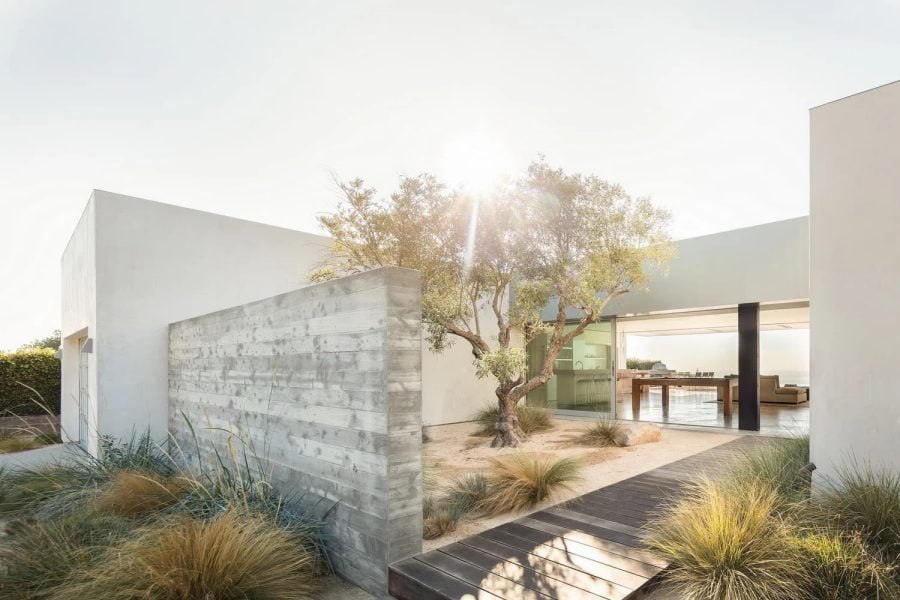
    The construction of smooth borders between buildings and their environment is a fundamental part of this strategy. These smooth edges are critical for creating a connected and welcoming public area. One method is to incorporate natural features into the design.

    Architecture, Man and Nature: The Important Symbiotic Relationship Among these intricate threads, one of the most compelling relationships we can unravel is the intricate bond shared by people, architectural marvels, and the environment. A Timeless Tale of Architecture and Nature
    06_19th Street Backyard Landscape by EYRC Architects_©connect.eyrc.com

    The Influence of Soft Edges

    Creating these soft edges is not just about aesthetics; it’s about enhancing the human experience within the urban environment. 

    As Professor Gehl emphasizes, townscape public spaces become more attractive and inviting when they are designed with the support of public transportation. This results in more natural activity within the city, promoting social interactions and ultimately making the city more sustainable. 

    Architecture, Man and Nature: The Important Symbiotic Relationship Among these intricate threads, one of the most compelling relationships we can unravel is the intricate bond shared by people, architectural marvels, and the environment. A Timeless Tale of Architecture and Nature
    07_Siusiu part cortesía de DIVOOE ZEIN Architects_©www.archdaily.com

    Inspiration for the Future

    These architectural concepts have found their physical form in structures like the Swiss Re building in Munich and the Rolex Learning Center in Lausanne. 

    Both of these constructions are open-access architectural zones that can be used for several purposes. They demonstrate how architecture and the environment may collaborate to produce a mood that blurs the distinction between the man-made and natural worlds.

    Architecture, Man and Nature: The Important Symbiotic Relationship Among these intricate threads, one of the most compelling relationships we can unravel is the intricate bond shared by people, architectural marvels, and the environment. A Timeless Tale of Architecture and Nature
    08_Euro School_©Noughts-And-Crosses

    Conclusion

    The symbiotic relationship of architecture, humans, and nature is a captivating ballet of creation, adaptation, and cooperation. This intricate dance is taking place in sustainable design and architecture, where environmental regulations, legislation, and human consciousness are changing the landscape of our built environments. The days of towering, rigid constructions dominating the natural environment are giving way to a new era.

    Architecture in this age is inspired by nature, reflecting its forms and processes.

    Buildings are no longer distinct entities, but rather interwoven parts of a greater urban ecology. Furthermore, this dance transcends the physical form of architecture. It includes transition spaces that lessen the transition between the developed and natural environments.

  • Sustainable building: Important Goals and Benefits of Green Buildings

    Sustainable building: Important Goals and Benefits of Green Buildings

    Introduction

    A ‘green’ building is one that, by its design, construction, or operation, reduces or eliminates negative effects on our climate and natural surroundings while also having the potential to produce positive ones. Green building (also known as green construction or sustainable building) refers to a structure and the use of environmentally responsible and resource-efficient processes throughout the life cycle of a building: from planning to design, construction, operation, maintenance, renovation, and demolition. At all stages of the project, the contractor, the architects, the engineers, and the client must work together closely.

    The green architecture extends and complements the traditional considerations of economy, usability, durability, and comfort in building design. The three elements of sustainability the planet, people, and profit, must all be addressed along the supply chain.

    A building might have a variety of attributes that make it ‘green.’ These are some of them:

    1. Non-toxic, ethical, and long-lasting materials are used.
    2. Energy, water, and other resources are used more efficiently.
    3. Measures to reduce pollution and trash, as well as the facilitation of re-use and recycling
    4. Solar energy, for example, is a renewable energy source.
    5. Environmental considerations in design, construction, and operation
    6. Indoor air quality that is satisfactory
    7. A design that allows for adaptability to a changing environment.
    8. In the design, construction, and operation of a building, the residents’ quality of life is taken into account.

    Why Should You Go Green?

    Most people will discover that green architecture allows them to lower their carbon footprint and really benefit the environment.

    Green buildings are those that are meant to have a lower overall impact on the environment and human health by doing the following:

    • Use energy, water, and other resources wisely.
    • Reducing garbage, pollution, and environmental deterioration.
    • Improving productivity while protecting occupant health.

    What is L.E.E.D. Certification?

    L.E.E.D. serves as a framework for project teams to make decisions, encouraging best practices and innovation and recognizing excellent building projects with various levels of L.E.E.D. certification. L.E.E.D. (Leadership in Energy and Environmental Design) is a series of rating systems created by the US Green Building Council for the design, construction, operation, and maintenance of green buildings. The World Green Building Council is currently conducting research on the effects of green buildings materials on their users’ health and productivity and is collaborating with the World Bank to promote green buildings in emerging markets through the E.D.G.E. (Excellence in Design for Greater Efficiencies) Market Transformation Program and certification.

    The British B.R.E.E.A.M. (Building Research Establishment Environmental Assessment Method) for buildings and large-scale developments, as well as the D.G.N.B. System (Deutsche Gesellschaft für Nachhaltiges Bauen) which benchmarks the sustainability performance of buildings, indoor environments, and districts, are two other certificate systems that confirm the sustainability of buildings. Other techniques include the Green Building Index (G.B.I.) in Malaysia, the Global Sustainability Assessment System (G.S.A.S.) in Australia, and the Global Sustainability Assessment System (G.S.A.S.) in the Middle East.

    A L.E.E.D. Plague is a worldwide indicator indicating a building was built or is being operated in a healthy, high-performing, and resource-efficient manner.

    Comprehensive grading systems for green buildings, such as L.E.E.D., Living Building Challenge, and BuildGreen, assess a building’s long-term viability based on a set of criteria. When taken together, these criteria paint a clear picture of what green architecture entails. The most typical requirements are mentioned below.

    Atmosphere and Energy

    Green buildings are created using energy-saving designs (i.e. passive houses are built with super-insulation and other techniques to ensure a tight building envelope and minimal energy consumption). Clean energy processes, such as geothermal and solar PV systems, are also commonly employed in sustainable building construction.

    Site

    Sprawl is always unsustainable. Rather than building new ground, green builders are urged to build on existing established property. To lessen inhabitants’ reliance on transportation, it’s also critical to construct near existing infrastructure, such as bus routes and libraries. The smaller the construction site, the better, because it leaves a less environmental imprint.

    Resources and Materials

    Wherever feasible, green builders use less material. They also salvage, disassemble, remanufacture, and refurbish things to reuse and recycle them. Durable materials are preferred since they do not need to be changed as frequently. Materials that are sustainably manufactured, originate from natural, renewable sources, and needless transportation is also carefully chosen.

    Water

    Low-flow toilets, greywater systems, and xeriscaping are all used to reduce water consumption. Rainwater harvesting and other water collecting systems are very important for sustainable building.

    B.I.M.’s Contribution to Green Building Design and Construction

    B.I.M. is a way for producing and managing digital representations of a location’s physical and functional qualities. Building information models (B.I.M.s) are files that can be extracted, transmitted, or networked in order to make decisions about a building or other constructed asset (often but not always in proprietary formats and including proprietary data). BIM software is used by individuals, businesses, and governments to plan, create, construct, operate, and manage a wide range of physical infrastructures, including water, waste, electricity, gas, communication utilities, roads, railroads, bridges, ports, and tunnels.

    The Goals of a Green Building

    Energy efficiency

    Buildings are equipped with measures to reduce energy conservation, be it embodied energy or operating energy. In order to reduce operating energy usage, many designers over the years have utilized the tricks to effectively reduce air leakage through a building envelope. A building envelope is a barrier between a conditioned and a non-conditioned space. The employment of high-performance windows along with extra insulation in the walls ceilings and floors can help reduce operating energy usage. Designers also offer orient windows and awnings to minimize solar gain in summers and vice versa.

    Life cycle assessment

    Life cycle assessment helps to provide a broader outlook of a building on environment, social, and economic terms. It monitors the process of extraction of raw materials processing, manufacturing, distribution, use and maintenance, disposal, and recycling.

    Water efficiency

    Water conservation and water quality protection are important goals in sustainable building. In many regions, the demands for supplying aquifer exceed its ability to replenish itself, which is a key issue with water use. Facilities should increase their reliance on water that is collected, used, cleaned, and reused on-site to the greatest extent possible.

    Materials efficiency

    Lumber from forests that have been certified to a third-party forest standard, rapidly renewable plant materials like bamboo and straw, dimension stone, recycled stone, hempcrete, recycled metal (see copper sustainability and recyclability), and other non-toxic, reusable, renewable, and/or recyclable products are typically considered ‘green’ building materials. A high-performance or Roman self-healing concrete is offered for concrete.

    Operations and maintenance optimization

    It is not only enough that a building is designed and constructed sustainably. One must ensure that it remains a sustainable construction material via responsible operation and apt maintenance. The establishment of an O and M department in a building is beneficial to the long-term sustainability of a building.

    Indoor environmental quality enhancement

    One of the five environmental categories in L.E.E.D. standards, Indoor Environmental Quality (I.E.Q.), was intended to offer occupants comfort, well-being, and productivity. Indoor air quality (IAQ), thermal quality, and lighting quality are among the design and construction requirements addressed by the L.E.E.D. I.E.Q. category.

    Waste reduction

    The green design also aims to limit building waste in terms of energy, water, and materials. One goal throughout the construction process should be to decrease the quantity of waste that ends up in landfills. Buildings that are well-designed also help to reduce the amount of waste generated by their tenants by providing on-site solutions such as compost bins, which limit the amount of waste that ends up in landfills.

    Cost and return on investment: Is Going Green Really More Expensive?

    The cost of establishing environmentally friendly structures is the most often voiced criticism. It turns out that it was only a preconceived assumption. Yes, photovoltaics, new appliances, and cutting-edge technology are more expensive. Most green buildings cost an extra 2% upfront but pay for themselves 10 times over the course of their lives. In terms of the financial advantages of green construction. The stigma exists between understanding up-front vs. life-cycle costs. Money is saved as a consequence of more efficient utility consumption, which results in lower energy costs. Higher worker or student productivity might also be considered. Different industries are expected to save $130 billion in energy costs.

    Green construction measures have been found to have a substantial impact on worker productivity in several studies. “There is a clear association between greater productivity and employees who enjoy being in their workplace,” according to research. Certain components of green building design, such as enhanced lighting, reduced pollutants, sophisticated ventilation systems, and the use of non-toxic building materials, can have a major influence on worker productivity.

    According to studies, certain green buildings may provide a return on investment of $53 to $71 per square foot over a 20-year period. Further studies of the commercial real estate market have found that L.E.E.D. and Energy Star certified buildings achieve significantly higher rents, sale prices, and occupancy rates, as well as lower capitalization rates, potentially reflecting lower investment risk, confirming the rentability of green building investments.

    Villages and green neighborhoods

    Green construction concepts were being implemented not just for individual structures, but also for neighborhoods and communities, around the turn of the twenty-first century. The goal is to build zero-energy communities and towns, which implies they will generate all of their own energy. They will also recycle garbage, employ environmentally friendly transportation, and grow their own food.

    What Is A Green Building And Its Benefits?

    The advantages of green construction can vary from environmental to economic to social, with new technologies always being created to complement current practices in developing greener structures. We can take full advantage of environmental and economic performance by adopting greener methods.

    When green building practices are combined with an environmentally friendly design and construction, the benefits are enormous. The following are some of the advantages of green construction:

    Improves the quality of the air and water

    According to research, greater indoor air quality, defined as low CO2 and pollutant concentrations and high ventilation rates, can result in up to an 8% boost in performance.

    Protects the environment

    When compared to other major polluting industries, the construction industry has the greatest potential for lowering greenhouse gas emissions.

    Direct actions in buildings, such as energy efficiency, fuel switching, and the use of renewable energy, are claimed to have the potential to save up to 84 gigatonnes of CO2 (GtCO2) by 2050.

    Sustainable building construction reduces water and energy waste

    Green buildings in Australia that have earned the Green Star certification have been demonstrated to consume 51 percent less potable water and emit 62 percent fewer greenhouse gases than buildings designed to satisfy minimal industry standards. When compared to conventional structures in India, green buildings certified by the Indian Green Building Council (IGBC) save 20–30 percent of water and 40–50 percent of energy.

    Costs are reduced, and the value of the product is increased

    Building developers benefit from decreased construction costs and increased property values as a result of these structures. Green buildings, whether new or rehabilitated, have a 7% higher asset value than standard structures.

    Improves the quality of the air and water

    According to research, greater indoor air quality, defined as low CO2 and pollutant concentrations and high ventilation rates, can result in up to an 8% boost in performance.

    Biodiversity and ecosystems are protected

    By supporting the effective use of energy, water, and other resources, green construction benefits ecosystems. It also makes use of alternative energy sources such as solar power. Measures are frequently attempted to reduce pollution and waste while also allowing items to be reused and recycled. The materials utilized are non-toxic, ethical, and long-lasting.

    Occupant Productivity Is Boosted

    Green construction aims to create structures that are not only environmentally friendly, but also help people live healthier, happier, and more productive lives. These include utility bill reductions for renters or homes as a result of energy and water efficiency.

    Enhances one’s quality of life

    The tenants’ quality of life is addressed in the design, construction, and operation of green buildings. It improves the health and comfort of the occupants. According to research, greater indoor air quality (low CO2 and pollutant concentrations and high ventilation rates) can result in up to an 8% boost in performance.

    Reduces the amount of strain on local infrastructure

    Green buildings collaborate with local governments and utilities to provide green building and energy efficiency training and incentives. They also provide free lectures, public forums, and technical training to help local infrastructure withstand the load.

    Existing homes may simply and economically go green, transforming into fully sustainable building, non-toxic, zero-water, and zero-energy structures.

    benefits
    Benefits Of Green Building
  • Sustainable Design in Architecture: Success or Failure?

    Sustainable Design in Architecture: Success or Failure?

    What is meant by Sustainability?

    A basic that one might relate to sustainability is the idea of using renewable resources. Though this is just one of how sustainability can be achieved, similar to recycling material in different, innovative, and environmentally friendly ways. It is more about the judicial use of existing resources while utilizing renewable ones more. Sustainable design is the idea that human societies must live up to their needs without compromising the ability of future generations to meet their own needs. With the limits changing every decade, what is and isn’t considered sustainable has changed over time as well.

    How Sustainability Affects Architecture

    A Symbiotic Relation

    Using design processes, materials, energy, and development spaces that aren’t harmful to the surrounding ecosystem or communities, sustainability in architecture addresses the negative environmental and social repercussions of buildings. The philosophy is to ensure that today’s actions have no negative implications for future generations and that they adhere to the principles of social, economic, and environmental sustainability. From the moment a site is chosen to find materials or produce new ones to building the structure itself, architecture is an energy-intense field of work. Any intervention adds to a large carbon footprint and the tips the scale of sustainability in the opposite direction. Thus, it is important to have energy efficient buildings and sustainable design methods.

    sustainable design
    Image by Appolinary Kalashnikova

    And thus architecture and design has constantly challenged and questioned itself as a field thus resulting in newer methods and materials that reduce its impact on the environment and, in some cases, benefit the environment altogether. Architecture is also one of those fields that directly affects its nearby community. Thus, using local materials and resources is another way to support this goal of sustainability indirectly empowering the local community, directly pushing forward social sustainability. Architecture and design thus has led to various innovative uses and creations of materials. Be it discovering new natural resources or judicial use of manmade resources.

    Tapping Into Nature

    Mycelium And Its Ever-growing Popularity

    The root-like fibers of a fungus when dried become incredibly durable to force and resistant to water or mold. This is Mycelium. When compacted into bricks, these can be used as a construction material that not only is lightweight but offers great strength and resistance to everyday natural phenomena. A Cleveland architecture firm is developing a method to demolish abandoned houses by combining fungus with demolition waste. Demolition trash is broken down and blended with mycelium in a process known as “bio-cycling.” To make new sustainable materials, the combined elements are crushed.

    Mycelium
    Image by Oscar Vinck

    The Growing Pavilion for the Dutch Design Week is a prime example of the potential this material has to offer. Inspired by the Incan practices of materiality and construction, the mycelium and timber, the coating reassembled into a sturdier form and grows on its own to form the panels. Once it reaches the final stage the panels can then be removed to be used elsewhere or buried back into the ground breaking down again into its natural components. The carbon footprint thus created is significantly reduced in turn becoming an economical and sustainable building material.

    From Chips To Boards

    Potato waste be it the skin or the roots is being turned into a sturdy wood substitute that can be used in a variety of furniture and architecture and design applications. A binding compound derived from raw potato peel is used to treat potato skins, bamboo, recycled wood, and beer hops. To make a lasting wood substitute, the finished material is heated and pressed into shape. Chip[s] Board is working with McCain Foods’, a British frozen food company, to source its potato waste. These are being looked at as alternatives to current wall paneling and soundproofing materials. Once utilized for its purpose it can be buried in the ground for decomposition and in turn, be used as manure or fertilizer.  

    potato waste
    Image from Chip[s] Board

    Materials That Have Stood The Test Of Time

    Hempcrete

    Hempcrete is a substance made from the hemp plant’s woody inner fibers combined with concrete. It is fire-resistant and strong, with good thermal and acoustic insulation. The lightweight nature of hemp concrete blocks reduces the amount of energy required to transport the blocks. Furthermore, it is CO2 negative, which means it absorbs more CO2 than it emits. Since hemp is easy to grow this allows for a healthy system of growing and replenishing thus maintaining a balance. Similar to straw bale in construction the walls are slightly thicker than the standard ones yet provide a comfortable environment for the users to be in.

    hempcrete

    Cork

    Cork is employed in high-tech applications like automobile motors, dam systems, and airport runways due to its exceptional properties. Due to its flexibility and near-impermeability, cork is ideal for creating floor tiles, insulating sheets, bulletin boards, and other similar items. Cork is an endless natural resource since it may be collected safely up to 20 times during its life cycle. Cork is collected in a sustainable manner, and the removal of the bark has no negative impact on the tree. Thus making it a highly sustainable material. After each harvest, the bark grows back entirely and takes on a nicer texture.

    cork
    Image via Frank Lowe’s

    Sustainability Begins With Sustainable Designing

    Sustainable Design Elements To Keep In Mind

    It is crucial to get the most out of what the site has to offer. Much of the energy spent for an average building is for temperature moderation and ventilation. Providing essential functions away from direct heat and light for warm countries and towards the same for colder countries is an important way to regulate the temperature. The provision of foliage plays a vital role in not only regulating the temperature but also in giving back to the environment. Indoor plants also help improve the quality of air inside the building while psychologically improving the users’ experience. All these steps indirectly make up an energy efficient building

    Sustainable Reality

    Successes Of Sustainable Structures

    Torre Reforma in Mexico City has managed to become a structure that literally breathes. While providing indoor gardens at regular intervals, it also includes ventilators that open and shut every day to release indoor heat generate while also allowing a gush of fresh air to enter within thus recycling the air without having to constantly utilize the air conditioning systems. Or be it using reused plastic to form bricks that attach like Lego pieces thus reusing a material that has greatly challenged the idea of sustainability, becoming popular in Kerala. Thus ever since industrialization sustainability has been a need of the hour and architecture and design can help tip the balance on the positive side.

    Successes Of Sustainable Structures

    Image of ventilators in Torre Reforma

  • Designing Greener: Essential Domains of Sustainability 

    Designing Greener: Essential Domains of Sustainability 

    Reconnecting to the green 

    A sustainable or environmentally friendly building may preserve or raise the standard of living in the area in which it is situated thanks to its design and characteristics. Achieving a high degree of efficiency is necessary to do since it minimizes pollution by using less energy, water, and other resources. The LEED accreditation, which stands for Innovation in Environmental and Building Design, is the generally recognized official designation that determines if a structure qualifies as sustainable.

    Sustainable construction reduces the use of energy and water and is a crucial component of urban planning that aims to mitigate climate change. Below, we examine some of the green constructions that lead the way for more responsible urban design, ranging from massive skyscrapers to innovative museums. The development of eco-neighborhoods, which are urban projects to reduce the impact on the environment and change citizens’ living habits to make them more responsible for their surroundings, is one of the new trends in urban planning, as opposed to the commuter towns that were created as a consequence of the Industrial Revolution and the development of the 20th century.

    The key to this kind of project is the use of sustainable technology and materials in the building of structures and other infrastructure. Proposal of the institution for Aquaculture and marine mining research accommodating user experience and public interface through planning and pragmatic design.

    Advantages of green building 

    Green
    Photo by Andrew Sadler from Buildpass

    Better environment 

    According to statistics, environmental issues like air pollution causes over 4.2 million fatalities annually and more than 3 million of those deaths are among children under the age of five. These figures simply serve to highlight how hazardous our ecosystem is as a result of carbon dioxide emissions, trillions of litters of untreated sewage thrown into the ocean, and other pollutants. By using natural resources wisely, green buildings successfully cut down on pollution. I.e., lowering carbon dioxide emissions to slow down climate change. Green structures also contribute to a healthier environment and a less contaminated planet. Healthier interior circumstances like lighting, air quality, etc., also contribute to a better indoor atmosphere.

    Cost-effective

    sustainable
    Photo by Team from TPM Builders

    According to studies, making the upfront investment in sustainable buildings would result in savings that are more than ten times that amount after ten years. The investment’s return lasts for ten to 80 years.  The effective use of resources, which enables consumers to save much more by lowering operational and maintenance expenditures on electricity, water, etc., is a key component of green building. Although green buildings might initially cost more than conventional structures, the cost difference is often recovered in 3–4 years. Additionally, because they would spend less on upkeep and make more money, building owners who receive rent from their property would see a considerable boost in their revenues.

    Improved Health

    Improving the environment, especially the air for building occupants, is one of the objectives of green buildings. An inhabitant of a green building has better health since they run a lower chance of being exposed to air and water pollutants. For instance, materials used to decorate and build buildings, such as carpet and paint, are responsible for the majority of indoor pollutants. Such pollutants may be harmful to the body when inhaled, and if they build up over time, they can result in major health problems like respiratory difficulties. On the other hand, owing to the security of the building materials utilized, residents of green buildings enjoy greater health.

    Increased efficiency 

    green architecture
    Photo by Chris Nevada from Northern Nevada Real Estate

    One of the main benefits of green architecture is the optimization of water and energy. Fuel efficiency results in less usage of coal, a key source of electricity for the globe. Solar panels are set up to use solar energy to protect this natural resource. The structures are also built with enough natural light coming in via the wood paneling to prevent the need for artificial lighting at anyway time, which saves even more energy.

    Green buildings in different sectors

    green architecture
    Photo by Kayla Matthews from Blue and green tomorrow

    Hospitality sector

    Professionals in the industry have chosen to align hospitality with ecology at a time when sustainable travel is no longer a choice. All parties involved in the hotel industry are working to contribute to the sector’s progress and to make it as sustainable and responsible as possible via creative and devoted plans and activities. They are all aware that an ecological transformation will unavoidably be a part of the hotel industry’s future. This program’s goal is to influence responsible travel in the future by concentrating on five main areas: fostering cultural diversity, enhancing community living standards globally, lowering energy use and carbon emissions, lowering waste generation, and making wise use of water resources.

    Medical facilities

    As resource-intensive institutions, hospitals need a lot of natural resources to deliver high-quality treatment while maintaining sanitation, including power, water, food, and building materials. However, hospitals may significantly lower their carbon footprint by using easy, clever, and sustainable methods. This idea is referred to as Green Hospitals. The article discusses the different steps, difficulties, and solutions to create a greener, more efficient hospitals for the benefit of people everywhere.

    A hospital needs heating, ventilation, and air conditioning (HVAC) systems since it is available 24/7 a year. This is necessary to uphold the standards of care. Between 40% and 60% of the amount of energy is used for this. Additionally, a lot of energy is consumed for heating water, regulating the temperature and humidity of indoor air, lighting, ventilation, and a variety of medical procedures that emit greenhouse gases. Without sacrificing the standard of care in any way.

    Office buildings

    Your carbon footprint may be significantly reduced by using less energy at work. Our office is equally as essential as our home in terms of clean indoor air quality, convenience, and environment given however much time we spend there. Making the workplace slightly greener is definitely a win-win as research have demonstrated that possessing a green office improves cognitive performance and productivity. “Ecological and economic objectives should and may be in harmony. Anything else would be a profit-making scheme that would harm future generations.

    Resource management

    resource
    Photo by Brussels from Housing Europe

    Lighting sector

    The most crucial energy-saving element needed in sustainable construction is lighting control. Windows with the right orientation are essential for maximizing natural light. Although artificial light is necessary, there are ways to significantly reduce use. The lighting equipment uses the most energy. The use of CFLs and tube lights is psychologically the same. Even some designers believe tube lights to be more luminous than CFLs.

    Waste management

    waste management
    Photo by Team from Joy of living

    Waste management is a serious issue since it is seldom done in India and, if not handled effectively, can result in a number of illnesses. Waste management also includes recycling paper and preserving paper. The majority of architects (93%) are unaware of any waste management strategies and have not included any such strategies in their structures. This may be because they are unaware of any procedures and since trash management in India is not given sufficient attention. Almost all designers use some kind of paper-saving technique. They substitute paper for e-mails and use newsprint as rough paper.

    Water management

    Energy efficiency requires a strong understanding of water management. Water conservation is crucial for both the current and future generations. Additionally, many find it difficult to embrace change mentally. The majority of untreated wastewater is either used for irrigation or to clean restrooms. This is a simple habit that may be adopted in daily life and saves a significant amount of water. Although they save a lot of water, drip-free taps are rarely used in buildings. In order to limit the consumption of water from the tap and minimize water loss, designers also feel that rainwater should not be squandered and should be utilized for cleaning or other domestic tasks.

    The green beginning at the end 

    real estate
    Photo by Matthew Mackey from FRICS

    Many people in the real estate sector have been attempting to make buildings “green” for a few decades now by switching out traditionally manufactured components with environmentally friendly alternatives and installing energy-efficient technologies. The end result of all this experimentation has created constructions that are less detrimental to the environment since buildings have a large environmental imprint. The collaborative initiative will only lead to a better and greener future.

  • 10 Revolutionary Sustainable Building Materials: Building a Greener Future

    10 Revolutionary Sustainable Building Materials: Building a Greener Future

    Introduction

    The building industry is developing to adopt more sustainable practises as the pressing need for environmental conservation becomes more generally recognised. There’s a growing demand for sustainable building materials to minimise the construction’s adverse effect on the environment as well as for increasing energy efficiency and durability. This article will analyse the ten innovative sustainable building materials that are transforming the construction industry.

    Hempcrete- A Sustainable Building Material

    Hemp shives, the inner woody core of the hemp plant, lime as a binder, and water are combined to produce hempcrete, a sustainable biocomposite. Because of the superior thermal permeability and insulation it offers, living conditions use less energy. The eco-housing endeavour “Clay Field” in the UK is an excellent illustration of hempcrete’s advantages. Hempcrete has poor compressive strength, although it performs well in terms of thermal and acoustic insulation. Since it combines insulation and thermal mass for a more sustainable and environmentally friendly future, it is a lightweight insulating material or non-load-bearing wall that is suited for most climates.

    Sustainable Building Materials
    Photographer Unknown

    Bamboo

    Bamboo
    Photographer Unknown

    Sustainable building material, i.e. bamboo has been popular as a sustainable alternative to traditional building materials and can be used to construct scaffolding, houses, bridges, and other structures. Similar to wood in strength to weight, bamboo is a natural composite material that can be utilised in building for both structural integrity and aesthetically pleasing looks. An illustration of bamboo’s versatility and negligible environmental impact while developing sustainable building methods is the Green School in Bali, Indonesia.

    Recycled Steel

    An environmentally beneficial resource for sustainable construction is recycled steel. Utilising scrap steel during production lowers energy use and greenhouse gas emissions. This environmentally sustainable material reduces the need for further raw steel extraction while maintaining its strength and fire resistance. Tall buildings made of recycled steel could have substantially smaller negative environmental effects. Recycled steel structures can contribute to sustainable construction methods as they are very flexible and adaptable to changes which extend the life cycle of the buildings, as a result conserving resources.

    Recycled Steel
    Photographer Unknown

    Cork

    Another sustainable building material known as cork is made of the hydrophobic substance suberin. Cork can be used for a wide range of applications because of its elasticity and impermeability. Cork is fire-resistant, wear-resistant, lightweight, supple and long-lasting building material. Cork has a lower environmental effect and aids in the development of sustainable constructions thanks to its outstanding levels of thermal and acoustic insulation. For instance, Audemars Piguet Museum in Switzerland was constructed using Cork.

    Cork
    Photographer Unknown

    Rammed Earth

    Rammed Earth
    Photographer Unknown

    Rammed Earth, a sustainable and age-old building material, currently experiencing a new rebirth. Walls are constructed using a method that involves compacting layers of dirt inside of a formwork. Due to its high thermal mass, rammed earth is very sustainable. Additionally, it permits natural temperature management and necessitates fewer heating and cooling apparatus. The Nk’Mip Desert Cultural Centre in Canada is a stunning illustration of a robust and beautiful rammed earth structure. Rammed earth construction fosters green building practises and minimises the industry’s environmental effect because it employs locally sourced earth and requires less energy during manufacture.

    Recycled Plastic

    Recycled Plastic
    Photographer Unknown

    A sustainable building material that tackles the problem of global plastic waste is recycled plastic. Concrete constructions such as driveways and pavements can be strengthened with the help of recycled plastics. Additionally, plastic pollution can also be reduced as the garbage from going into landfills will also reduce. The Plastic Bottle Village in Panama, where recycled plastic was utilised to build inexpensive and environmentally beneficial housing options, is a prominent example of its application. Utilising recycled plastic in construction can lower costs while also encouraging a sustainable environment because it uses less heat and electricity.

    Mycelium Composites

    Mycelium Composites
    Photographer Unknown

    A web of mushrooms called mycelium is a developing sustainable building material. Mushrooms frequently produce mycelia. After drying, mycelium fibres, which resemble roots, are used as highly durable, fire-, water-, mould-, and mould-resistant building material. Mycelium can lessen its adverse effects on nature because substrates are biodegradable, leading to a more sustainable future. A great example of this technology is provided by Ecovative Design, a company that is pioneering the use of mycelium composites in sustainable products like MycoBoard.  

    Ferrock

    Modern sustainable building material ferrock has a significant potential to reduce carbon emissions. Some of the elements that Ferrock employs to make products that collect more carbon dioxide during manufacturing than they emit include silica, ash, rice husks, and recycled steel dust. The Golden Gate Bridge in San Francisco, California, is a crucial example for the extensive use of Ferrock. Since ferrock is mostly made from recycled materials, therefor it can be employed as a construction material that is favourable to the environment and as a result it promotes sustainability.

    Ferrock
    Photographer Unknown

    Straw Bales

    Straw Bales
    Photographer Unknown

    Because they have a very low impact on the environment, straw bales are referred to be sustainable building materials. In the straw-bale construction method, straw bales—typically made of wheat, rice, rye and oat straw—are used as structural support, building insulation, or both. The Canelo Project, a development of environmentally friendly homes in Arizona, is the best example of a straw bale building. Straw-bale construction is better than conventional building systems because it is renewable, affordable, naturally fire-resistant, has a high insulating value and resulting a transition to a more sustainable future.

    Transparent Solar Panels

    Transparent Solar Panels
    Photographer Unknown

    Transparent solar panels, a novel advancement in environmentally friendly buildings, combine energy generation and consumption. These panels promote more natural light in the structure through a glass façade enabling the capture of solar energy. The consumption of energy resources inside buildings is reduced thanks to transparent panels, making it a solution that is good for the environment. The finest examples in Germany include the Heliotrope, where panels are used to capture solar energy without compromising the building’s look. It encourages energy efficiency and helps create a sustainable future.

    Conclusion

    Sustainable building materials are ushering in a new era of construction that prioritises environmental responsibility without compromising functionality or aesthetic appeal.  The above-mentioned ten building materials serve as an example that later or sooner the construction industry will become environmentally friendly and will sustain the future. Hempcrete, transparent solar panels, bamboo, and recyclable plastic are some of these components. Technology improvements in the construction industry should make more environmentally friendly building materials more widely available in the near future.

  • Land Art: A Creative Response to the Environment

    Land Art: A Creative Response to the Environment

    Introduction 

    Let us dive into the fascinating world of land art. Imagine this: vast landscapes are transformed into breathtaking works of art, where nature and human creativity come together in perfect harmony. That’s what land art is all about. It’s a movement that emerged in the late 1960s, captivating artists and audiences alike with its larger-than-life installations and interventions. 

    In this article, we’ll explore how artists and landscape architects collaborate to create breathtaking outdoor masterpieces, blurring the lines between art and the natural world. Get ready to be amazed by the power and beauty of land art!

    Significance of Land Art and Landscape Architecture

    Imagine strolling through a park where every step reveals a captivating work of art seamlessly integrated with the surrounding landscape. That’s the magic of the intersection between art and landscape architecture. It’s a dynamic collaboration that brings together the boundless creativity of artists and the thoughtful design expertise of landscape architects. But why is this intersection so significant?

    LAND ART
      Source

    Firstly, it adds a new dimension to our experience of outdoor spaces. Instead of confining art to galleries or museums, it breaks the boundaries and brings art into our everyday lives. Incorporating sculptures and installations into the landscape, it transforms ordinary public spaces into immersive galleries. It invites us to interact, explore, and engage with art in a more organic and sensory way.

    Secondly, this integration encourages conversations and provokes people to think. Art has always been a powerful tool to express one’s ideas and emotions. When intertwined with carefully planned landscapes or just natural landscapes, it amplifies its impact.

    Historical Context of Land Art 

    The historical context of Land Art can be traced back to the late 1960s and early 1970s when it emerged as a prominent movement within the broader art world. It was a direct response to the social and political climate at the time, influenced by various factors such as the civil rights movement, anti-war protests, and the growing environmental consciousness.

    Historical Context of Land Art 
    Source

    Land Art, also known as Earth Art or Earthworks, represented a departure from traditional gallery-based art practices. Artists looked to interact directly with the natural environment, often creating large-scale interventions and sculptures in outdoor spaces. 

    The movement’s fleeting nature and reliance on natural elements challenged the traditional art market, as the artworks were often temporary and could not be easily bought, sold, or owned. This aspect of Land Art further emphasized the importance of the experience and relationship between the viewer and the natural surroundings.

    Themes and Concepts in Land Art

    Land Art explores themes of nature, environment, and human interaction with the Earth. Artists use natural materials and change landscapes to make eye-catching installations that can be temporary. The ideas behind Land Art focus on the connection between art and nature, how everything in the environment is linked, and the effect people have on it.

    Here are some of the key themes and concepts explored in Land Art:

    Site-specificity: Land Art works are usually made in specific remote spots, embracing the natural landscape and blending in with its unique features. Artists take into account the geology, ecology, and culture of the place, crafting pieces that are intimately connected to their surroundings.

    Temporary: Many Land Art works are meant to be temporary. They use materials that will break down over time or let natural forces like wind, water, or time change and wear away the artwork. This challenges the idea that art has to last forever and highlights how our connection with the environment is always changing and temporary.

    TEMPORARY
    Temporary Land Art By The Beach – Source

    Scale and Monumentality: Land Art often has huge installations that make you feel small. The massive earthworks, sculptures, and changes in the landscape show how incredible and monumental nature is. It also makes you think about your connection to the environment.

    Scale and Monumentality
    Scale and Monumentality – Source

    Intervention and Transformation: Land Artists change and shape the natural environment to make their art. They might dig, build, or use natural materials to create temporary installations. By doing this, they question the idea of untouched nature and show how humans can transform it. 

    Relationship with Nature and Ecology: Land Art shows strong care for the environment and aims to bring humans closer to nature. Artists tackle ecological problems like deforestation, pollution, or habitat destruction by highlighting them in their works. They want us to think about our connection with nature and how our actions affect the environment. 

    Key Artists and Their Influential Works

    Land Art projects were all about playing around with nature and its elements like rocks, soil, water, and plants. Artists would venture out into the wilderness, away from the hustle and bustle of cities, to connect with the environment and create their unique works of art. These projects involved artists sculpting mounds of soil, arranging rocks in intricate patterns, and shaping the landscape itself. It was a dance between art and nature, exploring how they can harmonize and interact with the environment

    There have been several key artists in the Land Art movement, each with their influential works. Here are a few notable examples:

    Robert Smithson

    He is known for his cool piece called “Spiral Jetty” (1970) in Utah’s Great Salt Lake. It’s this massive spiral-shaped thing made out of rocks and earth that sticks out into the lake. It’s all about showing how art and nature can come together in a mind-blowing way.

    Robert Smithson
    Spiral Jetty – Source

    Walter De Maria

    He is known for something super famous called “The Lightning Field” (1977) in New Mexico. It’s a bunch of 400 stainless steel poles spread out in a big field. 

    Walter De Maria
    The Lightning Field – Source

    Nancy Holt

    Notable for her piece “Sun Tunnels” (1973-1976), situated in the Utah desert, this artwork consists of four large concrete tunnels arranged in a cross shape, which frame the sun during specific times of the year, engaging viewers with the celestial and earthly elements.

    Nancy Holt
    Sun Tunnels – Source

    Michael Heizer

    Celebrated for his creation “Double Negative” (1969-1970), located in the Nevada desert, this work involves two large-scale cuts or “negative” spaces carved into the earth, offering a thought-provoking exploration of absence and presence.

    Michael Heizer
    Double Negative – Source

    Andy Goldsworthy

    He is known for his ephemeral and site-specific installations using natural materials. Goldsworthy’s works, such as “Rain Shadows” and “Stone River,” emphasize the temporary nature of Land Art, as they are subject to the effects of time and natural processes.

    Andy Goldsworthy
    Rain Shadows  – Source    

    Land Art in India

    Land art in India has seen the emergence of talented artists who explore the relationship between art and the natural environment. While not strictly categorized as “Land Art” in the traditional sense, these artists have created works that engage with nature, culture, and the land itself. Some notable Indian artists who have contributed to this genre include:

    Jitish Kallat

    He blends nature and art, using materials like rocks and soil to create installations that make you think about our relationship with the environment.

    Jitish Kallat
    Sweatopia (The Cry Of The Gland) – Source

    Shakuntala Kulkarni

    She explores gender, identity, and the environment through installations with natural materials like bamboo and clay, challenging social norms.

    Shakuntala Kulkarni
    Bodies Armour – Source

    Nek Chand

    He made the awesome Rock Garden in Chandigarh, India. This massive sculpture garden is all made from recycled materials like rocks, broken pottery, and random household items. 

    Nek Chand
    Rock Garden of Chandigarh – Source

    Anish Kapoor

    Although based in the UK, Kapoor, who was born in India, has created many significant land-inspired installations, often drawing from Indian symbolism and architecture.

    Land Art: A Creative Response to the Environment Let us dive into the fascinating world of land art. Imagine this: vast landscapes are transformed into breathtaking works of art, where nature and human creativity come together in perfect harmony. That's what land art is all about. It's a movement that emerged in the late 1960s, captivating artists and audiences alike with its larger-than-life installations and interventions. 
    Cloud Gate, aka “The Bean”  – Source

    These artists, among others, bring an Indian perspective to land-based art, sparking conversations about nature, culture, and identity.

    Conclusion

    Land Art is an exciting genre that explores the relationship between art, nature, and the environment. Artists create big installations in remote areas, using natural materials and manipulating the land to create stunning and thought-provoking pieces. They challenge the idea that art has to last forever and highlight how our connection with the environment is temporary. Land Art shows how much artists care about the environment and encourages us to connect with nature. It offers a unique perspective on the relationship between art and nature, inspiring us to appreciate the beauty and power of the Earth.

  • Bamboo: A Promising Sustainable Future

    Bamboo: A Promising Sustainable Future

    Sustainable building materials that are economical, renewable, and environmentally benign are growing in favour. Bamboo is a grass that grows swiftly, and because of its superior traits and capabilities, it is now a viable substitute for traditional building materials. This article explores the numerous advantages, disadvantages, and real-world applications of bamboo as a sustainable building material.

    Properties of Bamboo

    The following characteristics of bamboo make it a good building material:

    Strength and Durability

    Bamboo has incredible strength and endurance despite its appearance of being lightweight, which opens up a wide range of construction applications. Bamboo has a better tensile strength than steel and other conventional building materials. Because of this quality, bamboo structures can withstand heavy loads, strong winds, and even earthquakes.

    Low Cost

    Bamboo is widely available and inexpensive when compared to other conventional building materials like concrete and steel. Due to its cost, even places with limited financial means can access it.

    Rapid Growth and Renewability

    The fastest-growing benefit of bamboo is one of several benefits it offers. Bamboo matures quickly, taking only three to five years as opposed to the slowly growing trees utilised in traditional building. Bamboo is a resource that is incredibly renewable and guarantees a steady supply of building materials due to its excellent growth rate.

    Flexibility

    The inherent flexibility of bamboo is a major benefit for building. Because bamboo is naturally flexible, bamboo buildings can endure earthquakes and bad weather. Bamboo’s capacity to bend without breaking makes it particularly useful in areas subject to earthquakes or strong winds.

    Lightweight

    Due to its small weight, bamboo is easier to ship, less expensive to build with, and easier on a building’s foundation. Because of this quality, bamboo is a fantastic choice for places with poor soil or difficult terrain. Additionally, due to how easily it can be handled, less work is needed during building.

    Carbon Sequestration

    Bamboo is incredibly effective in absorbing atmospheric carbon dioxide. Bamboo absorbs carbon as it grows, reducing the effects of climate change. Actually, compared to trees, bamboo may sequester up to four times more carbon. Carbon is stored in bamboo during construction, promoting carbon neutrality.

    Low Environmental Impact

    Compared to conventional building materials, bamboo has a significantly smaller negative impact on the environment. Growing bamboo requires less water and pesticides because it is inherently resistant to pests and diseases. Additionally, bamboo may be manufactured with less energy, which reduces carbon emissions associated with manufacturing.

    Aesthetic Appeal

    Bamboo is not only environmentally sustainable, but it also offers unique aesthetic qualities. Its distinctive appearance, warmth, and attractiveness in its natural state add a desirable aesthetic element to construction projects. An atmosphere of tranquilly, environmental awareness, and a sense of oneness with nature are fostered by bamboo structures.

    Versatility

    Bamboo is a flexible material that may be applied to a variety of construction projects. It can be used as roofing, flooring, wall panels, structural components, and decorative finishes. The versatility of bamboo enables inventive and imaginative solutions, allowing architects and builders to investigate new opportunities in sustainable building.

    Advantages of Bamboo as a Building Material

    Using bamboo in construction has a number of benefits, including:

    Sustainability and Renewability

    The two most significant advantages of bamboo are its renewability and sustainability. Bamboo is a quickly growing grass that matures in a few years, as opposed to the slowly growing trees utilised in traditional construction. Its rapid growth allows for repeated harvesting without depleting natural resources.

    Strength and Durability

    Being so light, bamboo is surprisingly robust and long-lasting. Due to its higher tensile strength than steel, it can withstand heavy weights and harsh weather. Constructions made of bamboo have been shown to withstand earthquakes and strong winds, making them suitable for locations at risk from such calamities.

    Versatility in Design and Construction

    Bamboo can be used for a wide range of construction projects. It can be utilised for structural elements, flooring, wall and ceiling panels, roofing, and even decorative treatments. Architects and builders can experiment with fresh and inventive concepts to produce visually beautiful and environmentally sustainable structures because to bamboo’s design versatility.

    Cost-effectiveness

    When compared to other building materials like concrete, steel, or wood, bamboo is somewhat less expensive. Cost-effective development activities are made possible by its accessibility to places with limited financial resources. Additionally, bamboo’s small weight reduces shipping costs and facilitates handling on-site.

    Local Economic Development

    Growing and using bamboo as a building material can lead to employment possibilities and promote local economic development, particularly in regions where the plant grows prolifically.

    Disadvantages of Bamboo as a Building Material

    Although bamboo has many advantages, it also has certain restrictions:

    Vulnerability to Moisture

    Bamboo is susceptible to issues caused by moisture, such as rotting, swelling, and insect infestation. Care must be taken, including thorough drying and the application of the necessary coatings, to prevent these problems. Bamboo structures are susceptible to degrade over time if sufficient maintenance is not given.

    Limited Structural Heights

    Due to its natural flexibility, bamboo shouldn’t be used to construct big buildings. It is typically used for low- to mid-rise structures. Alternative materials are required for taller constructions since bamboo’s vertical strength limits make it less appropriate for high-rise construction.

    Lack of Standardization

    Bamboo lacks a regulated grading system, which can make maintaining quality challenging. Different bamboo species and sources may have different strengths, tensile strengths, and other qualities. Thorough procurement and quality control are crucial for ensuring reliable and consistent bamboo materials.

    Fire Resistance

    Bamboo lacks any built-in fire protection. As a result of its propensity to catch fire, utilising it in construction calls for the application of the appropriate fire-resistant treatments and coatings in order to enhance its performance in a fire. By putting fire safety measures in place, the risk of fire in bamboo structures must be decreased.

    Case Study: Green School, Bali, Indonesia

    sustainable
    Photographer Unknown

    The Green School in Bali is a school that has gained recognition throughout the world for its commitment to environmental education and sustainability. The unusual architecture of the school, which is entirely constructed of bamboo, exemplifies the material’s versatility and aesthetic appeal.

    Structural Integrity

    structural integrity
    Photographer Unknown

    The Green School’s bamboo structures serve as illustrations of bamboo’s durability and strength in construction. It is clear from the extensive use of bamboo beams, trusses, and columns that the material can withstand huge loads while allowing for spacious interiors.

    Aesthetic Appeal

    The bamboo structures of The Green School harmoniously blend into the surrounding nature, creating a stunning and green campus. The organic texture, warm hues, and unique patterns of bamboo enhance architectural aesthetics and foster a sense of connection to nature.

    Integration of Sustainable Design Principles

    The architectural design of The Green School follows sustainable design principles and incorporates features like rainwater collection systems, lots of natural light, and natural ventilation. Building open-air spaces is made simpler by the flexibility and light weight of bamboo, increasing natural airflow and reducing the need for artificial cooling.

    aesthetic appeal
    Photographer Unknowna

    Conclusion

    Bamboo is a potential sustainable building material because of its wonderful properties, capabilities, and instances of achievement in actual construction projects. Due to its speedy development, durability, adaptability, and minimum environmental impact, it is a viable alternative to conventional construction materials. Bamboo can be used in architectural designs to create buildings that are affordable, aesthetically pleasing, and assist local economic progress. With continued research and standardisation efforts, bamboo has the potential to revolutionise the building industry and move us closer to a sustainable future.

  • Embracing Nature’s Genius: Inspiring Biomimicry Examples

    Embracing Nature’s Genius: Inspiring Biomimicry Examples

    Biomimicry in Architecture

    Esplanade: Theatres on the way

    Project: Public – Arts Centre 

    Designed by: DP Architects in partnership with Michael Wilford

    Inspired by: Durian (a fruit) – The hard thorn exterior

    The Esplanade Theatre is a prominent performing arts venue in Singapore’s Marina Bay that serves as a showcase for innovative architecture.

     Officially opened in 2002, this iconic biomimicry structure is situated on reclaimed land, and its distinctive design features twin shells that have earned it the colloquial nickname “the big durians” due to their resemblance to the spiky tropical fruit.

    Embracing Nature's Genius: Inspiring Biomimicry Examples  Officially opened in 2002, this iconic biomimicry structure is situated on reclaimed land, and its distinctive design features twin shells that have earned it the colloquial nickname "the big durians" due to their resemblance to the spiky tropical fruit.
    01_Esplanade Theatre_©www.straitstimes.com

    Designed by DP Architects and Michael Wilford & Partners, the Esplanade Theatre comprises a 1,600-seat Concert Hall, a 2,000-seat Theatre, and various smaller performing arts venues. 

    Its interior and performance rooms were designed with the help of professionals to ensure that they could hold a variety of Asian and Western arts acts. 

    The Concert Hall now has exceptional acoustics thanks to Russell Johnson of Artec Consultants Inc.

    National Aquatics Centre: The Water cube

    Project: Aquatics Centre

    Designed by: PTW Architects

    Inspired by: the natural formation of soap bubbles

    The Beijing National Aquatics Centre, famously known as the Water Cube, was a key aquatic biomimicry inspired venue during the 2008 Summer Olympics. Designed by PTW Architects and Ove Arup, its unique biomimicry structure draws inspiration from soap bubbles’ arrangement in a 12- or 14-sided cell structure.

    Situated on Beijing’s north-south axis within the Olympic Green precinct, the Water Cube covers an area of approximately 80,000 square meters. It boasts 6,000 permanent seats, expandable to 17,000 for Olympic spectators.

    This biomimicry project cost a total of about $140 million, and construction started in December 2003 and ended in January 2008. The building’s distinguishing feature is its transparent ETFE cladding, which lets in a lot of light while using 30% less energy.

    Embracing Nature's Genius: Inspiring Biomimicry Examples  Officially opened in 2002, this iconic biomimicry structure is situated on reclaimed land, and its distinctive design features twin shells that have earned it the colloquial nickname "the big durians" due to their resemblance to the spiky tropical fruit.
    02_The square shape of the Water Cube is a reflection of the Chinese symbol for Earth_©www.arup.com

    The Water Cube’s design creatively marries traditional Chinese philosophy, where heaven is represented as a round shape and earth as square. This concept complements the neighbouring Bird’s Nest stadium, embodying the idea of “天圆地方” (Tian yuan di fang), or heaven round, earth square.

    Remarkably, this architectural gem’s steel-framed structure resembles soap bubbles and serves as a durable and earthquake-resistant design. Its interior spaces prioritize climate control, ensuring optimal comfort for swimmers and visitors alike.

    Moreover, sustainability measures include harnessing solar energy, recycling rainwater, and employing advanced insulation techniques. As a testament to innovation, this iconic Water Cube has transitioned to host curling events during the Beijing 2022 Winter Olympics, showcasing its versatility and enduring legacy.

    Beijing National Stadium: Bird’s Nest

    Project: National Stadium

    Designed by: Architecture firm – Herzog & Pierre de Meuron

    Inspired by: resembles a Birds nest

    Embracing Nature's Genius: Inspiring Biomimicry Examples  Officially opened in 2002, this iconic biomimicry structure is situated on reclaimed land, and its distinctive design features twin shells that have earned it the colloquial nickname "the big durians" due to their resemblance to the spiky tropical fruit.
    03_ Beijing National Stadium from the Central Axis_©en.wikipedia.org

    The Beijing National Stadium, known as the Bird’s Nest, stands as a symbol of architectural marvel and achievement. Designed for the 2008 Beijing Olympics by architects Jacques Herzog, Pierre de Meuron, and Li Xing gang, this colossal structure covers an impressive 258,000 square meters and can accommodate 80,000 spectators.

    The construction of the Bird’s Nest was a monumental undertaking, beginning in 2003 and concluding in 2008, with an expenditure of around $33 million. It possesses a unique elliptical steel frame that supports its iconic roof, which appears like a twisting bird’s nest, blending seamlessly with the surrounding environment.

    A 91,000-seat concrete bowl is surrounded by a distinctive steel framework in Stadium’s design, which blends modernity with Chinese cultural aspects. 

    This piece of art serves as a memorial to China’s creativity and architectural power as well as an image of the 2008 Olympics.

    Tao Zhu Yin Yuan: DNA Replication 

    Project: Apartment Building 

    Designed by: Vincent Callebaut Architectures

    Inspired by: Double helix DNA structure and nature’s carbon-absorbing mechanisms

    Embracing Nature's Genius: Inspiring Biomimicry Examples  Officially opened in 2002, this iconic biomimicry structure is situated on reclaimed land, and its distinctive design features twin shells that have earned it the colloquial nickname "the big durians" due to their resemblance to the spiky tropical fruit.
    04_Tao Zhu Yin Yuan_©amazingarchitecture.com

    Situated in Taipei, Taiwan, Tao Zhu Yin Yuan is a remarkable biomimicry building that shows the integration of sustainability, art, and humanistic principles.

    Tao Zhu Yin Yuan, after 11 years of construction, has become a symbol of sustainable biomimicry architecture. It incorporates innovative green energy solutions, such as wind power generation and solar panels, along with advanced construction techniques to create a vertical forest art building. Approximately 23,000 trees, shrubs, and plants adorn its balconies and terraces, absorbing carbon at a rate nearly five times higher than local regulations. This urban forest park helps combat air pollution and enhances the environment.

    Panorama views of Taipei, including the well-known Taipei 101 tower, are provided by the tower’s distinctive DNA-inspired twisting structure.

    It promotes carbon-absorbing biomimicry architecture, contributing to global efforts to combat climate change.

    Featuring an earthquake-resistant design, Tao Zhu Yin Yuan exceeds seismic standards and features column-free interior spaces for flexibility. This sustainable structure represents a harmonious blend of eco-design, technology, and art, setting new standards for future architecture.

    Olympic Fish Pavilion, Barcelona

    Project: Stadium for Olympic Games

    Designed by: Frank Gehry

    Inspired by: Organic forms of fish.

    Embracing Nature's Genius: Inspiring Biomimicry Examples  Officially opened in 2002, this iconic biomimicry structure is situated on reclaimed land, and its distinctive design features twin shells that have earned it the colloquial nickname "the big durians" due to their resemblance to the spiky tropical fruit.
    05_Olympic Fish Pavilion, Barcelona_©surfacesreporter.com

    The Olympic Fish Pavilion, a biomimicry inspired building created by Frank Gehry for the Barcelona Olympics, was on display. The pavilion’s ecological design and environmental awareness initiatives were inspired by the elegant motion of swimming fish. El Peix, a golden fish sculpture that spans 52 meters and is located on Barcelona’s coastline, changes appearance with the sun’s angle and the weather. The 1992 Barcelona Olympics inspired the construction of the fish statue, which now covers the casino and dining establishments. Near the Hotel Arts and Mapfre office towers in the Olympic Port neighbourhood is where you can find the Golden Fish sculpture.

    BIQ Building in Hamburg, Germany

    Project: Residential Project

    Designed by: Arup

    Inspired by: Microalgae

    biomimicry
    06_BIQ (The Bio Intelligent Quotient) Building_www.fastcompany.com

    The Bio Intelligent Quotient building, commonly referred to as the Algae House is a structure that uses microalgae as solar panels to renovate energy. These panels maximize the number of algae exposed to the biomimicry building and perform photosynthesis by absorbing outdoor natural light. The building’s “bio-skin” has reduced expenses and shown several approaches to sustainable architecture.

    Microalgae are grown in glass components that regulate light and offer shade on the bioreactor façade of the BIQ, the first structure of its kind in the world. Until they can be collected, separated from the other algae, and transported as a thick pulp to the technical room of the BIQ, the algae grow and proliferate in a predictable cycle. They might be fermented in an outside biogas facility.

    They can be fermented and utilized again for energy production in a separate biogas plant.

    The BIQ’s holistic energy concept uses only renewable resources to produce all the energy required to produce heat and power, with no fossil fuels used at all. By capturing light that the algae aren’t using and producing heat, like solar thermal systems or borehole heat exchangers, the façade gathers energy. Using the bio-reactor façade, this sustainable energy design develops a cycle of solar thermal energy, geothermal energy, a condensing boiler, local heat, and biomass capture.

    The BIQ illustrates how future facades will perform a variety of tasks, such as wrapping the structure with aesthetic appeal, providing insulation against sound, heat, and cold, and shading the interior spaces during the hot summer months. With its adaptable residential floor layouts, the building also shows how living on demand will be feasible.

    Flor de Venezuela en Barquisimeto, Venezuela

    Project: Cultural › Gallery Hall/Theatre Cultural Centre Museum

    Designed by: Fruto Vivas

    Inspired by: the tepuis, or table-top mountains

    Embracing Nature's Genius: Inspiring Biomimicry Examples  Officially opened in 2002, this iconic biomimicry structure is situated on reclaimed land, and its distinctive design features twin shells that have earned it the colloquial nickname "the big durians" due to their resemblance to the spiky tropical fruit.
    07_La Flor de Venezuela _©haimaneltroudi.com

    Fruto Vivas, a Venezuelan architect, created the “La Flor de Venezuela- A Flower to the World” pavilion, which was constructed for the Expo 2000 World’s Fair in Hanover, Germany. The biomimicry inspired pavilion has sixteen centralized petals that open and close based on the weather, and it was designed in the style of the national flower, the orchid.

    An iconic piece of Venezuelan architecture, the pavilion is situated in Barquisimeto. A “Culture” level, ecological exhibition installations, and sustainable design principles are all part of the interior installation. Thousands of plants and flowers, hundreds of fish in tanks, and various architectural components for the display of ecological and artistic work surround the structure. 

    The pavilion was formally opened in 2008 as a state-owned building in Venezuela. In 2013, the Ministerio de Turismo gained direct administration of the monument and declared it to be part of the nation’s cultural heritage.

    Kunsthaus Graz in Graz, Austria

    Project: Art Museum

    Designed by: Colin Fournier and Sir Peter Cook

    Inspired by: microscopic sea creatures

    Embracing Nature's Genius: Inspiring Biomimicry Examples  Officially opened in 2002, this iconic biomimicry structure is situated on reclaimed land, and its distinctive design features twin shells that have earned it the colloquial nickname "the big durians" due to their resemblance to the spiky tropical fruit.
    08_Kunsthaus Graz in Graz, Austria_©en.wikipedia.org

    The “Friendly Alien,” a distinctive biomorphic structure at the Kunsthaus Graz in Graz, Austria, is well-known for its architectural significance. The museum was created by Peter Cook and Colin Fournier, but its design draws inspiration from rather than imitates natural forms. In contrast to the surrounding baroque roof environment, the blob architecture amid the historical setting of the Murvorstadt, a part of the European Capital of Culture celebrations, stands out.

    The biomimicry inspired museum unites under one roof the fields of architecture, design, new media, online art, film, and photography. A hybrid of architecture and new media, the BIX Facade serves as a large urban screen for cultural productions. To facilitate communication between media and location, the “communicating outer skin” provides a drilling platform for artistic endeavors. 

    930 40Watt fluorescent rings that are implanted in the 900 m2 outer skin act as pixels for the development of roughly screened signs, messages, and movie sequences.

    Marina Bay Sands in Singapore

    Project: Resort

    Designed by: Moshe Safdie

    Inspired by: great Roman cities

    Embracing Nature's Genius: Inspiring Biomimicry Examples  Officially opened in 2002, this iconic biomimicry structure is situated on reclaimed land, and its distinctive design features twin shells that have earned it the colloquial nickname "the big durians" due to their resemblance to the spiky tropical fruit.
    09_Marina Bay Sands_©en.wikipedia.org

    AN opulent resort, Marina Bay Sands has 2,560 exquisite rooms spread across three towers with a combined area of 265,683 square meters. A 9,941 square meter park with a public observatory, jogging pathways, gardens, restaurants, bars, and an infinity pool connects the hotel towers. The resort also has theatres, Crystal Pavilions, Event Plaza, Sands Expo and Convention Centre, Shoppes at Marina Bay Sands, and the Museum of Art Science.

    The Crystal Pavilions, the first glass and steel buildings to be built in Marina Bay, house stores and nightclubs. Up to 11,000 people can be accommodated at the Sands Expo and Convention Centre thanks to its versatile 121,000 square meters of convention and exposition space. Additionally, the resort features seven site-specific pieces by artists that Moshe personally selected.

    Quadracci Pavilion at the Milwaukee Art Museum in Milwaukee, United States

    Project: Art Museum

    Designed by: Santiago Calatrava

    Inspired by: the wings of a bird, the shape of a sailboat, and a wave

    Embracing Nature's Genius: Inspiring Biomimicry Examples  Officially opened in 2002, this iconic biomimicry structure is situated on reclaimed land, and its distinctive design features twin shells that have earned it the colloquial nickname "the big durians" due to their resemblance to the spiky tropical fruit.
    10_Quadracci Pavilion

    The architecture of the biomimicry inspired museum piques the public’s interest and urges them to explore its architectural marvels. The building’s design by Santiago Calatrava was inspired by Lake Michigan’s observational process; it combines aspects of the local culture that are urban and nature. Because of this, Santiago Calatrava created a large wing that shields the structure and gives the museum’s interior rooms some shade. When the museum opens and closes, the Panels mimic a bird’s wings by adapting to the architectural design and creating a dynamic between the sun routes and the museum itself.

  • Value of Passive Solar Heating & Cooling Structures in the 21st Century

    Value of Passive Solar Heating & Cooling Structures in the 21st Century

    Introduction 

    The rate of expanding population growth with increasing inventions in the field of industries and technologies has all together resulted in the increasing energy consumption enormously. This high consumption of resources is a concern for sustainability. The constant use of limited fuels and resources hurts the environment and energy conservation. Passive solar heating and cooling structures are an innovation in the field of architecture and construction that would perform with the existing energy. 

    Passive Solar Architecture is a way of designing buildings that takes advantage of the benefits of the local environment while minimizing the adverse impacts of the climate. Passive Solar Architecture is an innovation in building construction without exploiting any additional mechanical or electrical sources called the passive solar building design concept.

    What are Passive Solar heating Structures? 

    Passive Solar Heating
    Passive Solar Buildings

    Passive solar buildings use solar energy for their energy needs in different seasons. The concept of passive solar structures, performance, and benefits. The primary concept of passive solar buildings is that the structural elements, i.e., the windows, walls, and the floors, are developed with the ability to collect solar energy, store them and utilize it later. This energy is then used in the winter for warmth and used to reject the heat during the summer or winter seasons. A “passive” building on account of its influence from natural energy resources to sustain a comfortable temperature.

    Different Aspects of Passive Solar Heating and Cooling Structures

    Passive Openings

    Passive cooling is generally used to avoid overeating and for that, ventilation and window placement play a crucial role. Passive Solar buildings often do not have an active cooling system, and several design measures are incorporated to reduce the summer heat load. Venetian blinds are manually adjustable by the users and were placed outside the glazing to reduce direct solar gains. Passive openings also are a way of orienting the openings towards the maximum sun intake side like the South side in regions like India or equator regions.

    A picture containing sky, outdoor, road, buildingDescription automatically generated
    Source: AIR house

    Passive Openings in proper shading techniques can be used to reduce unwanted heat absorption in summer, all openings could be shaded by an overhang, awnings, shutters, pergolas, jallies, and trellises. Passive openings should be placed in such a way that it manages the wind, and buoyancy affected by air temperature differences creates air pressure variations throughout inhabited spaces. Passive heating should be accompanied by suitable shading of windows to allow maximum winter solar gain and prevent excessive solar gain, causing overheating during summers.

    Direct Sunlight or Energy Storage

    Passive solar buildings are intended to let the stored heat into the building during the winter months and restrict the direct sun during warmer days. This could be attained by passive solar design elements, such as shading, incorporating large south-facing windows, and building materials that absorb and release the conserved solar energy.

    direct sunlight
    Source

    Direct passive solar system, the interior space acts as a solar collector, heat accumulator, and distribution system. South-facing glass admits solar energy into the house where it strikes masonry floors and walls, which absorb and store the solar heat, radiated back into the room at night.

    Passive storage processes or simply collecting heat from the sun during daylight hours and distributing the heat once their surroundings cool. Sensible heat storage materials undertake no change in phase over the temperature range contended within the storage process and store thermal energy by sensible heat in solid or liquid materials like water, concrete, and many other materials that are useful for storing heat.

    Indirect Sunlight or Trombe walls

    thermal mass
    Source

    Thermal mass absorption as Trombe walls is a way of indirect sunlight. When the sunlight strikes these walls and transfers them to the space by conduction. A Trombe wall accumulates heat in winter and can discharge the heat in summer and can act as a supplementary temperature monitor. 

    Trombe walls are installed in structures to passively heat the building. The installation of Trombe walls could also decrease the requirement to heat the buildings. A conventional Trombe wall comprises a thick masonry wall layered with dark, heat-absorbing material and faced with either a single or double layer of glass.

    Economical and Eco-friendly materials

    economic materials
    Source

    Many economical materials are used to absorb heat from the sunlight during the heating season and absorb heat from warm internal air during the cooling season. AAC blocks or Autoclave Aerated Concrete (AAC) blocks are widely used as an alternative to red bricks and made from locally available materials like cement, sand, lime, water, and additives. There are many other materials like volatile organic compounds or VOC Paints, Low emissivity glass, and wood waste products such as sawdust, wood chips, wooden shavings, etc.

    Few Examples of Passive Structures

    The Energon Office building, Ulm, Germany

    passive office building
    Source 

    The Energon passive office building usually conjures up images of artificially heated or air-conditioned rooms where the air is stale and the light harsh, an architectural innovation that’s changing the image of the sterile workplace. 

    The Energon passive office is a triangular, compact building with five stories, and has a physically curved facade enclosing a glass-covered atrium at the center. This provides ventilation and daylight. The building is a reinforced concrete skeleton construction with facades made of prefabricated wooden elements of largely equal dimensions.

    Green School South Africa 

    green school
    Source by ARCHIGRAPHY

    Green School was built in the Western Cape of South Africa, the Green School must deal with cold winters and hot summers. The school building attains this by inculcating passive heating and cooling principles that work hand in hand. The buildings are constructed from locally sourced shoved earthly use thermal mass to warm the classrooms during colder seasons. The school also makes full use of the solar heat absorbed, capturing this heat inside warms up the room.

    Sunlighthouse by Juri Troy Architects

    A house with solar panelsDescription automatically generated with medium confidence
    Source by Adam Mørk

    The Velux Sunlighthouse in Pressbaum near Vienna is a house in Austria and was completed in October 2010. Sunlighthouse utilizes the maximum solar potential as well as efficiency. The highly pitched roof maximizes solar exposure by hosting three technologies, a grid of skylights, rows of solar thermal panels, and a 48-square meter solar array for electricity that make full use of the sun.

    Cowboy Modern Desert Eco-Retreat, Jeremy Levine Design

    Jeremy design
    Source

    Cowboy Modern Desert Eco-Retreat is built in San Bernardino’s High Desert. Cowboy Eco-Retreat utilizes a passive solar design to keep warm during cold nights and a cooler environment during the day. The Eco-Retreat was designed with a zero-waste system; the light steel columns and beams were manufactured off-site and assembled on-site.

    The passive cooling and heating in the house are achieved by using thermal mass in the walls and concrete floor. Additionally, overhangs prevent direct sunlight from entering the home, keeping it cool during the day, this also prevents the house from overheating during the night as well as the day. The roof overhangs form a covered wrap-around deck equally big as the house for indoor and outdoor living spaces.

    The Solar XXI building in Lisbon, Portugal

    SOLAR XXI
    Source 

    The office space is on the south side of the building to take advantage of daylighting and solar heating. The spaces with occasional use like laboratories and conference rooms are on the further side of the building. The Solar XXI building’s main façade, South oriented, is covered by windows and PV modules of equivalent proportions. This large glazing area interacts directly with the office rooms permanently occupied, collecting direct solar energy.

    Passive Solar Heating Building, Leh 

    A building in the snowDescription automatically generated with medium confidence
    Source

    The Passive Solar heating buildings in Leh were created to create naturally heated houses and spaces. In less privileged areas like Leh, where the resources are so limited, passive solar houses have been very useful. These hoses have been made using eco-friendly materials like clay, and straw waste, which was made into lightweight blocks to create the basic building unit. The orientation of these houses also plays a role in keeping the house warm without the use of fire or electricity. With a Southside orientation, the houses can absorb the maximum heat during the winters. 

    Passive heating solar houses are economical, embedded with no-cost batteries, and made from plastic reused water bottles to store solar energy during the day. Passive Solar houses don’t only take advantage of the solar energy to preserve heat but various insulation materials to layer the walls as well as the flooring, like wood waste and wool which is available in a surplus amount in Leh.

    Conclusion 

    The rate of increasing population growth with increasing innovations in the field of industries and technologies has all together resulted in the increasing energy consumption and there is an urgent need to incorporate a new way to resolve the issue. Passive solar heating is an age-old concept that we can use in current structures and buildings, by implementing simple elements like passive windows, shading devices, and insulation, to make buildings even more energy-efficient. Studies on passive solar buildings with more architectural and aesthetic conceptual approaches must be implemented more. Commercial buildings like schools and malls have an ideal space for the passive solar building design concept. 

    The passive solar building system is an innovation that is still in its developing stage and still could cause damages like overheating or perception of the society towards concepts. The use of passive cooling and heating can help to decrease the carbon footprint and turn dwellings into an eco-structure. The only solution for this is public education and awareness.

  • Carbon Footprint in Architecture: Sustainable Strategy Development

    Carbon Footprint in Architecture: Sustainable Strategy Development

    Introduction

    What Is a Building’s Carbon Footprint?

    Definition

    In general, a carbon footprint is the total amount of greenhouse gases (such as carbon dioxide and methane) produced by our actions.

    carbon footprint
    Photo from nytimes

    What Do Recent Statistics Say?

    The average carbon footprint worldwide is closer to 4 tons. The world has a CO2 emission capacity of over 2.4 million pounds per second, with some of the highest emitters being European nations. Every day, each person in the UK uses 4,645 litres of water, which results in 3.68 million tonnes of CO2 annually from the supply and treatment of our water. The United States has the highest per capita carbon footprint, which is 16 tons on average.

    The statistics are available here

    Carbon Footprint in Architecture: Sustainable Strategy Development In general, a carbon footprint is the total amount of greenhouse gases (such as carbon dioxide and methane) produced by our actions.
    Photo from Pexels

    What Impact Does It Have on the Built Environment? 

    impact
    Photo from Pexels

    Immediate Effect 

    A single person or a small group of people may be impacted by the short-term effects. A small virus can quickly affect people and then the entire world, as was seen in the last three years of the deadly COVID-19 pandemic. 

    In similar ways, our carbon footprints as humans are being left all over the planet, which has a detrimental effect on the environment in numerous ways. Our ecosystem includes us, and everything in it is interconnected. 

    Additionally, every one of our actions triggers a series of events that have an impact on the planet and our continued habitation to it. Recent studies suggest that the harmful effects of gases with short lifetimes, like methane, may last longer than previously believed. 

    Food and water shortages are among these effects, which interfere with people’s daily lives everywhere but especially in low-income households. 

    Extended Effects

    Melting of Polar Ice and Glaciers 

    Polar regions are under more threat as a result of the rising global temperature brought on by increased carbon emissions. Extreme wildfires and alarmingly high temperatures that released 56 megatonnes of carbon dioxide into the atmosphere happened in the Arctic last month. The ice sheet moreover lost a significant quantity of mass. For more details, see “The Carbon Story of a Melting Arctic.”

    Carbon Footprint
    Photo from Pexels

    Air Pollution in Cities

    Many research projects have been launched in the United States and other countries, focusing on tracking variations in atmospheric carbon dioxide (CO2) and connecting them to carbon emissions from cities. Such urban carbon research efforts create opportunities for stakeholder engagement and guidance on other environmental issues, like air quality, because carbon emissions are closely linked to socioeconomic activity through the combustion of fossil fuels, and many cities are actively adopting emission reduction plans.

    Hazardous Acid Rain

    It becomes a major issue when SO2 and NOX interact with sulphate and nitrate particles in the atmosphere. Asthma, bronchitis, and even cancer are among the health problems it affects people with. Massive amounts of sulphur dioxide (SO2) and nitrogen oxides (NOX) are released into the atmosphere when fossil fuels are burned in power plants. 

    Catastrophic Weather Conditions

    According to NASA, there may be an increase in tropical storms, droughts, and wildfires as a result of global warming. Human health issues are brought on by infrastructure destruction, including diseases that are spread when sewage and water systems aren’t functioning properly. A great deal of human life is frequently lost as a result of storms themselves and the harm they inflict on infrastructure.

    weather conditions
    Photo from Freepik

    Geographical Changes 

    The fact that elevated levels of CO2 in the climate cause it to warm up is now widely accepted. Sunlight heat that would oppositely shun into space is absorbed by CO2. Some of this energy is returned to Earth and contributes to further warming of the planet. Since the middle of the 20th century, there has been a significant rise in global temperatures, with an increase of about 0.7°C from the baseline. Temperatures were an additional 0.5°C colder when looking back in time. This results in a 1 °C increase in the average temperature overall.

    Architectural Factors Influencing the Carbon Footprint

    Major Contributors

    Impact of Industrial Activities

    Concerns about the viability of the environment have grown over the past few decades as a result of population growth that is outpacing the growth of the architectural industry, and these concerns have increased awareness of the factors that influence pollution from major industries. The relationship between environmental deterioration and industrial architecture activities has thus been examined by a variety of academics.

    industrial
    Photo from Pexels

    Constructional Pollution 

    In both urban and rural areas, construction sites can be seen frequently not far from dwellings. Construction sites may pollute homes because of their proximity to them and the materials they use. Also contributing to air, water, and noise pollution are these activities’ use of toxic materials, the use of diesel engines, and the demolition, burning, and clearing of land.

    population
    Photo from Pexels

    Unthoughtful Architecture 

    Some designers are occasionally ignorant of the realities of the context in which their work is performed. As a society, we should set standards for architectural designers to be sustainable—not just from an environmental and energy-saving standpoint but also from the standpoint of usability and realism.

    Minor Contributors

    The Daily Needs of Society

    Food contributes between 10 and 30 percent of a household’s carbon footprint, with lower-income households typically contributing more. A vegetarian diet significantly lowers one’s carbon footprint, but switching to less carbon-intensive meats can also have a significant effect. Other concerns include household electricity, heating, cooling, and personal transportation systems.

    Is the Direction of Education Incorrect?

    The stated goal of the Belgrade Charter was to “develop a world population that is aware of and concerned about the environment and its associated problems, and that has the knowledge, skills, attitudes, motivations, and commitment to work both individually and collectively toward solutions to current problems and the prevention of new ones.” 

    The Carbon Footprint of an Individual

    One could argue that each person has a responsibility to contribute to the reductions required for stabilization below risky levels. Reduced use of air conditioning and heating, LED lighting, recycling, washing clothes in cold water instead of hot water, and forgoing the dryer are all examples of ways to cut back on energy consumption in a home. 

    Another adjustment would be to rely less on motor vehicles that use gas combustion as their power source. By using direct flights when flying, one can also reduce their carbon footprint. While making these changes won’t immediately reduce one’s carbon footprint, they will have a significant impact in the long run. 

    Carbon Footprint Reduction Through Sustainable Architecture

    What is Sustainability? 

    Environmental concerns and sustainable architecture are now on the corporate, national, and international communities’ agendas. Furthermore, it is in high demand. The terms “sustainable architecture” and “sustainability” are becoming more popular in the design and architectural communities for two reasons: functional and formal. Any product that wants to be regarded as sustainable needs to demonstrate ecological awareness, so its functionality needs to be connected to how it interacts with the environment through its aesthetics.

    So, if you examine a building’s architecture carefully, you’ll see that there are various building types. For example, there are energy-efficient buildings, which emphasize how good they are on energy, and environmentally friendly buildings, which emphasize other factors besides energy. 

    sustainability
    Photo from Pexels

    Why is it important? 

    As we have seen in the overall, more general definition of sustainability, it refers to preserving resources and maintaining the natural balance for present-day populations as well as for future generations. Reducing energy use and waste generation is just one aspect of sustainable architecture. It cannot be broken down into different subcategories because it represents an intrinsic and essential combination of factors related to our existence on this planet. It is crucial that we make sure the building’s design has the least detrimental environmental impact possible.

    Sustainable Design Methods in Architecture

    A few fundamental factors must be taken into account when designing sustainable architecture, including orientation, natural ventilation, the use of biomass, and shading and sunlight created by pre-existing elements. In order to create and incorporate all of these elements, materials that are intended to interact with the environment and its features are used.

    sustainability
    Photo from Notomys

    Get Inspired by Nature

    It has become crucial for architects and builders to invest in natural climate solutions. Considering that Indian households’ carbon footprints can be reduced by up to 20% by using natural ventilation rather than air conditioners. Numerous methods exist to accomplish this.

    In order to maximize surface exposure to prevailing winds, the building should first be oriented. To make the structure more wind-resistant, you could also try raising it on stilts. You can also try raising the building on stilts as it will catch more wind. A veranda open on three sides is preferred as it increases room air. motion in the room with respect to the outdoor wind, for most orientations of the building.

    Another way to significantly reduce the carbon footprint value is to utilize the local vegetation to the fullest extent possible. 

    nature
    Photo from Pexels

    Ecosystem Health in Architecture

    In cities today, the need to reconnect to nature through ecological architecture stems from the need to preserve the natural environment and mitigate the detrimental effects of human dominance over nature.

    ecosystem
    Photo from Pexels

    Energy Efficiency in Residence Design

    We must actually strive for water and energy efficiency. In recent years, water has become one of the most in-demand natural resources. As a result, we are witnessing various crises, such as the lack of water during the summer and other typical months, as well as decreased material efficiency. Of course, we can reduce costs by reducing bulk, manufacturing costs, and resource costs directly. Consequently, there are several benefits to actually utilizing these techniques and strategies: –

    • Site selection that is appropriate
    • In plantations, tall trees and ground-covering shrubs, trees, and vines should be planted to shade roofs and lower temperatures. 
    • Use the slopes on a hilly site that faces north or south whenever possible.
    • Taking proper solar angles into account
    • enabling or disabling wind as necessary.

    Sustainable Building Materials 

    So let’s examine the actual provisional selection criteria. We are looking for qualities like durability, ecological impact, embodied energy, performance, social impact, cost, non-toxic or less-toxic materials, renewable energy, and biodegradability, in addition to those that are obviously important in terms of aesthetics.

    Natural materials made from bio-based materials have 20% better insulation qualities than artificial materials like fiberglass. Fly ash, red mud, slag, unfired clay bricks, manufactured sand, glass, and several other items on the list of materials that can be used are things that we are all familiar with and are being acquired in current times in the construction business as alternative materials. 

    Carbon Footprint in Architecture: Sustainable Strategy Development In general, a carbon footprint is the total amount of greenhouse gases (such as carbon dioxide and methane) produced by our actions.
    Photo from Pexels