
Category: House Design

  • Interesting Peep into a Country House Design: An Off-Grid Experience

    Interesting Peep into a Country House Design: An Off-Grid Experience

    Introduction

    Casual. Comfy. Cozy. These three words perfectly describe country interior design by capturing the simple country life feels.

    Country House design is a widespread style that has its versions depending on various factors. The style has some minor as well as major diversifications with regards to geographical locations, planning, and design considerations, period, or even sizes.

    Country House design

    What Is Country House Design?

    Country house designs provide a relaxed rural lifestyle accompanied by an exceptional level of comfort and an appeal to American archetypal imagery, regardless of where you plan to build your home.

    Types Of Country Houses

    The Country interior design explores various styles, ranging from regional to structural. Distinct regional country house styles include styles such as English, Tuscan, Scandinavian, and French.

    Even though each country style has its unmatched design elements, they all share the same casual, comfy and cozy lifestyle.

    Based On Region

    English

    An English country house is usually a huge residence or mansion in the English countryside. These country houses were often owned by individuals who loved to spend time and relax in the country away from the hustling chaos of the cities.

    The look and approach of an English country house is a purposeful combination of British antique furniture pieces, handpicked accessories, and botanical colors. Worn Persian rugs and faded florals are the basic elements of an English country-style house.

    Creamy white walls with wainscoting are perfect to set the mood of a typical English country house. Neutral paints, faint rose florals, meticulously striped wallpapers in botanical shades, evocative of English gardens, like deep green, yellow or periwinkle blue.

    Along with the careful selection of the color scheme for paints, substantial use of fabrics like linen covers, tweed, cashmere, cotton or even upholstered furniture is one of the most eye-catching features of an English country house.

    Windows were often adorned with decorative lace or lined curtain panels to keep the house warm and comfy. Walls adorned with oil paintings enhance the desired look here.

    French

    French country style is one of the most popular regional variations of country-style houses. Romance is the concept in the French country style, cause come on, France is the epitome of romance!

    French country style is recognized by the subtle shades of white, yellow, blue, cream, and warm, earthy tones of red and gold. These shades and hues create a visual contrast against the rough pine floors. This style also favors judicious use of rustic natural materials like bricks, stone, or wood and worn, ornamental wooden furniture.

    A French country house is often found adorned with vintage items like porcelain dishes, decorative pillows, vintage bed linens. The fabric holds an extremely patriotic and historic value here. “toile de Jouy”, which simply translates to the fabric of joy, was usually ornamented with olive branches, sunflowers, and lemons conjuring the images of the French countryside and French pastoral life.

    Another important element of the French style is its furniture and curves. Curvaceous bergère chairs and carved armoires in natural pine further call attention to the French country look.

    Tuscan

    Tuscan House Plans are based on the oldfangled style of decorating.

    Originating in Tuscany, the style often mirrors the traditional values and the panoramic Italian villa scene full of vineyards, farmhouses with terracotta tiled roofs, and the lush lavender fields.

    The house architecture revolves around the concept of the Tuscan family-centered traditions and values that involve extended family gatherings.

    Massive fireplaces, supersized architectural elements, meticulously detailed pieces, and large, open spaces are common patterns to this style. Keeping in mind the Tuscan traditions, the family-focused kitchens have large center islands, usually made of natural materials like wood or stone.

    Dining rooms in Tuscan country houses are usually furnished with classic trestle tables along with a vintage storage chest. Simple accessories like pastoral artwork, Italian pottery, olive baskets, and candles add an exclusive touch to Tuscan country rooms.

    Tuscan country style is a generous mixture of texture and color. The character of a Tuscan country house design is rustic and infiltrated with tangible surfaces and natural elements. Weathered walls coated with beautiful sunny hues and textured flooring of stone, terracotta, or wood planks represented the Mediterranean climate – warm and sunny.

    With such a soul-stirring inspiration, the style involves elegance, attention to detail.

    Scandinavian

    Scandinavian homes are famous for their starkness and muted colors. Thus, making them aesthetically pleasing yet highly functional at the same time. Keeping in mind the Scandinavian love of nature, interiors are usually nuanced with natural materials like wood, leather, sheepskin, linen, and wool, which breaks up the architectural starkness by adding texture and warmth.

    This style was inspired by the vast sea and the concept of deer foraging in the deep green forests.

    The floor-to-ceiling windows pour and channelize natural light throughout the space drawing nature indoors. The large rooms, furnished with antiques, enhanced the history and the authentic look of these houses

    Scandinavian winters are long and cold, which is why Scandinavian country design makes the most of light colors and finishes. Hence, most of the wooden furniture is left in its natural state or painted white. In a few well-chosen words, Scandinavian country style makes use of muted pastel colors, tons of white and cream, painted furniture, simple design.

    Though the house architecture isn’t highly ornamental and devoid of some basic amenities as electricity or running water, it does feature slender furniture and large mirrors to reflect light throughout the space.

    Based On Structure, Planning, And Size

    Modern

    Modern Country House
    Image by IDesignArch

    Scurrying away from a purely traditional country style, the modern country style delivers more playful and intricate traits.

    Country style, often misunderstood as a nostalgic memory lane of fancy lacy curtains, oak furniture, and an abundance of apples and geese in flowy ponds. It does sound fancy and, well, kinda old-fangled, but it isn’t always true! Contemporary country-style out rules those assumptions with clean lines and a neutral color scheme. A mix of weathered woods, painted surfaces, and metals create spaces that embrace current trends while still acknowledging and respecting the past.

    Minimalistic furniture, decor, and simple upholstered pieces contribute to the contemporary vibe. Authentic earthenware and white ironstone pieces fit in perfectly with modern dinnerware. Add a few storage baskets and a natural rug to complete the look.

    Cottage

    Cottage Country House
    Image by Annie Spratt from Unsplash

    Cottages are typical English country-style houses. Cottages are usually encircled by small farming land plots transformed into fenced courtyards or gardens. This was also the reason why the cottages included agricultural features like barns and stables. Why do you think it was named cottage? Turns out it comes from the word cotter, meaning a peasant farmer!

     Some of the most striking features of the cottages are fireplaces, stone sinks, and the gardens that became the identity of these cottages. Of course, the choice of plants and furnishings must be coordinated with the area.
     

    Farmhouse

    Farmhouse

    The farmhouse always stands in isolation, within the countryside, the hills, or the mountains. Farmhouses are often immersed in captivating, pastoral landscapes, where life seems magical!

     The origin of farmhouse country style comes from the rural life of the pre-20th century, including clapboard siding, wrap-around porches, and white picket fences.

    The original floor plans of farmhouses consisted of communal rooms in the front and the kitchen and bedrooms housed in the back or on the upper floors.

    Farmhouse country is a versatile style making it an easy-peasy task to incorporate bits from other styles. Worn finishes and warm, cozy quilts add an upcountry vibe. Install a crystal chandelier for a dose of fancy and glamour. Metal and wood furniture pieces can make the look take an industrial turn. Open shelving, oversized tables, and ladder-back chairs create the heart of the classic farmhouse home.

    Elements Of Country House Design

    Rustic Furnishings
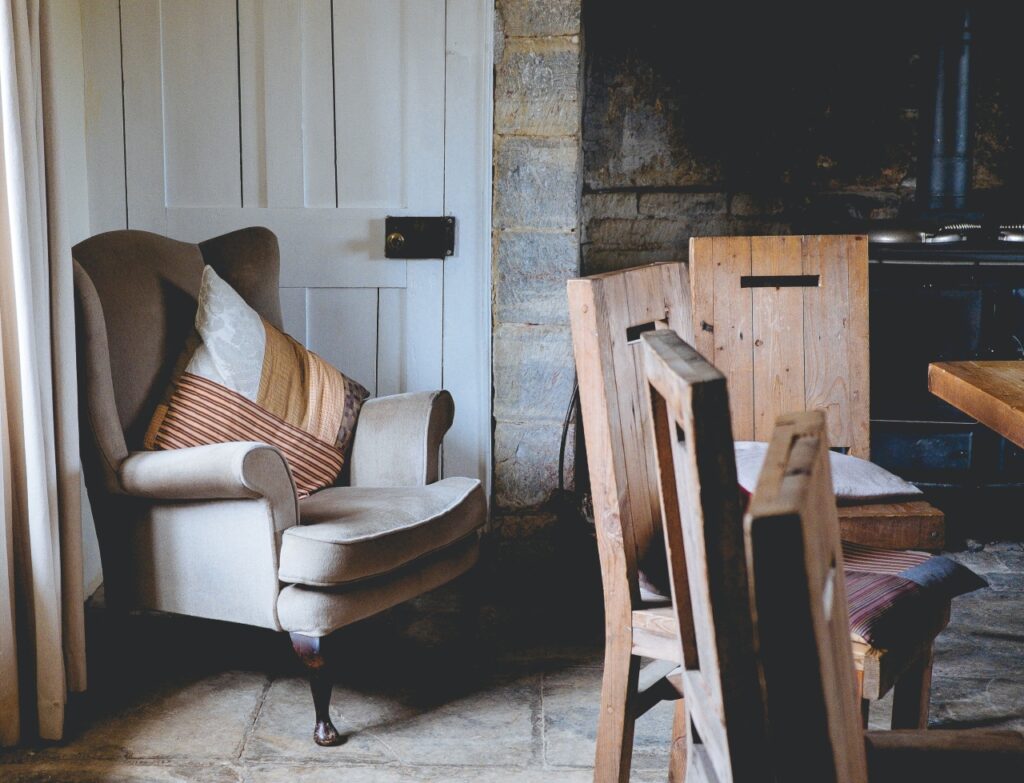
    Rustic Furnishings
    Image by Annie Spratt from Unsplash

    Natural wood finishes and furnishings complement a relaxed and casual lifestyle. Merge second-hand wood furniture and mismatched pieces to enhance the charisma and provide a sense of coziness and comfort. Country-style iron or brass bed frames installed in bedrooms give off country vibes.

    Natural Materials

    Natural Materials
    Image by Nathan Oakley from Unsplash

    Modern country house and natural element is that couple who are always spotted together and we ship them! The exposed beams, wood paneling, and original wooden floorboards! It’s a treat to the eyes! You can go for exposed brick for a rustic look.

    Barn style door, traditional wooden furniture or a stone fireplace are perfect for that classic country look you have been longing for! Pastel shades and warm, inviting, natural hues and natural fabrics like cotton would definitely country-fy your house!

    Color Schemes

    Distressed Paints
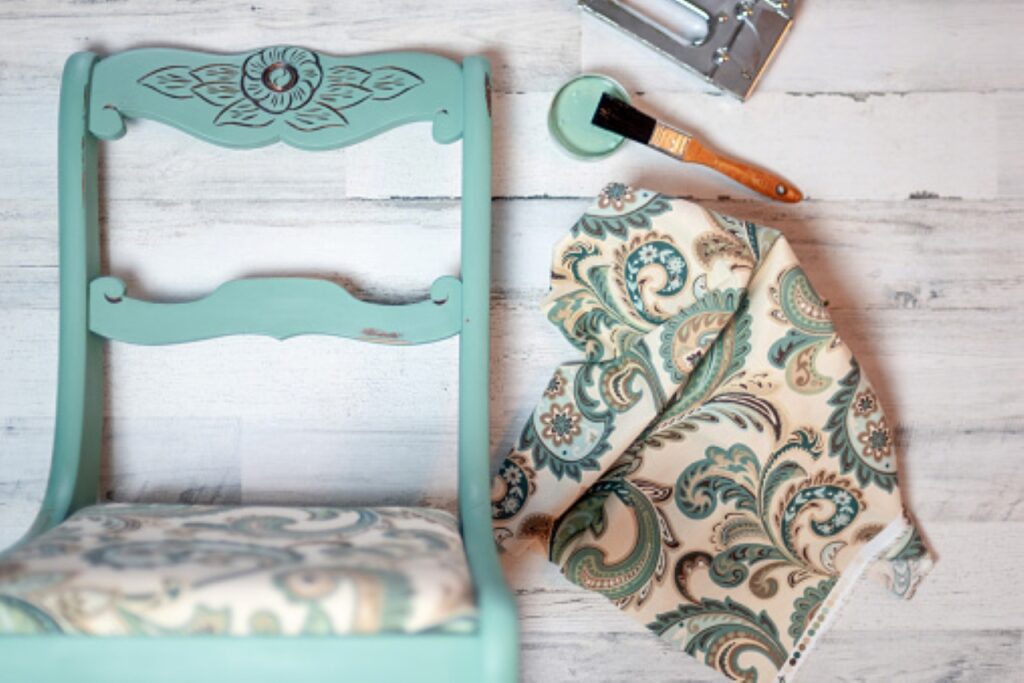
    Distressed Paints
    Image by Kristen Prahl from istock

    The everyday wear and tear look give your home much more of that country charm. Chipped paints on the décor or furniture like chests will give a vintage look to elements.

    Subtle/ Pastel/ Muted colors

    Neutral colour palettes of muted greens, sunny yellows, pastel blues, and subtle greys are one of the major elements for the country look.

    Vintage Pieces

    Vintage pieces and antiques are a necessity of country-style homes! They are the facelift of this style! Plus, who doesn’t love a memory passed on from generation to generation via heirlooms? Throw in a rustic dining table or worn-out armchairs or the big ol’ grandfather clock that strikes at midnight to give cinderella feels!

    Florals And Nature

    The whole essence of country house design lies in the seamless incorporation of the outside with the inside, the nature with the man-made. Letting nature in by plants and flowers or elements of nature like a fresh breeze is the soul of this style!

    Rounded Furniture

    French country uses furniture to add a gracious and delicate feel to a room. Curved outlines are observed as it’s made out of natural materials, such as carved wood with a low sheen finish. Upholstery in French country furniture differentiates it from traditionally rustic furniture. Seating is usually plush and cozy as comfort is the goal. 

    Design Consideration For Country House Planning

    Spacious porches extending the living spaces to create a seamless transition between indoors and out.

    The plans of Country houses are mostly asymmetrical.

    The Dining And Living Areas
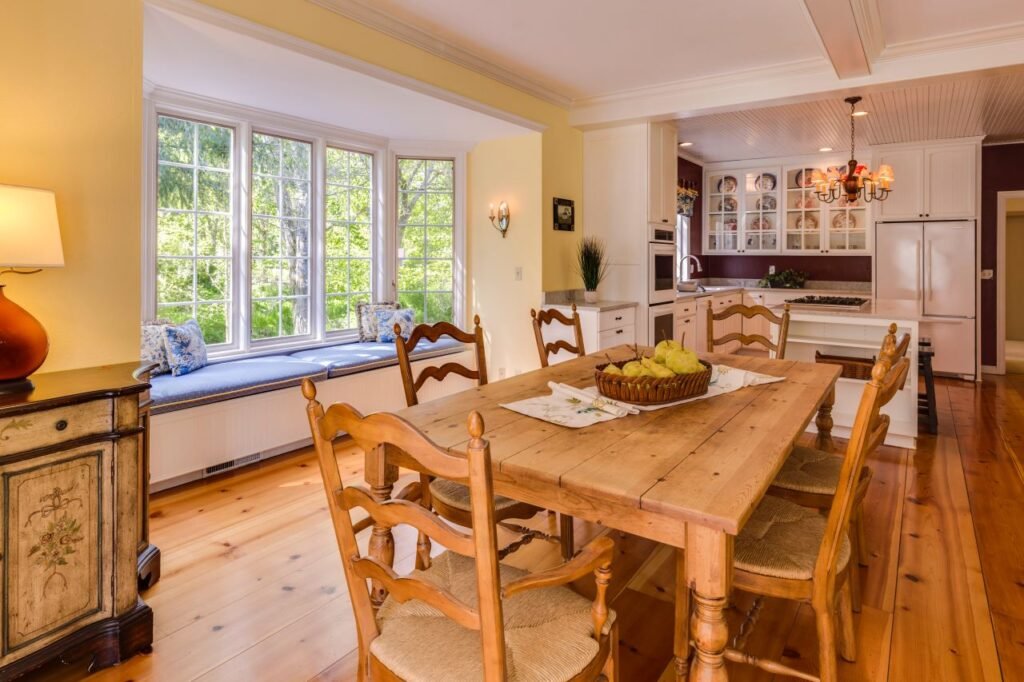
    The dining table is like the heart of the house and serves as the place not just to eat but, an area for the family to spend time together.

    The living room provides seating for relaxing and entertaining. It should make the most of the views offered by the garden and rural setting, with windows and doors framing these views. A sliding door to enable you to separate living areas from other areas is beneficial.

    Bedrooms
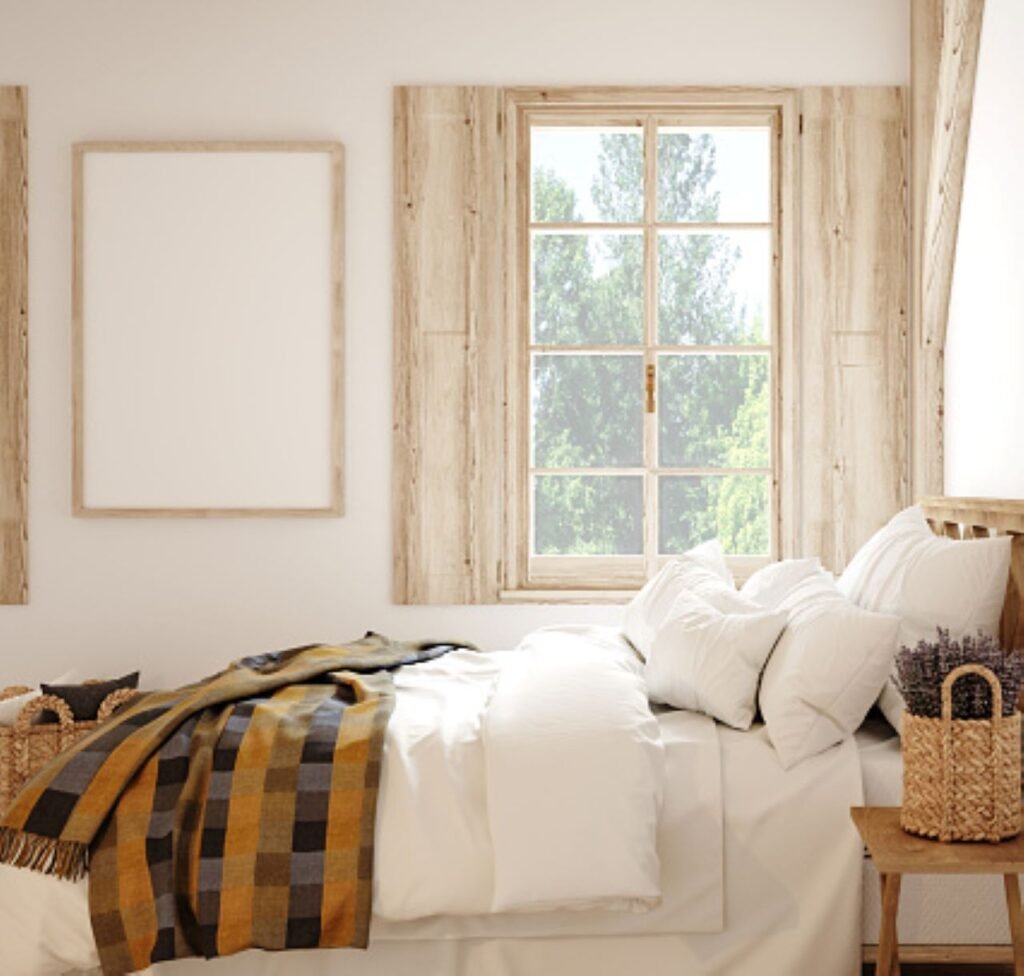
    Bedrooms
    Image  from istock

    The main bedroom is supposed to serve the visual blessing of the house and should enjoy views of the garden and the rural surroundings wrapping around the site. Guest rooms can be put into a separate block as a guest house somewhere on the site.

    Laundry

    Ideally, the laundry should be large enough to have a dryer venting outside. It must have storage cupboards installed. Functionality is a must in the laundry rooms, so opt for a layout with ample storage and durable finishes. Throw in some designer tapware or stylish storage baskets to a simplistic flair to the décor.

    Garage

    Country house Design should be to maximize sunlight and views within a functional layout. For country design, the garage is better off if it’s separate and has a covered walkway to the back door. The garage can then be transformed into a workshop, storage, firewood shed, etc.

    Evolution Of Country houses

    Most country homes were originally huge and spacious mansions. They were mostly vacant as the owners of the country houses lived in towns and cities for their business.

    Growth And Peak Of Country Houses

    After feudalism the rich families did not live in fortified castles anymore and hence, country homes came into light. The very first country houses were monasteries in England during Henry VIII’s reign. During that time, Henry VIII declared himself head of the Church of England. As a result, these monasteries were eventually transformed into private country houses. His future generations later continued this trend. These country houses were built with the intention to be beautiful enough to attract a traveling monarch’s interest to visit the family who occupied the house.

    Effect On The Local Economies

    In the past, country houses provide commoners with a lot of work opportunities as the homeowners needed staff to handle day-to-day necessities. Commoners also opted to work on the land such as gardens, etc. landowners also made money by charging rents from people who lived on it.

    Decline

    By the 20th century, the traditional country lifestyle started going into a tailspin.

    Apart from the maintenance costs of a country home, homeowners were heavily taxed, due to the incoming war. As a consequence, these homes were abandoned and left to molder. Those that somehow survived and stood strong even after the war were either demolished or repurposed.

    The lands lost their value due to the agricultural depression in the 1870s. A decade later, this resulted in the financial status of the gentry and nobility’s taking a dip.

    Since the household staff had chosen to fight and help out in the war, homeowners found it difficult to maintain these country houses. The governments took a lot of these country houses for military purposes as World War II hit. This left a lot of these houses in poor conditions after the war. With the death of heirs, increased taxes, and minimal income many of the homeowners left the country houses to rot.

    How To Get The Look?

    Simplicity

    Simplicity

    Simplicity is the heart of country design. Neutral colors, such as hues of white and brown added to the simplicity. Natural hues and muted tones will give the modern country home a warm, cozy, and comfy feeling.

    Solid colors add an impact, with some more cozy touches, for instance, choose a plain solid colored sofa with no pattern will give the house a country edge. The rooms should be practical and functional apart from being aesthetically pleasing.

    Mismatching

    Mismatching
    Image from Décor Aid

    Mismatched elements are like the signature look of country-style home interior design. The spaces and elements in a country design, appear to have been thrown or stitched together naturally and fit functionally. A modern country design style should include furnishings and elements that appear to be in the family for generations, passed on as heirlooms. In short, a vintage look is a look to aim for.

    Imperfection And Informality

    Imperfections are perfect. Blemishes are beautiful. Scars are signs of victory!

    Imperfection And Informality

    Scratches, bumps, dents, chipped corners, and other such blemishes are welcome in a country house design. Informal layouts are a must in these houses meant for friendly chatter and family time.

    Practicality

    Practicality is the key to modern country style. Everything, every element, serves a purpose other than just sitting there, looking pretty! Practical furniture with ample storage like armoires and crockery displays is a must.

    Pattern

    Florals are the key components of country-style interior decorating. These can be floral designs, stripes, or checks, especially if you are looking for a more modern and clean country house architecture.

    Accessorize Minimally
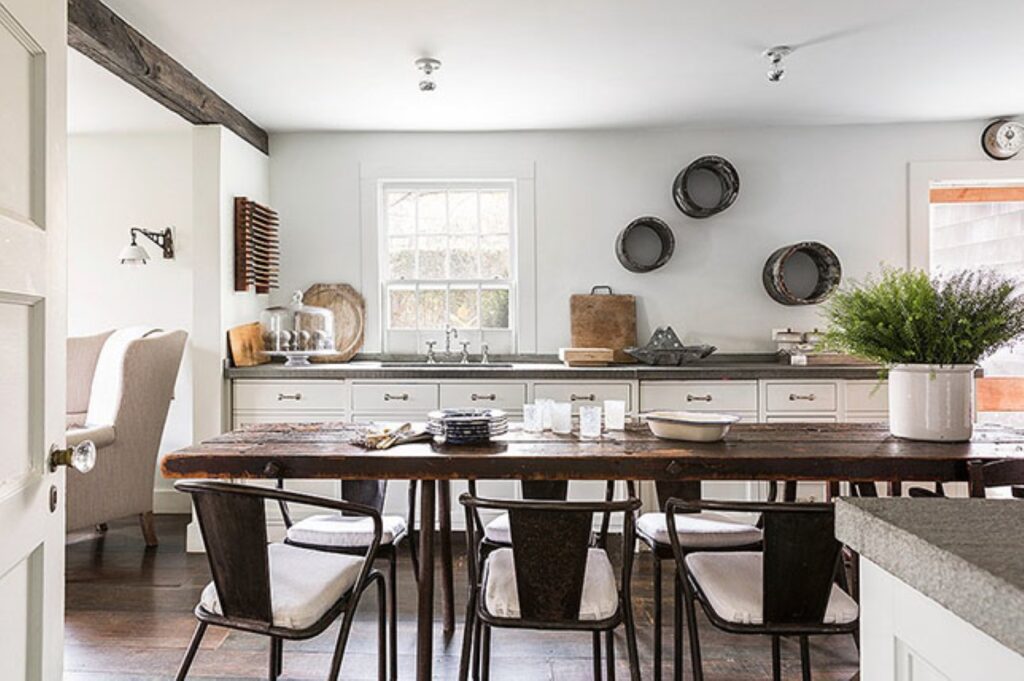
    Accessorize Minimally
    Image from Décor Aid

    No need for bold statement pieces to decorate your country home with! Minimal décor of faint hues and subtle patterns suits this style the best. Embroidered fabrics, plants, and flowers are perfect for a country-style interior incorporating the inside with the outside.

    Potted Plants

    Potted Plants
    Image by Vadim Kaipov from unsplash

    Flowers can naturally appear on windowsills, but English country homes spotlight their greenery in terra-cotta planters and an eclectic mix of chinois Erie vases and ceramic vessels. Ivy-covered exteriors are a die for in an English country house design.

  • Ventilated Facades: 13 Benefits for your Project

    Ventilated Facades: 13 Benefits for your Project

    Find out what ventilated facades are, understand how they help modify projects and check out the main benefits of this innovation! Are you looking for options that offer more security and add value to your projects? So, you need to know the enormous versatility of ventilated facades.

    Although they are still little known, more than 40 architectural projects across the country have already tested and attested that this type of coating is beautiful and durable. To help you identify the best options, we have created this complete content with all the important information about ventilated facades. Check out!

    What are ventilated facades? 

    It is a system whose plates are fixed by means of a metallic structure instead of the traditional plaster with adhesive mortar. This puts it at the forefront of the building’s structure as an extra cladding.

    It is worth noting that ventilated facades do not take that name by chance, as there is a space (minimum of 7 cm and maximum of 50 cm) between the cladding and the wall. Thus, an air chamber is built, generating the “chimney effect”, which thermally isolates the interior (from the cold or heat) and the exterior of the work, increasing comfort and saving energy.

    Ventilated Facades

    The “chimney effect” happens when cold air enters at the bottom and hot air is removed at the top. Thus, continuous ventilation in the vertical direction offers greater thermal comfort and reduces the need for electricity in the building. Another advantage of the “chimney effect” is that air circulation helps to eliminate pathological manifestations caused by humidity problems.

    However, the greatest benefit for the owner is safety, as the ventilated facades are industrialized systems designed and assembled with up to 10 years of warranty from the supplier companies — a very different business model from the traditional adhered system.

    Finally, architectural flexibility is another novelty, as the panels that make up the ventilated facades have no height or size limitations, in addition to allowing for innovative volumes.

    How did ventilated facades come about?

    Ventilated facades were created in Scandinavia in the 1940s, helping to improve the thermal performance of buildings. The main objective of this creation was to contain the icy winds of the Swedish, Norwegian and Danish winter, which is quite rigorous.

    In 1980, the English added an aesthetic function to the creation and incorporated more acoustic quality. Thus, ventilated facades began to add new concepts, and the British became the biggest exporters of this type of construction.

    Currently, investments in technologies for ventilated facades are still being made with new coating options capable of being integrated into the structure and fitting systems more securely, among several other innovations.

    Ventilated Facades

    How is the composition of ventilated facades

    The fastening system for ventilated façades is much simpler than that for bonded ones, as it does not require the application of roughcast, plaster, adhesive mortar and grout.

    The final cleaning is done with a damp cloth as it is a dry installation. In other words, much more practical than that performed with acids and hydro jet.

    The ventilated facade can be used both in new works and renovations (retrofit), and each system is designed according to the aesthetic and functional requirements of the project in question.

    Ventilated Facades

    Ventilated facades are sustainable solutions, such as the Tauste Supermarket application in Campolim (SP). In general, the execution process is quick, as the coatings and mechanical anchors are prefabricated materials. Below, check out the components that support the ventilated façade panels:

    ·         An applied layer of insulating material attenuates heat transfer along the elements to which it is applied. Although its use is optional, it is highly indicated

    ·         The base, which essentially serves as fixing support and must be protected with a layer of thermal insulation to avoid problems related to humidity (it can also be painted with water-repellent additives)

    ·         The coating material of your choice. The panels are fixed to the support structure by means of metallic fittings

    ·         A sub-structure whose main objective is to aid in the fixation of the layers. It can be visible or hidden, depending on the fastening systems used, coatings and anchoring devices

    ·         The previously mentioned air chamber will guarantee the space for circulation and water drainage. It is located between the support base and the panels of the ventilated façade, allowing for natural ventilation. It must have a minimum thickness of 2 cm (the greater the measurement, the better the “chimney effect”)

    ·         The joints, which will be installed between the plates or panels, can be horizontal or vertical. The joint will depend on the fastening structure and the spacing between the plates or panels.

    Ventilated Facades

    What should a ventilated facade project look like and what are the installation steps?

    The first step should be planning, with details on fixing and modulating the plates. Afterwards, the prefabrication should be planned, with details and information about the coverings cut and other points.

    Installation should only be done after the executive project is ready and approved, thus reducing costs, time and the need for labor. It is important that the execution is always carried out by qualified and specialized professionals, as it will be necessary to install the fastening components and align them with the facade plumb. You may take assistance from Blue World City.

    As ventilated facades can have different coatings (porcelain, ceramic, fiber cement, phenolics, etc.), it is important to evaluate the energy efficiency requirements of the project carefully.

    Other details that deserve attention are the metallic devices used to support the system and other components, such as structural sealants, which may be necessary to fix the panels, varying according to the coating used.

    What are the Advantages of Ventilated Facades?

    Based on what we saw, you can get a good idea of ​​the advantages that architects and contractors identify in the use of ventilated facades, right? But let’s analyze in detail the main positive points of this type of construction.

    1. Aesthetic appeal

    Starting from the obvious, which jumps out at anyone looking at a building with a ventilated façade, it is worth mentioning that the project acquires an irresistible aesthetic appeal.

    Not to mention that the structure is different from what we see in buildings today. Thus, it is possible to create an interesting effect, which immediately catches the attention of people on the streets.

    Another interesting point is that this system removes some barriers to creativity, such as:

    • Not have limitations on the height of the building
    • Allow the use of large-format porcelain tiles and slabs
    • Enable the creation of volumes without having to make fillings or complex structures
    • Allow composition with other elements, such as brises and glass, for ventilation or concealment of air-conditioning machines

    This is precisely why ventilated facades are so often used in retrofit projects, giving a “new face” to buildings while making them more efficient and sustainable.

    2. Durability

    The systems are designed for maximum performance, offering between 200 and 300 times more clamping area than simple clips or metal inserts.

    3. Warranty

    In general, a 10-year warranty is offered for the services rendered in materials, design and installation.

    Ventilated Facades

    4. Security

    There are few companies in the market capable of delivering reports from independent laboratories, attesting that the offered solution complies with Brazilian regulations on winds and impacts. Portobello is one of them. All works are insured by an insurance policy and registered by a Brazilian technician.

    5. Easy work management

    Managing all aspects of a work is a very complex service and demands full knowledge of the technical team. The complete solution sales model consists of a single supply contract that already includes materials, design, installation, inspection and warranty.

    6. Easy maintenance

    The panels of the ventilated facades are independent, which facilitates maintenance, allowing for faster repairs, changes and checks. Eventual projection or installation defects are covered by a 10-year warranty.

    7. Fast installation

    The ventilated façade allows for installation in at least four times less time than the traditional method. This is because it is a high-productivity dry industrialized system.

    8. Thermal comfort

    The “chimney effect” of natural air circulation inside the façade isolates the internal environment from the external environment, reducing air conditioning consumption by up to 20%.

    9. Breathing system

    The façade system allows the dispersion of steam from inside the walls, which eliminates moisture in the buildings.

    This means that ventilated facades also help to improve the conservation of the structure and reduce the problems caused by humidity.

    Ventilated Facades

    10. Water tightness

    Another important advantage is that when properly dimensioned, the system manages to control the entry of rainwater and eliminate infiltrations — one of the most common causes of facade deterioration.

    In addition, there is the possibility of idealizing a facade with solutions for reusing rainwater, which is capable of making a project even more sustainable.

    11. Ease of cleaning

    Considering the high durability of this type of facade and the low degree of water absorption, the cleaning of the plates can be carried out by rainwater itself, reducing the accumulation of dirt and inhibiting the fixation of chemical products, such as compounds, paints and even graffiti.

    Ventilated Facades

    12. Sustainability

    Ventilated facades are good solutions for sustainable projects, especially due to the use of recyclable and ecologically correct materials in their manufacturing process and the lower generation of waste during construction.

    In addition, as we have seen, they offer more energy efficiency to buildings thanks to their “chimney effect”, which generates continuous ventilation and improves thermal comfort inside buildings, reducing the need for air conditioning and other devices, which reduces energy consumption.

    It is still possible to combine other solutions capable of making the project even more sustainable, such as the reuse of rainwater.

    Ventilated Facades

    13. Other advantages of ventilated facades

    In addition to all these benefits, ventilated facades also have many others, such as:

    ·         Use of the space between the plates and the wall for hydraulic or electrical installations or for the addition of materials that provide greater thermal or acoustic comfort

    ·         Wide variety of colors, shapes and textures

    ·         Less noise

    The ventilated façade system is extremely versatile aVentilated Facades: 13 Benefits for your Project

    Find out what ventilated facades are, understand how they help modify projects and check out the main benefits of this innovation! Are you looking for options that offer more security and add value to your projects? So, you need to know the enormous versatility of ventilated facades.

    Although they are still little known, more than 40 architectural projects across the country have already tested and attested that this type of coating is beautiful and durable. To help you identify the best options, we have created this complete content with all the important information about ventilated facades. Check out!

    What are ventilated facades?

    It is a system whose plates are fixed by means of a metallic structure instead of the traditional plaster with adhesive mortar. This puts it at the forefront of the building’s structure as an extra cladding.

    It is worth noting that ventilated facades do not take that name by chance, as there is a space (minimum of 7 cm and maximum of 50 cm) between the cladding and the wall. Thus, an air chamber is built, generating the “chimney effect”, which thermally isolates the interior (from the cold or heat) and the exterior of the work, increasing comfort and saving energy.

    The “chimney effect” happens when cold air enters at the bottom and hot air is removed at the top. Thus, continuous ventilation in the vertical direction offers greater thermal comfort and reduces the need for electricity in the building. Another advantage of the “chimney effect” is that air circulation helps to eliminate pathological manifestations caused by humidity problems.

    However, the greatest benefit for the owner is safety, as the ventilated facades are industrialized systems designed and assembled with up to 10 years of warranty from the supplier companies — a very different business model from the traditional adhered system.

    Finally, architectural flexibility is another novelty, as the panels that make up the ventilated facades have no height or size limitations, in addition to allowing for innovative volumes.

    How did ventilated facades come about?

    Ventilated facades were created in Scandinavia in the 1940s, helping to improve the thermal performance of buildings. The main objective of this creation was to contain the icy winds of the Swedish, Norwegian and Danish winter, which is quite rigorous.

    In 1980, the English added an aesthetic function to the creation and incorporated more acoustic quality. Thus, ventilated facades began to add new concepts, and the British became the biggest exporters of this type of construction.

    Currently, investments in technologies for ventilated facades are still being made with new coating options capable of being integrated into the structure and fitting systems more securely, among several other innovations.

    How is the composition of ventilated facades

    The fastening system for ventilated façades is much simpler than that for bonded ones, as it does not require the application of roughcast, plaster, adhesive mortar and grout.

    The final cleaning is done with a damp cloth as it is a dry installation. In other words, much more practical than that performed with acids and hydro jet.

    The ventilated facade can be used both in new works and renovations (retrofit), and each system is designed according to the aesthetic and functional requirements of the project in question.

    Ventilated facades are sustainable solutions, such as the Tauste Supermarket application in Campolim (SP). In general, the execution process is quick, as the coatings and mechanical anchors are prefabricated materials. Below, check out the components that support the ventilated façade panels:

    • An applied layer of insulating material attenuates heat transfer along the elements to which it is applied. Although its use is optional, it is highly indicated

    • The base, which essentially serves as fixing support and must be protected with a layer of thermal insulation to avoid problems related to humidity (it can also be painted with water-repellent additives)

    • The coating material of your choice. The panels are fixed to the support structure by means of metallic fittings

    • A sub-structure whose main objective is to aid in the fixation of the layers. It can be visible or hidden, depending on the fastening systems used, coatings and anchoring devices

    • The previously mentioned air chamber will guarantee the space for circulation and water drainage. It is located between the support base and the panels of the ventilated façade, allowing for natural ventilation. It must have a minimum thickness of 2 cm (the greater the measurement, the better the “chimney effect”)

    • The joints, which will be installed between the plates or panels, can be horizontal or vertical. The joint will depend on the fastening structure and the spacing between the plates or panels.

    What should a ventilated facade project look like and what are the installation steps?

    The first step should be planning, with details on fixing and modulating the plates. Afterwards, the prefabrication should be planned, with details and information about the coverings cut and other points.

    Installation should only be done after the executive project is ready and approved, thus reducing costs, time and the need for labor. It is important that the execution is always carried out by qualified and specialized professionals, as it will be necessary to install the fastening components and align them with the facade plumb. You may take assistance from Blue World City. 

    As ventilated facades can have different coatings (porcelain, ceramic, fiber cement, phenolics, etc.), it is important to evaluate the energy efficiency requirements of the project carefully.

    Other details that deserve attention are the metallic devices used to support the system and other components, such as structural sealants, which may be necessary to fix the panels, varying according to the coating used.

    What are the Advantages of Ventilated Facades?

    Based on what we saw, you can get a good idea of the advantages that architects and contractors identify in the use of ventilated facades, right? But let’s analyze in detail the main positive points of this type of construction.

    1. Aesthetic appeal

    Starting from the obvious, which jumps out at anyone looking at a building with a ventilated façade, it is worth mentioning that the project acquires an irresistible aesthetic appeal.

    Not to mention that the structure is different from what we see in buildings today. Thus, it is possible to create an interesting effect, which immediately catches the attention of people on the streets.

    Another interesting point is that this system removes some barriers to creativity, such as:

    • Not have limitations on the height of the building

    • Allow the use of large-format porcelain tiles and slabs

    • Enable the creation of volumes without having to make fillings or complex structures

    • Allow composition with other elements, such as brises and glass, for ventilation or concealment of air-conditioning machines

    This is precisely why ventilated facades are so often used in retrofit projects, giving a “new face” to buildings while making them more efficient and sustainable.

    2. Durability

    The systems are designed for maximum performance, offering between 200 and 300 times more clamping area than simple clips or metal inserts.

    3. Warranty

    In general, a 10-year warranty is offered for the services rendered in materials, design and installation.

    4. Security

    There are few companies in the market capable of delivering reports from independent laboratories, attesting that the offered solution complies with Brazilian regulations on winds and impacts. Portobello is one of them. All works are insured by an insurance policy and registered by a Brazilian technician.

    5. Easy work management

    Managing all aspects of a work is a very complex service and demands full knowledge of the technical team. The complete solution sales model consists of a single supply contract that already includes materials, design, installation, inspection and warranty.

    6. Easy maintenance

    The panels of the ventilated facades are independent, which facilitates maintenance, allowing for faster repairs, changes and checks. Eventual projection or installation defects are covered by a 10-year warranty.

    7. Fast installation

    The ventilated façade allows for installation in at least four times less time than the traditional method. This is because it is a high-productivity dry industrialized system.

    8. Thermal comfort

    The “chimney effect” of natural air circulation inside the façade isolates the internal environment from the external environment, reducing air conditioning consumption by up to 20%.

    9. Breathing system

    The façade system allows the dispersion of steam from inside the walls, which eliminates moisture in the buildings.

    This means that ventilated facades also help to improve the conservation of the structure and reduce the problems caused by humidity.

    10. Water tightness

    Another important advantage is that when properly dimensioned, the system manages to control the entry of rainwater and eliminate infiltrations — one of the most common causes of facade deterioration.

    In addition, there is the possibility of idealizing a facade with solutions for reusing rainwater, which is capable of making a project even more sustainable.

    11. Ease of cleaning

    Considering the high durability of this type of facade and the low degree of water absorption, the cleaning of the plates can be carried out by rainwater itself, reducing the accumulation of dirt and inhibiting the fixation of chemical products, such as compounds, paints and even graffiti.

    12. Sustainability

    Ventilated facades are good solutions for sustainable projects, especially due to the use of recyclable and ecologically correct materials in their manufacturing process and the lower generation of waste during construction.

    In addition, as we have seen, they offer more energy efficiency to buildings thanks to their “chimney effect”, which generates continuous ventilation and improves thermal comfort inside buildings, reducing the need for air conditioning and other devices, which reduces energy consumption.

    It is still possible to combine other solutions capable of making the project even more sustainable, such as the reuse of rainwater.

    13. Other advantages of ventilated facades

    In addition to all these benefits, ventilated facades also have many others, such as

    • Use of the space between the plates and the wall for hydraulic or electrical installations or for the addition of materials that provide greater thermal or acoustic comfort

    • Wide variety of colors, shapes and textures

    • Less noise

    The ventilated façade system is extremely versatile and can be applied to all architectural types, such as commercial works (use of the shaft to pass installations and lower replacement costs), residential (considerable reduction in time), urban equipment (reduction in cost maintenance), hotels (quick renovation, with less interdiction and less noise for guests) and hospitals (with the option of including a bacteriostatic coating ).

    As you have seen in this content, ventilated facades are an innovative way to transform buildings, mainly favoring thermal comfort and energy efficiency in projects, making them more sustainable and, of course, much more beautiful and different.

  • Interesting Peep into a Victorian House Design: An Off-Grid Experience

    Interesting Peep into a Victorian House Design: An Off-Grid Experience

    Definition and History 

    Victorian-style architecture in Great Britain and former British colonies was a type of house generally built during the reign of Queen Victoria. At the time of the Industrial Revolution, successive housing resulted in the building of tons of Victorian house designs that are now a defining feature of most British towns and cities.

    Interestingly, many of the details that we now associate with this style are actually interpretations of older architectural movements featuring Medieval Gothic and Romanesque. Thanks to the size of the British Empire during that time, Victorian house design has an incredibly wide reach. It is widely populated across the UK, North America, New Zealand, and Australia.

    Victorian house designs have managed to capture the hearts and minds of people for over two centuries now. There is so much to the design than those dollhouse-like exteriors. This architecture style includes multiple and distinct variations that all deserve a critical look. Also, as the name suggests, Victorians became popular among the upper-class White people during Queen Victoria’s reign.

    What makes a house Victorian Style?

    As per the words of Thomas Jepsen from the design firm Passion Plans, “A Victorian Style house is something between a colourful dollhouse and a great English Remnant. While the style refers to a period of time in history, it is generally associated with certain characteristics.

    Here are a few common characteristics of Victorian house architecture:

    Exterior

    1. Two to three stories
    2. Steep, gabled roofs
    3. Intricate woodwork
    4. Towers and turrets
    5. Rich colours

    Interior

    1. High ceilings and windows
    2. Closed off rooms
    3. Detailed trim
    4. Ornamental architecture
    Victorian house design layout
    Victorian house layout

    Types of Victorian style houses

    Italianate houses

    Italianate homes were popularized first in the 1840s and lasted until the Civil war, drawing inspiration from 16th-century Italian villas. The main structures were often simple, rectangular-shaped houses with low sloping or sometimes flat roofs that protrude far out from exterior walls. The windows are usually tall and skinny often rounded at the top with trim. Some Italianate houses have square towers or cupolas that rise out of the centre of the house giving a Tucson villa vibe.

    Italianate houses are mostly seen in the greatest number in North American cities that experienced exponential growth during the mid-19th century Cincinnati, Ohio, New Orleans, Garden District, and parts of San Francisco, Brooklyn, and New York.

    Other characteristics are:

    1. Wide eaves
    2. Quoins chimneys
    3. Single storey porch
    4. Tall and narrow windows
    5. Double doors with glass panels
    Italianate houses
    Source

    Queen Anne houses

    Queen Anne homes were popular in the US from the 1880s until sometime around the 1920s. This was theoretically a revival of the style du jour during the actual reign of Queen Anne which lasted from 1720 to 1714 but there is a very quiet resemblance in practice. The Queen Anne homes are quintessential Victorian homes having asymmetrical, two or three-storied tall, steeply high-pitched roofs.

    They are often adorned with various wall textures and ornate trim which gives them a ‘gingerbread’ effect commonly associated with Victorian houses- typically painted in a variety of accent colours. Few of the Queen Anne homes have octagonal towers (topped with a round pointed roof) and ornate bay windows which makes them subtle in look and design.

    Other characteristics are:

    1. Gable ends
    2. Towers with balconies
    3. Bold exterior colours
    4. Bay windows
    5. Built from wood, stone and brick siding
    6. Stained glass window
    7. Decorative spindle work
    8. Wide and spacious verandas
    Queen Anne houses
    Source

    Gothic Revival houses

    The Gothic Revival-style homes were first introduced in the 1880s. These homes are the classic representations of romantic and picturesque architectural elements that manifested in the US. The main properties of these structures were inspired by the medieval design of churches. Therefore, making the Victorian Gothic Revival style homes different from that of medieval architecture such as high pointed arches, biblical and heraldic emblems.

    Other Characteristics include:

    1. Steep, pitched roof with overhanging eaves.
    2. Castle like turrets.
    3. Slender columns and decorative posts
    4. Unique modern trims
    5. Pointed arches above windows with high dormers
    Gothic Revival houses
    Source

    Folk Victorian houses

    The Folk Victorian house is the most common type of home found in the US. This gained popularity in the 19th century and was considered as a more affordable alternative to Queen Anne’s style of design. The architects of Folk Victorian-style houses created a pimped-up version of a Victorian house by using cheaper materials in a relatively plain design and decorative trims for low-budget families, but with almost similar and prominent front-facing gable and steep under eaves.

    Other characteristics include:

    1. Decorative detailing on the porch
    2. Ornamented gables
    3. Symmetrical structure
    4. Trimmed windows
    Folk Victorian houses
    Source

    Shingle style houses

    The Shingle-style homes are basically known for their simplicity and make a popular choice for summer or weekend houses of the rich and famous. Shingle-styled houses are made up of clapboard or brick, despite their misleading name.  These types of houses are characterised by their rustic appearance which was favoured by the working class. Used as a holiday cottage by the wealthy, these homes became popular in New England from 1831.

    Other characteristics are:

    1. Symmetrical exterior
    2. Pitched roofs
    3. Shingled roof and walls
    4. Wide porches
    5. Sash windows
    6. Round towers
    Shingle style houses
    Source

    Octagon style houses

    The octagon-styled houses were hugely popular from between 1850 to 1870 after its mention in Orson Squire Fowler’s book called “The Octagon House: A House for All”. This style of the Victorian house took its inspiration from the Gothic and Greek Revival times to create a unique approach to residential architecture by specializing in bright and airy spaces in affordable dwellings.

    The Octagonal style house is the world’s only 8-sided Victorian house design with the benefits of being a practical and energy-efficient property. This unique style has evolved over the past decade or so thanks to the new constructive innovations.

    Other characteristics include:

    1. Domed shape
    2. Wide eaves
    3. Low pitched roofs
    4. Partially encircling or full porches
    Octagon style houses
    Source

    Second Empire style houses

    The second Empire-style houses gained popularity between 1865 and 1880 in the late Victorian era. This originated first in France, with some of the most famous hotels featuring the same architectural elements as the Second Empire houses. The attic or the upper storey is usually light and airy with a high ceiling. The most stood-out, striking feature of a Second Empire house is its mansard roof, which is named after the 17th-century French architect, Francois Mansart. This type of roof is a 4-sided gambrel roof with two slopes on either side.

    Other characteristics include:

    1. Imposing tower
    2. Side veranda
    3. Balustrades
    4. Diamond shaped dormers
    5. Wrought iron railings in balcony
    6. Bay window
    7. Quoins chimneys
    Second Empire style houses
    Source

    Stick style houses

    The Stick-styled houses date back to 1860 and are widely characterized by their vertical, diagonal, or horizontal planks resembling Tudor-style buildings. This Victorian-style home has a more decorative aspect to it but with a simple design. Unlike other elaborate architectural designs of the Second Empire and Queen Anne styles, the Stick style home lacks the bay windows and decorative elements that are so characteristic of the Victorian era.

    Other characteristics are:

    1. Pitched gable roof
    2. Wooden exterior walls
    3. Towers
    4. Cross gables
    5. Decorative trusses
    6. Diagonal or curved braces
    7. Wooden decorative trims
    Stick style houses
    Source

    Richardsonian Romanesque style houses

    The Richard Romanesque style is the most dramatic of all architectural styles in the Victorian era (1838). This Victorian-style architecture was named after the architect, Henry Richardson. It didn’t take long before becoming popular all thanks to Medieval Spanish and Italian Romanesque elements that blended with modern materials and features.

    A typical feature of this type of house included circular arches above the porch supports and windows. These round arches were often set on huge pillars that were built directly into the wall.

    Other characteristics are:

    1. Round masonry arches
    2. Recessed entrances
    3. Heavy stone materials
    4. Square and cylindrical shaped towers
    Richardsonian Romanesque style houses
    Source

    Eastlake style houses

    By the end of the 19th century, a new movement in the US transformed the interior and exterior designs of properties. This movement was inspired by the British architect, Charles Eastlake, who convinced homeowners to replace their heavy furnishings with attractive pieces that were made by hand. This was termed as a start of reform which subsequently was followed by a simple layout.

    The Eastlake style is mainly recognized by its Gothic design with decorative shingles and trusses on the gable end. These types of Victorian houses often feature overhanging, second storey porches as their design feature. It also boasts paneled brick chimneys inspired by the Queen Anne period.

    Other characteristics are:

    1. Carved panels
    2. Perforated pediments
    3. Lattice work on porch eaves
    4. Interlaced wood strips
    5. Mansard porches with iron cresting
    Eastlake style houses
    Source

    The two architecture styles Grant noted to be most famous of the Victorian period- Italianate and Queen Anne are technically revivals of earlier architecture styles. Although both took on lives of their own and were often exuberantly decorative without much concern for historical accuracy according to Grant. Each has distinct features but what they have in common is an emphasis on vertical elements i.e. homes often stood at two or three stories with tall windows and porches and detailed ornamentations on the top.

    Building Materials

    The most common building material during the Victorian era were the ones that were local to the area. The buildings of the local material are sometimes called of Vernacular style. The known Cotswold villages were made of white Jurassic limestone, central England had buildings of red sandstone, Cornwall towns in the south and Aberdeen in the north were built of local granites, and places like Norwich, which had no local hard stone, was faced with flints.

    Victorian architecture was constructed with brick, local stone, and mortar, as these were the primary building materials and were an integral part of the construction. The roofing was typically composed of multiple layers of coal and tar over tongue and groove planking. The Victorian houses were usually made of wood or stone as they were quite large and imposing.

    Stone

    The number of full-blown Gothic stone mansions was never too large. Most early homes, especially in England, were built of stones and enhanced decorative stone tracery. Only the wealthy were able to afford such homes which required labours of highly skilled stone carvers. The over-priced Gothic style was eventually made into wood and lots of ‘Carpenter Gothic’ houses still stand even today.

    With the innovation of new manufacturing processes and emerging of railways, the previously locally produced building materials were instantly available all over the city. Henceforth, all houses started being made from bricks from Bedfordshire and slate from North Wales instead of being made off the local stone, time, and straw.

    Limestone

    The Portland Limestone was the most common white stone used across England for public buildings, for example, the Whitehall. Equally popular was also the Bath Stone, orangish sandstone of great value and beauty. Permian sandstone, reddish coloured sandstone, often weathered to give a deep pitted and honeycombed appearance such as the walls of embankments on seaside towns.

    Victorian Bricks

    A renaissance of brick was seen in the Victorian era. The local brick-making material for London was the London Clay, which were yellow and greenish-yellow in shade. Older, more hand-pressed bricks were often irregular in shape and had lines, squeeze-marks known as Stock Bricks. The Oxford Clay Bricks, plain red of most modern brick, dominated and ruled.

    The railways used fired Black brick. Minton’s perfected the encaustic tile (the colour in the material of the tile rather than just on the surface of it) and thereafter tile-covered buildings such as public houses became common with a flourishing of nouveau decors after the century.

    Victorian houses in different countries

    Victorian houses in different countries
    Image by CarAnd from Pixabay  

    United Kingdom

    In the UK, Victorian houses follow a wide range of architectural styles. The houses in the 1840s were influenced by classicism of Regency styles, the Italianate style, and the Gothic Revival style in the 1880s. The simplicity of Regency classicism fell out of flavor as the Italianate style influenced the domestic architecture which is now incorporated by varying’s of Stucco. The additional general features/influences brought out a progressive change in style that resulted from several other factors.

    The abolition of tax on bricks in the 1850s made these items cheaper yet a suitable material. The emerging railways allowed them to be manufactured elsewhere at a lower price and to standard sizes and methods. There was also a progressive introduction from the 1850s to building regulations.

    In deprived areas, Victorian houses were often very small. Victorian houses for the middle classes and upwards tended to accommodation for servants. And for the middle and upper classes, it aspired to follow the purest forms of contemporary architecture.

    North America

    Victorian houses in east American cities were three stories and those in western American cities were two stories. One feature that became hugely popular in the Victorian era was the use of wooden gingerbread trims to create ornate embellishments to decorate their homes. The Victorian-era residential architecture in America and Canada was a procession of styles borrowed from different countries and historical sites.

    Few examples of this style are:

    1. Carson Mansion, California
    2. John B Kane Residence, Los Angeles
    3. Alamo Square, San Francisco
    4. Farnam Mansion, New York

    Australia

    The Victorian period in Australia lasted roughly from 1840 to 1890. There were 15 styles that predominated of which, 8 were used for homes.

    1. Victorian Georgian
    2. Victorian Regency
    3. Free Gothic
    4. Rustic Gothic
    5. Free Classical
    6. Filigree
    7. Italianate
    8. Tudor

    Victorian house roofing materials

    During the Victorian period, many different types of roofing materials were used. Some were more durable than others and some were less. Like wood shingles, modern enhancements made restoring a Victorian roof design possible without compromising longevity and protection.

    There isn’t a single, one-size-fits-all ruffing material foot these types of houses but using the current roof as a guide, can be the best indicator of what materials to use. Slate tiles, Asphalt, wood, and clay tiles are mostly used as roofing materials

    Slate tiles

    Slate tiles began to rise in popularity during the end of the Victorian period. These are extremely durable, resistant to fire, and environmentally beneficial. They also last much longer than some other roofing materials, but these added benefits also come at a cost.  

    Asphalt

    While asphalt roofs weren’t used during the Victorian period, they can be made to resemble Victorian-style roofing, such as wood shakes or slate. Asphalt shingles can also come in varying shapes and sizes for added Victorian appeal and durability.

    Wood

    Wood roofing was used primarily for early Victorian houses. Wood is cost-effective and visually appealing, but it is not a long-lasting material. This is because wood is susceptible to rot, insect problems, and damage.  

    Clay Tiles

    Clay tiles were also used as roofing materials in the early Victorian houses. Clay roofing is durable and long-lasting, but it’s important to match clay tiles with the Victorian period.

    Evolution of Victorian houses

    During the Victorian era, architecture saw rapid changes. A variety of Victorian styles emerged, each with its own distinctive features and personalities. The most popular Victorian style spread quickly through vast published pattern books. Builders often borrowed its characteristics from several styles, creating unique and sometimes quirky mixes.

    In the 20th century, despite having the availability of these new products, several working populations in the countryside lived in tiny cottages, hovels, and shacks. In towns, people lived in back-to-back houses called terrace houses. Innovation in building techniques and mass-produced building materials that could be transported by rail saved builders time and helped them lead a housing boom during the 1850s and 1870s that witnessed millions of Victorian constructions.

    While the Victorian era officially ended in the 1920s, its accompanying architecture styles stuck around for another decade or so until the colonial movement surpassed them in popularity. Victorian homes became disliked in the following decades. As Grant said, “There was a time when the Victorian house was considered an unwelcomed presence in many neighborhoods. Indeed, it became a stereotype for the ‘haunted house’”.

  • 5 Awesome Airbnb Bangalore for a Perfect Getaway

    5 Awesome Airbnb Bangalore for a Perfect Getaway

    5 Awesome Airbnb Bangalore for a Perfect Getaway

    Introduction

    Bangalore is one of India’s most developed cities, with a pleasant climate, modern metro, vibrant dining, and great Airbnb Bangalore stays. Its creature comforts are a blessing to the weary traveler who has done the hard yards off the beaten route, and it’s an excellent place for mixing with locals at craft beer bars or eccentric small eateries. Though there are no world-class attractions, you will find magnificent parks and striking Victorian-era buildings.

     airbnb bangalore office airbnb bangalore electronic city

    Bangalore (Source Link)

    airbnb bangalore near airport

    Airbnb Bangalore

    Luxurious Villa by Calista Chateaux 

    Together with first-rate amenities and services this luxurious villa has tasteful furniture and décor. The home boasts an amazing outdoor patio lounge with a faux waterfall a landscaped garden area and a great roof deck with a bar and BBQ area. Calista’s residence is approximately 12 kilometers from Kempe Gowda International Airport.

    airbnb bangalore whitefield airbnb bangalore with pool

    Airbnb Bangalore with Pool

    Small Minimal Apartment 

    The apartment has its style with all amenities. This one-bedroom suite includes a Queen-size bed, high-TC sheets, and a soft orthopedic mattress. It contains a spacious bedroom and a workplace. The flat receives plenty of natural light and has been designed with a minimalist aesthetic. The flat also includes a small kitchenette, fridge, fresh coffee grounds, and tea.

    bangalore airbnb regulations

    Airbnb Bangalore HSR Layout

     Japanese Inspired Apartment

    The inspired flat combines Japanese simplicity and minimalism with Scandinavian comfort and coziness. During your stay, you will enjoy Japanese-style low seats and a balcony overlooking vegetation. Airbnb is conveniently located 10 minutes from Christ University, Lalbagh, and the Jayanagar Metro station. 

    A distinct refuge on a quiet dead-end street.

    Koramangala Apartment 

    This one-of-a-kind destination has its distinct style. It is conveniently located in the heart of Koramangala and has easy access to the entire city! It is also located above the city’s famous “The Hole in the Wall Cafe” – so a delicious supper is just a few steps away! Nathan and Lynn will warmly host you and make your stay as comfortable as possible.

    Jayanagar Apartment 

    Together with first-rate amenities and services this luxurious villa has tasteful furniture and décor. The home boasts an amazing outdoor patio lounge with a faux waterfall a landscaped garden area and a great roof deck with a bar and BBQ area. Unwind in the large living area which has a dedicated desk lightning-fast Wi-Fi and a Smart TV. Comes with a spotless bathroom furnished with necessities. The fully equipped kitchen provides essential ingredients, high-quality appliances, and dinnerware for your culinary excursions.

    The vibrant colors in the spaces add to the overall experience of the people. 

    Glass House 

    Surrounded by beautiful greenery and outfitted with all modern facilities, this glass house is ideal for you and your guests to relax during the weekend. The house features a wonderfully built terrace for hosting parties and formal gatherings.

    airbnb jayanagar bangalore

    Airbnb Bangalore with Private Pool

    The Courtyard House 

    The Courtyard House is your greatest choice if you’re hoping to get away from the bustle of the city for a short while. Small private parties are perfect at Bangalores Courtyard House which is situated on a peaceful alley off Sarjapur Road.

    best airbnb in bangalore for couples

    Best Airbnb in Bangalore for Couples

    Tamariand Tree Villa 

    Tamarind Tree Villa, nestled in a five-acre garden of gorgeous trees, combines old and new traditions to create a lovely tapestry. With a colonial bandstand, a natural pond, exquisite pavilions, and plenty of open space, the Tamarind Tree Villa is unlike any other.

    Jade 375 

    From a private pool to a jacuzzi, Jade 735 is the ultimate luxury. The villa has five distinctively built guest bedrooms, a living room, a kitchen and a kitchenette, three dining areas, a swimming pool, a waterfall, two gazebos, a gym/yoga hall, lushly planted grounds, and a vegetable garden inside the home.

    Lakeview Penthouse 

    The Lakeview Penthouse represents the pinnacle of boutique living. This period residence features dark wooden floors, exposed timber beams, and towering ceilings. The visitors will have the entire property to themselves, including private access to the roof for rest, relaxation, and entertainment!

    FAQs

    What is Bangalore famous for?

    Bangalore the nations largest exporter of information technology (IT) is referred to as the Silicon Valley of India or the IT capital of India.

    What are famous places in Bangalore for tourists?

    Cubbon Park Nandi Hills Bangalore Palace Tipu Sultans Palace Lal Bagh Botanical Garden ISKCON Temple and the National Gallery of Modern Art are a few of the citys well-liked tourist destinations.

    Which is the best time to visit Bangalore?

    Bangalore is most enjoyable in the winter from October to February when the weather is cool and comfortable. Bangalore which is in southern India benefits from a temperate climate with pleasant summer and wintertime temperatures.

  • Interesting Peep into a European House Design: An Off-Grid Experience

    Interesting Peep into a European House Design: An Off-Grid Experience

    “There is a certain history, tradition, and continuity that you can see in European Architecture”- Spela Videcnik.

    European House Design

    European Architecture

    Europe has had a great influence in the field of architecture, unlike any other continent. Europe has a long tradition of architecture that dates back to ancient times which helped in providing unique solutions for problems related to various nations of Europe. In the early 20th century, European architecture was driven by a mix of styles namely art deco, art nouveau, De Stijl, modernism, futurism, brutalism, deconstructivism, and postmodernism.

    European architecture mostly showcases greatly ornamented facades, columns, and pilasters, arches, vaults, domes, windows, and walls made of brick or stone

    European House Design
european design house


    Some great examples of European architecture are – The Hagia Sophia in Istanbul, Royal Summer Palace in the Czech Republic, House of the Schumann family in Gdansk, Poland, and Palace of West Minster in London, United Kingdom.

    European House

    European house designs are a perfect blend of old-world European architecture and modern-style architecture that provides the features and convenience a family needs from their house architecture. Typically European house designs feature accents of the old world Europe. These homes will show us the past with their splendid styling and elegance but at the same time provide homeowners a floor plan that delivers to all their needs in the modern-day.

    house european design
european small house design

    With their great diversity of design components, European houses exude charm and character. There are different types of European house designs but most of them are grand in size and have massive interior plans that are well suited for large lots. European houses provide generously proportioned rooms and high ceilings that convey a sense of grandeur and European ambiance.

    In European house design, both exteriors and interiors are decorated with architectural ornamentation, arches, columns, stylish keystones, decorative quoins, turrets, impressive ironwork, and tall windows. These elements are known to have stood the test of time and deliver a blend of luxury and comfort in a unique way that is quite popular across the design board.

    Some Common Characteristics of European House Design

    • Roof designs that are diverse, complicated and interesting
    • Traditional architectural elements and principles of high quality
    • Open floor plan concept
    • Homes that are one to two stories tall, with exteriors that are generally richly adorned with stucco, brick, or stone materials. 
    • Dormers above the ceilings and high ceilings 
    • Archways, wrought-iron balconies, and courtyard entrances are all featured. 
    • Roofs made of clay tiles 
    • Facades with asymmetry 
    • Entry and exit points for French doors are located throughout the house. 
    • Floors and other surface design materials of high quality and rich texture

    Design Style and Sizes

    European house exteriors are frequently made of brick, stucco, and/or stone. European home plans are easily identified by their steeply sloped rooflines, swooping rooflines, balconies, and arched entries. Most of these mansions include rich architectural features such as copper roofs above bay windows, exquisite keystones, and decorative quoins accenting the corners, giving them the appearance and feel of a castle. European style house plans share certain aspects with Luxury home designs, Craftsman homes, and Mediterranean house plans.

    When it comes to portraying an image of European house designs, there are clearly subsets and similarities. These subgroups include English, Tudor, French, Italian, Spanish, and the colorful dwellings of the Mediterranean, which span the European continent and include the warm seas of the sea. Small Ranch designs, simple chalets, and storybook cottages to enormous, magnificent villas and sumptuous manors are all possible.

    European House Design- Exteriors

    european exterior house design
european house design ideas
    Photo by Don Gardner

    Exteriors with European houses are frequently extremely decorative and exquisite, with visually appealing design aspects that give the property a lot of curb appeal. With wide facades, complex roof design, archways, and many series of huge and tall windows, these luxury exteriors can be striking. They might have courtyard garage entrances as well as plenty of asphalt parking. In addition to the utilitarian courtyard space, many courtyard entertaining areas are positioned adjacent to the interior rooms and can be accessible by exquisite French doors, sliders, or single door access points.

    On the exterior of the European house, organic design materials such as smooth stucco, brick, or stone are commonly used. Turrets are miniature towers that can be used as a library, dining room, or sitting room within a home’s interior and provide fantastic window views for a light and open environment. A porte-cochere is a covered entrance large enough for vehicles to pass through, usually leading to a courtyard and maybe allowing passengers to disembark from cars.

    Many European house designs are functional and acceptable for vast, narrow property lots, despite their expansive and enormous exteriors. Obviously, these homes will be built from the inside out, but there will still be lots of opportunities to include intriguing gables, rooflines, ornate and magnificent facades, and spacious, comfortable floor layouts.

    European House Design- Interiors

    European house designs, regardless of regional influence, provide intrigue and visually pleasant touches to your home, not simply on the exterior. Many big European homes have textured wall surfaces, interior ironwork, organic building materials, interior archways, and towering ceiling heights. Large, well-designed floor plans often include separate sleeping and private spaces for family members, as well as ample space for entertaining in style.

    European House Design
house european design
modern european house design
    Photo by Stonewood

    Elegant formal spaces such as libraries, conservatories, and salons, as well as grand foyers with sweeping staircases, offer rich and brilliantly constructed classic rooms from bygone ages. The opportunity to choose between different foundations, such as a crawl space, slab, or basement foundation, is included in this vast range of interior floor layouts.

    European house plans with terrace-level living highlight the unlimited possibilities for additional family space, whether it’s for an in-law suite, casual entertainment space, additional bedrooms, and baths, or plenty of storage.

    European House designs are influenced by a wide range of design styles and concepts found across the continent and along the Mediterranean sea but they all provide the comfortable blend of elegance and refinement that homeowners seek.

    European House Design- Roof Design

    The basic forms of the European houses were initially simple, often symmetrical with moderately steep to very steep roof design. These were generally hip roofs with dormers breaking through the fascia into the roofline. Eventually, gables were utilized creating a more complex and interesting structure. Upper levels are often concealed with the steep roof and expressed with dormers and similar elements.

    In European houses, clay tile or slate were the most used roofing materials. On curved vertical sides and radiused roof forms, dormers and decorative vents of copper and zinc were employed.

    Climatic Factors affecting European House Design

    Climate is the biggest factor that affects the architecture of any continent. How hot or cold a place determines the size and number of windows in a house, roof design is affected by whether the place receives heavy rainfall or snowfall.

    European House Design
contemporary european house designs
    Source

    Europe has a temperate climate and gets heavy snowfall during the latter half of the year which is why most European house has roof design with steep gabled roof and use roofing materials like clay tile. Stone and brick are the most common materials used for exteriors as they help maintain the temperature indoors.

    Most European houses designs have chimneys in the roof and fireplaces in their interiors to help in maintaining an optimal temperature during heavy snowfall. Northern Europe gets heavy snowfall hence their house architecture has steep gable roofs and as we move south the steepness steadily decreases.

    Different Types of European House Architecture

    Tudor

    European House Design
european style house design
    Source

    The Tudor architectural style was the final phase of the medieval building from 1485 and 1603. During this time, England’s Renaissance architecture was also being tentatively introduced. As a result, Tudor house architecture may have flourished structurally between 1500 and 1560, following the Late Gothic Perpendicular style, until being superseded by Elizabethan building in 1560.

    Tudor houses are constructed of brick and/or stucco, with decorative half-timbers exposed on the exterior and interior. The buildings include steeply pitched roofs, lengthy rows of casement windows, and rubble work masonry.

    Country

    home design in europe
european exterior house design
    Source

    Country homes, often known as manor houses, are huge European houses or mansions with extensive gardens. The surrounding property was once owned by the feudal estate, while the house was owned by the landowner. 

    A country house, also known as a manor house, was historically the capital dwelling within a manor, which was the primary unit of territorial organization in the feudal system of Europe. The lord of the manor lived here as well, and it was used for manorial courts and banquets with manorial tenants. The word is now loosely applied to country mansions that are much smaller than their origins in the late medieval era when nobles used to live there.

    English Cottage

    European House Design

    This is a little European house or an old-fashioned dwelling that was previously known as a “house” before being renamed a “cottage” in England; a typical house with a ground floor and bedrooms that fit inside a roof space. 

    Amongst today’s house architecture, a cottage refers to a small, cozy home that is generally built-in rural or semi-rural settings. In the United Kingdom, the term cottage refers to a traditionally built modest dwelling, while it can also refer to modern constructions that imitate traditional styles, known as fake cottages, while in the United States, the term cottage refers to a small vacation home.

    French Country

    French country architecture is one of the country’s many accomplishments. The founding of the first institution in Europe, the Academy of Architecture, in 1671, demonstrates the unique significance of architecture in France, as does the establishment of the Prix de Rome architectural competition in 1720, which is a national interest competition, financed by the government, and a prize that is highly sought after.

    Asymmetrical exteriors are common in French house architecture with a mix of ornamental components to complete the design.

    Georgian

    European House Design
home design in europe
    Source

    Andrea Palladio’s designs and Inigo Jones’ work influenced the Palladian style of Georgian house architecture. Elegant house architecture with symmetrical facades and intricate ornamentation was popular throughout this time period. In the late 18th and early 19th centuries, Greek themes were also quite popular. Two-story residences with asymmetrical, center-entry façade. The common characteristics discovered are an infusion of the two-room-deep center-passage floor layout.

    Mediterranean

    European House Design
contemporary european house designs
    Photo by homestratosphere

    The sun-drenched countries that line the Mediterranean Sea’s rims influenced the Mediterranean design dwelling. The Italian and Greek styles are the key contributors to the Mediterranean style house architecture, however, this may have incorporated certain principles from Spain and is also referred to as Spanish Modern. The characteristics that distinguish a Mediterranean home are occasionally reflected in the internal landscaping and decorations, which are also a terrific addition to the overall style. 

    The outside walls and roofs of this design are frequently stuccoed, with sloping roofs covered with tiles. White or sunny neutrals such as salmon, peach, or yellow are frequent wall colors, while red roofs create a cheery and vibrant façade.

    Modern

    European House Design
modern european house design
    Photo by Trendir

    Modernist house architecture has resurfaced in recent years. The eco-friendly and minimalist living is popular, leading in homes with open plan interiors, exposed steelwork, and lots of glass that prioritize sunlight with solar panels and are energy efficient.

    Victorian

    European House Design
european design house
    Photo by homestratosphere

    Victorian house architecture was built from 1837 to 1901, during Queen Victoria’s reign, often known as the Victorian era. A Gothic Revival in house architecture style for the dwelling occurred throughout the Industrial Revolution. Key figures in this movement included Augustus Pugin and John Ruskin. Several Victorian houses were also erected during the Industrial Revolution, and they are now a distinctive feature in most of Britain’s towns and cities.

    Asymmetrical homes with pointed arches and patterns were popular throughout the Victorian era. The material of choice was brick. The increasing middle classes used ornate designs and costly decorations to flaunt their riches and rank. Terraces were widespread in this design, as were typical building materials such as brick or local stone.

    Queen Anne

    European House Design

    The Queen Anne Style, which was inspired by the Dutch-designed buildings popular in Britain from the 1680s to the 1720s, was popular among the residences of this period.

    The Queen Anne design was a versatile style that quickly gained favor because it could be utilized for homes of any size. The design was modular and could be built out of brick, stone, or wood.

    Queen Anne house architecture, which was most popular in London, had timber hoods over the doors and windows with glazing bars and were reminiscent of old farmhouses. Terracotta tiles and panels were common, as were rich red bricks. Steep roofs, large bay windows, towers/turrets, gables, ornate carving, and more characterize the style.

    Art Deco

    European House Design
    Photo by Architectural Digest

    The Art Deco style started in France in the mid-to-late 1910s, reached maturity during the 1925 Exposition Internationale des Arts Décoratifs et Industriels Modernes in Paris, and became a dominant style in western Europe and the United States in the 1930s. 

    Several influences were included in the most popular Art Deco house architecture. During this period, several architects experimented with novel materials and concepts. Open interiors, flat roofs, plain white walls, and Egyptian-style themes were all featured prominently in the designs.

    Evolution of European House Design

    The industrial revolution cleared the path for vertical living by introducing new techniques and materials, as well as advancements in indoor plumbing systems. The evolution of house architecture in Europe took place between 1760 and 1939, at a period when a flux of population was driven to cities and social class divisions were being questioned.

    Europe was dealing with a massive population shifting to cities without any dwelling space. The change started with back-to-back housing solutions like garden cities in north England moving on to vertical living like the Haussmannien block in Paris in mid 19th century.

    Next came the biggest change in European house design in Amsterdam where the population increased by three times. As a result, smaller housing units started emerging out where every family had to live in 20 square meters spaces with bed cubicles and a kitchen. The term used for such houses was “alcove housing.”

    The final big change was seen in Russia with Transition type house architecture. The Narkomfin, designed by Moisei Ginzburg, a key philosopher of Soviet Constructivism and completed between 1928 and 1930, is a transitional building. It was an attempt to turn the individual into common property. It provided a well-thought-out and planned comfortable quality of living, with standard rooms and plenty of natural light from the continuous ribbon windows.

    FAQs

    Q. What is European house design?
    A. European house design combines old-world European architecture with modern elements to create homes that blend historical elegance with contemporary convenience.

    Q. What are some common characteristics of European style house design?
    A. European style house design often feature steeply sloped rooflines, decorative exteriors with stucco, brick, or stone, and ornamental elements like arches, columns, and turrets. They typically have open floor plans, high ceilings, and large windows.

    Q. What are some examples of home design in Europe?
    A. Examples of European house designs include Tudor, Country, English Cottage, French Country, Georgian, Mediterranean, Modern, Victorian, Queen Anne, and Art Deco styles, each with its own unique features and charm.

    Q. What are some examples of modern European house design?
    A. Examples of modern European house designs include Tudor, Country, English Cottage, French Country, Georgian, Mediterranean, Modern, Victorian, Queen Anne, and Art Deco styles, each with its own unique features and charm.

    Q. How does climate affect home design in Europe?
    A. The temperate climate of Europe influences the design of its houses, with steep gabled roofs and materials like brick, stone, and clay tiles being common to withstand heavy snowfall and maintain comfortable temperatures indoors.

    Q. What are some key elements of European exterior house design?
    A. European exteriors house designs are often decorative and visually appealing, featuring wide facades, complex roof designs, archways, and large windows. Materials like stucco, brick, and stone are commonly used to create a timeless and elegant look.

    Q. How do European house interiors differ from other styles?
    A. European house interiors are characterized by textured wall surfaces, interior ironwork, organic building materials, and towering ceiling heights. They often include elegant formal spaces like libraries and salons, as well as grand foyers with sweeping staircases.

    Q. What are some popular European house design ideas?
    A. Popular European house design ideas include incorporating traditional elements like wrought-iron balconies, courtyard entrances, and clay tile roofs, as well as creating open floor plans, high ceilings, and large windows to maximize natural light and views.

    Q. How does European small house design reflect cultural values and societal norms?
    A. European small house design reflects cultural values and societal norms through its use of traditional architectural elements, high-quality materials, and attention to detail. Homes are designed to be functional and elegant, providing a comfortable blend of old-world charm and modern convenience.

    Q. What defines contemporary European house designs?
    A. Contemporary European house designs blend modern architecture with traditional European elements, creating homes that are both stylish and functional. These designs often feature clean lines, minimalist aesthetics, and innovative use of materials, while still incorporating classic European elements.

    Q. How has European design house evolved over time?
    A. European design house has evolved from simple, symmetrical structures to more complex and interesting designs, influenced by factors like the industrial revolution, population growth, and advancements in construction techniques and materials.

  • 8 Breathtaking Modern Cabin Houses examples-Living Off the Grid

    8 Breathtaking Modern Cabin Houses examples-Living Off the Grid

    Modern House Designs

    Modern Cabin house designs have clean lines with high ceilings with tall windows having natural light and ventilation. This type is quite opposite to the traditional cabin houses which had small windows to keep the interiors warm, but with the advancement in technology this is not the problem anymore

    Also, cabin house architecture is moving step by step towards sustainability by implementing various eco-friendly measures and is not just limited to wood as a material but is also using recycled materials and becoming self-sufficient.

    Another change is in the roof design which was restrained to shade in traditional styles. But in modern style roofing is an aesthetic member of the design. The interiors are luxurious with all the necessities and the exterior is minimalist.

    Black Cabin House

    The cabin house is small, 54 square meters, with high ceilings and vast views from the window which gives the feeling of immense space.

    The cabin is not a typical wooden house but has a black exterior with plywood in the interiors. The planning is around the kitchen and living area with a panoramic view of the Macau river and green forest. The furniture is of vibrant colors to contrast with the surroundings.

    Black Cabin House

    SANU Second Home, Japan

    After covid-19 house architecture has changed, the residents of Japan have started to move to the countryside from urban apartments, therefore the architecture studio ADX has planned to make 40 cabin houses at five sites at the end of 2021 around national parks, forests and mountains.

    With the thought of minimalist architectural style, the space is full of atmospheric openness and integrates with the surroundings. It has a 13-feet high ceiling, at the same time minimizing the environmental impact by using 100% domestic wood and recycled concrete and on top of it is prefabricated.

    Lot 6 Winthrop, Washington

    With a backdrop of forest, the cabin is nestled on a stone butte and blurs the distinction between outdoor and indoors. It is surrounded by ponderosa pines.

    The eye-catching part is the outdoor room with a double fireplace for indoors and outdoors surrounded by kitchen, dining, and living rooms. The cabin house design is long and lean with large french windows for a pine forest view.

    Lot 6 Winthrop, Washington
    Lot 6 Winthrop, Washington
    Photo by Erik Johnson

    North Bay Residence, San Juan Island

    Architects: Prentiss + Balance + Wickline

    This cabin house architecture is an example of harmony with nature, this cabin grows with the surroundings. With floor-ceiling windows all around the cabin to overlook Griffin Bay. The roof is not just sloping like a typical cabin house but has a green moss-filled rooftop.

    The stone siding that runs along the patio creates a sense of privacy eyt merging with the surrounding. The cabin house has luxurious furniture and modern kitchen interiors with most of the natural elements. The concrete fireplace is impressive, and does not feel out of the place but stills the focus for a brief second.

    North Bay Residence, San Juan Island
    North Bay Residence, San Juan Island
    Photography: Jay Goodrich

    The Sisters,Montreal, Canada

    Architects: Anik Péloquin architecte

    This cabin house is an addition to an existing 30-year-old hunting lodge and is called,’ Sisters of charity’. This new edition has a guesthouse of the material Tamarac. The interiors are light coloured contrasting the exteriors.

    The entire wall has windows with a view of the lake, and the roof from one side is 25-foot due to which a second room is designed on the upper floor. The adjoining patio has seating arrangements for the outdoors. Overall the renovated part does not seem out of place but balances the existing structure.

    The Sisters,Montreal, Canada
    The Sisters,Montreal, Canada
    Photography: Louis Prud’homme

    Project Ö, Finnish Archipelago National Park

    Project Ö is a self-sustaining cabin house, with project Ö meaning ‘ an island in Swedish. The theme for this cabin is a traditional Finnish archipelago with a gabled roof. The aim was to create compact size rooms without compromising on functionality and comfort.

    The design is lean and narrow to accommodate many windows for mesmerizing views. As for the self-sufficient factors, the cabin has solar power for energy, filtered ocean water for drinking, effective heating and cooling systems, and a sauna stove to heat both water and simultaneously the floor. This was creating an eco-friendly cabin in the lap of nature.

    Project Ö, Finnish Archipelago National Park
    Project Ö, Finnish Archipelago National Park
    Photography: Archmospheres

    The Karg Cabins

    These are a range of cabin houses by an Estonia-based company to offer to live and work. It offers a range of cabins from 129 square feet to 215 square feet. The functionality of these is for all the climatic conditions and can experience all four seasons.

    Also, this has the facility of solar panels and insulation from organic materials. The unique factor which makes these cabins ahead of the time is that it uses shugnite plaster which eliminates electromagnetic waves, and also the windows are reflective and triple-glazed.

    The Karg Cabins
    The Karg Cabins

    False Bay Writer’s Cabin by Olson Kundig Architects

    The cabin was designed to make the client connect with its island setting. The structure had wooden slat decks so that it can be secured when not in use. These wooden slats or shutters were managed by a system of hydraulic winches, wire rope, pivoting sheaves, and lead blocks.

    The shutters opened to the living room with long windows and sliding doors. The fireplaces rotate 180 degrees and an inverted roof with overhangs to drain water at the rear of the cabin. The interior of the cabin is modern and designed for isolation purposes as per the client’s requirements of house architecture.

    False Bay Writer’s Cabin by Olson Kundig Architects

    Phillip K. Smith’s Transparent Log Cabin

    This cabin house design looks transparent due to the alternate mirrored panel with a wooden panel arranged in a horizontal manner.

    Phillip K. Smith’s Transparent Log Cabin
    Photo- Steven King

    The TreeHouse by Baumraum

    The vision of this project was to combine cabin houses with treehouse designs to create an environmental and social responsibility for the people and planet.

    The TreeHouse by Baumraum
    The TreeHouse by Baumraum

    The Bottom Line

    The one thing that is common in both traditional and modern is the connection with surroundings, using of natural elements and breathtaking locations, some roofing materials but this time in modern cabin houses a tall glass window is designed to enjoy the view.

  • 10 Best Examples of Prairie House

    10 Best Examples of Prairie House

    Introduction

    Founded in 1893 by Frank Lloyd Wright, the Prairie School or Prairie style of architecture began in Oak Park, Chicago. This innovative approach to domestic architecture was inspired by the broad and flat landscape in America’s Midwest. The arts and crafts movement greatly affected the design style, forcing Wright to offer alternative architectural components from the excessive usage of the Victorian era to the idea of Prairie home.

    Fun fact! The name Prairie style was not coined by Frank Lloyd Wright by rather coined by architectural critics and historians who agreed that his design was influenced by the landscape and plant life of the midwest Prairie of the United States and reflected in his structures.

    Prairie house style landscape
    Prairie style landscape

    The cornerstone for modern architecture was played by the emergence of Prairie house design. Prairie home designs are known for their sweeping horizontal lines and open floor plans.

    This style of house architecture is usually defined by horizontal lines, low or hipped roofs that bring large overhanging eaves with a centrally located chimney. It was heavily influenced by the arts and crafts movement and included fenestrations arranged in horizontal bands that incorporated the landscape, solid development, workmanship, and regulation in the application of decoration. The picture attached below explains clearly, all the elements that constitute the design discipline.

    Wright characterized the design as follows: “The prairie has its own beauty, and we should recognize and emphasize its natural beauty, as well as its calm level. As a result, gently sloping roofs, modest proportions, silent skylines, repressed heavy-set chimneys, and sheltering overhangs, low terraces, and out-reaching walls enclosing private gardens are the norm.”

    The work of Mahony and Griffin in Australia and India, particularly the collection of houses at Castlecrag, New South Wales, exemplifies how the Prairie School extended well beyond its Chicago beginnings.

    Marion Mahony Griffin’s drawing depicting Prairie Architecture
    Marion Mahony Griffin’s drawing depicting Prairie Architecture

    10 Best Examples Of Prairie House Design

    Prairie School design is probably the most innovative design strategy that has ever been discovered.  Although we love all the structures that were constructed using this style, we particularly favor these top 10 Best Examples Of Prairie House Design.

    Frederick Carter House

    Frederick B Carter, Jr. House, 1024 Judson Street, Evanston Cook County, Illinois
    Frederick B Carter, Jr. House, 1024 Judson Street, Evanston Cook County, Illinois

    Year of Construction: 1910

    Architect: Walter Burley Griffin

    Location: 1024 Judson Avenue in Evanston, Illinois.

    Ideology behind this Prairie House

    The historic house for Frederick B. Carter Junior is a classic example of Prairie House Design. Expert redesigned by Walter Burley Griffin, the Frederick Carter House was one of his early works wherein he tries to follow the footsteps of his mentor, Frank Lloyd Wright. Made out of brick and stucco the exterior also sports wooden half-timbering and trim. A classic Prairie house design, the house features horizontal lines with receding massing, a large gable roof visible in the facade, and quintessential overhanging eaves. With some elements like the usage of a cross-shaped design and wide gables, the architect tried to set a standard of design that was a step different from that of his mentor.

    Considering its history and architectural significance, the residence was included in the national register of historic places on July 30th, 1974.

    Library of Congress Prints and Photographs Division Washington, D.C. 20540 USA
    Source: Library of Congress Prints and Photographs Division Washington, D.C. 20540 USA

    The Darwin Martin House

    Martin House - Westside elevation and porte-cochere
    Martin House – Westside elevation and porte-cochere

    Year of Construction: 1903–1905

    Architect: Frank Lloyd Wright

    Location: Buffalo, New York

    Ideology behind this Prairie House

    Designed by the father of Prairie house design himself, Frank Lloyd Wright, this residence located at 125 Jewett Parkway in Buffalo, New York, is considered to be one of the most important projects from his designing era, which includes The Guggenheim in New York City and Fallingwater in Pennsylvania, so it’s pretty up there. Being Wright’s personal favorite, he referred to The Darwin Martin House as his “opus”, and called the construction “A well-nigh perfect composition”. The house features distinct 394 art glass windows that were designed by the man himself.

    The original total square footage of the Martin House Complex was 29080 ft2 (2700m2). The residential complex consists of the Martin house, the Barton house, the carriage house, the gardener’s cottage, the conservatory, and the pergola. The house sports a gable roof and horizontal lines and also extensive use of thin Roman bricks to add to the linearity.

    Ward Willits House

    Ward Winfield Willits House
    Ward Winfield Willits House

    Year of Construction: 1901

    Architect: Frank Lloyd Wright

    Location: Highland Park, Illinois

    Ideology behind this Prairie House

    One of the first houses designed by Frank Lloyd Wright, the Ward Willits House is considered one of the many iconic Prairie School houses. The facade of the house from the street seems symmetrical and blends in with nature and surroundings. The planning of the house features a central fireplace from which four wings extend out. Like all of his structures, this house also has custom-designed stained glass windows and wooden screens by Wright, that provide privacy and separation of space.

    Wright also designed furniture for most of his constructions to preserve the style of the structure, and this house is no exception. From this house forward, Wright started using wooden frames and stucco finishes in his structures. The house also sports a low roof, horizontal lines, an overhanging frame, and a cruciform plan structure. The house was visualized as an entertainment-style home and the planning follows.

    Dana–Thomas House

    Susan Lawrence Dana House
    Susan Lawrence Dana House

    Year of Construction: 1902-1904

    Architect: Frank Lloyd Wright

    Location: East Lawrence Avenue in Springfield, Illinois.

    Ideology behind this Prairie House

    Another classic from the legend is Frank Lloyd Wright, Dana–Thomas House where organic architecture is celebrated in this house with a relatively flat landscape. Wright’s love for Japanese architecture is reflected in this house via his representation of Japanese aesthetics.

    Strategically placed windows are an extension of the concept of expanding space, inviting people to view the landscape outside. He designed 450 art glass windows, skylights, door panels, sconces, 100 pieces of free-standing white oak furniture, and light fixtures for the house. The home is today a historic site under the Illinois Historic Preservation Agency (I.H.P.A.) after a restoration attempt in 1987-1990. Many critics believe that the flamboyant nature and personality of the Patron and the architect beautifully combine in this historic house.

    The Meyer May House

    Meyer May House
    Meyer May House

    Year of Construction: 1908 -1909

    Architect: Frank Lloyd Wright

    Location: 450 Madison Avenue SE, Grand Rapids, Michigan

    Ideology behind this Prairie House

    This Frank Lloyd Wright-designed mansion, built between 1908 and 1909, is known as “Michigan’s Prairie masterpiece.”  This house was commissioned to Wright by the president of May’s clothing store in Grand Rapids and his spouse Sophie. The house is two-storeys tall with a T-plan planning. The facade features pale thin Roman bricks with a hipped roof, long and broad eaves, and skylights. All the features that constitute a Prairie house design are implemented in this home. As usual, art glass windows were also placed in the structure carefully designed by the architect.

    He also wanted a lot of south sun entering the home from living room windows and skylights. The fenestrations were lead-cased and colored. The doors were glass accented and opened out to terraces and gardens that were included in the design. Later on, in 1922 additional two bedrooms upstairs and servant quarters were included in the structure. The Meyer May House was included in the Michigan State Register of Historic Sites in 1986, and it is also a component of the Heritage Hill Historic District.

    Harold C. Bradley House

    Harold C. Bradley House
    Harold C. Bradley House

    Year of Construction: 1909

    Architect: Louis Sullivan and George Grant Elmslie

    Location: Madison, Wisconsin

    Ideology behind this Prairie House

    Also known as the Mrs.Josephine Crane Bradley Residence, this house is designed by architects Louis H. Sullivan and his partner George Grant Elmslie. Though Sullivan did not design many residences, this house is one of the two he designed in Wisconsin. A rather modern take on the Prairie house design, the Harold C. Bradley House features gabled roofs,  lines depicting horizontality, and the quintessential, thin Roman bricks.

    Initially, the house had a cruciform design with a living room, library, and kitchen on each wing with a porte-cochère on the main entrance. The client then changed the plan with the edition of cantilevered sleeping porches on the second floor with the help of Louis Sullivan. In 1973, the Harold C. Bradley House was added to the National Register of Historic Places, and in 1976, it was designated a National Historic Landmark.

    Pleasant Home

    Farson Pleasant Home
    Farson Pleasant Home

    Year of Construction: 1897

    Architect: George W. Maher

    Location: Oak Park, Illinois, United States

    Ideology behind this Prairie House

    Also known as the John Farson House, the Pleasant Home is a classic example of Prairie house design. The house was originally located inside a complex. Inside the complex, we are also a Greenhouse, a coach house for horse carriages, and a horse stable which was then converted into a garage. The coach house and greenhouse were later demolished due to inadequate maintenance.

    Originally situated on a larger plot, the pleasant home has part of the lot converted to a park called The Mills Park. On June 19, 1972, the home was listed on the National Register of Historic Places in the United States. The United States Department of the Interior designated it a National Historic Landmark in 1996. The exterior of the home sports wooden clapboards, fascia, and soffit. The house sports tall windows for maximum natural light intake and gabbled roofs that are typical of a Prairie house design.

    Frank Thomas House

    Frank Thomas House 1901
    Frank Thomas House 1901

    Year of Construction: 1901

    Architect: Frank Lloyd Wright

    Location: Oak Park, Illinois, United States

    Ideology behind this Prairie House

    One of the most important structures in architecture, the Frank Thomas house was the first of the Prairie houses as described by Frank Lloyd Wright. The house has rooms that are elevated and there is no basement. Many of the features that are associated with Prairie house design such as flat roofs, broad projections, casement windows, built-in shelves, cabinets, ornate leaded glass windows, central chimneys, and custom-designed furniture, all originated from this one structure.

    The plan is L-shaped with a central axis that leads to the entrance of the house. The living room opens up to a covered porch. The breakfast room features a bay window-style seating area with wide windows for plenty of natural sunlight intake.  The house also has four bedrooms which are all located on the upper story.  The easily identifiable arc way in the facade of the structure sets it apart from other structures designed by Frank Lloyd Wright.

    Emil Bach House

    Emil Bach House
    Emil Bach House

    Year of Construction: 1915

    Architect: Frank Lloyd Wright

    Location: Rogers Park neighborhood of Chicago, Illinois, United States

    Ideology behind this Prairie House

    Another classic from Frank Lloyd Wright, the Emil Bach House picturizes Wright’s longing for Japanese architecture that is subtly hinted at in this house. It features a series of geometric cubic masses with overhanging horizontal slab roofs, typical of twentieth-century Wright structures. The house is designed as a two-story nuclear family home which includes a basement. It also has stunning views of Lake Michigan in its East facade.

    Correspondingly, the house also featured a large rear porch and a sun deck which is now taken down. Like many of Wright’s structures, the furniture was custom made and installed inside the structure which still survive. This was one of the latest houses designed by Wright before his deviation into a more expressionist and Japanese-inspired aesthetic. On September 28, 1977, the Bach House was designated a Chicago Landmark, and on January 23, 1979, it was listed to the United States National Register of Historic Places.

    The Robie House

    Frederick C. Robie House
    Frederick C. Robie House

    Year of Construction: 1909

    Architect: Frank Lloyd Wright

    Location: On the campus of the University of Chicago, in the South Side neighborhood of Hyde Park in Chicago, Illinois.

    Ideology behind this Prairie House

    Last but not least, the Robie house also known as Frederick C. Robie House is an iconic and example-setting structure designed by Frank Lloyd Wright in 1910. Initially constructed as a single-family home, it is today renowned as the most prominent example of Prairie school design and the primary architectural style thought to be uniquely American. Like all of his structures, Frank Lloyd Wright-designed every square inch of the house including the interiors, fenestrations, lighting, carpets, and textiles.

    Elements of Prairie design such as projecting overhanging roofs, connected lines of art glass windowpanes, and the usage of thin Roman bricks on the outside to represent linearity and horizontality have all been incorporated here. In July 2019, it was placed on the World Heritage List under the title “The 20th-Century Architecture of Frank Lloyd Wright.” On November 27, 1963, it was named a National Historic Landmark, and on October 15, 1966, it was added to the National Register of Historic Places.

  • Luxurious Apartment Complex: Everything to know about luxury house design.

    Luxurious Apartment Complex: Everything to know about luxury house design.


    This article will interest those fond of luxury, comfort, and aesthetics as this article talks about a Luxurious Apartment Complex, the perfect residential option for people seeking quality and comfort.

    Luxury and Architecture  

    Modern-day Concept of Luxury

    “The days of luxury being more of a flamboyant style are waring.” – Stuart Narofsky, FAIA. Luxury is a feeling, a state of comfort and elegance, usually involving expensive things. For some luxury can be owning a set number of penthouses looking out to an amazing beach view and for some, it can be owning a single house.

     In today’s world luxury signals personal wellness and dynamic experiences, it is no longer about opulence. Luxury is subjective to every individual but generally is considered to be expensive.

    Luxury in Architecture and Design


    What comes to your mind when we refer to luxury in terms of architecture? A Fancy House Design, something most likely to be grand, glam, and ornamental. But we live in a world where luxury is no longer tagged unattainable and continues to evolve every single day. Hence there is no particular definition for luxurious architecture. It can be something highly ornamented or just a simple room with a lot of natural light.

    Luxurious Apartment complex
    Photo by Architectural Digest

    Today, Luxury is more about being an experience and less about possessions. 

    Luxury Apartments

    Luxury Architecture and Design of a Home

    It is a dwelling that intends on providing its occupant with a higher than average amount of comfort, convenience, and quality. In simple terms luxury apartment is a residential unit that goes above and beyond to satisfy the needs and wants of its occupants. Luxurious apartment complex caters to the needs of high-end society as they typically comprise high-end features like modern-day appliances that provide more leisure and high security, top-notch building materials that pertain to the concept of quality over quantity.

     Not only are the apartment units luxurious and filled with the best quality furniture and facilities, but luxurious apartments are also located in developed urban areas where the cost of land is high and this luxurious apartment complex features a wider range of state-of-the-art amenities and services.

    Luxurious Apartment complex
    Photo by Will Truettner on Unsplash

    Architecture and Design of a Luxurious Apartment Complex are generally designed to be grand, spacious, and elegant. Luxurious house design focuses on providing an ample amount of natural light by providing the floor-to-ceiling windows with a higher than regular ceiling level and generally ranges between 10 feet to 15 feet per floor. Common areas like living and dining spaces are mostly double the height to give a sense of grandeur.

    Luxurious Apartment complex
    Source Architects and Interiors

    Luxurious Apartment Complexes are mostly located in a neighborhood that promises privacy and convenience for tenants to have access into market places, educational institutions, dine-in spots, offices and generally provide occupants with a good view.

    How to differentiate a Luxurious Apartment from a Regular Apartment?

    Advertising an apartment as luxury is a very common marketing technique used to appeal to the high paying customers even though these apartments lack the basic luxury features in reality. It is vital to understand what constitutes a luxury community so on to find the right apartment that will cater to all your needs regardless of the branding scheme any property uses. To avoid confusion you must be well informed about the differences between a luxurious house design and a regular one.

    Expense

    The pricing of a dwelling in a luxurious apartment complex starts from INR 1 Crore and can range up to INR 20 Crore or more depending on the amenities provided in the complex. To that, an approximate 5% can be added as an annual appreciation rate. As for rental pricing, luxury apartments fetch 40% higher rates than regular apartments.

    On the other hand in metropolitan cities, the demand for regular apartments are high among the middle class and migrants from a rural area. The rental rates are fairly cheap in comparison and serve the majority. Pricing of regular apartments starts from INR 30 Lakhs and goes up to INR 90 Lakhs.

    Value of Investment

    In an upscale neighborhood, luxurious apartment complexes are a performing asset. They bring an avenue that is 40% higher than regular apartments even though the number of luxury apartments is noticeably smaller than regular apartments. Regular apartments bring a consistent income for investors as the majority of the population prefers regular apartments over fancy houses designs. Even though the requirement and demand of regular apartments are more in numbers, the profit percentage is higher in luxury apartments owing to its high pricing.

    Neighborhood

    Luxurious Apartment complex
    Photo by GQIndia

    Luxurious apartment complex are built in the posh and upscale neighborhood which benefits the builder and the occupant as well. Residing in a posh area will be a high-status symbol for the occupant and the builder will put a very high price tag on the units from the beginning. The location is a very important marketing factor when advertising for a fancy house design as the builder can use fancy syllables like CEO Colonies as the main tagline. On the other hand, regular housing units have been emerging in developing areas that presently lack the convenience of posh areas.

    Area

    The architecture and design of a home is considered luxurious if there are a lot of grand spaces. The very basic difference between a luxurious apartment complex and a regular apartment complex is the square feet that a dwelling unit offers. When the minimum area provided in a luxury apartment is at least 1800 square feet, the minimum area in a regular apartment is 700 square feet which is less than half of the area provided in a luxurious house design.

    Amenities


    Luxurious apartment complex offers amenities that spoils you for choice, starting from the rooftop infinity pool to private movie theatres, the amenities are king size in comparison to the basic amenities provided in the regular apartment complex like a gymnasium and a swimming pool.

    Luxurious Apartment complex
    Source

    Security

    While there is the provision of high tech security and 24 hour-long guarding system in a luxurious apartment complex, there barely is any security management in a regular apartment. With rent being low for regular apartments there is little budget left for security.

    Type of Luxury Apartments

    Penthouse in a Luxurious Apartment Complex

    A penthouse apartment is the dwelling on the topmost floor of a luxurious apartment complex. It is a fancy house design that gives its tenants the most stunning and unobstructed views of the city. But with every passing day, the definition of a penthouse has been evolving and currently stands as the best apartment in the building.

    Luxurious Apartment complex
    Photo by propertymash

    Developers recently have been using the term Penthouse unobjectionably to define exclusive units in any luxurious house design project. These units are said to have more opulent features than the rest of the units. The penthouse market has seen a surge in India since 2019 as people are drawn to its exclusivity and equate it as a status symbol. These units provide the comforts of a private residence while still living in a community with locational advantages and amenities.

    Luxurious Apartment complex

    Loft in a Luxurious House Design

    Traditionally, lofts are former industrial buildings turned into modern apartments that often feature high ceilings and exposed pipes, beams, and brick walls. These days the concept of a loft design is emerging and being used in luxurious house design. Lofts are generally enormous and hence expensive making it a perfect fit for being a part of a luxurious apartment.

    Luxurious Apartment complex
    Source Architecture Art Design

    Lofts are popular among the rich single people in India who need a space for themselves to enjoy.

    Architecture and Design of a Condo


    A condominium or condo is a large property that is divided into small units. It is a part of an apartment complex but is owned and managed entirely by the owner with no interference from management of the complex. It benefited from the general security provided for the luxurious apartment complex and enjoys all the locational advantages as well but the owner has no say in the functioning of the larger complex.

    Luxurious Apartment complex
    Source New York Times

    High-Rise Luxurious Apartment Complex- Skyscraper

    A skyscraper is a high rise building that stands at a minimum height of 150 metres. Originally buildings that were 20 stories high were termed skyscrapers but off lately the unusually tall buildings with multiple floors have become the definition of skyscrapers. Louis Sullivan was the man behind the aesthetics of early skyscraper design but William LeBaron Jenny was the first architect to design one.

    High rise luxury apartment complex have been emerging out rapidly because of a rise in demand for luxury apartments and with limited land availability an easy solution is to build tall multi-storey apartments to cater to everyone’s needs and wants.

    Luxurious Apartment complex
    Source

    Facilities Provided in a Luxurious Apartment Complex

    A luxurious apartment complex not only provides a living quarter but also has provision for a whole host of other facilities to take advantage of.

    Amenities on-site

    Along with a dwelling unit the luxurious apartment complex comes with a lot many over the top amenities that are usually not available in a standard apartment. Some common amenities you are likely to find is a roof top pool, various other swimming pools in clubs and some ultra luxurious apartment complex even has provision for private unit pools, multiple fitness centre with top grade equipment, private parking for multiple vehicles, dog parks, multiple kids playground and day care facilities, some banquet halls and retail stores.

    Some luxurious apartment complex level up by providing private movie screening rooms, car lift for personal floor parking and a restaurant inside the complex to make it convenient for tenants to reduce stepping out but not make compromises with their social life. Trash pick and laundry services are also some extra benefits provided for the price an owner pays in a fancy house design.

    Luxurious Apartment complex
    Source

    Location

    These apartments are ideal for people who enjoy exclusivity and need private secure spaces to reside in. People need a space to unwind after a hard day of hustle and luxury apartments are located in just the right places where you are not far from the city life and your every day responsibilities yet somehow distanced from the unpleasant traffic noises and crowd. These apartments are typically located in an upscaled posh neighborhood targeting buyers who are willing to pay a fortune to enjoy a king sized lifestyle.

    Luxurious Apartment complex
    Source

    Other than the peace, comfort and privacy benefits of these posh areas there are many locational advantages of a luxurious apartment complex. The unobstructed view of the city or nature comes as a plus for the tenants. As for the builders, they benefit from the preferential location charges (PLC) which is currently ranges from ₹ 50 to ₹100 per square feet.

    Higher Level Security

    Luxurious apartment complex provide there residents with many perks and one of them is 24/7 surveillance. It provides security that is unmatched with providing multiple guards, doorman and security lights the management ensures their tenants feel secure and safe. Along with guards there are high tech locks around the complex for added security.

    High End Interiors

    Stylish, high end and technically equipped, luxurious apartment complex comes with a luxurious house design to provide it’s residents with an interior space they would enjoy waking up to every morning.

    • Living Rooms are high rise with good quality furniture and entertainment units. Most luxury apartments play with levels in their design to provide a mix of services to their tenants.
    Luxurious Apartment complex

    • Kitchen in a luxury apartment will include modern pre installed appliances like ovens, refrigerator and dishwasher. Chimneys and cooking stations are first rate as well. The luxurious house design includes kitchen island with granite or marble tops that add to its beauty.
    Luxurious Apartment complex
    • Bedroom will have provision for a double king size bed with walk-in closets and spacious bathrooms. Architecture and design in a luxurious bedroom is modern and elegant.
    Luxurious Apartment complex
    Luxurious Apartment complex
    Source Behance

    Along with all these rooms ,there is provision for multiple guest rooms, office and library spaces, entertainment and game rooms as well as wine cellars.

    Luxurious Apartment complex
    Source Architectural Digest

    Rising Market

    Why are people opting for luxurious apartment complex?

    There is an insane surge in the real estate market as seen in the last couple of years. People have opted out of buying land and owning a single house because even though it gives them complete ownership, it also comes with a lot of responsibilities tasks and headaches on the initial days of the project. Building a single house needs a lot of money, time, attention and effort for one person to manage.

    Luxurious Apartment complex

    Hiring an architect and contractor doesn’t guarantee a good house as the end product, the owner has to be on-site every single day and check the progress which is not only tiresome but heavily time-consuming that people can barely invest in.

    Apartments come as an easy and ready-made option as everything starting from construction to interiors are taken care of in a luxurious house design. The tenant just needs to go through their option and choose from the options a single unit that caters to all their needs and wants. It is an ideal option for people who like to change things up and move now and then as they can simply rent for a couple of years and then move to the next one.

    Another reason for a greater demand for apartments is people today want hotel like features in their homes along with a good community and sense of security which is served to them in a luxurious apartment complex.

    Apartments that are Redefining Luxury in India

    Luxurious Apartment Complex in India

    As Indian economy is steadily growing, there is an increasing demand from people of means for luxurious apartments for living there as well as for investment purposes.

    Listed below are some of the most luxurious apartment complex across India that have set a new landmark in terms of real estate business.

    Phoenix Kessaku, Bangalore

    Located in the premium area of Bangalore, Rajaji Nagar, Phoenix Kessaku is in close proximity to malls, schools, hospitals, metro stations and the world trade centre. This luxurious apartment complex is a single apartment building that holds five different blocks which showcase five important parts of human existence.

    The main concept behind this luxurious house design is simplicity in complexity which is also known as ‘Shibui’ in Japanese. Each block have a distinct and unique plan incorporated in the design with provision for 3 BHKs and go upto 11 BHKs. The Phoenix Kessaku precinct offers five exclusive towers Sora, Niwa, Mizu, Faia and Zefa & the privilege of two clubhouses- Midori – The Garden Club and Kaze – The Sky Club.

    Source Kessaku

     Trump Towers


    Trump towers have started construction in four important states in India, Delhi, Mumbai, Pune and Kolkota. These luxurious apartment complex have a modern and elegant look to them with a full glass exterior and are located in upscale areas promising a stunning view to every tenant.

    Luxurious Apartment complex
    Trump Towers Kolkata

    Trump Towers Kolkata is a landmark for the city that has a stunning lake view in front. A steep glass façade and refined architecture are inspired from the first Trump Tower in New York. The apartments in this building have everything that speaks luxury from floor to ceiling windows, stunning views to ultra modern amenities. This project is still under construction and will be completed by the year 2022.

    Three Sixty West

    The 360 West is located Worli Mumbai and is a mixed-use architecture that comprises of two towers, Tower A that stands tall at a height 256 m. and Tower B which is 362 m. high. The two skyscrapers are linked at the ground level through a podium. Tower B is a luxurious residential space that is expected to be the tallest skyscraper in India after completion, while Tower A will house The Ritz-Carlton Hotel. 

    Luxurious Apartment complex
    Three Sixty West Towers

    World One

    World one is a high rise luxurious apartment complex with a height of 291 meters. It is estimated at 32 crores USD and designed by Pei Cobb Freed and Partners. With 76 floors in this fancy house design, the interiors are extravagant and customised to suit every owner’s taste and provides them a hint of royalty.

    Luxurious Apartment complex
    World One Mumbai

    M3M St. Andrews

    Luxurious Apartment complex
    M3M St. Andrews

    M3M St. Andrews is a part of the largest luxury gold-themed group housing development. Located in Sector 65, Gurgaon M3M Apartment is spread over 75 acres of land. All apartments at St Andrew’s offer a breathtaking views of an executive golf course. They provide 5 tier security to their tenants and a beautifully landscaped rooftop. There are floors dedicated to amenities likes a game room, gym, and spa for bringing convenience to
     the doorstep.

    Conclusion

    It might be difficult to fathom which side of the real estate market the scale tips, the demand for both luxury and regular apartments are on the rise. It all comes down to making a choice that fits your needs and meets your standards both economically and emotionally.

  • Interesting Peep into a Tudor House Design: An Off-Grid Experience

    Interesting Peep into a Tudor House Design: An Off-Grid Experience

    Tudor Architecture

    Tudor architecture refers to the era between 1485 and 1558 when artisans created complex two-toned manor buildings with a mix of Renaissance and Gothic-style features. This transitional form continued to appear in communities throughout England until Elizabethan building seized hold around 1558.

    The Tudor architectural style represents the culmination of Medieval buildings in England, particularly during the Tudor period (1485–1603) and beyond, as well as the tentative introduction of Renaissance architecture to England. It is most commonly used to describe the style employed in structures of considerable distinction in the time roughly between 1500 and 1560, rather than the Tudor reign as a whole (1485-1603).

    It was based on the Late Gothic Perpendicular style and was replaced in residential architecture by Elizabethan architecture around 1560. “Tudor” has become a name for forms like half-timbering that characterize the few structures remaining from before 1485 and others from the Stuart period in the much slower-moving styles of vernacular architecture. The Tudor style was popular in England for a long time in this form. Nonetheless, ‘Tudor style’ is an ambiguous style classification, with its implicit ideas of continuity throughout the Tudor dynasty’s reign and the false sense of a style split with Stuart James I’s arrival in 1603.

    Tudor architecture eventually faded from prominence. The design style wasn’t revived in America till decades later.

    Tudor House Architecture

    Tudor houses are also known as Tudor Revival, Mock Tudor, or Jacobean buildings, are multi-story brick houses with extensive portions of half-timbered white stucco cladding that give them a medieval look. Tudor houses features steeply pitched gabled roof design, ornate chimney pots, small multi-paned windows, and woodwork entrance doors. Tudor houses include plaster walls, archway entrances, ornate ceilings, and wooden features on the inside.

    Tudor House
    Photo by Countryliving

    Tudor house designs are beautiful and draw inspiration from old English architecture. They seem like something out of a fantasy book. Since Tudor houses were built with expensive materials like timber and stone, with intricate embellishments that made them too expensive for the typical American homeowner, they were popular with well-to-do households from the mid-nineteenth century until World War II. Old Tudor homes are most commonly seen in historically rich areas, although today’s less expensive building methods and materials allow current inexpensive housing to have a touch of Tudor flare.

    Defining Elements of Tudor House Design

    Tudor houses are instantly recognized and have been there for what seems like an eternity. They’ve been an iconic home design in North America since the 19th century, charming, detailed, and traditional. These mansions are defined by numerous attractive characteristics and have a long and illustrious history. Let’s look at how to recognize one and what makes them so unique.

    There are a few distinguishing traits that all Tudor house designs share. They contain steeply sloped gable roofs, brick or partly brick exteriors, masonry, stonework, and frequently leaded glass windows, all of which are reminiscent of gothic architecture. To be considered a true Tudor house design, it must be constructed with high-quality resources and workmanship.

    It’s crucial to notice that the external architecture of these residences was prioritised over the interior design. The interior of the house is not a perfectly symmetrical blank white box to decorate, as it is in some other architectural forms. With varied room heights, slanted passageways, and little natural light, they are asymmetrical. This property, on the other hand, is ideal for people searching for a home that resembles an English manor and may appear magnificent on the inside and out.

    Defining Elements of Tudor House Design
    Photo by Homedesignnow

    Decorative Half-Timbered Exteriors

    The exposed timber beams are the most distinctive characteristic of a Tudor House. They are often black in colour, with bleached bricks interspersed between them. The load-bearing framework of the Tudor house is formed by these beams, which are an important structural feature. Because architects and builders lacked the means to use stone, half-timbering was required to construct several levels in a house centuries ago. They created the classic Tudor façade by building timber frames and filling them with stucco, leaving the wooden supports visible.

    Building Materials

    Stucco, stones, bricks, and timber are among the materials used in Tudor house design. The first level of a Tudor house is generally made of stone and bricks, while the higher levels are made of plaster and woodwork. Bricks were not a common commodity in the 15th century; rather, it was luxury item utilised by the wealthy in their dwellings. The Tudor house is categorized based on the materials used in its construction.

    A rich Tudor house design use substantial brickwork as a filler between timber beams that were plastered and subsequently painted was distinct, whilst the middle class and poor homes relied solely on plaster.

    Entrance Door

    A prominent entrance door that is not in the middle of the Tudor house is common. To stand out from the rest of the home’s exterior, doors may feature arches or ornate concrete detailing. The entrance of a Tudor house frequently includes an uneven arrangement of different architectural components. Some of these elements are meant to provide aesthetic value, while others are there to improve safety. To avoid weather damage, thick masonry is utilised to recess the door or project a window or roof over the door.

    From gothic and opulent metal fittings to beautiful glass inlays, the decorations and aesthetic aspects are varied. Cut stone, board-and-batten doors, and arched entrances are all frequent characteristics.

    Window

    Since many Tudor house design feature casement windows, the windows of a Tudor house are also easily identifiable. The windows are usually arranged in three or more rows and are generally framed with wood or metal. Typically, the windows are split into rectangular panes and sometimes in a diamond pattern. The windows in the main gables are generally symmetrically placed.

    Landscaping

    A wealthy estate or home’s landscaping and design are usually important features. In the big manors, the Tudor house design adds geometrical landscaping as a highlight. The usage of immaculately tended and harmonious gardens became another means of displaying the owner’s societal affluence.

    Landscaping
    Photo by Houzz

    Tudor House Architecture – Interiors

    Ceilings

    Tudor house ceilings resemble cathedral designs. For the ceilings, either box beams or fake beams are used. Nowadays, faux beams are used to give the interior a contemporary aspect. The exposed exterior beams are also a standout characteristic of Tudor house design. Some homes have bricks on the lower floors with a beam on the top level, while others have beams from the ground to the ceiling.

    Floorings

    Earlier Tudor houses had dirt floors, which were later replaced with stone or wood. Wide plank oak floors, brick, and stone were the most common types of flooring at the time. Wool rugs were used to cover the floors. The majority of modern homes now have stone floors. Stone flooring has a very appealing and beautiful appearance.

    Rooms

    Tudor house designs have rooms that are square or rectangular in form. In several nations, this room is also available in an H-shape plan.

    Walls

    The external stucco and railing were duplicated on some internal walls, but the rest of the walls were built of stone and plastered over with wall paneling. Wall paneling in squares or rectangles was the acme of Tudor design. These were mostly composed of dark-stained wood. In what is known as wainscot, the paneling spanned the whole wall height or two-thirds of the height. Tudor house’s design included plastered walls that were generally whitewashed and several shades of blue and green were popular accent colours.

    Tapestry

    As insulation and ornament, the houses’ walls were draped in intricate tapestries. The materials, size, and quality of the tapestry were also design features used by the homeowners to demonstrate their social riches. The tapestry’s pricing was determined by three factors: the materials used, the weaver’s talent, and the fineness of the weave. The silk and silver thread tapestry was perhaps the most costly.

    Windows

    Windows

    Due to the availability of glass, Tudor houses were the first to have glass windows as a standard feature rather than an extravagance. The windows are generally long and thin, with wooden frames. To enhance the amount of natural light coming in, the windows were grouped together. Tudor house design had casement windows with a sash that opened outwardly to allow for proper ventilation. Diamond latticed glass with lead casings was used in the windows.

    Fireplace

    In the past, fireplaces and chimneys were quite common. The majority of the houses had these structures. The major motivation for fireplaces was the extreme cold of the period; they were used to keep people comfortable in the terrible winter. It may also be used to prepare meals. There were two fireplaces in the house, one in the living room and the other in the kitchen. Members of the household used to gather near the one in the living room to keep warm while the one in the kitchen working on the dinner.

    Photo by Architectural Digest

    Multiple Floors

    The top storey of Tudor houses gave greater space and allowed for the installation of different rooms. They were able to build fireplaces on the upper level and construct additional private rooms for the family because of the progress in the structural system. The bottom floor had communal spaces such as the kitchen, dining room, and great hall, while the top floor included a private bedroom and washrooms. However, because there was no sanitary mechanism in place, garbage was simply tossed out the window.

    The masonry and brick take up a lot of room in these structures, which is reflected in the interior. As a result of the thick walls and leaded windows, there is sometimes a shortage of natural light. This implies that the interiors of the Tudor house must match the exterior’s heaviness. A good Tudor house design must make sure interior décor materials don’t conflict with the medieval stone and brickwork. Bronze and tapestries are opulent, traditional materials that work well in the interior.

    Tudor House Architecture – Roof Design

    The steep gabled roof design, frequently interrupted with tiny dormers and covered in slate, was a defining feature of Tudor house design. A supplementary side or cross gable was commonly added to the main gable. Verge boards, which can be plain or intricately carved, were frequently used to decorate the extremities of gable roofs. The gables on a few versions featured parapets, which are extremely English.

    Slate roofs and tiny dormers are common roofing materials. The home will most likely feature gables on gables to create a visually appealing façade by breaking up the shingles. On the upper storey of the home, the gable roof serves to offer lofty ceilings. The gable adds to the fairy tale cottage-style house ambiance by tying all of the external components together. Slate, clay, thatch, or tiles were the most common materials.

    Common Characteristics of Tudor House Built by the Rich

    Common Characteristics of Tudor House Built by the Rich
    • A floor plan in the shape of a ‘E’ or ‘H’
    • Earlier in the era, great homes used brick and stone masonry, occasionally with half timbers on higher levels.
    • Recycling of earlier mediaeval stone, particularly following Henry VIII’s Monastery Dissolution. Some monetary structures have been repurposed into homes.
    • From the mid-century, curvilinear gables, influenced by Dutch forms, became popular.
    • Big glass displays in windows many feet long; glass was costly, thus only the wealthy could afford multiple large windows.
    • Depressed arches in ecclesiastical and noble design, particularly in the early-middle era Hammer beam roof design continued in use for grand halls from Medieval period under Henry VII until 1603; were more decoratively made, sometimes with geometric-patterned beams and corbels carved into animals
    • Except for big windows, most windows are rectangular, and drip moulding is frequent above them.
    • From the period of Henry VIII through Elizabeth I, classical elements like as round-headed arches over doorways and alcoves, as well as conspicuous balustrades were popular. Large brick chimneys, typically capped with thin ornamental chimney pots, were common in upper middle class and higher residences.
    • Wide, massive stone fireplaces with extra-large hearths are designed to accommodate bigger gatherings.
    • Inside cooking fires, massive ironwork for spit roasting.
    • Galleries that are long
    • Tapestries serve three purposes: they keep the cold out, they decorate the inside, and they demonstrate riches. These may contain gold or silver thread in the most affluent households.
    • Inside and out, the mansion is adorned with gilded details.
    • Large gardens and enclosed courtyards were a hallmark of the wealthy’s homes, with geometric landscaping at the back.

    Common Characteristics of Smaller Tudor House

    • In market towns and cities, simpler square or rectangle floor designs are used.
    • Farmhouses have a modest fat ‘H’ form and remnants of late Medieval construction; it was less expensive to modify than to completely rebuild.
    • Roof with a sloping roof design and roofing materials such as thatching or slate or, more rarely, clay tiles
    • Throughout the time, cruck framing was used.
    • For the purpose of functionality, hammer beam roofing have been maintained (remained common in barns)
    • Cross gables that are prominent
    • Doors and windows that are tall and narrow
    • Window panes in the shape of a diamond, usually with lead casings to keep them together.
    • Dormer windows from the late era
    • Instead of all stone and wood, use flagstone or dirt flooring.
    • Top floor jettied to enhance interior space; extremely prevalent in market towns and larger cities
    • In cities, there is often little to no space between buildings.
    • There isn’t much landscaping behind the house, although there are a few tiny herb gardens.
    • The poorest classes resided in hovels, which were one-room wattle-and-daub huts with a somewhat different meaning than today. The majority did not have a copyhold on the property they occupied and were renters on another man’s land; facilities were minimal, consisting of a place to sleep, eat, and prepare.

    Types of Tudor House Design

    Original English Tudor

    During the reign of the British kings in England in the 15th century, the original English Tudor began. The original English Tudor house was designed for the affluent, but commoners didn’t adopt a more humble form of Tudor construction until a few decades later. With the typical dark brown and white exteriors, the same construction method, namely half-timbers, could be seen both inside and outside the home. Tudor houses took a long time to build and required a lot of effort, so by the 16th century, the design had lost favor in England.

    Some common characteristics of the original English Tudor house are massive stone chimneys with elaborate stacks that soared above the roof, steeply pitched roof design coated in roofing materials such as straw thatch, slate, clay, or tiles. Certain English Tudor homes had ground-to-ceiling beams, whereas others simply had wooden beams on the top floors and bricks or other materials on the lower floors.

    Exposed wooden beams can be found in virtually every room of the home. The exteriors are made of stone or brick. The house flooring was originally built of stone but was subsequently replaced with wood. Rooms in English Tudor houses were frequently square or rectangular in form. Some were even in the shape of an H. The ceiling was significantly lower than in typical English homes.

    American Tudor Revival

    American Tudor Revival
    Photo by Architectural Digest

    The American Tudor Revival is a faithful reproduction of the Tudor house design, with original half-timbering and stone or brick walls on the first level. The top levels were stud-framed and decorated in ornamental stucco and imitation woods.

    The Astor House in New York, which was erected by a businessman with the same name in 1914, is the most renowned Tudor Revival style architecture. It has elaborate chimneys, a steeply pitched roof, and a brick façade. Over the years, the structure has been meticulously repaired while keeping faithful to its original design. The Adams Building in Quincy, MA, is another well-known Tudor Revival style house that was the first of its kind in the United States. The structure boasts the classic Tudor high roof design and ornate half-timbering.

    Small Tudor Cottages

    Because a full-size Tudor home was prohibitively expensive to construct, Americans in the Northeast and Midwest resorted to building or renovating tiny Tudor cottages. Many of these old grand homes may be seen in the United States alongside Stick-style and Victorian residences, with many of them having been completely renovated and no longer displaying the distinctive half-timbering.

    It is usually one and a half storeys tall, with a rectangle or square floor layout and steep roofs that descend close to ground level. Tall and ornate chimneys, multi-paned windows, and brick or stone entrances are some of the traditional Tudor house design features present in this type of house architecture.

  • 7 Best Country Houses Across The Globe

    7 Best Country Houses Across The Globe

    Introduction

    Country House design being a widespread style that has its versions depending on various factors. The style has some minor as well as major diversifications with regards to geographical locations, planning, and design considerations, period, or even sizes. Knowing so much about the different styles of country house design definitely spark’s our curiosity! So let’s look at these examples!

    Are you ready?

    Examples

    Hardwick Hall

    Hardwick Hall
    Image by Steve Geer from IStock

    Designed in the 16th century, Hardwick hall was a contribution to the renaissance era which is clear through the exterior of the structure.

    The very first impression upon seeing so many large windows on the exterior is that the interiors must be well lit that too naturally!

    The country house was built solely to reflect the power, influence, and wealth of the owner both inside out. Though the interiors took after the designs of the medieval English court which poses problems regarding the flow of natural lighting inside the building.

    This house is built according to the rules of symmetry with more glass than walls becoming one of the finest examples of Elizabethan house architecture. The tapestry hung interiors are clearly designed to impress.

    Longleat House

    Longleat House
    Image Andrew Harker by from IStock

    Longleat is a beautiful Elizabethan home situated near Warminster, England. Longleat was built by Sir John Thin somewhere between 1568 and 1580. The house was commissioned to the most renowned architect of the time, Robert Smithson. The hose is set in 900acres of beautifully landscaped parkland.

    Lyme Country House And Park

    Lyme Country House And Park
    Image from The History Hub

    Nestled on the edge of the peak district in Cheshire is this glorious country house. It was home to the ancient Lee family for more than 550 years. The house was built in the 16th century and modifications were made in the 17th century. In the year 1725, the house underwent a massive renovation, transformed into a neoclassical Palladian masterpiece.

    Lyme is a mix of Georgian Palladian architecture and stunning 19th-century interiors surrounded by formal gardens.

    Plan

    The house had an L-shaped plan (north and east ranges), later, to which, gradual additions were made during the 17th century. Later, in the 1720s, architect Giacomo Leoni from Venice added a southern range to the rouse creating a courtyard plan along with other changes by mixing the existing Elizabethan features with Palladian and Baroque styles.

    The once glorious house began to deteriorate as the family fortunes declined. Lewis Wyatt was commissioned to restore the house, who gave attention to remodel the interiors of every room. He added a tower to the south to provide servant bedrooms. Another addition that he made was a one-storey block with a dining room in the east wing of the house. After a while, stables and a Dutch garden were added to the estate.

    Exterior

    The house is one of the largest, measuring 190 ft x 130ft.

    The house is one of the largest in Cheshire, measuring 190 feet by 130 feet. The roofing material used in this country house design is Welsh slates.

    The north face, consisting of 15 bays and three stories, is symmetrical. The arched doorway in the central bay has Doric columns. All in all, there are furthermore columns with a pediment bearing an image of Minerva. The three bays in the end project forwards and the floor of these bays are rusticated with Corinthian pilasters on their upper storey.

    The west wing has nine bays in three storeys where the outer two bays project forward. Here the ground floor is rusticated whereas, the upper floors are smooth.

    The south wing, overlooking the lake, has 15 bays divided into three storeys again. The ground floor is rusticated with arched windows whereas, the upper floors are smooth and have rectangular windows. Huge fluted Iconic Columns support a triangular pediment.

    Interior

    Leoni remodeled the asymmetrical entrance hall in the east range. There’s a library to the south of the entrance hall and a dining room to its east. The dining room has a stucco ceiling in the 17th-century style. To the north of the entrance hall are the drawing-room and the stag parlor.

    There’s a saloon on the first floor in the southern wing of the house. The rococo-style ceiling and wooden carvings are the soul of this room.

    Lars Bolander’s 1800s Swedish Farmhouse

    Lars renovated his 1800s farmhouse in a year. It was a pretty narrow house, only about 7 meters wide. Lars linked the house to its barn, which requires extensive renovation. He had to open up both the buildings to blend both buildings. He then opened up the lower half of the house by removing one wall in the sitting room and used vine-covered wooden columns to support the ceiling.

    Plan

    A new atrium connects the two buildings and also acts as an entrance hall to the house. Inside the barn, all the possible areas were opened up, to let in more light and air. Three bedrooms on the upper floors were merged into two spacious bedrooms, a huge bathroom, and a landing that doubles as an office.

    The sitting room still sits there but, 2/3rd of the ground floor is now a combined kitchen and dining room. The Lars family loves to cook! And aren’t we all foodies?

    foodies

    The barn consists of the main bedroom suite with a bedroom, and a Juliet balcony opening to the atrium, upstairs, and a bathroom downstairs. Every nook and cranny of the property has been used, even the garage has been converted into a guest suite.

    Exterior

    The baroque-inspired doorways and a carved front porch in the farmhouse acknowledged the early 18th-century house architecture. Falun red-colored exteriors are the main feature of the Swedish country homes and Lars made sure to use them as well.

    Interiors

    Lars Bolander’s 1800s Swedish Farmhouse
    Image from Habitually Chic

    The furniture used inside is a mix of both Swedish and English furniture. Lars chose a subdued color palette heaping praise on the Gustavian style and its white/ light grey furniture and pale walls. The Gustavian aesthetics thrive on naturally lit interiors. Lars wrote, “inside Scandinavian houses, it is summer all the time.” Keeping this in mind, Lars still has white interiors except in the bedrooms adorned with simply patterned wall coverings. As the ground floor is covered with wooden flooring, the sitting room houses sisal flooring.

    The Breakers

    The Breakers
    Image by Travel Bug from IStock

    The Breakers was built between 1893 and 1895 as a summer residence for a member of the wealthy Vanderbilt family. This renaissance revival-style house was designed by Richard Morris Hunt. This five-storey house has 70 rooms inside of it! Now that’s a huge house!

    Layout

    Basement

    The basement included staff restrooms and the laundry.

    First Floor

    The first floor consists of the entrance hall, of course, along with the Great Hall. There are six doors in the Great Hall, each opening to different spaces, and over each are limestone figures of people contributing to humanity’s progress in the fields of science, literature, arts, commerce, architecture, and sculptures.

    The Arcade consists of spaces like the library, music room, morning room, billiards room, dining room, and even the kitchen.

    The library has a coffered ceiling with paintings of dolphins on it to represent hospitality. The fireplace in the library was inspired by the French chateau.

    The Music room has an open layout allowing recitals and dances. The room has a gilt coffered gold and silver ceiling. The ceiling also has an elliptical molding bearing French words, “song, music, harmony, and melody.”

    The dining room in the country house is around 2200 sq. ft. large and has 12 Corinthian columns that support the colossal carved cornice. The dining room houses a 16th-century style oak carved table designed to seat 34 people.

    Second Floor

    This floor consisted of all the bedrooms, including the guest bedrooms with neoclassical style interiors. It even had the upper loggia serving as an informal living room. The upper loggia faces east to the Atlantic.

    Third Floor

    The third floor has eight main bedrooms along with a sitting room. The north wing quarters served as rooms to the domestic servants. Three additional bedrooms were provided on the mezzanine floor for the butler, chef, and visiting valet.

    Materials

    Bricks, Concrete, and Limestone were used in the foundation of the house. The country house had steel trusses. The roof of the house had beautiful red terra cotta tiles. Wrought iron was used in the gates and fences around the property. Apart from these, extravagant use of marbles is seen.

    Fioli Country House

    Fioli Country House
    Image from Fioli.org

    Fioli is a 54256 sq.ft. Country house located in Woodside, California. The house consists of 56 rooms, 16 bathrooms, and 17 fireplaces! Pretty sure that the country house was warm and cozy!

    Plan

    The house was designed by architect Willis Polk over the time span of 3 years! The humble country house was originally designed to entertain on a grand scale. There were lively concerts and formal parties held in the large Ballroom and the elegant dining room, for dinner parties! Fioli country house design includes a lot of intimate spaces like the study which was later converted into a family room.

    The south wing of the house was designed as a staff wing. It had a huge kitchen for the staff to prepare meals for the owners and even a safe storing silver.

    Landscaping

    The Georgian-style terraces highlight the views of the magnificent Santa Cruz Mountains. A garden to the south with formal English Renaissance style contrasting with the simple design of these terraces.

    Fox Hall Barn House 

    Fox Hall Barn House 
    Image from Arch Daily

    This beautiful 167m.sq. The country house is a modern-style country house located in the United States.

    The architects had to relocate a 19th-century barn from a nearby town. It was then transformed into a modern barn house with a black-painted exterior and bold, red-framed windows.

    This modern Barn includes a loft with a fireman’s pole leading to a studio apartment, a wood-burning stove, and even a Tesla charging station! One of the most striking features, apart from the first natural pool in New York, is the photovoltaic array installed into the roof providing power to multiple buildings on the property.

    The owner also commissioned the same firm for a cabin-style home near this barn house. Structural typology of a ‘barn frame’ is used to tie both the buildings together.

    Image from Arch Daily

    The home has a green roof garage. The country house consists of an open living as well as a bedroom area divided by a wall and vintage furniture pieces.