
Tag: Architecture Psychology

  • Environmental Psychology: An Important branch of Architecture

    Environmental Psychology: An Important branch of Architecture

    Environmental psychology is a study of how we, as individuals and as part of a group, interact with physical conditions. Experience and change the environment and discover how the environment changes our behaviour and experiences. In environmental psychology, “environment” includes natural and man-made objects, namely, natural resources, parks, houses, From workplaces, public spaces, private scales to rooms, buildings, neighbourhoods, cities, wildlife, and global scales.

    Environmental Psychology, also known as architecture psychology, is a relatively new field, about 50 years old, and has developed rapidly in response to the deterioration of environmental health and the need to design buildings to better reflect the needs of the population. One of its main goals is to understand the environment and people’s trade and use that knowledge to influence policies that promote sustainable action and help create a more liveable and greener built environment.

    Origin

    Environmental psychology was a new branch of psychology that developed in the late 1950s and 1960s. It is mainly about the interface between human behaviour and the socio-physical environment. It can be defined as the study of the trades between people and their physical conditions while people change their environment and their behaviour and experiences are also changed by the environment. Environmental psychology includes theory, research, and practical application aimed at improving relationships with the natural and built environment.

    Environmental Psychology
    Photo from University of Bath

    The first theoretical approaches relate to the psychology of cognition, which have been developed from more ecologically oriented perspectives, such as Brunswick’s “Lens Model”, Princeton Group’s Transaction School, and Gibson’s “Ecological Approach” to cognition. It has more to do with a “molecular” approach to the spatial-physical environment. He paid more attention to the individual sensory-perceptual features of the environment that directly interact with our senses.

    The second approach builds on the social psychology approach developed through the work of authors such as Levin, Tolman, Barker, and Bronfenbrenner. The second approach takes a more “holistic” or “molar” approach that evolved into a transaction-contextual approach to human-environment relationships. This approach is still considered a major theoretical perspective in environmental psychology.

    Environmental psychology, as a branch of academic psychology, is often attributed to the Proshansky group at the City University of New York, which has been studying human-place transactions since 1958. Ward placement in hospitals will be both useful and harmful to patients. Realizing that there are not many answers in their respective fields, a new study was needed, so they actually started to establish a new study.

    Career options in Environmental Psychology

    Another important point of EP is the impact of urban and natural environments on people. More and more environmental psychologists specialize in the recovery environment, a place that helps people recover from their daily mental overload. For example, walking in nature reduces stress, improves alertness, and reduces anger. This study shows the importance of protecting accessible green spaces, affecting the structure of cities and homes.

    Place Attachment
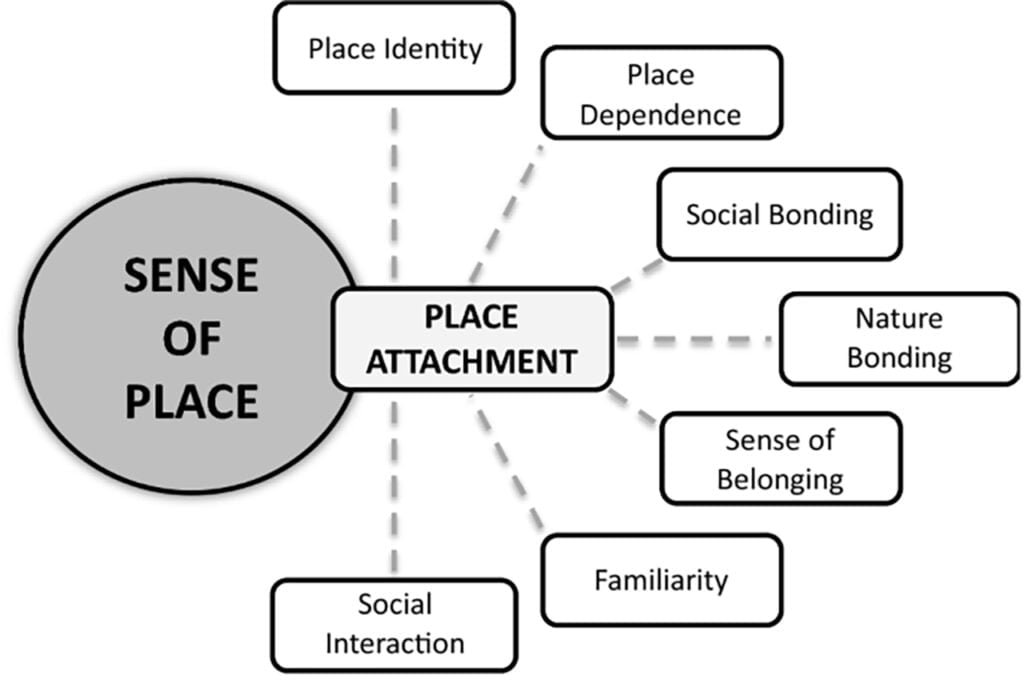
    place attachment
    Photo from SpringerLink

    Place attachment is the bond between people and places. It is a complex interrelationship of cognition, emotion and behaviour. With the rise of globalization and mobility, place attachment has become of particular interest, as person-place bonds have become increasingly tenuous. This, in turn, can affect the perceived safety and comfort of the environment and cause people to weaken the protection of those places. For this reason, and because attachment to a place is also associated with awareness of environmental risks, attachment to a place is very important for understanding environmental protection behaviour.

    Place attachment is highly relevant for understanding public acceptability of renewable energy developments, such as wind parks and hydro-energy projects. Place attachment is also relevant for disaster psychology and have been used to understand and alleviate the grief of those displaced.

    Wayfinding

    wayfinding
    Photo from Creative Bloq

    There are diverse applications for people to know how to find their way in the built natural environment. For example, psychologists used this study to catch criminals and find people lost in the wild. It was also used to find ways to evacuate dangerous areas faster, such as burning hotels and smoke-filled train tunnels. Pathfinding research has also contributed to the development of a head-mounted display that helps firefighters navigate in an emergency.

    Architecture and Environmental Psychology

    signage
    Photo from Archipelago

    Environmental psychology helps us understand the practical application of concepts such as spatial perception and cognitive mapping to navigable design spaces. Good signage inside buildings speeds up movement inside buildings, color-coded routes reduce navigation errors in buildings, and simplified maps for bus and train routes make cartographically accurate routes Easier to navigate than in the city. A striking landmark for improving spatial knowledge such as cities is the result of environmental psychology research.

    Environmental psychology was the first to make a name for itself in the world of architecture. For decades, environmental psychologists have been working to improve buildings by: Focusing on the Human Factor in Building Design. Environmental Psychologist Asks the following questions: How People Navigate in Buildings What do users of Building need and want in a building? How can I apply this knowledge to modern architecture? The answers to of these questions include more than shipping hospitals, classrooms that enhance learning and participation, and to reduce complaints about the ‘s built-in settings.

    Syllabus

    The field of environmental psychology takes an interdisciplinary approach to the study of people in the physical context, with elements of social sciences (psychology, geography, anthropology, sociology) and design fields (landscaping, architecture, city planning). Put together to provide a deeper understanding of the complex dynamics between people and their physical environment.

    Main objectives

    • To introduce the origins, basic theories, methods, research and applications in the field of environmental psychology.
    •  To develop an appreciation of how psychology can contribute to shaping urban environments, preserve natural environments, and deal with the challenges of environmental and climate change.
    • To develop students’ capacities to be able to perform a basic research, practice or policy work in the field of environmental psychology.

    Course Contents

    Environmental Psychology: History and Scope

    Define the field of environmental psychology. Origin and history. Environmental Psychology is associated with other disciplines. An important theoretical perspective in environmental psychology. Complexity, change with hours. The impact of the environment on human cognition and behaviour. Location-based theory of environmental psychology.

    Overview of the Research Methods in Environmental Psychology

    The main principles behind the use of research methods in environmental psychology. A variety of methods are immediately available, including observations, behaviour mapping, GIS, surveys, interviews, and diaries. Mixed method study. Laboratory experiments and natural experiments. evaluation. Action research. Systematic review and meta-analysis. Data analysis in environmental psychology.

    Urban Environments: Overcoming Stressors with Opportunities

    Urban stress. Environmental overload theory and attention recovery. Crime and rudeness in the urban environment of Housing, health and welfare. Culture and urban environment. City as a space of cohabitation, culture and reconstruction.

    Environmental Psychology’s Role in Designing Spaces

    Environment and quality of life. Participatory design. Design a sustainable city. Crime prevention by environmental design. Designing an educational environment and an environment for children. Designing a healthy environment.

    People and the Nature

     Recreational ability
    Photo from Pixabay

    The inner connection between people and nature. Recreational ability in a natural environment. Anthropocentric, biocentric, and ecocentric worldviews. A new environmental paradigm. Connection with nature. Environmental changes: Impact on human health and well-being. Conservation psychology.

    Environmental Risks and Interventions

    Natural disasters and ecological threats: environmental risk and risk awareness, cognitive and the role of emotions, human behaviour in the face of risk, risk awareness and resilience. Interference with the habitat of people: acceptance and NIMBYism; find the right balance for the public good.

    The Psychology of Pro-Environmental Action

    Environment and climate change: An urgent agenda. Psychological drivers of environmental protection behaviour: the role of environmental attitudes, social expressions, norms, beliefs, values, identities, environmental knowledge, and direct experience. A model for explaining environmental behaviour. The role of customs and social practices. Ripple of action: myth or possibility? Promotion of environmental behaviour through intervention. The role of environmental education. Environmentally friendly behaviour in organizations.

    Conclusions: Building links between Science, Policy and Practice

    How can environmental psychologists work well with policies and practices? Use of research results to inform policies and practices. The role of evaluation research. Conduct to spread the study of environmental psychological effects. The role of Environmental Psychology in facilitating collaboration between different sectors.

    Universities

    A growing number of universities offer formal or informal graduate programs in psychology departments, schools of architecture, and other departments. The following are some of the top EP programs around the world.

    City University of New York
    new york
    Photo from The City University of New York

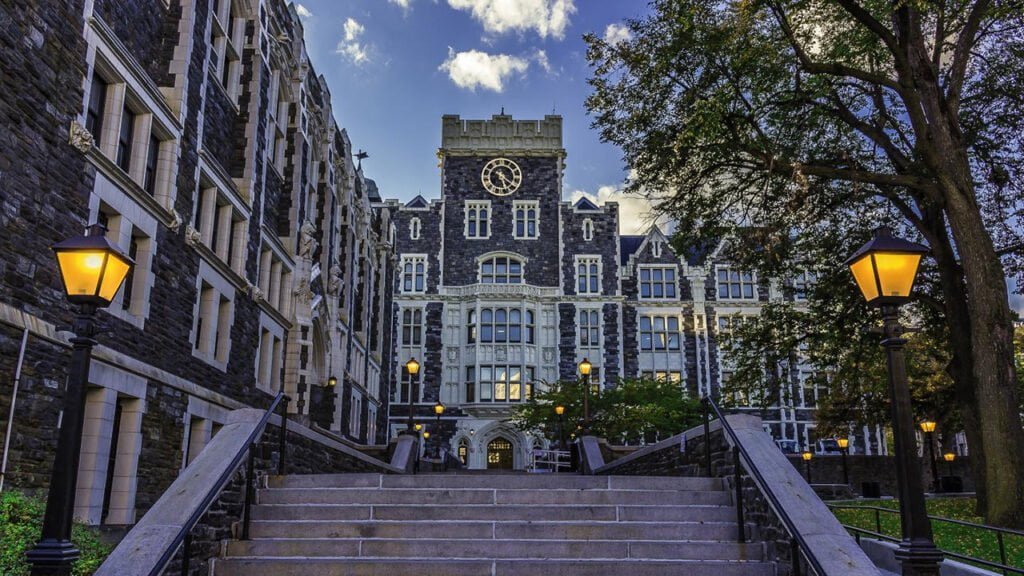
    This five-year PhD program collaborates closely with the social/personality psychology program and the human geography program. The program’s goal is to increase practical knowledge that will lead to a more just and sustainable environment.


    University of Surrey (UK)

    uniersity
    Photo from the University of Surrey

    The University of Surrey offers an MSc graduate program. It is one year long, consisting of eight classes and a dissertation. The aim of the program is to provide students with both theoretical and practical knowledge of EP. It emphasizes research that has practical benefits for policy and planning.


    Colorado State University (USA)

    psychology
    Photo from Cappex

    The Applied Social and Health Psychology MA and PhD programs at CSU offer a concentration in EP. Students learn methodologies and techniques for investigating such topics as managing natural resources, promoting sustainable behaviour, and designing learning environments. The program is flexible, and students can take on seminars and research projects that work towards individual career goals.

    University of Victoria (Canada)

    graduate students
    Photo from Wikipedia

    UVic Psychology graduate students have the option of entering the Individualized Program in EP. Coursework is determined by the broad environmental psychology interests of students in consultation with their supervisor, Dr. Robert Gifford.

    Humboldt State University (USA)
    human environment
    Photo from Shiksha Study Abroad

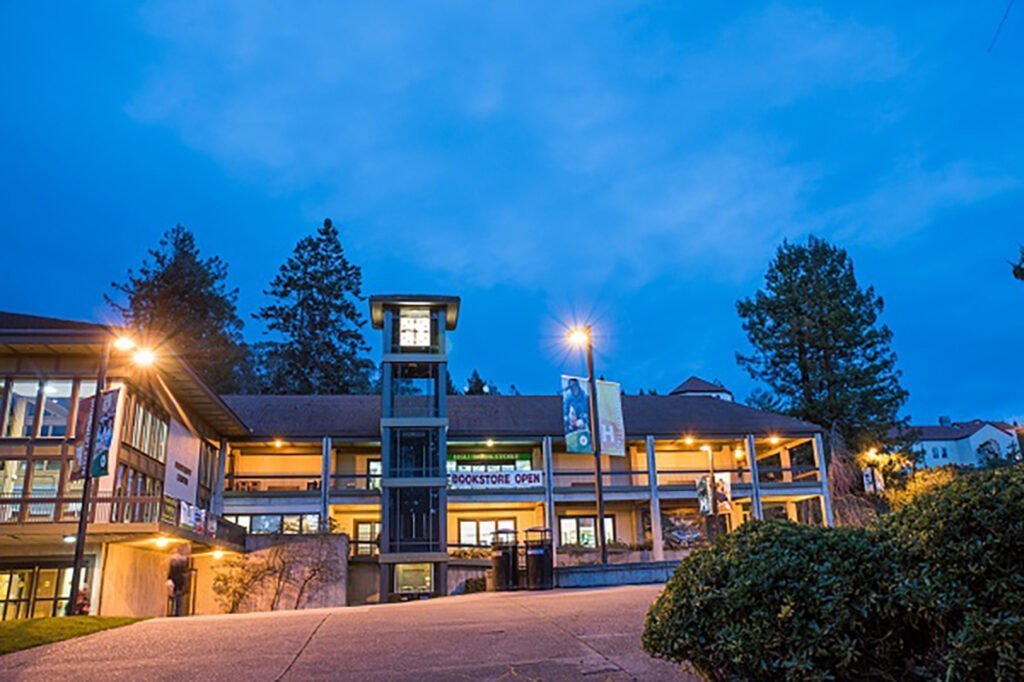
    Humboldt offers a two-year MA program in Social and Environmental Psychology. Students study human environment interactions, environmental issues, and how to positively influence others towards addressing environmental concerns. Successful graduates are prepared for work in organizations that are concerned with the environment, and may also pursue PhD studies.

    University of Groningen (the Netherlands)

    human dimension
    Photo from Domitor

    The one-year Masters EP program at the University of Groningen focuses on the human dimension of environmental and energy problems. Students follow theoretical and methodological courses and write an individual thesis, with possibilities to join ongoing collaborations with practitioners, governments, knowledge institutes, and scholars from other disciplines.

    Scope of work

    Environmental psychology focuses primarily on optimizing and enhancing the human environment by improving the work of design professionals such as architects and city planners. It has to do with maintaining a balance between people and the environment. This includes research on urbanization, urban planning, the scream effect, improving slum environments, improving work and office spaces, and living conditions. Another important aspect that expands the scope of environmental psychology is ergonomics, the scientific study of designing objects and spaces. It is optimal for human use.

    In addition, in recent years, dealing with environmental problems such as pollution, climate change, and deforestation has become more important. Environmental psychology also aims to change behaviour in ways that benefit the environment and address these environmental challenges, as well as ensure quality of life and human well-being. This leads to the concept of sustainability, an important principle in environmental psychology. Today, it is a major field of environmental psychology.

    Therefore, environmental psychology has broad application in both man-made and natural environments. It covers a variety of topics such as urban planning, architecture, interior design, and behaviour modification for sustainable practices. This is a fairly new field with a lot of room for growth and interaction with other disciplines. The ever-changing environment demands new and more up-to-date research in the field of environmental psychology.

    Organizations


    1. IAAP division of environmental psychology
     Applied Psychology
    Photo from Twitter

    This is the global-level home of environmental psychologists. It is part of the International Association of Applied Psychology. The goal of Lesson 4 is to study the interactions between people and their physical environment and use this knowledge to improve our physical parameters. Division 4 invests in knowledge of buildings, parks, and the atmosphere and works to reduce poverty, crime, climate change and other negative aspects of the built environment.

    Europe
    Photo from Architecture and Urbanism blog

    Founded in 1981 in Europe, IAPS is the now the home of environmental psychologists from about 40 countries. The primary goal of IAPS members is to improve the quality of life through a shared concern for people and their interactions with the environment. They do this through Research Collaboration as well as Policy Changes through lobbying efforts.

    • Environmental Design Research Association (EDRA)
    EDRA
    Photo from urbanNext

    EDRA is a large association of environmental psychologists and others who study and advocate for environments that improve the quality of life. EDRA’s function is to advance research that benefits both the built and natural environments, and it has been doing so since 1968.

    Environmental Psychology and the world

    One of the key challenges that EP can help address is the application of psychological knowledge to protect the natural environment. Addressing human behaviour is paramount to protecting nature and natural resources, as many threats to environmental sustainability are posed by human behaviour. In particular, environmental psychologists identify behaviours that can and should be changed to improve the quality of the environment, identify factors that influence those behaviours, and design and evaluate interventions to change them.

    Knowing the value of an individual helps environmental psychologists develop intervention strategies. For example, if the primary concern of an individual or group is selfish, you can focus on interventions that emphasize the personal benefits of environmental protection, such as reducing utility bills. Emotional connections with nature are important predictors of well-being and ecological behaviour. By helping people connect with nature, environmental psychologists promote sustainable behaviour and general well-being.

  • Why Do People Love Architecture?

    Why Do People Love Architecture?

    We, as Architects, have a special love and understanding of architecture and design when compared to any regular person. We all may have various reasons for why we chose the field. But we all stay for the common love that is Architecture. While it is completely understandable that we study and appreciate the functions of a building from the inside out, why is the general idea of Architecture and design so appealing to the masses?

    Introduction

    Architecture, in addition to providing shelter, serves as a stage, set, and background for our existence. When a person steps into a structure that is enormous and beautiful, the unexposed mind loves the concept of Architecture and design. The idea of creating something out of nothing, visualizing, and making your imagination into reality is somewhat godly.

    Look above and around you if you’ve ever wondered why architecture is so essential. It is most certainly surrounding you right now.

    They may even want to pursue it as a career, but the ones who have studied and gone through the entire process have a different outlook towards the entire field. In the movie Namesake, the protagonist’s son travels to India, visits the Taj Mahal, and decides to pursue architecture as a career. Is it the best way of choosing to get into the field?

    Is it naive or brilliant?

    Why is it so?

    Travel also plays a major role in the attraction

    When a person makes plans to visit a city more often than not, the tour will include a historical landmark which is usually a building with ancient architecture and visual aesthetics. People correlate their city’s history with the Architecture and design of the time. It is the direct correlation between the social and economic conditions of a specific time in history.

    Very rarely does the photograph of a place relate to the real-life experience. This is one of the major reasons why people travel and why Architecture will always be an integral part of any travelers’ experience. Architecture, unlike other creative and artistic professions, must constantly represent the era and cultural environment in which it was created. Spend some time examining how architecture reflects culture, and you’ll get the impression that it’s more of a worldview, a lens through which to interpret everything around you.

    Architecture through a travelers lens
    Architecture through a travelers lens

    In any movie, the beginning sequence features the architecture of the city. This gives the audience an idea as to where the movie is set in. The city’s architecture and design also give an idea of the time period in which the movie plot is arranged.

    Like me, many people aspire to visit a certain destination and tour its museums and rich cultural history. Be it the Eiffel Tower in Paris, Saint Peter’s Basilica in The Vatican, the Colosseum in Rome, or the Buckingham Palace in London. Everyone’s got an architectural destination in mind that they want their trip to revolve around. Very rarely do you find any destination with no interesting architecture to offer?

    When a commoner visits places of foreboding magnanimity, they often undergo a humbling experience in such structures. A standing testament to the human mind’s ability. They marvel at the creations of the civilizations before them and a sense of pride washes over. The idea that one can create such structures in one’s lifetime is one of the main reasons why many choose Architecture as their career option.

    The grandeur and magnanimity in Architecture is intimidating

    Right from the entrance, the instant that a person walks into a structure, everything, from the walls to the ceiling, has an impact on the person’s perception of the structure. Psychology in human behavior suggests a high ceiling may invoke feelings of intimidation. The color palette used in the structure sets the tone for the space, whether you consciously perceive it or not. Usually, open and empty spaces are avoided in a home design as we associate small confines to be cozy.

    Our brains aren’t hardwired to like being in open-ended spaces. Tricky is the field of Architecture psychology. One of the main reasons our ancestors moved into caves is for a secure atmosphere. We then began settling down in clusters to protect the circle from harsh natural determinants. Like the ripple effect, every single factor responsible for taking care of the clan was a conscious decision that has brought us to the civilization that we are today.

    One of the main reasons why brutalist architecture is so unpopular among modern Architecture is because of the lack of visual appeal, making it feel the opposite of cozy and comforting. On the contrary, brutalism is quite the opposite consisting of foreboding structures which emphasize the services as a metaphorical way of expressing reality via Architecture and design.

    Architects collaborate with dozens, if not hundreds or thousands, of people to form their structures, and along this chain, a deeper and richer set of values is conveyed; values that determine exactly how cultures view themselves and their surroundings, as well as how individuals see and feel each other. Psychology in human behavior is deep-rooted in Architecture and design.

    Recent studies have suggested that special brain cells located in the hippocampal region of our brains are wired to the geometry and arrangement of spaces that we live in.

    The significance of urban design extends well beyond pleasant aesthetics. Several studies have found that growing up in a city doubles one’s odds of acquiring schizophrenia and increases one’s risk of having other mental diseases such as depression and chronic anxiety.

    They’re the product of distinctive assemblages of cultural values, available resources, economy, geographic location, and climate.

    Each time architecture gives a critique that recommends new ways to live, work, or play, it becomes a world-building marvel that is difficult to separate from science fiction.

    As an example, consider ancient Egypt. Examine the pyramids and the Sphinx to get a sense of how their rulers, religion, and the characteristics of the region from which they got their building materials were seen. The towering feats of the delicate, narrative stone structure that comprised Gothic Architecture and design, which arose in Europe over the Middle Ages, were a stark contrast to its age of devotion verging on the terror of God, which occurred amid a period of bleak instability.

    The Industrial Revolution, which structured the world in line with the logical principles of machine production, gave rise to Modernism, which used mass-produced steel and glass to replicate this rising order in cities. All revolutions, particularly political revolutions, immediately turn to architecture to create their most prominent monuments. And whether the structure is an extravagant display or a basic mainstay, architecture and design have a propensity to reveal their age.

    Modern architecture is on the rise today because many people want the peace and calm that they lack in the world outside within their homes. The lack of or minimal ornamentation with clean lines represents a relaxed state of mind and is essential to everyday living. Ludwig’s saying “Less is more” has started resonating with more and more people nowadays and is reflected in modern visual aesthetics. This extends to their life choices as well. From clothing to accessorizing their home, minimalism is in the boom.

    ‘Minimalist Desert’- Minimalist artwork from Michele Durazzi
    ‘Minimalist Desert’- Minimalist artwork from Michele Durazzi

    Modern architecture stresses the structure and materials used in the building rather than covering them up with ornate designs. As a direct consequence, most modern designs encompass elements of wood, steel, and glass to exemplify these industrial structural materials.

    We tend to spend the majority of our daily living inside our homes. Here is where we are surrounded by the walls and ceiling of our house which are of various forms and colors. The lighting, furniture, and environment outside the house also have a deep impact on our psychology. A new and emerging field in the Architecture and design spectrum is architectural psychology which deals with how certain elements of architecture have an impact on human lives on a daily basis. It interacts with the feelings and behavior patterns of humans around a certain element and documents the dos and don’ts for easy planning and designing of various building functions.

    We as humans approach a certain space with all our senses playing a vital role. Architectural psychology deals with the conscious and subconscious elements that we pick up in a particular structure. Elements such as light, color, materials, construction, temperature, height, landscaping, air conditioning, etc. all have positive and negative connotations for our well-being and overall health.

    It is important to remember that humans have a holistic perception: our senses influence our thoughts, feelings, and actions, and thus our entire body. When our senses are positively stimulated, we can feel either energized or calmed. As a result, spaces can influence our thinking and action patterns, promoting motivation, readiness to act, and strengthening performance or concentration. When we are uncomfortable in our surroundings, we may experience restlessness or discomfort, hypersensitivity, lethargy, or even anxiety.

    Another interesting element of architectural psychology would be the reference subconscious preference of the human mind off calls over rectilinear structures. Architectural psychology suggests we prefer curves over rectilinear forms as they signal a lack of threat. There are a lot of tiny nooks and crannies in a rectilinear structure that has less light in them and which may trigger a subconscious fear. On the contrary, curvilinear structures do not have certain definitive corners which compel our minds to function in the opposite way.

  • Make ‘Sense’ of….: Sensory Realm in Architecture

    Make ‘Sense’ of….: Sensory Realm in Architecture

    Introduction

    Sensory design is an approach that revolves around our senses and perception of design. All our lives we’ve known effects as they’re all on account of a unique blend of sights, smells, sounds, sounds, taste’ and textures. 

    Our senses are greatly linked with our recollections. From nonage we engage in innumerous settings doing colorful conditioning to understand this world we were born to discover. The brain processes the data and forges pathways. Therefore, meaning and memory take form. And our senses are what made this possible. 

    Senses in Spaces

    Senses guide us through space, settings, and situations. Our sense organs are connected to a head that turns, arms that reach, and bodies that wander and seek. Our body seeks knowledge when exposed to colorful spaces and sensations. The senses help acquaint this body and mind. Multi-sensory guests and encouragement hits us from all the directions. 

    In a world of modern art where art is beyond what’s static and solid, the creators are widening their minds for the coming times. 

    Absence of Multi-Sensory Experience in Architecture

    Architectural design responds more often to just one sense, the visual one; the other senses are unfortunately frequently neglected. According to Juhani Pallasmaa (2005), the dominance of the eye and the suppression of the other senses tend to push us into detachment and solitude in the technological world of today. The inhumanity of contemporary architecture and cities can be understood as the consequence of the negligence of the body and the senses, and an imbalance of our sensory system.

    “It is evident that life-enhancing architecture has to address all the senses simultaneously and fuse our image of self with our experience of the world.” (Pallasmaa 2005) We don’t evaluate or remember a place using only our eyes and shut off the other senses; we automatically notice the smell of the place while breathing, we are affected by noises we hear from the users in the place. 

    No Sense without the ‘Sense’

    The materials used in furnishing the space have a more important value that affects all senses besides the visual one. The choice of flooring, for example, is not all about choosing a nice pattern (which is important as well if done for a certain purpose, like directing people towards a certain orientation) In choosing flooring, the material’s qualities are considered; how slippery, shiny, or hard, for example. If the material is warm or cool, if the material produces an echo or absorbs noise, etc. which results in a multi-layered sensory experience of the architectural space.

    Many educators stress on the importance of teaching architectural students how to be sensitive to the sensory experience of space. “As designers, they (students) need to develop an intimate relationship not with the world of the page or screen, nor even the forms and surfaces portrayed on them, but with the potential corporeal and multi-sensory experience of the emerging spaces.”(McCann 2005)

    Architectural Design for Individual Senses

    The senses can be subjectively categorized into two categories namely, the distant (Eyes, ears & nose) and the immediate (Touch & taste) receptors.

    The Look of Architecture

    The first impression of architecture relies primarily on vision and the first glance we take of the architecture. But still we use all our senses in the perception process.

    Le Corbusier considers that as we call the container in which we put water in a ‘glass’, we should consider ‘architecture’ the container of light. As the water fills the shape of glass, light fills the shape of architecture; therefore, for him architecture is a receptor of light. So through vision, the architect can take the user’s attention and integrate his other senses.

    There are many determinants for the visual experience, such as light, proportions, hierarchy, order, rhythm, etc. but light is considered one of the most important factors for the visual experience. It exposes oneself to the whole new and open dimension of a specific space which helps enhance the experience.

    Designing For “The Eyes of the Skin”

    The sense of touch is more trusted by vision; we may assume or be introduced to something new but not know for sure all the information about it until we touch it, then we collect the missing information about the object. Being the distant receptors, both vision and touch complete each other. The sense of vision reveals what the sense of touch already knows, therefore the sense of touch can be considered as the unconscious side of the sense of vision.

    In the words of Merleau-Ponty, “We see the depth, the smoothness, the softness, the hardness of the objects” (Ponty, 1994) Therefore, the sense of touch is related to the sense of vision in a way. Tactile dimensions can be included in a space through a multitude of textures, patterns, and materials. According to Pallasmaa, the eyes of the skin i.e. touch integrates the experiences of oneself and the world. 

    The Aural Architecture

    Sounds are the indicators of the void. The sound helps us form a picture of a certain space through the certain simultaneously ongoing dynamics. Sound has various layers call it silence, compositions, vibrations, resonance, embellishments, aesthetics, anything! And when employed to its full potential through a well-composed combination, it can enrich any space. Not only experience, it aids in navigation, direction and perception in a case of visually impaired people.

    Instances have been noted when sounds help them read a room based on how loud, distant, peaked, far-fetched it sounds. The same gives us an idea about the form, materials, directions, fenestrations, and the textures. As Pallasmaa says, unlike vision, sounds are omni directional. A space is understood through its echoes, softness, and harshness. 

    On The Olfactory Dimension

    Olfaction holds its importance in the perception of a certain space. It arouses our emotional responses and activates cognitive perception. As its been known since ages that the smells at different times in a day differ in terms of certain measures in the similar way the smells in a space can navigate, arouse cognition and make us aware of a particular space in terms of purity, ventilation, freshness, pollution, humidity, saturation, etc. The typical thermal comfort can also be directly linked with the air and olfactory parameters associated with that space. 

    The Gustatory Edifice

    Our cognition doesn’t work single-mindedly. Our cognition is a multi-sensory perception of where we have been, how we have been, and what we have been through. Therefore, to truly enrich the architectural experience of a space, all senses need to be checked beyond the ocular-centric design.

    The role of taste in multi-sensory architecture is not directly linked, though it has its connections. We do not literally taste the walls for the feel or the texture or lick the furnishings to know how it is going to enhance the space taste-wise but a distinct scent in a room, the texture of a material or a color projected onto the skin can intensify the experience to such an extent that it is as if the taste bud of the tongue has been penetrated.

    Designing for the Multisensory Mind: Architectural Design for All the Senses

    Sensory Congruence

    Have you ever noticed that we mention these five senses and state them as five different units? But after recognition, it’s been proven that it isn’t how it seems at all. Senses coexist subjectively with respect to specific spaces and settings. For case how we recall the taste of orange delicacy as soon as we spot one or smell the rotten eggs that might just not be indeed in our close propinquity, know what a bell sounds like when we see one or anticipate the peddler to roar as soon as we get a trace of sweet corn nearby. This is how our mind works.

    Sensory congruence is a layered phenomenon. Regardless of whether the atmospheric cues are integrated or not, one general response bolstering our response to multisensory combinations of environmental cues is that those combinations of stimulants that are ‘harmonious’ will be processed more easily and vice versa. 

    Our potent nature is one of the biggest examples one could ever give of multi-sensory consonance. As Pallasmaa notes, “A walk through a forest is invigorating and healing due to the constant interaction of all sense modalities; they speak of ‘the polyphony of the senses”. The eye collaborates with the body and the other senses. One’s sense of reality is strengthened and articulated by this constant interaction.

    Architecture is basically an extension of nature into the man-made realm” And no wonder green and live architecture has been gaining similar word in the moment’s trends. They’ve proved largely effective to enrich a spatial experience over time. Thus, there’s a stark deficit of exploration that studies the applicability and need of multi-sensory consonance and the absence of well-blended sensory stimuli leading to incongruence and perceptual errors.

    Sensory Dominance

    One common feature of configurations of multisensory stimuli that are in some sense incongruent is sensory dominance. More often than not, this tends to be the vision which dominates. Our vision tends to guide our subconscious more than compared to the rest of the senses. Sensory conflicts lead to the gradational dominance by the vision on account of it being comparatively more dependable.

    In Mies Van Der Rohe’s work, for example, the sense of vision is clearly dominant, but he enriches the experience of his buildings by integrating the other senses as well. “In Mies van der Rohe’s architecture a frontal perspectival perception predominates, but his sense of order, structure, weight, detail and craft decisively enriches the visual paradigm.” (Pallasmaa, 2005)

    However, that doesn’t completely rule out the possibility of certain other senses taking over your vision, too. For instance, you wouldn’t want to go into a hall that echoes with bantering noises even if your vision guides you to it, nor would you want to go into a funky smelling space decorated with the prettiest lighting. 

    There are many ongoing debates as to people claiming that architecture has always been predominantly visual. Instead of being evaluated at various layers of experience, it has been reduced only to the visual. With the dominance of vision over the other senses, our perception of the world relies so predominantly on an image that our built environment has become sensually bland. The sensualities and essence have been missing from the built environment.

    Therefore, as complex as this sounds, for any space to be tranquil, the senses need to interact in suitable configurations so as to not waver from the equilibrium.

    Cross Modal Correspondences

    The senses trigger and amplify other senses. Music can play in color, while letters can conjure sounds or textures. For instance, in the case of people with synaesthesia, the brain makes cross-connections between the senses. Well, according to Cytowic, “Inwardly, we are all synesthetes” however, we don’t notice how our senses interact. We do link tastes and colors, sounds, and spaces on a daily basis. 

    The fundamental conclusion here is to base one’s design decisions on the sometimes surprising connections between the senses that we all share, such as, for example, between high-pitched sounds and small, light, fast-moving objects.

    Lately, Ba and Kang (2019) proved cross modal relations between ambient sound and smell in a laboratory study that was designed to capture the sensitive cues that might be encountered in a typical civic terrain. These researchers decided to pair the sounds of birds, conversation, and traffic, with the smells of flowers (lilac, osmanthus), coffee, or bread, at one of three levels (low, medium, or high) in each modality.

    While Ba and Kang’s results defy any simple synopsis, given the complex pattern of results reported, their findings nevertheless clearly suggest that sound and scent interact in terms of influencing people’s evaluation of urban design. There is, though, always a very real danger of sensory overload if the combined multisensory input becomes too stimulating.

    On The Benefits of Multisensory Design: Bringing It All Together

    Kroner, Stark- Martin, and Willemain (1992), these investigators examined the impact of an office makeover when a company moved to a new office building. The workers in the new office were given individual control of the temperature, lighting, air quality, and aural conditions where they were working. Productivity increased by roughly 15 in the new edifice. When the individual control of the ambient multisensory atmosphere was impaired in the new edifice, performance fell by around 2.

    Trying to balance the influence of each of the senses is one of the ideals of Finnish architect Juhani Pallasmaa, whose name we’ve come across at several points formerly in this textbook. As Steven Hall notes in the prelude to Pallasmaa’s ‘The eyes of the skin’ “I’ve experienced the works of Juhani Pallasmaa, The way spaces feel, the sound and smell of these places, has equal weight to the way things look.”(Pallasmaa)

    Conclusion

    The quality and aspects of the world around us, including matter, space and scale, are measured by our bodies and bear the use of all our senses to produce an experience.

    Stephen Halls points out that while a picture or a film might give us some idea of a space “Only the actual building allows the eye to roam freely among incentive details: only architecture itself offers the tactile sensations of textured stone surfaces and polished wooden pews, the experience of light changing with movement, the smell and resonant sounds of space; The bodily relations of scale and proportion. All these sensations combine within one complex experience, which becomes articulate and specific. Some may say that the building speaks through the silence of its perceptual phenomena.”

    Experiencing architecture has less to do with what the structure looks like but rather to do with how it engages with all of our senses. People witness a space with their entire body, through movement, memory, and imagination. It’s about the dialogue between a person and architecture. Memorable architecture involves an embodied experience, which is determined by the reach and grasp of our hand, the touch of our fingers, the feeling of heat and cold on our skin, the sound of our footsteps, the stance we have taken and the position of our eye.

    As we enter a space, we grasp the space through our senses and we measure and explore it with our bodies and movements. Sensual architecture deals not only with the structure, but rather with how it engages with our bodies in different ways, and at different times. The experience of an arbitrary structure is forgotten within its first visit, still, a structure which incorporates experiential qualities can be visited numerous times. This type of design pays attention to how its spaces are ordered to house its activities, how it is built, how it is structured, and what materials are used. All of these factors affect how a building is going to be experienced by those who inhabit it.

    Precedents, Practices and Preaching Over Time

    Space and material, light and shadow, sound and texture, are all combined in our everyday experiences. The surroundings communicate with you as one moves through each space. In his book Atmospheres, Peter Zumthor writes, In his book Atmospheres, Peter Zumthor writes, “When your touch and feel the texture of the walls, bear the footsteps dang thorough long balloons, and feel a cold breeze on your neck As you experience scene like these, it is the combination of all the senses together, which create the atmosphere’ or character of the space.” These structures which offer an experience are those that give us further than an image but offer spaces which engage each and every one of our senses.

    Maurice Merleau-Ponty (1908-1961), a French phenomenological philosopher, emphasizes the relationship between experience and sensory interaction when he stated: “My perception is therefore not a sum of visual, tactile, and audible givens: I perceive in a total way of my whole being: I grasp a unique structure of the thing, a unique may of being, which speaks to all my senses at once.” Architecture only exists, when it’s endured. Its effect on us doesn’t lie in the structure or in its form, but rather with its hassle with the body.

    As an experience, architecture can be intimate and deeply engaging towards the end of the eighteenth century when French engineers began exploring with an adding reference to sensation and its cognitive effect. Some presume that the preface of the attention to perception into architectural proposition took attention down from the visual, which concentrated on physical proportions to the entire body, which emphasized the significance of light and shade, shells and smells.

    Nicholas Le Camus de Mezieres (1721- 1789), a French mastermind and theoretician, believed in the idea that architecture should be pleasing to the senses and induce elevating prints on the heart and mind. He concentrated on the sensuous experience of architecture and believed that structures could evoke human sensations because it speaks to the mind and moves the soul.

    He used the Dome of the Invalids as an illustration when he exclaimed, “Let us examine, for example, the Dome of the Invalids: what are our sensations! We are filled with astonishment and admiration; our souls are born aloft, caught up in a kind of ecstasy. It seems that we participate in the greatness of the God who is worshiped here. If we consider the outside of the dome, its pyramidal composition and the base from which it so majestically rises, we are at once more named by a sense of grandeur and magnificence.” 

    He believed in architecture that could talk to you by invoking the Dome of the Invalides in Paris, which, according to Le Camus, “Lifted the soul onto thoughts of God”, and brought passions of astonishment and admiration. He believed this beauty was grounded on the harmony between architecture and the body and argued that sensory architecture could hoist the heart and mind.

    Imagine a space with a sensory overload-tight room, bright lights, loud sounds, rough shells, pungent smells. This can beget extreme discomfort. Hence there needs to be a balance to produce a distinctive space and mindfulness towards different sensory channels, pivotal to user behaviour and spatial experiences. 

    In conclusion, design needs to be interactive between the space and the users. A space needs to be suitable to communicate back to all the senses. As responsible designers we should take on the responsibility for a design to be human-centric; understanding the studies, passions and conduct of users. Human interaction should allow communication with spaces through sensory grounded design.