
Tag: climatic conditions

  • Housing In Extreme Heat: How Do People Adapt to Extremely Hot Climate?

    Housing In Extreme Heat: How Do People Adapt to Extremely Hot Climate?

    While constructing houses that beat the climatic restraints of a particular area, bioclimatic influenced architecture plays an important role irrespective of the environment surrounding the house. With the help of detailed research, it is possible to implement design strategies that will lead to the growth of comfort benchmarks. In such cases, the role of an architect goes beyond the architectural design of houses. The level of comfort and wellbeing of the occupants becomes a prime responsibility.

    Even in extreme heat or cold, architecture can influence the comfort level of the occupants of a space. Despite hostile climatic conditions, the climatic adversities can be controlled by incorporating vernacular architecture elements into the design and considering the geo-climatic conditions of and around the site. The architect’s and client’s choices may cause a difference in solutions. Bioclimatic architecture provides better living conditions and adaptability to climate.

    While studying the surroundings of the site, climatic conditions and restrictions play a very prominent part. The relative humidity, temperature equilibrium, ventilation, and sunlight are factors considered of utmost importance. Traditional architecture is a perfect example of architectural design concerning climatology. These houses express the social and cultural context of a place and the regional and local geo-climatic conditions.
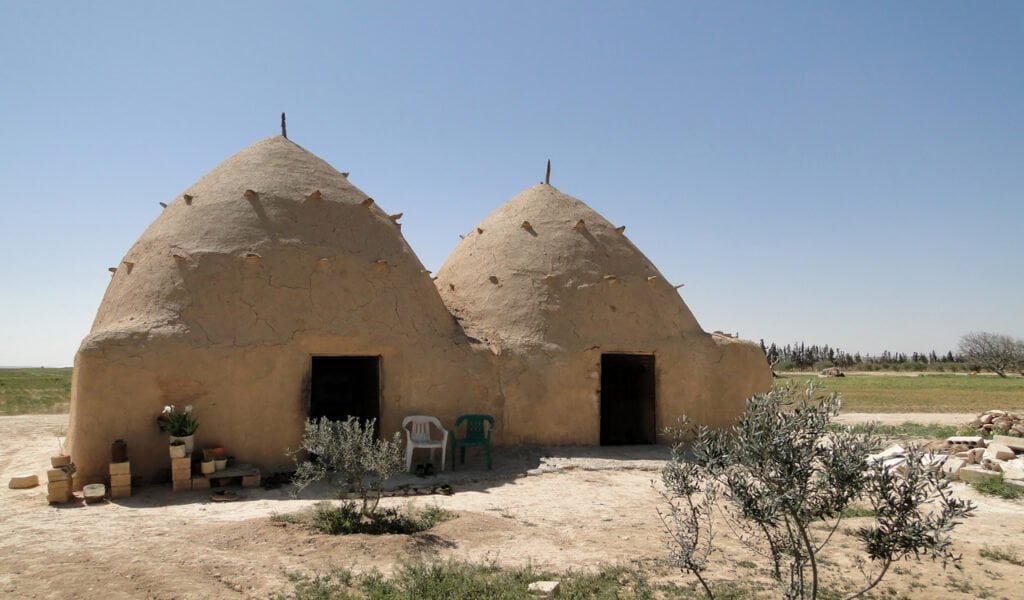
    extreme heat
    Photo from Wikipedia

    Factors Considered

    The factors to take into deliberation while designing for places with meteorological restrictions are thermal comfort, interior design, treatment of exterior facades, and elements orientation of the edifice and site, to name a few. The orientation of a building also includes several other elements like topography, solar radiation, noise insulation if any, view, wind, privacy requirements if any, surrounding vegetation, and water, to name a few. Researching about the sun positions, and what angles the solar radiation hits the house in what season, has significant benefits.

    Since blinds or curtains do not ensure any heat absorption, shutters or louvers help trap heat on the outside. By so, no solar radiation enters the interiors. Horizontal cross ventilation and vertical airflow, also known as the stalk effect, help with thermal comfort. Having open plans enables ventilation. Roof vents and ceiling fans help. Having fans or vents in the washrooms helps in exhausting moisture.

    Effect Of Heat on Homes

    Paint and Wood

    Excess heat causes paint to bubble up. The exterior finish of houses gets chipped and becomes flaky. This causes moisture and mold in the house because of openings created. Elastomeric paint creates a barrier against heat and moisture. Trying to paint on surfaces at a higher temperature can be a little tricky. The heat causes the paint to become thinner, dries faster than it should, and leads to a wrinkly and bumpy finish. Too much heat causes wood to shrink or swell. It dries out, cracks, peels, and expands because of heat.

    Roofs in Extreme Heat

    Roofs face direct sunlight at the top. Proper ventilation in the attic area ensures that there is no excess humidity in the attic area, which prevents deterioration of shingles. Heat results in warping, expansion, cracks, leakage, and drying. Installation of vapor barriers, and coating the roof to seal against UV rays’ help.

    Climate Control in Hot Climate

    The hot, arid regions are found mostly in sub-tropical latitudes that are at a distance of 15 to 30 degrees north or south of the equator. These regions are semi-desert or desert-like. Almost one-fourth of the earth’s surface is covered by these places. Sand storms, solar radiation intensity, temperature, humidity, and a lack of water sources are among the other features. The hot climate is further segregated into two parts namely, semi-arid (semi-desert-like), and desert. The requirements of people living in arid regions differ from that of people living in moderate climates.
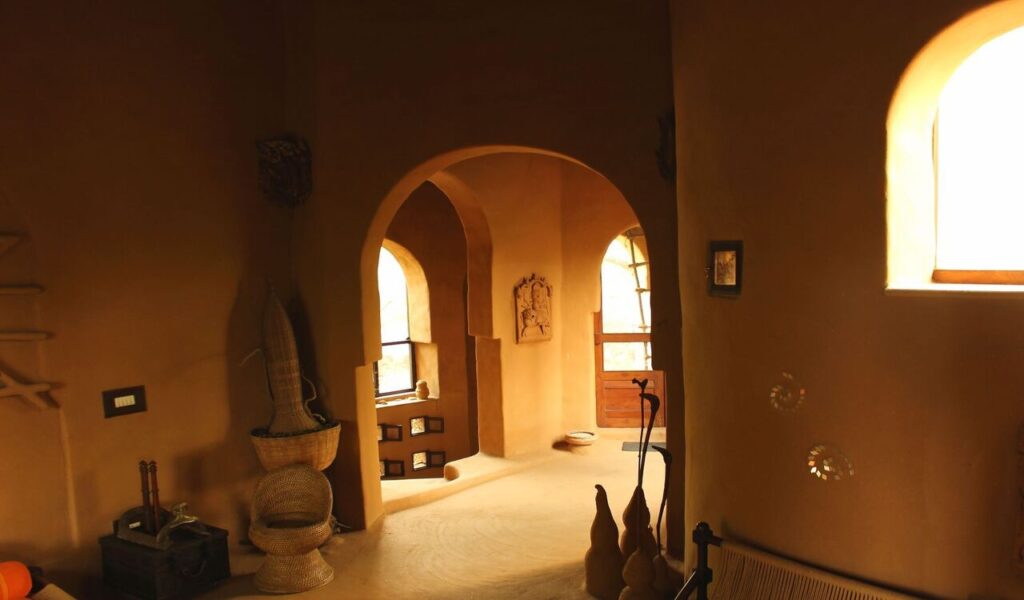
    The tolerance level of people towards heat and relative humidity is much higher. During the day, the comfort level depends on controlling solar radiation. This radiation can be received directly from the sun or reflected from the ground, surrounding buildings, and also the terrain. The openings are closed during the daytime. Openings at the top avoid heat and dust. The heat intake during the daytime is dissipated at night time. Regardless, adequate nightly airflow is accomplished by having all windows open.
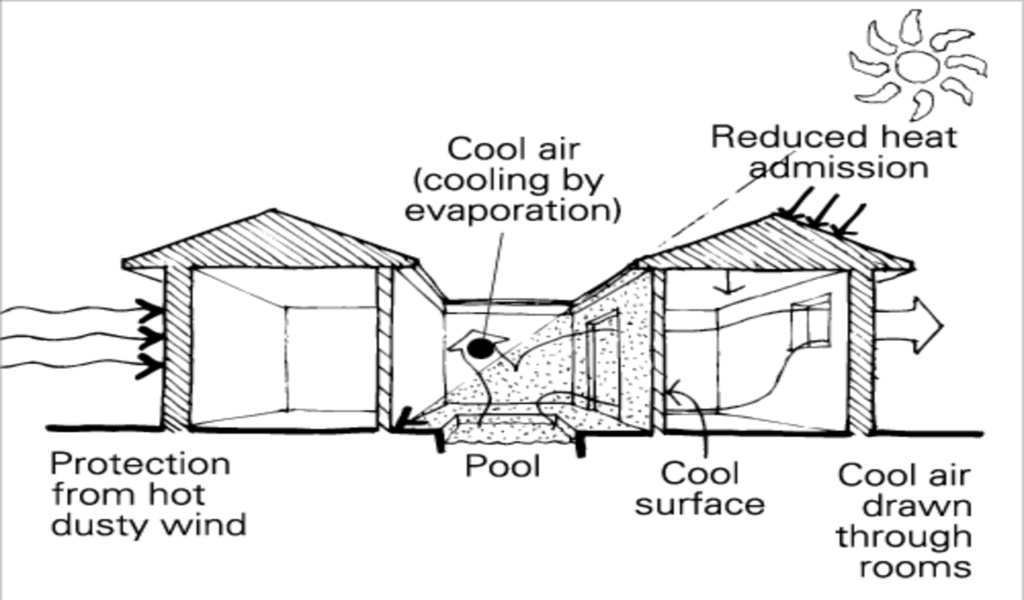
    evaporation
    Photo by Archi Monarch

    Structures are expected to have high heat capacity. The walls absorb heat and keep the interior spaces cooler. The heat penetration through the walls takes hours. Materials with a large thermal mass, such as concrete, limit heat gain during high peak temperatures on roofs and walls. Light colors have a low thermal absorption rate. White paint has a high reflective index. The colors you choose for the building influence the climate change inside and control the amount of glare reflected by buildings and soil.
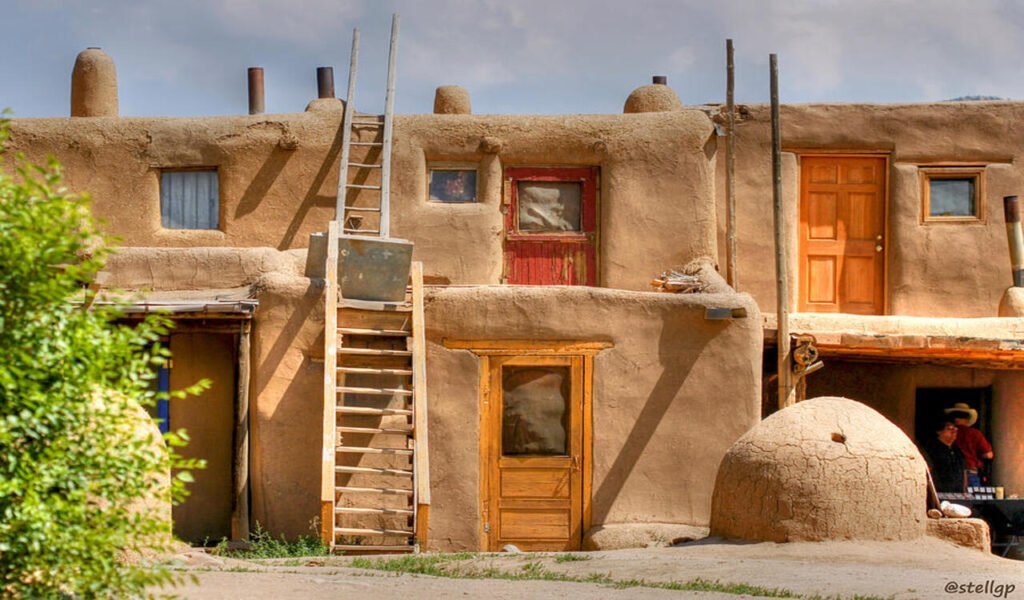
    Vernacular Architecture

    Protection against sand storms is of utmost importance when designing buildings in such a climate. Settlements are preferred to be as compact as possible and present spatial geometry. Orienting them in huge clusters enables the buildings to act as shading devices for the roads and other houses. This kind of planning reduces the surfaces area exposed to sun radiation.
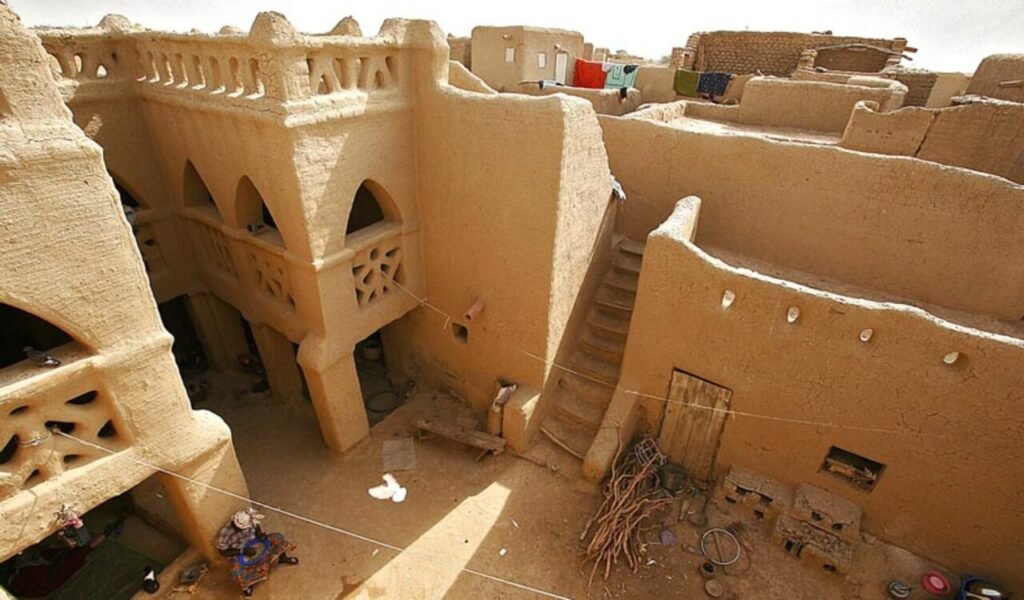
    vernacular
    Photo from Quailsprings

    Roofs and the walls facing east and west direction are the design elements that face the most solar radiation. Houses are arranged in rows from east to west, eliminating radiation on those sides. Only the walls facing north and south directions receive solar radiation. The difference in temperature for best and worst plans will be up to 3 degrees Celsius. Cooling indoor air results in thermal comfort. Elements receiving the most solar radiation are roofs and walls facing east to west.
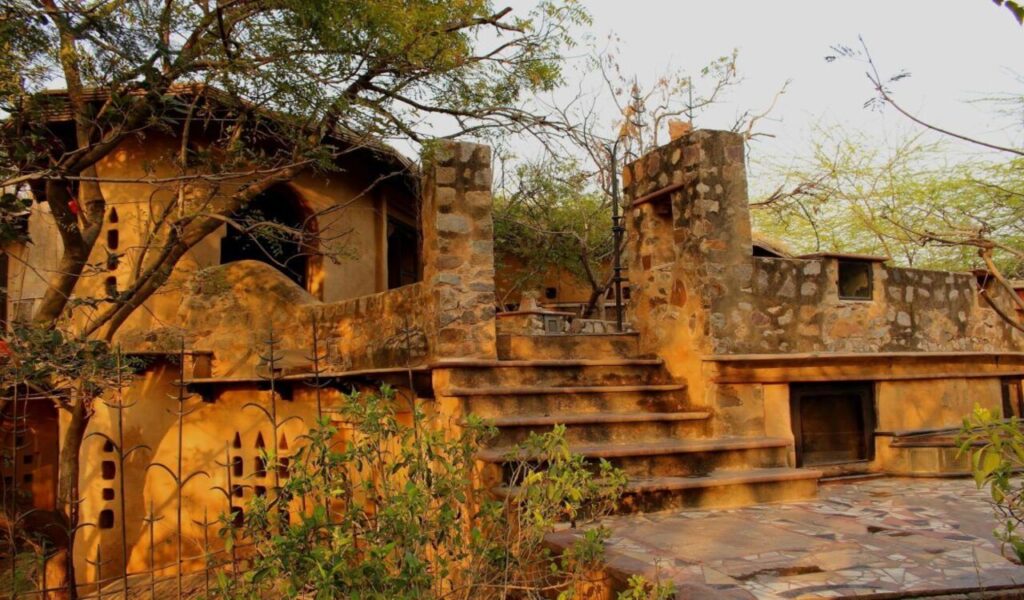
    thermal issues
    Photo SunjayJK from Pinterest

    Solutions for thermal issues are thick walls. Fewer openings to the outside, and compact shapes when planning the shape. Thickly clustered patio homes are the most common. This reduces the area exposed to solar radiation. Outdoor connection to courtyards at the center of the house acts as a focal point for household activities. Keeping openings to a minimum reduces heat inside. The passive cooling techniques used in vernacular architecture also apply to contemporary architecture.

    Contemporary Architecture
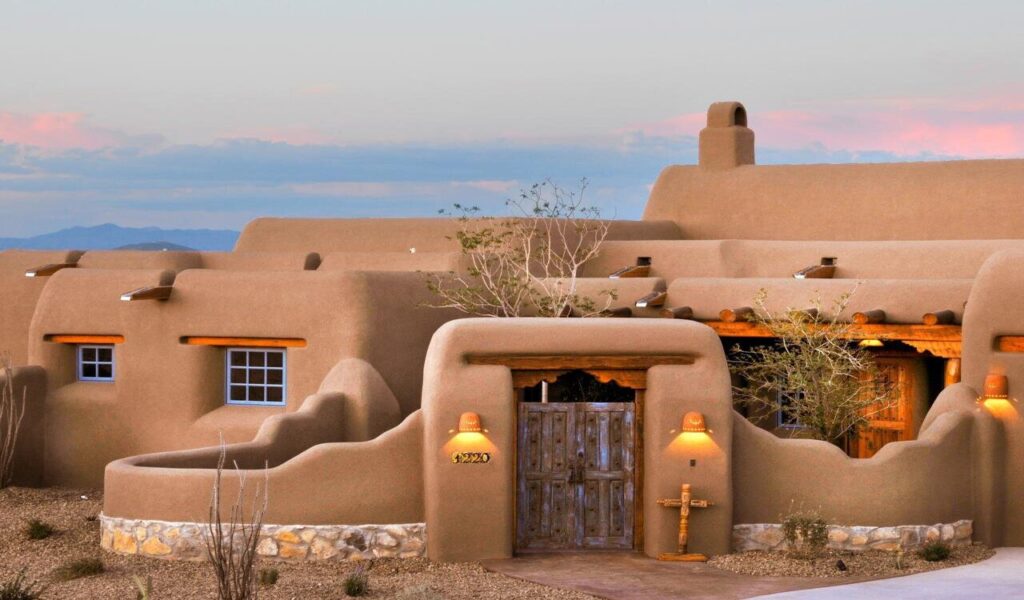
    contemporary
    Photo by Moira Jilani from Pinterest

    Streets and houses are arranged in a cluster. The neighboring buildings and lined are positioned compactly. This reduces the area exposed to sun intensity. Reducing solar radiation on surfaces of houses matters in such kinds of climates. In independent structures, where cluster planning is not possible, houses are constructed at the ground level or buried inside the ground. This is an effective approach for thermal insulation. Soil offers thermal insulation because of its thermal mass.

    Issues like radiation, both direct and reflected, and sandstorms, are resolved by creating exterior spaces that are shaded. This makes it possible to use exterior spaces even in extreme heat, enabling freedom of movement for people using the spaces and pedestrians outside. The primary aim of such a climate is heat dissipation. The building is usually oriented around a patio or an open space that is enclosed from the outside, along with vegetation and small waterbodies. This increases the chances of evaporative cooling. These provide relief against intense climatic conditions.
    The western façade faces most solar radiation. Thus, protection of these facades is essential. Solutions to protect fenestrations, and other elements of the building against glare, solar radiation, and solar reflectance includes incorporating elements such as projections for facades, extended projections for windows, placing trees surrounding the houses, and using walls or other houses to restrict solar radiation. The percentage of openings is a prime concern in housing typologies.

    Building Materials

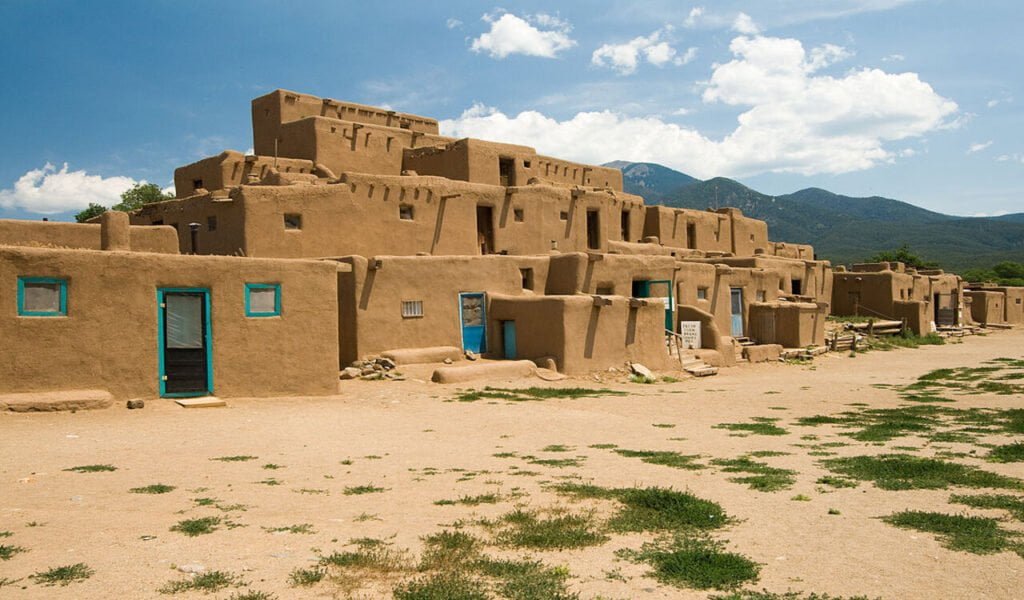
    Materials with more thermal mass like stones, concrete, or earth are used in hot climates. Other materials like polystyrene, polyurethane foam, and phenolic foam have more R-Value. Mud houses are built in hot climates because mud is a poor conductor of heat and provides cooling in the interiors. Traditional adobe is used in the Southwest and other hot climates. Adobe blocks are used for thick walls. The usual thickness of these walls is 25 centimeters to 30 centimeters. Since the density of this Adobe blocks are made by mixing clay, sand, straw, and water. These were initially dried in the hot sun.

    The general dimensions of these blocks are 25x40x12.5cm. Since the density of this material is more, it provides thermal insulation and makes it difficult for heat or cold to transfer from exterior to interior. Although adobe has good thermal mass and greater density, it doesn’t entirely help keep the heat and cold out without other provisions. The labor required for making adobe bricks is more. Adobe bricks have less strength and structural integrity as compared with other materials.     
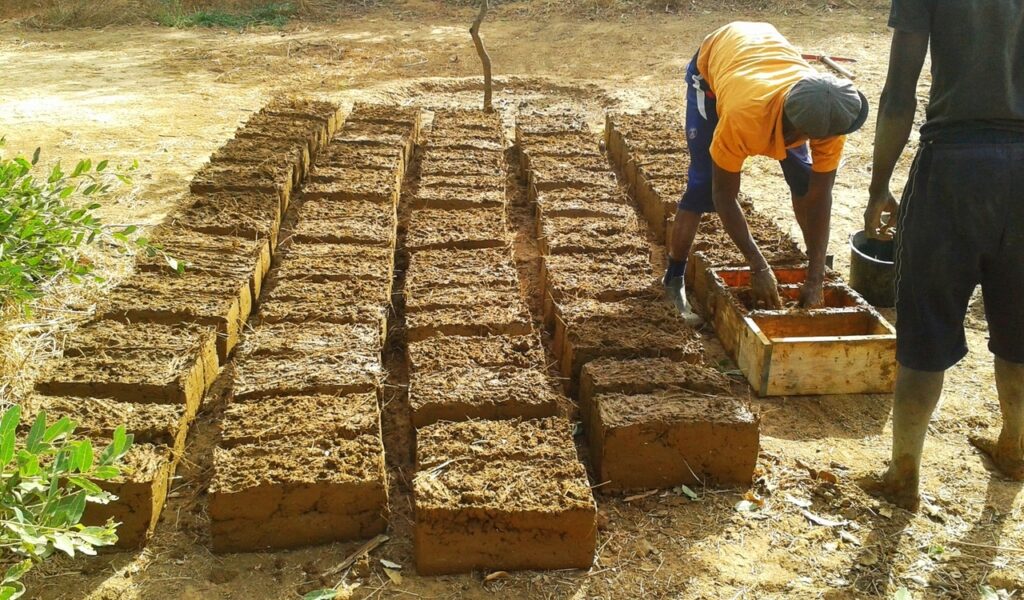
    adobe blocks
    Photo from Abundant Edge

    Apart from these traditional materials, green roofs or ivy walls help in removing heat from the surrounding. Green roofs are visually pleasing and help in decreasing the temperature of the roof, which reduces heat transfer to the interiors. Having a lot of vegetation around also has positive effects on the microclimate. Choosing the right materials for windows aids in passive cooling. Wood fiber has the highest thermal mass out of all insulation materials. It stabilizes the temperature inside, reducing the need for mechanical ventilation and carbon emission. 
    microclimate
    Photo by Festool
  • Architecture in Composite Climate: Effective Design Considerations for Composite Climate

    Architecture in Composite Climate: Effective Design Considerations for Composite Climate

    India is home to an extraordinary variety of climatic regions, ranging from tropical in the south to temperate and alpine in the Himalayan north, where elevated regions admit sustained downtime snowfall. Climate can influence the planning of towns, buildings, and settlement designs and may evoke strategies to market the efficiency of thermal comfort. The built environment affects local and regional global climate change and influences health and luxury.

    Nature of the Composite Climate

    The composite climate is neither constantly hot and dry nor warm and sticky. Their characteristics are ever changing, interspersing between long, hot, and dry ages to shorter ages of downfall and high moisture. There’s a significant difference in air temperature, moisture, wind, sky, and ground conditions throughout the time.

    Designs here are guided by a longer prevailing climate. The duration of ‘uncomfortable’ periods in each season has got to be compared to derive an order of priorities.

    Physiological Objectives

    The objectives set for composite climate apply to the objectives of both warm-humid and hot-dry climates.

    During the cold season, effective temperatures are much less than within the warmer seasons and therefore the physical comfort will depend on heat loss, especially through the night.

    In the warmer season, cooling is insufficient and designers attempt to increase it, the other happens during the cold season. The dissipation is excessive, hence heat retention is important.

    Design Criteria

    Solutions for one season might be unsuitable for another.

    Thermal design criteria recommended for hot-dry climates apply to both the hot-dry season and cold season of composite climate. For the monsoon, buildings should be designed consistent with the standards of warm-humid climate, which might require an entirely special solution. This duality of the matter has got to be handled tactfully by the designer. An analysis of the location climate will help the designer prioritize the requirements.

    Design Considerations for a Climate Zone

    Building Orientation

    The building should be located preferably in the North-East and South-West direction. This helps in receiving less radiation and more natural light & ventilation.

    Form and Planning

    The building must be compact and low-rise. Buildings with a courtyard are more suitable. A moderately compact internal planning of the house is going to be of benefit for many of the year. Buildings should be grouped thanks to cash in of the prevailing breezes during the short period when air movement is important.

    A moderately dense, low-rise development is suitable, which can ensure the protection of outside spaces, mutual shading of the external walls, and shelter from the wind during the cold season. Shelter from dust and reduction of surfaces exposed to radiation. Shading walls are desirable, provided the roof features a low transmittance and good thermal capacity.

    Compactness

    The building form also determines the airflow pattern around the building, directly affecting its ventilation. The compactness of the building is measured using the ratio of area to volume (S/V). The depth of a building also determines the need for artificial lighting. The greater the depth, the higher the need for artificial lighting. The circular geometry has a rock bottom S/+ ratio thus the conduction gains from the building envelope also as solar gains from windows are the smallest amount, in circular geometry in comparison to other building geometries which is the most energy-efficient in composite climate.

    Sheltering or self-shading

    The built form must be designed such that it self-shades through massing or articulation, resulting in cutting off a large amount of direct solar radiation. In a composite climate, with the help of external walls, the envelope should be designed so that it shades for the greater part of the day.

    Building Envelopes

    Roof and walls

    Roofs and external walls should be constructed of solid masonry or concrete to have a 9 to 12-hour time lag in heat transmission. The thermal capacity will be beneficial for the cold and hot dry seasons. The roof pond system can be used as an insulator. Resistance insulation should be placed on the outer surfaces of the external walls or roof. Low rise development is the greater contact of the walls with the ground; thus, the ground will also act as thermal storage.

    Colour and Texture

    The external surfaces should be painted in medium-tone colors. The prevention of warmth entering through the outer surfaces of the walls and roof may be a fundamental rule. A light-colored or shiny polished metal finish is preferred for surfaces exposed to the sun during the hot and warm seasons. 

    Fenestration and Ventilation

    Large openings (preferable with solid shutters on opposite walls are suitable which helps in cross ventilation. Recessed windows help in reducing solar heat gain in the external facade.

    Orientation of the openings is determined by two factors–first, towards the breeze prevailing during the warm-humid season, to utilize its cooling effects and second, towards the sun during the cold season, to utilize the heating effect of radiation entering through the windows; If the two factors lead to a contradiction, the analysis of comfort will aid in reaching a final decision.

    Reasonably large opening within the opposite walls is suitable, preferably with solid shutters which may be opened when cross-ventilation is important, possibly during the recent and humid season or cool evenings in the hot-dry season. The area of the openings shouldn’t exceed the world of the solid walls at an equivalent elevation. On the adjacent walls, the windows should not occupy more than 25% of the total area. Shade is required for external openings during the hot and warm seasons.

    Daylight Integration

    Daylighting has a major effect on the appearance of space and can have considerable implications on energy efficiency if used properly. Its variability is subtly pleasing to the user in discrepancy to the fairly monotonous terrain produced by artificial light. It helps to make optimum working conditions by bringing out the natural contrast and color of objects.

    The presence of natural light can bring a way of well-being and awareness of the broader environment. Daylighting is vital, particularly in commercial and other non-domestic buildings that function during the day. Integration of daylighting with artificial light brings about considerable savings in energy consumption. A good daylighting system features a number of elements, most of which must be incorporated into the building design at an early stage. 

    Optimum Window Wall Ratio (WWR)

    Window Wall Ratio is the ratio of the vertical window opening area to gross exterior wall area. The gross exterior wall area is measured horizontally from the outside surface; it’s measured vertically from the highest of the ground to the rock bottom of the roof. The optimum Window Wall Ratio would achieve a balance between cooling energy demand and lighting energy demand due to the integration of natural daylight.

    External Spaces

    Brise-soleils, louvers, and other sun breaks used to protect openings during the hot-dry period also are advantageous within the season, serving as a protection against rain. During the cold season, when solar gain is important, all shading is undesirable. Vegetation is easier to maintain because of the high rainfall, consequently also reducing dust. Deciduous plants are advisable.

    A courtyard is the most pleasant outdoor space for most of the year because it excludes the wind and raps the sun during the winter. Deciduous plants on a pergola can be used to cover the courtyard.

    Landscaping

    Landscaping is a crucial element in altering the micro-climate of an area. It prevents reflected light from carrying heat into a building from the ground or other surfaces. Additionally, the shade created by trees reduces the air temperature of the microclimate around the building through evapotranspiration. Properly designed roof gardens help to scale back heat loads during a building.

    Planting deciduous trees on the southern side of a building is useful during a composite climate. Deciduous plants like mulberry or Champa stop direct sun during summer, and as these trees shed leaves in winter, they permit the sun to heat the building in winter, which is suitable in a composite climate.

    Summer setting sun can be avoided by planting dense trees and shrub plantings on the west and northwest sides of a building. Natural cooling can be encouraged by locating trees to direct southeast summer breezes in composite climates. Cooling breezes are going to be ready to undergo the trunks of trees placed for shading.

    Location of Water Bodies

    Water is a good modifier of micro-climate. It takes up an outsized amount of warmth in evaporation and causes significant cooling. Water features a moderating effect on the air temperature of the microclimate. It possesses a very high thermal storage capacity, much higher than the building materials like brick, concrete, and stone.

    Large bodies of water in the form of lakes, rivers, and fountains generally have a moderating effect on the temperature of the surrounding area. This is because of the variation in airflow caused by the higher thermal storage capacity of water in comparison to land.

    During the day the air is hotter over the land and rises, drawing cooler air in from the water mass, resulting in inland breezes. During the night, as the landmass cools quicker, the airflow will be reversed. In humid climates, water should be avoided because it adds humidity.

    Traditional Shelter

    The character of the homes during a composite climate depends upon the relative predominance of hot-dry or hot-humid conditions during a year. A typical solution is to surround the ground floor with massive earth walls or masonry walls with large fenestrations. The building is laid around a courtyard to encourage ventilation.

    Earth walls or large fenestrations allow cool air to come inside the house. The first floor is made out of lightweight materials, which helps in reducing the heat gain due to built mass. This type of planning cools quickly in the dark, to permit fairly comfortable sleeping conditions during the most well-liked parts of the year. In such a hybrid structure, the family shifts its activities throughout the day with seasonal changes in the climate.

    Advanced Passive Cooling Systems

    Passive cooling systems believe in natural heat-sinks to get rid of heat from the building. These systems achieve cooling from either evaporation, convection, and radiation without using any mechanical device. All passive cooling strategies believe in daily changes in temperature and ratio. The applicability of every system depends on the climate. The relatively simple techniques that can be adapted to provide natural cooling in the building through solar passive design strategies have been explained earlier.

    Ventilation

    Efficient natural ventilation requires openings in opposite pressure zones. Natural ventilation can also be enhanced through tall spaces like stacks, chimneys, and so on in a building. With openings near the highest of stacks, warm air can escape whereas cooler air enters the building from openings near the bottom.

    Wind tower

    In a wind tower, the recent air entering the tower through the openings within the tower gets cooled, and this becomes heavier and sinks down. Cool air movement is induced as a result of the inlet and outlet of rooms.

    After an entire day of air exchanges, the tower becomes warm in the evenings. During the night, cooler ambient air comes in touch with the rock bottom of the tower through the rooms. The tower wall absorbs heat during the daytime and releases it at night, warming the cool night air in the tower. Warm air moves up, creating an upward draft, and draws cool night air through the doors and windows into the structure. In thick civic areas, the wind palace has to be long enough to be suitable to catch enough air. 

    Courtyard effects

    Due to the incident of radiation in a courtyard, the air gets warmer and rises. Cool air from the bottom level flows through the louvered openings of rooms surrounding a courtyard, thus producing air flows. At night, the nice and cozy roof surfaces get cooled by convection and radiation.

    If this heat exchange reduces roof surface temperature to wet-bulb temperature of the air, condensation of atmospheric moisture occurs on the roof and the gain due to condensation limits further cooling.

    If the roof surfaces are sloped towards the interior courtyard, the cooled air sinks into the court and enters the lebensraum through low-level openings, gets warmed up, and then leaves the room through high-level openings. However, care should be taken that the courtyard doesn’t receive intense radiation, which might cause conduction and radiation heat gains into the building.

    Earth air tunnels

    Daily and annual temperature fluctuation decreases with the increase in depth below the ground surface. The temperature inside the earth remains nearly constant at a depth of about 4m below ground and is almost adequate to the annual average temperature of the place.

    A tunnel within the sort of pipe or otherwise embedded at a depth of about 4m below the bottom will acquire an equivalent temperature because the surrounding earth at its surface and thus the ambient air ventilated through this tunnel will get cooled in summer and warmed in winter and this air is often used for cooling in summer and heating in winter.

    Passive downdraught cooling

    In this system, wind catchers guide outside air over water-filled pots, inducing evaporation and causing a big drop in temperature before the air enters the inside. Similar wind catchers come as the primary rudiments of the architectural form as well. 

    Conclusion

    The composite climates are a culmination of the characteristics of hot-dry and hot-humid climates. The dominant prevailing climatic condition analysis helps choose design solution priorities. The places which experience a composite climate are central India, central South America, and south-eastern North America.

  • Architecture in Extremely Hot and Dry Climate

    Architecture in Extremely Hot and Dry Climate

    Understanding the climatic conditions of a region is very beneficial to the designers and the occupants. Each region has its own list of elements and conditions which should be thought upon before effective designing. In this article, the measures to be taken for effective analysis and planning in hot and dry climates are covered.

    The knowledge of climatic conditions will enable the Architect to select the wall thickness, roofing, materials, size of the openings, and other features to effectively control the amount of solar radiation coming through. 

    Characteristics of Hot and Dry Region

    • The temperature in these regions ranges from  27 and 49°C and 22 deg C at night
    • Humidity is moderate to low, with clear-skied most of the time
    • The low humidity means less rainfall and therefore less vegetation in the region
    • The wind flow is minimal but when there it’s hot and dusty.

    Architectural Measures

    The factors that should be adopted to prevent solar radiation should be considered at all levels of planning, construction, and maintenance.

    Orientation and Form

    The planning should be compact, and under one roof to avoid a lot of movement, which can cause unnecessary thermal loading and discomfort to occupants. The orientation of the longer side facade should be North-South, as the solar radiations are less harsh than East or West. The sun moves from east to west, therefore the sun’s rays are at a maximum in this direction.

    The concept of planning in context with climate is seen in traditional times. Jaipur comes under a hot and dry climate, the Havelis were designed close to each other with narrow lanes, for an effective flow of wind as hot air when passed through narrow lanes cools the flow. 

    Shading

    The shading is an essential part of hot and dry climates, unlike warm and humid climatic zones.

    Shading of roofs, openings, and open spaces should be effectively enclosed with low thermal capacity materials

    Also, the shading of openings in Havelis of Jaipur, be it courtyards, doors, or windows, was done in a beautiful manner. Jharokha windows were effective to block the harsh sun rays but allow cool air to enter inside.

    Another method that is popularly used is the double roof, in which two roofs are constructed. The material for both should be reflective to prevent infrared rays. Due to this double roof, the inner roof is prevented from the rays and a large number of harsh rays are absorbed by the outer roof.

    Wall Surface

    Thick exterior walls are ideal choices for hot and dry regions as this decreases the transmittance of sun rays from outside to inside. Cavity walls or double walls can also help to reduce the transmittance time. 

    Dark color surfaces should be avoided as they store the absorbed heat for a time as compared to light coloured wall surfaces

    According to the traditional construction techniques, mud, stone, or brick walls provide good thermal capacity and will prolong the time of heat entering the structure.

    Openings and Ventilation

    Diurnal temperature variation plays a crucial role in planning in dry and hot climate conditions. Diurnal temperature variation is the variation between a high air temperature and a low temperature that occurs during the same day.

    This can be achieved by the difference between temperature and airflow during the night and day.

    During the day, the windows are shut or shutters closed, or even small windows should be used for ventilation. At night when the temperature is less and wind flow is cool, large windows are open to keep the interiors cool.

    Buildings oriented at 45 degrees towards the windward side with broader facades will receive more ventilation, the negative pressure will be increased and an increased indoor airflow will result. For dust-free and cool air ventilation sources should be ducted. 

    Other Techniques to Keep Interiors Cool

    Solar Chimneys

    Solar chimneys are wide, and tall structures attached to the building and work on the principle of buoyancy. The chimney absorbs all the solar radiation falling on the building, thus making it hot and full of warm air. Then this chimney in turn exits out all the hot air inside the building through the principle of the stack effect. It is important that the chimney is insulated from the building itself so that heat gains do not transmit into occupied spaces.

    Architecture in Extremely Hot and Dry Climate Understanding the climatic conditions of a region is very beneficial to the designers and the occupants. Each region has its own list of elements and conditions which should be thought upon before effective designing. In this article, the measures to be taken for effective analysis and planning in hot and dry climates are covered.

    Using High-Performance Doors and Windows

    Low E glass windows have an invisible coating that reflects infrared rays. These glasses reflect most of what thus keeping the interiors cool. Low E glass or Low emissivity means the ability of a surface to absorb and emit energy in the form of radiation. These glass windows reflect solar radiation but at the same time allow light to pass through.

    Architecture in Extremely Hot and Dry Climate Understanding the climatic conditions of a region is very beneficial to the designers and the occupants. Each region has its own list of elements and conditions which should be thought upon before effective designing. In this article, the measures to be taken for effective analysis and planning in hot and dry climates are covered.

    Evaporative Cooling

    As hot and dry regions have low humidity, evaporative cooling techniques can be majorly used to keep the structure cool. Inspired by the traditional Indian system, a water body such as a pond or lake is designed in accordance with the wind flow. 

    Evaporative cooling reduces the indoor temperature and also the load on the air conditioner is reduced. A water body in the courtyard or in the way of wind flow can be beneficial in cooling the interiors.

    AHU system or cooling tower is air is precooled and then entered. This process can be done with the help of water sprinklers or water bodies.

    Vegetation

    In today’s architectural world, where technology has advanced so much, vegetation is not just limited to the ground. Roof gardens, Vertical Gardens, or creating different flow patterns through trees to cool the environment are popular as well as effective.

    Architecture in Extremely Hot and Dry Climate Understanding the climatic conditions of a region is very beneficial to the designers and the occupants. Each region has its own list of elements and conditions which should be thought upon before effective designing. In this article, the measures to be taken for effective analysis and planning in hot and dry climates are covered.

    Vegetation reduces the direct impact of the sunrays and heats up the surfaces by acting as a buffer. It can also be used as a shading device. Roof gardens add to the thickness of the roof, thus increasing the thermal capacity and increasing the time lag.

    Conclusion

    In the time of climate change, it is of utmost importance to adapt to these measures despite being totally dependent on mechanical systems for cooling or heating. As a responsible architect or designer, it is important that the first step before planning should be to understand the site and climatic context and then proceed. 

    These measures may seem small or costly, but in the long run, they will be profitable both for the individual and the Earth.

  • Architecture in Extremely Cold Climate

    Architecture in Extremely Cold Climate

    Nature of the Cold Climate

    Regions that dwell in the cold climate zone are situated at high altitudes. States such as a Jammu and Kashmir, Himachal Pradesh, Uttarakhand, Arunachala Pradesh, Sikkim, and the northern part of UP have a cold climate. The temperature ranges between 20–30 degrees Celsius in summers, while in winters, it ranges from negative 3–8 degrees Celsius, making it quite chilly. The cold climate can be further divided into two categories.

    Cold and Sunny

    Experienced in Leh (Ladakh), the region is mountainous, with sparse vegetation. This is one of the reasons why it is also considered being a cold desert. Solar radiation is usually intense with a really low percentage of diffuse radiation. In summer, the temperature reaches 17–24 C during the day and 4–11 C in the dark.

    Some more examples of places that experience cold climates are Otacamund, Shimla, Shillong, Srinagar, Mahabaleshwar, and so on. These places are usually highland regions with abundant vegetation in the summer. The intensity of radiation is low in winter with a high percentage of diffuse radiation. In summer, the maximum ambient temperatures are in the range of 20–30 C during the day and 17–27 C at night, making summers quite pleasant.

    Cold and Cloudy

    In winter, the values range from -7 to 8 degrees Celsius during the day and -14 to 0 degrees Celsius in the dark. Winters thus are extremely cold. The low relative humidity, ranging from about 10–50%, and less precipitation than 200 mm per year, marks this type of climate. The sky is fairly clear throughout the year with a cloudiness of but 50%. In winter, the values range between 4 and eight degrees Celsius during the day and -3 to 4 degrees Celsius in the dark, making it chilly.

    The ratio is usually high and ranges from 70 to 80%. Annual total precipitation of 1000 mm is disturbed uniformly throughout the year. The sky is overcast for most of the year except during the brief summer.

    Physiological Objectives

    The main criteria for design in both climate regionalism at resisting heat loss by insulation and infiltration and promoting heat gain by directly admitting and trapping solar radiation within the living space.

    Design Considerations for a Climate Zone

    Building Orientation

    The building should be located on the South slope of a hill or mountain for better access to solar radiation. Cold winds can be avoided by locating the buildings on the leeward side.

    Form and Planning

    In cold climates, indoor air is cooled within the process of it flowing from inside to outside. This could lead to excessive water vapor condensation if not considered during the design. Air-tight construction should be considered as it will help in capturing hot air inside the building envelope and prevent cold air from entering it.

    Open spaces must be shielded from prevailing cold wind. Interior spaces inside the building need to be zoned based on the needs of each space regarding the solar and ventilation requirements.

    Building Envelopes

    Roof and walls

    The walls should be insulated. The South-facing walls (exposed to solar radiation) could be of thermal capacity (such as Trombe wall) to store daytime heat for later use. An efficiently designed sloping roof enables quick drainage of rainwater & snow. Skylights with shutters on the roof admit heat and lights in winter. 

    One must style the building to face up to the additional weight of snow (if it is a snowy region) and/or to make sure it would not create puddles that will cause leakage, and worst-case scenario, the collapse of the roof. Rooms with very high ceilings must be avoided as heat travels up and it will be wasted where none can feel it.

    Colour and Texture

    The external surfaces should be dark so that they absorb heat from the sun. Especially the roof should be painted with darker colors as dark colors absorb heat and allow to passively warm the inside of the building.

    Fenestration and Ventilation

    In colder climates, windows can be allies and foes at the same time: If too many windows are put, one loses heat, and if too few are put, one would not receive any heat from the sun. The windows must be placed strategically, facing the sun (north, when building within the hemisphere, and South when building north of the equator). It is advisable to have a maximum window area on the Southern side of the building to facilitate heat gain. 

    Glass with low thermal transmittances, like hermetically sealed double glass, must be preferred. Sealed and double-glazed windows help reduce heat loss. Skylights are also a good option, as they bring in more natural light (sometimes scarce in colder regions) and are easier to point to the sun.

    Doors and windows should all be completely airtight to form the use of passive heating and to prevent the heat from leaking back out. The more layers of glass, the higher the window is at trapping interior heat and preventing outdoor air from entering.

    Entrances

    Entryways are often a blessing or a curse, counting on the quantity of shelter they supply. Trying to get in the front door during a snowstorm will be a hassle unless the entrance is covered. Covered outdoor spaces will help protect against the weather and stop snow accumulation in walking areas.

    Covered entrances and open spaces prevent excessive cold air from disrupting the comfort of the users while entering or exiting the building. Recessed entryways help protect the doorway from prevailing winds.

    Pathways

    Snow melting systems, also called radiant heat systems, are useful in cold climates. The cables or mats are installed beneath the sidewalks or driveway and use radiation to supply enough heat to melt snow to give a steer a secure path.

    External Staircases

    Ice and snow are often a serious hazard when it falls on stairs. Poor weather makes climbing stairs dangerous. Handrails must be strategically placed along outdoor stairways in order to stabilize as you walk. 

    Insulation

    Insulation is one of the foremost important features to think about when designing for a chilly climate. All insulation configurations are not made equal, and what works for one climate might not work for the opposite, which is why choosing the right insulation becomes important.

    Condensation

    One has to make sure that walls, roofs, and floors do not condensate in-between; different configurations using equivalent materials may result in very different condensation patterns. Differences between the surface temperature and therefore the surface temperature of the weather during a configuration causes condensation to take place. 

    Thermal Transmittance

    One has to make sure that walls, roof, and floor configurations are appropriate for the climate. Colder climates enjoy a really low thermal transmittance, expressed in W/m2K; meaning configuration must transmit rock bottom quantity of warmth possible. 

    Daylight Integration

    Make the foremost out of the available natural light on the location and style openings to let in maximum light. Use of glass facades and roofs for appropriate daylighting for spaces that need the lightest.

    Shading

    Cold climates often need highly glazed facades for max natural lighting. Right shading systems got to be designed to scale back the cooling demands of a building. Installation of automatically controlled shading systems helps the users choose the proper amount of shade required at the proper time. Roofs must even be shielded from direct radiation through coatings, vegetation, and so on.

    Ex: Overhangs, Louvres, Awnings, vegetation, and so on.

    Materials

    Insulating materials like timber and dirt plaster are often used on the walls to make facades that prevent heat loss in the maximum amount possible. Timber paneled walls and windows help reduce the speed of transfer of warmth and also are mostly available in cold climatic spaces.

    Landscaping

    Use trees as natural wind barriers or buffers by planting them near windows to dam cold air from entering the building. Plants and trees chosen for landscaping must be ready to survive the tough climatic differences.

    Other Thermal Strategies

    The heat from existing appliances inside the building, like the burner and fireplaces, must be efficiently used.

    Rock beds help increase the thermal mass of the building by making use of existing heat to make more heat.

    Earth berms, that is, utilizing earth against building walls to scale back the quantity of warmth loss from inside the building.

    Sunspaces help store solar heat centrally for uniform distribution into all spaces inside the building.

    Conclusion

    With a chilly climate passive design, the focus is on retaining the warmth gained by the building. That doesn’t deduct from the very fact that there got to be strategies to assist prevent unwanted climatic differences.

    Finding the proper balance between both the requirements of the building is where lies the success of the planning.