
Tag: House design in Indian style

  • Interesting Peep into Tiny Homes: Portable and Functional House Design

    Interesting Peep into Tiny Homes: Portable and Functional House Design

    Concept of Tiny Homes

    Tiny House Movement

    Tiny homes
    Photo by Maria Orlova from Pexels

    This is an architectural and social movement aimed at providing a simpler life in a smaller space. The people of all areas of life have determined that a large house, and more specifically, the great cost of the resulting life, is not necessary and harmful to their happiness. These people prefer tiny homes to reduce the financial and emotional weight of things.

    Types of Tiny homes

    Recreational Vehicles

    It is a motor vehicle or a trailer that includes houses designed for accommodation. RV types include coaches, campers, and caravans.

    Recreational Vehicles
    Photo by Kampus Production from Pexels

    The typical amenities of a camper include a kitchen, a bathroom, and one or more available to sleep. The RVs may vary from the basic bedrooms and kitchen, in luxurious, with features such as air conditioning (AC), water heaters, satellite televisions, and quartz receptors, and false ceilings, for example. Most campers are single.  

    Accessory Dwelling Unit

    Accessory Dwelling Units
    Accessory Dwelling Units

    Accessory dwelling units are also known as accessory apartments, second units, or granny flats— are additional lodging on single-family lots that are independent of the first dwelling unit. The separate living spaces are equipped with kitchen and loo facilities and might be either attached or detached from the residence

    Shipping Containers

    Built from multiple shipping containers, a shipping container house is designed often architecturally with all the amenities found in traditional home construction. This includes fully functional wet areas like kitchens, bathrooms, and laundry, plus a lounge or two, a business office, bedrooms, and verandas.

    South coast Shipping container House
    South coast Shipping container House

    Each home is uniquely designed to support the positioning, architectural plan requirements, and budget of the homeowner or builder. Shipping containers do an amazing job of keeping goods protected against wind and water. They will also heat up very quickly if there’s nothing to permit the nice and cozy air inside to flee. 

    Yurts

    Magical Yurt with spiral staircase
    Magical Yurt with spiral staircase

    Originally, a yurt may be a portable round, insulated tent used by nomadic groups of central Asia. They’re designed to be easily moved and are capable of keeping people comfortable in extreme weather. Due to its economic construction and high functionality, Yurt has gained a lot of fame recently. With the power to form all types of shapes and sizes, yurts provide you with flexibility over the look process and permit you to make it to best fit your needs. We’ve seen yurts in backyards of homes within the city and deep within the wilderness. They’re a good choice to consider when going tiny.

    Bus Conversion

    School bus Tiny Home
    School bus Tiny Home

    A school bus allows lots of natural light into your space because the walls are lined with windows. For times after you want more privacy, you’ll be able to add curtains. Many bus conversions cover their windows to feature insulation and privacy. This bus conversion takes advantage of the big amount of windows by keeping the coverings translucent. They add coverage, but also allow the taste of some light.

    Dimensions of Tiny Houses

    In recent years, tiny house plans have become more and more popular due to their versatility and environmental protection. They can be configured in any size, shape, and design to meet the needs of the owner. You can even build tiny homes on a trailer so you can take it home wherever you go. Although houses less than 1,000 square feet are considered tiny homes less than 400 square feet are considered small. They cannot exceed 8.5 inches wide, 40 inches long, and 13.5 inches high to be towed away.

    Layouts and Guidelines

    Apartments under 400 square feet are considered tiny homes, they vary in shape and size. The design and execution of tiny house plans are based on the needs of the owner. For example, a person might choose to live in tiny homes with wheels measuring 50 square meters. However, families with children can choose a larger model. A 350-square-foot house may have a roof that doubles as a deck to provide additional leisure space.
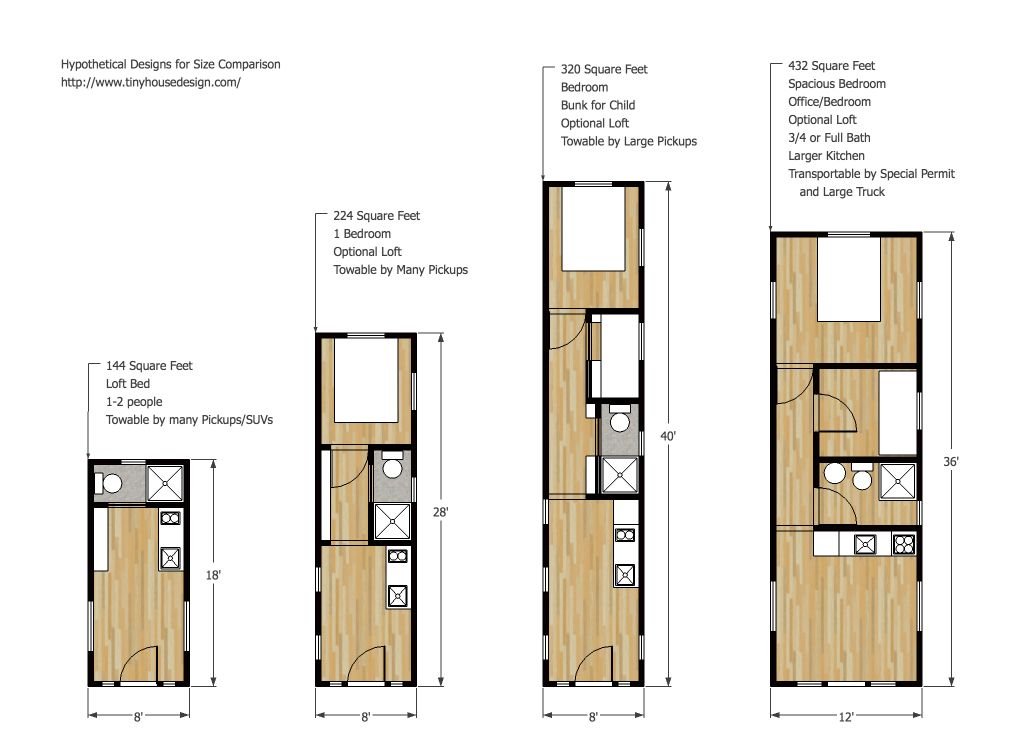
    Tiny House Plans
    Architecture design for home: Tiny House Plans

    A popular size is about 200 square feet, about the size of a dormitory. Tiny Homes prioritize the needs and wishes of owners who can build to their specifications. Living in a public micro-family environment also affects the size of the house. In many communities, facilities such as shared bathrooms and kitchens can change needs and thereby change the size of the home. However, despite the flexibility and customization options, not everyone is suitable for living in tiny house plans.

    Wall size

    If your house is less than 100 square feet or on a trailer, you can bypass certain building codes. In many cities, tiny house plans are not subject to the “Land Use Law” because they are too small to live in. In either case, for your safety, they must be structurally sound.
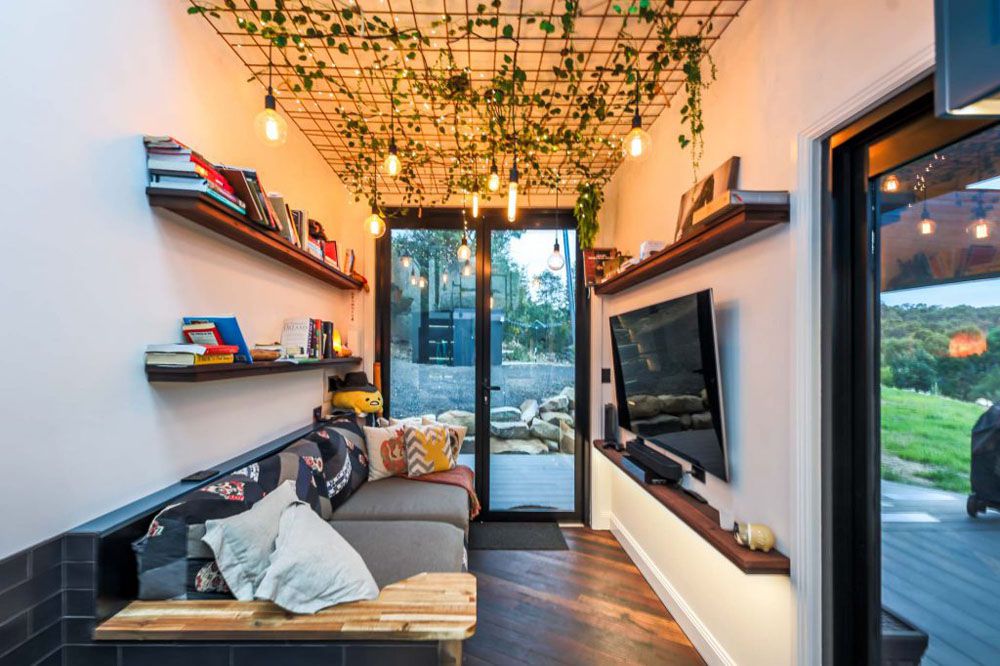
    Tiny House interior
    Tiny House interior

    The width of a standardized wall is:

    • A 2 × 4 is actually 3.5 inches wide.
    • A piece of oriented strand board or plywood packaging is approximately “thick”.
    • The outer cover (for aesthetic reasons) may vary, but 3/4 inch is average.
    • The thickness of the plasterboard on the inner wall is ½ inch.

    The inner wall is thinner than the outer wall. They are made of 2 x 4 plus 1/2 inch gypsum board on each side, for a total of 4.5 inches.

    Budget of Tiny Homes

    The budget of building a tiny house is based on various factors like materials, interior building materials, and tiny house appliances. Let’s compare the prices of standard houses, RVs, and tiny homes (or trailers). Tiny houses fall between these categories.
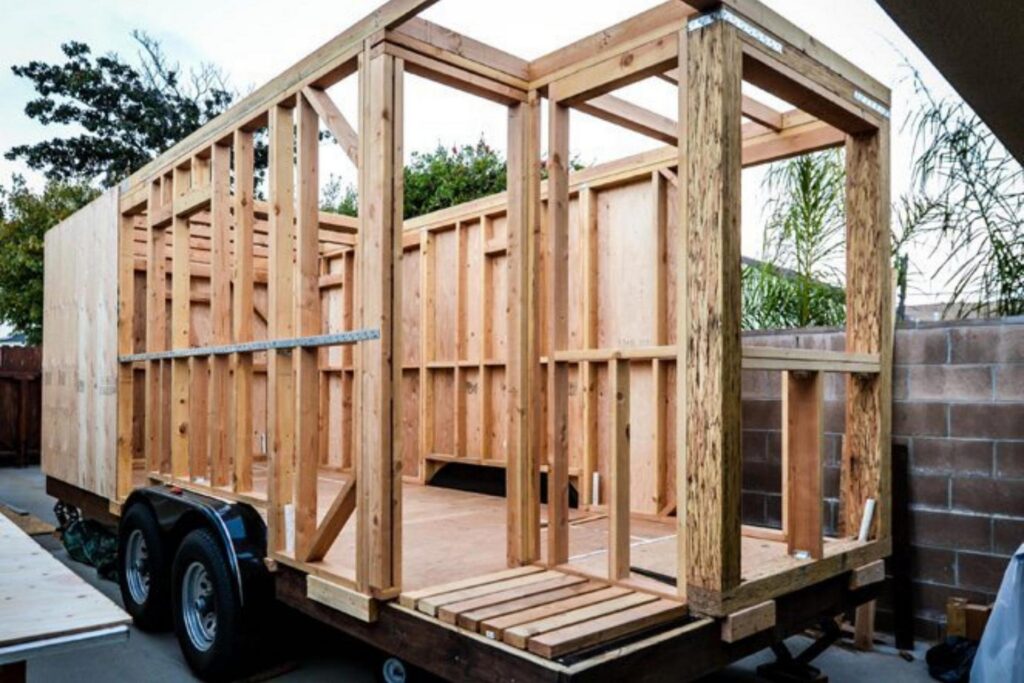
    Materials for building tiny homes
    Materials for building tiny homes

    If you plan to build your small house on wheels or on a piece of land, you will find that you will end up saving money and using less energy compared to most other living situations. It cannot be bypassed, but you should give priority to one of them. After you have decided which household features are most important to you and made a small house design plan, you can take the next step.

    Each type of tiny home caters to different preferences and needs, and the 6×12 enclosed trailer adds a unique dimension to the tiny house movement by emphasizing portability and compact living.

    Whether you are looking for the cheapest, lightest, or most environmentally friendly small house materials, making a list of materials before you start construction will save you a lot of trouble. The bill of materials can not only help you develop a meaningful budget, but also give you an idea of ​​the overall timeline of the project.

    Pros and cons of Tiny Houses

    Positive Facts


    Mortgage-Free

    If you are a millennial-focused on minimizing debt, it is not surprising that you are attracted to small RVs. The catch is that you simply must have enough savings to finance and build your own residence since most lenders typically won’t give loans for such small structures.

    Flexibility and Mobility

    Tiny homes could easily become a small manufactured home so it is moved easily, thus providing you with, the homeowner, the liberty to choose up and go – wherever and whenever.
    Customized Options

    Tiny houses made from recycled materials
    Tiny houses made from recycled materials

    Tiny homes can be customized with decor materials like granite, recycled glass, quartz, or mosaic tile for a fraction of what it’d cost to create during a traditional home. Luxury tiny homes are far more realistic than luxury homes.
    Low Utility Costs

    Electric, water, and gas bills are minimal since you’re living in such a little space. You’ll reduce or eliminate your bills completely if you select to put in solar panels.

    Challenges
    Limited Living Space

    Although builders have gotten creative with making the foremost of the space, living tiny means having barely enough room for you and your family to stay comfortably.
    Limited Storage

    Tiny House storage
    Tiny House storage

     If you have got 50 pairs of shoes or are someone who hoards books or video games, a little home might not be right for you. Living within your means and streamlining your possessions to only have what you utilize is vital to “living tiny.”

    Difficult to Entertain

    Hosting large parties or perhaps having some friends over for dinner may prove challenging in a very tiny home. The most suitable choice is to make an outside elbow room for entertaining guests.

    Tiny House Design in India

    Cuckoo’s Nest, Karnataka

    Architecture Firm: Between Spaces

    Area: 313.5 sq. mt.

    Location: Bangalore, Karnataka, India
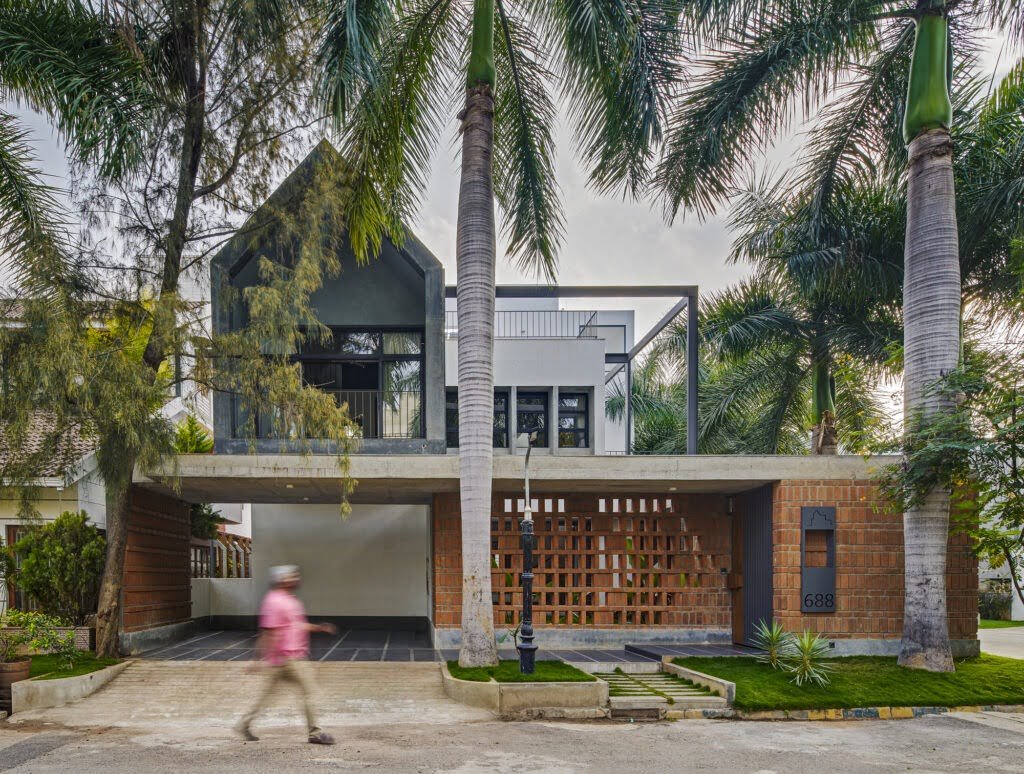
    Cuckoo’s Nest/ Between Spaces
    Tiny house design in India: Cuckoo’s Nest/ Between Spaces

    It is built on a corner lot with roads on the west and north edges, a closed system, surrounded by silver areas and some palm trees. The task is to design a simple, practical, and modern tiny house plan for the elderly parents of the owner, the owner himself, and their two sons. The entire narrative of this house is structured around the idea of ​​playfulness and pragmatism.

    Tube Well House, Maharashtra

    Architecture Firm: Atelier Shantanu Autade

    Area: 400 sq. ft.

    Location: Ambajogai, Maharashtra, India

    Tube well House/ Atelier Shantanu Autade
    Tiny house in India: Tube well House/ Atelier Shantanu Aubade

    The structure of the west-facing front facade creates a posture similar to that of Indian Havelis. Mesh windows, protruding lattice boxes, and large overhangs can reduce surface temperature and regulate wind flow. In terms of structure, the vertical volume formed by slender pillars and long overhanging walls indicates the grandeur of the entrance.

    White Skube House, Kerala

    Architecture Firm: Srijit Srinivas-ARCHITECTS

    Area: 232 sq. mt.

    Location: Thiruvananthapuram, Kerala, India

    White Skube House/ Srijit Srinivas Architects
    White Skube House/ Srijit Srinivas Architects

    The curved shape of the finite floor plan makes it possible to organically create a curved cuboid. The architecture design of the home is painted white to increase the tranquility of the transformed Platonic form-highlighted by the chaos of the busy environment. The functional requirements of the narrow area are particularly demanding, including a car balcony that can accommodate two cars, a living and dining area, a kitchen and an adjacent work area, four bedrooms with en suite bathrooms, and a family suitcase on the upper floor.

  • House Design In Indian Style: A Fascinating Harmony in Architecture

    House Design In Indian Style: A Fascinating Harmony in Architecture

    House design in Indian style has been rich in traditional and vernacular architecture throughout History. Indian architecture house design has different residential typologies available in India, such as Haveli of Rajasthan, Wada of Maharashtra, Nalukettu of Kerala, Bamboo architecture of Assam, and Rajbari of Bengal.

    North Indian- Leh, Ladakh

    The Indian architecture design of homes in the North is inspired by the Tibets. The main essential component is the role of material due to extreme climatic conditions. The materials used were locally available, stones, timbers, mud, and sun-dried bricks, and rammed earth for plastering.

    The plastering is done to insulate the house from cold winds. The rooms planned to face the south to receive maximum heat gain. This technique is used for solar energy nowadays. Roofs are basically flat as it rarely rains. The doors and windows are wooden.

    The walls are thick and are made with wood, insulation goes inside those walls, plastic vapour barrier keeps it in tight, and seals out any airflow.

    House Design in India Style: Trekhouse
    House Design in India Style: Trekhouse

    North east-Assam

    Whenever one talks about Indian vernacular architecture construction techniques in the North-East, the first word that pop-ups are Bamboo. The houses were made considering bamboo as the main structural element and were used for columns, beams, and roofs. The design of these houses was done considering bioclimatic strategies.

    The main materials used were bamboo and timber on stilts and metal sheets and thatch for roofing. In Assam mainly 2 methods of construction(a) Ikra which is designed keeping in mind lightweight houses and locally available materials are used like bamboo, wooden planks, and thatch. The main factor is that these houses fulfill the earthquake safety requirement.

    The other is Chang house which is built on a hilly region and is on stilts. This is to prevent flooding and landslides. The Indian architecture style house design are usually one story and have open spaces at both ends for seating and socializing. The stilts also provide protection from wild animals.

    House Design in India Style: Assam
    House Design in India Style: Assam
    House Design in India Style: Assam

    Punjab

    The Indian traditional house design of Punjab Kothi was designed considering the Punjabi and colonial design elements. The rooms were planned around the courtyard. The courtyards were like living rooms also known as baithak used for family gatherings. The room height was kept low and had a thatch roof.

    The material used for construction is baked brick, surkhi (powdered brick), and timber doors ideal to eliminate uncomfortable heat. For landscaping, small gardens were kept in the baithak area. The courtyard was also used for sleeping during the summers. A verandah ran along with the courtyard where all the house chores were performed. The kitchen (Chula) was outdoor.

    There were Havelis also in a Sikh culture which were inspired by Sikh and Sufi Islam culture. The courtyards were surrounded by verandahs for transitions and had arches all around.

    House Design in India Style: Punjab
    House Design in India Style: Punjab
     House Design in India Style: Punjab
    House Design in India Style: Punjab

    Rajasthan

    The haveli architecture design of the home was designed considering the regional climatic conditions. The word haveli means a mansion and was a symbol of power and prestige. They also depicted the local culture and had lush green landscapes.

    The planning of Havelis was done around the courtyard. The purpose of the courtyard design was that it kept the inner spaces airy and well-ventilated in the hot and dry region of Rajasthan. Also, it acts as a transition space and has a corner for a family deity with tulsi plants.

    The materials used for construction were sandstone, marble, wood, and plaster. The Havelis were constructed close to each other so that there is not much space between them and it forms a narrow lane from which when air passes it is cooled which in turn keeps the interiors cool.

    The Havelis were owned by rich landlords or noblemen and were a blend of Rajputs and Mughal elements. The jharokhas were not merely used for aesthetic purposes but also created a private space for women to have a panoramic view of the celebration and other activities. The climatic purpose of jharokhas according to modern ideology is to avoid direct sunlight inside. The Havelis nowadays are considered for adaptive reuse and turned to museums or hotels.

     House Design in India Style: Rajasthan
    House Design in India Style: Rajasthan
     House Design in India Style: Rajasthan
    House Design in India Style: Rajasthan

    Kolkata

    The mansions of Kolkata borrowed their grace from Europe’s Greco-Roman heritage. The houses consist of large terraces and spacious porches. These one-storeyed mansions are surrounded by wide verandahs to fight the Bengal humidity.

    These Indian architecture house design are also centered around a courtyard called Aangals and have a tulsi plant at the center. Mostly all Indian vernacular architecture has a courtyard. The floors are connected by curved corridors and staircases. The doors and windows have arches around them with vibrant colours.

    The houses of Bengal are extravagant and full of intricate details and this lavishness is seen in movies like Devdas and Parineeta. The elements like jhilmils or wooden slates between high columns were designed to keep the direct sunlight from entering the interior. The houses had high ceilings and long pillars to keep the interior temperature down.

    House Design in India Style: Kolkata
    House Design in India Style: Kolkata
    House Design in India Style: Kolkata
    House Design in India Style: Kolkata

    The landscaping had huge gardens with tall trees which enhanced the entrance facade. The houses in Kolkata have bold facades, lushful gardens, and red oxidized floors in the interiors.

    Wadas of Maharashtra

    The wadas represent the culture, religion, traditions, and pride of Marathas. Examples of wadas were seen in the movie Bajirao Mastani where the richness of Maratha and Peshwa culture is clearly visible and felt. Wadas were planned keeping in mind the climatology of the region and also the functionality of the spaces. Indian traditional house design was mostly based on bioclimate.

    Wadas were planned to be rectangular in shape with two or three courtyards. The wadas had 3 gathering spaces for different purposes, the first for gatherings, next for office, and last for spaces like kitchen, storerooms, and balanthini kholi( delivery room). This gives us the idea of how the key idea behind planning was functionality. They were constructed in a modular and simple manner with a square grid pattern.

    The aesthetics of the exterior were also kept in mind, with fine surface plastering, decorative windows, and exposed brick and wood as materials. The essential element that separates these wadas from other houses is the use of wooden brackets on the beams with the forms of dragons and lotus.

     House Design in India Style: Maharashtra
    House Design in India Style: Maharashtra
    House Design In Indian Style: A Fascinating Harmony in Architecture House design in Indian style has been rich in traditional and vernacular architecture throughout History. Indian architecture house design has different residential typologies available in India, such as Haveli of Rajasthan, Wada of Maharashtra, Nalukettu of Kerala, Bamboo architecture of Assam, and Rajbari of Bengal.
    Indian traditional house design: Maharashtra

    Pols of Ahmedabad

    The pols of Ahmedabad represent Indian architecture house design which was designed keeping in mind climate, local materials, and social aspects of the community. There is a raised platform sitting space before entering the house called otala. Like other vernacular houses, pols also have a courtyard inside. The function of the courtyard is to collect rainwater. This is the essential part of the pols. The courtyards have tanks or tanku under them to collect water which is used throughout the year.

    The pols have common walls which are economical and act as shear walls which in turn reduces the vibrational effect of Earthquakes and the front facade is less in width but the houses are more in-depth to keep the lane narrow. This shades the elevations which reduces the heat gain.

    The planning depicts the social behavior, the front spaces are for the public while the depths for private rooms. The windows of the courtyard’s house are open at night to attract the cold wind and are closed during the day to minimize solar heat gain.

    House Design In Indian Style: A Fascinating Harmony in Architecture House design in Indian style has been rich in traditional and vernacular architecture throughout History. Indian architecture house design has different residential typologies available in India, such as Haveli of Rajasthan, Wada of Maharashtra, Nalukettu of Kerala, Bamboo architecture of Assam, and Rajbari of Bengal.
    House Design in India Style: Ahmedabad
    House Design In Indian Style: A Fascinating Harmony in Architecture House design in Indian style has been rich in traditional and vernacular architecture throughout History. Indian architecture house design has different residential typologies available in India, such as Haveli of Rajasthan, Wada of Maharashtra, Nalukettu of Kerala, Bamboo architecture of Assam, and Rajbari of Bengal.
    House Design in India Style: Ahmedabad
    House Design in India Style: Ahmedabad
    Indian traditional house design: Ahmedabad

    Nalukettu of Kerala

    It is correct to call Kerala god’s own country, spacious lush greenhouses with complimentary scenic beauty. The materials used were derived from natural wood, terracotta roofing tiles, or laterite. The word nelukettu, ‘nelu’ meaning four, and ‘kettu’ meaning block. The blocks can be increased to eight or twelve i.e Ettukettu or Pathinaarukettu according to the owner.

    The Indian architecture house design are unique and blend with nature from inside through the courtyard ‘Nadumuttam’ and tall trees and garden from the outside. The houses are constructed according to Vastu shastra with an entrance on the East and have a lot of windows and other openings for light and ventilation.

    The roofs are either pitched or sloped and are embellished with incredible tiles. The entrance ‘padippura’ comprises a decorative door and tiled floor. After the padippura one enters the shaded verandah ‘Poomukham’ which is for seating purposes also known as ‘charupadi’.

     House Design in India Style: Kerala
    House Design in India Style: Kerala
    House Design In Indian Style: A Fascinating Harmony in Architecture House design in Indian style has been rich in traditional and vernacular architecture throughout History. Indian architecture house design has different residential typologies available in India, such as Haveli of Rajasthan, Wada of Maharashtra, Nalukettu of Kerala, Bamboo architecture of Assam, and Rajbari of Bengal.
    Indian traditional house design Kerala

    Conclusion for Indian style house design

    It is evident from these that the most essential feature of Indian traditional house design is the courtyard. It reflects the amazing and versatile concepts of Indian houses based on bioclimate and functionality which should be derived in designing today. The uniqueness and essence of Indian vernacular Architecture are getting lost in the rush for the concrete jungle.

    FAQ

    Q: What is Indian architecture house design?
    A: Indian architecture house design encompasses a wide range of styles and techniques influenced by the country’s diverse cultures and climates. From the bamboo architecture of Assam to the havelis of Rajasthan, Indian architecture is known for its use of local materials, traditional techniques, and cultural significance.

    Q: What are some key features of Indian architecture house design?
    A: Indian architecture house design often includes courtyards, verandahs, and open spaces to maximize natural light and ventilation. Traditional materials such as bamboo, timber, mud, and sun-dried bricks are used to create sustainable and climate-responsive homes.

    Q: What is India style house design?
    A: India style house design refers to the unique architectural styles found across the country, influenced by its rich history and diverse cultures. From the palatial havelis of Rajasthan to the bamboo houses of Assam, India style house design reflects the country’s cultural heritage and environmental context.

    Q: What are some popular Indian architectural styles?
    A: Some popular Indian architectural styles include the havelis of Rajasthan, wadas of Maharashtra, nalukettu of Kerala, bamboo architecture of Assam, and pols of Ahmedabad. Each style is unique in its design, materials, and cultural significance, reflecting the region’s history and traditions.

    Q: How does Indian architecture house design incorporate sustainability?
    A: Indian architecture house design emphasizes sustainability by using locally sourced materials, traditional building techniques, and passive design strategies. Courtyards, verandahs, and open spaces are designed to maximize natural light and ventilation, reducing the need for artificial heating and cooling.

    Q: What are some key considerations for designing an Indian-style house?
    A: When designing an Indian-style house, it’s important to consider the local climate, cultural traditions, and available materials. Courtyards, verandahs, and open spaces should be incorporated to maximize natural light and ventilation, while traditional materials such as bamboo, timber, and mud should be used for construction.