
Tag: Metropolitan cities in India

  • Transit Oriented Development: A Solution for Better Town Planning

    Transit Oriented Development: A Solution for Better Town Planning

    What is Transit oriented development (TOD)?
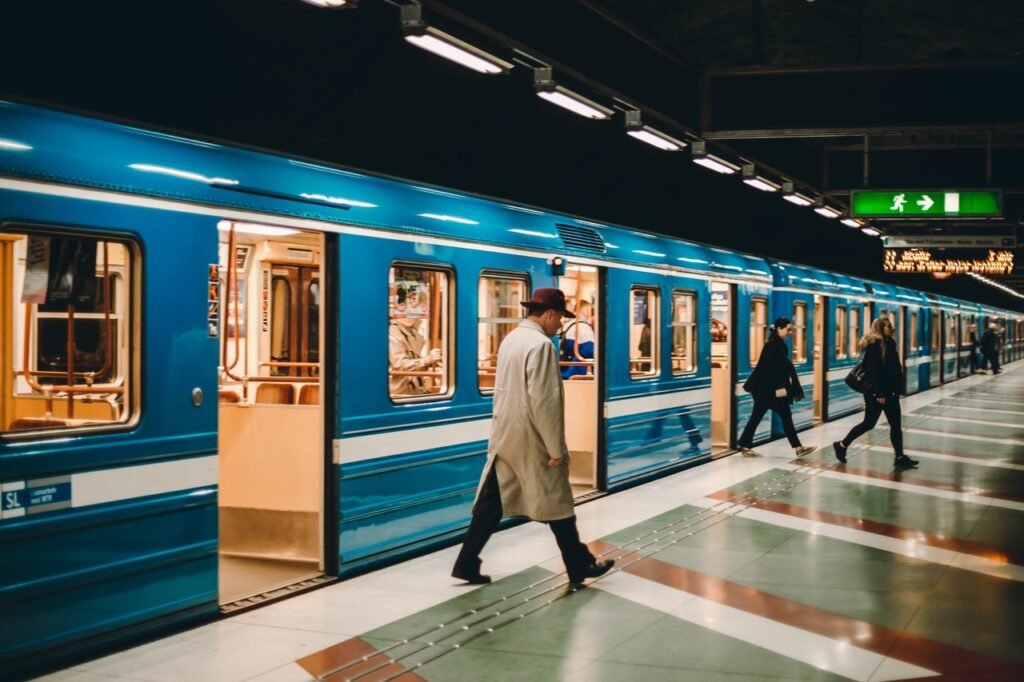
    Transit-oriented development (TOD)
    Photo by Elena Saharova from Pexels

    Transit oriented development (TOD) is a planning and design strategy that involves promoting compact, mixed-use, pedestrian, and bike-friendly urban development that is closely linked to local transportation by adding workplaces, apartments, services, and facilities for public stops. It contains a high-quality, walkable pedestrian environment that integrates the street design. The transit hub is also at the center of a diverse and mixed-use development destination. The parking lot is carefully located, designed, and managed. The most important thing is that the municipality has good quality transportation and public services.

    Need for Transit oriented development

    Rapid growth of traffic congestion

    Need for Transit-oriented development: Rapid growth of traffic congestion
    Photo by suzukii xingfu from Pexels

    As cities experience rapid growth, transportation systems such as the subway, BRTS are being implemented to meet the growing demand for travel. Therefore, Transit oriented development is unavoidable for all cities that have or plan to have an existing transit system. This should help federal states and cities recognize public transportation infrastructure as the core element around which future expansion of urban development areas is planned and investments in public transportation should be oriented accordingly.

    Desire for quality lifestyle

    Town and country planning
    Photo by Tima Miroshnichenko from Pexels

    The urban quality of life (QoL) is the general well-being of the individual and the society that lives in cities. Quality of life plays a very important role in social development. An individual is part of the family. Quality of life is effective for every member of the family.

    Degradation of environment

    Need for Transit-oriented development: Vehicular Pollution
    Vehicular Pollution

    Public transport is one of the most efficient ways to save energy. The excessive number of cars entering a city has harmful effects on nature and human health. Using public transportation rather than using private vehicles is one of the best ways to reduce emissions and protect the environment.

    Principles of Transit oriented development (TOD)

    Walk

    Develop neighbourhoods that encourage walking 

     TOD principles: Walk
    TOD principles: Walk

    Cycle

    Prioritization of non-motorized transport networks

    Connect

    Create dense road and road networks

    TOD principles: Connect
    TOD principles: Connect

    Transit

    Location development near high-quality public transportation

    Mix

    Mixed-Use Planning

    TOD principles: MIxed used planning
    TOD principles: Mixed used planning

    Densify

    Density and transport capacity optimization

    Compact

    Create regions with brief trips

    Shift

    TOD principles: Shift
    TOD principles: Shift

    Regulation of parking and use of the road to enhance mobility

    Benefits of TOD

    Higher Quality of life

    Transit oriented development results in neighbourhood places which are better to live, work and play. With a better transit system, the lifestyle of people becomes healthier due to increased walking and cycling habits further resulting in little stress. The people can spend on more important things since they need to spend less on private transportation and can make use of transit system.

    Reduced traffic congestion
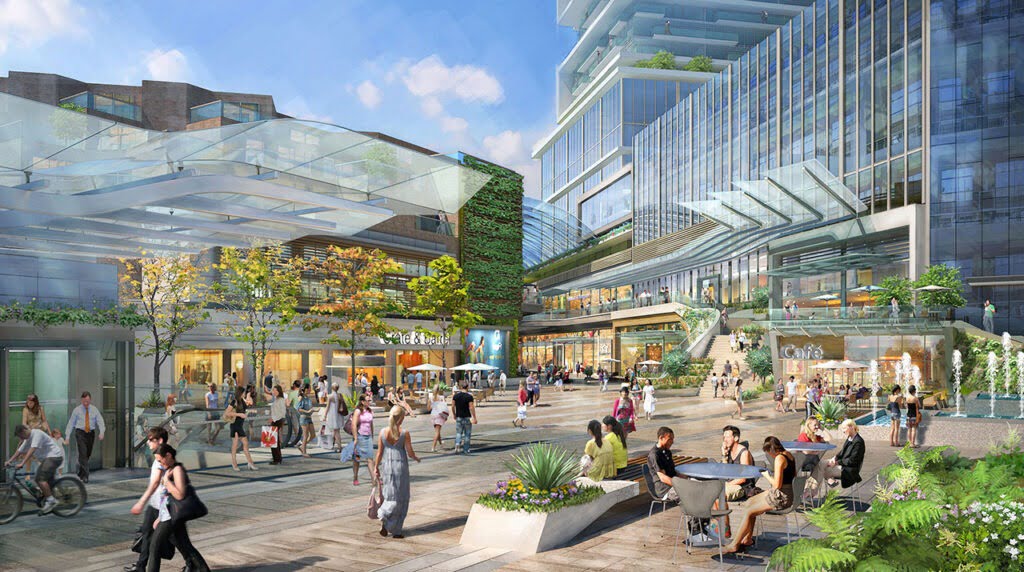
    Mixed-use development
    Mixed-use development

    The traffic congestion on the roads is minimized since the transit helps to reduce the use of personal vehicles. This results in greater mobility with the ease of moving around. Motor vehicle accidents also minimize because of the Transit oriented development.

    Reduced environmental damage

    Reduced environmental damage

    Environmental pollution is reduced because of lesser vehicles on the road. Cycling uses minimal fossil fuels and is a pollutant-free mode of transportation. Bicycles reduce the need to build, maintain, and dispose of cars. Cycling preserves the road surface and living space and therefore offers opportunities for less concrete and more greenery in urban areas.

    Less Expensive

    Mixed-income Transit-oriented development
    Mixed-income Transit oriented development

    The use of transit will reduce our dependency on foreign oil, road maintenance, and the expenditure of households on fuel. Improving the quality of transport facilities leads to greater market access and efficient transport is cheaper, thus more means of transport are used. Large transport infrastructure projects will have an indirect impact on the local economy. The multiplier effect occurs and promotes the growth of logistics companies. Public transportation can save you up to four times more money than commuting in your private car. Regular use of your car incurs maintenance costs and other additional fees, such as parking fees, emissions penalties, and speeding tickets.

    Planning Process of Transit oriented development (TOD)

    Identification of problems, opportunities, and limitations

    Development of a master vision plan

    Development of traffic plans, transportation or transit access, and parking plans

    Development of design standards and design characteristics of the road space

    Development of recommendations for the promotion of traffic

    Recommendations for implementation priorities, possible financing partnerships, and project phases

    Variants of Transit oriented development (TOD)

    Transit Adjacent Development (TAD)

    Traffic Adjacent Development (TAD) is a development that is physically close to traffic but does not take advantage of that proximity to promote transit driving and other economic benefits. Some examples of such developments are the Uttam Nagar areas in West Delhi and the Laxmi Nagar and Nirman Vihar areas in East Delhi, which have been subject to disorderly development since the arrival of the Delhi Metro.

    Development Oriented Transit (DOT)

    Development Oriented Transit is defined as a process in which transit is integrated after development. DOT is defined as putting development first, while TOD is defined as putting transit.

    Transit Joint Development (TJD)

    The basic idea of TJD is that development is associated with transit and not before or after transit. The DOT benefits are a consideration between the public sector (a transportation company) and a developer; but the parameters that improve the quality of life in a Transit oriented development (TOD), such as town planning, trails, and bike paths, affordable housing are not addressed. A competitive real estate market, high-quality public transportation infrastructure, and a framework for sustainable town planning standards help develop a joint transit development into a transit oriented development.

    Implementation of TOD in Indian Cities

    From the cases discussed further, densities in a Transit oriented development are complemented by significant diversity, easy accessibility, enough living space for different income groups, and good town planning. These cases also illustrate the importance of context-based Transit oriented development (TOD) implementation, the need for strategic planning, and strong institutional support.

    They represent different types of public transport and different development approaches. While some cases illustrate success because of deliberate planning and prolonged strategic growth management, others show accidental successes because of the juxtaposition of high-quality traffic, a combination of land use, and high population density.

    Delhi (Bus rapid Transit system)- Transit Oriented Development

    Delhi plans smart growth around transit
    Delhi plans smart growth around transit

    Over the past 60 years, Delhi’s urban footprint has dramatically expanded to nearly 1,500 square kilometers and now extends into a national capital region that includes parts of the surrounding states. Much of this growth has been accompanied by road construction and has resulted in an over-reliance on cars to get around. Since the late 1990s, Delhi has invested heavily in mass rapid transit systems, primarily Metro Rail and an old bus rapid transit system to reverse traffic congestion and deteriorating air quality.

    In 2015, the planning authority (Delhi Development Authority or DDA) attempted to develop a comprehensive traffic-oriented development policy in order to rehabilitate railway station areas and neighborhoods along the corridors of the subway. Implementation of Transit oriented development policy guidelines in the underground corridor pilot areas is expected to halt the highway-driven spatial development model and the areas within the city limits may later be condensed.

    Mumbai (Railway guided development)

    The Mumbai metropolitan area comprises a former archipelago of seven islands, which are connected by lowlands to form a megalopolis through land reclamation and the expansion of the rail network. Each of the satellite cities is home to both jobs and residents and follows node-based growth around S-Bahn stations. The city of Greater Mumbai has several employment centers. The transportation infrastructure connects them to satellite cities through a complex interplay of S-Bahn, U-Bahn, monorail, public buses, auto-rickshaws, and major pedestrian routes. Mumbai is an example of a traffic-oriented development based on corridors with extremely high proportions of public transportation modes.

    Ahmedabad (Bus based TOD- Janmarg)

    BRTS Janmarg
    BRTS Janmarg

    Ahmedabad illustrates an incremental approach to implementing TOD. After Ahmedabad struggled with falling public transport passenger numbers, Ahmedabad introduced a modern bus rapid transit system called “Janmarg”. Janmarg’s operational success has catalyzed the use of policy guidelines that the BRT uses to implement Transit oriented development. The aim of the city is to curb urban sprawl by promoting a compact and denser urban structure in areas with good connections to local public transport. The city’s development plan emphasizes mixed land use, high density, public transportation, a network-based pedestrian circulation network, and a market-driven approach to land use for the development of the city’s central business district (CBD).

    Conclusion
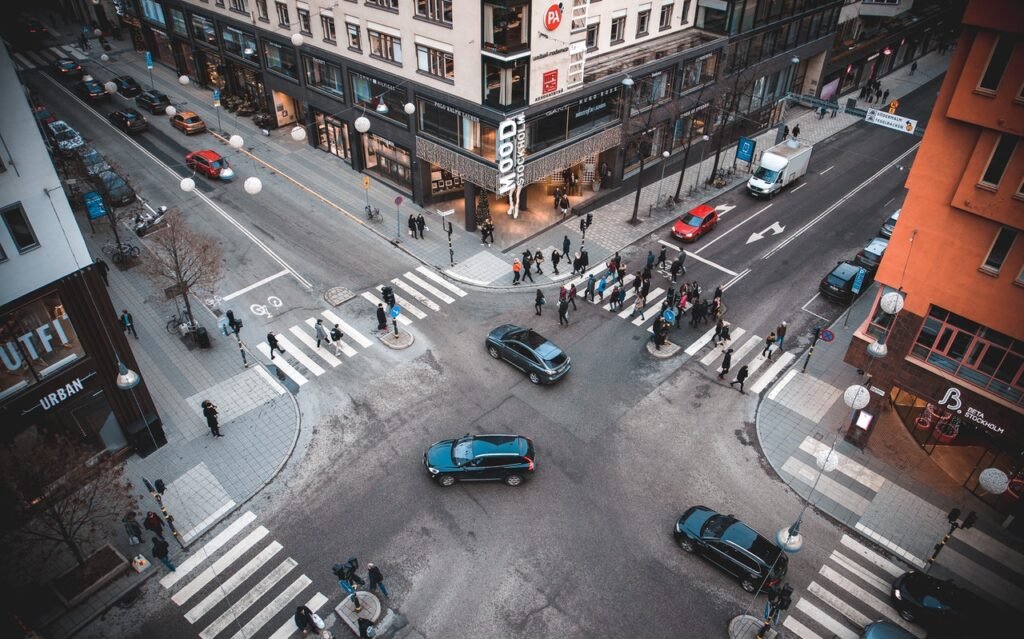
    Transit-oriented development

    Transit oriented development is an urban development and demand management strategy used in many metropolitan cities in India; some of them are discussed in this post. Transit oriented development controls urban growth by spatially limiting development in the transit’s vicinity area. This is done by placing higher densities in areas close to transit stations and corridors.

  • Railway network: A Solution for the Transit-Oriented Development in Mumbai

    Railway network: A Solution for the Transit-Oriented Development in Mumbai

    Background      

    Mumbai is the capital of the Indian state of Maharashtra and its economy is based on financial services, IT-based services, and media/entertainment. The city of Greater Mumbai is geographically divided into 3 main regions, the island city of Mumbai (25% of the population), the eastern suburbs (30% of the population), and the western suburbs (44% of the population). The island city population has stabilized and growth is expected to slow by 2034, but the population of the suburbs is projected to grow to 80% of the total by 2034.

    This population distribution correlates with the transformation of Mumbai from a predominantly monocentric city to a polycentric city with new shopping centers in the suburbs. The city owes its railway network, which carries over 7.5 million passengers per day, to enable this expansion.

    Railways Guided Development

    The case of the Mumbai metropolitan area shows that efficient urban transport systems are crucial elements of sustainable urban development. An incredible 88% of all travel in the Mumbai metropolitan area is by bus and train. This shows that there is a requirement for an effective and efficient public transport system, particularly the railroad.

    The S-Bahn system is the main mode of transportation in the Mumbai metropolitan area, with more than 52% of all daily commutes using this mode of transportation. The railways in the Mumbai metropolitan area perform the dual function of connecting the multiple CBDs in the city of Mumbai and expanding the connections with the suburbs. The high average travel length of 24 km for this mode indicates the regional connectivity of the network.

    Factors of railway guided development

    City form

    The main reason for the compactness of Mumbai is its physical geography. The linear shape of the city of Mumbai has been given to the railway corridors and you can see the growth on the three main lines around the station nodes. The principles of transit-oriented development in Mumbai suggest intense activities around transit stations; in the case of Mumbai, it started organically.

    Affordable Housing

    First, the high cost of housing in the Mumbai metropolitan area is inevitably forcing people, especially the middle-income population, who can afford to move to the remote northern and eastern suburbs. The S-Bahn network offers a viable option for your transportation needs. Second, the urban poor, unable to afford suburban housing, crouch in the wasteland along railroad tracks, along canals, and under bridges.

    Due to the proximity to the eastern and western suburban lines, slums are located in the city center and new suburban neighborhoods have now increased along the railway lines. In Mumbai, access determines location, proximity, and daily routine more than in most other cities, especially for the urban poor and the middle-income group.

    Multiple CBDs (Central Business District)

    Mumbai was predominantly a monocentric city with a tidal pattern of displacement with a directional ratio of up to 80:20 to the south in the morning and vice versa at night. Now, however, the city is polycentric with new business centers in suburbs such as Bandra Kurla (diamond exchanges and government offices), Lower Parel (finance, insurance, television, and print media), Andheri Kurla (hospitality, airport), SEEPZ (manufacturing electronics and export, IT and BPO) Malad (film production and media companies) and Goregaon (film production), coordinated under the strong rail network.

    Connectivity

    The local metro in Mumbai serves as a primary transport system
    The local metro in Mumbai serves as a primary transport system

    Intermodal connections with shuttle buses and rickshaws for last-mile connectivity will be integrated into the development and design of the stations. Almost 50% of the operating routes of Mumbai‘s largest bus company, Bombay Electric Supply, and Transport (BEST), are related to feeder routes that run the last mile between the S-Bahn network and residential areas. Almost 34% of trips to Ghatkopar station are made with BEST buses.

    Navi- Mumbai transit system

    The growth of Navi Mumbai has been molded by the integration of affordable housing, high-quality infrastructure, and public transportation networks. This region with 2 million inhabitants is served by a network of suburban trains that connects it with the Greater Mumbai metropolitan area. This form of transport-oriented development was one of the first in India and remains one of the few Indian cities that have integrated public transport with residential, office, and commercial spaces.

    The first railway network was started between modern Mumbai and Navi Mumbai with the construction of the Mankhurd Vashi Bridge in the 1990s and gave a boost to the growth of Navi Mumbai as an affordable accommodation option in Mumbai.

    The costs of the railway infrastructure were shared by CIDCO and the railways at a ratio of 67:33. Bonds were issued to raise capital for rail infrastructure and user fees were charged.

    The current railway network is 52 km long and has 14 stations, which are designed to take advantage of the commercial space above the stations, to quickly unload passengers from the platforms, and to offer enough parking spaces. In the development and design of these stations, intermodal connections with shuttle buses and rickshaws are integrated for last-mile connectivity.

    Navi Mumbai City also operates a bus service under the Navi Mumbai Municipal Corporation. The network has a fleet of 411 buses and carries 150,000 passengers per day. The so-called Navi Mumbai nodes now form the core of the decentralized concentration.

    Conclusion

    However, there are some challenges that the government must address in the full implementation of transit-oriented development.

    Property Values ​​Review

    Average home prices near the areas of transit-oriented development in Mumbai can be more expensive compared to areas far from such developments. Therefore, transit-oriented development in the catchment area could pursue a strategy to enable affordable housing by reviewing the FAR minimum percentage for affordable housing under the policy of transit-oriented development in Mumbai.

    The affordable housing stock is being built in the northern suburbs and satellite cities of Mumbai (Kalyan Dombivali, Thane), resulting in longer travel times.

    Local parking change

    Policies should be changed to encourage the use of public transportation instead of private vehicles. Typically, parking is too expensive, discouraging people from using public transport. Therefore, it is imperative to change local parking policies to avoid the use of private vehicles and increase the inclination of people to use public transport.

    More than 50% of the commute to work in Mumbai is done on foot alone. Such high pedestrian ratios can only be maintained with proper parking reforms, which reduce the minimum off-street parking in proximity to suburban network crossings to zero and determine parking maximums and thus create a safe and networked pedestrian environment.

    Coordination between different authorities

    The implementation of transit-oriented development would require effective coordination between different agencies to develop master plans, review building codes, traffic regulations, and adopt a funding model. All of these agencies must work together for the strong framework of transit-oriented development in Mumbai. Any inequality between agencies could undermine TOD’s success.

    Government agencies work together at all three levels – central, state, and local – to create the much-needed infrastructure base for Mumbai Metropolitan Region. The transit-oriented development in Mumbai along the corridors of the metro is a step in the same direction. Overall, the development is expected to address existing city issues such as random urban growth, rapid growth in vehicles, and pollution.

    The current density of Mumbai is high enough that investments in public transport are financially sustainable. Within existing nodes, the focus is on “Change and Improve” mechanisms by improving public transport operations. Currently, it is pursued by prioritizing the provision of public transport, NMT, and pedestrian facilities and supporting the use of roads for public transport (buses) by prioritizing signs, assigning roads, etc.

    Train stations around the suburban, subway and monorail corridors in Mumbai suffer from a lack of proper road and sidewalk infrastructure design, competitive demands from pedestrians, street vendors, and passenger traffic (IPT), lack of information on systems transportation, and lack of streets furniture and other public facilities.

    The policy of transit-oriented development in Mumbai was formulated in the development plan, but specific development control regulations (DCR) have not yet been drawn up to take into account the need for parking spaces, urban form, and inclusive living within the zones of influence of these target stations. In the future, only the high proportion of public transport in the city and the region will be maintained through proactive intervention.