Tag: Office layout

  • Re-Imagining The Office Spaces with an Innovative Perspective

    Re-Imagining The Office Spaces with an Innovative Perspective

    Introduction   

    The etymology of the word office is derived from Opus- work and Facere- do, which is officium, a performance of a task. Hence office is used in Middle English. 

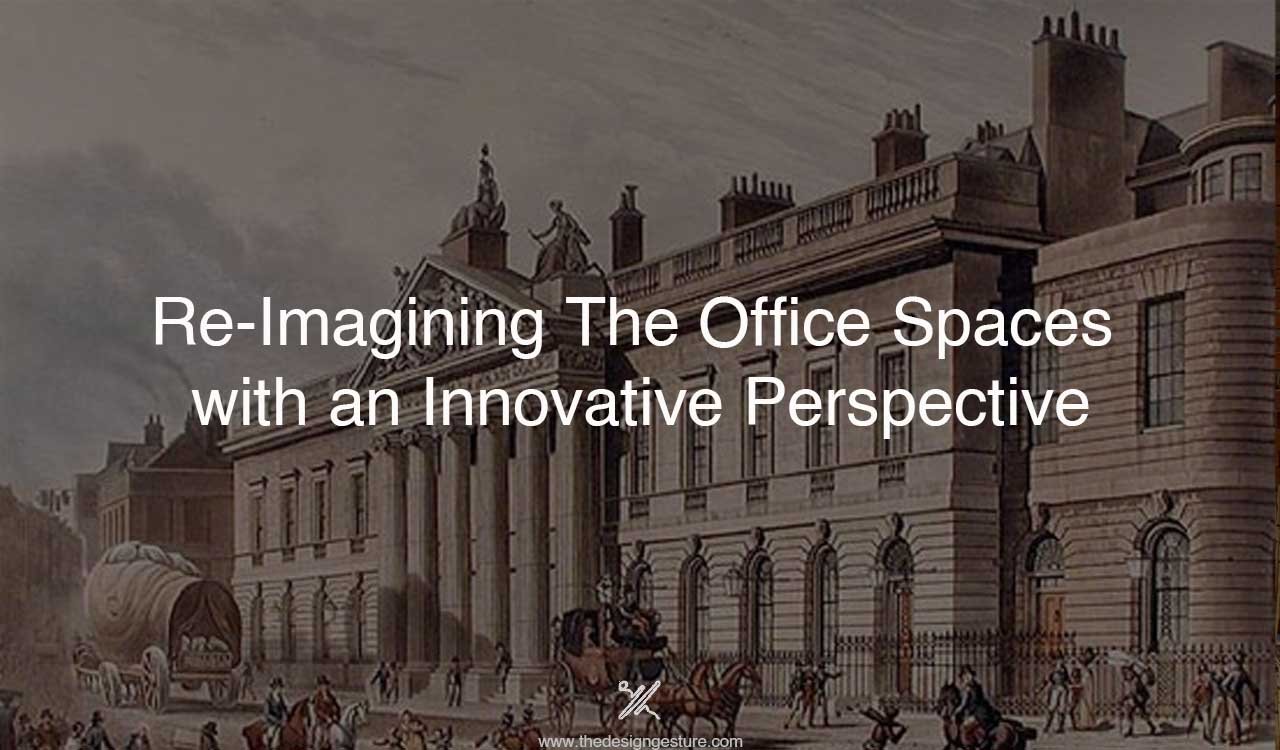
    Throughout history, office spaces existed in some manner, whether it may be in the form of physical form or Human form. The primary role of the office was to conduct some administration work. It is said that Rome is known as the primary place where the offices first emerged. But it was in the 18th century when the actual formation of architectural office building typology was developed. It was organizations such as the Royal Navy and East India Company were established to further Britain’s interest overseas and a central base of operation was needed, thus the establishment of the offices was done.

    In the past period, the term office and its nature were seen strictly as a formal, strict, mass production work type. Where the employer was treated as a laborer to some extent. But different periods such as industrialization, and the development of new materials and construction systems gave us some landmarks and iconic office buildings that were made from concrete, steel, and glass. 

    Eventually with the realization to care for the employers and the well-being of the employees is as important, many office plans were designed and executed from strict rigid plans to open floor plans to flexible plans and ultimately questioning the nature of office topology because of COVID-19 and sudden rise in the climate change made architects and designers think about the application of sustainability, technology and wellbeing in the office typology. 

    Evolution Of Office Design  

    1900: Taylorist Office 

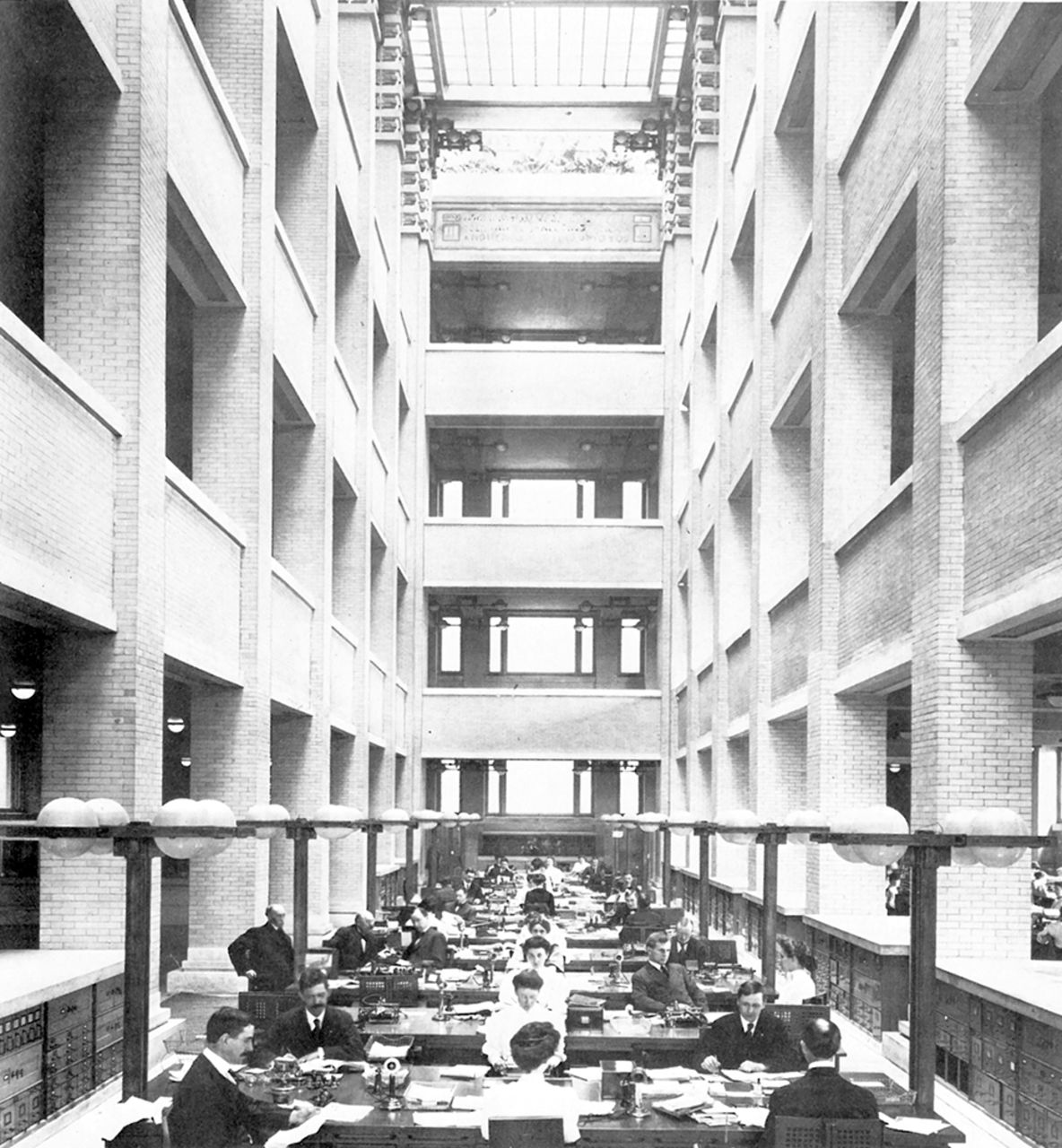
    The office plan included fitting up more desks so that more workers could be accommodated and management of the office is done. Frank Llyod Wright is credited for this office development. In this building, the air conditioning system was placed.  The Larkin Administrative building in this office was much like the factory production system which had the assembly-like nature which produced the products related Industrial revolution. 
    office space
    Photo by Insideinside from Larkin Administration Building 

    1910-1930: The Pre-War Social Democratic Office 

    After the office building like the taylorist the emergence of the concrete offices started. Architect Mies Van Der Rohe started designing these concrete offices and also developed the window design where the natural light could penetrate in. One of the notable examples could be Friedrichstrasse, where the idea was to separate the exterior skeleton from the internal planning, where the concept was of skin and bones. This was a visionary project where it boldly used glass and steel as a new architectural language. 

    The 1930s: Streamlined Office 

    This period was when more space-efficient designs were thought of. It was based on efficiency and speed rather than organization and manufacture. These streamlined offices were of European-style structure and were modern and rich, warm spaces for workers.  

    One example could be Frank Lloyd Wright’s Johnson Wax Building, which finished in 1939. The most notable element was a mushroom column which acted as the stormwater drains. These concrete pads which act as mushroom column are joined together by Pyrex glass tubing, which allows ample natural indirect light giving a creative environment. 

    The 1950s: Open-Plan Offices 

    In this period, the usage of glass, steel, and further advancements in construction was adapted, along with the usage of air -conditioning and fluorescent lighting was used. This typology led to a decrease in the natural light and more corporate culture started developing. 

    The 1950s: Burolandshaft 

    The word transfers into the meaning “ Office Landscape”. This was the period where the strict, rigid structure was eradicated and introduced to the office landscape, which consisted of free and open plans of furniture scattered in large, loosely,unstrucally divided spaces. And with this more flexible in nature, offices started to develop. This followed the structuralist office and the cubicle farm in 1980. Then came the virtual office topology. A notable example of this typology is the British Telecom Office in Stockley Park.

    The 2000s: The Casual Office 

    The concept of casual office was first seen in the implementation in the creative industries to make the production more creative and innovative. Offices like Apple, Microsoft, Tesla, Google, and Yahoo with more were seen applying casual office styles in which the spaces were more personalized and designed for individual departments, giving the employer freedom for more creative and critical thinking. While this type of planning was encouraged in 2010, activity-based working came into play, whereas the earlier typology was criticized for stating that an open plan created more distractions. 

    And with these, the pandemic hit globally where the definition of the office got shattered, and we were forced to rethink the office environmet.In this, social distancing and work from home methodology, many studies had shown that employers were able to generate more efficient work. 

    With these, Workplace 3.0 was introduced, where the focus was on wellbeing, sustainability, and technology.  

    Examples Illustrating New Office Typology

    Pasona Group, Tokyo Headquarters

    workplace
    Photo from Pasona Building, Tokyo Japan Nigel Dickinson 

    The human resource company office has used its office space to grow over 200  different species of fruits, vegetables, and rice which are then fed to the employee. The office space includes around 1000 square foot rice paddy, an okra field, a  tomato guest room, vegetable factory filled with hundreds of hydroponic lettuces. Fruit trees have been used to partition meeting rooms and bean sprouts prop up. The concept is of creating mixed work and farm space as companies. The designer as that “it is built around the philosophy of communicating concepts through function and materiality”.

    Trelleborg, Bengaluru 

    This workplace is the concept of reflection of New Age Office Interiors. The concept was of careful workspace layout and strategic use of design philosophy. The layout is also placed in such a way that private spaces, such as meeting rooms and public spaces, are juxtaposed with workstations and collaborative.

    Designing Of Office Building Through Concept Of Sustainability And Feng Shui

    Sustainability

    Generally, sustainable design has many facets such as waste management, recycling, less energy consumption, indoor environmental quality, transportation, and many more but five fundamental concepts sum up the whole larger concept of sustainability. They are – 

    Constructivism- An approach that uses cognitive psychology and social psychology that create space to increase interaction, knowledge, and skills with their surroundings.  

    Circular Design- It is now a widely known and discussed topic in almost every field. It approaches the idea of “cradle to Cradle” which in the new design paradigm is to reduce, recycle, and reuse.

    Energy Efficiency- This could be achieved through the site planning and managing of the materials, as well as the amount of artificial light or any other energy which is used, which should be reduced. 

    Natural and Built environment- The right amount of balance between the natural and built environment brings positivity and boosts creativity and there is a huge impact on the result and working environment of the employee working there.  

    Global thinking and buying locally As the name suggests global thinking and buying locally helps and promotes not only medium-scale manufacturers but also small-scale manufacturers and if the majority of people started implementing in this manner, the economy of the country would be uplifted. 

    Feng Shui Concept 

    It is a Chinese concept that dates back approximately three decades ago. The concept refers to the harmonious and balanced relationship between humans and nature. In this concept, there are five concepts as below- 

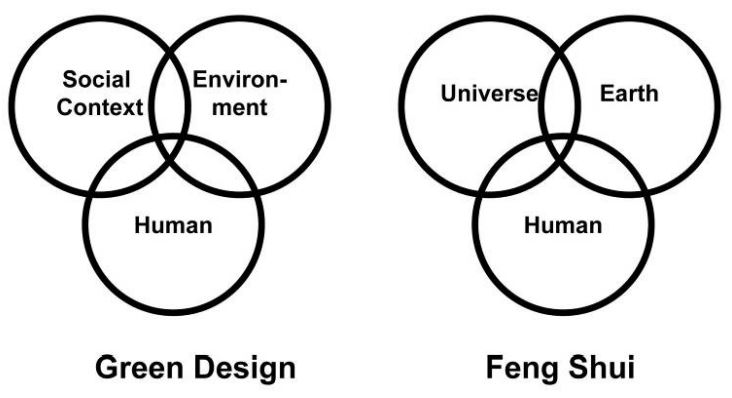
    Unity between Heaven and Human- Harmony between the universe, earth, and human energy, where the energy is identified in both tangible and non-tangible forms. 

    Five Elements Cycles- The five elements are fire, water, metal, wood, and earth, which have productive and destructive cycles. 

    sustainable design
    Photo from Sustainable Design  and Feng Shui: A Case study of an office building in Sydney 

    Yin and Yang Harmony- In this concept, it is believed that everything has positive and negative in it. Yin is the passive side which represents the darkness and cold, and Yang is the active side which is the balance and harmony within spaces.  

    Form School Model- This mainly teaches one about the environment in which they are surrounded and how carefully we can use those surroundings which less damage. 

    The balance between Interior and Exterior Spaces- Here it is mainly seen as the relationship between the outer form and inner form. The outer form is identified as the site location, topography, and shape of the site. An inner form is identified as building elevation, building elements, and landscape. Hence, it is necessary to create and maintain the balance between both of these aspects. 

    feng shui
    Photo from Sustainable Design  and Feng Shui: A Case study of an office building in Sydney 

    Relation between sustainable design and Feng Shui concept

    Both these concepts have similarities and differences in them. For instance, the concepts of constructivism are related to and similar to harmony and balance between the universe, earth, and human in the Feng Shui concept.

    Below is the diagram illustrating the same. 
    green design
    Photo from Sustainable Design  and Feng Shui: A Case study of an office building in Sydney 

    Apple Park as a case-  

    The apple park is the most suitable example which follows the concept of sustainable design and Feng Shui concept. 

    Located in Cupertino, California, it is spread around 175 acres with a 2.8 million square foot main building and 100% renewable energy. With largest naturally ventilated building ever. With facilities such as 17 MW on-site solar power, 9,000 drought resistance trees, and a 100,000 square foot fitness center. This new campus is carefully crafted with the details such as energy use, landscape, environment, and health for the employers to boost creativity.  
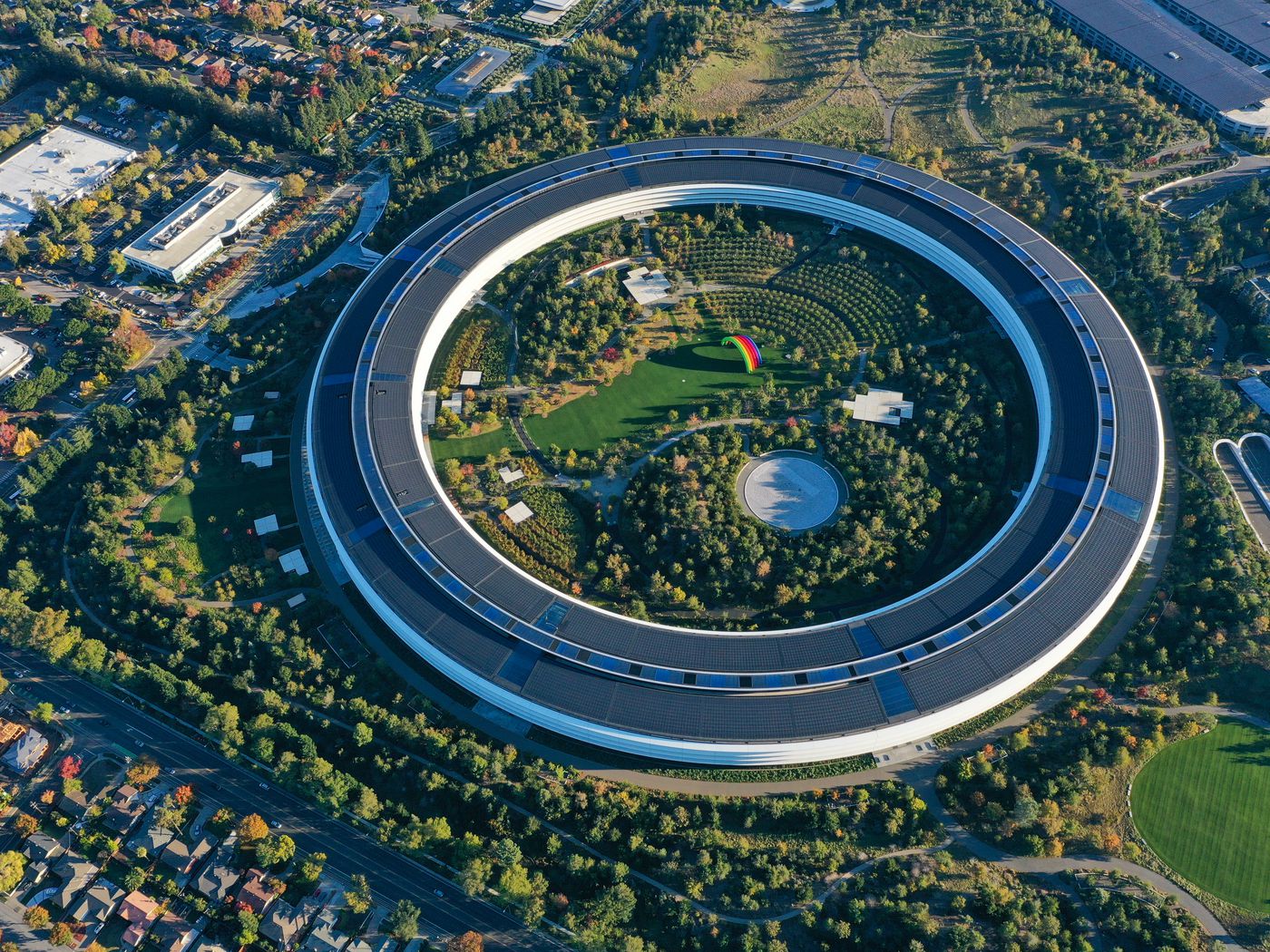
    apple park
    Photo from The Verge – Apple Park 

    Conclusion  

    The world is more aware than ever and has started taking the necessary steps to improve, reduce and prevent further damage. Office buildings are vital places to create, innovate, bond, improve, and evolve, and hence we as a designer must keep both the environmental and mental health of clients while designing such spaces. 

  • Importance of Good Office Design: Workplace Architecture in a Post-Pandemic World

    Importance of Good Office Design: Workplace Architecture in a Post-Pandemic World

    What comes to mind when we think of offices? Workplace, creative field, professional building, or maybe Monday blues. You think what you were made to feel at your respective 9 to 5 location. Our workplace is where we spend the most time awake and hustling so it must become much more than four walls with a desk and chair and that’s what the world was trying to do, come out with innovative and ergonomically equipped spaces that represent the work done in that space. Office Architecture was evolving rapidly until it wasn’t.

    The world stopped one day and so did the innovation of new emerging Office Architecture. The pandemic forced people to work remotely from a familiarly unfamiliar environment as working from home was baffling and uncomfortable for many.

    It’s been more than a year since the lockdown was imposed and the current situation is definitely better where people are getting ready to move their work back into offices but what does a workplace look like in a world with a new normal?

    Office design
    Photo by Archdaily

    Human Element in Workplace Design

    It is important to understand that an office might be owned by a single person but functions only when a group of people come together and make things happen. An office design looks more appealing when it prioritizes the needs of its users ultimately resulting in better performance. Today most leaders ask their architects to make their office layout more interactive despite the hierarchy and also maintain the much-needed privacy of their employees.

    Human Element in Workplace Design

    Along with major spaces many offices incorporate interactive pods and booths in their office interior design and many recreational spaces for convenience and leisure. Office Architecture has been constantly evolving to make people want to go to the office in the morning instead of dreading Mondays.

    Architecture and Design of an Ideal Workplace

    A typical office design with closed cubicles and desks where employees have a safe and comfortable environment might not necessarily inspire or motivate them to come in and work five days a week. Architect Charles First in his book “A place to be happy: linking Architecture and Positive Psychology” proposes that an ideal workplace must be designed to address what the company needs and stands for, but also remember to empower its employees and cater to their needs.

    When designing an office, the architect must take into consideration that this building shall represent the company believes and its work, must include spaces for leisure of their employees, interactive booths and meeting booths for the employees and clients as well but above all these the spaces provided for each individual must make them feel respected. An office building should be designed to maintain hierarchical spaces but designed to feel inclusive at that.

    Importance of Good Architecture and Design in a Workplace

    A good office design is not just about looks and aesthetics but it ensures ergonomics and creating an environment for the employees to ensure the highest productivity rate with utmost client satisfaction. The second most important thing about office architecture is aesthetics. With social media ruling the world it has naturally become normal to post pictures about office interior design and office layout in order to attract talent who needs a good-looking and highly functional building. There are many other reasons as to why an office must have a good design, let’s take a look at them below.

    Office workers spend a considerable time of their day in the workplace

    People spend the majority of their time at their respective offices. Hence the design of these buildings must fulfill their requirements and provide services that the employees themselves can’t think of for their well-being and enhanced performance. A good office design not only motivates people but also makes them feel comfortable to sit and work for a prolonged period.

    There are reports that state people working in dingy and noisy spaces lead a more stressful life than those working in innovative and modern-day offices. The staff works extra hard and round-the-clock, and so they deserve a place with meaningful designs. A well-designed office layout is not just about aesthetics instead the design must incorporate elements that enhance the working experience and workplace environment such as natural light, quality acoustics, purified air, and a connection with nature. In conclusion, offices should be both pleasant and healthy to be in.

    Workplace Design is the representation of the organisation’s values

    The appearance, location, and every piece of furniture speak volumes about an organization’s values, brand, belief system, and business culture. An office design can be contemporary or industrial but should support a hassle-free environment for employees to work. In order to create a lasting impression on their clients as well as staff, Office Architecture is of utmost importance in today’s world.

    Purpose driven element in office design

    There is a purpose behind every decision an architect makes when planning an office layout. Even a free-standing wall is there for a reason. There are companies with similar services or branding but all have their individual approach leading to no two companies having a similar office interior design.

    An office design generally follows the concept of form follows function. A business that handles sensitive and confidential data will most likely be seen with several office partition walls, whereas one that requires teamwork and collaboration will provide employees with more gathering spaces. Office designs are driven by the nature of work a business does. Naturally, business owners focus on their requirements first and aesthetics later.

    Promising to fulfil client demands

    The primary responsibility of any organization is to meet client expectations and in order to effectively and efficiently perform the given tasks and finish the duties on time, an employee needs an inspiring and healthy work environment with a good office design.

    Many organizations today opt for an open plan office design which helps clients feel at ease and see the vision of a particular business and how they work. Open plan office also allows more community and interactive spaces that feel inclusive.

    Returning to the office in a post-pandemic world

    After a long fight against the deadly pandemic, people are slowly preparing to transition back into offices but we have to step into a new normal this time with a copious amount of rules and precautionary measures. These recent events have introduced many opportunities for designers and architects as organizations need a change in space and new office interior design before resuming office work.

    Home is not an Office

    The pandemic made a great shift in the functioning of offices as working from home was more of a necessity than a privilege. People had to go through some uncomfortable changes and a whirlwind of experiments as working from home came with more cons than pros.

    Even though waking up five minutes before logging into work gave people more time to relax, it also made them juggle between house chores and office presentations. With demands from family members never coming to an end, entertaining clients felt like a nightmare. And let’s not even get into the acoustics at home where we were told to work.

    Some had the privilege of home office rooms but most people suffered to get a decent network connection for their zoom meetings. Sooner or later people realized the importance of having a space to work and a different one to relax.

    Social Distancing at Workplace

    Social Distancing at Workplace
    Photo by Yanko Design

    The term social distancing has taken over our lives and how! Considering safety as the most important factor for every task is everyone’s priority and no one knows how long we have to do this for. With people returning back to offices, organizations and architects have to keep certain things in mind while redesigning office layouts.

    Workplaces will have to become more safety conscious and plan contactless alternatives for every minute thing that might risk the health and safety of their employees. Some changes to bring in the architecture and design of the space are as follows

    • Swapping doors for automatic ones so no one has to touch the handle in order to enter a room or get out of one
    • Reducing the use of communal spaces like coffee machine rooms by either employing a barista for in house service or arranging for delivery.
    • Lifts can be operated by a person dedicated to that task to avoid touching the buttons
    • Changing up the common working space by increasing the distance between two desks or simply raising the partitions and making isolating working space

    Future of Office Design

    With people moving on with their lives in a world that is changing at a rapid speed it is only normal for the architecture around the world to change and keep up with the speed. We can’t go back into the business and pick up where we left off in March 2020, it’s time for a fresh new start and reimagines the future of office architecture.

    Emerging trends in Workplace Architecture

    When facing the future of work and considering how you want to reimagine your office design post-Covid, consider the following trends in order to increase engagement through a positive workplace experience.

    • Sustainable Design

    Along with the pandemic, humankind saw the worst of natural disasters in the past year clearly indicating us to shift into a sustainable and climate-friendly lifestyle.

    Sustainability in office design is seen through the significant use of natural materials and incorporating green spaces in the office. Including eco-friendly furnishings and implementing renewable energy are some things that can make sustainable workplaces. The trend of sustainability goes beyond the realm of architecture and design.

    Sustainable Design
    • Open Plan Office Concept with Flexible Spaces

    Agile working spaces or as we know flexible workspaces have been existing for quite some time but have gained relevance in this post-pandemic era. Agile working allows employees to work from a space or zone that has a specific function like quiet zones or brainstorming zones which have proven to increase productivity and efficiency in tasks.

    In 2021 having an open plan office concept is no more an option but a choice designers are incorporating in office design. This open-plan office provides employees to work from different spaces based on the requirements of the task which gives more control over the work experience and having worked remotely for almost a year now, this concept will help the staff to adjust and work in a comfortable environment.

    Secondly, in a post-pandemic world, it is advised to have a lesser staff working together as a safety measure so having task-focused workspaces and modular furniture will accommodate the fluctuating headcount.

    One might think having assigned seating will help keep office spaces sanitary and reduce the risk of spreading the virus but when desk space is used by a single employee they tend to not clean it every day and reports suggest that assigned seats have desks proven to be dirtier than toilets. Whereas not assigning desks to individuals and having an open plan office and assigning them to task zones will help maintain cleanliness at the end of every working day.

    • Creating a home like atmosphere in the Office

    Workplace changed from working at offices to working from home abruptly one night since this was the only feasible solution the world deemed fit to keep businesses running without compromising the health of their employees. Efficiency was seen lacking and communication was difficult but employees definitely felt relaxed and at ease working from home as it was a more comfortable environment.

    Businesses are getting back to offices but this time choosing to work from a home-like environment instead of the traditional office layout. This will help employees to accommodate into the workplace while being comfortable at home. 2020 made us take our offices into our homes but 2021 surely is going to be the opposite as we will be experiencing a home-like environment at our workplace.

    • Technically Equipped Smart Offices

    The biggest trend in 2021 in-office architecture will include hands-free technology to limit surface touching and reducing the chance of spreading the virus. Office design will see the inclusion of efficient voice activation tools, digital check-in solutions, and many more smart changes. Using technology to bring your employees together while they work apart is the main focus.

    • Human Centric Design

    Organizations have to prioritize human well-being if they want efficiency in work from their employees. This pandemic definitely taught business owners the importance of their staff who work irrespective of time and the work environment in order to make ends meet and now it’s time for employers to provide an office design to their staff where they can work comfortably.

    Employees want more from their work environments, and rightly so. 2021 will see wellbeing-focused office design elements such as biophilia, cleaner air ventilation, and greater areas of natural light. 2021 will be the year we introduce the benefits and comforts of home in our workplace.

    • Connectivity and Community spaces for leisure
    Connectivity and Community spaces for leisure
    Photo by my décor trends

    Providing lounge space for fun, games, and leisure is not a new trend and was seen in offices like Google and Facebook since a long time ago. But in 2021 it is advised to incorporate recreational spaces in office architecture for employees to improve their mental and physical condition staying at offices. It is well known to us that humans were never made to sit in front of laptops for hours yet they adapted and evolved to do so in order to survive but at the cost of their health. In order to change that organizations must include spaces for the betterment of their staff.

    Providing leisure zones in office design will not only improve communication among staff but this has been one of the most eye-catching trends that attract the most views on social media where people post about their office lives and workplaces.