
Tag: office lighting

  • Ultimate Office Lighting Guide You Need for Your Workplace

    Ultimate Office Lighting Guide You Need for Your Workplace

    Office lighting is more than just choosing light fixture types. Most of the office staff spend almost 8-10 hours of their day in the office. Office lighting can make or break an employee’s zest for working. So having a pleasant, habitual, and comfortable work environment for them is very important.

    Here is an office lighting design guide to help you in your office interior in the most efficient way.

    Ergonomics of lighting
    Ergonomics of Office lighting
    Medical vector created by macrovector – www.freepik.com

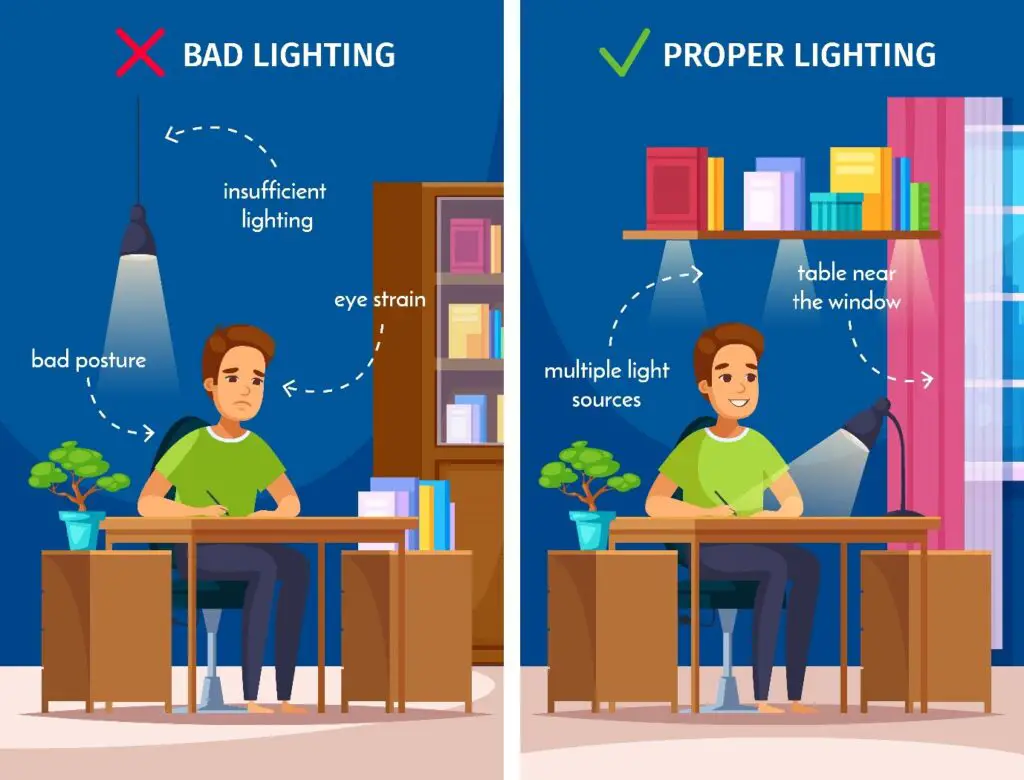
    Ergonomics is concerned with designing and arranging lights in such a way that light and people interact with each other in the most efficient and safe way.

    Ergonomics is a very important part of every architectural lighting office design. Ensuring sufficient lighting around your workspace is the most important part of good ergonomic lighting. Inadequate lighting forces your eyes to work overtime to make sense of the task, creating eyestrain and headaches.

    Impact of Office Lighting Design on productivity and quality of work

    It’s proved that more exposure to natural light helps employees to be more productive, creative, and healthy. Workers deprived of natural light are more tired, have headaches due to eye-straining, and are less active.

    Adequate lighting meaning is well-designed office lighting that can help in keeping the workers healthy, productive, and motivated at the same time.

    Suitable Light for an office

    The lighting in any office should provide a wide spread of illuminance of light. The layout should be planned in such a way that there are a smaller number of shadows cast in any of the spaces.

    The most ideal choice for office lighting is LED.

    Benefits of LED Lighting

    1. LED can be dimmed as per the daylight and eyestrain.
    2. It is an energy efficient alternative because of its longer shelf life.
    3. LEDs don’t use energy in the form of infrared radiation.
    4. They can last for up to 50,000 hours.
    5. LED panels help to eliminate glare, which can improve comfort and workability.

    Use Maximum Natural Light

    Natural Light is the best source of lighting for any space. In an ideal situation, natural light should act as primary lighting and all the artificial lighting should be secondary. The work environment feels welcoming and brighter in the daylight.

    Positioning the workstations or cubicles such that they face north or south can also help. By this, you can avoid direct sunlight as it can create glares. 

    Using more natural lighting sources is also very cost-efficient as we save on a lot of energy. With new technologies like daylight harvesting systems, we can now have automated dimmable lights in accordance with the natural light present.

    Use Different Light Sources

    Office lighting is not just limited to overhead or desk lighting. Lighting is also used for visual appeal, particularly in corporate offices where companies would like people who visit to get a good first impression, much of which can be achieved by good lighting.

    Indirect lighting can help in subtly illuminating the workspace and relieve eyestrain.

    Non-reflective background surfaces, like a matte finish or muted colour furniture, can positively influence a work environment.

    Colour temperature for an office

    There is no set thumb rule for light colours of any office.

    Having said that, cooler bluish and white lights are ideal for spaces where more concentration on work is required.

    Warm, yellowish-toned lights work well in spaces where people come for relaxing.

    Save Energy

    The best way to save energy in an office is by using LEDs and setting up motion-censored lights.

    Dimmers are also an efficient way of energy saving.

    Install Lighting Control Systems

    1. This system helps in utilizing lighting sources more optimally, saving power and thus saving money.
    2. With this technology, lights fixed in the office will be included in that one system and will make the entire process of monitoring and using the lighting much simpler.
    3. This system makes the most out of natural daylight by regulating the lighting in different areas of your office.
    4. Areas that aren’t in constant use, such as corridors, toilets and meeting rooms, can benefit from this as the system will ensure these areas are only lit when they are in use.
    5. Dimmable switches can be installed to control light levels in meeting rooms where projectors are used.

    Office Lighting Design Guide for Each Room

    Ergonomics is involved in not just the lighting design of a workstation but the whole office that is, from the reception to the communal spaces. Here is a guide for you to help you have a clear idea of the requirements of each room in an office.

    Entrance and Reception

    Entrance and Reception
    Photo by Smartworks Coworking on Unsplash

    First impressions matter a lot so the entrance lighting has to be impactful. Lights in this area can give a dramatic and soothing effect. So, if you think that they are not in good working condition; consider stage light repair and services

    Use downlight for accent lighting and glare control.

    Light fixture types like pendant lights can be used in a group of 2-3 lights to enhance the ambiance.

    Corridor and Stairway

    These are challenging areas to light as most of the time they don’t have any natural light. These are also low-traffic areas so you have to find the balance between over lighting and making the space so dark that people feel unsafe when in that area.

    Ceiling or wall-mounted lights and recessed lights are the perfect fit for stairways and corridor spaces.

    Use of strip lighting on the floor or along the walls to serve as a guide for people passing through the office.

    Office Lighting in Open Plan Workspace
    Office Lighting in Open Plan Workspace
    Photo by Arlington Research on Unsplash

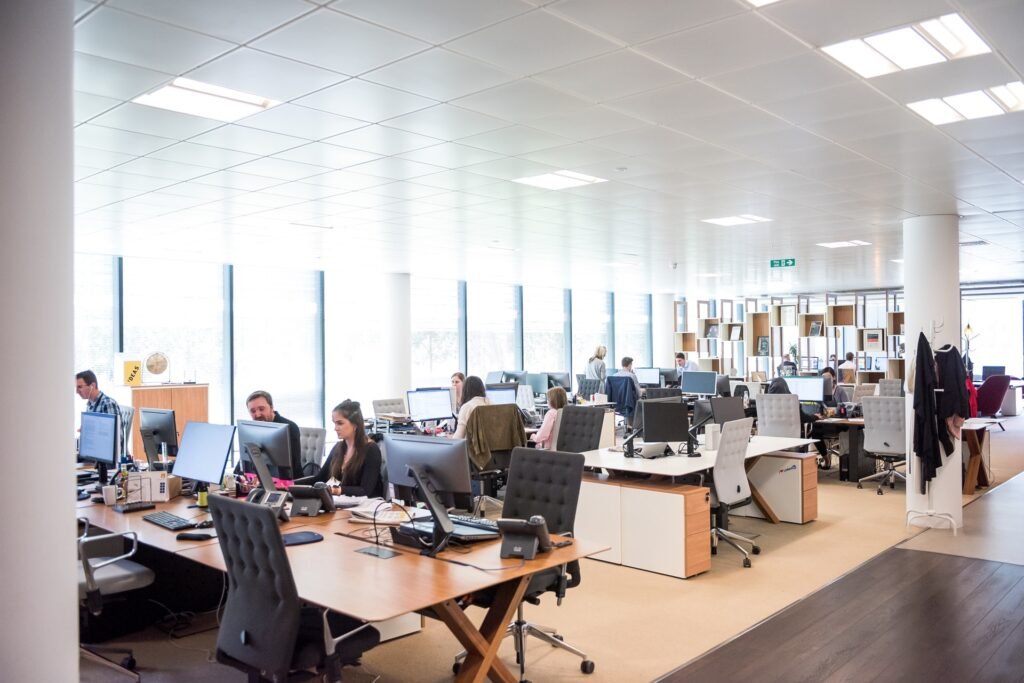
    It requires high illuminance of light to maintain a workable, positive atmosphere. Daylight harvesting is the most efficient solution for an open floor plan.

    Recessed ceiling-mounted lights help to light up the workspace homogeneously.

    Add spotlights or downlights to avoid any dark spots.

    Ergonomic is an integral parameter for any office lighting and it should not be neglected under any circumstances.

    Desk

    Desk
    Vector Vectors by Vecteezy

    Even if you have ceiling lights for the workplace, having a fully adjustable task light on the desk can never go wrong. Desk lamps at individual workstations provide both direct, task-oriented, and indirect background lighting which helps reduce glare.

    Ensure that the task lights are placed on the opposite side of the writing hand to avoid casting shadows.

    Office Desks and Task Lighting

    When considering office interior lighting design, don’t overlook the importance of lighting at individual workstations, especially office furniture Sydney. Task lighting is essential to provide focused illumination for tasks such as reading, writing, or using the computer. Desk lamps with adjustable arms and brightness settings can be placed strategically to minimize shadows and reduce eye strain. This localized lighting not only enhances productivity but also allows employees to personalize their lighting preferences, contributing to a comfortable and efficient workspace. Proper task lighting on office desks is a key component of a well-rounded lighting strategy, contributing to the overall success of your office lighting design.

    Executive Office

    Executive Office
    Photo by Campaign Creators on Unsplash

    The executive office has to be a very elegant space. It requires high illumination.

    Accent lights can focus on special areas and artistic elements.

    Install smart light control.

    Use suspended luminaire and track lights for accent lighting.

    Meeting Room
    Meeting Room
    Photo by Christina @ wocintechchat.com on Unsplash

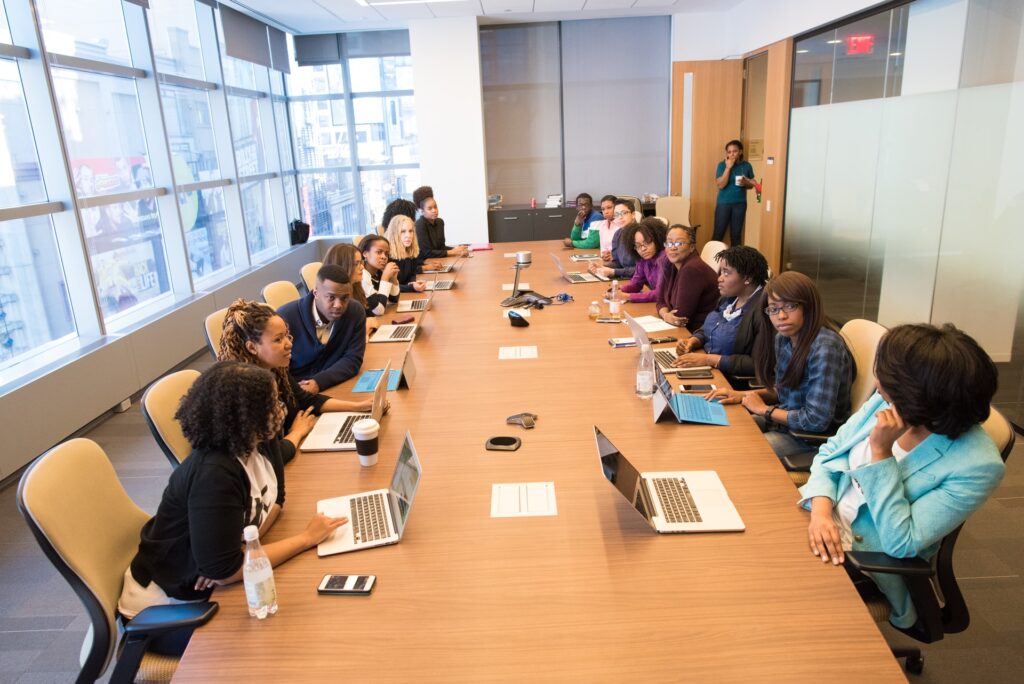
    Meeting rooms are spaces where presentations, important work-related discussions, and workshops take place. The lighting here should ideally combine warm and cool light to balance the atmosphere of the space.

    Accent light and ambient light, when used in collaboration give an aesthetic effect to the meeting room.

    Kitchen Area

    The light above the cooking counter should be sharp and shadow-free. Whereas the serving island can have warm lighting.

    Communal Space

    adequate lighting meaning
    Photo by Yann maignan on Unsplash

    The atmosphere in this area has to be very relaxed.

    Dimmable lights and tabletop lights work best in such spaces.

    Along with this, make sure that the communal space is in an area with a good amount of natural light as it helps in reducing stress.

    These guys are some of the best in the custom design LED industry which you can check.

    In the realm of office lighting guide, the options are plentiful, but the right choice depends on various factors – from the layout of the space to the desired ambience. Throughout this guide, we’ve explored a range of lighting solutions, with a special focus on the versatility, mood-enhancing capabilities, and sustainability of high bay LED lights. Remember, the ideal office lighting design seamlessly combines functionality with aesthetics, creating an environment where productivity and well-being thrive side by side.

    FAQs

    Q. What is the importance of office lighting design?
    A. Office design lighting is crucial as it directly impacts employee’s productivity, health, and well-being. A well office light design scheme can create a pleasant and comfortable work environment, enhancing employee’s zest for working.

    Q. How does office interior lighting design affect ergonomics?
    A. Ergonomics in office interior lighting design ensures that light and people interact efficiently and safely. Sufficient lighting around workspaces is essential to prevent eyestrain and headaches caused by inadequate lighting.

    Q. How does office lighting design guide impact productivity and quality of work?
    A. Studies have shown that exposure to natural light can increase employees’ productivity, creativity, and overall health. Well-designed office lighting design guide can help keep workers healthy, productive, and motivated.

    Q. What is the ideal source of architectural office LED lighting?
    A. Architectural office LED lighting is considered the most ideal choice for office lighting. It is energy-efficient, can be dimmed according to daylight, and helps eliminate glare, improving comfort and workability.

    Q. How can natural light be maximized in an office setting?
    A. Natural light should be the primary source of lighting in an office, with artificial lighting serving as secondary. Positioning workstations to face north or south can help avoid direct sunlight and glares.

    Q. How can different light sources be used in office lighting design?
    A. Office lighting is not limited to overhead or desk lighting. Indirect lighting can help illuminate workspaces subtly and relieve eyestrain. Additionally, non-reflective background surfaces can positively influence the work environment.

    Q. What is the recommended color temperature for office lighting?
    A. Cooler bluish and white lights are ideal for spaces where concentration is required, while warm, yellowish-toned lights work well in spaces where people come to relax.

    Q. How can energy be saved in office lighting?
    A. Using LEDs, setting up motion-sensored lights, and installing dimmers are efficient ways to save energy in an office setting.

    Q. What are the benefits of installing lighting control systems in an office?
    A. Lighting control systems help utilize lighting sources more optimally, saving power and money. They can also make the most out of natural daylight by regulating lighting in different areas of the office.

    Q. What is the importance of office lighting design in different rooms?
    A. Office lighting layout should consider the requirements of each room, from the entrance and reception to communal spaces. Adequate lighting in the workplace contributes to a comfortable and efficient workspace.

  • Re-Imagining The Office Spaces with an Innovative Perspective

    Re-Imagining The Office Spaces with an Innovative Perspective

    Introduction   

    The etymology of the word office is derived from Opus- work and Facere- do, which is officium, a performance of a task. Hence office is used in Middle English. 

    Throughout history, office spaces existed in some manner, whether it may be in the form of physical form or Human form. The primary role of the office was to conduct some administration work. It is said that Rome is known as the primary place where the offices first emerged. But it was in the 18th century when the actual formation of architectural office building typology was developed. It was organizations such as the Royal Navy and East India Company were established to further Britain’s interest overseas and a central base of operation was needed, thus the establishment of the offices was done.

    In the past period, the term office and its nature were seen strictly as a formal, strict, mass production work type. Where the employer was treated as a laborer to some extent. But different periods such as industrialization, and the development of new materials and construction systems gave us some landmarks and iconic office buildings that were made from concrete, steel, and glass. 

    Eventually with the realization to care for the employers and the well-being of the employees is as important, many office plans were designed and executed from strict rigid plans to open floor plans to flexible plans and ultimately questioning the nature of office topology because of COVID-19 and sudden rise in the climate change made architects and designers think about the application of sustainability, technology and wellbeing in the office typology. 

    Evolution Of Office Design  

    1900: Taylorist Office 

    The office plan included fitting up more desks so that more workers could be accommodated and management of the office is done. Frank Llyod Wright is credited for this office development. In this building, the air conditioning system was placed.  The Larkin Administrative building in this office was much like the factory production system which had the assembly-like nature which produced the products related Industrial revolution. 

    office space
    Photo by Insideinside from Larkin Administration Building 

    1910-1930: The Pre-War Social Democratic Office 

    After the office building like the taylorist the emergence of the concrete offices started. Architect Mies Van Der Rohe started designing these concrete offices and also developed the window design where the natural light could penetrate in. One of the notable examples could be Friedrichstrasse, where the idea was to separate the exterior skeleton from the internal planning, where the concept was of skin and bones. This was a visionary project where it boldly used glass and steel as a new architectural language. 

    The 1930s: Streamlined Office 

    This period was when more space-efficient designs were thought of. It was based on efficiency and speed rather than organization and manufacture. These streamlined offices were of European-style structure and were modern and rich, warm spaces for workers.  

    One example could be Frank Lloyd Wright’s Johnson Wax Building, which finished in 1939. The most notable element was a mushroom column which acted as the stormwater drains. These concrete pads which act as mushroom column are joined together by Pyrex glass tubing, which allows ample natural indirect light giving a creative environment. 

    The 1950s: Open-Plan Offices 

    In this period, the usage of glass, steel, and further advancements in construction was adapted, along with the usage of air -conditioning and fluorescent lighting was used. This typology led to a decrease in the natural light and more corporate culture started developing. 

    The 1950s: Burolandshaft 

    The word transfers into the meaning “ Office Landscape”. This was the period where the strict, rigid structure was eradicated and introduced to the office landscape, which consisted of free and open plans of furniture scattered in large, loosely,unstrucally divided spaces. And with this more flexible in nature, offices started to develop. This followed the structuralist office and the cubicle farm in 1980. Then came the virtual office topology. A notable example of this typology is the British Telecom Office in Stockley Park.

    The 2000s: The Casual Office 

    The concept of casual office was first seen in the implementation in the creative industries to make the production more creative and innovative. Offices like Apple, Microsoft, Tesla, Google, and Yahoo with more were seen applying casual office styles in which the spaces were more personalized and designed for individual departments, giving the employer freedom for more creative and critical thinking. While this type of planning was encouraged in 2010, activity-based working came into play, whereas the earlier typology was criticized for stating that an open plan created more distractions. 

    And with these, the pandemic hit globally where the definition of the office got shattered, and we were forced to rethink the office environmet.In this, social distancing and work from home methodology, many studies had shown that employers were able to generate more efficient work. 

    With these, Workplace 3.0 was introduced, where the focus was on wellbeing, sustainability, and technology.  

    Examples Illustrating New Office Typology

    Pasona Group, Tokyo Headquarters

    workplace
    Photo from Pasona Building, Tokyo Japan Nigel Dickinson 

    The human resource company office has used its office space to grow over 200  different species of fruits, vegetables, and rice which are then fed to the employee. The office space includes around 1000 square foot rice paddy, an okra field, a  tomato guest room, vegetable factory filled with hundreds of hydroponic lettuces. Fruit trees have been used to partition meeting rooms and bean sprouts prop up. The concept is of creating mixed work and farm space as companies. The designer as that “it is built around the philosophy of communicating concepts through function and materiality”.

    Trelleborg, Bengaluru 

    This workplace is the concept of reflection of New Age Office Interiors. The concept was of careful workspace layout and strategic use of design philosophy. The layout is also placed in such a way that private spaces, such as meeting rooms and public spaces, are juxtaposed with workstations and collaborative.

    Designing Of Office Building Through Concept Of Sustainability And Feng Shui

    Sustainability

    Generally, sustainable design has many facets such as waste management, recycling, less energy consumption, indoor environmental quality, transportation, and many more but five fundamental concepts sum up the whole larger concept of sustainability. They are – 

    Constructivism- An approach that uses cognitive psychology and social psychology that create space to increase interaction, knowledge, and skills with their surroundings.  

    Circular Design- It is now a widely known and discussed topic in almost every field. It approaches the idea of “cradle to Cradle” which in the new design paradigm is to reduce, recycle, and reuse.

    Energy Efficiency- This could be achieved through the site planning and managing of the materials, as well as the amount of artificial light or any other energy which is used, which should be reduced. 

    Natural and Built environment- The right amount of balance between the natural and built environment brings positivity and boosts creativity and there is a huge impact on the result and working environment of the employee working there.  

    Global thinking and buying locally As the name suggests global thinking and buying locally helps and promotes not only medium-scale manufacturers but also small-scale manufacturers and if the majority of people started implementing in this manner, the economy of the country would be uplifted. 

    Feng Shui Concept 

    It is a Chinese concept that dates back approximately three decades ago. The concept refers to the harmonious and balanced relationship between humans and nature. In this concept, there are five concepts as below- 

    Unity between Heaven and Human- Harmony between the universe, earth, and human energy, where the energy is identified in both tangible and non-tangible forms. 

    Five Elements Cycles- The five elements are fire, water, metal, wood, and earth, which have productive and destructive cycles. 

    sustainable design
    Photo from Sustainable Design  and Feng Shui: A Case study of an office building in Sydney 

    Yin and Yang Harmony- In this concept, it is believed that everything has positive and negative in it. Yin is the passive side which represents the darkness and cold, and Yang is the active side which is the balance and harmony within spaces.  

    Form School Model- This mainly teaches one about the environment in which they are surrounded and how carefully we can use those surroundings which less damage. 

    The balance between Interior and Exterior Spaces- Here it is mainly seen as the relationship between the outer form and inner form. The outer form is identified as the site location, topography, and shape of the site. An inner form is identified as building elevation, building elements, and landscape. Hence, it is necessary to create and maintain the balance between both of these aspects. 

    feng shui
    Photo from Sustainable Design  and Feng Shui: A Case study of an office building in Sydney 

    Relation between sustainable design and Feng Shui concept

    Both these concepts have similarities and differences in them. For instance, the concepts of constructivism are related to and similar to harmony and balance between the universe, earth, and human in the Feng Shui concept.

    Below is the diagram illustrating the same. 

    green design
    Photo from Sustainable Design  and Feng Shui: A Case study of an office building in Sydney 

    Apple Park as a case-  

    The apple park is the most suitable example which follows the concept of sustainable design and Feng Shui concept. 

    Located in Cupertino, California, it is spread around 175 acres with a 2.8 million square foot main building and 100% renewable energy. With largest naturally ventilated building ever. With facilities such as 17 MW on-site solar power, 9,000 drought resistance trees, and a 100,000 square foot fitness center. This new campus is carefully crafted with the details such as energy use, landscape, environment, and health for the employers to boost creativity.  

    apple park
    Photo from The Verge – Apple Park 

    Conclusion  

    The world is more aware than ever and has started taking the necessary steps to improve, reduce and prevent further damage. Office buildings are vital places to create, innovate, bond, improve, and evolve, and hence we as a designer must keep both the environmental and mental health of clients while designing such spaces.