
Tag: post pandemic architecture

  • Biophilic Design: Why is Biophilia Important in Post Pandemic Architecture?

    Biophilic Design: Why is Biophilia Important in Post Pandemic Architecture?

    Introduction

    As we progress in this urbanised world of globalisation, the connection to nature is gradually diminishing. Human beings are being genetically mutated in order to adjust to the new urban world of concrete. The hustle and bustle of the city leaves us no time to miss the green pastures of nature. This morphogenesis of the human kind has its negative impact not only in the physical presence but also in the mental capacity. Biophilic design incorporates nature in design.

    It is a proven fact that a human being feels the calm and quiet of a starry night, very soothing and peaceful. No person can deny that a day out in the park or a walk in the fresh air has a relaxed effect. Same way there are many such natural phenomena which, by default, make a very happy physiological impact on a person.
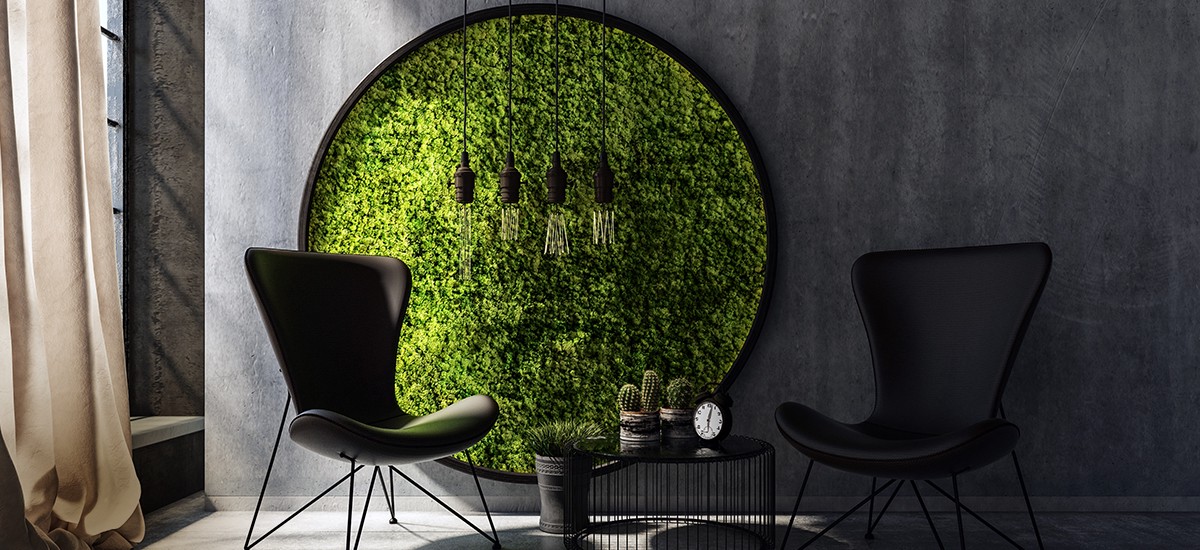
    biophilic design
    Featuring: Post Covid Design Factors

    The stress that is added to a person’s mind due to work has a direct impact on the family or health of the individual. In earlier days , before the era of urbanisation and skyscrapers, humans lived a life in tune with nature. A man would start his day as early as the sun rises and rest as soon as the sun sets.

    Family dinners would be huge gatherings, animals and livestock lived in proximity, farmlands were physically mowed and sowed. Unlike now living in the city schedule has a series of unwanted stress from the fact of commuting to an hour away for work, in trains, cars etc and then being holed up in an office which is completely shut as tight as a box and finally return travelling the same distance to a home again so small that a person can barely stretch. Here, the point of Biophilia is the amalgamation of nature into the dwelling in a very subtle way, not overdoing it nor urbanising it.

    As designers, we should actively take part in the clients’ needs and try to give them options of feeling connected to Mother Nature even as they sit in their own dwellings, be it an office space, or maybe their own home.

    What is a Biophilia?

    Biophilia is an accurate word discovered by the famous biologist E. O Wilson. He describes Biophilia as an innate and genetical affinity of human beings to the natural world.
    Biophilic Design: Why is Biophilia Important in Post Pandemic Architecture? As we progress in this urbanised world of globalisation, the connection to nature is gradually diminishing. Human beings are being genetically mutated in order to adjust to the new urban world of concrete. The hustle and bustle of the city leaves us no time to miss the green pastures of nature. This morphogenesis of the human kind has its negative impact not only in the physical presence but also in the mental capacity. Biophilic design incorporates nature in design.

    E.O Wilson explains how humanity has reduced the interaction with nature to almost nil. He says that humans are not designed to be locked up in a concrete box. It clearly reduces productivity and the index of satisfaction.

    He adds by saying that we still don’t know why staring at a burning fireplace for a few silent minutes gives us solace. That is because humans have to be connected to the naturally occurring phenomenons of life. Until and unless we accept that and start making a conscious effort to make amends, humankind is going to be in trouble.

    Biophilic designs can be incorporated in any of the design functions which can range from

    • Office
    • Hospitals/ Rehabs
    • Hotels
    • Restaurants/Bars
    • Academic institutions/Special Education Centres 
    • Retail Showrooms /Mall
    • Home

    Biophilia is a proven science of human affinity to the natural world.

    Office

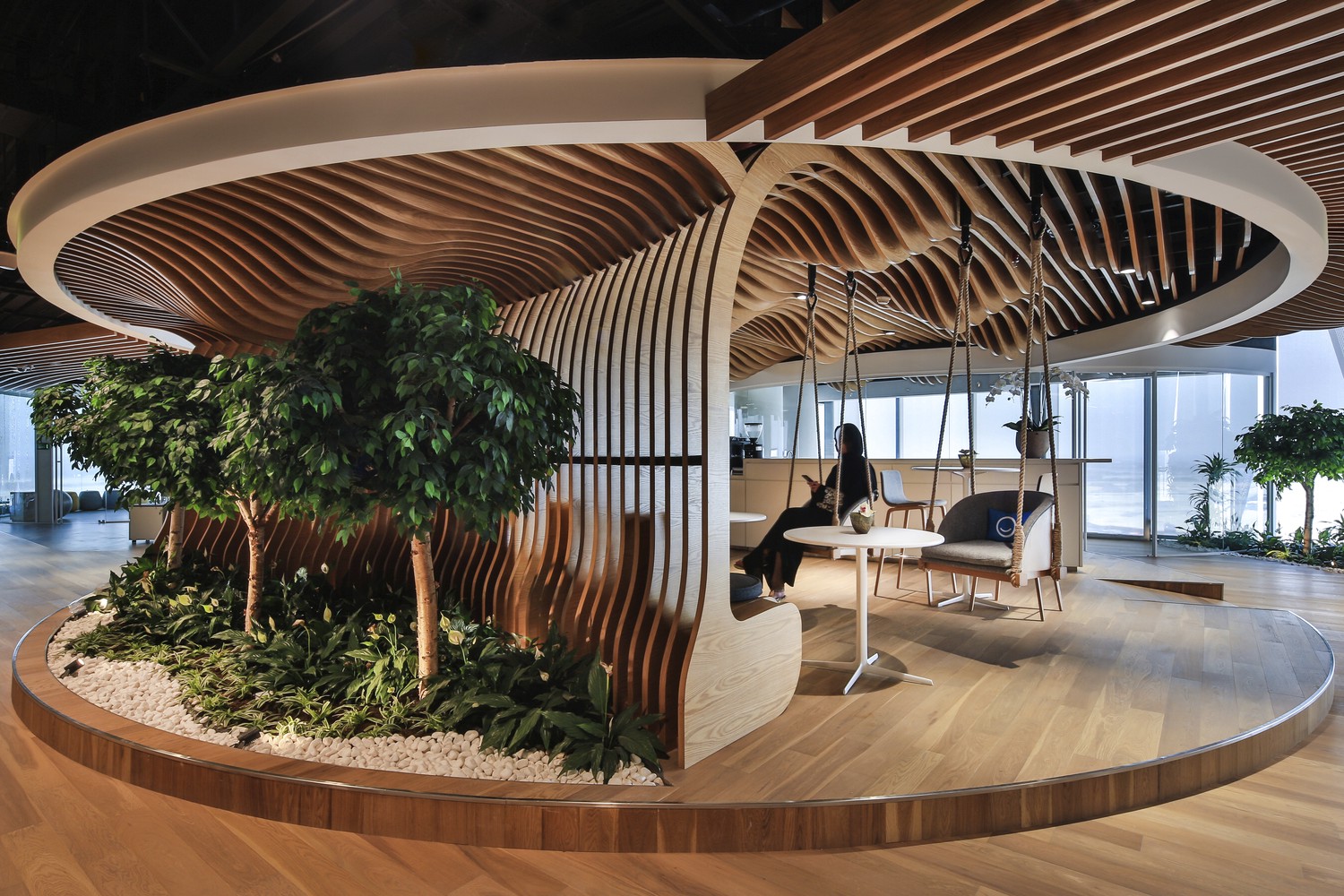
    We have the most famous Amazon office, The Sphere, which reflects the importance of nature in the work environment. It is proven that the productivity of the employees and workers increase by 4% overall just by giving them a greener space when compared to a cold, sterile atmosphere.
    Office

    The work output not only increases in monetary value but the happiness quotient of the employees is also healthier.

    Hospital /Rehabs
    Biophilic Design: Why is Biophilia Important in Post Pandemic Architecture? As we progress in this urbanised world of globalisation, the connection to nature is gradually diminishing. Human beings are being genetically mutated in order to adjust to the new urban world of concrete. The hustle and bustle of the city leaves us no time to miss the green pastures of nature. This morphogenesis of the human kind has its negative impact not only in the physical presence but also in the mental capacity. Biophilic design incorporates nature in design.

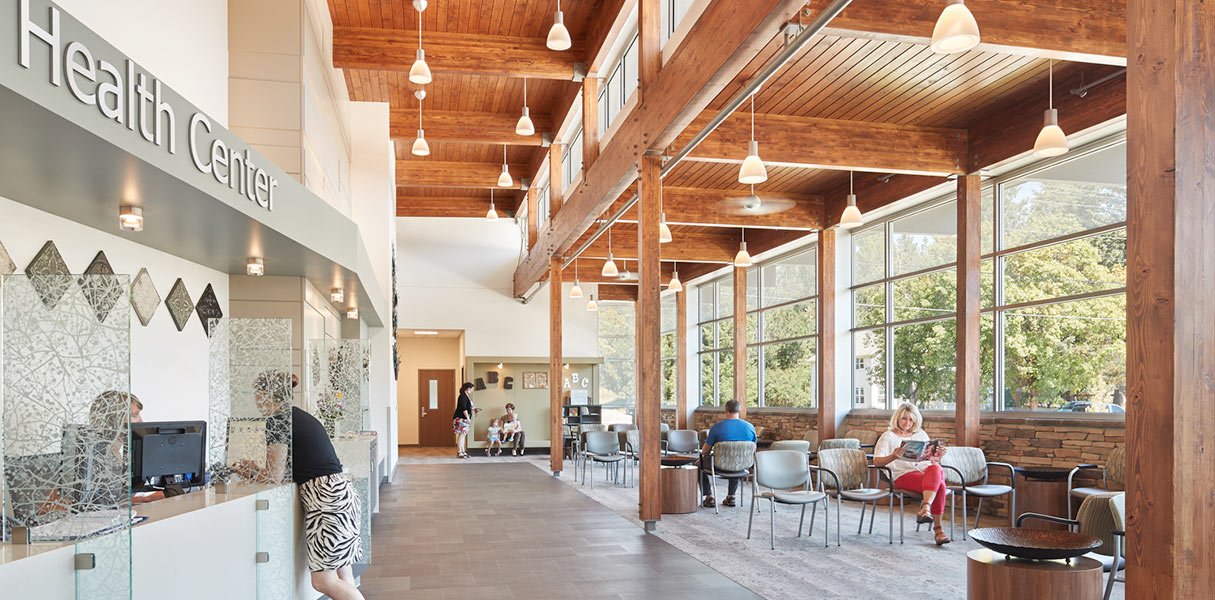
    Green elements used in rehab and wellness centers enhance the health and healing of the people.

    The use of nature in healing is a very old traditional method of use.

    A holistic approach is what is mostly adopted in designing these centres keeping healing in mind while designing the wellness centres .

    The rehab centers have opted for a secluded expanse of land with a view or soothing landscape of the hills for decades now. Exposing patients with mental or physical ailments to such environments has a very positive effect.

    Research has shown that the path to recovery of a patient in a hospital is faster and less pain medicines are required if the patient is kept in a well lit room with a view of nature.

    Hospital
    Hospital room with a view
    Children's hospital
    A children’s hospital integrating the organic green design

    Hotels

    Pickering Hotel 
    Pickering Hotel 

    Singapore’s quest to be known as the City in a Garden is boosted by hotels planting rooftop gardens, like these sky gardens on top of the Parkroyal on Pickering Hotel. 

    The Hotel industry has incorporated a neuroscience approach to incorporating green into the hotel. It is a very physiological approach to impress the client and make sure that the customer is given a replicated feel of nature, keeping the star standards in mind.

    Greener the hotel , happier the client. And eventually ofcourse , a happy client means more business. So it is a foolproof option for the hotels.

    Restaurants/Bar

    A study conducted by the hospitality industry proves that restaurants with a view or close to water bodies generate better revenue than the restaurants and bars which are in closed spaces.

    Hence, for design adapting, a few biophilic elements could just be the answer to enhance the greener quotient of the space. 
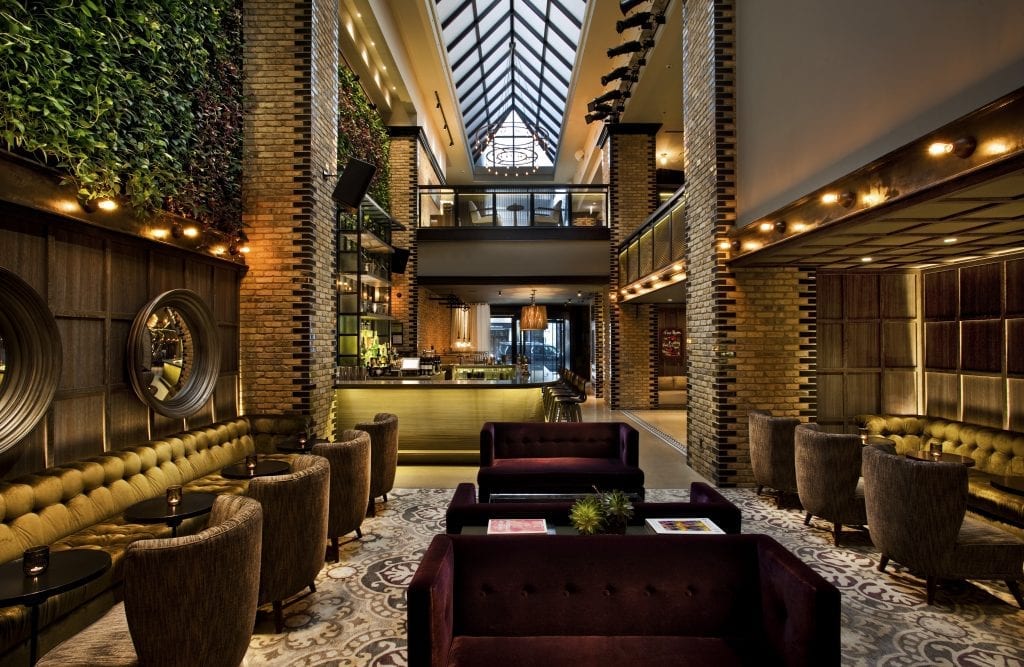
    green wall
    Thompson Chicago’s green wall behind the Nico Bar. Thompson Chicago

    Academic institutions/ Special Education Centers

    The best way to incorporate a green space in schools and institutions is by adding colour and organic forms. Students tend to fare better in grades if they are allowed to study in a room with ample sunlight and peaceful natural environment. 

    refuge area
    Refuge Area

    Refuge spaces in schools allow kids to find their niche spot and make their learning environment disturbance free.

    Retail Showrooms/Malls

    Retail showrooms, outlet malls, shopping complexes etc are adopting more green spaces.

    Greenbelt Mall, Philippines
    Greenbelt Mall, Philippines

    The Greenbelt Mall in the Philippines which has added a myriad of ponds and green spaces to enhance the shopping experience. Adding these spaces takes a lot of commitment and time. Landscape inside the retail stores (standalone especially) is not a simple job to maintain or even design.

    Home

    To design a biophilic home with all the constraints in mind.

    • Space 
    • Congestion
    • Lesser budget
    • Alternative energy source
    • Durability
    • Design Development
    • Zoning
    • Consider the possibility of tall surrounding buildings.
    • Concept Design
    • Plans, sections and elevation of interior areas.
    • Interior Details with furniture, fixture details.
    • 3D visualization 

    Point to be elaborated on: Biophilic Design and Urbanism, based on which Benefit-Cost Ratio (BCR) and Voting Portio (VP) are calculated to understand how to effectively implement the concept of Biophilia on different scales.

    In order to achieve a biophilic space, the various forms of habitat have to be considered. It may be an apartment, a farmhouse, or an independent standalone house with or without a community. The main purpose of this detailed design is the detailing, which can help a common man adapt to an already constructed home/office/hospital/ etc by adding the biophilic design elements to it. The design elements to be used in order to achieve a greener home will be represented.

    Biophilic Design Elements

    Characteristics of the design elements are not limited to only the built environment, but also can be :

    Biophilia redesign follows simple rules:

    1. Decor: includes materials both natural and craft
    2. Colour: Colour trends, brightness, spatial choices
    3. Forms and Patterns: Spirals, circles, symmetry and curves
    4. Lights and BioRhythm: natural vs artificial lighting 
    5. Air and temperature: fresh air vs. air conditioning 
    6. Views and spaces: nature views and adding paintings imitating nature.

    Decor in Biophilic Design

    The use of natural materials like wood and earthen clay have been rated the most abundantly available resources. Historically , they have been used widely not only in construction but also in decoration of buildings. 

    textiles
    Collection of textiles with different textures and shapes.
    textures
    Collection of wooden furniture and fixtures.

    Colour 

    Adding colors which are more on the chromatic hues of Orange , Blue and Green instill a happier mood change in both adults and children. 

    Color therapy is a proven science that colors create an impulse in the brain which stimulates a biochemical reaction in the brain.

    color psychology
    Color Psychology

    Form and Patterns 

    Naturally occurring shapes and patterns follow basic symmetry and are called organic is nature. As natural forms are replicated into materials, the patterns follow repetition.

    Lights and BioRhythm 

    Natural light is always the best option as a biophilic element. But sometimes we are in a design situation where it is not possible to get the adequate amount of natural light into the unit.

    During this time, we use artificial lighting, mimicking the natural hues and tones of nature. Dusky warm light for spaces which are personal and bright full white lights in places where there is more traffic.

    In offices which work on day and night shifts, the biorhythm is reversed; the lighting is at maximum even during the nighttime to avoid the workers from feeling tired and sleepy.

    Same way at home, mimicking the day and night time biorhythm not only calms the mind but follows the simple natural light phenomenon known as Circadian Rhythm . Circadian Rhythm is the natural process which tells the body when to wake up and when to sleep.  Artificial lighting disturbs this Circadian Rhythm and hence adds to the stress and unbalance of the naturally occurring hormones in the human body.

    natural light
    An office using completely natural light 

    Air and temperature

    The air and temperature in a biophilic design follow something known as MoodBoards. This is basically a scale in which the thermal variation of the air changes the mood of the individual .

    Artificial HVAC systems control the temperature from cool to hot in a lesser amount of time, whereas natural air flow takes more time to actually regulate the temperature.

    Although use of energy is significantly lower than artificial, many commercial units do not opt for natural ventilation as the productivity of the employees ranges as per the mood boards which are directly influenced by the climate.
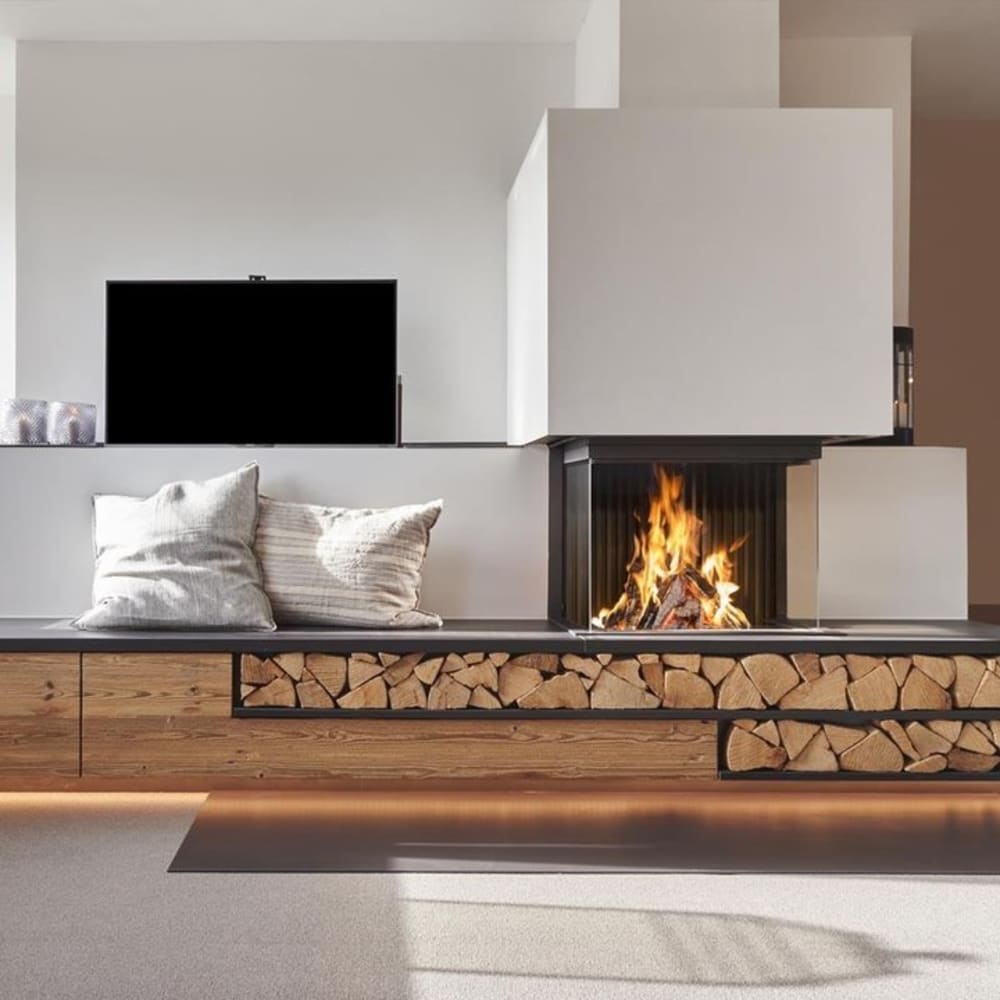
    temperature
    Use of a fireplace to increase the room temperature. 

    Views and spaces 

    Natural views are now something which highly decide the price of a property. Hotels , Villas and expensive lots of land usually have the price directly proportional to the view it offers.

    Sometimes it is not possible to get the view in a cityscape , here the use of paintings or murals which replicate nature are used.

    mural
    A mural on a wall imitating the natural landscape

    Oxygen Producing Indoor Plants

    There are a few plants which increase the indoor oxygen level mostly used in closed spaces like  Homes and Offices.

    The top 5 oxygen increasing plants are :

    Chinese Evergreen

    This plant is very popular in China and is the most efficient in purifying the benzene toxins from the air. It grows in full shade and needs to be watered only enough to keep its soil moist.

    Aglaonema is the scientific name for this plant. It thrives in any indoor environment and grows slowly. Although they don’t top the list for an attractive plant, but are very versatile and adaptive.

    Money Plant

    money plant
    Money Plant

    The Money Plant, as they call it, is a very popular plant in both FengShui and Vastu for its air purifying qualities. Epipremnum aureum is the scientific name for Money Plant. This plant is quick growing and needs the least amount of maintenance. 

    Snake Plant 

    Dracaena trifasciata belongs to the native African species Asparagaceae and is popularly known as Mother in Laws tongue. NASA has also conducted studies to prove that this plant actually reduces toxins and generates the highest night time oxygen when compared to any other species.

    snake plant
    Snake Plant

    It has to be watered weekly and needs sunlight, so placement near a window is ideal. 

    Areca Palm

    areca palm
    Areca Palm

    This plant is an indoor as well as an outdoor plant. It is optimum for both office and home as it takes in carbon dioxide and releases oxygen, absorbing all the toxins as well.The ratio followed for this plant is usually 1:4, i.e., for every one person, 4 human height grown plants are sufficient.

    It requires slight sunlight and has to be watered regularly.

    Gerbera Daisy

    Gerbera Daisy
    Gerbera Daisy

    Gerbera Jamesonii is the most preferred, decorative and colourful plant in the list of indoor plants. They can be arranged into vases as they come in many bright, colourful hues.

    Case Study
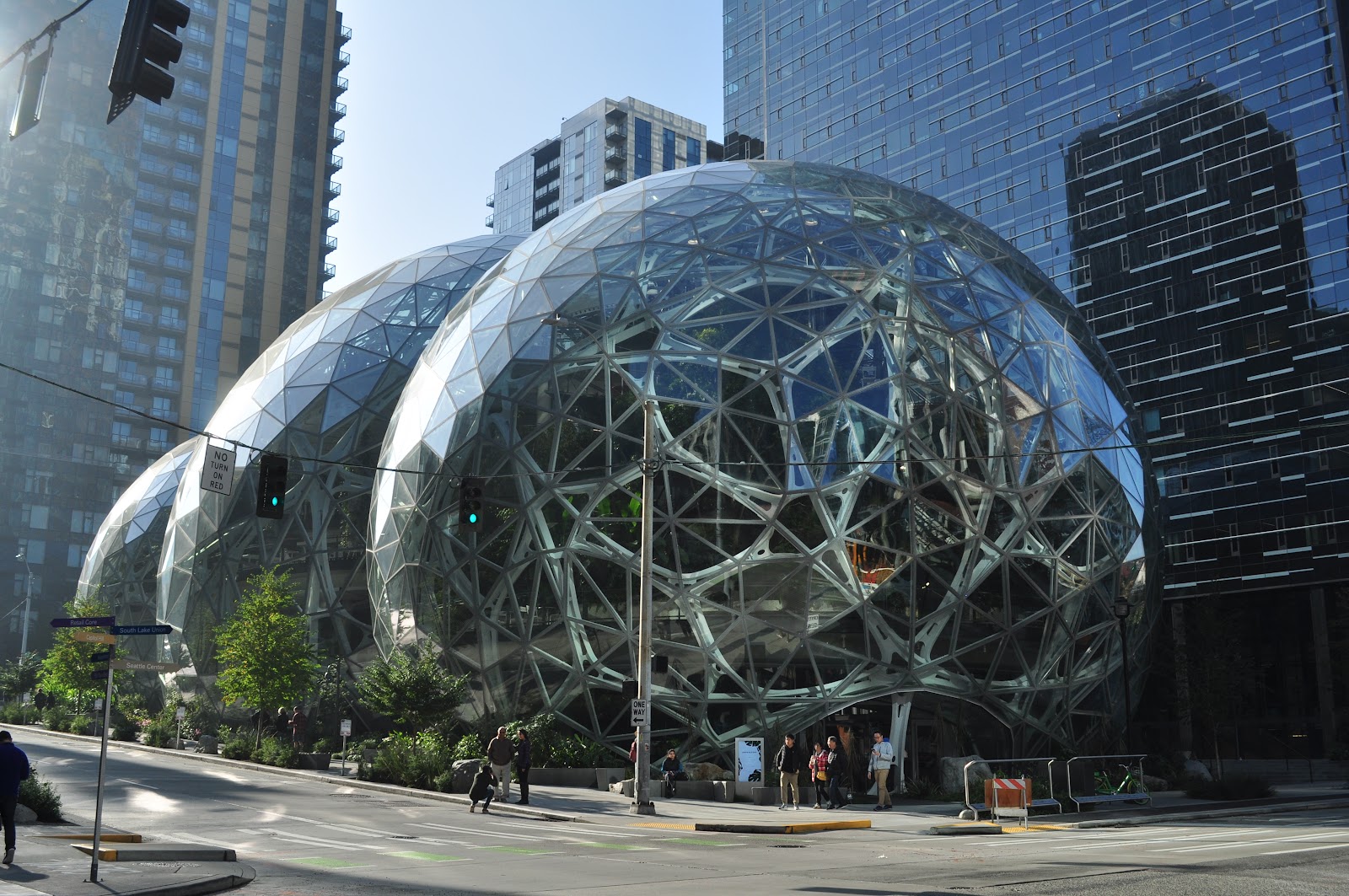
    Amazon spheres
    Spheres, Amazon Office, Seattle, Washington, USA

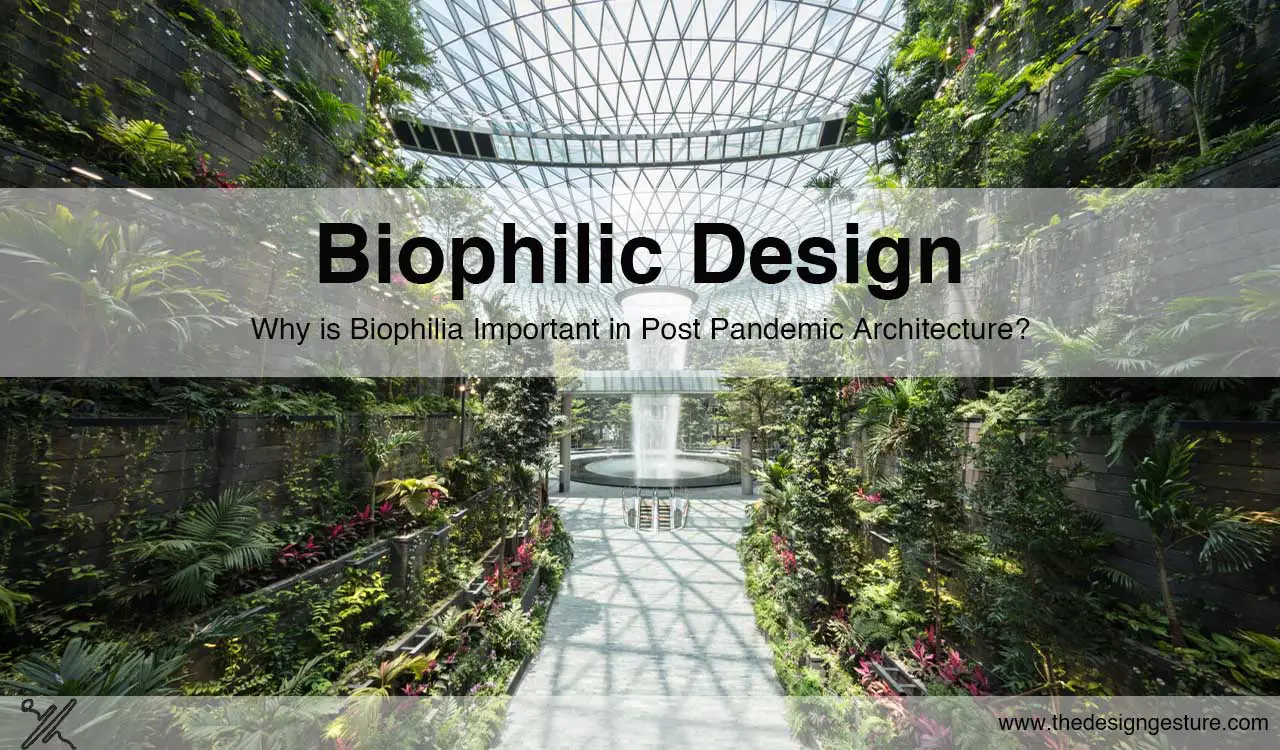
    The Amazon Spheres in Seattle, Washington, USA is a recent and a perfect example of an attempt to incorporate nature into the everyday lives of the employees. It is an example of all around Live walls and 25 thousand plants, waterfalls and small gardens. The Sphere is made of 3 domes, the largest one is 90 feet high and 130 feet wide. It is made of 620 tonnes of steel and 12 million pounds of concrete. There are 40,000 plants of around 400 or more species.


    Author

    Biophilic Design: Why is Biophilia Important in Post Pandemic Architecture? As we progress in this urbanised world of globalisation, the connection to nature is gradually diminishing. Human beings are being genetically mutated in order to adjust to the new urban world of concrete. The hustle and bustle of the city leaves us no time to miss the green pastures of nature. This morphogenesis of the human kind has its negative impact not only in the physical presence but also in the mental capacity. Biophilic design incorporates nature in design.
    Komal Shahazim

    Komal Shahazim is an architect and a mother of 2. She has understood the covid situation in both home and at work. The transition from working in an office to working from home with children and their online schools while going through the covid virus herself and recovering from it changed her perspective on the world crisis. Although many other industries in the world order and the people from the entire pyramid class of the society must be going through way more, this article is a basic window to the future through her eyes.

  • Disaster Relief Architecture: An Effective Response to Post Disaster Damage

    Disaster Relief Architecture: An Effective Response to Post Disaster Damage

    What is a Disaster?

    A disaster is a serious problem being over a short or long period that causes wide mortal, material, profitable, or environmental loss, which exceeds the capability of the affected community or society to manage using its own coffers. 

    Disasters are routinely divided into natural or man-made, although complex disasters, where there’s no single root cause, are more common in developing countries. A specific disaster may generate a secondary disaster that increases the impact. A classic example is an earthquake that causes a riffle, performing in littoral flooding. Some manufactured disasters have been credited to nature similar to gauze and acid rain. 

    Need Of Disaster Relief Architecture

    Disasters
    Photo by Indesign Live

    Disasters are getting the norm in this world, which also poses challenges to architects and engineers. Numerous requirements to make temporary structures may arise at the same time all around the world. 

    As stated in the Intergovernmental Panel on Climate Change (IPCC), cities are getting more and more vulnerable to the impact of natural disasters, and their frequency, duration, and intensity are becoming increasingly extreme. 

    The COVID-19 epidemic that began in 2020 has verified this notion. Metropolitan cities and human society are facing unknown challenges. In order to fight the damage caused by the disaster, the world witnessed the Fangcang sanctum hospitals established in China within many days, the recyclable temporary sanctum units erected by Turkey at veritably low cost after the earthquake, and so on.

    An Architect’s Role 

    After 1950, as high-rise buildings & skyscrapers became statements of style & necessity and population and its density remained a major concern, horizontal expansion was merely impossible. No building can be completely disaster-proof, therefore, architects need to study & analyze past data like soil conditions, context, and climatic conditions before executing the building 

    An architect must know the consequences after the disaster, judgment about the site context, the ability to make quick decisions with limited information about the site context, should be active, flexible, creative, and should incorporate the entire community.

    Stages of Disaster Relief Architecture

    Disaster preparedness or Stages of Disaster Relief Architecture has links with an effective response to post-disaster recovery. However, its influence on housing strategy is not much explored in literature.

    Considering the lackluster disaster preparedness in India, it seems safe to assume that the post-disaster housing strategy is intuitive. It depends on the scale and damage intensity of the disaster.

    While sheltering refers to a place to stay during the immediate aftermath of the disaster suspending daily activities, housing denotes the return to household responsibilities and daily routine. Based on this distinction, the four stages are:  

    Emergency shelter 

    Emergency shelters include a place where survivors stay for a short period during the height of the emergency, which can be in the house of a friend or a public shelter. This kind of shelter rarely allows for the extensive preparation of food or prolonged medical services.

    Temporary shelter 

    Used for an expected short stay, ideally only a few weeks after the disaster, this may be a tent, a public mass shelter, and so on.

    Temporary housing 

    Temporary Housing is a place where the survivors can live temporarily, usually planned for six months to three years, returning to their normal daily activities, and can take the form of a prefabricated house, a rented house, and so on.

    Thus, temporary housing can be defined as an object or physical structure where people live after a disaster, a part of the post-disaster re-housing program, and a place that serves to shelter people from the disaster until their resettlement in a permanent place.

    Permanent housing

    Return to the rebuilt house or resettle in a new one to live permanently.

    Many times, the difference between housing and shelter is blurred. It is difficult to set an exact duration for such a shift from a shelter to a house, since housing is a physical element and a place that emotionally connects its inhabitants.

    History

    The origin of temporary buildings

    crystal palace
    Photo of Crystal Palace by Bureau International des Expositions

    Temporary structures can be traced back to the portable tents of nomads. With the development of construction technology, temporary structures have begun to come to a new type of architecture. These types of structures are frequently accompanied by the need for rapid construction. 

    After World War II, the demand for a reconstruction of housing and other structures rose extremely in many countries. 

    For example, in 1851, it only took less than 9 months to complete the construction of the Crystal Palace at the London World Expo, which can also be disassembled and transported to another place for reassembly. In the 1960s, many simple structures composed of precast concrete boxes appeared in the United Kingdom and Europe.

    Japan surfaced as “metabolism” engineers who promoted prefabricated structures and proposed that civic structures should be renewed like natural cell metabolism, an organic evolutionary process of constant extermination and creation. For illustration, Nakagin Capsule Tower, the world’s first capsule structure, is a masterpiece of this type of prefabricated assembly technology practice.

    The enhancement of social productivity has brought about an unknown consumption period. The construction assiduity also showed some analogous characteristics after the 1960s. A large number of structures were demolished decades or indeed times after they were erected. Their update speed has been important faster than any former period.

    The transition from fast to portable and from disposable to recyclable

    building emerging shelters
    Photo by Archdaily

    In the past trends, designers and engineers have focussed to concentrate more on the “fastness” of construction; and at the same time, because of the constraints of objective conditions, non-recyclable materials such as concrete were used as the main body of numerous constructions. 

    After this surge of temporary structures, numerous scholars and designers called for a better design approach in response to numerous problems, like rigid structures, waste of materials and other resources, and so on. 

    By assessing the characteristics and trends of the rapid construction of temporary structures, the current focus has shifted from one-sided “fast” to “convenient” and from “disposable” use of materials to an “economically recyclable” trend. 

    Key Points To Consider while Planning a design Shelter

    Planning shelters

    The most effective strategies for emergency shelter consider the entire shelter cycle, including the root causes of emergency and interim shelter requirements; its accessibility; resources, and services required to construct and run it; and how they will transition into a long-term casing. Focusing solely on the provision of shelter can lead to hamstrung use of resources and inefficiency, especially when the situation leading to the need for shelter could be averted or eased. 

    Equal community participation

    Those most likely to be affected should be involved in planning the shelters — rather long before a disaster occurs. Participation by original leaders, vulnerable populations, and communities is essential for any recovery plan to work. Communities recover as communities, not as individualities. 

    Prioritise the stakeholders

    Plans should be designed to meet the requirements of the most vulnerable first. Emergency and interim sanctum should be designed to meet the requirements of those who need the most support. Aged grown-ups, people with disabilities and functional requirements, and women and girls come much more vulnerable when exigency and the interim shelter are needed. 

    Involvement of Private agencies

    Even in developed nations, private philanthropy plays an essential part in the reconditioning of communities. Government backing and insurance only go so far in meeting requirements, particularly when there have been multiple major disasters, or the affected area is veritably large. 

    Special consideration for urban areas

    In the time of a disaster, there may be further debris from affected structures, in addition to the damage to roads and other structures. Urban areas may also include a higher chance of vulnerable or resource-poor populations, with the lower capability to repel or recover from disaster on their own. 

    Efficient Planning

    Improved, efficient planning and a smarter structure can act as mitigation. In Bangladesh, for illustration, a nation heavily impacted by periodic cataracts, communities have worked with non-governmental associations (NGOs) and others to raise houses above deluge situations; establish deluge harbours that can accommodate up to 300 families each; make raised- tube wells for clean water; ameliorate warning dispatches and keep deliverance boats ready. 

    Learn from history

    A lot can be learned from one experience, both domestically and internationally. There are numerous openings not only for the study of stylish practices but also for working toward the perpetuation of those practices in vulnerable communities worldwide. 

    Inspiring Examples of Post Disaster Architecture

    Paper Temporary Shelter

    post disaster architecture
    Photo by DesignBoom

    Paper temporary shelters were constructed at Daanbantayan, Cebu, Philippines, following the devastation of Typhoon Haiyan (locally called Yolanda) in November 2013. The construction methods of previous paper log house projects (in Kobe, Turkey, and India) were very complicated and time-consuming to create in high volumes. 

    In this design, the connection system of the Paper Partition System, developed for making partitions within evacuation centers, made it possible to simplify the construction, thus shortening the construction period. The foundations were made up of beer crates crammed with sandbags, and floor panels were made up of coconut wood and plywood. A readily used woven bamboo sheet was applied to the paper tube structural frame, and therefore the roof may be thatching of Nypa palms laid over plastic sheets. 

    Temporary House By Shigeru Ban Architects

    New Temporary House design is a low-cost casing action that is characterized as follows: 

    1) Perfecting casing condition of developing countries creating new employment. 

    2) Exporting units as relief casing to the countries after disasters. 

    3) FRP structural panel is easy to make indeed by non-skilled workers.

    Hex-House

    hex house
    Photo by Dwell

    The Hex House is a revolutionary system by which high end design of sustainable structures is made economically and physically accessible to the general public. By streamlining the construction processes to their bare rudiments, and allowing the end-users to be part of the process using well-designed, prefabricated elements, a quality structure can be realized at substantial cost savings. 

    The Hex House is conceived as a sustainable, fleetly deployable structure grounded on Structural Insulated Panel technology which can be packed flat-pack and fluently assembled. It has the inflexibility to be both an endless or a temporary structure. 

    The structure’s capability to be fluently modified with minimum dislocation gives families the capacity to expand their space over time. Sustainable features like solar panels, unresistant cooling, rainwater harvesting, and composting & biogas toilets give families more independence, minimize their carbon footmark, and add functional savings.

    Weaving a Home

    emergency shelter
    Photo by Trend tablet

    Architect Abeer Seikaly’s abstract emergency shelter is composed of “high-strength plastic tubing that’s molded into a sine-wave curve and woven into a supple fabric membrane, a specialized, structural fabric that expands to enclose and contracts for mobility. 

    “The concave tubing allows for services similar as heat, electricity, or running water and are suitable to acclimatize to colorful climatic conditions. Seikaly poetically describes her design stating, “Deportees carry from their homes what they can and migrate in unknown lands, frequently starting with nothing but a roof to call home. In this space, the deportees find a place to break from their turbulent worlds, a place to weave the shade of their new lives.”

    Just a Minute Shelter

    just a minute shelter
    Photo from Archdaily

    The ‘Just A Minute shelter’ by Italian firm Barberio Colella was designed in response to the 2015 earthquake in Nepal. As similar, the engineers sought to use original Nepalese accoutrements to fashion a house that can be” erected snappily, featherlight and compact to transport, durable, and profitable.

    The shelter combines an OSB central core with a deployable bamboo structure covered by recycled hair sequestration and a surface membrane of double white Juta. Atop that’s a leakproof membrane to further cover the structure from the rudiments. Energy tone- adequacy becomes possible with the addition of solar and photovoltaic panels to the roof.

    Tentative

    tentative
    Photo by Design Indaba

    The idea behind Tentative by Designnobis is a compact, each-by-one emergency shelter suitable for any terrain or climate. Conforming of a rainfall-resistant cloth that’s crocheted together, Tentative holds separating perlite squeezed between layers and held by an aluminium frame.

    The roof collects water, as well as furnishing lighting and ventilation, while the bottom is made up of heat- separating recyclable compound balconies. When compacted, the sanctum is fluently transmittable at 4 measures long, 2 measures wide, and only 30 centimeters altitudinous, growing to 2.5 measures altitudinous when at its full size.

    Pop-Up Places Of Worship

    locas boyd
    Photo by LakaReacts

    Scholars Lucas Boyd and Chad Greenlee designed an offer of pop-up churches, bethels, and kirks for those fleeing conflict in exile camps. They believe that, “While places of deification don’t give an introductory need for an existent’s natural survival, they do represent an abecedarian aspect of not only an existent’s life beyond mileage, but an identity within the collaborative, a familiar place of being — and this is a commodity that we consider synonymous with being mortal — a demand for the continuity of culture.

    By distilling the iconography of sacred spaces, Boyd and Greenlee have created minimum yet fluently recognizable sacred spaces. Pop-Up Places of Worship embody the significance of fastening on the emotional requirements of those displaced, rather than simply a physical sanctum.

    Conclusion

    The best way to achieve long-term resilience is through development phases that create needed resources and establish sustainable construction techniques in disaster hit areas. The goal is to reach the disaster area and quickly and efficiently establish the necessary shelter and infrastructure.