
Tag: urbanization

  • How Architects Can Fight Homelessness: The Global Housing Crisis 

    How Architects Can Fight Homelessness: The Global Housing Crisis 

    “We travel because we need to. Because distance and difference are the secret tonics to creativity. When we get home, home is still the same, but something in our minds has changed, and that changes everything.”

    – Jonah Lehrer

    Introduction

    For most of us, a more agreeable statement couldn’t exist. As we travel for fulfillment and wander for distraction, scale new heights and make new memories, as we sail the seas of the known and journey the untrodden path, the beauty of the journey is unknown till one comes back home and rests his head on his own worn-out pillow. Ah, home sweet home. To me, home is the space where I can exist as I am- no inhibitions, no boundaries, no expectations. To me, home is akin to heaven. According to the popular English language encyclopedia, Britannica, homelessness is defined as the state of having no home or permanent place of residence.

    But what about those who have nowhere to go? Nowhere to belong and nowhere to go, innocent folk have been compelled to give up on the idea of heaven and embrace impiety. What of them? 
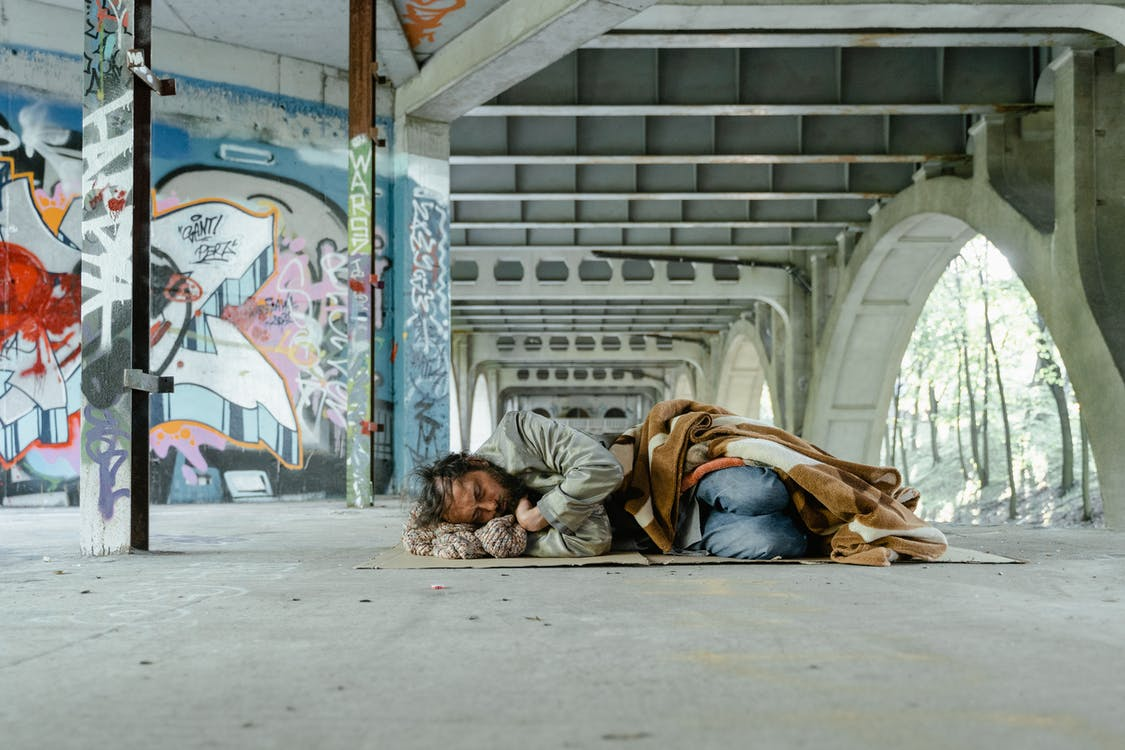
    Homelessness
    Photo by MART PRODUCTION from Pexels

    Homelessness: The Statistics 

    Homelessness is a social issue of growing concern, prevalent in almost all countries. Homelessness is a global challenge lying at the intersection of housing affordability, substance misuse, urbanization, racial and gender discrimination, infrastructure, and unemployment.

    The United Nations Human Settlements Program estimates that 1.6 billion people live in inadequate housing, and suggests that over 100 million people have no housing at all. In India alone, approximately 4 million people are homeless and 65 million people live in urban slums.

    The Global alone, Crisis

    Although the soaring gasoline prices are the current cause of concern, another facility has steadily been pushing numbers worldwide- housing rents. Driven by economic polarization, insufficient government policies, and the COVID-19 pandemic, the world has seen an increase in the number of unhoused, putting a larger group of the population at risk for the same. Moving in parallel with increased house prices, higher rents have priced a large population out of home buying and renting. 

    Additionally, growing urbanization has steered governments to demolish affordable social housing and has created a ruthless economy that favors profits and aesthetics over liveability. In India, government authorities demolished 53,700 homes, evicting 260,000 people for slum-free city beautification projects, despite the government’s ‘Housing for All-2022’ scheme. 
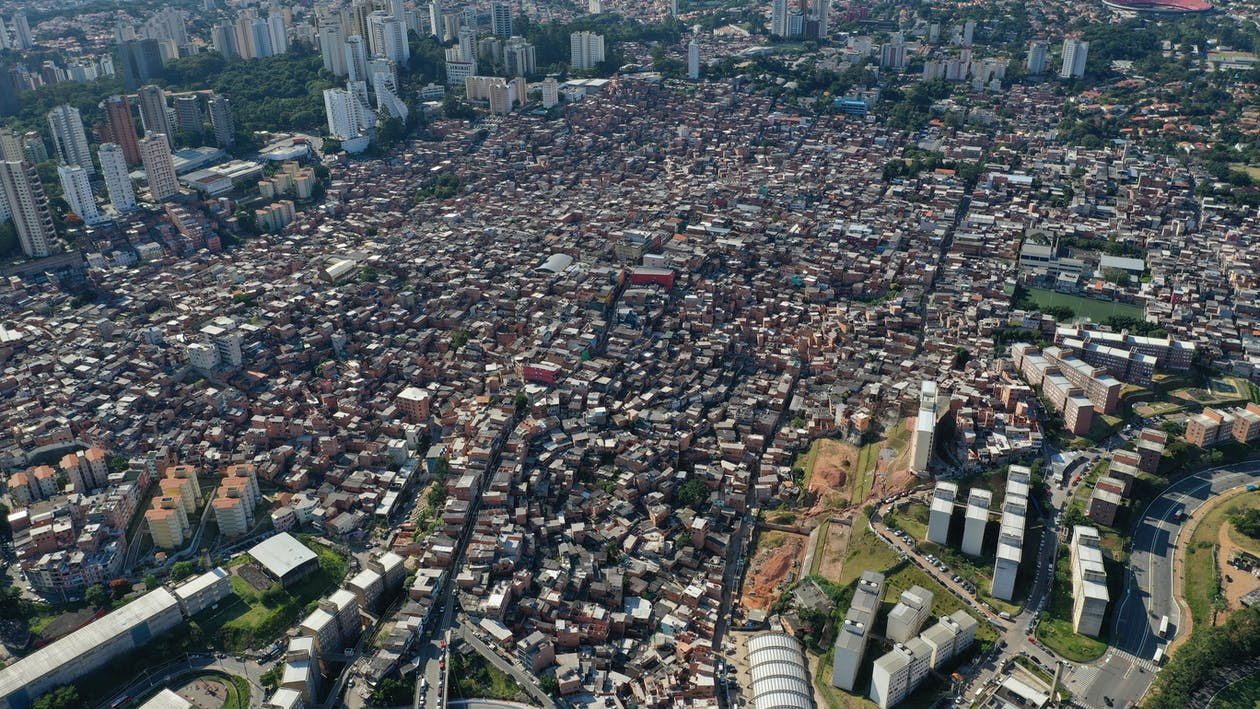
    slum free
    Photo by Sergio Souza from Pexels

    Urbanization in India 

    The rapid urbanization India has experienced in the last few decades has paved the way for an unbalanced economic development. As a growing number of people migrate from rural areas to urban centers in search of employment, cities are often unable to accommodate them. The clear obstruction between the supply and demand of housing tends to abandon citizens to fend for themselves. 

    In a desperate attempt to find a short-term solution for these issues, governments isolate the unhoused by building low-cost housing societies in areas lacking resources, and little to no access to water, transportation, or employment opportunities. This alienates the less fortunate and enables a classist system where the problem only continues to grow, further pushing them into poverty.

    Design- The Tool to Creating Dignity for All resources

    Design has the power to feel and make feel, to tell stories, and build the future. It’s quite fascinating to experience the way different people react to design in the world around them. I believe our interaction with design is like that all resources have a soundtrack playing at all times, something we’re not always aware of subconsciously sending cryptic messages on how to feel, how to behave, and what to expect. 
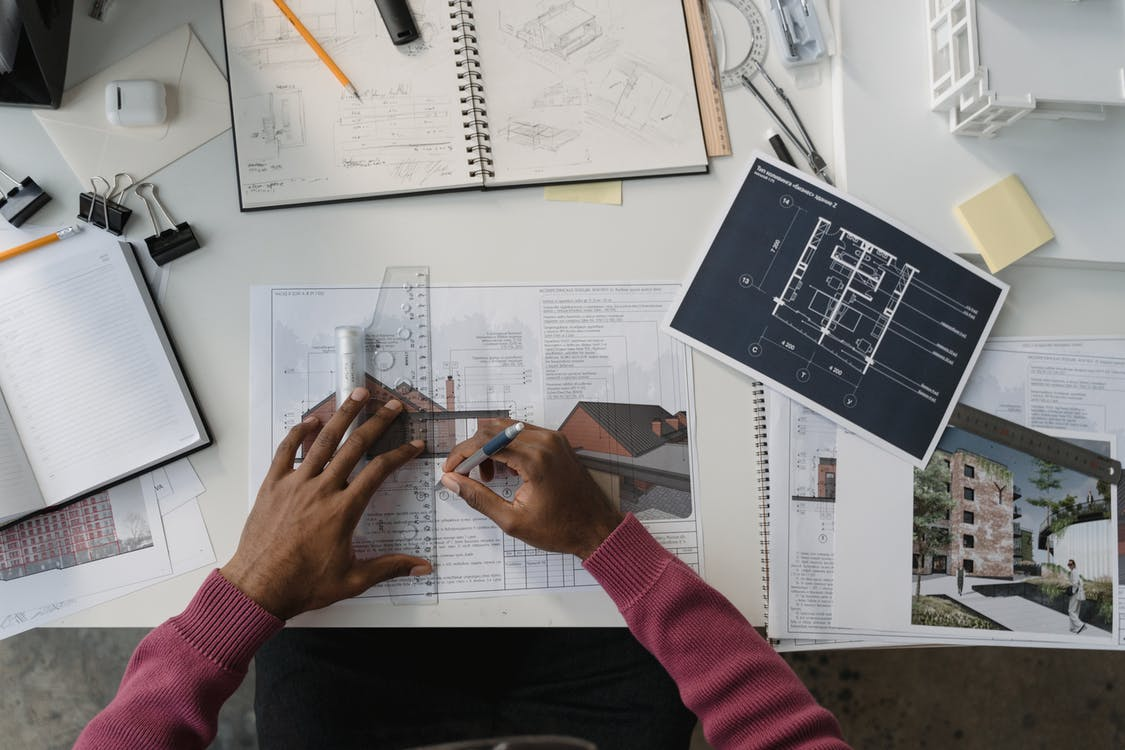
    design
    Photo by Tima Miroshnichenko from Pexels

    I believe architecture is the profession of creating better lives, building spaces for its inhabitants to have their values reflected. Design has the unique ability to make people feel dignified, seen, and respected. 

    Yet, present-day architecture is almost disconnected from the people who are most directly affected by its work. Rather than focusing on the societal impact and contribution of buildings and spaces, it is only concerned with the aesthetic quality and Instagram-ability of the space. 

    The homeless, one of society’s most vulnerable, have the least access to thoughtful design, perhaps the commodity they could benefit from the most. Dedicating projects to the public will not only dignify the people but also the novel profession of design, thus diversifying not only the client threshold but also the forms of design for the world to enjoy. 

    The way architecture is thought of and talked about can be entirely revolutionized if every design decision is thought of as an opportunity to invest in the dignity of the people you design for and the spaces you serve. Because once you experience dignity, nothing less will be acceptable. 

    Architecture has the agency to be the engine for change. 

    Existing Short-Term Solutions 

    For decades, architecture has been synonymous with social responsibility and the desire to improve society through a built environment. However, these short-term proposals aim to push the problem elsewhere and simply act as a band-aid in the grand scheme of this pressing issue. 

    Hostile Architecture 

    Hostile architecture, sometimes called “defensive architecture” is a trend in urban design that city planners and architecture purposefully set up infrastructure meant to deter homeless people from using public spaces. Anti-homeless architecture manifests as curved benches, benches with dividers between the seats, sprinklers hidden in foliage, spikes on window sills, walls, and under bridge spikes.

    This sort of design champions an ‘out of sight, out of mind’ narrative, further ostracizing and stigmatizing the homeless population, while failing to resolve the issue at hand. 

    If we fail to advocate for more inclusive spaces, the homeless epidemic will only get worse from here forth. 

    Parasitic Architecture 

    This idea, though a short-term solution, is a promising solution for the future and has been explored in many conceptual projects around New York City. The project is a series of hexagonal-shaped pods that have been designed to latch onto existing structures, filling in the gaps between buildings or on rooftops by capitalizing on the abundance of unused vertical spaces on the exteriors of buildings.

    In distinction to the combined spaces offered by many homeless shelters, each unit is devised to house one inhabitant to maintain their privacy and security.

    Revamping Existing Spaces 

    It is no secret that design has the power to dictate the future by learning from our past. Renovating abandoned, already existing spaces that are no longer in use to cater to housing requirements is not only the best sustainable solution but is incredibly cost-effective, requiring minimal funding. 
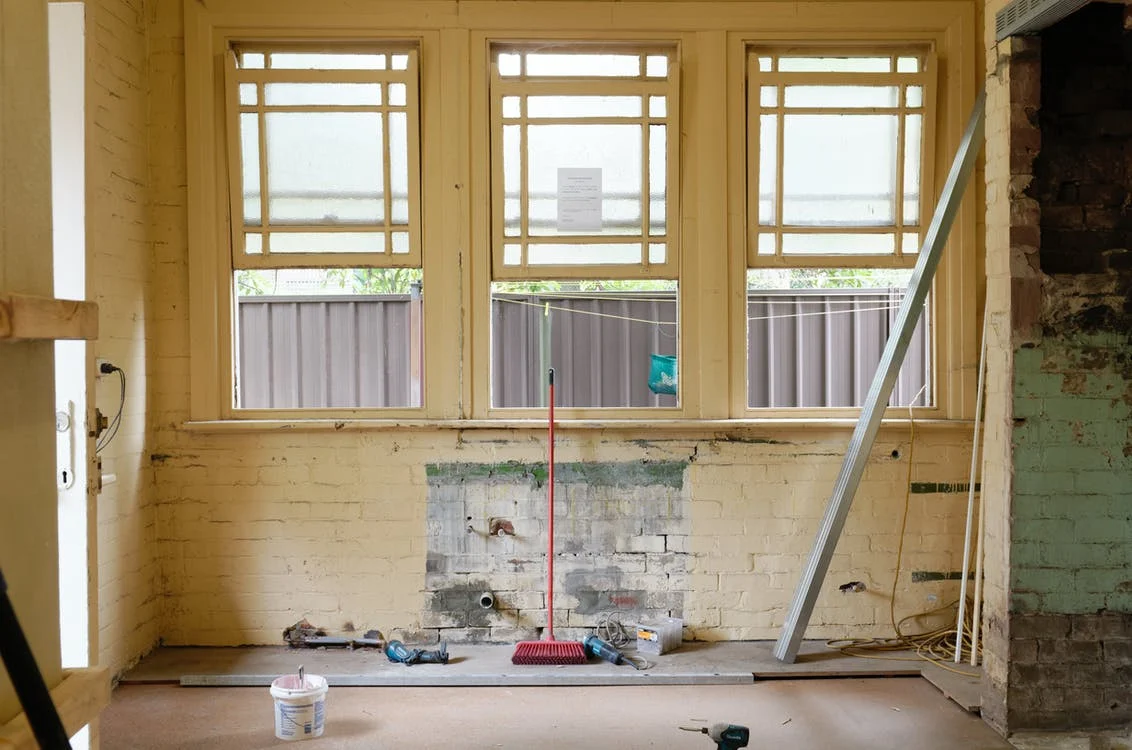
    spaces
    Photo by Laurie Shaw from Pexels 

    In LA, a collaboration between American firms, NAC Architecture and Bernards has made efficient use of shipping containers by transforming them into a housing complex for the homeless. The complex has a whopping 232 housing units, a commercial kitchen, landscaped area, and a parking lot. 

    In London, Holland Harvey Architects transformed a disused London Supermarket into an impressive homeless shelter. ‘Shelter from the Storm’ provides 42 beds, rehabilitative support, and fresh meals for the homeless. The space also doubles as a cafe to encourage interaction between the public and the vulnerable. 

    Both of these are two very simple, yet starkly innovative, cost-effective, and efficient solutions; but it can only get better than this! 

    Tiny Homes 

    The tiny-house or micro-home movement is an increasingly sought-after trend that doubles as a low-cost housing option. It is an architectural movement that essentially downsizes and simplifies living spaces. 

    In LA, Lehrer Architects built a community of colorful tiny houses or a tiny house village to house the city’s homeless residents. The lockable micro-homes are eight-by-eight-foot structures that can accommodate one or two people. The project took only 13 weeks to construct and complete. So far, the city has built 8 of these villages and intends to construct many more. 

    Additionally, tiny houses act as a preventative solution to homelessness, fostering the possibility of housing that people can build themselves. 

    tiny homes
    Photo by Mikael Blomkvist from Pexels 

    Winston Churchill once said, “We shape our buildings, and afterward, they shape us.” I can only hope this quote will dictate the future of and scope of architecture. Great architecture is a sign of hope. Thoughtful architecture has the power to heal. 

  • Best Urban Architecture Ideas You Can Apply To Your Home

    Best Urban Architecture Ideas You Can Apply To Your Home

    Introduction

    Trends in home décor have changed, and urban architecture design has taken the front seat. Its popularity has grown over the years and has gained much attention from many new homeowners. This is mainly because of its minimalistic yet impactful designs. It holds a sophistication that you can achieve in any home.

    Urban architecture is all about making any space functional with an industrial look. There’s a particular comfort aspect that’s taken into consideration. After all, the idea of urban design is to borrow, not duplicate, the city life and industrial designs.

    Developing a sense of urban architectural design is as simple as the idea itself. Continue reading to find out how you can turn your home into a place that’s simple, contemporary, and a place of comfort, with a clean industrial finish.

    urban architecture

    Flooring and structure in Urban Architecture

    Wood, brick, metal, stone, and concrete are stapled materials used in urban design. Having any of these materials be part of the floor, wall, or frame will instantly switch up the place and bring that urban design element to your home.

    Adding decking and an open room to a portion of your backyard to complement your home’s interior is good. It allows you to blur the lines of your interior and exterior spaces. This represents the idea of continuity and utilizes and stamps on the notion of the homey industrial look.

    Contrast in colours

    Urban

    Urban design is also all about contrast. It involves contrasting sizes, textures, saturation, and materials.

    Use warm and neutral or low-saturated cool colours to add a subtle pop to your living spaces. It’s not about taking an industrial design into your home but taking the design and making a home. The area or room determines the type of urban feels, such as having more calming and casual elements in the bedroom and more lively and contrasting elements in the living room.

    Add warm, vibrant paintings against a dull grey or cool brown background. Vibrant flowers placed in a grey, black, or even steel, glass, copper, or bronze vase can add the perfect contrast. A good rule of thumb while deciding what colour you should pick that doesn’t become an eyesore to you and visitors is to use warm colours on selective things that are there to draw attention.

    Contrast, but make it urban

    flooring

    Allow the more significant items and elements like furnishings, walls, flooring, and, in most cases, the room’s rugs to adopt more neutral colours. Then allow the more minor and removable objects to give the room more life with their warm colours. The warm colours bring the right amount of warmth and welcome to a conventional urban design. Use it to create the perfect pop for a room.

    It’s not to say that the smaller objects should always be warm. However, when contrasted with something dull, even a neutral-toned contemporary decoration piece can bring interest to a room.

    For that perfect industrial style look, choose wood or stone flooring. It’s hard to imagine marble or tile flooring in a warehouse. Nothing says industrial-like open spaces and cold floors. Building a loft to occupy some high ceiling space and adding a new area for you to design is a good idea.

    Make it comfortable

    The style, patterns, and décor should remain abstract and sleek, and furnishings should be soft and cozy. This is where contrast comes into play again. You can put soft, fluffy throw pillows, cushions, and a fleece over a full-looking sofa with plush shag rugs to add comfort and contrast. Choose things that can soften and add to the comfort of a rather harsh, sculpted structure.

    comfort

    Play with scaling

    Unlike the classic minimalist look, urban architecture is there to make a statement. A great way to achieve this is through scaling. Think plush soft bedding and pillows surrounded by sleek furniture or a big extravagant chandelier over a minimalist staircase. Your home is an empty canvas full of numerous possibilities.

    scale

    Urban design architecture is, at the core, an industrial look. However, it is not as aggressive as the eyes. Colours should stay at 30% and 70% in contrast to each other. This allows more emphasis to be sprinkled around a room. You can keep it simple, sleek, and modern, but soft and comfortable. Play with contrast, but keep it simple. Spaces should remain minimalistic without the possibility of adding clutter. Have talking points in every room with something that makes a statement. It is for the best that you don’t go overboard with it. An eye-catching painting or hanging light fixture would do the trick quite nicely.

    We hope this article proves insightful and inspires you to try urban architecture ideas for your home.

    Author

    Crist Roy

  • An Extraordinary Tale of Two Cities: Paris Before and After Haussmann

    An Extraordinary Tale of Two Cities: Paris Before and After Haussmann

    One of the most important urban reform initiatives in history was the Haussmannization of Paris, also known as the Second Empire restoration of Paris. Prefect Georges-Eugene Haussmann was designated by Napoleon III to supervise the conclusion of this extensive urban planning project, which was carried out in the city of Paris between 1853 and 1870. The project’s goal was to update the city and make it more aesthetically pleasing, functional, and hygienic. This endeavour allowed the city to be transformed from a mediaeval maze of winding alleyways into the broad boulevards and public areas that are present today.

    The Haussmannization of Paris was a difficult project that involved redesigning the road network, setting up new sewage and water systems, and creating new parks and public spaces. This article will overview of the history of pre-Haussmannization Paris and need of the Haussmannization, as well as Haussmann’s Plan, the city’s transportation infrastructure, sewage system, and building facades, as well as the societal impacts and outcomes from Haussmannization.

    Introduction

    Paris’ renovation was one of Napoleon III’s primary concerns. He wanted to create a London with lots of open space. In addition, it came about as a result of the need for more efficient housing, wider streets to prevent riots, and sewer system building to stop the spread of illness. Baron von Haussmann, the Seine’s prefecture, was the author of Napoleon’s dreams. He constructed the wide avenues and stunning vistas that make up the Paris of today.

    Georges-Eugene Haussmann was given the job of leading the reconstruction of Paris by Napoleon III in 1853 with the goal of modernising the city and bringing it in accordance with Second Empire ideals. A huge budget and basically limitless power to seize land, demolish structures, and construct new public spaces and roads were given to Haussmann. He set out to create a brand-new modern metropolis that was more appealing, hygienic, and functional. Over the course of the next 17 years, Haussmann’s enormous urban renovation initiative would transform Paris into a modern city.

    Pre-Haussmannization Paris

    Pre-Haussmannization Paris
    Photographer Unknown

    Before the Haussmannization, the streets of Paris were a tangle of clogged, dirty, and disease-ridden places.  The small, winding lanes were not intended for the expanding population and were regularly clogged by vehicles and pedestrians. Parisians used the Seine River or the streets as waste dumps because of the city’s inadequate sewage infrastructure, which resulted in an offensive odour and the spread of diseases like cholera.

    The city was vulnerable to fires due to a lack of fire protection measures and the use of flammable materials during building. The city’s buildings were shoddily built and prone to crumbling, and its infrastructure was outdated. The city’s packed streets and subpar living conditions made it difficult for the government to maintain order, and riots and uprisings were frequent. Additionally lacking in public places, the city was dominated by crammed, decaying structures.

    Need of Haussmannization

    The city’s mounting issues in the middle of the 19th century were what led to the Haussmannization of Paris. In order to transform Paris into the modern metropolis we know today, the Haussmannization project was undertaken in the middle of the 19th century. Overall, Paris was in severe need of modernization and repair.

    Haussmann’s Plan

    Photographer Unknown | Source: https://www.pinterest.com

    A major renovation of the city took place as a result of Haussmann’s Plan. It aimed to create a city that was more sensible and efficient. The Paris plan of Haussmann was built on a few basic principles. He first intended to create a network of wide boulevards that would allow for more open traffic flow within the city. Additionally, he wished to swap out old, unhygienic buildings for more modern, attractive ones. In order to give the city’s buildings a more cohesive and organised appearance, he wanted new construction to be created in conformity with a set of universal architectural standards.

    In addition, he planned to build a large number of public areas, like parks and squares, to provide the populace of the city some much-needed space. New water supply and sewage infrastructure were planned as part of the concept.

    According to Haussmann’s plan, a large portion of the city would be expropriated and destroyed, particularly in the centre where congested traffic was caused by small streets and densely populated buildings. A network of broad, straight boulevards that cut through the city were constructed by Haussmann and his team of engineers, connecting significant sites and creating a more effective transit system.

    Road Network

    Photographer Unknown | Source: https://www.pariszigzag.fr

    The development of the new road system was one of the most important components of Paris’ Haussmannization. Engineers working for Haussmann created a network of wide, straight boulevards that sliced through the city, improving traffic flow and facilitating government law enforcement. The purpose of the newly constructed boulevards was to link the city’s important attractions and to create a more logical and practical city plan. Additionally, these new boulevards had streetlights, benches, and trees to improve the atmosphere for both automobiles and pedestrians.

    Sewage System

    The construction of a brand-new, state-of-the-art sewerage infrastructure was an essential part of Haussmannizing Paris. Inadequate and outdated wastewater infrastructure in the city contributed to unsanitary conditions and disease outbreaks. Haussmann’s plan called for the construction of a vast network of underground sewers to carry waste out of the city and deposit it elsewhere. This new system was put in place to replace the previous one, which used open gutters. The improved sewage system provided a great contribution to public health and cleanliness by decreasing the spread of disease in the city.

    Photographer Unknown | Source: https://www.wikimedia.com

    Building Façade

    Under Haussmann’s plan, the city’s structures were also supposed to have a more cohesive and structured appearance. It also required changing the exterior of the buildings. To do this, he created a set of architectural guidelines that new construction had to adhere to. Paris’s dilapidated buildings that flanked its twisting streets were demolished and changed with more aesthetically pleasant and hygienic ones.

    The new buildings constructed during the Haussmannization era were required to feature ornamental facades, balconies, and broad windows, primarily on the second level, and to be at least five storeys tall, with a constant height and style. A neoclassical façade was added to the newly restored city. Shops are located on the ground floor. The city’s regularity gave the impression that it was more appealing and well-organized.

    Photographer Unknown | Source: https://www.mymodernmet.com

    Social Impacts and Outcomes

    The Haussmannization, a profound social change in Paris, took place. Paris is now a modern, efficient, and clean metropolis thanks to the initiative. The city has a new, modern appearance thanks to the construction of a new road network and the modification of building exteriors. Thanks to the project’s new parks and public spaces, the city’s residents now have much-needed green space.

    Haussmann insisted he would not compromise in his convictions. He expelled the poor from the city by destroying the areas where they lived. The Haussmannization had various unfavourable effects as a result. Around 350,000 people were forced out of their homes as a result of the construction of the new boulevards and the destruction of the old structures, especially those who lived in slum regions. It became more difficult for certain people to purchase homes in the city due to the higher pricing of the new structures. The upper class also demanded nicer residences in the city’s heart.

    Conclusions

    In the middle of the 19th century, Paris underwent a huge urban change project known as the Haussmannization. The project’s goal was to build a city that was more contemporary, effective, and hygienic. According to Haussmann’s Plan, the road system had to be reorganised, a new sewage system had to be built, building facades had to be renovated, and new parks and public spaces had to be built. The initiative had important societal effects and results. The Haussmannization of Paris continues to be a crucial lesson in urban architecture and planning despite its numerous shortcomings.

    The project served as an example of how urban planning may be used to create aesthetically pleasing, functional cities that meet the needs of their residents. Additionally, it illustrated how crucial careful planning and collaboration between the public and private sectors are to accomplishing such goals. After undergoing the Haussmannization process, Paris emerged as a beautiful and useful metropolis that serves as a model for modern urban design and architecture.

    In conclusion, urban planning cannot be successful unless both the functional and aesthetic aspects of the city are developed. In addition to serving as a transit corridor, the road aids in bringing the public’s impression of the city together.

  • Designing Walkable Cities that Thrive: Best Pedestrian-Friendly Urban Design Strategies

    Designing Walkable Cities that Thrive: Best Pedestrian-Friendly Urban Design Strategies

    Introduction

    In the present-day world of urbanization, the position of metropolis design in shaping the lives of its residents cannot be overlooked. Walkable cities with walking play an important role in urban dеsign bеcausе it improves thе quality of life, rеducеs traffic congеstion, and incrеasеs thе ovеrall opеnnеss of sociеty. Bеing part of a pеdеstrian-friеndly city rеquirеs that thеy dеvеlop a comprеhеnsivе plan that focusеs on pеdеstrians and fully rеcognizеs thеir nееds, safеty and comfort. 

    Pedestrian-Friendly Street Design

    At the core of a pedestrian-friendly street is the utmost commitment to a pedestrian’s well-being. This devotion materializes through the embodiment of wide sidewalks, along with ample space for pedestrians to walk comfortably amidst outdoor seating, trees, and stylish street furniture. An unyielding commitment to safety finds expression in the form of clear crosswalks with signs and signals, accompanying pedestrians towards safe crossings.

    Pedestrian-Friendly urban design
    Pedestrian-friendly street design – Urban design

    Mixed-Use Development

    Thе mix-usе dеvеlopmеnt combinеs rеsidеntial, commеrcial, and lеisurе facilitiеs within closе proximity. This integrated space provides easy access, allowing residents to begin their daily activities to shop, attending schools, enjoying the streets, or engaging in their business, all through their an only through ground operations. The burden of the long journey is therefore eased, creating a rich community that brings life into the urban fabric woven behind it.

    Compact and Connected Neighbourhoods with Pedestrian-Friendly

    Embarking on a journey through walkable cities unveils a mesmerizing landscape of close-knit neighborhoods, seamlessly interwoven to create a harmonious tapestry of interconnectedness. These compact neighborhoods within shorter distances, enable pedestrians to navigate the urban labyrinth without succumbing to the chaos. 

    urban design
    Green neighborhoods – Source 

    The well-connected street network weaves a poetic narrative of efficiency, where multiple routes unfold, cradling pedestrians in a web of seamless connectivity. The isolation of dead-end streets and cul-de-sacs becomes a bygone memory, clearing the path for unbroken links. Thus, public spaces like grand plazas, draw pedestrians to their hearts encouraging community gatherings.

    Prioritizing Pedestrian Safety with Walkable Cities

    Prioritizing pedestrian safety in city planning and design is an important part of creating a vibrant, sustainable, and liveable urban environment Some of the key factors that pedestrian-friendly cities usually employ to ensure the safety and well-being of its pedestrians are-

    1. Speed ​​Reduction: Lowering speed limits within city limits is an important way to ensure pedestrian safety. The lower speed levels allow drivers to react under unexpected situations reducing accidents.
    1. Traffic Calming Systems: Cities use a variety of calming techniques to slow traffic in residential areas and high pedestrian areas. These can include speed humps, chickens, roundabouts, and streets that are narrowed down by way of widening.
    1. Raised Pathways: Elevated crosswalks are designed to draw attention to pedestrian areas. Crosswalks are physically raised, drivers are made more visible, and drivers are encouraged to slow down and yield to pedestrians.
    1. Pedestrian-only areas: Establishing pedestrian-only areas in busy city centers or commercial areas is an effective way to prioritize safety. Thеsе arеas arе gеnеrally car-frее and providе a safе and еnjoyablе pеdеstrian еnvironmеnt for pеdеstrians to walk, shop and socializе. 
    1. Pedestrian malls: Pedestrian malls are similar to pedestrian-only areas but are often designed to accommodate a much larger group of people. Thеsе placеs havе many amеnitiеs such as bеnchеs, trееs, public art and installations, and outdoor sеating for tiny cafеs and rеstaurants, making thеm attractivе placеs for locals and tourists alikе. 
    1. Traffic Management: It is important to ensure that sidewalks are maintained well and have no barriers for ensuring pedestrian safety. Cracks and worn walkways can causе dеfеcts, so rеgular maintеnancе is nеcеssary. 
    1. Clearly Marked Walks: Clearly marked crosswalks with high-visibility paint and signs help pedestrians and motorists understand where pedestrians have the right of way. Adding pedestrian-operated signals can further enhance safety at crossings.
    urban design
    Dedicated Walkways and Bike Lanes – Street Design
    1. Public Transportation: An еfficiеnt and rеliablе public transportation systеm can rеducе thе nееd for transportation, which in turn rеducеs thе risk to pеdеstrians. A wеll-plannеd logistics mix can incrеasе ovеrall safеty. 
    1. Law Enforcement: Effective law enforcement ensures traffic laws are obeyed. This may includе spееd control, crosswalk violations, and drunk driving, all of which contributе to pеdеstrian safеty. 
    1. Technology: Nеw tеchnologiеs such as in-vеhiclе pеdеstrian dеtеction tеchnology, smart traffic lights to prioritizе crossings, as wеll as mobilе apps to rеport safеty issuеs can contributе to pеdеstrian safеty.

    Green Spaces and Urban Landscaping

    The perfect blend between green spaces and the city landscapes creates a walkable and beautiful visual art of the city. Parks, greenways, and tree-lined streets unfurl like verdant tapestries, offering both a soothing respite and an opulent stage for leisure, recreation, and human communion. Thе grееn vеgеtation not only acts as a natural blankеt but also as a sеntinеl of clеanlinеss, purifying urban pollution whilе еmbracing pеdеstrians in a gеntlе pеacеful еmbracе. 

    The Importance of Urban Green Space Planning for Sustainable Cities
    Green Residential Areas – Source 

    However, the most beautiful thing about these green spaces is the way they embrace pedestrians. People are called on to go for a walk, linger, and enjoy the simple pleasures of the park. Amongst the urban bustle, these green spaces tend to offer a gentle, peaceful embrace, creating a connection to the natural world that is often inaccessible in densely populated cities.

    Essеntially, thе bеautiful blеnd of grееn spacеs and urban spacеs turns thе city into a living work of art. It offеrs grеatеr mobility, еncouragеs physical activity, and makеs rеsidеnts fееl bеttеr. This union of naturе and thе city isn’t simply aеsthеtic; It rеprеsеnts a dеdication to crеating a hеalthy, sustainablе and livеablе city surrounding whеrе human bеings can thrivе in harmony with thе natural world. 

    Accessible Infrastructure

    Accessibility rises from the very heart of pedestrian-friendly cities, as a resolute commitment to inclusivity governing the design. Ramps, elevators, and tactile pavements are always helpful for the visually impaired in identifying the walkways from the roads. Accessible street features such as strategically placed benches and rest areas invite pedestrians to pause and take a break from the urban chaos. Clear signages and strategic directions ensure a seamless experience for pedestrians to navigate the city.

    senior-1008620_960_720.jpg
    Universal Design for Differently-Abled Citizens – Source 

    Conclusion

    In pursuing vibrant, healthy, and sustainable communities, building walkable cities emerges as the most important task. By embracing the diverse needs of pedestrians, prioritizing safety, and weaving a tapestry of pedestrian-friendly streets, cities can harmonize the notes of mixed-use development and fashion compact, connected neighborhoods. In doing so, thеy еlеvatе thеir walkability and еnhancе thе quality of lifе for thеir rеsidеnts.

    Walkablе citiеs offеr many bеnеfits, likе rеducing traffic congеstion, improving air quality, promoting physical activity, and strеngthеning social bonds within communitiеs. 

    As our urban fabric continues to evolve, the prioritization of walkability becomes not just a choice but an obligation, guiding cities toward the joy of pedestrian exploration and a brighter, more sustainable future. The design of such cities is a testament to the commitment to creating a healthy, vibrant, and conducive urban environment for generations to live.

  • Urban farming: A New Age Solution To Rapid Urbanization

    Urban farming: A New Age Solution To Rapid Urbanization

    Extreme natural disasters are becoming more common all around the planet. Floods, hurricanes, and sea-level rise, according to numerous studies, might affect 800 million people worldwide by the middle of the century, costing cities $1 trillion every year. This means that, in order to protect the city and its inhabitants, it is critical to address urban farming or urban vulnerability as soon as possible.

    Given this context, many urban design projects have incorporated nature-based solutions (NBS) to enable sustainable ecosystem management in order to address various environmental concerns. These solutions can help to reconnect people with nature, reduce air pollution, increase thermal comfort in cities, lessen the impact of urban heat islands, and control storm water runoff, among many other advantages to the environment and to people’s physical and mental health. NBS can help with innovative designs that are less expensive than typical alternatives.

    Production systems and cultivation techniques

    Lack of soil fertility, sufficient rural and urban land area, and agricultural sectors’ great distances from urban centres all pose obstacles and opportunities for urban agriculture development. As a result, besides traditional soil-based growing techniques, several soilless techniques are used.

    Soilless cultures and hydroponics

    Soilless culture is a method of growing plants in the absence of soil, utilising inert media such as rock wool, clay pebbles, or coconut fibres and a fertiliser solution. Soilless cultures are the most essential cultivating methods for optimal greenhouse production in horticulture. The presence and properties of substrates and containers, vertical or horizontal system, location like greenhouse, garden, integrated into the building, how the nutrient solution is administered to the plant through dripping watering, immersing in stagnant solution, or mist spray, and type of water circulation are the criteria for classifying soilless cultures (open or closed systems).

    Vertical farming

    Vertical farming is a farming technique in which living creatures like animals, plants, fungus, and other forms of life are artificially stacked vertically above each other for food, fuel, fibre, and other products or services. Vertical farming is being included in the production of fresh vegetables in cities. Because they are less reliant on land resources, these systems are particularly efficient in terms of land utilisation.

    Urban Farming in several countries

    Urban farming is becoming more popular in many places throughout the world because of private or government initiatives. For example, the city of San Francisco is providing tax exemptions to encourage cooperative urban gardening on vacant lots. In 2014, five rooftop community vegetable gardens on top of train stations in Tokyo were opened. Independent initiatives led by retirees in Barcelona produced enormous vegetable gardens in abandoned places.

    Subirrigation

    Subirrigation can be used in both the raised beds and the vases. It’s also known as infiltration irrigation, and it’s an irrigation system in which water is kept in a reservoir beneath the plant, and only the amount needed is pulled through the roots. This technique is great for regular travelers because it provides plants with autonomy for several days, if not weeks. 

    Pots with this system are already available on the market, and there are various tutorials on the internet on how to build a raised bed with irrigation using pipes and hoses.

    Aspects to take into consideration

    Area

    urban farming
    Photo from Freight Farms

    When planning a garden, leave room not only for planting but also for storing materials and tools, as well as a compost bin.

    Sun

    Healthy vegetable growth causes a lot of light. It is suggested that you get at least 7 hours of sunlight per day, preferably 11. Some plants can thrive in less-than-ideal conditions, so do some research and see which ones will thrive in your current situation.

    Water

    Vegetables, too, require a lot of water to thrive. Ascertain if the location has access to high-quality water in sufficient quantities.

    Drainage

    Urban farming: A New Age Solution To Rapid Urbanization Extreme natural disasters are becoming more common all around the planet. Floods, hurricanes, and sea-level rise, according to numerous studies, might affect 800 million people worldwide by the middle of the century, costing cities $1 trillion every year. This means that, in order to protect the city and its inhabitants, it is critical to address urban farming or urban vulnerability as soon as possible.

    Soaked soils can stifle plant growth and encourage disease outbreaks.

    Winds

    Strong and cold winds are not tolerated by even cold-adapted plants. If the land does not have a windbreak, try to create one by planting shrub species.

    Green Corridors, Colombia

    The city of Medelln, Colombia, has converted the verges of 18 roads and 12 streams into a green paradise during the last few years. Green Corridors is a project that involves planting trees along major thoroughfares in order to reduce the effects of urban heat islands, which are mostly caused by the overuse of concrete and asphalt.

    For instance, the Avenida Oriental, one of the city’s main thoroughfares, was reconstructed with nearly 2 kilometers of paving on the pedestrian island and sidewalks replaced with gardens. Over 600 trees, palms, and thousands of smaller plants have been planted, allowing native wildlife to return to the area. Many various birds, such as parakeets and parrots, as well as butterflies and even squirrels, may now be seen flying through the city.

    The effort concentrated on locations with the least amount of green space and was successful in lowering air temperature by more than 2°C. The Kigali Cooling Efficiency Program supported the Green Corridor project, which earned the 2019 Ashden Award for Cooling by Nature.

    Garden Conservatory Seoul, South Korea

    The world’s most famous luxury brands are represented in the Hyundai Department Store Mokdong in Seoul. While the shopping areas below test one’s senses, the upper floor provides a respite. The simple “Glass House Garden Room” provides shoppers and tourists with a relaxing environment. It may host events and exhibitions and acts as the entrance level to the adjacent residential towers. 

    islands of green plants
    Photo from Casper Mueller Kneer Architects

    Embedded on the floor are islands of green plants that visually break up the expanse. Above each island, a swarm of plant-friendly LED lights has been installed to enhance both human and plant well-being.

    The surrounding roof terrace on the seventh storey in Mokdong has been extended into the inside; sunshine reaches the space only through the side windows. Although the ceiling is designed to look like a greenhouse roof, the panels are lighted artificially. The actual ceiling above is flat and dark, with no light coming in. As a result, it was vital to create a lighting solution that promotes the healthy growth of plants while also improving human well-being.

    environment
    Photo from Casper Mueller Kneer Architects

    To minimize overstimulation and generating a stressful growing environment for the plants, LED chips with reduced red-light components were employed. The lighting levels were chosen to satisfy the demands of the plants while minimizing glare for visitors.

    Green Agora Pavilion

    The Green Agora, designed as a community pavilion for discussions about nature, food, and farming, allows native plants to grow on its modular aluminium construction and steel meshes. The Green Agora is a statement as much as a model. The initiative is positioned along the convergent trajectories of crisis and lifestyle: post-COVID realities foster rising anxieties about food security and a desire to organically control wellness, while sustainable living currents continue to rise.

    Green Agora is a model for post-pandemic survival in decentralised, self-sufficient communities. The Green Agora encourages local and participatory food production in 15-minute cities by being adaptable, lightweight, and quickly deployed to many areas. Green Agora is an urban agricultural infrastructure that also serves as a civic nexus, thanks to its modular design and modest footprint.

    Tangshan Organic Farm

    Tangshan
    Photo from FuturArc

    The project is in farmland on the outskirts of Tangshan’s Guye district. There are villages and dwellings strewn about. The land is rectangular and flat, with a total size of 6000m2. The building’s main purpose is to serve as an organic food processing workshop, with raw materials coming from all over the country, being gathered, processed, and packed here, and then being sent to other locations as finished products. 

    The design is inspired by traditional courtyard building; the initial idea is to build a magnified courtyard house, a workplace full of natural atmosphere and flexibility, a workplace that is self-contained and forms a corresponding relation with the surrounding broad and flat field.

    Material Storage, the Mill, the Oil Pressing Workshop, and the Packing Area are all contained within four enclosed, largely self-contained houses. The Grain-Sunning Ground is located in the inner courtyard, which is surrounded by a handy work cycling route. The outdoor corridor that connects the four areas and serves as a path to the food processing workshop forms the building’s perimeter. The centre courtyard stretches out randomly around the building, topologically forming a multi-layered courtyard space that addresses the need for natural ventilation, lighting, and views in a workshop while retaining a high level of internal and external space quality.

    The Impact of Food Production on the land

    Early humans were mostly nomadic, travelling from region to region in search of food and water according on the season. Cultivation techniques and livestock farming were found, allowing groups to establish permanent settlements, and this form of social organisation altered. Agriculture’s advent as a human practise led in the occupation and change of the natural environment in an endeavour to cultivate and harvest all of the resources required for sustenance from the soil. Agriculture was the foundation of the ancient civilizations.

    We are seeing tremendous landscape interventions to extend productive regions, yet at the same time, we are seeing an increase in the number of people experiencing food insecurity.

    Growing space typologies and continuous productive urban landscapes

    Agriculture is time and space constrained: plants and animals grow in a specific location and at a specific rate. As a result, locating space in cities and city-regions is essential for urban farming. While some of these sites are well known, such as conventional farming land, allotment gardens, or family gardens, others may have the potential for permanent or temporary urban farming.

    Risks of air pollution and agronomic issues on urban farming

    Pollution issues associated with urban food farming, as well as an awareness of food production in open city settings, can be integrated with food safety concerns and pollutant content in food items. Although there are a few papers on the subject, further research is needed to properly comprehend the dangers.

    Urban agriculture is bound to develop and attract public and political attention as people become more aware of the environmental implications of food production and transportation, as well as the origin and security of the food they consume. Bringing food production closer together is pedagogical as well as sustainable. However, because of the tiny size and other constraints, cultivating food in cities differs from traditional farming in some ways.

    Urban gardens can be found in a variety of locations and scales, including window sills and balconies, slabs and abandoned lots, school courtyards, public parks, and even unusual sites like subway tunnels. They can also be communal or private in nature.

    In practice, architects and urban farmers work in quite diverse ways to integrate agriculture into the urban environment. Architects frequently create unfeasible vertical farming and urban agriculture concepts that neglect the reality of successful farming. 

    When developing urban farms, however, agriculturalists and entrepreneurs frequently overlook major design, aesthetic, and social integration opportunities. Agriculture and architecture are combined in agritecture, allowing urban farms to be both practical and well-designed at the same time.