
Tag: zaha hadid

  • The Revolutionary Architecture by Late Dame Mohammed Zaha Hadid: A Feminine Perspective

    The Revolutionary Architecture by Late Dame Mohammed Zaha Hadid: A Feminine Perspective

    Introduction

    One of the most well-known and influential people of her generation was a British – Iraqi architect late Dame Mohamed Zaha Hadid. She is most well-known for her enduring and significant architectural works. With her avant-garde designs that pushed the boundaries of modern architecture, she left behind a lasting legacy that still has an effect on the world of architecture today.

    Born in Baghdad, Iraq, on October 31, 1950, Zaha Hadid grew up in a culturally diverse environment. The first contemporary hotel in Baghdad was founded by her affluent industrialist father, Mohammed Hadid, who also supported his daughter’s interest in the fine arts and architecture. Wajiha Sabounji, her mother, was also an artist. Hadid grew and raised in a cosmopolitan upbringing and frequently visited the United States of America and the Europe.

    In a subsequent conversation, Hadid described how visits to the ancient Sumerian sites in southern Iraq as a young child first ignited her interest in architecture and design.

    Hadid attended boarding institutions in England and Switzerland in the 1960s. Before relocating in 1972, to London, Hadid studied mathematics at the American University of Beirut in Lebanon. Her studies at the Architectural Association School of Architecture in London continued under the supervision of Rem Koolhaas, Elia Zenghelis, and Bernard Tschumi who were her professors. Upon her graduation, her former professor Koolhaas called her “a planet in her own orbit.” She was the most exceptional student Zenghelis had ever had. “We called her the inventor of the 89 degrees. Nothing was ever at 90 degrees. She had spectacular vision. All the buildings were exploding into tiny little pieces.”

    She briefly worked at the Office for Metropolitan Architecture, Rotterdam under her former professors, Rem Koolhaas and Zenghelis, after getting her graduation in architecture in 1977.

    zaha hadid
    Photographer Unknown

    Zaha Hadid and her works

    The fluidity and curved curves of Hadid’s style are its defining features. Her assertiveness and dynamic manner are frequently reflected in her works. She frequently uses organic shapes that resemble natural forms, flowing curves, sweeping lines, and other elements in her designs. Her constructions frequently have organic shapes that meander and zigzag through space, appearing to defy gravity. The conventional rectilinear forms of contemporary architecture are contested by these organic forms. Her abstract forms are also influenced by the materials she uses and the way she manipulates the structure. Because it reduces conventional architectural conceptions to sculptural forms, this architectural style has been referred to as “deconstructive” or “post-structuralist.”

    The core of Hadid’s design philosophy was to push the limits of what was possible in building. She believed that by coming up with novel and thought-provoking concepts, she could challenge the status quo and inspire others to reevaluate how they view the built environment. She believed that architecture might be a tool for social and cultural transformation. Hadid viewed herself as a visionary who could imagine and make real novel possibilities for the future in her capacity as an architect.

    She established her own architectural practise, Zaha Hadid Architects (ZHA), in London in 1980 in addition to her solo projects. The company immediately established a reputation for its cutting-edge designs and won numerous global contests. Hadid’s work didn’t, however, become well known until the 1994 opening of the Vitra Fire Station in Weil am Rhein, Germany. The Vitra Fire Station was the first of several well-known contracts that would solidify Hadid’s standing as a top architect in the globe. In the present, ZHA is a multinational firm with 12 regional offices, specialises in producing high-quality designs through collaborating with clients and employees to produce projects that are well-rounded.

    design
    Photographer Unknown

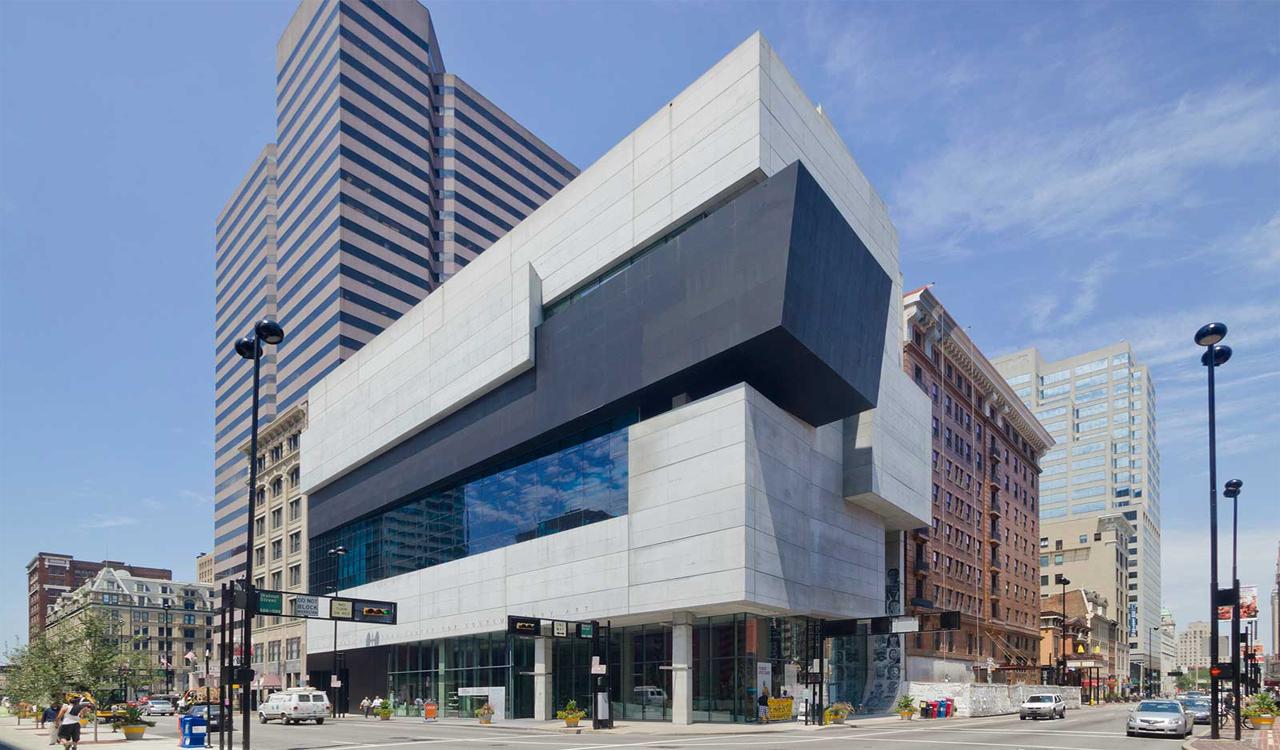
    Several prominent structures were created by Zaha Hadid Architects throughout the world. Many of Hadid’s well-known pieces of art include: Hadid’s first significant contract was the Vitra Fire Station in Weil am Rhein, Germany, which was finished in 1994. Cincinnati, Ohio’s Rosenthal Center for Contemporary Art: The Rosenthal Center for Contemporary Art is a striking structure with a number of overlapping and crossing planes that was finished in 2003. The building’s fluid shape gives off a sense of motion and dynamism that mirrors the vitality of the contemporary art on display inside.
    vitra fire station
    Photographer Unknown

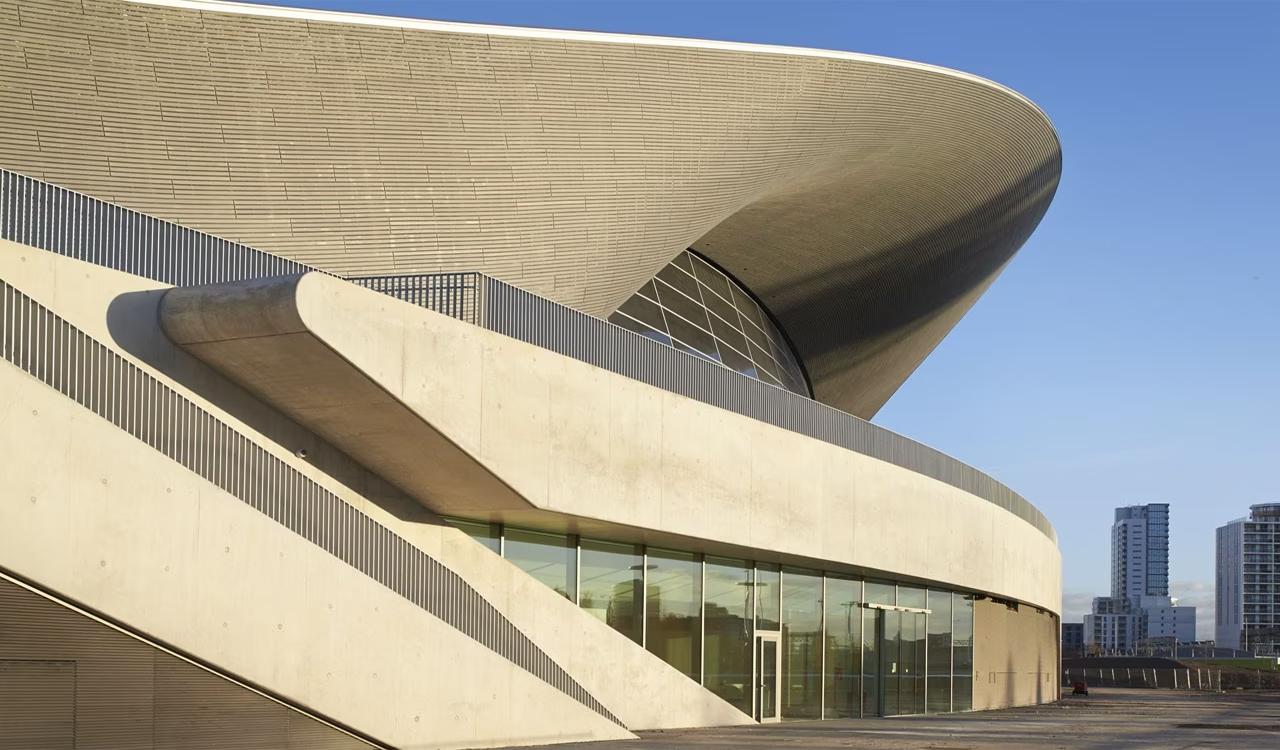
    Other notable works include the Cardiff Bay Opera House, the Guangzhou Financial District, the Bridge Pavilion Seville, the London Aquatics Centre, which was built for the 2012 Olympics, the Guangzhou Opera House, which was finished in 2010, the Salerno Maritime Terminal, the Pierresvives Government Building, the Grace on Coronation Apartments, the London Aquatics Centre, and the Hong Kong Peak Leisure Club, among others.
    Guangzhou
    Photographer Unknown

    In the field of architecture, Zaha Hadid is renowned beyond measure. She received the coveted Pritzker Architecture Award for the first time in 2004 becoming the first women to receive the award. She was the first woman to receive The Stirling Prize, consecutively in the years 2010 and 2011. She was also the first woman to Royal Institute of British Architecture’s (RIBA) Gold Medal in year 2015. She has also received six Honorary Doctorates from universities including Harvard University, The University of Oxford, The University of Cambridge, and The University of Edinburgh, others. She has also been nominated for the American Institute of Architects Gold Medal Award.

    In conclusion Zaha’s talent as described by her professor, Rem Koolhaas, “A Planet in Her Own Orbit” upon graduation, demonstrating Zaha’s talent from an early age. She is one of the most influential architects in history thanks to her sense of style and design philosophy. Her impressive successes are a result of her original designs, which have altered the face of modern architecture all around the world.

  • Zaha Hadid: The Visionary Architect Who Redefined Design

    Zaha Hadid: The Visionary Architect Who Redefined Design

    I don’t think that architecture is only about shelter, is only about a very simple enclosure. It should be able to excite you, to calm you, to make you think. –Zaha Hadid

    Zaha Hadid’s view was that architecture is not just about providing basic shelter. It should have the power to inspire, bring peace, and stimulate contemplation. Architecture, in her eyes, had the potential to elicit a wide range of emotions and thoughts from those who experienced it.

    zaha hadid
    01_Zaha Hadid_©stevedouble

    Zaha Hadid: The Visionary Architect Who Redefined Design

    In the realm of architecture, Zaha Hadid stands as an enduring icon, her indomitable spirit and visionary designs shaping the very landscape of the field. She didn’t just break through the expectations and stereotypes in an industry mostly led by men. Zaha Hadid had an impressive portfolio of more than 950 projects across 44 countries. Let’s explore Zaha Hadid’s amazing life and work. We’ll look at her inspiring childhood, the five key moments in her journey, and the long-lasting mark she made.

    Zaha Hadid: The Visionary Architect Who Redefined Design I don't think that architecture is only about shelter, is only about a very simple enclosure. It should be able to excite you, to calm you, to make you think. -Zaha Hadid
    02_Zaha Hadid_©www.telegraph.co.uk

    Zaha Hadid’s Early Years: A Fabulous Childhood

    Zaha Hadid’s journey began in Iraq during the 1950s, a period of burgeoning modernization that beckoned the world’s architectural luminaries. Baghdad experienced a sense of promise and transformation when Frank Lloyd Wright, Le Corbusier, Oscar Niemeyer, and Walter Gropius arrived as a result of the government’s massive modernization project. Zaha was raised in a vibrant environment, but her parents’ progressive values were also a major factor in encouraging her independence and curiosity. This upbringing would be instrumental in shaping her fearless and confident persona, evident from an early age when, at just 11 years old, she declared her aspiration to become an architect.

    Zaha Hadid: The Visionary Architect Who Redefined Design I don't think that architecture is only about shelter, is only about a very simple enclosure. It should be able to excite you, to calm you, to make you think. -Zaha Hadid
    03_Zaha Hadid, the child_©www.arch2o.com

    Making the Decision – Embracing Architecture

    Zaha Hadid’s educational journey commenced at the American University in Beirut, where she embarked on a degree in mathematics. Yet, her passion for architecture burned bright, and her mother’s encouragement led her to experiment with interior design within the family home. Following the completion of her mathematics degree, she set her sights on London, enrolling at the prestigious Architectural Association (AA).

    Describing her approach during her fourth year at AA, she noted it was “very anti-design” and akin to a “movement of anti-architecture.” Drawing inspiration from Suprematism, a Russian art movement founded by Kazimir Malevich, she sought to break free from conventional architectural norms. The culmination of this audacious journey was her graduation project in 1977. The project, described as “Movement Frozen,” was profoundly influenced by Suprematism’s use of basic geometric shapes in a limited color palette. In this defining moment, Zaha fragmented and abstracted one of Malevich’s works, constructing an entirely new architectural language that challenged conventional design paradigms.

    CityLife Milano
    04_CityLife Milano by Zaha Hadid_©www.urukia.com

    Making a Difference – Graduation Project

    Zaha Hadid’s graduation project in 1977 marked a significant turning point in her career. She started a project that went against architectural traditions because she was inspired by the revolutionary spirit of suprematism. Her remarkable aptitude and creative vision were well-received. Elia Zenghelis and Rem Koolhaas, her teachers, saw her enormous potential. She became a pioneer in the field of architecture with their help.

    exoskeleton' tower, Miami
    05_exoskeleton’ tower, Miami, United States_©www.thejakartapost.com

    Working Hard – Reaching the Peak

    The years following graduation were a relentless pursuit of excellence for Zaha Hadid. By day, she dedicated herself to teaching, while her nights were consumed by fervent work on her architectural designs. Her relentless dedication bore fruit in 1982 when she achieved a breakthrough, winning an international competition to design a leisure club in Hong Kong. Her design, “Movement Frozen,” featured a pure concrete block with sharp angular edges that converged at a central focal point. This groundbreaking design redefined the possibilities of concrete. Renowned architectural photographer Hélène Binet remarked, “Concrete became something else, I think, after her.”

    Heydar Aliyev Center
    06_Heydar Aliyev Center by Zaha Hadid Architects_©Iwan_Baan

    Frustrating Rejection – A Career in Jeopardy

    Zaha Hadid’s unwavering pursuit of innovative architectural designs was not without its fair share of setbacks. Notably, the Cardiff Bay Opera House project in 1994 proved to be a challenging juncture. Even though her idea took first place in the competition, many people thought it was unworkable. She was very impacted by the unfavorable response. She said out loud how frustrated she was, stating, “The plaza sections are not the same as a normal building.”. It is not a square building or a rectangle. That project was easy… Could be easily done.” The critique took a toll, to the extent that she contemplated leaving the field of architecture altogether.

    Immersive “Vertical Urbanism” Exhibition
    07_Immersive “Vertical Urbanism” Exhibition_©Courtesy of Hong Kong Design Institute 

    Unprecedented Glory – Hard Work Pays Off

    It was the unwavering support of her colleague and confidant, Patrick Schumacher, that rekindled Zaha Hadid’s passion.

    Together, they overcame the difficulties presented by the Cardiff Bay Opera House project and led Zaha Hadid Architects into a new chapter of its history.

    For Zaha Hadid, the new millennium marked the beginning of a golden period. Many of her imaginative designs were made possible by technological advancements. Her designs became recognized as global icons and were praised by the public and the architectural world.

    Zaha Hadid: The Visionary Architect Who Redefined Design I don't think that architecture is only about shelter, is only about a very simple enclosure. It should be able to excite you, to calm you, to make you think. -Zaha Hadid
    08_Interpretation of A LV Bag_©scalemag.online

    She accomplished something incredible in 2004 when she was awarded the Pritzker Prize, which is comparable to the highest honor in architecture. What makes her accomplishment even more impressive is that she was the very first woman to ever receive this highly sought-after award. She was bestowed with the highly esteemed honor of Dame Commander of the Order of the British Empire in 2012. Even after her death, her outstanding architectural work was still acknowledged. The Royal Institute of British Architects awarded her the Royal Gold Medal in 2016. She was the first woman to get this important award in architecture.

    Architects, designers, and individuals all across the world are still inspired by Zaha Hadid’s legacy. Her amazing journey—from a driven child in Iraq to a well-known architect—shows us the strength of passion, ingenuity, and resolve.

    Zaha Hadid: The Visionary Architect Who Redefined Design I don't think that architecture is only about shelter, is only about a very simple enclosure. It should be able to excite you, to calm you, to make you think. -Zaha Hadid
    09_OPUS Dubai, United Arab Emirates_©Photographer Laurian Ghinitoiu

    Conclusion

    The life and work of Zaha Hadid teach us the value of perseverance, never giving up on perfection, and overcoming obstacles. She was born in Iraq and rose to fame as an iconic figure thanks to her amazing architectural designs. Her five pivotal life events, her artistic endeavors, and her life experiences teach us that anything is achievable with enough dedication and hard work to pay off.