
Tag: economy

  • Re-designing for Better Urban Mobility

    Re-designing for Better Urban Mobility

    Introduction

    Transport systems are a combination of railways, buses, bicycle pathways, as well as pedestrian walkways. Countries with a well-developed public transport system (sustainable urban mobility) are more likely to cope up with the downturn in oil production as compared to cities that heavily depend on cars for transportation. Along with being means of transportation, roads also improve accessibility, help in boosting the economy and sustainability, and create resilient and healthy communities. Installation of a circular junction helps in safer driving and lessens the risk of accidents. 
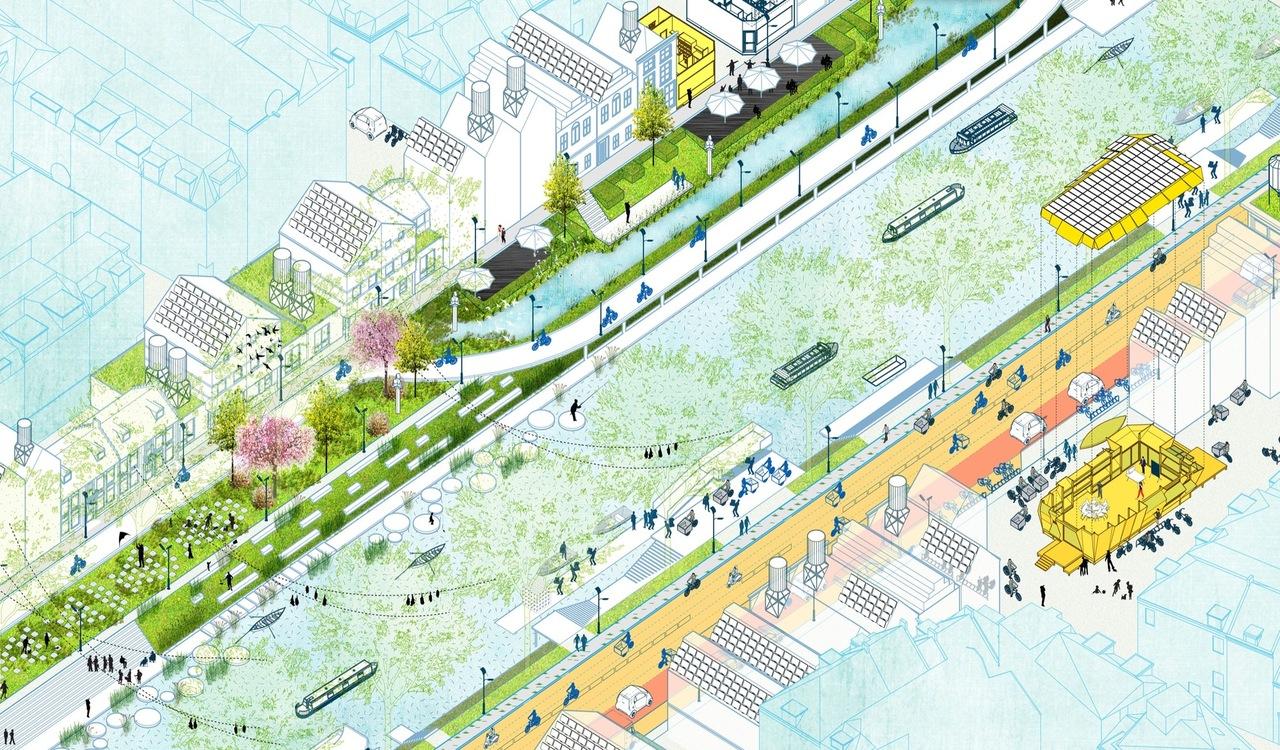
    Re-designing for Better Urban Mobility Transport systems are a combination of railways, buses, bicycle pathways, as well as pedestrian walkways. Countries with a well-developed public transport system (sustainable urban mobility) are more likely to cope up with the downturn in oil production as compared to cities that heavily depend on cars for transportation. Along with being means of transportation, roads also improve accessibility, help in boosting the economy and sustainability, and create resilient and healthy communities. Installation of a circular junction helps in safer driving and lessens the risk of accidents. 
    Photo by Arch Daily

    Issues Faced by Cities

    Every year, thousands of people move from rural areas to cities. This puts an additional strain on pollution, population, increasing traffic, carbon emissions, and climate change. Many cities are also experiencing an accessibility crisis. This makes it difficult for people to move in and around the city. The increasing population and vehicles in cities have led to an increase in the infrastructure demands of the cities, giving rise to more opportunities for accidents. 

    Keeping the focus on the people while designing can give rise to solutions that will help in increasing urban mobility and urban safety, make drivers and pedestrians more responsible and aware, as well as make the cities greener. Spaces for pedestrians are generally created in either parks or other green spaces, or places in the vicinity of nature like waterfronts. This helps the urban planners create more pedestrian-friendly cities. Since streets cover a huge area in the entire land parcel, they can also be put to use to create spaces for pedestrians. 

    Urban Safety

    The World Health Organisation has estimated about 1.3 million people die each year as a result of road accidents. Most of these people are pedestrians, motorcycle riders, or bicycle riders. Most of these fatalities are from developing regions with rapid urbanization. Instead of asking the users to follow instructions regarding the use of public space, city designers and planners must have urban safety in mind while proposing elements of city planning. 

    Enhancement of Urban Mobility

    Creating shorter blocks will give rise to more road intersections. This will give rise to more opportunities to cross the street. The long blocks that have already been established can have mid-sections and junctions added. The creation of shorter blocks will also lead to an increase in these junctions, will lead to an increase in the stopovers for cars. This will help in a reduction of vehicle speed as well as prevent the pedestrians from using un-marked locations for the sake of crossing streets.
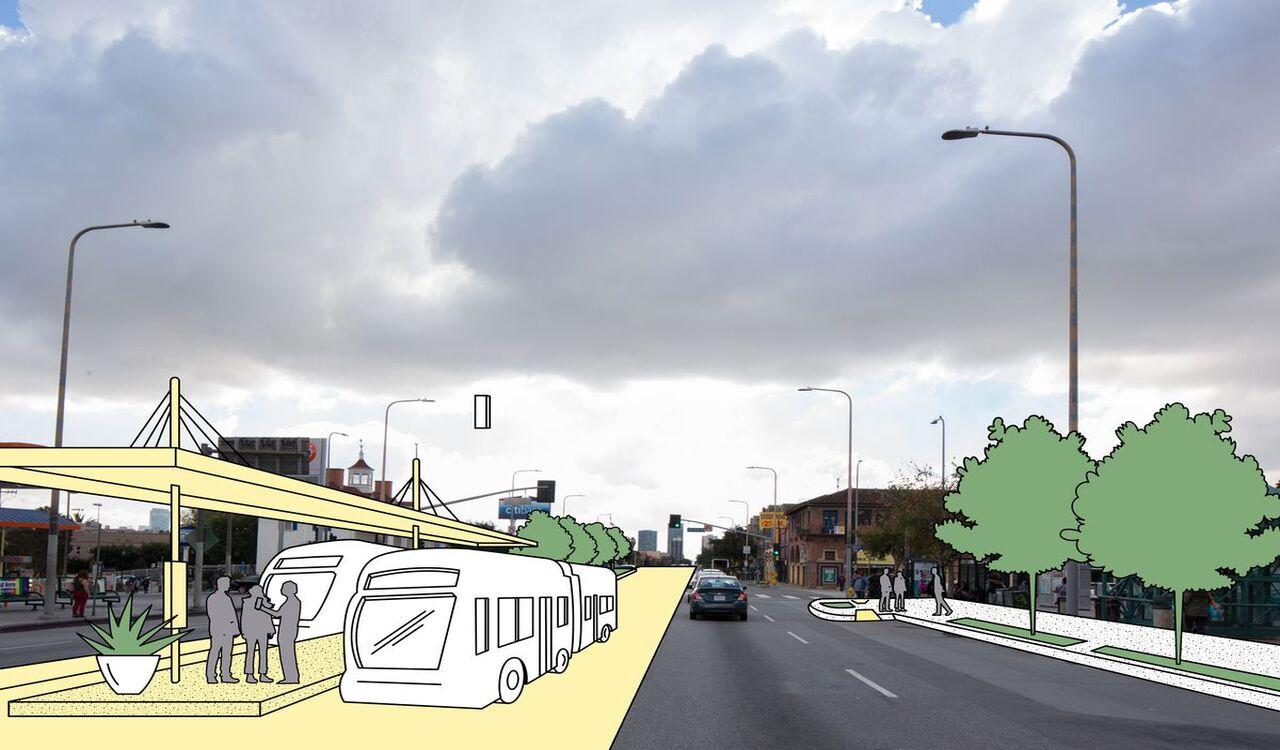
    lanes
    Photo by Archive

    Constricted lanes reduce the distance while crossing the roads and make the drivers more responsible, and more aware of risks, and also lower the vehicle speeds. Raising the pedestrian crossings creates a speed hump on the roads and makes it easy for the drivers to spot the pedestrians in busy areas or areas that aren’t well lit. It also ensures a smooth transition from the sidewalk to the road crossing since they’re on the same level. This enables better access for people with different urban mobility needs, such as a wheelchair, stroller, etc. 
    urban planning
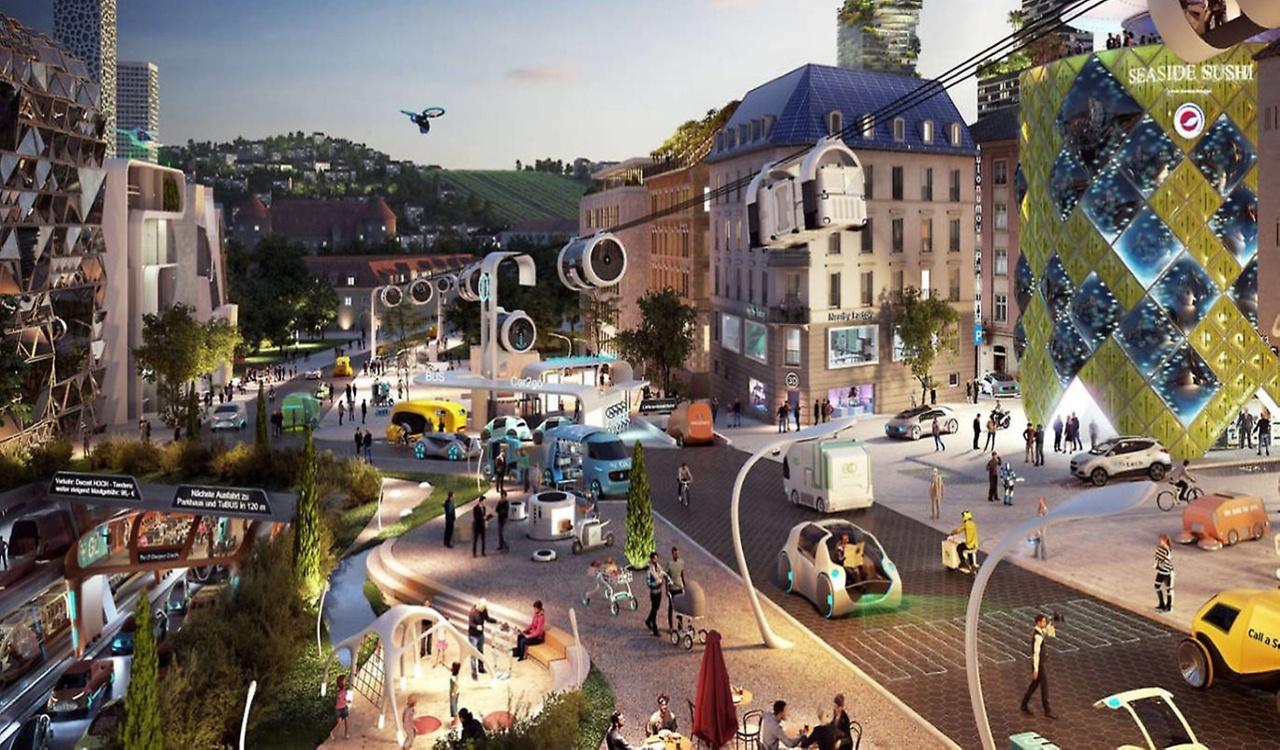
    Photo by Mercedes

    An overall urban planning approach will help in improving urban mobility with mixed-use neighborhoods, compact cities, properly planned spaces, and activities. The provision of facilities such as convenience shopping, public transport, schools, shopping, parks, medical shops, clinics, eateries, etc. enables people to get amenities in the vicinity of their home or workplace. This also enables less travel time, thus reducing the number of vehicles on the street and in turn making the environment cleaner and the city greener as a result of lower carbon emissions. Since the traveling distance is reduced, it encourages people to walk. 

    Sustainable Urban Mobility

    Sustainable urban mobility can be a solution for improving road safety as well as public health. It has become the need of the hour to create sustainable urban mobility solutions because around 70% of the world’s population is projected to be living in cities. Sustainable urban mobility will improve transportation and accessibility for people, thus creating a better life and atmosphere for people. 
    neighbourhoods
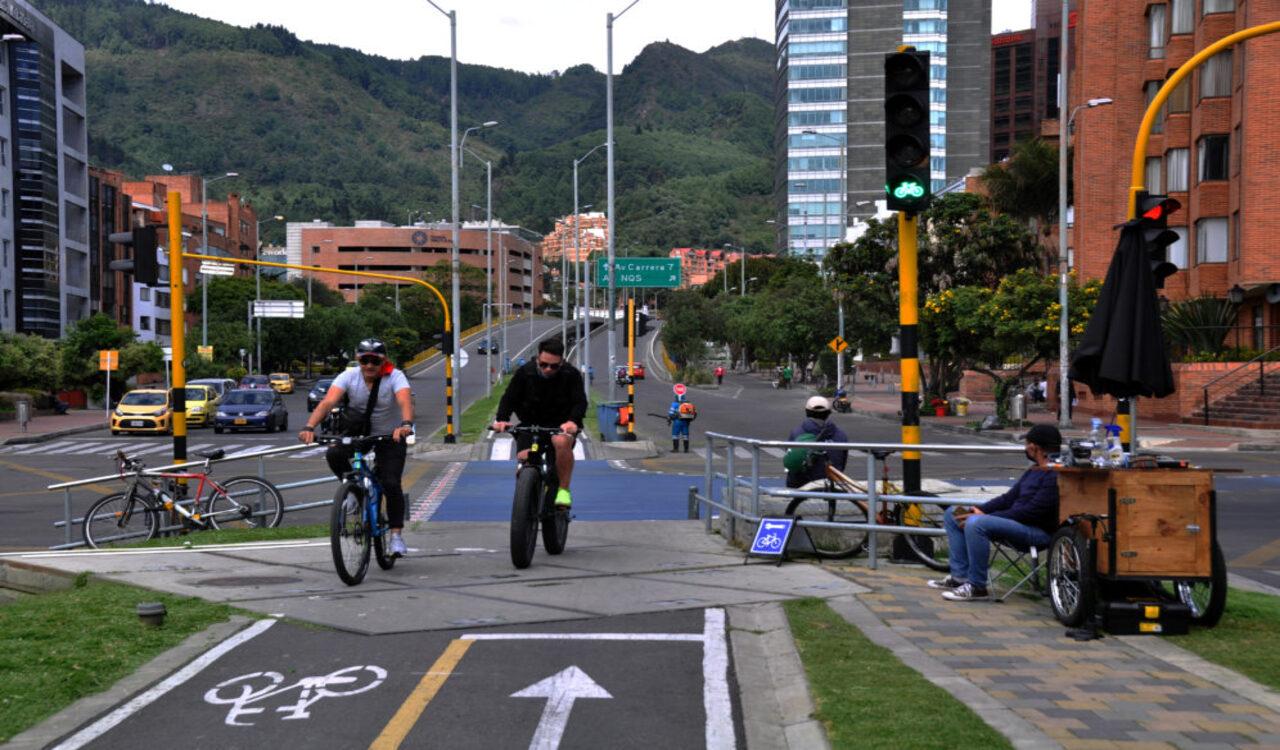
    Photo by ITDP

    All the neighborhoods should have a provision for trains, buses, metros, or any other means of public transport. Other means of transport like walking or bicycles should be considered while designing for mobility. Other commonly used modes of transport like cab-sharing, electric scooters or cars, bike-sharing, etc. should also be given a thought while designing for sustainable urban mobility. 
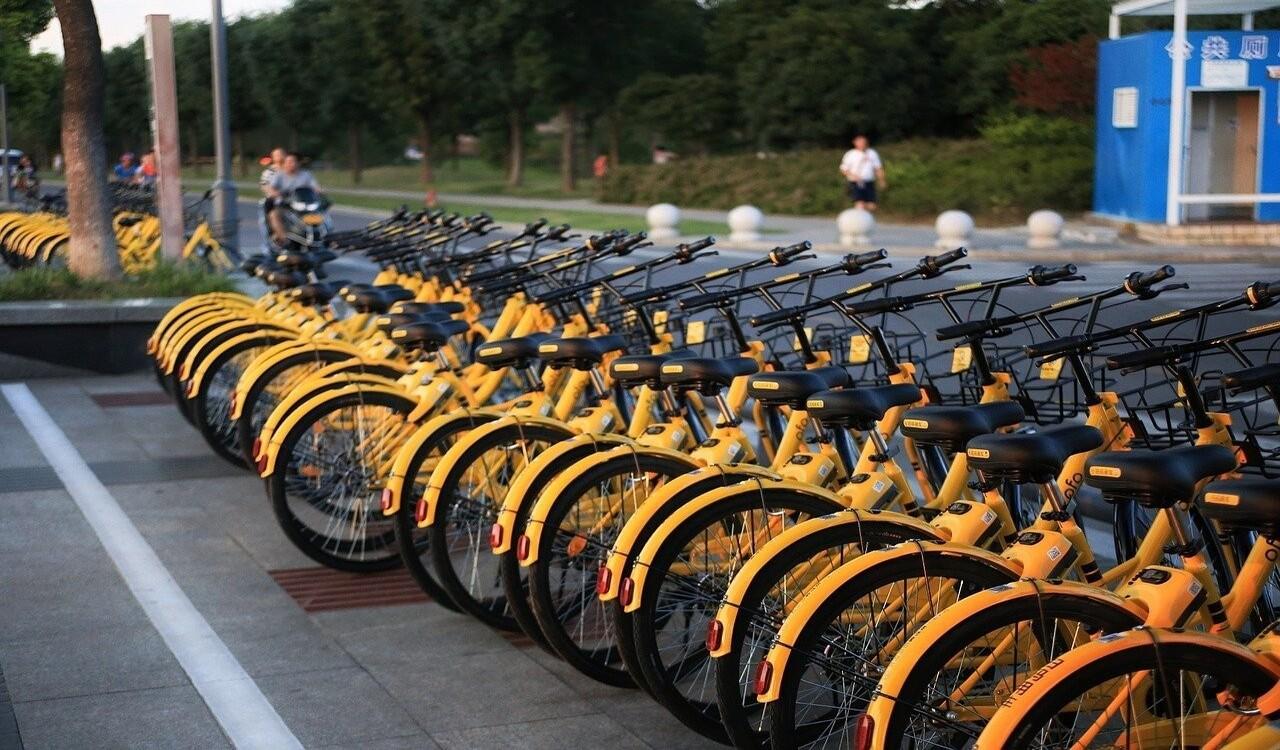
    modes of transport
    Photo by We Forum

    Provisions such as parking spaces, drop-off points, and charging stations should be made for such modes of transport. Easy access to facilities in and around the city for all genders and age groups should be enabled along with broader sidewalks improving pedestrian mobility. A balance of the built-up areas and green spaces is mandatory to restore stability in the city’s environment and on the outskirts. 

    Inclusive Green Mobility

    While the introduction of electric vehicles might help up to a certain extent, improved changes are required to make the urban mobility systems net zero. These changes refer to how people move in and out of the city. The green mobility systems need to be un-partial and not biased towards a specific community. It has the potential to reduce social inequalities by creating better accessibility for diverse communities in major economical centers. Green mobility systems should imbibe the idea of a universal design. This also involves considering the needs of people who are differently abled or belong to an older age group. 
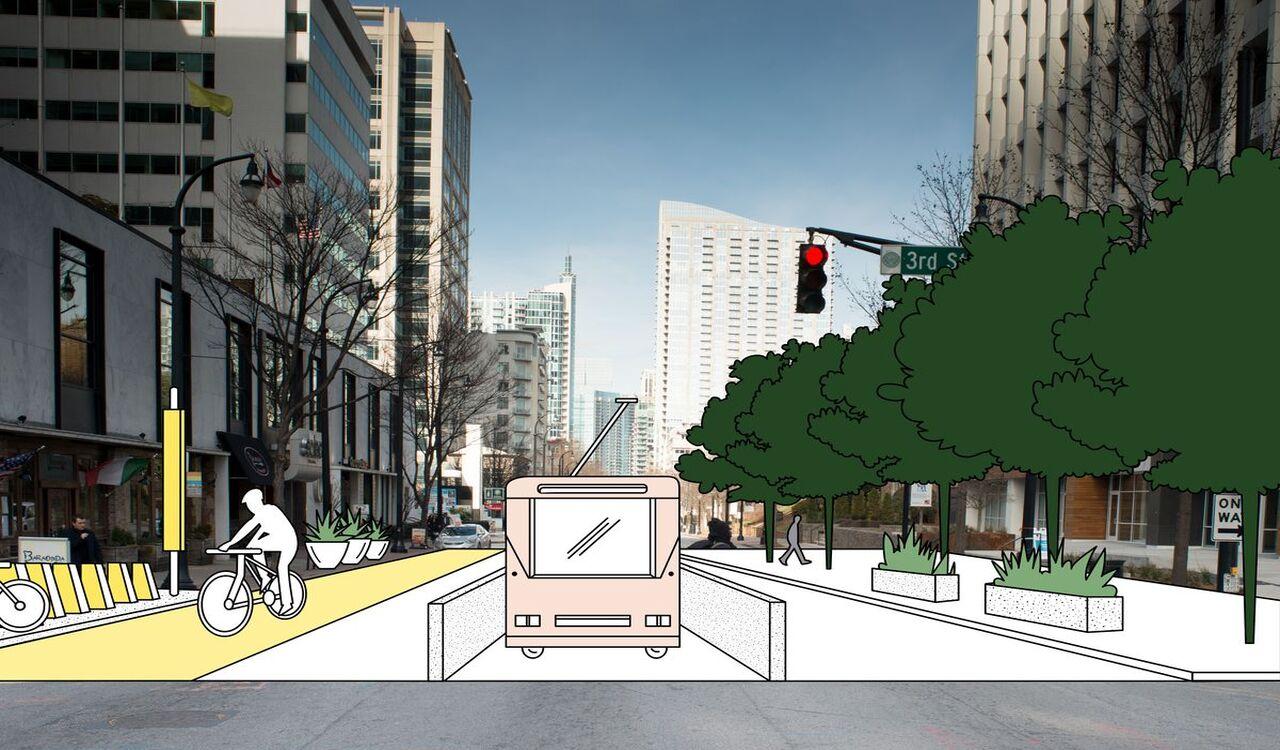
    urban designer
    Photo by Archive

    According to Urban Designer Andrew Cameron, urban mobility should be perceived as ‘the glue between our buildings’ instead of merely a transport challenge. Connectivity is the fundamental issue while designing for mobility. The local economy of a place is improved by creating mixed-use neighborhoods with all the amenities like offices, schools, leisure activities, retail, etc. within a 10 minutes walking distance from each other. Focusing on the basics instead of jumping on transport systems would be beneficial. 

    Creating walkways that are lined with trees will be aesthetically pleasing, will provide shade to the pedestrians, and encourage walking. Pedestrians should be given priority over vehicles while designing spaces. Learning the patterns of movement and the context of a particular area helps in bringing out a design that creates a proper flow of circulation of people and vehicles. These movement patterns will create the conditions that will lead to a better mobility system. 

    The creation of aesthetically appealing green spaces for recreational activities that feel safe and quiet leads to increased walking. Intensive research of many communities and their culture might help gain a broader perspective on the movement and help in forming strategies for urban proposals for all-inclusive green mobility. 

  • Gap between Architectural Profession And Academics: A Fascinating Revelation of Architectural Truth

    Gap between Architectural Profession And Academics: A Fascinating Revelation of Architectural Truth

    Introduction

    The mid- 18th century was defined as an industrialization period. Where because of an increase in mass production, iron, steel, and glass was produced in a bulk and it then became the architectural language for a much longer time in the Architectural Profession. These global, as well as local changes, forced India to combine its culture and education. Hence, schools of thought, such as NID (National Institute of Design), Sir JJ School of Architecture along with many more were born, where the pedagogy was to integrate craftsmanship into education by doing a combination of art and technology. 

    Towards The Current Education Scenario

    Many schools of thought have similar pedagogy of learning by doing, and this seems clear in many institutes and design schools. Although the intent of these schools and institutes was relevant in the past, it does not fit properly in today’s rapidly changing, uncertain precedent times. 

    Lately, the imbalance in the economy, climate change, and the rise of technology through Artificial intelligence has forced professions like Architecture to take a pause, observe, analyze and redefine the profession in the practice and also in its education. Both this professional practice and its education go hand in hand. For the education of such a profession and the preparedness of the students who would be thrown into uncertain times like this, it is the right time to act and bring the change for betterment. 

    The current education of architecture in India is mainly focusing on design development and solving or fulfilling the programmatic needs and integrating philosophical pillars to support the design concept. Along with this subject, like history, building materials and construction, Structure, workshops, Environmental Studies, and a brief introduction to Professional Practices are also taught.

     It is mandatory to teach and indulge the students in the process of design development, but it is also important for them to view the world from a different perspective. Just introducing the professional practice subject and 6 months internship would not give a student an understanding of the process of design to execution.

    Alterations In The Education Methodology 

    The world is in a state where resilience is more needed than ever. The resilience toward building sustainability, circular economy, redefinition of public spaces, community, business models, and multidisciplinary approach to develop more creative, innovative, and participatory solutions. 

    Thus, keeping these criteria in mind, both architectural practices and education need to upgrade themselves. Including the subjects such as business, philosophy, physiology, sociology, and programming, should be introduced along with the periodical discussion and forums with multidisciplinary subjects and people to enhance and keep updated with the latest technology and advances to rationally solve the problem in a more indigenous manner. 

    Some universities have taken such initiation and have proposed courses such as ‘ Architecture, Computational technologies by New York Institute of Technology’ ‘Master in Design for Emergent Futures’ Masters in Robotics and Advance Construction’ and many more such courses offered by Institue of Advance Architecture of Catalonia’ Online Masters of Science in Biomimicry Degree by Arizona State University ‘ where they amalgamate the core architectural design solving through the tools such as fabrication technology, Biomimicry, Material Research and many more.  

    Architectural Profession
    Neri Oxman,Monocoque,2, 2007   Arts center for arts, science and technology, MIT 

    Implementation Of Advanced Courses 

    Examples of illustrating the practical use of these courses are : 

    Category: Sustainability Award from the James Dyson Foundation 

    The student Carvey Ehren Maigue is an engineer who invented AuREUS where he created the material made from food waste that captures the sun’s UV rays and converts them into renewable energy. 

    This could provide a solution to Climate Change as Maigue says “increase solar energy harvesting density tenfold and opens the way for any building to become its own solar power farm by using AuREUS solar panels as its window”. This could provide a solution to the Circular Economy 

    material

    New material captures UV rays to power solar panels James Dyson Foundation via Euronews 

    Category: Passive Ventilation – Eastgate Center, Zimbabwe 

    Architect – Mick Pearce in collaboration with Arup Engineers 

    It is the country’s largest office and shopping complex, which uses the principle of Biomimicry. This building does not have an HVAC system in it but then also stays regulated during the year with less energy consumption. The building acts as a self-cooling mound. 

    The biomimicry principle was inspired by the termite mound in Africa, which uses the stack effect method hot air is lifted and cool air is below, giving it a natural ventilation system. This was then applied to the building form, resulting in declining use of energy. 

    eastgate
    Eastgate Building  INHABITAT

    Category: Digital Fabrication, Metropol Parasol, Seville, Spain 

    Architect- J Mayor H. Architects 

    The structure is a waffle-like crown structure that mainly comprises concrete, steel, and timber, whereas the exterior is mainly of timber and granite. It is the largest wooden structure. Such a type of structure with geometrical play and material play is possible because of the digital technologies available. The architect said “The form of this building was inspired by the vaults of Seville’s expansion cathedral- I wanted to create a ‘ Cathedral without walls’ that would be “democratic” and also by handsome trees already in the square”

    matropol
    Metropol Parasol Yatzer 

    Studios Practising Such Advanced Courses 

    Examples illustrating the unique approach for their design development 

    Tonkin Liu Architects 

    London, England  

    The firm provides services such as architecture, landscape, and art. It solves the need of clients through the search for optimal design solutions, which are carefully looked at and crafted through its place, people, and nature. 

    They have a unique approach to solving a design problem. Its main inspiration and lesson are learned from nature. Along with the art of storytelling through its distinct characteristics, which would be long-lasting. The last pillar of their practice is technological Innovation, where they have minimum material waste and also embraces the power and technology of computer and new construction method, and new materials to deliver designs that reflect the current era.

    Hence, Nature, Storytelling, and Technological Innovation stand as the main pillar principles for this studio. Below are a few of their projects:

    1. Rain Domes

    Location: Weybridge, London

    Size: 150m2 

    Engineer: Arup 

    Hydrology: Hydra 

    It is an energy-efficient, low-carbon timber building that is situated in between the forest. The form of the building celebrates the rain which travels through the curvature seams and to the central courtyard eventually becoming the reflective pool. The design is proposed in such a way that it embraces the rain and its pattern and the form amalgamates beautifully into the topography. 

    rain dome
    Rain Dome Graphical Representation Tonkin Liu Architects 
    1. Shell Lace Stent

    Use: Medical Device 

    It is tracheal stents that act as a supportive transplant of the trachea and treat collapsed airways. The design is self-expandable, flexed, and inverted. The main design inspiration and principle was from the flower of Calla Lilly petals where they had analyzed the geometric principles of the flower. The stent opens up similarly to the flower does. Thus providing an innovative solution to the medical field. 

    shell face stent
    Shell Lace Stent Tonkin Liu Architects 

    Studio RAP

    Architecture firm in Rotterdam, Netherlands

    The studio’s main focus of the design development is through experimentation and use of computational design methods and digital fabrication where they amalgamate the use of robotic fabrication and innovative design strategy. 

    1. The Float 

    Location: Leiden, NL

    Year: 2021

    Structural Design: Summum Engineering 

    This floating home where was an opportunity to provide a more sustainable home compared to traditional housing, where the crisis of housing shortage is rising. 

    The materials used were CLT (Cross Laminated Timber) and it was then cladded with cork. They mainly used biobased materials to minimize the environmental impact and also generate a healthy interior climate. 

    the float
    The Float Studio RAP 

    Conclusion 

    As we live in unprecedented times, it is necessary for us to continuously grow, adapt, change, differ, rebel, and take action to make the world a better place. 

    Architecture is a beautiful profession where init allows us to experiment, learn and relearn everything to our needs and changes required. Hence, working together with academia and professionals, we can bring a positive change in architectural education courses and practices of it in the real world.

    It is also important to note that all these technological advancements and experimental design approaches are still difficult in India because of many reasons few being, a lack of awareness amongst the designers and hence local people, perhaps not all architects and designers find it helpful and are not willing to change, the major reason could be of funding and support from our government in both education sector and also professionally and hence students who are curious and willing to experiment somewhere end their research partially due to lack of funding.

     But despite all these challenges and difficulties, there is still some ray of hope from our architectural community and our government and our people. 

    This ends with a quote, “Change is the law of life. And those who look only to the past or present are certain to miss the future.” – John F. Kennedy