
Tag: Urban landscape

  • Open Spaces: Important Role in Architecture and Design

    Open Spaces: Important Role in Architecture and Design

    Introduction

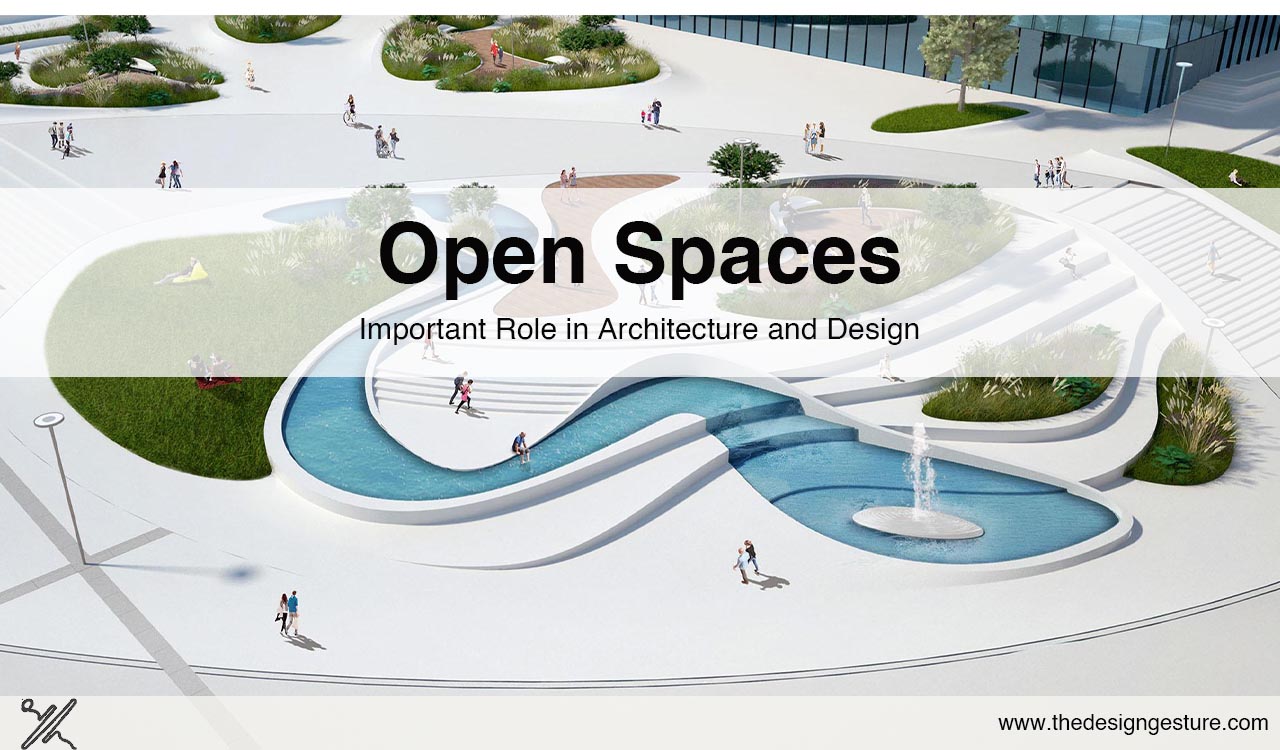
    Open spaces are areas that are consciously undertaken schematically to play out a function in Architecture and design to generate public zones or private utility zones like Parks and Gardens, Natural and Semi-natural Urban Green spaces, Outdoor Sports Facilities, Green Corridors, Amenity, Children and Teenagers, Allotments, Community Gardens and City Farms

    They serve in the category of developed or undeveloped areas under urban development. Most of the public spaces come under government authority, providing people with recreational areas. One such example is the development of the Sabarmati Riverfront in Gujarat state of India placed in the heart of Ahmedabad city.

    Its Function in Architecture and Design

    All the above-discussed open spaces act as a catalyst in architecture and design to experience the urban landscape in nature’s parameters like vegetation, land, fresh air, and water in the utmost opportunistic way with its other various functional and cultural aspects. The fulfilment of housing, agriculture, public buildings, industries, and other utility areas has led to the spike of urbanization because of circumstantial increasing population, leading to more concrete cover and fewer open spaces. 

    Through forces of these circumstances, removal of green lands has been directed for a fateful time, affecting an imbalance of urban biodiversity. However, it has added concerns for government authorities and people to balance our build-up and open spaces. Various steps are incorporated to establish open spaces within or around buildings and cities/towns under the Urban development schemes.

    Government And Netizens Action for Urban development

    Considering this risk to the open spaces, the Government of India has issued city and building bye-laws to plan policies considering the environment. According to the Indian housing ministry’s 2014 Urban and Regional Development Plan Formulation and Implementation (URDPFI) guidelines, open spaces fall under three categories: recreational space, organized green space, and other common open spaces. Urban development sustainably minimizes the inadequate methodology for buildout where nature is characterized less before humans.

    Cities like Mysore and Chandigarh top for the greenest cities of India despite the population factor, one of the Best-planned cities of India and has become an inspiration for other cities to develop their green envelope and improvise their urban landscape for a preferable and healthier environment to live, this has risen the inclusion of open spaces in architecture and design by considering them from the initial stages of designing a building or area

    Advantages of Open Spaces:

    Natural Ventilation

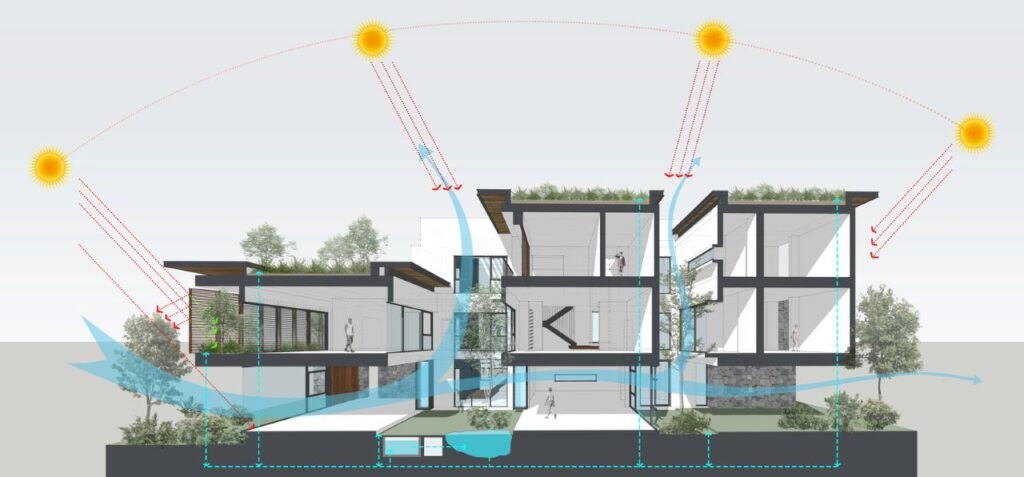
    Open spaces tend to bring the outdoor air indoors by the conventional placement of openings, depending upon the requirement of a building while considering wind direction and velocity of the surrounding environment. It supports energy efficiency in a building by reducing the application of mechanical ventilation. Elements like airflow direction and its distribution play an important role in affecting the overall performance of space efficiently and economically.

    The Architecture and design of Historical buildings in India are the epitome proof. With Art and culture, their versatile capability to establish thermal comfort indoors is commendable makes them exceptionally more fascinating. 

    Like in India, some historical buildings today also operated with no mechanical means because of their architecture and design. One such example is the architecture of Rajasthan State, of India. It holds cities and mahals like the famous “Hawa mahal” or the palace of winds with 953 carved jharokhas or windows, creating the Venturi effect (doctor breeze) air conditioning the entire structure during the hot summers to face the arid climate.

    Hawa mahal
    Photo by Jakub Hałun from Hawa Mahal

    Natural light

    Open spaces provide a medium to have Natural Lighting that plays a crucial role in any building’s architecture and design to engage more positivity in the space and mood upliftment. A high working rate is proven for people who work in spaces lit with natural light. Magnificently, it helps to reduce the use of artificial lighting. That is quite an appreciable factor in today’s times.
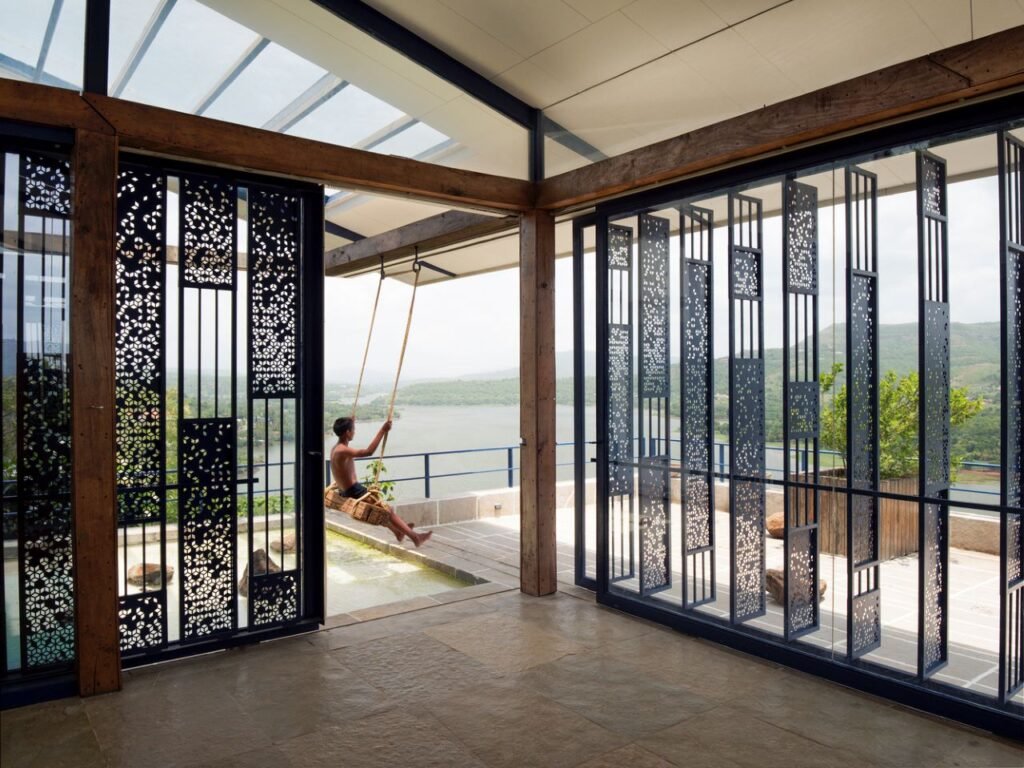
    A Space becomes supplementarily energy efficient with the help of daylight. Hence, saving energy in the best possible way. Natural light not only induces light in space but also adds depth. It can create some astounding effects if used artistically. “Church of the light” building designed by the architect “Tadao Ando “is one such example, like here light plays a symbol of spirituality, accounting a unique and showing the flexible nature of light.

    Sustainability/Energy Efficiency

    Energy efficiency in an urban landscape is achieved through open spaces as it allows Natural light and ventilation. These are dominant factors contributing to making a building sustainable if used in its natural form or contributing to lessen the requirement of mechanical energy that is approximately (35-60%) required for air-conditioning, heating, ventilation, and artificial lighting that affects consumption of energy. Conscious steps taken for it may achieve the target to attain sustainability in buildings, as each type has its distinctive requirement.
    Recreational Space

    Open spaces are developed through landscape architecture to create green outdoors where people relax or gather, away from the hustle of work, and feel comfortably relaxing under the blue sky. Also, these spaces habitats leisure activities. In institutions, offices, hospitals, around residences, and within towns/cities. A community park is a place that encourages people around to engage themselves in an activity like walking, jogging, exercising, playing, or having social meet-ups.

    It acts like a magnet in a city, as it attracts people from all age groups with distinctive cultures and backgrounds, as well tourists to feel harmony with the environment. This urban development makes these spaces active unit zones to relax and play. They offer quality to the lives of people around them as it inclines them closer to Mother Nature.

    recreational
    Photo of Riverfront park, Ahmedabad from oasis

    Human health benefits

    Open spaces are getaway places for people to be close to nature, feel active, and psychologically improve mood and focus. Not too far, we all were in the pandemic situation locked under our roofs and what helped people to feel positive and unconfined open spaces around residences like balconies and Private Terraces. And only allowable access for them to be outdoors and feel nature’s vibe. An individual optimism boosts when they are in such places.

    health benefit
    Photo by Tripleopixel for Deearth Architects from Archdaily

    Indoor-Outdoor connection

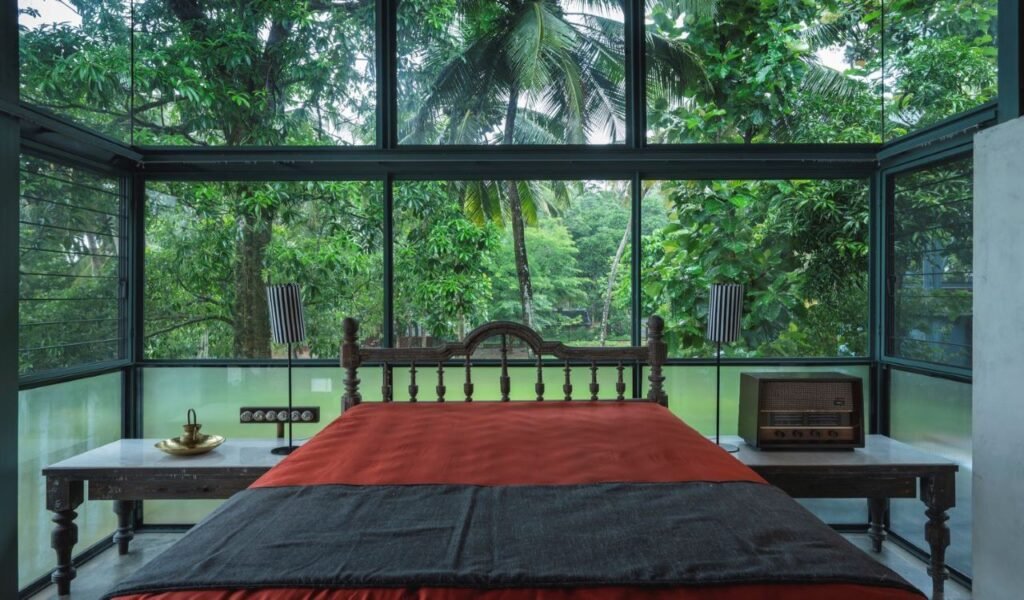
    Open spaces develop a connection between indoor and outdoor spaces, manifesting feelings of independence, less isolation, and more imagination. Indoors are filled with light and break the isolation of closed walls. A seamless transition is possible through large glass facades or windows. This concept of indoor-outdoor connection in an urban landscape is popular in demand today as people have believed in the balance of open and build-up spaces. Landscape architecture makes the vibe of surroundings more relaxed with added vegetation or water bodies to them, makes it more natural and energy-efficientCourtyard planning is one such example of it.

    indoor uotdoor
    Indian habitat centre – Photo by Madhu Kapparth from Forbes

    Indian habitat centre” in New Delhi, India, is being designed with a core courtyard holding vegetation, water bodies in such a way that it creates an image of a mini tropical forest and allows constant regulation of improved quality air. A-frame roof structure uniquely catches the eye because of its aesthetics. While functionally permitting, the required amount of sunlight and shade that purely justifies the concept of an urban landscape.

    Vegetation

    Open spaces can also be transformed through landscape architecture into green spaces with habitation of vegetation, creating a soothing environment. It controls the microclimate and escalates the aesthetics. The Green colour makes you feel optimistic and refreshed. That encourages better physical and mental health. Hence, it is highly in demand today because of its property of being a mood lifter.
    Open space as a catalyst!

    There are unlimited benefits of open spaces for an urban landscape. It entails a building with better quality to function and gain sustainability from its design features. Hence, a balance with the natural environment is paramount for today’s building to breathe and provide a thermally comfortable, fresh indoors responsive to the climate outside.

    We all know global warming and how it is striking the lives of all living beings or how huge may be the future circumstance. This issue may decrease if all architecturally designed spaces or buildings are in coexistence with the natural environment. To bring about energy efficiency and sustainability for our mother planet Earth.

    Landscape architecture is the primary element for urban landscapes to achieve a human and nature balance. Open spaces all together make this world a better place to live in by promoting better physical and mental health for all living species.

  • Best Urban Architecture Ideas You Can Apply To Your Home

    Best Urban Architecture Ideas You Can Apply To Your Home

    Introduction

    Trends in home décor have changed, and urban architecture design has taken the front seat. Its popularity has grown over the years and has gained much attention from many new homeowners. This is mainly because of its minimalistic yet impactful designs. It holds a sophistication that you can achieve in any home.

    Urban architecture is all about making any space functional with an industrial look. There’s a particular comfort aspect that’s taken into consideration. After all, the idea of urban design is to borrow, not duplicate, the city life and industrial designs.

    Developing a sense of urban architectural design is as simple as the idea itself. Continue reading to find out how you can turn your home into a place that’s simple, contemporary, and a place of comfort, with a clean industrial finish.

    urban architecture

    Flooring and structure in Urban Architecture

    Wood, brick, metal, stone, and concrete are stapled materials used in urban design. Having any of these materials be part of the floor, wall, or frame will instantly switch up the place and bring that urban design element to your home.

    Adding decking and an open room to a portion of your backyard to complement your home’s interior is good. It allows you to blur the lines of your interior and exterior spaces. This represents the idea of continuity and utilizes and stamps on the notion of the homey industrial look.

    Contrast in colours

    Urban

    Urban design is also all about contrast. It involves contrasting sizes, textures, saturation, and materials.

    Use warm and neutral or low-saturated cool colours to add a subtle pop to your living spaces. It’s not about taking an industrial design into your home but taking the design and making a home. The area or room determines the type of urban feels, such as having more calming and casual elements in the bedroom and more lively and contrasting elements in the living room.

    Add warm, vibrant paintings against a dull grey or cool brown background. Vibrant flowers placed in a grey, black, or even steel, glass, copper, or bronze vase can add the perfect contrast. A good rule of thumb while deciding what colour you should pick that doesn’t become an eyesore to you and visitors is to use warm colours on selective things that are there to draw attention.

    Contrast, but make it urban

    flooring

    Allow the more significant items and elements like furnishings, walls, flooring, and, in most cases, the room’s rugs to adopt more neutral colours. Then allow the more minor and removable objects to give the room more life with their warm colours. The warm colours bring the right amount of warmth and welcome to a conventional urban design. Use it to create the perfect pop for a room.

    It’s not to say that the smaller objects should always be warm. However, when contrasted with something dull, even a neutral-toned contemporary decoration piece can bring interest to a room.

    For that perfect industrial style look, choose wood or stone flooring. It’s hard to imagine marble or tile flooring in a warehouse. Nothing says industrial-like open spaces and cold floors. Building a loft to occupy some high ceiling space and adding a new area for you to design is a good idea.

    Make it comfortable

    The style, patterns, and décor should remain abstract and sleek, and furnishings should be soft and cozy. This is where contrast comes into play again. You can put soft, fluffy throw pillows, cushions, and a fleece over a full-looking sofa with plush shag rugs to add comfort and contrast. Choose things that can soften and add to the comfort of a rather harsh, sculpted structure.

    comfort

    Play with scaling

    Unlike the classic minimalist look, urban architecture is there to make a statement. A great way to achieve this is through scaling. Think plush soft bedding and pillows surrounded by sleek furniture or a big extravagant chandelier over a minimalist staircase. Your home is an empty canvas full of numerous possibilities.

    scale

    Urban design architecture is, at the core, an industrial look. However, it is not as aggressive as the eyes. Colours should stay at 30% and 70% in contrast to each other. This allows more emphasis to be sprinkled around a room. You can keep it simple, sleek, and modern, but soft and comfortable. Play with contrast, but keep it simple. Spaces should remain minimalistic without the possibility of adding clutter. Have talking points in every room with something that makes a statement. It is for the best that you don’t go overboard with it. An eye-catching painting or hanging light fixture would do the trick quite nicely.

    We hope this article proves insightful and inspires you to try urban architecture ideas for your home.

    Author

    Crist Roy

  • An Extraordinary Tale of Two Cities: Paris Before and After Haussmann

    An Extraordinary Tale of Two Cities: Paris Before and After Haussmann

    One of the most important urban reform initiatives in history was the Haussmannization of Paris, also known as the Second Empire restoration of Paris. Prefect Georges-Eugene Haussmann was designated by Napoleon III to supervise the conclusion of this extensive urban planning project, which was carried out in the city of Paris between 1853 and 1870. The project’s goal was to update the city and make it more aesthetically pleasing, functional, and hygienic. This endeavour allowed the city to be transformed from a mediaeval maze of winding alleyways into the broad boulevards and public areas that are present today.

    The Haussmannization of Paris was a difficult project that involved redesigning the road network, setting up new sewage and water systems, and creating new parks and public spaces. This article will overview of the history of pre-Haussmannization Paris and need of the Haussmannization, as well as Haussmann’s Plan, the city’s transportation infrastructure, sewage system, and building facades, as well as the societal impacts and outcomes from Haussmannization.

    Introduction

    Paris’ renovation was one of Napoleon III’s primary concerns. He wanted to create a London with lots of open space. In addition, it came about as a result of the need for more efficient housing, wider streets to prevent riots, and sewer system building to stop the spread of illness. Baron von Haussmann, the Seine’s prefecture, was the author of Napoleon’s dreams. He constructed the wide avenues and stunning vistas that make up the Paris of today.

    Georges-Eugene Haussmann was given the job of leading the reconstruction of Paris by Napoleon III in 1853 with the goal of modernising the city and bringing it in accordance with Second Empire ideals. A huge budget and basically limitless power to seize land, demolish structures, and construct new public spaces and roads were given to Haussmann. He set out to create a brand-new modern metropolis that was more appealing, hygienic, and functional. Over the course of the next 17 years, Haussmann’s enormous urban renovation initiative would transform Paris into a modern city.

    Pre-Haussmannization Paris

    Pre-Haussmannization Paris
    Photographer Unknown

    Before the Haussmannization, the streets of Paris were a tangle of clogged, dirty, and disease-ridden places.  The small, winding lanes were not intended for the expanding population and were regularly clogged by vehicles and pedestrians. Parisians used the Seine River or the streets as waste dumps because of the city’s inadequate sewage infrastructure, which resulted in an offensive odour and the spread of diseases like cholera.

    The city was vulnerable to fires due to a lack of fire protection measures and the use of flammable materials during building. The city’s buildings were shoddily built and prone to crumbling, and its infrastructure was outdated. The city’s packed streets and subpar living conditions made it difficult for the government to maintain order, and riots and uprisings were frequent. Additionally lacking in public places, the city was dominated by crammed, decaying structures.

    Need of Haussmannization

    The city’s mounting issues in the middle of the 19th century were what led to the Haussmannization of Paris. In order to transform Paris into the modern metropolis we know today, the Haussmannization project was undertaken in the middle of the 19th century. Overall, Paris was in severe need of modernization and repair.

    Haussmann’s Plan

    Photographer Unknown | Source: https://www.pinterest.com

    A major renovation of the city took place as a result of Haussmann’s Plan. It aimed to create a city that was more sensible and efficient. The Paris plan of Haussmann was built on a few basic principles. He first intended to create a network of wide boulevards that would allow for more open traffic flow within the city. Additionally, he wished to swap out old, unhygienic buildings for more modern, attractive ones. In order to give the city’s buildings a more cohesive and organised appearance, he wanted new construction to be created in conformity with a set of universal architectural standards.

    In addition, he planned to build a large number of public areas, like parks and squares, to provide the populace of the city some much-needed space. New water supply and sewage infrastructure were planned as part of the concept.

    According to Haussmann’s plan, a large portion of the city would be expropriated and destroyed, particularly in the centre where congested traffic was caused by small streets and densely populated buildings. A network of broad, straight boulevards that cut through the city were constructed by Haussmann and his team of engineers, connecting significant sites and creating a more effective transit system.

    Road Network

    Photographer Unknown | Source: https://www.pariszigzag.fr

    The development of the new road system was one of the most important components of Paris’ Haussmannization. Engineers working for Haussmann created a network of wide, straight boulevards that sliced through the city, improving traffic flow and facilitating government law enforcement. The purpose of the newly constructed boulevards was to link the city’s important attractions and to create a more logical and practical city plan. Additionally, these new boulevards had streetlights, benches, and trees to improve the atmosphere for both automobiles and pedestrians.

    Sewage System

    The construction of a brand-new, state-of-the-art sewerage infrastructure was an essential part of Haussmannizing Paris. Inadequate and outdated wastewater infrastructure in the city contributed to unsanitary conditions and disease outbreaks. Haussmann’s plan called for the construction of a vast network of underground sewers to carry waste out of the city and deposit it elsewhere. This new system was put in place to replace the previous one, which used open gutters. The improved sewage system provided a great contribution to public health and cleanliness by decreasing the spread of disease in the city.

    Photographer Unknown | Source: https://www.wikimedia.com

    Building Façade

    Under Haussmann’s plan, the city’s structures were also supposed to have a more cohesive and structured appearance. It also required changing the exterior of the buildings. To do this, he created a set of architectural guidelines that new construction had to adhere to. Paris’s dilapidated buildings that flanked its twisting streets were demolished and changed with more aesthetically pleasant and hygienic ones.

    The new buildings constructed during the Haussmannization era were required to feature ornamental facades, balconies, and broad windows, primarily on the second level, and to be at least five storeys tall, with a constant height and style. A neoclassical façade was added to the newly restored city. Shops are located on the ground floor. The city’s regularity gave the impression that it was more appealing and well-organized.

    Photographer Unknown | Source: https://www.mymodernmet.com

    Social Impacts and Outcomes

    The Haussmannization, a profound social change in Paris, took place. Paris is now a modern, efficient, and clean metropolis thanks to the initiative. The city has a new, modern appearance thanks to the construction of a new road network and the modification of building exteriors. Thanks to the project’s new parks and public spaces, the city’s residents now have much-needed green space.

    Haussmann insisted he would not compromise in his convictions. He expelled the poor from the city by destroying the areas where they lived. The Haussmannization had various unfavourable effects as a result. Around 350,000 people were forced out of their homes as a result of the construction of the new boulevards and the destruction of the old structures, especially those who lived in slum regions. It became more difficult for certain people to purchase homes in the city due to the higher pricing of the new structures. The upper class also demanded nicer residences in the city’s heart.

    Conclusions

    In the middle of the 19th century, Paris underwent a huge urban change project known as the Haussmannization. The project’s goal was to build a city that was more contemporary, effective, and hygienic. According to Haussmann’s Plan, the road system had to be reorganised, a new sewage system had to be built, building facades had to be renovated, and new parks and public spaces had to be built. The initiative had important societal effects and results. The Haussmannization of Paris continues to be a crucial lesson in urban architecture and planning despite its numerous shortcomings.

    The project served as an example of how urban planning may be used to create aesthetically pleasing, functional cities that meet the needs of their residents. Additionally, it illustrated how crucial careful planning and collaboration between the public and private sectors are to accomplishing such goals. After undergoing the Haussmannization process, Paris emerged as a beautiful and useful metropolis that serves as a model for modern urban design and architecture.

    In conclusion, urban planning cannot be successful unless both the functional and aesthetic aspects of the city are developed. In addition to serving as a transit corridor, the road aids in bringing the public’s impression of the city together.

  • Landscape Urbanism: A Fresh, New and Greener Approach

    Landscape Urbanism: A Fresh, New and Greener Approach

    Landscape urbanism is a concept of urban planning along with the landscape. It is the planning of cities, towns, or other urban areas not through infrastructure or built form but with the art of landscape. The term ‘landscape urbanism’ was first coined in the 1990s and since then it is evolving according to techniques and modern approaches.

    According to Sarah Kathleen Peck, she states, ‘Landscape urbanism is a mode of thinking about the design and functioning of cities that places landscape architecture as one of the first steps in urban development, rather than the last.’

    History of Landscape Urbanism

    The word landscape urbanism came into existence by Peter Connolly when he was exploring the field of landscape architecture, urban planning together with architecture in late 1980s, to reach new boundaries.

    Landscape Architecture

    Landscape architecture in the 1960s was based on designing public or private gardens and was considered the last step of architecture planning. But with the emergence of botanists, urban planners, and landscape planners, and their collaboration to create a bridge between urban planning and landscape to manage cities. These principles were mainly derived by Ian McHarg, Peter Connolly, and Charles Waldheim.

    Industrialization was the era in which planning and construction were at their worst phase i.e the dark age. Due to the rush of migrants from rural to urban, the planners realized that only construction of roads and buildings were not an effective way to develop a city where one can raise a family, this thought led to the initialization of new urbanism that is around ecology.

    Importance of Landscape Urbanism

    This concept of landscape urbanism inhibits not only the planning of the city but also works on technical management like water management, infrastructure, and biodiversity and moves a step towards sustainability.

    Landscape as Urbanism – A general theory a book by Charles Waldheim the author presents a clear picture on how to rethink and develop cities in collaboration with the landscape. Landscape as Urbanism examines works from around the world by designers ranging from Ludwig Hilberseimer, Andrea Branzi, and Frank Lloyd Wright to James Corner, Adriaan Geuze, and Michael Van Valkenburgh.

    Landscape urbanism

    Through various chapters, he tries to explain how the landscape has evolved from the renaissance to industrial cities and later to the early 20s with urban planning, and how the landscape plays a vital role to maintain the social and cultural order of the contemporary city.

    Important Ideas

    Some important ideas by James Corner in Terra Fluxus for the process of designing

    According to him, Landscape urbanism is the dissolution of two words, ‘landscape’ and ‘urbanism’. With this, he derived four themes-processes over time, the staging of surfaces, the operational or working method, and the imaginary.

    Process Over Time

    Which states that our life and future should grow considering the ecology and environment, therefore one should respect the surroundings while urban planning.

    Staging of Surface

    While city planning is due to a lack of horizontal space, the development is done vertically. But according to this theme, horizontal alignment should be considered rather than depending on vertical alignment.

    Working Method

    While designing an architect should adopt new technologies of the environment and move accordingly.

    Imaginary

    Limiting the new construction of traditional urban infrastructure and developing according to social and geographic conditions and opening scope for new imagination.

    Genesis

    Frank Lloyd Wright’s – Broadacre plan

    Frank Lloyd Wright's - Broadacre plan

    Urban Landscape Architecture

    Every city once was a swamp filled with landfills or nooks or corners which are unplanned. These parts of the city need to be planned and not just with infrastructure but with beautiful elements which can enhance and add value to the urban public space. Urban landscape planning is taking a piece of land big or small, corner or centre analyzing, evaluating it to make the place interesting and useful.

    Process for Planning

    • Assessment of the issues
    • Site survey
    • Site analysis
    • Plot plan
    • Site plan
    • Structure and utility blueprints

    Elements of Landscape Urbanism

    Today urban planning aims to develop cities in collaboration with natural surroundings. This is the requirement of the hour in the time of global change. Urban landscapes must be designed to meet the needs of today and the growth of tomorrow.

    Safety and transportation

    • Streets and sidewalks
    • Parking lots
    • Signs
    • Transportation infrastructure
    Transportation infrastructure

    Public Spaces

    • Site Amenities
    • Parking
    • Restrooms

    Cultural preservation

    • Public artwork
    • Historical monuments
    • Local colleges and universities

    Residential Living

    • Noise and safety
    • Commute
    • Proximity

    How to Merge Landscape and Urbanism

    Vegetation – Plantation and tall trees help to slow down stormwater and increase the groundwater, this, in turn, will prevent surface water runoff to drains where industrial pollutants are present which can be harmful to the cities growth. Also, the groundwater increase will help to provide effective water for usage for citizens. Tall trees will also provide shade in public areas and streets. The shade will therefore cool down the region both outside and inside creating a comfortable environment.

    Green belts- Green belts refer to preserved wildlife corridors, streams, parks, wetlands, coastal dunes, and other natural spaces in a city. This helps to preserve wildlife and create a safe way between wildlife and city dwellers. By preserving this wildlife and insects, urban landscaping can ensure that honeybees, birds, and other species continue to bring calmness to city dwellers.

    Park Pockets- after the covid times, planners need to ensure to create spaces with pockets for playing and breathing clean and purified air to stay fit. Small pockets and also individual gardens should become a necessity for better urban planning.

    Benefits of Urban Landscape

    Environmental benefits

    Climate Change

    Social Integration

    Physical and mental health

    Food security

    Historic Urban Landscape Project

    • This project is started jointly by UNESCO, Government of India and Madhya Pradesh to conserve the historical and cultural values. It is being initiated in the cities like Orcha and Gwalior.
    • These two cities were added in the list of UNESCOs world heritage cities under its urban landscape city programme in December 2020.
    • The expected changes under this project for Gwalior will be chemical treatment of Mansingh Palace, Gujri Mahal, Sahasrabahu temple and other heritage structures

    Bill and Melinda Foundation Campus

    Bill and Melinda foundation campus converted a 12-acre parking lot in Seattle into an ecological and social interaction hub. The foundation’s requirement was to help all lead healthy, productive lives. This project was designed by Gustafson Guthrie Nichol Landscape Architecture. Over the years. The industrial activities contaminated the site with chemicals which led to the isolated site.

    The transformation was done to the streets which developed into furnished sidewalks with amenities and elements. Inside, there is a space for global meetups and a passage. The center has a tree-covered plaza and the local ground has meadow-like drifts of grass. Rainwater harvesting is also present to make the landscape more green

    Bill and Melinda Foundation Campus

    Place Making

    Placemaking is a multi-disciplinary process that uses an urban planning approach to plan and design public places with the aim to promote people’s health and well-being. This can be a private, government, or community initiative to utilize urban spaces and bring them to the maximum benefit of the citizens.

    Place making

    75 Hours- Placemaking Marathon

    Placemaking marathon is an initiative under the Smart Cities Mission which promotes cities to develop one or more public spaces within 75 hours.

    The three key principles for making a placemaking project impactful are:

    Light, quick, and cheap transformation– while keeping citizens at the heart

    Build for the citizens and by the citizens to co-create a brave and bigger future together

    Anchor with events that educate citizens and celebrate our public spaces.

    Pahari Bus Stand at Chetak Circle, Udaipur

    The street chosen for placemaking as it plays an important role in connecting many important landmarks, the site acts as an unauthorized parking space.

    • The major development which happened is the planning of dedicated zones for street vendors and parking.
    • For pedestrian safety traffic calming elements were introduced
    • For social interaction , interactive zones are created.
    Pahari Bus Stand at Chetak Circle, Udaipur
    Before
    Pahari Bus Stand at Chetak Circle, Udaipur
    After

    Conclusion

    Similarly, many other projects are started by the government for effective urban development, the most famous is the smart city initiative which is in process in many cities. With a smart city mission aiming for a digitally forward city simultaneously working towards a greener world.