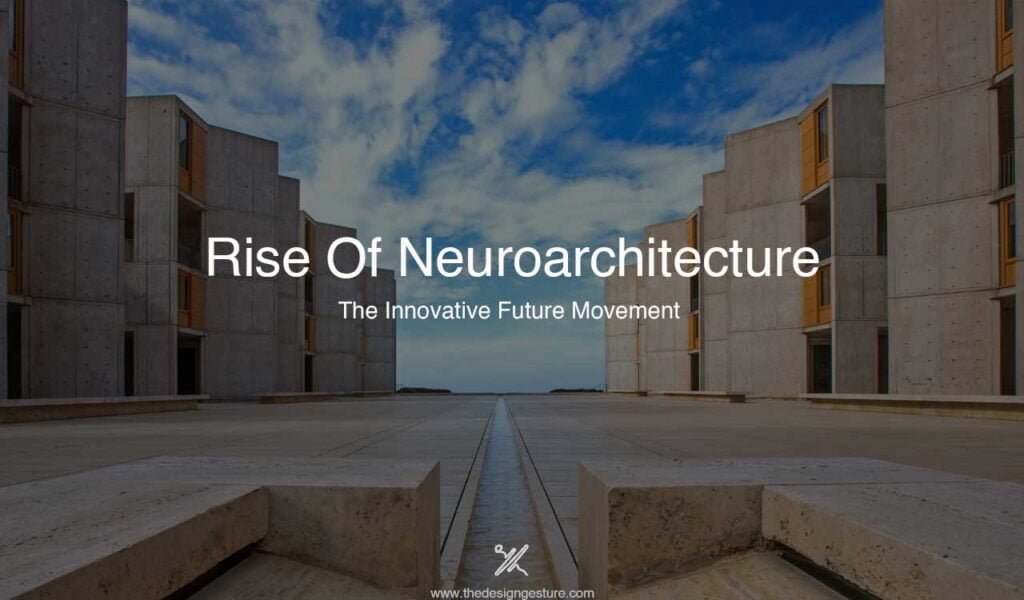
Author: Guru Prasath

  • How can a city make you feel good exactly ?

    How can a city make you feel good exactly ?

    What makes a good city? For most urban planners would answer the urban fabric- the streets, the blocks, and the buildings. In “Great Streets”, Alan Jacobs, Professor of City and Regional Planning at the University of California, found that good streets have narrow lanes (making them safe from moving cars), small blocks (making them comfortable), and architecturally rich buildings (making them interesting). In the future, the streets will be augmented with advanced monitoring technologies, making the city “smart”. All of these would make a city look great, but do not make the people feel great about their city.

    Good and smart street design is important. But what matters is the well-being of the people living in it. It is important to know how people feel in the cities. The article explores the city concepts adapted from “Restorative cities: Urban Design for Mental Health and Well-being” as a way to create a feel good city.  

    Green and Blue city

    Green city

    Greenery has become part of almost every building that is built today in terms of environmental and psychological concerns. Integrating nature into the city has always been proven to reduce stress and anxiety. The city of Vancouver, with its building policies, is geared toward ensuring that every resident of the city has a decent view of the mountains, ocean, and forest in the north and west.  

    The city of Vancouver: How does a city make you feel good?
    The city of Vancouver_Photo by BBCFuture

    While we are familiar with the psychological effects of greenery, we are unaware of the factors that determine these effects. For example, the impact of greenery on mental health is modified by the factors such as proximity, amount, quality, and biodiversity- in other words, a large expanse of grass hardly has an impact when compared to a variety of greenery.

    At the same time, greenery at even the modest and the most artificial levels such as community gardens, or the unpleasant connotations such as the wild plants in the cemeteries have a positive impact on the mental health and is found to reduce the psychological stress. Even a parkette has a profound impact on mental health. Evidence shows that simple things such as the number of trees planted in the boulevard of the city determine the mental health of its inhabitants. 

    Thus, a green city is not placing a park at the core of the city or introducing greenery in every building. It is understanding the impact of every factor of greenery on the psychology of people and planning the city according to it.

    Blue city

    While the Green city is the buzzword in Urban design, there is hardly any light shed in the blue city. Blue city talks about the impact of water on the cities. Research shows that water, in both natural and artificial environments, has similar psychological effects as greenery.

    Neighborly city

    Designing a neighborly city means encouraging social interactions in daily life. On the contrary, people in larger cities work hard to avoid interaction and even eye contact with strangers. Jennifer Silvershein,a therapist in Manhattan, says when we dissociate in cities, we are choosing things like headphones, that do not bring us down as the noise of the traffic does. We assume that we are focusing on what makes us feel good avoiding the external surroundings that cause stress and discomfort with headphones and phones. But Colin Ellard, Professor of Psychology in the University of Waterloo, says that crowding and noise in the city cause anxiety and lead to poorly regulated emotions.

    On the other hand, Dr. Glen Geher, from the study of evolutionary psychology says that “Up until about 10,000 years ago, when agriculture took hold, humans were evolving to have social connections in smaller groups, and life today in big cities doesn’t match those historical conditions”. He also notes that being surrounded by a high proportion of strangers is unnatural and we are fighting this evolutionary mismatch.

    Ellard says that while it is important to maintain mental health in an urban setting by using headphones, it is much more important to maintain shallow relationships, i.e. nodding your head as a way of greeting or smiling at someone you recognize. We avoid interactions to keep ourselves safe, but the avoidance harms our mental health and stops us from connecting with the world. 

    Social isolation is seen to be the major risk factor for the mental health of people. And so, it is crucial to design cities in a way that encourages social connections and relationships. William Walton was the first who advised urban planners to arrange the artifacts and exhibits in the public spaces to nudge people and make them interact with each other. He calls this process “Triangulation”.

    Shared space
    Shared space in an apartment_Photo by Archdaily

    Thus, the urban design must promote these shallow social relationships in as many ways as possible- in terms of housing by providing shared spaces, on the sidewalks of the streets by promoting interpersonal relationships, and designing parks that facilitate social interactions. 

    Sensory city

    Assessing the ‘form’ and ‘character’ of the spaces is the standard idea of urban designers in planning. The planning of cities is often restricted to the functional and aesthetic needs of the people. Urban designers mostly conceive cities through their eyes and sight becomes the only sense involved in the design of cities. The sounds, smell, feel of the air, tastes, vibrations, and movements are eliminated from the focus of planning, i.e. we design roads and buildings that are aesthetic and functional but do we consider the crowdedness of the buildings and noise of traffic in the roads in a way that they affect our well-being?

    While managing to meet the modern urban needs, we should also need to understand how the places affect our mental well-being, and how a place’s sound, feel, smell, and taste influence the experience of people who spend time in or around it – or simply pass through it. For example, Prof. Collin Ellard’s findings articulate that street-level facade with low complexity shows low interest and pleasure in people, while complex facades have a positive impact on the people. 

    Pruitt Igoe housing complex, which was built in 1950, with 33 featureless apartment blocks, became a place of crime, squalor, and social dysfunction. Critics argued that the wide-open spaces in between the modern high rises discouraged the sense of community and encouraged crime in the community. They were eventually demolished in 1972. The lack of behavioral insight into the modern buildings of that era led the community to social dysfunction. Thanks to advanced brain studies, we now know how buildings and cities can affect our mood and well-being and our brains are attuned to the geometry and arrangement of spaces we live in. Yet, the design of cities tends to stay away from it. 

    Pruitt Igoe housing
    Pruitt Igoe housing complex_Photo by BBCFuture

    Science is increasingly telling us that there are far more opportunities to leverage the sensory experiences in the city. Research has provided evidence that people’s mental well-being is influenced by “green” surroundings, the presence or absence of other people, the quality of the air being breathed, and other sensory experiences. Thus, a sensory city should have a quiet place, similar to a sonic refuge with fresh air to breathe, streets with interesting and complex facades which evoke curiosity, and sidewalks lined with several trees that keep the pedestrians calm and soothing.

    Inclusive city

    The factor of who cities are designed for tends to be specific, and others who do not fit into it have to rather shape themselves into the city rather than the city shaping their needs. For the people to make the most of the design opportunities, the built environment should be accessible to all, and everyone needs to have a sense of belonging and meaningful access to them.

    Spatially inclusive

    People living in high-rise apartments have limited access to green spaces and those living in the deprived areas and compact urban areas are devoid of access to greenery. For example, a population of low socio-economic communities in England had been found to have an increased risk of circulatory and cardiac diseases as they were exposed to lesser green areas. The Bike commuters in high-density Mumbai areas said that they are practiced with the traffic and chaos in their daily lives, but the psychological results show them hyper-stressed. Thus, cities must be spatially inclusive so that all spaces in cities have equitable access to everyone to meet their social and psychological needs.

    Absence of greenery in Mumbai slums
    Absence of greenery in Mumbai slums_Photo by Mumbai live

    Socially inclusive

    Similarly, public spaces unintentionally exclude a specific group of people. For example, the absence of ramps and designed accessibility excludes the old and physically challenged from the space.  Another good example is that men are more likely to cycle and women are deterred by safety concerns. Men often travel to and fro between home and office, and so linear tracks of bikes work well for them. Whereas women travel from place to place, sometimes with a child and so it won’t be a good choice. 

    Layla Mc Cay says, “Don’t campaign for women to cycle more, rather engage with providing proper lighting at night and redesign infrastructure that is inclusive to women’s needs.” She further says that Co-creation is an important part of equitable cities and inclusiveness does not end in issuing surveys. It is meaningfully bringing people together to think about their needs and to help the design of spaces.

    Active city

    Popularly known, today’s roads are designed for cars instead of people who ride on them. We live in a world where we can’t walk to work or take stairs to the floors. It makes people in cities unhealthy and inactive. An active city, by definition, is one that is continually providing opportunities in the built environments to enable all its citizens to be physically active in day-to-day life. 

    Active mobility

    Environmentally active

    Human-powered mobility or Active mobility becomes the priority of an Active city. Active mobility is not just about the act of walking or cycling through spaces, but rather about the act of moving, by the act of using spaces, social participation, and influence on city life. It is evident that walking is a conscious mode of transport and it is meant that people will experience their immediate environment with greater depth. It promotes familiarity with the place and makes us feel safe and competent. 

    It became clear that well-connected areas with high-quality infrastructure have a positive influence on the well-being of residents when walking and lingering. According to brain studies, we could say active mobility in which we use our body physically, lets us easily understand and better remember our surroundings than passive transport in a vehicle. 

    
Active mobility
    Active mobility in cities_Photo by uitp

    Socially active

    Mobility is a means to maintain social relationships as it is the way to overcome distances and meet friends. Active mobility fosters this relationship by promoting random encounters which strengthen our connectedness to the people and space around us. So, people feel more connected when they are actively mobile. 

    Physical activity in public spaces

    The increasing challenge in creating an active city is that 90% of our daily lives are spent indoors. As there is a growing attachment to smart devices, cities must encourage and ensure spaces in which people are deactivated from the overstimulated smartphones and become physically active. For example, a city should have places where people gather as a community, engage in physical activities, such as sports, and eat healthy food.

    Feel-good city

    All these said and done, how does a city make us feel good? As said earlier, living among millions of strangers is unnatural to us as humans. To tackle this evolutionary mismatch, we have to make people in the cities feel good. “If you feel positive, you are more likely to speak to a stranger”, says Ellard. 

    Although many things make people positive, the thing that makes people feel negative about living in a city is the constant feeling of getting lost or disoriented. Kate Jeffery, a behavioral neuroscientist, concludes from her experiment that to feel connected to a place, you need to know how things are related spatially. That is, you need to have a sense of familiarity with the space and a sense of direction in the streets. For instance, the Seattle Central Library, which won multiple awards and is admired by architects, is found to be a notoriously disorienting building. 

    Seattle Central Library
    Seattle Central Library Escalator_Photo by BBCFuture

    Dalton says that the longest one-way elevator sweeps the visitors from the ground floor to the upper reaches with no way of descent. And it leaves the people to take a different route when they return. There is no conscious sense of movement in the library, which makes people lost and disoriented when they return to the ground floor. It makes the people confused and leave the building as soon as they find a way to get out. The scenario goes similar to the cities. Cities with no sense of direction and which fail to give a sense of familiarity as home also fail in making people feel good. 

    Conclusion

    The objective of a feel-good city design goes far beyond feel-good aesthetics. The city has diverse needs and the design of a pocket park or a public space in a city would not meet the complexity of human needs. Also, Layla Mc Cay says that there is a tendency to design a single intervention to promote mental health. Designing a city for mental health needs to be part of a wider system approach that includes good access to mental health care, housing, and education, as well as addressing poverty and discrimination. 

    A feel-good design of cities should explore the relationship between urban design and social psychology using the tools of neuroscience. A smart city with monitoring devices for energy efficiency and safety is acceptable. But, a city should further promote the use of biometric analysis of urban psychology using wearables, sensors, etc. to become really smart. The architects, neuroscientists, and psychologists must agree on the fact that successful design is not so much about how our buildings can shape us, as Churchill had it, but about making people feel they have some control over their environment.

  • Rise Of Neuroarchitecture: The Innovative Future Movement 

    Rise Of Neuroarchitecture: The Innovative Future Movement 

    Human brains are weird, complex, and driven by a delicate yet robust interplay of various opposing forces. The simple act of walking through a corridor has a perplexing reaction in our brains that is beyond our awareness. As Moverec popularly says, “We are least aware of what our minds do best.” The brain responds differently to every activity in every other physical environment. These responses of the brain are determined by varied factors, such as cognition, culture, form, and configuration of the environment, and even the period of exposure to the environment. Thus, architecture changes our brains and behavior while designing the environments in which we live. Therefore, architecture defines and shapes our lives.

    Neuroarchitecture is a study of understanding how architectural surroundings influence our mental processes and behavior to design spaces that improve our wellbeing. Ancient builders and architects had understood what is at the heart of neuroscience. It is evident in the pyramids, which create a sense of awe in us. But, now, what is new is that we can measure how, and understand why, our brains respond in a way. And, it is where neuroarchitecture comes into play.

    The trend of Architectural imagery

    “Digital has made architectural photography very slick, sometimes you do not know if it is a photo or if it is a rendering and that I find very disturbing” – Helene Binet

    Neuroarchitecture : The trend of architectural renders
    The trend of architectural renders_Photo by rag3dviz

    Within architectural society, there has long been a trend of successful design determined by how aesthetically pleasing the design is. Almost all the past movements and ‘isms’ have ultimately been informed by their aesthetic styles and the philosophies that drove them. And, now it has taken the form of Architectural renders, where people had to create their own experiences of the structures, fully relying on the individual memory and visual impression of the images they are presented with.  

    An architect satisfies the client with an architectural image, leaving the architects to rely on intuition rather than experimental truth. These days, architect’s primary aim seems to be shifting from the well-being of the client to meagerly selling his/her design. For that, they end up showing things in their design that might not actually be that way in reality. For example, they might introduce random greenery in their views without taking into account the species, size, and several plants/trees that the landscape can hold. But because greenery and nature infuse a positive impact on the user, architects tend to show a lot of it in their design images. 

    What does neuroscience teach us about architecture?

    Most of the time, architects are viewed as an added expense to the making of a building. Construction wins over design. Despite the valuable knowledge and understanding of design that they should actually impart to society, architects always become at the forefront of functionality and aesthetics in spaces.

    NEUROSCIENCE
    The grandeur of gothic architecture_Photo by John Townwer

    As architects, we always admire the grandeur and the structural aesthetics of Gothic architecture. We appreciate the flying buttresses, the ribbed vaults, and the stained glass windows as aesthetic wonders and structural marvels. But we do not investigate the reason why such grandeur enchants us. Why is it that it is being a constant inspiration in literature and film, and how do the aesthetics of the gothic architecture affect the people? This is because our process works at the level of recognition rather than analysis, that we recreate the same buttresses and ribs to impose grandeur in a structure, and the knowledge behind the aesthetics of the structure remains hidden. This hidden knowledge can be brought about by neuroarchitecture.

    Neuroarchitecture and Neuroscience

    Neuroarchitecture is a discipline that seeks to explore the relationship between neuroscience and modern architecture in designing buildings and other artificial structures that make up the artificial environment that humans live in. Neuroarchitecture addresses the human response to the design elements that make up a built environment. Neuroarchitecture is a new movement, which, unlike other movements, is less about architecture and more about humans who experience it. It is based on the premise that artificial elements added by humans significantly impact the function of the brain and nervous system. 

    Measuring human well-being

    Architecture has developed various metrics to measure different parameters of the buildings. The Building Code, for example, provides quantifiable targets for the construction of buildings; it also gives building performance measures such as minimum thermal comfort levels and minimum lighting levels. Etc. LEED has given a metric to measure whole building energy performance. We also measure the holistic performance of the buildings through post-occupancy evaluations. But, neuroarchitecture is the way of measuring the impact of humans on the buildings, which has long been absent in architecture.

    Science is getting better at measuring things. So, why can’t we use scanners as someone walks through the streets to know how it affects the brain? Special cells found in the hippocampal region of our brains are tuned in to geometry and how our spaces are organized. Whenever you enter a room or any environment, these cells navigate and store spatial information in the form of cognitive maps. These cognitive maps can be recorded by the instruments to know how we respond to a space. 

    Eyetracking the streets of NewYork_Photo
    Eyetracking the streets of NewYork_Photo by CCD

    “Pure” neuroarchitecture is based on instruments of neurobiology, such as electrocardiograms, electroencephalograms, or sweat sensors, to objectively measure how our bodies react to certain architectural stimuli. For example, the eye-tracking sensor is used to find out where people’s attention is focused and which architectural elements had sought their attention. It revealed that people tend to ignore blank facades but respond positively to buildings that mirror the structure of the human face.

    Neuromorphic architecture

    Neuroarchitecture examines and even measures the impacts of buildings on human brains. But what if the brain functions are fed into the design of buildings and it informs how a building is to be built? It opened up a new form of study known as neuromorphic architecture. Neuromorphic architecture approaches the design of rooms, buildings, and buildings integrated into a landscape by lessons from modeling brain computation. Neuromorphic architecture contributes to Smart Architecture, which changes according to our needs and brain functions. It works in parallel with artificial intelligence. 

    Ada- an interactive play space through neuromorphic architecture
    Ada- an interactive play space through neuromorphic architecture_Photo by researchgate

    The current technology has reinvented the automated control of lighting and temperature of the spaces through apps. Through these progressions, our surroundings can be programmed to respond to our actions to assist us with the help of technology, which could be accomplished by neuromorphic architecture. For example, a stair that transforms into a ramp, when it recognizes a wheelchair, can assist elderly and physically challenged people. An interactive kitchen that would help a blind person navigate through it.


    Finally, today, with neuroarchitecture, we can understand human brains and their psychological responses to design. Neuro studies prove that facades that are complex and interesting to have a positive impact on people in an urban environment, whereas plain, monotonous facades affect negatively. A large expanse of grass hardly impacts our brains when compared to a variety of greenery. Hence, the knowledge gained from biomorphic research by virtual reality, sensors, and other instruments paves the way for designing future cities and buildings that are perfectly aligned with proper analysis of the aesthetic, emotional, and functional values of the built environment.  

  • Can Algorithm Design Interesting buildings?

    Can Algorithm Design Interesting buildings?

    The term “algorithm” has a futuristic buzz, hence it seems like an intelligent thing. We have been personifying them as “algorithm design buildings”, “algorithms generate”, and “algorithms predicted”. But Data [and so algorithms] are dumb, as Judea Pearl says. Algorithms, by definition, are a process or set of rules to be followed in calculations or other problem-solving operations, especially by a computer. It is a specific way in which a programmer implements functions.
    Algorithmic design

    Algorithmic design is the process of using algorithms to create a product or a building. Explicit design is when a designer has an idea in his/her head and draws it. Algorithmic design is when he states the goals of a problem and lets the computer generate iterations. In an algorithmic design, a designer begins by defining the set of rules- for example, the amount of sunlight a building should receive, or the energy consumption of the building, which is optimized with the criteria (set by the designer), presenting an array of definite patterns. The algorithmic design consists of two major tasks:

    1. the task of getting to the mathematical core of a problem, and then

    2. the task of identifying the appropriate algorithm design techniques based on the structure of the problem. Identifying the design techniques becomes comfortable when the formulations of the problems are recognized. Algorithmic design not just provides solutions to the problems, but forms the language that lets us express the underlying questions.

    Algorithms in Buildings 

    In this era of sustainability, people are mindful of the environment and the next generation of users. Therefore, there is a need for the buildings to be cleverly designed to later function efficiently. Using algorithms in building design enhances the efficiency of architects from just addressing the issues of structural, thermal, and electrical performance to optimize them with the highest reliability.

    The application of algorithms in architecture includes the recent work of the Passion facade in Sagrada Familia by Burry. The whole facade has emerged as a parametric model built by Burry mathematically conceptualized such that every single component is inextricably linked dimensionally to its neighbors. The columns have an individually unique angle towards the center of the composition and the building. 

    passion facade: Algorithm design
    Passion facade of Sagrada familia_Robin Tomilson

    Potential for Algorithm design in Buildings

    A simple example of understanding the potential of algorithms is the functioning of traffic lights. Our first response to traffic lights would be, “Why should I wait on an empty road just that the signal shows red?” Now, with better sensors and algorithms, we can design better traffic lights that handle the traffic flow more intelligently with the data under different conditions that may vary on a minute-by-minute scale.

    traffic signals
    Traffic signals_Photo by Getty images

    At a basic level, algorithms can be a powerful tool for providing exhaustive information for the design, construction, and planning of a city or a building. It can refine, reform, and even create new designs (given the rules). Algorithms can work out the layout of rooms, construct buildings and even change them according to human needs. As a whole, algorithms can be a new toolbox for architects in the information age to realize and improve their ideas.

    Limitations of algorithmic design

    Though computer-generated algorithms help design structurally and energy-efficient buildings, many other factors differ according to human needs at different times and in different places. This is stated by an example of Istanbul stadium by Micheal Arbib, a computational neuroscientist. After the match between Liverpool and Juventus, the hotel near the stadium (in the street) becomes the place for the enjoyment of the Liverpool fans and it bothers the hotel guests. He says that algorithms or AI won’t be able to make both the fans and the guests content, taking into account that different streets might have been closed and each one prepared to intelligently meet diverse sets of human needs.

    liverpool
    Celebration of Liverpool fans_BBC

    He also asks, if the street is a major traffic artery, how does the street damp down the traffic noises. The resolution of the problem would be using noise-reducing earphones (individual) or encouraging the use of electric vehicles and public transport (political). But in both cases, the solution involves the awareness of the designer and the people and not the intelligence of algorithms. Thus, algorithms cannot design future cities. With the use of algorithms, a designer could design buildings that respond to the users of the space, rather than designing spaces that are themselves intelligent and aware of the users and surroundings.

    Humans and Algorithms

    As said earlier, data are dumb, and algorithms too. But humans are not. The statement holds even when the data are big and the algorithms are fancy. The intelligence of humans toward big data and machine learning leads the path to the realization of future cities and buildings.  The intelligence of humans can be expressed in two ways, according to Arbib.

    1. The ability of humans to interpret various domains forms the information infrastructure.

    2. The potential of the public to interact with the subsystems to update their needs either through direct communication or through sensors that measure according to the currently set criteria. 

    Steward Brand in his book, “How buildings learn: What happens after they’re built” Steward Brand clarifies the misconceptions about machine learning in architecture. He focuses on how people adapt to the buildings they built decades ago. But he does not state buildings that change according to human needs. He addresses the fact that when people renovate a building, there is no accumulation of the history of the building. Rather, they renovate to seek their current needs.

    He says that with the data collected (through algorithms) from the past, we shall be able to renovate the building better, learning the history. Above all, it is not only the transmission of data but if the analysis of the data is transferred to the next generation, we would be able to bring specific solutions to new problems concerning the context and the time at which it is built.

    humans and algorithm
    Humans and algorithms_Shutterstock

    Hence, to make sense of the information age, we should understand the role of humans and the limits of data and algorithms. Rather than replacing designers (as many have predicted), algorithms are becoming an efficient tool for designers. The version of the future where algorithms are designers becomes a dystopian ring.

  • Famous Art Piece of Prague: The Dancing House

    Famous Art Piece of Prague: The Dancing House

    Introduction

    Prague is a living architecture museum and a strong representative of the continent’s history. It celebrates the architectural innovations of the past, as it boasts a rich collection of styles with Gothic at the heart of the city and includes medieval, baroque, and functionalist styles. The tourists flock to the city to experience the well-preserved history. The architecture of the city had also given a sense of stability to its social, economic, and political conditions. 
    Prague has a great fortune of stable climate and withstanding the scary bombing among the European countries during World War II. Most of the buildings emerged as historical renovations and preservations, while the exceptions received negative attention from the Czechs as well as some tourists. One such exceptional building that is located in the heart of Prague on the Vltava River, with Gehry’s undulating facade, in full view of the Charles Bridge and Prague Castle, is the Dancing House.

    The Dancing House

    Location: Prague, Czech Republic

    Architects: Vlado Milunic, Frank Gehry

    Interior: Eva Jiřičná

    Typology: Office 

    Style: Deconstructivist

    Developer: Nationale Nederlanden group

    Designed in: 1992

    Land Area: 491 m2

    Built-up area: 5400m2

    No. of floors: 8

    Materials used: Concrete, Steel, Glass

    Visual Piece of Art

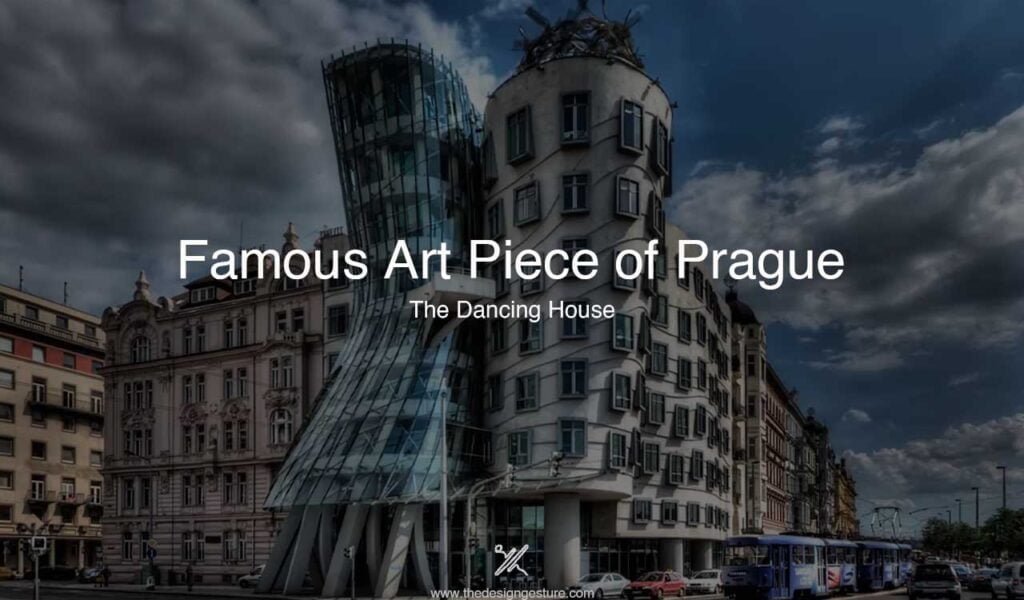
    Considering the contrasting political scenario of Prague at that time, architects Vlado Milunic and Frank Gehry conceived the building as two opposing and dramatic elements. The two parts of the building are distinct and clearly resemble a pair of dancers, Fred Astaire and Ginger Rogers.  Like the two dancers, the dancing house is an interplay of contrast between the static Yang (Fred) and the dynamic Ying (Ginger). While the “Fred” reinforced concrete tower occupies a static position on the corner, the “Ginger” dynamically complements it with a slim steel structure with curved columns and glass infill.

    Fred building

    Fred’s tower stands as a solitary circular pillar. It is made of concrete panels, representing the masculine nature of Fred Astaire, which is topped by a metal mesh hat. There are 99 concrete panels that are curved uniquely in three dimensions, obviously reducing the space in the interior. Under the construction of the hat of 7m diameter, there is a large skylight that lights up the restaurant on the upper floor. The tubular hat, known as Medusa, got its name from its shape. 

    CONCRETE PANELS
    The concrete panels of the facade_Photo by Stacbond

    Ginger building

    Unlike Fred, Ginger’s tower is supported by curved columns that shape the elegant body of Ginger Rogers. The Ginger building is a glass tower with a double-skinned facade and a functional air gap between the two tires. It has metaphorical legs and forms a skirt-type structure, and under that area; we have the entrance of the building. And thanks to the columns, the building does not block the river.

    The rest of the building is similar to Fred’s tower. To create aesthetic illusions, the windows were aligned such that the building seemed to have an extra floor than the adjacent buildings. At the same time, the seamless protruding windows allowed the building to connect to the surrounding Art Novae houses. Though the building is tangled by many criticisms and rejections, it is slowly being accepted as a visual piece of art that adds beauty to the skyline of the city.

    House of exhibition

    The asymmetric design of the building resulted in the asymmetric interior. Every room is asymmetrical and the floor plans of every floor were different with different purposes. The building houses 9 floors with 7 floors above the ground and 2 underground floors. The lobby and the first floor were filled with commercial areas, and the second to the sixth floor had offices with a restaurant on the ninth floor. Most of the floor area was used for offices, and the conference rooms were in the basement and on the ground floor. 

    FLOOR PLAN
    Floor plan of The Dancing House_Photo by Archestudy 

     Eva Jiřičná envisioned the interiors of the building as an office. But the complexity of the structure posed many challenges in the effective utilization of interior spaces. Though the restaurant at the top, known as Celeste, offers a view of the Charles Bridge and Prague Castle, it is not one of the most popular folk visits to the public. With all the twisting columns with every column being unique, the mass production of columns was impossible. Also, the columns throughout the space made optimization of the carpet area almost unfeasible. Though it still functions as an office building, it is currently restricted for the public to visit the Dancing house as a part of exhibitions at the Art Salon S. 

    Political reflection

    The building was designed as a reflection of the existing politics in Prague. Under Communism, till 1989, architects were responsible for the mass production of industrial buildings with an emphasis on efficiency, ease of construction, and the production of functional and democratic buildings. Neither aesthetics nor individuality of the buildings were considered. This is also the result of the economic and social conditions faced by the European countries after World War II. 

    SKETCH OF DANCING HOUSE
    Sketch of Gehry_Photo by TED

    However, with the fall of the Communists, the Fred and Ginger building is anything but efficient, easily constructed, and economic. It is rather the reflection of individuality and aesthetics that Prague had been missing since the war. The design of the two towers, static and dynamic, inspired by the famous interwar dance couple, Fred and Ginger, is an analogy of a society starting to move towards changes. This can be excessively justified as the sculptural art that acknowledges the change in society. But there is still a question of whether the building meets its functional and social needs.

    Scary nightmare

    Firstly, placing a deconstructivist structure at the heart of the Gothic-Baroque city created harsh reviews from the public and architects. With the escape from traditionalism, regular geometries, and historical styles, the dancing house has gained the nickname “Drunk House” from the public. Though politics drove the construction of the building, attention had to be given to the cultural and economic conditions of the city. Seen as ‘Out of Character’, the design idea failed to integrate the building into the history of the place, which was actually the original concept of the project.

    SCARY NIGHTMARE
    The scary nightmare_Photo by Archestudy

    The building sits at an intersection of two of Prague’s busiest roads, where vehicular traffic is dense. Instead of easing this dangerous situation, the Dancing House does just the opposite. The Ginger’s “skirt” protrudes out into the street and cuts off a large portion of an existing sidewalk, forcing pedestrians closer to the street while encouraging vehicular traffic to speed up. This made the building a scary nightmare for the public. 

    Now, after 25 years, the building is an important piece of post-modern architecture and has gained the prestige of an inevitable tourist spot. The building makes a distinct and radical statement to the city of Prague. However, the Dancing House would have stood as a Cultural innovation in architecture if Gehry’s sketch had been transformed into a meaningful architectural space rather than as a sculptural piece of art. 

    About the designers

    Frank O’ Gehry

    Frank Gehry is a renowned Canadian Architect known for the daring forms of his buildings such as the Guggenheim Museum in Bilbao, the Gehry Tower, and the most recent Second century Project for Warner Bros. He is considered one of the international ‘starchitects’ and has received numerous awards, some of which includes the AIA Gold medal and the most prestigious Pritzker Prize in 2020.

    Vlado Milunic

    Vlado Milunic, born in Southern Europe, is a Czech Architect. He had been doing residences and homes for the elderly and children since he collaborated with Frank Gehry to build the Dancing House. The Dancing House is the first project which got him the name and fame.

  • The Interesting Impact Of Social Psychology On Architectural Spaces

    The Interesting Impact Of Social Psychology On Architectural Spaces

    Architectural structures, as products of long-lasting human activity, have a greater impact on the social psychology of humans and society. Human experience was once the fundamental guideline for designing buildings and cities. Since ancient times, architecture had been a process of people-oriented space creation, as it directly affected the lives of its inhabitants. The architecture of medieval cities focused on fulfilling human needs.

    They built traditions and formulas for how to accommodate the human experience. However, since the modern era, cities and buildings became ‘machines’ with separate functions and parts. The emphasis on person-space connection was replaced with systems of bigger concerns, such as traffic. The understanding of the interplay between human activities and spaces was forgotten. 

    This impact of social psychology in the built environment can be understood through three levels: Spatial relationship (Relationship between spaces), Interpersonal relationship (Relationship between persons), and Person-space relationship (Relation between persons and spaces).

    Spatial relationship

    Bryan Lawson, in Language of space, calls spaces the “settings” in which we behave and describes how our behavior is influenced by the settings. Bill Hillier says, “When we think of a particular kind of building, we are not only conscious of an image of an object but at the same time of the complex of spatial relations that such a building entails.” For example, a Christian church is not only the image of society but also organizes space for their rituals and uniquely locates each of the roles in the society of worship.

    The choir, the clergy, and the congregation have their unique place, and the user visiting a new church will have no difficulty in knowing where to go and how to behave.

    The design and spatial configuration of cities can make people more comfortable and engaged with their surroundings. One of the main objectives of the city that affects its users is navigation. For example, New York’s grid pattern makes it relatively straightforward and comfortable for its users, whereas London, with its different orientations and Thames meandering in the middle, is notoriously confusing. Kate Jeffery, a behavioral neuroscientist, found that to feel connected to a place, one needs to know the relationship between things spatially. 

    social psychology
    Spatial configuration in Seattle library_Photo by Allen Bij

    The sense of direction and spatial configuration is equally important inside buildings. Dalton has studied the Seattle Central Library and its spatial configuration. Though most of the architects admire the library, Dalton found it dysfunctional. The layout of each floor is different in the library and the escalators are located on different sides of the floor. It made the library disoriented and random. Hence, as Jeffery said, successful design is not much about how our buildings can shape us, but about making people feel they have some control over their environment.

    Interpersonal relationship and social psychology

    When two individuals talk, the space between them is the part of communication and it has the potential to encourage the interpersonal relationship between them. According to Durkheim’s theory, when individuals feel they belong to a group or they join a group, they benefit mentally, emotionally, and physically. This leads to the interpersonal relationship between individuals. Architectural spaces have an immense potential to affect the interpersonal relationships between their users. The form or grade of the relationship is directly related to the space or the social condition. 

    Interpersonal relationship based on space

    The queue is one of the most obvious forms of conventionalized behavior that is triggered by the designed environment. When a person in a queue (in which we are standing) pushes the other in the front, we feel offended not only that we are at the back but also that they did not respect the rules. The token signals from the physical environment force people to behave in a highly artificial way in a queue. The rope barriers, although hardly restrict crowds, people would be more chaotic and aggressive without them. 

    interpersonal relationship
    Interpersonal relationship based on space_Photo by Gehl

    The built spaces control and regulate human activities, behavior, and the way people come together and separate from each other. For example, walls, long distances, and high speed between people (preventive situations) restrain interpersonal relationships, whereas short distances, low speed, and right locations (supportive situations) encourage relationships. The spaces that are preventive are known as sociofugal spaces and those which are supportive are known as sociopetal spaces. Thus signals triggered by the environment have a huge impact on the interpersonal relationship between its users.

    Interpersonal relationship based on social psychology:

    Spaces play different roles under different social conditions. The spatial roles that affect human behavior are classified by Lawson in Language of space.  

    Confronting the role – When two people conflict, even in a game, they symbolically view the world from opposing angles, conceal any private information, and look into each other’s eyes. 

    Consorting role – When two people are collaborating, they tend to arrange themselves to ‘see the world from the same perspective’. In this case, the table only has one seat on each side, and they lean towards each other.

    Conversational role – Two opposing sofas allow for looking into each other’s faces and thus reading all the non-verbal expressions. People sometimes choose to sit on the same sofa and turn to face each other rather than on different sofas. 

    Co-existing role – People generally adopt the ‘co-acting’ role if they are alone in a typical railway train layout. This allows them to ignore each other without rudeness, and here even the empty seats perform an important spatial role.

    proxemics
    Spatial roles based on social conditions_Photo by Lawson

    Person-Space relationship

    Human behavior, experiences, and social expressions in spaces are the result of the processes of the conscious or subconscious mind that are influenced by the different features of these spaces. “When a person is tired of London, he is tired of life”, says Samuel Johnson. People are not immune to any built environment at any time. These preferences may also change from time to time.

    And so, the person-space relationship is complex and dynamic. It may seem chaotic and irregular. Yet, physical, social, cultural, or sensory features share in common the power to affect people’s behavior and experience of the public realm. For example, humans always prefer certain spaces over others. They prefer a well-lit room with two windows over one. They prefer to walk in the street with less traffic. They prefer roads on the ground rather than the sky, etc. And, today, with the advancements in technologies in neuroscience and psychology, the person-space relationship and its impact on architecture can be best understood than ever.

    person space relationship
    Person space relationship_Photo by Nicholai Bernsten
  • Is Architecture an Absolute Dying Profession in India?

    Is Architecture an Absolute Dying Profession in India?

    Is architecture a dying profession in India? Definitely not. With half of the population living in urban areas, there is an increasing demand for architects, urban planners, and landscape architects in India. Though, architects in India have slipped into the mode of producing luxury products and vanity commodities. They are always proud of themselves, and their egos make them ignorant about the fast-changing world and its demands. Hence, there should be a change in the architects’ attitude to survive and pave the way for ‘better’ architecture in India. The article discusses the problems with the architects and the architecture profession in India.

    Staying away from politics

    Architecture is not a bunch of buildings, and the design is not objects or attractive patterns. Architecture is more public- It defines our sense of living, as well as our place in the community and civilization. And the design is based on thinking, it is political. But architects have withdrawn themselves largely from the social and political space and started procrastinating over details and techniques. When India is experiencing pressing issues of infrastructure and poor planning, architects and designers are focused on managing the everyday affairs of choosing the materials and textures, discussing form, and drafting joineries. 

    profession in India
    Malls in india_Photo by Wikimedia commons

    Architects should look beyond their buildings and recognize the impact they create on the cities. They should realize that working only in their buildings does not work anymore. For example, take a look at the design of shopping centers. Architects design shopping centers that make visitors buy more by removing windows and disconnecting them from time, regardless of the will of the visitor. Here the architect is the agent of the client and not the people. He is looking at the building and its client, not the city and its people.

    Future architecture cannot resistance to digital transformation_Photo by world Architectsater only to the luxury of specialized audiences. They have to look at the larger picture of the need for architecture to engage with the cities and all their people. The future buildings should not reflect the architect’s style but should be the reflection of the people and community in which it is built. 

    Resistance to digital transformation in Architectural Profession in India

    Changing lifestyles have transformed the meaning of architecture in every part of the world. But many architects in India remain hesitant about the transformation of architecture to current trends. They are reluctant to learn modern techniques and technologies. They follow the old systems and believe that their loyal clients will continue giving them a regular supply of projects. Students having trained in these firms who are running their business with the traditional clients also fall into the same loop when they practice. And so, there is no opportunity for an R&D to transform architecture into the current trends. 

    digital transformation
    Resistance to digital transformation_Photo by world Architects

    Architecture, as a profession, is often compared with doctors. But doctors have evolved over the past decades and are using modern technologies and architecture (especially in India) remains the same as several decades ago, i.e. drafting plans and sections using AutoCAD. Not that we should not learn or follow Charles Correa or Doshi; it is that we have to adapt their philosophies and ideologies to innovative techniques and methodologies through research and development.

    Lack of interdisciplinary collaboration

    architecture
    Collaboration in architecture_Photo by MIT news

    The emergence of architecture came from the rise of specialization in society. And it still lies in the history of privilege. Architects always consider themselves Master builders. Their collaborations are bound to Engineers, urbanists, landscape architects, and planners; but the future of architecture demands much more. Apart from the internal considerations, architecture also deals with other disciplines of study, which need interdisciplinary collaborations.

    Research in social and cognitive sciences on humans has investigated how buildings or environmental factors can alter social behavior. This shows the need for interdisciplinary collaboration in architecture. By bringing together as many disciplines and professions as possible, i.e. biology, human science, social science to architecture, we will be able to pose interdisciplinary questions and bridge the gap between architecture and other fields. Only when architects collaborate with professionals from other disciplines will they know the potential of architecture? And then they might act as ‘Architects’.

    The shift in design sensibilities

    apartments
    Apartments in India_Photo by Squareyards

    In India, architects have more or less given up the responsibility of projecting an “idea of India” through the built and physical environment. The sensibilities of the architects shifted towards fulfilling their ambitions and desires by building the tallest buildings, or the luxurious apartments and largest public spaces. They build to get a LEED or GRIHA, but not with places or people in mind. The concepts of sustainability and ‘going green’ have become fashion and some architects and real estate builders use them as marketing gimmicks rather than as a mandate for responsible design.

    Architects are pandering to money in unprecedented ways–creating what Rahul Mehrotra calls the Architecture of Impatient Capital. It leads to the architecture that is often whimsical, most often vendor-driven, for ease of speed of construction. However, there is a considerable transformation from fashionable materials such as aluminum or glass (in an inappropriate context), but still, there is a lot to be transformed.

    Limited role of Architectural media in India

    Architectural Journalism
    Architectural Journalism_Photo by Eduwik

    The decline of good architecture in India is most significant because of the lack of knowledge transferred from the past through Architectural media and education, which made today’s architects driven by beliefs rather than experimental truths. Though there is a lot of information available, none was converted into knowledge that can be easily accessible to architects. 

    To theorize a subject is to appreciate its value and existence more than its mere need to be. But the discussions on architecture have happily slipped into the rhetoric of regionalism or climate, hate-glass or love-brick and stone, introducing architects as lifestyle producers of fancy living. Though architecture media is expanding with more people coming in, it should not limit itself to the appreciation of architects and their projects. It should instead become an analytical weapon and a storehouse of knowledge (instead of data), making the people and architects realize the impact of architecture in our lives.

    What do Architects need to do?

    Architects are projecting themselves as creative beings, and are as subjective as an artist painting the wall. Architectural design is not always as subjective as art. It is the result of several decisions made by various disciplines relative to their users. “Good design is always objective because it just works”. It is research that prevents architects from building for themselves and encourages building for the people.

    Architects today are great problem solvers, giving impeccable reasons and solutions for their designs. But this tendency of solving problems will lead to the growth of technicians, not architects. Architecture should shift from problem-solving to posing questions, opening out to interdisciplinary collaborations. The future of architecture cannot be just energy-efficient and sustainable, but also about human sciences, culture, and social well-being.

    Hence, architecture in India, with all its possibilities, opportunities, and evolved sensibilities, would not be a dying profession with the architects that adapt to the changing technologies and lifestyles and shape our society by staying true to the values and culture of the people.