Author: Osama Nasir

  • Impact of Art Nouveau Movement: Interesting Mix of The Art and the Nature

    Impact of Art Nouveau Movement: Interesting Mix of The Art and the Nature

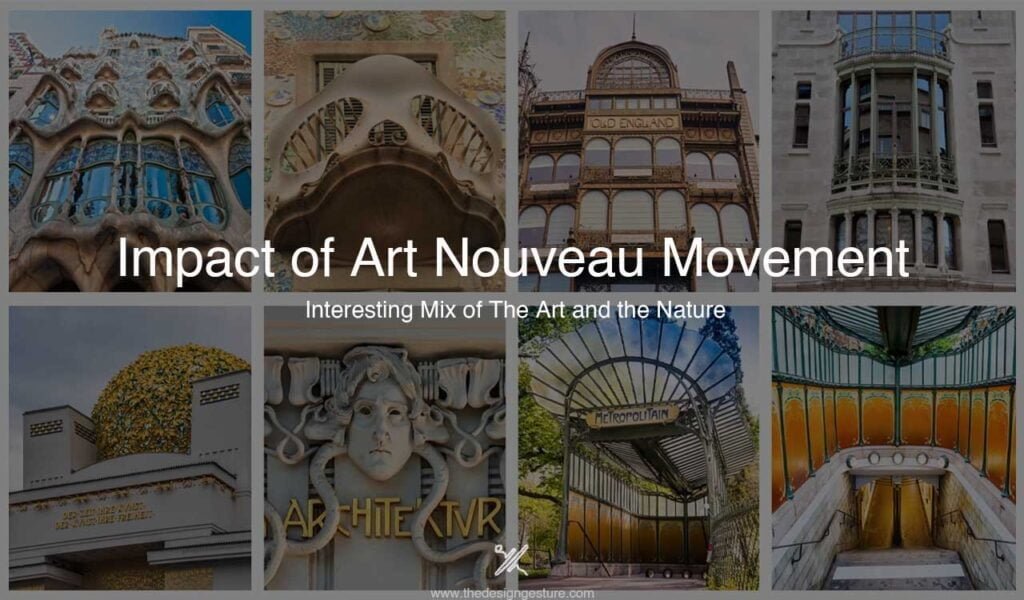
    Early in the 1890s, a global movement known as Art Nouveau (French for “New Style”) was started that brought together two of the most powerful forces in existence: art and nature. Globally, Art Nouveau had a much greater impact than any preceding movements or styles. Getting inspired from the chaotic features of the natural world, this new style was evident in ceramics, furniture, architecture, sculpture, and other works of art such as applied art, decorative art, graphic works, illustrations etc. Even though there were many people that supported and helped Art Nouveau, only a small number of them were acknowledged and distinguished the movement internationally.

    The article addresses topics such as an introduction to the Art Nouveau movement, general traits and characteristics, the philosophies of the architects, and their most renowned works etc.

    Art Nouveau Movement

    In the last part of the 19th century, a whole new approach to interior design and architecture emerged. The emergence of Art Nouveau at the beginning of the 1890s was a result of the need for a liberating change in direction across the entirety of Europe, a desire to veer away from pre-set formulae based on pastiche of historical forms, and a pursuit of original ideas. It developed into a universal outlook and a style of fine art, applied art, and architecture that peaked in popularity between 1890 and 1910.

    Art Nouveau marked the start of modernism in design (Modern Architecture). French for “New Style,” Art Nouveau became well-known because to Siegfried Bing’s famed Maison de I’Art Nouveau (House of New Art), a Parisian art gallery. The handcrafted works of past eras were at risk of vanishing as mass-produced consumer goods began to take over the market, designers, architects, and painters realised. Designers of the Art Nouveau movement resurrected this artisan tradition while also eschewing traditional forms in favour of novel, organic shapes that emphasised the interdependence of nature and humanity.

    Conventional ideas of what defines art are defied by Art Nouveau. The international Art Nouveau movement, which started in Europe and North America and quickly spread to include all of Europe by the end of the nineteenth century, was greatly aided by Victor Horta and Henry van de Velde. It was referred to as Glasgow style in Scotland, Stile Liberty in Italy, and Sezessionstil in Austria. A well-known artist from each of these nations functioned as the cultural adaptation of Art Nouveau’s ambassador there.

    Due to the fact that he blended elements of nature and religion into all of his works, Antoni Gaudi, the creator of the Art Nouveau style, attracted the attention and admiration that few others did.

    Hallmarks of Art Nouveau Style

    The Industrial Revolution had an impact on the Art Nouveau trend in art. With the help of breakthroughs like the decorative processing of iron, technology and art were able to coexist throughout this time. One of the movement’s defining characteristics was its preference for hand crafted articles over machine manufacture. Geometric patterns, flat decorative patterns, and representations of flora, fauna, and plants are all part of this asymmetrical art style.

    Art Nouveau drew inspiration from a variety of sources, including mathematics, Islamic art, Japanese art, city art, and nature. In architecture, windows, arches, and doors regularly use hyperbolas and parabolas, and decorative mouldings frequently adopt plant-inspired shapes. Some of the more abstract elements of the Rococo style, including flame and shell textures, were chosen and revised by designers during the Art Nouveau era. What distinguishes Art Nouveau from other styles are its ornamental motifs, linear layout, and organically curved, flowing lines that drew inspiration from nature. The rich, vivid colours of the past have been replaced by calming pastel tones. The new dominant aesthetics, which have replaced painted and ornamental art, are architecture and landscape art.

    Art Nouveau
    Photographer Unknown

    The undulating, asymmetrical lines that distinguish Art Nouveau are typically inspired by delicate, sinuous natural components such as flower stems and buds, vine tendrils, insect wings, and more. These lines might have a powerful, repetitive, whip like force or they can be graceful and lovely. The following are the key characteristics of the Art Nouveau era:

    Organic Motifs

    The image of a woman draped in her long, flowing hair is the most well-known theme among the many recurrent themes in the Art Nouveau style. She is typically shown swimming or flying to symbolise her independence. The Art Nouveau movement’s sinuous interpretation of nature, which placed a focus on movement, desire, life, and the fresh vigour of new ideas, is strongly reflected in this erotica. It is referred to as the “whiplash line” in nearly every Art Nouveau design. One term for Art Nouveau is palingstil, which means “eel style” in English.

    organic motifs
    Photographer Unknown

    Plant Motifs

    A vital source of inspiration and the ideal encapsulator of the central concepts of the new aesthetic movement, decorative plants were numerous. The stems, leaves, inflorescences, and fruit of trees, perennials, bulbs, and the as-yet-underappreciated herbaceous plants were among the most frequent motifs. Plants, animals, and people all have symbolic meanings that were each individually interpreted in the majority of works of art in addition to their literal, ornamental value.

    motifs
    Photographer Unknown

    Art Nouveau Architects

    Only a small number of those who supported and contributed to Art Nouveau received honours and distinction, despite the fact that many others did so. Several architects, including Henry Vande Velde, Pierre Francastel, and Hector Guimard, represented it. Victor Horta and Antonio Gaudi were two of its key spokesman. Poland loved the work of artists like Józef Mehoffer and Stanislaw Wyspiaski.

    The organic and the rationalist are the two main Art Nouveau trends that Pierre Francastel separates. The Hotel Tassel in Brussels, designed by Belgian architect and designer Victor Horta, was the first Art Nouveau building ever built. The Sagrada Familia, Casa Mila, and Casa Batllo in Barcelona were three of Antonio Gaudi’s structures that greatly aided in the new style’s popularisation. The most recognisable Secession icons in the entire globe, they had organic facade shapes and decorative accents.

    Victor Horta

    Belgian architect Victor Horta created the first Art Nouveau structure ever constructed. Horta, who helped establish Art Nouveau in the 1890s, eventually became well-known as one of his nation’s most talented and imaginative architects as well as one of the first to achieve international acclaim after Belgian independence. Horta went to Art Deco as his career started to suffer in the years after World War I. His well-known creations include the Horta House and Studio (1898–1901), which is now the Horta Museum, the Hôtel Tassel (1892–1893), the Hôtel Solvay (1898–1900), and the Hôtel Tassel (1892–1893).

    • The Tassel House, Brussels: The Tassel House, often cited as the first Art Nouveau building. The central stair hall serves as the focal focus of the structure, similar to many of Horta’s renowned Art Nouveau homes. The flower-petal-shaped chandeliers that hang from the ceiling mimic the flower-like shapes of the thin pillars. From outside, it is easy to see the stair hall. A magnificent row of stained glass windows with watery blues and floral pinks erupt from the building’s foundation, an I-beam formed of riveted green iron that lies above a recessed main entrance.
    victor horta
    Photographer Unknown
    • Horta Museum, Brussels: The Horta Museum, which served as both Horta’s home and office, has unique original characteristics as well as highly skilled craftsmanship. He created an interesting staircase décor using elements like wood, iron, and marble. Horta’s pursuit of maximum transparency and light, which was frequently challenging given the constrained building sites in Brussels, was a distinctive aspect in his residences and later his larger buildings. Large windows, skylights, mirrors, and especially his open floor plans, which let light shine in from all directions and above, helped him achieve this.
    horta museum
    Photographer Unknown

    Antonio Gaudi

    Antonio Gaudi is recognised for his innovative artwork. Gaudi looked to the natural world, which he considered to be God’s direct creation, to achieve this purpose. In his home Catalonia, he designed and erected some of the most avant-garde buildings ever, which have since come to embody the spirit of the region.

    Gaudi is the most well-known and individualistic representative of Catalan Modernisme (Art Nouveau), and he has drawn and inspired numerous generations of architects, engineers, and designers. Although the Sagrada Familia may be Gaudi’s best-known creation, he also created other structures that included the same core concepts, such as Casa Milà (1905–1907), Casa Batlló (1905–1907), Park Güell (1900–1914), etc.

    • La Sagrada Familia, Barcelona: The interior structural support, which substitute’s vertical framework resembling the support and appearance of trees for conventional columns, is one of the Sagrada Famlia’s most recognisable organic designs. The rope against the wall was holding it together. Gaudi moulded the Sagrada Familia’s gateways and several of his other works in the resulting hyperbolic shape. The ceiling was designed to imitate a forest canopy. The Sagrada Famlia’s staircase was modelled by the shape of a snail’s shell. In addition to expressing his love for Barcelona through the use of these local natural forms, Gaudi more significantly merged God’s creations into a sculpture that was devoted to him.
    Antonio gaudi
    Photographer unknown
    • Casa Batlló, Barcelona: Antonio Gaudi restored the Casa Batlló, a six-story residential building. Never before had an architect chosen a building’s framework, colour scheme, media, and overall appearance with such audacity. All of these decisions were motivated by Gaudi’s concern for the environment and his religious beliefs.

    One of Casa Batlló’s most recognisable features is the bright, broad façade. More interestingly, there is something that has been called a dragon on the building’s façade. A dragon has been created out of the colourful roof tiles that resemble scales and is perched on the cornice. On either side of the windows, the bottom of the façade is spanned by two long, cream columns that resemble bones.

    casa batllo
    Photographer Unknown

    Conclusion

    The ideals of classical Rome and Greece served as architects’ main sources of inspiration for a long time. But when contemporary architecture started to take shape, designers started to ponder what it might resemble, discarding all earlier architectural fads in the process. Numerous strands of Art Nouveau emerged, inspiring enthusiasts in the decorative and graphic arts as well as architecture across Europe and beyond. As a result, it has several different names. 

    Artists were inspired by geometric and organic shapes, combining them to create stunning compositions that resembled plant stems and petals. Later research revealed the potential impact of nature on architecture. Horta and Gaudi were two of the many artists who recognized the strength of these two forces and deliberately produced works that reflected them. They combined modernism and nature, which led to the birth of Art Nouveau, one of the most significant art movements in history.

  • Bamboo: A Promising Sustainable Future

    Bamboo: A Promising Sustainable Future

    Sustainable building materials that are economical, renewable, and environmentally benign are growing in favour. Bamboo is a grass that grows swiftly, and because of its superior traits and capabilities, it is now a viable substitute for traditional building materials. This article explores the numerous advantages, disadvantages, and real-world applications of bamboo as a sustainable building material.
    Properties of Bamboo

    The following characteristics of bamboo make it a good building material:

    Strength and Durability

    Bamboo has incredible strength and endurance despite its appearance of being lightweight, which opens up a wide range of construction applications. Bamboo has a better tensile strength than steel and other conventional building materials. Because of this quality, bamboo structures can withstand heavy loads, strong winds, and even earthquakes.

    Low Cost

    Bamboo is widely available and inexpensive when compared to other conventional building materials like concrete and steel. Due to its cost, even places with limited financial means can access it.

    Rapid Growth and Renewability

    The fastest-growing benefit of bamboo is one of several benefits it offers. Bamboo matures quickly, taking only three to five years as opposed to the slowly growing trees utilised in traditional building. Bamboo is a resource that is incredibly renewable and guarantees a steady supply of building materials due to its excellent growth rate.

    Flexibility

    The inherent flexibility of bamboo is a major benefit for building. Because bamboo is naturally flexible, bamboo buildings can endure earthquakes and bad weather. Bamboo’s capacity to bend without breaking makes it particularly useful in areas subject to earthquakes or strong winds.

    Lightweight

    Due to its small weight, bamboo is easier to ship, less expensive to build with, and easier on a building’s foundation. Because of this quality, bamboo is a fantastic choice for places with poor soil or difficult terrain. Additionally, due to how easily it can be handled, less work is needed during building.

    Carbon Sequestration

    Bamboo is incredibly effective in absorbing atmospheric carbon dioxide. Bamboo absorbs carbon as it grows, reducing the effects of climate change. Actually, compared to trees, bamboo may sequester up to four times more carbon. Carbon is stored in bamboo during construction, promoting carbon neutrality.

    Low Environmental Impact

    Compared to conventional building materials, bamboo has a significantly smaller negative impact on the environment. Growing bamboo requires less water and pesticides because it is inherently resistant to pests and diseases. Additionally, bamboo may be manufactured with less energy, which reduces carbon emissions associated with manufacturing.

    Aesthetic Appeal

    Bamboo is not only environmentally sustainable, but it also offers unique aesthetic qualities. Its distinctive appearance, warmth, and attractiveness in its natural state add a desirable aesthetic element to construction projects. An atmosphere of tranquilly, environmental awareness, and a sense of oneness with nature are fostered by bamboo structures.

    Versatility

    Bamboo is a flexible material that may be applied to a variety of construction projects. It can be used as roofing, flooring, wall panels, structural components, and decorative finishes. The versatility of bamboo enables inventive and imaginative solutions, allowing architects and builders to investigate new opportunities in sustainable building.

    Advantages of Bamboo as a Building Material

    Using bamboo in construction has a number of benefits, including:

    Sustainability and Renewability

    The two most significant advantages of bamboo are its renewability and sustainability. Bamboo is a quickly growing grass that matures in a few years, as opposed to the slowly growing trees utilised in traditional construction. Its rapid growth allows for repeated harvesting without depleting natural resources.

    Strength and Durability

    Being so light, bamboo is surprisingly robust and long-lasting. Due to its higher tensile strength than steel, it can withstand heavy weights and harsh weather. Constructions made of bamboo have been shown to withstand earthquakes and strong winds, making them suitable for locations at risk from such calamities.

    Versatility in Design and Construction

    Bamboo can be used for a wide range of construction projects. It can be utilised for structural elements, flooring, wall and ceiling panels, roofing, and even decorative treatments. Architects and builders can experiment with fresh and inventive concepts to produce visually beautiful and environmentally sustainable structures because to bamboo’s design versatility.

    Cost-effectiveness

    When compared to other building materials like concrete, steel, or wood, bamboo is somewhat less expensive. Cost-effective development activities are made possible by its accessibility to places with limited financial resources. Additionally, bamboo’s small weight reduces shipping costs and facilitates handling on-site.

    Local Economic Development

    Growing and using bamboo as a building material can lead to employment possibilities and promote local economic development, particularly in regions where the plant grows prolifically.

    Disadvantages of Bamboo as a Building Material

    Although bamboo has many advantages, it also has certain restrictions:

    Vulnerability to Moisture

    Bamboo is susceptible to issues caused by moisture, such as rotting, swelling, and insect infestation. Care must be taken, including thorough drying and the application of the necessary coatings, to prevent these problems. Bamboo structures are susceptible to degrade over time if sufficient maintenance is not given.

    Limited Structural Heights

    Due to its natural flexibility, bamboo shouldn’t be used to construct big buildings. It is typically used for low- to mid-rise structures. Alternative materials are required for taller constructions since bamboo’s vertical strength limits make it less appropriate for high-rise construction.

    Lack of Standardization

    Bamboo lacks a regulated grading system, which can make maintaining quality challenging. Different bamboo species and sources may have different strengths, tensile strengths, and other qualities. Thorough procurement and quality control are crucial for ensuring reliable and consistent bamboo materials.

    Fire Resistance

    Bamboo lacks any built-in fire protection. As a result of its propensity to catch fire, utilising it in construction calls for the application of the appropriate fire-resistant treatments and coatings in order to enhance its performance in a fire. By putting fire safety measures in place, the risk of fire in bamboo structures must be decreased.

    Case Study: Green School, Bali, Indonesia

    sustainable
    Photographer Unknown

    The Green School in Bali is a school that has gained recognition throughout the world for its commitment to environmental education and sustainability. The unusual architecture of the school, which is entirely constructed of bamboo, exemplifies the material’s versatility and aesthetic appeal.

    Structural Integrity

    structural integrity
    Photographer Unknown

    The Green School’s bamboo structures serve as illustrations of bamboo’s durability and strength in construction. It is clear from the extensive use of bamboo beams, trusses, and columns that the material can withstand huge loads while allowing for spacious interiors.

    Aesthetic Appeal

    The bamboo structures of The Green School harmoniously blend into the surrounding nature, creating a stunning and green campus. The organic texture, warm hues, and unique patterns of bamboo enhance architectural aesthetics and foster a sense of connection to nature.

    Integration of Sustainable Design Principles

    The architectural design of The Green School follows sustainable design principles and incorporates features like rainwater collection systems, lots of natural light, and natural ventilation. Building open-air spaces is made simpler by the flexibility and light weight of bamboo, increasing natural airflow and reducing the need for artificial cooling.

    aesthetic appeal
    Photographer Unknowna

    Conclusion

    Bamboo is a potential sustainable building material because of its wonderful properties, capabilities, and instances of achievement in actual construction projects. Due to its speedy development, durability, adaptability, and minimum environmental impact, it is a viable alternative to conventional construction materials. Bamboo can be used in architectural designs to create buildings that are affordable, aesthetically pleasing, and assist local economic progress. With continued research and standardisation efforts, bamboo has the potential to revolutionise the building industry and move us closer to a sustainable future.

  • Koti Banal: The Interesting Vernacular Architecture of Uttarkashi District

    Koti Banal: The Interesting Vernacular Architecture of Uttarkashi District

    Vernacular architecture began to develop when inhabitants began building their own homes out of materials they could find nearby and customised to their requirements. As a direct reaction to societal demands, man was able to design climate-responsive buildings before architects. Despite the fact that modern constructions have shown to be perfectly ecological and energy-efficient, fundamental traditions that were once considered outdated and forgotten are regaining popularity. In the Uttarkashi District of the Indian state of Uttarakhand, Koti Banal is one of those numerous regional architectural styles that have endured.

    The article will highlight the architectural style’s utilisation of regional materials, construction methods, key features and challenges style is facing in the modern society.

    Introduction

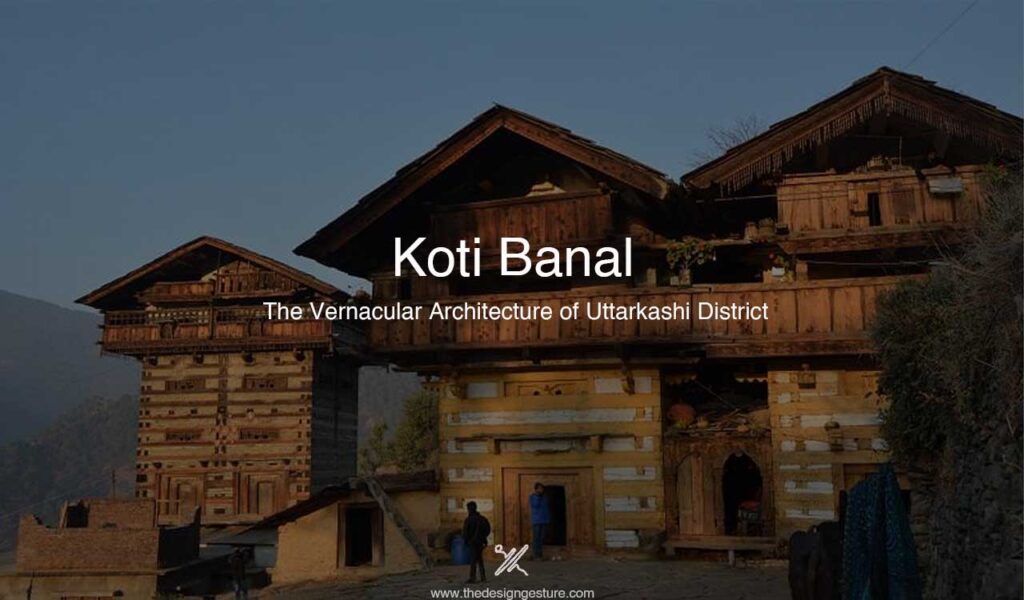
    A little village called Koti Banal may be found in the Uttarkashi District in the Indian state of Uttarakhand. The area is renowned for the distinctive vernacular building style that it has been using for many generations to fulfil the demands of the local populace and make the most of the materials at hand. Local building materials and construction methods are used to produce the style which represents the area’s traditional way of life. The Koti’s modest structures have endured earthquakes for about 900 years.

    In Uttarkashi’s high altitude regions, where the temperature is severe, and the terrain is difficult, this architectural style is usually seen. The structures are made to survive the severe winters and copious amounts of snowfall that are typical of this area. Also, they were constructed from wood, stone, and clay that were found nearby.

    Building Materials

    This vernacular architecture style is characterised by the use of locally available materials such stone, wood, and mud. The walls and foundation are made of stone, the roof is made of wood, and the plaster is made of mud. The dwellings are made by combining these components.

    Koti Banal
    Photographer Unknown

    The usage of stone masonry is one of the characteristics of this style. The buildings’ walls are made of locally quarried stone and are designed to be durable and robust. The walls commonly look rustic and natural since the stones are typically rough-hewn. The buildings are kept cool in the summer and warm in the winter thanks to the excellent insulation that the stone walls offer.

    The use of timber beams and rafters is a distinctive aspect of this architecture. The timber rafters and beams used in the buildings’ post-and-beam construction provide structural support for the roof. Local hardwoods like deodar and pine, which are renowned for their sturdiness and endurance, are used to construct the beams and rafters. The buildings’ wooden parts are frequently ornately carved and decorated, which raises the design’s aesthetic value.

    Slate, which is easily accessible in the area, is typically used for the roofing of Koti Banal buildings. The building is shielded from the elements by the watertight seal created by the rows of overlapping slate tiles. The roofs’ steep pitches are also intended to quickly remove snow, preventing it from building up and endangering the building.

    Design and Construction Techniques

    In Koti Banal, most houses are two-story constructions, with living quarters for people on the upper level and storage for animals on the lower level. The upper level is accessed via an external stairway that is typically adorned with spectacular carvings and embellishments. These homes include rectangular floor designs, enclosures, and central axes that are symmetrical.

    banrl
    Photographer Unknown

    Above the foundation, a raised masonry platform built of dry materials supports the building. Stone masonry walls that have been reinforced with wood using mortar produced from pulse paste are 50 to 60 cm thick and composed of stone masonry.

    Connecting walls are situated along the narrower axis of the multi-family homes. These structures frequently rise between 7 and 12 metres. Among other distinctive characteristics, these structures have a straightforward design, a complex, large, and raised base, a few small window holes, and shear walls.

    The building’s first level has just one modest entrance, and the few little windows to the south seem a touch claustrophobic. The building’s upper two stories are supported by a cantilevered flooring system made of wooden logs, which has balconies that go around the entire structure.

    Koti Banal: The Vernacular Architecture of Uttarkashi District
    Photographer Unknown | Source

    The structures frequently have elaborate woodcarvings and murals. The religious and cultural themes are typically represented in the wood carvings on the doors and windows. The murals, which can be rather intricate and feature Hindu mythological themes or scenes from typical village life, are painted directly on the walls.

    Key Features of Koti Banal

    This vernacular architectural style is not just beautiful, but it also has a purpose. The residences are constructed with substantial stone walls that serve as insulation to keep the interiors at a reasonable temperature all year long. The use of natural materials reduces the carbon footprint of the dwellings, making them more environmentally friendly.

    Conclusions

    In conclusion, the vernacular Koti Banal architectural design is a distinctive and exquisite illustration of sustainable architecture. To conserve the region’s cultural legacy and encourage sustainable living habits that reflect the natural and cultural surroundings of the area, it is crucial to preserve this architectural style. There is still a great admiration for this style, and attempts are being made to preserve and promote it for future generations despite the fact that contemporary construction techniques and materials have started to supplant the ancient methods.

    FAQs

    Q. What is Koti Banal architecture?
    A. This architecture is a traditional style of building that originated in the Uttarkashi District of Uttarakhand, India. It is known for its use of locally sourced materials and construction methods that have been passed down through generations.

    Q. What are the key features of Koti Banal architecture?
    A. Key features of this architecture include the use of stone, wood, and mud for construction, stone masonry walls for durability and insulation, timber beams and rafters for structural support, and slate roofs for protection against the elements.

    Q. How is Koti Banal architecture designed and constructed?
    A. The houses are typically two-story structures with living quarters on the upper level and animal storage on the lower level. They are accessed by external stairways adorned with carvings. The houses have rectangular floor plans, enclosures, and symmetrical central axes.

    Q. What materials are used in Koti Banal architecture?
    A. The architecture uses locally available materials such as stone, wood, and mud. Stone is used for walls and foundations, wood for roofs and structural support, and mud for plaster.

    Q. How does Koti Banal architecture contribute to sustainability?
    A. The architecture is sustainable because it uses natural materials that have a low carbon footprint. The stone walls provide insulation, reducing the need for artificial heating and cooling, and the use of locally sourced materials reduces transportation emissions.

    Q. What are the challenges faced by Koti Banal architecture in modern society?
    A. In modern society, Koti Banal architecture faces challenges from contemporary construction techniques and materials that are replacing traditional methods. In Uttarakhand vernacular architecture, Kothi design in villages makes it very unique. However, efforts are being made to preserve and promote this architecture for future generations.

    Q. Where can I see examples of Koti Banal architecture?
    A. Examples can be found in the Uttarkashi District of Uttarakhand, particularly in the village of Koti Banal. Vernacular Architecture of Uttarakhand is famous because these structures have endured for centuries and continue to be a source of inspiration for sustainable architecture.

  • Vastu Shastra in Architecture: An Ancient and Effective Science for Designing Spaces 

    Vastu Shastra in Architecture: An Ancient and Effective Science for Designing Spaces 

    Ancient Science, sometimes referred to as the “science of architecture,” is a traditional Indian method of architecture that has been employed for many years to build towns and cities that are in tune with the natural world. The foundation of Vastu Shastra is the idea that the cosmos is composed of five elements: earth, water, air, fire, and space. These factors are said to affect a building’s energy and flow, and when they are balanced, it is thought that both the building and its occupants would enjoy wealth, good health, and happiness.
    History of Vastu Shastra

    The Indus Valley Civilization used design and architectural concepts to build cities, dwellings, and other structures, which is where the origins of Vastu Shastra may be found. The Vastu Shastra principles were improved upon and used in the construction of temples and other sacred sites during the Vedic era.

    The intention behind the development of the Vastu Shastra principles was to create structures that were in harmony with their environment and natural forces. During time, the principles of Vastu Shastra were used in the construction of homes, palaces, and other structures, becoming an essential part of Indian architecture. Palaces, temples, and other important historical structures were built using Vastu Shastra principles.

    Concepts of Vastu Shastra

    The Vastu Shastra design principles call for the utilisation of particular geometrical patterns and shapes to produce structures that are harmonious with their surroundings. For instance, it’s important to consider door and window layout to make sure that energy can move easily throughout the building. To ensure that the construction is in harmony with the natural elements, specific colours and materials must be used.

    Concepts of Vastu Shastra in Different Parts of a House

    Vastu Shastra
    Photographer Unknown

    According to Vastu Shastra, the five elements that make up the universe are earth, water, fire, air, and space. Since it is believed that they have a significant influence on how buildings and spaces are created, these variables are taken into consideration while developing various components of a home.

    Entrance

    The entrance to a house is one of the most important parts of a house because it serves as the point of entry for good energy, or “Vastu Purusha.” The entrance should face east or north, as these directions are regarded to bring success and wealth. The door should be sized appropriately to the size of the house and the entranceway should be well lit.

    Living Room

    Another important space in the home is the living room, which ought to face either east or north. The living area should have appropriate lighting in addition to windows that let in natural light and air. The living room’s furnishings should be positioned to encourage discussion and family engagement.

    Bed Room

    Because it is considered to be the most private and intimate space in a home, the bedroom should be positioned southwest. The bed should be placed in the southwest corner of the room, with the head of the bed facing east or south. The bedroom should have sufficient illumination and be free of any unnecessary clutter.

    Kitchen

    The kitchen should be situated in the southeast of the home because it is said to be the source of energy there. The kitchen should be well-ventilated and the stove and sink should be positioned so that they do not face one another. Also, the kitchen needs to be kept clutter-free and spotless.

    Importance of Vastu Shastra

    Vastu is important to architecture because it may be used to create structures that go beyond being purely functional. According to Vastu Shastra, a structure should be designed so that it is in tune with its surroundings and can encourage the growth of positive energy and wellness. Vastu Shastra principles are believed to have a significant impact on people’s mental, emotional, and spiritual welfare.

    Vastu Shastra is based on the idea that structures should be arranged and constructed in a way that is in accordance with the inherent laws of the universe. The elements of earth, water, fire, air, and space are supposed to have a considerable impact on buildings; as a result, these elements should be considered while designing interior spaces. Vastu Shastra has been found to have a considerable influence on both the social and economic sides of society. The principles of Vastu Shastra are believed to promote positive energy and wealth, which can greatly enhance society’s overall well-being.

    However, there are those who argue against the principles of Vastu Shastra. Some architects and designers believe that the concepts of Vastu Shastra are outdated and do not take into account modern building practices and materials. They argue that modern science and technology can create buildings that are more efficient and functional than those built according to Vastu principles

    Conclusion

    In conclusion, Vastu Shastra is a centuries-old system of architecture that has been employed to produce structures that are in tune with nature. In order to produce buildings that are thought to promote health, prosperity, and pleasure, its architectural principles call for the use of specific geometrical patterns, colours, and materials. Although there are people who disagree with the Vastu Shastra’s tenets, its significance in architecture cannot be overstated. Modern building techniques and materials can be used in conjunction with Vastu Shastra principles to design structures that are both useful and environmentally friendly.

  • Flexibility in Architecture: A Design Strategy

    Flexibility in Architecture: A Design Strategy

    Trends in architecture frequently alter as a result of shifts in cultural values. The trends in modern architecture had a significant impact on how people live and have strengthened the flexibility in design. Some architectural trends are continuing over a longer time, while others are gaining popularity. The front-line trends show what modern architecture stands to mean for our everyday lives and society at large. Stroll down nearly any road and you’ll discover plentiful proof that architectural tastes and styles change over the long haul.

    Flexibility in design is one of them. Flexibility in the design of a structure and its components with the intent to manage its end-of-life more efficiently. Building flexibility can also be enhanced through the selection of a suitable design team that is going to be user-friendly structures. New development strategies and trends in artistic expressions, such as adaptive use and easy components with different material collections at the building stage, ensure building management systems. In this era, a new perspective is increasingly being debated the flexibility of design in architectural terms.

    What is Flexible Architecture?

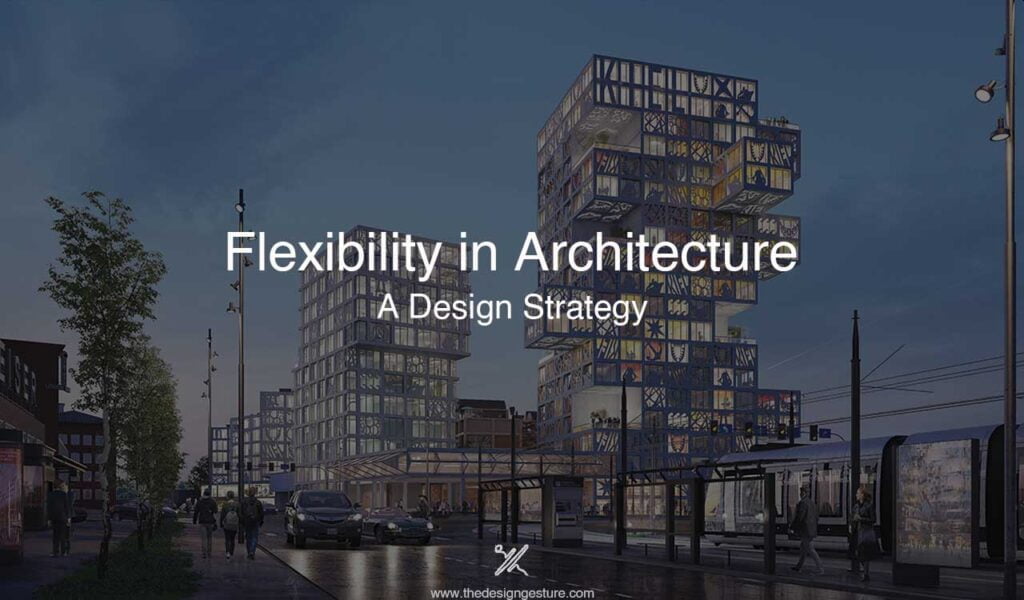
    In architecture, flexibility refers to the ability of a structure or area to be modified in a reasonable manner, allowing a building to evolve over the long run as the user needs change to accommodate market shifts and extend the project’s life. Architecture that struggles to adapt to change runs the risk of becoming stagnant.

    In addition to providing characteristics that are naturally flexible, such as multi-use areas, open-plan offices, huge floor-to-ceiling heights, and high-capacity service voids, flexibility may also take the form of active flexibility, such as adjustable/moveable partitions. This can include taking into account fairly basic design options. For instance, it might be quite simple to add or subtract a bay to make a linear building larger or smaller, whereas a circular building might be exceedingly challenging to adapt without impairing the design’s integrity.

    At the point when an architect designs, there are a large number of contemplations that generally guide the design process from concept to completion, and one such thought is a modern trend study, which is in many cases key to enhancing the extended utilization of the planned space.

    There are numerous instances of abandoned buildings that were once regarded as symbols of modern architecture but fell into decay when human cultural developments contradicted the original purpose for which they were constructed. But there are also old structures that have been updated over the years to fit with evolving trends. The first step in overcoming the difficulty of developing a truly responsive and flexible architecture is to consider important instances of these historically successful structures, where the end-user was modified or re-envisioned at some time.

    History of Flexible Architecture

    For ages, this style of flexible architecture has been used. People lived in adaptable, and mobile shelters. These buildings serve as shelters that have been designed to adapt as best they can to different climatic situations. All of these shelters were the first step in the application of flexibility in architecture, from the Bedouin tents of Africa that were adapted to the desert climate, to the Asian yurts that are made up of separate parts and have geodetic wall formations and compression and tension rings of the ceiling, to the American tipi’s peculiar pointy shape that acts as a windshield.

    In the 1950s, the word “flexibility” made its way into the vocabulary of architecture. Walter Gropius declared that “The architects have to imagine the building as a receptacle for the flow of the life which they are to serve”. In the 1950s and 1960s, Yona Friedman, a well-known architect, and theorist identified flexibility as a crucial idea in architecture. Friedman’s first statement, “Mobile Architecture,” presented a new form of mobility that he called the “general theory of mobility.” His definition of “mobile architecture” refers to individuals who are given freedom rather than the movement of the building itself.

    The first Japanese architectural movement, Metabolism, emerged in Japan following World War II in 1960. The Nakagin Capsule Tower is one of the most well-known structures that evolved into a symbol of Japanese architecture. The structure is composed of modular components and capsules. The whole layout served as a model for adaptable, recyclable sustainable architecture.

    Flexibility in Architecture
    Photographer Unknow | Source: nakagin capsule tower kisho kurokawa

    By the 20th century, flexibility had developed into a notion that demanded consideration and thought in architectural design, and it had been used in many projects.

    Basic Understanding

    There are times when upgrading systems to comply with contemporary building regulations and norms is all that is necessary to convert existing structures for new purposes. In addition to being prudent from a financial standpoint, doing this protects the past and is intrinsically sustainable as part of whole-building and lifecycle planning. For example, families and family units are more diverse than ever, thus one person’s need for a traditional living room may be another person’s interest in a quiet office for their locally located business. Everyone gets access to adequate and useful places in both public and private contexts because of flexible design.

    C:\Users\Osama\AppData\Local\Microsoft\Windows\INetCache\Content.Word\2.jpg
    Source: what do we mean by flexibility in design

    Phases of Flexibility in Architecture

    We can characterize flexibility in terms of architecture in three phases, identifying with the measure of changes that happen and the level of perpetual quality of that change.

    Adaptability

    Adaptability is described as a building’s ability to accommodate different uses without changing the structure of the building. For example, moving furniture around or creating multipurpose areas. These don’t alter the area in a way of permanent change to the spaces that last forever.

    Transformability

    Transformability makes it possible to change interior and exterior spaces without having to do any new construction. It can be achieved either by moveable constructions moved around the environment without causing any significant changes or alterations or structures that are responsive and can respond to external weather. For example, portable restrooms, moveable retail space, temporary accommodation for huts, etc. Also, other retractable roofs over stadiums and other sporting facilities, and reaction structures such as floating buildings that rise and fall with changes in water level also belong under this category.

    Convertibility

    Convertibility deals with shifting functions, along with some construction. This demands some long-term adaptation. The introduction of flexibility and design must be anticipated in the planning phase itself while designing any structure. The design itself must take feasibility, research, and long-term ambitions into consideration. For example, providing enough room for future expansion, laying the groundwork for future growth, sizing up building services to accommodate growth, or, on the other hand, buying bundled building services that might be able to be resold if needs decrease.

    Aiding Flexibility

    Homes and other residential formats that can flexibly oblige quite a few inhabitants, and even better, develop with those occupants over a long time, are particularly engaging. Architects can aid flexibility by adaptability or by consolidating themes and materials all through. In a project’s planning stage, any projected flexibility should be incorporated into the building’s design. Initial flexibility studies and long-term plans should all be used to guide the creation of flexibility methods during the planning phase.

    It is crucial to communicate with the project’s end users if they are known in order to determine the kind of flexibility that would be most advantageous to them. The easier the execution and the bigger the potential reward, the earlier decisions are made. As a project progresses, it can get more and more challenging to include flexibility-enhancing techniques. The architect can assess various solutions after the flexibility objectives have been established and evaluate them based on their applicability to the project, taking into account the site restrictions, programming requirements, available money, etc.

    A cost-benefit analysis can assist in determining whether offering flexibility is genuinely in the client’s long-term interests or whether it is an unnecessary expense with a low likelihood of being used. No design can account for every potential demand in the future, so the design team must carefully consider which requirements are most likely to be advantageous and least disruptive.

    Advantages of Flexible Architecture

    Flexibility in design enables the encouragement of creativity and the exploitation of innovation while being more economically and environmentally viable. The goal of any design must undoubtedly be to create something that will endure throughout the years as an alluring place for people to congregate. Additionally, the structure will be in use for a much longer time and serve its purpose while accommodating end users in a far more flexible way than a rigid design could.

    Conclusion

    The built environment must be flexible as the world evolves and occupant needs change at an ever-faster rate. The challenge for architects is to meet and exceed these expanding requirements. The problems that designers are facing in this new era of the sharing and collaborative economy can be successfully solved through flexible architecture. They are making truly unique, adaptable places that are inherently utilitarian yet have a tremendous wow by using an agile approach.

  • Incredible Approaches to Earthquake-Proof Structures

    Incredible Approaches to Earthquake-Proof Structures

    Beautiful cities and constructions have been built by mankind throughout history, only for them to be destroyed by natural forces. The mere mention of earthquakes, which are classified as natural disasters, does not give off a very positive impression. Earthquakes are one of the planet’s most destructive forces; seismic waves that travel through the ground have the power to damage structures, claim lives, cause enormous financial losses, and more.

    The National Earthquake Information Center estimates that there are typically 20,000 earthquakes each year, 16 of which are major disasters. Similar to earthquakes, most damage is brought on by buildings collapsing while occupants are still inside, necessitating the construction of earthquake-proof structures.

    However, in older eras, when the type of structures was usually closer to the ground and did not reach a very significant height, there would be opportunity to run to an open area for minimal harm. But given the current situation, where high-rise structures are crammed closely together, there is little choice but to design the structures so that they can survive seismic activity. Engineers have improved building earthquake resistance over the past few decades by introducing new building designs and materials. These kinds of buildings are referred to be earthquake-resistant structures.

    Earthquake-resistant structures are those built to resist total collapse, protect life, and reduce damage in the event of an earthquake or tremor. Through a variety of techniques, earthquake-resistant structures absorb and dissipate seismically produced motion: damping reduces the amplitude of oscillations of a vibrating structure, and ductile materials (such as steel) can endure significant inelastic deformation.

    The article will describe the various approaches to earthquake-proof building design.

    Understanding Earthquake – Resistant Structures

    Buildings are intended to be protected from earthquakes to some extent or completely by earthquake-resistant or aseismic construction. The aim of earthquake engineering is to build structures that perform better during seismic activity than their conventional counterparts, even though no construction can be completely resistant to earthquake damage. Building regulations state that earthquake-resistant constructions must be able to withstand the biggest earthquake with a specific probability that is expected to strike the area where they are located. This means that in the event of a rare earthquake, the death toll should be kept to a minimum by preventing building collapse, while in the event of a more regular earthquake, the functional loss should be kept to a minimum.

    From the outside, buildings designed to resist earthquakes may not stand out. They are more resilient during these disasters, nevertheless, due to a number of factors.

    How to Make a Building Earthquake-Proof

    When experts plan and develop structures, they consider ways to lower dangers. Engineers labour to strengthen the structure and mitigate the effects of a prospective earthquake when creating an earthquake-proof building. Buildings are pushed in one direction by an earthquake’s discharge of energy; the approach entails having the building push in the opposite direction. These safeguards make sure that buildings can survive the effects of earthquakes. Here are a few techniques for making structures more earthquake-resistant.

    Base Isolators

    Base isolation is a technique used to “raise” the building’s foundation above the ground in order to withstand ground stresses. Base isolation entails erecting a structure on top of flexible steel, rubber, and lead pads. The isolators vibrate when the base shakes during an earthquake, but the building itself doesn’t move. As a result, seismic vibrations are successfully absorbed and kept from passing through the building.

    Seismic Dampers

    earthquake-proof
    Photographer Unknown

    Buildings that can withstand earthquakes must also include characteristics that can absorb shock. They are more frequently referred to as earthquake dampers by engineers. The shock absorbers used in automobiles are comparable to seismic dampers. Shock absorbers work similarly to how they do in automobiles i.e. they lessen the force of the shockwaves and lessen the strain on the structure. Pendulum power and vibrational control devices are used to achieve this.

    The dampers are positioned between columns and beams on each level of a building. Each damper comprises of a cylinder containing silicone oil and piston heads. When there is an earthquake, the structure’s vibrational energy is transferred to the pistons, which press on the oil. The force of the vibrations is then dissipated as a result of the energy’s transformation into heat. By absorbing damaging energy, seismic dampers prevent the building from being damaged. Generally speaking, the damper can withstand higher stress the larger its diameter.

    quaketek
    Photographer Unknown | Source: https://www.quaketek.com

    Earthquake-Proof Structural Reinforcement

    Different techniques are used by engineers and architects to fortify a building’s framework against potential earthquakes. Buildings must redistribute the seismic forces that pass through them in order to withstand collapse. For instance, the main components of a building’s reinforcement include shear walls, cross braces, diaphragms, and moment-resisting frames.

    Photographer Unknown | Source: https://www.bigrentz.com
    Photographer Unknown

    Shear Walls

    These wide beams, which are given for high strength and stiffness, are vertically orientated. While core walls are made up of channel sections that are best used without any gaps, these are either plane or flanged in section. In high rise buildings, their thickness typically ranges from 150 mm to 400 mm. These walls ought to have symmetrical plans on both axes.

    Diaphragm

    Another essential component of a building’s structure is its diaphragm, which transfers lateral stresses to the structure’s vertically resistant walls or framework. Diaphragms, which are made up of the building’s floors, roof, and decks atop them, assist in pushing forces to the building’s vertical supports and relieving floor strain. There are also frames that can withstand movement.

    Bracing

    Buildings are shaken from left to right by s-waves during an earthquake, therefore bracing keeps the shape and prevents the structure from becoming weaker. Different types of bracing, such as diagonal bracing, x-bracing, v-bracing, inverted v-bracing, and k-bracing, can be utilised. When diagonal supports in a building structure intersect, cross bracing is used to strengthen the structure.

    Photographer Unknown | Source: https://www.openquake.org
    Photographer Unknown

    Materials

    Shock absorbers, pendulums, and “invisibility cloaks” could, to some extent, assist in dispelling the energy, but the materials choose for a building are also in charge of its stability. High ductility materials can therefore take in a lot of energy without breaking. Brick and concrete are low-ductility materials, although structural steel is one of them. Structural steel, which comes in a variety of shapes and allows buildings to bend without breaking, is frequently used in the construction of modern buildings. Due to its considerable strength in comparison to its lightweight structure, wood is also an unexpectedly ductile material.

    Conclusion

    Each year, there are thousands of earthquakes worldwide. While some only cause slight or no harm, others result in building collapses, fatalities, and severe economic disruptions in the area. Because careful choices can save millions of lives every year, it is important to allow for some structural damage, resist lateral loads with stiffeners (diagonal sway bracing), and for different parts of the building to move independently.

  • An Extraordinary Tale of Two Cities: Paris Before and After Haussmann

    An Extraordinary Tale of Two Cities: Paris Before and After Haussmann

    One of the most important urban reform initiatives in history was the Haussmannization of Paris, also known as the Second Empire restoration of Paris. Prefect Georges-Eugene Haussmann was designated by Napoleon III to supervise the conclusion of this extensive urban planning project, which was carried out in the city of Paris between 1853 and 1870. The project’s goal was to update the city and make it more aesthetically pleasing, functional, and hygienic. This endeavour allowed the city to be transformed from a mediaeval maze of winding alleyways into the broad boulevards and public areas that are present today.

    The Haussmannization of Paris was a difficult project that involved redesigning the road network, setting up new sewage and water systems, and creating new parks and public spaces. This article will overview of the history of pre-Haussmannization Paris and need of the Haussmannization, as well as Haussmann’s Plan, the city’s transportation infrastructure, sewage system, and building facades, as well as the societal impacts and outcomes from Haussmannization.

    Introduction

    Paris’ renovation was one of Napoleon III’s primary concerns. He wanted to create a London with lots of open space. In addition, it came about as a result of the need for more efficient housing, wider streets to prevent riots, and sewer system building to stop the spread of illness. Baron von Haussmann, the Seine’s prefecture, was the author of Napoleon’s dreams. He constructed the wide avenues and stunning vistas that make up the Paris of today.

    Georges-Eugene Haussmann was given the job of leading the reconstruction of Paris by Napoleon III in 1853 with the goal of modernising the city and bringing it in accordance with Second Empire ideals. A huge budget and basically limitless power to seize land, demolish structures, and construct new public spaces and roads were given to Haussmann. He set out to create a brand-new modern metropolis that was more appealing, hygienic, and functional. Over the course of the next 17 years, Haussmann’s enormous urban renovation initiative would transform Paris into a modern city.

    Pre-Haussmannization Paris

    Pre-Haussmannization Paris
    Photographer Unknown

    Before the Haussmannization, the streets of Paris were a tangle of clogged, dirty, and disease-ridden places.  The small, winding lanes were not intended for the expanding population and were regularly clogged by vehicles and pedestrians. Parisians used the Seine River or the streets as waste dumps because of the city’s inadequate sewage infrastructure, which resulted in an offensive odour and the spread of diseases like cholera.

    The city was vulnerable to fires due to a lack of fire protection measures and the use of flammable materials during building. The city’s buildings were shoddily built and prone to crumbling, and its infrastructure was outdated. The city’s packed streets and subpar living conditions made it difficult for the government to maintain order, and riots and uprisings were frequent. Additionally lacking in public places, the city was dominated by crammed, decaying structures.

    Need of Haussmannization

    The city’s mounting issues in the middle of the 19th century were what led to the Haussmannization of Paris. In order to transform Paris into the modern metropolis we know today, the Haussmannization project was undertaken in the middle of the 19th century. Overall, Paris was in severe need of modernization and repair.

    Haussmann’s Plan

    Photographer Unknown | Source: https://www.pinterest.com

    A major renovation of the city took place as a result of Haussmann’s Plan. It aimed to create a city that was more sensible and efficient. The Paris plan of Haussmann was built on a few basic principles. He first intended to create a network of wide boulevards that would allow for more open traffic flow within the city. Additionally, he wished to swap out old, unhygienic buildings for more modern, attractive ones. In order to give the city’s buildings a more cohesive and organised appearance, he wanted new construction to be created in conformity with a set of universal architectural standards.

    In addition, he planned to build a large number of public areas, like parks and squares, to provide the populace of the city some much-needed space. New water supply and sewage infrastructure were planned as part of the concept.

    According to Haussmann’s plan, a large portion of the city would be expropriated and destroyed, particularly in the centre where congested traffic was caused by small streets and densely populated buildings. A network of broad, straight boulevards that cut through the city were constructed by Haussmann and his team of engineers, connecting significant sites and creating a more effective transit system.

    Road Network

    Photographer Unknown | Source: https://www.pariszigzag.fr

    The development of the new road system was one of the most important components of Paris’ Haussmannization. Engineers working for Haussmann created a network of wide, straight boulevards that sliced through the city, improving traffic flow and facilitating government law enforcement. The purpose of the newly constructed boulevards was to link the city’s important attractions and to create a more logical and practical city plan. Additionally, these new boulevards had streetlights, benches, and trees to improve the atmosphere for both automobiles and pedestrians.

    Sewage System

    The construction of a brand-new, state-of-the-art sewerage infrastructure was an essential part of Haussmannizing Paris. Inadequate and outdated wastewater infrastructure in the city contributed to unsanitary conditions and disease outbreaks. Haussmann’s plan called for the construction of a vast network of underground sewers to carry waste out of the city and deposit it elsewhere. This new system was put in place to replace the previous one, which used open gutters. The improved sewage system provided a great contribution to public health and cleanliness by decreasing the spread of disease in the city.

    Photographer Unknown | Source: https://www.wikimedia.com

    Building Façade

    Under Haussmann’s plan, the city’s structures were also supposed to have a more cohesive and structured appearance. It also required changing the exterior of the buildings. To do this, he created a set of architectural guidelines that new construction had to adhere to. Paris’s dilapidated buildings that flanked its twisting streets were demolished and changed with more aesthetically pleasant and hygienic ones.

    The new buildings constructed during the Haussmannization era were required to feature ornamental facades, balconies, and broad windows, primarily on the second level, and to be at least five storeys tall, with a constant height and style. A neoclassical façade was added to the newly restored city. Shops are located on the ground floor. The city’s regularity gave the impression that it was more appealing and well-organized.

    Photographer Unknown | Source: https://www.mymodernmet.com

    Social Impacts and Outcomes

    The Haussmannization, a profound social change in Paris, took place. Paris is now a modern, efficient, and clean metropolis thanks to the initiative. The city has a new, modern appearance thanks to the construction of a new road network and the modification of building exteriors. Thanks to the project’s new parks and public spaces, the city’s residents now have much-needed green space.

    Haussmann insisted he would not compromise in his convictions. He expelled the poor from the city by destroying the areas where they lived. The Haussmannization had various unfavourable effects as a result. Around 350,000 people were forced out of their homes as a result of the construction of the new boulevards and the destruction of the old structures, especially those who lived in slum regions. It became more difficult for certain people to purchase homes in the city due to the higher pricing of the new structures. The upper class also demanded nicer residences in the city’s heart.

    Conclusions

    In the middle of the 19th century, Paris underwent a huge urban change project known as the Haussmannization. The project’s goal was to build a city that was more contemporary, effective, and hygienic. According to Haussmann’s Plan, the road system had to be reorganised, a new sewage system had to be built, building facades had to be renovated, and new parks and public spaces had to be built. The initiative had important societal effects and results. The Haussmannization of Paris continues to be a crucial lesson in urban architecture and planning despite its numerous shortcomings.

    The project served as an example of how urban planning may be used to create aesthetically pleasing, functional cities that meet the needs of their residents. Additionally, it illustrated how crucial careful planning and collaboration between the public and private sectors are to accomplishing such goals. After undergoing the Haussmannization process, Paris emerged as a beautiful and useful metropolis that serves as a model for modern urban design and architecture.

    In conclusion, urban planning cannot be successful unless both the functional and aesthetic aspects of the city are developed. In addition to serving as a transit corridor, the road aids in bringing the public’s impression of the city together.

  • Green Urbanism: Magnificent Cities For The Future

    Green Urbanism: Magnificent Cities For The Future

    The depletion of natural energy sources, city overpopulation, increased carbon footprint, physical, and biological pollution, as well as global warming, with all of its effects on the quality of life, are the most pressing challenges of the twenty-first century. Large settlements, which are characterised by high population and development densities, will be most impacted in this regard; as a result, urban planners will need to reconsider their form and functions in order to meet the demands of a sustainable urban lifestyle.

    In our day-to-day life activities, a large amount of carbon dioxide is produced and released into the environment. These activities include eating, transportation, burning fuels and also most importantly, through industries. The construction industry has a significant impact. Despite the fact that the topic appears to us to be broad and nearly oblivious, the materials we choose and the manner you operate with them have an impact that we should consider.

    But what exactly do we mean when we talk about sustainable urban living in twenty-first-century cities? As the ultimate goal is to harmonise the interrelationships of the urban ecosystem. Sustainable urban living in the twenty-first century depends on sound urban planning, which gives contemporary urbanism a fresh conceptual perspective. The concept of “green urbanism” emerged in the 1990s and promotes compact, energy-efficient urban development, aims to transform existing city districts and regenerate the post-industrial centre of the city. Green urbanism is a conceptual framework for zero-emission and zero-waste urban design. It encourages the creation of urban areas that are both socially and environmentally sustainable.

    First Thing First, What is Green Urbanism?

    Green Urbanism
    Photographer Unknown

    The planning of public areas, structures, and infrastructure is known as urban design. According to one definition, green urbanism is the process of developing such communities that are healthy for both people and the environment. It is an effort to create environments, communities, and lifestyles that are more sustainable while using fewer resources overall. In order to develop eco-friendly communities that reduce waste and emissions, employ sustainable building materials, and support electrified transportation, green urbanism is a sustainable approach to urban planning. 

    Urban areas may provide the foundation for how environmentally conscious and sustainable city design can benefit the environment at the local, regional, and global levels. In addition to architects and urban designers, green urbanism involves the participation of landscape architects, engineers, urban planners, ecologists, transport planners, physicists, psychologists, sociologists, and other specialists. At every step of the city’s life cycle, green urbanism takes every effort to reduce the use of energy, water, and materials.

    History

    The book “How Green is Your City” can be used to provide a brief overview of the history of green urbanism in the United States. The idea began to take shape gradually in the late 1800s, when some major American towns adopted cutting-edge sanitary, sewage, and drinking water systems. Public parks and open spaces were gradually introduced in New York City. The US government provided its citizens with inexpensive homes post World War II.

    “Los Angeles: A History of the Future”, written by Paul Glover in 1892, is the first book to describe the thorough reconstruction of cities toward harmony with nature. European support for urban sustainability was never far behind.

    Following the Earth Summit in 1992, various concepts have been used to try to lessen urbanization’s negative effects on the environment and achieve sustainable development, including sustaining cities, sustainable urbanism, green cities, eco-towns, eco districts, and eco-cities, resulting in a more tranquil way of life. New technology applications are fundamentally possible in both sustainable and green cities.

    Urbanisation Impact on Environment

    urbanisation
    Photographer Unknown

    Urbanization and its effects on the environment have always gone hand in hand. Developing nations became more concerned about the effects of pollution and inadequate sanitation on public health throughout the 19th century.

    The relationships between cities and ecosystems were divided into three phases by planners. Early urbanisation (3000 BCE – 1800 BCE) features more effective farming methods. Energy consumption, notably the use of fossil fuels, expanded quickly during the second phase of urban industrialization (1800–1950 CE). With fast population increase and economic globalisation, the city-environment interaction has reached its third phase, or global interdependence, since the 1950s. Additionally, the scope of environmental issues spans local, regional, and global levels, with cities increasingly contributing to environmental harm on a worldwide scale.

    The number of people residing in towns and cities has increased dramatically since the 1960s. Due to the physical expansion of metropolitan centres, nearby ecosystems can rapidly become degraded.

    Climate change affecting urban sustainability are impacted in terms of rising temperatures and altered rainfall patterns. Carbon dioxide and methane are the main greenhouse gases, and as the effects of climate change become more obvious, their high concentration in the atmosphere leads to a variety of problems, including air pollution and acid rain. Environmental calamities, including cyclones and storms, rising sea levels, unstable land, and shifts in biodiversity could also affect certain other cities. The entire scenario emphasised the urgent necessity to concentrate on re-establishing the urban ecosystem with special attention paid to human settlements.

    Practical Concepts in Green Urbanism

    The most recent approaches to urban planning encourage creative ideas for the growth of cities around the world in the future. These theories are predicated on the idea that a city functions as a complex living organism. Sustainable Action Plans, which serve as a blueprint for sustainability, are becoming commonplace in many cities. Green urbanism has developed from theoretical frameworks to actualized action plans.

    As specialised literature promotes new urban concepts designed for this purpose, such as new urbanism, green urbanism, bio urbanism or organic urbanism, biophilic city, smart city, sustainable city, eco-city, and green city, there is a demand for an applicable method in the planning and management of a city.

    The growing necessity to incorporate sustainability in the field of urban planning gave rise to the idea of new urbanism concepts. By reducing the amount of material and energy used, this is a way to develop urban areas that are healthy for both the environment and the people who live in them. Designing sustainable cities, also known as eco-cities, means taking into account how they will affect the environment. This means reducing waste output, pollution, and the inputs of energy, water, and food. The principles of sustainable urban development are likewise comprised of these objectives.

    practical concept
    Photographer Unknown

    The maintenance of biotic processes in urban contexts and the preservation and increase of biodiversity are all made possible by the green infrastructure, which is a network of connected green spaces and hydrographic features. As a result, it encourages sustainability and an improvement in living quality.

    However, green infrastructure also need support mechanisms in terms of planning, just like all the other comparable urban components. Given that people are biological beings, green infrastructure is both human and environmental friendly.

    Key Factors in Green Cities

    The unique characteristics of green cities have an impact on their morphology and functionality, which in turn account for the distinctions between these communities and the “common” cities. The green spaces are one of the essential elements of urban infrastructures in general and of green cities in particular. By reducing pollution (including noise pollution), conserving water, preventing soil erosion, reducing the impact of bacteria on people and animals by cleaning the air, regulating the urban climate, and enhancing the quality of urban living psychologically, green spaces play a significant multifunctional role in enhancing the living environment.

    Blue-Green Corridors

    As part of the strategic spatial planning of urban environments, the blue-green corridors may be utilised as tools for integrating water surfaces and green spaces with the goal of managing flood risk and preserving the richness of fauna and flora. In order to safeguard the natural environment, many cities have green belts erected around them. They are also intended to ensure more spaces for leisure and recreation, limit their unchecked growth, and preserve the priceless historic landscapes.

    Urban Forest

    The urban forest is yet another crucial element of the green city. In general, it depicts the numerous types of tree vegetation that can be found in or around cities, from lone trees in private gardens to street-lining trees, from tiny groups of trees around homes to parklands and the last remaining pieces of natural forests. Apart from urban forests, which are often totally regulated by the government, urban agriculture is another eco-friendly, beneficial practise that has evolved in contemporary cities.

    Vernacular Construction

    Returning to traditional building methods, techniques, and materials is a more modern trend. The resulting structures, however, would be more at home in the suburbs than in the actual metropolis. An innovative system for assessing home customs that integrates energy efficiency with cultural and aesthetic principles. From the perspectives of building technology, energy consumption, moisture content, earthquake resilience, and durability, these structures are environmentally friendly.

    Eco-Friendly Walkways

    Eco-friendly sidewalks are a good alternative to concrete pavements since they have less of an impact on the trees and their root systems because they are more flexible. The modular paving technique for rubber sidewalks allows water to seep into the ground. Additionally, these walkways benefit from recycling used tyres. Natural stones (granite, limestone, basalt, cobblestones, etc.), which are more resistant to freezing and high pressures than concrete and asphalt, are used in another ecological improvement concept.

    Eco-Friendly Cities

    The growth of green urbanism and green city ideas has made it important to assess the green urbanism to major cities, which are struggling with critical issues relating to environmental quality and, indirectly, lifestyle quality. Cities all across the world are making dedicated efforts to lessen the production of carbon emissions. Three interconnected pillars support green urbanism: energy and materials, water and biodiversity, and urban design and mobility. Electric public transit, energy-efficient construction, and renewable energy sources are some of the essential components of ecologically friendly city planning. These include electrified public transportation for a net-zero future and intelligent public lighting.

    Copenhagen: The World’s First Carbon-Neutral Capital

    Denmark has rapidly developed into a humming metropolis of green energy and environmentally beneficial initiatives. By 2025, Copenhagen plans to become the first carbon-neutral capital in the world. Although most cities intend to achieve carbon neutrality by the year 2050, Copenhagen is setting an example for other cities to follow by demonstrating how simple it is to go green without going bankrupt. The city is aiming to provide nonstop, all-electric public transportation in an effort to get more people to use it rather than drive their own cars. Copenhagen has 62 wind turbines with a combined output of up to 158 megawatts in order to significantly reduce the city’s carbon footprint.

    Singapore: City in a Garden

    Singapore has demonstrated to the rest of the world how green urbanism is possible in a densely populated city. The city is recognised for its capacity to infuse urban settings with greenery and wildlife. Singapore’s current motto, “Singapore – City in a Garden,” emphasises that the city places a high value on its natural surroundings. The city features a vast 180 kilometre park system with pathways and walks winding through parks, gardens, and other outdoor areas all around the city. With the help of its Skyrise Greenery project, which finances the construction of roof and vertical gardens, the city has strengthened its green urban framework.

    The use of renewable energy has increased all around the city. The city also boasts a model recycling programme, with practically all construction waste recovered and waste stream extraction reducing the amount of waste that ultimately ends up in landfills. Most of the city’s rain and storm water is collected and put to use. Singapore also boasts a highly regarded public transportation system, with most of it moving faster than traffic on important thoroughfares.

    singapore
    Photographer Unknown

    Conclusion

    Large cities are becoming increasingly crowded and urbanised, making it harder to control phenomena like chemical and biological pollution as well as the ongoing rise in building density and garbage production. According to current understanding, the green city concept unifies all theoretical aspects of future cities into one workable plan. In addition to the standard urban elements, the green city contains unique characteristics, such as areas that produce green and blue oxygen, landscaped and environmentally friendly buildings, eco-friendly cars, green energy, and sustainable waste management systems.

    The oxygenation and purification of urban air, the preservation and even expansion of biodiversity through fostering semi-natural habitats, and other advantages are just a few of the key advantages of green cities. If effectively maintained, green infrastructures could develop into popular tourist destinations, boosting the local economies. The main finding is that self-sustaining cities of the future can be ensured by green (infra) constructions.

  • Modular Furniture Design: An Overview of Advantage and Features

    Modular Furniture Design: An Overview of Advantage and Features

    We’d be willing to bet that when you hear the term “modular furniture,” you picture either boring, boxy pieces of furniture or oddly futuristic ones. We’re here to tell you that contemporary modular furniture is none of those things, nor are they. Modular furniture is the best option for you if you like to continually change the arrangement of your home! A collection of objects known as modular furniture can be customised to match your needs. Furniture that is modular can be put together in a variety of ways, making it convenient. Because of the numerous advantages it provides to its users, modular furniture is likewise becoming more and more popular. 

    Modular Furniture Design: An Overview of Advantage and Features We'd be willing to bet that when you hear the term "modular furniture," you picture either boring, boxy pieces of furniture or oddly futuristic ones. We're here to tell you that contemporary modular furniture is none of those things, nor are they. Modular furniture is the best option for you if you like to continually change the arrangement of your home! A collection of objects known as modular furniture can be customised to match your needs. Furniture that is modular can be put together in a variety of ways, making it convenient. Because of the numerous advantages it provides to its users, modular furniture is likewise becoming more and more popular.  Modular Furniture
    Photo by Quaz Concept

    This style of furniture adjusts effortlessly to each space and conserves important dwelling space. Therefore, despite the fact that its price is sometimes recognized as a barrier, such furniture is growing in popularity. It works best in small settings, but it also looks shockingly fantastic in larger spaces. Modular furniture is now seen in modern homes all around the world. Depending on the purpose they serve, where the spaces are located, and the tastes of the users, each user has different furniture demands.

    Despite the fact that there are numerous furniture products on the market, not all of them will necessarily fit your needs. They might offer useful features, but they might not be appropriate for your line of work. The idea of modular furniture is really helpful in these circumstances. You can choose from a wide variety of intriguing modular furniture pieces, such interesting modular sofas that can be used as master beds, modular tables with drawers, interesting and practical modular shelving, modular chair design in dining or living area and much more.

    Modular Furniture: Introduction

    Modular Furniture Design: An Overview of Advantage and Features We'd be willing to bet that when you hear the term "modular furniture," you picture either boring, boxy pieces of furniture or oddly futuristic ones. We're here to tell you that contemporary modular furniture is none of those things, nor are they. Modular furniture is the best option for you if you like to continually change the arrangement of your home! A collection of objects known as modular furniture can be customised to match your needs. Furniture that is modular can be put together in a variety of ways, making it convenient. Because of the numerous advantages it provides to its users, modular furniture is likewise becoming more and more popular.  Modular Furniture
    Photo by Architecture Art Design

    It can fit into any area because modular furniture is cleverly designed to be both comfortable and functional, but it works especially well in homes and offices that require a higher degree of adaptability. This mobility is constantly appreciated in the interior design world of today. When different furniture parts are combined to form a finished design in an office, house, or venue, which furniture is referred to as modular furniture. As a result of the furniture’s versatility and endless potential for comfort, style, and safety, this type of design is possible.

    When referring to furniture, the term “modular” denotes that it may be put together or taken apart into smaller units, each of which has a specific purpose. This differs slightly from the term “portable furniture,” which refers to furniture that may be put together or taken apart but cannot be utilized separately. However, modular office or home furniture may have a feature of portability. Therefore, the modular office furniture can come in individual attachable parts that can be connected or separated as desired.

    Modular Furniture Design: An Overview of Advantage and Features We'd be willing to bet that when you hear the term "modular furniture," you picture either boring, boxy pieces of furniture or oddly futuristic ones. We're here to tell you that contemporary modular furniture is none of those things, nor are they. Modular furniture is the best option for you if you like to continually change the arrangement of your home! A collection of objects known as modular furniture can be customised to match your needs. Furniture that is modular can be put together in a variety of ways, making it convenient. Because of the numerous advantages it provides to its users, modular furniture is likewise becoming more and more popular.  Modular Furniture
    Photo by Iskalo Development Corp

    The need for smart workplaces led to the rise in popularity of the modular design interior concept including modular design furniture. These workspaces have to make the most use of available space, be comfortable for long workdays, and have room for all the equipment needed in a given department or region. In order to address all of these issues, the office furniture must be created in a way that both satisfies the present needs and is adaptable enough to satisfy those of the future.

    Use of a sectional sofa is the most typical example of modular furniture design. Depending on the style, a sectional sofa can be utilized as one huge piece of furniture or divided into a sofa and couch or a sofa and corner chair. Modular furniture design refers to the ability of a piece of furniture to be altered, disassembled, and then reassembled into another piece that functions well alone.

    Features of Modular Furniture Design

    Modular Furniture
    Modular design

    When using modular furniture in a residential or commercial setting, there are many distinct features that come with it. Being able to alter your furniture design in accordance with the evolving standards facilitates easier transitions, particularly given the fact that safety considerations are continuously changing. The following are some further arguments in favour of modular office furniture as the ideal option for your company going forward. The following are some of the primary features of modular furniture:

    Easy Maintenance

    The furniture is simple to use and maintain because it is simple to put up, move, and even clean. Because they are modular, the sliding office kitchen cabinets with railings may be readily cleaned and used to store a lot of utensils.

    Ergonomic Design

    A design that is ergonomic and fits your body. You can work longer hours without becoming fatigued or experiencing physical aches thanks to this.

    Storage

    Special storage arrangements for various items according to use. The contemporary reception table will be the ideal height and size for all the items you may need for the reception. For maintaining telephone systems, fax machines, and other necessities, these might be distinct modules.

    Customization

    Modular Furniture Design: An Overview of Advantage and Features We'd be willing to bet that when you hear the term "modular furniture," you picture either boring, boxy pieces of furniture or oddly futuristic ones. We're here to tell you that contemporary modular furniture is none of those things, nor are they. Modular furniture is the best option for you if you like to continually change the arrangement of your home! A collection of objects known as modular furniture can be customised to match your needs. Furniture that is modular can be put together in a variety of ways, making it convenient. Because of the numerous advantages it provides to its users, modular furniture is likewise becoming more and more popular.  Modular Furniture
    Photo by Design Cafe

    Both standardization and customization are possible. For some particular requirements, standardized modules may be used. Therefore, you might need to purchase a standardized module that can be fixed to the existing one to generate extra usable space if you need to add more shelf space. Similar to that, the modular partition system may also be tailored to meet your unique needs and made to fit the area and be simple to use.

    Portable

    It can be packed and carried with ease because it comes in individual modules, making it portable. Additionally, it takes up less room in the truck.

    Aesthetics

    There are several techniques to improve the aesthetic appeal of the workplace furniture. Using plywood, boards, laminate, and numerous other materials are all viable options for this.

    Practical Options

    Modular Furniture Design: An Overview of Advantage and Features We'd be willing to bet that when you hear the term "modular furniture," you picture either boring, boxy pieces of furniture or oddly futuristic ones. We're here to tell you that contemporary modular furniture is none of those things, nor are they. Modular furniture is the best option for you if you like to continually change the arrangement of your home! A collection of objects known as modular furniture can be customised to match your needs. Furniture that is modular can be put together in a variety of ways, making it convenient. Because of the numerous advantages it provides to its users, modular furniture is likewise becoming more and more popular.  Modular Furniture
    Photo by Lotus Furniture

    If it weren’t for the modular furniture, you could have to acquire new furniture to accommodate the office’s expanding needs, which might not be possible. A more economical option could be to add a module to furniture that already exists.

    Advantages of Bioclimatic Architecture

    The idea of modular furniture gained popularity as it became more important over time to create sensible working conditions. Today’s workplaces need to make the best use of available space, be able to function for extended periods of time, and be able to accommodate all the technologies and gadgets needed in a specific division or province. Because of the numerous advantages it provides to its users, modular furniture is becoming more and more popular in the corporate world. The list of advantages of using modular furniture is provided below in case you need more convincing about the wisdom of using modular furniture:

    Let You Personalize Your Space

    The ability of modular furniture to adapt to the shifting requirements of the area in which it is placed is its greatest advantage. They can be modified to meet your technological and functional requirements. It is adaptable and multi-functional, allowing you to quickly customize your area to match your interior design preferences. When purchasing home modular furniture, it is possible to accommodate any excess space required for cables to travel around workstations and reach the outlet. There is always something for everyone thanks to the flexibility of modular furniture.

    Modular furniture is also ideal for changing with people. Additionally, you can get furniture built from the material of your choice and workstations with small cupboards to store your belongings.

    Cost-effective Solution

    Affordable labor costs are the outcome of modular furniture’s shorter production time and potential for quick construction. Due to its reduced price, modular furniture is ideal for businesses with a range of budgets. Modular furniture will automatically save you money over time due to its functionality. Your modular pieces can fit into them anytime you decide it’s time for a change because you can quickly alter your area and your parts.

    Modular Furniture Design: An Overview of Advantage and Features We'd be willing to bet that when you hear the term "modular furniture," you picture either boring, boxy pieces of furniture or oddly futuristic ones. We're here to tell you that contemporary modular furniture is none of those things, nor are they. Modular furniture is the best option for you if you like to continually change the arrangement of your home! A collection of objects known as modular furniture can be customised to match your needs. Furniture that is modular can be put together in a variety of ways, making it convenient. Because of the numerous advantages it provides to its users, modular furniture is likewise becoming more and more popular.  Modular Furniture
    Photo by blog.gebesa.com

    Allow Flexibility

    Let’s say you already have furniture in your rooms and you’ve made the decision to add more. You may mix and match your modular furniture to make whatever kind of area you want, saving money on mismatched furniture purchases. Or would you want to have a room designed just for entertaining friends and family? For that too, modular furniture is ideal. What’s best? Modular furniture can be easily reconfigured to provide both of those spaces, so you don’t have to pick between them.

    Works in Any Space, Theme and Color

    You can get home modular furniture to enhance any theme or design that your home may have. Avoiding furniture that stands out and detracts from your office’s concept will be possible. Additionally, it will give your interiors five stars. Furniture that has modular furnishing is designed to fit into any room, no matter how small or unusually formed. If the arrangement of their homes is complicated, it’s not unusual for people to worry about what kind of furniture to add. When using modular furniture, you create it around your space rather than the other way around.

    Environmental Friendly

    Did you know that modular furniture, in general, is much more environmentally friendly than other types of furniture pieces? It’s true! Due to the way modular furniture is designed as a whole, it naturally produces less waste and is often made with recycled materials. So, you don’t have to sacrifice your environmental goals when you’re looking for a well-crafted, comfortable piece of furniture.

    Modular Furniture Design: An Overview of Advantage and Features We'd be willing to bet that when you hear the term "modular furniture," you picture either boring, boxy pieces of furniture or oddly futuristic ones. We're here to tell you that contemporary modular furniture is none of those things, nor are they. Modular furniture is the best option for you if you like to continually change the arrangement of your home! A collection of objects known as modular furniture can be customised to match your needs. Furniture that is modular can be put together in a variety of ways, making it convenient. Because of the numerous advantages it provides to its users, modular furniture is likewise becoming more and more popular.  Modular Furniture
    Modular Furniture Design

    Home Modular furniture also boasts shorter production times and discourages throwaway culture, which saves time, money, energy, and more. It also promotes the quick fix of broken parts so you and manufacturers won’t have to sacrifice excess energy and resources that can go elsewhere.

    Conclusions

    The goal of this article is to determine the universal use of the modular furniture. The fact that home modular furniture may be used practically anyplace is a significant plus. Home Modular furniture is incredibly adaptable and frequently works flawlessly in any environment. Choosing this furniture gives you a wide range of options. One furniture set can include a variety of furniture types. 

    Modular Furniture Design: An Overview of Advantage and Features We'd be willing to bet that when you hear the term "modular furniture," you picture either boring, boxy pieces of furniture or oddly futuristic ones. We're here to tell you that contemporary modular furniture is none of those things, nor are they. Modular furniture is the best option for you if you like to continually change the arrangement of your home! A collection of objects known as modular furniture can be customised to match your needs. Furniture that is modular can be put together in a variety of ways, making it convenient. Because of the numerous advantages it provides to its users, modular furniture is likewise becoming more and more popular.  Modular Furniture
    Modular Design Interior

    FAQ

    Q. What is modular furniture?
    A. Modular furniture refers to a collection of objects that can be customized and arranged in various ways to suit your needs. It allows for flexibility and adaptability in furniture arrangement.

    Q. What are the advantages of modular furniture?
    A. Modular furniture offers several advantages, including easy customization, space-saving design, cost-effectiveness, and the ability to adapt to changing needs and spaces.

    Q. Is modular office furniture the way ahead?
    A. Yes, modular office furniture is increasingly becoming the preferred choice for modern workplaces due to its flexibility, functionality, and space-saving design.

    Q. What are the benefits of modular furniture?
    A. Some benefits of modular furniture include easy maintenance, ergonomic design, customizable storage options, and portability.

    Q. How does modular design furniture work?
    A. Modular furniture design allows furniture to be altered, disassembled, and reassembled into different configurations to suit individual needs and preferences.

    Q. What are some popular modular design furniture?
    A. Popular modular design furniture include modular chair design, modular design furniture, modular design interior, and modular furnishing. These designs offer versatility and style.

    Q. What are the features of modular design furniture?
    A. Modular furniture design features easy maintenance, ergonomic design, customizable storage, portability, aesthetics, and practical options for customization.

    Q. How can modular furniture improve a space?
    A. Modular furniture can improve a space by providing personalized solutions, cost-effective options, flexibility, and compatibility with any space, theme, or color scheme.

  • 10 Historical Monuments of India: Exploring India’s Great Architectural Tapestry

    10 Historical Monuments of India: Exploring India’s Great Architectural Tapestry

    India has a rich cultural, and architectural history alongside the nation has dominated the ancient world for an excessive amount of time. A few of the most significant religions in the world have their roots in India as well. These religions have left their footprints in form of various architectural structures that have been known for the centuries and are still in the limelight of the nation. The 10 historical monuments of India have been discussed in this article and they are namely.

    Taj Mahal, Agra- Historical Monuments of India

    Taj Mahal, a UNESCO-recognized mausoleum in Agra, Uttar Pradesh, built of ivory-white marble along the bank of the Yamuna River, is a popular tourist attraction. This enormous monument was built in between 1631 to 1648 as a tribute to Mumtaz Mahal, the Mughal emperor Shah Jahan’s favoured wife. The mausoleum complex spans 17 hectares (42 acres). It is surrounded by wonderfully mixed Indo-Persian-style formal gardens and has a crenellated wall on three sides. With a concentration on bilateral symmetry along a central axis where the main features are situated, the Taj Mahal is symmetrically planned.

    Taj Mahal, Agra- Historical Monuments of India
    Historical Monuments of India– Taj Mahal

    Qutub Minar, Delhi

    10 Historical Monuments of India: Exploring India’s Great Architectural Tapestry India has a rich cultural, and architectural history alongside the nation has dominated the ancient world for an excessive amount of time. A few of the most significant religions in the world have their roots in India as well. These religions have left their footprints in form of various architectural structures that have been known for the centuries and are still in the limelight of the nation. The 10 historical monuments of India have been discussed in this article and they are namely. Modular Furniture
    Historical Monuments of India– Qutub Minar

    The Lal Kot, the earliest fortified city in Delhi constructed by the Tomar Rajputs, is home to the Qutb Minar, a minaret and “victory tower” that is a component of the Qutb complex. It is a UNESCO World Heritage Site. The Qutb Minar is the highest brick minaret in the world, at 72.5 metres (239 feet) high with a shaft fluted with “superb stalactite bracketing under the balconies” at the top of each tier. The building was modelled by the Afghan Minaret of Jam, a piece of Indo-Islamic architecture with intricately painted surfaces embellished with geometric patterns and inscriptions.

    Ajanta and Ellora Caves, Maharashtra

    10 Historical Monuments of India: Exploring India’s Great Architectural Tapestry India has a rich cultural, and architectural history alongside the nation has dominated the ancient world for an excessive amount of time. A few of the most significant religions in the world have their roots in India as well. These religions have left their footprints in form of various architectural structures that have been known for the centuries and are still in the limelight of the nation. The 10 historical monuments of India have been discussed in this article and they are namely. Modular Furniture
    Historical Monuments of India– Ajanta and ellora Caves

    The Ajanta and Ellora caves in Maharashtra, India, not far from Aurangabad, are one of the best examples of ancient rock-cut caves. The multireligious Ellora caverns are a group of rock-cut caverns with writing that dates back to at least the sixth century CE. Due to its amazing architecture, the Ellora Caves in ancient India were included on the UNESCO World Heritage List in 1983. The caverns’ beautiful sculptures served to establish it as a prominent industrial hub in the Deccan despite serving as Hindu and Jain temples.

    Khajuraho Temples, Madhya Pradesh

    The Hindu and Jain temples that make up the Khajuraho Group of Monuments in Madhya Pradesh, India, were built between 885 and 1000 CE by the Chandela dynasty. The Nagara-style architecture of the temples, which includes a sanctum, a narrow ante-chamber (antarala), a transept (mahamandapa), additional halls (ardha mandapa), a mandapa or nave, and an ambulatory route (Pradakshina-path) illuminated by enormous windows, is renowned for its symbolism. The temples are decorated with several sculptures that feature intricate workmanship, traditional Indian symbolism, and expressiveness.

    10 Historical Monuments of India: Exploring India’s Great Architectural Tapestry India has a rich cultural, and architectural history alongside the nation has dominated the ancient world for an excessive amount of time. A few of the most significant religions in the world have their roots in India as well. These religions have left their footprints in form of various architectural structures that have been known for the centuries and are still in the limelight of the nation. The 10 historical monuments of India have been discussed in this article and they are namely. Modular Furniture
    Historical Monuments of India– Khajuraho Temple

    Meenakshi Temple, Madurai 

    10 Historical Monuments of India: Exploring India’s Great Architectural Tapestry India has a rich cultural, and architectural history alongside the nation has dominated the ancient world for an excessive amount of time. A few of the most significant religions in the world have their roots in India as well. These religions have left their footprints in form of various architectural structures that have been known for the centuries and are still in the limelight of the nation. The 10 historical monuments of India have been discussed in this article and they are namely. Modular Furniture
    Historical Monuments of India– Meenakshi temple

    Arulmigu Meenakshi Sundaraswarar Temple is a historic Hindu temple built in 17th century,  that can be seen in Madurai, Tamil Nadu, India, on the Vaigai River’s southern bank. Two three-story and two one-story gold-gilded sanctuary towers, as well as two three-story and four nine-story gopurams (outer, raja) make up the temple complex. The temples is inspired from Dravidian architecture, with sculptures, murals and gopurams. Of these five, two lead to the Sundareshvara shrine and three to the Meenakshi shrine. The west tower (gopuram) of the temple served as the inspiration for the design of the Tamil Nadu State Emblem.

    Red Fort Delhi

    In the middle of the 17th century, the Mughal Emperor Shah Jahan built Delhi, India’s Red Fort. The area received the UNESCO World Heritage Site designation in 2007. The fort is an example of Indo-Islamic architecture, and it was built by architect Ustad Ahmad Lahori. With a tiny amount of red stone as well, marble makes up the majority of the fort’s structure. The asymmetrical octagonal shape of the structure is created by a combination of turrets, bastions, pavilions, two gateways, and other elements.

    10 Historical Monuments of India: Exploring India’s Great Architectural Tapestry India has a rich cultural, and architectural history alongside the nation has dominated the ancient world for an excessive amount of time. A few of the most significant religions in the world have their roots in India as well. These religions have left their footprints in form of various architectural structures that have been known for the centuries and are still in the limelight of the nation. The 10 historical monuments of India have been discussed in this article and they are namely. Modular Furniture
    Historical Monuments of India– Red Fort Delhi

    Hampi, Karnataka

    In the south Indian state of Karnataka sits the historic village of Hampi. Numerous Vijayanagara Empire temple complexes in ruins can be seen all over the place. The ancient city of Karnataka’s Hampi was entirely constructed using burned bricks and local granite set in lime mortar. Although it is widely acknowledged that Hampi’s architecture was influenced by and resembles Indo-Islamic architecture, some buildings also show Dravidian architectural influences. In front of the enormous Vittala Temple site is a carved stone chariot. Indian sloth bears reside at the Daroji Bear Sanctuary, which is southeast of Hampi.

    https://mapacademy.io/wp-content/uploads/2022/07/virupaksha-temple-hampi-karnataka-india-2l.jpg
    Historical Monuments of India– Hampi

    Mysore Palace, Karnataka

    In Mysore, Karnataka, India, there is one of the historical monuments of India and royal dwelling (house) called Mysore Palace, also called Amba Vilas Palace. The palace faces the Chamundi Hills to the east and is located in the heart of Mysore. Mysore Palace was constructed in the Indo-Saracenic architectural style with elements of Hindu, Mughal, Rajput, and Gothic design. Fine grey granite was utilised to construct the three-story palace and a 145-foot, five-story tower, while deep pink marble was used to construct the domes. The current building was built between 1897 and 1912, following the destruction of the Old Palace by fire.

    10 Historical Monuments of India: Exploring India’s Great Architectural Tapestry India has a rich cultural, and architectural history alongside the nation has dominated the ancient world for an excessive amount of time. A few of the most significant religions in the world have their roots in India as well. These religions have left their footprints in form of various architectural structures that have been known for the centuries and are still in the limelight of the nation. The 10 historical monuments of India have been discussed in this article and they are namely. Modular Furniture
    Hampi

    Konark Sun Temple, Odisha

    10 Historical Monuments of India: Exploring India’s Great Architectural Tapestry India has a rich cultural, and architectural history alongside the nation has dominated the ancient world for an excessive amount of time. A few of the most significant religions in the world have their roots in India as well. These religions have left their footprints in form of various architectural structures that have been known for the centuries and are still in the limelight of the nation. The 10 historical monuments of India have been discussed in this article and they are namely. Modular Furniture
    Historical Monuments of India– Konark Sun temple

    The Sun Temple, a 13th-century temple in Konark, Odisha, India, was greatly influenced by ancient Kalinga or Odisha architectural style. The main entrance of the temple receives morning sun illumination because of its precise eastward inclination. Two enormous stone lions that serve as decorations stand on either side of the main entryway. A man and an elephant are portrayed being crushed under these two lions. Even though a large portion of the temple is now in ruins, the architecture and remaining portions are renowned for their rich iconography, themes, and artwork, displaying sensual kama and mithuna motifs.

    Victoria Memorial, Kolkata

    10 Historical Monuments of India: Exploring India’s Great Architectural Tapestry India has a rich cultural, and architectural history alongside the nation has dominated the ancient world for an excessive amount of time. A few of the most significant religions in the world have their roots in India as well. These religions have left their footprints in form of various architectural structures that have been known for the centuries and are still in the limelight of the nation. The 10 historical monuments of India have been discussed in this article and they are namely. Modular Furniture
    Historical Monuments of India– Victoria memorial

    The Victoria Memorial is a huge white marble building in Kolkata. It was built between 1906 and 1921 as a love offering to Queen Victoria by the British government. The building’s design is in the Indo-Saracenic revivalist style, blending elements of British and Mughal architecture with Venetian, Egyptian, and Deccani influences. The building is 184 feet (56 metres) tall, with a base dimension of 338 by 228 feet (103 by 69 metres). Currently a museum operated by the Ministry of Culture and is the biggest memorial to a monarch anywhere in the world.

    Conclusion

    To conclude, the above mentioned are the numerous architectural marvels in India, have always been in limelight with, that have been gathering the tourist attraction for hundreds of years. These marvellous structures have long-life history which is hidden in the roots. These architectural structures have rich culture and historical significance all over the world.