
Category: History of Architecture

  • Italian Architecture: Remarkable Impact on Global Architecture

    Italian Architecture: Remarkable Impact on Global Architecture

    Introduction

    Italy offers a wide range of architectural styles. The Italian Architecture has had a significant impact on the architecture of the rest of the globe. Italy is known for its significant architectural achievements, including the construction of aqueducts, temples, and similar structures during ancient Rome, the founding of the Renaissance architectural movement in the late-14th to early 16th centuries, and being the birthplace of Palladianism, a style of construction that inspired movements such as Neoclassical architecture and influenced the designs that noblemen built their country houses all over the world, particularly in the United States. 
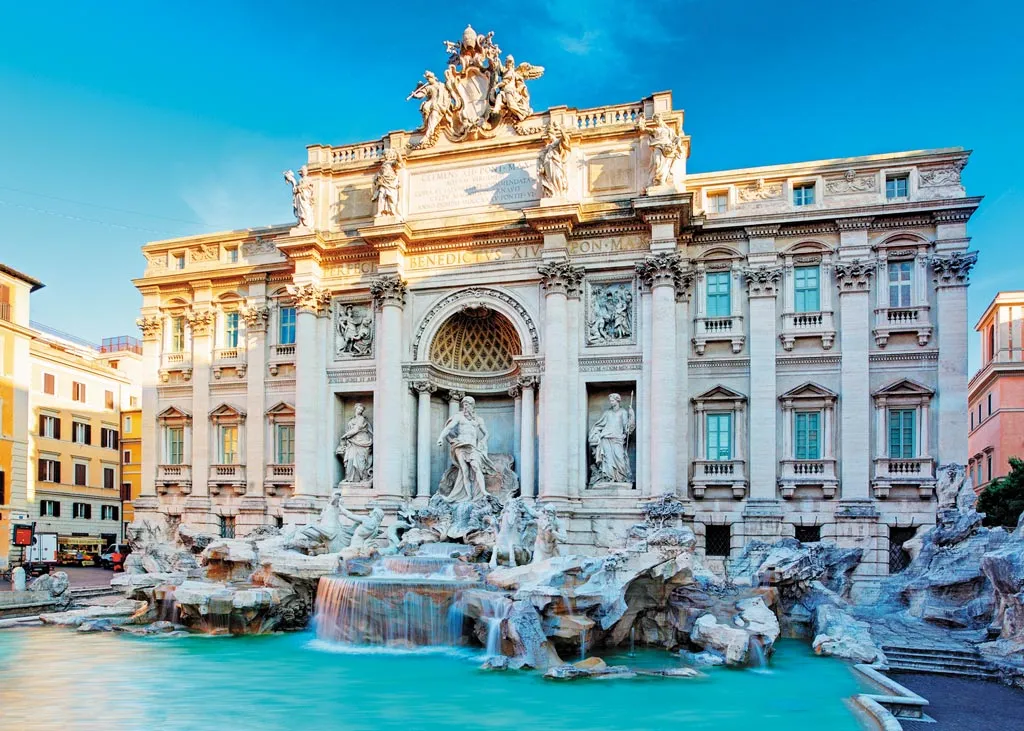
    Italy’s architectural style cannot be classified by period or area because of the country’s separation into small states until 1861. As a result, an extremely broad and eclectic range of architectural designs has resulted.

    Furthermore, from the 19th century, the term “Italianate architecture” has been used to designate foreign building that was erected in an Italian style, particularly modeled on Renaissance architecture.

    Italy is home to several of Western architecture’s finest achievements, including the Colosseum, Milan’s Duomo, Turin’s Mole Antonelliana, Florence’s cathedral, and Venice’s building designs. Museums, castles, buildings, statues, churches, art galleries, villas, fountains, historic dwellings, and archaeological remnants are among the estimated 100,000 monuments in Italy. With modern architects like Renzo Piano and Carlo Mollino, Italy is now at the forefront of modernist and environmental design.

    History

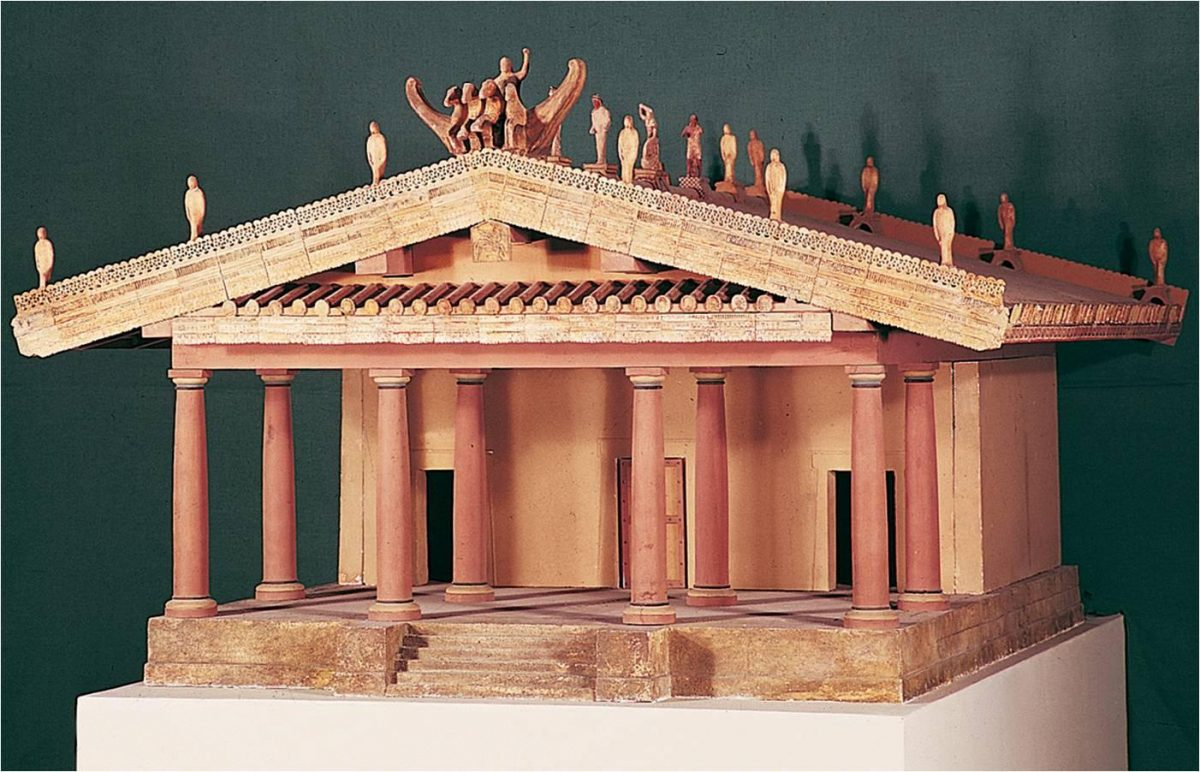
    Along with prehistoric architecture, the Greeks and Etruscans were the first people in Italy to actually establish a succession of styles. The Etruscans led the way in building in Northern and Central Italy during the period.

    Etruscan Architecture 

    The Etruscans used brick and wood to construct their structures. The Etruscans influenced Roman architecture by constructing temples, fora, public avenues, aqueducts, and city gates. With the exception of a couple in Volterra, Tuscany, and Perugia, Umbria, few Etruscan architectural sites are presently visible in Italy.
    Greek Architecture

    The Greek colonists who founded Magna Graecia in southern Italy built their buildings in their own style beginning in the eighth century BC. They created larger, better, and more technologically advanced homes, which had an impact on Roman architecture as well. However, during the 4th century BC, when the Hellenistic Age began, less emphasis was placed on the construction of temples and more time was devoted to the construction of theatres. The semi-circular theatre had an auditorium and a stage. Unlike the Romans, who erected the audience seats artificially, they used to be built solely on hills.

    Bulky stone or marble pillars were commonplace in Greek temples. Several ruins of Greek construction may still be seen in Italy, particularly in Calabria, Apulia, and Sicily. The Valle Dei Templi temples, which are now U.N.E.S.CO. World Heritage Sites are a good example.
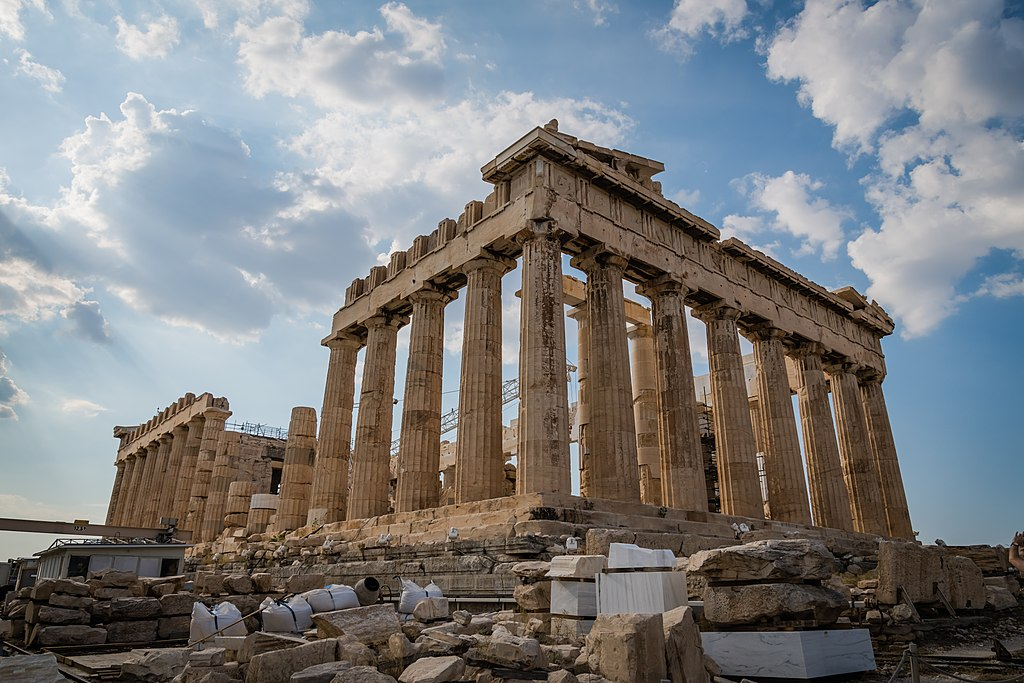
    Italian architecture was affected by Greek architecture, which left substantial indications in Magna Grecia, in the temples of Agrigento, Selinunte, and Paestum, and by Etruscan building, which attracted Vitruvius’ attention.

    The Romans assimilated Greek influence, which can be observed in many parts of architecture, such as the introduction and usage of the triclinium as a location and way of dining in Roman villas.

    Similarly, the Romans owed their Etruscan neighbors a debt of gratitude for providing them with a plethora of information necessary for future architectural solutions such as hydraulics and arch construction.

    Types of Architectural Styles 

    Byzantine Architecture

    In Italy, Byzantine architecture was also commonly employed. The Byzantines were the global leaders in terms of culture, arts, music, literature, fashion, science, technology, business, and architecture until the Western Roman Empire collapsed in 476 AD. Since the Byzantines occupied Sicily for a time, their architectural influence may still be seen today, for example, in the elaborately painted churches of Cefalu, Palermo, and Monreale. In Venice, St Mark’s Basilica is another example of Byzantine architecture.

    byzantine
    Byzantine Architecture in Italy

    The Byzantines, who were officially the inhabitants of the Eastern Roman Empire, preserved Roman architectural and artistic ideas while giving them an Eastern twist. They were known for their somewhat flatter domes and fuller use of golden mosaics.

    The art and architecture of the early Christians were heavily influenced by that of the pagan Romans; sculptures, mosaics, and paintings adorned all of their churches. Late-Christian frescoes can be seen in several of Rome’s many catacombs.

    The basilica is a Christian idea that originated in Rome. They were notable for having large, rectangular structures with mosaics and embellishments, created in an almost archaic Roman style.

    Romanesque Architecture

    The Romanesque movement, which lasted from around 800 to 1100 AD, fell between the Byzantine and Gothic periods. The use of Roman arches, stained glass windows, and curving columns, all of which are prevalent in cloisters, earned the design the name “Roman”-esque. The Leaning Tower of Pisa at Piazza Dei Miracoli and the Basilica of Sant’Ambrogio in Milan were erected during this time, which was one of the most productive and inventive periods in Italian architecture. 
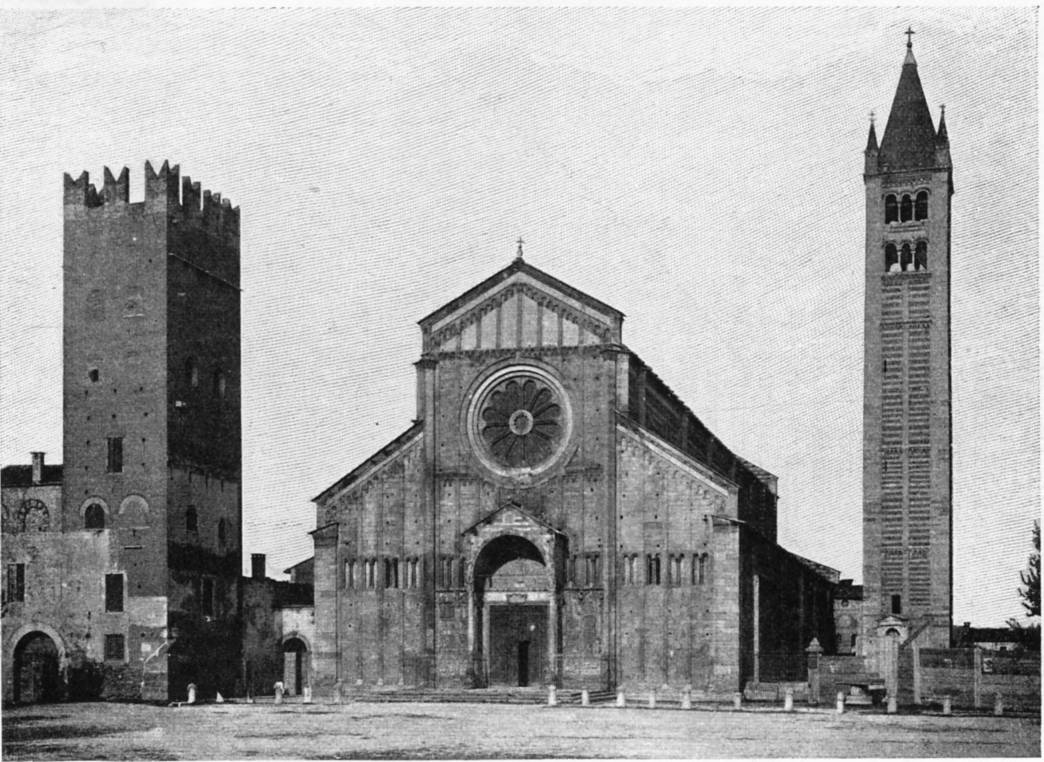
    The style and structure of Romanesque architecture in Italy varied widely. The Lombard Romanesque was more structurally advanced than the Tuscan, but less artistically. The weight of the buildings caused them to buckle on the exterior, and they were employed as buttresses to support the structures. Unlike the magnificent mosaics seen in Italian Byzantine architectural works, they were simply made of marble or stone and had a minimal design.

    The vault was the most important invention in Italian Romanesque architecture.

    Gothic Architecture

    In Italy, as in many other European nations, Gothic architecture was imported. In the 12th century, Gothic architecture first arose in Italy. The evolution of Italian Gothic was always marked by a distinctive feature that distinguished it from that of French Gothic, where it had begun. The dramatic architectural solutions and technological advances of the French Gothic never occurred in Italy, since architects opted to stick to the centuries-old construction tradition.
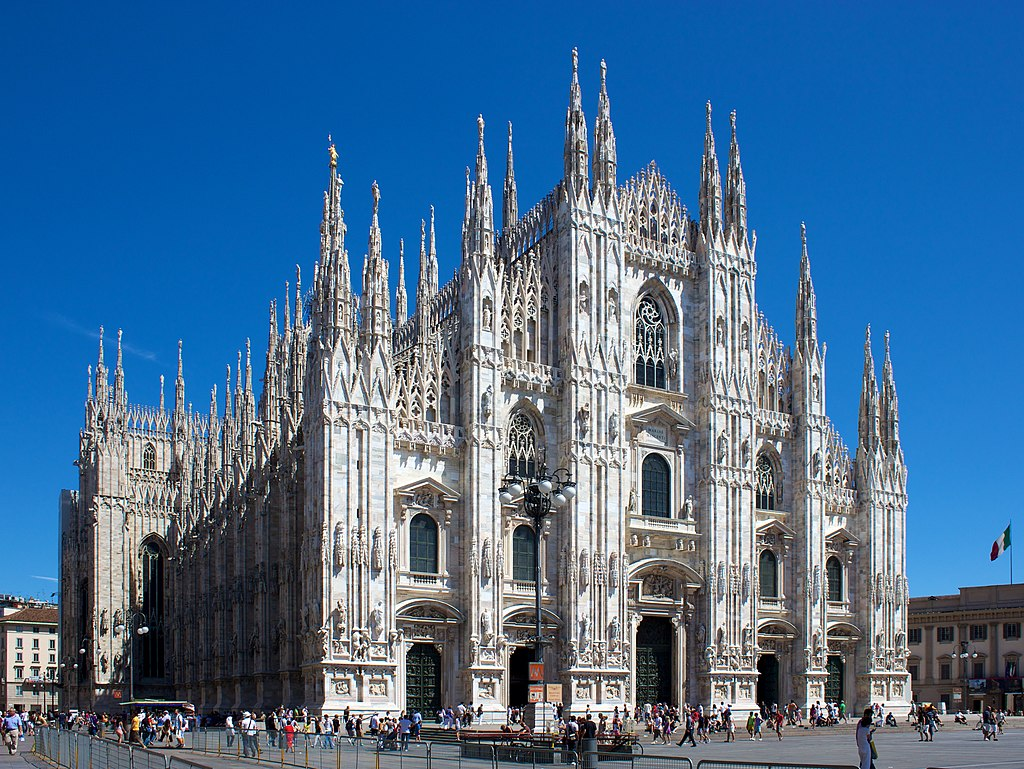
    The Benedictine Cistercian order was the principal bearer of this new architectural style, thanks to their new edifices.

    Rennaissance Architecture

    The Renaissance flourished in the 15th century in Italy, particularly in Florence. The academic approach to ancient architecture corresponded with a widespread resurgence of learning. Florence was the birthplace of the new architectural style, which was purposefully brought into being by specific architects who intended to restore the order of a prior “Golden Age,” rather than gradually emerging as Gothic did from Romanesque.
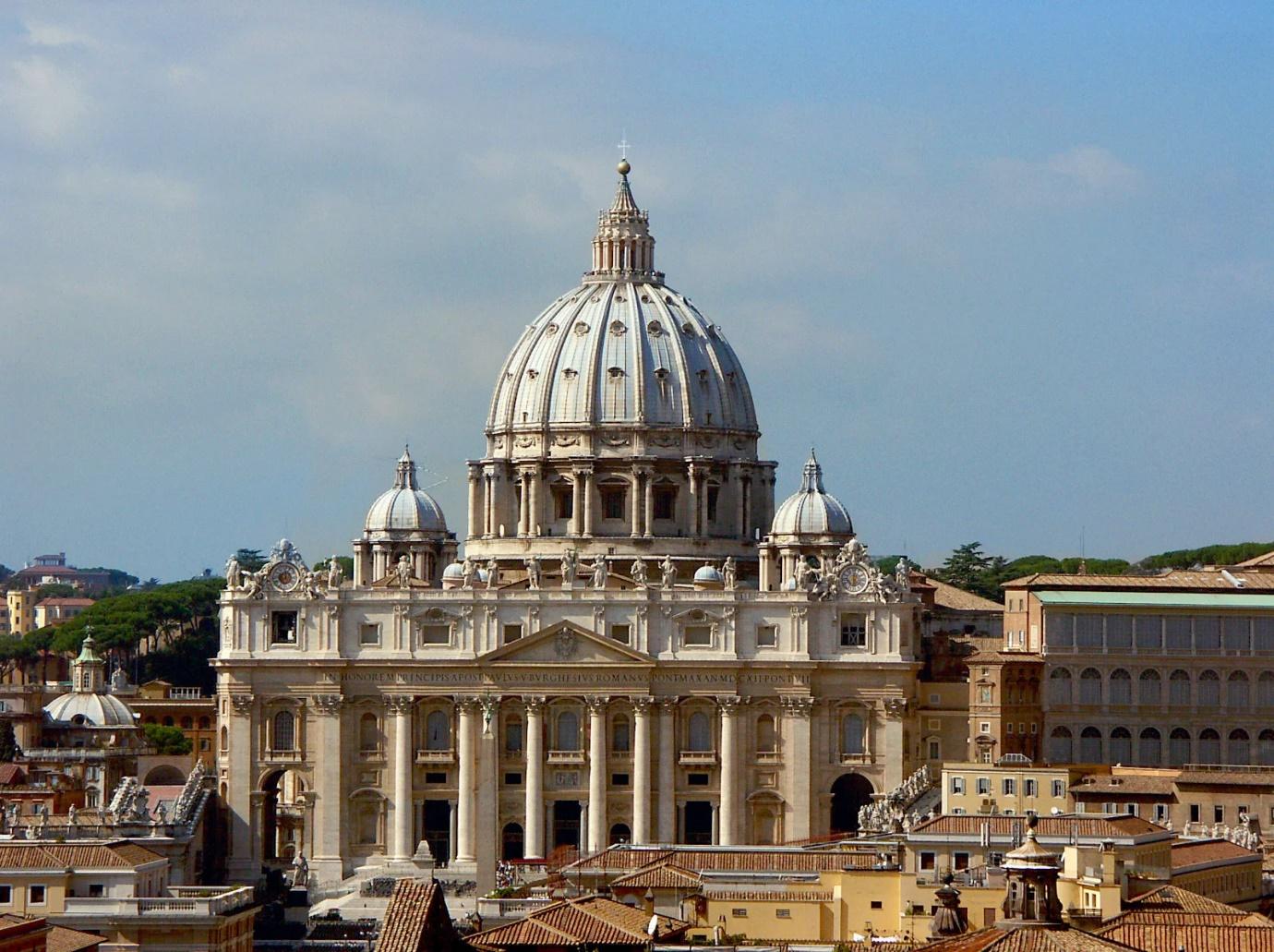
    Forms that were clearly defined and structural features that communicated their purpose were always chosen by Italian architects. These traits may be observed in many Tuscan Romanesque buildings, such as the Florence Baptistery and Pisa Cathedral.

    Mannerist Architecture

    Mannerism is a word used to describe some features of creative style, mostly Italian, between the early 16th century High Renaissance and the early 17th century’s beginnings of Baroque art. Mannerism arose and flourished in several areas until the Baroque style emerged around the end of the 16th century. Many of the High Renaissance’s concepts were incompatible with mannerism. It was marked by high intricacy, complexity, and innovation rather than harmony, clarity, and rest.
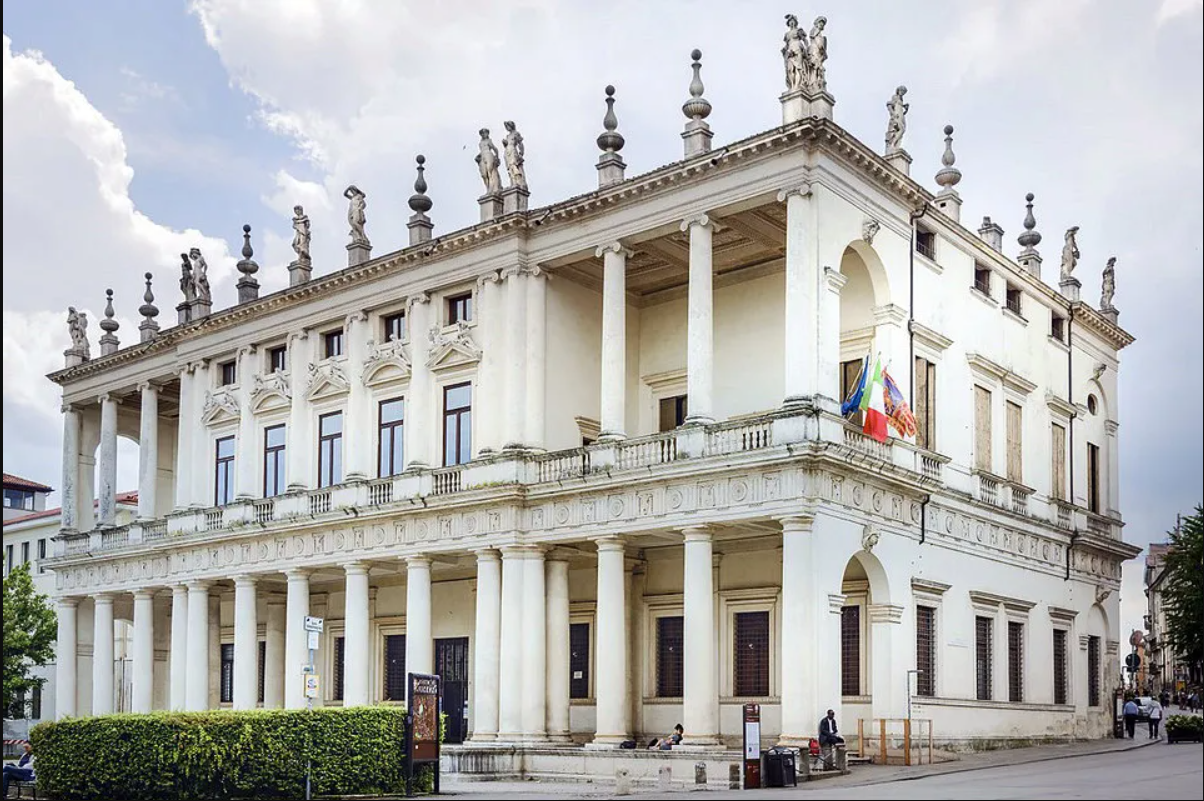
    Mannerist architects were just as interested in old classical architecture as their forefathers, but they discovered new traits in the ancient Roman buildings that they could use. 

    Baroque Architecture

    The Palazzina di Caccia di Stupinigi (Hunting Lodge of Stupinigi), built in the 18th century, is one of the unique masterpieces of late Baroque architecture. It was created by Filippo Juvarra, who also built the Basilica di Superga in Turin, and has a highly articulated plant based on a Saint Andrew’s Cross.
    Rococo Architecture

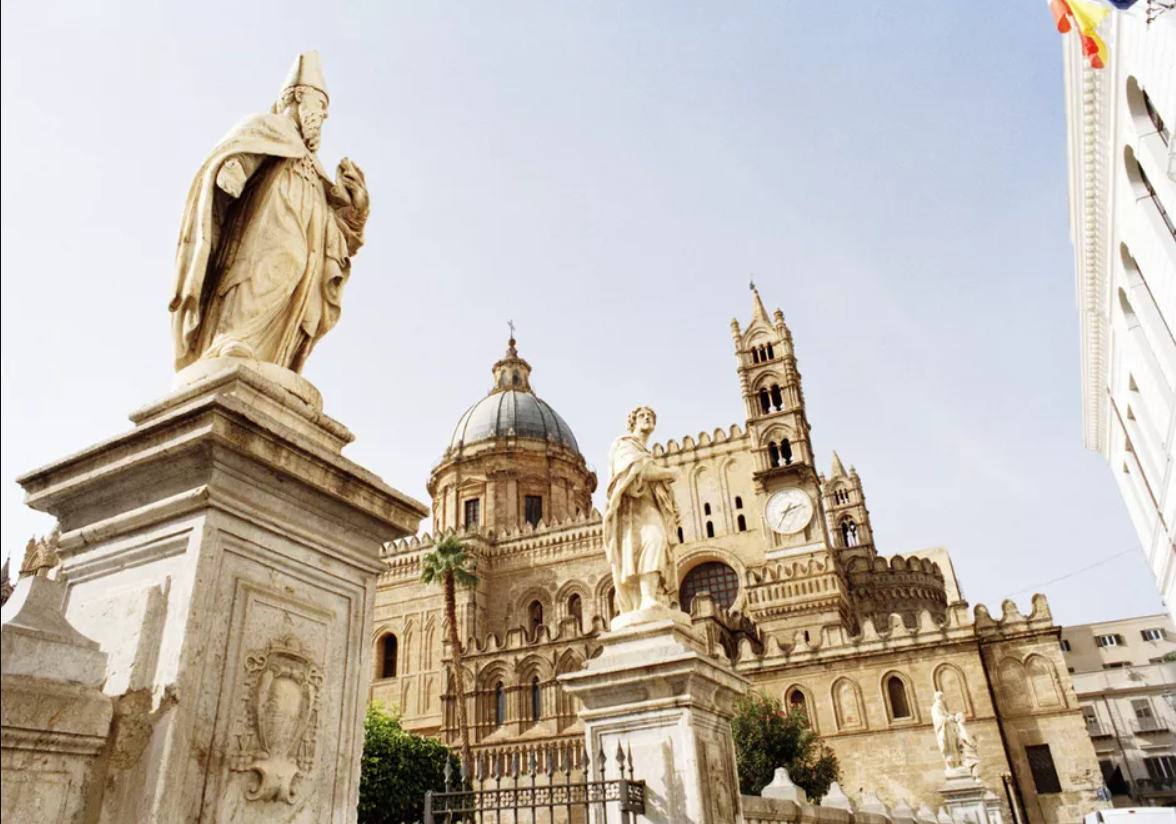
    Italians were more interested in the work of Francesco Borromini, a baroque architect, in the early 18th century. Several designers, such as Filippo Juvarra, were influenced by this style during this time period but strove to make it more graceful, lighter, and less oppressive than High Baroque.
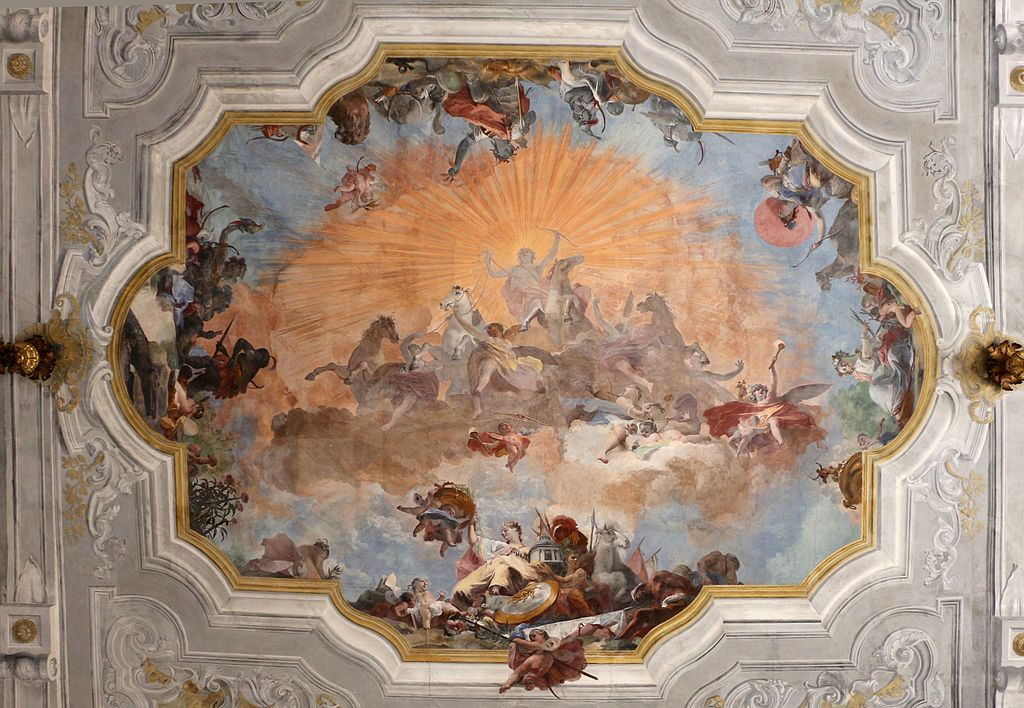
    Swelling, curving shapes, terra-cotta construction, exposed components, and intricate architectural compositions were all hallmarks of this new style, which was popularised by various Northern Italian architects. In addition, the interaction between structure and light was emphasized.

    Neoclassical Architecture (the 1750s–1850s)

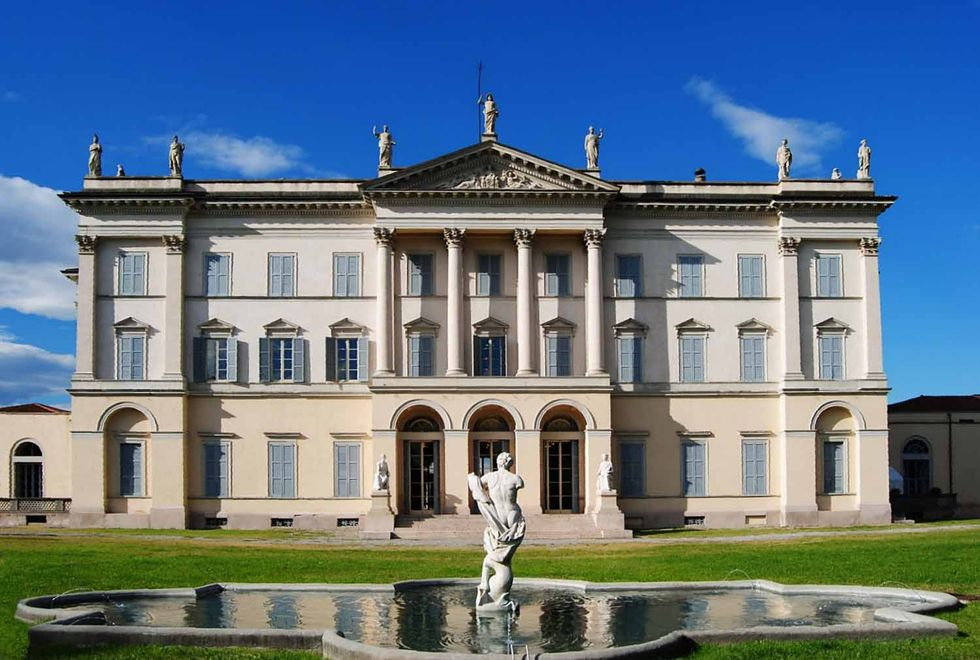
    The term “Italian Neoclassical Architecture” refers to architecture from the Neoclassical period in Italy. Milanese Neoclassical architecture comprises the primary aesthetic trend in the city from around 1750 to 1850. Luigi Cagnola’s Arco della Pace (Milan), the San Carlo Theatre (Naples, 1810), San Francesco di Paolo (Naples, 1817), Pedrocchi Café (Padua, 1816), Tempio Canoviano (Posagno, 1819), Teatro Carlo Felice (Genoa, 1827), and the Cisternone (Genoa, 1827) are examples of Neoclassical architecture in Italy (Livorno, 1829).
    Art Nouveau Architecture

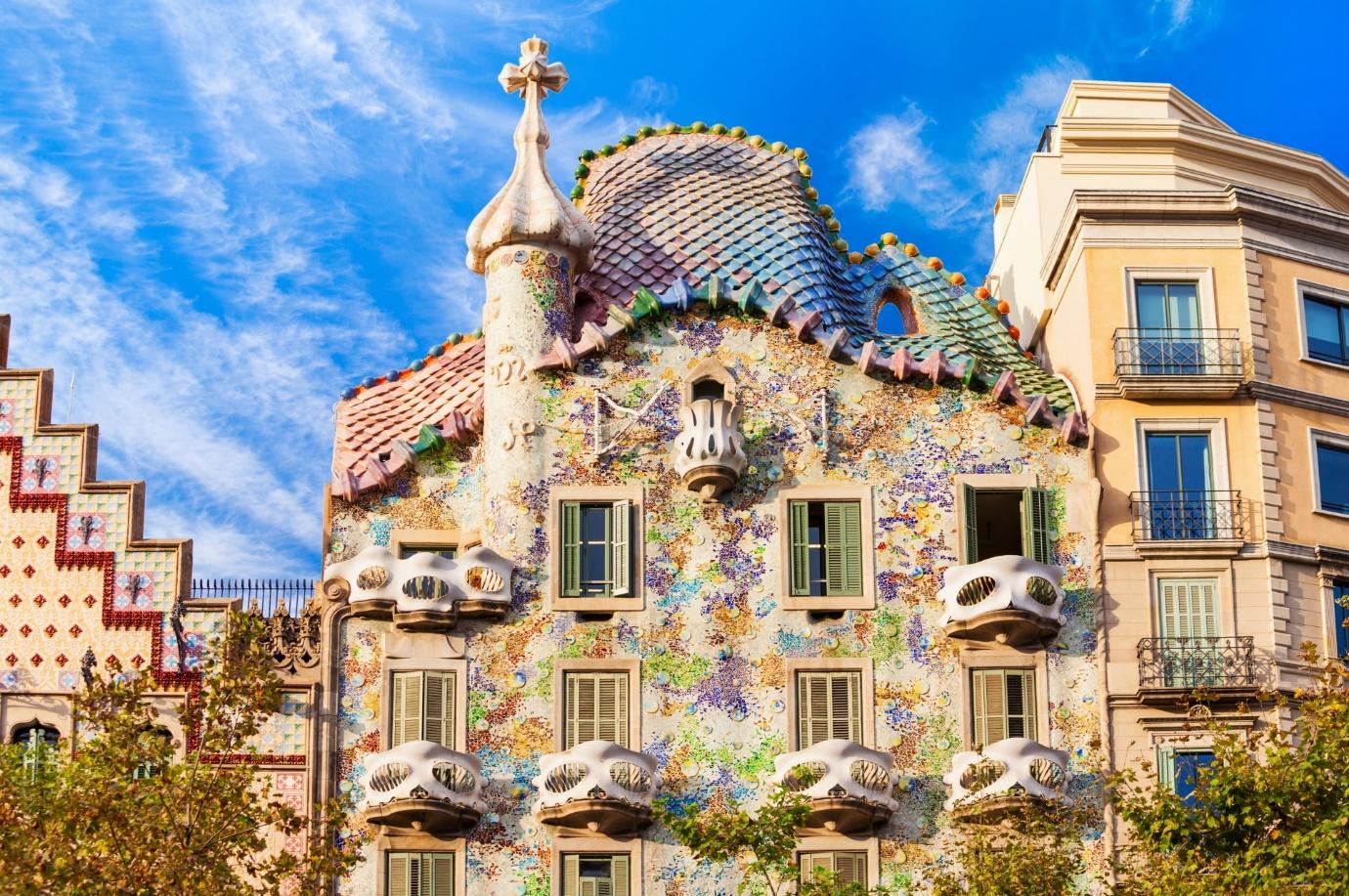
    Giuseppe Sommaruga and Ernesto Basile were the most important and original exponents of Art Nouveau, often known as the Liberty style in Italy. The first designed Milan’s Palazzo Castiglioni, while the second planned enlargement of Rome’s Palazzo Montecitorio.
    Fascist Architecture

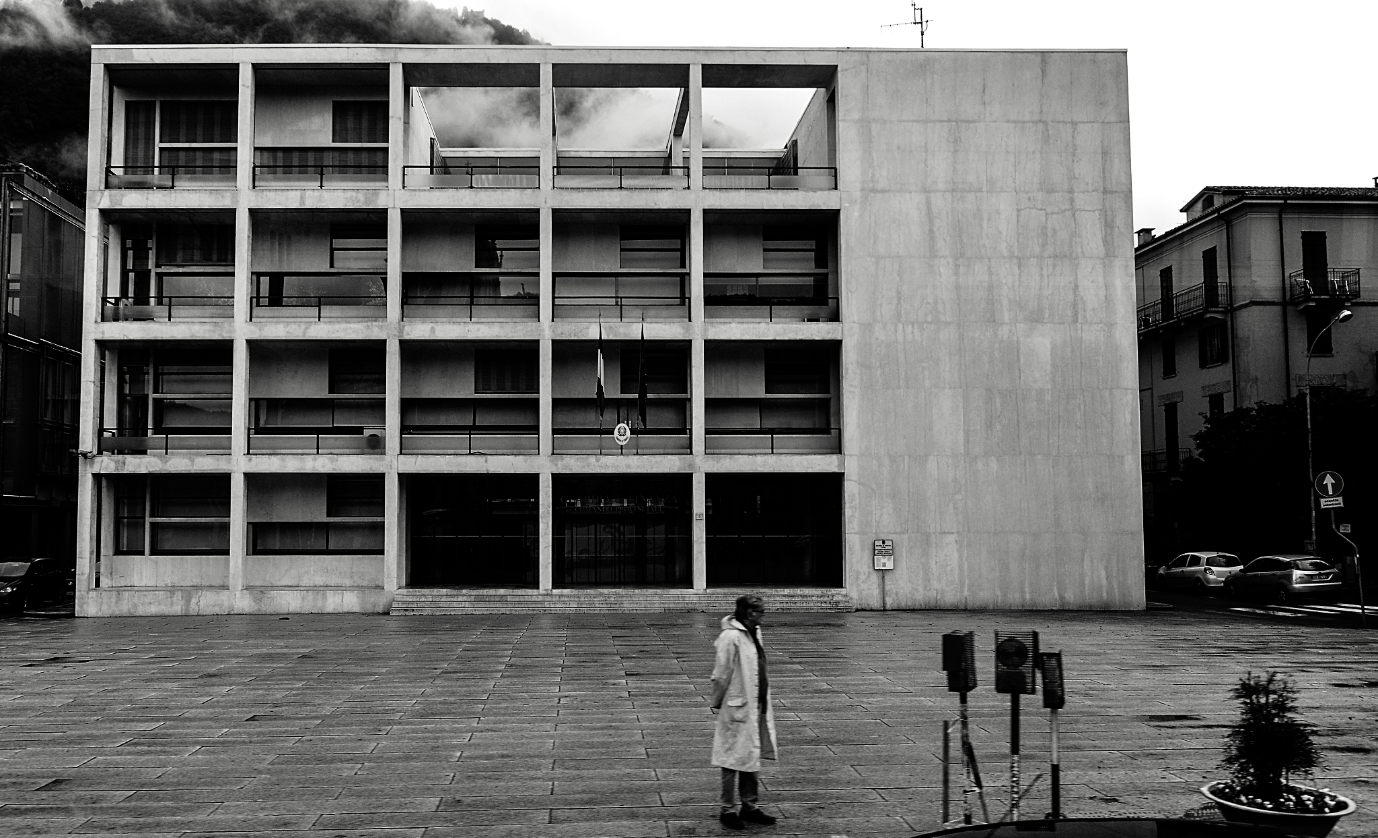
    The rationalist-Fascist architectural style was an Italian architectural style that emerged during the Fascist government, especially in the late 1920s. Two branches have been identified: a modernist branch led by Giuseppe Terragni, and a conservative branch led by Marcello Piacentini and the La Barbera group.

    Post-W.W.II Architecture

    Appliances, furnishings, flooring, and facades that followed mass-production from factories were put on hold during the immediate post-World War II-style explosion in the 1950s. This made it easy for general contractors to support the brutalist movement by building in the suburbs.

    Modernist Architecture

    Modernism, often known as modern architecture, is a style of architecture that originated in the early twentieth century. Following the devastation of World War II, modernism would emerge as the dominant architectural style.
    Architecture Master’s Courses in Italy

    In comparison to their Western European rivals, Italian universities are quite economical, and the quality of education is clear. Italy has always been and continues to be a cultural and educational cradle. In reality, the Institution of Bologna, which was founded in 1088, is Europe’s oldest university. The standout fields where Italian institutions are second to none are fashion and architecture, but there are other English-taught degrees to select from. In your leisure time, you may take advantage of the pleasant Mediterranean environment, the sea air, and delectable cuisine while touring historic monuments such as Rome’s Colosseum and Pantheon.

    Courses:

    SOS Master Program- SOS School of Sustainability, Milano, Italy

    Industrial Design for Architecture- POLI, Design- Milan, Italy

    Architecture for Heritage- Turin, Italy

    Architecture Construction City- Turin, Italy

    Best Examples of Italian Architecture 

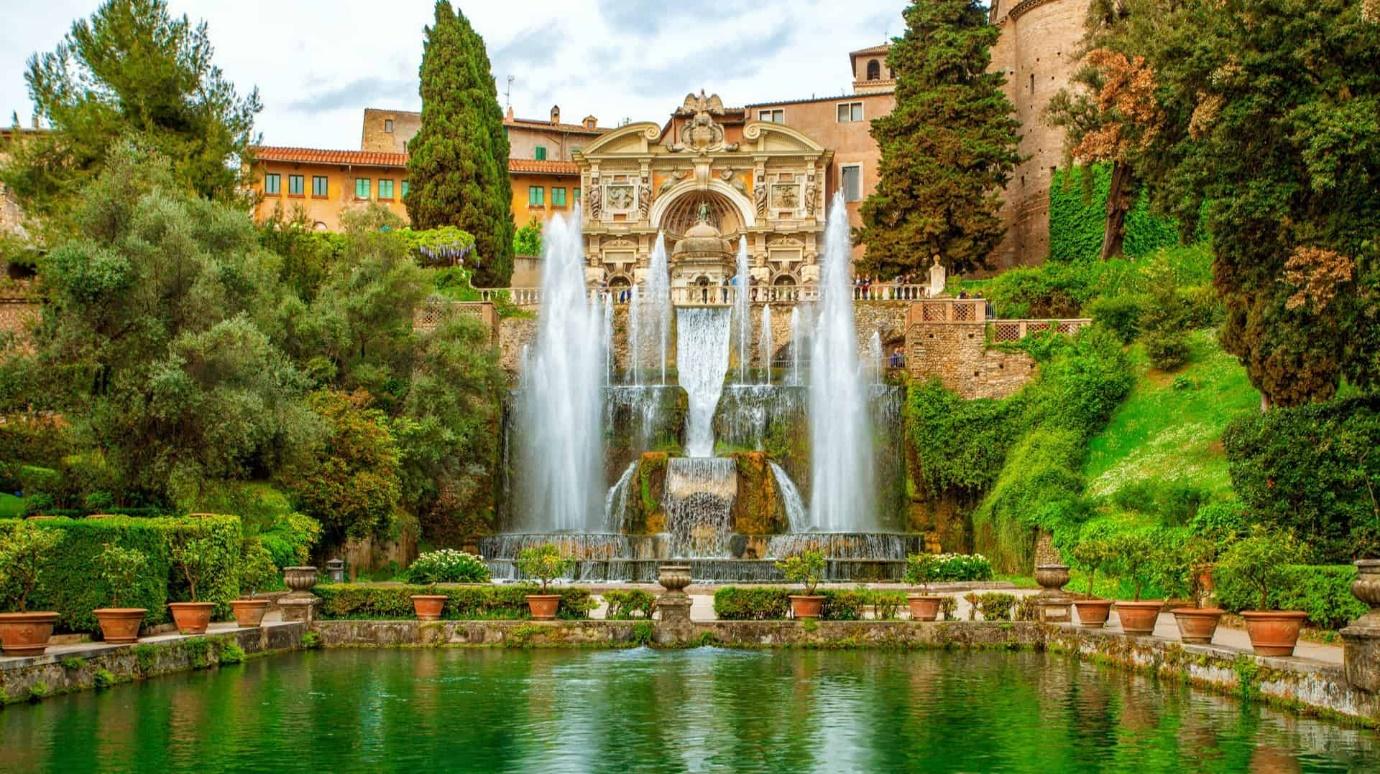
    Rome’s Villa d’Este

    The grounds of Renaissance nobility and Cardinal Ippolito d’Este’s pleasure house are laced with whimsical grottoes, flowing flumes, and reflecting ponds.
    Rome’s Pantheon

    The best-preserved and most exquisite ancient edifice in Rome — if not the globe — was erected and perhaps planned by Hadrian between 118 and 125 A.D., and is capped with a 44-meter-wide (143-foot) concrete dome that has never been structurally changed.

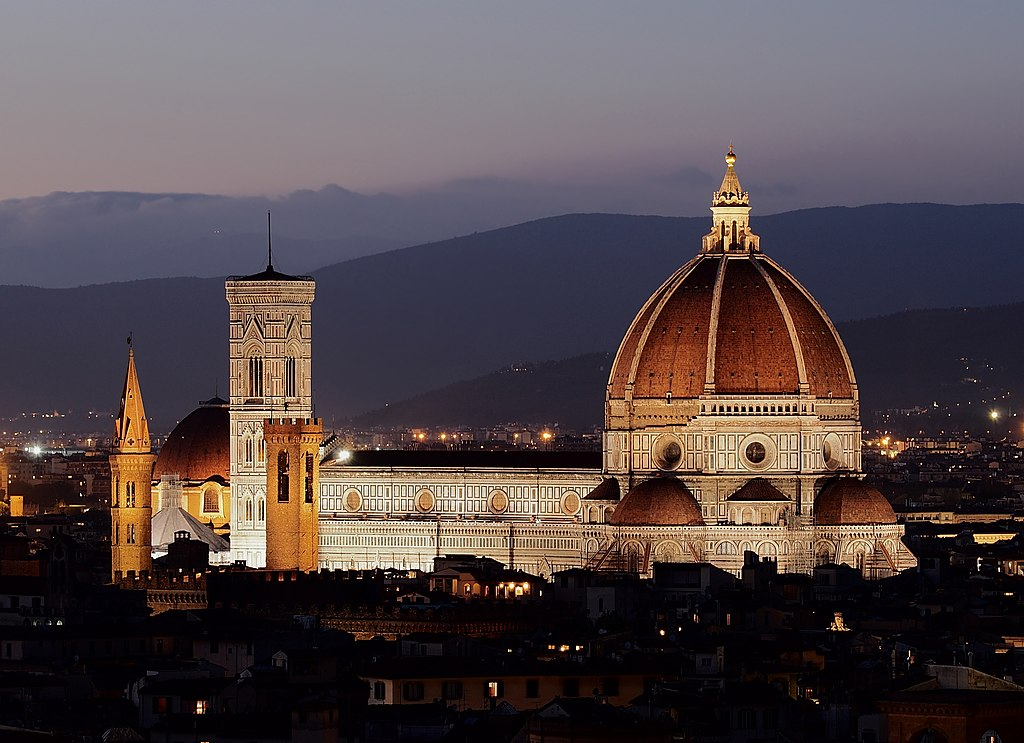
    Brunelleschi’s Dome, Florence Santa Maria del Fiore, Florence

    Filippo Brunelleschi’s distinctive dome is one of the world’s most stunning examples of Renaissance architecture, and as you slip between the inner and exterior domes on your way to the top, you’ll get a personal look at the unique double-shell construction.
    Pisa’s Leaning Tower

    The term “Pisa” brings up pictures of an elaborate white marble cylinder leaning against a beautiful blue sky, as distinctive of Italy as pizza and tomato sauce. A vista and a picture shoot are insufficient: Climbing the tower is one of the most thrilling activities in Italy.

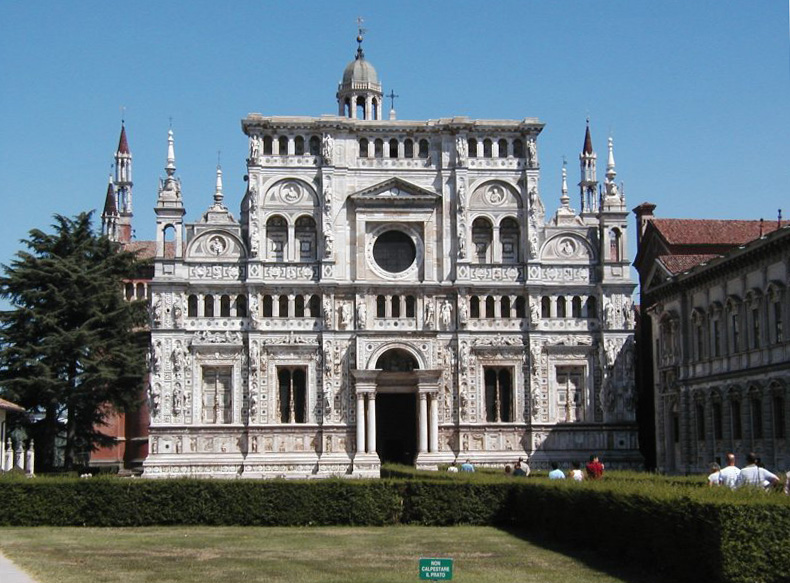
    Certosa di Pavia, Pavia

    The reigning Visconti and Sforza dynasties were courted in this city south of Milan, and they are entombed at the Certosa beneath a beautifully colored marble front, surrounded by murals, paintings, and magnificent statues. The Certosa is home to Cistercian monks who live in two-story cottages that encircle the massive cloister, each with its own garden plot.
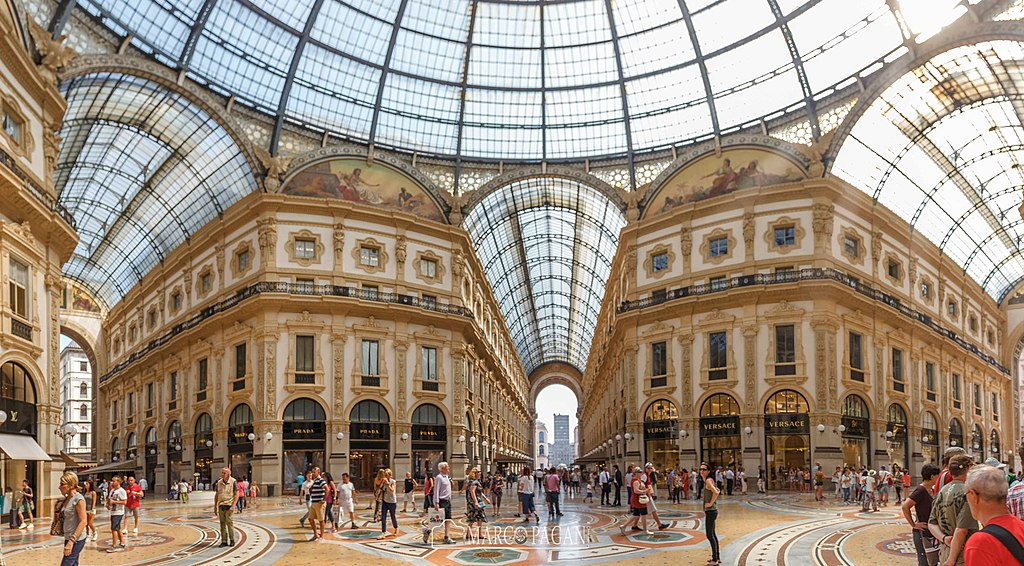
    Galleria Vittorio Emanuele II, Milan

    The glass-enclosed retail arcade in the heart of Milan, wedged between the Duomo and La Scala and opened in 1867, is the model for shopping malls all over the world. The “Salotto di Milano” is a proud term used by Milanese to refer to their famous landmark (Living Room of Milan).
    Stupinigi, Turin

    When Filippo Juvarra built this retreat amid the Savoy hunting grounds in 1729, he had more than a simple lodge in mind: 137 rooms and 17 galleries are strung out along four-angled wings off an oval-shaped main hall topped by a bronze stag.

    Palazzo Borromeo, Lago Maggiore

    The extravagant gardens and residences erected for a prestigious line of Milanese cardinals on a rocky protrusion near Lago Maggiore are a sight to see.

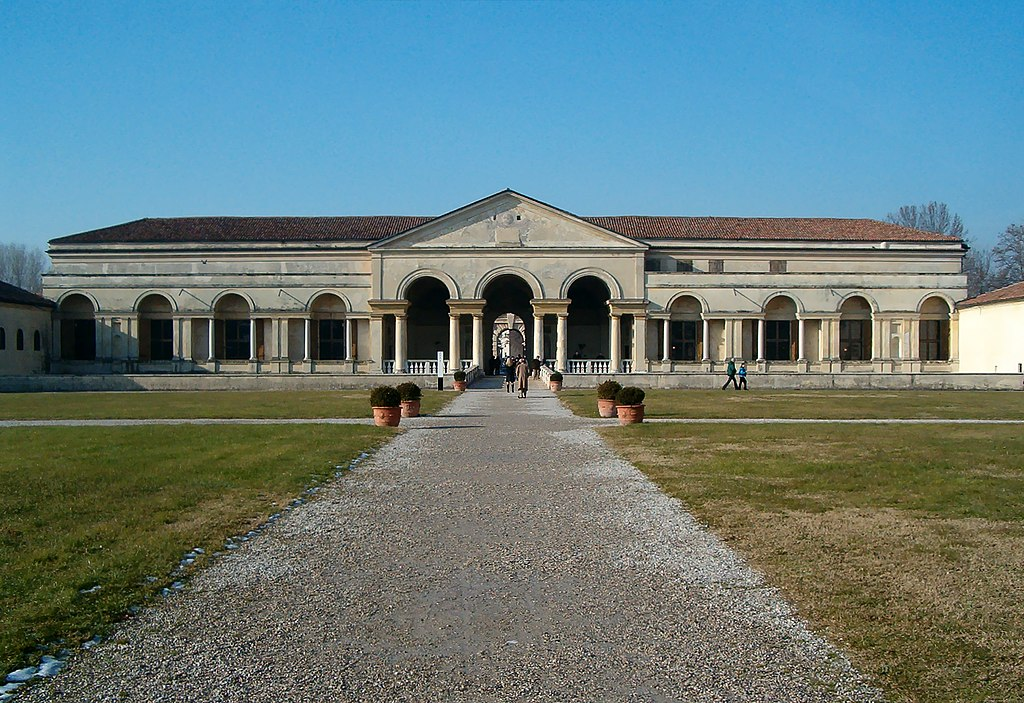
    Palazzo del Teè, Mantua

    The keystone on the enormous archway at the entrance of Federico II Gonzaga’s pleasure palace looks to be slipping out of place, a premonition of the whimsy that awaits in the salons beyond.
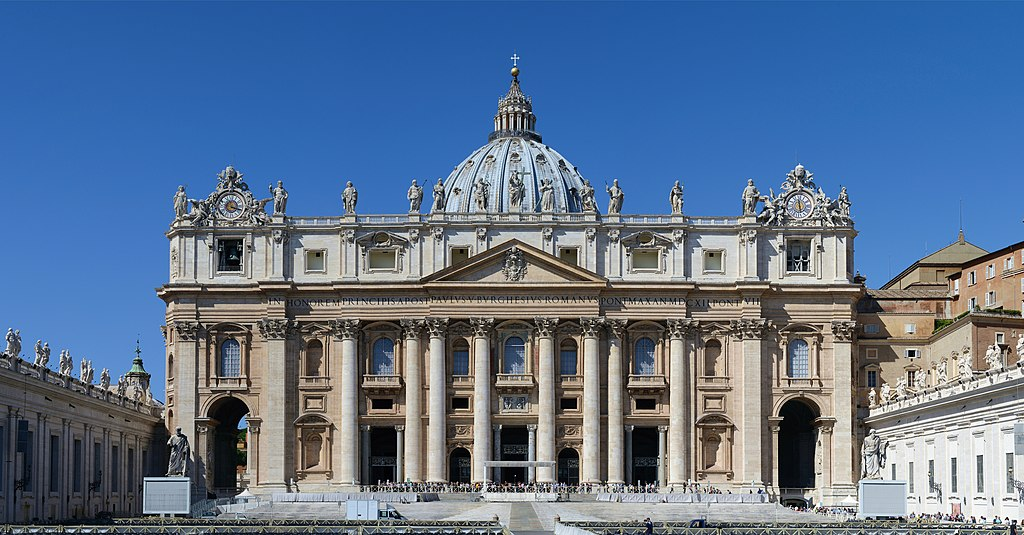
    St. Peter’s Basilica, Vatican City

    The grave of Saint Peter is buried in St. Peter’s Basilica, which is considered one of the holiest Catholic locations. Although it does not contain a bishop’s throne, St. Peter’s Basilica is sometimes mistaken for a cathedral. The initial church on the site was built in the 4th century; however, the current edifice was built in the 16th century and was sponsored by indulgences, which were sold by the Catholic church as a means of providing peace of mind to its members.
  • The Mesmerizing Egyptian Era and its Architecture

    The Mesmerizing Egyptian Era and its Architecture

    “The Egyptian contribution to architecture was more concerned with remembering the dead rather than the living.”

    -Stephen Gardener

    Introduction

    Egyptian architecture, the greatest of all time which focused on the dead, had a permanent imprint on the manuscripts of Egypt. Some interesting facts, tales, verdicts and chanting of the realm to bow down to their pharaohs are still heard when we listen to the echo of “Egyptian Architecture”, hold on to your verbal diarrhoea until I deliver the complete story of Egyptian architecture from how it began to its infinity line prevalence. 

    The story won’t begin, unlike the old phrase of “once upon a time” instead it will be like……

    History Of Egyptian Architecture 

    A long time ago there was a country famous for its belief in an afterlife, for them, the pharaoh, king or first person of society was equivalent to God, their settlement was largely influenced, affected and dependent on the nature of the river Nile and is marked on the world map because of proudly holding one of the seven wonders of the world in its boundaries, any guesses? oh! So obviously it’s Egypt.

    Any place, country or settlement grows gradually with time and following the situations arising be it climatical, ecological or financial, henceforth happened with this pharaoh’s land.

    Exploring the Egyptian saga of architecture, hereby delivering you the hierography of ancient, middle and new Egypt.  

    The Old Kingdom (2686 BC – 2181 BC)

    There was a time when the settlement was near the Nile, found to be the longest river in the world until the Amazon River was measured, bringing in hopes of fertile crops with sorrows of floods destroying the settlement near its shore, affecting livelihood. 

    The flood water took along with it the kutcha houses made of papyrus reeds and mud, the disruptions forced them to give thought to an alternate option to build homes and what they found was not surprising rather a copy-paste idea of the most balanced and well-planned “Indus Valley Civilisation” or “Harappan Civilization”.

    Egyptian
    Early Egyptian settlements

    The procedure was the same, bricks were moulded, given a desired rectangular shape long in length with matching width and height, and laid in the hot sun so that the sun consumes the water in it and makes it a sturdy, rough & tough piece so that nobody could harm their livelihood which is enclosed in the conjunction of the bond between thousands of similar bricks. 

    Egyptians Shaping Bricks
    Egyptians Shaping Bricks

    But, they were still not happy as, Egypt an African continent country, acquiring the northern part of it is dominated by desert heading with a hot climate on major months and fewer days of mild winter causing an issue again for native Egyptians to reside in a house with fewer openings of doors and windows so as prevention to direct sun retention, and a habit to sleep on their built flat roofs due to fairly small size of houses, a bad idea! 

    Here comes the climax of the story, Egyptians believed in an eternal afterlife hence the houses in which they lived being alive can be a compromise but where the pharaoh or first person of society’s mummy is going to be laid should be vast and permanent over the years & decades, such an irony!

    They were not afraid of their survival but rather were afraid of grave robbers and climatic damage made to the mummy – an eternal afterlife believer could be offended, but protecting a dead body is something weird and stubborn, a matter of timeless discussion, will do on some other day.

    Pyramids & Their Architecture 

    Never, ever thought so about the idea that Egyptians came upon with of preserving the mummy, they created a structure called a burial chamber inside Mastabas, the central and deepest in-depth zone of the Pyramid. 

    Every pharaoh was clear with a mindset of developing pyramids but each one of them was created in its way in which some pyramids are conquering the world by their worth and some faced criticism – preaching to the next one. 

    But a significantly asked question should be answered here before discussing the varied pyramidal structure is why the pharaohs choose the only geometrical structure, the pyramid, among the 360 degrees of the geometry box each section consisting a different form, the answer is there was a father of pharaohs, the Ra, the sun god imaginarily they saw the sun to be seated upon the pyramid-shaped mound of the Earth which is emerged from the primordial sea and that’s why this pyramid shape is personified as the rays of their god i.e. the sun. 

    The Ra & its relation with the Egyptians
    The Ra & its relation with the Egyptians

    A perfect thought to prioritise their god and afterlife blending the mummy within the pyramid envisaging that their god itself is protecting the pharaoh’s mummy. 

    Pharaoh Djoser & His Pyramid

    The king of the dynasty III named Djoser acquired the position of the pharaoh and was greatly influenced by his advisor, vizier and architect named Ar. Imhotep. He was the designer of Djoser’s tomb for his eternal afterlife, valuable glory & treasure to be preserved in. 

    The construction was like this, there were six mastabas, a square flat-topped structure consisting of a burial chamber for the pharaoh’s dead body, with decreasing in size placed one over the other creating a huge height of 200ft i.e., nearly 60 meters high. 

    Step Pyramid by Imhotep for Pharaoh Djoser  ©: thecollector.com
    Step Pyramid by Imhotep for Pharaoh Djoser  ©: thecollector.com

    But Imhotep missed the essence of the pyramid rather he created a step pyramid as there couldn’t be seen a clear line adjoining the two i.e., the joining vertex of each triangle straightway declining and connecting to the square base vertex. 

    The conceited architect Mr Imhotep and his creation ©: i.natgeofe.com
    The conceited architect Mr Imhotep and his creation ©: i.natgeofe.com

    “Every flaw is a beauty, it’s all about perspective.”

    Now here is the fox entering into the story, being an architect, Imhotep smartly knew how to cover up the mistake done by him and gives a new religious and believable reason for the false construction of the pyramid as a result the step pyramid is now explained as to personify the climbing of pharaoh Djoser those steps to reach the god Ra, the sun.

    Pharaoh Djoser’s Mummy ©: i.insider.com
    Pharaoh Djoser’s Mummy ©: i.insider.com

    Pharaoh Sneferu & His Pyramid

    The pyramid built during Snefru’s dynasty is located in the royal necropolis city on the western bank of the Nile in the drain of sandy winds, the Dahshur, which is also famous for beholding the Bent pyramid, the Sneferu’s pyramid. 

    The Bent Pyramid ©: tripsinegypt.com
    The Bent Pyramid ©: tripsinegypt.com

    The speciality of this pyramid summarises in the statement “at least he tried to build a pyramid” or the efforts were visible, as it looked like a pyramid though not accurate but far better than Djoser’s pyramid or step pyramid. 

    Sneferu’s pyramid was bent at an angle of 55 degrees that’s the reason why the adjective bent is added as a prefix to the pyramid making it identifiable and recognizable. It is famously known as “The first real Pyramid”.

    Inside of Sneferu’s Pyramid ©: i.insider.com
    Inside of Sneferu’s Pyramid ©: i.insider.com

    Pharaoh Khufu & His Pyramid 

    Khufu never knew that his mummy would embark on the world map, yes you are going in the right direction. His pyramid is “The Great Pyramid at Giza”. A motivational yet revolutionary thought came into Khufu’s mind, corrected his father Sneferu’s mistake and created the proper geometry of the pyramid. 

    The Great Pyramid at Giza of course has some distinguishing characteristics which allow it to imprint itself as one of the seven wonders of the world. Despite being 481ft tall accurately 480.6ft tall it was the first one to hold the title of tallest man-made structure in the world until the Eiffel Tower conquered it. 

    Inside Khufu’s Pyramid ©: nitrocdn.com
    Inside Khufu’s Pyramid ©: nitrocdn.com

    Let’s throw some spotlight on its material selection and architectural characteristics under the umbrella of Egyptians and their eternal afterlife. 

    Why Is It the Wonder?

    This colossal pyramid inclined at an angle of 51degrees aligning the lines to match the four cardinal points has an outer layer of yellowish-toned limestone, which is brewed off with time, and now is the turn of beneath layer the inner layer which is lightly less yellowish than the older one, comprising of the main focal point, the burial chamber which is surrounded by the sturdy, beholding and toughest stone of all times, none other than granite. 

    The cut section explaining the interior detail of Khufu’s pyramid ©: quoracdn.net
    The cut section explaining the interior detail of Khufu’s pyramid ©: quoracdn.net

    This huge funerary edifice took two decades to reach its height and over 100,00 workers gathered each cell of it by irrigating it with hard work and unfiltered sweat. 

    Limestone used to build these structures has a reason behind it, the highly reflective nature of it gave it the title of “Glorious structure”, of course, if so many light-reflecting blocks actually 2.3milliion limestone blocks came together to enlighten the world with its reflecting ray and energy of the sun in it. 

    Limestone course of Khufu’s pyramid ©: britannica.com
    Limestone course of Khufu’s pyramid ©: britannica.com

    Pharaoh Khafre & His Pyramid

    Egyptian empire reached its pinnacle by constructing one among the seven wonders and was enjoying its saga, continuing the legacy Khufu’s son built a pyramid which had a difference of 9.81ft, so by doing mathematics we got the height of Khafre’s pyramid i.e., 

    470.79ft, yes, it’s the smaller one. 

    The highlight of Khafre’s pyramid was not the decrease in height but this time the Egyptians are being more metamorphic, sounds offensive? But it is so, what they did is, they created a sculpture i.e., a “non-living being” to safeguard the dead mummy. 

    This sculpture creation was new to Egyptians but they trusted the old material limestone to develop it. The creation of the sculpture was blended in a manner where the body of the lion and the head of the chief person of society, the pharaoh is adjoining safeguarding the Khafre’s mummy laid in the pyramid.

    Naming was necessary and a very tough task as it was neither a human nor an animal rather a combination of two so around 1400 BC they named it “The Great Sphinx” specifying Ra Horakhty, a form of their god the sun hyperbolically an incarnation of god protecting temple doors as similar to Nandi in God Shiv’s temple or Hanuman in God Ram’s temple.

    The Great Sphinx Safeguarding Khafre’s pyramid ©: live.staticflickr.com
    The Great Sphinx Safeguarding Khafre’s pyramid ©: live.staticflickr.com

    The creator of this Great Sphinx is a controversial topic as great deeds of the past usually have huge fan bases, and will always be found as vulnerable in the sector of their creator and the answer to the question of who created it will be dash___.

    The Great Sphinx had lot many theories over its colour existence some say it used to be the primary colour until it had tanning or some say it was in a dull yellowish tone as being carved out from one huge piece of limestone which was left out in the quarry while constructed the pyramid, also the thing here to note down is the front paws of human-lion sculpture are in different pieces of limestone. 

    As soon as we will move ahead there is a lot many stuff in this Great Sphinx to giggle, debate and explore. One of them is the nose incident, yes, the sphinx does not have a nose but earlier it existed or maybe it never existed again not too sure because I don’t have one amongst those pharaohs so I can ask them and confirm with you all, sorry again!

    Not only nose theories say there was some mischievous done with his head too which could be the reason for it being disproportionate.

    Pharaoh Menkaure & His Pyramid

    This pharaoh created that pyramid which complete the set of three siblings standing upright and altogether, the 3 pyramids at Giza. This pyramid of pharaoh Menkaure is one-tenth the size of Khufu’s pyramid i.e., the smallest of three. 

    Menkaure’s pyramid, Khufu’s pyramid the biggest one & Khafre’s pyramid ©: National Geographic
    Menkaure’s pyramid, Khufu’s pyramid the biggest one & Khafre’s pyramid ©: National Geographic

    These three pyramids were the highlight, drama and rejoicing factor of the architectural saga of Egypt, hereafter this period the technique and construction of pyramids were not at tight grip rather the rope tends to slip from the hands of coming rulers and pharaohs, the reason behind is “it’s all about time”. 

    The Middle Kingdom (1975 BC – 1640 BC)

    This is the age when they remembered the remarkable work of their ancestors, but couldn’t efficiently learn and redo it, also time and materialistic factors changed as geography changed. 

    The Black Pyramid

    This age was more of a game changer since the practice of pyramid construction continued but one among all was sustained i.e. of pharaoh Amenemhat III famously known as the “Black pyramid”. 

    Why did this pyramid hit so hard in the history of Egypt? It is because while doing its construction the basic principles were hindered which in turn made it unsuccessful in survival and recognition. 

    The flaws were this pyramid, unlike others, rested on a stable base this pyramid wobbling on an unstable one, it was very near and clear to the river Nile merely 30ft above sea level which was flooded by the Nile immediately after its completion. 

    The Black Pyramid ©: National Geographic
    The Black Pyramid ©: National Geographic

    “An architectural masterpiece can have a design flaw as stated its ‘the perspective’ but shall never-ever compromise with its structure.”

    The core of this pyramid was weakened due to the array of chambers and corridors and the ceiling was not made to relieve the stress of the masonry above it, a complete blunder in basics.

    The flaws in construction were shouted aloud and they didn’t wait for the entire completion of the structure rather the ceiling sunk by two inches and menacing cracks were developed, door frames had begun to buckle. Pharaoh Amenemhat III was worried for his mummy, the pyramid being so rickety frightened him to protect his mummy at this pyramid at Dashur rather he constructed another one in Hawara which is taking care of his mummy to date. 

    The inside image highlights defects in Black Pyramid ©: National Geographic
    The inside image highlights defects in Black Pyramid ©: National Geographic

    Pyramid of Serositis III

    Another example of the resurrection belief of Egyptians is the pyramid of Serositis III located near Sneferu’s pyramid at Dahshur. 

    Unlike Black Pyramid, it also had drawbacks in its construction, the structure was built upon desert gravel making it unstable to survive for years. The inner core was not the core it lacked the mortar in between which couldn’t hold the bricks together. 

    Apart from flaws in material selection and construction the earlier ethics and principle of direction following Egyptian vastu the entrance of the pyramid was meant to be in the north but was manipulated to the west. 

    Pyramid of Serositis III
    Pyramid of Serositis III

    Pyramids have been losing their hold on the Egyptian empire, since then the pyramid development started till the death of their construction methodology enormous pyramids were built, some became wonders and some were blunders, yet recognised Egypt as the “nation of pyramids”. 

    “From the height of these pyramids, forty centuries look down to us.”

    The prodigy of the pyramids are sung in rhythms of world architecture but their decline was obvious when Egyptians lost the foundation of their construction or rather an appeal of changing time. 

    As time succeeded their belief in the afterlife was overpowered by their belief in God, they started building temples, performing rituals and a hope through worship that this god will save Egypt from chaos. 

    The New Kingdom (1520-1075 BC)

    The new age of thoughts and culture took over the old gigantic construction of pyramids and the eternal afterlife. 

    Temples started their Egyptian form of architecture to retain their culture and heritage till infinity and make them as big as pyramids are these days, not in size but rather in popularity.

    Temples and pyramids all were developed when people had an interest in the initial purpose i.e. earlier belief in the afterlife-built pyramids and now in this new age of Egypt, the god was the main highlight and the deity was worshipped for good health and wealth. 

    The temples listed below are the new Egypt architectural masterpieces, have a look at them!

    Amun-Re, Karnak

    Amun-Re, Karnak
    Amun-Re, Karnak

    The temple where God Amun directly interact with the people of Earth. Architecturally, the main temple of Amun-Re had two axes—one that went north/south and the other that extended east/west. The southern axis continued towards the temple of Luxor and was connected by an avenue of ram-headed sphinxes. The hypostyle hall was its key feature, a huge hall with a roof supported by several columns.

    Miniature model of Amun-Re, Karnak
    Miniature model of Amun-Re, Karnak
    Hypostyle hall of Amun-Re, Karnak
    Hypostyle hall of Amun-Re, Karnak

    Temple of Hatshepsut 

    This temple is the emblem of feminism built in the new kingdom of the Egyptian empire, powerfully holding the tag pharaoh Hatshepsut. 

    Empowered women, conquering the world with her work and respect toward Egypt as an award of appraisal the Egyptians secure her legacy by embarking on the architectural structure of her ruling time like the temple of Dier-el-Bahri, where her mummy was laid later on architectural recognition as several floors of the column in front. 

    Many such temples added to Egyptian Architecture are The Ransom Temple, Luxor Temple and Abu Simbel. 

    Abu Simbel Temple
    Abu Simbel Temple

    Characteristics & Columns of Egyptian Architecture

    Egyptian history is a huge canopy protecting its heritage, whether it’s for Great Pyramids at Giza or the construction of various temples it had all drama, fantasy, entertainment etc. which I believe every cultural history of an area is having, undistinguished the architecture different, as it is Egyptian!

    Here are some identifiable features of Egyptian architecture that justify the suffix added as Egypt.

    Here is the chief architectural element acquiring the first position for identification is the Egyptian Columns, monolithic art pieces are incredible in the way they adorn art, which later was made from different blocks, adjoined together by matching the line of differentiation with paint to give a seamless look. 

    The material used to build these long, erect and carved pieces were sandstone, limestone, and granite and the unique idea of using stone discs one above the other to reach the height was quite explanatory yet practical. 

    Egyptian Column & its Terminology
    Egyptian Column & its Terminology

    Egyptian architects are way smarter in using geometry, how easily they dissolved pyramids in their country just like sugar dissolving in water and in the same manner they did it for this standalone structure whose base could be varying from 16 sides polygon to a complete circle they all had it. 

    Varied Columns

    They were majority sorted earlier they went with geometric shapes, pyramid and now they did the fusion of carving inspired by i.e., plants blending with the cylindrical geometry called columns. 

    Fluted Columns, the earliest form of column depicted the bundled reeds or plant stems and polygonal shafts as well. 

    Lotiform Columns, a feature of non-secular buildings and name suggesting the shape to be inspired by the lotus, to be precise lotus bud. Acquired their presence to date and were in the trend of construction during old and middle kingdom temples where the ribbed shaft of the column are lotus stem and capital in the form of a lotus bud. 

    Different Types of Egyptian Columns
    Different Types of Egyptian Columns

    Palmiform Columns, found on the inner side of the court, can identify and point out as it looks like a palm tree motif where the eight palm fronts would be lashing to the pole. 

    Papyriform Columns, the one which couldn’t be a standalone structure, and capital have two identifications as motif varies between close bud or bell-shaped. 

    More types of columns like Coniform, Tent Pole, Composite and Campiform columns were also built but was not too magnificent to discuss.  

    Hence the Egyptian saga of architecture was mainly surrounded by the pyramids and their decorative, carved columns preserving the mummy and showcasing their heritage respectively. 

    Egyptian Architecture Influencing Present-Day Architecture 

    A commingling of ancient time architecture with present modern dates of architecture is as interesting as blending sweet and sour tastes in a dish on your platter, decide by yourself which is sweet and which one is sour. 

    So, going in architecturally if you found a sphinx-like structure or you see the pyramidal structure of any building, you got caught it, of course, an inspiration of old times reluctantly seen in the modern world times. 

    Egyptian architecture influence, Rock & Roll Hall of Fame, U.S. 
    Egyptian architecture influence, Rock & Roll Hall of Fame, U.S. 
    Egyptian architecture influence, The Louvre, Paris, France  
    Egyptian architecture influence, The Louvre, Paris, France  
    Egyptian architecture influence, Sunway Pyramid Mall, Kuala Lumpur, Malaysia
    Egyptian architecture influence, Sunway Pyramid Mall, Kuala Lumpur, Malaysia

    For interiors a prominent theme, Art Deco took elements from Egyptian Architecture from the carving prints on carpets to geometric floor patterns. 

    Egyptian architecture influenced interiors
    Egyptian architecture influenced interiors

    Egyptian art enters modern homes through various mediums. Ancient designs on papyrus, a form of paper used for art in ancient Egypt, are found on walls of homes, offices and state buildings, and sculptures of marble obelisks and pyramids are sold as accent pieces or furniture in homes and offices. 

    Paintings of Egyptian life or geometric shapes are displayed in art galleries and stores. And the Egyptian eye makeup design has become the smoky eye of today.

  • Victorian Architecture: One of the Fascinating Architectures of the 18th Century

    Victorian Architecture: One of the Fascinating Architectures of the 18th Century

    Introduction

    Victorian architecture emerged in England and has largely defined the architecture of its cities and towns. Victorian-era architecture and its influence have also spread internationally to places like North America, Australia, and New Zealand, where numerous countries and regions modified it to fit local tastes, lifestyles, and building materials available locally. Victorian Architecture also has an influence across a few regions of India when the British ruled the country, it was a way to prove dominance and spread their culture.

    Victorian Architecture
    Source

    History 

    Victorian architecture states to styles that emerged in the period between 1830 and 1910, throughout the reign of Queen Victoria. Victorian architecture isn’t just limited to one specific style, it is a broad term that embodies many styles that emerged during Victoria’s 63 years of reign as queen. Victorian architecture doesn’t categorize as a standard style, architects and builders of that time created buildings that suited the client’s wishes or just used their creativity. 

    Victorian architecture
    Source 

    Victorian houses were built to accommodate large families from all walks of society and varying income levels. Hence, everything from close rows of terraced houses constructed for the worker class on crammed narrow streets didn’t include gardens or sanitation along with semi-detached and detached houses. However, the Industrial Revolution encouraged societal alterations that were inspired by Victorian buildings’ designs. The Victorian era hatched various well-known styles, consisting of Gothic revival, Italianate, Second Empire, Queen Anne, stick style, Romanesque style, and shingle style.

    Characteristics of Victorian Architecture 

    Bright exteriors 

    victorian buildings
    Bright Exteriors- victorian buildings

    Victorian architecture, especially the residential typology, was commonly painted in a variety of pastels, jewel tones, and earthy colors. Few structures inspired by Victorian architecture feature a monochromatic color scheme, whilst others highlight numerous contrasting colors. The traditional Victorian color palette was dark and consisted of dark, rich, and deep shades of maroon, red, burgundy, chestnut, dark green, brown, and blues. The various bright colors used in the exteriors in Victorian architecture were to customize and personalize their structures.

    Mansard roofs

    victorian buildings
    Mansard roofs- Architecture in victorian era

    Mansard roof is a type of roof having two slopes on every side, the lower slope is considerably steeper than the upper. It was a most functional element of the building was to increase the usefulness of the attic story with better light and headroom space; it was very useful in the Victorian era when people had larger families and the income was scarce for the middle class, trying to maintain their stature. Mansard roofs, other than creating extra space, had another advantage is that they were steep and hence were very useful in seasons of rainfall and snow, helping remains slide off easily.

    Stained glass windows

    victorian buildings
    Stained window glasses- Architecture in victorian era

    One of the most distinctive characteristics of Victorian architecture was the stained glass of all sorts, as it was a way to individualize and personalize a residence. A wide range of designs and features made this a stunning element of Victorian exterior style and Victorian interior style as part of doors, windows, and sometimes even the part of the furniture.

    Bay Windows in Victorian Architecture

    architecture in victorian era
    Architecture in victorian era

    Bay Windows are a very distinctive feature of the Victorian architecture period and are great for creating a little extra interior space and allowing more natural light to enter the building. Victorian Bay windows typically are three-sided, with either full-length windows or provided with an extra seating space. The ground floor bay window often had a slate roof, or it might continue into a first-floor bay, again topped with an individual roof.

    Decorative and Ornate gables

    victorian style architecture
    Victorian style architecture

    The sloped design of a gable roof allows for exceptional water drainage, as the angle of the pitch allowed the rain and snow to slide off the roof easily. Gable Decorations are a great way to accent roof pitches and were exceptionally popular in Craftsman-style homes and Victorian-style architecture.

    Wraparound porches

    architecture in victorian era
    Victorian buildings

    Victorian houses generally had wraparound porches that encircled the entire house and could have more than one entrance to the porch. This extra accessibility made the travel throughout the house much easier. In the Victorian Era, wraparound porches were usually used to entertain guests and enjoy the views of the gardens. 

    Small gardens

    victorian style architecture
    Architecture in victorian era

    The victorian landscape had a more formal garden style with garden beds and parterres filled with colorful and exotic species of plants. During the Victorian Era hedging, and landscaping was away to give privacy and demarcate the house’s boundaries from its neighbors, exotic landscaping was also laid to display wealth and sophistication.

    Examples of Victorian Architecture in India 

    Chhatrapati Shivaji Terminus in Mumbai, India

    victorian era architecture styles
    Architecture in victorian era

    Chhatrapati Shivaji Terminus in Mumbai is a renowned landmark that has become a mark of the city, was built as the headquarters of the Great Indian Peninsular Railway. The terminus was designed by a British-born architect and engineer, Frederick William Stevens, taken from the initial design by Axel Haig. Chhatrapati Shivaji Terminus construction commenced in 1878, in the south of the old Bori Bunder railway station, and was finished in 1887. Chhatrapati Shivaji Terminus was constructed to mark the 50 years of Queen Victoria’s power. The scale and design of the terminus building were aimed to commemorate, communicate, and stand as a legacy to demonstrate the power of the ruling.

    Municipal Corporation Building, Mumbai

    victorian era architecture styles
    Source

    The Bombay Municipal Corporation Building is situated opposite of Chhatrapati Shivaji Terminus and residences, one of the largest civic organizations in the country. Municipal Corporation Building was designed by F.W. Stevens with the influence of the Victorian Gothic style. The foundation stone for the Bombay Municipal Corporation Building was laid on 9th December 1884, and the construction of the building was finished in 1893. 

    The Rajabai Clock Tower

    victorian buildings
    Source

    The Rajabai Tower is located in South Mumbai, India, within the Fort campus of the University of Mumbai. The Rajbai Tower was designed by British architect Sir George Gilbert Scott. The construction work started in 1869 and was completed by 1878. The Rajabai Tower has arches that are one of the key elements drawn from Islamic architecture along with the strong influence of Victorian-Gothic architecture style and were embedded in the list of World Heritage Sites in 2018.

    Bombay High Court

    victorian buildings
    Victorian buildings

    The Bombay High Court was one of the three High Courts in India founded in the Presidency Towns by exclusive rights conferred by Queen Victoria, bearing the date June 26, 1862. Bombay High Court operated as a court of special and appellate jurisdiction during the British Rule for over 80 years, seizing the uppermost chime of the judicial hierarchy amongst the all-important Bombay Presidency. Bombay High Court although had the right to provide justice, but for reason had Victorian influence in construction, to show British dominance.

    Crawford Market

    victorian style architecture
    victorian style architecture

    Crawford Market is the old name for Jotiba Phule Market is in the soul of South Mumbai. Jotiba Phule Market is the main market in Mumbai, where everything is available. The marketplace was designed by British architect William Emerson and signified an initial push to merge Victorian Gothic architecture with local and indigenous components of the region. 

    Examples of Victorian Architecture all over the World 

    Palace Of Westminster, United Kingdom

    victorian era architecture styles
    victorian era architecture styles

    Palace Of Westminster is one of the greatest highly distinguished Victorian-era. The Palace of Westminster was designed by Augustus Pugin and Charles Barry, construction lasted from 1840 up until 1870. It is the adobe of the United Kingdom’s House of Parliament and is established in Westminster in London. Sir Charles Barry’s joint design and collaborative ideas for the Palace of Westminster utilize the Perpendicular Victorian Gothic style, which was generally common during the 15th century and rebirthed during the Gothic resurgence of the 19th century.

    The Painted Ladies, San Francisco, California

    architecture in victorian era
    Source

    San Francisco’s Resplendent Victorians, Elizabeth Pomada, and Michael Larsen are the nicknames of the famous the Painted Ladies of San Francisco. In 1963, San Francisco artist Butch Kardum worked with intense blues and greens on his Italianate – Victorian-style designed homes, and later the influences took over when the also neighbors started to renovate the houses into beautiful colorful houses now known as the Painted Ladies. The Painted Ladies represents California’s, Gold Rush. California’s Gold Rush led to a lot of money coming into the city, hence the San Francisco builders wanted to flaunt their newfound wealth with these magnificent residences. Hence, most of the dwellings were ornamented with many striking windows, decorated rooflines, and turrets.

    Balmoral Castle in Aberdeenshire, Scotland

    victorian architecture interior
    Source

    Balmoral Castle was inspired by the Scottish baronial and Victorian Gothic revival styles. The architects of Balmoral Castle were William Smith and John Smith. The construction material used to build Balmoral Castle was granite, which was a specialty of the architect William Smith. Balmoral Castle has been the Scottish dwelling of the Royal Family ever since it was bought for Queen Victoria by Prince Albert in 1852. The architectural style was mainly Scottish with a blend of Victorian style, and this implementation brought the highland culture in monarchy into the spotlight and combined many of the British lengths throughout the kingdom.

    Sydney Town Hall, Australia

    Victorian Architecture: One of the Fascinating Architectures of the 18th Century Victorian architecture emerged in England and has largely defined the architecture of its cities and towns. Victorian-era architecture and its influence have also spread internationally to places like North America, Australia, and New Zealand, where numerous countries and regions modified it to fit local tastes, lifestyles, and building materials available locally. Victorian Architecture also has an influence across a few regions of India when the British ruled the country, it was a way to prove dominance and spread their culture.
    Source

    The Sydney Town Hall is a late 19th-century recorded in the heritage structures list. The Sydney Town Hall building is located in the city of Sydney, the capital city of New South Wales, Australia. The Town Hall was designed by architect JH Wilson in High Victorian style and built of Pyrmont sandstone. A unique element of Sydney Town Hall was the primary use of Australian ideas for ornate detail all over the structure like its colonial coatings of arms, an abundance of native flora, the metalwork railings, light fixtures, stained glass windows, mosaic floors, and carved cedar infused in the building.

    Victoria Law Courts 

    Victorian Architecture: One of the Fascinating Architectures of the 18th Century Victorian architecture emerged in England and has largely defined the architecture of its cities and towns. Victorian-era architecture and its influence have also spread internationally to places like North America, Australia, and New Zealand, where numerous countries and regions modified it to fit local tastes, lifestyles, and building materials available locally. Victorian Architecture also has an influence across a few regions of India when the British ruled the country, it was a way to prove dominance and spread their culture.
    Source

    The Victoria Law Courts on Corporation Street, Birmingham, England. The Victoria Law Court was designed by architects Aston Webb & Ingress Bell and constructed between 1887 – 1891 with additional work carried out in 1894 & 1914, the foundation stone was set by Queen Victoria on March 23, 1887. The Victoria Law Court is a red brick and terracotta building with a strong effect of Victorian architecture style.

    Conclusion 

    Numerous diverse styles arose during the Victorian period few of them were particularly prominent styles that came to the limelight namely Queen Anne, Classical, Gothic Revival, Arts and Crafts, Italianate, and Romanesque Revival. However, Victorian buildings share several key characteristics. Generally, Victorian architecture could be defined as dollhouse shaped, along with curlicue adornments, bright colors, and asymmetrical design patterns. Victorian buildings mostly were brick, with large interior staircases and windows, balconies, porches, and fireplaces in every room.

    Victorian style doesn’t just celebrate one unique point though, everything in it has implications, they are not a result of mass production. Victorian homes celebrate opulence, which means every structure has a story behind it that initiates conversations and buzz. The Victorian period was big on discovering new things and styles, including art, literature, socializing, equal rights, design trends, and fresh horizons of status. But now Victorian architecture has just become a style of architecture signifying a particular period that still can be utilized in our interests.

  • Colonial architecture in Kolkata: Perfect Blend of European and Indian styles

    Colonial architecture in Kolkata: Perfect Blend of European and Indian styles

    Kolkata, formerly known as Calcutta, is the capital of the Indian state of West Bengal. Kolkata, located on the east bank of the River Hooghly, is the principal commercial, cultural, and educational center of East India, while the Port of Kolkata is India’s oldest operating port and its prime riverine port. The city has a long history, dating back to the time when it was the capital of the Bengal Province of the British Raj. Kolkata was also the capital of the Kingdom of Bengal. The city has a rich heritage of colonial architecture, which can be seen in its many monuments and buildings.

    Architectural History in Kolkata

    Kolkata has been a major settlement for two millennia, first under the rule of the Maurya and Gupta empires, and later under the Sultanate of Bengal, the Mughal Empire, and the British Empire. The city’s documented history begins in the late 18th century, when the Nawab of Bengal, Siraj-ud-Daulah, occupied the village of Sutanuti. In 1793, the East India Company took control of the region from the Nawab and established Fort William as a garrison town. The Company decided to build a new fort in the village of Gobindapur, which was strategically located on the east bank of the Hooghly River.

    Construction of the fort began in 1756 and was completed in 1773. The fort was named after King George III of Great Britain. In 1803, the British decided to move the capital of their Indian territories from Calcutta to Delhi. However, they found Delhi unsuitable for their needs and decided to move the capital back to Calcutta in 1814. The city continued to grow under British rule and became a major center of the Indian independence movement. The city was a principal center of the Bengal Renaissance in the 19th century. 

    Colonial Architecture

    It remains a hotbed of contemporary architecture, with new buildings being constructed alongside pre-existing ones. The colonial architecture of Kolkata is a mix of styles from different periods of the city’s history. It is a blend of European and Indian styles. The city is home to numerous colonial-era buildings, many of which are in the Indo-Saracenic style. The earliest buildings in the city were constructed by the British during their rule, and are in the neoclassical style. These include the Old Fort William, the Writers’ Building, and the General Post Office.

    The Old Fort William

    The Old Fort William in Kolkata was built by the British East India Company in 1696. It was the main fortified settlement of the company in Bengal and served as an important military base during the 18th century. The fort was named after King William III of England and was one of the largest British fortifications in India. The fort was surrounded by a high brick wall and had a total of three gates. The main gate was located on the north side and was defended by two large bastions. The other two gates were located on the east and west sides of the fort.

    The fort was hexagonal and had an area of about 10 acres. The fort was armed with about 50 guns and had a garrison of about 400 soldiers. The fort was also used as a prison and was the site of the Black Hole of Calcutta incident. The fort was abandoned after the British lost the Battle of Plassey in 1757 and was later used as a barracks by the Nawab of Bengal. The fort was captured by the British again in 1765 and was used as a military base until 1857. The fort was then used as a jail during the British Raj. The fort is now a tourist attraction and is open to the public.

    colonial
    FORT WILLIAM, A VIEW FROM THE INSIDE

    The Writers’ Building

    It is the secretariat of the Government of West Bengal. It was built in 1780 and is an example of colonial architecture. The Legislative Assembly is the lower house of the West Bengal Legislature. It was built in 1824 and is one of the oldest legislative buildings in India.

    VIEW OF WRITER’S BUILDING
    VIEW OF WRITER’S BUILDING_©commons.wikimedia.org

    The General Post Office

    It is the main post office of Kolkata. It was built in 1864 and is an excellent example of Victorian architecture. Fort William is a fort in Kolkata that the British East India Company built. It was named after King William III of England and is one of the largest forts in India.

    THE GPO (GENERAL POST OFFICE)
    THE GPO (GENERAL POST OFFICE), AN OUTSIDE VIEW_©heritagestructurewb.blogspot.com

    The colonial architecture of Kolkata The most notable examples of this style are the Victoria Memorial and the Howrah Bridge. The colonial architecture of Kolkata is a reflection of the city’s rich history and its status as a former capital of British India. These structures are a testament to the city’s past and a reminder of its colonial heritage.

    Victoria Memorial

    The Victoria Memorial is a large white makrana marble building in Kolkata, which was built between 1906 and 1921. It is dedicated to the memory of Queen Victoria and is now a museum and a popular tourist destination. The Victoria Memorial has a length of 184 feet and a breadth of 205 feet. It is surrounded by four acres of beautifully landscaped gardens. The architect of this grand building was William Emerson, who died before its completion. Construction began in 1906 and was completed in 1921.

    The building is in the Indo-Saracenic style, blending together British, Mughal, and Venetian architecture. The Victoria Memorial houses a museum with a collection of paintings, manuscripts, weapons, armor, and other artifacts of the British Raj. It also has a library with over two lakh books. 

    THE VICTORIA MEMORIAL
    THE VICTORIA MEMORIAL_©tourmyindia.com

    The Howrah Bridge

    It is a bridge over the Hooghly River. The Howrah Bridge is a cantilever bridge with a suspended span over the Hooghly River in West Bengal, India. The bridge is one of four on the Hooghly River and is the oldest of the four. It was originally named the New Howrah Bridge because it replaced a pontoon bridge at the same location that had been in use since 1874. The bridge was inaugurated on February 3, 1943, by then-Governor of Bengal Frederick John Melton. The bridge is currently used by approximately 100,000 vehicles and more than 150,000 pedestrians daily.

    HOWRAH BRIDGE
    HOWRAH BRIDGE (POST CONSTRUCTION)_©paperjewels.org

    Kolkata is one of India’s most historic and cosmopolitan cities. It has been at the center of the activity of various civilizations at different points in time. Large populations of Chinese, Armenian, Jewish, and other immigrant communities have made Kolkata home, and the city’s stunning architecture pays testament to its social, political, and cultural richness and diversity. 

    These colonial-era buildings are also striking reminders of Kolkata which served as the capital of British India.

    St. Paul’s Cathedral

    Built in 1847, this is said to be the largest cathedral in India’s City of Joy. It was built to tend to Calcutta’s growing European community in the early 19th century with its gothic architecture and stained-glass windows, the pristine-white texture.

    Colonial architecture in Kolkata: Perfect Blend of European and Indian styles Kolkata, formerly known as Calcutta, is the capital of the Indian state of West Bengal. Kolkata, located on the east bank of the River Hooghly, is the principal commercial, cultural, and educational center of East India, while the Port of Kolkata is India's oldest operating port and its prime riverine port. The city has a long history, dating back to the time when it was the capital of the Bengal Province of the British Raj. Kolkata was also the capital of the Kingdom of Bengal. The city has a rich heritage of colonial architecture, which can be seen in its many monuments and buildings.
    ST. PAUL’S CATHEDRAL, THE FIRST VICTORIAN CATHEDRAL_©victorianweb.org

    The Raj Bhavan

    Formerly known as the Government House, is the official residence of the Governor of West Bengal. It was built between 1799 and 1803 during the British Raj as the residence of the Governor-General of India. The building is neoclassical in style and is surrounded by sprawling gardens. 

    RAJ BHAVAN, KOLKATA
    THE RAJ BHAVAN, KOLKATA (An aerial view depicting the central core topped by the metallic dome, the triangular facade supported by the six Doric pillars, and the four annexes)_©pixels-memories.blogspot.com

    Marble Palace

    The marble palace is a 19th-century palatial mansion in North Kolkata. It is located on Muktaram Babu Street in Jorasanko. The palace was built in 1835 by Raja Rajendra Mullick, a wealthy Bengali merchant, and zamindar, and is currently owned by his descendants. The palace is a synthesis of Bengali, European, Chinese, and Mughal architectural styles, and is notable for its extensive use of marble. The front facade of the palace is three stories tall and is flanked by two octagonal towers. The main entrance is through a double-height portico with Corinthian columns. The portico leads to a central hall that is adorned with marble flooring, walls, and ceilings.

    The hall has a staircase with a wrought-iron balustrade that leads to the upper floors. On the first floor, there is a landing that leads to a suite of rooms. The suite includes a drawing room, a dining room, a bedroom, and a bathroom. The drawing room and dining room have marble floors, walls, and ceilings, and are decorated with intricately carved marble fireplaces, doorways, and windows. The bedroom has a marble floor and walls, and carved marble.

    Colonial architecture in Kolkata: Perfect Blend of European and Indian styles Kolkata, formerly known as Calcutta, is the capital of the Indian state of West Bengal. Kolkata, located on the east bank of the River Hooghly, is the principal commercial, cultural, and educational center of East India, while the Port of Kolkata is India's oldest operating port and its prime riverine port. The city has a long history, dating back to the time when it was the capital of the Bengal Province of the British Raj. Kolkata was also the capital of the Kingdom of Bengal. The city has a rich heritage of colonial architecture, which can be seen in its many monuments and buildings.
    THE MARBLE PALACE, KOLKATA IN 1945_©commons.wikimedia.org

    Calcutta High Court

    The Calcutta High Court is the oldest High Court in India, with jurisdiction over West Bengal and Odisha states. It was established on 1 July 1862 under the High Courts Act, of 1861. The High Court building is located on the north bank of the Hooghly River in the city of Kolkata. The building is an example of Indo-Saracenic architecture, with a blend of European and Mughal influences. The court complex also houses the offices of the Advocate General and the Registry of the High Court.

    CALCUTTA HIGH COURT
    THE CALCUTTA HIGH COURT_©calcuttahighcourt.gov.in

    The colonial architecture of Kolkata is a reflection of the city’s rich history and cultural heritage. The city is home to some of the most beautiful and iconic buildings in India, which reflect the British Raj period. Kolkata is also known as the “City of Palaces”, due to the large number of palaces and mansions that were built during the colonial era. The colonial architecture of Kolkata is a testimony to the city’s rich past and is one of the main reasons why the city is so popular with tourists.

  • Vithala Temple Complex: Deep into the Core of Ruins

    Vithala Temple Complex: Deep into the Core of Ruins

    Abstract

    Hampi is known as the Karnataka ruins, and it is renowned for its architecture, culture, and history. It is located in northern Karnataka. A few of the temples that are ruined have been taken over by UNESCO to preserve them. The temple is set on a large campus with a perimeter wall and entry towers. Many temples, towers, and pavilions can be found on this campus. Lord Vittala, a form of Lord Vishnu, is the deity for livestock worshiped in these places. 

    The musical pillars and the stone chariot are two of the most beautiful stone structures in the Vithala Temple. Both of these structures speak wonders about the period’s exceptional craftsmanship. Visitors from around the world flock to Hampi to visit this temple. However, it is mostly in ruins. A large number of tourists visit Hampi to explore the ruins of the once-mighty Vijayanagara Empire. The Vithala Temple Complex has always been one of Hampi’s most famous attractions. Hampi’s architecture is indeed magnificent.

    Vithala temple complex
    Vithala temple complex

    Introduction

    Hampi was the capital of the Vijayanagara Empire during the 14th century. Hampi’s Vijayanagara was the world’s second-largest medieval city after Beijing during the 1500s CE. The richest city in India, attracting traders from Persia and Portugal, was Mumbai. UNESCO describes Hampi’s ruins as “an austere, grandiose site” with over 1,600 surviving ruins of South India’s last great Hindu kingdom. There are forts, riverside structures, temples, pillared halls, mandapa structures, memorial structures, and more.

    Vithala Temple

    The Vithala temple and market complex lie on the banks of the Tungabhadra River, about 3 kilometers (1.9 miles) northeast of the Virupaksha temple. It is the most artistically sophisticated Hindu temple in Hampi, and it is located in Vijayanagara’s sacred center. It is unclear when and by whom the temple complex was constructed; most researchers place it between the early and mid-16th centuries. The inscriptions include both male and female names, implying that the complex was created by a group of people. At the temple, Vitthala, a form of Krishna also known as Vithoba, was honored. 

    The temple faces east and is square, with an entrance gopuram and two side gopurams. The main temple is located in the center of a paved courtyard with seven minor shrines all facing east. The temple is a continuous edifice surrounded by a triple row of pillars in a courtyard spanning 500 by 300 feet. It is a one-story building with an average height of 25 feet. The temple is divided into three sections: garbhagriha, ardha mandapa, and maha mandapa. 

    In the courtyard of the Vithala temple is a Garuda shrine in the shape of a stone chariot, which is a well-known symbol of Hampi. A massive, square, open-pillared, axial sabha mandapa, or communal hall, stands in front of the stone chariot. The mandapa is divided into four portions, two of which are aligned with the sanctum of the temple. The mandapa includes 56 carved stone beams of various diameters, shapes, lengths, and surface finishes that generate melodic sounds when touched. 

    According to the local story, this hall was once used for public music and dancing festivals. The mandapa connects to a pradakshina path that leads around the shrine. The Garuda shrine, the Kalyana mantapa, the 100-columned mandapa, the Amman shrine, and the Utsav mandapa are all located around this axial mandapa, clockwise from the east. The fortified arena is approximately 1.3 hectares in size, with columned verandahs along the perimeter. A kitchen with a skylight is located in the southeast corner.

    Outside the temple complex, there is a one-kilometer-long columned market street that is now in ruins. Another market and a south-facing shrine with statues of Ramayana, Mahabharata, and Vaishnava saints may be found to the north. The north street came to a halt at a temple dedicated to the Hindu scholar Ramanuja. Vitthalapura was the term given to the area surrounding the Vitthala temple.

    Stone chariot 

    The Stone Chariot is Hampi’s most famous image. It’s a beautiful building that sits atop an intricate plinth carved with warrior figures and supported by two stone wheels on either side. The stone chariot was once the sanctuary of “Garuda,” the eagle who serves as Lord Vishnu’s carriage. A little shrine for the main deity’s vehicle, facing the main sanctum, is extremely common in Hindu temples. The Garuda sanctuary, which is now barren of any idol, can be seen in the chariot’s front perspective. A shattered stone ladder is also used to gain entry to the sanctum.

    There is no convincing data about when the stone chariot was constructed. Some say Krishnadevaraya was the one who created the stone chariot in Hampi. The ancient Sun Temple of Konark, in Odisha, which is in the shape of a giant chariot driven by a team of seven galloping horses, inspired him. Two elephants are attempting to drag the chariot from the front. Horse sculptures, on the other hand, were initially placed in front of the chariot. The base of the chariot has a sculpted pedestal, and the stationary wheels are engraved artistically with a circular floral motif on the sides of the chariot.

    Musical pillars

    The 56 musical pillars, also known as SaReGaMa pillars, are in the massive Ranga Mantapa. The musical notes that erupted from them have been attributed to the pillar. If one softly taps the pillars, one may hear the musical notes. In the mandapa, there are several large pillars as well as numerous smaller ones. The major pillars are designed in the style of musical instruments, and each pillar supports the mandapa ceiling. 

    Seven smaller pillars are wrapped around each major pillar, emitting musical sounds. Each note that emanates from these pillars produces a unique sound that varies depending on the string, percussion, and wind instruments being used. When the pillars are struck by sandalwood, they emit rhythmic noises that are similar to SaReGaMa. The explanation for the pillars’ rhythmic sound is unknown, yet it continues to attract the interest of tourists.

    Conclusion

    Hampi’s most iconic artwork is the Stone Chariot. According to the legend, it used to be the home of “Garuda,” Lord Vishnu’s chariot eagle. The front perspective of the chariot shows a Garuda shrine that is now devoid of any idols. The musical notes can be heard by lightly tapping the pillars. The origin of a pillar’s rhythmic melody is unknown, but it continues to excite tourists’ interest. Sandalwood strikes the pillars, causing them to produce rhythmic tones similar to SaReGaMa.

    The ruins still reflect the grandeur and history of Dravidian architecture, which can be observed in various forms of art throughout India. The chariot and pillars have minute details that are visible. People are no longer permitted to move the chariot wheel or touch the musical pillar in order to protect it from further damage. It continues to draw visitors from all around the world to admire its splendor.

  • The Mystery of Egyptian Architecture

    The Mystery of Egyptian Architecture

    Introduction

    Egyptian Architecture
    The Colossi of Memnon, Photo by Mountains Hunter/Shutterstock.com

    Ancient Egypt was a civilization of ancient Africa, concentrated along the lower reaches of the Nile River, situated in the place that is now the country Egypt. Ancient Egyptian civilization followed prehistoric Egypt and coalesced around 3100 BC with the political unification of Upper and Lower Egypt under Menes.

    Ancient Egypt was controlled by many dynasties and kingdoms. Historians have divided this into three kingdoms to define them efficiently while describing the period between each of them. This gives us a framework in which to understand the historical wealth of Egypt. Ancient Egypt has a long history, evidenced by the presence of many enduring pieces of architecture.

    Construction miracles of ancient Egypt

    The best-known example of ancient Egyptian architecture is the Egyptian pyramids while excavated temples, palaces, tombs, and fortresses have also been studied. Most buildings were built of locally available mud brick and limestone by levied workers. Monumental buildings were built via the post and lintel method of construction. Many buildings were aligned astronomically. Columns were typically adorned with capitals decorated to resemble plants important to Egyptian civilization, such as the papyrus plant.

    All pyramids aren’t created equal. Just as with many building types, there are distinct phases to pyramid construction. The earliest pyramids aren’t the pointed structures we most commonly think of but were flat.

    pyramids
    Photo by Graficam Ahmed Saeed/Shutterstock.com

    Many examples are found in the vast Saqqara burial ground located in what was Ancient Egypt’s capital, Memphis. The pyramids here are the earliest known and include the Pyramid of Djoser. Built during the third dynasty and designed by architect Imhotep, it was constructed between 2630 BCE and 2611 BCE. It’s considered one of the world’s oldest monuments made of cut masonry and is not pointed. A step pyramid where Imhotep had mastabas (Egyptian tombs) of diminishing size stacked on top of one another. This typology is found in many cultures from the Borobudur Temple in Indonesia to the El Castillo pyramid built by the Maya in Chichen Itza.

    The setting sun came to symbolize death and the sun “died” in the west each night. The souls of the pharaohs were meant to connect with the setting sun before rising again in the morning, a symbol of eternal life. By placing pyramids to the west of the Nile, they lived right in the area that metaphorically signified death

    Egypt’s Charm: The Great Pyramid of Giza

    the Great Pyramid of Giza is the largest of all the surviving pyramids in Egypt. Constructed from 2580 to 2560 BC (fourth dynasty), the pyramid has no documented evidence of its construction, but many theories could throw light on its history. Archaeologists believe that the pyramid was built over a tomb dedicated to a pharaoh of the fourth dynasty named Khufu and his family. The materials used for the construction of the pyramid were granite and limestone. Initially, it was 146.7 meters tall but with weather conditions and erosion, it has now been reduced to 138.8 meters and stretches 230 meters in length.

     The pyramid has three chambers, the King’s Room, the Queen’s Room, and a large passageway known as the Great Gallery. Around the pyramid, three smaller pyramids are believed to have been built for Khufu’s wife. The great pyramid has been built from heavy stone blocks that are stacked repetitively up to its head. It was built by the royal architect Hemiunu and skilled workers were used in its construction instead of slaves.

    The Great Sphinx of Giza

    sphinx
    Photo by worldtravelguide.net

    The Great Sphinx of Giza is a statue of the mythical creature known as the sphinx. In Egyptian mythology, the sphinx was a creature with the body of a lion and the head of a human. Archaeologists believe that it was created around 2500 BC and represents the pharaoh Khafre of the fourth dynasty’s the Old Kingdom.

    The Great Sphinx is a monolith that was modeled in the shape of a lion at the back from various layers extending to its tail and with a human face believed to be that of Pharaoh Khafre. It is a gigantic structure that is 240 feet (73 meters) long, 65 feet (20 meters) high, and six meters wide. The facial features of the structure alone are each three feet (1 meter) tall and are carved out of bedrock. The mythical sphinx has great prominence in the history of Egypt and is believed to be the source of the food cycle making it one of the most ancient and revered structures in Egyptian history.

    Valley of the Kings

    The Valley of the Kings or the Valley of the Gates of the Kings is a valley that is believed to be the burial place of the great pharaohs. At first, the pyramids were only used as tombs for the kings but around 1500 BC the practice was changed to the burial of prominent royal figures as well. Archaeologists have found 63 tombs and over 120 chambers ranging in size depending on the prominence of the person buried there.

    The walls of the underground tombs are decorated with graffiti in various languages and hieroglyphs that depict ancient Egyptian culture. The most remarkable mausoleum which was excavated here was that of King Tutankhamun. The tomb preserved the mummy of King Tut and other precious artifacts made up of gold and various other materials. The Valley of the Kings has a special place in the history of Egypt due to its great archaeological wealth.

    Uncovering the mysteries of the pyramids

    One of the biggest mysteries about the Egyptian pyramids is the construction techniques used to erect them. The incredible feat of the Egyptians is more impressive when taking into consideration that over 2 million limestone and granite blocks were used to build the Great Pyramid of Giza. Each piece of the masonry weighed about 2.5 tons (2.3 metric tons).

    The origins and composition of the Great Pyramid, our oldest wonder of the world (and its slightly fewer famous kin), have long confounded scholars. How did engineers manage to achieve the seemingly impossible feats that building these masterpieces would require? While some believe that construction workers may have used large ramps to transport the stones, this theory has been largely disproven, as there is little archaeological evidence to support the claim. 

    Slaves

    A wall painting dating back to 1900 BCE depicts a procession of men pulling a large statue on a sled as one person stands at the front pouring water over-sand. Though it was originally thought that the gesture was purely ceremonial, there is scientific evidence that this painting holds the key to unlocking the mystery of how they moved all that weight.

    Researchers experimented with pulling large amounts of weight on a sled across the sand and found that when they added the right amount of water, the job was significantly easier. The dampness of the sand greatly reduced friction by up to as much as 50%, making it much more feasible to haul large amounts of weight.

    Aliens

    The alien theory has persisted to the present day. In 2001, Russian scientist Dr. Viktor Ivanovich claimed that the KGB had found ancient alien remains inside the Great Pyramid. This idea has also appeared in many forms in pop culture, with shows like X-Files promoting the idea that architects and historians have been hiding evidence of alien activity for hundreds of years. Certainly, the Great Pyramid’s inner network of shafts, passageways, and chambers is so intricate that it’s not hard to understand why people believed that divinity or super-intelligence was involved.

    The Great Pyramid weighs 5,750,000 tons. Also, the stones indicate high precision that is only possible to be cut by laser cutting machines. This includes all the time needed to perfectly cut the rocks, have them transported miles across the desert, haul them up the ramp of the pyramid, and then lay them perfectly in place. It’s very hard to believe that primitive human beings did all of this. Therefore, it is more logical for some researchers to believe that they were built either by aliens that could handle such a gigantic structure.

    Ancient tools in Egyptian Architecture

    ancient tools
    Source

    The ancient Egyptians have provided us with some of the most important technologies humans have created. They developed modern writing technologies, including ink made of a brew of gum, soot, and beeswax; and they used the ink to write on the first paper on record, papyrus, which is crafted from the pith of the Cyperus papyrus plant. Putting their paper and ink to good use, they developed an intricate lettering system that used some 1,000 characters.

    The hieroglyphs survived and eventually evolved into the Phoenician alphabet, the oldest alphabetical lettering system on record. They also made strides in agriculture, inventing highly advanced cutting tools, and pioneering the first iterations of technologies like the ox-drawn plow and the sickle around 4,000 BCE.  the ancient Egyptians set the stage for the hyper-advanced civilization we live in now, where we measure the grandeur of civilizations by their tallest buildings and their rapid technological growth.

    Zigzagging Ramp

    The flat ramp theory is not here because such a ramp would have had to be bigger than the pyramid itself. Though a zigzagging ramp would require less material than a straight ramp, it is nearly as implausible because it would have required constant adjustment as the pyramid structure was built higher and higher. Read more

    Spiral Ramp

    3d image
    3D image by Jean-Pierre Houdin’s

    A spiralling ramp has until now been the most plausible theories and may have been used to prevent the problems associated with a single long ramp. This would have taken up less space and allowed workers to move up the face of the pyramid with ease. The remains of a small ram in Giza support this theory. According to the recent research, archaeologists took samples from various pyramids and found differences in the density which was very similar to wood that might have been left there during the construction. Read more.

    Water shaft theory

    This theory suggests that a water causeway was used to transport the stones and that the stones were cut and shaped in the water. the WST outlines that special canals were constructed all the way to the build sites, allowing the stones to float all the way there. Floats were supposedly made of cedarwood or inflated animal skins wrapped in papyrus, and when attached to the stones would allow them to be pulled from the shore. Know more.

    Is the mystery of Egyptian architecture solved?

    The Ancient Egyptians’ celebration of their culture and monarchs can easily be seen in these grand edifices. The number of structures dedicated to pharaohs and their mausoleums depicts their firm belief in the afterlife, and these ethereal and unconventional pieces of architecture embody the beauty and mystery of the Ancient Egyptian civilization.

    The truth is that nobody knows for sure. Egyptology is a highly active field, with researchers moving away from reading inscriptions, but continuing to excavate and use technology to answer the many mysteries still left to be revealed. It took an insane amount of intelligence and human resources and we’re so fortunate to have them still standing after all these years. 

    Despite our desire to understand the ancient Egyptian civilization, there is a mystery at the heart of their mastery of architecture and engineering–a mystery with an answer that lies buried along with the pharaohs. Their incredible technological acuity shows that the ancients knew something we have since forgotten.

    Today, Egyptian archaeologists are still making important discoveries, and the scientific study of royal mummies is shedding new light on the genealogy of the pharaohs. The ongoing deciphering of hieroglyphic writings and research on the life of the peasants are also answering many questions related to the evolution of Egyptian culture. The pharaonic religion gives the impression that the Egyptians were preoccupied with death; however, there are ample indications that they were a happy lot who knew how to enjoy life.

  • Hagia Sophia: An Interesting Identity Through Revolutions

    Hagia Sophia: An Interesting Identity Through Revolutions

    The emergence 

    Emperor Justinian I (reigned 527–565) erected the Hagia Sophia in Constantinople, currently, Istanbul, to replace an older temple that had been destroyed also during the Nika Revolt in 532. When Justinian’s magnificent cathedral was first consecrated in 537, it immediately became a symbol of authority in Constantinople and across the globe. It was cleverly created by designers Anthemios of Tralles and Differentiating of Miletus. Their engineering achievement effectively contrasted a centrally located layout common in martyria, mausolea, baptisteries, and pilgrimage buildings with a longitudinal basilican form typical of Western Christian churches. As a result, Hagia Sophia’s structure includes a narthex, a naos with side aisles, and an oval apse that faces east.

    Along with history

    Hagia Sophia
     Photo by Source from Hole in the donut Cultural travel

    The decision was political, an aggressive bid that highlights the country’s aim to play a key strategic role in the Middle East. Turkey has turned east after being denied admission to the European Union for decades. In this light, the restoration of Hagia Sophia first as the Great Holy Mosque of Ayasofya — now after eight years as a national museum — can be seen as a step toward the establishment of a Turkish Islamic hegemony with growing regional influence, as well as a new nationalist unification in the segmented Islamic world.

    The negative reaction hasn’t been less troubling. The criticism leveled at Erdogan’s move, notably by Western institutions like UNESCO and the European Union, has shown the deep hypocrisy surrounding a lengthy and often deadly history of mosque conversions. Several mosques in Spain and Greece have been turned into cathedrals or converted for various purposes throughout the ages, a history that has largely remained unnoticed by Western authorities.

    When we look at the past of Islamic architecture in a broader context, the renovation of Hagia Sophia into a mosque no longer appears to be a daring deed. Indeed, the heritage of Islamic architecture is abundant with principles that endorse the return, transition, and modification of historical monuments into sacred spaces. These principles apply to structures that multiple religious organizations inhabited at various times, and are thus influenced by the heritage of religious and cultural liberality.

    Lots with customs

    customs
     Photo by Tonygres from iStock

    During prayers, people hide the murals with curtains, which I think is acceptable as long as they lift the drapes at other times. We should realize that the Ottomans left the mosaics alone for generations. Several of the murals were later hidden, but not demolished. The Ottomans recognized the aesthetic importance of mosaics. According to Islamic art historians, there was no major iconophobia in early Islamic culture. It is known that there are no clay figures in mosques generally. However, it is also known that the Turks did not care to worship beneath pictures of Jesus and Mary in Hagia Sophia. Sophia.

    In addition to its stunning design, Hagia Sophia also displayed an interior filled with opulent mosaic patterns reserved for the top sections and galleries. These patterns were coupled with spoliated columns, elaborate carvings, and marble natural stone on the floor and lower portions of the walls. Thus, during religious festivities, the interior provided a sensory-rich experience further enhanced by motions, noises and melodies, incense, and other light effects.

    The grandeur of the structure, its lavish decorations, and the ceremonial acts all contributed to the otherworldly experience taking place within. This experience was meant to acquaint the devout with the divine. Its original spiritual function is no longer served, but it nevertheless serves physical and symbolic purposes.

    Pointing out the Details

    details
     Photo by TR from The Muslimah ORG

    The Hagia Sophia mosaic mosaics predate the iconoclastic era in Byzantium in the ninth century. At this point, the decorative layout of the structure was changed and the meaning of figurative Christian imagery was passionately challenged. The mural of the Virgin and Christ Child on the high altar is acknowledged as the first thread gestural figure to be inserted in the building, even though it was repaired in the 14th century. It most likely replaced a sizable cross that had been constructed in the sanctuary during the American Revolution. Although the Virgin and Child figures are enormous in stature, the gorgeous nearby structures and their gold backdrop appear to overpower them.

    Political Influence

    political influence
     Photo by Meliha from Daily Subah

    For the rulers, conquest was crucial. It represented the new regime’s assimilation of existing social, spiritual, and material realities. It did not just suggest wiping out current realities and starting again, but rather establishing meaningful linkages between the past and the present. The Turks were revolutionized by their conquests, as were the territories they conquered. One of the greatest examples is Hagia Sophia.

    The Turks transformed Hagia Sophia, and it changed them. They changed the structure into a mosque and a symbol of imperial authority, but Hagia Sophia impacted their whole concept of imperial architecture. Even today, mosque architecture in Turkey is frequently modeled on Hagia Sophia, with a massive central dome.

    Today, the ruler’s conquests, notably of Constantinople, are viewed through the lens of a self-congratulatory narrative: “The Turks arrived, crushed the Byzantine Empire, and constructed a new society from scratch.” However, this story cannot explain why Hagia Sophia has become so significant. In contrast, the prevalent view of Turkish victories in the 14th and 16th centuries in the West is that they were violent and destructive. However, this viewpoint fails to acknowledge that the rulers were the result of contemporary rather than medieval reality. It also fails to recognize how the Turks gave Hagia Sophia a different meaning by embracing its historical importance.

    Dome of hopes

    The first dome, as well as the eastern primary arches and the eastern partial dome, collapsed. Because we learned so much during this design and building process, the failure of the structure does not teach us any less. It teaches us much more. The seismic power of the earthquakes was widely believed to have seriously harmed the structure, although this was partly owing to flaws in the preliminary concept. The distortion was caused in part by the inability of the foundations and buttresses to withstand disruptive pressures from the dome’s lateral push.

    Designers sought to remedy the systemic problem by dismantling the original dome during the construction of the second dome. To correct the problem in the initial design, he reduced the excessive lateral force by extending the radius to a nearly hemisphere-like form. It has been said that the initial dome’s uncertain configuration had a bigger impact on eyewitnesses than its replacement.

    The Surrounding Green near Hagia Sophia

    green
     Photo by Ksenia Samorukova from Dreamstime

    The Hagia Sophia as well as its landscape have been preserved and rebuilt several times over the years. The present situation of the Hagia Sophia Garden’s flooring and the present state of the Parts walls in the north, east, and south orientations of the landscape walls were reported and projected in this research, which was recorded and developed by our business. To measure the project regions, a laser scanning approach was used in conjunction with 3D scanning equipment. Georadar scans have also been conducted on the ground, and infrastructure projects have been planned. The drawings for the materials were reviewed on-site to avoid measuring inaccuracies caused by scanning.

    Standing Marvel 

    standing marvel
     Photo by Team from EVE Leather

    Even after the destruction of portions of the edifice, Hagia Sophia remained a magnificent architectural wonder in every sense of the word. The structure pushed architectural boundaries and was regarded as the most highly influential structure in history. The unique architectural system that permitted the dome to be supported by only four piers, as well as the use of temporary phenomenon to complete the system, aided the other designer in terms of planning possibilities and structural design.

  • Discovering the Fascinating Wonders of Buddhist Architecture

    Discovering the Fascinating Wonders of Buddhist Architecture

    India: The Cradle of Buddhist Architecture

    In its homeland, India, Buddhism, and Jainism played a pivotal role in shaping early architectural styles. The emergence of stupas, viharas, and chaityas was a significant milestone in Buddhist architecture evolution. These structures served as places of worship, meditation, and communal congregation.

    Architectural Evolution: From Stupas to Temples

    The history of Indian architecture is a remarkable journey that reflects the country’s spiritual, cultural, and artistic evolution. From the emergence of early architectural styles influenced by Buddhism and Jainism to the grandeur of Mauryan and Gupta architecture, this narrative unfolds like a captivating tapestry.

    Early Influences: Birth of Architectural Styles

    The journey begins with the emergence of Buddhism and Jainism, two influential religions that played pivotal roles in shaping early Indian architectural styles. It was during this era that we witnessed the birth of Stupas, Viharas, and Chaityas, each with its distinctive purpose and design. These architectural marvels would lay the groundwork for the grand temples that would grace the Indian landscape in the future.

    Buddhist Architecture
    Buddha statue in Borobudur, Indonesia_©en.wikipedia.org

    Gupta Period: The Revival of Hinduism

    The Gupta period marks a significant turning point in the architectural heritage of India. It was a time when Hinduism experienced a renaissance, and the construction of free-standing Hindu temples commenced. An exemplary testimony to this revival is the Deogarh temple in the Jhansi district, featuring a central shrine, or garbhagriha, where the deity’s image was enshrined. Another fine specimen from this period can be found in Bhitargaon, Kanpur district, showcasing the artistry of the Gupta era.

    Discovering the Fascinating Wonders of Buddhist Architecture In its homeland, India, Buddhism, and Jainism played a pivotal role in shaping early architectural styles. The emergence of stupas, viharas, and chaityas was a significant milestone in Buddhist architecture evolution. These structures served as places of worship, meditation, and communal congregation.
    Elephanta Caves, triple-bust (trimurti) of Shiva_©en.wikipedia.org

    Sculptural Elegance

    The fusion of Greek and Indian art gave birth to the Gandhara school, known for its life-like statues of Buddha and Bodhisattvas, bearing a resemblance to Greek gods. The Mathura school crafted spiritual-looking figures from spotted red stone. This school not only celebrated Buddha but also Jaina deities. The Amaravati school thrived under the Satavahanas’ patronage.

    Mauryan Marvels: A Material and Spiritual Renaissance

    One of the most significant phases in Indian architecture unfolds during the Mauryan Period. The Mauryans’ material prosperity and newfound religious consciousness led to remarkable achievements across various domains. The ancient city of Pataliputra was a testament to the grandeur and meticulous urban planning of the Mauryan dynasty. Notably, the period under the rule of Ashoka brought about a great advancement in architecture. Under his patronage, the construction of stupas and the erection of monolithic stone pillars inscribed with the teachings of ‘Dhamma’ reached their zenith. The highly polished pillars adorned with unique animal figures, like the iconic lion capital of the Sarnath pillar, became iconic symbols.

    Kanheri Caves, Chaitya Hall_©Pinterest
    04_Kanheri Caves, Chaitya Hall_©Pinterest

    Sculptural Grandeur: Blending Greek and Indian Art

    The confluence of Greek and Indian art paved the way for the development of Gandhara art. This unique art school was complemented by indigenous schools like the Mathura school and Amaravati school. These artistic endeavors produced an array of Buddha statues, particularly after the 1st century AD, under the influence of the Kushanas. The Gandhara school crafted life-like Buddha and Bodhisattva statues, often resembling Greek deities while preserving Indian themes and ideas.

    Cave Architecture: A Unique Historical Phase

    The evolution of cave architecture stands out as a unique feature in India’s architectural history. Over a thousand caves were meticulously carved out between the 2nd century BC and the 10th century AD. The Lomesh Rishi Cave and Sudama Cave, dating back to the 3rd century BC and located 19 miles north of Gaya, represent the oldest of these cave structures. These caves imitate wooden construction, featuring barrel-vaulted interiors measuring about 12 feet high and 32 feet long.

    Karla Caves – Chaitya Interior Details_©LBB
    Karla Caves – Chaitya Interior Details_©LBB

    Stupas, Viharas, and Chaityas: Shaping the Spiritual Landscape

    Buddhist stupas were constructed at sites significant to Buddha’s life and where his remains were preserved. These stupas were built with vast mounds of mud, enclosed by meticulously baked small standard bricks. Notable among these are the stupas at Lumbini (Buddha’s birthplace), Gaya (where he attained enlightenment), Sarnath (where he delivered his first sermon), and Kushinagar (where he attained Mahaparinirvana). These sites grew into focal points for Buddha’s order of monks and nuns, known as the Sangha. Monasteries (viharas), congregational halls (chaityas) for teaching and interaction between the common people and monks, and centers of preaching, teaching, and learning flourished around these stupas.

    Sanchi and Sarnath: Treasures of Mauryan Architecture

    Sanchi and Sarnath remain timeless symbols of Mauryan architectural accomplishments. The gateways of the Sanchi Stupa, adorned with exquisite sculptures depicting scenes from Jataka stories, serve as prime examples of artisanal skill and aesthetic sensibility.

    The Mauryan ruler Ashoka furthered the cause of Buddhism by constructing approximately 84,000 stupas during his reign. Monolithic stone pillars, adorned with polished animal figures, served as edicts of ‘Dhamma.’ The renowned Sarnath pillar, crowned with a lion capital, became the emblem of the Indian Republic.

    Discovering the Fascinating Wonders of Buddhist Architecture In its homeland, India, Buddhism, and Jainism played a pivotal role in shaping early architectural styles. The emergence of stupas, viharas, and chaityas was a significant milestone in Buddhist architecture evolution. These structures served as places of worship, meditation, and communal congregation.
    The Great Stupa in Sanchi_©en.wikipedia.org

    Buddhist Architecture: From Stupas to Temples

    The third century BCE witnessed the development of Buddhist architecture in the Indian subcontinent. Early Buddhist architecture primarily featured three types of structures: stupas, chaityas, and viharas, each serving specific functions and purposes.

    • Stupas (Places to Venerate Relics): These bell-shaped structures housed sacred relics such as scriptures, holy relics, and symbols of Buddha.
    • Chaitya Grihas (Prayer Halls): These served as prayer halls for congregational worship, where monks conducted their religious activities.
    • Viharas (Monasteries): Monks found residence in these meditation cells and living quarters, creating a self-contained monastic environment.

    Stupa Architecture

    Chaityas, or prayer halls, were central to the daily lives of Buddhist monks, providing spaces for congregational worship. These halls featured stupas at one end, and visitors could enter from one end while encountering a small stupa at the other.

    Chaityas

    Viharas, or monasteries, offered dwelling spaces for Buddhist monks. They were typically cut out of rocks or constructed using bricks, featuring chaitya halls and stupas as their central focus of worship. Viharas catered to the spiritual and living needs of the monastic community.

    Discovering the Fascinating Wonders of Buddhist Architecture In its homeland, India, Buddhism, and Jainism played a pivotal role in shaping early architectural styles. The emergence of stupas, viharas, and chaityas was a significant milestone in Buddhist architecture evolution. These structures served as places of worship, meditation, and communal congregation.
    Ajanta Caves, India, Ajanta stupa worship hall _©en.wikipedia.org

    Stupas Across India

    Buddhist architecture stupas held great significance, especially at places associated with Buddha’s life. The birthplace of Lumbini, the site of enlightenment in Gaya, the first sermon in Sarnath, and the Mahaparinirvana in Kushinagar each witnessed the construction of stupas. These sites became central for the sangha, giving rise to monasteries, preaching centers, and congregational halls, or chaityas.

    As Buddhism spread beyond India, it adopted regional nuances and incorporated diverse architectural elements.

    China: A Multitude of Monasteries

    China embraced Buddhism with open arms, leading to the construction of approximately 45,000 monasteries. These monasteries have become integral to Chinese architecture. Notable among these is the brick pagoda at the Songyue Monastery in Dengfeng County, a surviving example from the early days of Buddhist architecture in China.

    Discovering the Fascinating Wonders of Buddhist Architecture In its homeland, India, Buddhism, and Jainism played a pivotal role in shaping early architectural styles. The emergence of stupas, viharas, and chaityas was a significant milestone in Buddhist architecture evolution. These structures served as places of worship, meditation, and communal congregation.
    Miniature temple, created 1114 AD, Song dynasty_©en.wikipedia.org

    Indonesia: Majestic Temples in Java

    The Indonesian archipelago witnessed the arrival of Buddhism in the early first millennium. The Batujaya temples in West Java, dating back to the 5th century, showcase the early presence of Buddhism in the region. However, the pinnacle of Indonesian Buddhist architecture and art was the era of the Javanese Shailendra dynasty. The magnificent Borobudur, a 9th-century Mahayana Buddhist temple, is a testament to their architectural mastery and remains the largest Buddhist architecture temple globally.

    Discovering the Fascinating Wonders of Buddhist Architecture In its homeland, India, Buddhism, and Jainism played a pivotal role in shaping early architectural styles. The emergence of stupas, viharas, and chaityas was a significant milestone in Buddhist architecture evolution. These structures served as places of worship, meditation, and communal congregation.
    Borobudur, 9th-century Mahayana Buddhist, Indonesia_©en.wikipedia.org

    Buddhist Architecture in Thailand: The Beauty of Wats

    Thai Buddhist architecture temples, known as ‘wats,’ stand out with their distinctive features. Wat structures usually consist of a worship area dedicated to Buddha (Phutthawat) and a monastery for the Sangha (Sangkhawat). Their iconic golden chedis, bell-shaped stupas covered in gold leaf, house relics. Thai Buddhist architecture temples comprise various buildings, each with multiple roof tiers. These ornamented tiers are reserved for temples, palaces, and significant structures.

    Discovering the Fascinating Wonders of Buddhist Architecture In its homeland, India, Buddhism, and Jainism played a pivotal role in shaping early architectural styles. The emergence of stupas, viharas, and chaityas was a significant milestone in Buddhist architecture evolution. These structures served as places of worship, meditation, and communal congregation.
    Wat Phra Kaew, Bangkok, Thailand_©en.wikipedia.org

    Hawaii: A Fusion of Styles

    Hawaii’s Buddhist architecture temples exhibit a unique blend of architectural styles influenced by the specific needs and materials available on the islands. These styles range from converted houses to traditional Japanese, simplified Japanese, Indian Western, and houses of worship. Each reflects the era in which it emerged and the cultural influences on temple construction in Hawaii.

    11_Oahu Buddhist temples, Hawaii
    11_Oahu Buddhist temples, Hawaii_©alternativelifeguide.com

    Conclusion

    Buddhist architecture buildings come in many different styles because they are influenced by what’s available in the area, what the local culture is like, and what the people believe. From big fancy buildings in India to beautiful temples in Indonesia, and nice temples in Thailand to interesting ones in Hawaii, each place has added to the special collection of Buddhist architecture buildings.

  • The Egyptian Architecture: An Intriguing Evolution in Architecture

    The Egyptian Architecture: An Intriguing Evolution in Architecture

    Introduction

    The reign of the Egyptian Pharaohs lasted for about 2700 years with its first king Narmer in 3100 B.C.E. and concluded with the death of Cleopatra VII in 30 B.C.E. During this long period, there were times of strong centralized rule, and periods of much weaker which led to colonization from other rulers and kingdoms, eventually leading to the downfall of the empire.

    So many Egyptian ancient architecture was built around Egypt by Amenhotep III (1286 – 1353 BCE) were credited by early scholars to an exceptionally long reign. Over 250 buildings, monuments, steles, and temples were commissioned by Amenhotep III, credited by many to be the one who increased general interest in Architecture and Egyptian designs.

    Ranging from pyramids to temples, The Egyptian Architecture is a vast and exceptionally interesting subject considering the time and the grandeur of the structures. Let’s try and break down what happened at a specific point in time and how a simple stone revolutionized the world’s most influential architecture to date.

    Evolution of The Egyptian Architecture 

    Egyptian ancient architecture is not just a style, but a set of styles with some differences over time.

    Bench-shaped mounds called mastabas were the early Egyptian architecture of king’s tombs. Around 2780 B.C. the first pyramid was built by the architect of King Djoser, Imhotep, as he placed in a stack of six mastabas, one smaller than the one below, to form a pyramid in steps. On the west bank of the River Nile at Sakkara near Memphis stands this step pyramid. It contains different rooms and passages, like later pyramids, including the King’s burial chamber.

    During the reign of King Snefru, Fourth Dynasty Founder (2680 – 2560 BCE), the transition from Step Pyramid into the true, smooth-sided pyramid took place. A pyramid was built at Medum, then filled with stone, and covered with a limestone casing. In the vicinity of Bahshur, the Egyptian design of a pyramid that appeared to be smooth-edged started taking life. But the angle is decreased from 51 to 43 degrees, and the sides rise less sharply, which makes it known as the Bent Pyramid. During construction, the angle change was probably made to give the building more stability.

    Locally available and abundant, mud-brick and limestone were built by levied workers in most Egyptian monuments. The post and lintel construction methods were employed in monumental buildings. Many structures were astronomically aligned. Columns were typical of the Egyptian civilization, decorated with capitals that resemble important plants like papyrus.

    Egyptian ancient architecture and its motifs had an impact on architecture elsewhere, first reaching the world in Orientalization, and then again in Egyptomania in the 19th century, which led to the popularization of the dreamy idea of pharaohs and their luxury, although real life was miles away from fantasy.

    Mystery and Myth Around It

    In the city of Hermopolis, the myth of creation focussed on the nature of the universe before world creation. A set of eight gods called the Ogdoad represented the inherent properties of primeval waters.

    Probably the first civilization to construct temples dedicated to their dead, Egyptians set the tone for a new genre of architecture with revolutionary Egyptian designs.

    Perhaps the biggest mystery and the aura surrounding Egyptian ancient architecture relates to its avant-garde architecture and astronomical accuracy in an age way behind any technological advancements. From the construction of pyramids to shafts that open up to point to a certain star in the sky on a certain day in the year, ancient Egyptian Architects and their creations have baffled historians and civilians alike for many years now.

    Two major temples, cult temples, and burial or mortuary temples, can be distinguished from Egyptian ancient architecture. The cult temples contained the images of gods and received daily cults; while the latter contained a sanctuary for the funerary cult of dead kings.

    The Egyptian cult temple in the Old Kingdon is generally thought to have been most owed to Re, the Sun God cult in Heliopolis that was probably open in plan and lacked a shrine. Among cult temples, Sun temples were unique, and worship focused on a cult object, the benben, a squat obelisk placed in full sunlight.

    This gives rise to the billion-dollar question: How were the pyramids built?  In an age where manual labor was the only source of construction fuel and when the average human lifespan was 40 years, how were the locals able to construct such huge mathematically and astronomically accurate structures for their day and age? 

    Enter, Jean-Pierre Houdin, a French architect, how might’ve just cracked the mystery. In 1999, Houdin’s father, a retired civil engineer was very curious about the subject and started to develop ideas in which the pyramid could have been built from within.

    In 2005, Dassault Systèmes’ Mehdi Tayoubi and Richard Breitner invited Houdin to join a new “Passion for innovation” sponsorship program. Using software applications like CATIA to reconstitute a three-dimensional site for this gigantic construction, they were able to test the Egyptian monument and whether this approach is plausible in real-time. Tayoubi and his team used 3D technology as a teaching medium to explain and communicate it and suggested an interactive three-dimensional journey through time.

    Their scheme is to build the first 30% of the pyramid with a regular external ramp, whereby an “internal ramp” takes stones beyond this height. The external ramp stones are recycled to the top stories, explaining the otherwise puzzling absence of ramp evidence. Later on, by x-ray technology scientists did find evidence of an internal ramp that would’ve been used to construct the pyramid front the inside out, although the theory largely remains unsolved and unproven.

    A study recently showed that the Egyptian Great Pyramid focuses – under resonance conditions – on electromagnetic energy in its inner areas and beneath its foundation. This continues to battle modern-day scientists on the holistic approach of Egyptian ancient architecture.

    Another speculation is that beings of other worlds aka. aliens might have aided in the construction of the structures as it was perceived humanly impossible. The high precision of the stones used in making the pyramids replicate a laser cutting machine technology which is a rather recent discovery. Some hieroglyphics on temples also indicate extraterrestrial activity and frequent visits by beings in a “flying disc”. This raises questions that cannot be answered.

    Astronomical Accuracy Behind The Structures

    The Egyptians wanted meaningful structures to be built. They, therefore, believed that their buildings were aligned with the main stars in the belief that the cosmic rays would aid in their prosperity. Air shafts were in alignment with the Thuban in the king’s chamber, the Pole star as it is now known. Temples were more important events such as solstices and equinoxes, connected astronomically. Currently, it requires accurate measures; however, they were successful in doing this without “help”.

    Astronomical ceiling relief from Dendera, Egypt
    Astronomical ceiling relief from Dendera, Egypt

    The Egyptians thought that the gods were living in the Duat, the Osiri kingdom. It is located in the sky region where Sirius and Orion heliacally rise in the morning in the summer solstice just before the sun. Hence, the Egyptian monuments were shaped to follow these heavenly bodies.

    Pyramids of Giza and Orion’s Belt
    Egyptian architecture and art: Pyramids of Giza and Orion’s Belt

    Architecture and Scripture

    The word hieroglyphic means sacred writings or carvings.

    Hieroglyphics were a major part of Egyptian architecture and art. They depicted everything from the birth and death of civilizations to the perils that they went through as a society. They were probably the first generation to ever consider timing in their successes and failures for the next world to see. Initially inscribed on papyrus leaves, they moved on to stone tablets and even further on the walls of temples. They take you on a journey almost in the style of storytelling to the time in which they are set in.

    Hieroglyphs from the tomb of Seti I
    Hieroglyphs from the tomb of Seti I

    In the classical language of the Middle Kingdom, the Egyptian hieroglyphs have developed into an adulterated writing scheme used to record monuments; during the period around 900 different signs were used.

    It was believed that words and names written in hieroglyphs had magical power. This is why funeral texts were written on the coffins and tomb walls with the names of the deceased. The gods heard the prayers, and the people were protected from harm. The Egyptians painted their walls and roofs, believing that those who had gone through could take with them all the images of their lives and only the dead Egyptian gods would ever be able to see the work. Such was the grandeur of Egyptian architecture and art.

    Iconic Structures

    The Sphinx

    Made of limestone, The Great Sphinx of Giza constitutes a statue of a reclining sphinx, a mythical creature with the head of a man and the body of a lion. Standing on the Giza plateau on the west bank of the Nile in Egypt, the exceptional piece of Egyptian architecture faces west to east with the face appearing to represent the Pharaoh Kahfre. The original Sphinx shape was cut out of the bedrock and restored with limestone block layers. Although the nose is broken. it is Egypt’s oldest known monumental statue and one of the world’s most recognizable.

    The Sphinx
    Egyptian architecture and art: The Sphinx
    Japanese Mission Samurai Sphinx 1864
    Egyptian architecture and art: Japanese Mission Samurai Sphinx 1864

    Khufu Pyramid or Pyramid of Giza

    The Great Pyramid of Giza is the oldest and the largest pyramid in the Giza pyramid complex, currently situated on Giza bordered by Greater Cairo, Egypt. It is also known as the Pyramid of Khufu or the Pyramid of Cheops. One of the seven wonders of the Ancient world, a piece of Egyptian ancient architecture continues to remain largely intact. Built for the fourth dynasty Egyptian Pharaoh Khufu, it is estimated that the pyramid was built in the 26th century BC in 27 years of construction time.

    Pyramid of Cheops
    Egyptian architecture and art: Pyramid of Cheops

    The pyramid was built with locally available limestone from quarries and an estimated 2.3 million large blocks were used that weigh 6 million tonnes in total. The pyramid was once topped by a capstone known as pyramidion which is now missing. It was speculated to be made out of limestone, granite, and basalt but is widely believed in pop culture to be made out of solid gold.

    Inner Sarcophagus
    Inner Sarcophagus

    Tutankhamun’s Tomb

    Devoid of external displays of wealth, Tutankhamun’s tomb had been buried deep down in the valley of kings for thousands of years until in 1922, The tube was disturbed and found by Howard Carter. The famed is egyptologist and his men found the Tomb to be densely packed with items in great disarray with multiple robberies to have occurred in the past. Numerous items including a coffin made of solid gold, jewelry, bread clothing, statues, chariots, weapons, and of course the mummified body of King Tut were found.

    Inside Pharaoh Tutankhamun's tomb, 18th dynasty
    Inside Pharaoh Tutankhamun’s tomb, 18th dynasty

    For the final excavation and data collection, the tomb took 8 years to completely be documented. Probably one of the most significant findings of the century, King Tut’s Tomb, considering his position, was not heavily ornamented when compared to the other pharaohs, which raises a few eyebrows. One reason could be due to his untimely death at the age of around 16 to 19 years.

    And who can forget Howard’s infamous quote from when he could peek into the tomb with the faint light of a candlestick. I remember ditching my biology book for the one I had picked up in the school library called “The Discovery of the tomb of Tutankhamen” by Howard Carter himself. As he uttered the words “I see wonderful things”, a spark was ignited in me that day which has led to me writing this article today. Strange ways of life!

  • Important Historians in Italian Architecture: Founding Fathers of Architecture in Italy

    Important Historians in Italian Architecture: Founding Fathers of Architecture in Italy

    Introduction

    Italy offers a wide range of architectural styles. The architecture of Italy has had a significant impact on the architecture of the rest of the globe. Italy is known for its significant architectural achievements, including the construction of aqueducts, temples, and similar structures during ancient Rome, the founding of the Renaissance architectural movement in the late-14th to early 16th centuries, and being the birthplace of Palladianism, a style of construction that inspired movements such as Neoclassical architecture and influenced the designs that historians built their country houses all over the world, particularly in the United States. 

    Italy’s architectural style cannot be classified by period or area because of the country’s separation into small states until 1861. As a result, an extremely broad and eclectic range of architectural designs has resulted.

    Furthermore, from the 19th century, the term “Italianate architecture” has been used to designate foreign buildings that were erected in an Italian style, particularly modeled on Renaissance architecture.

    Important Historians in Italian Architecture: Founding Fathers of Architecture in Italy Italy offers a wide range of architectural styles. The architecture of Italy has had a significant impact on the architecture of the rest of the globe. Italy is known for its significant architectural achievements, including the construction of aqueducts, temples, and similar structures during ancient Rome, the founding of the Renaissance architectural movement in the late-14th to early 16th centuries, and being the birthplace of Palladianism, a style of construction that inspired movements such as Neoclassical architecture and influenced the designs that historians built their country houses all over the world, particularly in the United States. 

    Built between 1845 and 1851 on the Isle of Wight, England. It has a visibly bracketed cornice, towers modelled on Italian campanili and belvederi, and contiguous arched windows, all of which are classic Italianate elements.

    Many important Italian architects, such as Andrea Palladio, Giacomo Vignola, Filippo Brunelleschi, Michelangelo Buonarotti, and Raphael Sanzio, have been recognised throughout history for their work.

    Giuseppe Mazzini attempted to unite Italy in the 1830s. He was a founder member of the Young Italy secret organization. The Austrians were defeated by the French and Piedmontese at Magenta and Solferino, and therefore lost Lombardy. By the end of the year, Lombardy had been introduced to Sardinia’s Piedmont-holdings.

    Italy became a part of the French Empire and so absorbed the French Revolution’s principles of liberty, equality, and fraternity, as well as a stronger citizen participation in the political process.

    The Franco-Austrian War of 1859 was the catalyst for the physical phase of Italian unification. The architects of Italy’s unification were Giuseppe Mazzini, Count Cavour, and Giuseppe Garibaldi.

    Notable Historians Who Laid the Foundation for The Country of Italy 

    Leonardo Da Vinci

    Leonardo di ser Piero da Vinci (15 April 1452–2 May 1519) was an Italian polymath who worked as a painter, draughtsman, engineer, scientist, theorist, sculptor, and architect during the High Renaissance. Leonardo da Vinci is regarded as one of the finest painters in history and is often regarded as the originator of the High Renaissance. His greatest masterpiece, the Mona Lisa, is often recognized as the most renowned painting in the world. The Last Supper is the most widely reproduced religious picture in history, and his Vitruvian Man sketch is a cultural symbol. 

    He invented flying machines, a form of armored war vehicle, concentrated solar power, the additional machine, and the double hull, and was revered for his scientific genius. Because current scientific techniques in metallurgy and engineering were just in their infancy during the Renaissance, few of his plans were built or even possible during his lifetime. He made significant contributions to anatomy, civil engineering, hydrodynamics, geology, optics, and tribology, but he never published his results, and they had little to no impact on later research.

    Leonardo’s touch, his large production of sketches, immersive and comprehensive drawings represent this great Architect as a visionary across the architectural community. Da Vinci’s work encompassed an incredible range of topics, with architectural concepts that would be realized centuries later contributing to his legacy, among many other mediums. Leonardo da Vinci shines beyond all others, as a Master Architect who transcends time.

    Leonardo’s touch, his large production of sketches, immersive and comprehensive drawings represent this great Architect as a visionary across the architectural community. Da Vinci’s work encompassed an incredible range of topics, with architectural concepts that would be realized centuries later contributing to his legacy, among many other mediums. Leonardo da Vinci shines beyond all others, as a Master Architect who transcends time.

    Gian Lorenzo Bernini

    Gian Lorenzo Bernini was an architect and sculptor from Italy. He was a key player in architecture, but he was best known as the preeminent sculptor of his day, and is credited with inventing the Baroque style of art. He designed secular buildings, churches, chapels, and public squares, as well as massive works combining architecture and sculpture, particularly elaborate public fountains and funerary monuments, and a whole series of temporary structures (in stucco and wood) for funerals and festivals, as an architect and city planner.

    He would be regarded as a fitting successor to Michelangelo, considerably outshining other sculptors of his period, due to his vast technical diversity, unlimited compositional inventiveness, and sheer virtuosity in manipulating marble. His ability to combine sculpture, painting, and architecture into a cohesive conceptual and aesthetic whole has been dubbed the “union of the visual arts” by the late art historian Irving Lavin.

    He also designed a broad range of ornamental art pieces, such as lamps, tables, mirrors, and even carriages.

    Bernini did not construct many churches from the ground up; instead, he focused his efforts on restoring existing structures, such as the restored church of Santa Bibiana and, especially, St. Peter’s. He completed three orders for new churches in Rome and the surrounding villages. Bernini’s son, Domenico, reports that his father was truly and very pleased with the small but richly ornamented oval church of Sant’Andrea al Quirinale, which was completed (beginning in 1658) for the Jesuit novitiate and represents one of the rare works of his hand with which Bernini’s son, Domenico, reports that his father was truly and very pleased.

    The façade and repair of the church of Santa Bibiana (1624–26) and the St. Peter’s baldachin (1624–33), the bronze columned canopy over the high altar of St. Peter’s Basilica, were his earliest architectural undertakings.

    Sacred and secular structures, as well as their urban contexts and interiors, are among Bernini’s architectural masterpieces. He made modifications to old structures and planned new ones. The Plaza San Pietro (1656–67), the piazza and colonnades in front of St. Peter’s Basilica, and the Basilica’s interior design are among his most well-known works. Several Roman palaces are among his secular works: after Carlo Maderno’s death, he took over the management of the building works at the Palazzo Barberini from 1630, on which he collaborated with Borromini; the Palazzo Ludovisi (now Palazzo Montecitorio, begun 1650); and the Palazzo Chigi.

    Leon Batista Alberti 

    Leon Battista Alberti was an Italian Renaissance humanism author, artist, architect, poet, priest, linguist, philosopher, and cryptographer who embodied the polymath character. “To select out one of Leon Battista’s ‘fields’ above others as being operationally autonomous and self-sufficient is of no use at all to any effort to define Alberti’s broad investigations in the fine arts,” as James Beck has remarked.

    Alberti was unconcerned with the difficulties of construction, and just a few of his large works were completed. He understood the nature of column and lintel architecture from a visual rather than structural standpoint as a designer and student of Vitruvius and ancient Roman remains, and correctly employed the Classical orders, unlike his contemporary, Brunelleschi, who used the Classical column and pilaster in a free interpretation. Alberti was concerned about the social impact of architecture, and he was well aware of the cityscape to this end.

    In Rome, he was hired by Pope Nicholas V to restore the Roman aqueduct of Acqua Vergine, which had deteriorated into a simple basin planned by Alberti and was eventually swept away by the Baroque Trevi Fountain.

    Filippo Brunelleschi

    Filippo Brunelleschi was an Italian architect, designer, and sculptor who is today acknowledged as the first modern engineer, planner, and single construction supervisor. He is considered a founding father of Renaissance architecture. Bernini was a brilliant architect who planned and erected gorgeous tombs, altars, and chapels in addition to sculpture.

    Brunelleschi was the first person in the Western world to be granted a patent in 1421. He is best known for designing the dome of the Florence Cathedral, an engineering feat not seen since antiquity, as well as the development of the mathematical technique of linear perspective in art, which governed pictorial depictions of space until the late 19th century and influenced the rise of modern science.His principal surviving works can be found in Florence, Italy.

    Bernini is credited with popularizing the Baroque period. Bernini was a brilliant sculptor who created some of his most famous works of art using bronze and marble.

    Under the command of Urban VIII, Gian Lorenzo Bernini was commissioned to construct the building. Between 1624 and 1633, he constructed the baldachin.

    Raphael Sanzio

    Raffaello Sanzio da Urbino, better known by his mononym Raphael, was an Italian High Renaissance painter and architect. His paintings are acclaimed for their purity of form, ease of arrangement, and visual realization of the Neoplatonic ideal of human grandeur.

    He is one of the classic trio of great masters of the era, together with Michelangelo and Leonardo da Vinci. 

    Raphael was the chosen architect of the new St Peter’s when Bramante died in 1514. After his death and the adoption of Michelangelo’s plan, much of his work there was altered or demolished, although a few sketches have remained. According to a critical postmortem study by Antonio da Sangallo the Younger, his ideas would have rendered the cathedral much darker than the final design, with enormous piers all the way down the nave, “like an alley.”

    He was the most significant architect in Rome for a brief period, working for a narrow circle around the Papacy. Julius had altered the layout of Rome’s streets, constructing numerous new thoroughfares, which he intended to be lined with magnificent palaces.

    Raphael commissioned Marco Fabio Calvo to translate Vitruvius’ Four Books of Architecture into Italian, which he received in August 1514. Raphael handwrote margin annotations on it, which are conserved in the Library of Munich.

    Despite the fact that Michelangelo was still his hero, Vasari began to consider Michelangelo’s influence as destructive in certain aspects, and added sections to the second edition of the Lives expressing similar sentiments.

    Michelangelo

    Michelangelo di Lodovico Buonarroti Simoni was a High Renaissance Italian sculptor, painter, architect, and poet. His work had a great effect on the evolution of Western art, particularly in regard to Renaissance concepts of humanism and naturalism. He was born in the Republic of Florence. Along with his opponent and elder contemporary, Leonardo da Vinci, he is frequently seen as a candidate for the title of prototypical Renaissance man.

    He replaced Antonio da Sangallo the Younger as the architect of St. Peter’s Basilica at the age of 74. After his death, he changed the plan such that the western end, as well as the dome, were completed to his specifications.

    A number of Michelangelo’s architectural assignments were never completed, including the façade for Brunelleschi’s Church of San Lorenzo in Florence, for which Michelangelo had a wooden model built but which is still unfinished, rough brick to this day.

    In 1546, Michelangelo completed the exceedingly intricate ovoid design for the Campidoglio’s pavement and began work on the Farnese Palace’s top floor. In 1547, he began work on St Peter’s Basilica, beginning with a design by Bramante and many intermediary designs by various architects. Michelangelo returned to Bramante’s design, simplifying and reinforcing the design to produce a more dynamic and cohesive whole while keeping the essential form and principles.

    Filippo Buonarroti

    Filippo Buonarroti, Michelangelo Buonarroti’s great-grandnephew, was a Florentine official at the court of Cosimo III, Grand Duke of Tuscany, and an archaeologist whose Etruscan studies were among the first in the area, inspiring Antonio Francesco Gori. Filippo Buonarroti studied law and had a natural enthusiasm for science from an early age.

    He is well known for his groundbreaking research on the usage of gold glass vessel bottoms as burial markers in the Catacombs of Rome. Cosimo III summoned him to Tuscany in 1699 and appointed him Auditore delle Riformagioni, minister of the Pratica of Pistoia, secretary of the Florentine Pratica, and member of a newly formed a council for jurisdictional matters. In the Medici Grand Duchy, he was named a senator in 1700, which was a strictly honorary position.

    Andrea Palladio

    Andrea Palladio was an architect in the Venetian Republic during the Renaissance. Palladio is widely regarded as one of the most significant men in the history of architecture, having been influenced by Roman and Greek architecture, particularly Vitruvius. He was most renowned for his rural residences and villas, though he also created cathedrals and palaces. His theories, which were encapsulated in the architectural book The Four Books of Architecture, brought him widespread acclaim.

    The city of Vicenza and the Palladian Villas of the Veneto are part of a World Heritage Site entitled City of Vicenza and the Palladian Villas of the Veneto, which includes 23 structures created by Palladio and 24 Palladian villas in the Veneto.

    Giacomo Barozzi da Vignola

    In the Mannerist era, he is often regarded as Rome’s most influential architect. Giacomo Barozzi, often known as Vignola, was a prominent Italian architect of the 16th century Mannerism period. The Villa Farnese in Caprarola and the Jesuits’ Church of the Gesù in Rome are two of his greatest works. Vignola, Serlio, and Palladio are the three architects that popularised the Italian Renaissance style in Western Europe. In the Mannerist era, he is often regarded as Rome’s most influential architect.

    Giacomo Barozzi was born near Modena in the town of Vignola (Emilia-Romagna).

    In Bologna, he began his architectural career by painting and creating perspective templates for inlay artists to support himself. In 1536, he went to Rome for the first time to create measured drawings of Roman temples with the intention of publishing an illustrated Vitruvius.

    In Bologna, he designed the Palazzo Bocchi. He afterward relocated to Rome. He worked for Pope Julius III here, and after his death, he was adopted by the Farnese papal family, where he worked with Michelangelo, who greatly affected his style.

    The main courtyard of the Pontifical University of Saint Thomas Aquinas, Angelicum, which was previously the monastery of the Church of Santi Domenico e Sisto, is generally assigned to Vignola but was completed after his death. Pilasters with Tuscan style decoration that rise from high plinths support ten arches on the long sides and seven on the short sides. The lower and higher levels are separated by a simple frieze with smooth triglyphs and metopes.

    His ideas for completing the front of San Petronio, Bologna, are among his unbuilt architectural works. Vignola’s designs, together with those of Baldassare Peruzzi, Giulio Romano, Andrea Palladio, and others, provided material for a 2001 exhibition.